Reborn‑Art Festival (リボーンアート・フェスティバル)は、2017年にはじまり、今回が2回目となるアート・音楽・⾷の総合芸術祭です。
東日本大地震で大きな被害を受けた宮城県の石巻地域で開催される本フェスティバルは、音楽プロデューサーでもある小林武史さんを中心にした里山型の芸術祭です。RAF2019は、エリア毎に担当する7組のキュレーターとともに、約70組のアーティストたちが作品を発表しています。
Reborn-Art Festival 2019は、各エリア間のロケーションは分断されていて、全ての場所を回ることにかなりの時間と労力が伴うことでしょう。
作品の展示エリアは石巻駅前を含めて、都会のような場所では有りません。空調の効かない展示会場も多く、公共交通の便も決して良くはありません。都心の美術館を巡るような体験とは異なることを認識しておく必要がありますが、フィジカル的体験を通じてこの地域を感じることが、本芸術祭の大きな意義のひとつなのかも知れません。
Reborn-Art Festival, which began in 2017, is a comprehensive festival of art, music, and food, held for the second time this time.
Held in the Ishinomaki area of Miyagi Prefecture, which suffered great damage in the Great East Japan Earthquake, this festival is a satoyama-type art festival centered on Takeshi Kobayashi, who is also a music producer. In RAF2019, along with seven curators in charge of each area, about 70 groups of artists present works.
The Ishinomaki area, damaged by the disaster, has already passed eight years since the earthquake, and standing in this place, I got the impression that recovery on the hardware side is already nearing completion. Through the artworks and related activities of this festival, I got the impression that it is progressing toward vibrant community-building.
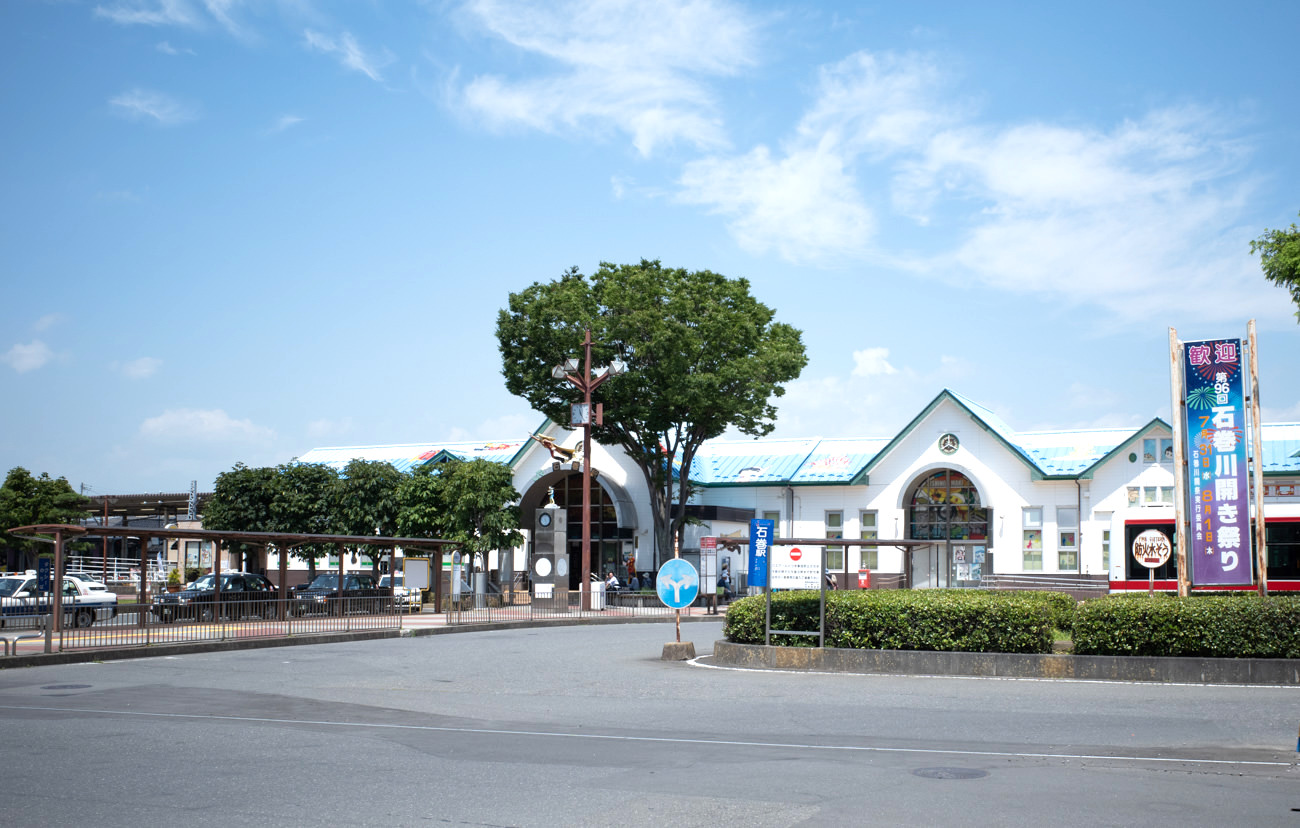
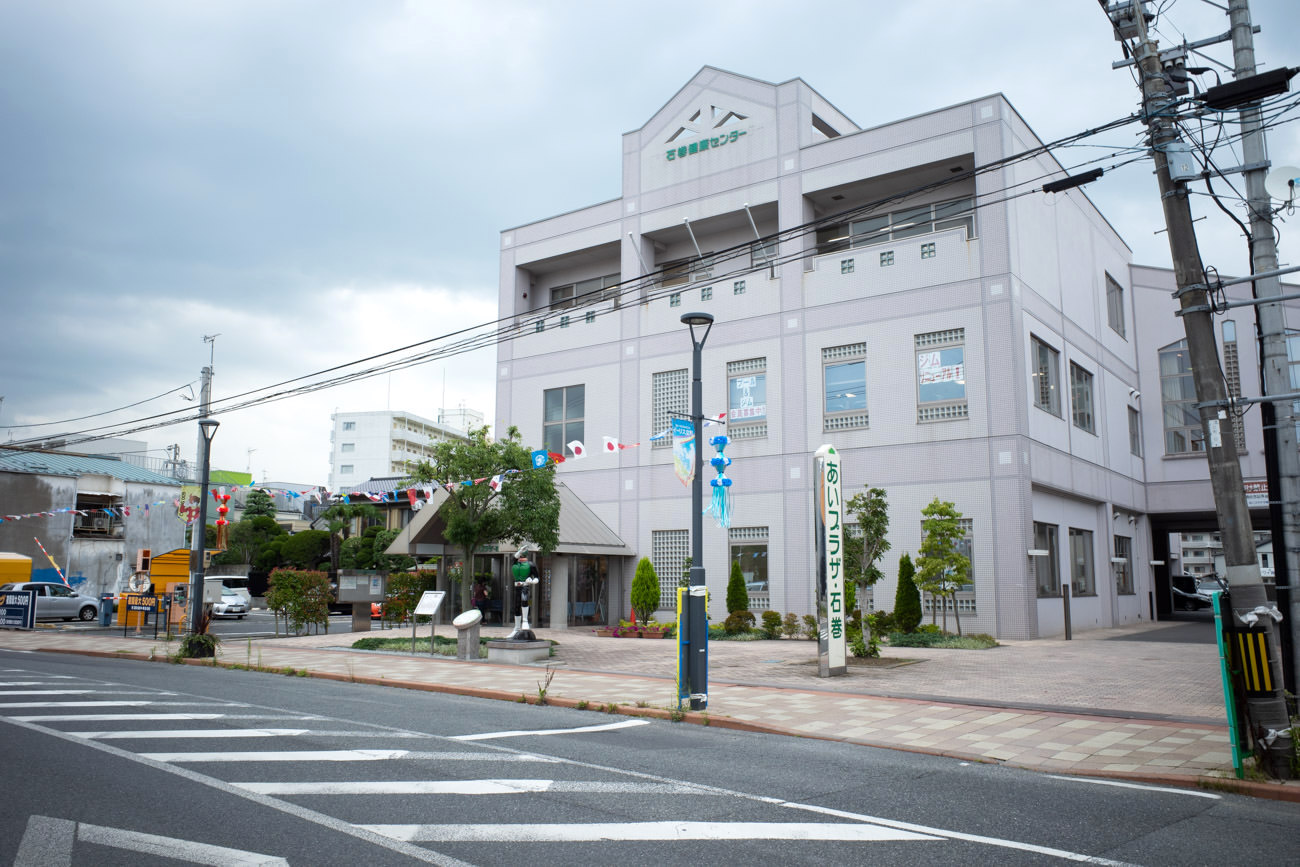
Ishinomaki Station Front Area
Ishinomaki Station, station-front area
Area theme: “Art = Ritual Toward the Sea”
Curator: Shin’ichi Nakazawa
To restore to the Japanese a heart opened toward the sea, an art = ritual that calls the majestic flow of the Kuroshio back to Ishinomaki appears.
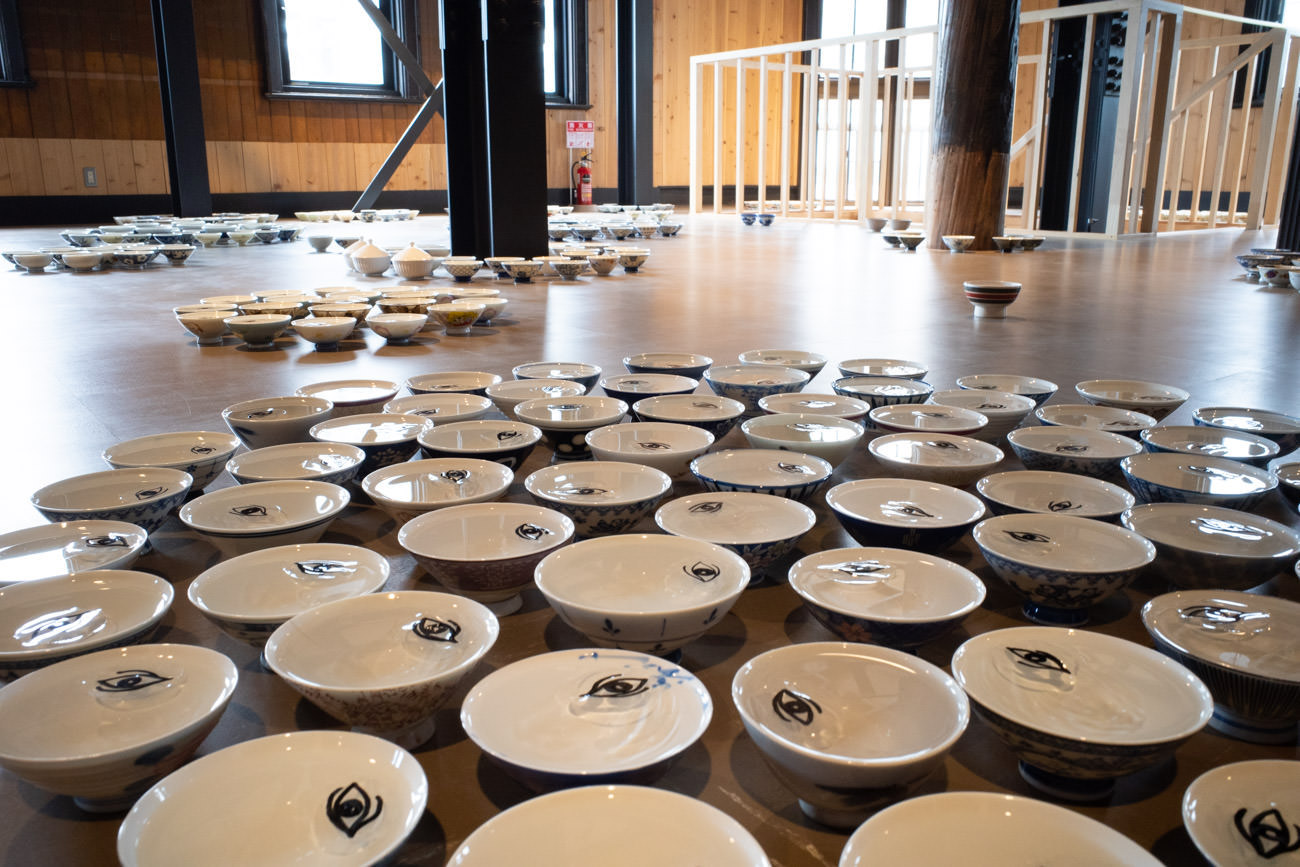
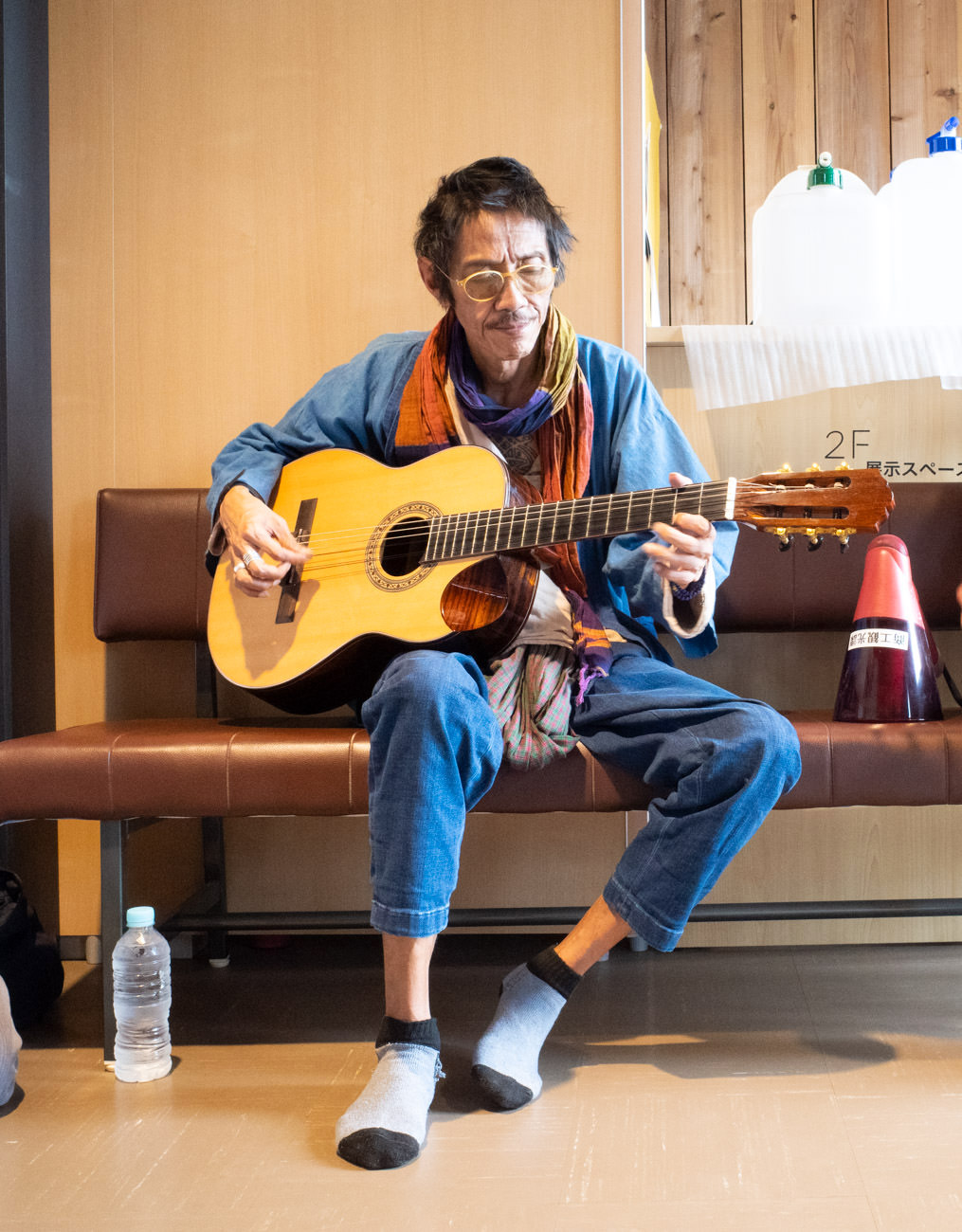
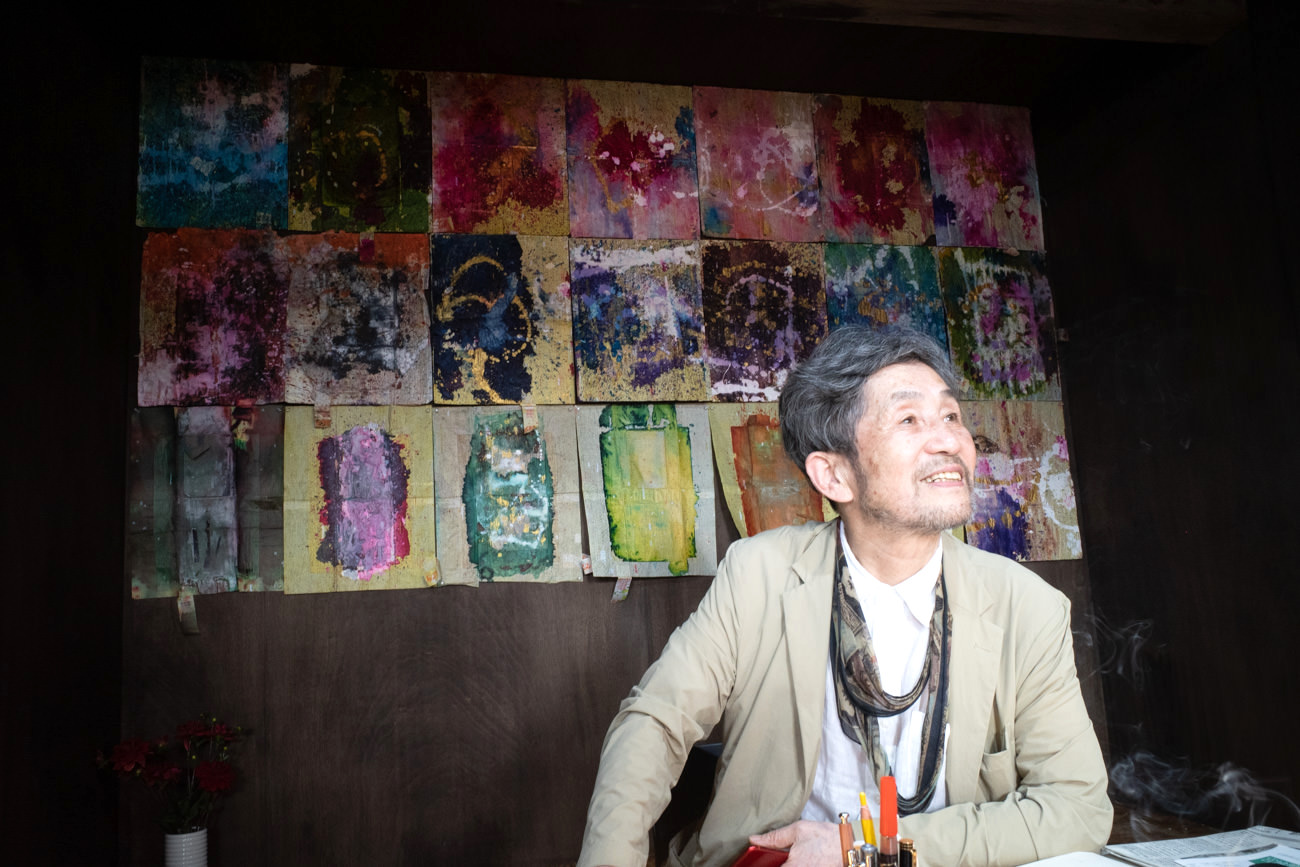
Zai Kuning, invited from Singapore near where the Kuroshio originates, is a person who, as a descendant of sea peoples himself, has practiced an art = ritual that recovers the wildness of the heart that humans are about to lose, making full use of an imagination united with oceanic nature.
Zai, who says “before being an artist, I want to be an oni (demon),” will shape into dynamic art the primal human feelings of one who has held deep gratitude for the spiritual power of the sea.
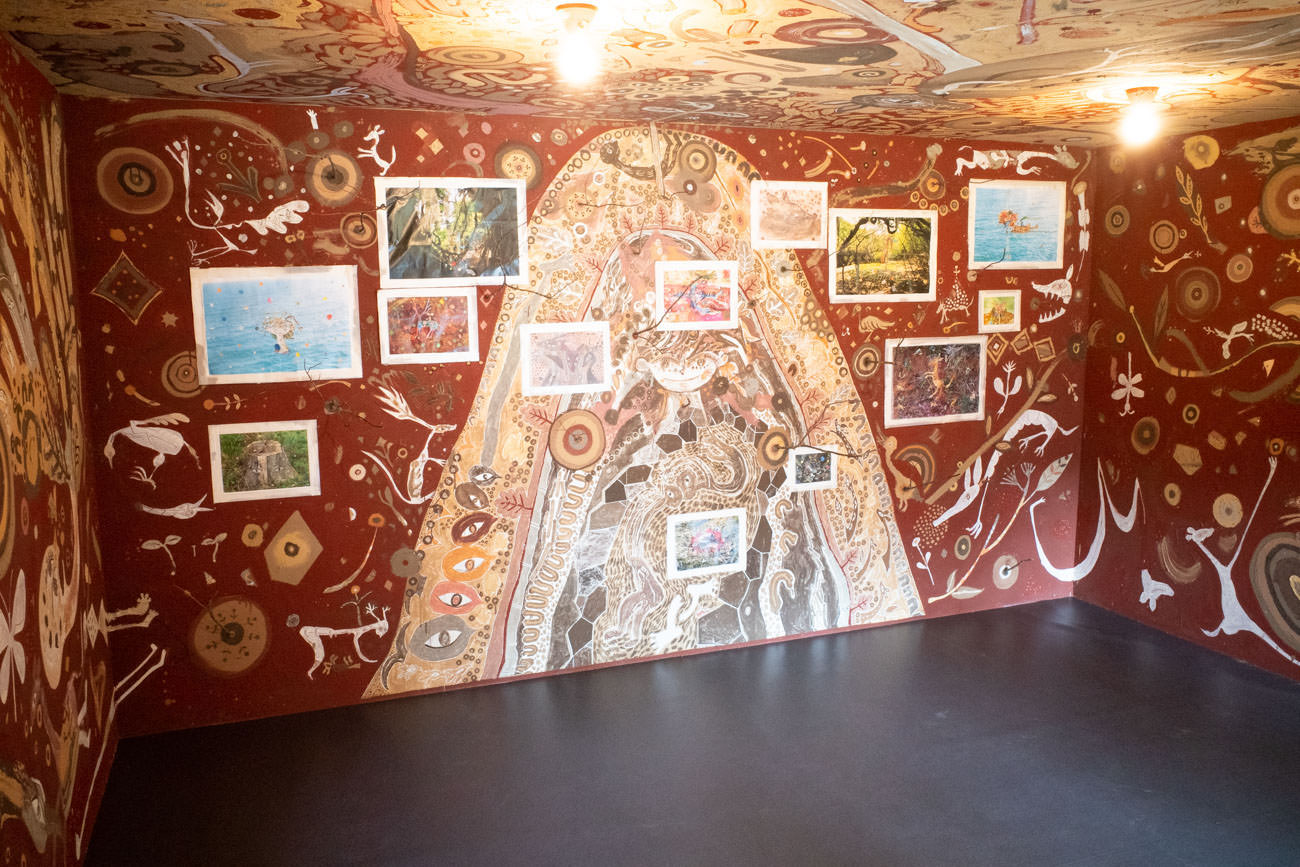
Zai Kuning, 《A Thousand Eyes at the Bottom of the Tea Bowl》, 2019 *detailZai Kuning performing solo guitar and vocals at the venue
Downtown Area
Downtown area
Area theme: The town’s Manga Road and Art Road
Curator: Kaoru Arima
Ishinomaki has the Ishinomori Manga Museum and a Manga Road.
This exhibition is a concept of adding an Art Road there.
It also inherits the concept of my exhibition at the previous Reborn-Art Festival 2017 (continuing Ishinomaki’s art scene even after Reborn ends).
For that reason, the center of the curation is Ishinomaki artists. I gather Ishinomaki artists.
Sow seeds, nurture them, and wait for new sprouts to emerge.
In this exhibition, artists who bloom early may already appear.
And new art spaces are also born, turning points into a line (road).
Also, in Ishinomaki, whose town concept is “manga-like thinking,” Ishinomori Shotaro’s characters are throughout the town.
This is an expansion of Ishinomori Shotaro’s worldview.
We think about what “manga” and “manga-like thinking” are for this Ishinomaki.
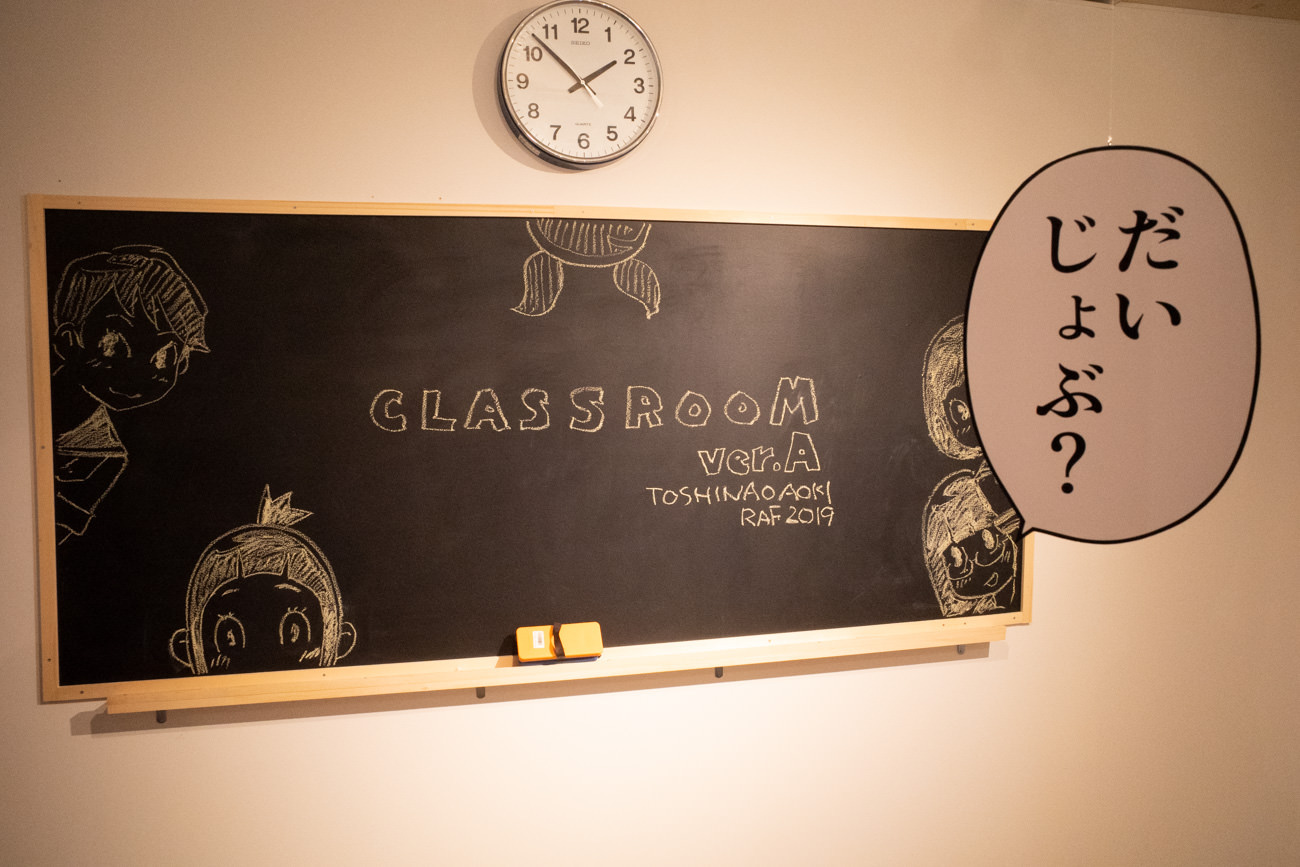
Toshinao Aoki, 《Classroom ver.A》 (Direction: Mika Ozawa)
Area theme: Living Space
Curator: Takeshi Kobayashi
“Living space” means living room / place to be / residential space.
It’s a place where people live from the past toward the future, and thoughts and memories dwell and remain there.
In the villages of the Oshika Peninsula, which have lived in close contact with nature, immense changes have occurred in that residential space.
The large seawalls built after the disaster simultaneously bring the securing of peace and the loss of scenery.
At the site of the Oshika Peninsula / Momonoura, which has undergone such rapid transformation yet still strongly retains traces / memories of the past, this is an art project that explores what a “living space = place to live” is in the present progressive tense.
Here, along with daytime art exhibitions centered on Momonoura Village—the only official lodging facility—and the closed former Ogihama Elementary School, overnight events are held.
Before: Sebastian Masuda, 《The Secret of the Gaping Hole》 / After: 《The Secret of the Gaping Hole》 photographed from inside
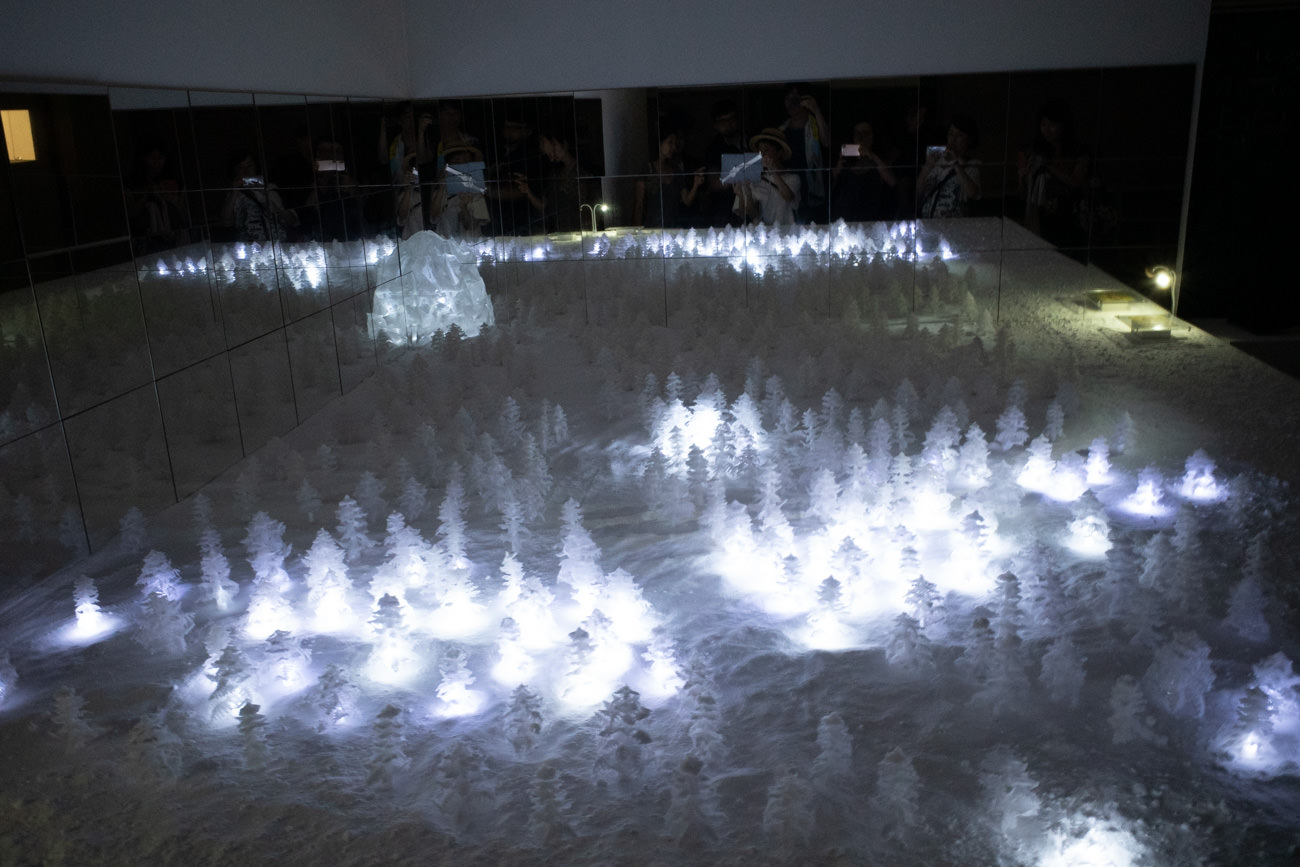
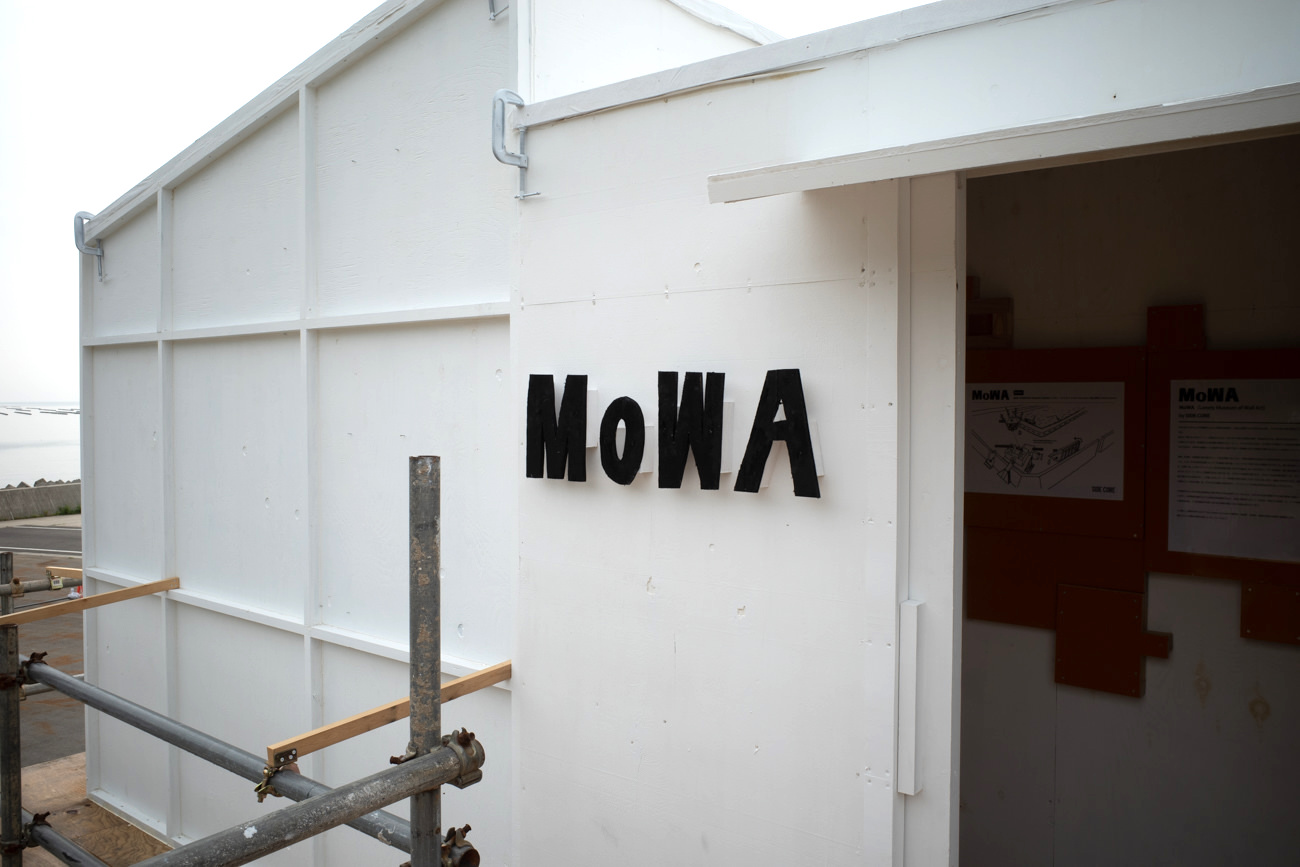
Tomoyasu Murata, 《White Forest of Omens》SIDE CORE (BIEN, EVERYDAY HOLIDAY SQUAD, Riva Christophe, Taichi Moriyama), 《Lonely Museum of Wall Art》
Ogihama Area
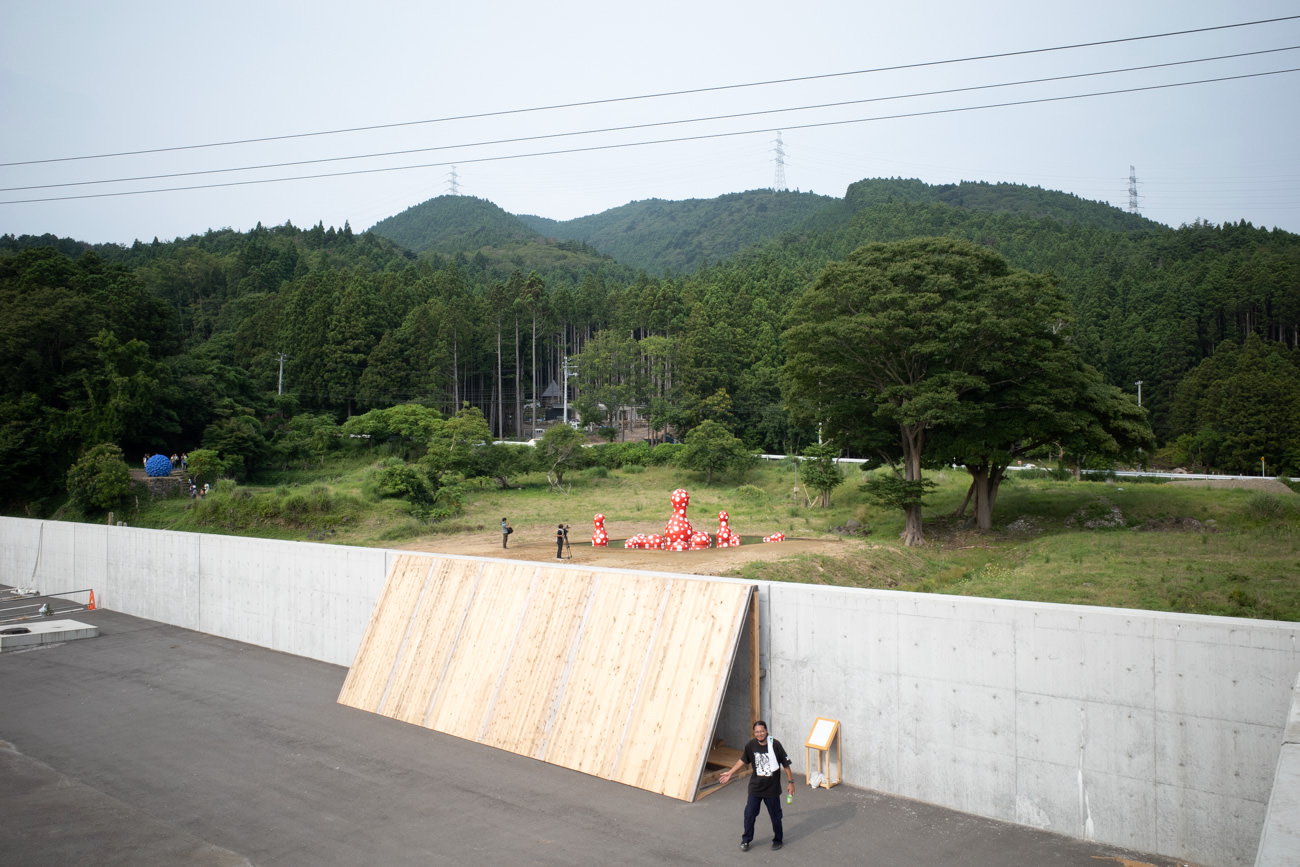
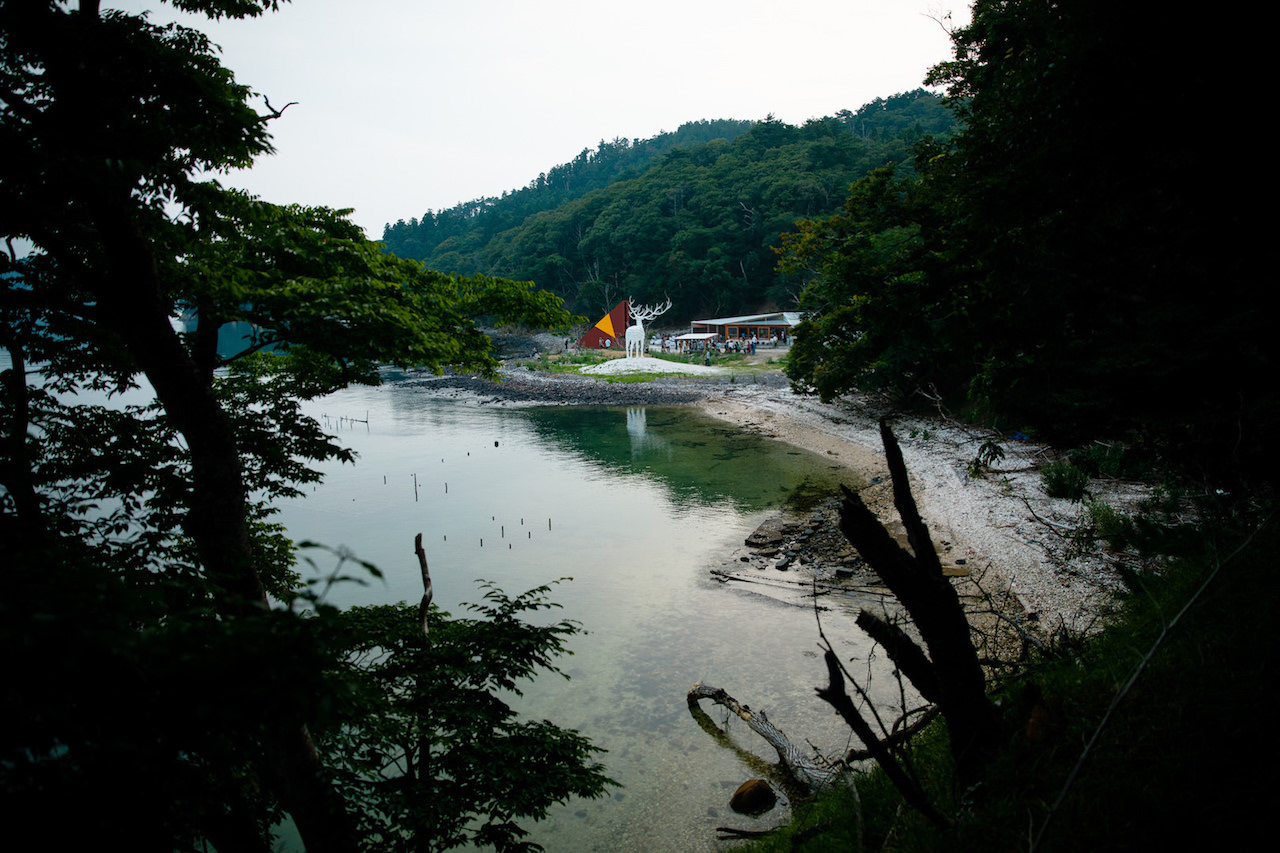
Ogihama area, full view Kohei Nawa, 《White Deer (Oshika)》 Hitoshi Nomura, 《Analemma-Slit: The Sun, Ishinomaki》 photo by NAKANO Yukihide
Area theme: Primal Energy
Curator: Kohei Nawa
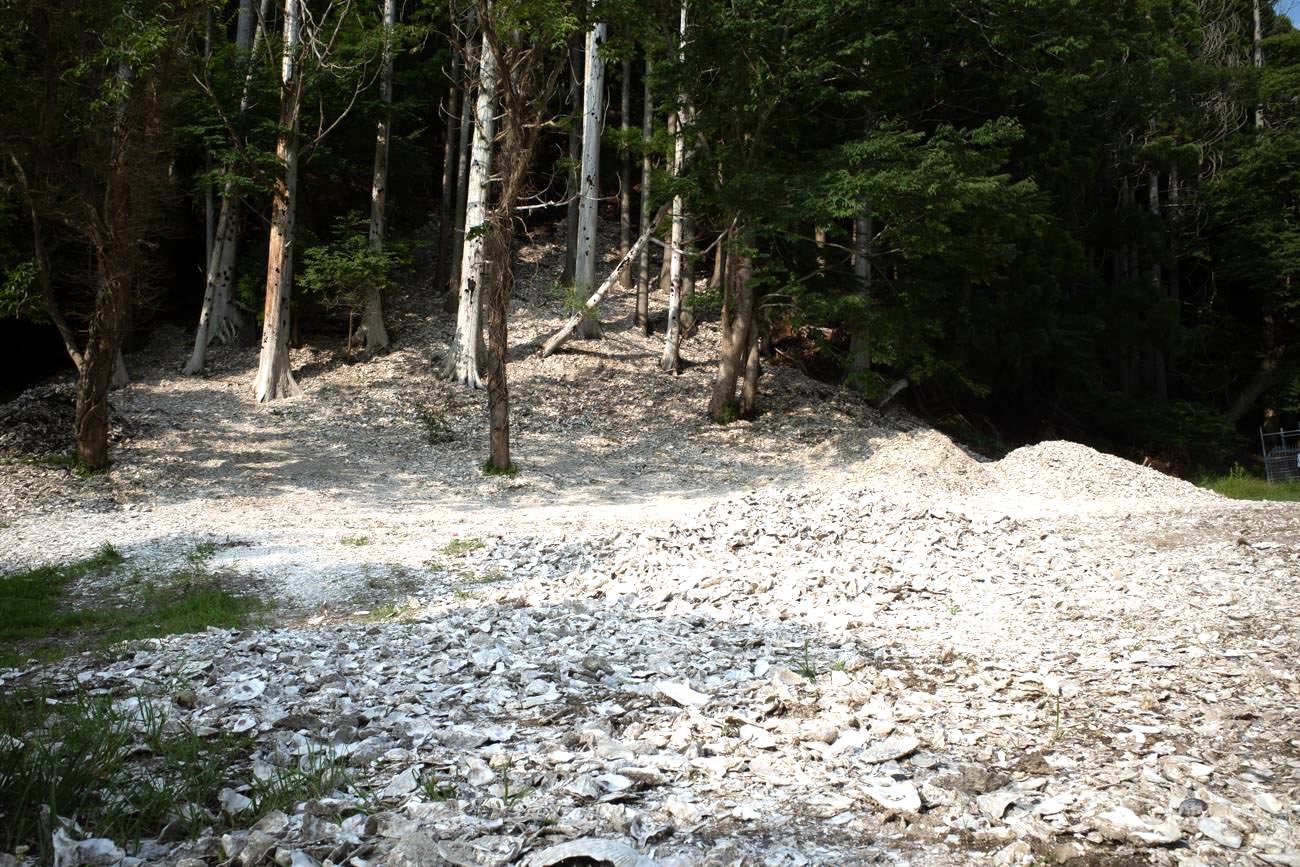
Walking the seaside mountain path from the fishing port, there is a beach whitened by shell fragments, and on a small rise stands 《White Deer (Oshika)》.
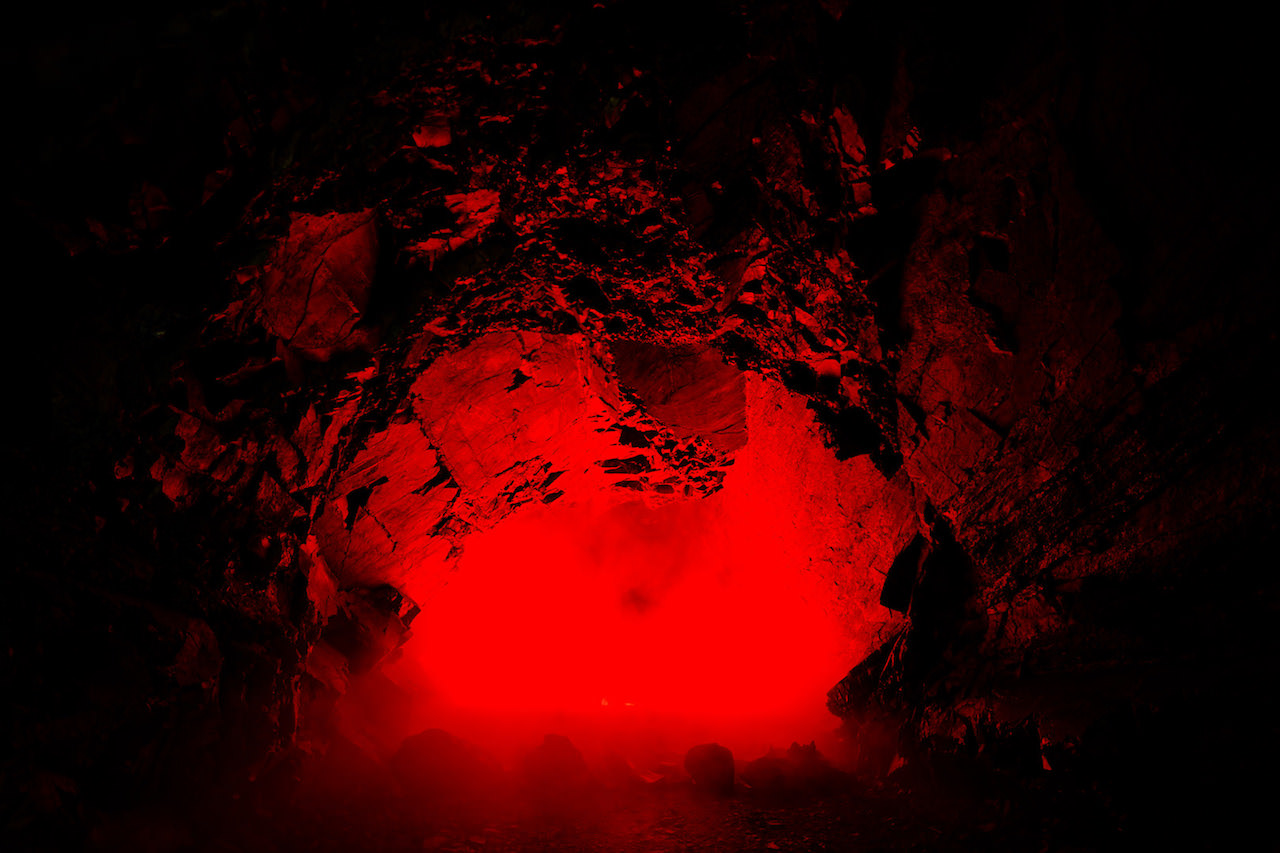
Nearby is a cave said to have been hurriedly dug by the Japanese military during the war to store torpedoes, and in the depths of the darkness you can see fragments of a red-burning “flame” and a blue-glowing “sea.”
Going further along the beach, where driftwood is piled up, there is an old tree jutting out diagonally, and at its tip stands a large “mushroom” that wraps mycelium around and parasitizes the trunk, swaying nonchalantly in the wind. A universal image existing since ancient times will blend into the desolate landscape, becoming a place full of primal energy.
Kohei Nawa, 《Flame》 photo by NAKANO YukihideHitoshi Nomura, 《Analemma-Slit: The Sun, Ishinomaki》 photo by NAKANO Yukihide
Area theme: Led by Deer, When We Look at Ourselves
Curator: Hideki Toyoshima
“Deer,” which was also a keyword of Reborn-Art Festival 2017.
In RAF2019, a small village by artists appears surrounding the venison processing plant in the Kozumi area.
In the exhibition, led by “deer” as a symbolic (or metaphorical) presence, we tour the world seen from the story of the natural world’s side.
With “deer” as our guide, we journey to the gaze and consciousness of the “not-us” side.
When we finish viewing the exhibition and return again to our world, it will feel as if it is no longer our original world.
Perhaps it should be called our world contained within the world of the deer.
Yusuke Asai, 《Life Dwells in All Places @ Oshika Sketch》Lieko Shiga, 《Post humanism stress disorder》, 2019
Ayukawa Area
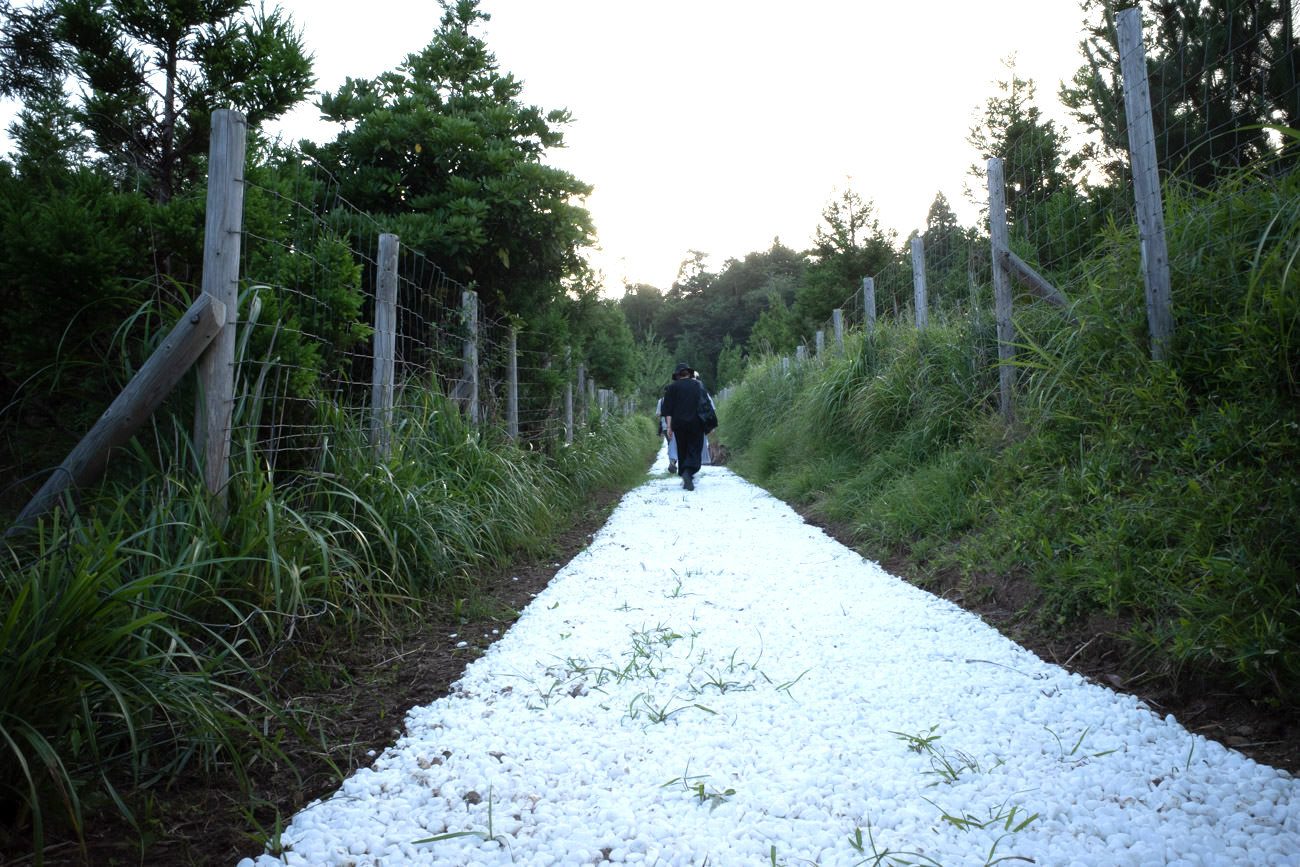
Ayukawa area—Michihiro Shimabuku, 《White Road》
Area theme: Peer Closely, Listen Closely
Curator: Michihiro Shimabuku
Ayukawa on the Oshika Peninsula, hit by tremendously great change in the great earthquake eight years ago, is now facing yet another period of great change amid the ongoing recovery construction.
A town being built in a form completely different from what was there before.
Even amid such change, I think there are things that must not be lost, things that must not be forgotten.
There are things that must be left to the future and delivered to future people. This is where art comes in.
Things you can’t see unless you peer closely. Things you can’t hear unless you listen closely.
Things you’d overlook in hurried time. Things you’d find bothersome and throw away.
This time I asked artists who can stay in Ayukawa, think about Ayukawa, and find such things, to come.
I think the important part of the phrase “the touch of life” (inochi no tezawari) is the “za” of “tezawari.”
It’s not “tesawari.” A world of voiced sounds that is proof of being alive. A world of overlapping.
I want to confirm and grasp it.
Gozo Yoshimasu, 《The Poet’s House》Ryuichi Ishikawa, 《Excavation》, 2019
Ajishima Area
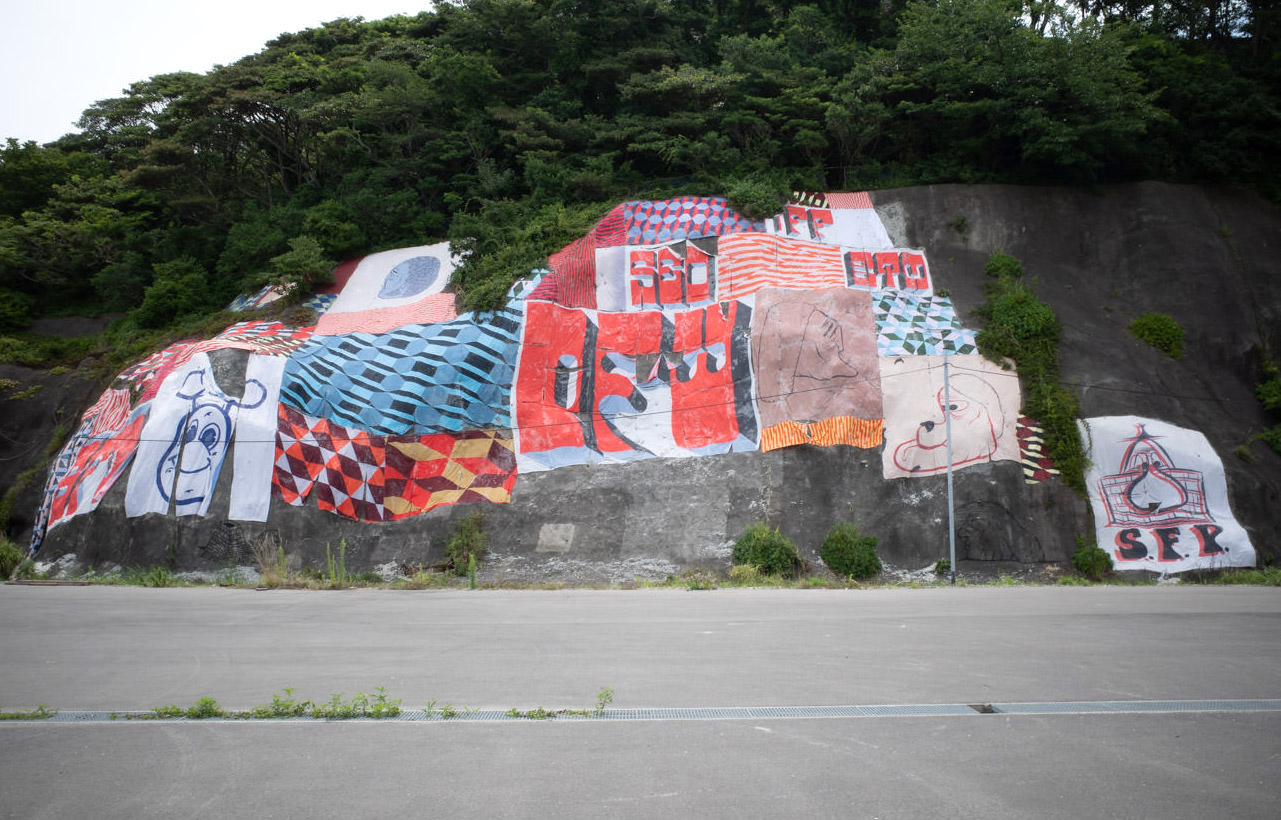
Ajishima area—Barry McGee with Scooters for Peace, 《Untitled》
Area theme: Next Utopia
Curator: Etsuko Watari, Koichi Watari
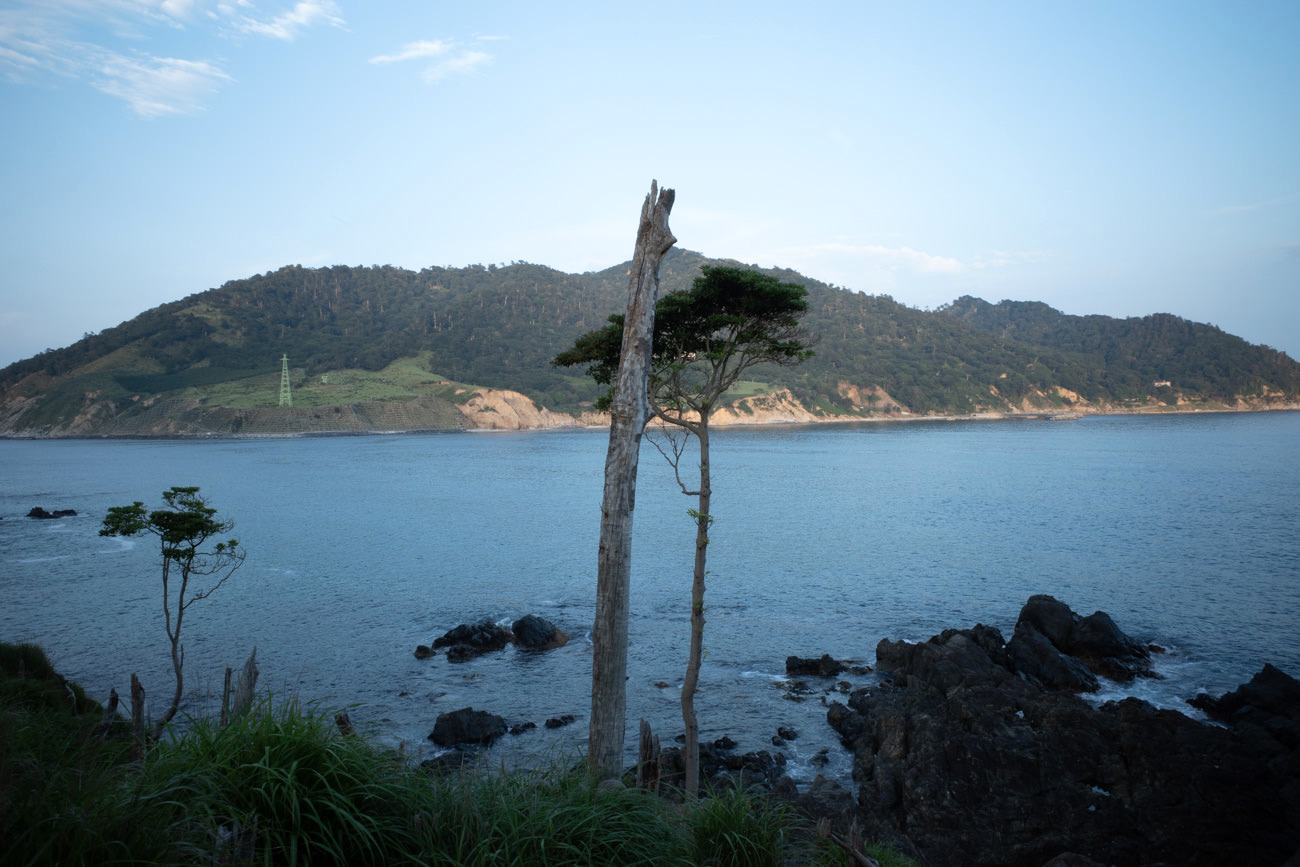
Ajishima, appearing for the first time this time, is a small island 15 minutes by boat from the Oshika Peninsula, with a population of about 400 and a circumference of 20 km.
And here, with its untouched majestic nature and gentle southern-style atmosphere, it has been called the Hawaii of Tohoku.
From “Dowameki Cape,” whose etymology is in the Ainu language, you can view the superb scenery of the god island “Kinkasan.”
What can only be expressed on this island is creating a “Next Utopia” that has overcome that tragedy.
Artists from Japan and abroad gathered and expressed the space between the ground and the sky.
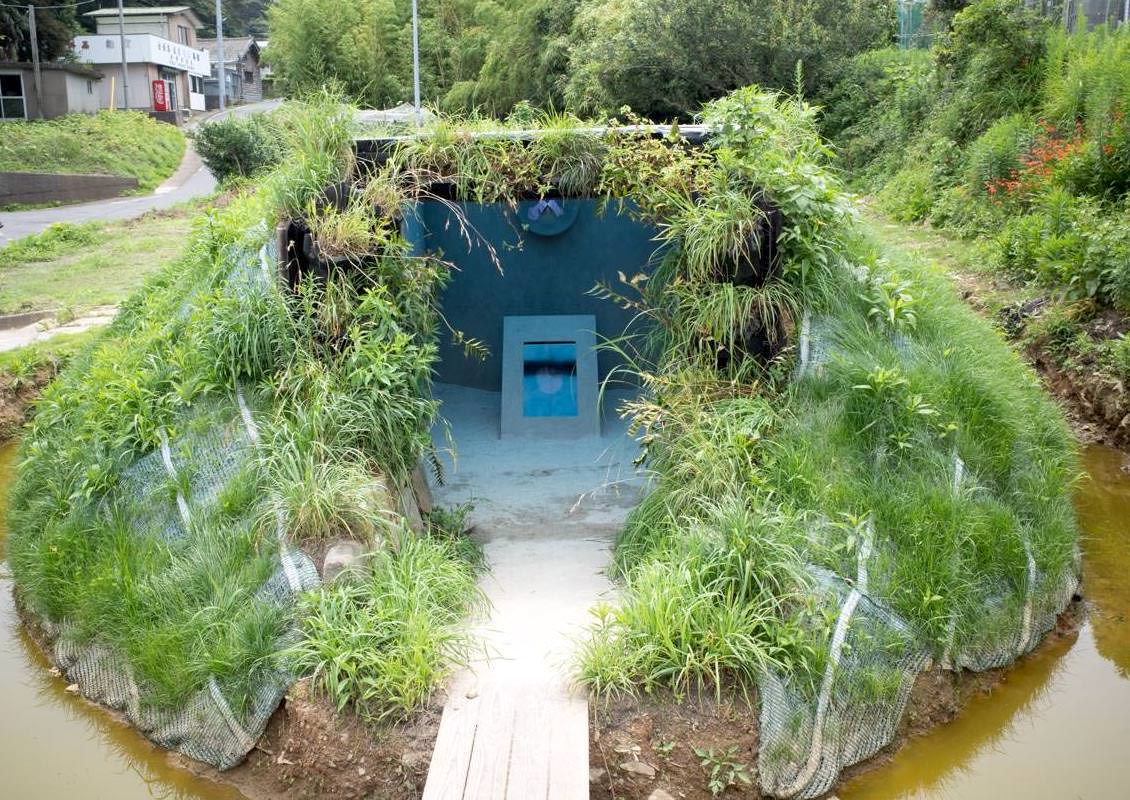
A giant mural greeting boats arriving at the port, a garden with a tumulus, a variety shop selling memories collected from the island’s houses, video capturing the breathing of plants, and more.
To build the future with our own hands, “Next Utopia” is already our necessity.
At Reborn-Art Festival 2019, the locations between each area are divided, and touring all the places will involve considerable time and effort.
The exhibition areas, including Ishinomaki Station front, are not urban-like places. Many venues have no air conditioning, and public transport convenience is by no means good. You need to recognize that it differs from an experience like touring museums in the city center, but perhaps feeling this region through physical experience is one of this festival’s great significances.
As an art festival in the disaster-stricken Ishinomaki, it became an experience of reflecting on the great presence of “the disaster.” By visiting this place far from daily life, I came to face art with a special awareness. Through the thoughts of the people involved and the power the works hold, my heart was moved, and it became an opportunity to once again think about the disaster.
I sincerely hope this becomes an effort where this place is reborn and regains vitality through the power of art.
Overview
Reborn-Art Festival 2019
Dates: August 3 (Sat)–September 29 (Sun), 2019
Venues: Oshika Peninsula, Ajishima, Ishinomaki urban area, Matsushima Bay (Ishinomaki City, Shiogama City, Higashimatsushima City, Matsushima Town, Onagawa Town)
*The Ajishima area opens from August 20 (Tue).
Organizers: Reborn-Art Festival Executive Committee, AP Bank (general incorporated association)
Co-organizers: Miyagi Prefecture, Ishinomaki City, Shiogama City, Higashimatsushima City, Matsushima Town, Onagawa Town, The Kahoku Shimpo, JR East Sendai Branch, Yahoo Japan Corporation
FY2018 Agency for Cultural Affairs International Cultural and Artistic Hub Formation Project
Sponsors: Kinoshita Group, Kirin, Sumitomo Forestry, TSUTAYA, T-Point Japan, Kankyo Station, GRAND MARBLE KYOTO, Hitachi Systems, Mitsui Fudosan, LIXIL
Partner projects: Aichi Triennale 2019, Sanriku Disaster-Prevention and Recovery Project 2019, Setouchi Triennale 2019
Reborn-Art Festival 2019各区域之间的位置彼此分隔,要走遍所有场所想必需要相当的时间与精力。
包括石卷站前在内,作品展示区域并非都市般的场所。没有空调的展场也很多,公共交通也绝非便利。需认识到这与巡游市中心美术馆的体验不同,但通过身体性的体验来感受这一地域,或许正是本艺术节重大意义之一。
Reborn-Art Festival 2019
会期:2019年8月3日(周六)〜9月29日(周日)
会场:牡鹿半岛、网地岛、石卷市区、松岛湾(石卷市、盐灶市、东松岛市、松岛町、女川町)
※网地岛区域自8月20日(周二)起举办
主办:Reborn-Art Festival实行委员会、一般社团法人AP Bank
协办:宫城县、石卷市、盐灶市、东松岛市、松岛町、女川町、株式会社河北新报社、东日本旅客铁道株式会社仙台支社、雅虎株式会社
平成30年度文化厅 国际文化艺术发信据点形成事业
协赞:株式会社木下集团、麒麟株式会社、住友林业株式会社、株式会社TSUTAYA、株式会社T-Point Japan、株式会社环境Station、GRAND MARBLE KYOTO、株式会社日立系统、三井不动产株式会社、株式会社LIXIL
联动事业:爱知三年展2019、三陆防灾复兴项目2019、濑户内国际艺术节2019
Reborn‑Art Festival 2019
Reborn-Art Festival 2019(RAF2019)에 다녀왔습니다.
Reborn-Art Festival(리본 아트 페스티벌)은 2017년에 시작되어 이번이 두 번째인 아트・음악・식의 종합 예술제입니다.
동일본 대지진으로 큰 피해를 입은 미야기현 이시노마키 지역에서 개최되는 본 페스티벌은, 음악 프로듀서이기도 한 고바야시 다케시를 중심으로 한 사토야마형 예술제입니다. RAF2019는 지역별로 담당하는 7팀의 큐레이터와 함께 약 70팀의 아티스트가 작품을 발표하고 있습니다.
재해를 입은 이시노마키 지역은 지진으로부터 이미 8년의 세월이 지나, 이 땅에 서니 하드웨어 면에서의 부흥은 이미 끝에 가까워지고 있다는 인상을 받았습니다. 본 예술제에 의한 아트 작품이나 관련 활동을 통해, 활력 있는 지역 만들기로 나아가고 있다는 인상을 받았습니다.
이시노마키역 앞 지역
이시노마키역 역 앞 지역
지역 테마:「바다를 향한 아트=리추얼」
큐레이터:나카자와 신이치
바다를 향해 열린 마음을 일본인에게 되찾아 주기 위해, 구로시오의 웅대한 흐름을 이시노마키로 불러들이는 아트=리추얼이 출현합니다.
구로시오의 발생지에 가까운 싱가포르에서 초청한 자이 쿠닝은, 스스로도 해민의 후예로서 해양적 자연과 하나가 된 상상력을 구사하여, 인간에게서 잃어버려 가고 있는 마음의 야생을 되찾는 아트=리추얼을 실천해 온 사람입니다.
「나는 아티스트이기 전에 한 마리의 오니이고 싶다」고 말하는 자이는, 바다의 영력에 깊은 감사의 마음을 품어 온 인간의 근원적인 생각을 다이내믹한 아트로 조형해 줄 것입니다.
자이 쿠닝 《찻잔 바닥의 천 개의 눈》 2019년 ※부분회장에서 기타 연주와 노래를 선보이는 자이 쿠닝
시가지 지역
시가지 지역
지역 테마:거리의 만화 로드와 아트 로드
큐레이터:아리마 가오루
이시노마키에는 이시노모리 만화관이 있고 만화 로드가 있습니다.
이번 전시는 거기에 아트 로드를 더하는 구상입니다.
지난번 리본 아트 페스티벌 2017의 제 전시 콘셉트(리본이 끝난 후에도 이시노마키의 아트 신을 지속시킨다)를 계승하고도 있습니다.
그 때문에 큐레이션의 중심이 되는 것은 이시노마키의 작가입니다. 이시노마키의 작가를 모읍니다.
씨를 뿌리고, 기르고, 새싹이 나오기를 기다립니다.
이번 전시에서 벌써 꽃피우는 작가가 나올지도 모릅니다.
그리고 새로운 아트 스페이스도 탄생하여, 점을 선(로드)으로 만듭니다.
또한 「만화적 발상」이 거리 콘셉트인 이시노마키에는 이시노모리 쇼타로의 캐릭터가 거리 곳곳에 있습니다.
이것은 이시노모리 쇼타로 세계관의 확대입니다.
이 이시노마키에게 「만화」란, 「만화적 발상」이란 무엇인가를 생각합니다.
「리빙 스페이스」란 거실/있을 곳/거주 공간.
과거에서 미래를 향해 사람들이 사는 장이며, 생각이나 기억은 거기에 깃들고, 그리고 머뭅니다.
지금까지 자연과 밀접하게 살아온 오시카 반도의 마을들에서는 그 거주 공간에 막대한 변화가 일어났습니다.
재해 후 생긴 큰 방조제는 안녕의 확보와 경관의 상실을 동시에 가져오고 있습니다.
이처럼 급격한 변모를 이루면서도 여전히 강렬하게 과거의 흔적/기억도 남기는 오시카 반도/모모노우라의 장에서, 현재 진행형으로 「리빙 스페이스=사는 장」이란 무엇인가를 탐구하는 아트 프로젝트.
여기서는 유일한 공식 숙박 시설인 모모노우라 빌리지나 옛 오기하마 초등학교의 폐교사를 중심으로 한 주간 아트 전시와 함께, 오버나이트 이벤트를 개최하고 있습니다.
Before: 마스다 세바스찬 《뻥 뚫린 구멍의 비밀》 / After: 《뻥 뚫린 구멍의 비밀》 내부에서 촬영
무라타 도모야스 《White Forest of Omens》SIDE CORE(BIEN, EVERYDAY HOLIDAY SQUAD, 리바 크리스토프, 모리야마 타이치)《Lonely Museum of Wall Art》
오기하마 지역
오기하마 지역 전경 나와 고헤이 《White Deer(Oshika)》 노무라 히토시 《Analemma-Slit:The Sun, Ishinomaki》 photo by NAKANO Yukihide
지역 테마:프라이멀 에너지 – 원시의 힘
큐레이터:나와 고헤이
어항에서 바닷가 산길을 걸어가면, 조개껍데기 조각으로 하얘진 해변이 있고, 조금 높은 곳에 《White Deer(Oshika)》가 서 있습니다.
근처에는 전쟁 중에 일본 군대가 어뢰를 격납하기 위해 서둘러 팠다고 하는 동굴이 있고, 어둠 속 깊은 곳에 붉게 계속 타는 「불꽃」이나 푸르게 빛나는 「바다」의 단편이 보입니다.
해변을 더 나아가면, 유목이 겹쳐 쌓인 곳에 비스듬히 튀어나온 노목이 있고, 그 줄기에 균사를 감아 기생하는 큰 「버섯」이 끝에 서서 표표히 바람에 흔들리고 있습니다. 태고부터 존재하는 보편적인 이미지가 황량한 풍경에 녹아들어, 원시적인 에너지로 가득 찬 장이 될 것입니다.
나와 고헤이 《Flame》 photo by NAKANO Yukihide노무라 히토시 《Analemma-Slit:The Sun, Ishinomaki》 photo by NAKANO Yukihide
고즈미 지역
고즈미 지역〜사슴 해체 처리 시설 「Ferment」
지역 테마:사슴에게 이끌려, 우리를 볼 때
큐레이터:도요시마 히데키
리본 아트 페스티벌 2017의 키워드이기도 했던 「사슴」.
RAF2019에서는 고즈미 지역에 있는 사슴고기 처리장을 둘러싸듯, 아티스트들에 의한 작은 취락이 출현합니다.
전시에서는 상징적 존재(또는 비유적 존재)로서의 「사슴」에게 이끌려, 자연계 쪽의 이야기에서 보이는 세계를 돕니다.
우리는 「사슴」을 길 안내인으로 삼아 「우리가 아닌」 쪽의 시선이나 의식으로 여행합니다.
전시를 다 보고 다시 우리의 세계로 돌아왔을 때, 그것은 원래 우리의 세계가 아닌 것처럼 느껴질 것입니다.
그것은 사슴들의 세계에 포함된 우리의 세계라고 해야 할 것인지도 모릅니다.
8년 전 대지진으로 엄청나게 큰 변화를 겪은 오시카 반도의 아유카와는, 현재 진행 중인 부흥 공사 속에서 또 하나의 큰 변화의 시기를 맞이하고 있습니다.
이전과는 전혀 다른 형태로 만들어지려 하는 마을.
그런 가운데에도 잃어버려서는 안 되는 것, 잊어서는 안 되는 것이 있다고 생각합니다.
미래에 남기고, 미래의 사람들에게 전해야 하는 것이 있습니다. 거기서 아트가 등장할 차례입니다.
가만히 눈을 응시하지 않으면 보이지 않는 것. 가만히 귀를 기울이지 않으면 들리지 않는 것.
분주한 시간 속에서는 놓쳐 버릴 것 같은 것. 귀찮아져서 버려 버릴 것 같은 것.
아유카와에 머물며 아유카와를 생각하며 그런 것과 일을 찾아올 수 있는 아티스트들을 이번에 오도록 했습니다.
「생명의 촉감(이노치노 데자와리)」이라는 말의 중요한 부분은 「데자와리」의 「자」에 있다고 생각합니다.
「데사와리」가 아닙니다. 살아 있다는 증거의 탁음의 세계. 겹침의 세계.
그것을 확인하고 붙잡고 싶습니다.
요시마스 고조 《시인의 집》이시카와 류이치 《굴착》 2019년
아지시마 지역
아지시마 지역〜배리 맥기 with Scooters for Peace 《무제》
지역 테마:넥스트 유토피아
큐레이터:와타리 에쓰코・와타리 고이치
이번에 처음 등장하는 아지시마는 오시카 반도에서 배로 15분, 인구 약 400명, 둘레 20킬로의 작은 섬입니다.
그리고 이곳은 손대지 않은 웅대한 자연과 남방계의 온화한 분위기로 도호쿠의 하와이라 불려 왔습니다.
아이누어에 어원을 둔 「도와메키 곶」에서는 신의 섬 「긴카산」의 절경을 바라볼 수 있습니다.
이 섬이 아니면 표현할 수 없는 것, 그것은 그 참극을 극복한 「넥스트 유토피아」를 만드는 것.
국내외에서 아티스트들이 모여 지상과 천공의 틈을 표현했습니다.
항구에 닿는 배를 맞이하는 거대 벽화, 고분을 가진 정원, 섬의 집들에서 모은 추억을 파는 잡화점, 식물의 호흡을 담은 영상 외.
이 손으로 미래를 만들기 위해, 「넥스트 유토피아」는 이미 우리의 필수품입니다.
Reborn-Art Festival 2019는 각 지역 간의 로케이션이 분단되어 있어, 모든 장소를 도는 데에 상당한 시간과 노력이 따를 것입니다.
작품 전시 지역은 이시노마키역 앞을 포함해 도시 같은 장소가 아닙니다. 냉방이 되지 않는 전시장도 많고, 대중교통 편의도 결코 좋지 않습니다. 도심의 미술관을 도는 듯한 경험과는 다르다는 것을 인식해 둘 필요가 있지만, 피지컬한 경험을 통해 이 지역을 느끼는 것이 본 예술제의 큰 의의 중 하나일지도 모릅니다.
피재지 이시노마키의 예술제이며, 「지진 재해」라는 큰 존재에 생각을 기울이는 경험이 되었습니다. 일상에서 먼 이 땅을 방문함으로써 특별한 의식을 갖고 아트를 마주하게 되었습니다. 관여하는 사람들의 마음이나 작품이 지닌 힘을 통해 마음이 흔들리고, 다시 한번 재해에 대해 생각하는 기회가 되었습니다.
아트의 힘으로 이 장소가 다시 태어나 활력을 되찾아 가는 활동이 되기를 간절히 바랍니다.
개요
Reborn-Art Festival 2019
회기:2019년 8월 3일(토)〜9월 29일(일)
회장:오시카 반도, 아지시마, 이시노마키 시가지, 마쓰시마만(이시노마키시, 시오가마시, 히가시마쓰시마시, 마쓰시마마치, 오나가와마치)
※아지시마 지역은 8월 20일(화)부터 개최
주최:Reborn-Art Festival 실행위원회, 일반사단법인 AP Bank
공동주최:미야기현, 이시노마키시, 시오가마시, 히가시마쓰시마시, 마쓰시마마치, 오나가와마치, 주식회사 가호쿠신보사, 동일본여객철도주식회사 센다이 지사, 야후 주식회사
2018년도 문화청 국제문화예술 발신 거점 형성 사업
협찬:주식회사 기노시타 그룹, 기린 주식회사, 스미토모 임업 주식회사, 주식회사 TSUTAYA, 주식회사 T포인트 재팬, 주식회사 환경 스테이션, GRAND MARBLE KYOTO, 주식회사 히타치 시스템즈, 미쓰이 부동산 주식회사, 주식회사 LIXIL
연계 사업:아이치 트리엔날레 2019, 산리쿠 방재부흥 프로젝트 2019, 세토우치 국제예술제 2019