Do you know Gordon Matta-Clark? He’s an artist with little connection to Japan, so many people may not even recognize the name. This time, I’d like to unpack Gordon Matta-Clark just a little.
Gordon Matta-Clark
June 22, 1943 – August 27, 1978 *died at 35 of pancreatic cancer
Gordon Matta-Clark was an artist active mainly in 1970s New York. Until his death at 35, his career as an artist was short-lived, lasting less than ten years.
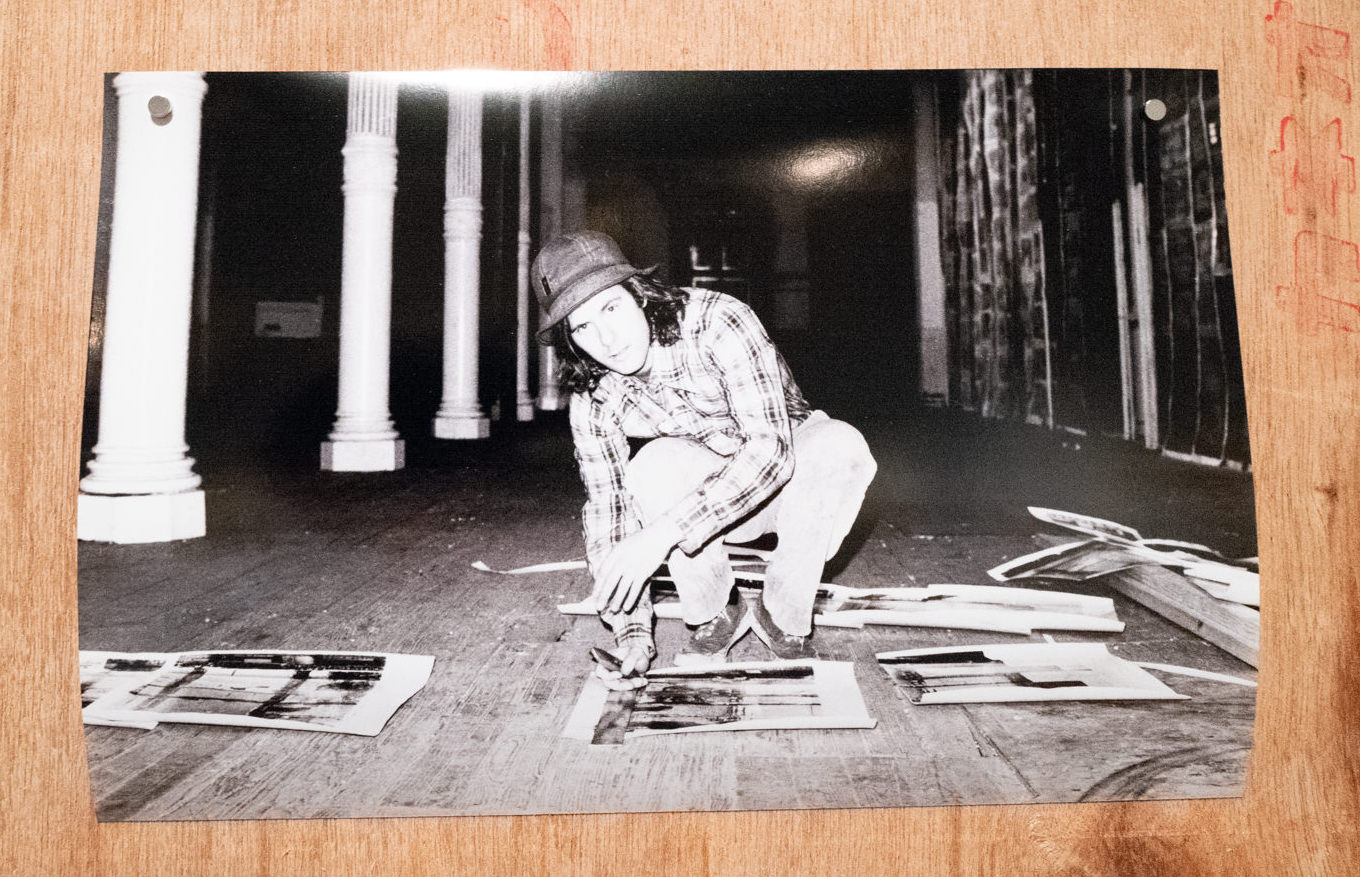
Gordon Matta-Clark Photo: Cosmos Andrew Sarchiapone
Still, short as those ten years were, his range was wide: a multi-artist who branched into architecture, installation, sculpture, video, photography, drawing, street culture, and even restaurant management.
However, because much of Gordon’s activity and many of his works existed only temporarily, not much has been archived (preserved).
Creative Activity
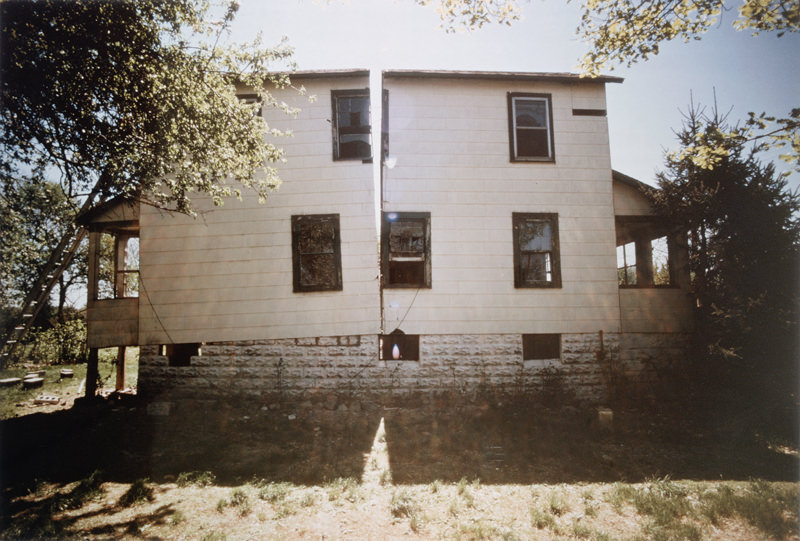
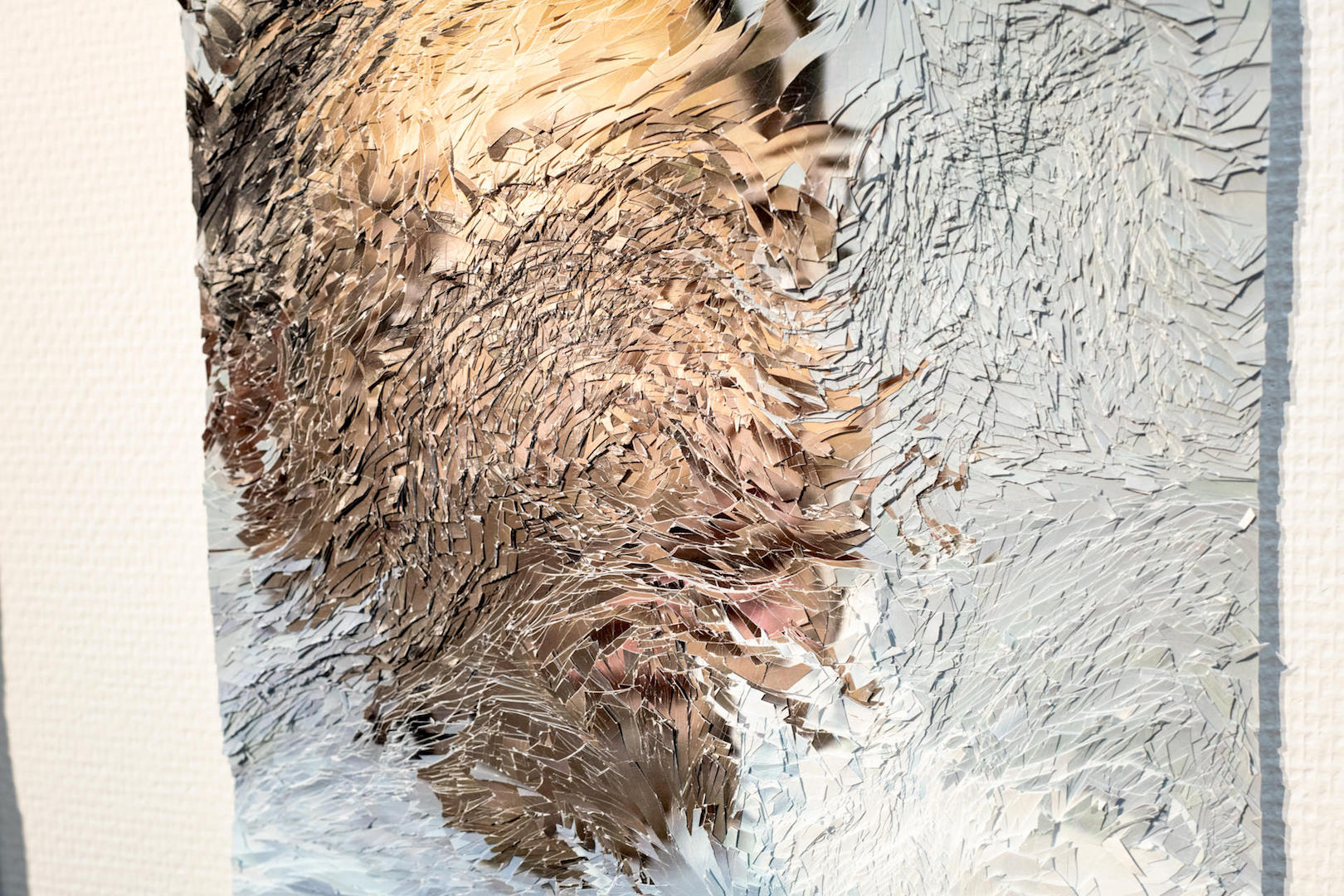
Active on the stage of 1970s New York, Gordon Matta-Clark was skeptical of the existence called “the museum closed off from the outside world.” This can also be seen as an anti-establishment stance seeking to bore a hole into the authority of the “museum” and the institution of the “exhibition.” 《Splitting》 1974, Gordon Matta-Clark, Lunar (New York) collection
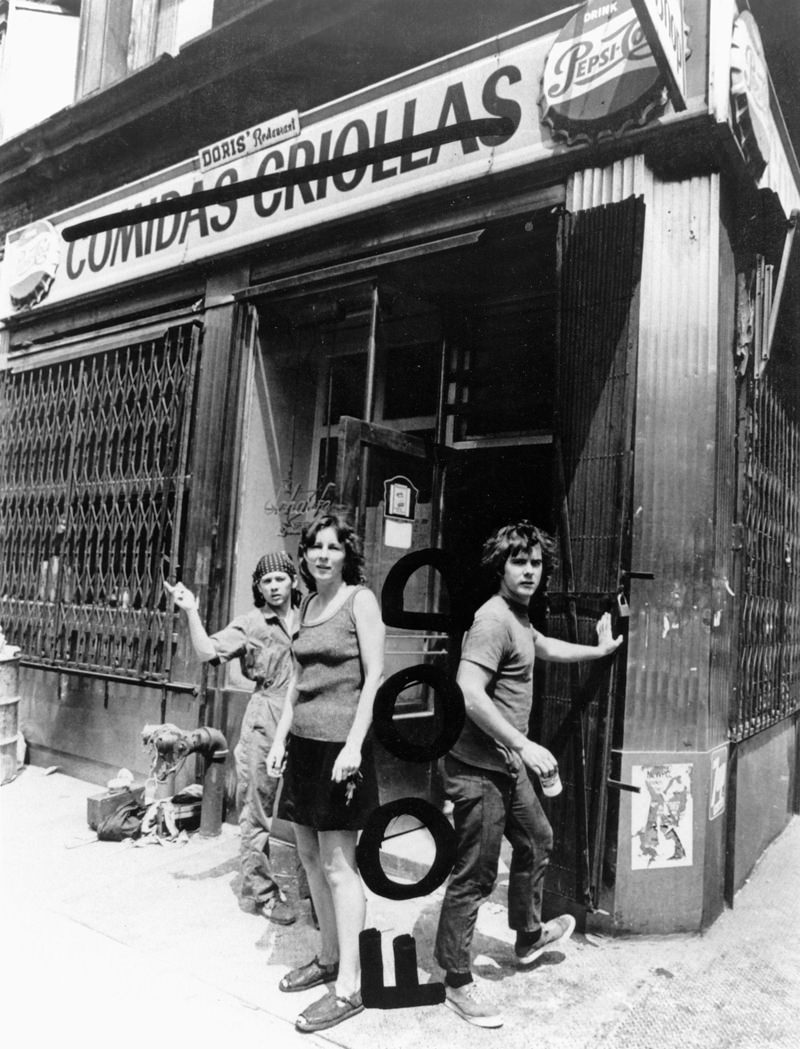
That he was conscious of a display that engages with place can also be confirmed by his involvement in running the restaurant “FOOD.”
Gordon Matta-Clark, 1971, private collection, Photo: Richard Landry
At the storefront of the restaurant “FOOD,” he reportedly also carried out actions leading to customer draw, such as performances of roasting a whole pig. His ability to attract people’s interest can be appreciated from the fact that he practiced it in various situations.
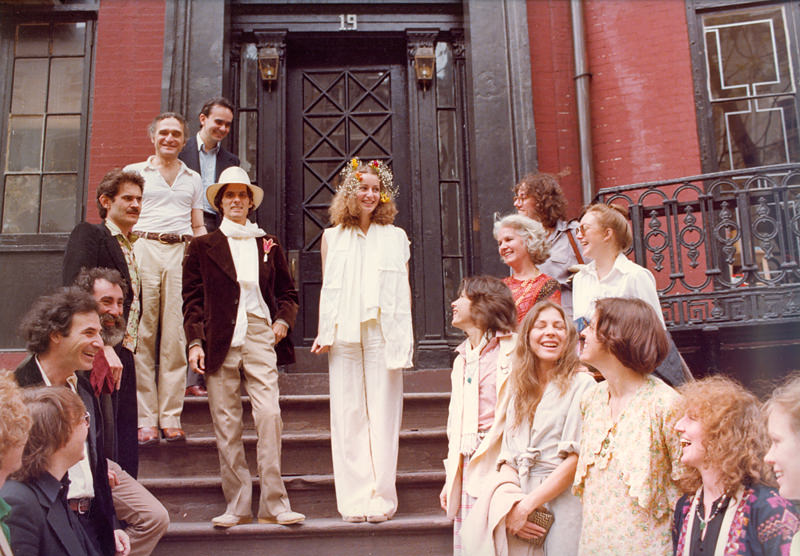
Gordon Matta-Clark, 1978
Perhaps Gordon’s awareness of real place lay in his focus on how a “community” is formed through the process of activity. Outside normal business hours, the interior of “FOOD” reportedly functioned as a kind of hangout for artists.
Gordon’s Catchphrase
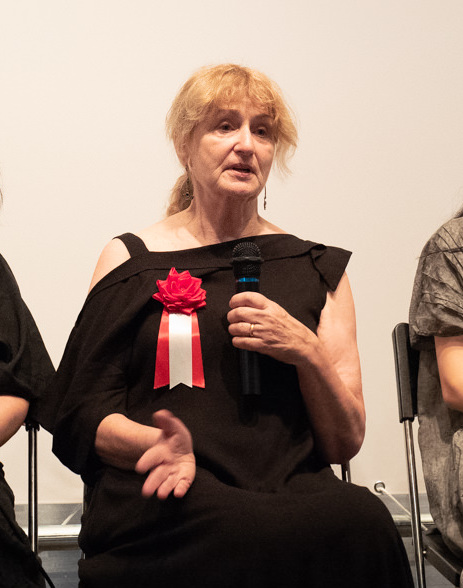
I’d like to introduce an episode told by his widow, Jane Crawford, who came to Japan around the time of the Gordon Matta-Clark exhibition.
Widow “Jane Crawford,” who came to Japan at the time of the Gordon Matta-Clark exhibition (June 2018)
Gordon may have found meaning in raising questions.
Social Practice Artist
Mrs. Jane Crawford commented, “Gordon was practicing social practice from a time when the concept didn’t even exist.”
Approaches of art that engage with society are called by various names—participatory art, socially engaged art, social practice, and so on—but Gordon may have been the world’s earliest “social practice artist.”
“You Could do a better!〜You could do it better than me”
The message he repeated like a catchphrase may be a message Gordon left to us today.
Gordon Matta-Clark
Brief Chronology
1943
・June 22, born in New York with his twin brother Sebastian. His father is the world-renowned Surrealist painter Roberto Matta; his mother, also a painter, Anne Clark. The parents soon separated, and he spent his childhood in New York, Chile, and various parts of Europe with his mother and brother.
1962–68
・Studied architecture at Cornell University and literature at the Sorbonne in Paris.
1969
・Moved to New York.
Began presenting installations and performances on the theme of food and cooking. Thereafter became a central figure in the SoHo artist community.
1971
・Co-founded the restaurant “FOOD” together with fellow artists[–1973]
・Via Mexico and Peru, visited Chile, the homeland of his father Matta.
1972
・Created the building cut 《Bronx Floors》 in buildings around Manhattan, the Bronx, and Brooklyn.
1973
・Formed the “Anarchitecture Group” and held repeated meetings at “FOOD” and elsewhere.
・Began creating 《Graffiti Photoglyphs》 on the theme of graffiti, which had begun drawing attention in New York.
1974
・Purchased tiny plots of land auctioned off by New York City and presented them as the work 《Reality Properties: Fake Estates》.
・Created the building cut 《Splitting》, cutting a house in Englewood, New Jersey.
・From this year on, exhibited in many exhibitions in New York and across Europe and America, and carried out building cuts, performances, and more.
1975
・Created the building cut 《Day’s End》 in a warehouse at Pier 52 along the Hudson River. Because he did it without permission, he was prosecuted by New York City.
・Participated in the “Paris Biennale 1975.” Created the building cut 《Conical Intersect》, boring a conical hole into a 17th-century building slated for demolition to build the Centre Pompidou.
1976
・His brother Sebastian fell from the window of Matta-Clark’s studio and died.
1977
・Participated in “documenta 6” (Kassel), presenting the installation 《Jacob’s Ladder》 using a factory chimney.
・Created the building cut 《Office Baroque》 in Antwerp. Despite a movement to preserve it as a museum after completion, the building was demolished.
1978
・Accepting an offer from the Museum of Contemporary Art Chicago, created the building cut 《Circus》 in a building intended to become the museum’s annex.
・In May, married Jane Crawford.
・On August 26, died of pancreatic cancer (aged 35).
Asia’s First Solo Exhibition
Gordon Matta-Clark’s first solo exhibition in Asia was held in Tokyo in 2018. I’ve posted a report below; please refer to it if you like.
고든 마타-클라크를 아시나요. 일본과의 접점이 희박하고 관련이 적은 아티스트라, 많은 분이 이름조차 들어본 적 없는 존재일지 모릅니다. 이번에는 그런 고든 마타-클라크를 조금만 풀어 보고자 합니다.
고든 마타-클라크(Gordon Matta-Clark)
1943년 6월 22일〜1978년 8월 27일 ※췌장암으로 35세에 별세
고든 마타-클라크는 1970년대 뉴욕을 중심으로 활약한 아티스트입니다. 35세로 세상을 떠날 때까지, 작가로서의 활동 기간은 10년에도 못 미칠 만큼 짧은 생이었습니다.
고든 마타-클라크 Photo: Cosmos Andrew Sarchiapone
그러나 불과 10년이라 해도 활동 범위는 넓어, 건축·설치·조각·영상·사진·드로잉, 스트리트 컬처부터 레스토랑 운영까지 많은 것에 손을 뻗은 멀티 아티스트였습니다.
그러나 고든의 활동이나 작품의 다수는 일시적으로만 존재하는 형태였기에, 아카이브(보존)된 것은 많지 않습니다.
제작 활동
1970년대 뉴욕을 무대로 활동한 고든 마타-클라크는 「외계로부터 닫힌 뮤지엄」이라는 존재에 회의적이었습니다. 그것은 「미술관」이라는 권위나 「전람회」라는 제도에 바람 구멍을 내려는 반체제적 자세로도 보입니다. 《Splitting(분열)》 1974년 고든 마타-클라크 Lunar(뉴욕) 소장
장소와 관계 맺어 가는 전시를 의식했다는 점은, 「FOOD」라는 레스토랑 운영에 관여한 것에서도 확인할 수 있습니다.
고든 마타-클라크 1971년 개인 소장 Photo: Richard Landry
레스토랑 「FOOD」 가게 앞에서는 통돼지 구이 등의 퍼포먼스로 손님을 끄는 액션도 했다고 합니다. 사람들의 흥미·관심을 끄는 능력은 다양한 장면에서 실천한 것에서도 평가할 수 있을 것입니다.
고든 마타-클라크 1978년
고든이 리얼한 장소를 의식한 것은, 활동의 프로세스에 의해 「커뮤니티」라는 것이 형성되는 데 착목했기 때문일지 모릅니다. 「FOOD」 점내는 통상 영업 시간 외에는 아티스트들의 아지트 같은 장소로 기능했다고 합니다.