本展の鑑賞後には、彼の口癖でもあった「You Could do a better!〜君ならぼくよりもっと上手く出来るよ」に背中を押されるような形で美術館をあとにしました。
Gordon Matta-Clark Exhibition
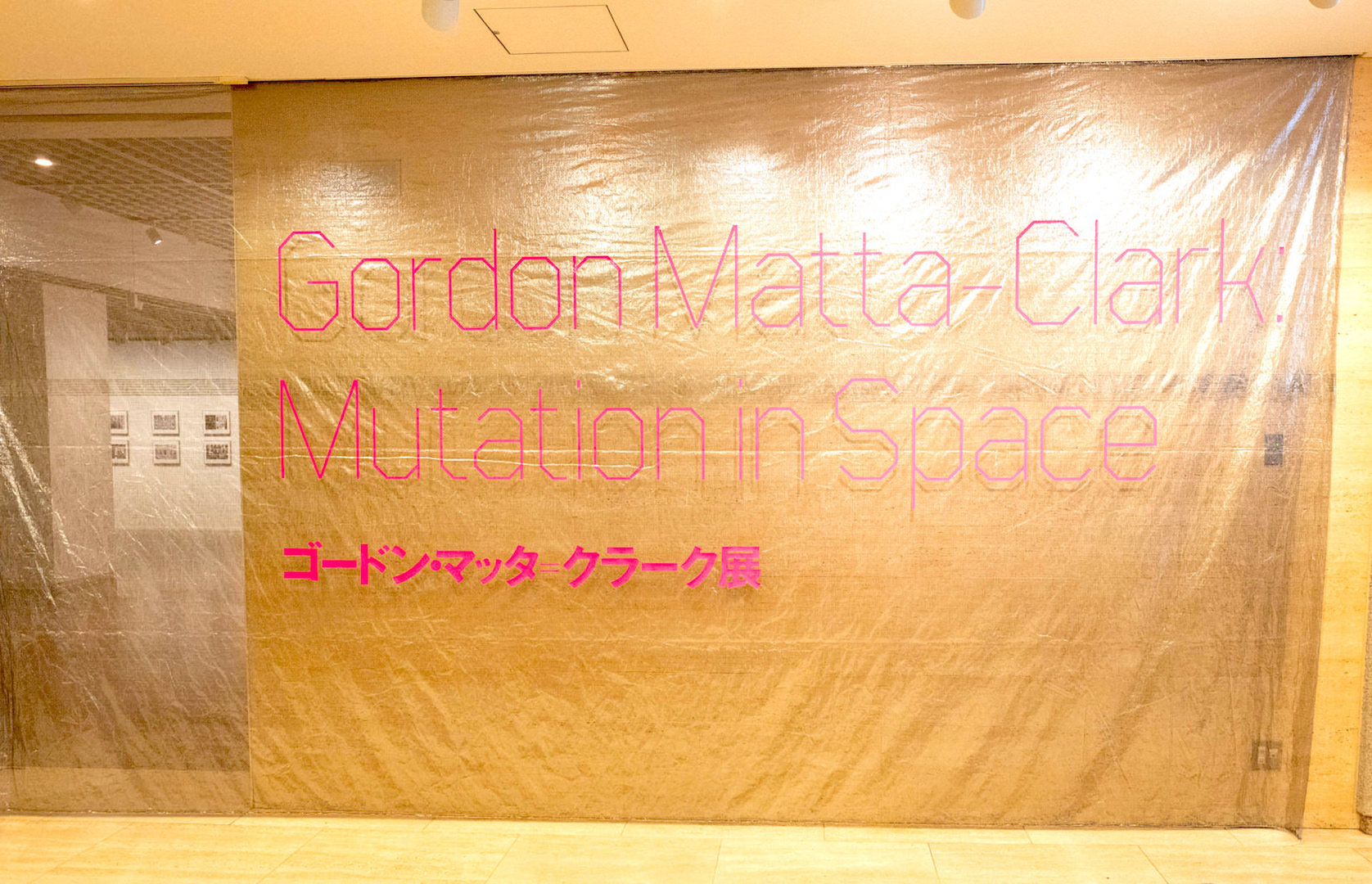
The first “Gordon Matta-Clark Exhibition” in Asia — not just Japan — was held. The venue is The National Museum of Modern Art, Tokyo, in Takebashi, Tokyo.
This exhibition is the labor of two experts: Chieko Hirano (Associate Professor, University of Yamanashi), a leading Japanese authority on Gordon Matta-Clark studies, and Kenji Miwa (Senior Curator at The National Museum of Modern Art, Tokyo), who took charge of the planning. And handling the exhibition design — the question of what kind of approach to use within a limited gallery space to give shape to the crucial keyword of “place” — is Keigo Kobayashi (Associate Professor, Waseda University, Department of Architecture). The combination of these three has brought together an exhibition that took roughly five years to reach the public, and it stands as an extraordinarily meaningful show.
For those wondering “who is Gordon Matta-Clark?”, please refer to the article below as well.
Now, at The National Museum of Modern Art, Tokyo, in Takebashi, as soon as you enter the grounds a strange object greets you.
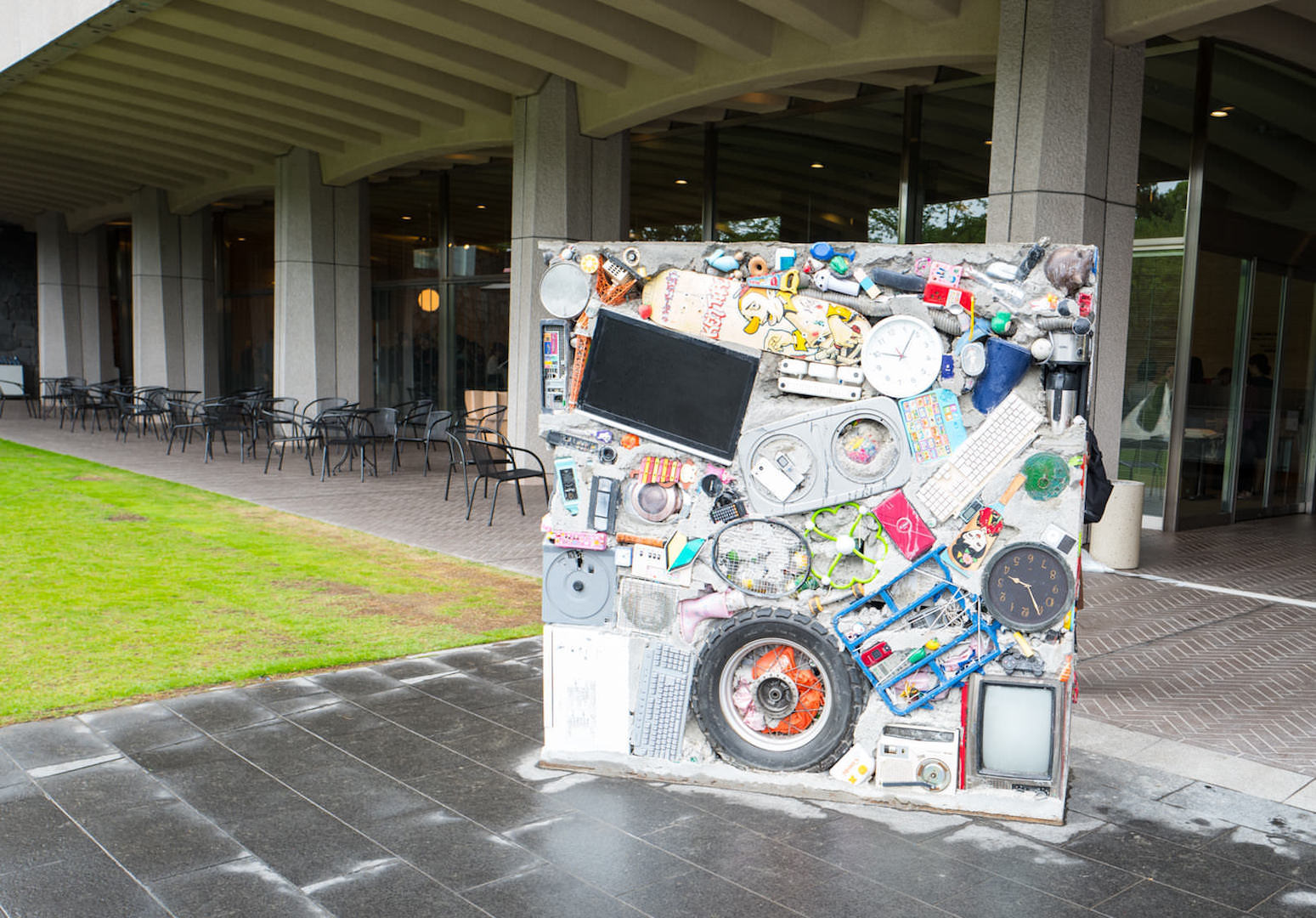
“Garbage Wall 1970/2018.” Produced by the artist’s widow Jane Crawford together with students from Keigo Kobayashi’s laboratory.
This is a re-creation of “Garbage Wall,” originally produced in 1970, and it has been shown in various places around the world. The rule is that materials specific to each host country are used, and this piece is shaped from trash and waste gathered as symbols of Japan.
A difficult exhibition to realize
Realizing this Asia-first exhibition posed a number of difficulties.
1) The White Cube
Gordon Matta-Clark was skeptical of the “white cube” — museum-like spaces closed off from the outside world. That is why his activity took place mainly outdoors.
Bearing this in mind, lining Matta-Clark’s works up inside gallery rooms risks contradicting the stance he himself took, so the organizers had to build the exhibition as a “package” with careful attention to this point.
2) The absence of the artist himself
On the other hand, the fact that Gordon Matta-Clark is no longer of this world weighs heavily too. Forty years have passed since his death in 1978, and the fact that the artist himself cannot be directly involved in the exhibition brings great difficulty to displaying his mode of expression.
3) The lack of connection with Japan
Then, too, his slender ties to Japan — that is, his low profile here — must have been a high hurdle for mounting a large-scale exhibition.
A museum show is a project that moves forward on a certain budget, and it has to confront the major question of whether it can succeed commercially.
I would like to extend my sincere respect and thanks to everyone involved in realizing this exhibition, which was made possible by overcoming these difficulties.
Structure of the exhibition
This exhibition presents the works through a structure focused on five “places” that were important to Gordon Matta-Clark, who was active in the city. What the five “places” have in common is that they are “always transforming.”
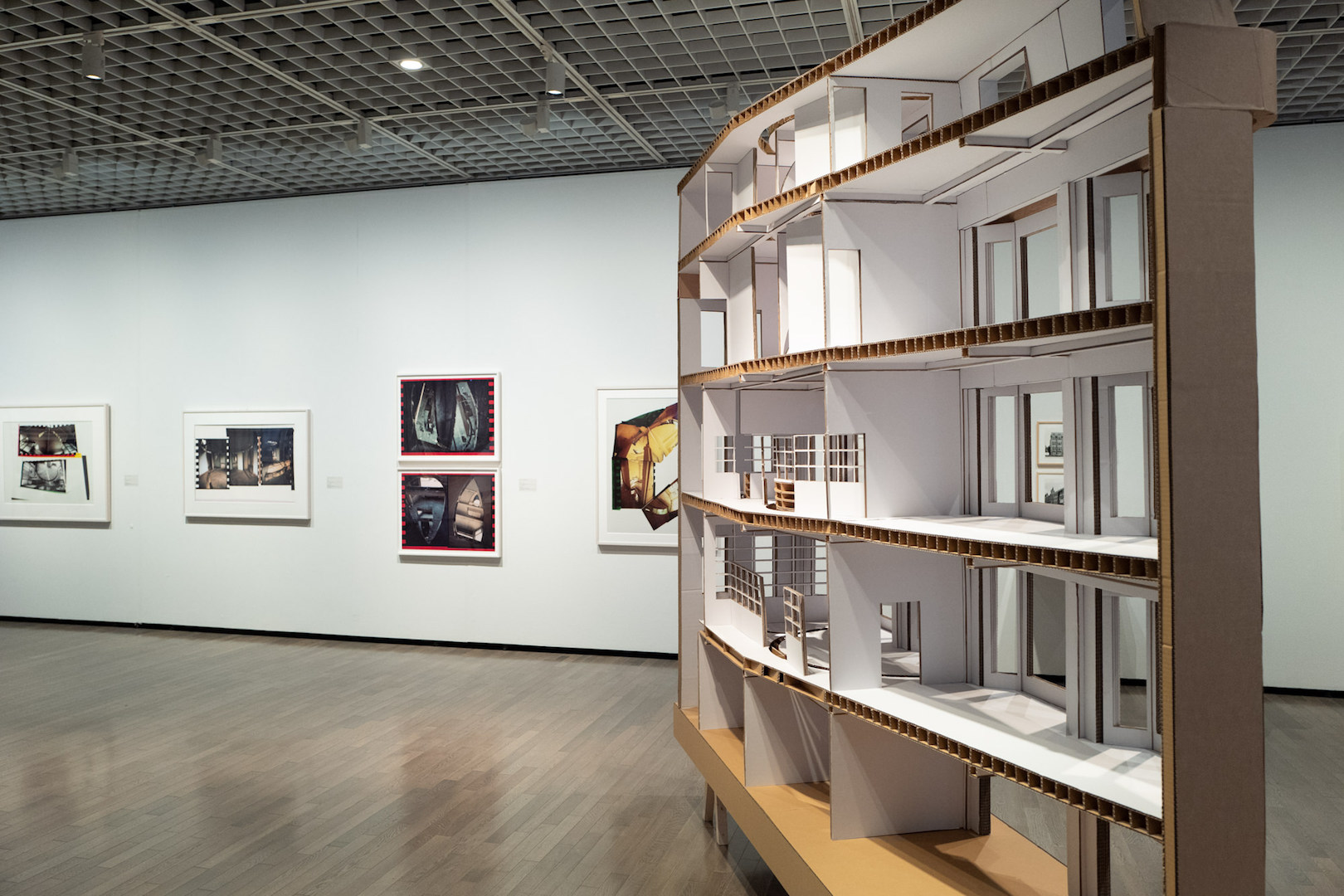
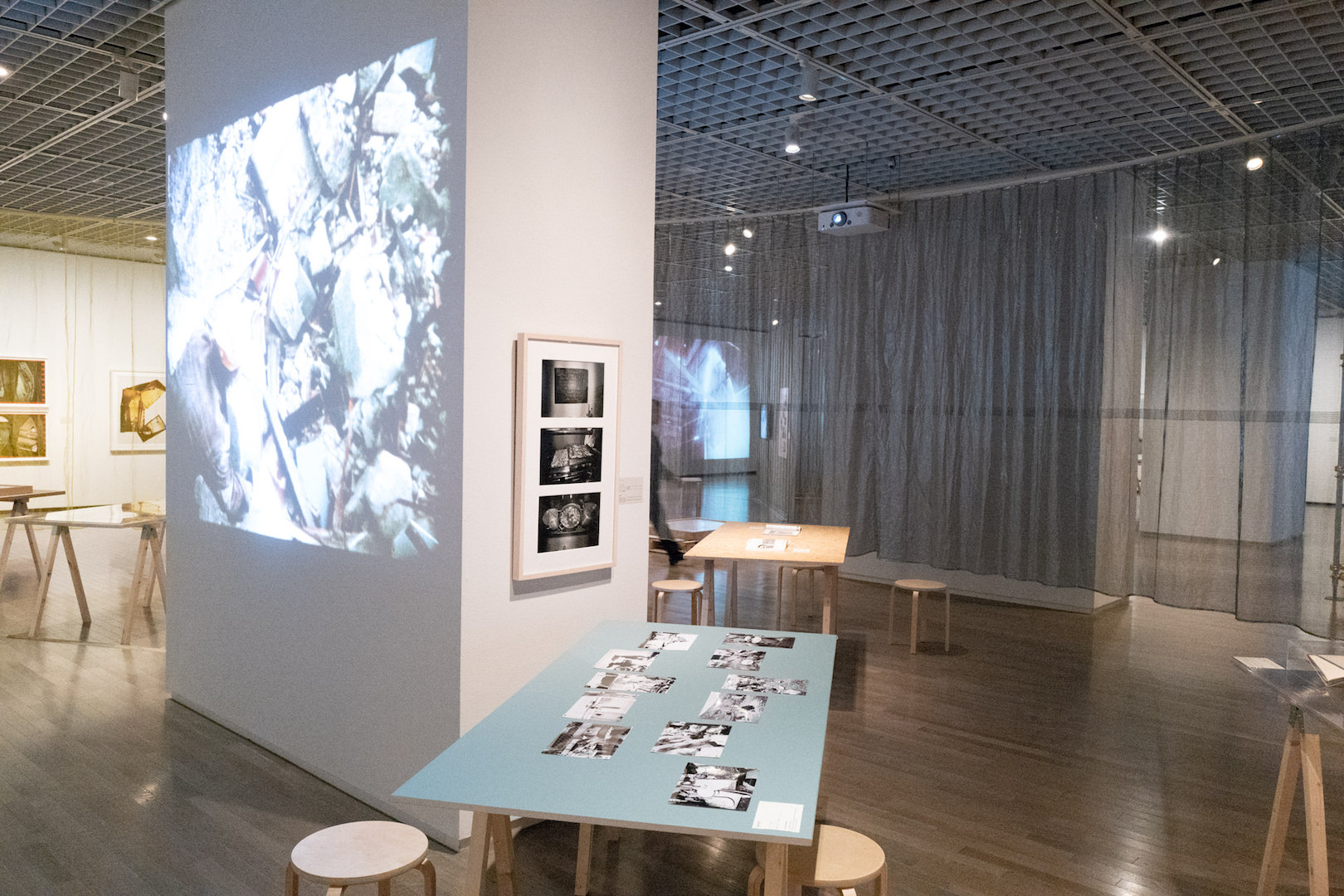
The concept of the exhibition design is “playground.” The show uses materials not usually found in a gallery — corrugated wall panels, metal fencing, colorful nets — to compose the space, so that you can perhaps sense the atmosphere of 1970s New York. Photography is permitted inside the venue (with some exceptions).
Alongside Matta-Clark’s works from each of these places, materials are shown relating to the “context” (the time and environment) of each transforming site. Building these in, the exhibition brings out the contemporary meaning, for us living today, of the practices he pursued.
1 Museum | Exhibiting Matta-Clark
Gordon Matta-Clark was critical of the museum space (the white cube), sealed off from the outside world. Precisely for that reason, he went out into the city to work. Yet in a city that changes at astonishing speed, the buildings that served as the stages for his projects are almost all gone. This section introduces the projects he made in relation to the “museum” and, now that the artist himself is no longer with us, explores the contemporary meaning of “exhibiting” Gordon Matta-Clark as a subject.
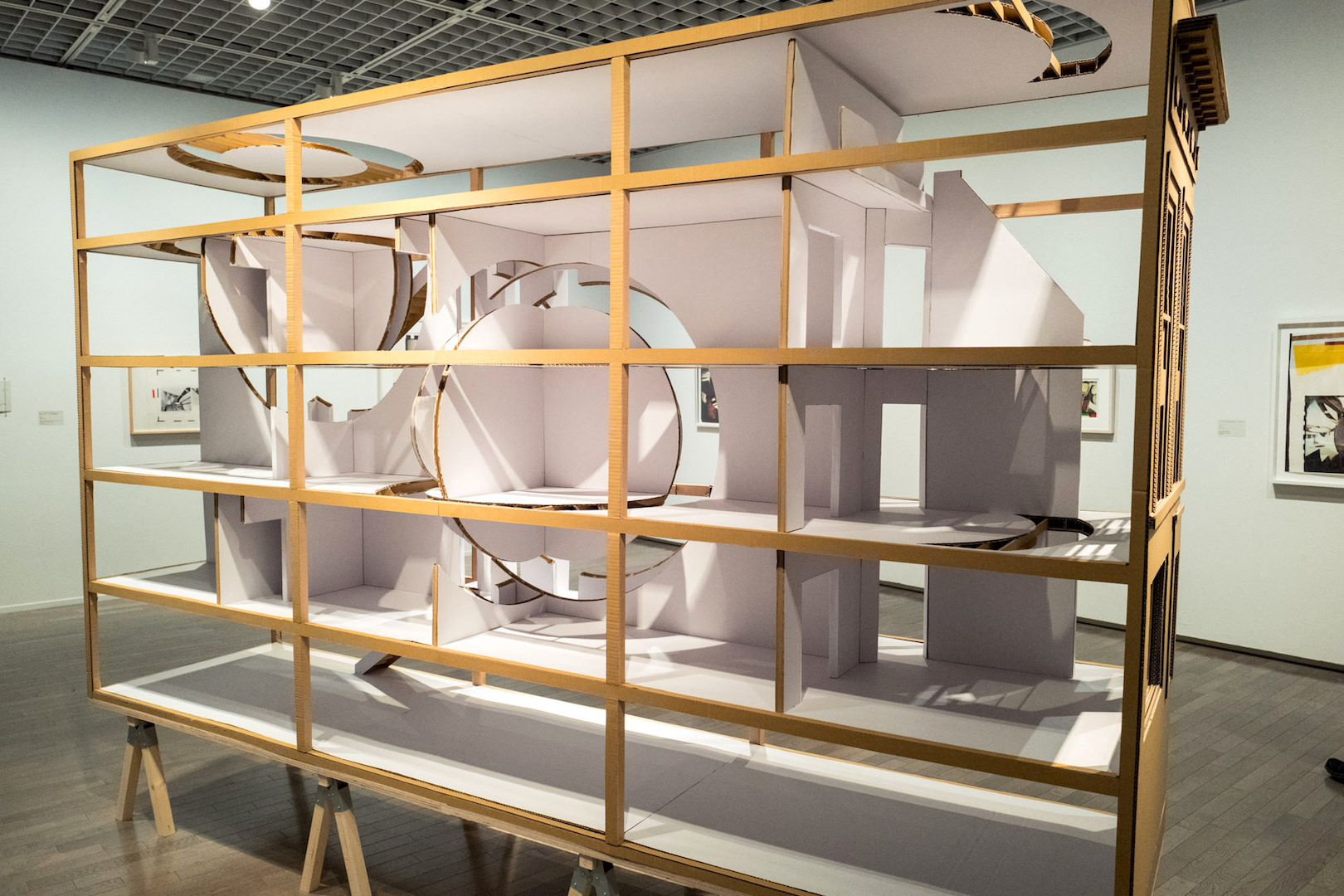
“Circus” (2018). Model (scale 1:8). Designed and produced by the Keigo Kobayashi Laboratory, Department of Architecture, Waseda University.
2 Home | Fluid Space and Memory
Securing a home is one of the most important things in life.
Installation view — “Home”
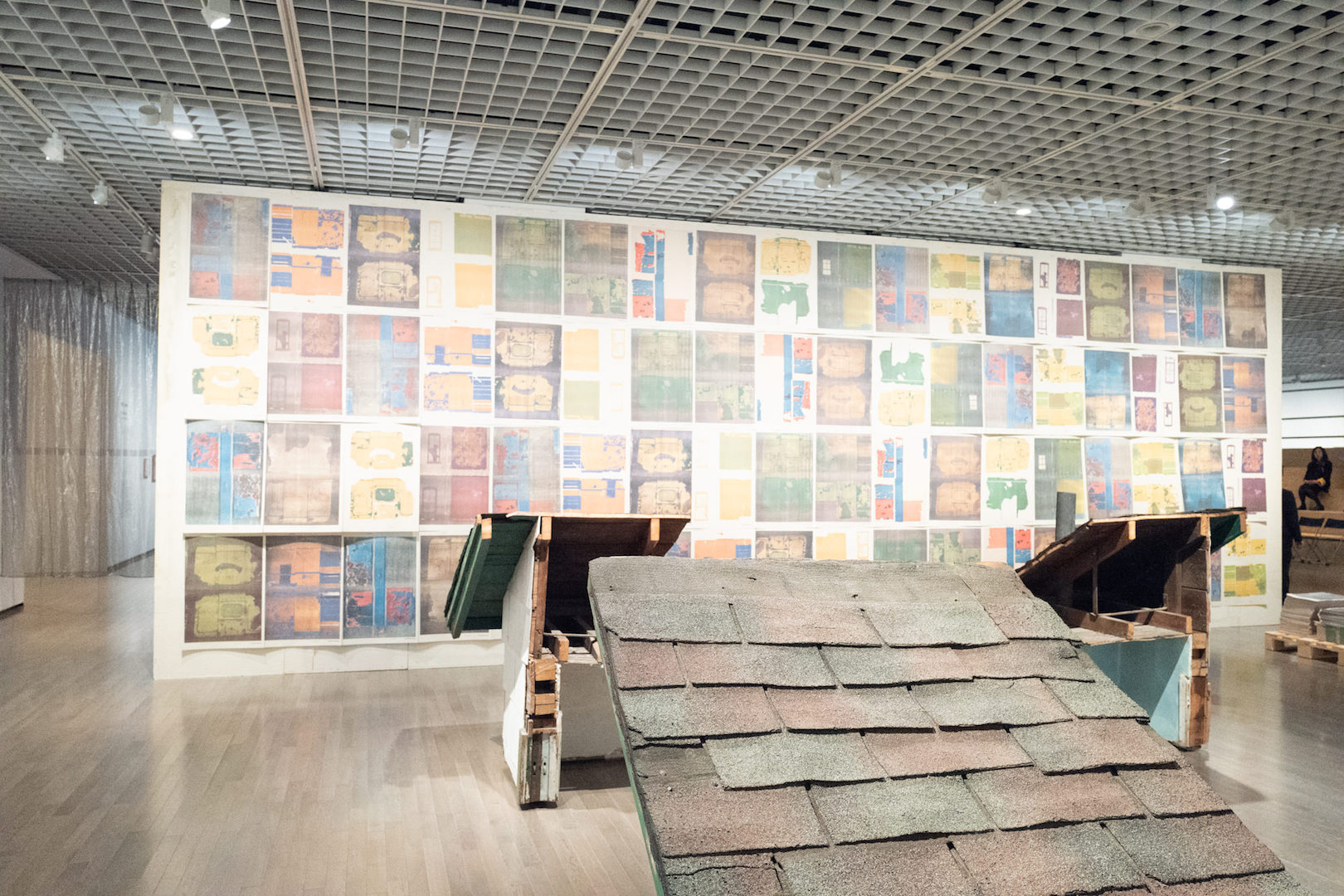
Since the modern era, many of us have not had a home (a hometown) as our dwelling, and have been forced to move from place to place. For Gordon Matta-Clark, what mattered was not architectural style but the human experience of “dwelling.” He intervened in the process by which buildings are demolished during redevelopment, cutting floors and walls of houses and boring holes through them — shining a new light on discarded spaces and letting the histories and memories of those who once lived there rise to the surface.
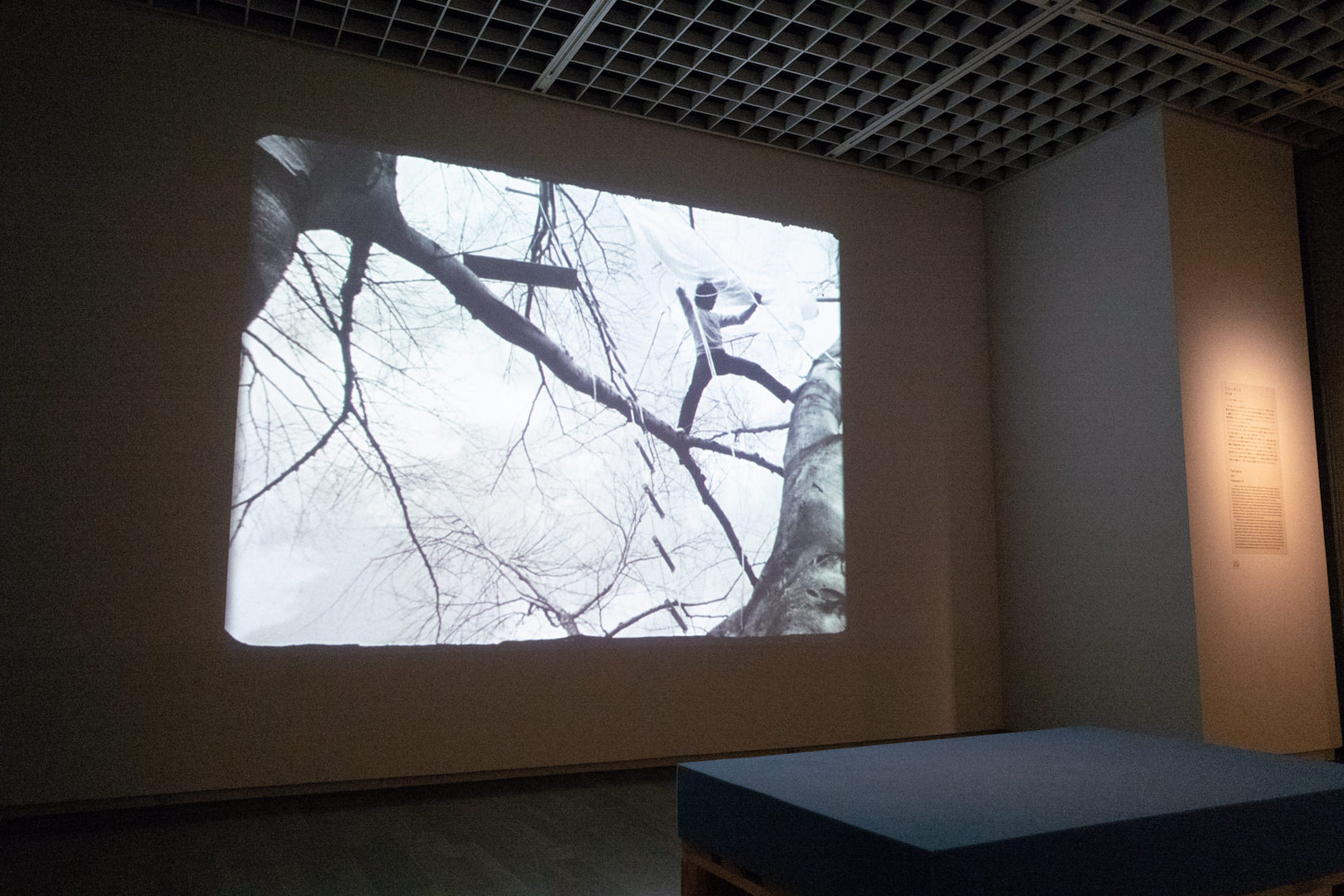
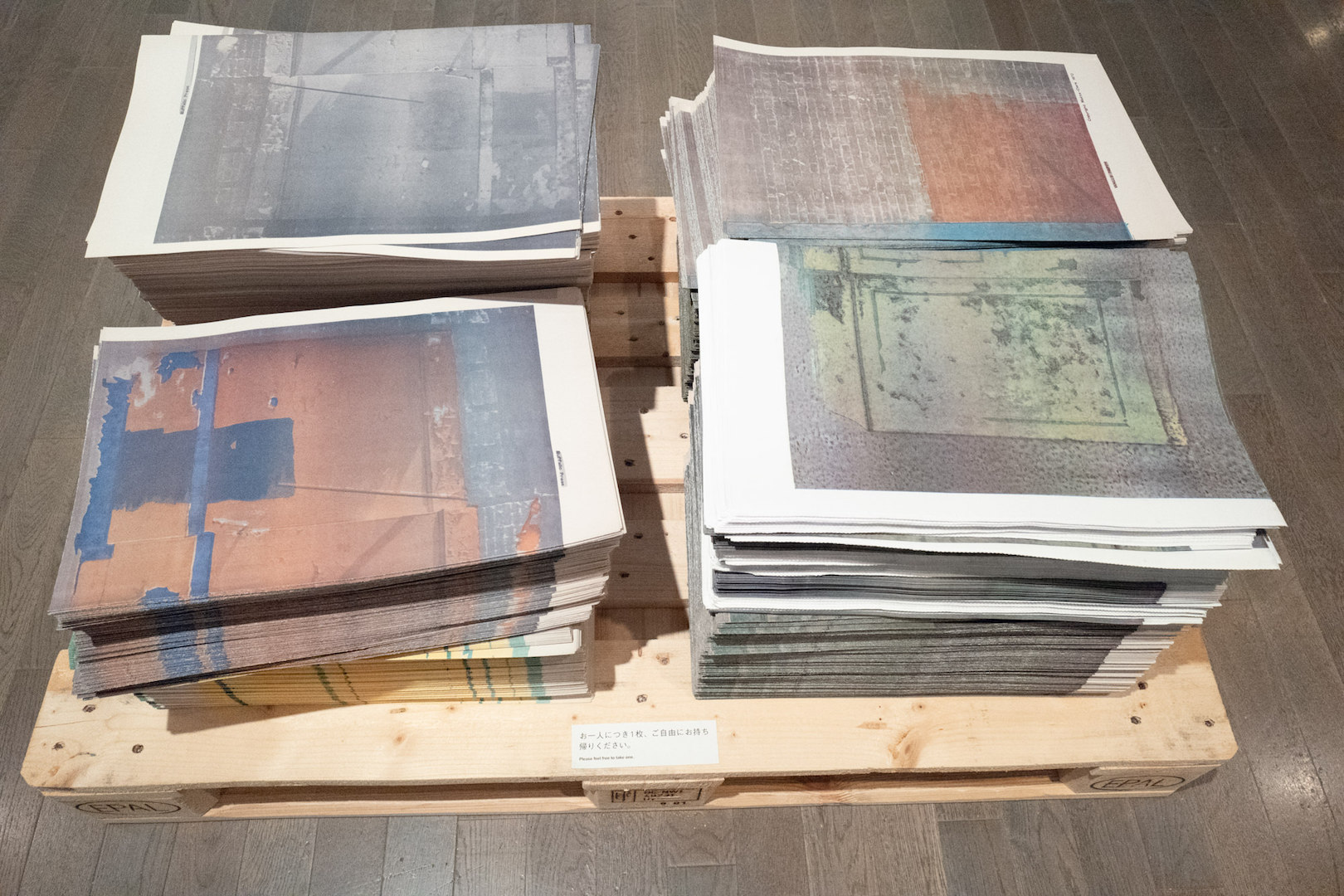
“Tree Dance” (1971). [Video] Black-and-white / silent“Wall paper” (1972/2018). Each visitor may take one sheet home.
3 Street | Circulation and Transformation of Energy
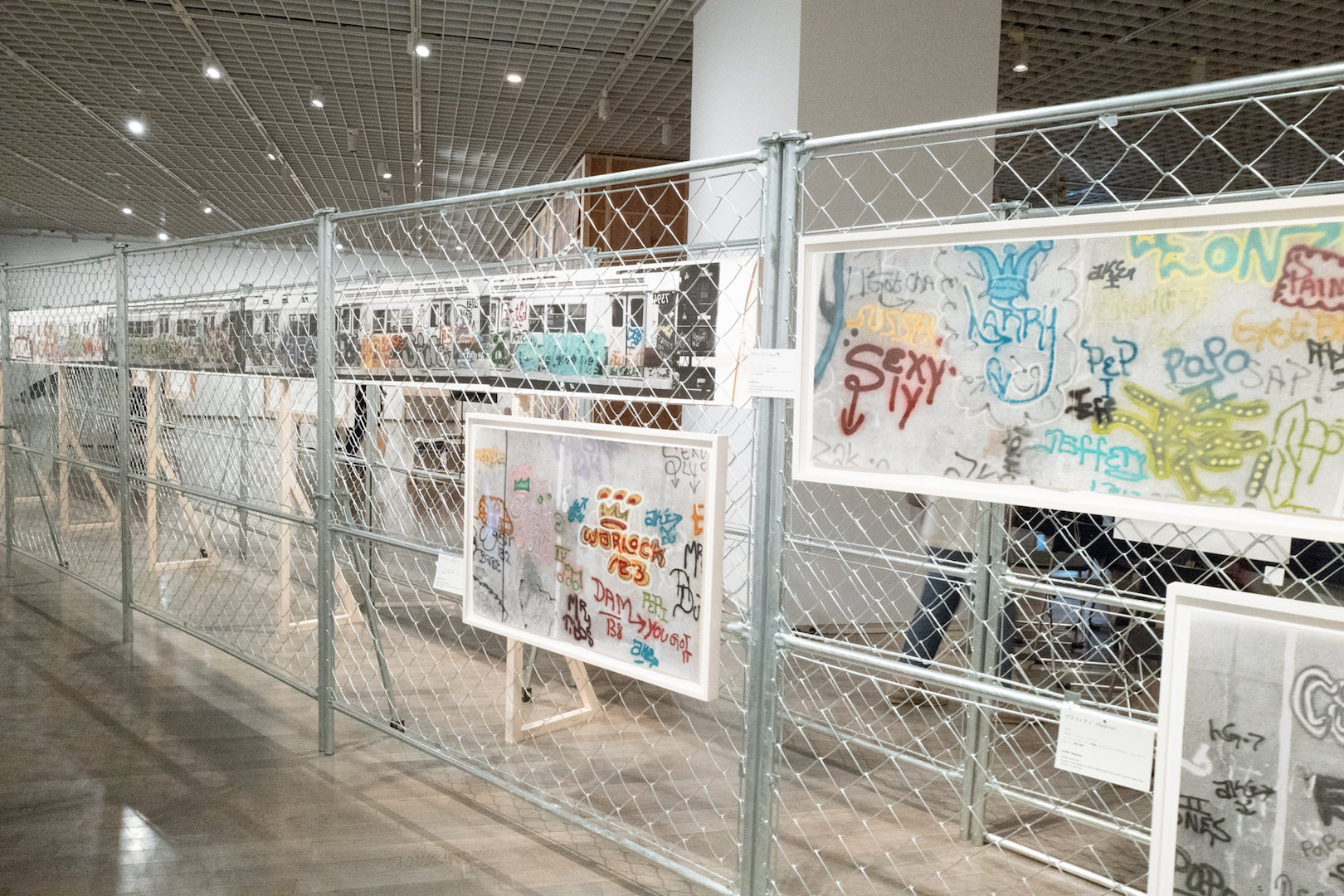
“Graffiti Photoglyphs” (1973)
Gordon Matta-Clark often took as the stage for his activity the dynamic sites where people and things pass by — the street. He paid attention to the gaps within functional urban life (small unused plots of land) and its surpluses (garbage overflowing in the streets, graffiti scrawled on walls here and there) and developed projects that visualized the city’s circulation and transformation of energy.
4 Port | The Edge of Water and Land
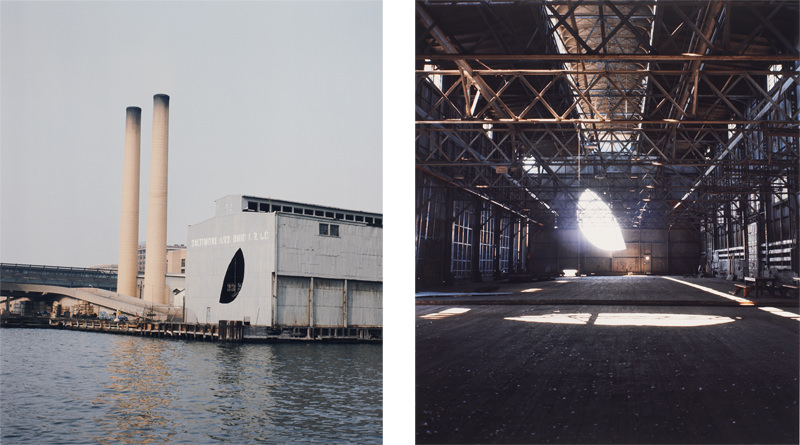
The port, positioned at the boundary of water and land, has long been the starting point for cities to emerge, a place with the power to change society through the exchange of people and goods. Gordon Matta-Clark carried out a number of projects along the piers of the Hudson River in New York.
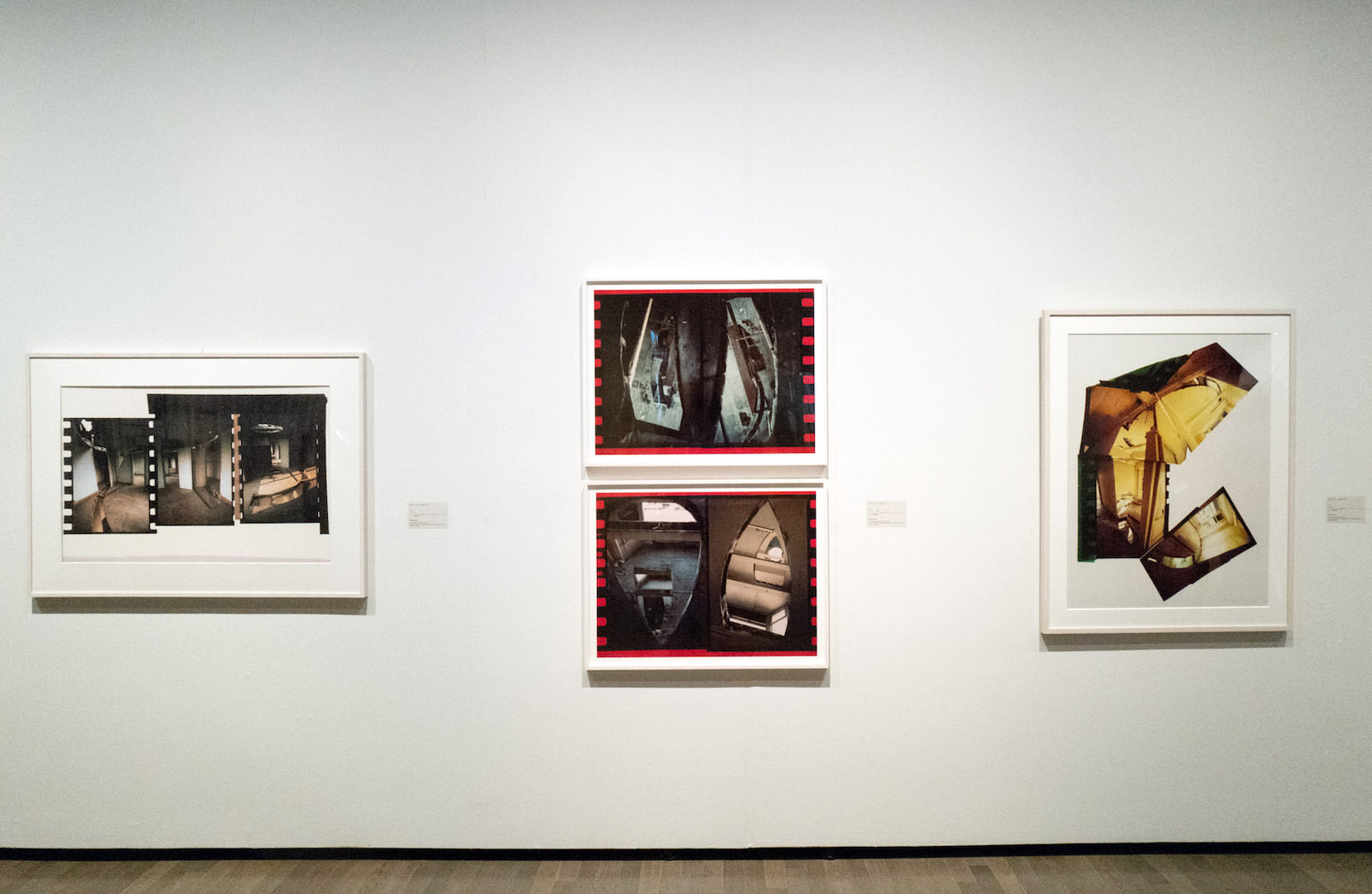
At piers that had already fallen into ruin as the era of maritime shipping and railroads came to an end, his building cuts and performances throw light on the flourishing and decline of port cities that have driven dynamic changes in society.
“Office Baroque” model (scale 1:8) (2018). Designed and produced by the Keigo Kobayashi Laboratory, Department of Architecture, Waseda University.
5 Market | Transformation from Nature to Culture
Gordon Matta-Clark was involved in running the restaurant “FOOD,” and food and cooking often became a source of inspiration for his works. For him, the market — where meat, fish, vegetables, and other foods are handled — was an important site where the point of contact between culture and nature is exposed within the city’s cycle of consumption.
His interest in food extends to the process by which life is delivered to human beings, transformed in quality through cooking and digested, and further to the community shaped by that very process.
Installation view — “Market”
Summary
It was an exhibition that came with a great deal of stimulation.
The trajectory of Gordon Matta-Clark’s activity, with all the various elements he left behind wrapped up inside the keyword “place,” seems to hold much that speaks to the present, our digital society. That is exactly why the impression left after seeing the exhibition was so deep and so strong.
If he were still active in today’s digital age, how might his practice have transformed? I have a feeling that it would surely have been a universal engagement that does not change.
The catalog for this exhibition has extraordinarily deep content — not just the archived works but also essays and dialogues by the staff who worked on the show. The very act of buying it at the museum and taking it home, and keeping the catalog at home, creates an air in which one feels close to Gordon Matta-Clark’s will and thoughts — a genuinely pleasant feeling.
After seeing this exhibition, feeling as if pushed on my back by his own oft-repeated phrase “You Could do a better! — You can do even better than I did”, I left the museum.
Gordon Matta-Clark 展
不只是日本,甚至在亚洲也是首次举办的 “Gordon Matta-Clark 展” 于此揭幕。会场是东京·竹桥的 The National Museum of Modern Art, Tokyo。
本展是日本 Gordon Matta-Clark 研究第一人 Chieko Hirano 女士(山梨大学副教授)与 The National Museum of Modern Art, Tokyo 主任研究员、本展企划担当的 Kenji Miwa 先生共同的力作。此外,围绕如何将”场所”这一关键词以有限的空间加以呈现,展览设计由 Keigo Kobayashi 先生(早稻田大学建筑学科副教授)担纲。正是这三人的组合,让筹备近五年之久的本展成为一场非常有意义的展览。
若对 “Gordon Matta-Clark 究竟是何许人也?” 尚不熟悉,请参考以下文章。
而位于竹桥的 The National Museum of Modern Art, Tokyo,一走进园内,就会看到一件奇特的装置迎面而来。
《Garbage Wall 1970/2018》。由作家遗孀 Jane Crawford 与 Keigo Kobayashi 研究室学生为核心的成员共同制作。
而与各个”场所”中的 Gordon Matta-Clark 作品一同展出的,是有关变化中”场所”的”context(时间与环境)”相关的资料。将这些融入其中,使得生活在当代的我们能够浮现出他所投身的实践在今日的意义。
1 Museum |展示 Matta-Clark
Gordon Matta-Clark 对与外界隔绝的美术馆空间(White Cube)持批判态度。正因如此,他才走上街头进行创作。然而在惊人速度变化的都市之中,作为其项目舞台的建筑几乎都不复存在。本节介绍他与”美术馆”相关的项目,并在他本人已经去世的当下,探讨”展示” Gordon Matta-Clark 这一对象的今日意义。
《Circus》2018 年 模型(缩尺 1:8) 设计·制作:Waseda University 建筑学科 Keigo Kobayashi 研究室
2 住居|流转的空间与记忆
拥有住居是人生存中最重要的事情之一。
会场景观 — “住居”
近代以降,我们大多数人不再拥有作为故乡(home)的住居,被迫辗转迁徙。对 Gordon Matta-Clark 而言,重要的不是建筑的样式,而是人”住”这一体验本身。他介入建筑因再开发而被拆除的过程,切割房屋的地板与墙壁、挖出洞口,为被舍弃的空间投下新的光,也让曾生活于此的人们的历史与记忆浮现出来。
本展的图录内容极为深入,不仅是被归档的作品,还包括参与本展的工作人员的寄稿与对谈等等,内容极为丰富。在美术馆购买、带回家的这一行为,以及将图录保存于家中的过程,都营造出让人得以贴近 Gordon Matta-Clark 的遗志与心念的空气,令人感到十分惬意。
看完本展后,仿佛被他的口头禅“You Could do a better! ~ 你会做得比我更好”推着背,我离开了美术馆。
Gordon Matta-Clark 전
일본뿐 아니라 아시아에서 처음 개최되는 “Gordon Matta-Clark 전”이 열렸습니다. 회장은 도쿄·다케바시의 The National Museum of Modern Art, Tokyo입니다.
본 전시는 일본 내 Gordon Matta-Clark 연구의 제일인자인 Chieko Hirano 씨(University of Yamanashi 부교수)와, The National Museum of Modern Art, Tokyo 주임 연구원이자 기획 담당인 Kenji Miwa 씨 두 분의 역작입니다. 또한 “장소”라는 중요한 키워드를 어떻게 형상화할지 — 한정된 공간 안에서 어떤 접근으로 표현해 갈 것인가 — 전시 공간 디자인을 담당한 것은 Keigo Kobayashi 씨(Waseda University 건축학과 부교수). 이 세 분의 콤비네이션 덕분에, 공개까지 대략 5년의 세월이 걸린 본 전시는 대단히 의미 깊은 전시로 완성되었습니다.
Gordon Matta-Clark가 어떤 인물인가? 라는 분은 아래 기사도 참조해 주십시오.
자, 회장인 다케바시의 The National Museum of Modern Art, Tokyo에 들어서면, 부지 안으로 들어서자마자 기묘한 오브제가 관람객을 맞이합니다.
《Garbage Wall 1970/2018》. 작가의 미망인 Jane Crawford 씨와 Keigo Kobayashi 연구실 학생들을 중심으로 한 멤버가 제작.
이는 원래 1970년에 제작된 “Garbage Wall”의 재제작으로, 세계 각지에서도 전시되고 있습니다. 전시 장소인 나라 고유의 재료를 사용한다는 규칙이 있으며, 이 작품은 일본을 상징할 만한 쓰레기와 폐기물을 모아 형태를 이룬 것입니다.
개최가 쉽지 않았던 기획
아시아 최초가 된 본 전시를 개최하기까지는 여러 어려움이 있었습니다.
1) White Cube
Gordon Matta-Clark는 White Cube라 불리는 미술관과 같이 외계로부터 닫힌 공간에 대해 회의적이었습니다. 그렇기에 그의 전시 활동은 주로 옥외에서 이루어졌습니다.
이 점을 감안하면, Gordon Matta-Clark의 작품을 전시실 안에 늘어놓는 것은 그가 취한 스탠스와 모순될 위험이 있기에, 기획 측은 이 점을 유의하며 “전시라는 패키지”를 만들어내야 했습니다.
2) 본인의 부재
한편, 이미 Gordon Matta-Clark 본인이 이 세상에 없다는 점도 큽니다. 1978년 세상을 떠난 뒤 40년이 지난 지금, 작가 본인이 전시에 직접 관여할 수 없다는 사실은 그의 표현 방식을 전시함에 있어 큰 곤란을 동반합니다.
3) 일본과의 접점
또한 일본과의 접점이 거의 없다는 점 = 지명도의 낮음 역시, 대규모 전시를 개최하는 데 큰 허들이었을 것입니다.
일정한 예산을 들여 진행되는 미술관에서의 개최는 상업적으로 성공할 수 있을지라는 큰 과제와 마주하지 않으면 안 됩니다.
이러한 어려움들을 뛰어넘어 개최된 본 전시의 관계자 여러분께 커다란 경의를 표하며 감사드립니다.
전시의 구성
본 전시는 도시를 무대로 활동한 Gordon Matta-Clark에게 있어 중요했던 5개의 “장소”에 초점을 맞춘 구성으로 작품이 소개됩니다. 5개의 “장소”가 공유하는 것은 “언제나 변용되고 있다”는 점입니다.
또한, 회장 구성의 콘셉트는 “Playground(공원)”. 골판지 같은 벽, 금속제 펜스, 컬러풀한 네트 등 평소 전시실에는 존재하지 않는 소재를 사용해 회장 내부를 구성. 70년대 뉴욕의 분위기를 느낄 수 있을지도 모릅니다. 회장 내 사진 촬영은 OK(일부 제외)입니다.
그리고 각 장소에서 Gordon Matta-Clark의 작품과 함께 전시되는 것이 변용되고 있는 장소에 관한 “context(시간과 환경)”에 관련된 자료들. 그것들을 함께 엮어냄으로써, 현대를 살아가는 우리는 그가 몰두했던 실천의 오늘날의 의미를 떠올릴 수 있습니다.
1 Museum | Matta-Clark를 전시하다
Gordon Matta-Clark는 외계로부터 닫혀 있는 뮤지엄의 공간(White Cube)에 대해 비판적이었습니다. 그렇기 때문에 도시로 나가 활동한 것입니다. 그러나 놀라운 속도로 변화해 가는 도시에서, 그의 프로젝트의 무대가 되었던 건물은 거의 남아 있지 않습니다. 그의 “뮤지엄”에 얽힌 프로젝트를 소개하며, 본인의 사후인 지금, Gordon Matta-Clark라는 대상을 “전시”하는 것의 오늘의 의미를 탐색합니다.
《Circus》2018년 모형(축척 1:8) 설계·제작: Waseda University 건축학과 Keigo Kobayashi 연구실
2 주거 | 유전하는 공간과 기억
주거의 확보는 살아가는 데 있어 가장 중요한 것 중 하나입니다.
회장 풍경 — “주거”
근대 이후, 우리 대다수는 고향(home)으로서의 주거를 갖지 못하고, 여기저기로 옮겨 살아야 하는 처지에 놓여 있습니다. Gordon Matta-Clark에게 중요했던 것은 건축의 스타일이 아니라, 사람이 “머문다”는 경험이었습니다. 그는 재개발 속에서 건물이 헐려 가는 프로세스에 개입해, 가옥의 바닥과 벽을 잘라내고 구멍을 뚫음으로써 버려진 공간에 새로운 빛을 비추고, 또 그곳에 살았던 이들의 역사와 기억까지도 떠오르게 했습니다.
《Tree Dance》1971년 [Video] 흑백/무음“Wall paper” 1972/2018년 1인당 1장 가져갈 수 있습니다.
3 Street | 에너지의 순환과 변용
《Graffiti Photoglyphs》1973년
Gordon Matta-Clark는 사람과 사물이 오가는 다이내믹한 현장, 거리를 종종 활동 무대로 삼았습니다. 기능적인 도시 생활에 잠재된 틈(용도 없는 자그마한 땅)이나 잉여(거리 곳곳에 넘쳐나는 쓰레기, 여기저기 벽에 그려진 그래피티)에 주목하며, 도시의 에너지 순환이나 변용을 가시화하는 프로젝트를 전개합니다.
4 항구 | 물과 뭍의 경계
물과 뭍의 경계에 위치하는 항구는 예로부터 도시가 발생하는 기점이 되어 왔으며, 사람과 물자의 교류를 통해 사회를 변화시키는 힘을 가진 장소였습니다. Gordon Matta-Clark는 뉴욕 Hudson 강변에 늘어선 부두에서 여러 프로젝트를 진행합니다.
《Day’s End》1975년 ※2점 1조3점 모두 《Office Baroque》1977년
수운과 철도의 시대가 끝나고, 이미 황폐해진 부두에서 이루어진 그의 Building Cut(건축 절단)와 퍼포먼스는, 사회에 다이내믹한 변화를 만들어 왔던 항만 도시의 번영과 쇠퇴를 비추어 냅니다.
본 전시의 도록은 대단히 깊이 있는 내용으로, 아카이브된 작품뿐 아니라 본 전시에 관여한 스태프의 기고와 대담 등이 가득한 내용입니다. 미술관에서 구입해 집에 가지고 돌아가는 그 행위, 그리고 도록을 집에 보관함으로써 Gordon Matta-Clark의 유지와 뜻에 다가설 수 있는 공기가 만들어지며 편안함을 느낄 수 있습니다.
본 전시를 감상한 후, 그의 입버릇이기도 했던 “You Could do a better! — 당신이라면 나보다 더 잘 해낼 수 있어”에 등을 떠밀리듯 미술관을 뒤로했습니다.