An irregularly updated Burart Diary. A diary-style piece in which the editor rambles about daily life and passing observations.
Read whenever you have a spare moment.
SBI Art Auction
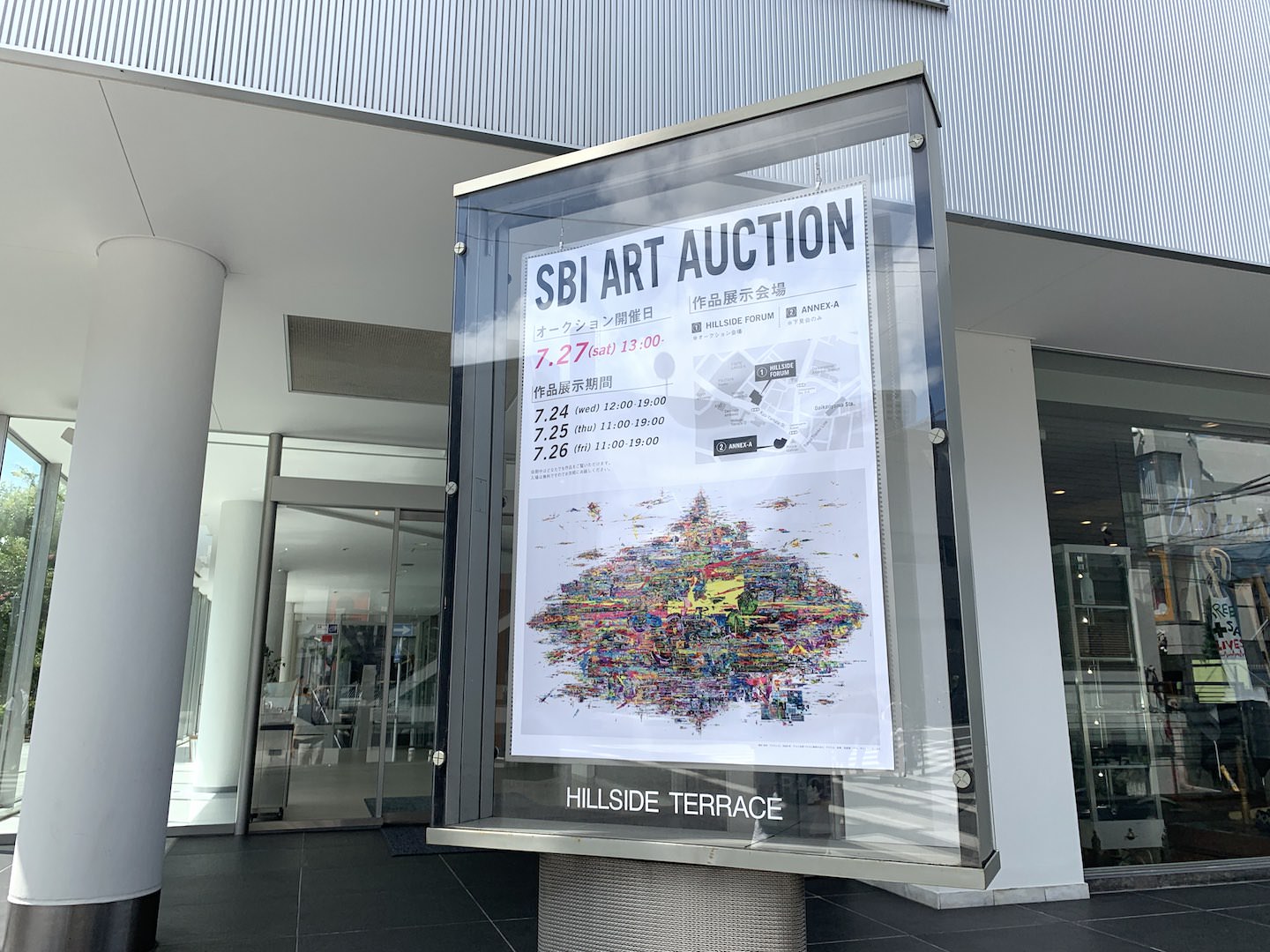
July 27, 2019, 1:00 p.m., Hillside Forum in Daikanyama, Tokyo.
The contemporary art auction “SBI Art Auction — Modern & Contemporary Sale” was held.
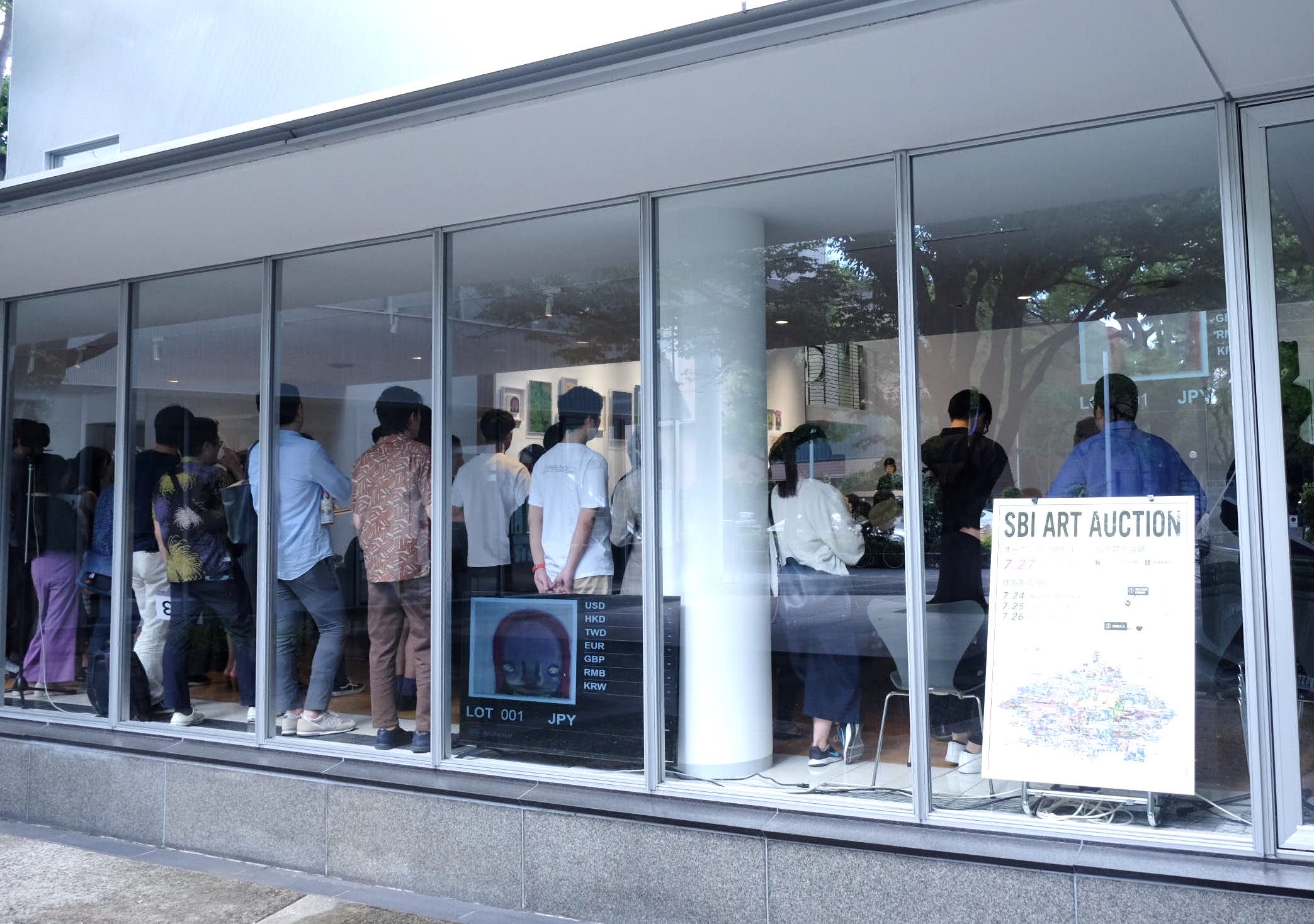
The venue, Hillside Forum (Daikanyama, Tokyo)
The venue was set up seated-style with rows of chairs, and every seat was taken — the buzz was strong enough that people were even standing.
Walking in, you might expect the air to be thick with the aggressive energy of collectors dead-set on buying. To my surprise, the atmosphere was quite relaxed.
I was struck by pairs of well-dressed women in their twenties and thirties, alongside young couples, groups of male collectors, and gentlemen with a wealthy air who came alone — a remarkably broad audience.
The auction started right on time.
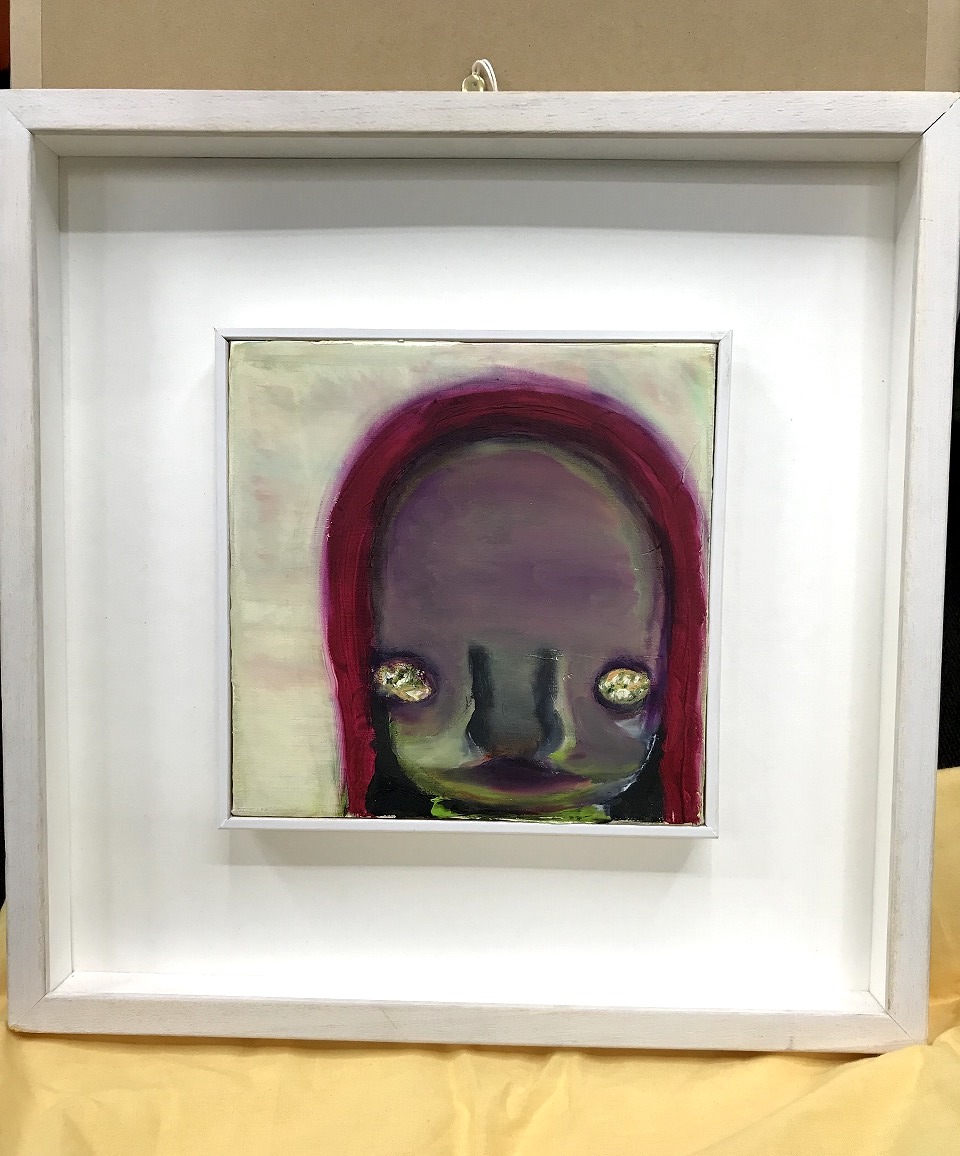
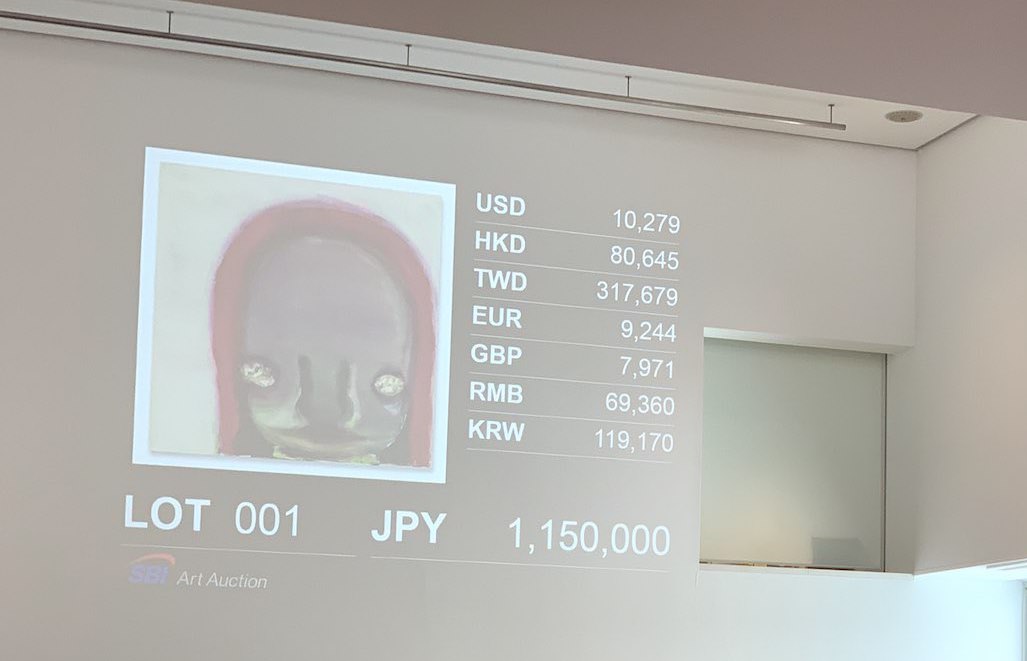
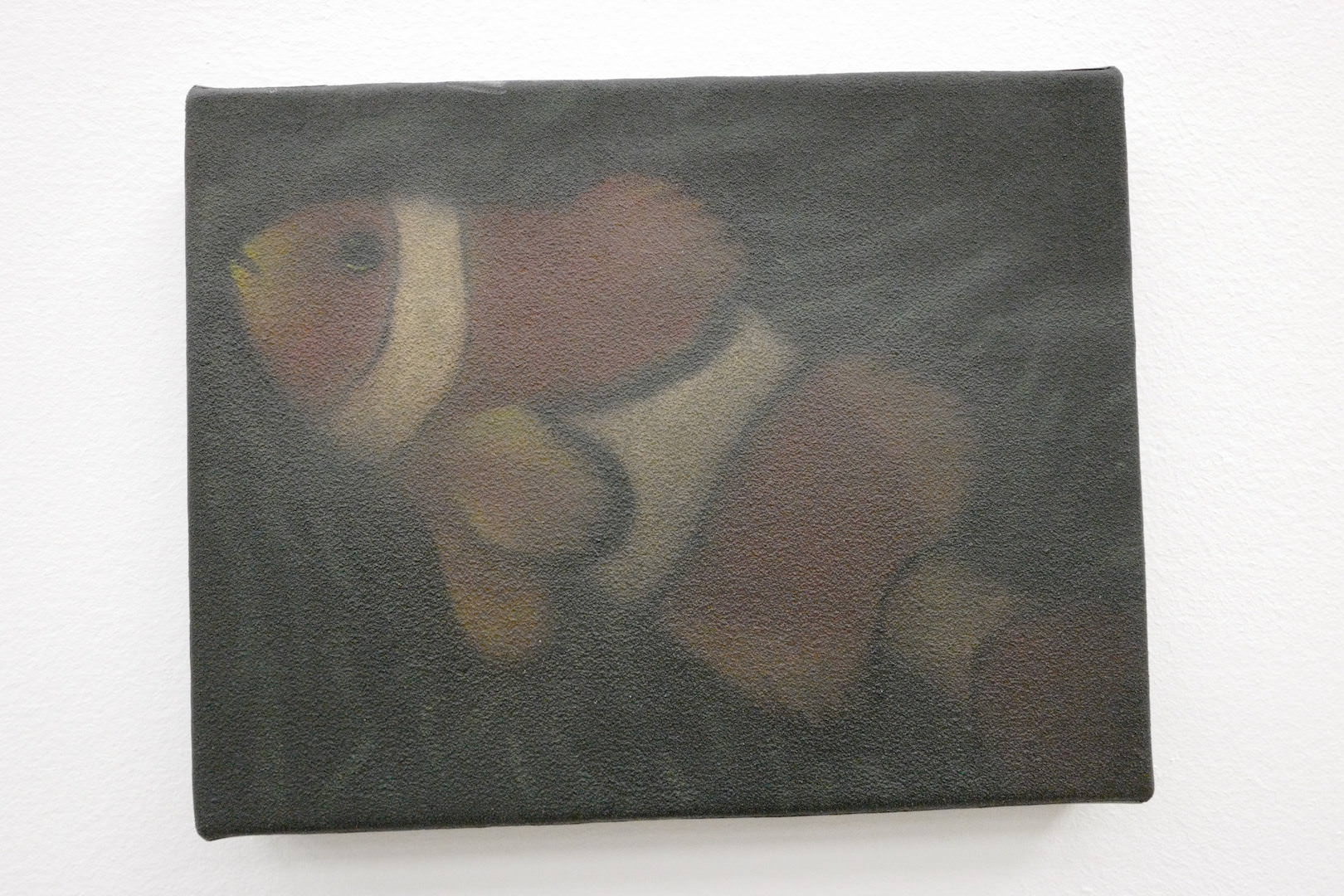
After the auctioneer ran through the usual notices, the very first lot went under the hammer without missing a beat. The first work of the day was a small oil-on-canvas titled Untitled — an 18 cm piece painted by Izumi Kato in 2006.
Izumi Kato, Untitled, 2006, oil on canvas, signed on the reverse, 18.0 x 18.0 cm (S0), framed Estimate: 200,000 – 300,000 yen. Hammer price: 2,530,000 yen.
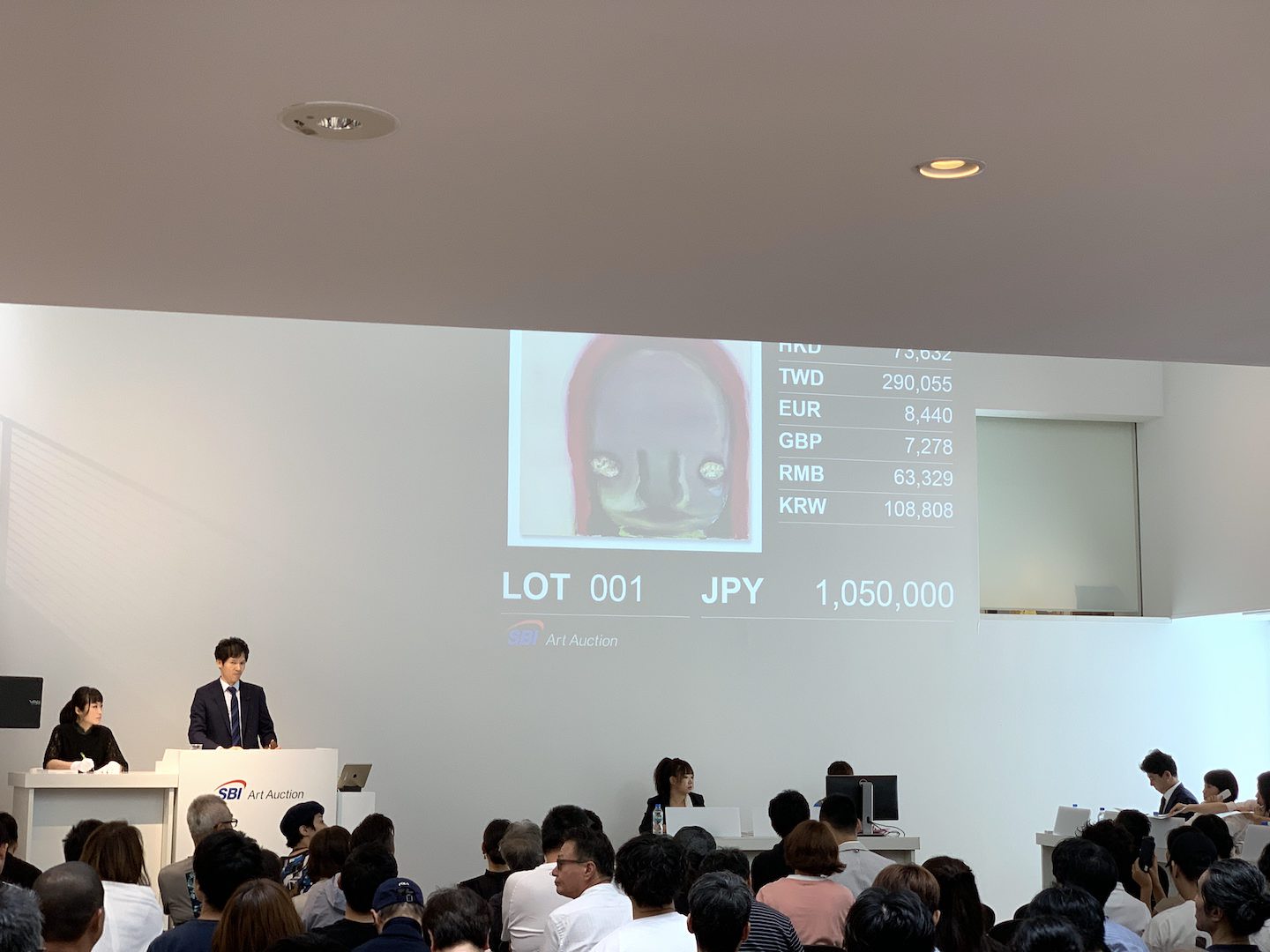
Once the starting signal was given, the auctioneer called out bids second by second — 200,000, 220,000, 240,000 yen — while the hammer price on the big screen at the front of the room climbed rapidly.
Prices took off the moment the auction started.
SBI Art Auction uses three bidding channels — written bids, telephone bids, and internet bids — and they are integrated systematically at the venue so that prices update in real time.
Once the price shot past one million yen right after the start, the bidding pace gradually settled. A common sight in the later stages of an auction is the no-holds-barred battle among collectors who absolutely refuse to lose. To the audience — myself included — the way unseen contenders throw prices at each other, driving the number ever higher, feels almost like a form of entertainment.
The writer’s own pre-auction estimate was around 800,000 to 1,000,000 yen.
It is a battle between unseen bidders over a one-of-a-kind work.
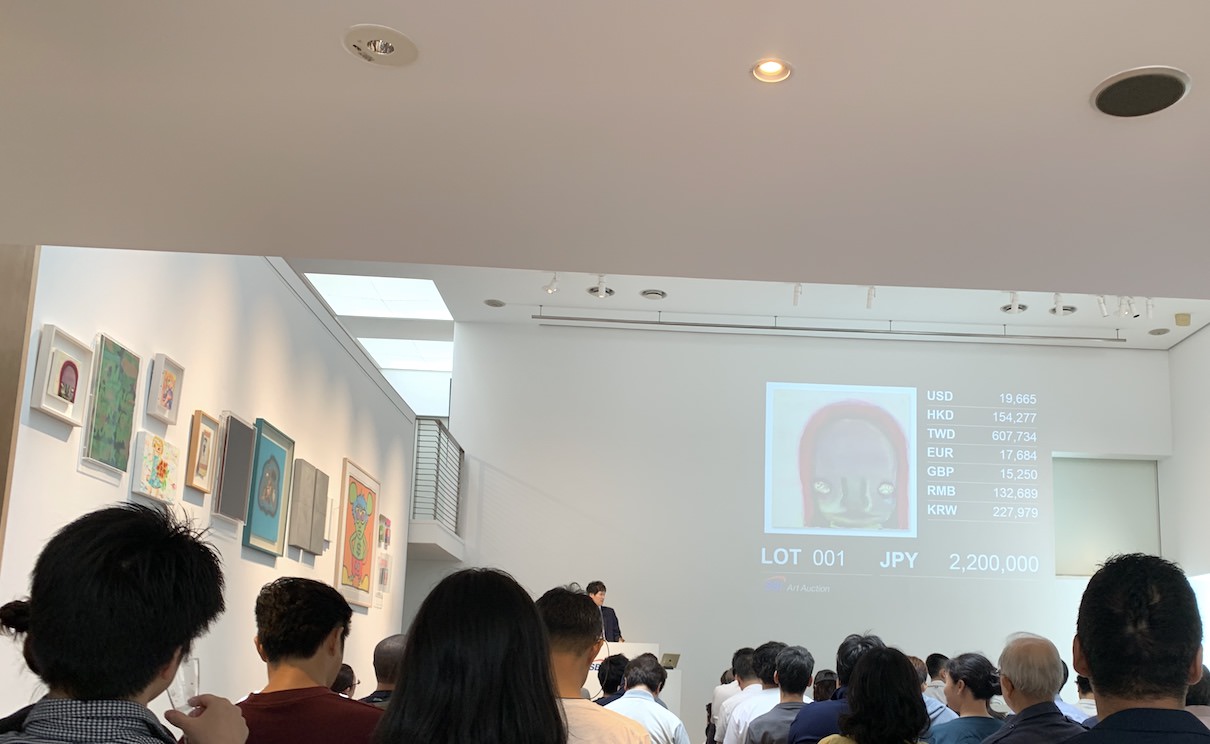
The accelerating auction eventually landed at 2.2 million yen, with the auctioneer’s call of “Sold!” closing the lot.
Note: 2.2 million yen is the hammer price. The buyer’s final total actually includes a 15% buyer’s premium and 8% consumption tax on top. In other words, the buyer’s real cost was 2,530,000 yen with the premium, and 2,732,400 yen once consumption tax is added (as of July 2019).
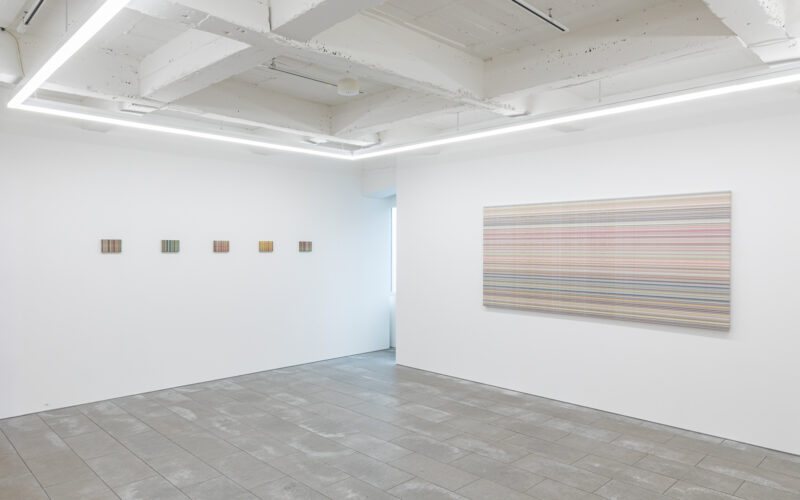
The leftmost item in the photo is the actual work — a very small piece.
The auction house’s calculus
This SBI Art Auction saw an unexpectedly high price right on the very first lot.
Watching that opening move, I get the sense that leading with a popular work is a way to draw in the audience’s attention and, by landing at a strong price, to “stage” the mood of the room. It cultivates a sense of elation and an overall high-price vibe — but this is just my personal impression.
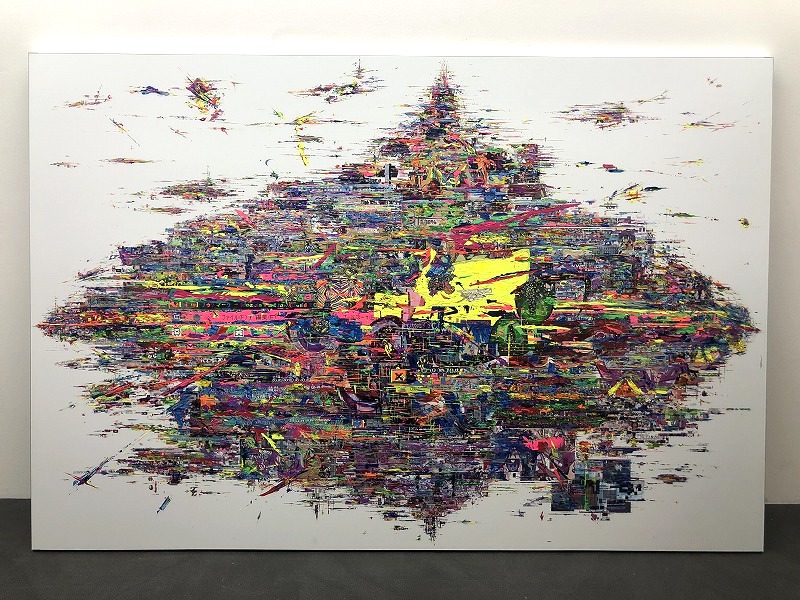
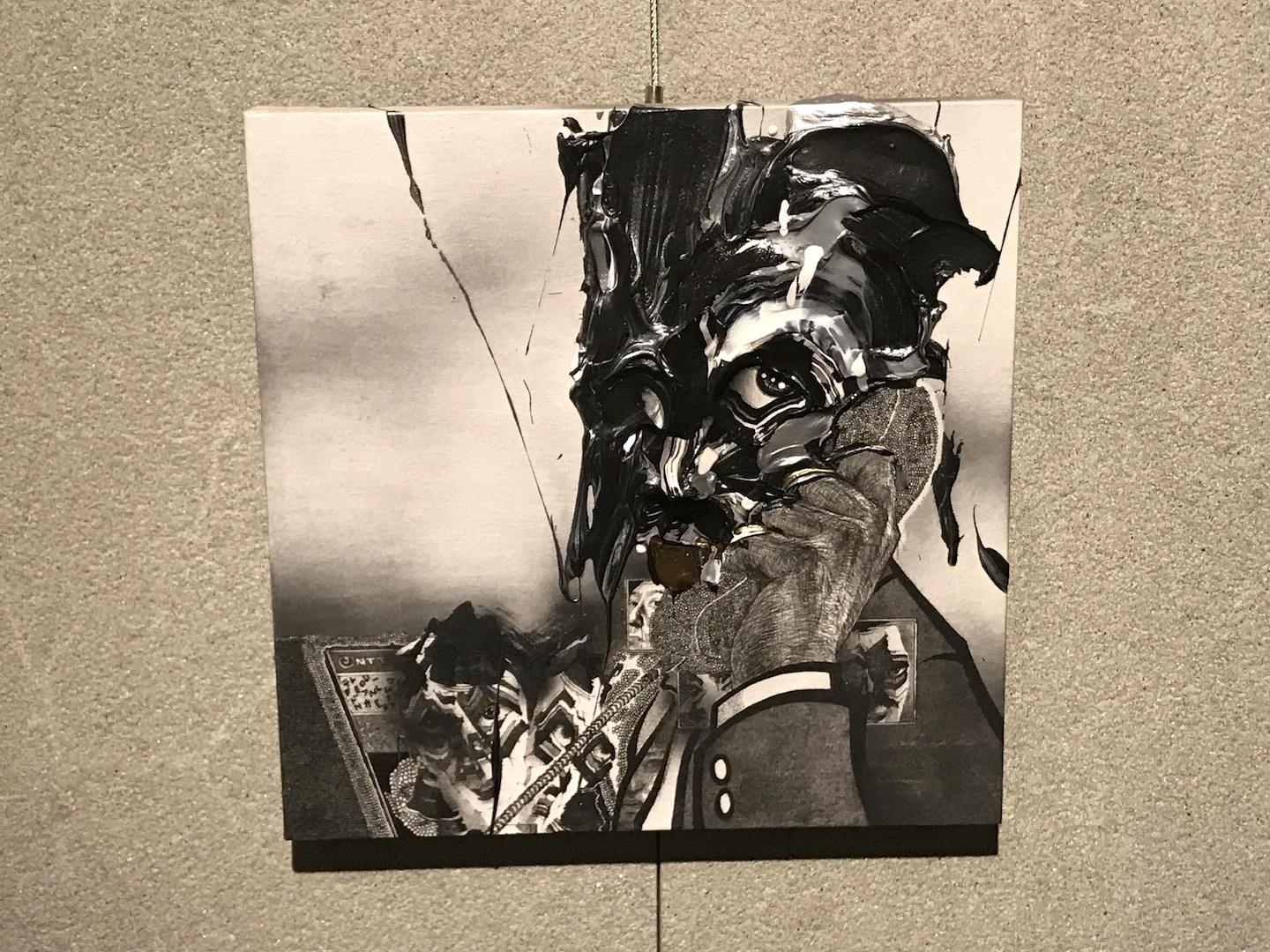
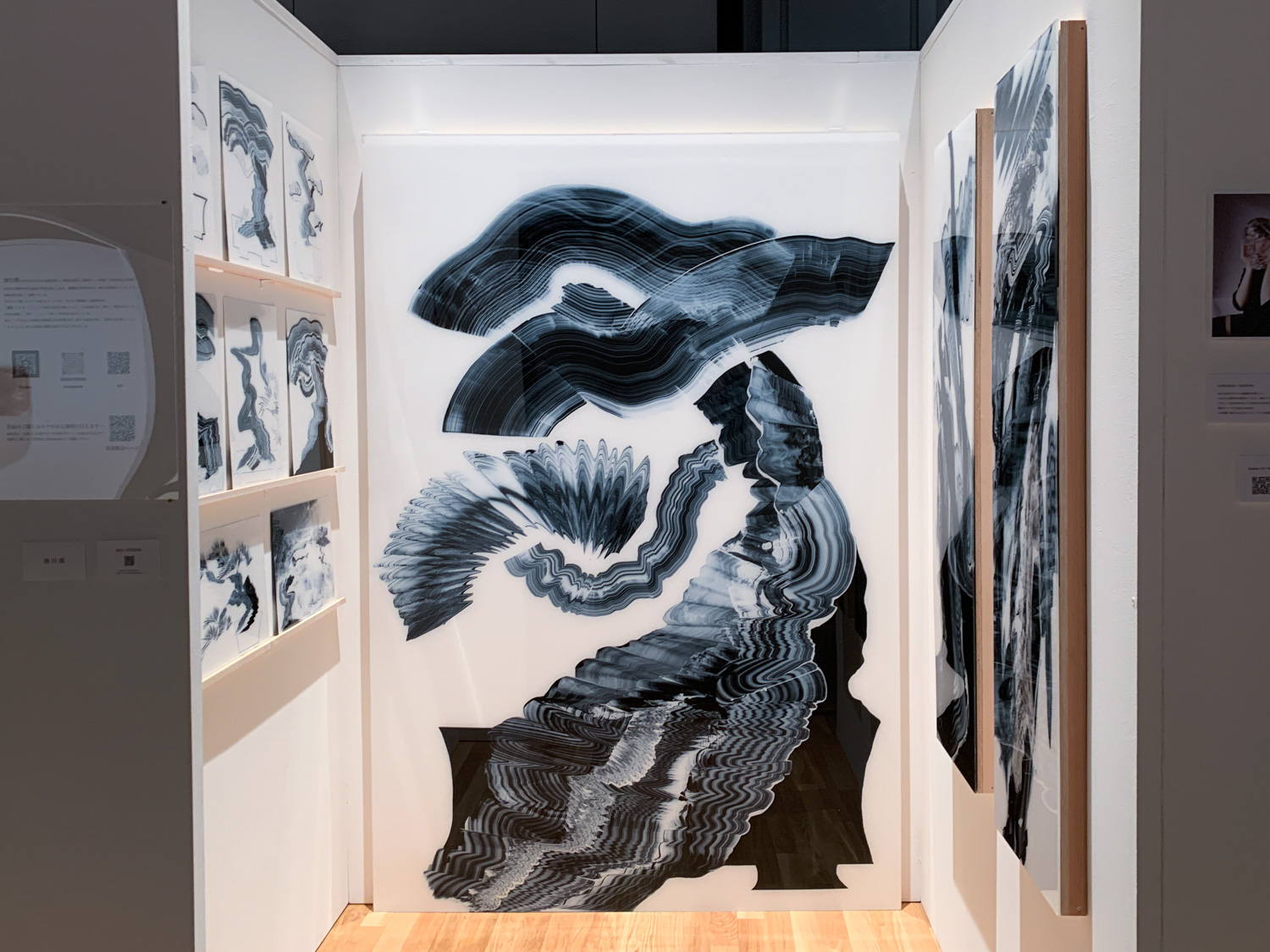
Kazuki Umezawa, Lavos, 2009, image output on an aluminum-composite panel, with acrylic, pencil, colored pencil, pen, glitter, crayon, etc.; signed on the reverse, 130.0 x 194.0 cm. Winner of the 2009 Tokyo Wonder Wall Prize. Estimate: 600,000 – 900,000 yen. Hammer price: 5,290,000 yen.
Lavos by Kazuki Umezawa, used as the cover image of the auction’s pre-sale catalog, also sold for a high price. The work was shown in the 2018 exhibition “Landscape Beyond” (Kazuki Umezawa x TAKU OBATA) at the Watari Museum of Contemporary Art (Watarium), and is one of Umezawa’s signature pieces.
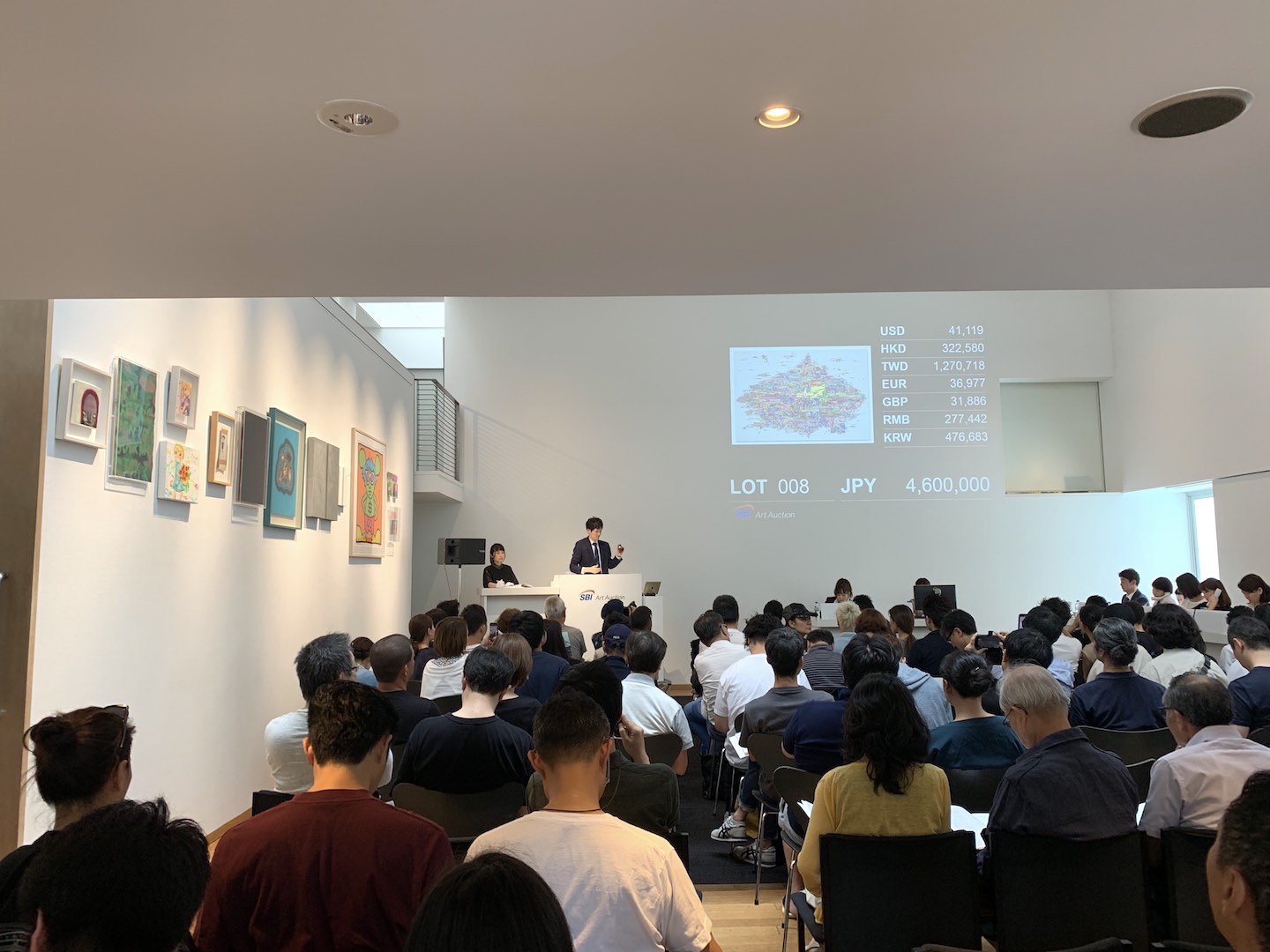
Kazuki Umezawa’s Lavos went under the hammer at 4.6 million yen.
Perhaps when the marquee works pile up in the first half, they push the participants’ motivation up. Against an estimate of 600,000 – 900,000 yen, this piece sold for 4.6 million yen (5.29 million yen including the premium) — an explosive result that even outstripped the opening momentum of the Izumi Kato work.
The overheated contemporary art market
An original unique work by Kazuki Umezawa, which I saw at a group show about a year ago, was priced around 500,000 yen.
Of course, the size, motif, and style differ, but faced with such an abnormal price jump, one can only call it an overheated, abnormal price. The Izumi Kato piece at the top of the sale is a wonderful work, no question — but for an 18 cm-square piece, it is an outlandish, out-of-the-ordinary figure. It is worlds away from the primary-market prices for Izumi Kato works that I know of.
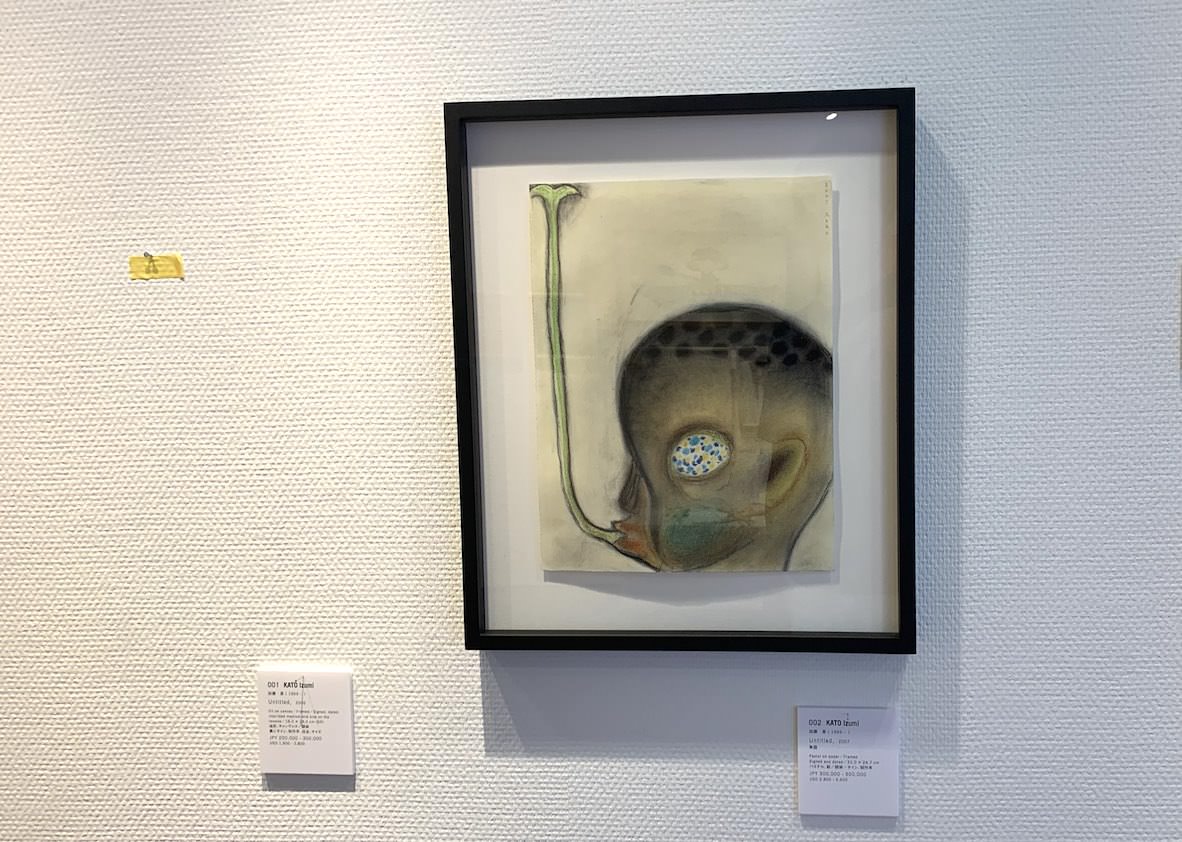
Izumi Kato, Untitled, 2007, pastel on paper, signed, 32.0 x 24.7 cm. Estimate: 300,000 – 500,000 yen. Hammer price: 977,500 yen.
At the venue, guests are served drinks including well-known champagne brands.
As lot after lot is introduced and the auctioneer’s calling of prices reverberates through the hall — echoing into your ears and lodging in your brain — you start to feel your own sense of money go numb.
The A4-sized paddle handed to each participant is so thin and flimsy that, in the right mood, you feel it could slip right up on its own. With a little champagne coursing through your body, it becomes easy to imagine yourself raising it in a rush.
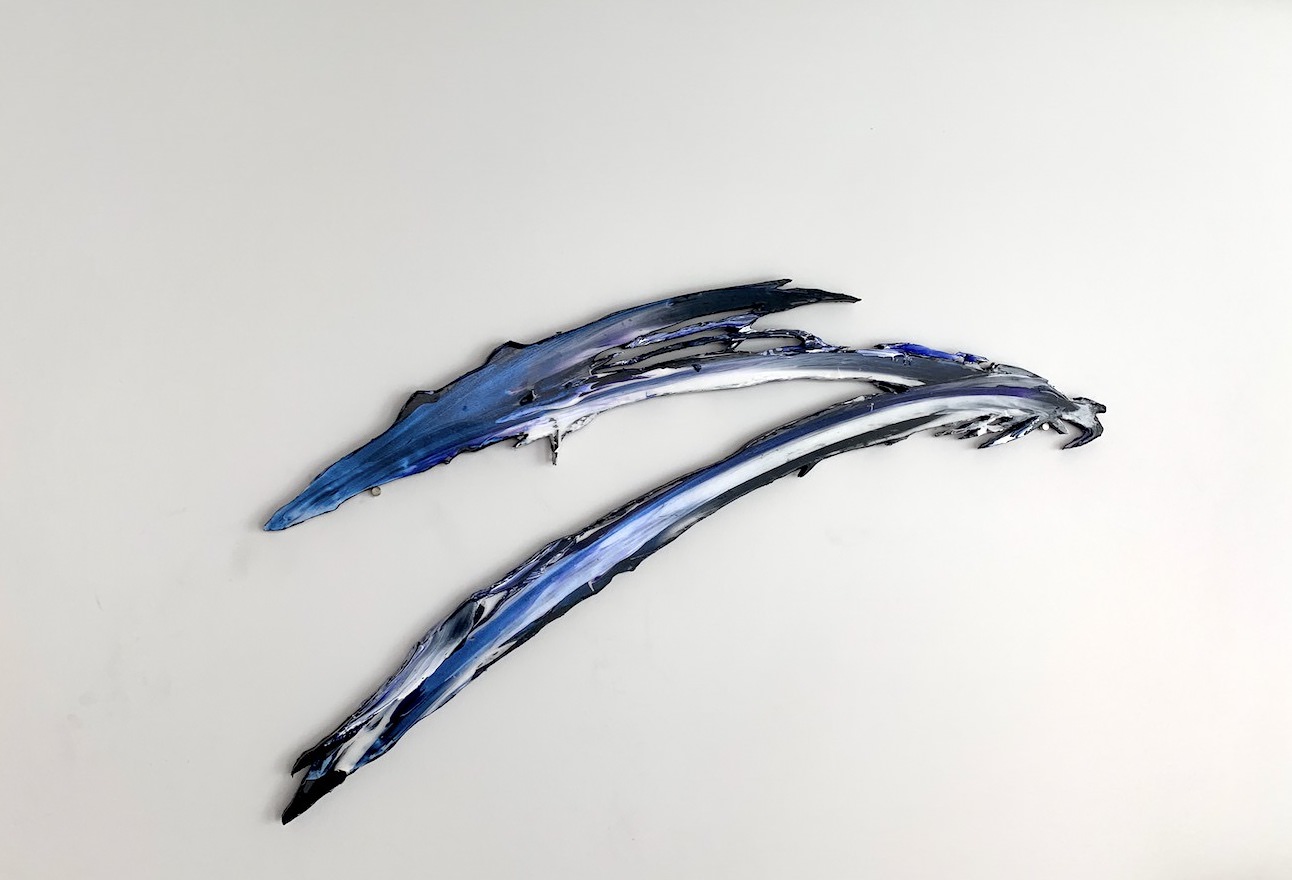
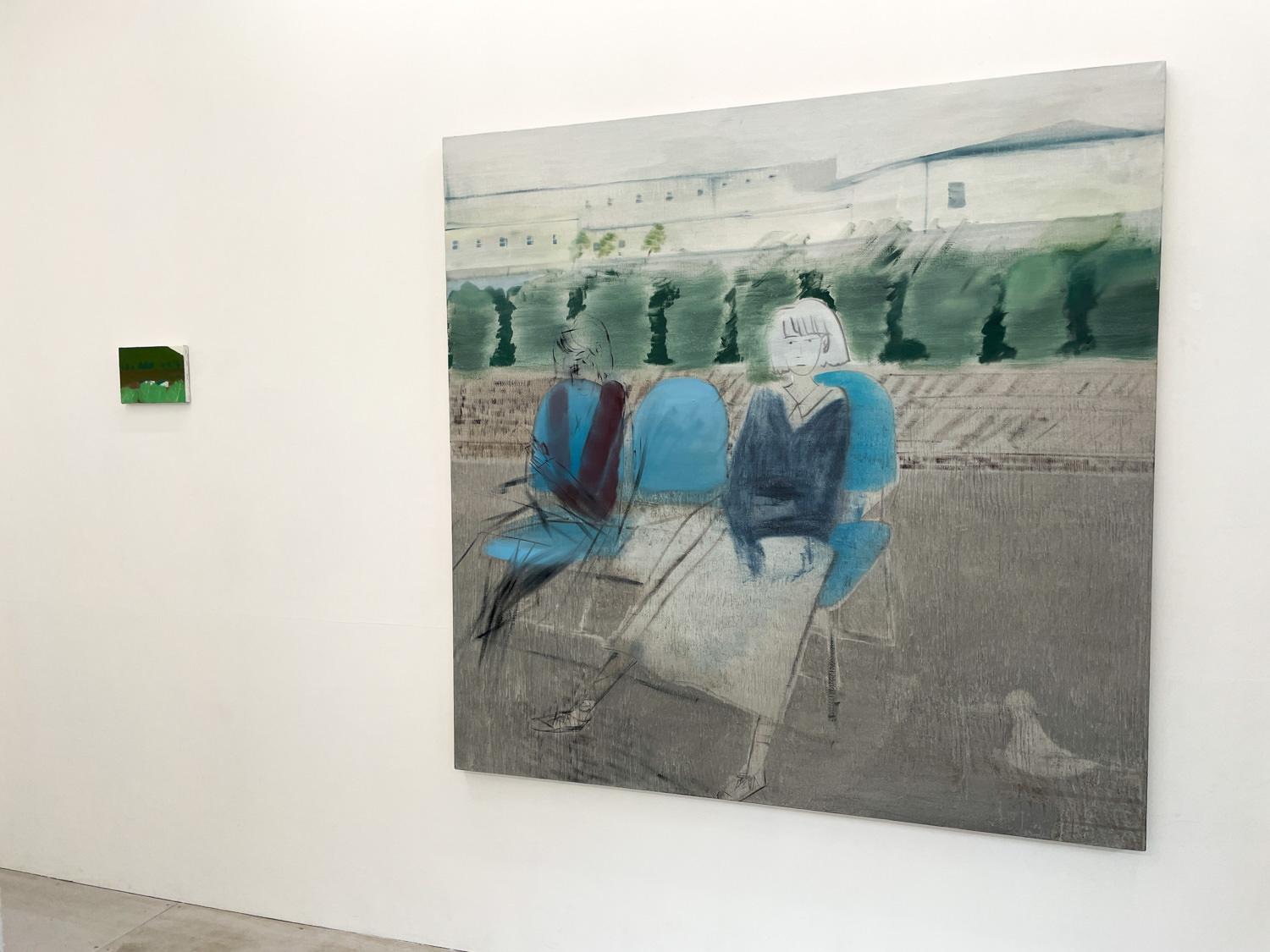
Meguru Yamaguchi, RD no. 6, 2018, acrylic, epoxy resin on wood, signed on the reverse, 47.0 x 132.0 x 2.5 cm. Estimate: 700,000 – 1,000,000 yen. Hammer price: 1,115,500 yen.
Hidden gems
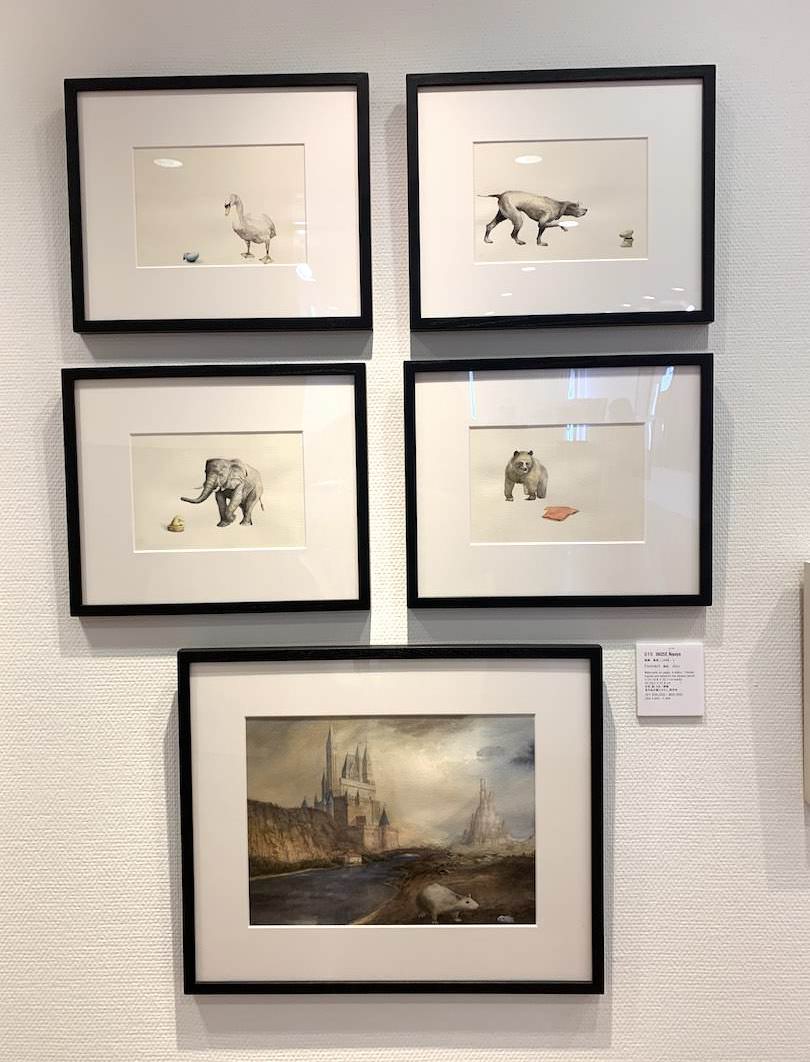
For headline and stalwart artists like KYNE, Ayako Rokkaku, Tomoo Gokita, KAWS, Yoshitomo Nara, Takashi Murakami, and Yayoi Kusama, the rate at which prices climb is easy to read, and the numbers rise smoothly and naturally. Works by other, less-established artists, on the other hand, seem to inch upward more cautiously. Naoya Inose’s watercolor Contract, which I had my eye on this time — a cynical piece using Disney as its theme — landed at a strikingly reasonable price.
Naoya Inose, Contract, 2010, watercolor on paper, 5 pieces 15.8 x 22.7 cm (each) · 28.2 x 37.8 cm, framed Estimate: 500,000 – 800,000 yen. Hammer price: 632,500 yen.
There were also a few strong works that surprisingly failed to gain much traction.
The one that stayed with me most was by a certain artist whose work I had previously seen at a primary-market gallery.
The piece I saw in May 2018 was priced at 600,000 yen before tax. That same work turned up at this auction and sold for less than 150,000 yen.
Auction lots are primarily consigned by collectors, but I’ve heard that many works come in directly from galleries as well. Depending on the piece, you may end up snapping something up at an unexpectedly low price.
Summary
I had experience of watching auctions in real time over the internet, but this was my first time attending the venue in person.
What I took away is that it is, above all, a genuinely fascinating piece of entertainment content.
For anyone interested in art, comparing the works on display with the prices they change hands for at the venue lets you feel the current market rhythm of contemporary art in a tangible way. Note: viewing of the lots is generally available only up to the day before, and only some works are on display on auction day.
The bidding on some in-demand artists’ works also lets you feel, in real time, the rising prices sweeping across contemporary art today.
Watching the room, I found myself repeatedly muttering things like “That’s an impossible price…” or “This is crazy — it’s gone way too high.” Still, as material for building your own axis of judgment about art, it may be a valuable opportunity. You have to keep a cool head amid a fever-pitch boom.
Training your eye by seeing many works, and grasping the fast-shifting economy of art through hammer prices —
as a collector, if you want to build a collection of works you genuinely love at appropriate prices, you cannot ignore the secondary market either.
Note: Unless otherwise stated, hammer prices in this article are inclusive of the buyer’s premium.
비정기 업데이트되는 Burart Diary. 일기 형식으로 편집자의 일상적인 이야기나 문득 떠오른 단상을 두서없이 풀어놓는 글입니다.
한가할 때 편하게 읽어주세요.
SBI Art Auction
2019년 7월 27일 13시, 도쿄 다이칸야마 Hillside Forum.
현대미술 경매 “SBI Art Auction Modern & Contemporary Sale”이 개최되었습니다.
회장인 Hillside Forum(도쿄 다이칸야마)
회장은 착석식으로 의자가 놓여 있었지만 빈자리 없이 꽉 찼고, 뒤에 서서 지켜보는 사람이 나올 정도로 열기가 뜨거웠습니다.
경매장이라고 하면 무조건 사겠다는 컬렉터들의 살기 어린 공기가 감돌 것 같지만, 의외로 분위기는 상당히 여유로웠습니다.
20~30대 여성끼리 세련된 차림으로 온 관객층, 젊은 커플, 남성 컬렉터 그룹, 홀로 온 부유한 인상의 신사 등, 관객층은 놀랄 만큼 폭이 넓었습니다.
정각에 시작된 경매.
경매사(Auctioneer)로부터 경매 관련 주의사항이 안내되자, 지체 없이 첫 번째 작품이 경매대에 오릅니다. 이날 거래되는 첫 작품은 Izumi Kato가 2006년에 그린 18 cm 크기의 작은 유화 《Untitled》입니다.
Izumi Kato 《Untitled》2006년 유채, 캔버스, 뒷면 사인, 18.0 x 18.0 cm (S0) 액자 Estimate(200,000 – 300,000엔) 낙찰가: 2,530,000엔
시작 신호가 떨어지자, 경매사가 초 단위로 잘게 가격을 외칩니다. 20만, 22만, 24만…… 동시에 회장 앞쪽 대형 스크린에 표시된 낙찰가가 빠르게 상승합니다.
경매 시작 직후부터 가격이 단숨에 치솟았습니다.
SBI Art Auction은 서면 입찰, 전화 입찰, 인터넷 입찰의 세 가지 방식을 채택하고 있으며, 이는 회장 내에서 시스템적으로 통합되어 실시간으로 가격에 반영됩니다.
시작 직후 순식간에 100만 엔을 넘어서고 나서야, 입찰 페이스는 점차 안정을 되찾기 시작합니다.
경매의 후반부에서 자주 볼 수 있는 광경은 무슨 일이 있어도 낙찰받으려는 컬렉터들의 무자비한 싸움입니다.
서로 얼굴도 보이지 않는 상대끼리 “가격”을 부딪쳐가며 숫자를 밀어올리는 경쟁은, 저를 포함한 관객에게 하나의 엔터테인먼트처럼 느껴지기도 합니다.
필자의 사전 예상은 80만~100만 엔 정도였습니다.
얼굴 없는 상대끼리, 세상에 단 하나뿐인 작품을 두고 벌이는 배틀입니다.
가속이 붙은 경매 가격은 이윽고 220만 엔에 이르러, 경매사의 “낙찰됩니다”라는 외침과 함께 마무리됩니다.
참고로, 220만 엔은 작품의 낙찰가입니다. 낙찰자가 실제로 지불하는 금액은, 낙찰가에 “수수료 15%”와 “소비세 8%”를 더한 최종 금액이 됩니다. 즉 낙찰자의 실제 구입 가격은 수수료 포함 253만 엔에 소비세를 더한 2,732,400엔이 됩니다. ※2019년 7월 기준.
사진 가장 왼쪽이 실제 작품입니다. 아주 작은 작품입니다.
경매 회사의 계산
이번 SBI Art Auction은 첫 작품부터 예상 밖의 고가 거래로 이어졌습니다.
이 오프닝을 지켜보며 느낀 것은, 가장 먼저 인기 작품을 배치함으로써 참가자들의 시선을 끄는 동시에, 고가로 착지시켜 경매 참가자들의 분위기를 “연출”하는 듯하다는 점이었습니다. 고양감, 그리고 전체적으로 “가격이 강하다”는 인상을 만들어내는 셈이지요. ※어디까지나 필자의 감상입니다.
Kazuki Umezawa 《Lavos》 2009년 알루미늄 합판 패널에 이미지 출력, 아크릴, 연필, 색연필, 펜, 글리터, 크레용 등 뒷면 사인, 130.0 x 194.0 cm ※2009년 Tokyo Wonder Wall Prize 수상작 Estimate(600,000 – 900,000엔) 낙찰가: 5,290,000엔
본 경매의 사전 배포 카탈로그 표지에도 채택된 Kazuki Umezawa의 작품 《Lavos》 역시 고가에 낙찰되었습니다. 본작은 2018년 Watari Museum of Contemporary Art (Watarium)에서 열린 Kazuki Umezawa × TAKU OBATA 전시 “Landscape Beyond”에서도 소개되었던 Umezawa의 대표작 중 하나입니다.
Kazuki Umezawa의 작품 《Lavos》는 460만 엔에 낙찰
말하자면 하이라이트 작품들이 경매의 전반부에 몰리면, 참가자들의 동기도 함께 끌어올려지는 것일까요. Estimate “600,000엔~900,000엔”에 대해 460만 엔(수수료 포함 529만 엔)이라는, 첫 번째 Izumi Kato 작품의 기세를 뛰어넘는 폭발적인 가격이 나왔습니다.
과열되는 현대미술
Kazuki Umezawa의 작품은, 딱 1년 전쯤에 어느 기획전에서 본 오리지널 유니크 작품이 50만 엔 정도였습니다.
물론 크기나 모티프, 화풍이 다르지만, 이런 이상한 상승 폭을 눈앞에서 보면 과열된 이상 가격이라 하지 않을 수 없습니다.
서두의 Izumi Kato 작품도 훌륭한 작품임에는 틀림없지만, 18 cm 각의 작은 크기를 감안하면, 상식을 벗어난 놀라운 가격입니다. 필자가 확인해온 프라이머리 마켓에서의 Izumi Kato 작품 가격과는 하늘과 땅 차이입니다.
Izumi Kato 《Untitled》2007년 파스텔, 종이 사인, 32.0 x 24.7 cm Estimate(300,000 – 500,000엔) 낙찰가: 977,500엔
경매 회장에서는 유명 브랜드의 샴페인을 비롯한 음료가 제공됩니다.
차례차례 작품이 소개되고, 그때마다 가격을 외치는 경매사의 목소리가 회장에 울려퍼져 귀에서 뇌로 반복해서 전해지다 보면, 자신의 금전 감각이 점점 마비되어 가는 듯한 기분이 듭니다.
경매 참가자에게 배부되는 A4 크기의 번호판은, 마음만 먹으면 스윽 올라가버릴 것 같을 만큼 얇습니다. 샴페인의 알코올이 몸을 도는 순간, 기세에 못 이겨 그만 번호판을 들어올려버릴 것만 같습니다.
Meguru Yamaguchi 《RD no. 6》 2018년 아크릴, 에폭시 수지, 판 뒷면 사인 47.0 x 132.0 x 2.5 cm Estimate(700,000 – 1,000,000엔) 낙찰가: 1,115,500엔
숨겨진 보물
KYNE, Ayako Rokkaku, Tomoo Gokita, KAWS, Yoshitomo Nara, Takashi Murakami, Yayoi Kusama…… 이런 유행하는, 이른바 정통 인기 작가들의 가격 상승률은 알아보기 쉬워서, 숫자가 자연스럽게 쑥쑥 올라갑니다. 반면 그 외의 개별 작가들의 작품은, 신중하게 조금씩 가격이 새겨져 가는 느낌입니다. 이번에 주목하고 있던, 필자가 좋아하는 Naoya Inose의 수채화 《Contract》는 디즈니를 테마로 한 시니컬한 작품인데, 놀라울 만큼 양심적인 가격에 낙찰되었습니다.
Naoya Inose 《Contract》 2010년 수채, 종이, 5점 15.8 x 22.7 cm (각) · 28.2 x 37.8 cm 액자 완료 Estimate(500,000 – 800,000엔) 낙찰가: ¥632,500엔
그 밖에도 의외로 가격이 오르지 않은 좋은 작품이 몇 점 눈에 띄었습니다.
특히 인상적이었던 것은, 필자가 예전에 프라이머리 갤러리에서 본 어느 작가의 작품이었습니다.
2018년 5월 당시 확인한 세전 가격이 60만 엔이었는데, 그 작품이 이번 경매에 나와 15만 엔에도 못 미치는 낮은 가격에 낙찰되었습니다.
경매에는 컬렉터가 소장한 작품이 주로 출품되지만, 갤러리에서 직접 반입되는 작품도 적지 않다고 들었습니다. 작품에 따라서는 뜻밖에 낮은 가격에 낙찰받을 수도 있겠지요.
정리
인터넷 영상으로 실시간 시청해본 경험은 있었지만, 실제 경매 회장에 직접 가서 참여한 것은 이번이 처음이었습니다.
실제로 참여하면서 느낀 것은, 이것이 흥미로운 엔터테인먼트 콘텐츠라는 점입니다.
미술에 관심 있는 사람이 본다면, 회장에 전시된 작품들과 거래되는 가격을 비교해 가며 현대미술의 유통 시세를 몸으로 느낄 수 있습니다. ※작품 프리뷰는 원칙적으로 경매 전날까지이며, 경매 당일 현장 전시는 일부에 한합니다.
또한 일부 인기 작가의 거래 장면에서는, 급등하는 현대미술 가격의 현재를 피부로 느낄 수 있습니다.
현장에서 지켜보며 “말도 안 되는 가격이다……”, “이건 이상하다. 너무 올랐다……”라는 감상을 몇 번이고 입 밖으로 내뱉었지만, 미술의 평가 축을 스스로의 안에 세워가기 위한 학습 재료로서는, 소중한 기회일지도 모릅니다. 열광하는 붐을 확인하면서도, 스스로를 냉정하게 다잡을 필요가 있어 보입니다.
많은 작품을 봄으로써 안목을 기르고, 거래 가격을 앎으로써 급변하는 아트 이코노미를 이해할 것.
아트 컬렉터로서, 자신에게 좋은 작품을 적정 가격에 컬렉션해 나가기 위해서는 2차 유통 시장 또한 제대로 공부해야 할지도 모릅니다.