Art Fair Tokyo 2019 has closed.
The four days, invitation day included, went by in a flash, ending with a record turnout of 60,717 visitors (101% year-on-year).
* The free-admission area “World Art Tokyo” drew 39,594 visitors, and “Future Artists Tokyo” (FAT) drew 36,854.
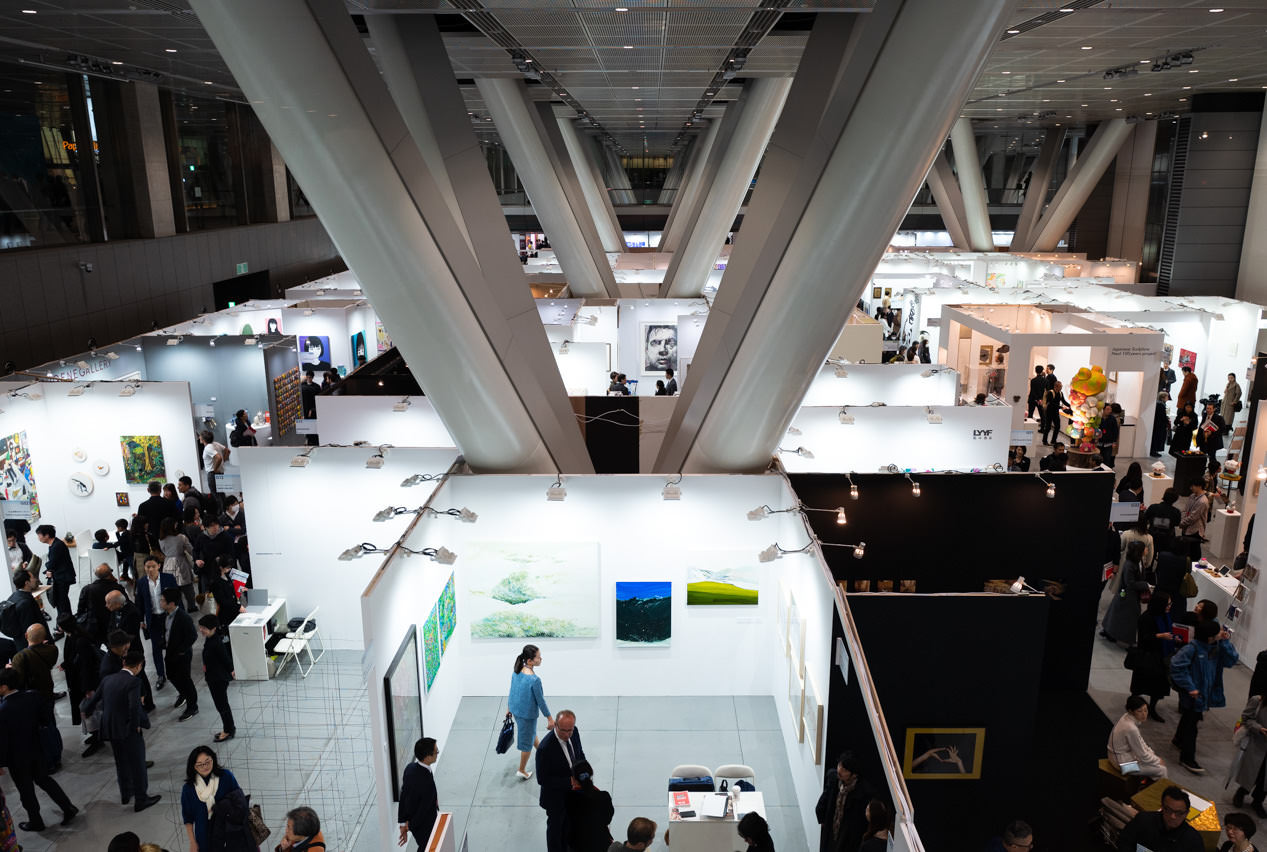
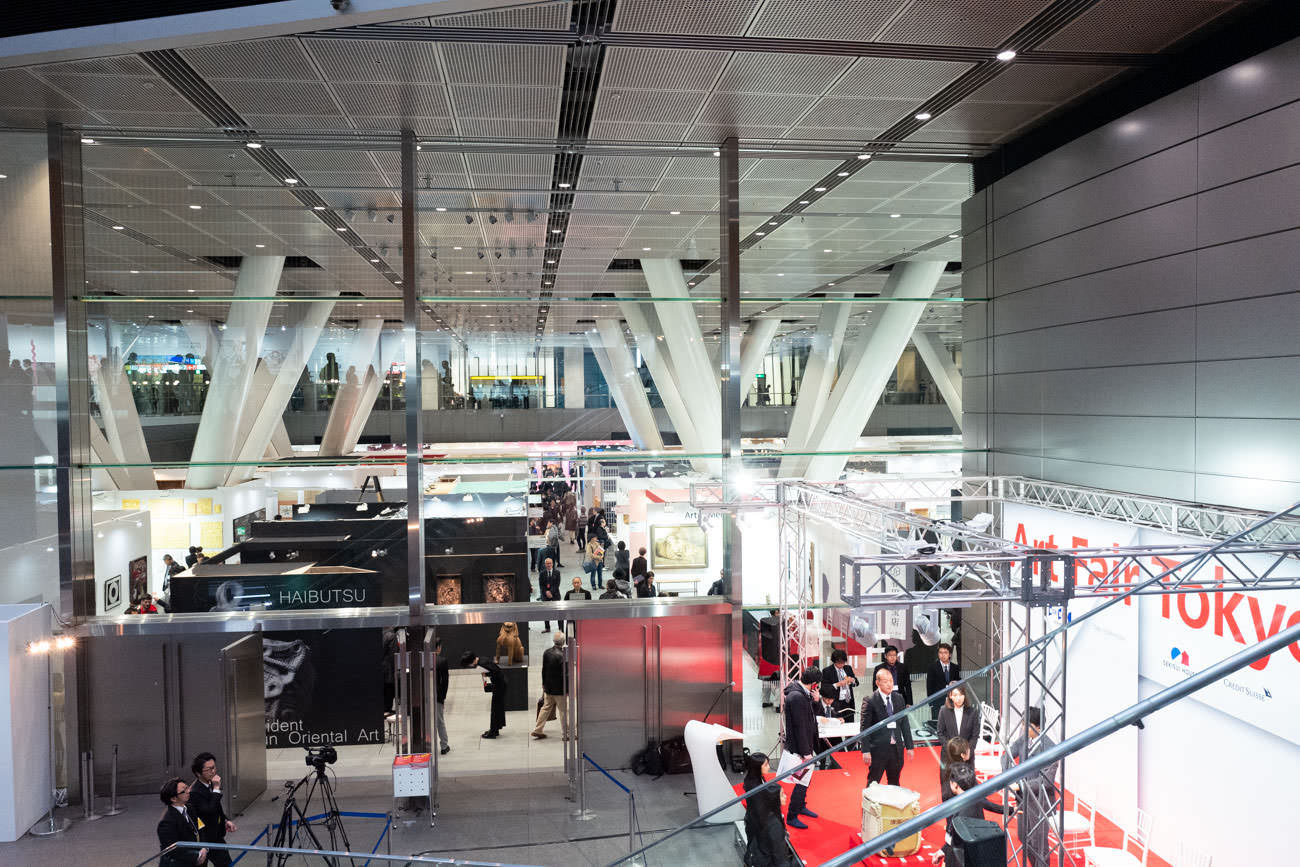
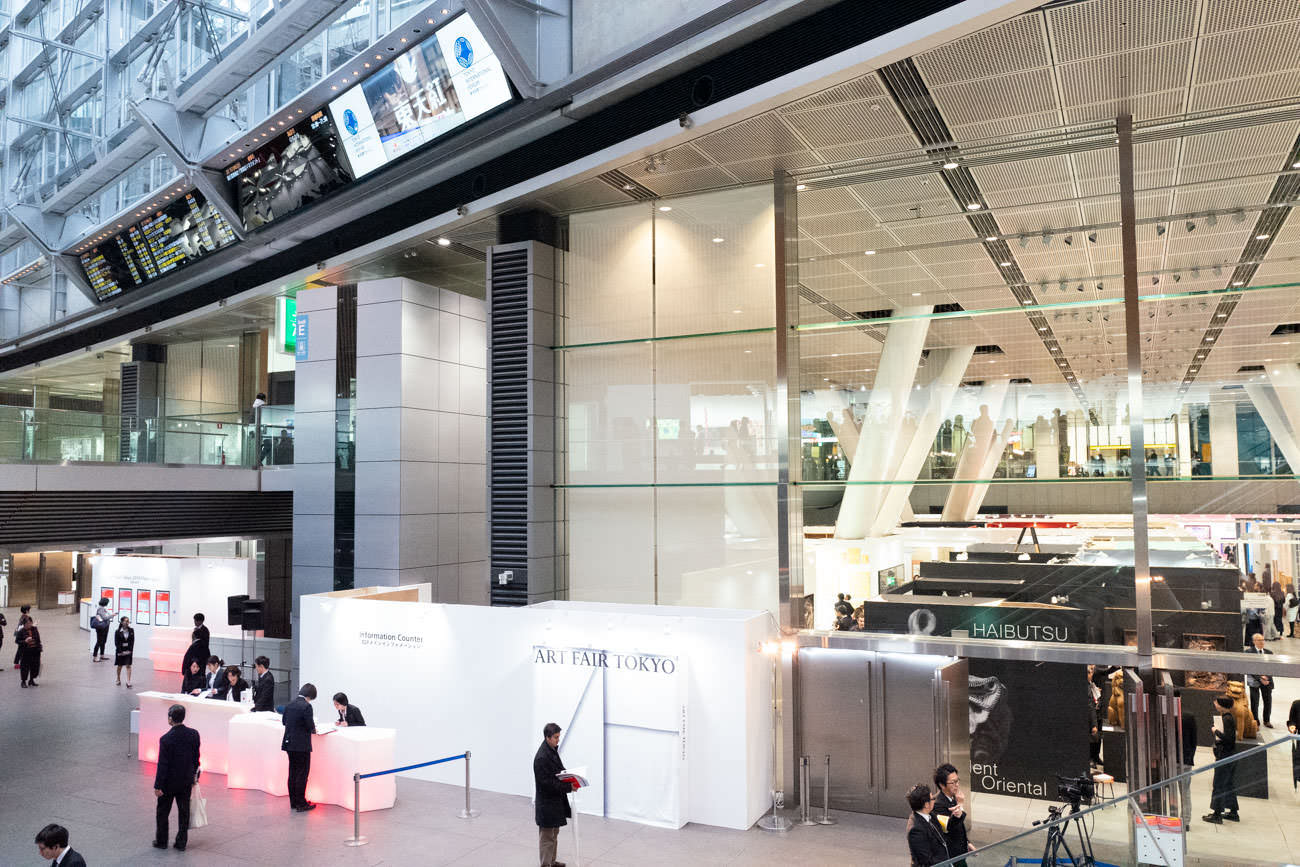
Art Fair Tokyo 2019 — venue view
Drawing on comments from those involved and from some participating collectors, I would like to look back at the fair.
The Position of Art Fair Tokyo
Including Art Fair Tokyo, there are said to be about 35 international art fairs across the Asian region.
The largest of them is, of course, Art Basel Hong Kong.
It is the Asian edition of the world’s leading contemporary art fair “Art Basel,” held alongside its Basel (June) and Miami Beach (December) editions (usually staged in late March).
Sales at Art Basel Hong Kong are said to reach roughly 6.5 to 7 billion yen, while Art Fair Tokyo has reported sales of 2.92 billion yen (2018 edition, organizer figures).
That 2.92 billion yen figure ranks as the second-largest sales total among art fairs held in Asia.
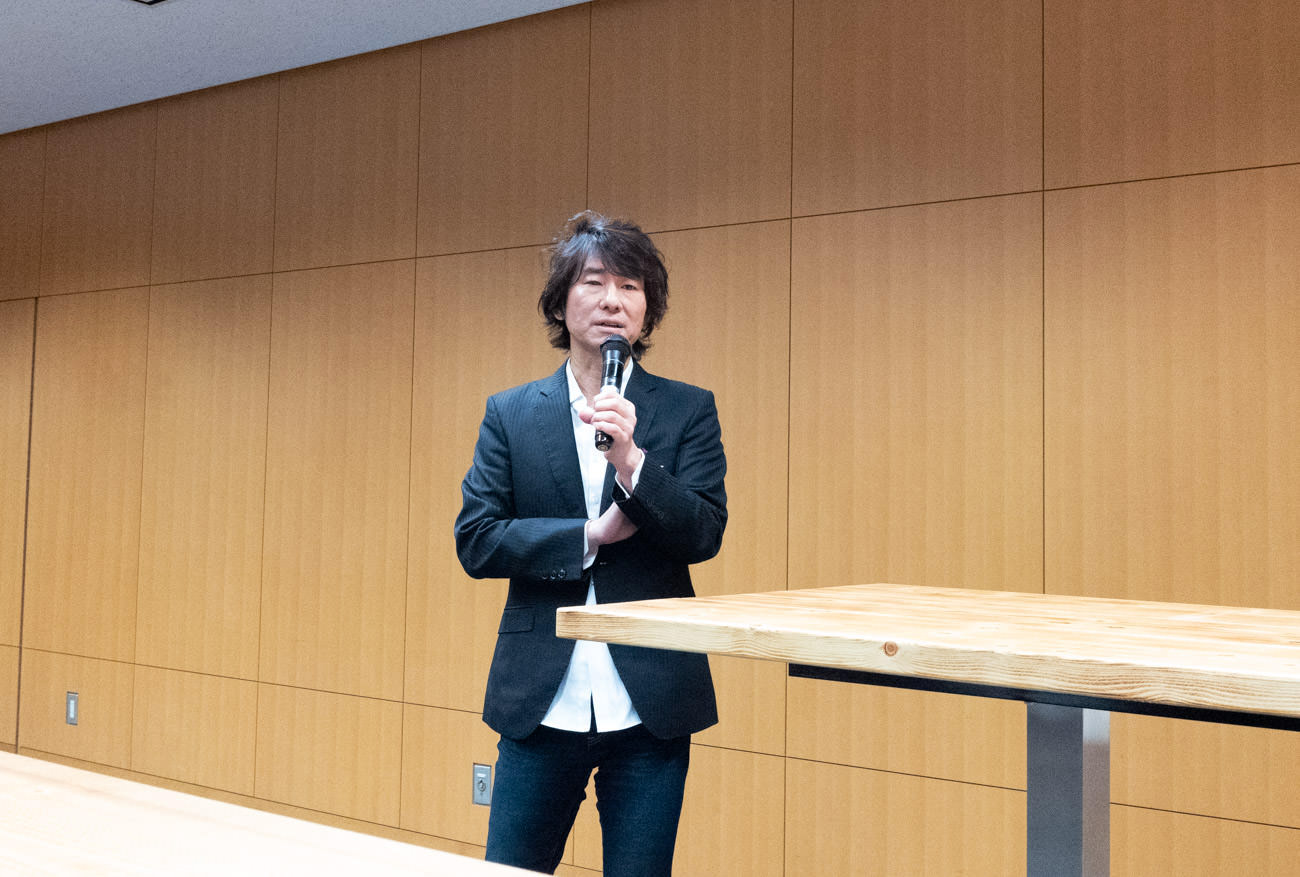
At the press briefing on opening day of Art Fair Tokyo 2019, Executive Producer Naohiko Kishi had this to say:
Naohiko Kishi, Executive Producer of Art Fair Tokyo, at the press briefing
“Four or five years ago, sales were around 900 million to 1 billion yen. That figure has been growing steadily, reaching 2.9 billion last year. For 2019 we are aiming at 4 billion, and for 2020 we want to set our sights on 5 billion.” — Naohiko Kishi
On the visitor-count side, however, he was measured: “Last year we had 60,000 visitors. I don’t think that figure will change much.” His tone was noticeably quieter than his talk about sales. What does that mean?
In the sections below, I report my impressions after attending three of the four days of the fair.
Art Fair Tokyo in Data
On Admission Fees
Below is Art Fair Tokyo’s “1DAY Passport price” over the past five years (day-of / tax incl.).
What do you make of it? You can see clearly that prices have shot up sharply of late.
Art Fair Tokyo “1DAY Passport” — 5-Year Trend
2015: 2,000 yen 2016: 2,500 yen 2017: 2,800 yen 2018: 4,000 yen 2019: 5,000 yen
* Prices are for door tickets, tax included
The rise in admission fees is unmistakable at a glance. It has climbed to 2.5 times the 2,000 yen price of five years ago.
The Relationship Between Attendance and Sales
Meanwhile, the relationship between visitor numbers and sales figures is fascinating.
Attendance has barely budged (up around 6,000 over five years), yet sales have jumped by roughly 2 billion yen — a striking figure.
Art Fair Tokyo “Attendance & Sales” — 5-Year Trend
2015: 54,850 visitors / 1.02 billion yen
2016: 56,300 visitors / 1.13 billion yen
2017: 57,800 visitors / 2.45 billion yen
2018: 60,026 visitors / 2.92 billion yen
2019: 60,717 visitors / 2.97 billion yen * Organizer figures (estimates based on voluntary exhibitor surveys)
Without much need for speculation, we can say that “raising admission fees shifted who attended, and successfully drew in customers who actually buy art.” Higher ticket prices seem to be attracting the collector segment that translates into sales.
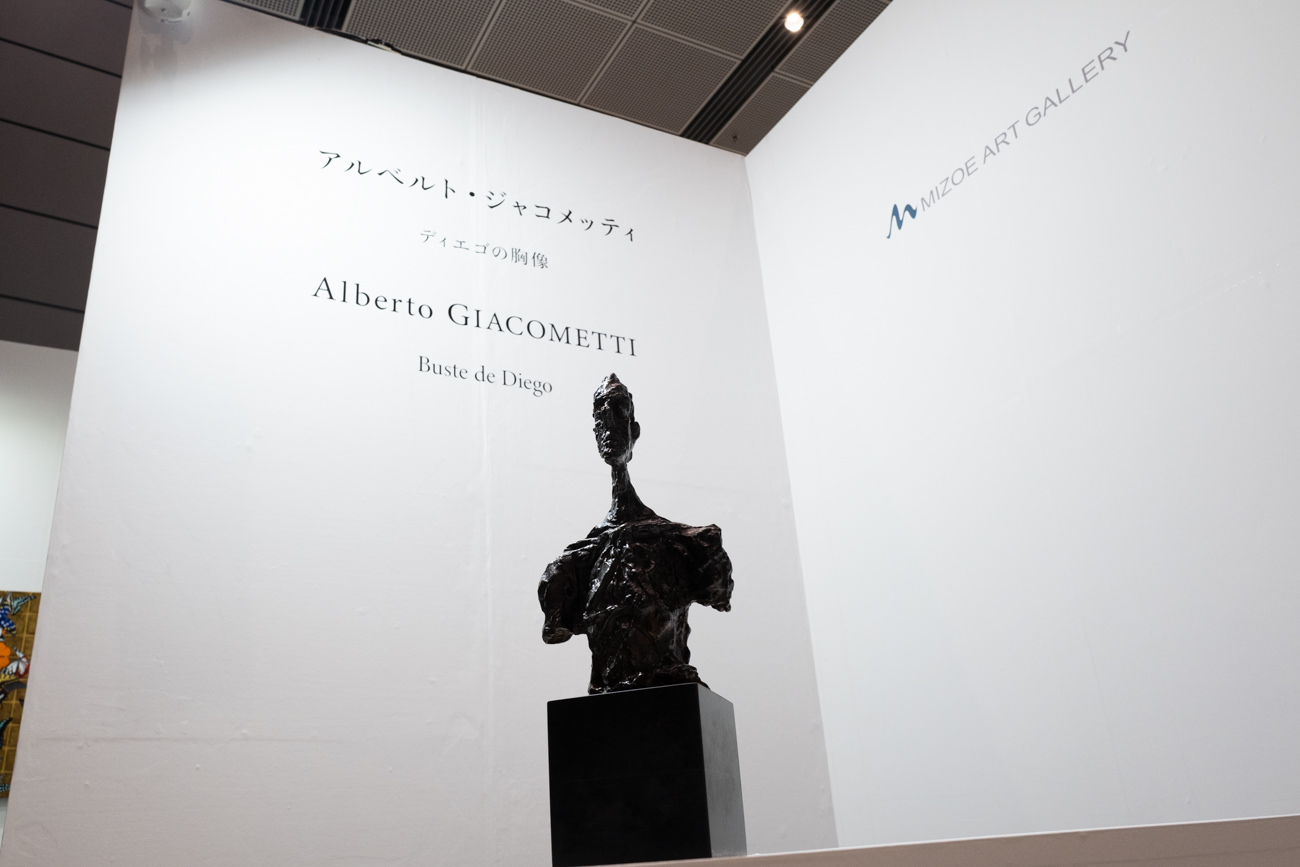
The most expensive work on site, priced at “900 million yen!” — a Giacometti work, “The Mark of A Giacometti,” 1956–1957, bronze (edition of 6)
Booth Fees and Complimentary Tickets
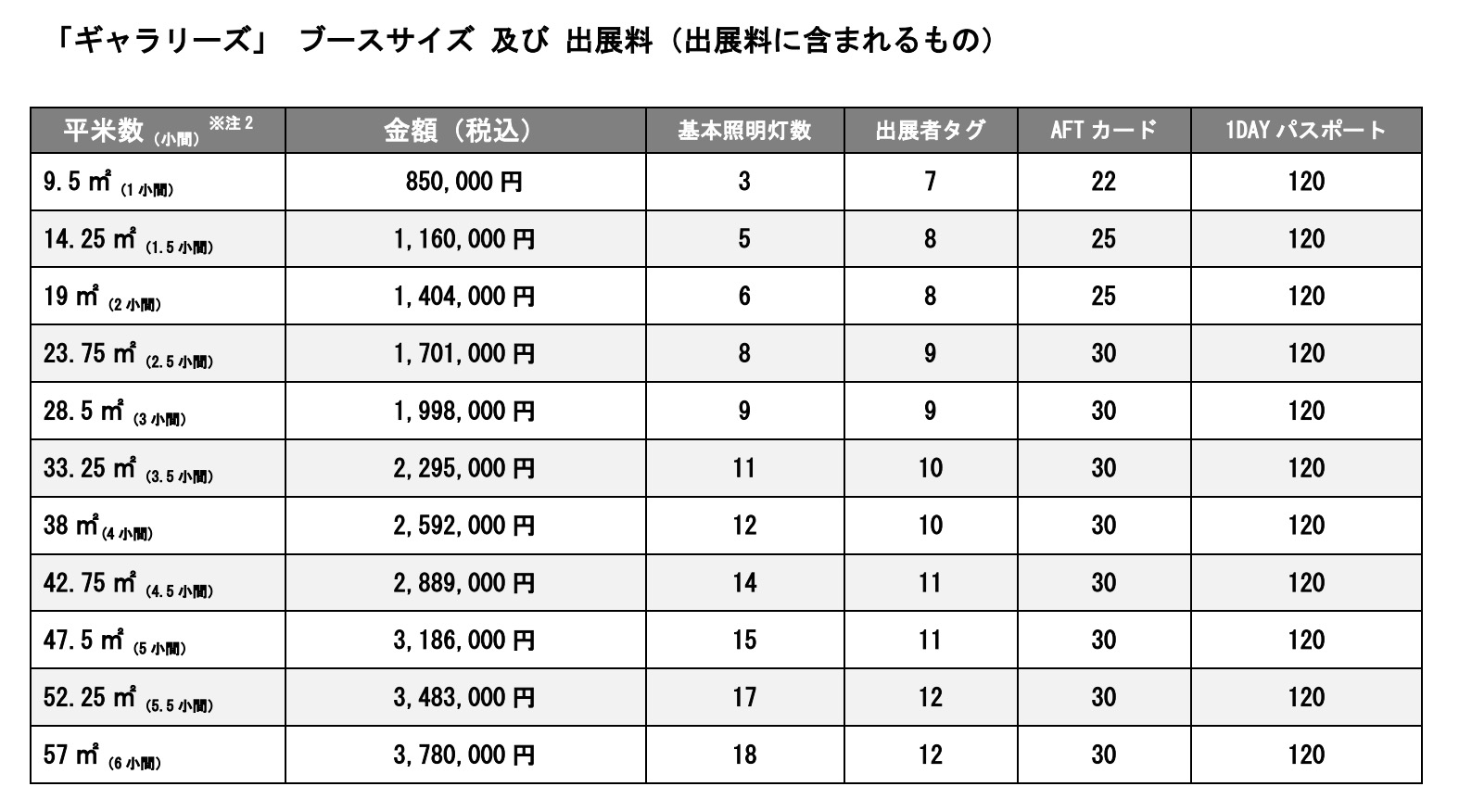
Take a look at the table below. These are the booth fees paid by galleries exhibiting at Art Fair Tokyo 2019. They are considerable.
“Art Fair Tokyo 2019” — booth fees
What deserves attention here is the number of “AFT Cards” and “1DAY Passports” provided to exhibiting galleries. * For more on the AFT Card, see the article below.
Exhibiting galleries are entrusted with a large number of invitations, and these flow rapidly to their collector clients.
Among the collector circles around me, those who had built relationships with exhibiting galleries through purchases were receiving free tickets and AFT Cards from several sources. Right before the opening, there were cases of certain individuals holding many surplus tickets.
The bigger a collector’s annual budget, the more this system produced a concentration of multiple tickets in a single collector’s hands.
* I have no idea what kind of sellers they were, but the flea-market service Mercari had many of these invitations listed.
Roughly 160 galleries exhibited at Art Fair Tokyo 2019. If each gallery received 150 free invitations, that alone accounts for about 24,000 free tickets in circulation. * In practice, still more invitations circulated among people in the art world.
Of the 60,000 total visitors, roughly half may well have been invited guests.
Inside the Fair — Invitation Day
The opening day of Art Fair Tokyo 2019 is reserved for invitees.
And yet, it may well be the most energetic day of all — the buzz is that palpable.
Art Fair Tokyo 2019 — venue view
Opening day, the 7th, was a Thursday weekday. The “Private View” from 14:00 is when VIPs including AFT Card holders arrive.
At the 14:00 open, visitors were already queued up, and the moment the doors opened they scattered toward their target galleries.
Aiming to photograph the booths before the crowds arrived, I entered during the “Press View” at 13:00, one hour before the Private View. When the venue speakers announced 14:00, I was shooting at a gallery with an artist whose works were certain to sell out. Right after 14:00, visitors immediately formed lines, and buyers flocked to pick up the price lists to check exhibited works.
The Private View on invitation day is when the most motivated collectors gather.
There was a real rule in place: without an AFT Card, purchasing works by the most popular artists was impossible.
Inside the Fair — The Free-Admission Area
The B1 space of the venue, Tokyo International Forum, is a free-admission area that requires no entry ticket.
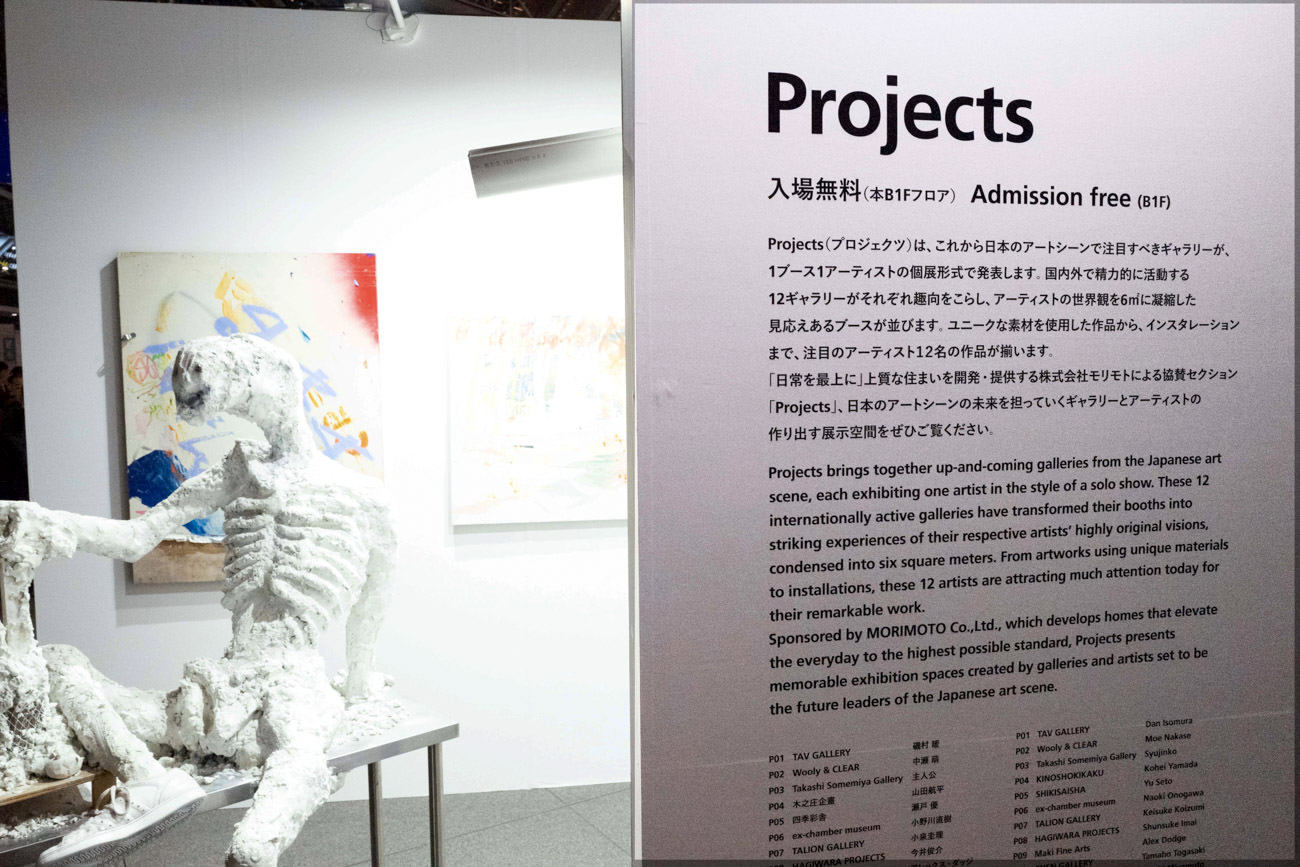
The “Projects” section there is a booth space that presents artists worthy of attention in a solo-show format. Since no invitation is required, anyone can visit from opening day.
* The booth fee for these galleries is set separately from the fee table above, at a relatively affordable 270,000 yen (subject to selection).
A corner of the “Projects” section — TAV GALLERY’s booth showing sculpture
Other programs in this free-admission area included “Future Artists Tokyo,” in which 38 students selected from 101 representative students across 19 art universities took part alongside 7 students studying art production; and “World Art Tokyo,” an international show of contemporary artists recommended by their respective embassies in Japan and expected to be active on the global stage. In addition, the “Crossing” program invited department-store art galleries to broaden the entry points into art. Particularly prominent was an exhibition organized by Seibu Sogo featuring Meguru Yamaguchi and three other artists.
The “Yoshimoto Kogyo booth” that seemed to be brought in as a comedy hook to draw in less art-inclined visitors felt as though it did not quite land. Even so, the free-admission area, with its high foot traffic, felt as though it was doing well in pulling more casual visitors — those who would not pay the high ticket price — into the art world.
The Race for Works
On the invitation day of the fair, arriving first with an AFT Card does not automatically mean you can buy a work.
Art works are usually one of a kind, and the general rule is “first come, first served” — but in many cases the buyer has already been decided before the fair opens.
This time as well, a certain department-store art gallery informed its premium clients in advance; other galleries pre-set a time and sent out work lists all at once. Various formats were used depending on the seller. Some cases involved on-site lotteries, but the sale of art works still holds many trade practices that remain opaque to the general public.
Popular works are given “prior notice” to clients who have contacted the gallery in advance, or to those on waiting lists.
A somewhat unusual display was GALLERY TARGET’s solo show of KYNE — a project unveiling commissioned works that had been booked in advance. “Nothing for sale” is a rare stance at an art fair. Was it a piece of artist branding, meant to sharpen the sense of scarcity?
What Collectors Expect from an Art Fair
What collectors expect from an art fair is the chance to see (or confirm) new works by artists they follow, and to collect (purchase) them.
They also come looking to discover unknown artists, and to encounter works for the first time.
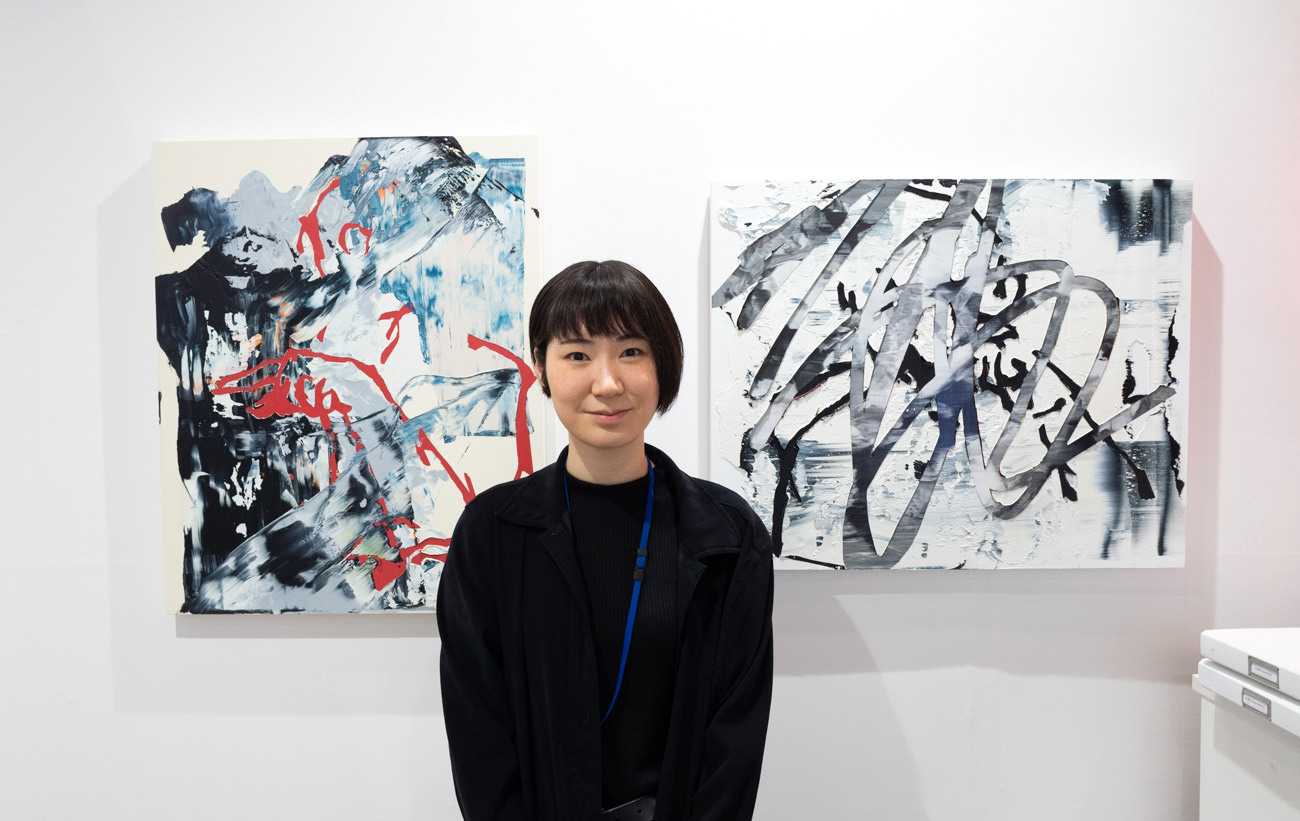
Saya Okubo, whose star has been rising rapidly, was on-site. I was able to hear about her distinctive production process from the artist herself.
Works by artists otherwise shown in museums can sometimes be purchased here; even when they cannot, you can at least check the prices.
Works by historical masters are on view “for sale.”
And exhibiting artists can be met and spoken with in person — the fair is a valuable ground where art becomes tangible.
Training your eye by seeing outstanding work in person is important. As your eye develops, your own “collecting axis” may take shape.
Collectors’ Reactions
I reached out to contemporary-art collectors in my network to reflect on Art Fair Tokyo 2019.
* This is a small-scale, informal survey and may be biased. Please read it as such.
The responses were from just a handful of people and are not a quantitative study, but within the range I heard from, the fair was on the whole well received.
There were requests for improvement, but I came away with the impression that most participants would rate the fair positively.
Collector Y
Days attended: 2
Purpose: purchasing new works by favored artists; researching prices and sales pace of artists I plan to collect or already own
Purchases: entered the lottery for a work by Tetsuya Noguchi at Gallery Gyokuei (did not win)
Differences from other years: perhaps my tastes have shifted, but many of my favorite artists were exhibiting this year
Good points and areas for improvement: with no cloakroom, having to leave luggage in coin lockers was disappointing. Some aisles are narrow and cause bottlenecks — I’d like to see this fixed.
Overall: it is valuable to have this once-a-year moment where each gallery’s flagship artists gather in one place. It overlaps with other art fairs, which makes budget allocation tricky. The one-day walkable format is a plus, but I’d like better scheduling next year. It would also be nice to check price lists and artist profiles on an AFT smartphone app.
Collector H
Days attended: 1 (March 7, 14:00–20:00)
Purpose: not so much for buying, but mainly to greet collected artists and long-supported galleries. I arranged appointments with artists in advance of the fair.
Purchases: Saya Okubo (WAITINGROOM) — one two-dimensional work * pre-reserved
Good points: perhaps because it was Private View day, artist attendance was high and I was able to greet many. It was very meaningful to encounter — all in one place — works, artists, and galleries I don’t normally see.
Areas for improvement: – The venue was large and dense with galleries, making it feel like a maze. It was hard to find the galleries I wanted. Gallery names should be shown in larger, more legible signage.
A word as a collector: collectors can’t build a collection passively — I made a point of actively communicating with galleries and artists. I think the following points are important: – Gather information through Instagram, Twitter, and other SNS. – Decisiveness matters — while you’re mulling, others buy the piece. * Editor’s note: this is exactly my pattern… – Collecting is a lonely fight — actively meet fellow collectors who share your values. * Information matters, but so does the pleasure of talking with people who share your sensibility.
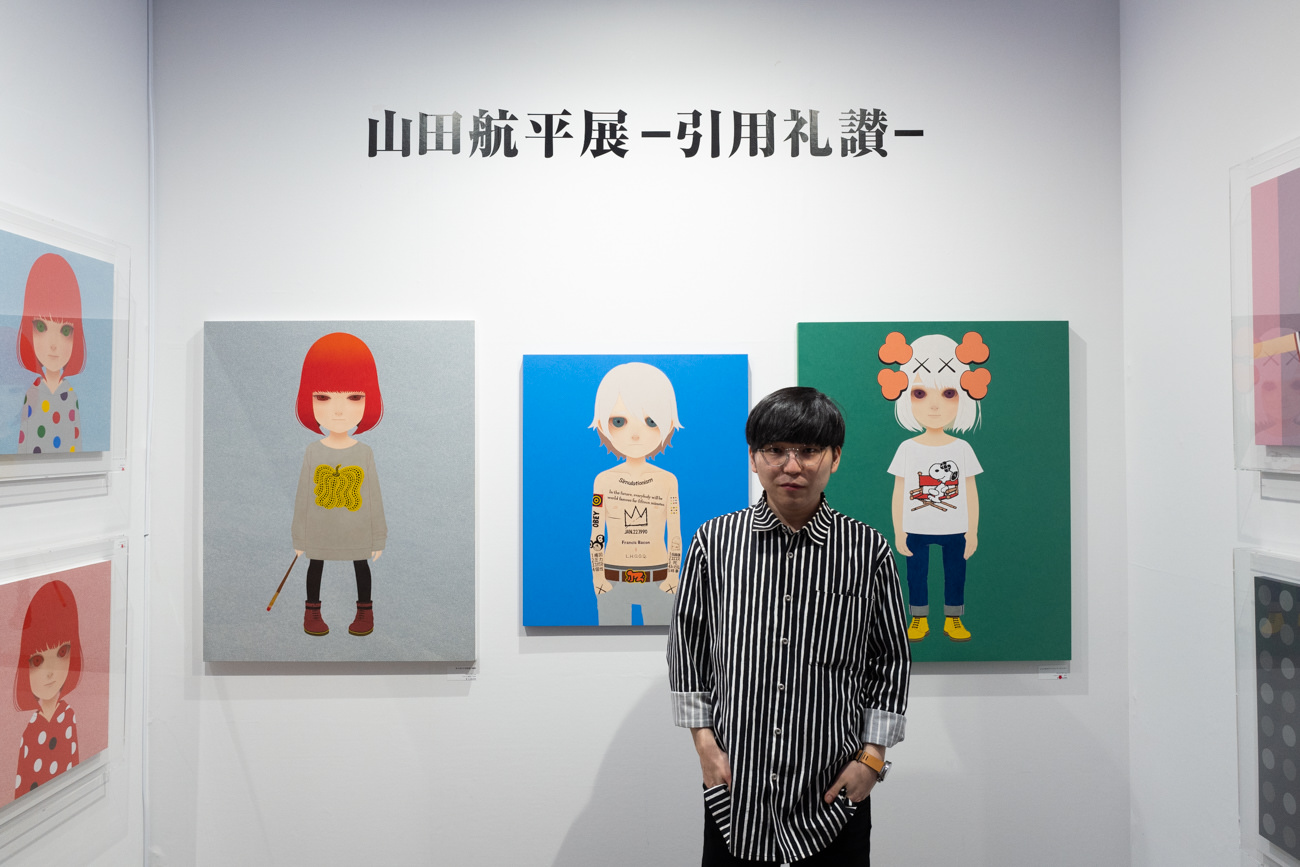
Overall: Two young artists to watch stood out. Kohei Yamada‘s stoic dedication to production is remarkable. His technical skill is superb and his work maintains a strong consistency. I’m very excited to see where he goes. Dan Isomura‘s exhibition felt as though his very way of living had become the work. Unlike his striking appearance, I found him to be a person of real character. I have no doubt he will emerge as a talent recognized on the world stage.
The three galleries I paid the most attention to were: – WAITINGROOM — with promising artists such as Hirako, Kawauchi and Okubo on their roster, but also a director whose skill really stands out. Their production sensibility and client care feel a head above other galleries. A gallery I’ll be watching closely. – 104GALERIE — the artist selection by the curator is superb; a curator with a sharp eye and high sensitivity. I’m eager to see which artists she curates next. – Over The Influence — a relatively young gallery based in LA and Hong Kong that champions street-oriented artists. With globally known names like INVADER on their roster, they carry real momentum. I have no doubt they’ll be showing at Basel soon. Japanese artists such as Nobuyoshi Araki and Hikari Shimoda are also represented. Incidentally, the Hong Kong gallerist speaks fluent Japanese.
Many major domestic commercial galleries also exhibited, but I sensed a “just showing up” attitude that suggested their real focus was Art Basel Hong Kong. And many major galleries did not exhibit at all — a stark reflection of Japan’s still-unactivated art market. I hope AFT can grow into a fair that stands shoulder to shoulder with Art Basel Hong Kong.
Collector M
Days attended: 2
Purpose: I attend every year, and see it as a good chance to test my own skill as a collector. This year I especially focused on communicating with artists and gallerists.
Purchases: Saya Okubo (WAITINGROOM) — one two-dimensional work. * Purchased at the stage where a list was sent out to inquiring clients about two weeks before AFT began. I also bought catalogs at various galleries as well as a novel written by an artist.
Differences from other years: perhaps my tastes have shifted, but many of my favorite artists were exhibiting this year
Good points: mixing the contemporary art, antique, and modern-art booths more thoroughly than in past years really brought out AFT’s strengths.
Areas for improvement: a cloakroom is needed, and the lounge is too small — there aren’t enough seats, and that dampens the will to buy. It should be fixed.
Overall: compared with past years, more attendees were clearly there to buy. Artist attendance was also higher, which encouraged deeper engagement with the work and made the market feel more active. This year overlaps almost exactly with New York’s Armory Show, and I felt the fair was missing globally minded collectors — a sign that the market risks staying domestic.
Even so, being able to meet fellow collectors, gallerists I rarely see from other regions, and artists I haven’t seen in a while, all in one venue — I look forward to it every year as a kind of festival.
Purpose: to discover new artists and galleries, and to study the current state of art.
Purchases: there were works that caught my eye, but they were over budget, so I did not purchase.
Differences from other years: perhaps my tastes have shifted, but many of my favorite artists were exhibiting this year
Good points: the large number of galleries made for a rich viewing experience. Many overseas artists and galleries had interesting works, giving a sense of real diversity. I hope Art Fair Tokyo does not go the “Galapagos” way but instead attracts more overseas galleries and grows to be more like Art Basel Hong Kong.
Areas for improvement: it was raining on opening day, so I had a lot of luggage including an umbrella, and the lockers filled up quickly — that was disappointing. I hope a cloakroom is set up. Some galleries didn’t display prices unless asked. It’s important to know the current price, so having a legible price list on view would be great.
Overall: I hear that raising admission fees led to higher sales this time. Still, to nurture the next generation of young collectors, I feel the price is too high. For the sake of growing future collectors, I want people to know that art is something you can buy. There are works available from the tens of thousands of yen range, so I think it’s important to lower the barrier and educate a wider audience. As a novice collector, it was a wonderful chance to speak directly with gallerists and artists. Stepping into an unfamiliar gallery takes courage. The great strength of an art fair is that you can see them all in one place. It also creates opportunities to follow up on artists and galleries via SNS after the fair, and to visit them later. I also had the good fortune to talk with senior collectors this time. Researching favorite shows and artists alone has its limits, so it was a truly valuable time to learn from others.
Bur@rt Editor
Days attended: 3
Purpose: an annual tradition — not going wasn’t an option. Greeting and speaking with the artists I collect is one main aim. Encountering new works is another big draw.
Purchases: there were two works I wanted, but while I hesitated other buyers appeared and I missed them. For one of them, the gallery and the artist kindly proposed a commissioned work, which is currently in progress. I also picked up several catalogs and other items.
Differences from other years: works appeared to be selling even more briskly than usual. A higher proportion of artists were personally on-site. I felt that both my time in the venue and the quality of what I experienced went up.
Good points and areas for improvement: the B1 free-admission zone drew visitor attention and felt genuinely lively. It was a shame that “Future Artists Tokyo,” the program for art-university students, could not sell works.
Overall: I had a truly good time. The venue is dense with art, and even watching carefully, one day is not enough — plenty of works slip past. I saw several live drawings by artists and some booth rehangings mid-fair. Fine-grained info delivery via web or app would make it even more exciting. Looking forward to what’s next.
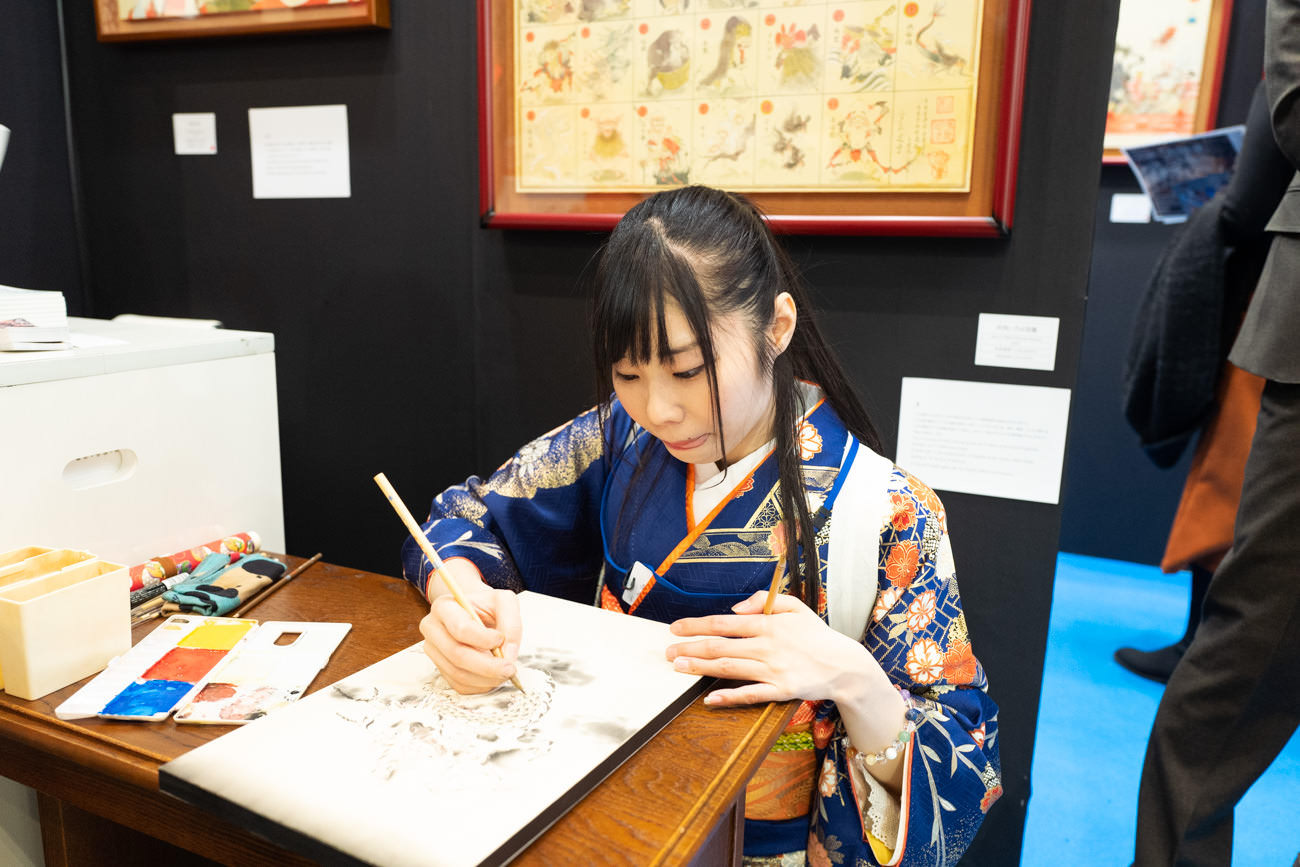
A live drawing by the popular artist Shiki Taira also drew attention.
Closing
Gathering collectors’ voices, a common thread was the value placed on relationships with artists.
Most striking of all was how visibly happy so many artists themselves looked.
For them, the fair is a very different atmosphere from a gallery show — a big stage in front of many viewers and buyers.
Seeing the artists so alive and radiant was, as a collector, a welcome sight in itself.
I did have some concerns about the sharp rise in ticket prices.
Looking at the sales-attendance correlation above and the density of the venue, further price hikes still look possible. Growing the collector base does require lowering the threshold, and the free zone’s programming seems, at least, to have opened a certain door.
At the same time, year over year, it felt like more visitors were coming as collectors intent on buying art. Their number and their energy both feel higher. “Younger people are starting to collect lately,” one gallery representative told me. I hope this trend continues to be nurtured.
Tokyo’s fair does not yet reach the level of international fairs where the whole city takes on the atmosphere of art, but a Tokyo-style fair format seems to be settling into place.
On the other hand, Art Fair Tokyo 2019 turnover was 2.97 billion yen — only a slight rise from the prior year.
Some major domestic commercial galleries opted out, and are putting on grand booths at Art Basel Hong Kong instead — an indicator that AFT’s market position is not yet high. I hope for growth in the future.
Note: the next “Art Fair Tokyo 2020” is scheduled for four days from March 19 (Thu) to March 22 (Sun), 2020, at Tokyo International Forum. * March 19 (Thu) is invitation-only. That timing falls just after New York’s international “Armory Show 2020” (March 4–7), and squarely overlaps with the global fair “Art Basel Hong Kong 2020” (March 17–21).
I hope AFT will assert its international presence even more forcefully next year.Here’s to meeting wonderful works.
Looking forward to March 2020!
Overview
Art Fair Tokyo 2019
Venue: Tokyo International Forum, Hall E
Dates: March 7 (Thu) – March 10 (Sun), 2019, 4 days (last admission 30 minutes before daily closing)
Press View: March 7 (Thu) 13:00–14:00
Private View: March 7 (Thu) 14:00–16:00
Vernissage: March 7 (Thu) 16:00–20:00
Public View: March 8 (Fri) & 9 (Sat) 11:00–20:00, March 10 (Sun) 11:00–17:00
Admission: Advance / 1DAY Passport 4,000 yen (tax incl.); Door / 1DAY Passport 5,000 yen (tax incl.) (elementary schoolers and younger admitted free when accompanied by an adult)
前言
「Art Fair Tokyo 2019」已落下帷幕。
包含受邀日在内的四天转眼而过,最终迎来了创纪录的 60,717 人(同比 101%)。
※免费入场区「World Art Tokyo」入场 39,594 人,「Future Artists Tokyo」(FAT)入场 36,854 人。
Art Fair Tokyo 2019 会场风景
我将参考相关人士及部分参展收藏家的评论,回顾本次展会。
Art Fair Tokyo 的定位
包括 Art Fair Tokyo 在内,亚洲地区据说约有 35 个国际艺术博览会。
其中规模最大的自然是 Art Basel Hong Kong。
它是全球最大规模的当代艺术博览会 Art Basel 在瑞士(6 月)、迈阿密(12 月)之外的亚洲版本(通常在每年 3 月末举办)。
据说 Art Basel Hong Kong 期间的销售规模约为 65 亿至 70 亿日元,而 Art Fair Tokyo 的销售额发布为 29.2 亿日元(2018 年主办方公布数字)。
「29.2 亿日元」这一数字在「亚洲举办的艺术博览会中销售额居第二位」。
在 Art Fair Tokyo 2019 开幕首日的媒体发布会上,Executive Producer Naohiko Kishi 如是说道:
Art Fair Tokyo Executive Producer Naohiko Kishi — 于媒体发布会现场
虽然还不及那种「整座城市都笼罩在艺术氛围中」的国际大型艺术博览会,但东京版艺术博览会的形式已开始逐步确立。
另一方面,Art Fair Tokyo 2019 的成交额为 29.7 亿日元,仅比上一年微增。
一些国内主要商业画廊放弃参展,转而在 Art Basel Hong Kong 大手笔布展——从这样的状况看,AFT 的市场地位并不算高。今后仍需期待。
另外,下一届「Art Fair Tokyo 2020」预定于 2020 年 3 月 19 日(周四)〜22 日(周日)4 天在 Tokyo International Forum 举行,※3 月 19 日(周四)为邀请制。这正好落在纽约国际艺术博览会 Armory Show 2020(3 月 4 日〜7 日)之后,也与 Art Basel Hong Kong 2020(3 月 17 日〜21 日)时间重叠。
希望明年能展现出更强的国际存在感。愿能遇见精彩的作品……
期待 2020 年 3 月!
「Art Fair Tokyo 2019」이 폐막했습니다.
초대일을 포함한 4일간은 눈 깜짝할 사이에 지나갔고, 역대 최다인 60,717명(전년 대비 101%)이라는 형태로 마무리되었습니다.
※무료 입장 구역 「World Art Tokyo」에는 39,594명, 「Future Artists Tokyo」(FAT)에는 36,854명이 방문했습니다.
Art Fair Tokyo 2019 회장 풍경
관계자의 코멘트와 참가한 컬렉터 일부의 코멘트를 참조하며, 이번 페어를 돌아보고자 합니다.
Art Fair Tokyo의 포지션
Art Fair Tokyo를 포함해 아시아 지역에는 약 「35」개의 국제 아트 페어가 열리고 있다고 합니다.
그중 가장 큰 규모를 자랑하는 것은 잘 알려진 「Art Basel Hong Kong」.
세계 최대급 현대 아트 페어 「Art Basel」이 스위스(6월)와 마이애미(12월)에 이어 아시아에서 여는 페어입니다(통상 3월 말 개최).
이 「Art Basel Hong Kong」 개최 시 계상되는 매출 규모는 약 「65억~70억 엔」이라고 하며, Art Fair Tokyo의 매출액은 「29.2억 엔」으로 발표되어 있습니다(2018년 실적, 주최 측 발표).
이 「29.2억 엔」이라는 금액은 「아시아에서 열리는 아트 페어 중 매출 2위」라는 수치가 됩니다.
Art Fair Tokyo 2019 개막 첫날 열린 프레스 브리핑에서, Executive Producer Naohiko Kishi 씨는 이렇게 이야기했습니다.
Art Fair Tokyo Executive Producer Naohiko Kishi 씨 — 프레스 브리핑 현장
「4, 5년 전 매출은 9억~10억 엔 정도였습니다. 이 수치는 착실히 성장해 지난해 29억. 2019년은 40억, 2020년은 50억을 목표로 삼고 싶습니다」 — Naohiko Kishi 씨
한편, 방문자 수에 대해서는 「지난해 방문자가 6만 명이었습니다. 이 숫자는 크게 달라지지 않을 것 같습니다.」라며, 매출 이야기의 강한 톤과는 달리 억눌린 어투로 발언했습니다. 이 의미는 무엇일까요…?
다음 장부터, 4일간의 회기 중 3일을 참가한 필자의 소감을 리포트합니다.
데이터로 보는 Art Fair Tokyo
입장료에 대해
아래는 최근 5년간 Art Fair Tokyo「1DAY 패스포트 요금(당일권·부가세 포함)」입니다.
어떠신가요? 최근 급격히 오르고 있는 것을 알 수 있습니다.
입장료는 누가 봐도 명백히 급상승하고 있는 것을 알 수 있죠. 5년 전 2,000엔에서 2.5배가 되었습니다.
입장자 수와 매출의 관계
한편, 입장자 수와 매출 수치의 관계도 흥미롭습니다.
입장자 수는 크게 변하지 않았는데(5년간 6,000명 증가), 매출은 약 20억 엔 상승한 놀라운 숫자입니다.
Art Fair Tokyo「입장자·매출」5년 추이
2015년: 54,850명·10.2억 엔
2016년: 56,300명·11.3억 엔
2017년: 57,800명·24.5억 엔
2018년: 60,026명·29.2억 엔
2019년: 60,717명·29.7억 엔 ※주최 측 발표 수치(참가자 임의 설문에 기반한 추계)
이는 추측할 필요도 없이 「입장료를 올림으로써 관람객이 변화했고, 아트를 실제로 구매하는 고객층에 대한 접근에 성공했다」고 말할 수 있지 않을까요. 티켓 가격 인상이, 매출로 이어지는 구매층(아트 컬렉터)의 집객으로 연결되고 있는지도 모릅니다.
회장 내 최고가 「9억 엔!」은 Giacometti 작품《A Giacometti의 각인》1956–1957 브론즈 ※Edition 6
참가비와 배포 티켓
다음 표를 보시죠. Art Fair Tokyo 2019에 출품하는 갤러리가 지불하는 부스 요금입니다. 상당히 고액이죠.
「Art Fair Tokyo 2019」부스 참가비
여기서 주목하고 싶은 점은, 출품 갤러리에 대한 「AFT Card」와 「1DAY 패스포트」의 제공 매수입니다. ※AFT Card에 대해서는 아래 기사를 참고해 주세요.
출품 갤러리는 다수의 초대권을 맡게 되며, 이는 곧바로 고객인 컬렉터에게 흘러갑니다.
필자 주변의 컬렉터 동료들 사이에서, 작품 구입을 통해 출품 갤러리와 관계를 맺고 있는 사람일수록 무료 티켓과 AFT Card가 여러 곳에서 도착하는 현상이 보였습니다. 회기 직전에는 일부 사람들에게 티켓이 많이 남아 있는 상황도 발생했습니다.
연간 예산이 큰 컬렉터일수록, 한 컬렉터에게 여러 장의 티켓이 집중되는 현상이 이 시스템에서 생겨났습니다.
※어떤 출품자인지는 알 수 없지만, Mercari 등 중고 거래 서비스에는 초대권이 다수 출품되고 있었습니다.
약 160개 갤러리가 출품한 「Art Fair Tokyo 2019」. 갤러리 1곳당 150장의 무료 초대권이 발행되었다고 가정하면, 갤러리 배포분만으로도 「약 24,000장」의 무료 티켓이 유통되었다는 계산이 됩니다. ※실제로는 미술 관계자에게 그 이상의 초대권이 유통.
전체 방문자 6만 명 중 약 절반이 초대객이었을지도 모릅니다….
현장에 들어가 보다 — 초대일
「Art Fair Tokyo 2019」의 첫날은 초대객만 입장할 수 있는 날입니다.
그런데 이 첫날이 가장 열기가 뜨거운 것 아닌가!? 싶을 정도로 열기가 넘칩니다.
Art Fair Tokyo 2019 회장 풍경
회기 첫날인 7일은 평일 목요일. 14시부터의 「Private View」는 AFT Card 소유자 등 VIP가 방문하는 타이밍입니다.
14시 개장 타이밍에는 관람객으로 이미 행렬이 이루어져 있었고, 개장과 동시에 각자가 원하는 갤러리로 앞다투어 흩어졌습니다.
「Private View」 개장 1시간 전인 13시부터 시작되는 「Press View」 시간에 회장에 들어가, 혼잡 전에 사진을 찍어 두려 했던 필자. 회장 스피커에서 14시를 알리는 안내를 들은 것은, 완판이 확실한 인기 작가가 있는 갤러리에서 촬영 중일 때였습니다. 그러자 14시 직후 손님들이 줄지어 서고, 출품작을 확인하기 위해 판매 리스트를 손에 든 손님들이 몰려들었습니다.
초대일의 Private View는, 가장 의욕적인 컬렉터들이 모이는 타이밍입니다.
인기 작가의 작품 구입에는, AFT Card를 손에 넣지 못하면 구매가 불가능하다는 규칙이 실재했습니다.
현장에 들어가 보다 — 무료 구역
회장인 Tokyo International Forum의 지하 1층 공간은, 입장 티켓이 필요 없는 무료 구역입니다.
그 한 켠에 자리한 「Projects」 코너는, 주목할 만한 작가를 개인전 형식으로 소개하는 부스 섹션입니다. 초대권을 갖지 않아도 되는 규칙으로, 누구든 첫날부터 방문할 수 있습니다.
※해당 갤러리의 참가 비용은 앞서 언급한 요금표와는 별도로, 27만 엔이라는 상당히 저렴한 설정입니다(심사 있음).
「Projects」 코너 한켠 — 조각 작품이 전시된 「TAV GALLERY」 부스
이 무료 구역에서는 그 외에도, 19개 대학의 각 학교 대표 학생 101명 중에서 선발된 38명과 아트 프로듀스를 배우는 7명의 학생이 참여한 「Future Artists Tokyo」, 각국 주일 대사의 추천 아래 향후 국제적인 활약이 기대되는 자국을 대표하는 현대 아티스트의 국제전 「World Art Tokyo」라는 기획도 편성되었습니다.
또한 「Crossing」이라는 기획도 진행되어, 백화점의 미술 화랑을 초청해 아트로의 접근을 넓히려는 시도가 이뤄졌습니다. 특히 규모가 컸던 것은 Seibu Sogo가 기획한 Meguru Yamaguchi 외 3인에 의한 전시였습니다.
아트에 대한 관심이 옅은 층을 끌어들이려는 의도로 초빙한 것으로 보인 코미디의 「Yoshimoto Kogyo 부스」는 다소 헛도는 인상이 있었지만, 많은 통행객이 오가는 무료 구역에서는, 비싼 입장 티켓을 지불할 만큼의 관심이 없는 라이트한 층을 아트 세계로 끌어들이는 데 어느 정도 성공한 것처럼 느껴졌습니다.
작품 쟁탈전
아트 페어의 초대일, AFT Card를 사용해 회장에 가장 먼저 도착하면 작품을 구매할 수 있다는 세계는 아닙니다.
1점물이 원칙인 아트 작품은 기본적으로 「선착순 판매」가 일반 룰로 존재하지만, 회기 시작 전에 이미 구매가 결정된 케이스가 많습니다.
이번에도 어떤 백화점 계열 미술 화랑은 우량 고객에게 우선 안내를 하고, 어떤 갤러리는 일시를 정해 일제히 작품 리스트를 배포하는 등, 판매처에 따라 다양한 형식이 취해졌습니다. 회장 내에서 추첨 판매된 케이스도 있었지만, 아트 작품의 매매에는 일반인에게는 여전히 난해한 업계 룰이 존재하고 있는 듯합니다.
인기 작품은 사전에 갤러리에 문의한 고객이나 대기자 명단에 이름을 올려둔 이들에게 「사전 안내」됩니다.
조금 색다른 전시는 GALLERY TARGET의 KYNE 개인전이었습니다. 사전에 접수받은 커미션 워크의 완성 공개 전시라는 기획전. 「판매 없음」이라는 스탠스는 아트 페어에서 흔치 않습니다. 「기갈감을 부추기는」 작가 브랜딩일까요?
컬렉터가 아트 페어에 기대하는 것
컬렉터가 아트 페어에 기대하는 기능은, 목표하는 작가가 발표하는 신작을 감상(확인)하고, 컬렉션(구매)하는 것입니다.
또한 미지의 작가를 알게 되는 것(발견), 처음 접하는 작품과의 만남도 기대합니다.
인기가 급상승 중인 Saya Okubo도 갤러리에 상주. 독특한 작품 제작 방식에 대해 본인에게서 직접 들을 수 있었습니다.
미술관에 전시되는 것 같은 작가의 작품을 「구매」할 수 있는 경우도 있고, 구매할 수 없더라도 작품 가격을 확인할 수 있습니다.
역사상의 미술가 작품도 「판매품」으로 전시되어 있습니다.
출품 작가와 직접 대면해 이야기를 나눌 수 있다는 점 등, 아트가 가깝게 느껴지는 귀중한 현장입니다.
훌륭한 아트 작품을 직접 눈으로 보며 안목을 기르는 것도 중요합니다.
작품을 보는 눈이 자라남에 따라, 자기 나름의 「컬렉션 축」이 성장할 수도 있을 것입니다.
컬렉터의 반응
필자와 연이 있는 현대 아트 중심의 컬렉터들에게 이번 Art Fair Tokyo 2019를 돌아봐 달라고 부탁드렸습니다.
※필자 주변의 취재입니다. 편향이 있을 수 있음을 감안해 주십시오.
몇 명에 의한 설문이므로 정량적 조사는 아닙니다만, 청취한 범위에서는 전반적으로 호평이었던 것으로 느껴졌습니다.
설문에서 개선 희망 사항이 언급되었지만, 일정한 평가로 봐도 좋을 인상을 받았습니다.
컬렉터 Y 씨
참가일수: 2일
참가 목적: 좋아하는 작가의 신작 구입. 컬렉션 예정이거나 소유하고 있는 작가의 가격, 판매 동향 조사
작품 구입: Gallery Gyokuei의 「Tetsuya Noguchi 작품」 추첨에 참가(낙첨)
예년과의 차이점: 취향이 바뀐 것인지, 마음에 드는 작가가 많이 출품되어 있었습니다
좋았던 점, 개선 희망 사항: 클록룸이 없어 짐을 코인 로커에 맡길 수밖에 없었던 것이 아쉬웠습니다. 또 통로가 좁아 정체되는 곳이 있어 개선을 바랍니다.
총평: 각 갤러리의 대표 작가가 한 곳에 모이는 귀중한 기회가 연 1회 있다는 것은 좋습니다. 다른 아트 페어와 일정이 겹쳐 예산 배분이 어려운 점이 난점. 하루에 돌아볼 수 있다는 이점도 있으나 내년 개최 일정에 기대합니다. 프라이스 리스트나 작가 프로필 등을 AFT 스마트폰 앱에서 확인할 수 있는 서비스가 있으면 좋겠습니다.
컬렉터 H 씨
참가일수: 1일만(3월 7일 14:00~20:00)
참가 목적: 구매 목적이라기보다, 컬렉션 중인 작가나 평소 신세를 지고 있는 갤러리에 인사드리는 것이 주된 목적이었습니다. 작가에게는 개최 전에 사전 약속을 잡았습니다.
작품 구입: Saya Okubo(WAITINGROOM) 평면 작품 1점 구입 ※사전 예약품
좋았던 점: Private View의 날이어서인지 작가의 상주율이 높아, 많은 분들께 인사드릴 수 있었습니다. 또, 평소 접할 기회가 없는 작품과 작가, 갤러리를 한자리에서 알 수 있었던 점은 매우 뜻깊었습니다.
개선 희망 사항: ・회장이 넓고 다수 갤러리가 밀집해 있어, 회장은 미로 같았습니다. 원하는 갤러리를 찾아내기 어려웠습니다. 갤러리명의 표기를 좀 더 크게 하는 등, 알아보기 쉽게 해주면 좋겠습니다.
컬렉터로서 한마디: 컬렉터는 수동적으로는 작품을 소장할 수 없으므로, 적극적으로 갤러리와 작가와의 커뮤니케이션을 도모하고 있었습니다. 다음 포인트를 짚는 것이 중요하다고 생각합니다. ・Instagram이나 Twitter 등 SNS를 통해 정보를 수집한다. ・결단력도 중요 — 고민하는 사이에 먼저 구매되는 일이 많습니다. ※필자 주: 제가 바로 이 패턴입니다…. ・컬렉터는 고독과의 싸움 — 적극적으로 가치관이 같은 컬렉터와 교류한다. ※정보 수집도 그렇지만, 같은 가치관을 지닌 분들과의 대화는 즐겁습니다.
총평: 두 명의 젊은 주목 아티스트가 인상적이었습니다. Kohei Yamada 씨의 제작에 대한 스토익함은 남다릅니다. 기술력도 뛰어나고, 작품도 일관성을 유지하고 있습니다. 앞으로의 활약이 매우 기대됩니다. Dan Isomura 씨의 전시는, 그가 살아온 방식 그 자체가 작품이 된 듯한 인상이었습니다. 얼핏 튀어 보이는 외모와는 달리, 훌륭한 인격자라는 느낌을 받았습니다. 세계에 나설 인재가 될 것이 틀림없습니다.
주목한 갤러리는 다음 세 곳이었습니다. ・WAITINGROOM 유망한 Hirako, Kawauchi, Okubo 등의 소속 작가들도 있지만, 디렉터의 수완이 훌륭한 갤러리. 프로듀스 능력과 고객 응대 등에서 다른 갤러리에서 한 걸음 앞서 있는 느낌입니다. 앞으로 눈을 뗄 수 없는 갤러리입니다. ・104GALERIE 큐레이터가 셀렉트하는 작가들이 훌륭합니다. 안목이 예리하고 감도 높은 큐레이터의 존재. 그녀가 앞으로 어떤 아티스트를 큐레이션할지 흥미가 끊이지 않습니다. ・Over The Influence LA와 홍콩에 갤러리를 두고, 스트리트 계열 아티스트를 코머셜하는, 아직 젊은 갤러리. 세계적으로 저명한 INVADER 등이 소속되어 있어 기세가 느껴집니다. 조만간 Basel 등에도 출품하는 것은 틀림없을 것입니다. Nobuyoshi Araki, Hikari Shimoda 등 일본 작가도 소속되어 있습니다. 참고로 홍콩의 갤러리스트는 일본어에 능통합니다.
국내 대형 커머셜 갤러리도 다수 출품했지만, 초점은 Art Basel Hong Kong이라는 것을 알 수 있는 「의례적인」 참여가 느껴졌습니다. 또, 아예 출품조차 하지 않은 대형 갤러리도 다수 보였는데, 아직 활성화되지 못한 일본 아트 마켓의 실상을 뚜렷이 보여주는 듯했습니다. Art Basel Hong Kong에 뒤지지 않는 아트 페어가 되어주면 좋겠다고 생각했습니다.
컬렉터 M 씨
참가일수: 2일
참가 목적: 매년 참가하고 있으므로, 컬렉터로서 자신의 역량을 가늠할 수 있는 좋은 기회로 여기고 있습니다. 올해는 특히 작가와 갤러리스트와의 커뮤니케이션에 중점을 두었습니다.
작품 구입: Saya Okubo(WAITINGROOM) 평면 작품 1점 구입. ※AFT 시작 2주 정도 전에 문의 고객 대상으로 발송된 리스트를 본 단계에서 구입 결정. 또한 다양한 갤러리에서 도록이나 작가가 쓴 소설 등을 구입.
예년과의 차이점: 취향이 바뀐 것인지, 마음에 드는 작가가 많이 출품되어 있었습니다
좋았던 점: 현대 아트와 고미술, 근대 미술 부스를 예년보다 뒤섞어 놓은 점은 AFT의 장점을 잘 살렸습니다.
총평: 예년에 비해 구매 목적으로 방문한 분들이 많다는 인상을 받았습니다. 작가의 상주가 많은 것도 좋게 작용해, 작품에 대한 이해를 심화하려는 분들이 많이 보였고, 마켓으로서도 좋은 움직임이 있었습니다. 올해는 뉴욕의 아트 페어 “Armory Show”와 일정이 거의 같아서, 세계 규모의 컬렉터들을 놓치고 있다는 느낌을 받았고, 마켓이 국내에 머무를 위험도 느꼈습니다.
그렇다 해도, 컬렉터 동료들이나 지방에서 좀처럼 뵙기 힘든 갤러리 관계자, 오랜만에 만나는 작가들과 한 회장에서 만날 수 있다는 것은 하나의 축제처럼 매년 기대하고 있습니다.
참가 목적: 새롭게 만나게 될 아티스트와 갤러리 체크. 지금의 아트 상황을 공부하기 위해 참가했습니다.
작품 구입: 마음에 드는 작품이 있었지만 예산 초과로 구입하지는 못했습니다.
예년과의 차이점: 취향이 바뀐 것인지, 마음에 드는 작가가 많이 출품되어 있었습니다
좋았던 점: 갤러리 수가 많아 볼거리가 풍부했습니다. 해외 아티스트와 갤러리에도 흥미로운 작품이 있어 다양성을 느꼈습니다. Art Fair Tokyo가 갈라파고스화되지 않고 해외 갤러리도 앞으로 늘어나, Art Basel Hong Kong처럼 되기를 바랍니다.
개선 희망 사항: 첫날은 비가 와서 우산 등 짐이 많았는데, 로커가 금세 다 찼던 점이 아쉬웠습니다. 클록룸의 완비를 기대합니다. 가격이 물어봐야만 알 수 있는 갤러리도 있었습니다. 현재의 금액을 아는 것도 중요하니, 잘 보이는 위치에 프라이스 리스트가 있으면 좋겠습니다.
총평: 이번에 입장료를 올려 매출 상승으로 이어졌다고 들었습니다. 그러나 미래의 젊은 컬렉터를 키우기 위해서는 지나치게 높은 금액이라고 느껴집니다. 향후 컬렉터 육성을 위해서라도, 아트는 구매할 수 있는 것이라는 사실을 알려주면 좋겠습니다. 수만 엔대에서 구입 가능한 작품도 있으니, 문턱을 낮추고 컬렉터를 늘리는 계몽도 중요하다고 생각합니다. 신참 컬렉터로서는 갤러리스트나 아티스트에게서 직접 이야기를 들을 수 있는 훌륭한 기회였습니다. 모르는 갤러리에 들어가는 것은 상당한 용기가 필요합니다. 아트 페어는 한자리에 모이기 때문에, 한꺼번에 볼 수 있다는 것이 최대 이점입니다. 아트 페어에서 관심을 끈 아티스트나 갤러리를 SNS 등으로 확인하고, 향후 방문할 기회도 됩니다. 또 이번에 선배 컬렉터분들과 이야기 나눌 기회를 얻었습니다. 혼자서 마음에 드는 개인전이나 아티스트를 조사하는 데는 한계가 있으므로, 많은 것을 배울 수 있었던 훌륭한 시간이었습니다.
Bur@rt 관리인
참가일수: 3일
참가 목적: 매년 항례 행사이므로 가지 않는 선택지는 없습니다. 컬렉션 중인 작가에게 인사하고 이야기 나누는 것이 주 목적 중 하나. 새로운 작품과의 만남 또한 큰 기대 포인트입니다.
작품 구입: 갖고 싶은 작품이 2점 있었지만, 고민하는 사이 다른 구매자가 나타나 구입하지 못했습니다. 그중 1점은 갤러리와 작가의 호의로 커미션 제작을 제안받아 현재 의뢰 중입니다. 또 화집 등 굿즈 관련도 몇 점 구입했습니다.
예년과의 차이점: 어느 작품이든 예년 이상으로 판매되고 있는 인상을 받았습니다. 작가 본인이 상주한 비율도 높았던 것 같습니다. 체류 시간이나 방문 횟수 등, 질도 양도 오른 느낌입니다.
좋았던 점, 개선 희망 사항: B1층의 무료 존이 방문객의 주목을 받아 활성화되어 있는 것 같았습니다. 예술 대학생 기획 「Future Artists Tokyo」에서는 작품 판매를 할 수 없었던 것이 아쉬웠습니다.
총평: 매우 즐겁게 지낼 수 있었습니다. 회장 내는 아트 작품이 빽빽하게 들어찬 밀도 높은 공간이어서, 주의 깊게 봐도 하루만으로는 놓치는 작품이 많았습니다. 작가의 라이브 드로잉이나 갤러리의 전시 교체 등도 몇 차례 확인할 수 있었습니다. WEB이나 앱으로 세밀한 정보 발신이 이루어지면 한층 성황을 이룰 이벤트가 될 것 같습니다. 앞으로도 기대하고 있습니다.
인기 작가 Shiki Taira의 라이브 드로잉도 주목을 받았습니다.
마치며
컬렉터들의 의견을 모아본 결과, 작가와의 관계에 평가 포인트를 두는 분들이 눈에 띄었습니다.
무엇보다 인상적이었던 것은, 많은 작가 자신들이 매우 좋은 표정을 짓고 있었다는 점입니다.
작가에게 있어서는 갤러리 전시와는 다른 분위기이지만, 많은 관람객, 구매자를 눈앞에 두는 큰 무대였을 것입니다.
작가들이 생기 있는 모습이라는 것은 컬렉터로서도 매우 반가운 광경으로 비쳤습니다.
티켓 가격 급등에 대해서는 조금 마음에 걸렸습니다.
앞서 언급한 매출 상관관계 데이터와 회장 내 혼잡도를 보면, 앞으로도 더 오를 여지가 있다고 생각합니다. 컬렉터를 늘려 나가기 위해서는 문턱을 낮출 필요가 있다고 생각하지만, 무료 존에서의 노력을 통해 일정한 문이 열려 있다는 점은 이해했습니다.
또한 해가 갈수록 아트를 구매하려는 목적으로 방문하는 아트 컬렉터가 늘고 있다는 인상을 받았습니다. 인원수도 그렇지만, 열기도 높아지고 있는 느낌입니다. 「최근에는 젊은 사람들이 컬렉션을 시작하고 있다」는 갤러리 관계자의 이야기를 들었습니다. 이러한 흐름이 확산되기를 기대합니다.
도시 전체가 아트 분위기를 만드는 국제적인 아트 페어에는 미치지 못하지만, 도쿄에서의 아트 페어 형식이 정착해 갈 예감을 느꼈습니다.
한편, Art Fair Tokyo 2019의 거래액은 29.7억 엔. 전년 대비 소폭 증가에 그쳤습니다.
국내 주요 일부 커머셜 갤러리가 출품을 보류하고, Art Basel Hong Kong에서 성대하게 부스를 꾸리는 상황을 보면, 그 시장 포지션은 그리 높지 않은 듯합니다. 앞으로에 기대해 봅니다.
또한 다음 「Art Fair Tokyo 2020」은 2020년 3월 19일(목)~22일(일) 4일간, Tokyo International Forum에서 개최 예정. ※3월 19일(목)은 초대제. 이는 뉴욕의 국제 아트 페어 “Armory Show 2020”이 열리는 3월 4일~7일 직후이며, 세계적인 아트 페어 “Art Basel Hong Kong 2020”이 3월 17일~21일에 개최되므로 정확히 겹치는 시점입니다.
올해 이상으로 국제적 존재감을 어필해 주시기를 바랍니다.훌륭한 작품과 만날 수 있기를….
2020년 3월을 기대합니다!
개요
Art Fair Tokyo 2019
회장: Tokyo International Forum, Hall E
회기: 2019년 3월 7일(목) 〜 3월 10일(일), 4일간 (최종 입장은 매일 종료 30분 전)
프레스 뷰: 3월 7일(목) 13:00–14:00
프라이빗 뷰: 3월 7일(목) 14:00–16:00
베르니사주: 3월 7일(목) 16:00–20:00
퍼블릭 뷰: 3월 8일(금)·9일(토) 11:00–20:00, 10일(일) 11:00–17:00
입장료: 사전권 / 1DAY 패스포트 4,000엔(부가세 포함), 당일권 / 1DAY 패스포트 5,000엔(부가세 포함) (초등학생 이하는 성인 동반 시에 한해 무료 입장)

 素晴らしい作品と出会えますように・・・。