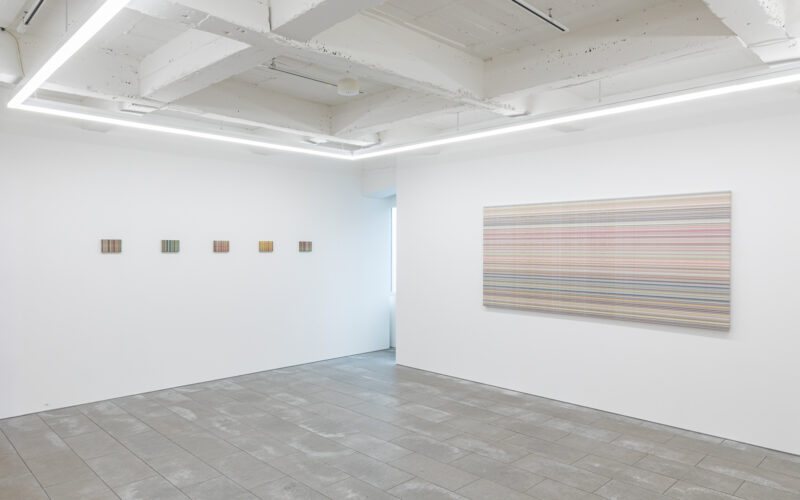
We visited “Utsushiki Awohitokusa,” a solo exhibition by Nana Kuromiya, a contemporary artist based in Kyoto.
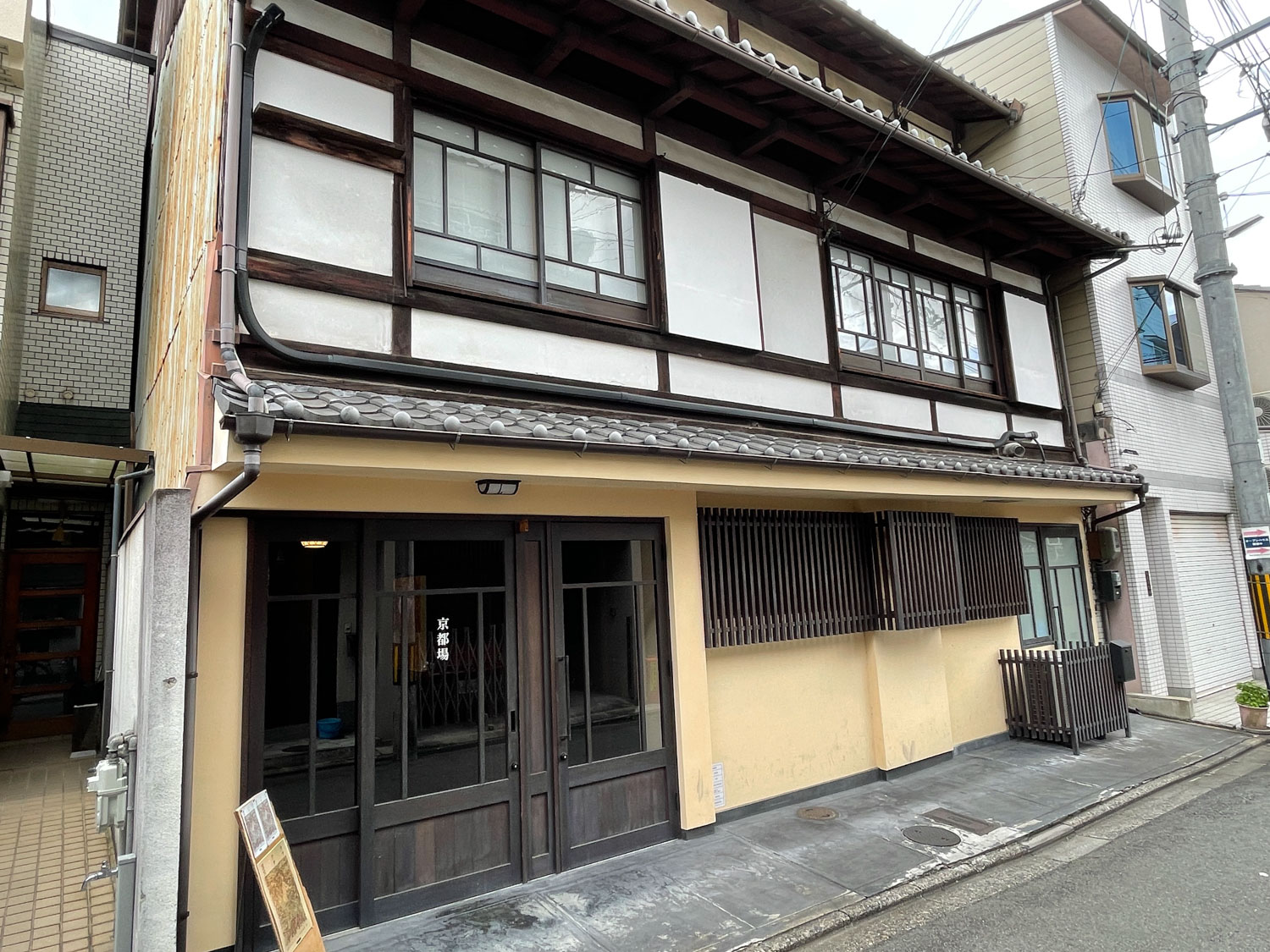
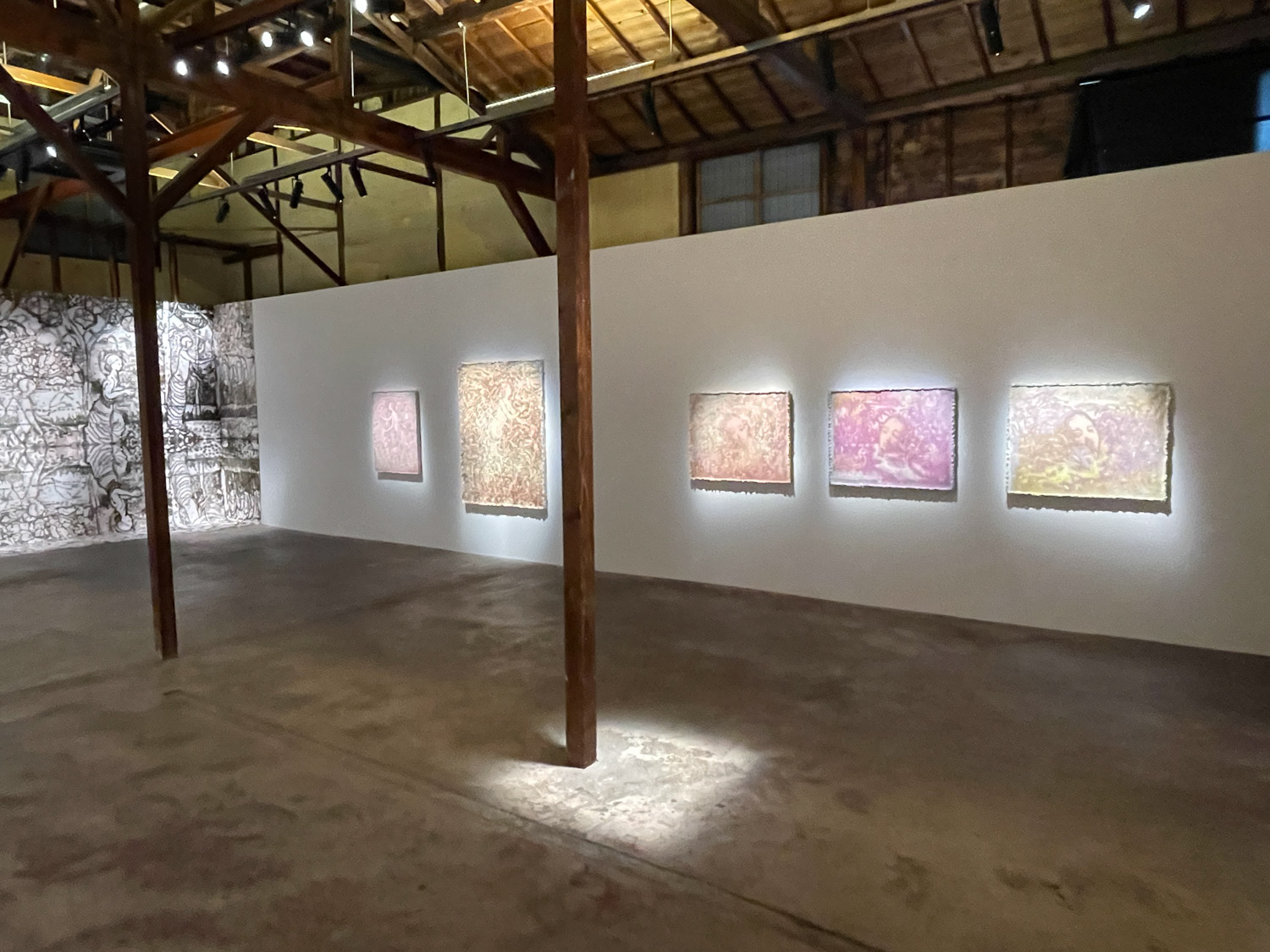
The venue is KYOTO-ba.
KYOTO-ba
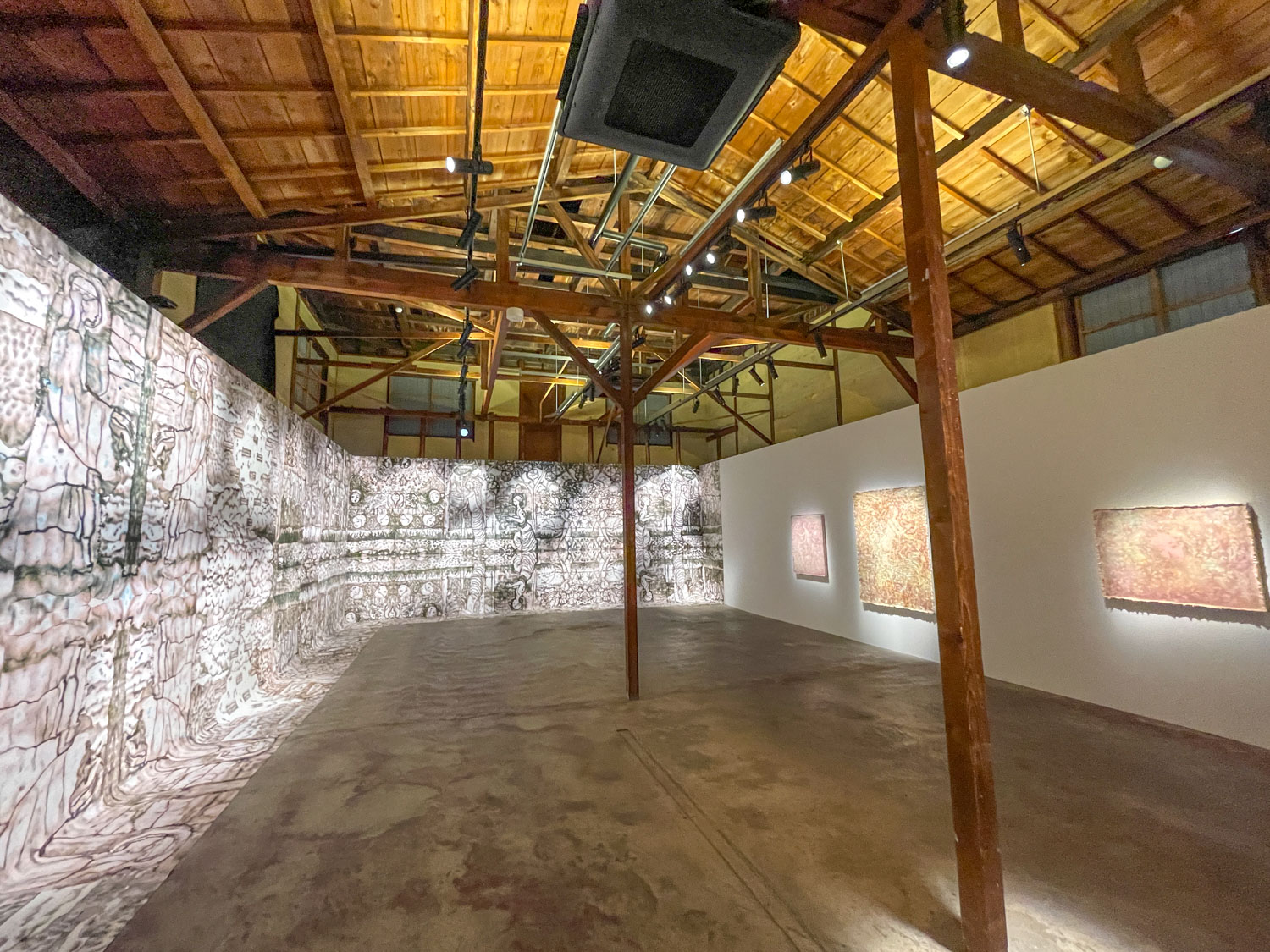
KYOTO-ba is a machiya townhouse built in the Taisho era that was once used as a workshop for Kyo-zome (Kyoto-style dyeing).
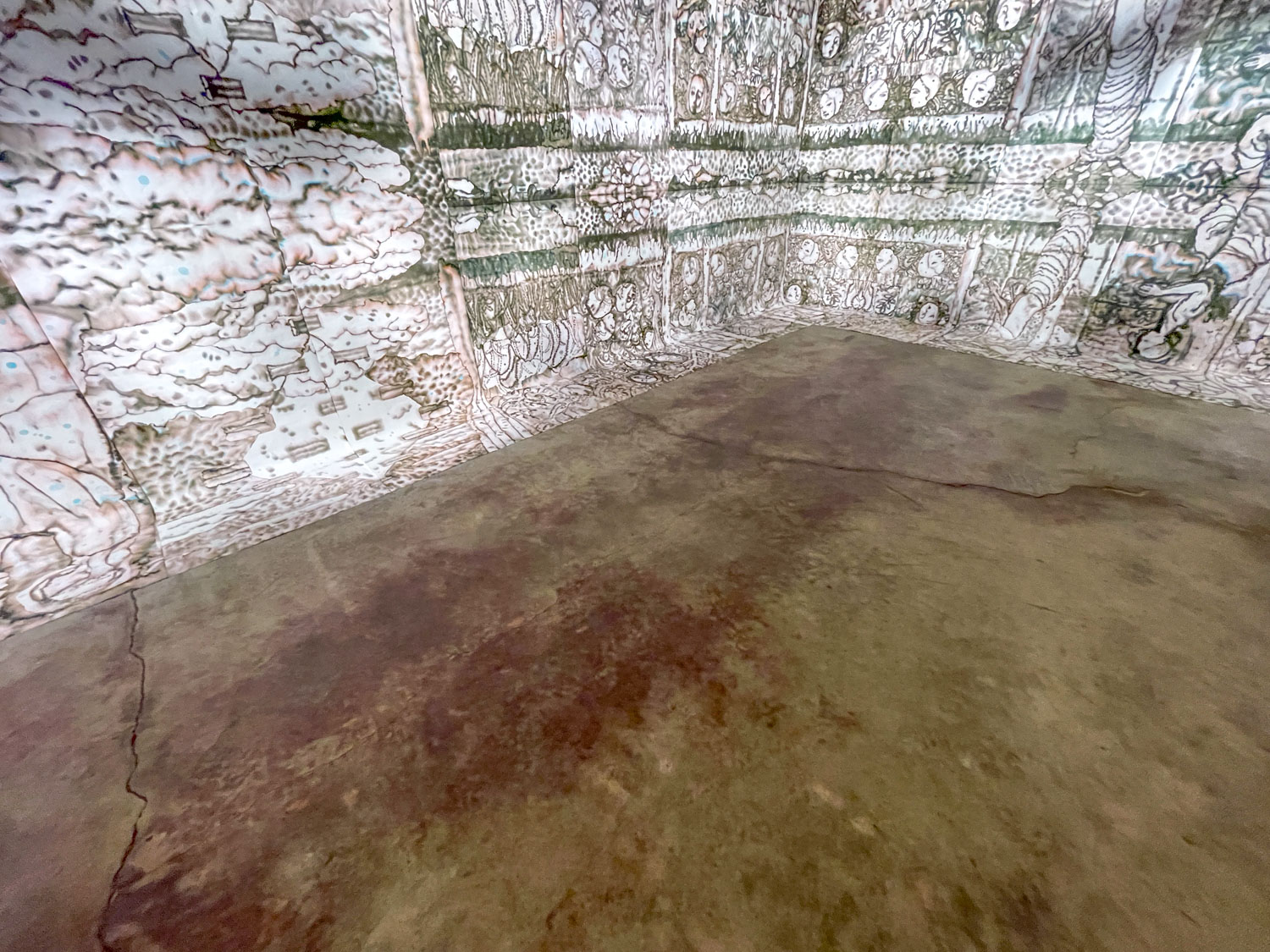
The exhibition program centers on works related to “dyeing,” and the greatest highlight of this show was a monumental piece using dyes, spanning 17,100 mm (17.1 meters) wide and 3,600 mm (3.6 meters) tall.
This work “Utsushiki Awohitokusa” was created by layering four sheets of washi and painting with dyes.
The pale surface of the dyes soaking into the washi blended comfortably with the space, offering a soothing viewing experience.
Traces of dye that had soaked into the floor could be seen
Nana Kuromiya is an artist who draws inspiration from the Kojiki and expresses it through painting. She received the Encouragement Prize at the VOCA 2020 exhibition.
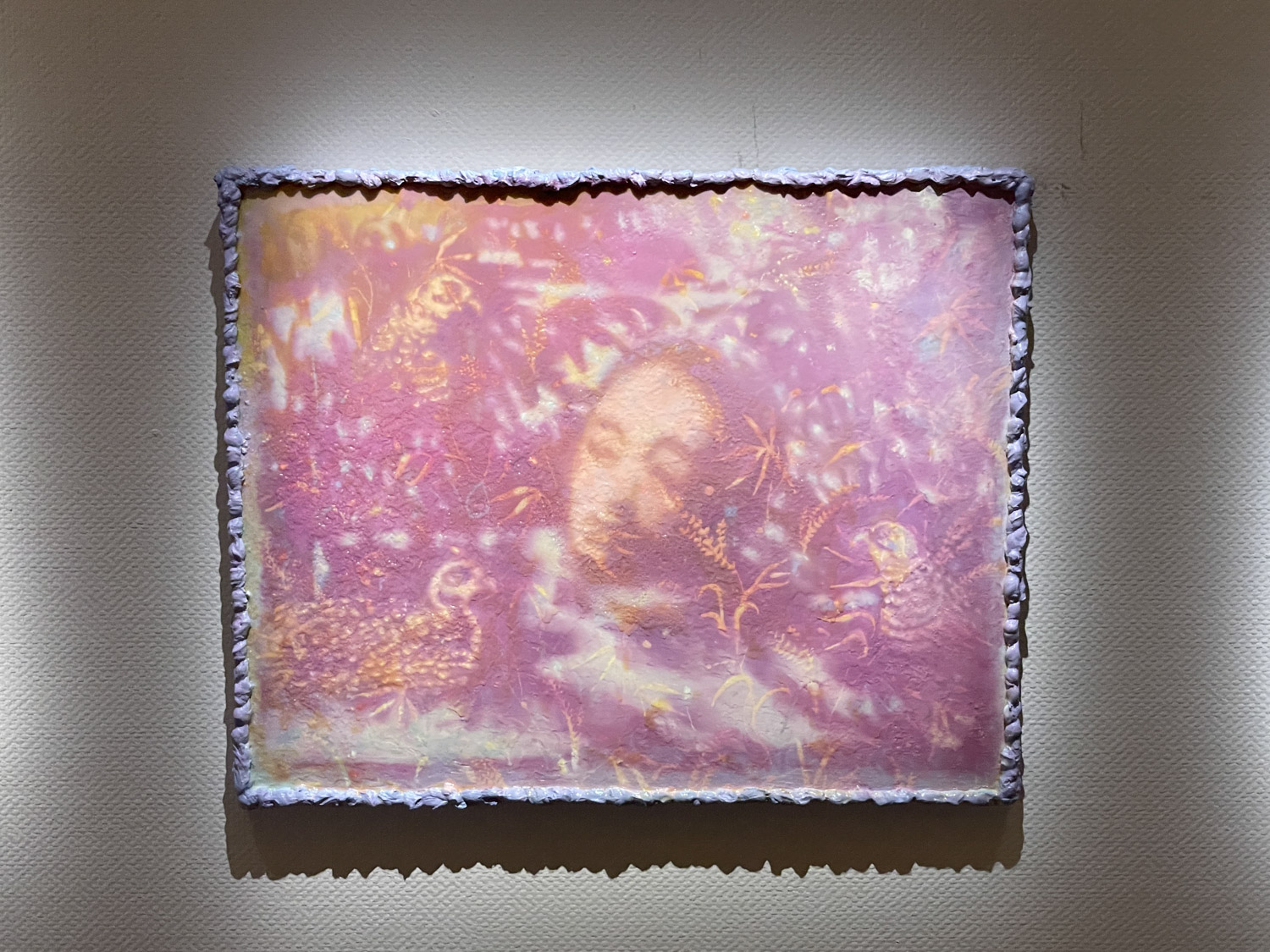
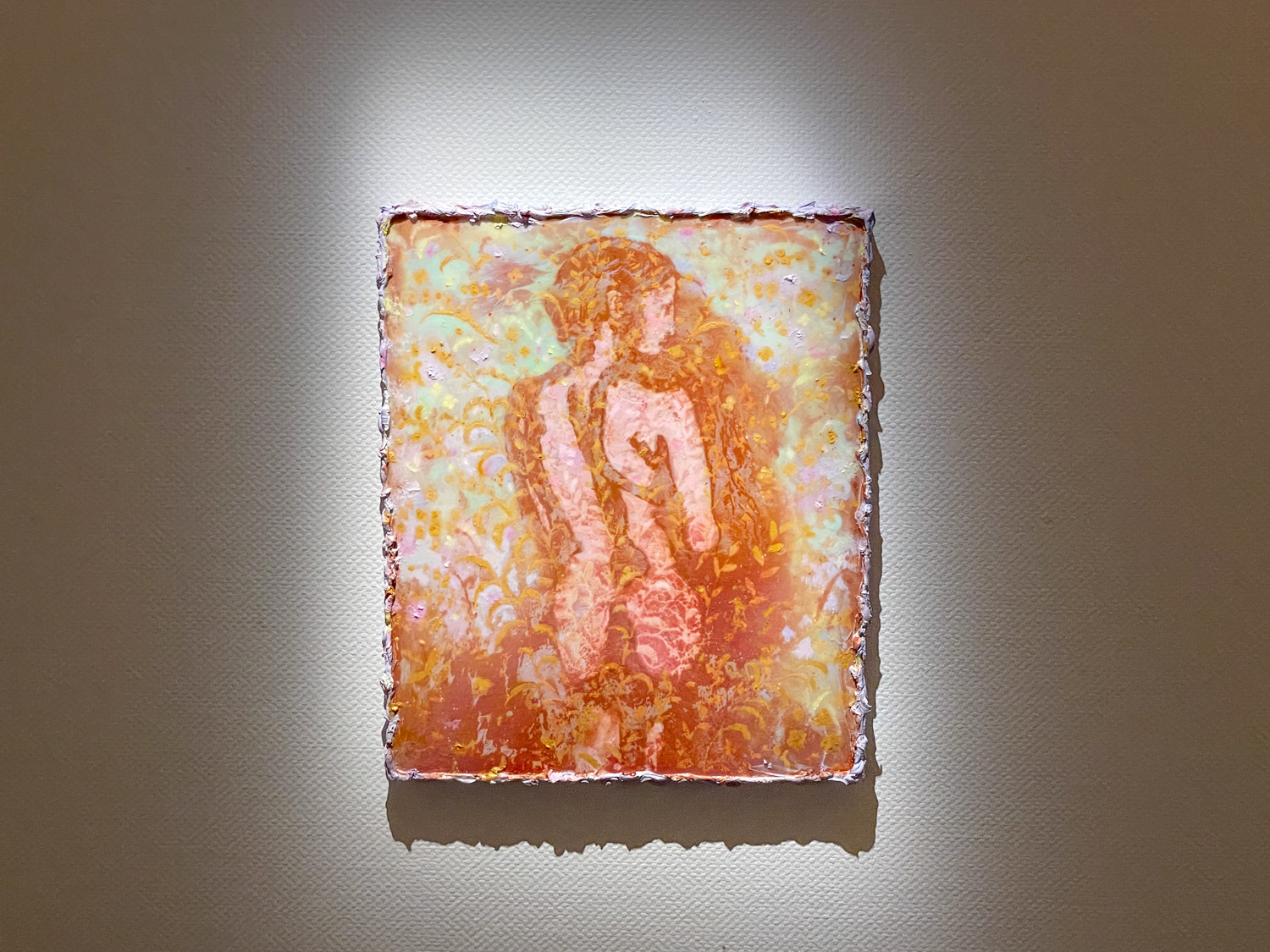
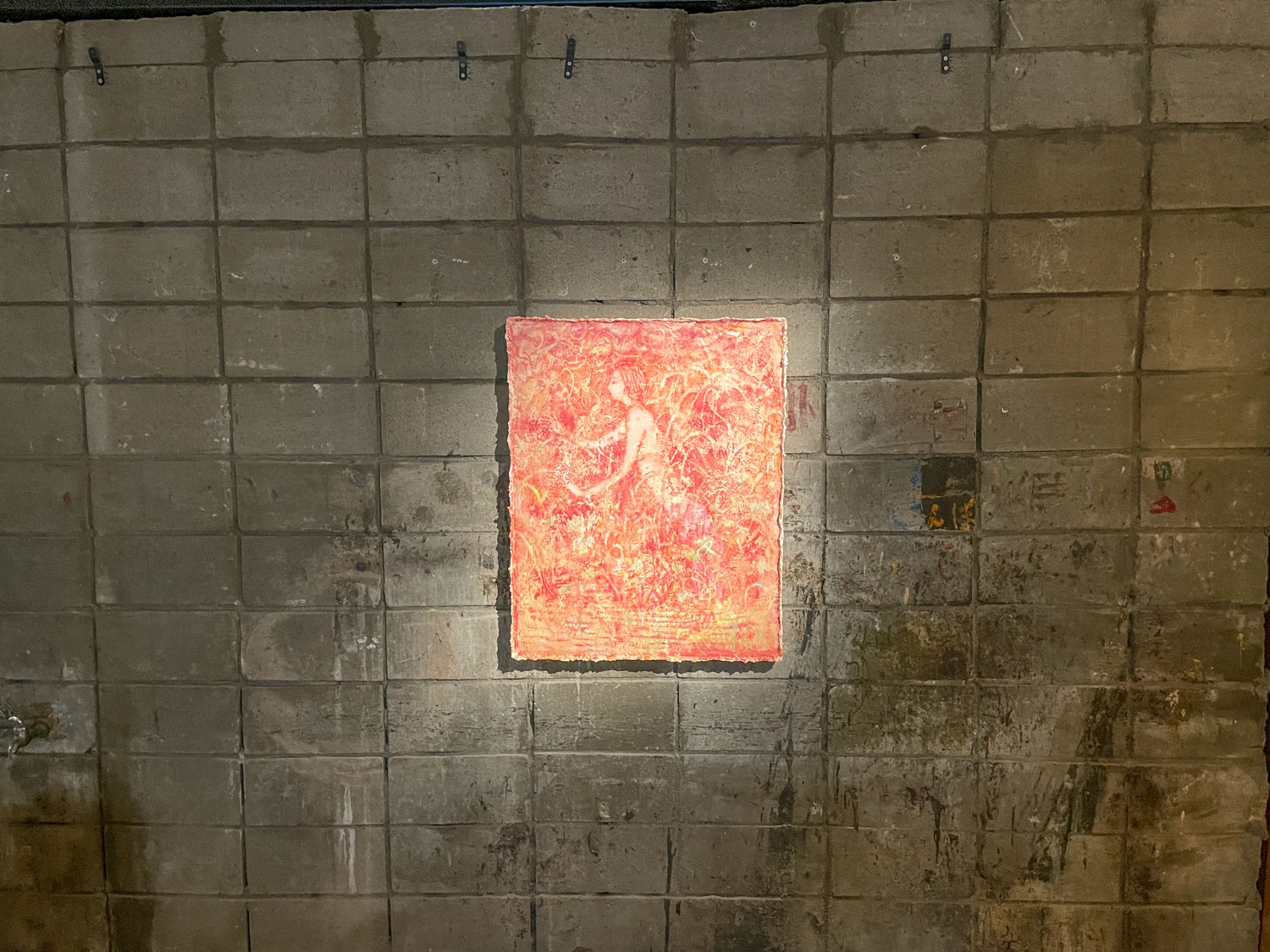
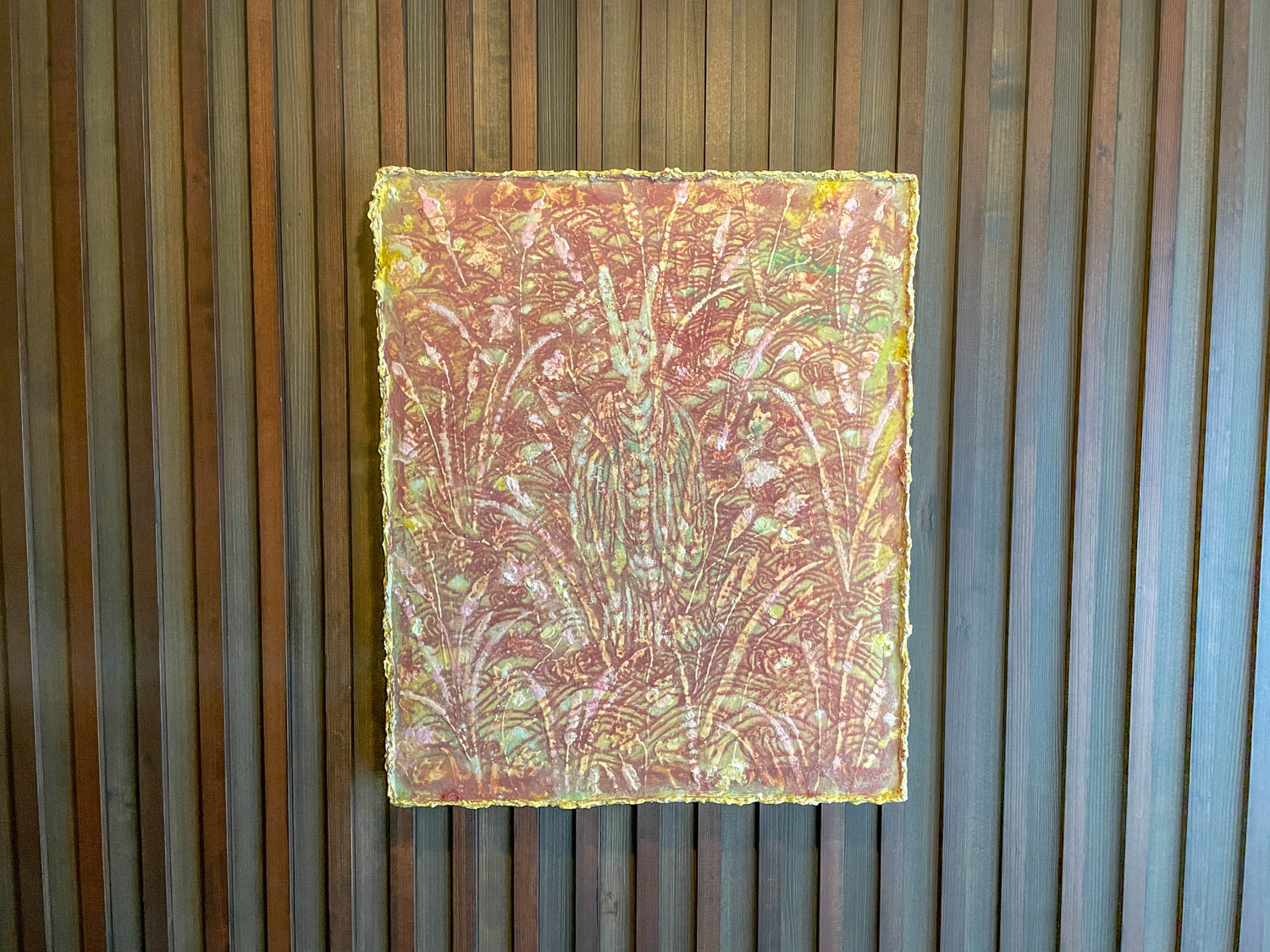
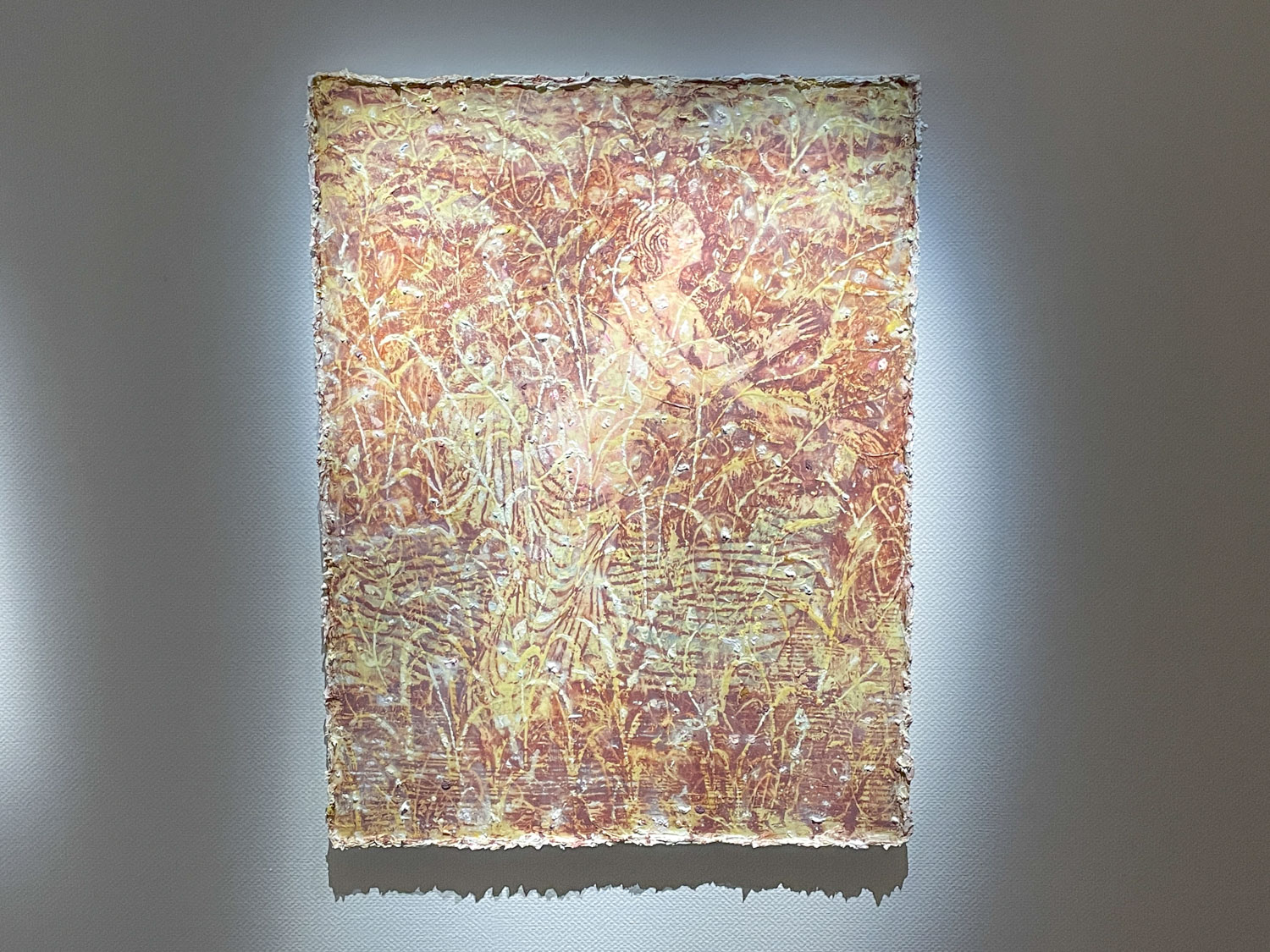
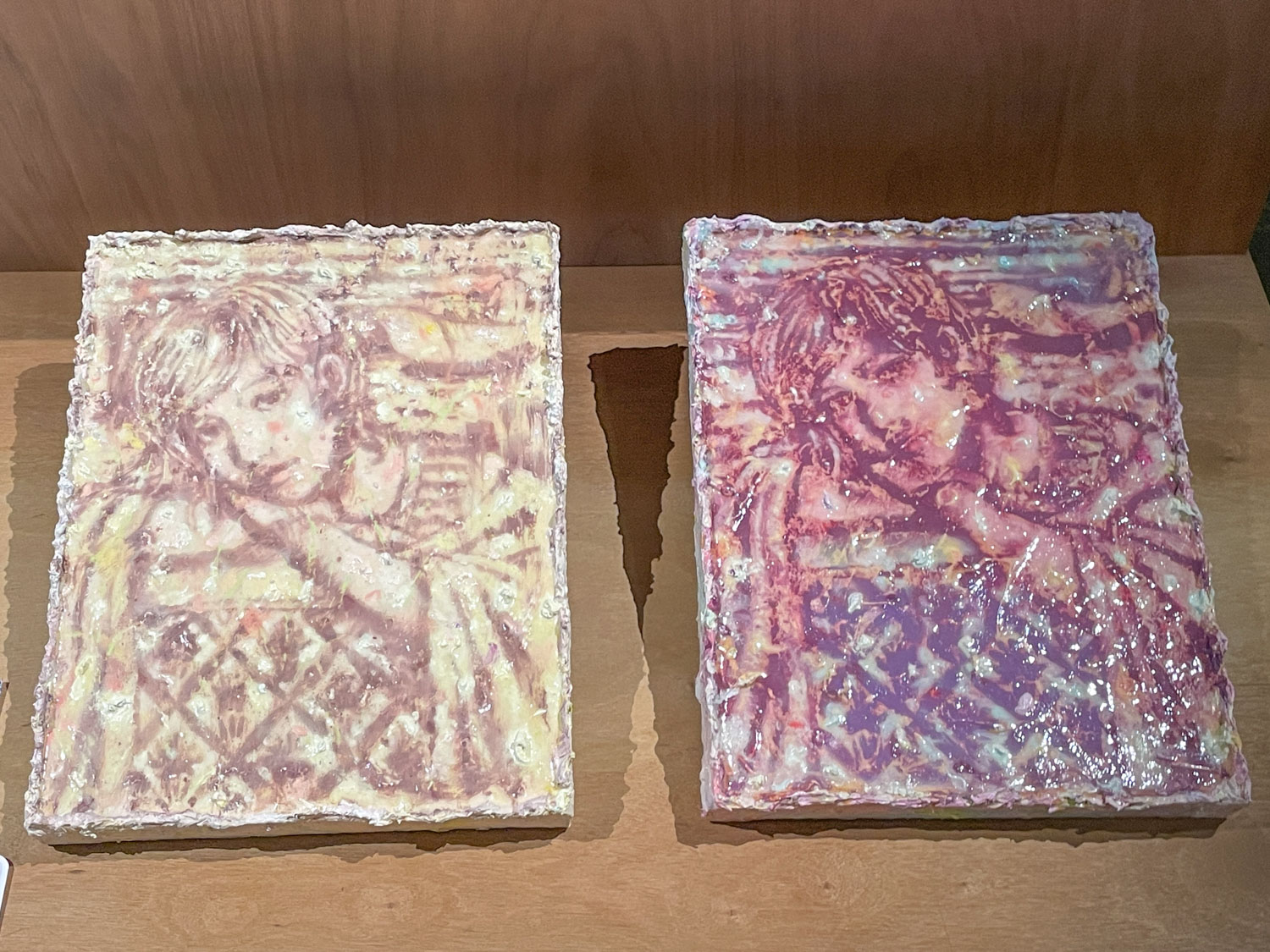
While this exhibition draws attention to the wall painting, her signature works are her distinctive oil paintings.
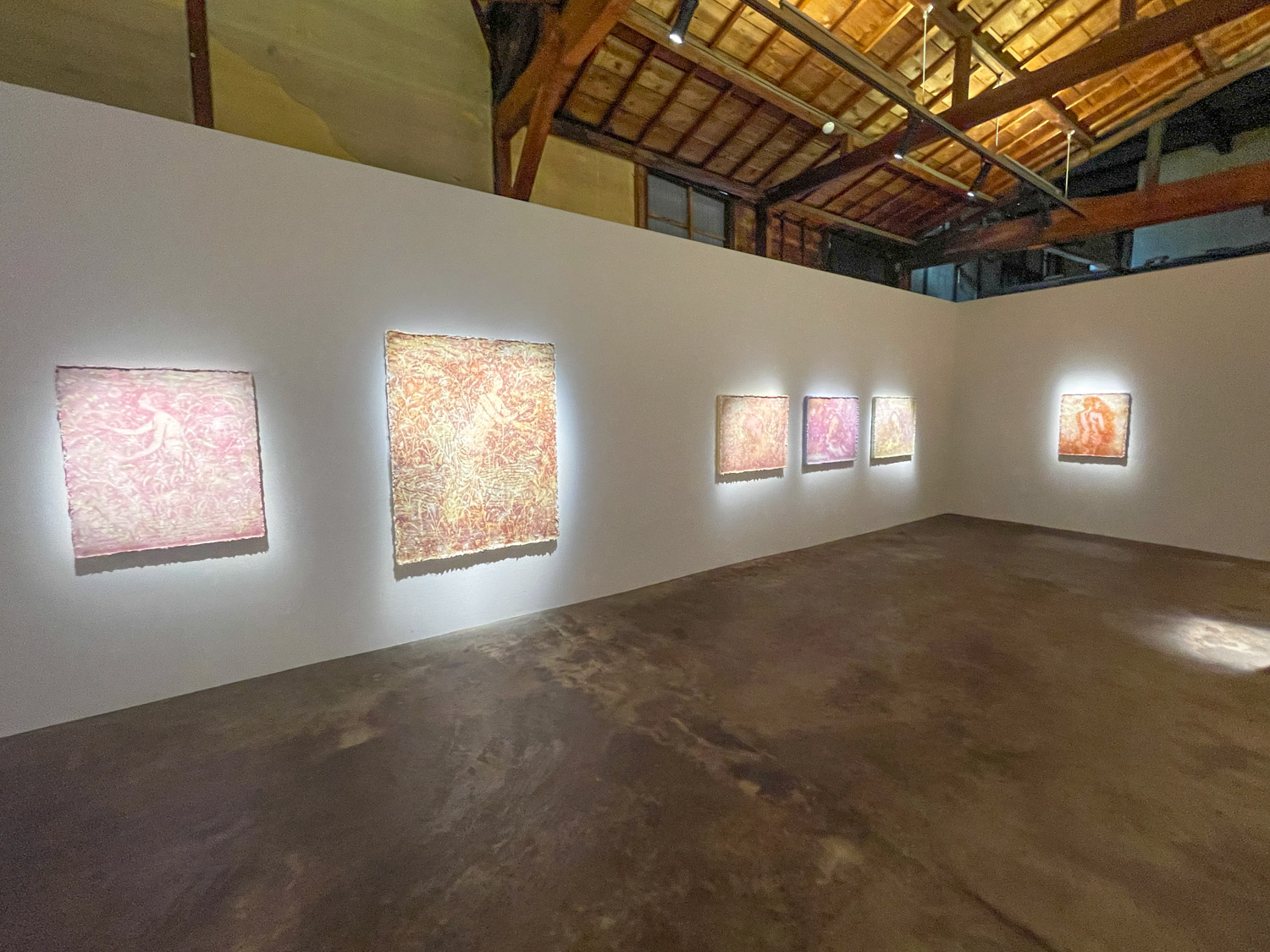
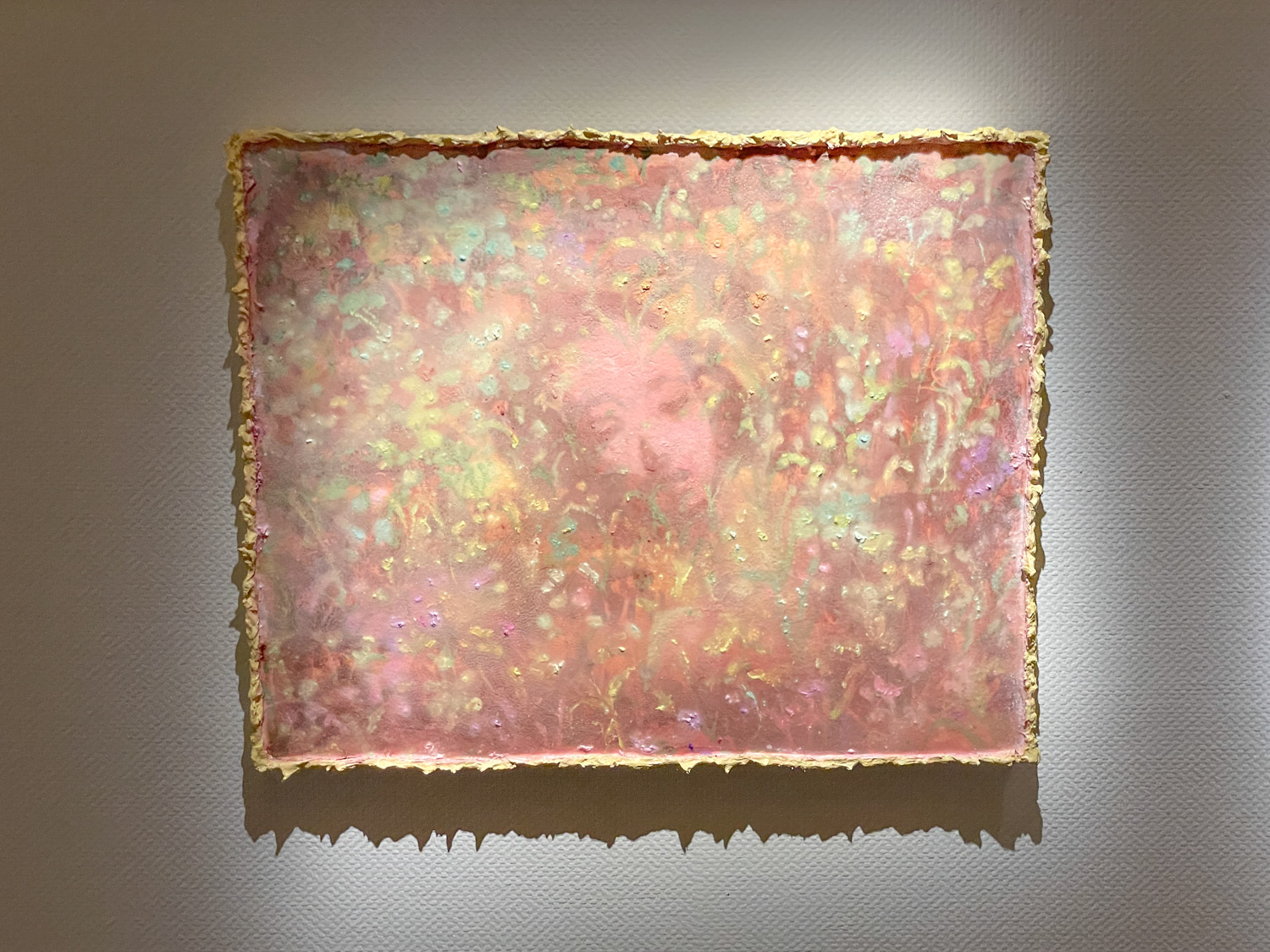
Nana Kuromiya, “The Death of a Thousand and the Birth of Fifteen Hundred #3,” 2021, wood panel, canvas, oil paint, acrylic paint, medium, beeswaxInstallation viewNana Kuromiya, “Awohitokusa #1,” 2021, wood panel, canvas, oil paint, acrylic paint, medium, beeswax
The distinctive expression of her works arises from a unique production method.
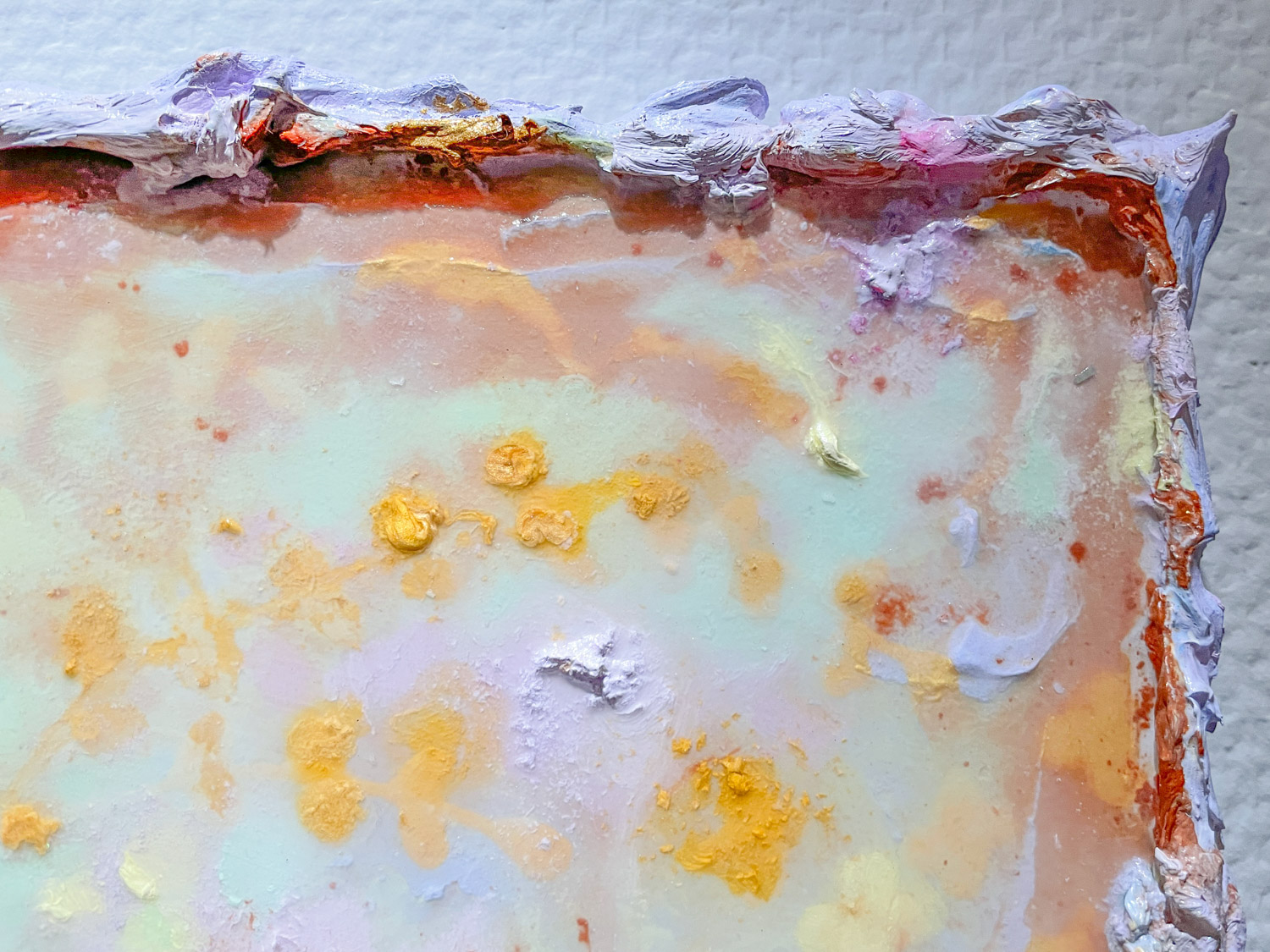
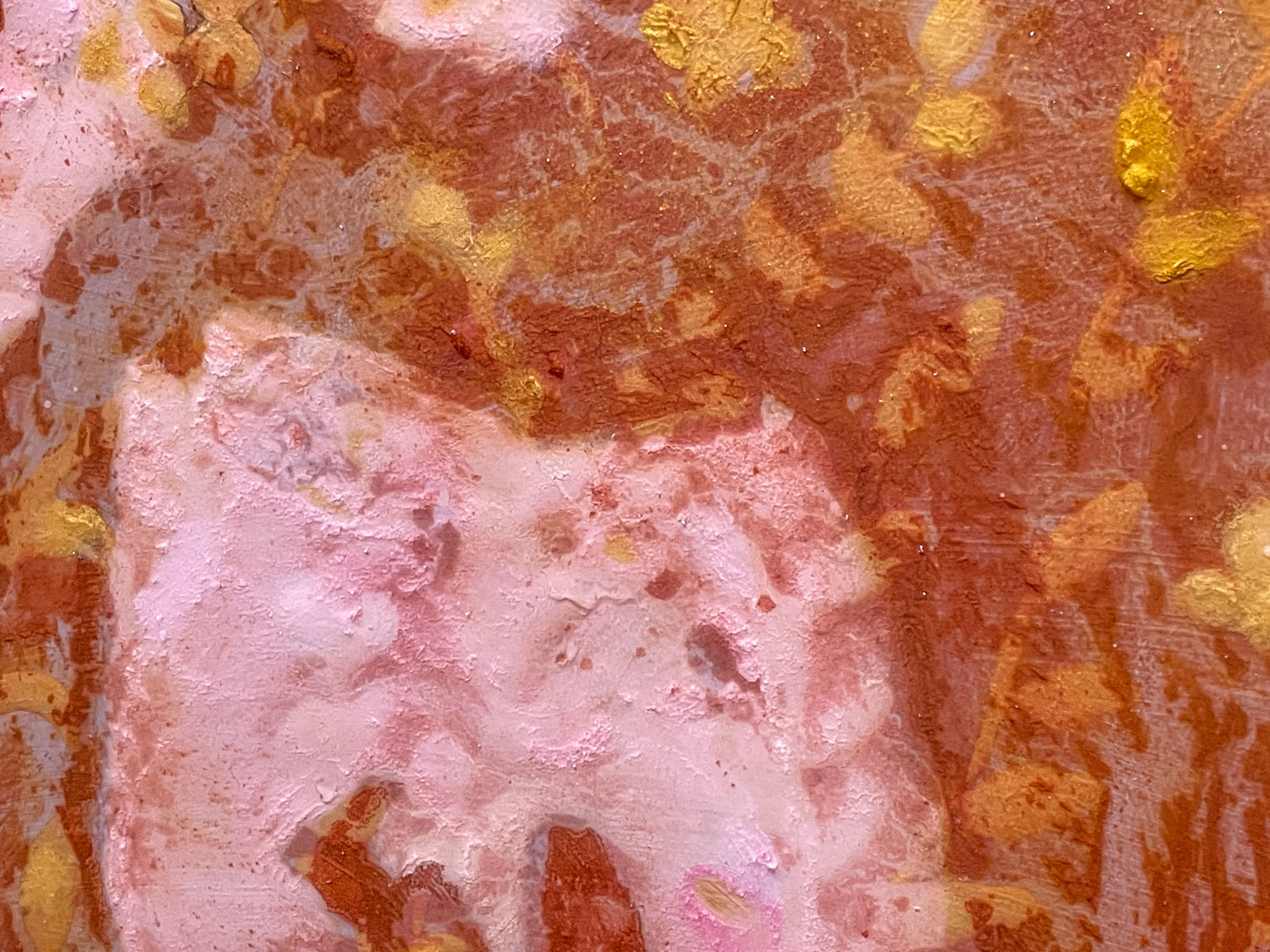
Modeling paste of acrylic paint is heaped along the four edges of the canvas like a levee, and then oil paint is applied to the canvas within. Before the paint dries, solvent is poured onto the surface to blur the motifs.
By blurring the outlines, works are completed that feel soft and give a sense of floating.
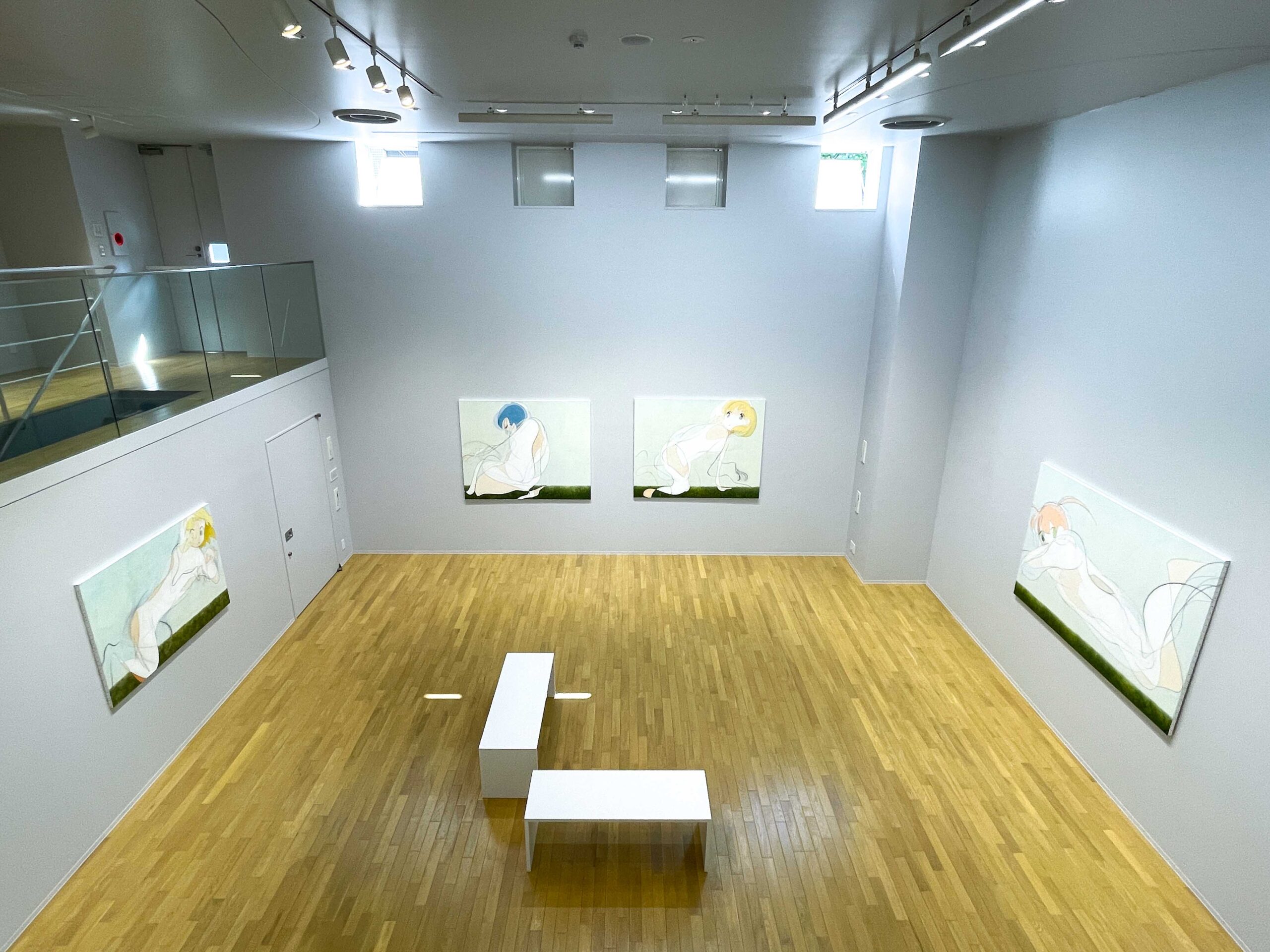
“Awohitokusa #1” *Detail“Awohitokusa #1” *DetailNana Kuromiya, “Umashi Ashikabi Higoji #2,” 2020, wood panel, canvas, oil paint, acrylic paint, mediumNana Kuromiya, “Rabbit Deity,” 2020, wood panel, canvas, oil paint, acrylic paint, medium, beeswaxNana Kuromiya, “People-Grass and Boat,” 2021, wood panel, canvas, oil paint, acrylic paint, medium, beeswaxNana Kuromiya, left “Tadzio #3,” right “Tadzio #2,” 2021, wood panel, canvas, oil paint, acrylic paint, mediumInstallation viewNana Kuromiya, “The Death of a Thousand and the Birth of Fifteen Hundred #1,” 2021, wood panel, canvas, oil paint, acrylic paint, medium, beeswax
“Nana Kuromiya: Paintings Evoked by the Words of the Kojiki”
“For this exhibition, I wanted to focus especially on the phrase ‘Awohitokusa’ (青人草) that appears in the Kojiki. It is a word used in a conversation between Izanaki and Izanami to refer to human beings, and is translated as ‘green people, who are grasses.’ The idea is: people = grass (trees). Reading the Kojiki, the greatest shock and emotion for me was learning that ancient Japanese people were understood in this way,” Nana Kuromiya said, standing before her own work in her atelier. “Awohitokusa” implicitly suggests that Japan, since ancient times, has been a warm and humid land where grasses and trees quickly grow throughout the four seasons. And human beings, too, like grass and trees. Kuromiya must have been moved by the words of the Kojiki and its worldview, which expresses the sense of human life as “Awohitokusa.” For example, “ao (blue/green)” signifies vigorous vitality. In ancient Japan, the color “ao” was close to green. Perhaps feeling life and sanctity in the green of grasses and trees is a Japanese kind of animism. In the West, by contrast, people were expressed as “clay.” In the Book of Isaiah of the Old Testament, it is written: “But now, O Lord, You are our Father; we are the clay, and You are the potter. We are all the work of Your hand.” The difference between a culture that describes people as “clay” and a culture that describes people as “grass.” The “Awohitokusa” of the Kojiki — what a different origin theory of human beings this is from the Western one. In this way, “the way of seeing the world, nature, and things” in the Kojiki can also be understood as the origin of the Japanese view of nature. In her past works too, Kuromiya has been moved by the words of literature and, from there, evoked images and expressed them as paintings. Kuromiya, from painting techniques and materials born of her own experience, draws forth uniquely liminal paintings. “I am always first drawn in by the words of literature and moved. The images I build afterwards. When I encounter a beautiful sentence or an interesting keyword, my emotions rise. And then I search for how I might visualize the worldview of those words,” Kuromiya murmurs. In this exhibition, I hope you will see how Kuromiya — moved by the word “Awohitokusa” from the Kojiki — has woven images and given them concrete form as paintings.
Nana Kuromiya《The Death of a Thousand and the Birth of Fifteen Hundred #3》2021 木板、画布、油彩颜料、丙烯颜料、媒材、蜂蜡展览现场Nana Kuromiya《Awohitokusa #1》2021 木板、画布、油彩颜料、丙烯颜料、媒材、蜂蜡
《Awohitokusa #1》*Detail《Awohitokusa #1》*DetailNana Kuromiya《Umashi Ashikabi Higoji #2》2020 木板、画布、油彩颜料、丙烯颜料、媒材Nana Kuromiya《Rabbit Deity》2020 木板、画布、油彩颜料、丙烯颜料、媒材、蜂蜡Nana Kuromiya《People-Grass and Boat》2021 木板、画布、油彩颜料、丙烯颜料、媒材、蜂蜡Nana Kuromiya 左《Tadzio #3》 右《Tadzio #2》2021 木板、画布、油彩颜料、丙烯颜料、媒材展览现场Nana Kuromiya《The Death of a Thousand and the Birth of Fifteen Hundred #1》2021 木板、画布、油彩颜料、丙烯颜料、媒材、蜂蜡
교토에서 활동하는 현대미술 작가 Nana Kuromiya의 개인전 “Utsushiki Awohitokusa”에 다녀왔습니다.
전시장은 KYOTO-ba입니다.
KYOTO-ba
KYOTO-ba는 다이쇼 시대에 지어져 교조메(Kyo-zome, 교토 염색) 공방으로 사용되던 마치야입니다.
전시 기획은 “염색”에 관한 작품을 중심으로 하며, 본 전시의 가장 큰 볼거리는 가로 17,100mm(17.1미터), 높이 3,600mm(3.6미터)에 이르는 염료를 사용한 거대한 작품이었습니다.
본 작품 《Utsushiki Awohitokusa》는 화지 4장을 겹쳐 염료로 그려진 작품입니다.
염료가 화지에 스며든 담담한 화면 표정이 공간과 어우러져 편안한 감상 체험이 되었습니다.
바닥에는 염료가 스며든 흔적이 남아 있었습니다
Nana Kuromiya는 고사기(古事記)에서 착상을 얻어 회화로 표현하는 작가입니다. VOCA전 2020에서 가작상을 수상한 바 있습니다.
본 전시에서는 벽화가 주목받지만, 축이 되는 작품은 특징적인 유화입니다.
Nana Kuromiya《The Death of a Thousand and the Birth of Fifteen Hundred #3》2021 목재 패널, 캔버스, 유화 물감, 아크릴 물감, 미디엄, 밀랍전시 풍경Nana Kuromiya《Awohitokusa #1》2021 목재 패널, 캔버스, 유화 물감, 아크릴 물감, 미디엄, 밀랍
독특한 작품의 표정은 특수한 제작 방식에서 비롯됩니다.
캔버스의 사방에 둑처럼 아크릴 물감의 모델링 페이스트를 쌓아 올린 뒤, 그 안쪽 캔버스에 유화 물감으로 그립니다. 물감이 마르기 전에, 모티프를 흐릿하게 하기 위해 표면에 용제를 부어 넣습니다.
윤곽을 흐리게 함으로써 부드럽고 부유감이 느껴지는 작품이 완성됩니다.
“이번 전시는 고사기 중에서도 특히 ‘아오히토쿠사(青人草 Awohitokusa)’라는 말에 초점을 맞추고 싶습니다. Izanaki와 Izanami의 대화 속에 등장하는, 인간을 가리키는 말로, 푸르른 사람인 풀로 번역됩니다. 사람=풀(나무)이라는 사상입니다. 고대 일본에서는 사람이 이렇게 이해되었던 것이구나 하는 것이, 고사기를 읽으며 가장 큰 충격이자 감동이었습니다.”Nana Kuromiya는 자신의 아틀리에에서 자신의 작품을 앞에 두고 이렇게 말했다. “아오히토쿠사 Awohitokusa”는 일본이 예로부터 온난하고 습윤한 땅이며, 초목이 사계절 내내 곧바로 자라는 것을 은연중에 시사한다. 그리고 초목과 마찬가지로 인간도. Kuromiya는 인간의 생명관을 “Awohitokusa”라고 표현한 고사기의 말과 그 세계관에 감동했을 것이다. 예컨대 “아오(青)”는 생명력이 왕성함을 의미한다. 고대 일본에서 “아오”의 색은 녹색에 가깝다. 초목의 녹색에서 생명관과 성스러움을 느끼는 것은 일본적 애니미즘이라 할 수 있을지도 모른다. 그런데 서양에서 사람은 “점토”로 표현되었다. “구약성서”의 “이사야서”에서는, “그러나 주여, 당신은 우리의 아버지이십니다. 우리는 점토, 당신은 도공. 우리는 모두 당신의 손의 작품입니다”라고 말한다. 사람을 “점토”로 나타내는 문화와 사람을 “풀”로 나타내는 문화의 차이. 고사기의 “Awohitokusa”란, 서양과 얼마나 다른 인간의 기원설인가. 이처럼 고사기 속의 “세계·자연이나 사물을 보는 방식”을 일본인의 자연관의 원점으로 파악할 수도 있다. Kuromiya는 과거 작품에서도 문학의 말에 감동하여, 거기에서 이미지를 환기시켜 회화로 표현해 왔다. Kuromiya는 그녀 자신의 경험에서 태어난 회화 기법과 소재에서 경계적인 독자적 회화를 그려낸다. “저는 언제나 먼저 문학의 말에 이끌리고 감동합니다. 이미지는 그 이후에 구축합니다. 아름다운 문장이나 흥미로운 키워드를 접하면 저의 감정이 고조됩니다. 그리고 어떻게 하면 그 말의 세계관을 시각화할 수 있을까 모색합니다”라고 Kuromiya는 중얼거린다. 이번 전시에서는 고사기의 “Awohitokusa”라는 말에 감동한 Kuromiya가, 이미지를 자아내어 회화로서 어떻게 구현했는지를 꼭 봐 주시기 바랍니다.