Maintaining Framed Acrylic Surfaces: Dirt and Fine Scratches
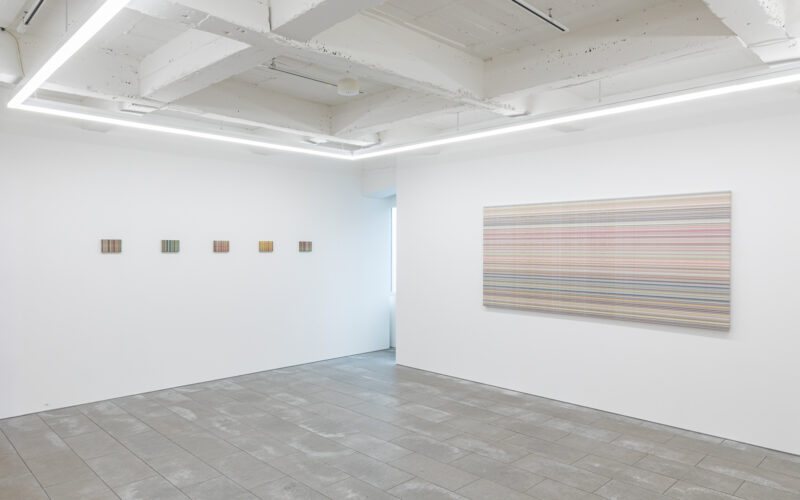
At our recent Kore Kore exhibition, we invited the framing shop nabis (Kuramae) and held a talk event about framing.
Before the event, we set up a form inviting worries and questions about framing in advance, and received many questions.
The most common of these concerned the handling of “acrylic boxes and acrylic panels” — namely, how to handle them.Most frames use acrylic panels, which are lightweight, hard to break, and block UV rays.When framing, compared with glass, acrylic panels have the advantage on many points.
Lightweight
Hard to break
Blocks UV rays
High transparency
Low-reflection acrylic panels also exist, suited to viewing
On the other hand, the drawback that draws attention is that they’re prone to scratching. Because of this, many art collectors seem to struggle with scratches on acrylic panels. Here are some of the questions we actually received:
I’d like to know the best way to deal with a dirty framed acrylic surface.
I’d like to know how to care for acrylic well. Even wiping with a soft cloth leaves fine scratches.
Is there a way to cleanly remove polishing scratches from acrylic?
Once, bothered by fine scratches on an acrylic surface, I bought something like an acrylic polishing cloth online and buffed it — only to end up with streaky polishing scratches all over.
How about it? Haven’t you had similar questions yourself?
Why Acrylic Panels Get Dust and Fine Scratches
Acrylic panels are made of resin and tend to become charged, attracting dust through static electricity. They’re also made of a soft material that scratches easily.
If, bothered by dust, you try to wipe with a rag or tissue, the adhering dust scratches the resin surface. That’s the nature of it.
Charging → dust attracted by static → careless wiping → fine scratches from the dust
Rather than a big scratch or crack from some impact, scratches generally tend to occur through the flow above, don’t they?
About Fine Scratches and Scuffs on Acrylic Panels
To state this site’s conclusion up front: fine scratches on an acrylic panel cannot be repaired.
Unfortunately, once it’s scratched even once, repair is impossible — it’s best to assume so.This article isn’t about repairing or restoring scratches, but a summary of maintenance methods for removing dirt without adding fine scratches.
Removing Dirt
Air Duster
Since friction on the acrylic surface causes scratches, removing dirt without contact is the safe method.
I recommend using an “air duster,” which many galleries also use.
When I asked a gallerist, I heard galleries often use it on unframed artworks too.
Note: when used with the included nozzle attached, there are reports of the nozzle flying off. Please be careful.
Rinsing with Water
Rinsing is effective for both antistatic purposes and removing dirt.
Gently removing dirt with soap or a neutral detergent is fine too. You may wash by hand or with a soft cloth. *Of course, remove the artwork before washing.
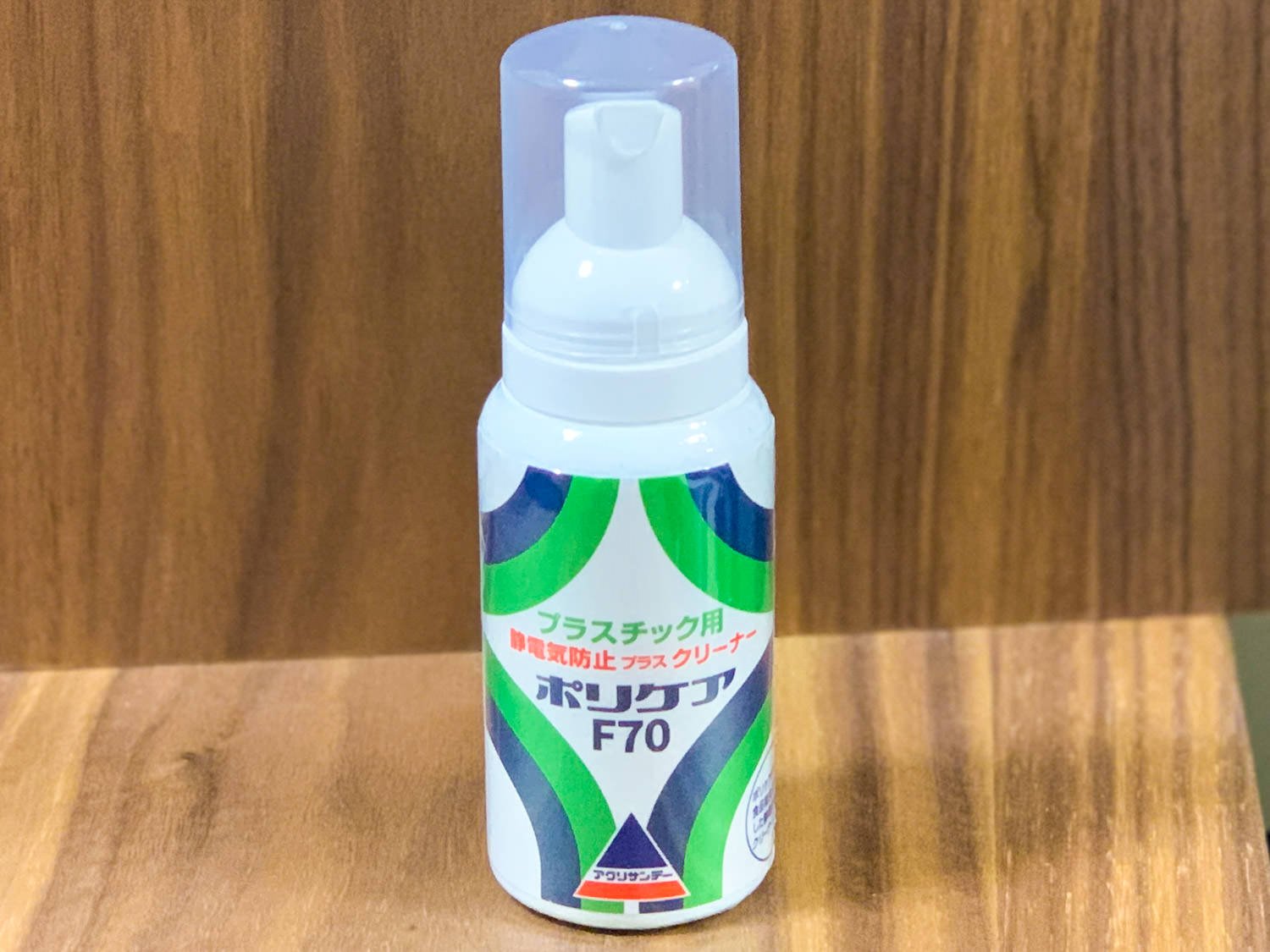
Acrylic Sunday Anti-Static PolyCare
If you’d rather not remove the artwork, wiping off dirt with a soft cloth dampened with water is fine too.
There are also cleaners made specifically for acrylic. Why not consult the retailer or framing shop and try one?
For example, the following product is from a company specializing in acrylic, “Acrylic Sunday,” so there’s a reassuring sense of trust.
I bought one myself.Acrylic Sunday “PolyCare F70”
Cloth
I think the simplest method is wiping with a cloth. Generally you’d use a cloth like those for wiping glasses or camera lenses.
However, when wiping off dust while dry, you need to think carefully.
What I especially want to stress here is that you need to be careful, because dust or dirt clinging to the cloth can create very fine scratches.
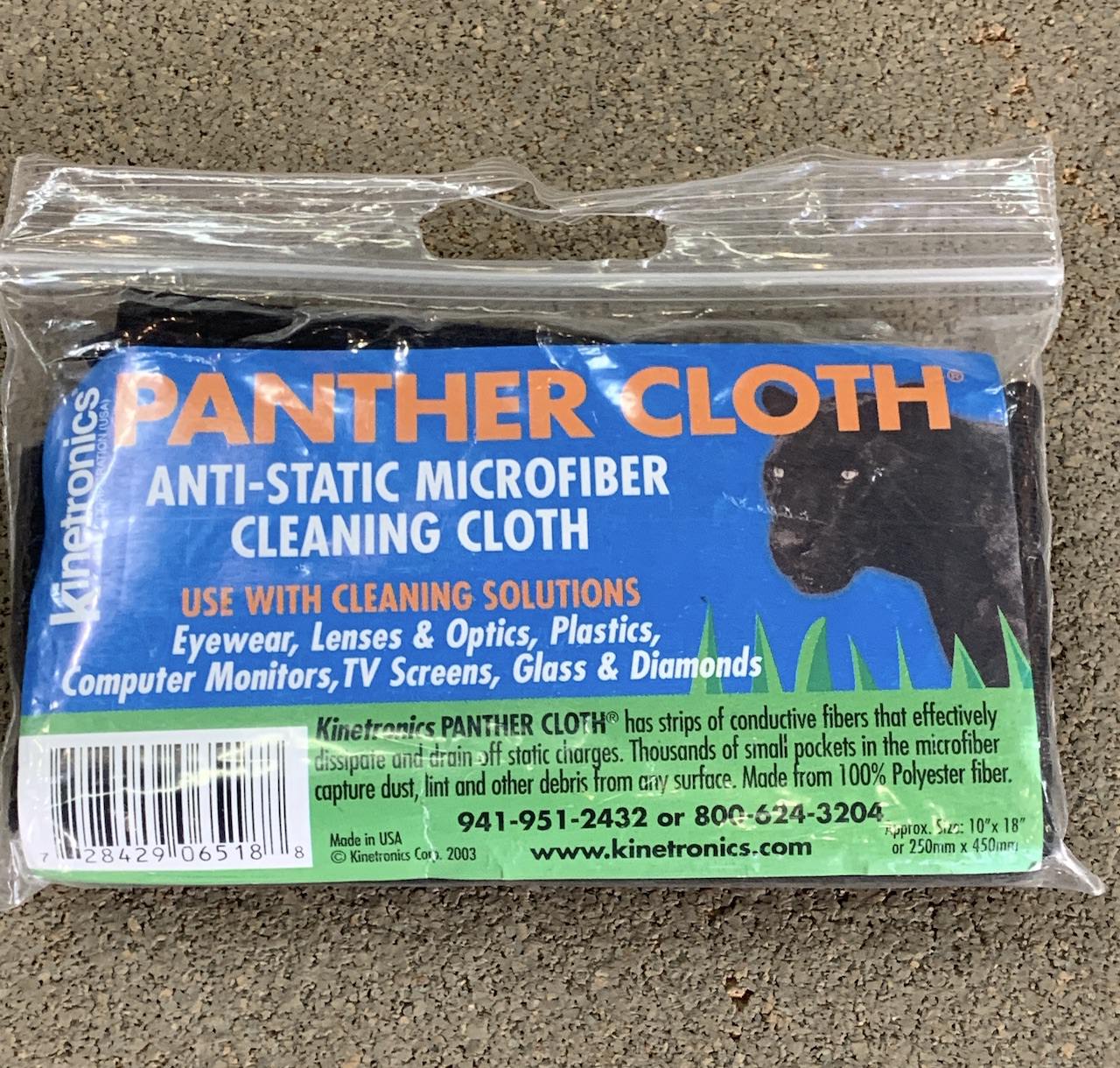
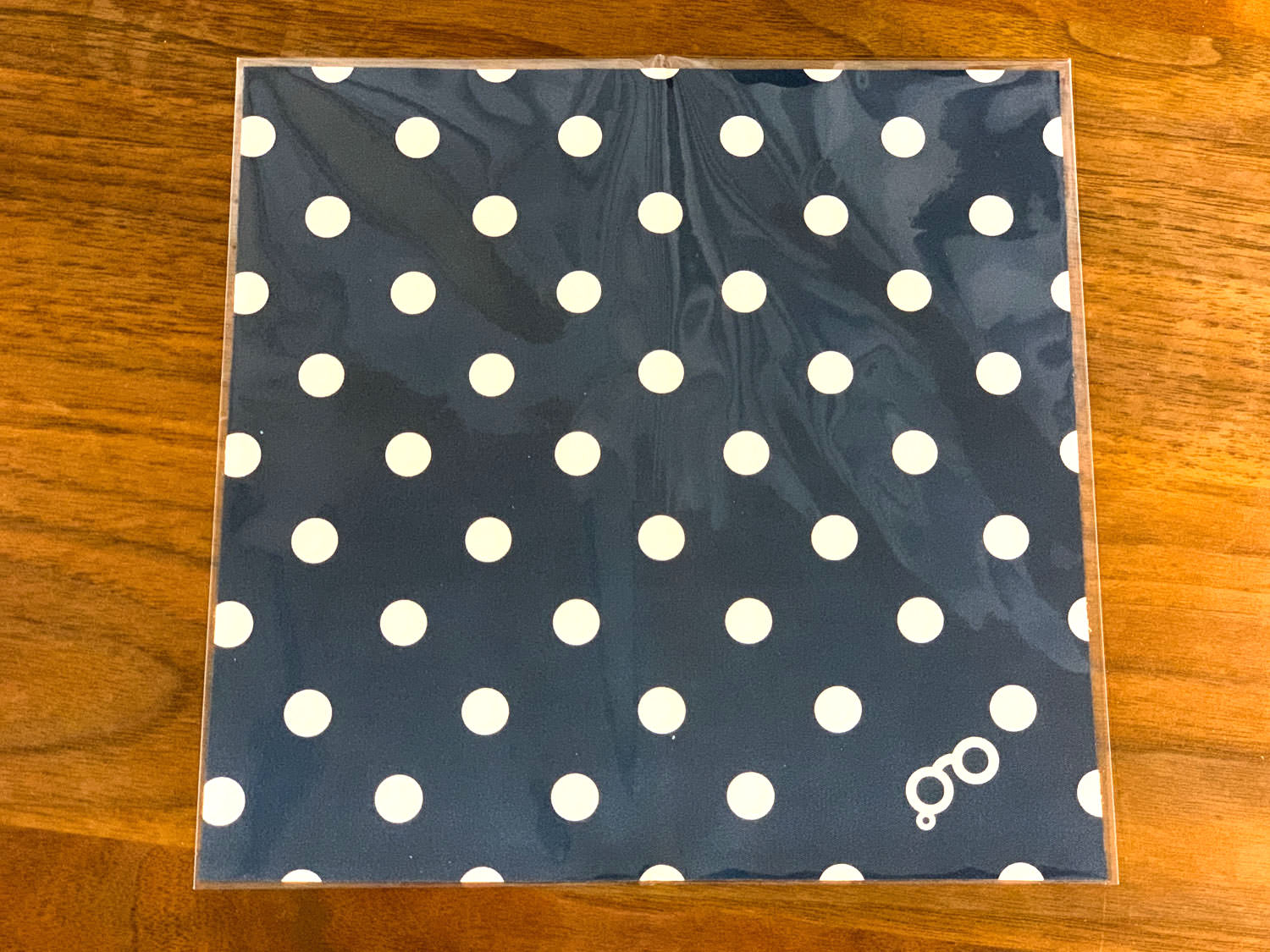
A framing shop I know recommended the following cloth — an overseas product, an antistatic cloth.Anti-Static Panther Cloth $6.95 – $41.00 A Static and Dust Control Product For WET use with Solvents and Cleaners!I remove dirt with a cloth like the following. It’s fine-woven and gently lifts off dirt.I bought a medium-size lens cloth (¥600) at the eyewear shop “Hakusan Megane (Okachimachi)” and use it.When using these cloths, I first remove as much dust as possible with the air duster mentioned earlier or a damp cloth, and then wipe with a very, very gentle touch.
The amount of force is the key. Please take care never to try to wipe hard.
If It Gets Scratched…
Should it get scratched, there’s also the option of repairing it with products like the following.
However, as noted, an acrylic panel is considered “impossible to repair once scratched even once.” The framing-shop person mentioned earlier commented that “using repair compounds isn’t recommended.” It could even end up spreading the scratches. If you use one, please do so with resolve.
As for acrylic surfaces, I’ll close by saying: accept that some fine scratches are unavoidable, and rather than repairing, maintain them so as not to scratch them.
Have a wonderful art life.
不过,在干燥状态下擦去灰尘时,似乎需要慎重考虑。
在此尤其想强调的是,需要注意:灰尘或附着在布上的污渍等,都可能造成极细小的划痕。
相熟的装裱店向我推荐了以下这款布——是海外商品,防静电布。Anti-Static Panther Cloth $6.95 – $41.00 A Static and Dust Control Product For WET use with Solvents and Cleaners!笔者用如下这种布去除污渍。它织目细密,能温和地去除污渍。我在眼镜店「白山眼镜(御徒町)」购买了中号眼镜布(600日元)来使用。使用这些布时,我会先用前面介绍的气吹或蘸水的布尽量去除灰尘,然后以极其轻柔的力道擦拭。
力道的大小是关键。请务必注意,切勿试图用力擦拭。
얼마 전 Kore Kore 전에서 액자 가게 nabis(구라마에)를 초청해 액자에 관한 토크 이벤트를 열었습니다.
이벤트 전에 「액자에 관한 고민과 의문, 묻고 싶고 알고 싶은 것을 사전에 모집합니다」라는 투고 폼을 마련했더니 많은 질문을 받았습니다.
그중 가장 많았던 것이 「아크릴 박스와 아크릴판」의 취급에 관한 것이었습니다.대부분의 액자에는 가볍고 잘 깨지지 않으며 자외선을 차단하는 아크릴판이 채용되어 있습니다.액자에 넣을 때 유리와 비교하면 아크릴판은 여러 면에서 우위에 있습니다.
가볍다
잘 깨지지 않는다
자외선 차단 효과가 있다
투명도가 높다
저반사 아크릴판도 있어 감상에 적합하다
한편, 단점으로 주목받는 것이 기스가 나기 쉽다는 점입니다.
그래서 많은 아트 컬렉터가 아크릴판의 기스로 고민하는 듯합니다. 실제로 들어온 질문의 일부를 아래에 소개합니다:
액자 아크릴 면이 더러워졌을 때 가장 좋은 대처 방법을 알고 싶습니다.
아크릴을 잘 손질하는 방법을 알고 싶습니다. 부드러운 천으로 닦아도 잔기스가 나서요.
아크릴의 연마 기스를 깨끗이 없애는 방법이 있을까요?
예전에 아크릴 표면의 잔기스가 신경 쓰여 아크릴용 연마포? 같은 것을 온라인으로 사서 닦아 봤더니, 오히려 줄무늬 연마 기스투성이가 된 적이 있었습니다.
어떠신가요? 여러분도 비슷한 의문을 가진 적이 있지 않으신가요?
아크릴판에 먼지와 잔기스가 생기는 원인
아크릴판은 수지로 만들어져 쉽게 대전되어 정전기로 먼지를 흡착하는 성질이 있습니다. 그리고 기스가 나기 쉬운 부드러운 소재로 만들어져 있습니다.
먼지가 신경 쓰여 걸레나 티슈로 닦으려 하면, 붙어 있던 먼지 때문에 수지 면에 기스가 납니다. 이런 성질을 지닙니다.
대전 → 정전기로 먼지 흡착 → 대충 닦음 → 먼지로 잔기스 발생
어떤 충격으로 큰 기스나 깨짐이 생기기보다, 일반적으로는 위와 같은 흐름으로 기스가 나는 경우가 많지 않을까요?
아크릴판에 생긴 잔기스·긁힘에 대하여
본 사이트가 내린 결론부터 말씀드리면, 아크릴판에 생긴 잔기스는 복구할 수 없습니다.
안타깝게도 한 번이라도 기스가 나면 복구는 불가능하다고 여기는 편이 좋을 듯합니다.본 기사는 기스의 복구나 재생 방법이 아니라, 잔기스를 내지 않고 오염을 제거하는 관리 방법을 정리한 기사입니다.
오염 제거
에어 더스터
아크릴 면에 마찰이 생기면 기스가 나므로, 비접촉으로 오염을 제거하는 것이 무난한 방법입니다.
많은 갤러리에서도 사용하는 「에어 더스터」의 사용을 추천합니다.
갤러리스트에게 물어보니, 갤러리에서는 액자에 넣지 않은 미술 작품에도 자주 사용한다고 들었습니다.
또한 부속 노즐을 끼워 사용하면 노즐이 튀는 경우도 보고되어 있습니다. 주의해 주세요.
물세척
물세척은 정전기 방지와 오염 제거에 유효합니다.
비누나 중성 세제를 묻혀 부드럽게 오염을 제거하는 것도 좋습니다. 손세척이나 부드러운 천과 함께 씻어도 무방합니다. ※물론 작품은 떼어 내고 씻읍시다.
아크릴 선데이 정전기 방지 폴리케어
작품을 떼고 싶지 않다면, 물을 묻힌 부드러운 천으로 오염을 제거하는 것도 좋습니다.
또한 아크릴 전용 클리너도 판매되고 있습니다. 판매점이나 액자 가게 등과 상담한 뒤 사용해 보시는 것은 어떨까요.
예를 들어 아래 상품은 아크릴에 특화된 회사 「아크릴 선데이」의 제품이라 안심감이 있습니다.
필자도 구입했습니다.아크릴 선데이 「폴리케어 F70」
천(클로스)
가장 간단한 방법은 천으로 닦아 내는 방법이라고 생각합니다. 안경이나 카메라 렌즈를 닦는 것과 같은 천을 사용하는 것이 일반적일 것입니다.
다만 마른 상태에서 먼지를 닦아 낼 때는 신중히 생각할 필요가 있을 듯합니다.
여기서 특히 강조하고 싶은 것은, 먼지나 천에 붙어 있던 오염 등으로 아주 미세한 기스가 생길 가능성도 있으니 주의가 필요하다는 것입니다.
단골 액자 가게에서는 아래 천을 추천받았습니다. 해외 상품으로, 정전기 방지 천입니다.Anti-Static Panther Cloth $6.95 – $41.00 A Static and Dust Control Product For WET use with Solvents and Cleaners!필자는 아래와 같은 천으로 오염을 제거합니다. 올이 촘촘해 부드럽게 오염을 제거해 줍니다.안경점 「하쿠산 안경(오카치마치)」에서 중형 안경 닦이(600엔)를 구입해 사용하고 있습니다.이 천들을 사용할 때는, 앞서 소개한 에어 더스터나 물기를 머금은 천으로 먼지를 최대한 제거한 뒤, 아주아주 부드러운 힘으로 닦도록 하고 있습니다.
힘의 세기가 포인트라고 생각합니다. 결코 강한 힘으로 닦으려 하지 않도록 주의해 주시길 바랍니다.
기스가 났다면…
만에 하나 기스가 났을 경우, 아래와 같은 상품으로 복구하는 선택지도 있습니다.
그러나 앞서 말했듯이 아크릴판은 「한 번이라도 기스가 나면 복구는 불가능」하다고 여겨집니다. 앞서 소개한 액자 가게 분에 따르면 「복구재 사용은 추천하지 않는다」는 코멘트였습니다. 오히려 기스가 번지는 데 이어질 수도 있습니다. 사용하실 때는 각오를 하고 써 주시면 합니다.
아크릴 면은 다소의 잔기스가 나는 것은 어쩔 수 없다고 받아들이고, 복구보다는 기스가 나지 않도록 관리하는 것으로 마무리하고 싶습니다.
멋진 아트 라이프를 보내시길 바랍니다.