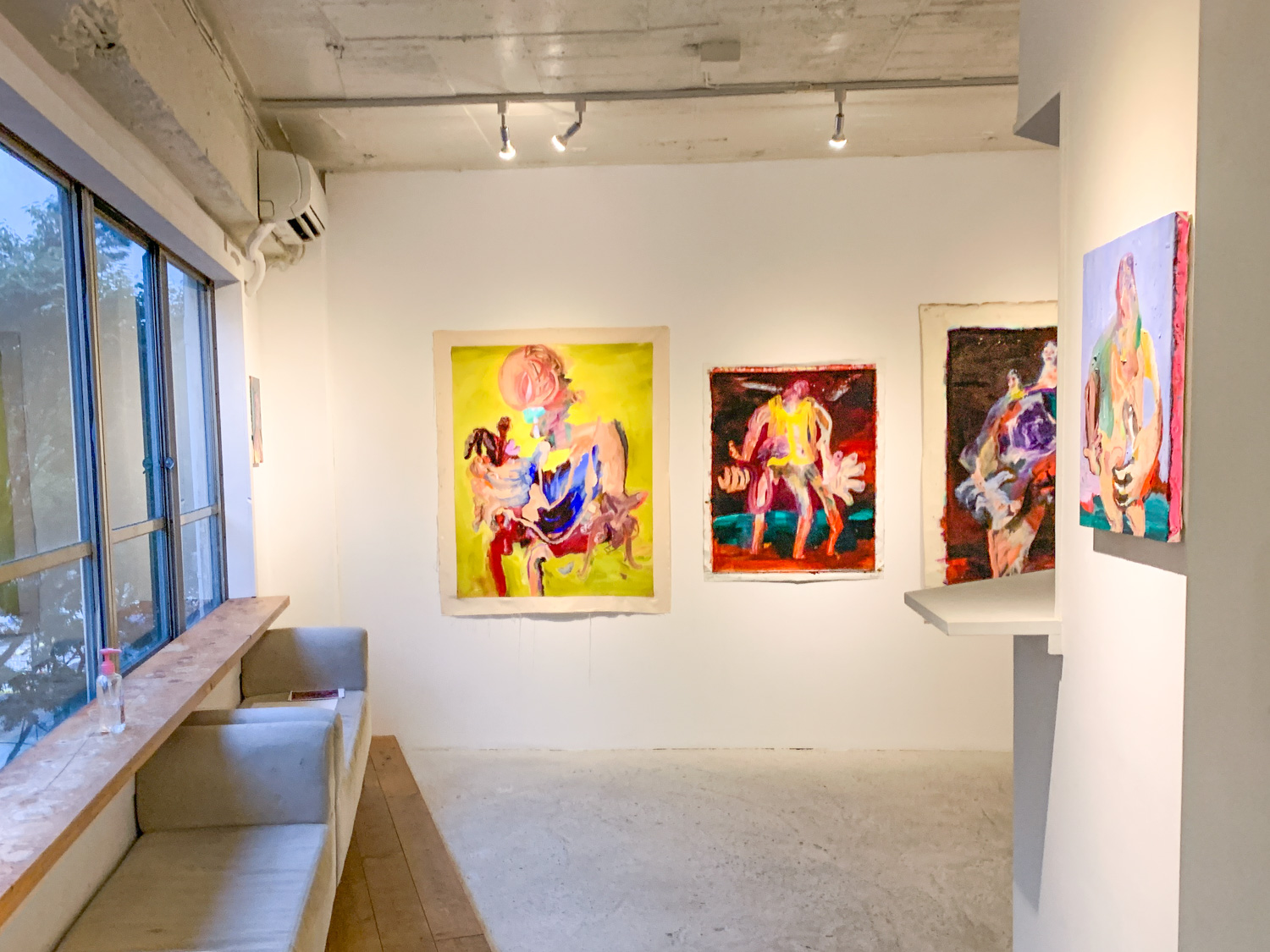
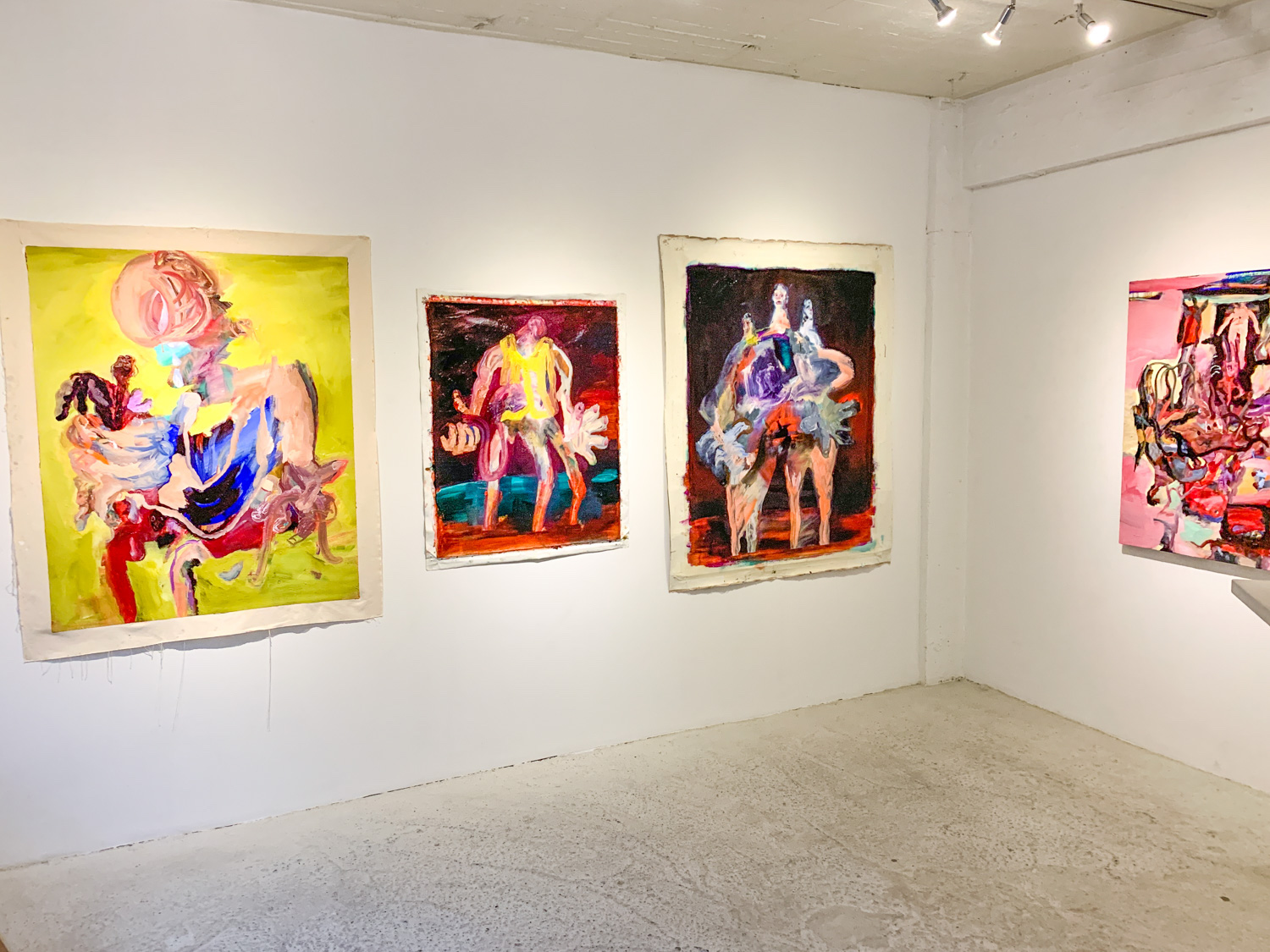
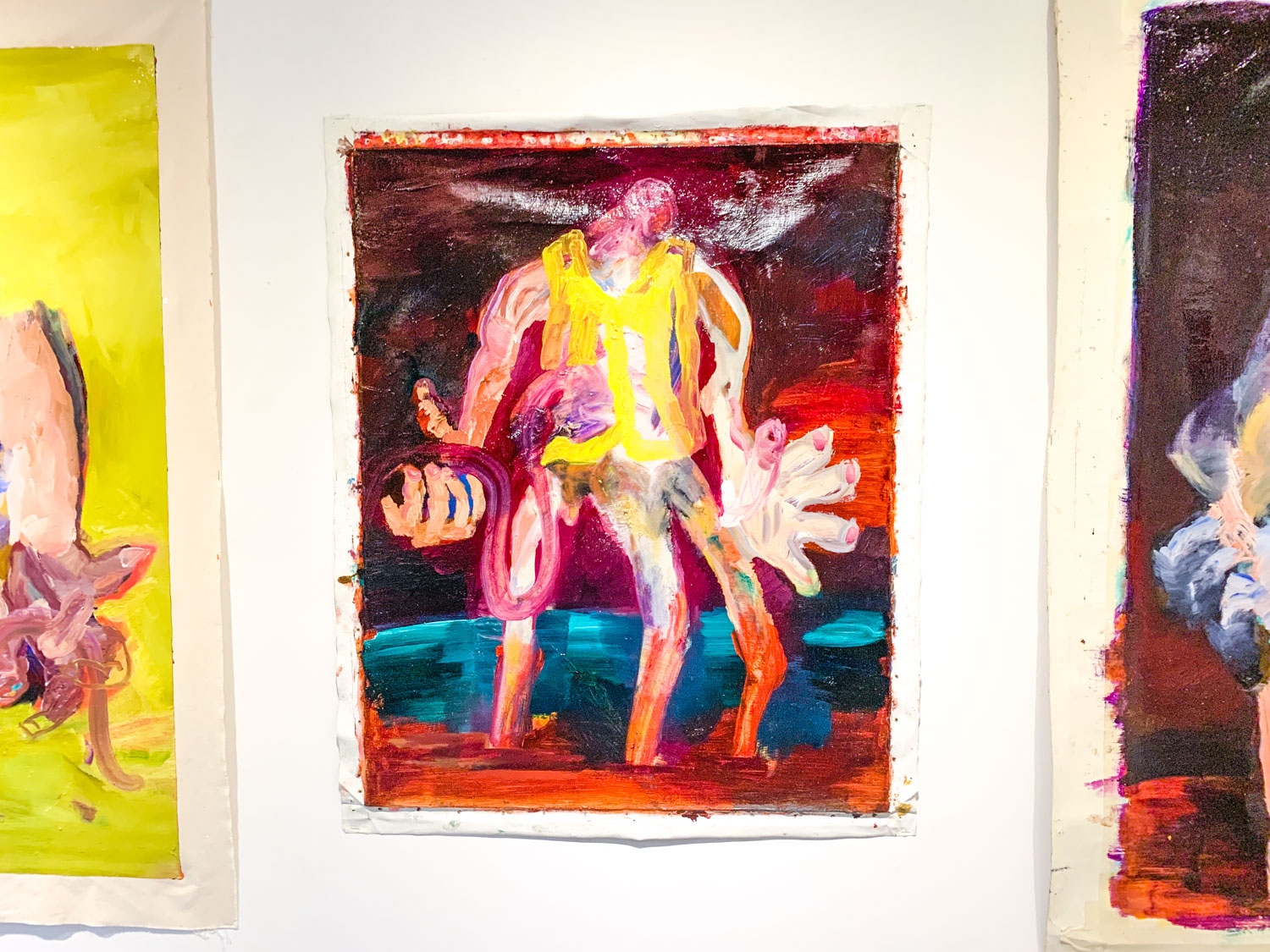
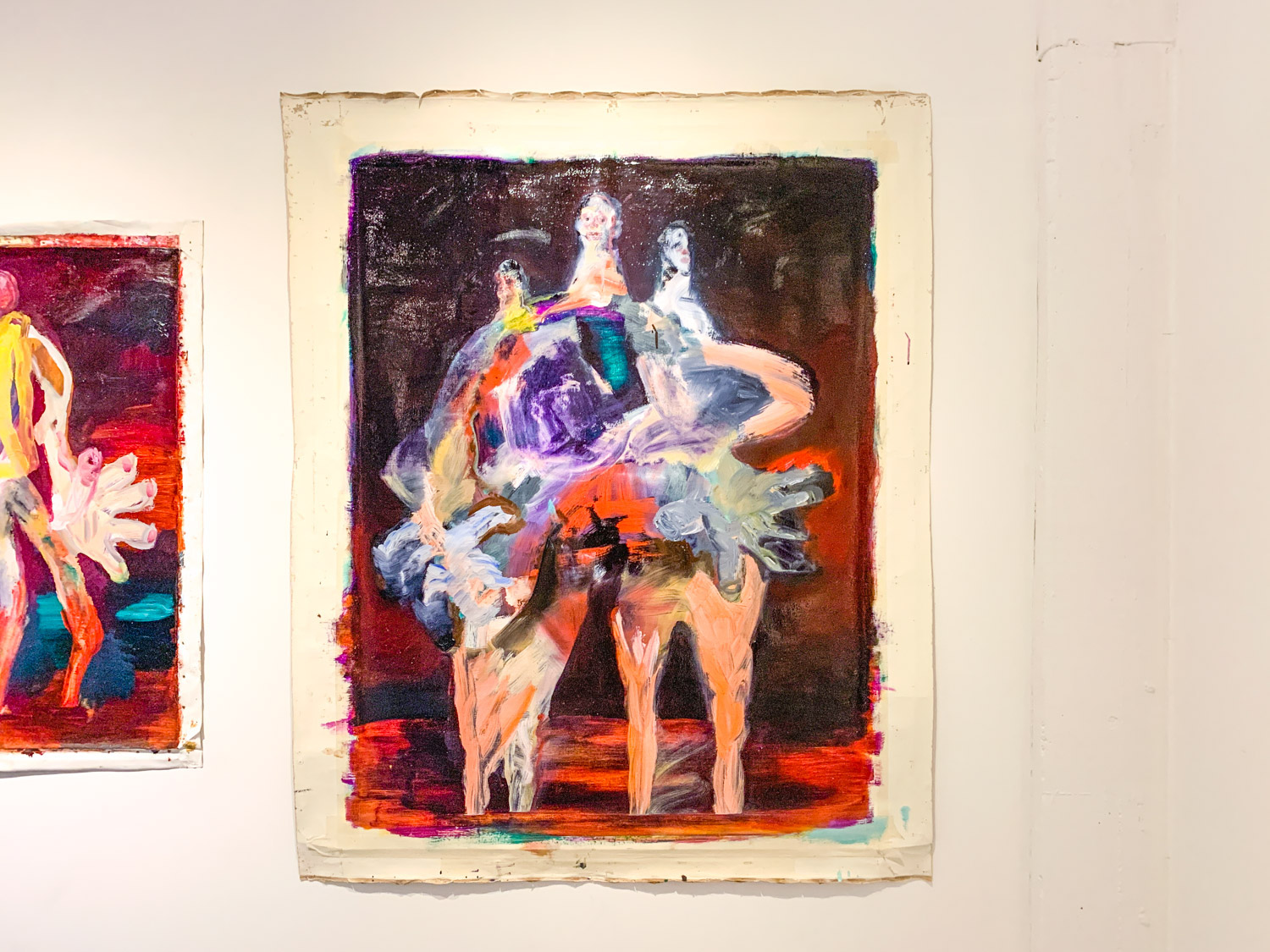
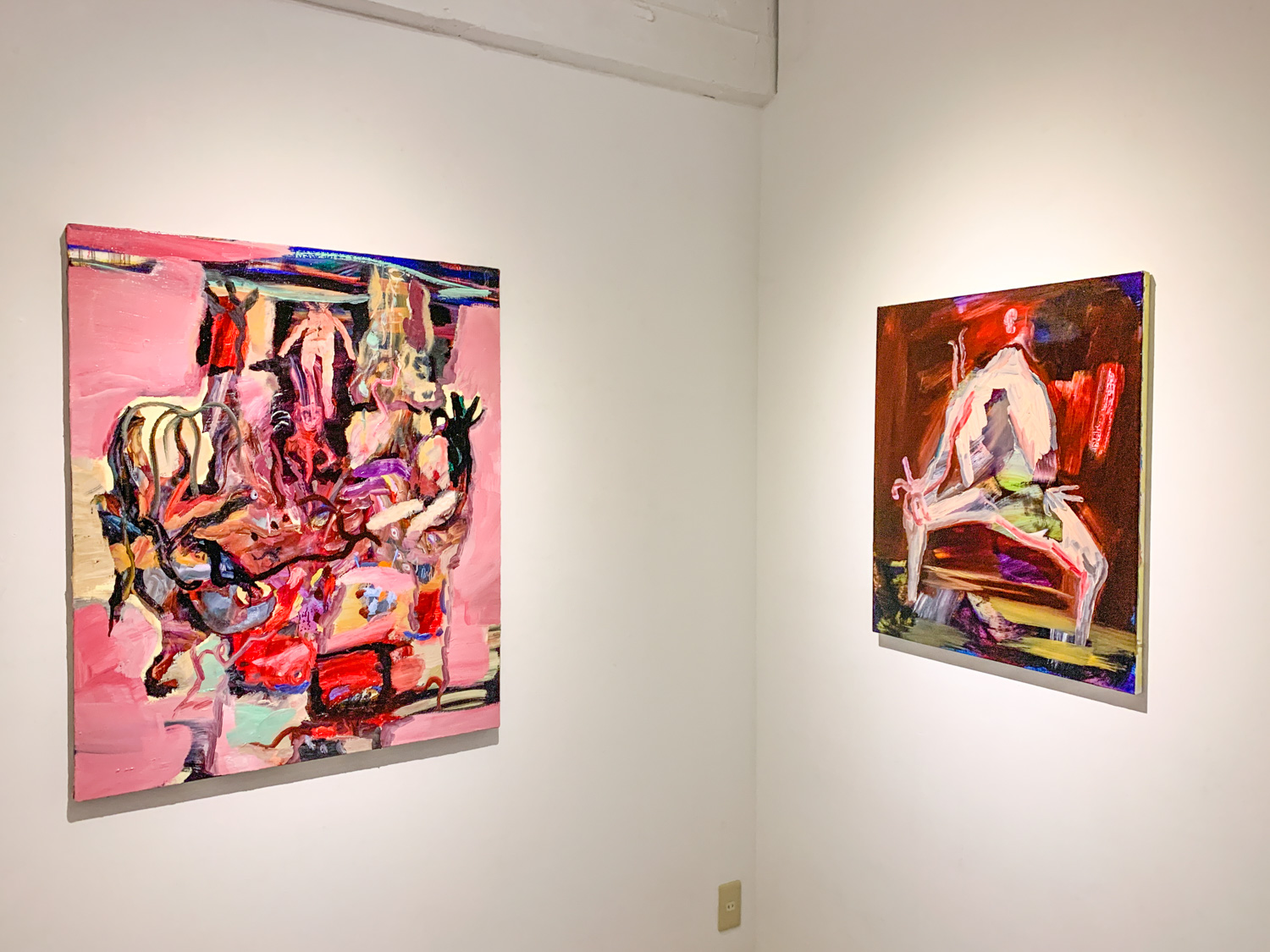
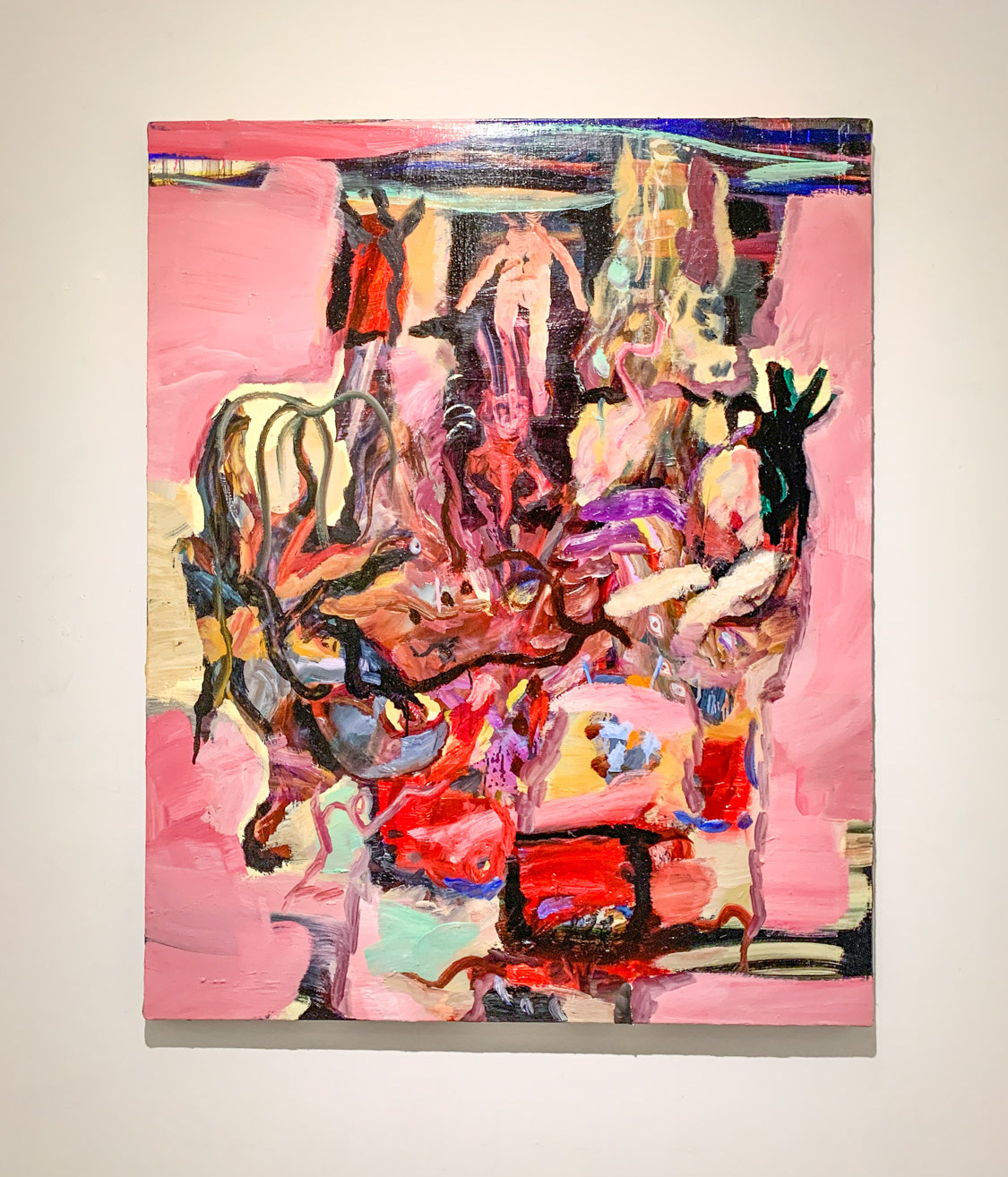
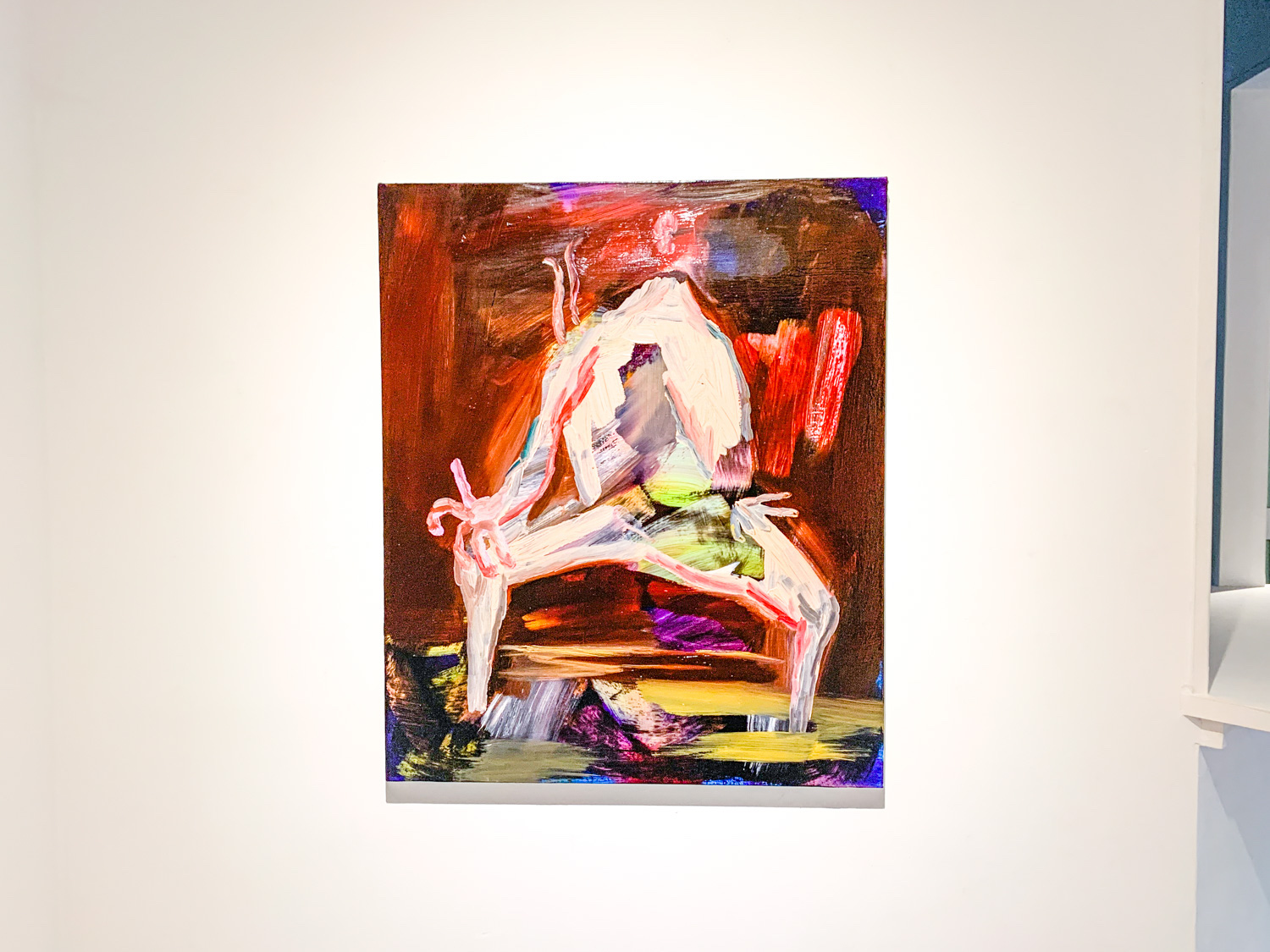
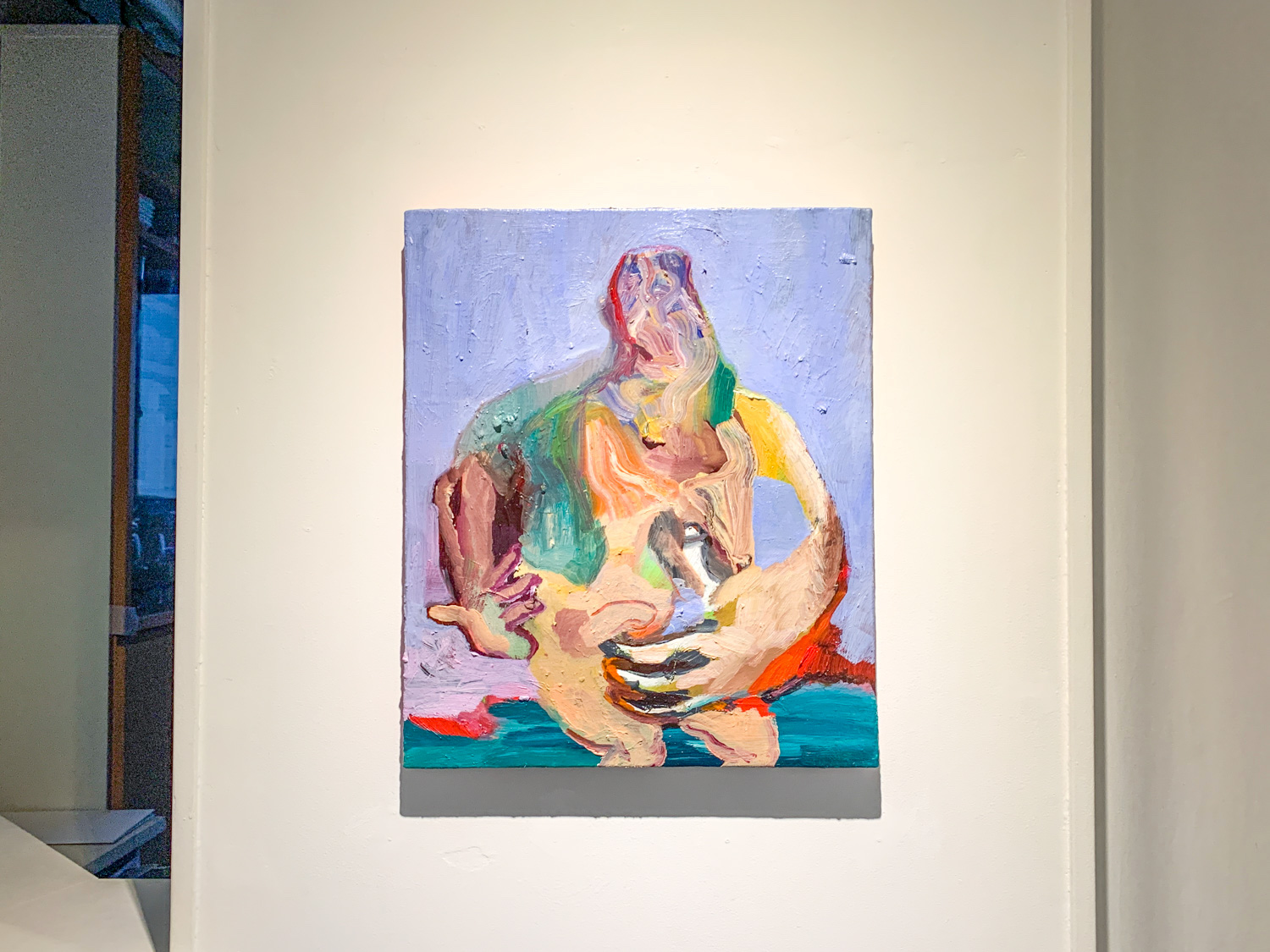
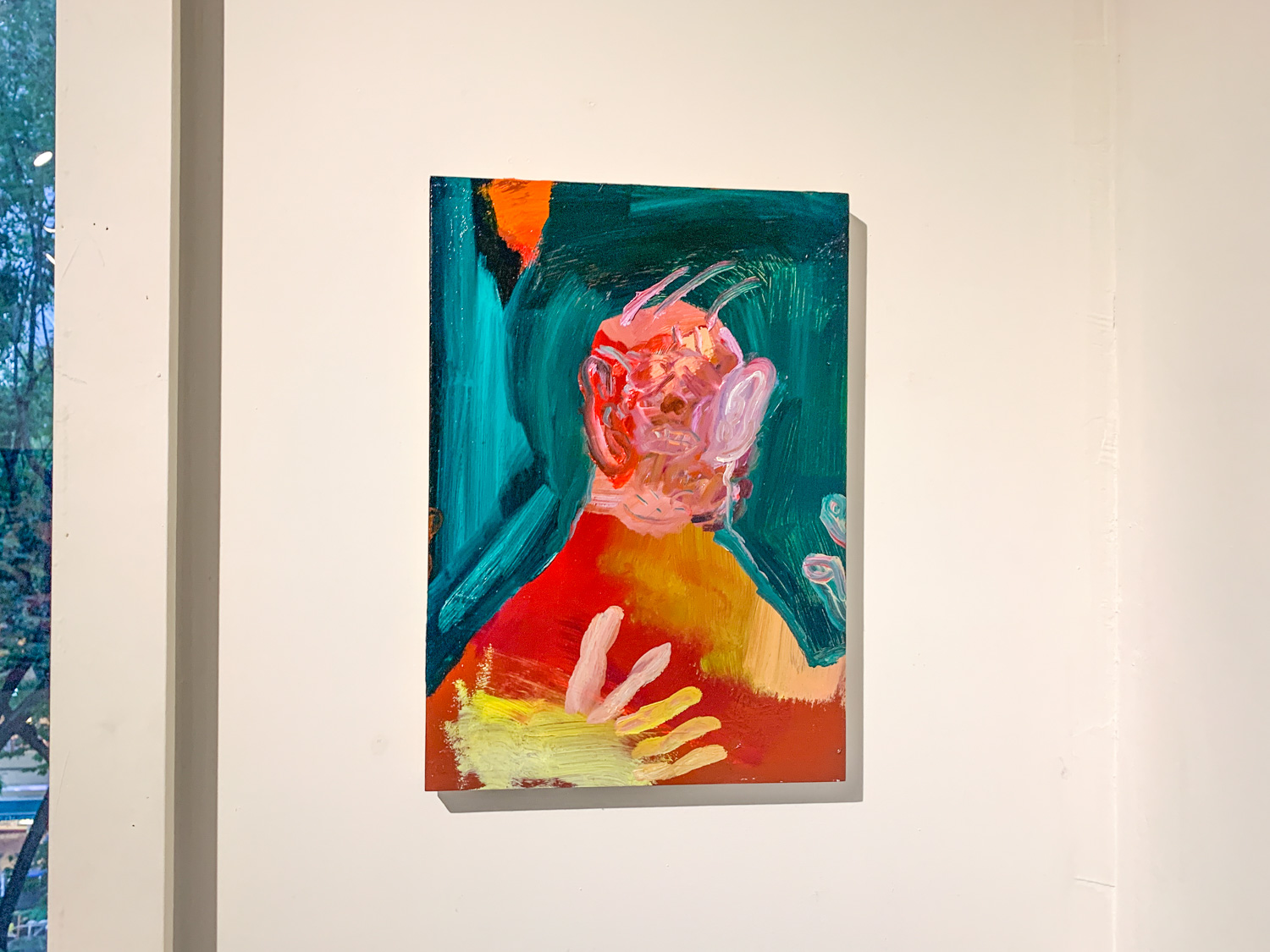
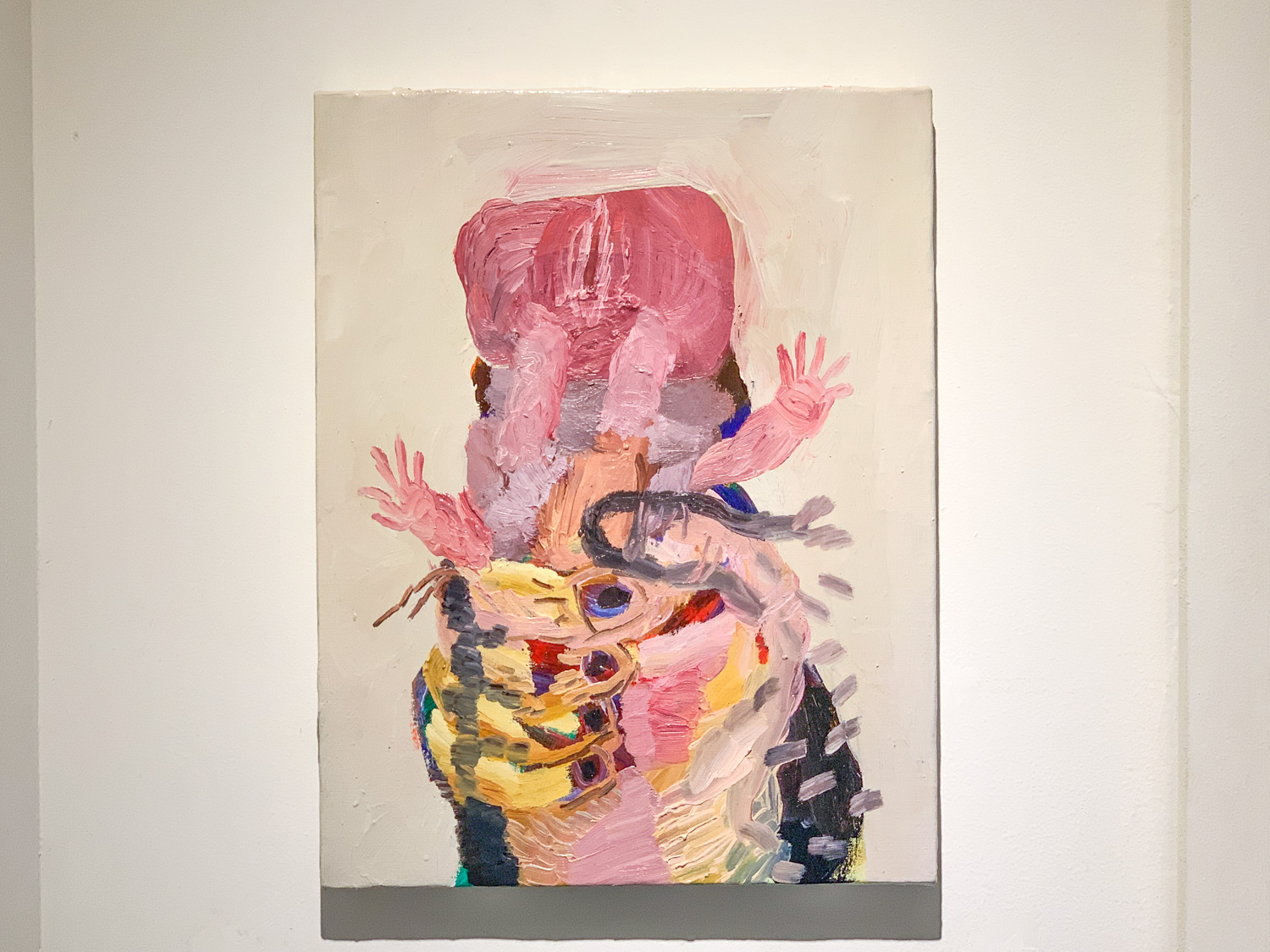
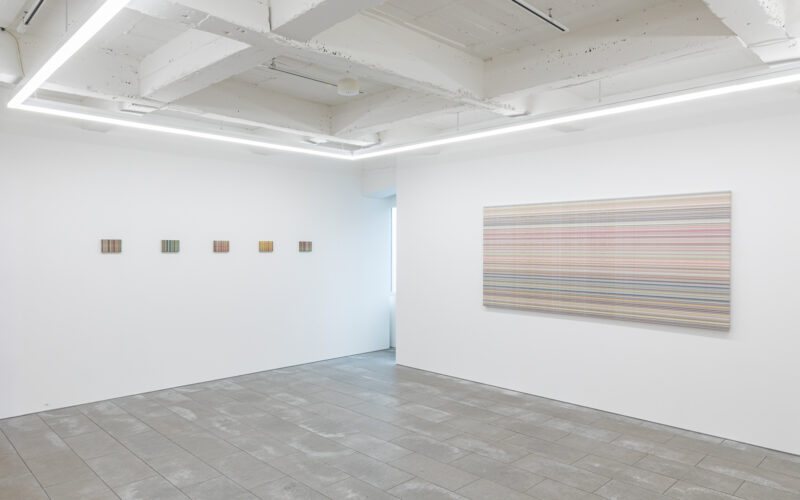
This is Mariko Matsushita’s sixth solo exhibition at this gallery.
The show centered on new paintings she began working on in the latter half of 2019.
Here is Mariko Matsushita’s statement for the exhibition.
In the autumn of 2019, having finished my second trip to Europe, I resumed working on oil paintings. Because the trip had included a visit to the Auschwitz Museum in Poland, I had come to feel a deep, almost distrusting sentiment toward humanity. I had always been a child who tried to see the hidden, bare side of people, yet even so, I was shocked by the desolate vastness of the former concentration camp, and by the small ghost that appeared at our lodging — a Kraków apartment that had merely been converted into an inn.
Since I had made many drawings during the trip, it was not difficult to transition to oil painting. As always, I plunge as if leaping from a cliff into the abyss, descend to the cave at the bottom of consciousness, and drag up something that whispers, pulling it from the filth. (When we make what is invisible visible and touchable, we cannot remain unscathed.)
In 2020, the world gradually became a world of the dead. In the mildly warm air of spring, I felt as if hundreds of thousands of souls of the dead were floating up. It was not such an unpleasant world, and I stayed indoors and painted. Uneasy news and aggressive words became thorns as large as daggers, trying to tear apart the space of my workplace. Under a rain-continuous sky glowing silver, with vines climbing higher than my own height and the forces of nature swelling ever fuller, on one day I felt the world completely invert itself.
A sensation of nothingness, of absence, began to seep in, and before long it was the desert-like, white-hot nothingness — the void — that pushed to the forefront, the emptiness swelling seamlessly, air, brightness, and light thickly bulging, and, as if an egg cracking from within, I was thrust out into a shadowless, blazing noon.
The dazzling brightness of shadowless midday was as if primary-colored oil paints had been stubbornly rubbed into every corner. Everything visible came into focus, everything visible seemed on fire, yet still. The sky sank down blue as a well, and I was hung upside down in a heaven and earth from which one might fall headfirst or be sucked out through the eyes. The streets were filled with light; spaces that were not usually there swelled up in the back alleys; in the vacant lots where the light had pooled, small unseen things were playing. Without shadows, without faces, hollows filled with light were at play.
Perhaps that was the world of the mind, dissociated from the world of things, but after several days, several weeks, the shadows overlapped and things returned to how they were. They returned, yet I feel as though I am in a slightly shifted, alternate Tokyo. Bordering on that bright, glittering day, on the land refused by the rational idea of success — the land denied and banished as uninhabitable — mixed in like a shadow.
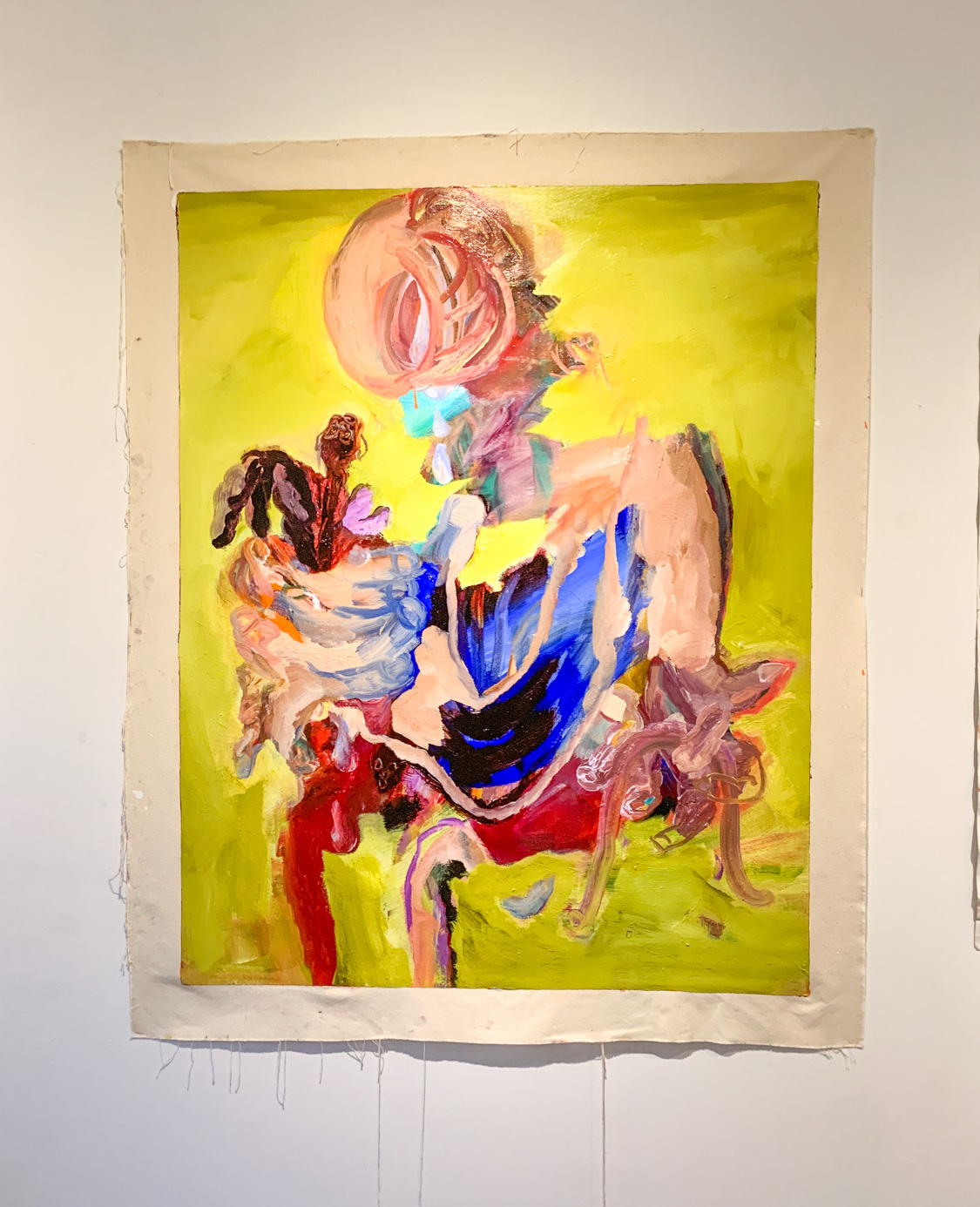
And so, the paintings, in the same way, became brighter. The amount of despair in the world has not decreased, yet in this slightly shifted Tokyo, it feels as though someone has hinted to me that a way of depicting existences thrust toward pain and despair, hatred and death, may just as well be rendered in radiant yellow and pink.
September 2, 2020
Mariko Matsushita
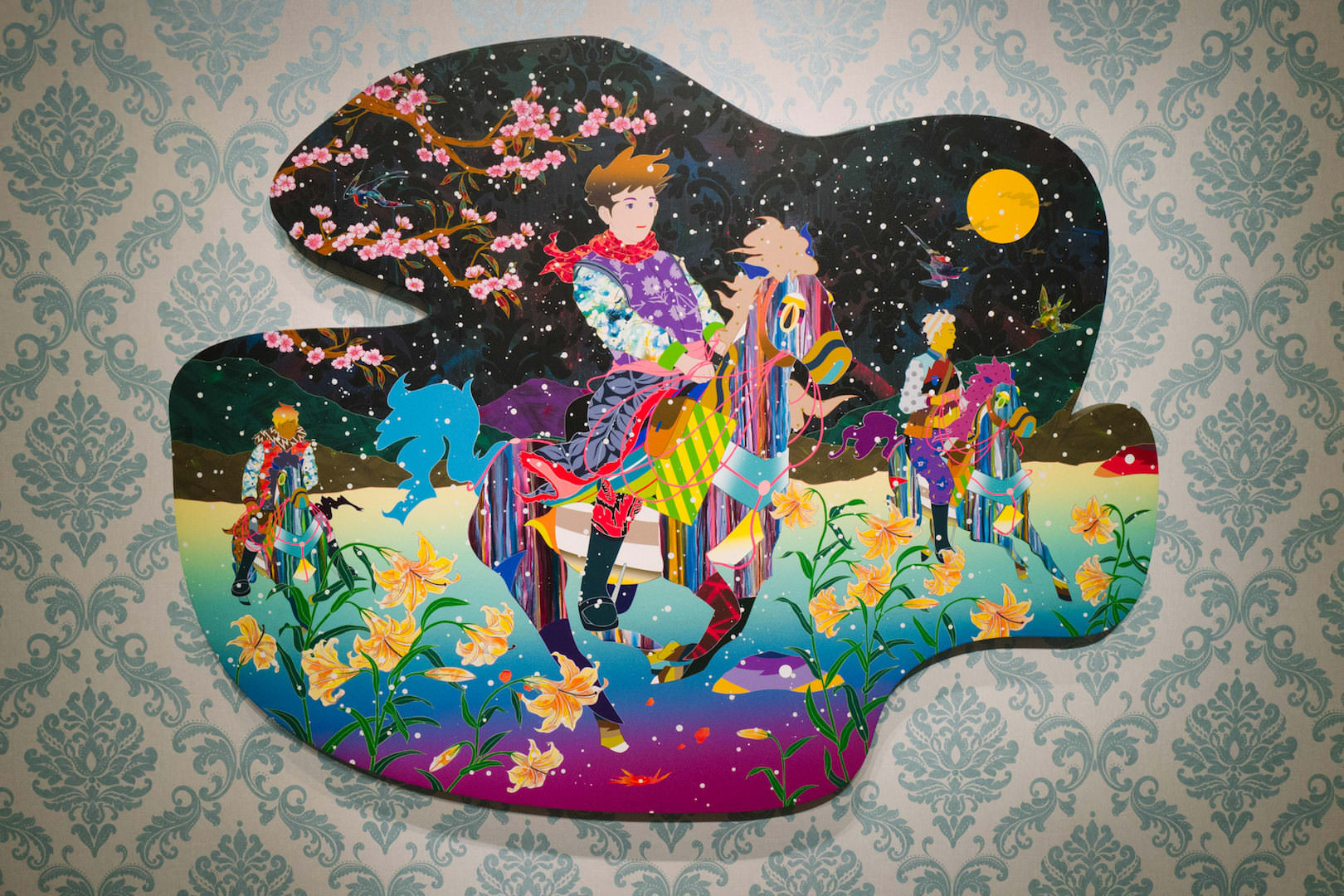
Compared to her previous works, my impression was that many pieces in this show had vivid, radiant color.
* Reported on September 23, 2020.