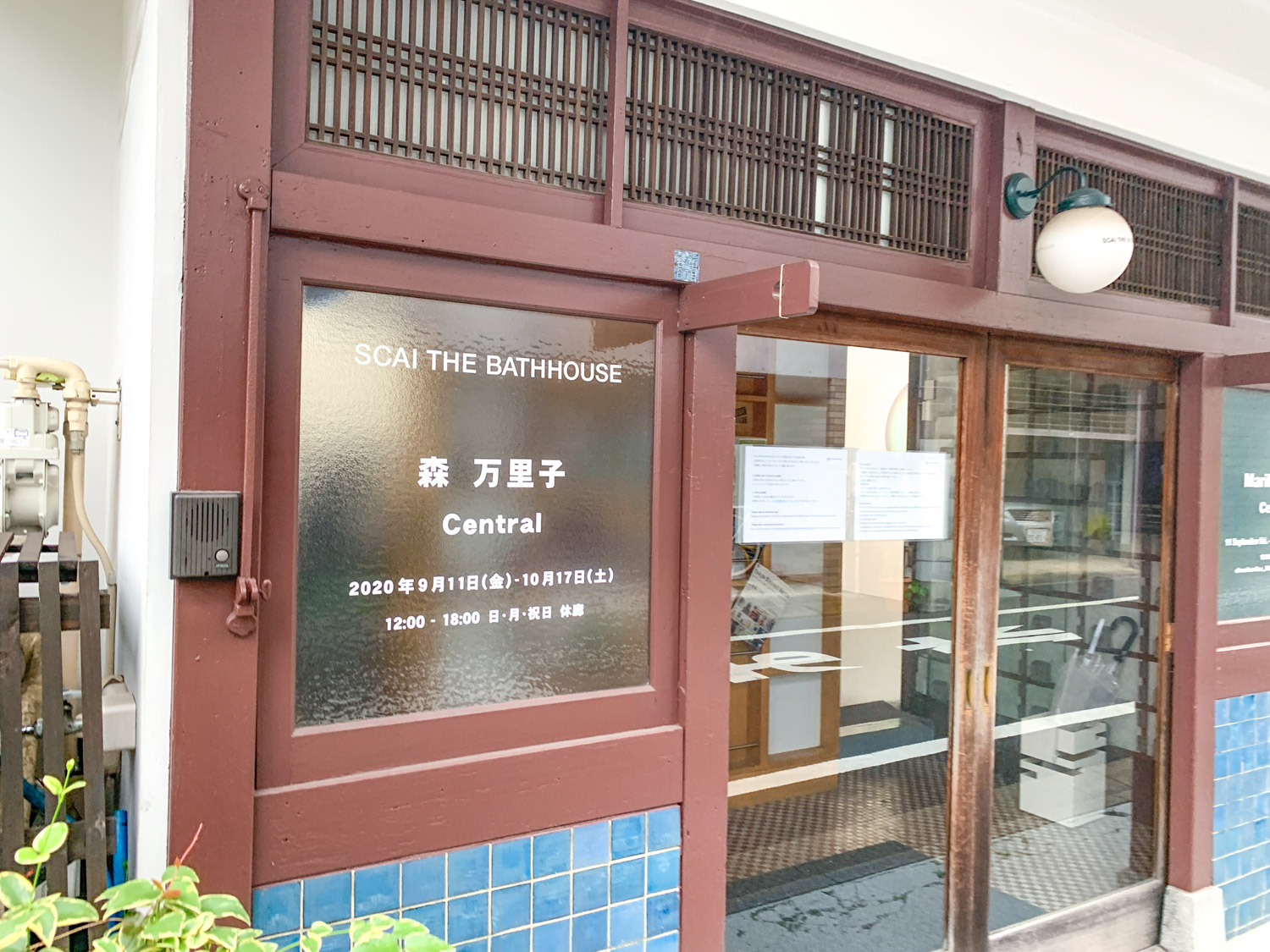
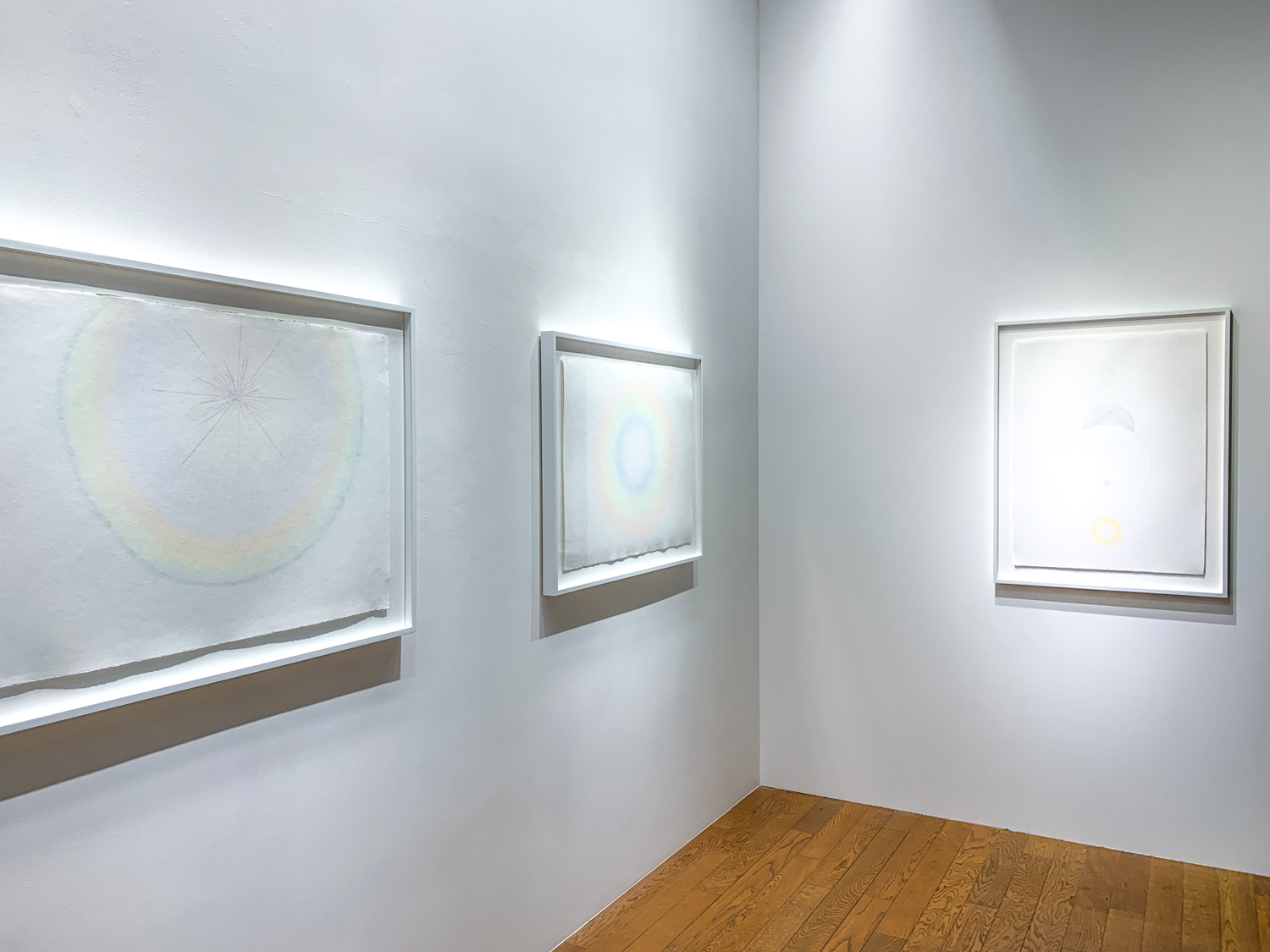
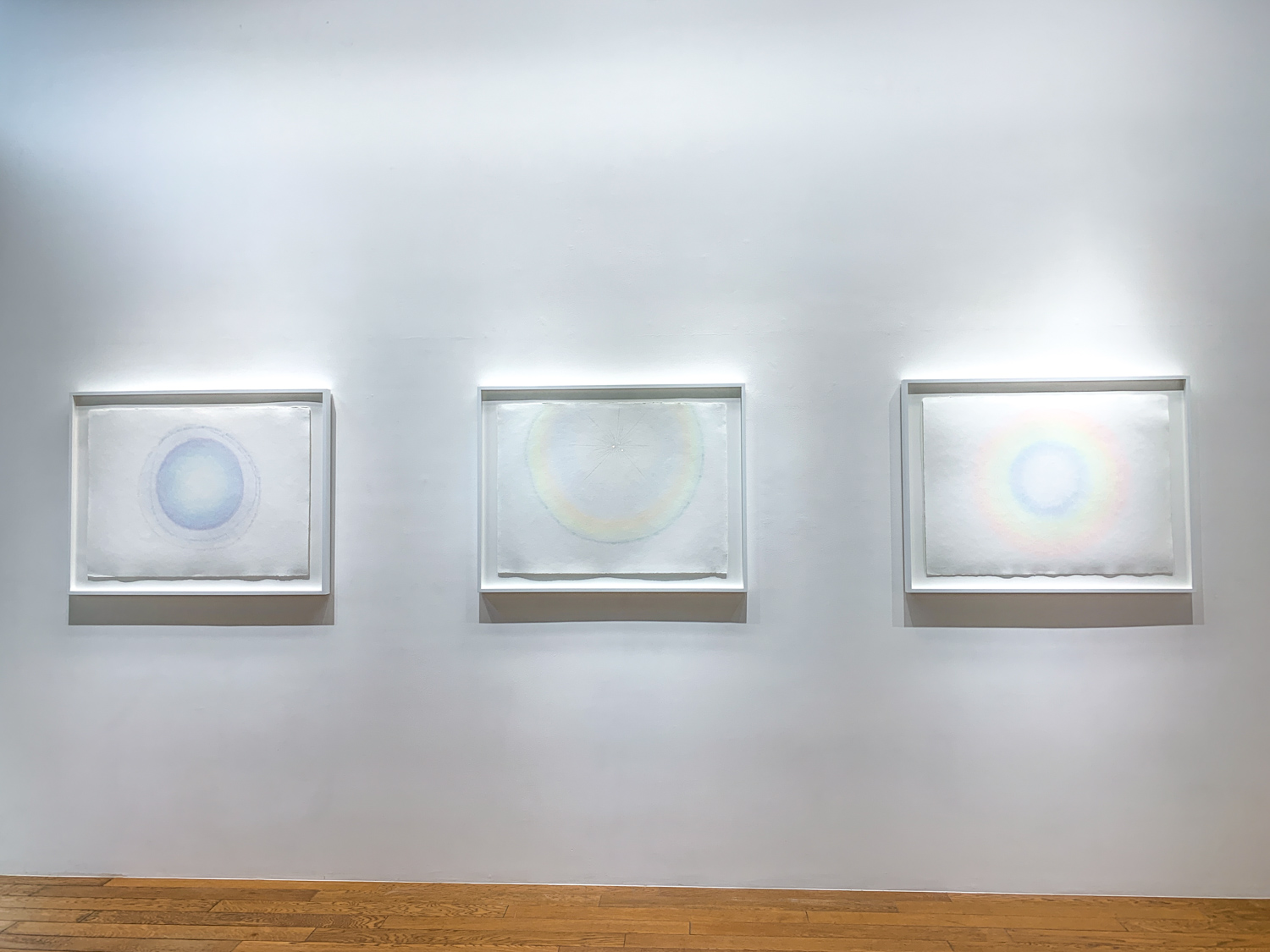
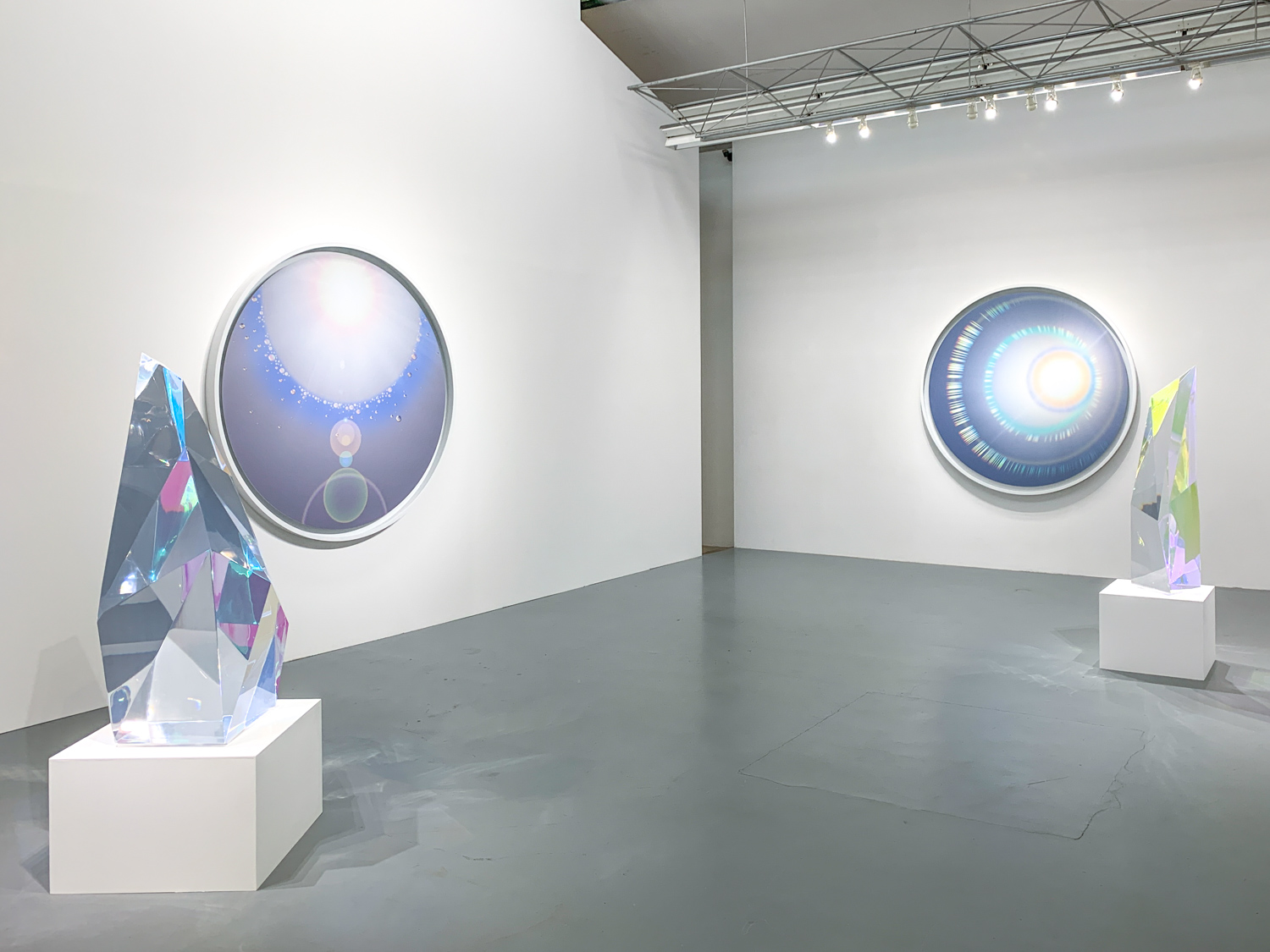
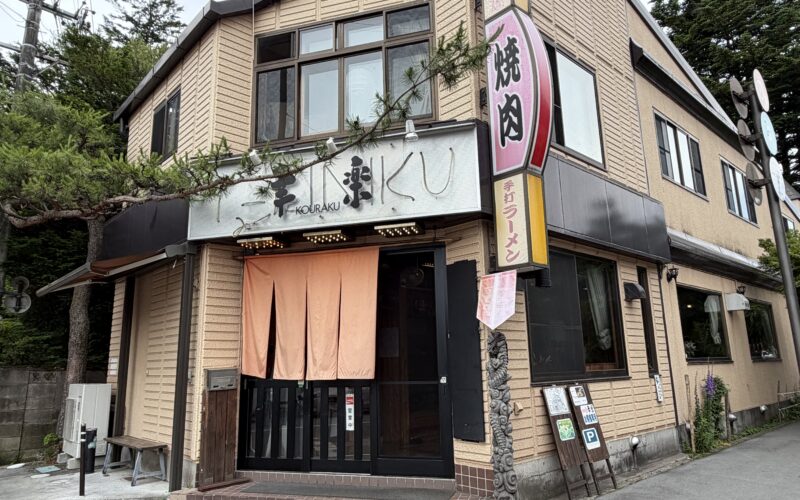
I visited Mariko Mori’s solo exhibition “Central.” The venue was SCAI THE BATHHOUSE, a gallery converted from a former public bathhouse.
SCAI THE BATHHOUSE
Here is Mariko Mori’s statement for the exhibition.
Central — The Inner Sun
Over the past several months, due to the effects of the pandemic, I have temporarily returned to Japan from my long life abroad and have been living in seclusion in Tokyo. Certainly, in the face of the threat of the invisible virus that is this infectious disease, I have had many anxious days. Yet I have also been able to have the rare experience of being guided by a certain “psychic phenomenon” and creating art. By becoming estranged from the external world, I have spent much time exploring the inner world. I have gained a new daily life in which I seek “the inner sun” or “the inner light.” The further I go inward, the wider the world becomes, and I felt as if a cosmic space even deeper than the external universe existed there.
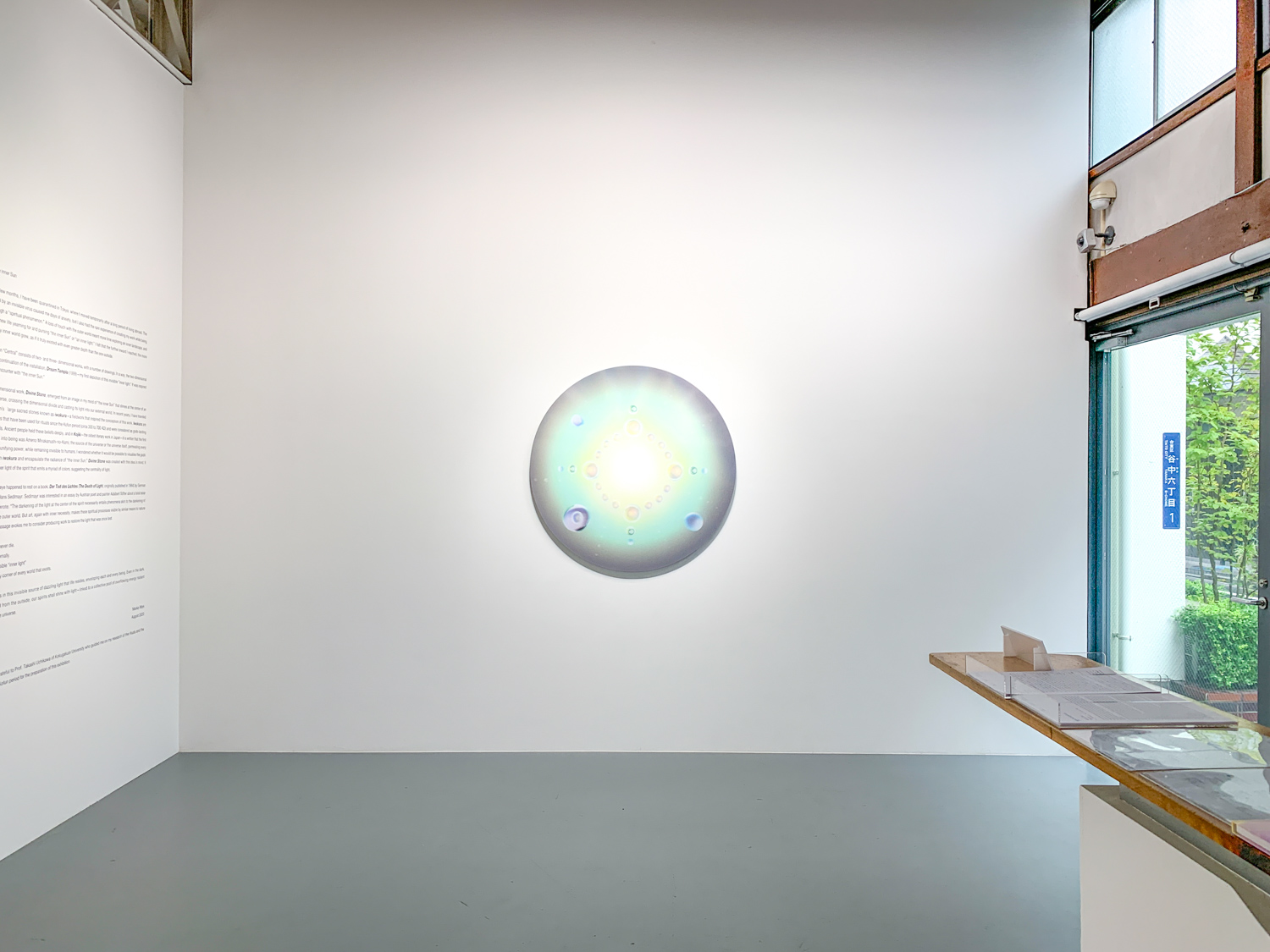
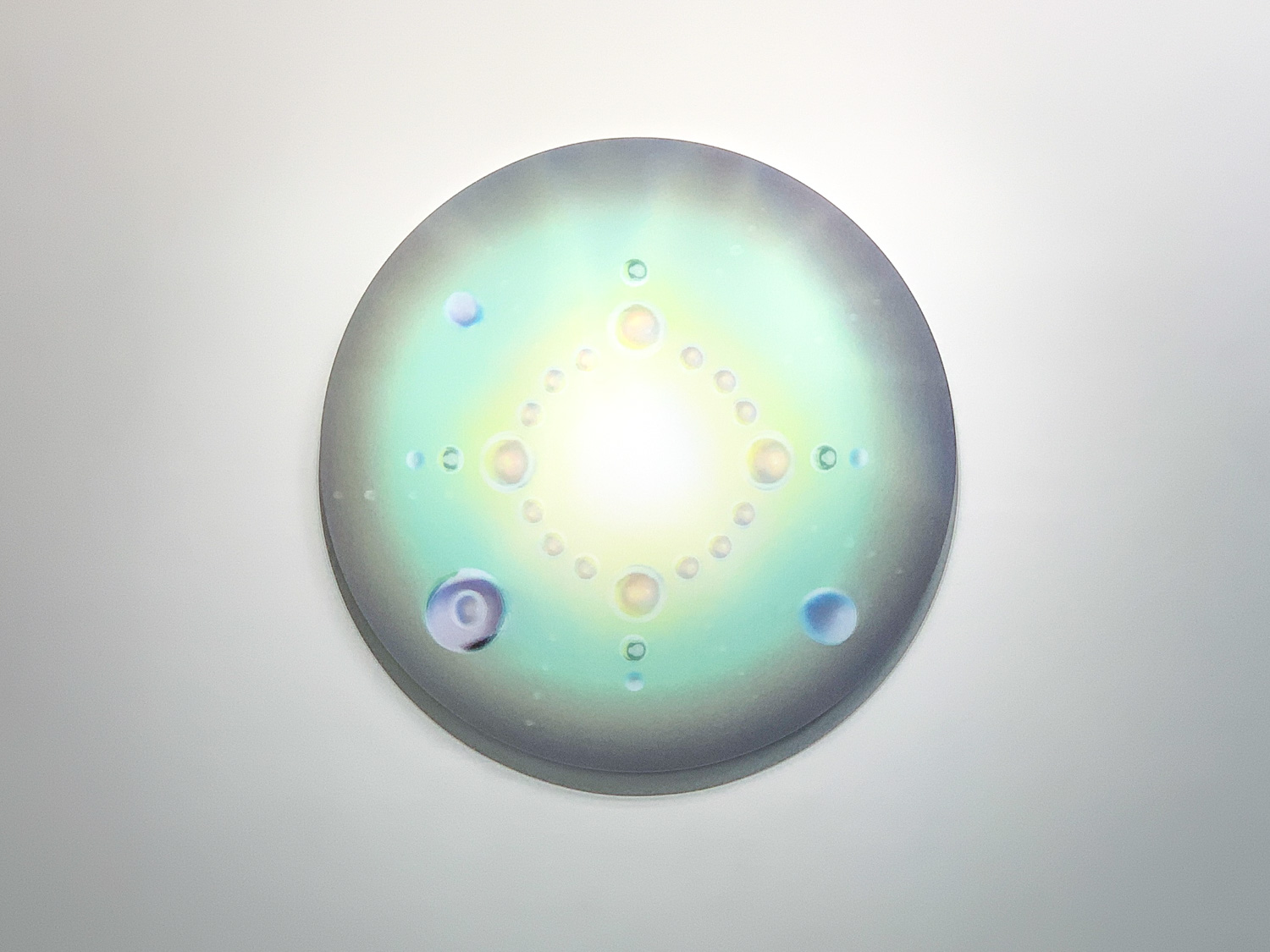
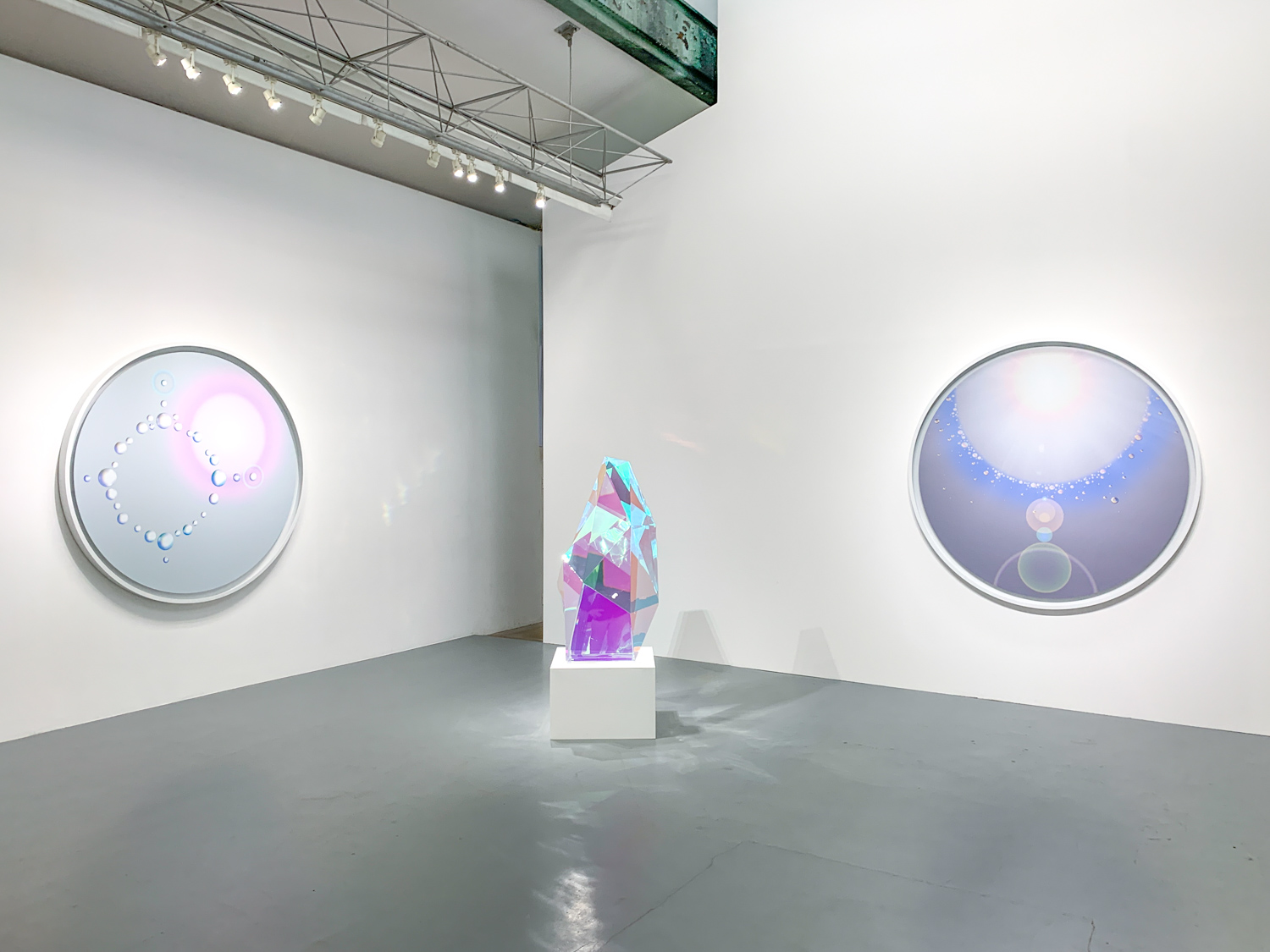
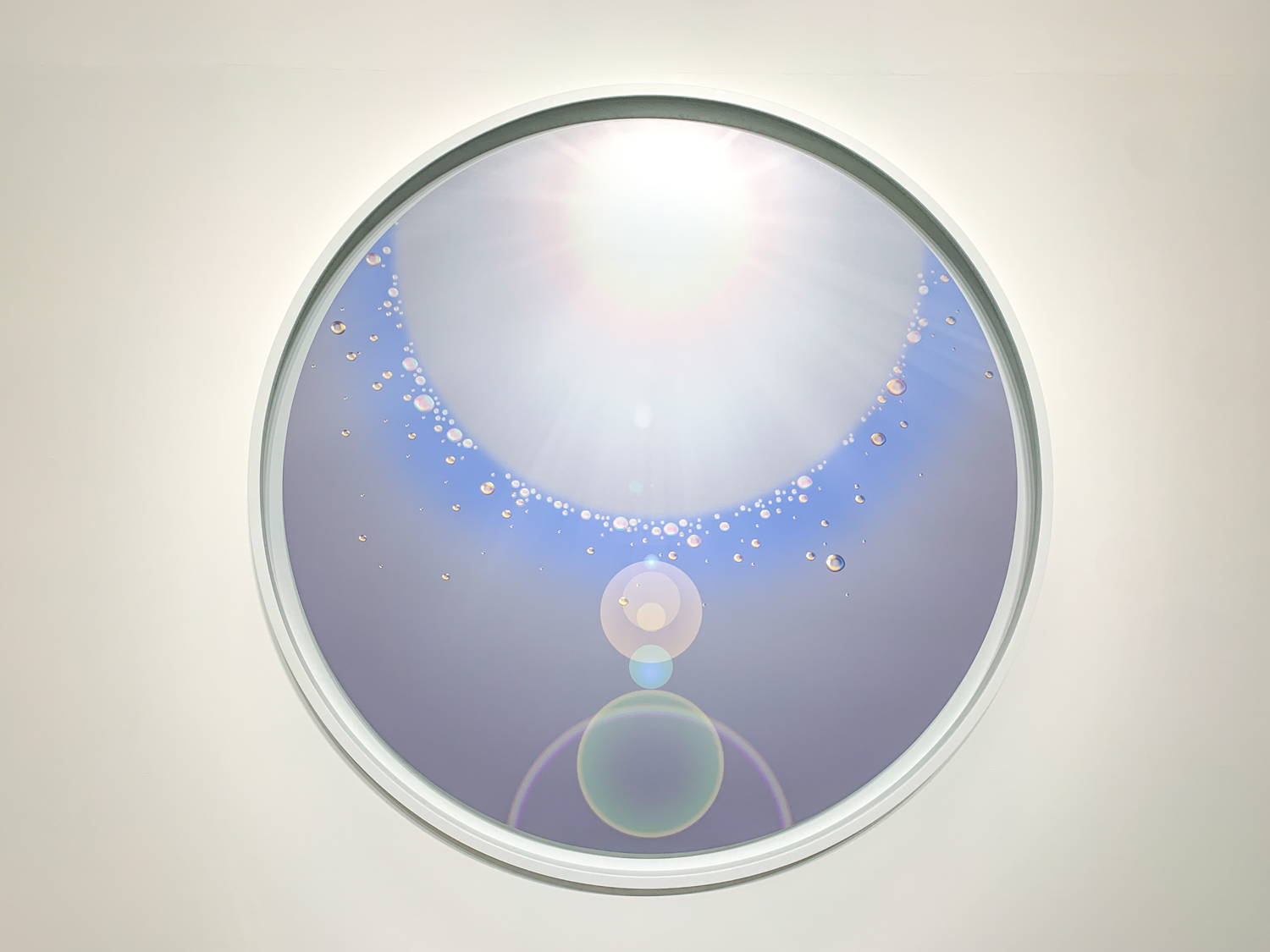
The present exhibition, “Central,” is composed of two-dimensional works, drawings, and three-dimensional works. The two-dimensional works can be seen as a continuation of the imagery of my earlier work “Dream Temple” (1999), which depicted the invisible “inner light.” That is because the impetus for its creation came from my very first encounter with the “inner sun.” All the drawings were made over these past several months.
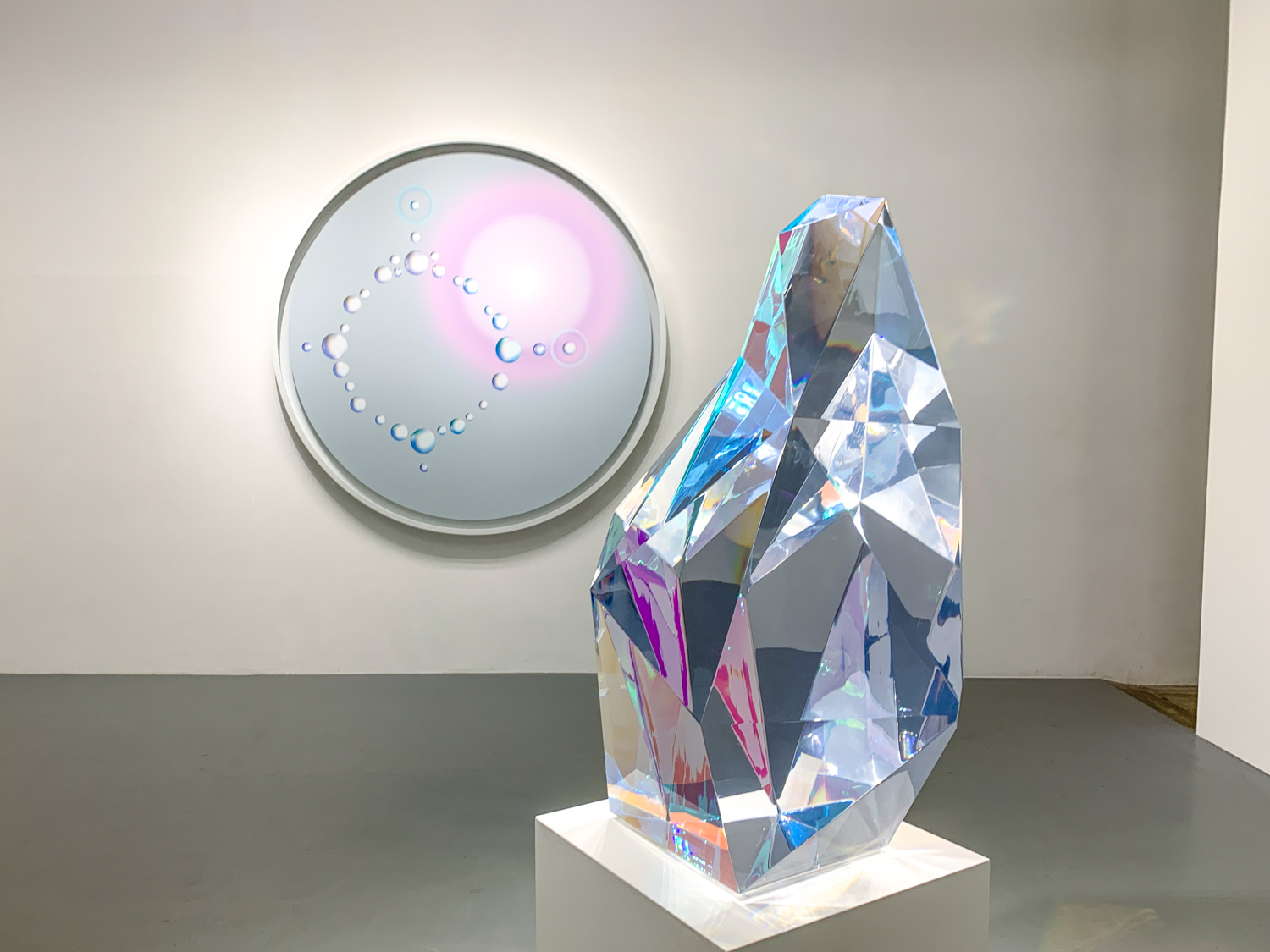
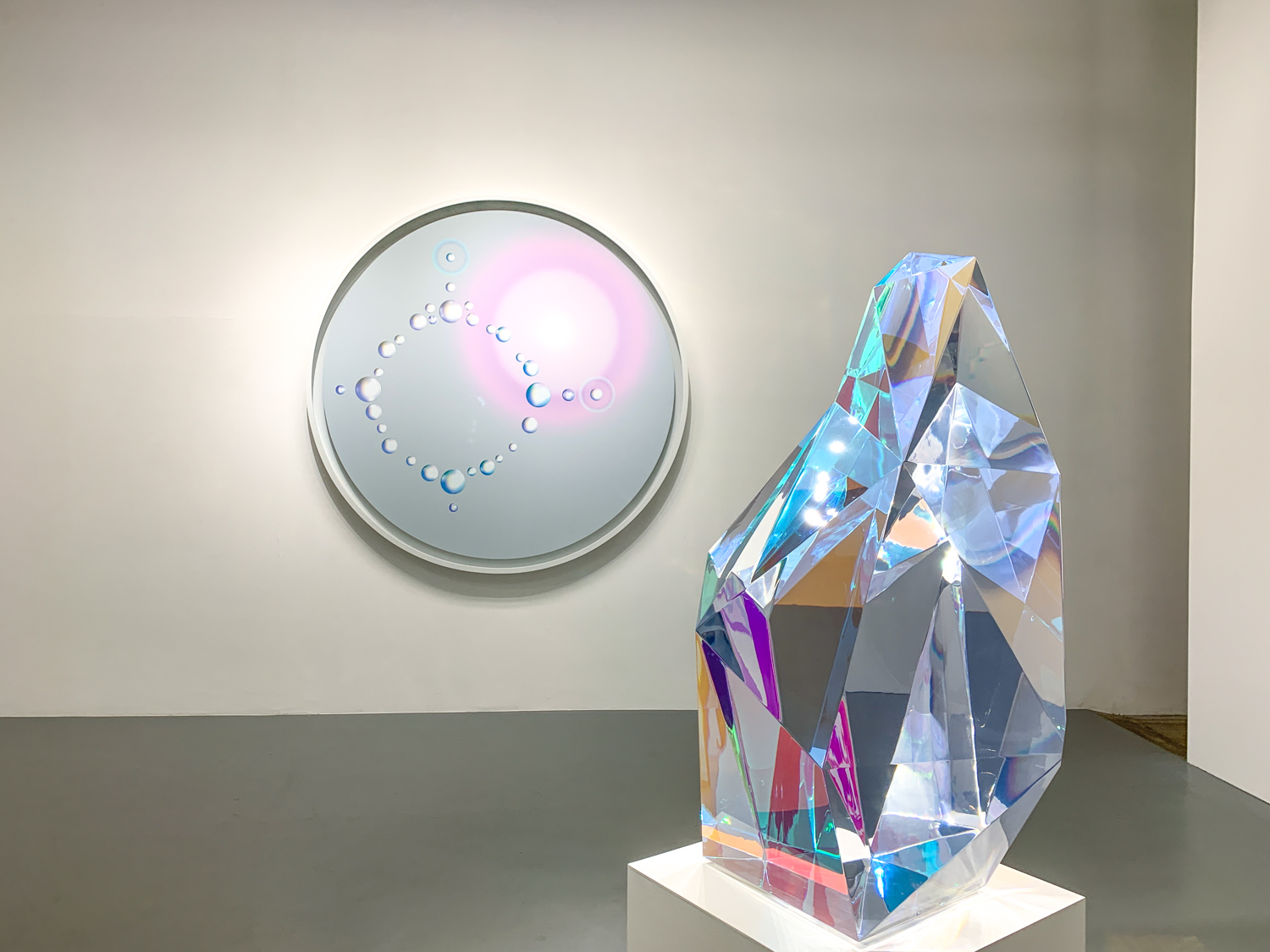
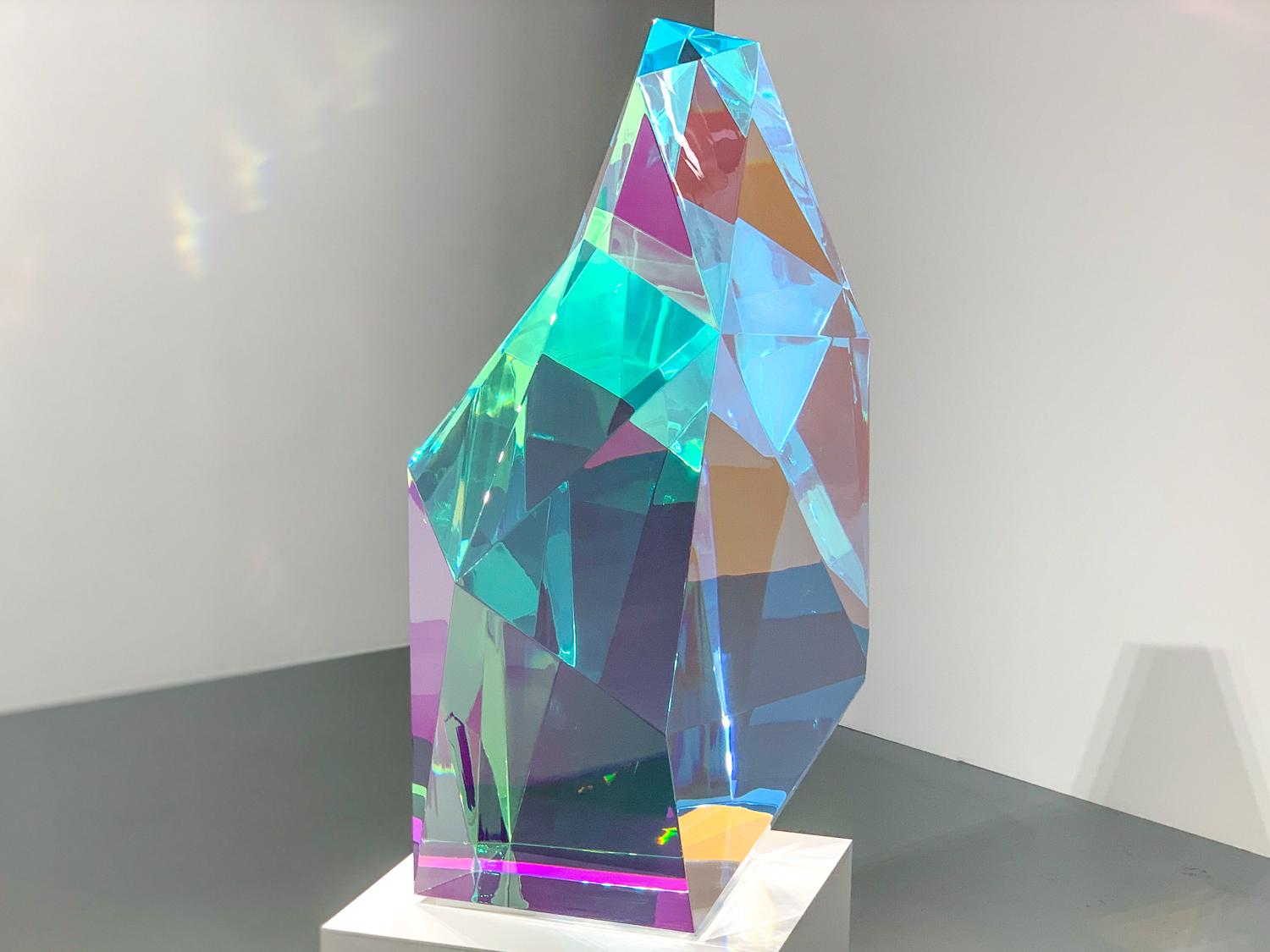
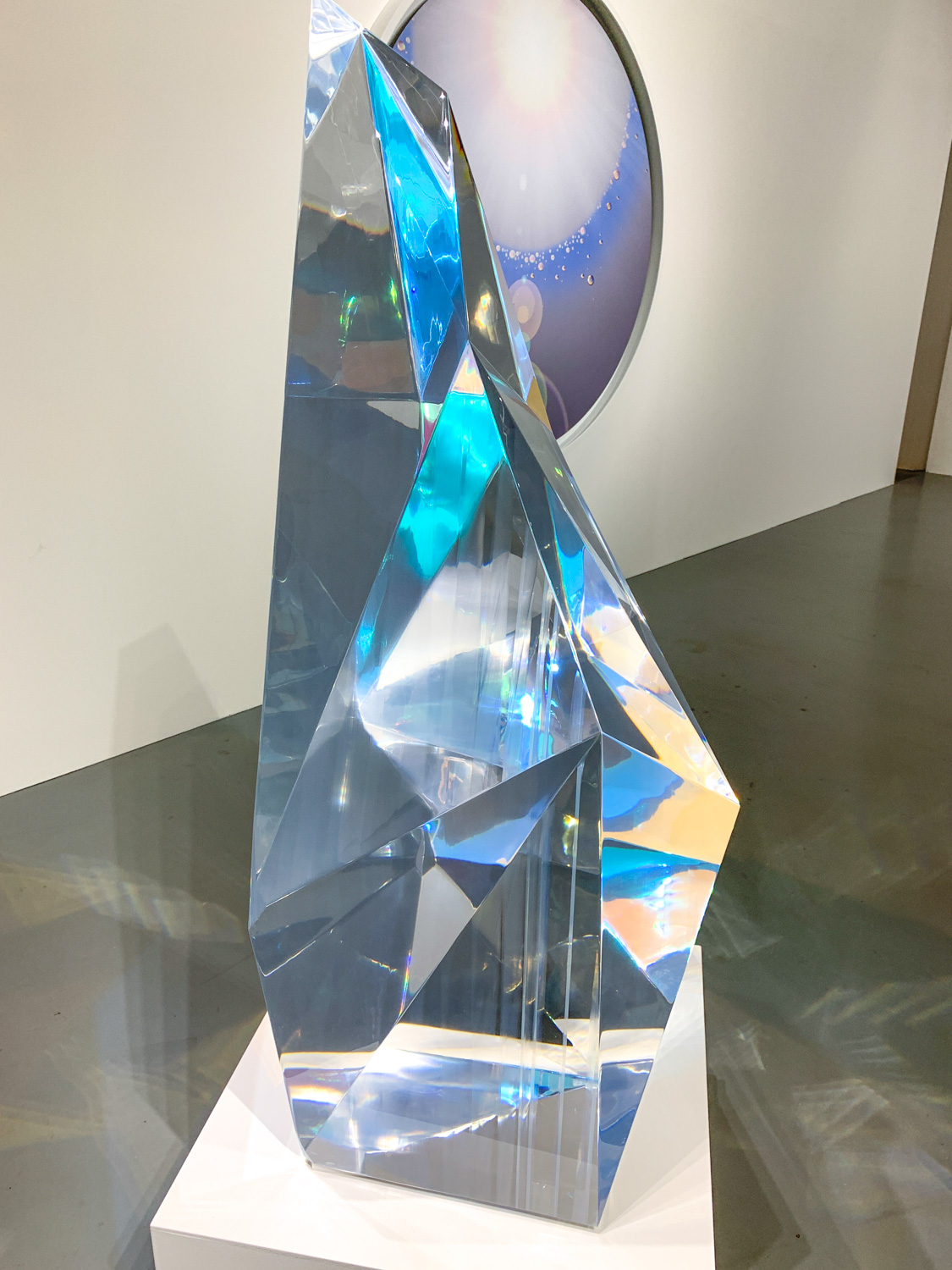
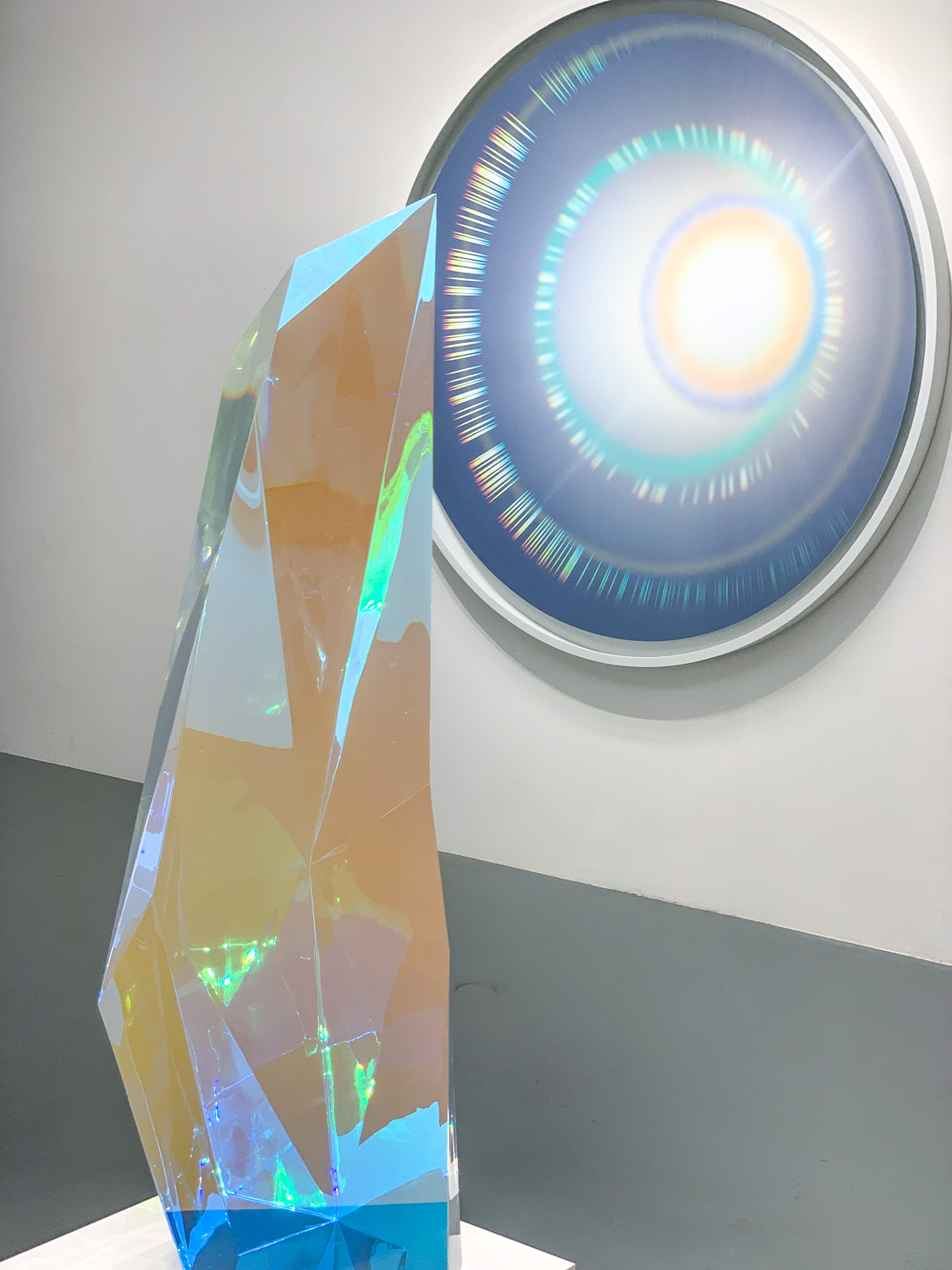
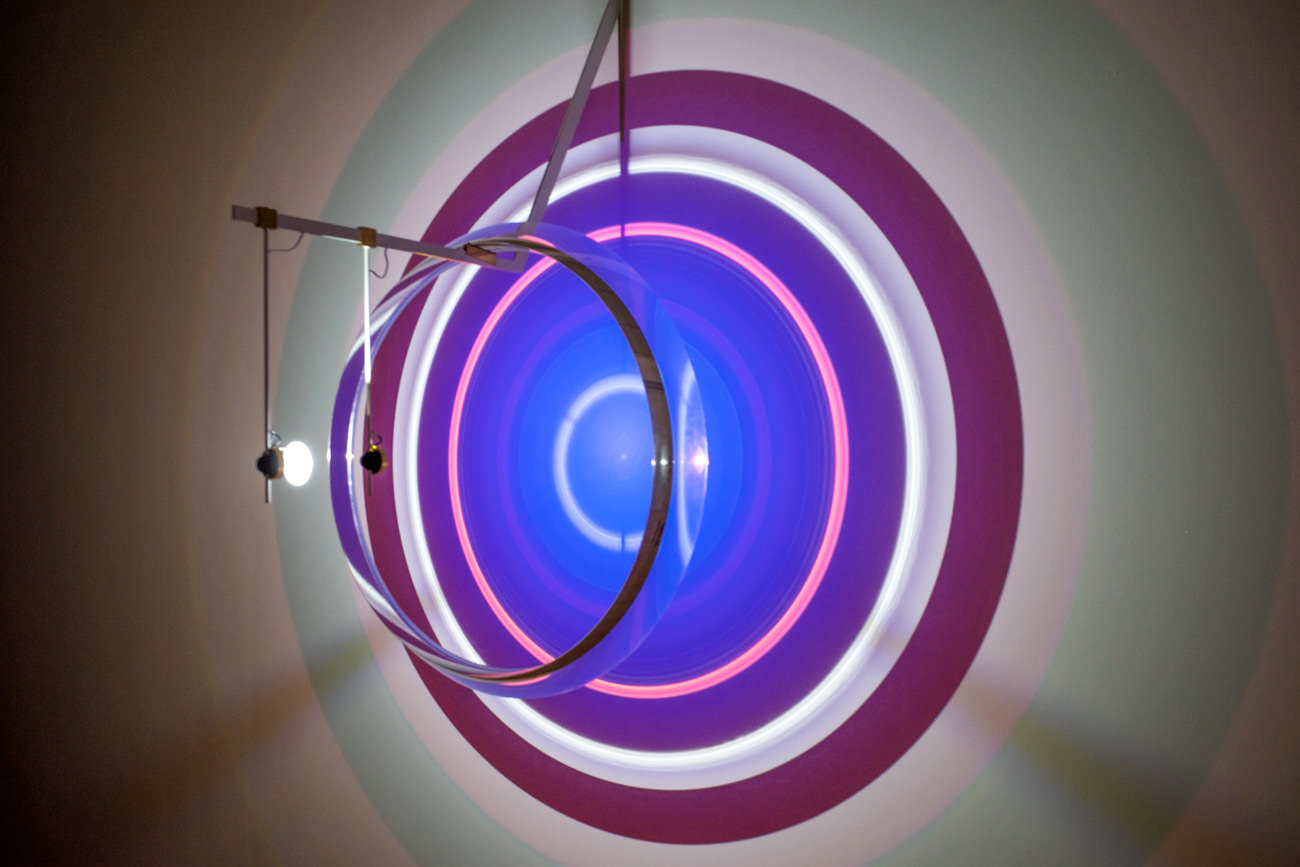
The sculptural work “Divine Stone” was created with the image of the “inner sun,” shining at the center of the inner cosmos, leaping across dimensions and projecting its light into this world. In recent years I have visited many iwakura (sacred rocks) across Japan, and I have drawn inspiration from that fieldwork. Iwakura are natural stones used for ritual worship from the Kofun period, seats where deities are invited to be enshrined; ancient people worshipped them deeply. The Kojiki records that the name of the first deity to appear was Amenominakanushi. This deity is the origin of the cosmos itself, or the cosmos itself, yet is said not to reveal its form and to be omnipresent everywhere as the unifier from a place unseen. As I was developing the concept, I wondered whether I could visualize the radiance of the “inner sun” within the work, as if it were an iwakura upon which the gods descend. From this idea, “Divine Stone” became a work that emits the many colors of the “inner light” and suggests the centrality of that light.
One day, I happened upon “The Death of Light” (originally published in 1964) by the German aesthetician Hans Sedlmayr. Inspired by an essay on total solar eclipses written by the Austrian poet and painter Adalbert Stifter, he stated: “When the light at the center of the spirit becomes darkened, a phenomenon analogous to the darkening of external light necessarily arises. Yet art, too, by inner necessity, manifests this spiritual event in a way similar to nature itself.” When I encountered that passage, I began to think whether I could make a work that revives lost light anew.
Light never dies
Never will it die.
The great “inner light,” invisible to the eye,
reaches every corner of every existing world.
In other words, it is precisely this invisible, dazzling source of light that houses life and enfolds all that exists. Even if we are cut off from the light of the outside world, if we can join the collective, overflowing energy that exists in this world, may we not be filled with the radiant light of the spirit?
Mariko Mori
August 2020
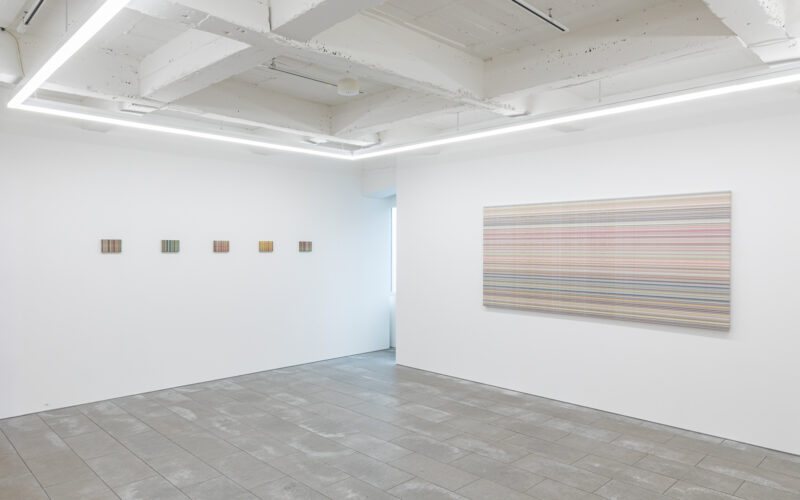
Installation view — front roomMariko Mori, Radiant Being Lenticular, 2020, ED:5Installation view — front roomInstallation view — front room
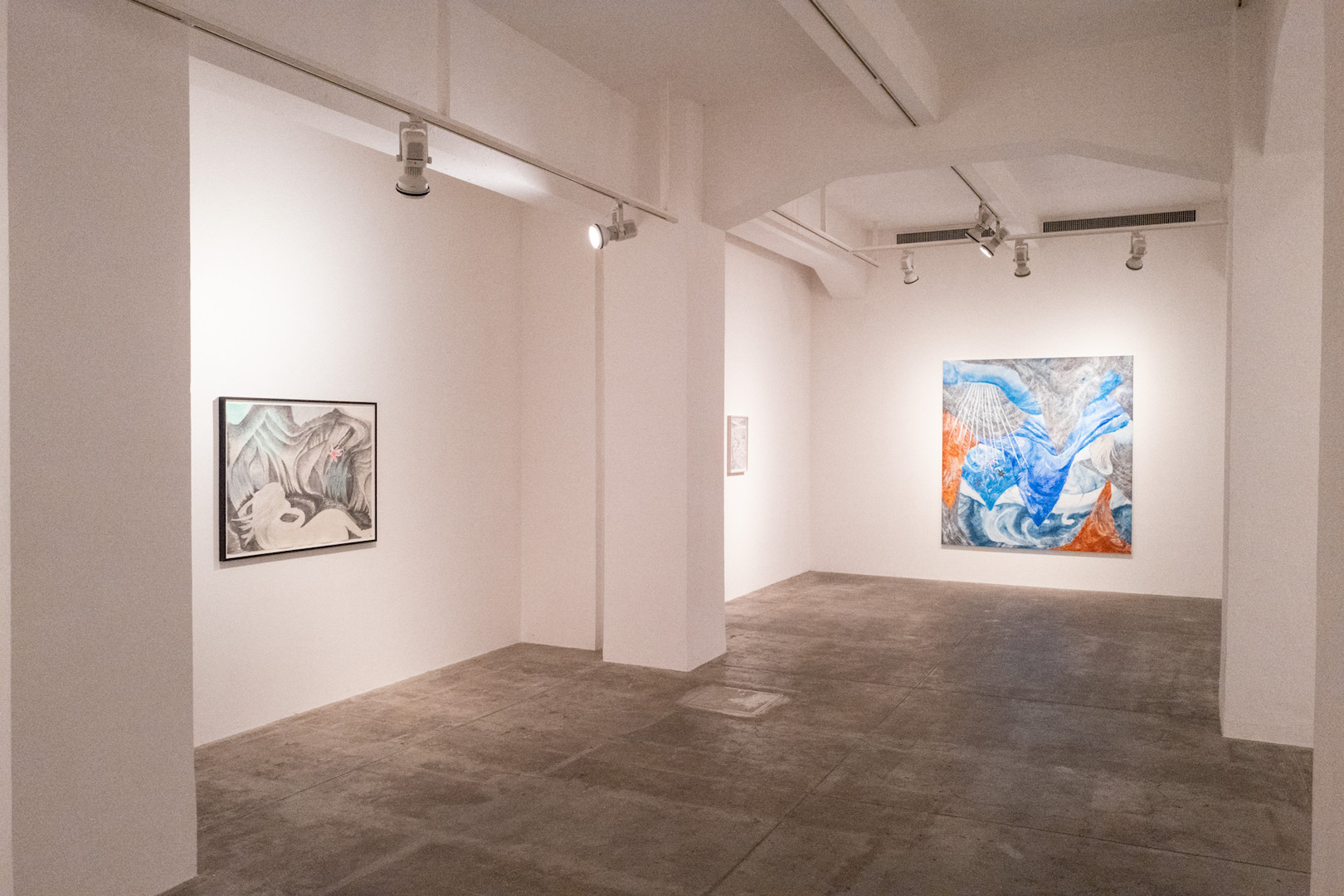
Installation view — back roomInstallation view — back roomMariko Mori, Divine Stone V, 2019, ED:5Mariko Mori, Radiant Being IV, 2019, ED:5Installation view — back roomMariko Mori, Divine Stone V, 2019, ED:5Mariko Mori, Divine Stone VI, 2019, ED:5
The “Divine Stone” series is a custom-made piece commissioned from a workshop that produces acrylic glass also used in aquariums.
The work, which projects various colors depending on the viewing angle, felt as though it was mirroring the very interior of the viewer’s own heart.
Through the work, my awareness turned toward my own inner self, and it was an experience that felt in sync with an inner emotion.
Mariko Mori「Central」
我前往参观了Mariko Mori的个展「Central」。展览地点是由澡堂改建而成的画廊SCAI THE BATHHOUSE。
지난 몇 달간, 코로나 사태의 영향으로 오랜 해외 생활에서 일시 귀국해, 도쿄에서 칩거 생활을 강요받아 왔습니다. 감염병이라는 보이지 않는 바이러스의 위협 아래 불안한 나날도 있었습니다만, 어떤 “정신 현상”에 이끌려 창작한다는 드문 체험을 할 수 있었습니다. 외적 세계로부터 소원해짐으로써, 많은 시간을 내적 세계의 탐구에 쏟게 되었습니다. “내면의 태양” 혹은 “내면의 빛”을 갈구하는 새로운 일상을 얻었습니다. 안쪽을 향해 나아갈수록 세계는 넓어지고, 외적 우주보다도 더욱 심오한 우주 공간이 그곳에 존재하고 있는 것처럼 느껴졌습니다.
이번 전시 “Central”은 평면, 드로잉, 입체 작품으로 구성되어 있습니다. 평면 작품은 눈에 보이지 않는 “내면의 빛”을 그린 이전작 《Dream Temple》(1999)의 영상과 연속되는 작품이라고도 할 수 있습니다. 왜냐하면 그 제작의 계기가 “내면의 태양”과 처음 만난 것이었기 때문입니다. 드로잉은 모두 이 몇 달 사이에 제작했습니다.
입체 작품 《Divine Stone》은 내면의 우주 중심에서 빛나는 “내면의 태양”이 차원을 뛰어넘어, 이 세상에 그 빛을 발하는 이미지로 제작했습니다. 최근 몇 년간 일본 전국에 있는 수많은 이와쿠라(磐座, iwakura)를 방문했는데, 그 필드워크에서 영감을 얻었습니다. 이와쿠라는 고분 시대부터 제사 의례를 거행하는 자연석이자, 신령을 초대해 모시기 위한 신의 자리로서, 고대인들은 이를 깊이 신앙해 왔습니다. 고사기(古事記)에는 최초에 나타난 신의 이름이 아메노미나카누시(天之御中主神)라고 기록되어 있습니다. 이 신은 우주의 근원 혹은 우주 자체이지만, 그 모습을 드러내지 않고 보이지 않는 곳에서 통합자로서 어디에나 편재하고 있었다고 전해집니다. 제작을 구상하는 도중, 신들이 강림하는 이와쿠라와 같은 이미지로, 작품 안에 “내면의 태양”의 빛을 시각화할 수는 없을까 생각했습니다. 이 발상으로부터 《Divine Stone》은 “내면의 빛”의 다채로운 색을 발하며, 그 빛의 중심성을 암시하는 작품이 되었습니다.
어느 날 문득, 독일 미학자 Hans Sedlmayr의 『빛의 죽음』(원서는 1964년 출간)이 눈에 들어왔습니다. 그는 오스트리아의 시인이자 화가 Adalbert Stifter가 기록한 개기일식에 관한 수상록에 자극받아 다음과 같이 말했습니다. “정신의 중심에 있는 빛이 암흑화되는 것은, 외계의 빛의 암흑화와 마찬가지의 현상을 필연적으로 야기한다. 그러나 예술 또한 내면적 필연성에 의해 자연 그 자체와 같은 방식으로 이 정신적 사상(事象)을 명시한다.” 이 한 구절을 접했을 때, 상실된 빛을 새롭게 되살릴 수 있는 작품을 만들 수 없을까 생각했습니다.
빛은 결코 죽지 않는다
영원히 죽는 일이 없다.
눈에 보이지 않는 위대한 “내면의 빛”은
존재하는 모든 세계의 구석구석까지 이르고 있다.
즉 가시화할 수 없는, 그 눈부신 빛의 근원이야말로 생명을 깃들이고, 존재하는 모든 것을 감싸 안고 있는 것이 아닐까요. 설령 외계의 빛으로부터 차단된다 하더라도, 이 세상에 존재하는, 넘쳐흐르는 에너지의 집합체와 이어질 수 있다면, 우리는 빛나는 정신의 빛으로 충만해질 수 있지 않을까요.
Mariko Mori
2020년 8월
전시 전경 — 앞방Mariko Mori 《Radiant Being Lenticular》 2020년 ED:5전시 전경 — 앞방전시 전경 — 앞방
전시 전경 — 뒷방전시 전경 — 뒷방Mariko Mori 《Divine StoneⅤ》 2019년 ED:5Mariko Mori 《Radiant Being Ⅳ》 2019년 ED:5전시 전경 — 뒷방Mariko Mori 《Divine StoneⅤ》 2019년 ED:5Mariko Mori 《Divine StoneⅥ》 2019년 ED:5
《Divine Stone》 시리즈는 수족관에서도 사용되는 아크릴 유리 공방에 의뢰해 제작한 특별 주문품이라고 합니다.
보는 각도에 따라 다양한 색조가 비춰지는 작품은 마치 관람자 자신의 마음속을 비추는 듯한 느낌마저 자아냈습니다.
작품을 통해 자신의 마음속을 향한 의식으로 상념이 이어졌고, 내면의 감정과 동기화된 듯한 체험이었습니다.