STARS: Six Contemporary Artists from Japan to the World
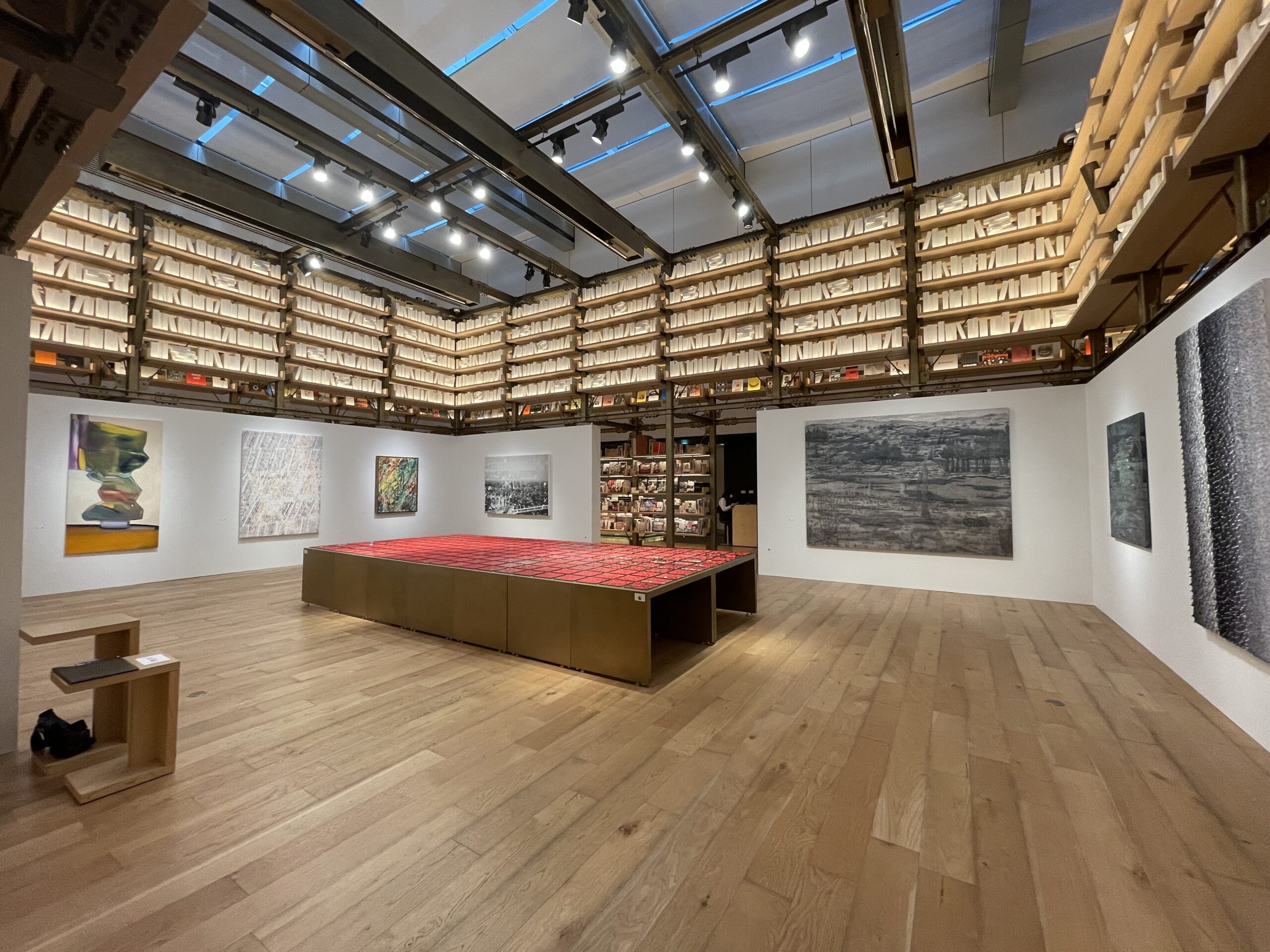
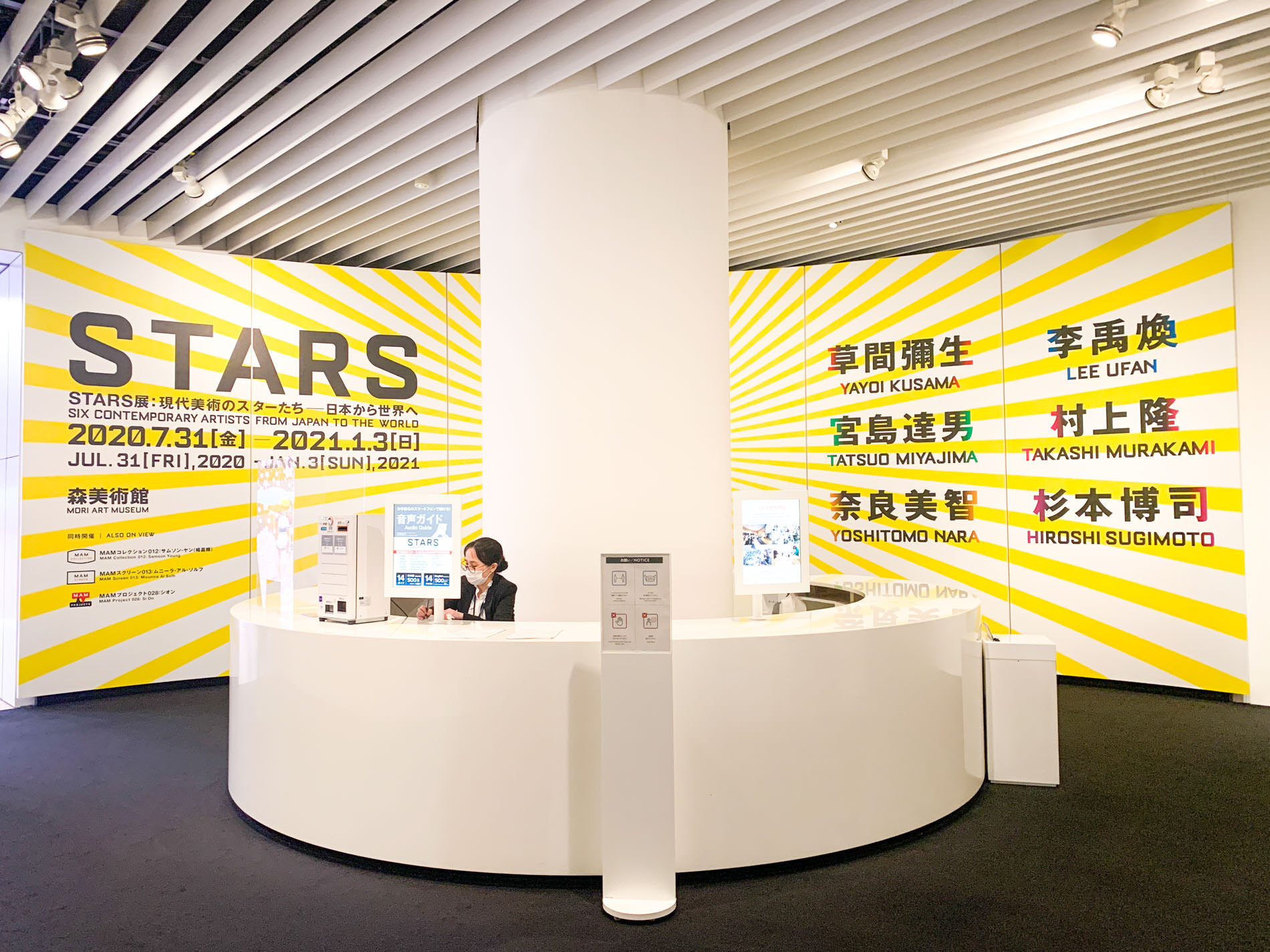
We visited “STARS: Six Contemporary Artists from Japan to the World,” currently on view at Mori Art Museum.
Mori Art Museum
The STARS exhibition was originally planned to coincide with the 2020 Tokyo Olympics, but was rescheduled due to the impact of the novel coronavirus.
The exhibition selects six artists who have transcended the framework of Japan to gain broad international recognition, celebrated today across diverse regions and generations, and traces the trajectories of their careers by connecting early works with the most recent. How has their practice come to be evaluated by the world? The show explores this against Japan’s unique social, cultural, and economic background—its pursuit of universal themes beyond borders and cultures, tradition and aesthetics, technology, subculture, and more.
The exhibition also presents materials on major exhibitions of Japanese contemporary art held abroad from the 1950s to the present, examining the criteria and lineages of evaluation of each era.
Lee Ufan
This article focuses on Lee Ufan, the eldest of the six artists.
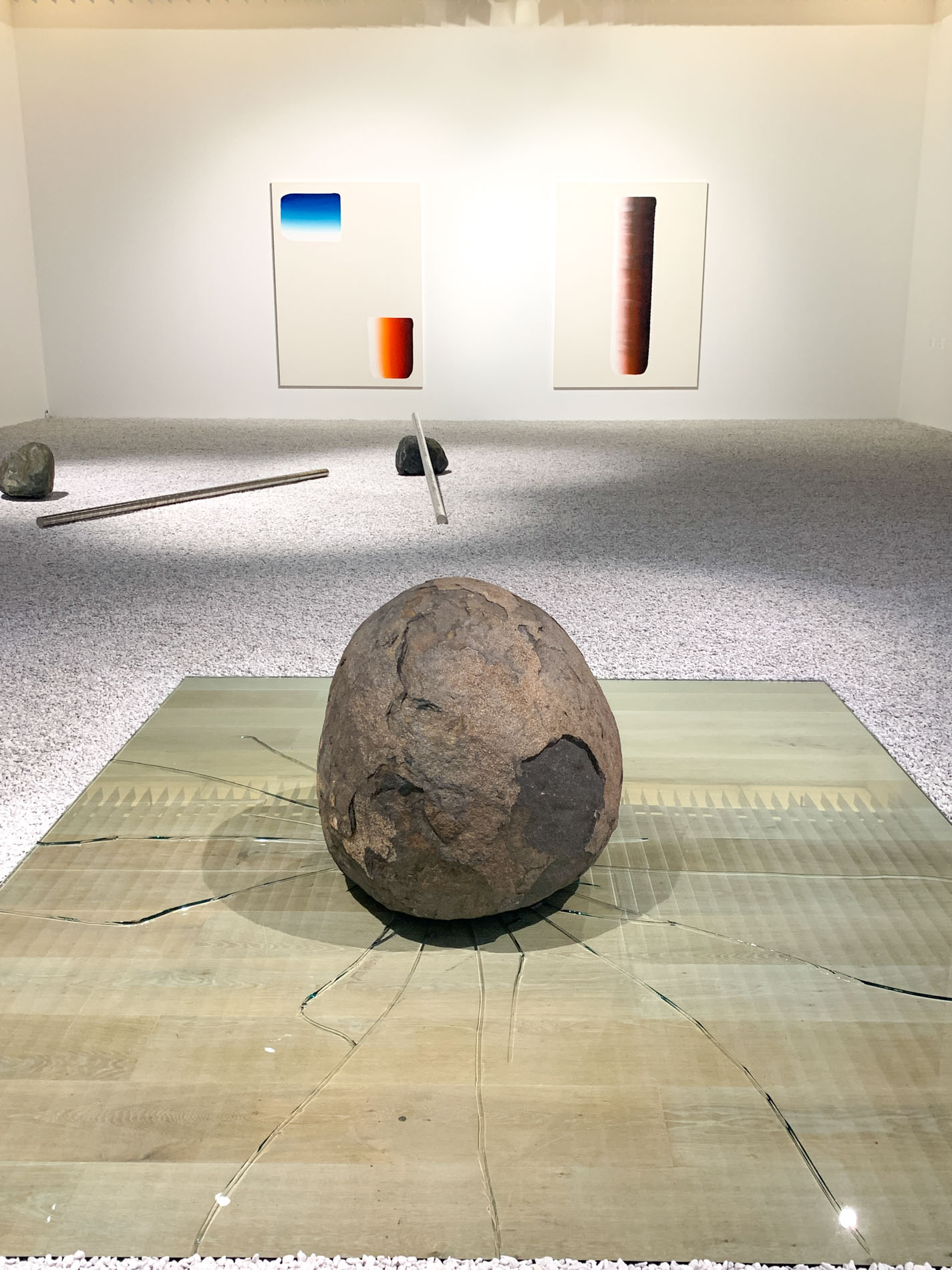
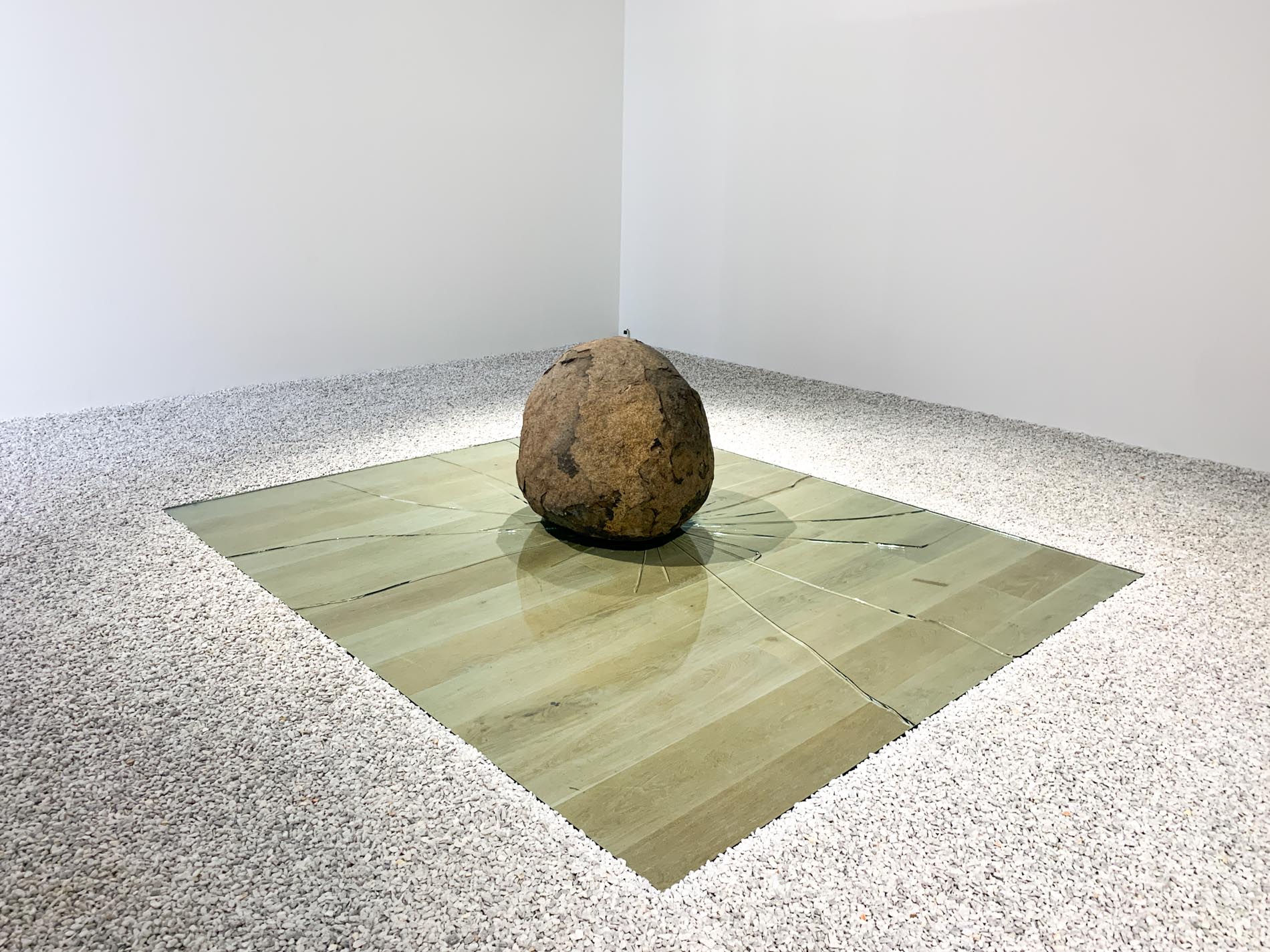
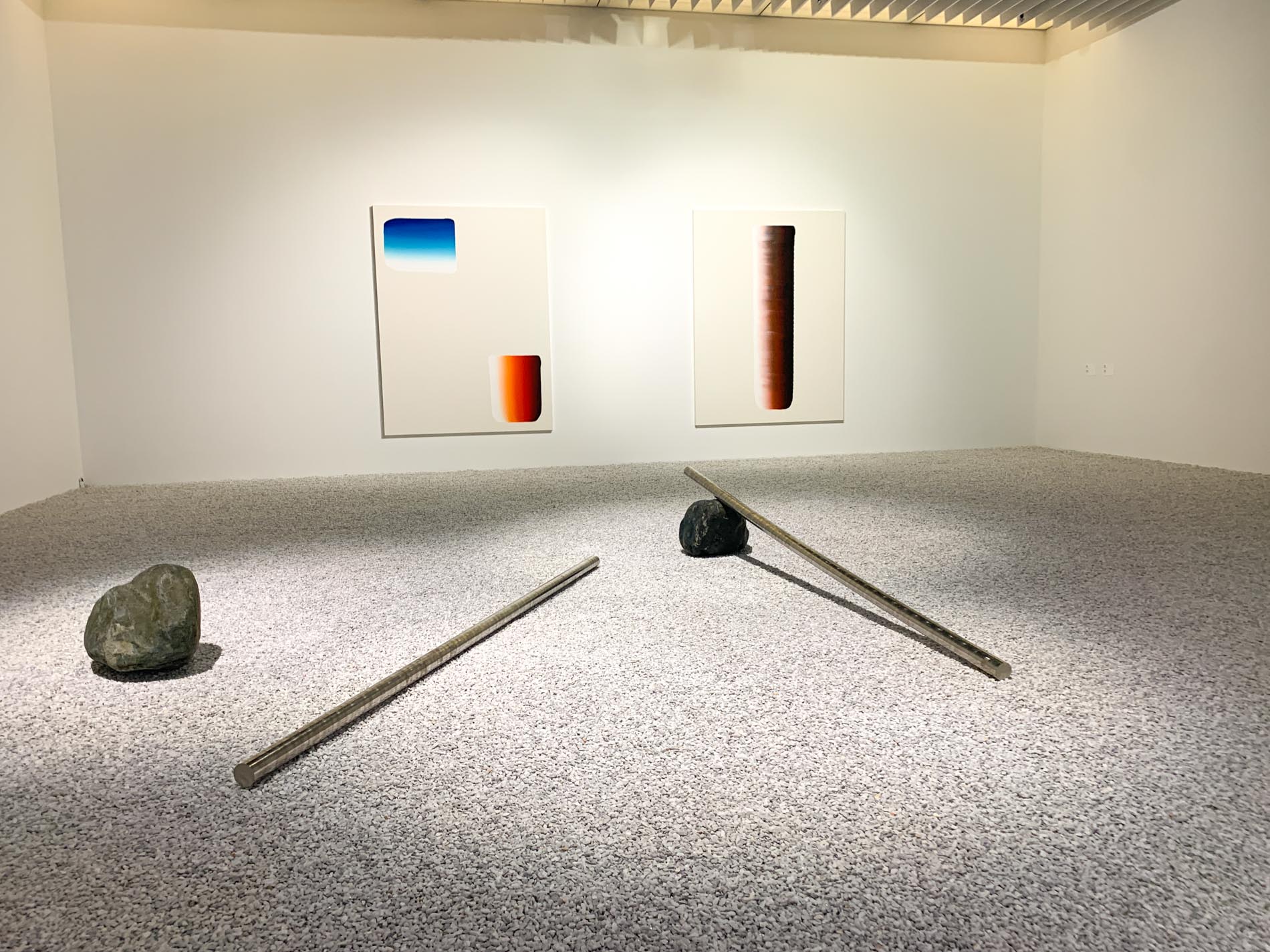
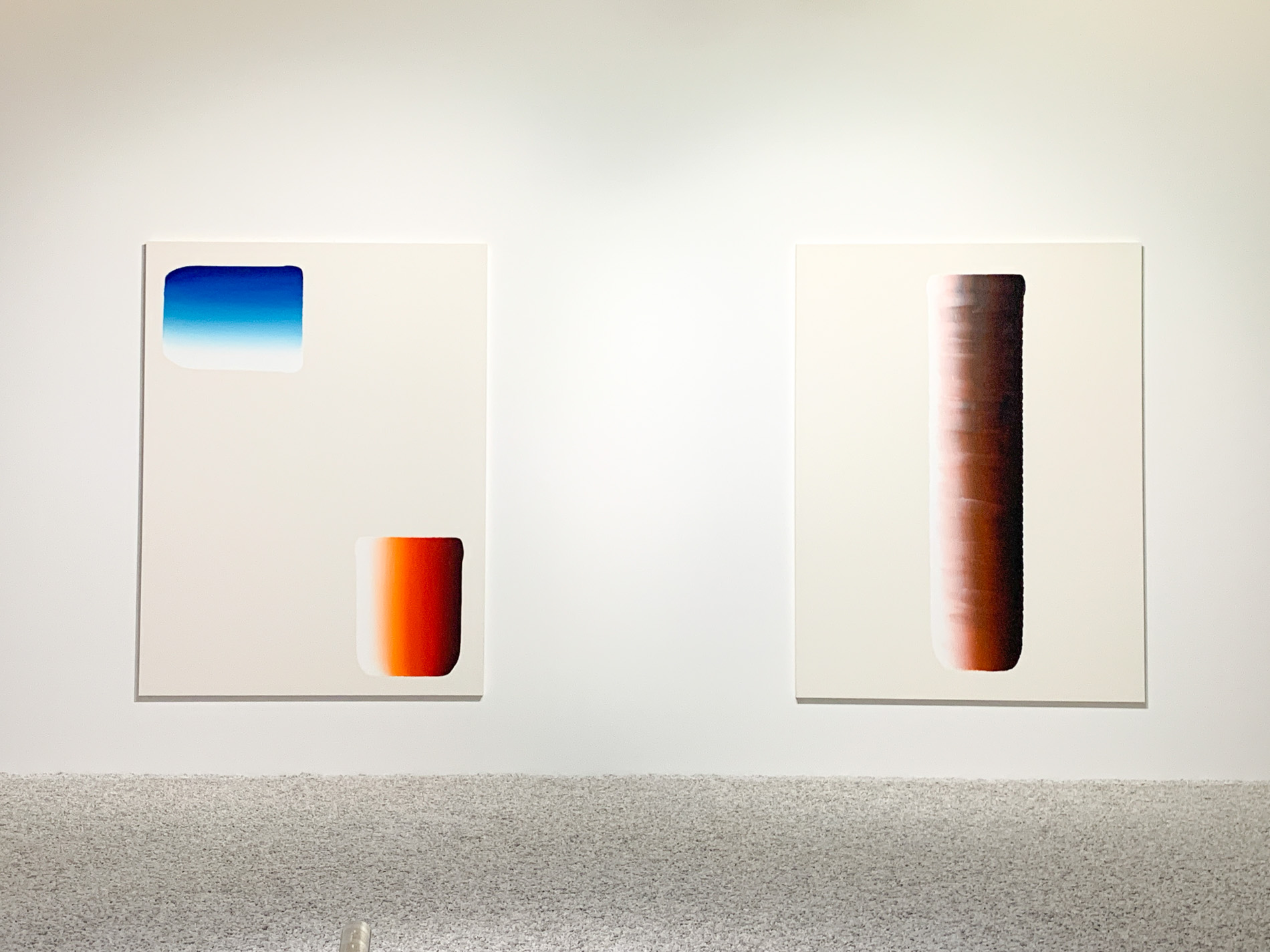
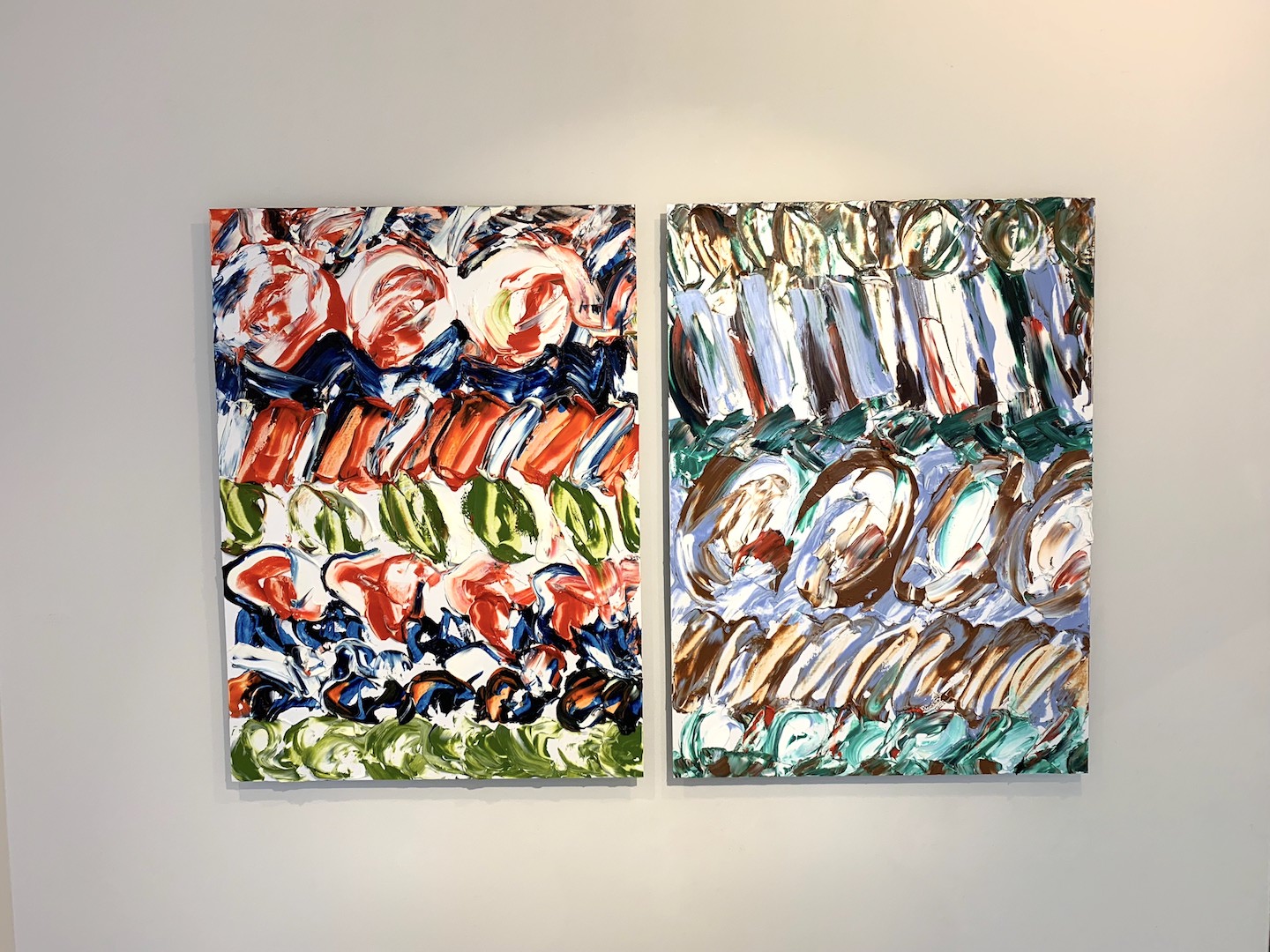
The Lee Ufan room presents “Relatum” (1969/2020), one of the earliest works most emblematic of the thinking of Mono-ha; the three-dimensional work “Relatum – Dissonance” (2004/2020); and two new large-scale paintings, “Dialogue” (2019, 2020).
All these works share, across time, Lee Ufan’s attitude of incorporating “to make and not to make,” “to paint and not to paint” into his practice.
Lee Ufan
Born in 1936 in Gyeongsangnam-do, Korea. Resident in Japan since 1956.
During Japan’s period of rapid economic growth, as international critiques of modernity mounted, a sculptural tendency arose that denied production and instead presented objects and raw materials themselves. This tendency was later called “Mono-ha.” Within it, Lee focused his practice on the relations between things.
In 1969, his essay “From Object to Being” was awarded a prize in the Bijutsu Shuppan-sha Art Criticism Prize. Through critical writing, he contributed significantly to the theorization of Mono-ha.
Following the “Korean Contemporary Painting Exhibition” held at The National Museum of Modern Art, Tokyo in 1968, he devoted himself to fostering exchange between the contemporary art scenes of Japan and Korea. In 1971 he participated in the 7th Paris Biennale, and thereafter continued to present his work primarily in Europe, notably Germany and France.
In 2011 a major retrospective was held at the Solomon R. Guggenheim Museum (New York), in 2014 a large-scale solo exhibition at the Palace of Versailles, and in 2019 a solo exhibition at the Centre Pompidou-Metz (France). Lee Ufan Museum opened in Naoshima in 2010, and the Space Lee Ufan at Busan Museum of Art opened in Korea in 2015.
Alongside broadening interest in postwar Japanese art and comparative studies of non-Western modernism, “Mono-ha” is being reevaluated internationally, and attention is growing toward Lee Ufan’s diverse practice spanning half a century.
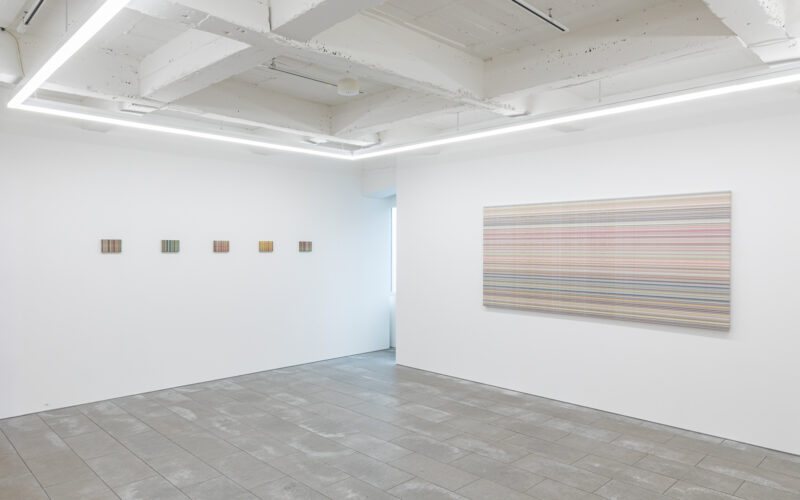
Installation view — the floor of the room is covered with a compacted layer of gravel.Installation viewLee Ufan, “Relatum” (1969/2020) — a reconfiguration of the 1969 workInstallation view — foreground: “Relatum – Dissonance” (2004/2020)Left: Lee Ufan, “Dialogue,” 2020, acrylic on canvas, 291×218 cm Right: Lee Ufan, “Dialogue,” 2020, acrylic on canvas, 291×218 cm
STARS: Six Contemporary Artists from Japan to the World
我们造访了Mori Art Museum正在举办的”STARS: Six Contemporary Artists from Japan to the World”。
1936年生于韩国庆尚南道。1956年起旅居日本。
日本高度经济成长期,国际间对近代化的批判日益高涨,出现了否定生产、直接呈现物与素材本身的雕塑思潮,后被称为”Mono-ha”。其中,Lee的创作着眼于物与物之间的关系性。
1969年,其评论《从事物到存在》入选美术出版社艺术评论奖。他透过批评活动为”Mono-ha”的理论化做出了重大贡献。
自1968年The National Museum of Modern Art, Tokyo举办的”Korean Contemporary Painting Exhibition”以后,他亦致力于日韩现代美术界的交流。1971年参加第7届Paris Biennale,此后以德国、法国等欧洲为中心持续发表作品。
2011年在Solomon R. Guggenheim Museum (New York)举办大规模回顾展,2014年在Palace of Versailles举办大规模个展,2019年亦在Centre Pompidou-Metz (France)举办个展。2010年直岛开设Lee Ufan Museum,2015年韩国开设Space Lee Ufan at Busan Museum of Art。
随着对日本战后美术兴趣的扩大以及非欧美圈现代主义比较研究的开展,”Mono-ha”在国际上重新获得评价,Lee Ufan长达50年的多元实践也愈加受到关注。
STARS: Six Contemporary Artists from Japan to the World
Mori Art Museum에서 개최 중인 “STARS: Six Contemporary Artists from Japan to the World”를 방문했습니다.
Mori Art Museum
STARS전은 본래 2020년 도쿄 올림픽 시기에 맞춰 기획되었으나, 코로나19의 영향으로 시기를 조정한 끝에 개최에 이르렀습니다.
이번 전시는 “일본”이라는 틀을 넘어 국제 무대에서 폭넓게 활약하며 오늘날 다양한 지역과 세대로부터 높은 평가를 받는 아티스트 6인을 선정해, 초기작과 최신작을 잇는 형태로 그 활동의 궤적을 소개하는 기획입니다.
그들의 실천은 어떻게 세계로부터 평가받아 왔는가. 국경과 문화를 초월한 보편적 과제의 추구, 전통과 미학, 테크놀로지와 서브컬처 등, 일본 고유의 사회적・문화적・경제적 배경을 바탕으로 살펴봅니다.
또한 1950년대부터 오늘에 이르기까지 해외에서 열린 주요 일본 현대미술 전시에 관한 자료도 함께 전시되어 시대별 평가의 축과 계보를 검증합니다.
Lee Ufan
본 기사에서는 6인의 아티스트 중 최연장자인 Lee Ufan의 전시를 다룹니다.
Lee Ufan의 전시실에서는 “Mono-ha”의 사상을 가장 잘 상징하는 초기 작품 《Relatum》(1969/2020년), 입체 작품 《Relatum – Dissonance》(2004/2020년), 그리고 신작 대형 회화 2점 《Dialogue》(2019, 2020년)가 출품되었습니다.
어느 작품에도, 만드는 것과 만들지 않는 것, 그리는 것과 그리지 않는 것을 작품에 담아온 Lee Ufan의 자세가 시대를 넘어 관통하고 있습니다.
Lee Ufan
1936년, 대한민국 경상남도 출생. 1956년 이후 일본에 거주.
일본의 고도경제성장기, 근대에 대한 비판이 국제적으로 높아지는 가운데, 생산을 부정하고 사물이나 소재 그 자체를 제시하는 조각의 동향이 나타났으며, 훗날 “Mono-ha”라 불리게 됩니다. 그 안에서 Lee는 사물 상호 간의 관계성에 의식을 두고 제작을 이어갔습니다.
또한 1969년에는 평론 「사물에서 존재로」가 미술출판사 예술평론상에 입선했습니다. 비평 활동을 통해 “Mono-ha”의 이론화에 크게 공헌했습니다.
1968년 The National Museum of Modern Art, Tokyo에서 개최된 “Korean Contemporary Painting Exhibition” 이후, 일본과 한국 현대미술계의 교류에도 힘썼습니다. 1971년에는 제7회 Paris Biennale에 참가했으며, 이후 독일, 프랑스 등 유럽을 중심으로 지속적으로 작품을 발표해 왔습니다.
2011년에는 Solomon R. Guggenheim Museum (New York)에서 대규모 회고전, 2014년에는 Palace of Versailles에서 대규모 개인전, 2019년에는 Centre Pompidou-Metz (France)에서 개인전이 개최되었습니다. 2010년에는 나오시마에 Lee Ufan Museum, 2015년에는 한국에 Space Lee Ufan at Busan Museum of Art가 개관했습니다.
일본 전후 미술에 대한 관심의 확대와 비서구권 모더니즘의 비교 연구와 더불어 “Mono-ha”가 국제적으로도 재평가되면서, 50년에 걸친 Lee Ufan의 다양한 실천에도 주목이 높아지고 있습니다.
전시 전경 — 전시실 바닥에는 다져진 자갈이 깔려 있었습니다.전시 전경Lee Ufan 《Relatum》 (1969/2020년) — 1969년 작품을 재구성한 작품전시 전경 — 앞쪽: 《Relatum – Dissonance》 (2004/2020년)왼쪽: Lee Ufan 《Dialogue》 2020년, 아크릴 물감・캔버스 291×218cm 오른쪽: Lee Ufan 《Dialogue》 2020년, 아크릴 물감・캔버스 291×218cm
2020年.jpg)