STARS: Six Contemporary Artists from Japan to the World
We visited “STARS: Six Contemporary Artists from Japan to the World,” currently on view at Mori Art Museum.
Mori Art Museum
The STARS exhibition was originally planned to coincide with the 2020 Tokyo Olympics, but was rescheduled due to the impact of the novel coronavirus.
The exhibition selects six artists who have transcended the framework of Japan to gain broad international recognition, celebrated today across diverse regions and generations, and traces the trajectories of their careers by connecting early works with the most recent. How has their practice come to be evaluated by the world? The show explores this against Japan’s unique social, cultural, and economic background—its pursuit of universal themes beyond borders and cultures, tradition and aesthetics, technology, subculture, and more.
The exhibition also presents materials on major exhibitions of Japanese contemporary art held abroad from the 1950s to the present, examining the criteria and lineages of evaluation of each era.
Hiroshi Sugimoto
This article focuses on Hiroshi Sugimoto, the eldest of the six artists.
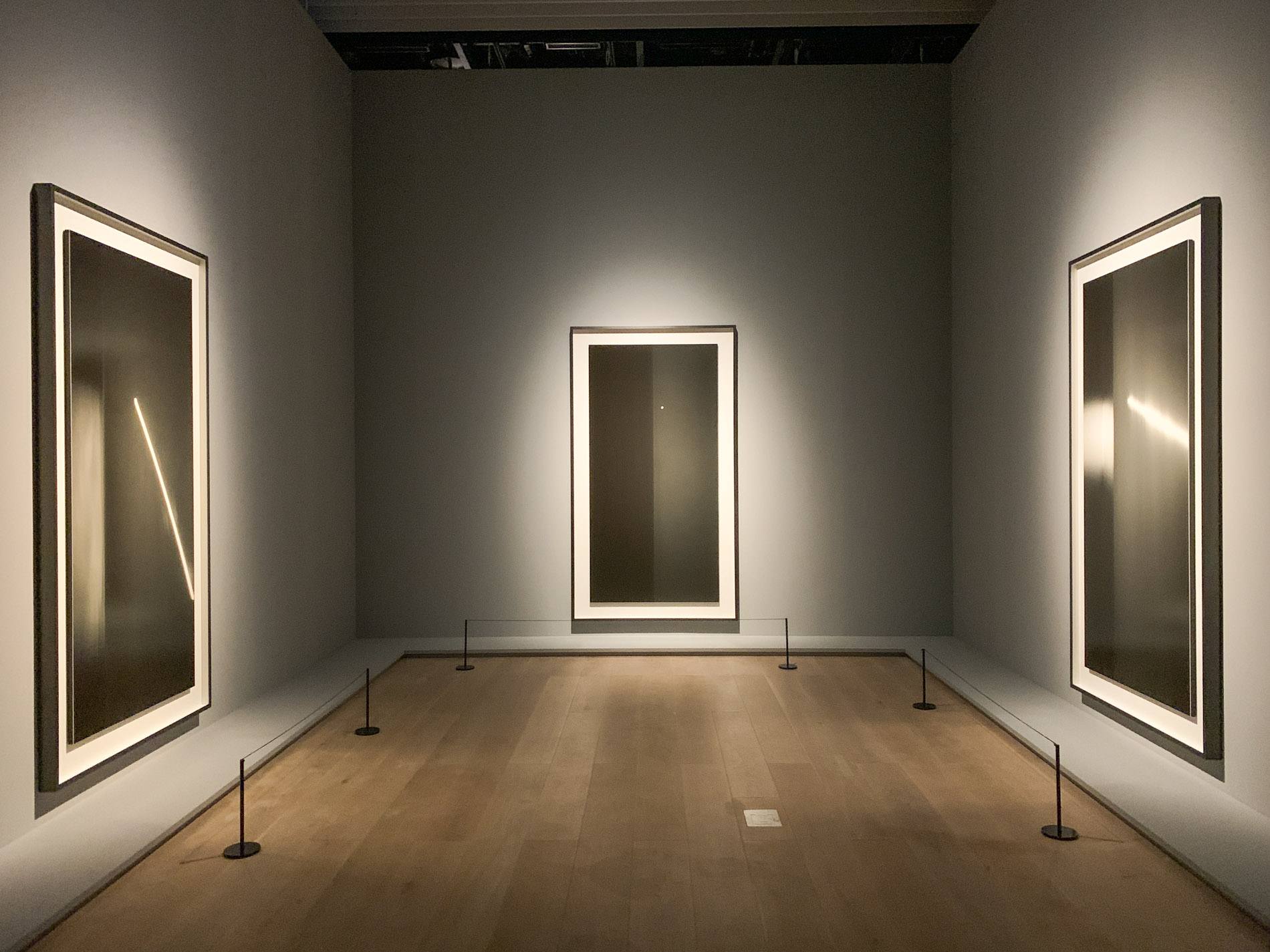
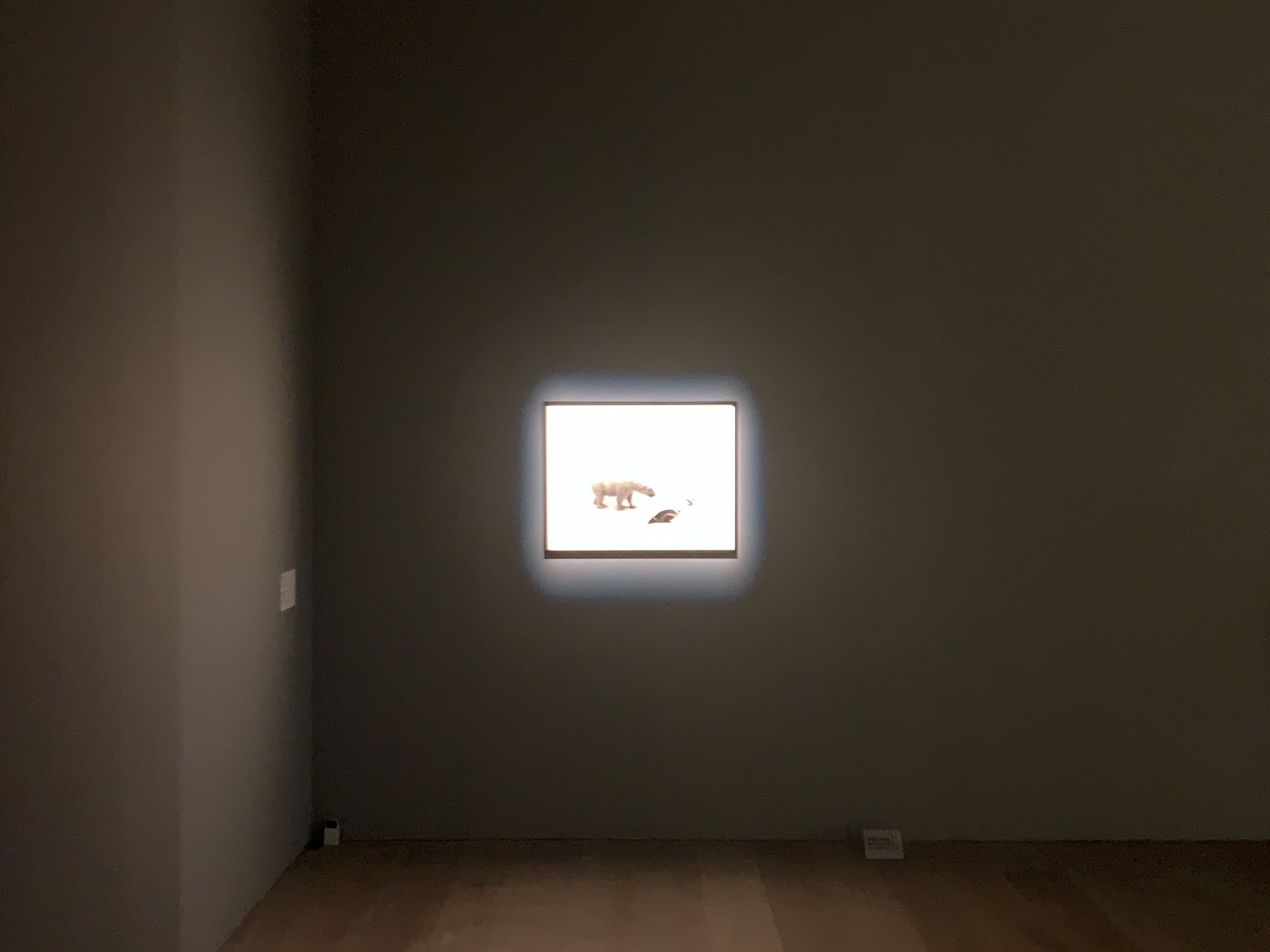
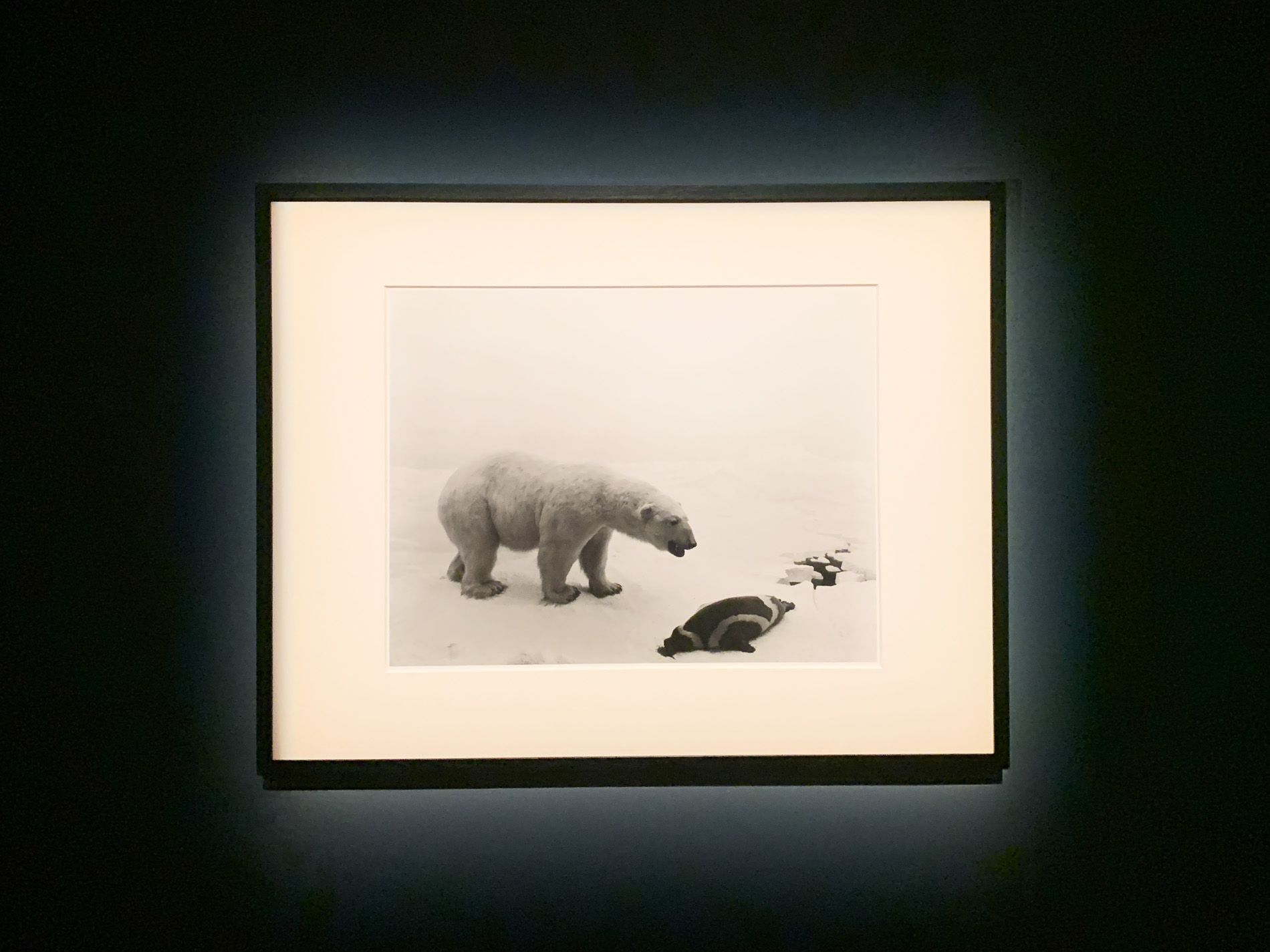
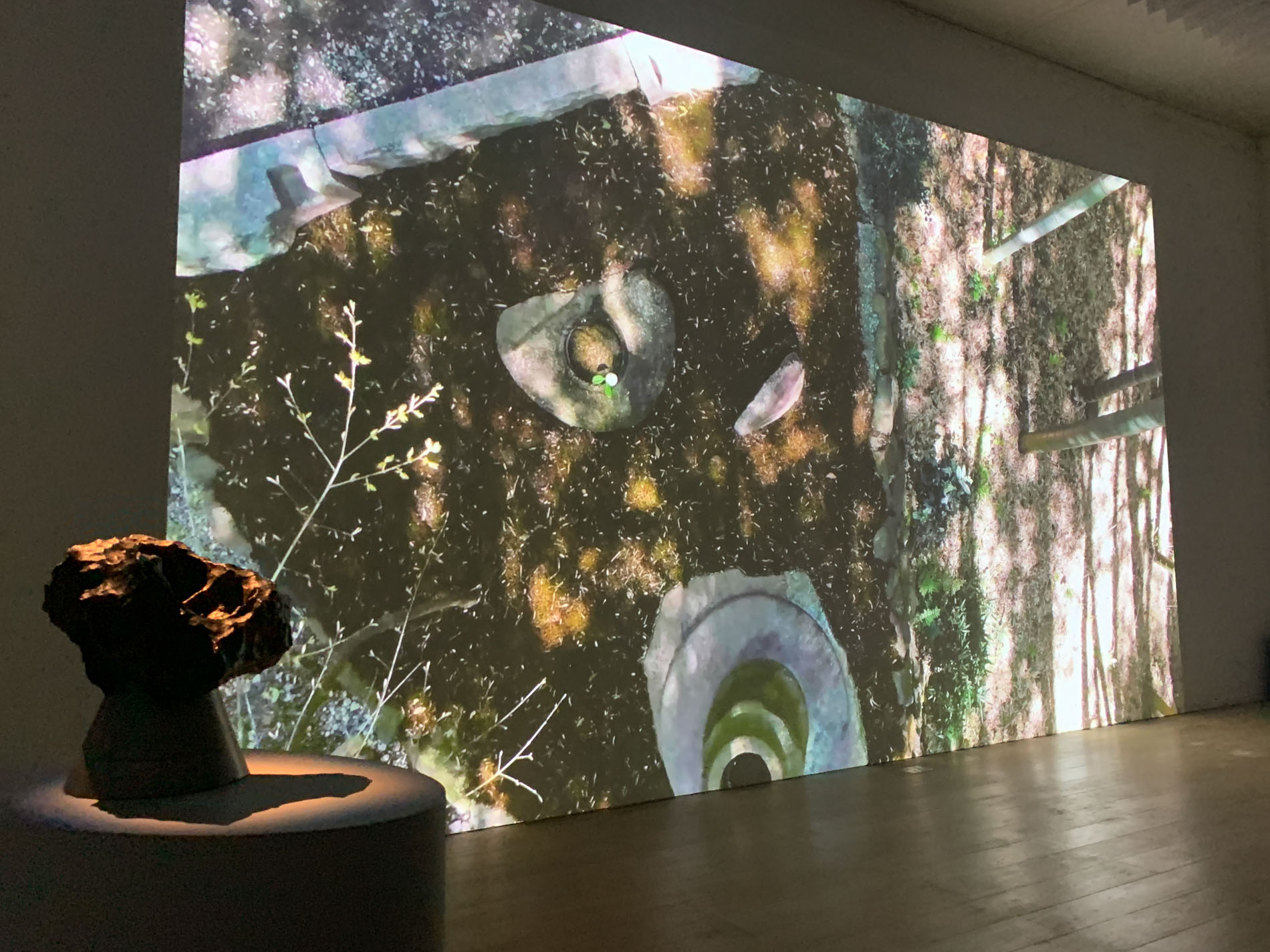
The Hiroshi Sugimoto room presents the first work in his early representative series, “Diorama” — “Polar Bear” (1976, acquired by The Museum of Modern Art, New York in 1977) — as well as the “Revolution” series (from 1980), an outgrowth of his “Seascapes” series shown in Japan for the first time, and the first film work by Sugimoto, “Time Garden Soliloquy” (2020), a fine-grained visual chronicle across the seasons of the Odawara Art Foundation Enoura Observatory (opened in 2017), regarded as the culmination of Sugimoto’s creative practice.
Hiroshi Sugimoto
Born in Tokyo in 1948.
He moved to the United States in 1970, studied photography in Los Angeles, and relocated to New York in 1974.
From his early career, he has consistently produced photographic works grounded in clear concepts—series such as “Dioramas,” which oscillate between the real and the illusory; “Portraits”; “Theaters,” made by long-exposing an entire film; and “Seascapes,” photographing horizons around the world.
In 1977, his “Polar Bear” (1976) from the “Dioramas” series became his first work to enter a public collection, acquired by The Museum of Modern Art, New York.
His solo exhibition at The Metropolitan Museum of Art, New York, launched in 1995, then toured three cities in the U.S. and Hara Museum ARC (Gunma), drawing significant attention.
His 2005 solo exhibition at Mori Art Museum, “Hiroshi Sugimoto: End of Time,” subsequently toured three U.S. cities, cementing his position both in museums and the market with photography that unites his own concept, philosophy, and aesthetics. Since then, his sweeping worldview and sense of history have transcended not only the medium of photography but the framework of contemporary art itself, with his recent expression crossing a wide range of artistic domains including architecture, traditional art, and classical performing arts. Among these, the Odawara Art Foundation Enoura Observatory, opened in 2017 after two decades of conceptualization, is a monumental project that distills his worldview and is drawing rising attention from around the world.
Installation view — Revolution series
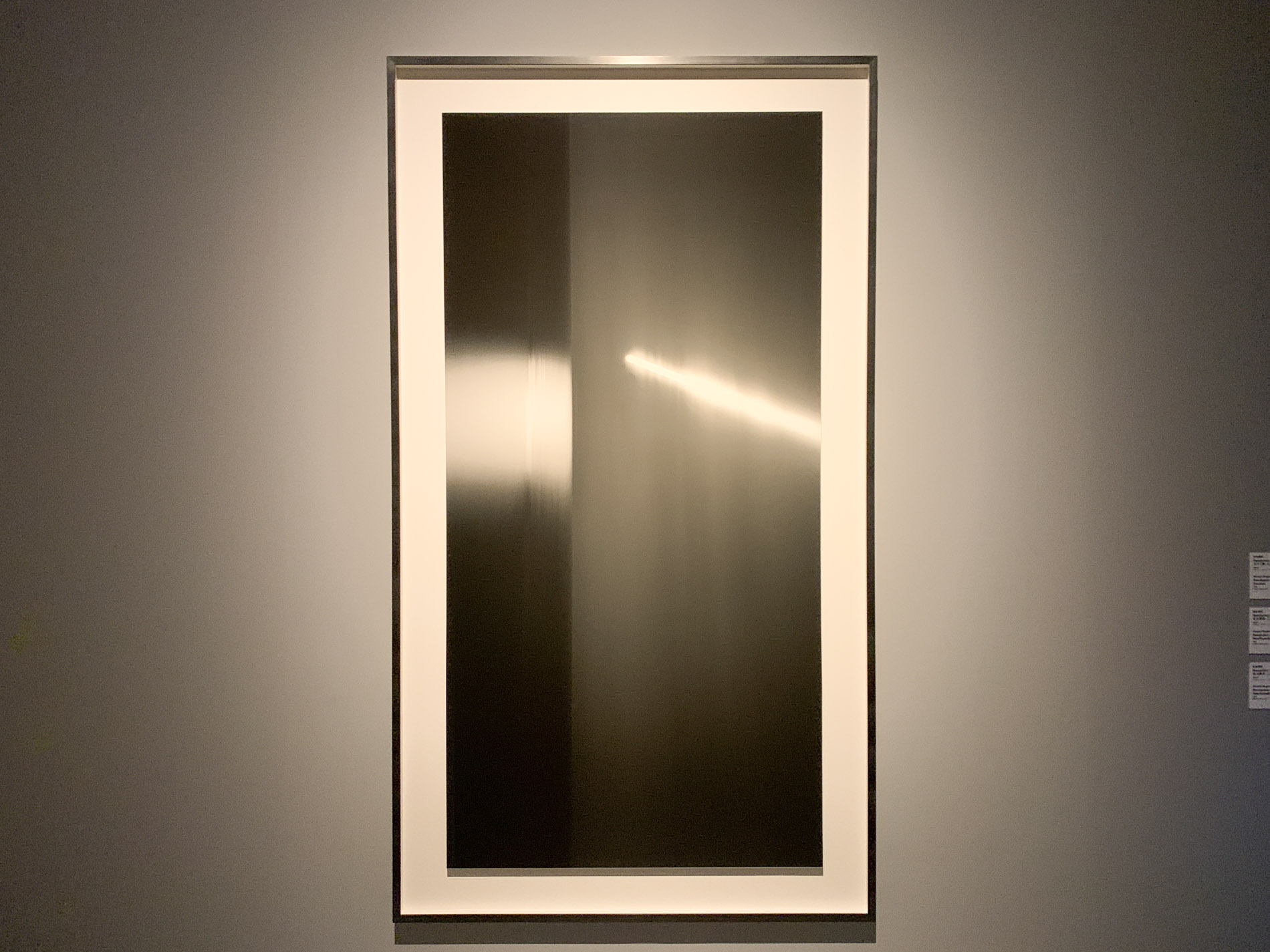
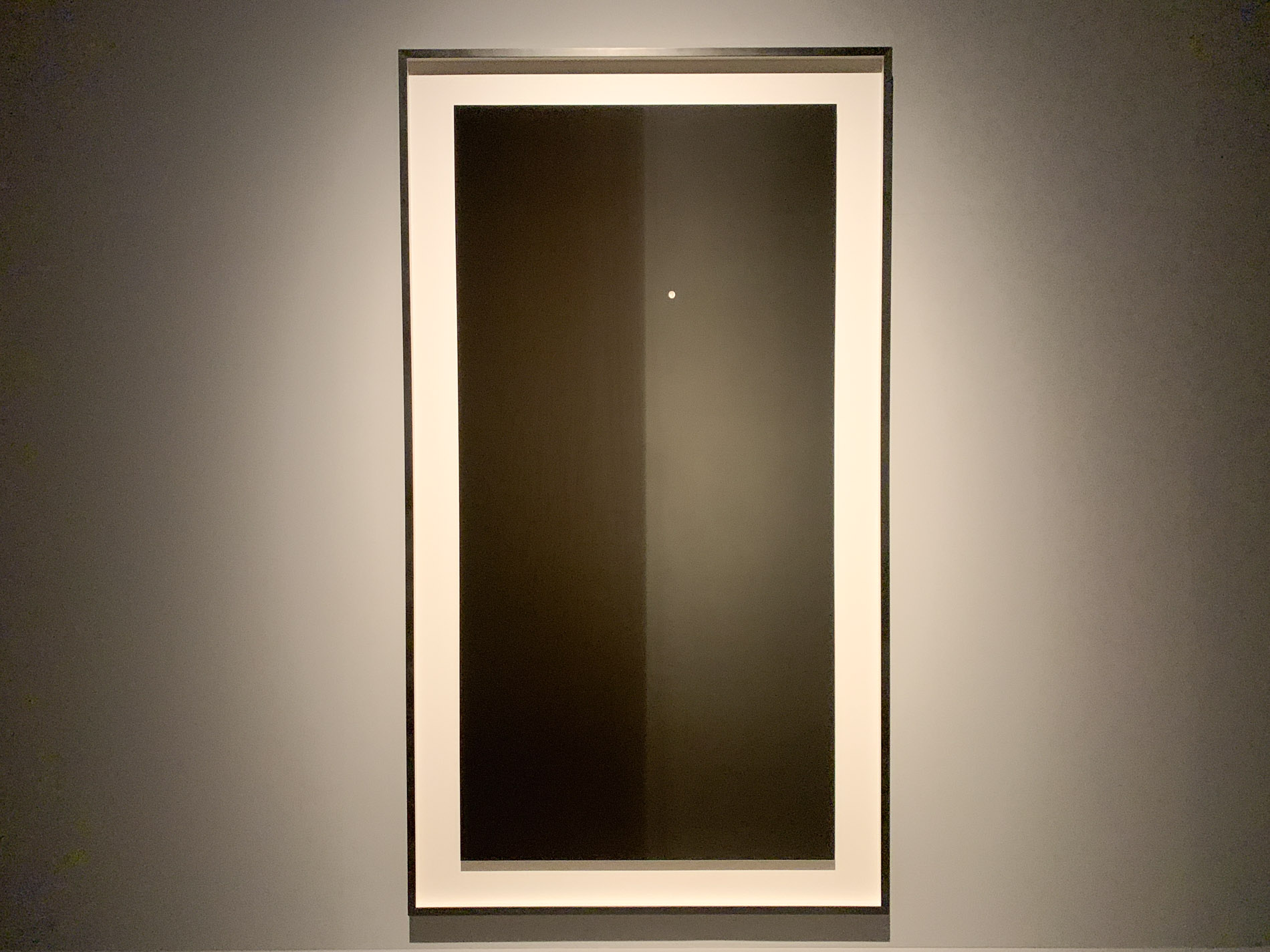
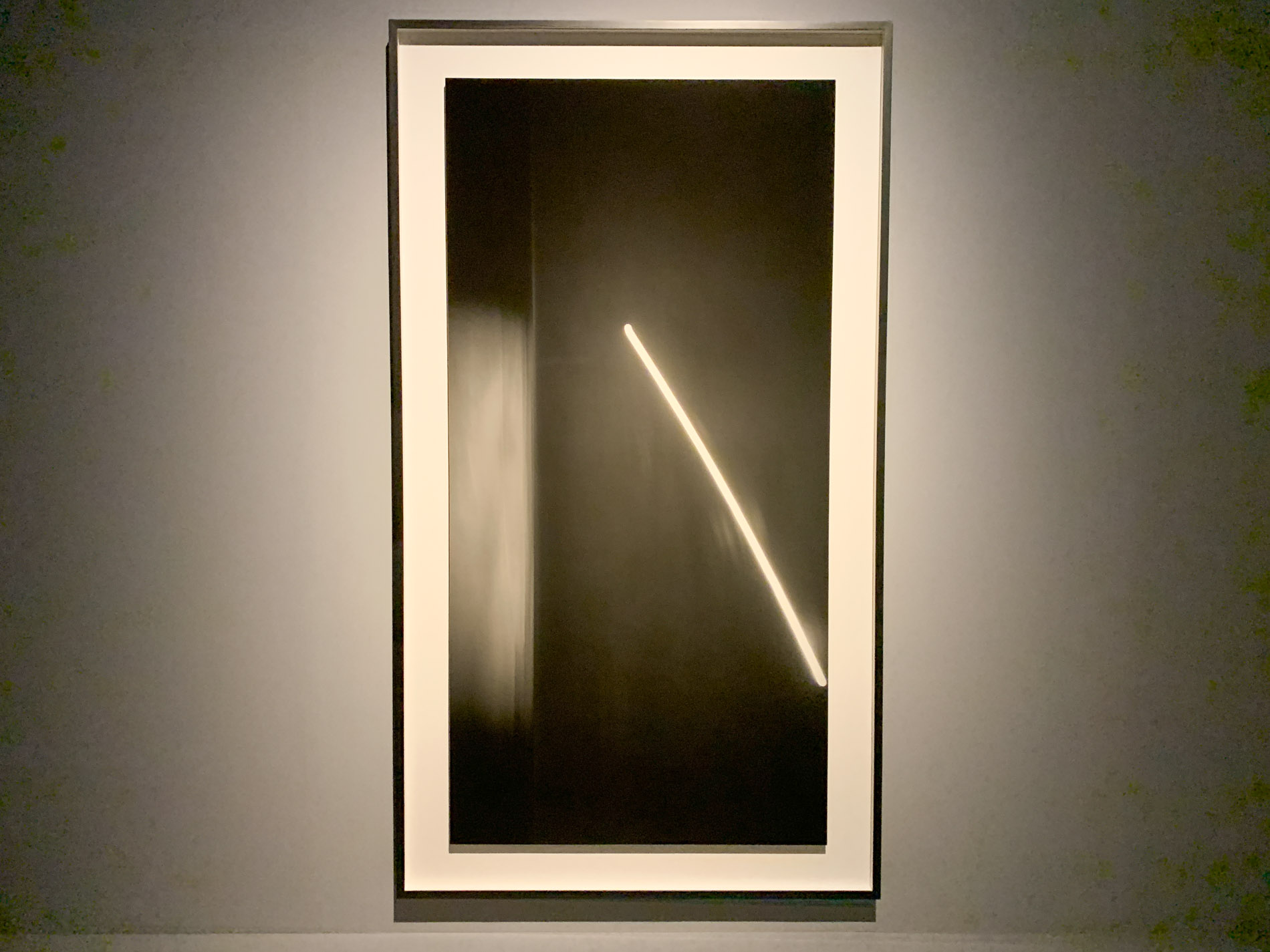
The Revolution series takes “Seascapes” works in which the moon or its rays appear, and displays them vertically.
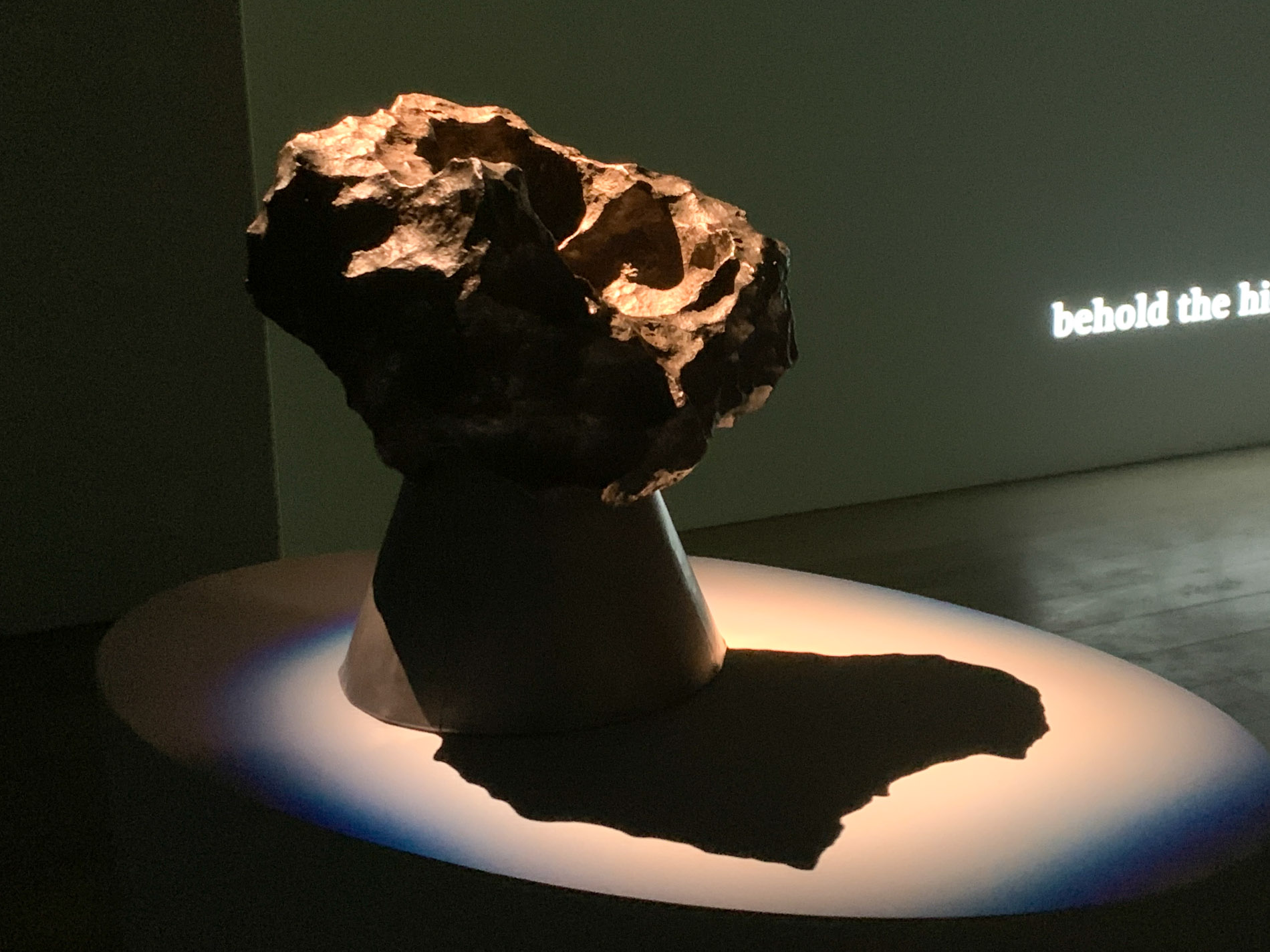
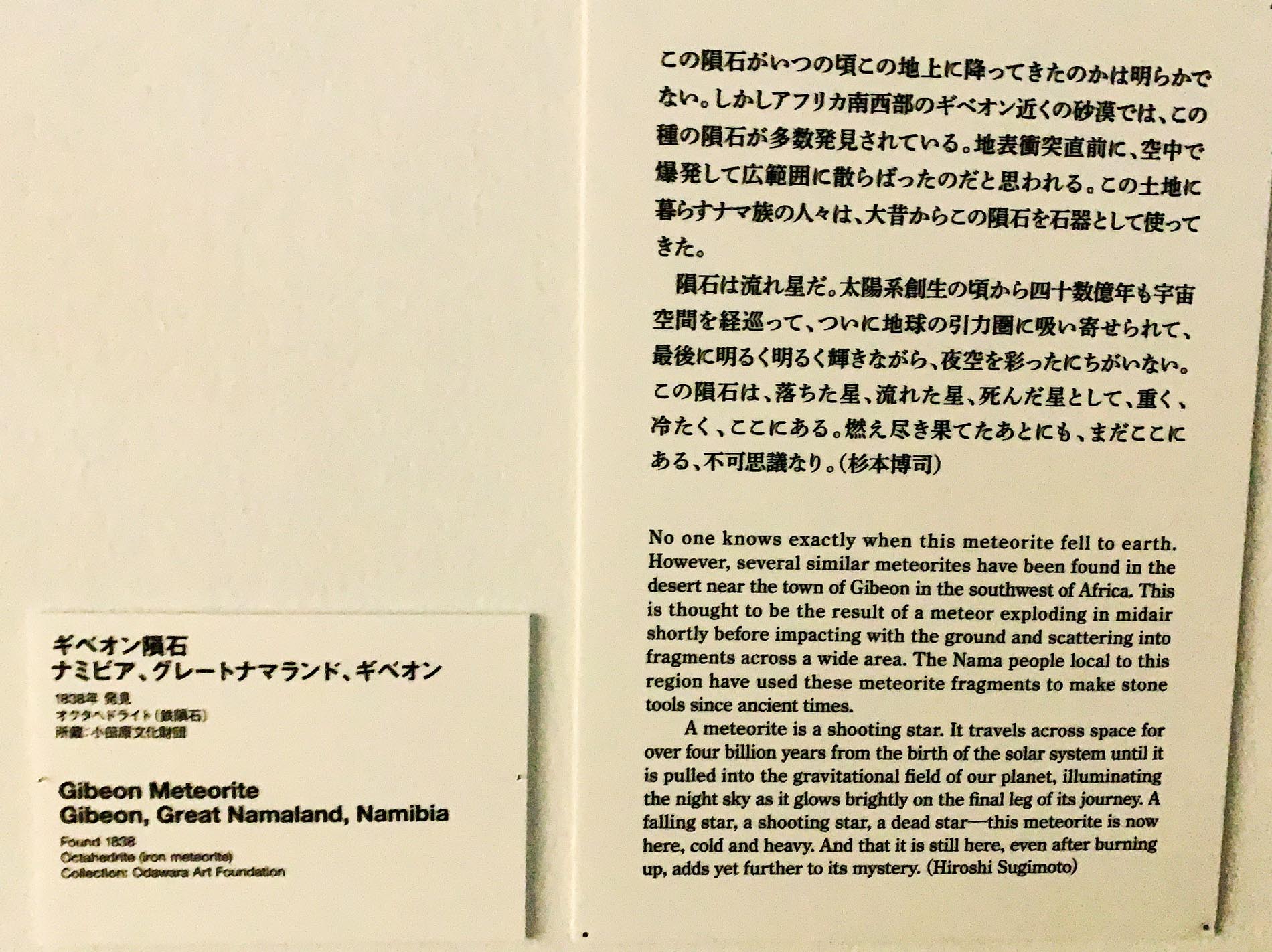
Hiroshi Sugimoto, “Revolution 008 Caribbean Sea, Yucatan,” 1990, gelatin silver print, 238.8×119.4 cmHiroshi Sugimoto, “Revolution 001 North Atlantic Ocean, Newfoundland,” 1982Hiroshi Sugimoto, “Revolution 002 North Atlantic Ocean, Newfoundland,” 1982Installation view of the signature work “Polar Bear”Hiroshi Sugimoto, “Polar Bear,” 1976, 42.3 × 54.6 cm, Obayashi CollectionA film work themed on the Odawara Art Foundation Enoura Observatory — “Time Garden Soliloquy,” 2020Gibeon Meteorite, Namibia, Great Namaland, Gibeon; discovered in 1838; octahedrite (iron meteorite); Odawara Art Foundation collection (Kanagawa)Gibeon Meteorite — commentary
STARS: Six Contemporary Artists from Japan to the World
我们造访了Mori Art Museum正在举办的”STARS: Six Contemporary Artists from Japan to the World”。
Hiroshi Sugimoto的展厅展出了其初期代表系列之一”Dioramas”的首件作品《Polar Bear》(1976年)(1977年被The Museum of Modern Art, New York收藏);由”Seascapes”系列发展而来、在日本首度公开的”Revolution”系列(1980年—);以及被誉为Sugimoto创作集大成的”Odawara Art Foundation Enoura Observatory”(2017年开馆)四季细节的首部电影作品《Time Garden Soliloquy》(2020年)。
Hiroshi Sugimoto
1948年生于东京。
1970年赴美,于洛杉矶学习摄影,1974年迁居纽约。
往返于现实与虚像之间的”Dioramas”、”Portraits”、以一部电影的曝光时长完成的”Theaters”、拍摄世界各地水平线的”Seascapes”等,自早期起始终以明确的观念为基础从事摄影创作。
1977年,”Dioramas”系列的《Polar Bear》(1976年)作为其首件被公共收藏的作品,进入The Museum of Modern Art, New York。
此后,从1995年起举办的The Metropolitan Museum of Art, New York个展,在美国国内及Hara Museum ARC(群马)巡回,引起广泛关注。
2005年在Mori Art Museum举办的个展”Hiroshi Sugimoto: End of Time”随后在美国3座城市巡展。兼具独有观念、哲学与美学的摄影作品在美术馆与市场两端确立了坚实地位。此后,他宏大的世界观与史观已不再局限于摄影媒介乃至当代艺术,近年的表现横跨建筑、传统美术与古典艺能等广阔艺术领域。其中,2017年开馆的Odawara Art Foundation Enoura Observatory历时20年构思,是浓缩其世界观的宏大项目,在全球范围内备受瞩目。
展览现场——Revolution系列
Revolution系列是将映有月亮及其光线的《Seascapes》作品以纵向方式呈现的作品。
Hiroshi Sugimoto《Revolution 008 加勒比海,尤卡坦》1990年,明胶银盐照片,238.8×119.4cmHiroshi Sugimoto《Revolution 001 北大西洋,纽芬兰》1982年Hiroshi Sugimoto《Revolution 002 北大西洋,纽芬兰》1982年代表作《Polar Bear》的展览现场Hiroshi Sugimoto《Polar Bear》1976年,42.3×54.6cm,收藏:大林收藏以Odawara Art Foundation Enoura Observatory为主题的电影作品——《Time Garden Soliloquy》2020年吉贝恩陨石 纳米比亚、大纳马兰、吉贝恩 1838年发现 八面体铁陨石 收藏:Odawara Art Foundation(神奈川)吉贝恩陨石——解说
STARS: Six Contemporary Artists from Japan to the World
Mori Art Museum에서 개최 중인 “STARS: Six Contemporary Artists from Japan to the World”를 방문했습니다.
Mori Art Museum
STARS전은 본래 2020년 도쿄 올림픽 시기에 맞춰 기획되었으나, 코로나19의 영향으로 시기를 조정한 끝에 개최에 이르렀습니다.
이번 전시는 “일본”이라는 틀을 넘어 국제 무대에서 폭넓게 활약하며 오늘날 다양한 지역과 세대로부터 높은 평가를 받는 아티스트 6인을 선정해, 초기작과 최신작을 잇는 형태로 그 활동의 궤적을 소개하는 기획입니다.
그들의 실천은 어떻게 세계로부터 평가받아 왔는가. 국경과 문화를 초월한 보편적 과제의 추구, 전통과 미학, 테크놀로지와 서브컬처 등, 일본 고유의 사회적・문화적・경제적 배경을 바탕으로 살펴봅니다.
또한 1950년대부터 오늘에 이르기까지 해외에서 열린 주요 일본 현대미술 전시에 관한 자료도 함께 전시되어 시대별 평가의 축과 계보를 검증합니다.
Hiroshi Sugimoto
본 기사에서는 6인의 아티스트 중 최연장자인 Hiroshi Sugimoto의 전시를 다룹니다.
Hiroshi Sugimoto의 전시실에서는 초기 대표 시리즈 중 하나인 “Dioramas”의 첫 작품 《Polar Bear》(1976년)(1977년 The Museum of Modern Art, New York 소장), “Seascapes” 시리즈에서 발전해 일본에서 처음으로 공개된 “Revolution” 시리즈(1980년~), 그리고 Sugimoto의 창작 활동의 집대성이라 할 수 있는 “Odawara Art Foundation Enoura Observatory”(2017년 개관)의 사계절이 세밀하게 담긴 첫 영화 작품 《Time Garden Soliloquy》(2020년)이 전시되었습니다.
Hiroshi Sugimoto
1948년, 도쿄 출생.
1970년 미국으로 건너가 로스앤젤레스에서 사진을 공부한 뒤, 1974년 뉴욕으로 이주.
현실과 허상 사이를 오가는 “Dioramas”, “Portraits”, 영화 한 편 분량의 장시간 노출로 촬영한 “Theaters”, 세계 각지의 수평선을 담은 “Seascapes” 등, 초기부터 일관되게 명확한 컨셉에 기반한 사진 작품을 제작해 왔습니다.
1977년, 첫 공공 컬렉션으로 “Dioramas” 시리즈의 《Polar Bear》(1976년)가 The Museum of Modern Art, New York에 소장되었습니다.
이후 1995년부터 시작된 The Metropolitan Museum of Art, New York에서의 개인전이 미국 국내와 Hara Museum ARC(군마)를 순회하며 큰 주목을 받았습니다.
2005년, Mori Art Museum에서 열린 개인전 “Hiroshi Sugimoto: End of Time”이 미국 3개 도시를 순회, 고유한 컨셉과 철학, 미학을 겸비한 사진 작품이 미술관과 시장 양쪽에서 확고한 자리를 굳혔습니다. 이후 그의 웅대한 세계관과 역사관은 사진 매체를, 나아가 현대미술을 넘어서, 근래의 표현은 건축, 전통미술, 고전 예능 등 폭넓은 예술 영역을 가로지르고 있습니다. 특히 2017년 개관한 Odawara Art Foundation Enoura Observatory는 구상부터 20년이 걸린, 그 세계관이 응축된 웅대한 프로젝트로 세계적으로 주목이 높아지고 있습니다.
전시 전경 — Revolution 시리즈
Revolution 시리즈는 달과 그 광선이 담긴 《Seascapes》 작품을 세로 방향으로 배치한 작품입니다.
Hiroshi Sugimoto 《Revolution 008 카리브해, 유카탄》 1990년, 젤라틴 실버 프린트, 238.8×119.4cmHiroshi Sugimoto 《Revolution 001 북대서양, 뉴펀들랜드》 1982년Hiroshi Sugimoto 《Revolution 002 북대서양, 뉴펀들랜드》 1982년대표작 《Polar Bear》의 전시 전경Hiroshi Sugimoto 《Polar Bear》 1976년, 42.3×54.6cm, 소장: 오바야시 컬렉션Odawara Art Foundation Enoura Observatory를 주제로 한 영화 작품 — 《Time Garden Soliloquy》 2020년기베온 운석 나미비아, 그레이트 나마랜드, 기베온 1838년 발견 옥타헤드라이트(철운석) 소장: Odawara Art Foundation(가나가와)기베온 운석 — 해설