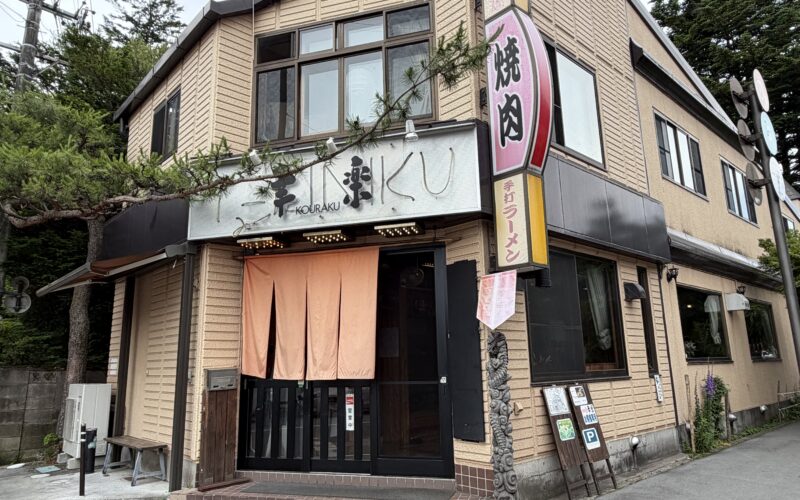
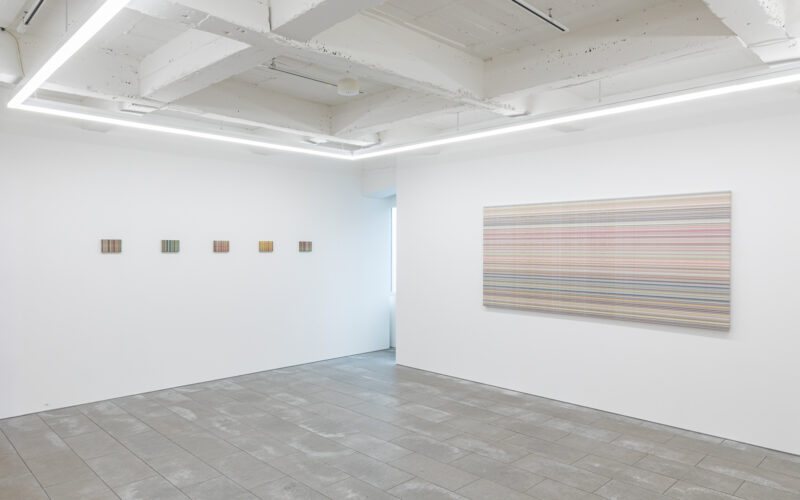
“Tomo Municipal Museum of Art” is a museum that opened in Nishi-Ogikubo, Tokyo in April 2020, amid the COVID-19 pandemic, dedicated to practicing and introducing experimental initiatives in the contemporary city.
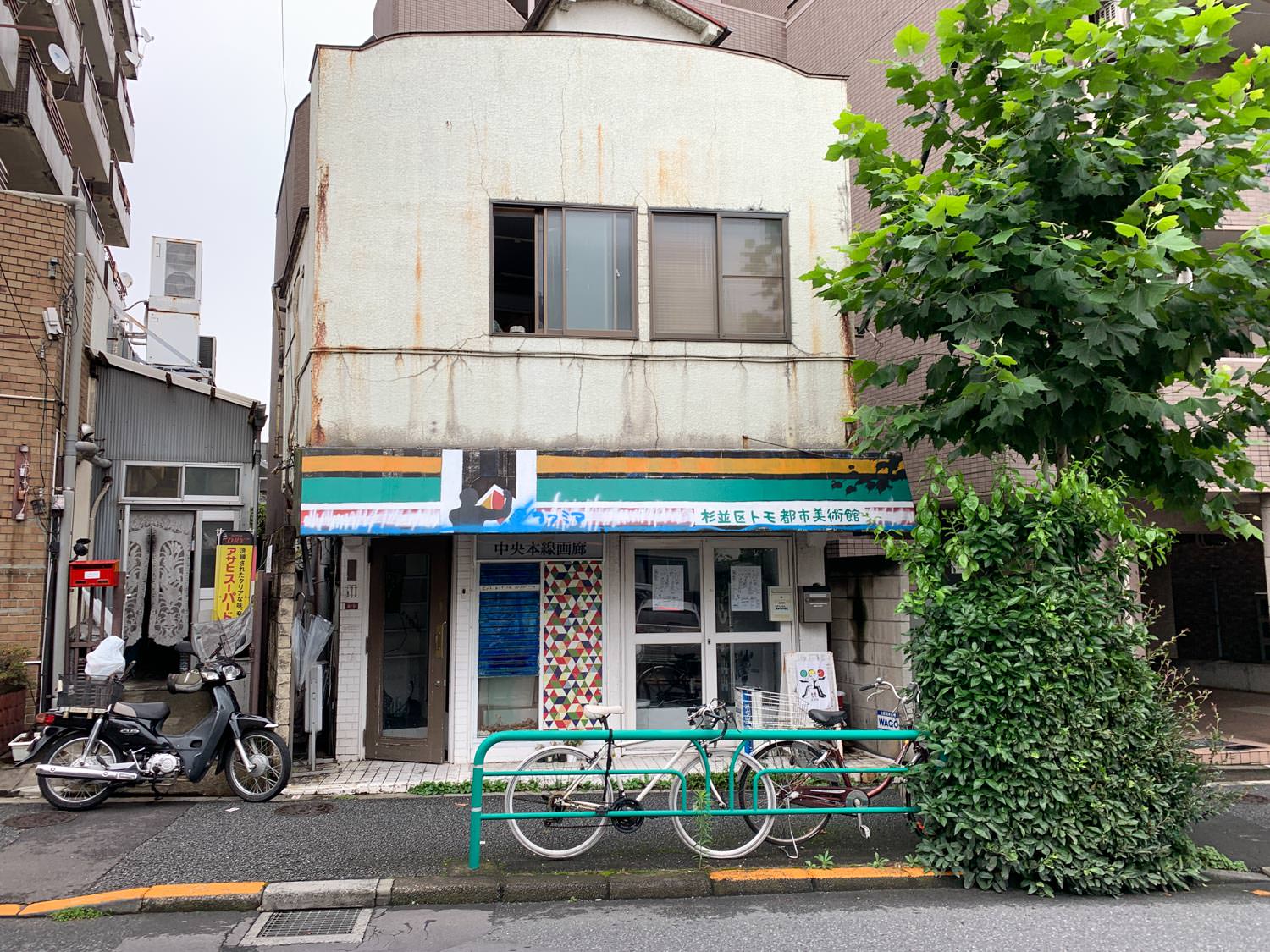
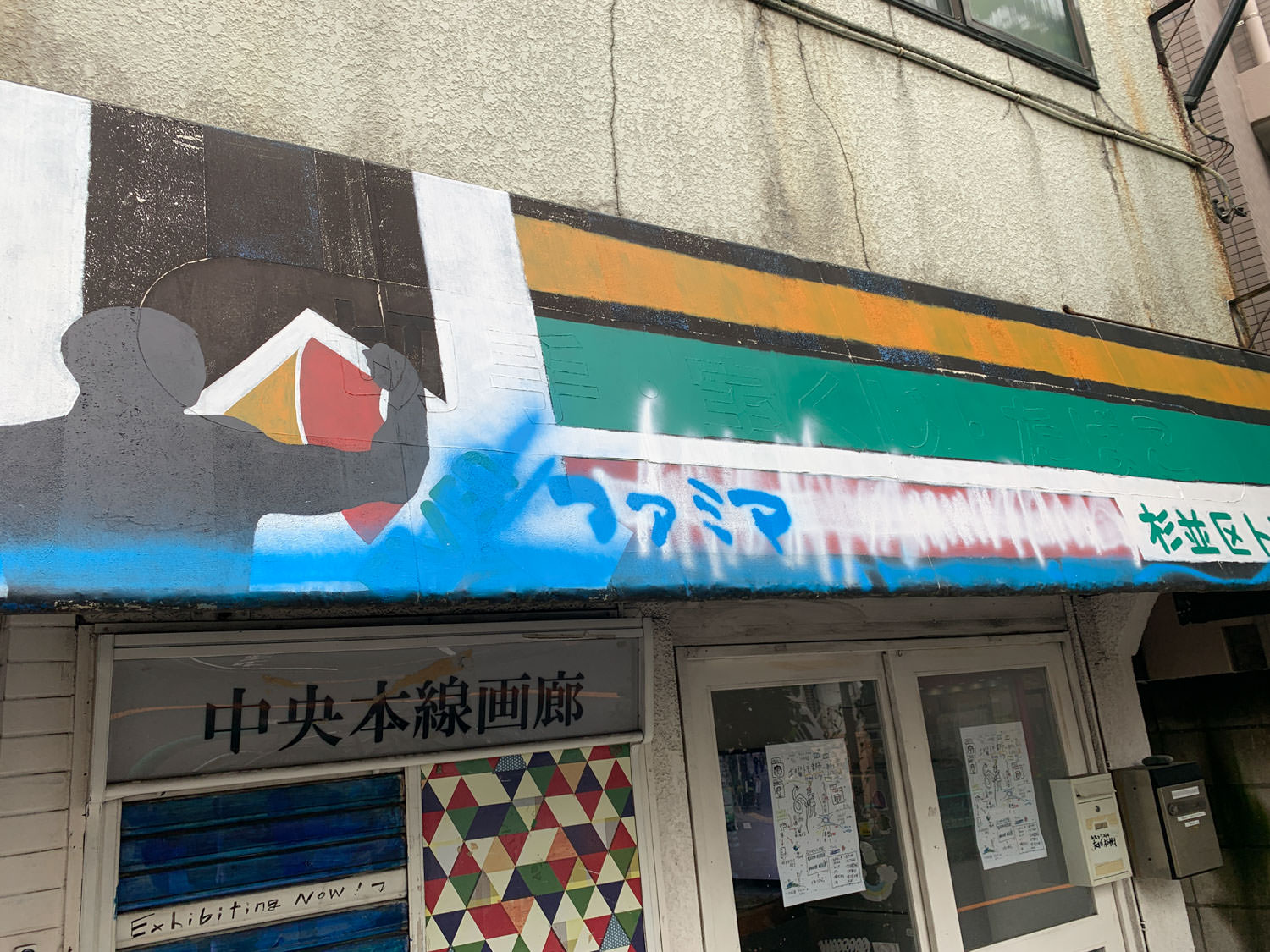
Tomo Municipal Museum of Art (9 minutes on foot from Nishi-Ogikubo Station) — The first and second floors of an old private house serve as exhibition rooms.
I visited Tomotoshi’s solo exhibition “Hernia City,” held as the pre-opening exhibition of the Tomo Municipal Museum of Art.
The Tomotoshi Museum operates at the former site of the Chuo Honsen Gallery.
Tomotoshi is a video artist who focuses on urban spaces and, through his own actions and interventions, skillfully draws out human psychology, posing messages to viewers and to society.
At this exhibition, a total of 8 works — including 2 new pieces responding to the COVID-19 pandemic — were screened, offering an overview of Tomotoshi’s activities over the past several years.
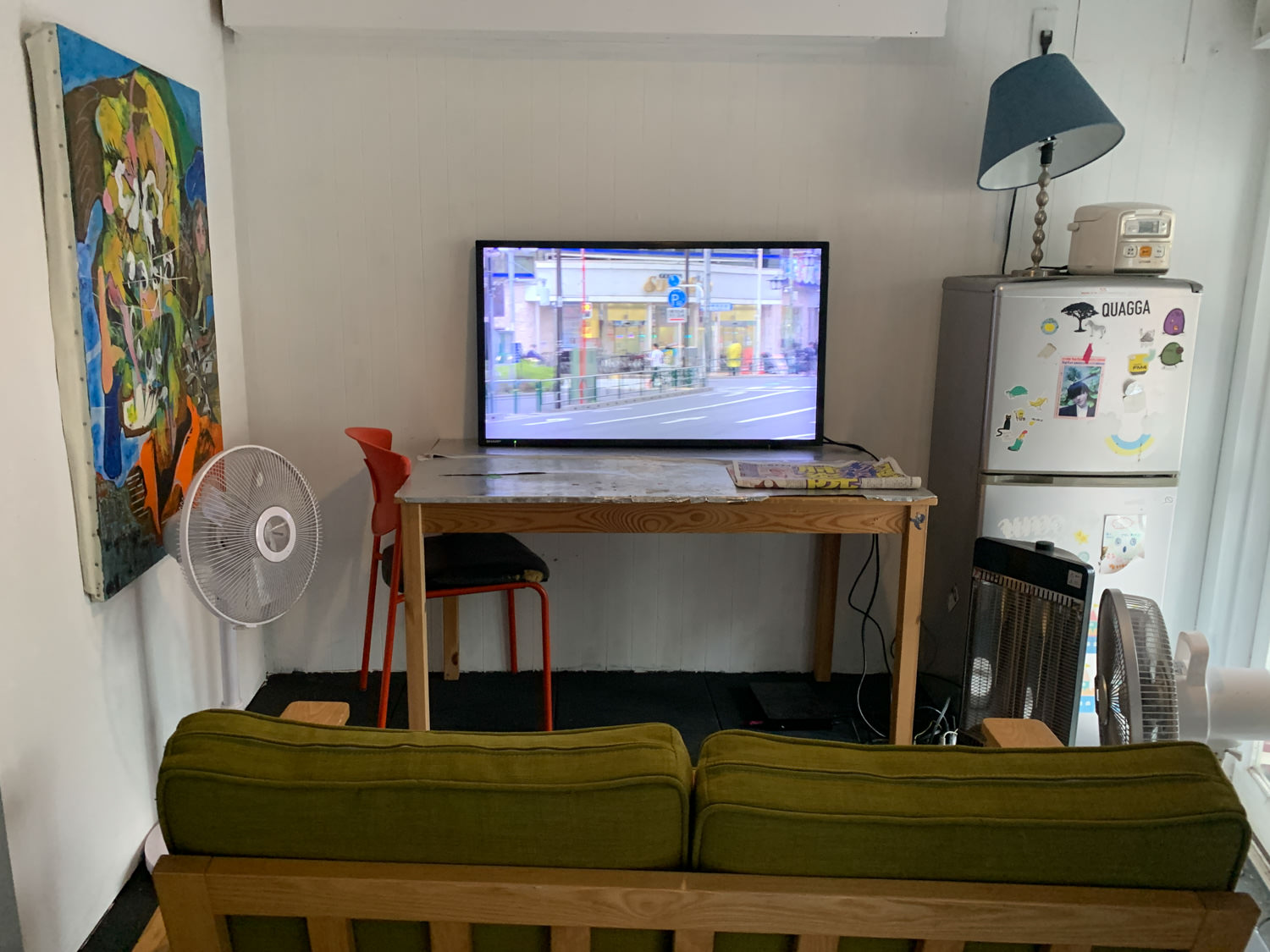
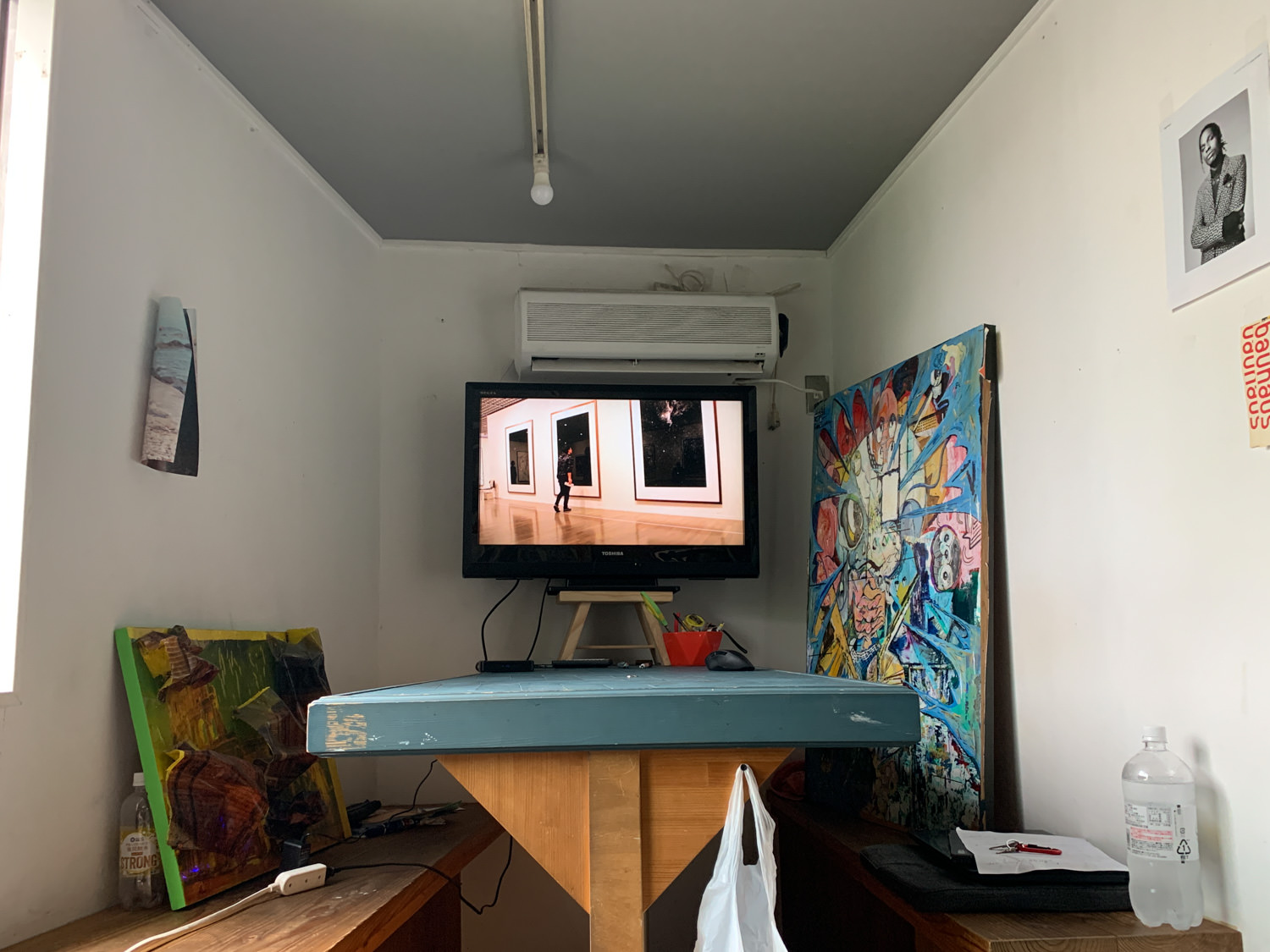
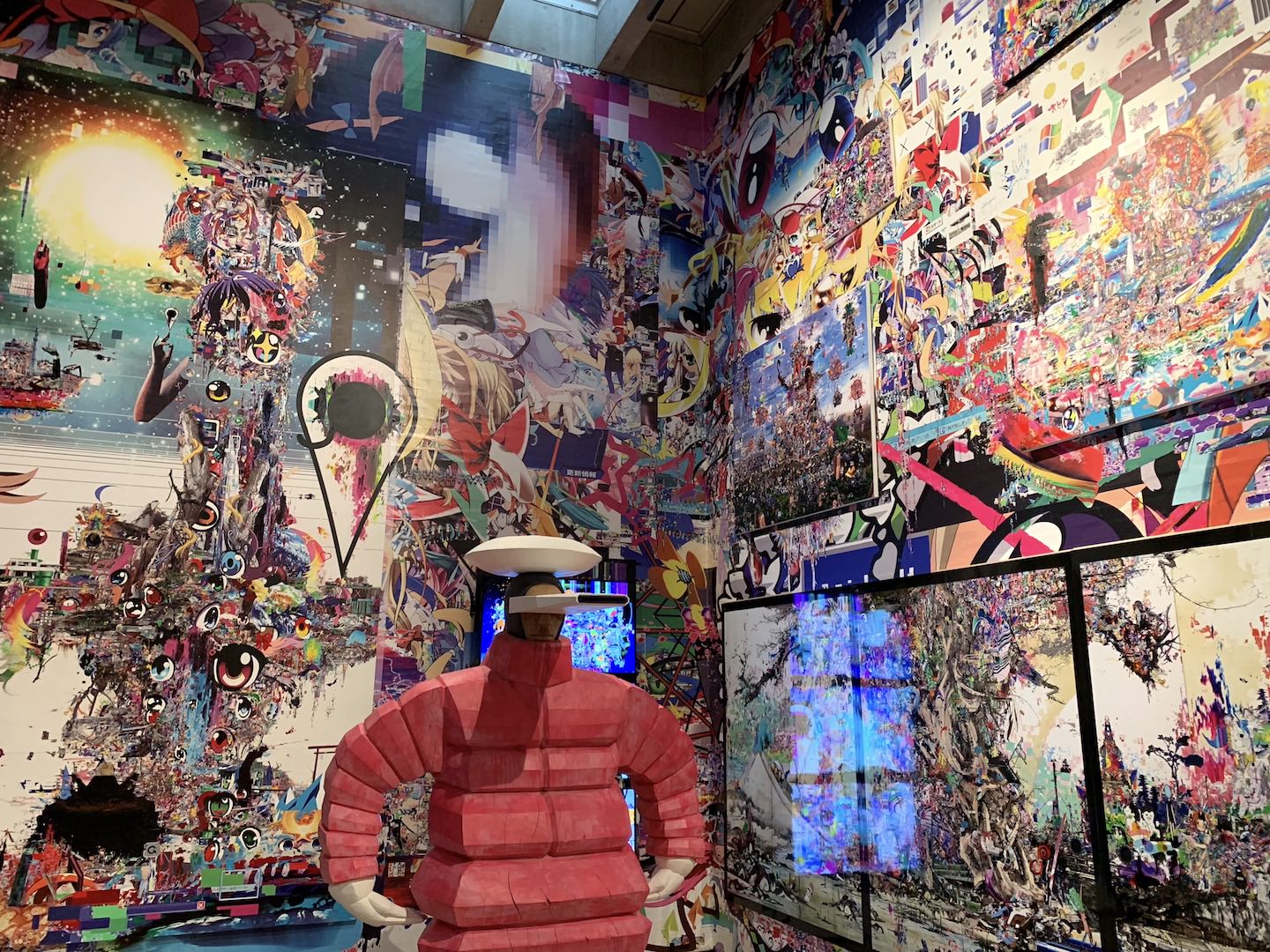
Installation view
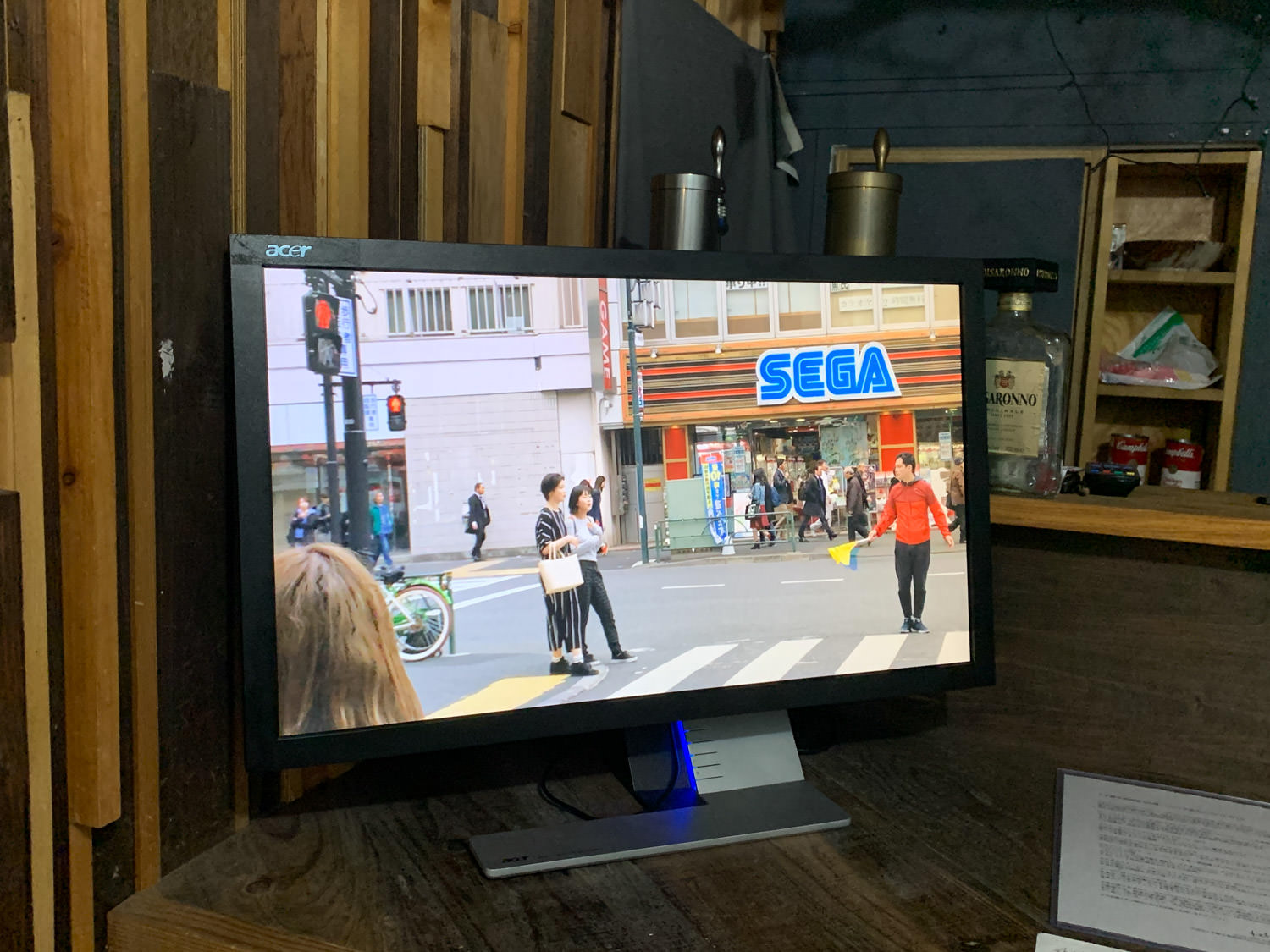
The Red Old Man
At school crosswalks, there is a role called “the Green Old Man” who safely guides elementary school children across. This time, I played the role of the “Green Old Man” to safely guide adults across.
Tomotoshi “The Red Old Man,” 2018Tomotoshi “The Red Old Man,” 2018
In Search of the Onyama Climb
Tomotoshi spent his years up to age 18 in Kudamatsu City, Yamaguchi Prefecture. In this region, an event called the Onyama (Meguyama) Climb has been held once every three years.
“At sunset, a crowd chases a wild boar from the foot of Onyama. They reach the summit around sunrise. At the center stands a sacred area framed by a large square, into which the boar is driven. The first boar to enter the sacred area is captured by the Shinto priest and kept for three years at the shrine as a guardian lion. Then, at the next festival, it is eaten.”
Because his father served as a Shinto priest, Tomotoshi was strongly drawn to this ritual and had resolved in his heart to become deeply involved with it in the future. But when he was 14, amid a municipal merger upheaval, the event was suddenly abolished. He appealed for its reversal, but the decision was not overturned. Ever since, Tomotoshi has traveled throughout Japan continuing his research on the Onyama Climb.
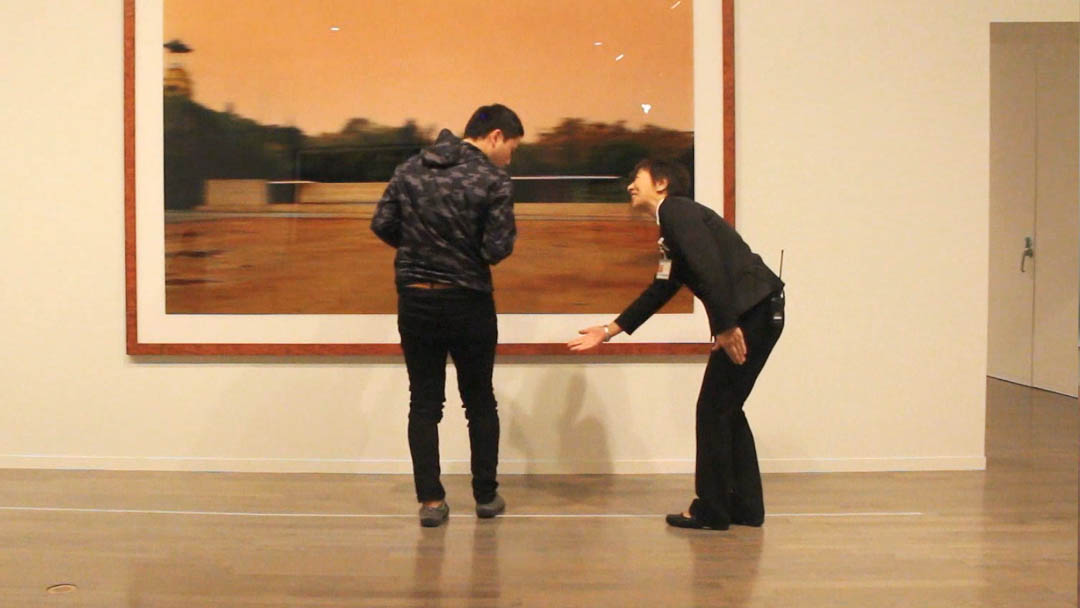
This video presents the results of research on the roots of the Onyama Climb discovered in art museums and museums in the Kanto region.
The finding that “the behavior of the museum guards corresponds in every respect with that of the Shinto priest who captures the boar that has trespassed on sacred ground” served as decisive material.
Tomotoshi “In Search of the Onyama Climb,” 2017Tomotoshi “In Search of the Onyama Climb,” 2017
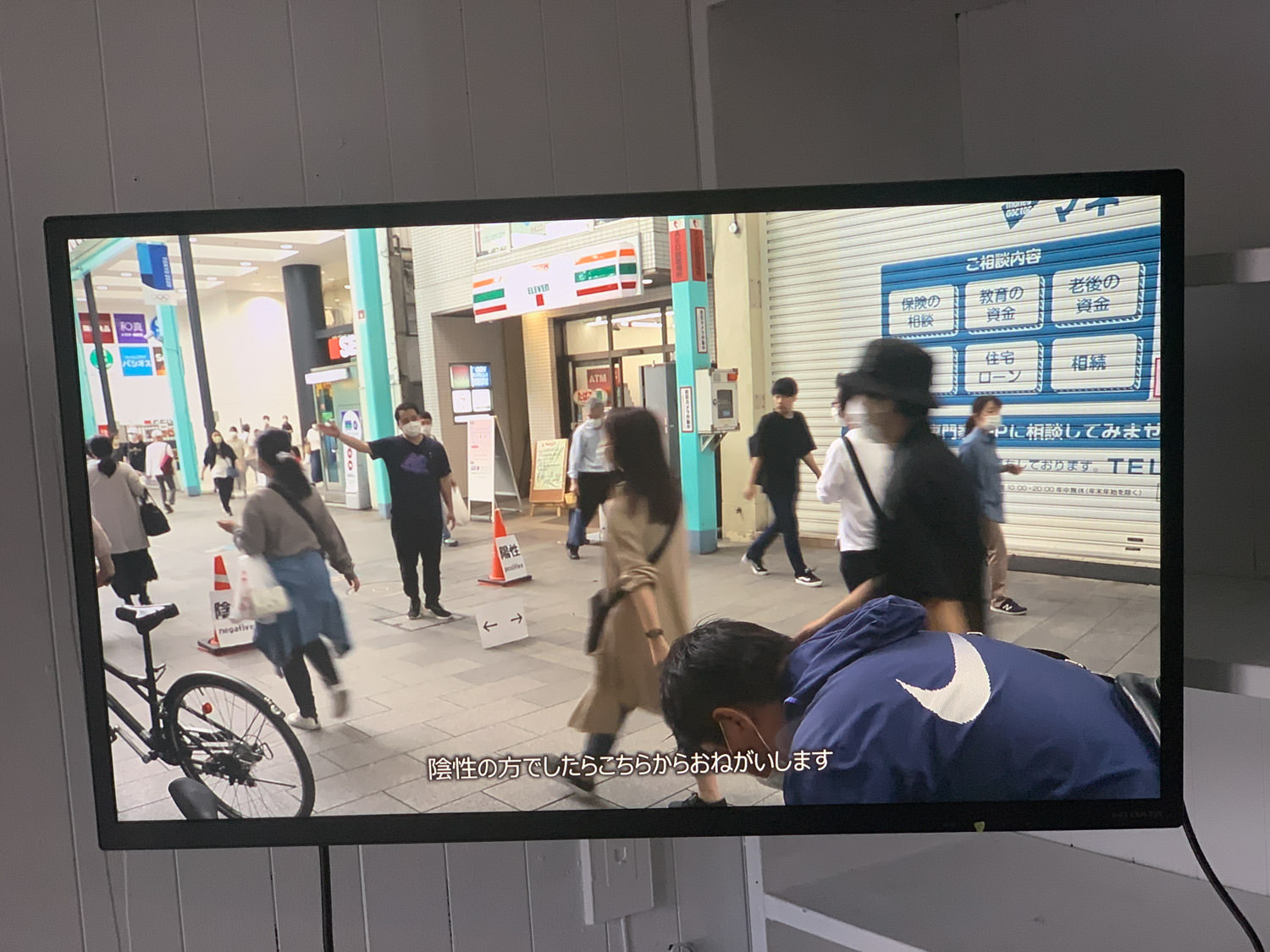
Victory Negative Road
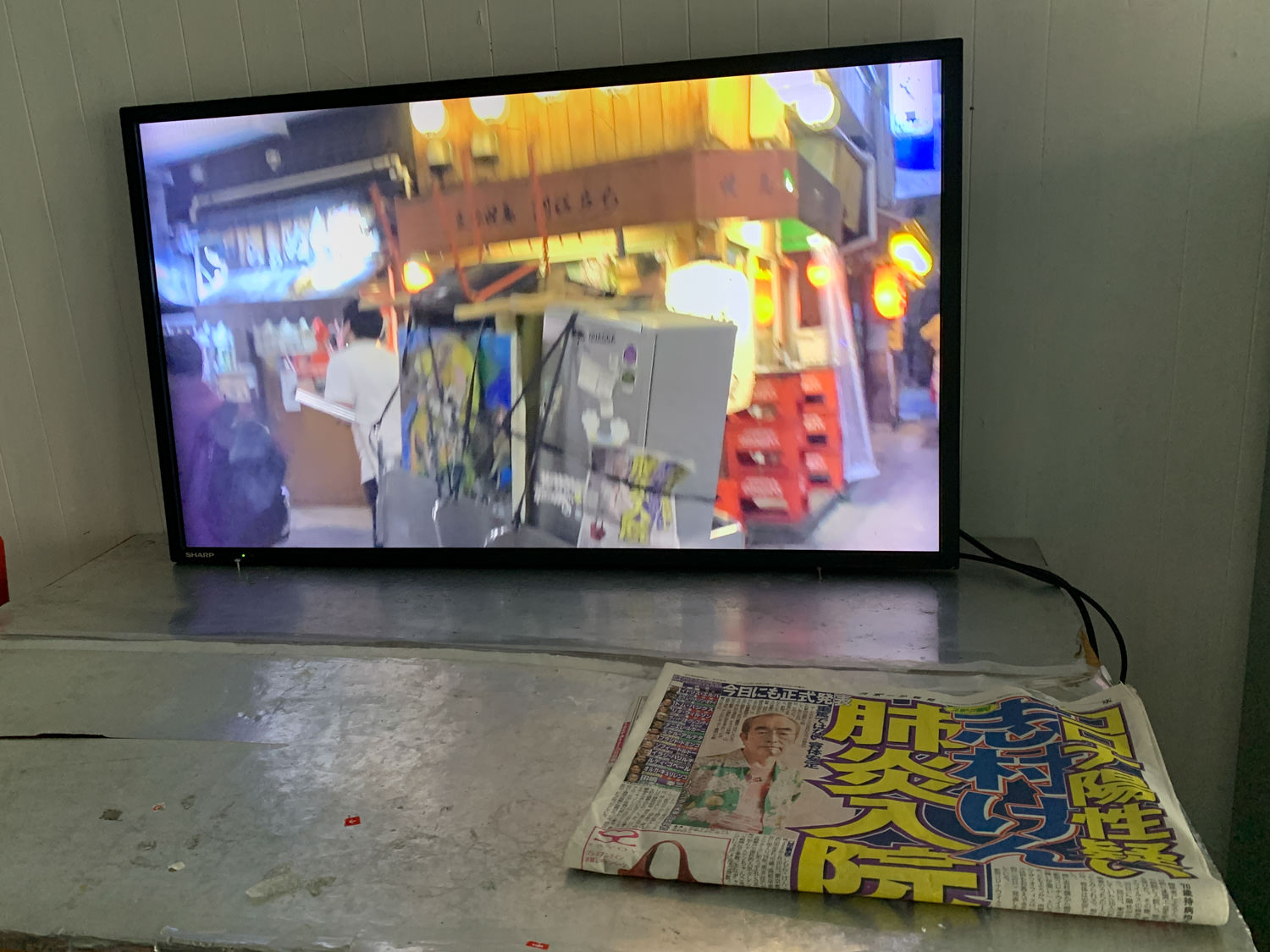
In early May along the Chuo Line, as the spread of COVID-19 had settled, the number of people ending their stay-at-home lifestyle was rapidly increasing.
Amid tangled information and wandering government responses, these were people who made their own decisions. To honor their COVID-19 decisions, I installed a “Victory Road.”
Due to the impact of COVID-19, five events and exhibitions I was scheduled to participate in were cancelled.
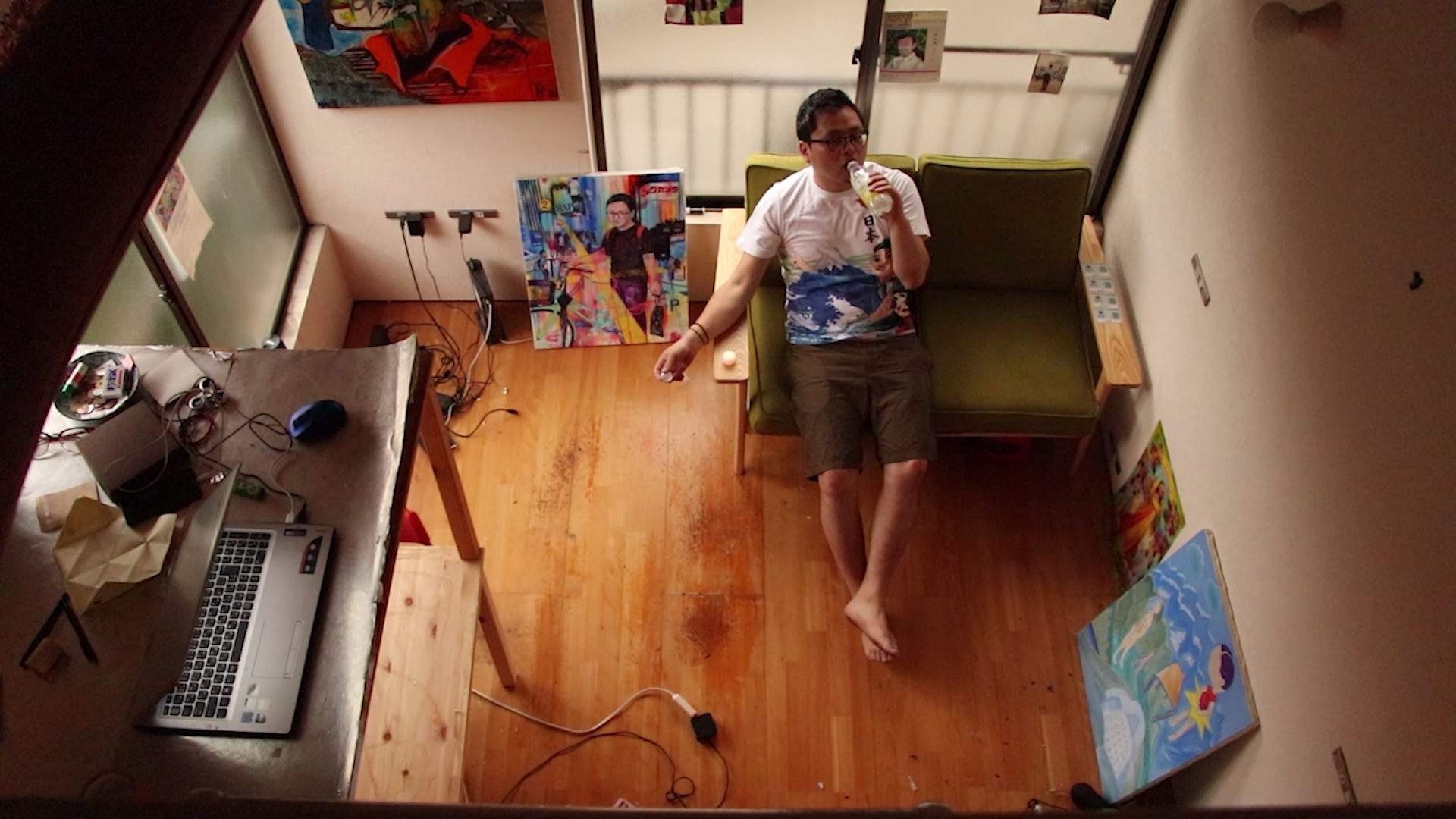
At the end of that March, I moved out of the house in Nishi-Shinjuku where I had lived for 6 years.
Having lost my income, I could not hire movers and decided to carry my belongings by myself.
This video is a record of transporting my household goods to my new residence in Nishi-Ogikubo, taking 6 hours.
Tomotoshi “If I Move Me,” 2020Tomotoshi “If I Move Me,” 2020Original installation view
Formal City
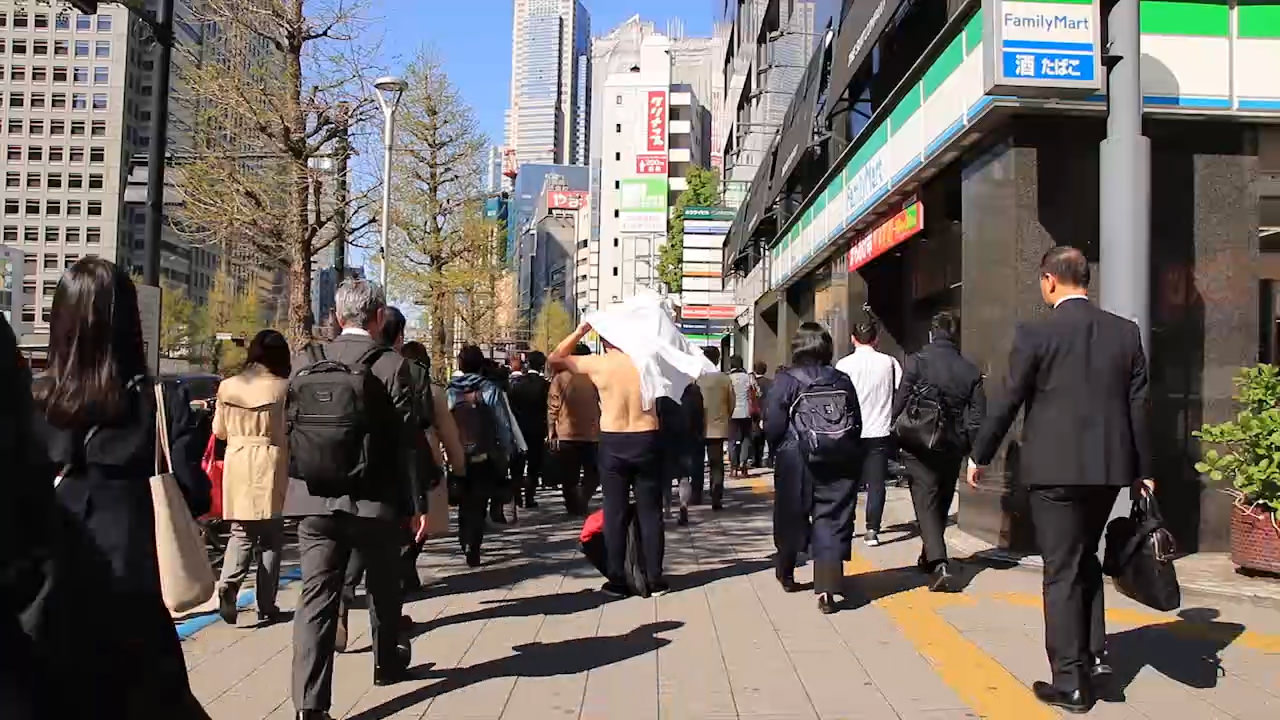
April, when all of Japan makes a fresh start.
Amid the morning commuting rush of central Tokyo, I performed the act of changing from pajamas into a suit. The moment I put on the suit, I felt just a little more blended in with those around me.
Tomotoshi “Formal City,” 2019
Buying 7-Eleven at 7-Eleven: Removal Edition
A record of a work being removed — where I “photographed the exterior of a 7-Eleven, printed it with 7-Eleven’s net-print service, and pasted it up with scissors and tape bought at 7-Eleven, thereby copying and pasting a 7-Eleven onto the gallery.”
Tomotoshi “Buying 7-Eleven at 7-Eleven: Removal Edition,” 2018
Democratic Fashion
A record of wandering the streets in search of someone wearing the same hoodie as me.
Because it took a really long time to find someone, when I finally did, I felt a joy as if the person were no stranger at all.
Tomotoshi “Democratic Fashion,” 2019
IKEA Selections
Once furniture is placed, it is rarely moved again.
At that point, it might be more fitting to call the furniture “architecture” rather than “furniture.” In order to think about the identity of furniture, I spent a day doing nothing but continually moving furniture.
Tomotoshi “IKEA Selections,” 2018
All 8 video works were planned, performed, and produced by Tomotoshi himself.
The changes in human behavior brought about through Tomotoshi’s actions carry richly suggestive messages that will surely bring insights to us as members of daily life.
“Tomo 도시 미술관”은 코로나19 상황 속인 2020년 4월에 도쿄 니시오기쿠보에 개관한, 현대 도시에서의 실험적 시도를 실천하고 소개하는 미술관입니다.
Tomo 도시 미술관(니시오기쿠보역에서 도보 9분) — 고민가의 1층, 2층이 전시실입니다.
Tomo 도시 미술관 프리오프닝전 형식으로 열린 Tomotoshi의 개인전 “Hernia City”를 방문했습니다.
Tomotoshi 미술관은 옛 츄오혼센 갤러리의 자리에서 운영되고 있습니다.
Tomotoshi는 도시 공간에 주목하여, 자신이 수행하는 행위와 개입을 통해 인간의 심리를 교묘히 드러내며, 관람자와 사회를 향해 메시지를 던지는 영상 작가입니다.
이번 전시에서는 코로나19 상황에 대한 반응인 신작 2점을 비롯해, 최근 수년간 발표된 Tomotoshi의 활동을 개관할 수 있는 총 8작품이 상영되고 있었습니다.
전시 전경
빨간 아저씨
통학길 횡단보도에서 초등학생을 안전하게 건네주는 “녹색 아저씨”라는 역할이 있다. 이번에 나는 어른들을 안전하게 건네주기 위해 “녹색 아저씨”를 연기해 보았다.
Tomotoshi 《빨간 아저씨》 2018년Tomotoshi 《빨간 아저씨》 2018년
온야마 오르기를 찾아서
Tomotoshi는 18세까지 야마구치현 쿠다마츠시에서 자랐다. 이 지역에서는 3년에 한 번 “온야마(메구야마) 오르기”라는 행사가 열려 왔다.
“해질녘, 많은 사람이 온야마 산기슭에서 멧돼지를 뒤쫓는다. 정상에 도달하는 것은 해가 뜰 무렵. 중앙에 큰 사각형으로 둘러싸인 신역이 있으며, 멧돼지는 그곳으로 몰려간다. 신역에 처음 들어간 멧돼지는 신관에 의해 붙잡혀 신사에서 수호 사자로 3년간 사육된다. 그리고 다음 축제에서 먹힌다.”
아버지가 신관을 맡고 계셨던 까닭에 Tomotoshi는 이 신사(神事)에 강하게 이끌렸고, 장래에 깊이 관여하기로 마음먹었다. 그러나 그가 14세 때, 시(市) 통합 소동 중에 행사는 갑작스레 폐지되었다. 그는 철회를 호소했지만, 결정은 뒤집히지 않았다. 그 이후 Tomotoshi는 일본 전역을 돌아다니며 온야마 오르기에 관한 조사를 계속해 왔다.
이번 영상에서는 관동의 미술관, 박물관에서 발견한 온야마 오르기의 뿌리에 관한 조사 결과를 제시한다.
“감시원의 행동거지가, 신역을 침입한 멧돼지를 붙잡는 신관의 것과 모든 면에서 일치한다”는 사실이 결정적인 자료가 되었다.
코로나19의 영향으로 참가 예정이던 5개의 이벤트와 전시가 취소되었다.
그 3월 말, 나는 6년간 살았던 니시신주쿠의 집을 떠났다.
수입이 사라진 탓에 이사업체를 부를 수도 없어, 스스로 짐을 옮기기로 했다.
이 영상은 니시오기쿠보의 새 거처까지 6시간에 걸쳐 살림살이를 운반한 기록이다.
Tomotoshi 《If I Move Me》 2020년Tomotoshi 《If I Move Me》 2020년원래의 전시 전경
Formal City
일본 전역이 새로운 출발을 하는 4월.
도심의 출근 러시 속에서, 파자마에서 정장으로 갈아입는 퍼포먼스를 했다. 정장을 걸친 순간, 조금이나마 주위에 녹아든 느낌이 들었다.
Tomotoshi 《Formal City》 2019년
세븐일레븐에서 세븐일레븐을 사다 — 철거 편
“세븐일레븐의 외관을 촬영하고, 그것을 세븐일레븐의 네트프린트로 인쇄하고, 그것을 세븐일레븐에서 산 가위와 테이프로 붙여, 갤러리에 세븐을 복사&붙여넣기 한다”는 작품이 철거되기까지의 기록.
Tomotoshi 《세븐일레븐에서 세븐일레븐을 사다 — 철거 편》 2018년
Democratic Fashion
자신과 같은 후드티를 입은 사람을 찾아, 거리를 헤맨 기록.
정말 오랜 시간을 들여 찾았기에, 발견했을 때는 남 같지 않은 기쁨이 있었다.
Tomotoshi 《Democratic Fashion》 2019년
이케아 초
가구는 한 번 배치가 정해지면 옮기는 일이 드물다.
이렇게 되면, 가구라기보다 오히려 건축이라 부르는 편이 어울릴지 모른다. 가구의 정체성을 생각해 보기 위해, 가구를 계속 옮기기만 하는 하루를 보내 보았다.
Tomotoshi 《이케아 초》 2018년
영상 작품 8점 모두 Tomotoshi 본인이 기획, 출연, 제작했습니다.
Tomotoshi의 액션을 통해 변화하는 인간의 행동은, 시사점 풍부한 메시지를 담고 있으며, 우리 생활자에게 깨달음을 가져다줄 것입니다.