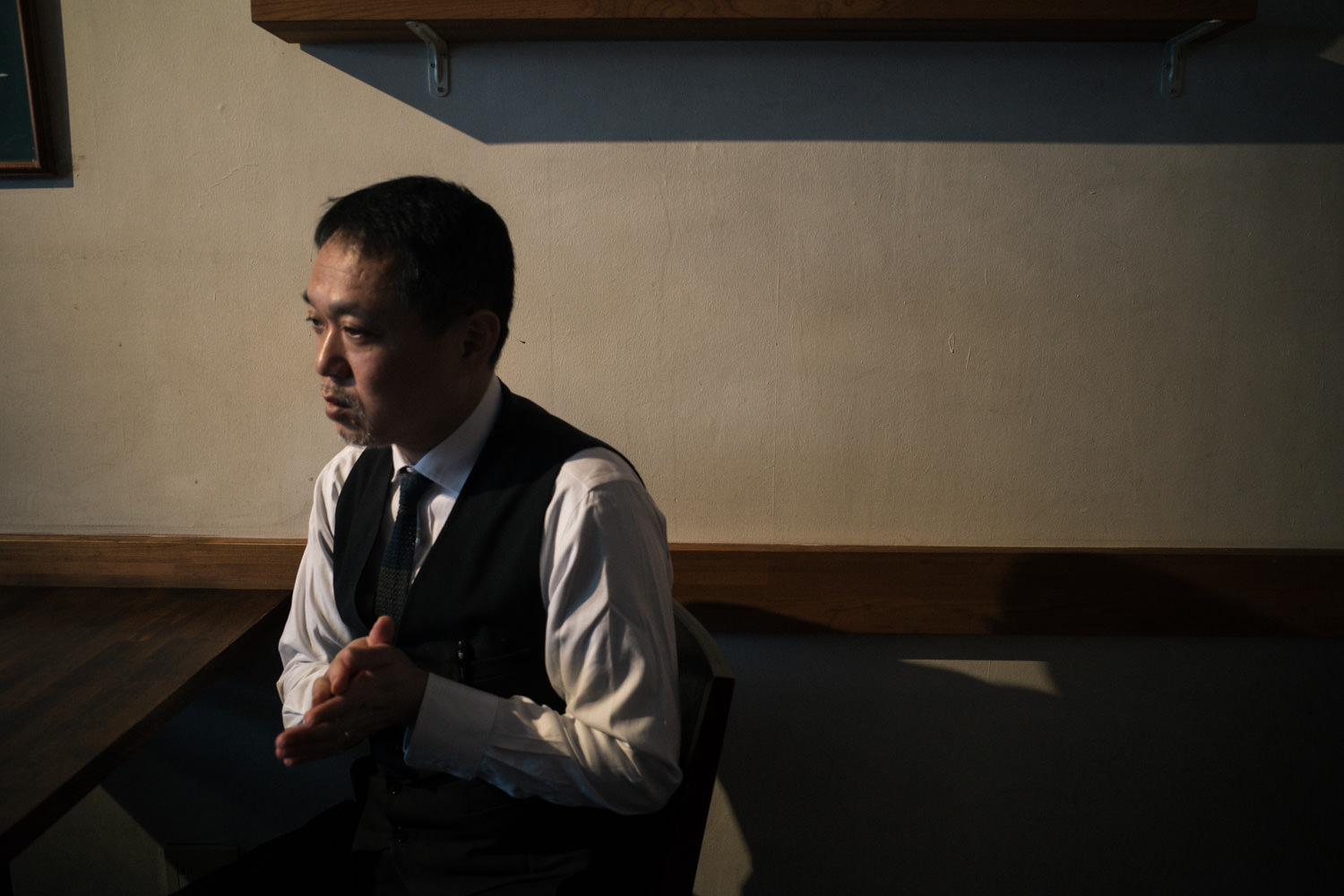
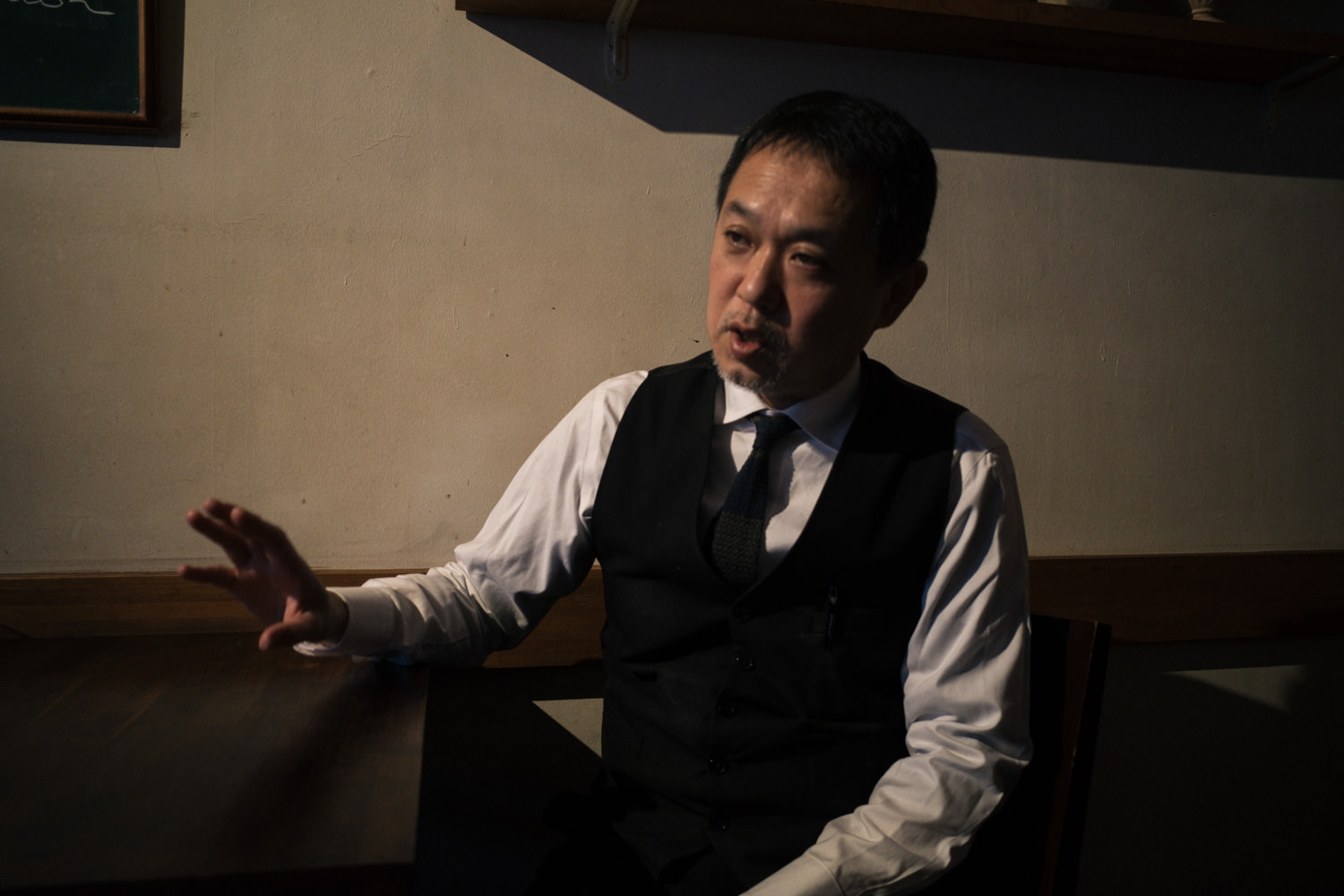
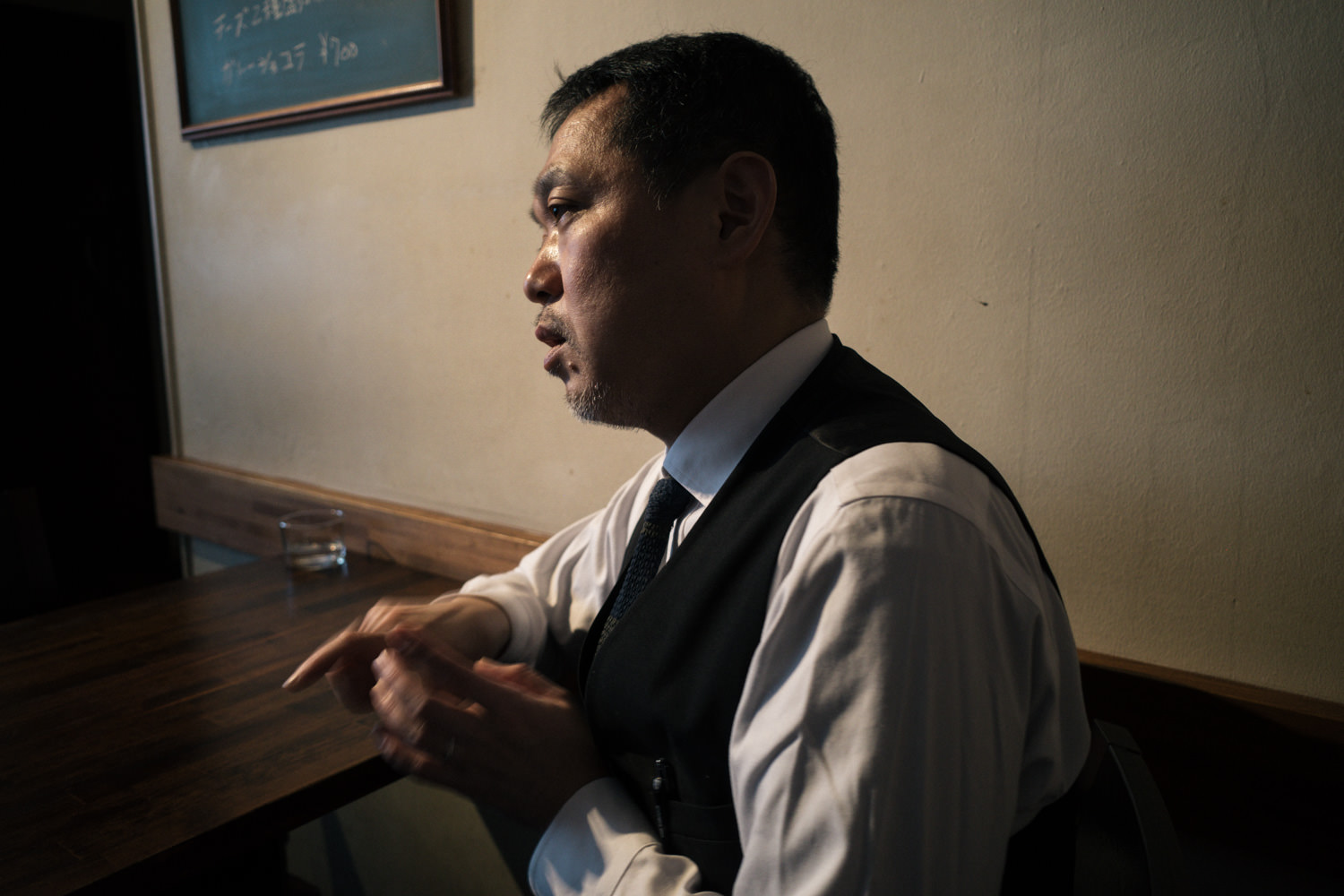
BAR BOSSAは渋谷のセンター街を抜けた裏路地で、20年以上も続くBarです。林伸次さんはオーナー兼店主としてお店に立つ傍ら、書き手としても活動されています。noteという記事配信サービスでは日記を毎日配信しており、接客業を積み重ねたバーのオーナーならではの間合いで、読者からの質問に答えたり、独自視点の記事で、多くの読者数を誇っています。また、CAKESでもコラムを書いたり、雑誌「LEON」の美女インタビュー企画でも多くの読み手を惹きつけています。
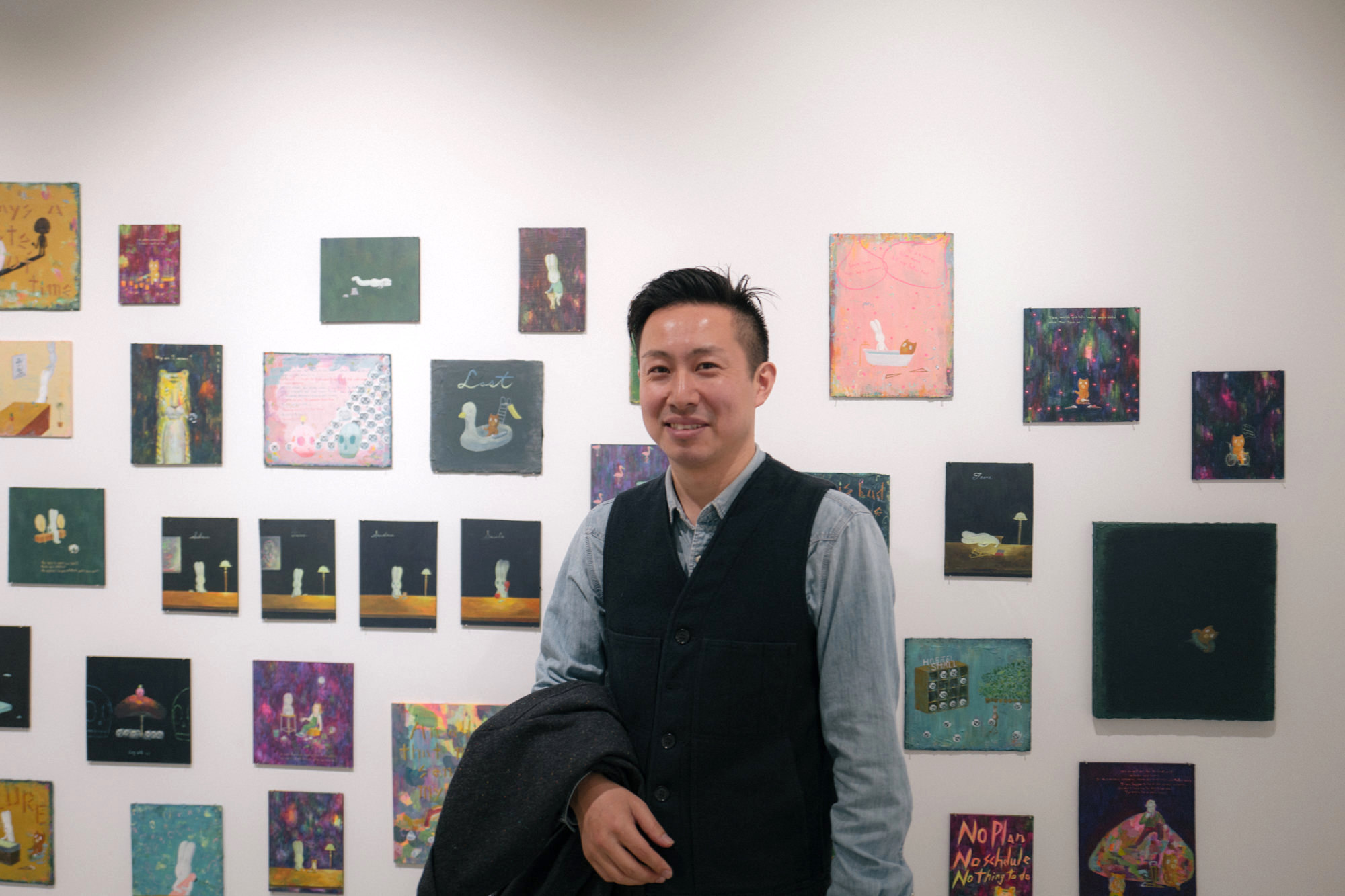
This site “Bur@rt” is where I, Mahiko Kobayashi, wanting to share the joy of art while working as a company employee, put together exhibition reports and studio-visit articles, and post related pieces on art collecting.
In fact, I’ve long thought I’d like to run a gallery alongside this site one day. But every gallerist I’ve spoken with says gallery management is extremely tough, and each one has advised me, “You shouldn’t.”
So I thought I’d talk to Shinji Hayashi — someone from another industry who might give me useful hints.
Who is Shinji Hayashi of BAR BOSSA?
Meet BAR BOSSA’s owner, Shinji Hayashi.
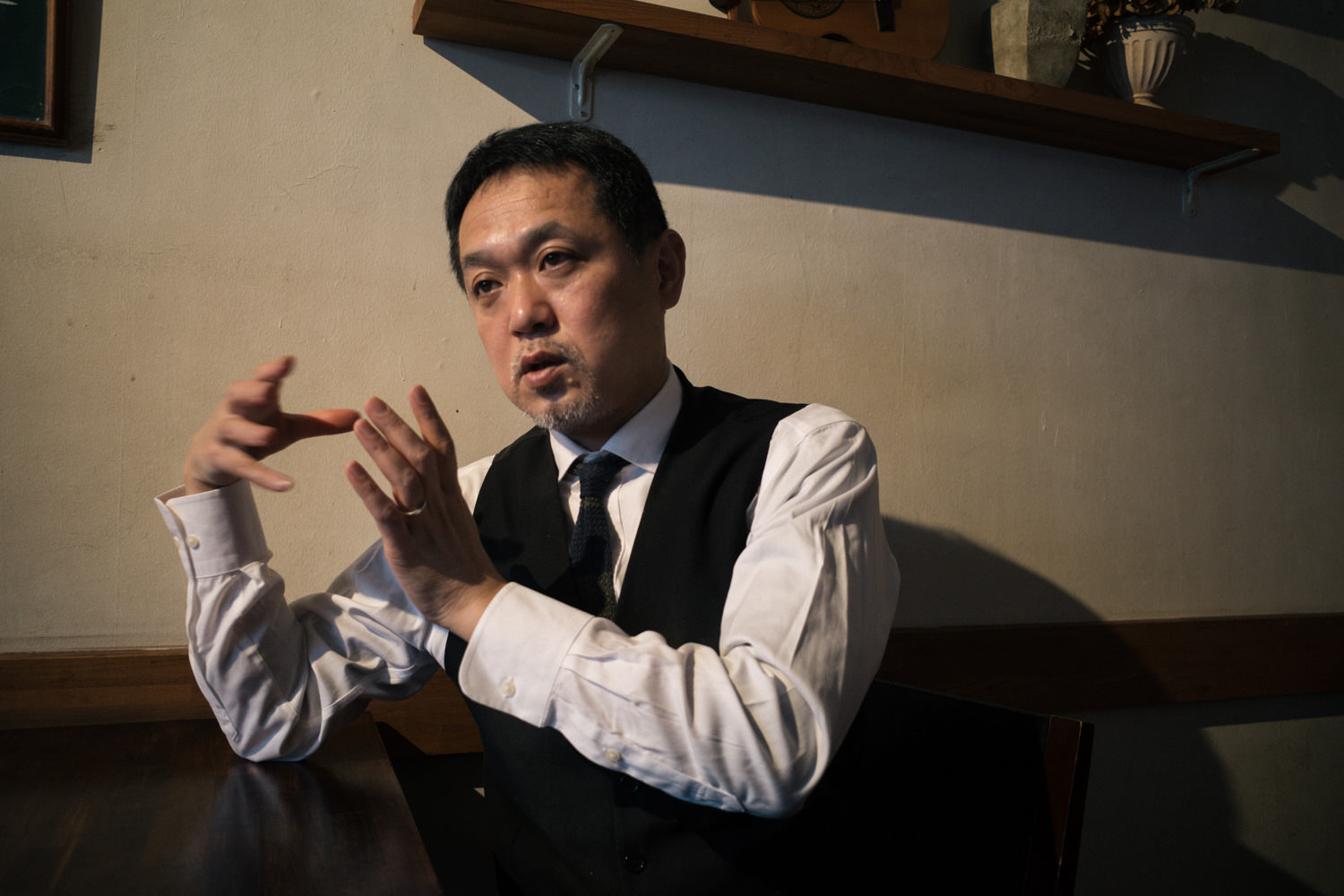
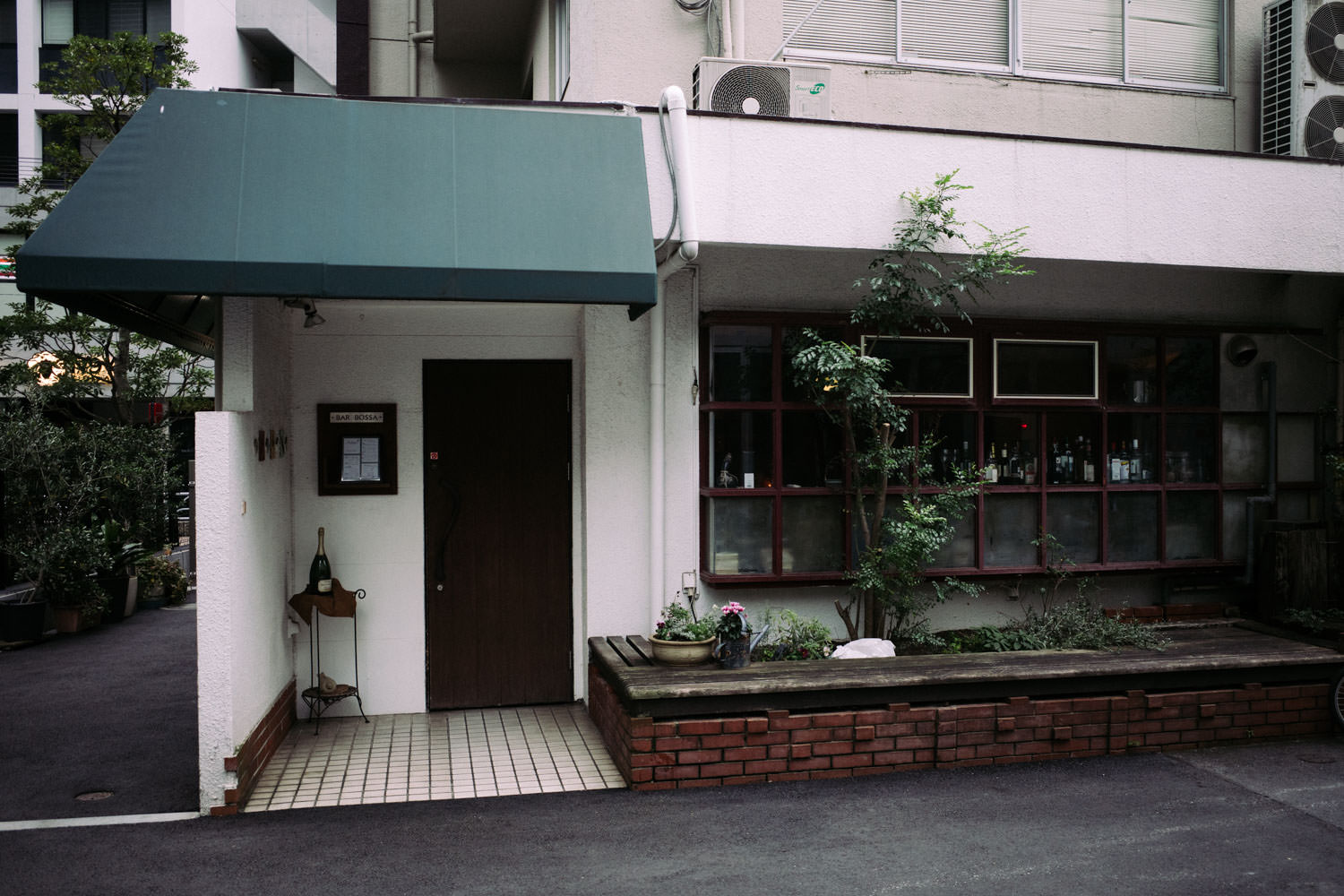
BAR BOSSA is a bar that has been running for over 20 years down a back alley off Shibuya’s Center-gai. Shinji Hayashi is on the floor as owner-manager, but is also active as a writer. On note, the article-publishing service, he posts a daily diary, answers reader questions with the tempo only a bar owner steeped in hospitality can bring, and pens articles from his own vantage point — commanding a large readership. He also writes columns on CAKES, and draws many readers with the “Beautiful Women Interview” series in the magazine “LEON”.
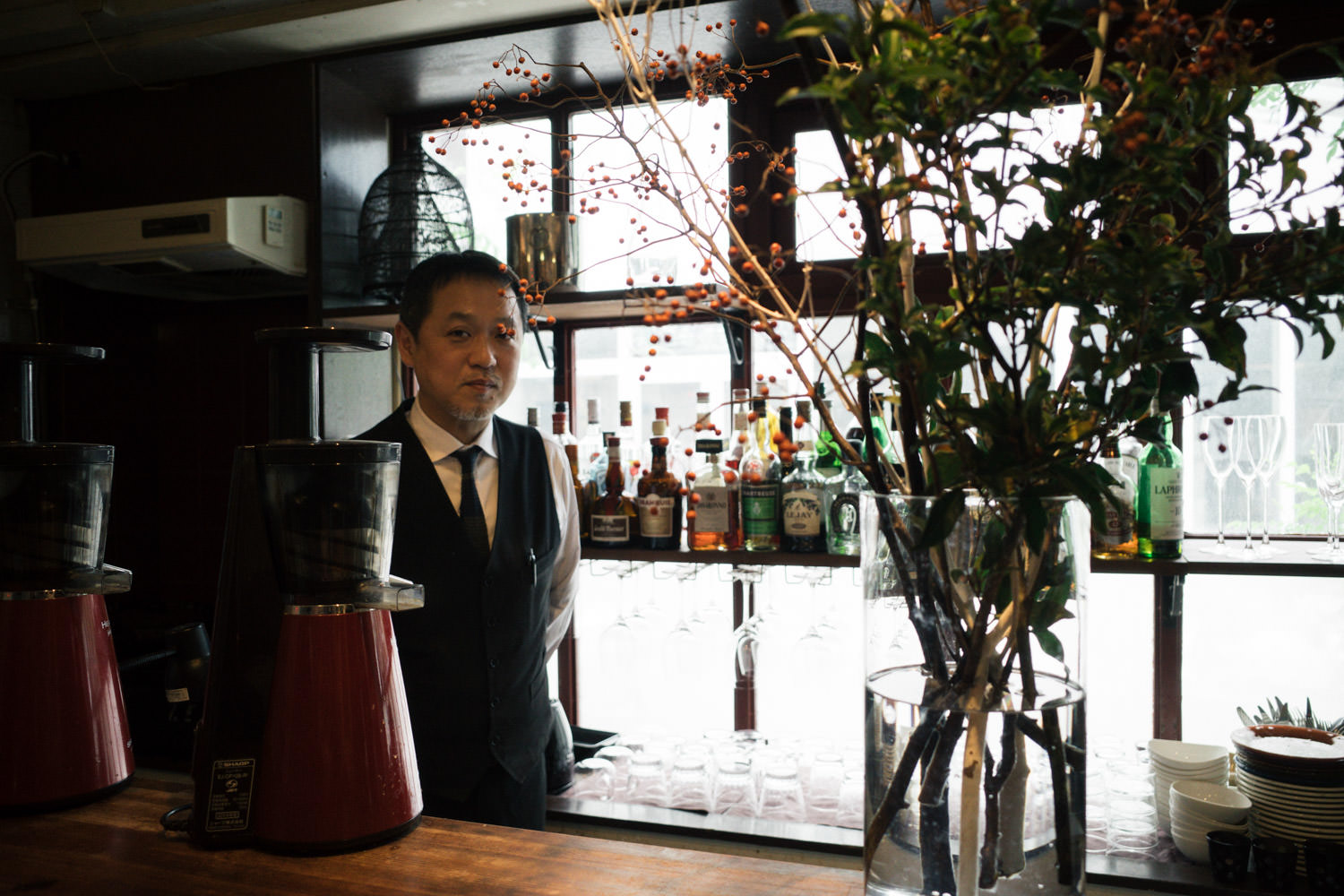
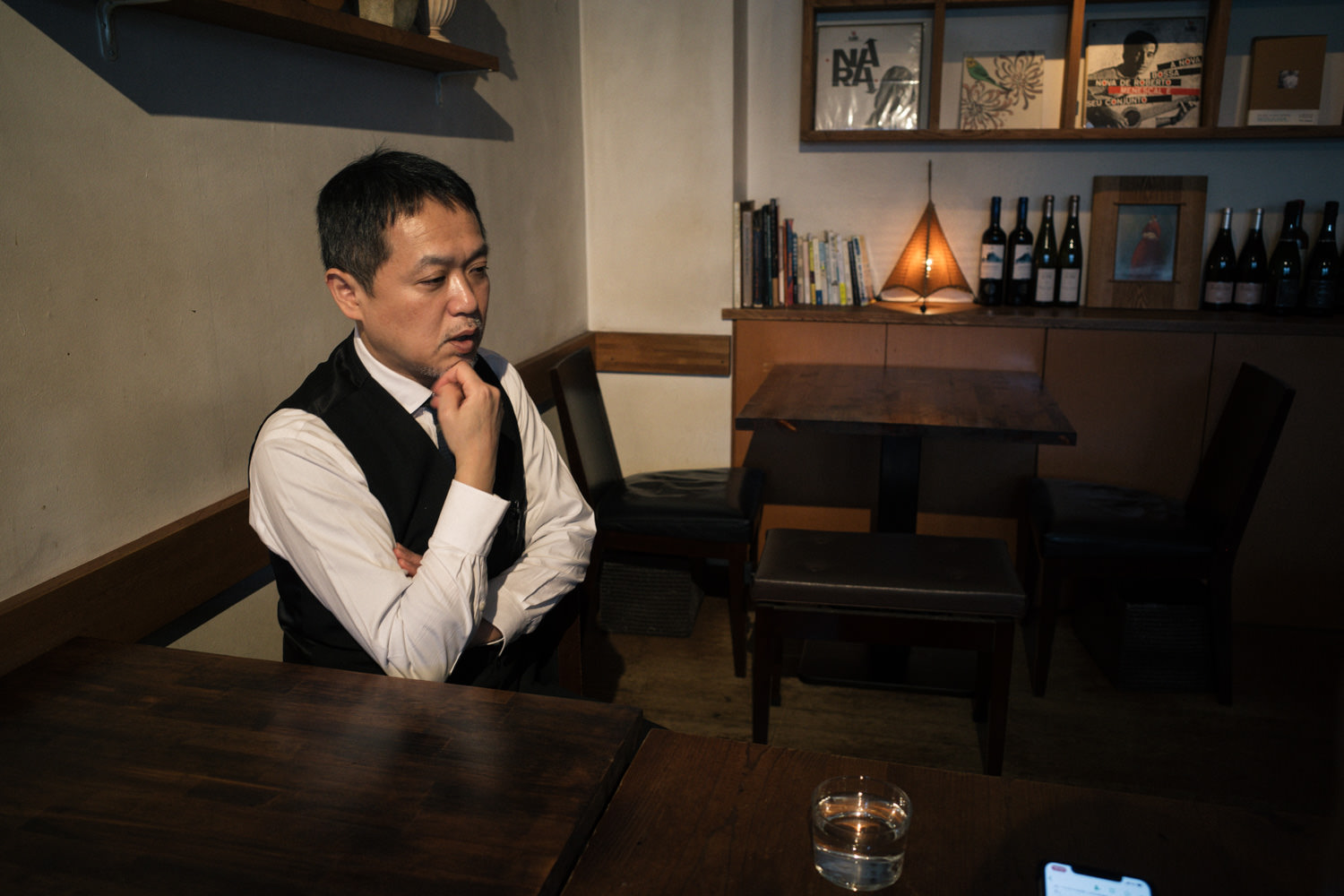
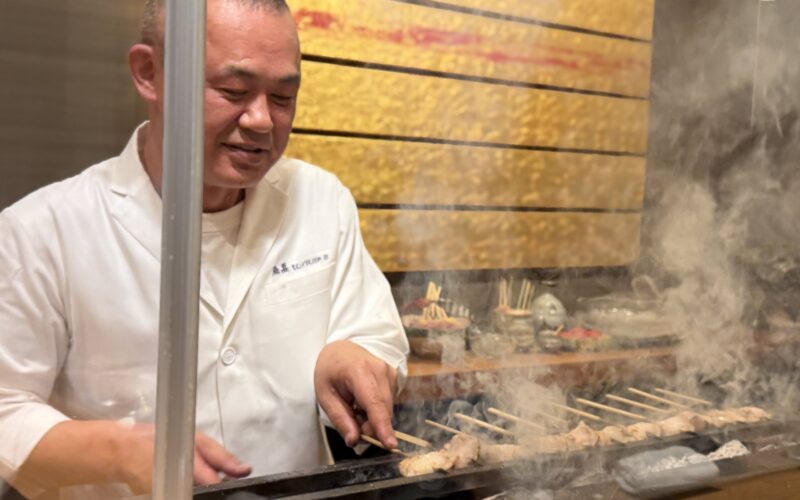
Shinji Hayashi, owner of BAR BOSSA
His newly published book, “Why Customers Gather at That Restaurant,” is an interview feature that brings the perspective of a fellow operator to bear on the owners of Tokyo restaurants that he found “amazing!” “Why is that restaurant thriving?”, “What is it exactly that makes those thriving restaurants remarkable?” — the book accurately weaves in numbers such as opening capital (interior costs), rent, and per-customer spending, running the gamut from what sparked each opening through the management specifics unique to the restaurant business.
Hayashi runs his own restaurant in tandem with the web, and for this book he has interviewed many restaurant cases, so I thought he might offer me a fresh perspective on gallery management, and asked for the interview.
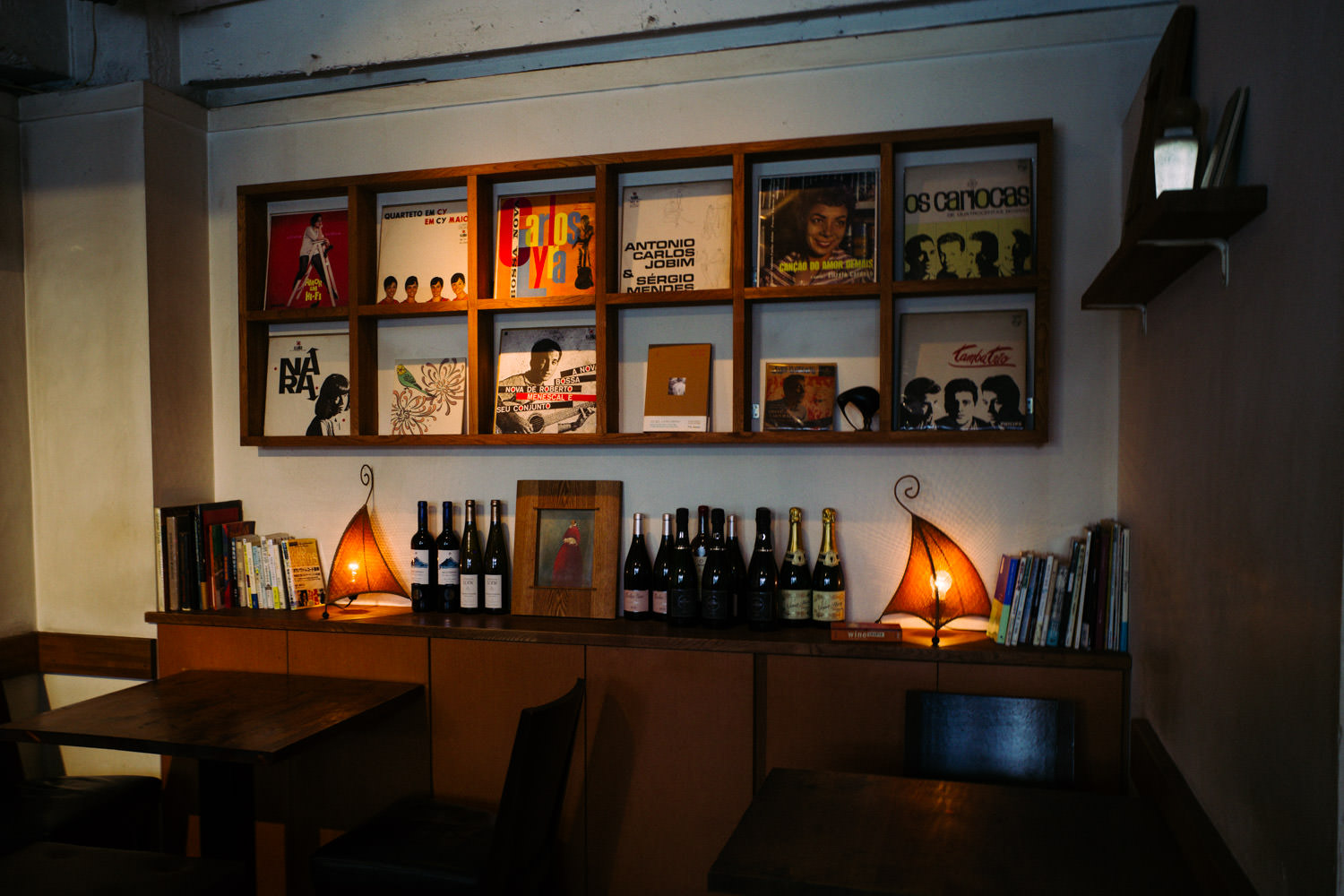
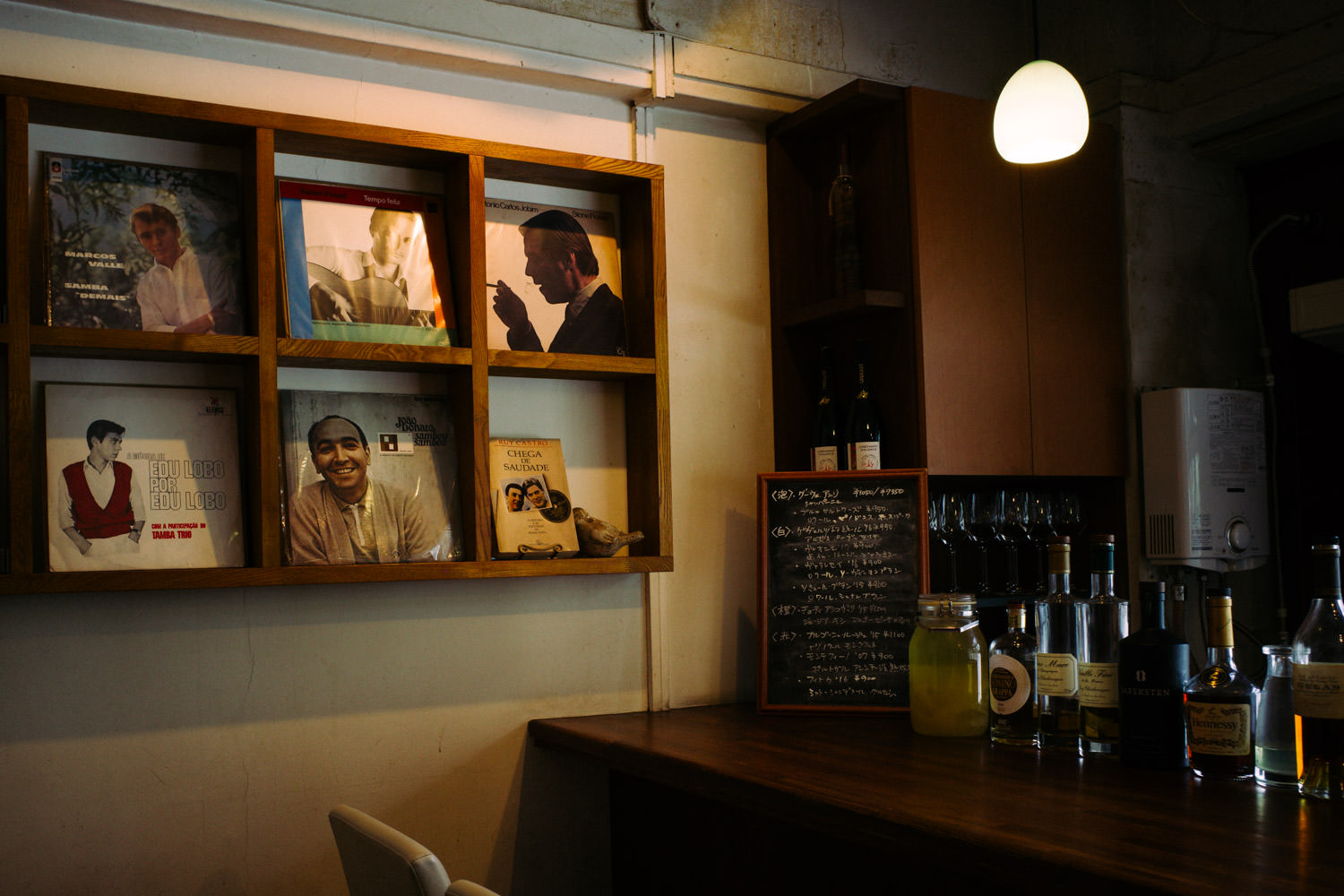
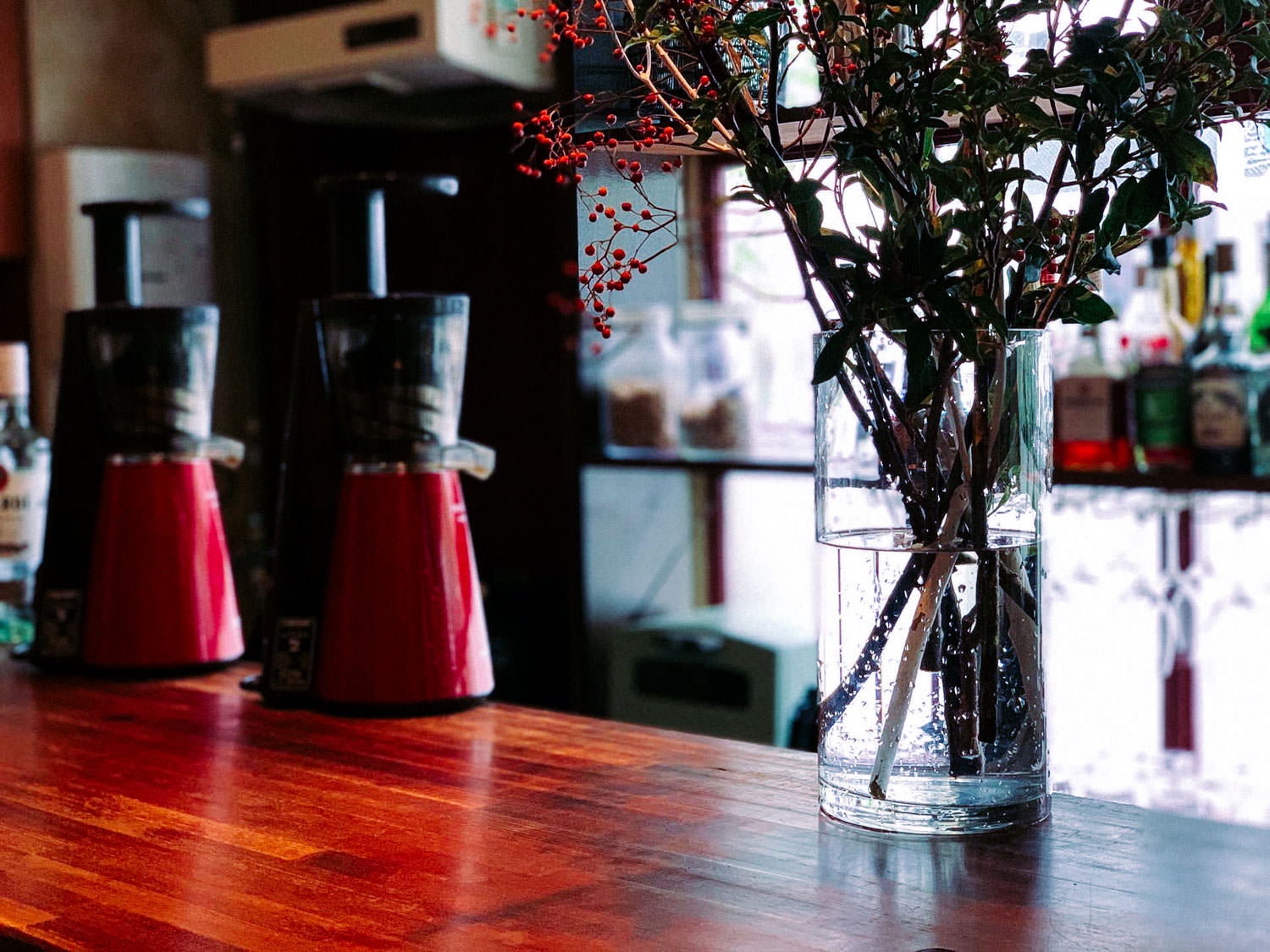
Inside BAR BOSSA
About the book “Why Customers Gather at That Restaurant”
I asked Shinji Hayashi about his book.
Interviewer: Could you tell me why you wrote “Why Customers Gather at That Restaurant”?
Shinji Hayashi: The trigger was reading “Nihon Bonjin Den” (“Portraits of Ordinary Japanese”), which Naoki Inose compiled during his no-name-writer days. It was a collection of interviews with all sorts of ordinary people — like a documentary film that captured an era. I found it fascinating, pitched the idea, and it ended up as a serial in the café-industry trade magazine “CAFERES.”
Interviewer: Many restaurants disclose detailed figures in the book, but is there any other document — like a real record of restaurants — that discloses such candid numbers?
Shinji Hayashi: No, there isn’t. They probably talked because I’m in the same business. Being fellow operators, they may have felt at ease speaking peer-to-peer.
Interviewer: Basically only successful restaurants are covered, but are there any traits shared by restaurants that fail?
Shinji Hayashi: Restaurants are easy to copy, so if you don’t have originality, you’re done for. It’s probably the same in art — most cultures start as imitations of someone. And when you imitate, if you don’t bring your own ideas and personality, it doesn’t work. Sometimes I get asked, “What’s the secret to success?” I think the strongest are those who pursue their obsessions more deeply than anyone else.
Interviewer: Reading the book, the analysis of successful restaurants was laid out and introduced very logically.
Shinji Hayashi: You could call it success-bias — the people who failed were surely thinking logically too, so it probably comes down to two things: originality and obsession. It sounds trite, but I think the strong ones are those who have that one line they will not cross.
Interviewer: (Explaining the kind of gallery I would like to run… I described my dream gallery, one unlike any that exists today.)
Shinji Hayashi: Being the first to think “there isn’t one, so let’s try” — that’s incredibly strong, I think. The reason people don’t do it is precisely because it doesn’t exist; it’s like trying to build a jungle in the desert — it takes a lot of courage. I too started a bar that played bossa nova, but at the time there were jazz bars, soul bars, rock bars, but no bossa nova bar anywhere.
Questions I asked Hayashi
Including the possibility of a new form of gallery, I asked Hayashi about his thoughts.
Interviewer: Near BAR BOSSA, I came across a shop hosting a solo exhibition inside a café. So in Shibuya there are shops that hold art exhibitions and sales inside a café. Could you talk about the potential of a business combining café and gallery?
Shinji Hayashi: Ah, that shop — they hold shows from time to time. When you run a shop and want customers, you often host events. There are people out there who just love events. Customers who come for an event will drop by from time to time afterward. Humans have a sense of territory, and once they’ve been inside a shop, they find it easier to visit again.
When an artist holds an event, it gets shared on social media, and people come to the shop. And once they’ve come, a pattern of returning starts to take shape.
BAR BOSSA once held a “meet-and-greet” event to pair up men and women. It was a hassle and didn’t make money, but customers who came at that time would come back next time. Rent in Shibuya is high, so there are many shops that keep drawing customers through these kinds of events.
Interviewer: On top of running a few one-off events like that, are there shops where — like the old bundan bars or jazz kissa — people of a certain scene gather, where culture becomes tied to the shop, and the place itself takes on power?
Shinji Hayashi: There’s a certain famous café where the owner draws big crowds whenever he holds an event, and goods sales end up higher than café sales. I’m not attached to material things and it doesn’t interest me, so I don’t do it myself.
There’s a CD shop called “Ame to Kyujitsu.” It used to be in Nishiogi — Ryuichi Sakamoto gave it a shout-out on Twitter, and it was featured in the magazine BRUTUS — but now the storefront is only in Hachioji, and they basically sell over the internet.
Interviewer: So you’re saying an effective approach is to raise the owner’s profile and use that reach to sell goods online?
Shinji Hayashi: Yes. In my case, I’d like to sell goods, but I have no interest in the goods themselves. I could sell wine glasses, I suppose, but that sort of thing doesn’t interest me. In my case it turned into writing.
Interviewer: Let me ask about community. Around me, a network of fellow art collectors has been growing. What do you think about connecting a café with a community to run the business?
Shinji Hayashi: I think it’s a very good approach. I think it’s going to be incredibly viable going forward, but I don’t think it will bring in money.
I too originally planned to lean the shop toward music, but doing this and that, what I realized was that collectors and people like that don’t really spend on food and drink. People who’ve just watched a live show all go home after a single oolong tea.
Still, I do think community will be enormously in demand going forward.
There are moments when people do come to the shop, and if you want to monetize the community, it’s good to think about the system. In the case of snack bars, they charge 3,000 yen for all-you-can-drink. The cost of a highball, for example, is 50 yen. Even at 10 drinks that’s only 500 yen, so you always turn a profit.
Shinji Hayashi: That gallery idea you mentioned earlier — it really sounds like it could work!
Interviewer: Really?
Shinji Hayashi: Sadaaki Kato, the head of the company that runs note and CAKES, once said that CAKES was launched because he wanted to do something about the fact that high-quality content wasn’t growing on the internet. Back then it was hard for web content to take root — so he launched the service out of a sense of crisis over the future of web content. There’s real strength in the will that says, “The situation is like this now — I want to make it like that next.”
Do you know Shintaro Tabata? Tabata was saying from the very start that note would take off — “If plenty of people succeed on note, others will gather.” If you make a few “note millionaires” who made it big on the platform, a pattern forms where people say, “Ah, so-and-so came out of there.” I hope you can create that kind of virtuous cycle for the gallery, too.
Wrap-up
I came into this interview with a hypothesis: could a new element be added to the existing gallery system to reshape it? Hayashi returned clear answers to every question. To what I asked, he responded in a calm tone, without pause, and with real substance.
What struck me most was his perspective on community, his approach to building relationships with customers, and his sense of how to use the internet. It wasn’t a matter of “just use it” — he offered theories rooted in experience, and advice drawn from case studies, and I came away with a lot that made deep sense.
I feel I’ve gained a rough outline of what a new form of gallery could look like.
BAR BOSSA是位于涩谷中央街深处小巷内、经营了20年以上的酒吧。Shinji Hayashi作为店主兼老板亲自出店照料客人,同时也作为写作者活动。在note这一文章发布服务上,他每日发送日记,以经过接待业积累的酒吧老板独有的节奏回答读者提问,凭借独特视角的文章赢得了大量读者。此外,他也在CAKES上撰写专栏,杂志《LEON》的美女采访企划也吸引了众多读者。
이 “Bur@rt〜Burart”라는 사이트는 저, Mahiko Kobayashi가 아트의 즐거움을 전하고 싶어 회사원으로 일하면서, 전람회 리포트나 아틀리에 방문 기사를 정리하고, 아트 컬렉션 관련 기사를 올리고 있는 곳입니다.
사실 저 자신도 언젠가 이 사이트와 병행하면서 갤러리를 운영해 보고 싶다고 생각해 왔습니다. 그러나 어느 갤러리든 경영은 매우 힘든 듯하고, 이야기를 들려주신 갤러리스트 분들은 모두 “그만두는 편이 낫다”고 조언하십니다.
그래서 다른 업계에서 힌트를 얻을 수 있을 것 같은 Shinji Hayashi 씨에게 이야기를 들어보고 싶었습니다.
BAR BOSSA의 Shinji Hayashi 씨란?
BAR BOSSA의 오너 Shinji Hayashi 씨를 소개합니다.
BAR BOSSA는 시부야 센터가이를 빠져나온 뒷골목에서 20년 이상 이어져 온 바입니다. Shinji Hayashi 씨는 오너 겸 마스터로서 가게에 서는 한편, 필자로서도 활동하고 있습니다. note라는 기사 배포 서비스에서는 일기를 매일 배포하고 있으며, 접객업을 쌓아 온 바 오너 특유의 호흡으로 독자의 질문에 답하거나, 독자적인 시각의 기사로 많은 독자 수를 자랑합니다. 또한 CAKES에서도 칼럼을 쓰거나, 잡지 “LEON”의 미녀 인터뷰 기획에서도 많은 독자를 사로잡고 있습니다.
BAR BOSSA의 오너 Shinji Hayashi 씨
이번에 간행된 저서 《왜 저 음식점에는 손님이 모이는가》는, 그가 “대단하다!”고 느낀 도쿄의 인기 음식점 오너들에게 동업자만의 시각으로 인터뷰한 기획입니다. “왜 저 음식점은 번창하는가”, “번창하는 저 음식점은 도대체 무엇이 대단한가” 등, 개업의 계기부터 음식점 특유의 경영 이야기, 내장 비용 등의 개업 자금, 임대료나 객단가 등의 숫자까지 정확하게 담아낸 책입니다.
Hayashi 씨는 Web과 연계하여 음식점을 경영하는 데다, 이번 저서를 위해 다수의 음식점 사례를 취재하셨기에, 갤러리 운영에 새로운 시각을 주실 수 있을 것이라 생각하여 인터뷰를 부탁드렸습니다.
BAR BOSSA 매장 내부 모습
저서 《왜 저 음식점에는 손님이 모이는가》에 대해
Shinji Hayashi 씨의 저서에 대해 이야기를 들었습니다.
필자: 이번 저서 《왜 저 음식점에는 손님이 모이는가》를 집필하시게 된 이유를 여쭤봐도 될까요?
Shinji Hayashi 씨: 계기는 Naoki Inose 씨가 무명 라이터 시절에 정리한 《일본 범인전》을 읽은 것입니다. 다양한 일반인들을 인터뷰로 엮은 것이지만, 시대를 잘라낸 다큐멘터리 영화 같아서 흥미로웠고, 카페 업계 전문지 “CAFERES”에 기획을 가져가 연재로 이어졌습니다.
필자: 많은 가게가 세밀한 금액을 공표하고 있는데, 여기까지 리얼한 숫자를 공개한 음식점의 실록 같은 읽을거리가 있을까요?
Shinji Hayashi 씨: 아니요, 없습니다. 아마 제가 동업자이기 때문에 이야기해 준 것이겠지요. 동업자니까 서로 편하게 이야기해 준 것일지도 모릅니다.
필자: 기본적으로 성공한 가게만 다뤄지고 있는데요, 실패하는 가게의 특징이란 무엇이 있을까요?
Shinji Hayashi 씨: 음식점은 복사하기 쉽기 때문에, 오리지널리티가 없으면 안 됩니다. 미술도 마찬가지겠지만, 대부분의 문화는 누군가의 모방에서 시작된다고 생각합니다. 모방할 때 그 사람만의 아이디어나 개성이 없으면 안 되겠지요. 가끔 “성공하는 비결은 무엇인가?” 라는 질문을 받는데, 남보다 깊이, 더 깊이 자신의 고집을 추구하는 사람이 강한 것 같습니다.
필자: 책을 읽어보니, 성공한 가게의 분석을 로지컬하게 정리해서 소개하고 계셨습니다.
Shinji Hayashi 씨: 성공자 편향이라고 할까요, 실패한 사람도 로지컬하게 생각하고 있을 텐데, 결국은 오리지널리티와 고집 이 두 가지겠지요. 흔한 말이지만, 이것만은 양보할 수 없다는 신념을 가진 사람이 강하다고 생각합니다.
필자: (이런 갤러리를 하고 싶습니다… 라고, 필자가 몽상하는 갤러리, 지금까지 없었던 갤러리의 구상을 이야기하며)
Shinji Hayashi 씨: “없으니까 해 보자!”를 가장 먼저 시작하는 것은 굉장히 강하다고 생각합니다. 없으니까 보통은 하지 않는 건데, 사막에 정글을 만들려고 한다고 할까요, 아주 용기가 필요한 일이라고 생각합니다. 저도 보사노바를 트는 바를 시작했지만, 재즈 바나 소울 바, 록 바는 있었어도 보사노바 바는 그 당시 어디에도 없었습니다.
Hayashi 씨에게 던진 질문
새로운 갤러리의 존재 방식은 없을까? 라는 가능성을 포함하여 Hayashi 씨에게 여쭤봤습니다.
필자: BAR BOSSA 근처에서 카페 안에서 개인전을 하고 있는 가게를 발견했습니다. 시부야에도 카페 안에서 아트 전시 판매를 하고 있는 가게가 있군요. 카페와 갤러리를 양립하는 업태의 가능성에 대해 여쭤볼 수 있을까요?
Shinji Hayashi 씨: 아, 그 가게 말씀이시군요. 때때로 전시를 하는 것 같습니다. 가게를 운영하다가 손님을 원할 때, 자주 이벤트를 열곤 합니다. 세상에는 이벤트만 좋아하는 사람들이 있습니다. 그런 이벤트로 와 준 손님은 가끔씩 다시 와 주기도 합니다. 인간에게는 자기 영역이 있어서, 한 번 들어가 본 가게에는 다시 가기 쉬워지는 습성이 있습니다.
아티스트가 이벤트를 한다고 하면 SNS에서 공유되고, 가게에 사람이 옵니다. 온 손님이 다시 방문해 주는 흐름이 만들어지는 것이지요.
BAR BOSSA도 “만남의 자리”라는 남녀의 인연을 이어주는 이벤트를 했었습니다. 귀찮고 돈은 안 되지만, 그때 와 준 손님은 그다음에도 다시 와 주기도 합니다. 시부야는 임대료가 비싸서, 이런 기획으로 계속 집객하는 가게가 많습니다.
필자: 그런 단발 기획을 몇 개 실시하는 한편으로, 옛날의 분단 바나 재즈킷사처럼 가게에 특정 장르의 사람들이 모여, 문화가 가게에 결부되고 장소가 힘을 갖는 그런 가게는 있을까요?
Shinji Hayashi 씨: 어떤 유명한 카페가 있는데, 그 오너가 이벤트를 하면 많은 손님이 모이고, 굿즈 매출이 카페 매출보다 더 많습니다. 저는 물건에 집착이 없고 관심이 없어서 하지 않고 있습니다만.
“Ame to Kyujitsu”라는 CD 가게가 있는데, 예전에는 니시오기에 있었고 Ryuichi Sakamoto가 트위터에서 소개했거나 잡지 BRUTUS에서 소개되기도 했지만, 지금은 하치오지에 가게만 두고 기본적으로 인터넷으로 판매하고 있습니다.
필자: 오너의 지명도를 높여서, 그 발신력을 이용해 인터넷으로 물건을 파는 방식이 유효하다는 뜻일까요?
Shinji Hayashi 씨: 그렇습니다. 저의 경우 물건을 팔고 싶지만, 물건에 관심이 없어서요…. 와인 잔 같은 것을 팔면 되겠지만, 그런 것에는 관심이 없고, 저의 경우는 문필업이 되어 있네요.
필자: 커뮤니티에 대해 여쭤보고 싶습니다. 제 주변에서 아트 컬렉터 동료의 네트워크가 확대되고 있는데, 카페와 커뮤니티를 연결해서 경영한다는 사고방식은 어떻게 생각하시나요?
Shinji Hayashi 씨: 아주 좋은 생각이라고 봅니다. 앞으로 굉장히 유효할 것 같지만, 돈은 안 될 것이라고 생각합니다.
저도 처음에는 가게를 음악 쪽으로 하려고 했는데, 이것저것 해 보고 느낀 것은 컬렉터라든지 그런 사람들은 음식점에서 돈을 쓰지 않는다는 것입니다. 라이브를 다 본 사람은 다들 우롱차 한 잔만 마시고 돌아가더군요.
하지만 커뮤니티라는 것은 앞으로 굉장히 필요한 것이 될 거라 생각합니다.
가게에 올 때가 있는데, 커뮤니티에서 돈을 받으려면 시스템을 생각하는 게 좋습니다. 스낵의 경우는 3000엔에 무제한 음료로 합니다. 예를 들어 하이볼의 원가는 50엔입니다. 10잔을 마셔도 500엔이니까 반드시 이익이 남지요.
Shinji Hayashi 씨: 아까 말씀하신 갤러리 아이디어, 굉장히 될 것 같은 느낌이 들었습니다!
필자: 아, 정말인가요?
Shinji Hayashi 씨: note와 cakes를 운영하는 회사의 대표 Sadaaki Kato 씨가 이야기하셨는데, CAKES를 시작한 계기는 인터넷에서 양질의 콘텐츠가 자라지 못하는 상황을 어떻게든 해 보고 싶다는 마음이었다고 합니다. 당시의 인터넷 상황은 콘텐츠가 자라기 어려웠습니다. 웹 콘텐츠의 미래에 대한 위기감에서 시작한 서비스입니다. “지금 이렇게 된 상황을 다음에는 이렇게 하고 싶다!”라는 강렬함이 있다고 생각합니다.
Shintaro Tabata 씨를 아시나요? Tabata 씨는 처음부터 note가 유행할 거라고 이야기했는데, “note에서 성공한 사람이 많이 나오면, 사람이 모여들 것이다”라고 말했습니다. note로 돈을 번 note 부자를 몇 명 만들어 내면, “저기서 나왔지”라는 흐름이 생깁니다. 갤러리도 그런 선순환을 만들 수 있다면 좋겠지요.
정리
기존의 갤러리 시스템에 새로운 요소를 포함시켜 전개할 수 없을까? 라는 가설을 가지고 임한 인터뷰였는데, 질문 내용에 대해 명쾌한 답을 돌려주셨습니다. 이쪽의 질문에 대해 온화한 말투로도 잠시의 망설임 없이 확실하게 답변해 주셨습니다.
인상적이었던 것은 커뮤니티에 대한 시각이나 손님과의 관계 만들기 방식, 인터넷 활용법 등입니다. 단순히 사용하면 된다는 발상이 아니라, 경험에 기반한 이론과 케이스 스터디에서 나온 조언 등, 납득감이 높은 이야기를 얻을 수 있었습니다.