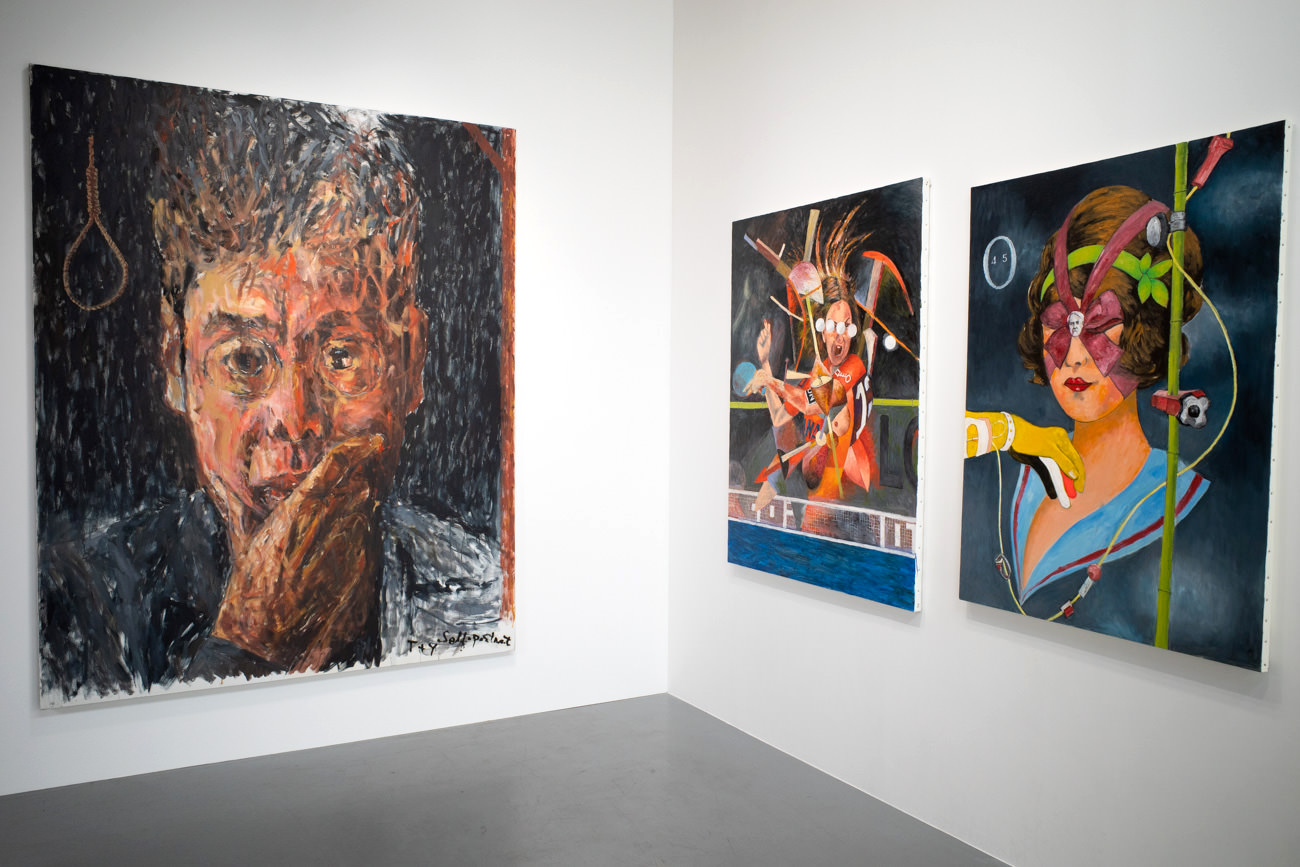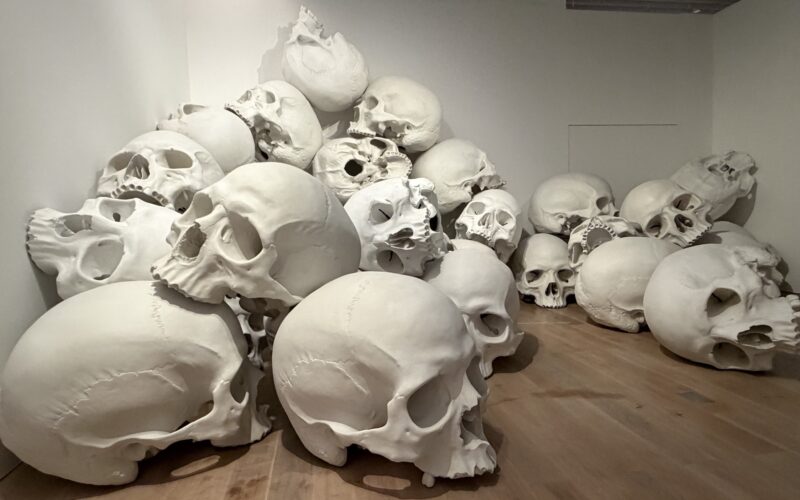
“Bio art” — art that takes life itself as its subject — has recently drawn attention especially from younger artists. It could be seen among the works at the recent Geisai festival (@ Tokyo University of the Arts) as well.
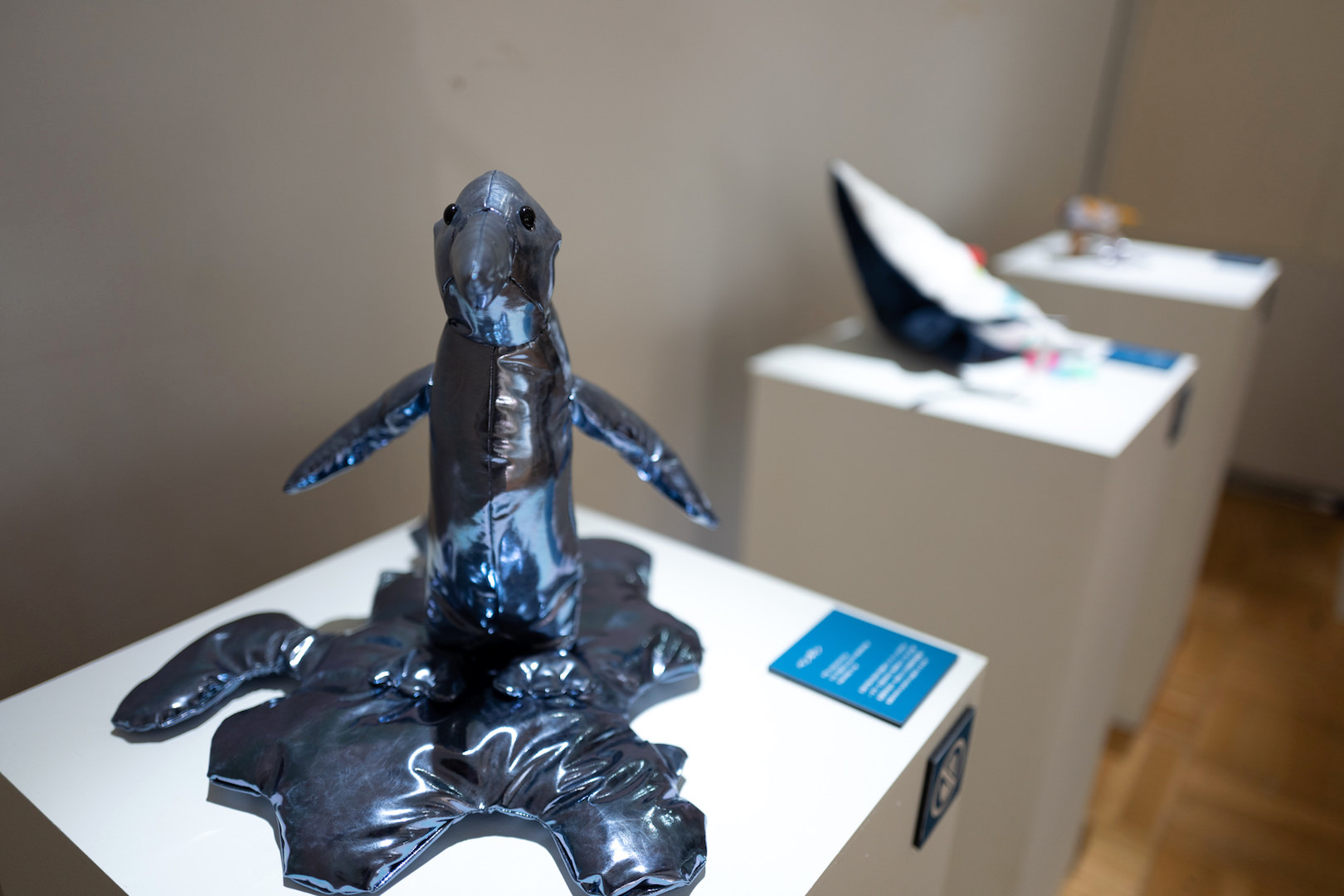
A work on the theme of ocean pollution — from the 2018 Geisai “Mirai Aquarium.”
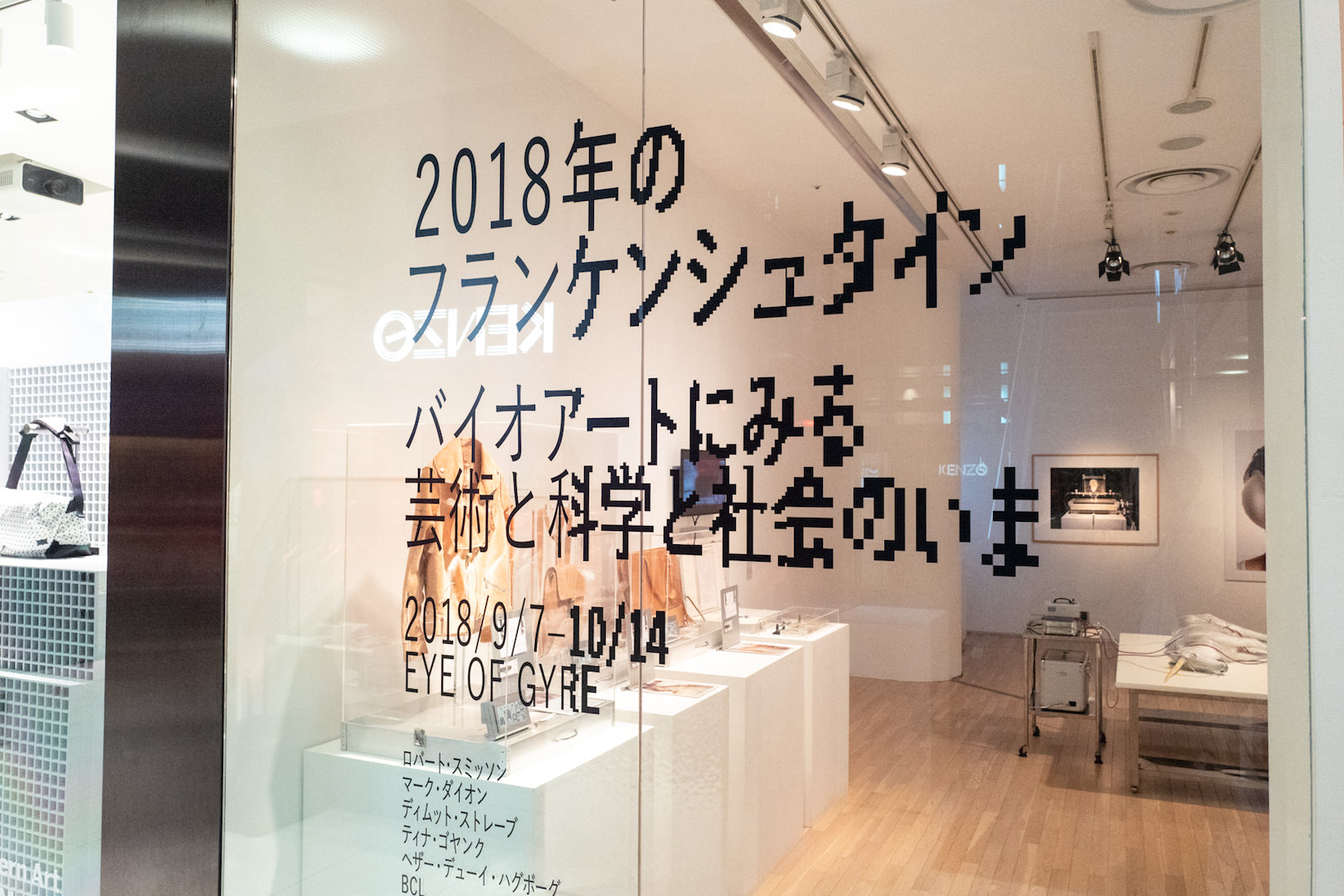
The exhibition introduced here, “Frankenstein in 2018 — Art, Science, and Society Today Through the Lens of Bio Art,” is a group show of nine bio-art practitioners curated by Yosuke Takahashi (curator, 21st Century Museum of Contemporary Art, Kanazawa).
The year 2018 marks the 200th anniversary of the publication of “Frankenstein” by the English novelist Mary Shelley. The monster that the scientist Victor Frankenstein, having unraveled the mystery of life, created by stitching together fragments of the dead has since become the theme of hundreds of artworks. Yet the questions the novel raised — “the rebellion of the created against its creator,” “the price of creating life in place of God,” “the separation of sex from reproduction” — are, in an age when technologies such as artificial intelligence and stem cells are advancing at dramatic speed, hardly outdated; if anything, they are becoming ever more contemporary.
This exhibition therefore focuses on the questions “Frankenstein” raised, and — around the themes that resonate most with contemporary art: “resurrection,” “the Anthropocene,” and “biopolitics” — selects works by nine artists. Though a mere handful, the works of the artists from five countries introduced here condense a new cluster of issues that touch on art’s mediums, its history, and its institutions — issues such as “the living being as copyrighted work,” “sculpture made of protein,” and “land art as the origin of the art of the Anthropocene.”
This show introduces a slice of the front line of “bio art,” a new artistic current that has recently begun to swell worldwide. It does not, however, endorse a formalistic classification or superficial understanding under which anything involving biotechnology or life gets tagged “bio art.” Rather, it re-examines from a contemporary vantage what meanings the mediums each artist has chosen produce within today’s historical and social contexts, and how those mediums also carry within themselves something that exceeds those meanings.
If this exhibition can serve as a clue for positioning the value of a new kind of art in an era when the allegory of creating life is becoming reality, and if it can offer even a glimpse of that future, there would be no greater joy.
Yosuke Takahashi — Curator of this exhibition / Curator, 21st Century Museum of Contemporary Art, Kanazawa
*The bold emphasis was added by the author of this article.
The venue is “GYRE” in Omotesando.
Frankenstein in 2018
The exhibition “Frankenstein in 2018 — Art, Science, and Society Today Through the Lens of Bio Art” is a group show by the following nine artists.
Tina Gorjanc
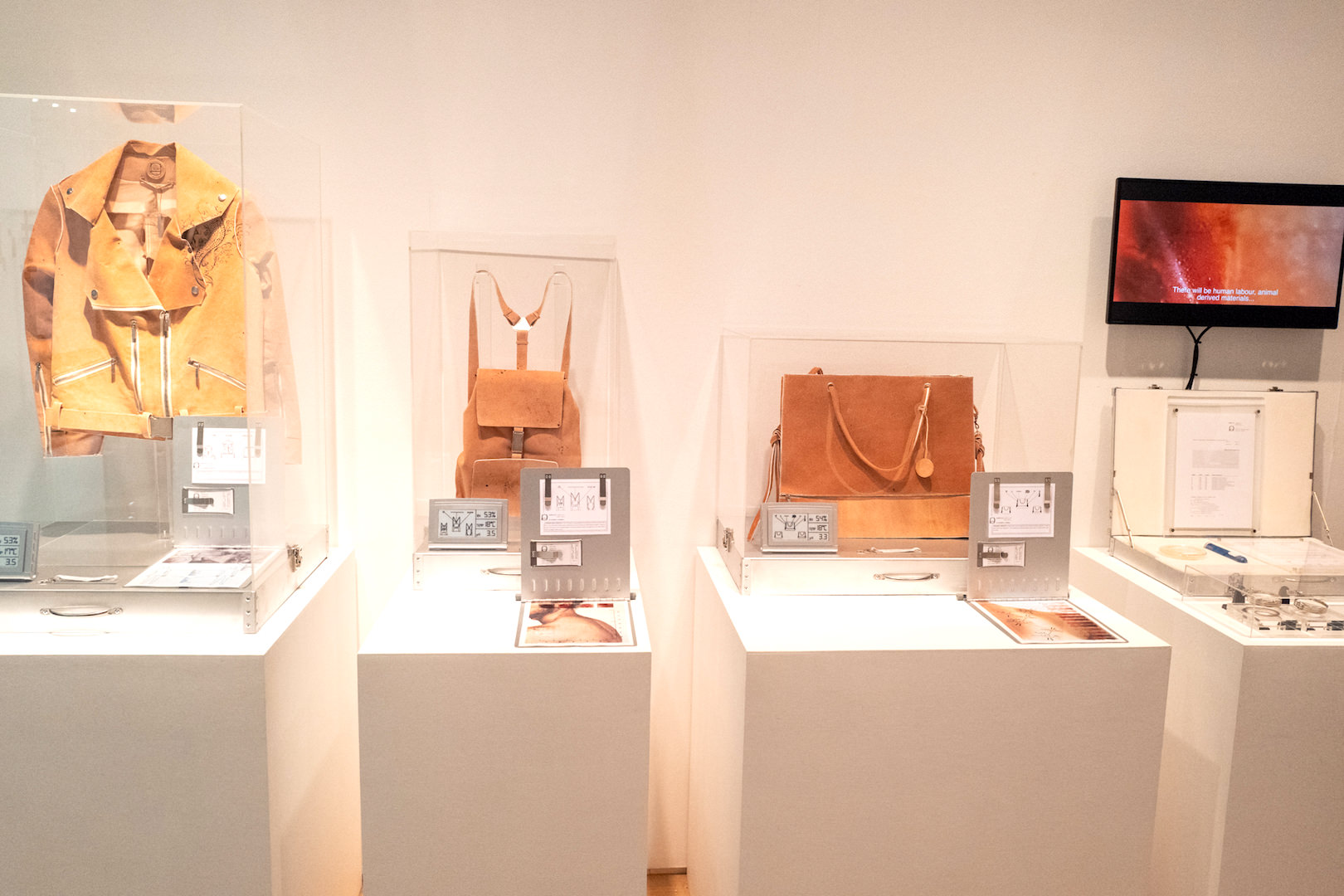
“Pure Human” is a project that regenerates the skin of fashion enfant terrible Alexander McQueen using stem-cell technology and turns it into “material for fashion.” It is a work by London-based designer Tina Gorjanc.
The leather jacket, which looks strikingly like human skin, is a prototype in which McQueen’s build, moles, freckles and even tattoos have been meticulously reproduced in pig leather; but for the plan actually to extract DNA, implant it into stem cells, and grow the skin, the owner of McQueen’s “Jack the Ripper Stalks His Victims” (1992 / a dress with the artist’s own hair woven in) has given consent.
Nicknamed “Frankenstein fashion,” the work asks what it means to “wear the dead” in a form different from a keepsake, and heralds the arrival of a new fashion fetishism spawned by biotechnology.
Tina Gorjanc “Pure Human”
Mami Hirano
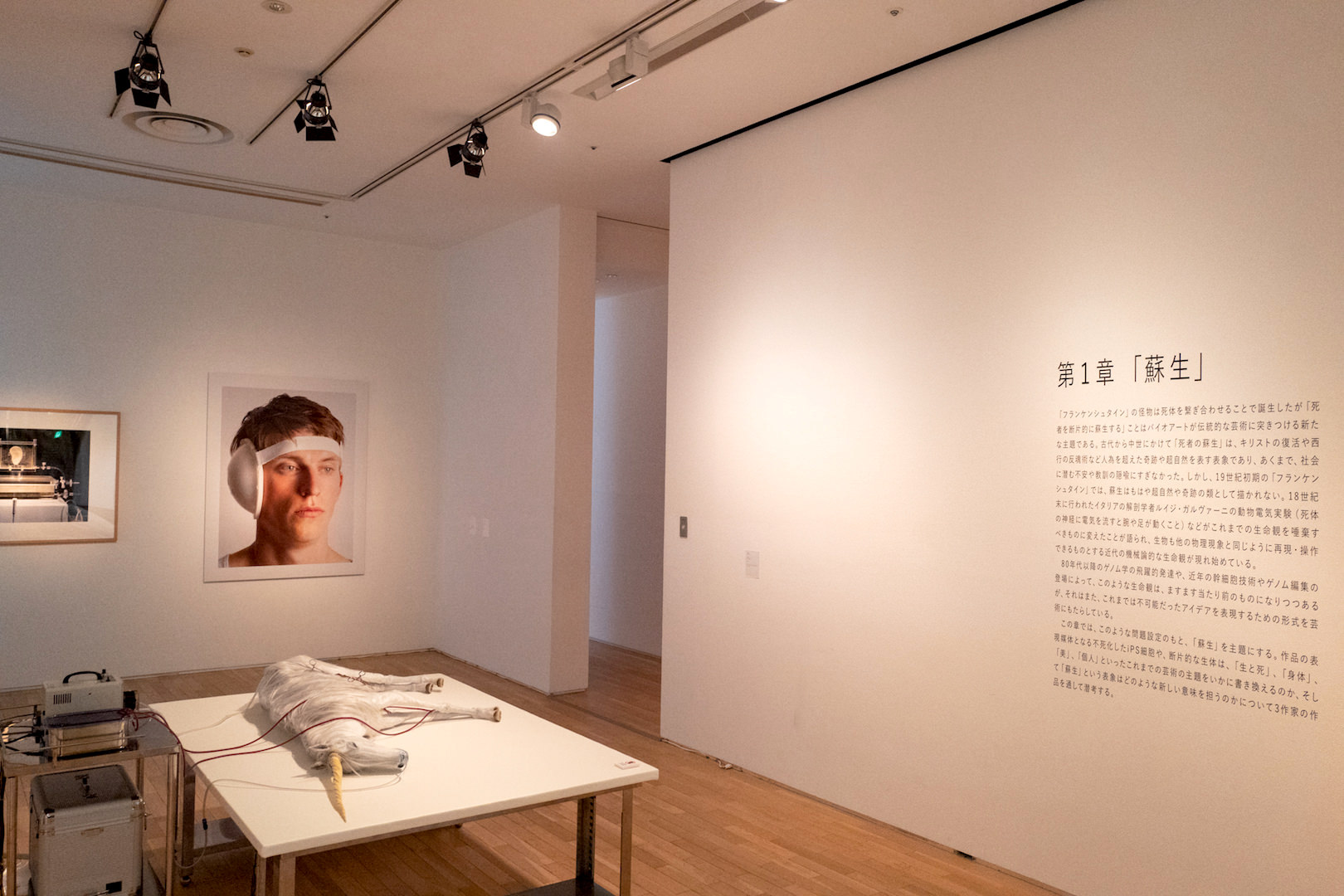
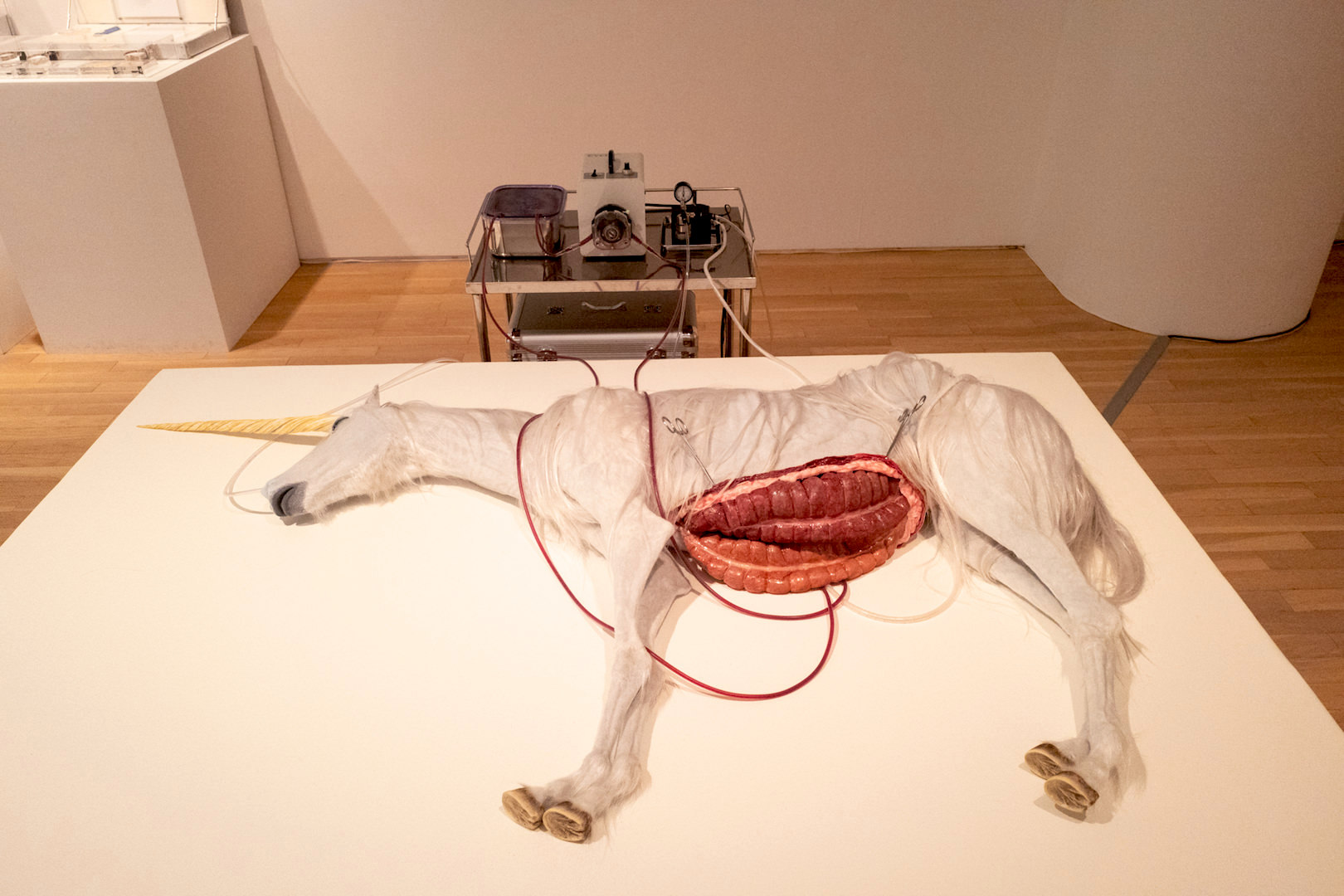
The dying unicorn lying at the center of the room is “Resurrecting Unicorn,” which the show’s youngest participant, Mami Hirano, has been working on since 2014.
Installation view
She has fabricated the “unicorn” — a creature that should exist only in myth — from its various parts including skeleton, organs, blood vessels, and skin, building it up as if it truly existed.
Evolutionary theory dismantled the religious narrative that God created humanity and turned dragons and yokai into mere superstition; Hirano, however, dares to attempt to recover just such an imaginary being. Her unicorn, trying to resurrect from the brink of death, becomes a fine metaphor for the way the pre-modern magic that is now being lost is quietly returning to the present as science and technology — synthetic biology, artificial intelligence and the rest — grow so complex as to seem like magic themselves.
Mami Hirano “Resurrecting Unicorn”
Diemut Strebe
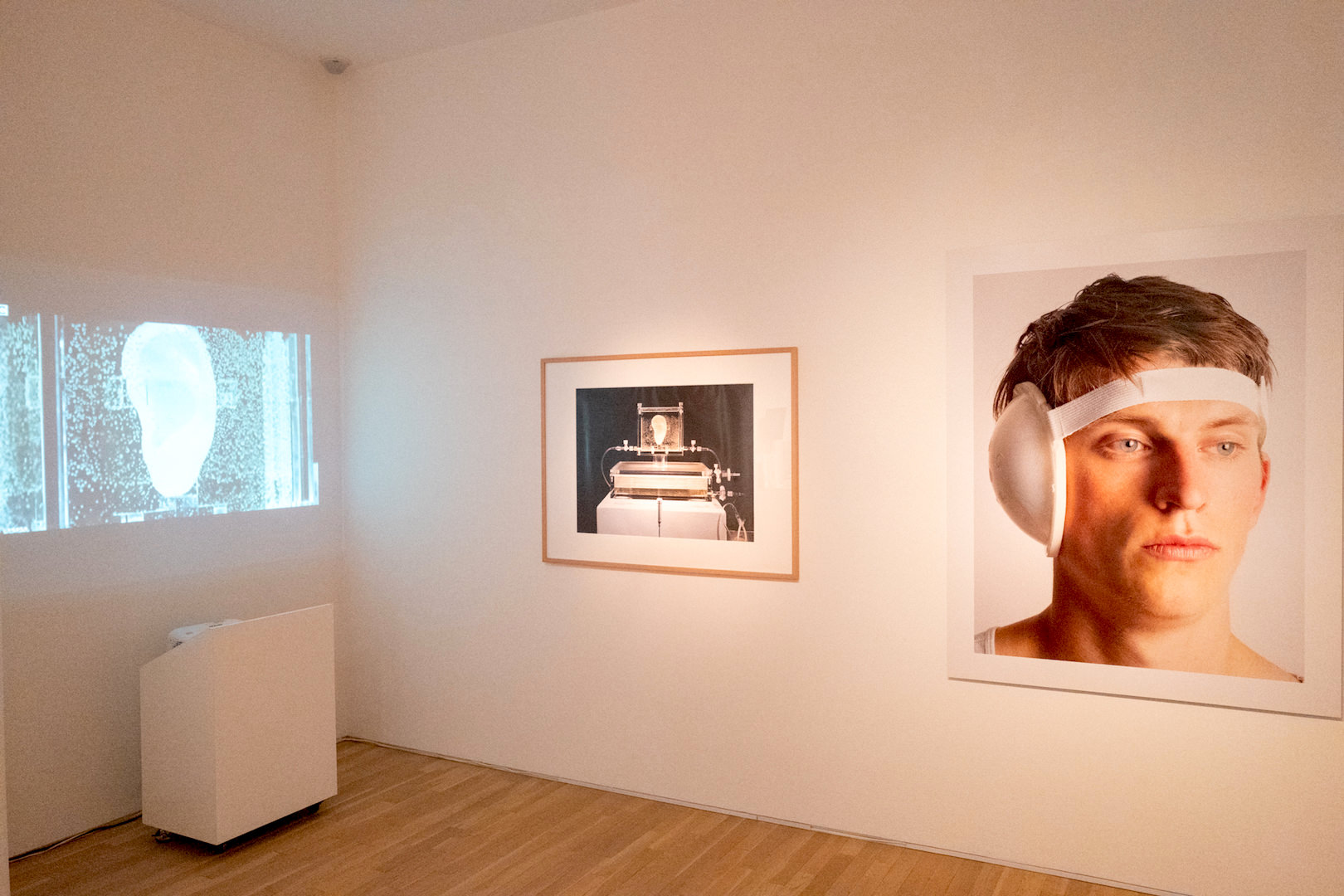
Diemut Strebe’s “Sugababe” is a work that restored, in a living state, the left ear that Van Gogh cut off.
It is a “sculpture made of protein,” equipped with a mechanism that generates sounds mimicking neural impulses in real time whenever anyone speaks to it. At its 2014 exhibition at ZKM in Germany, linguist Noam Chomsky performed by speaking into the ear, and video of the piece was reported by the BBC, CNN and others, becoming a worldwide talking point.
The ear was created by taking cartilage cells provided by Lieuwe van Gogh, a great-great-grandson on the paternal side, and introducing into them mitochondrial DNA extracted from the saliva of a descendant on the maternal side. It stages a Frankenstein-like paradox — “can a body synthesized from fragments of others, even if it contains cells with the same DNA as the deceased, be called that person’s own?” — and shakes the notion of death as an unshakable fate.
Diemut Strebe “Sugababe”
AKI INOMATA
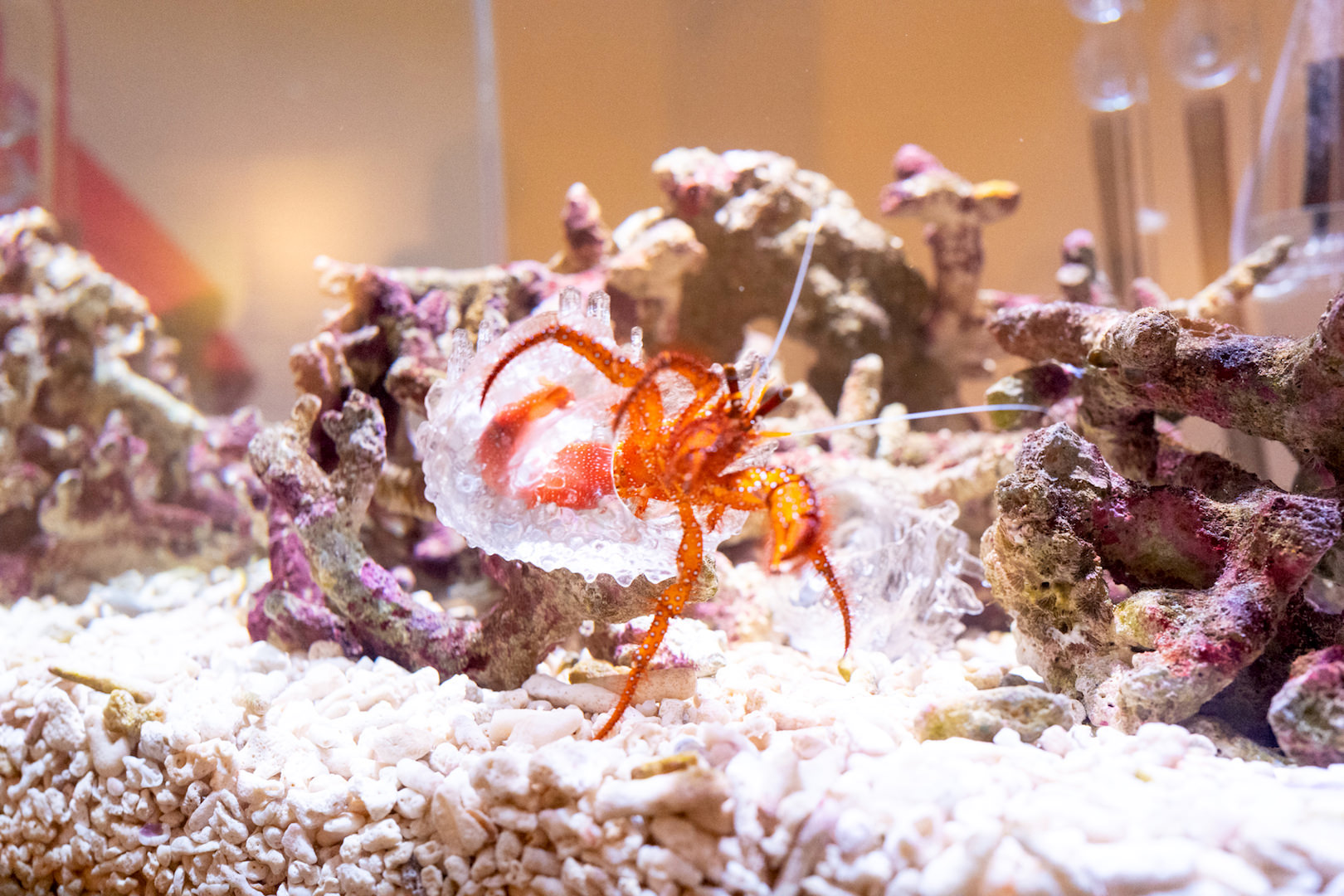
AKI INOMATA has turned creatures living in human-made environments into a mirror that reflects the essence of humanity — through works such as “LINES — Listening to the Growth Lines of a Shell,” which reads the environmental shifts before and after 3.11 in the growth lines of clam shells collected in Soma, Fukushima; and “girl, girl, girl,,,”, in which bagworms make cocoons from the fabric of fashion-brand clothing.
She showed a wonderful piece at the ASIAN ART AWARD at Art Fair Tokyo 2018 as well, and in this exhibition too her lively hermit-crab partner turned in a fine performance.
AKI INOMATA “Why Not Hand Over a \”Shelter\” to Hermit Crabs?”AKI INOMATA “girl, girl, girl,,,”. The work on the right is a 100x cross-section of a clam shell.
Robert Smithson
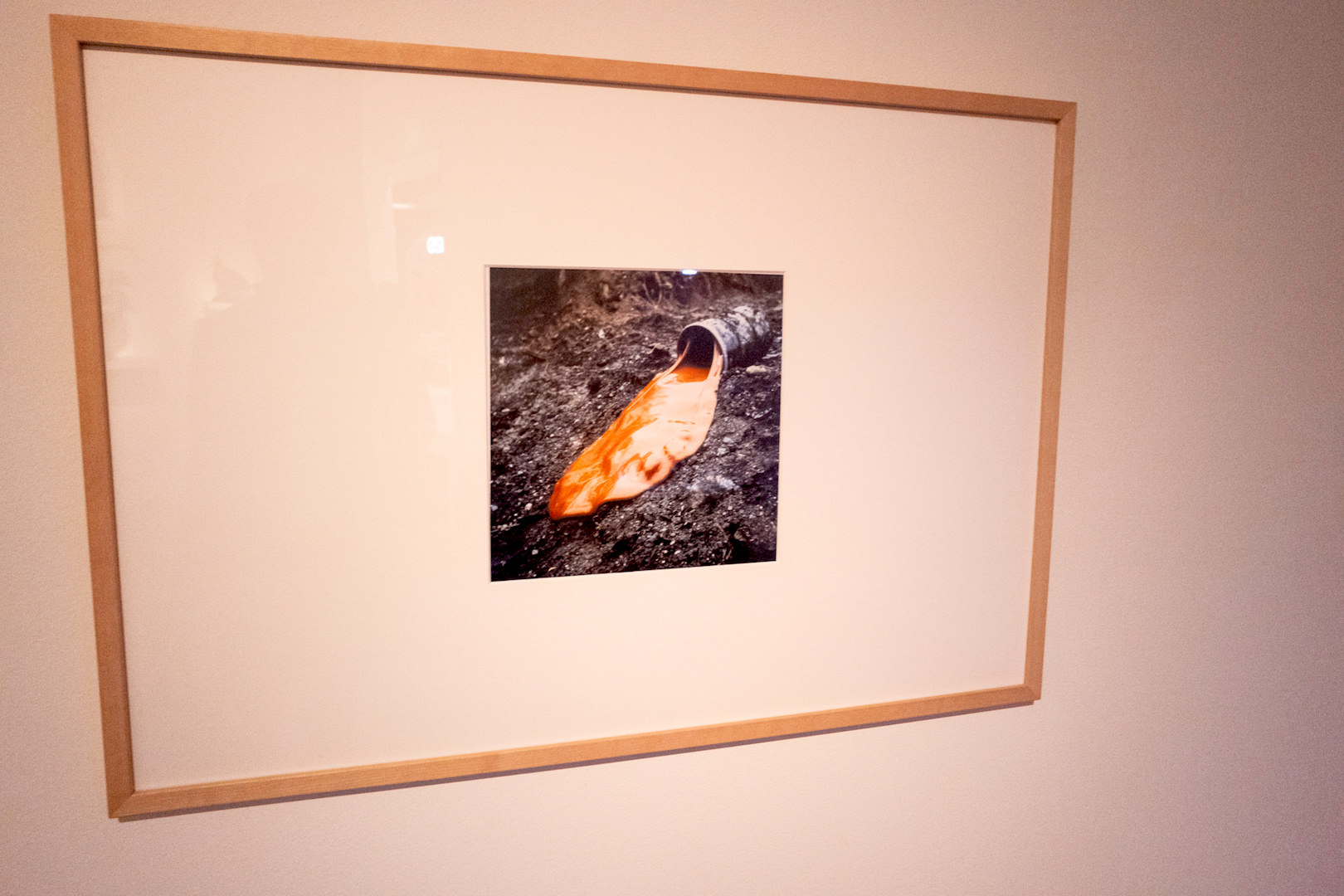
Robert Smithson’s “Glue Pour” is a work in which orange industrial adhesive was poured down a steep slope — an artificial mimicry of magma, and a caricature of modernist abstract painting.
At the same time, in the way toxic man-made matter eats into nature, it can be positioned as art of the dawn of the “Anthropocene,” capturing the fall of the sublime natural world into impurity. A work from 1969.
Robert Smithson “Glue Pour”
Mark Dion
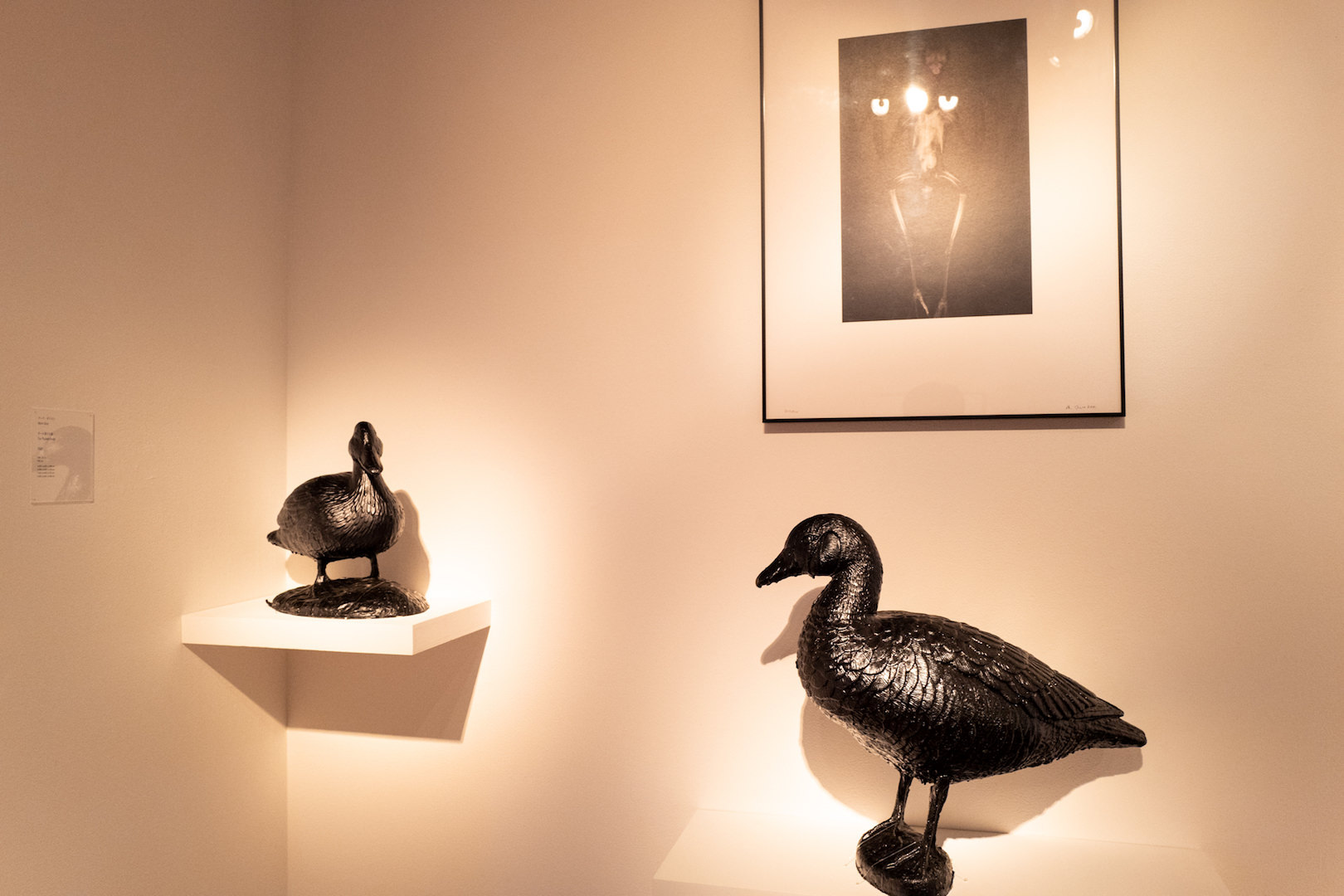
Mark Dion works with immediately striking, high-impact means of expression, such as sculptures of tar-soaked birds and photographs of deformed birds.
His work suggests that the domination of nature by science and technology — pursued in order to increase the wealth of society — is what has induced today’s environmental pollution.
Mark Dion “Tar-Soaked Bird”
Sae Honda
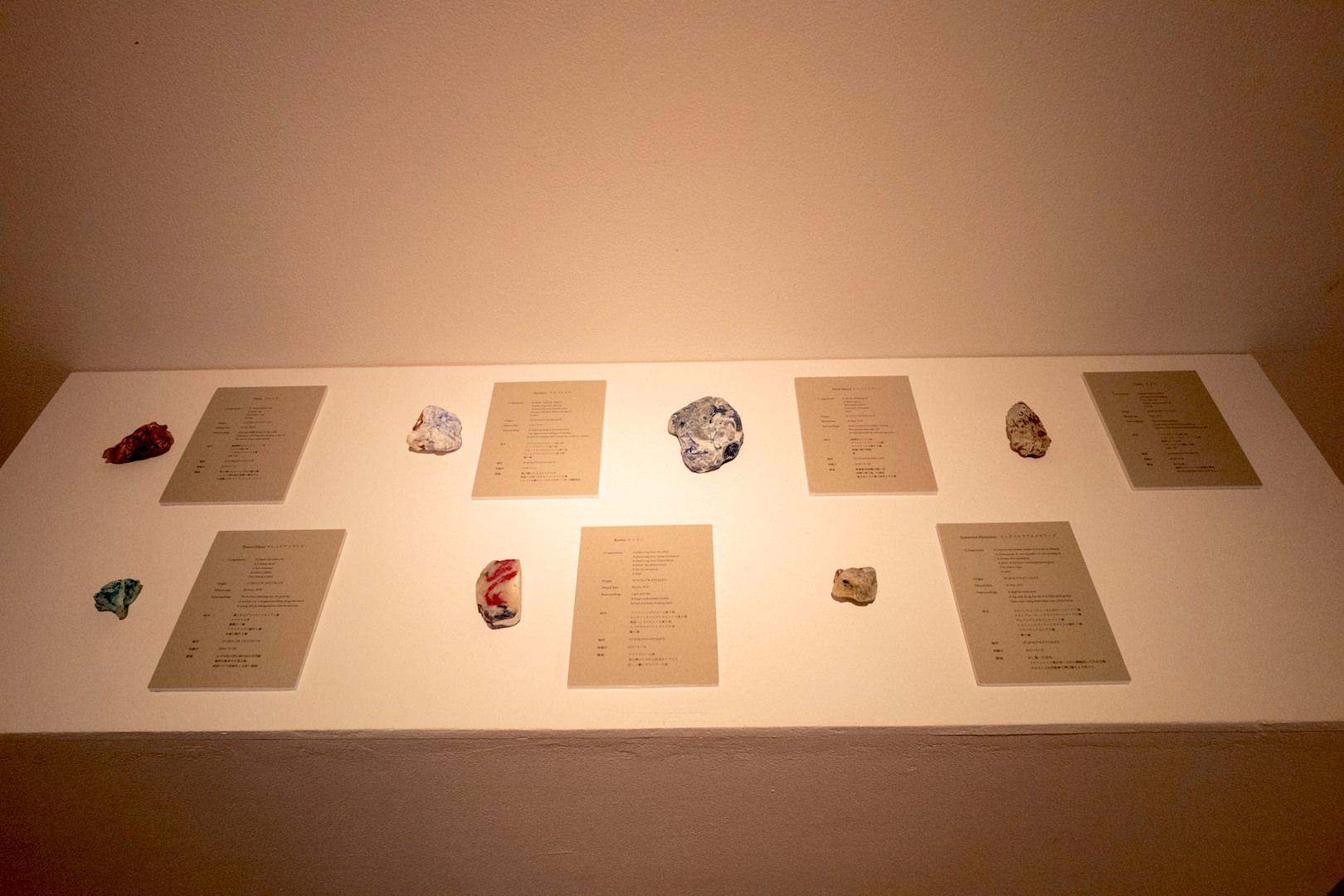
Taking inspiration from “plastiglomerate” — a new type of rock discovered on a Hawaiian beach, formed when heat-melted plastic fuses with volcanic rock, beach sand, seashells and the like — Sae Honda melts and polishes plastic she picks up on the roadside into one-of-a-kind artificial stones.
Sae Honda “Everybody needs a rock”
Heather Dewey-Hagborg
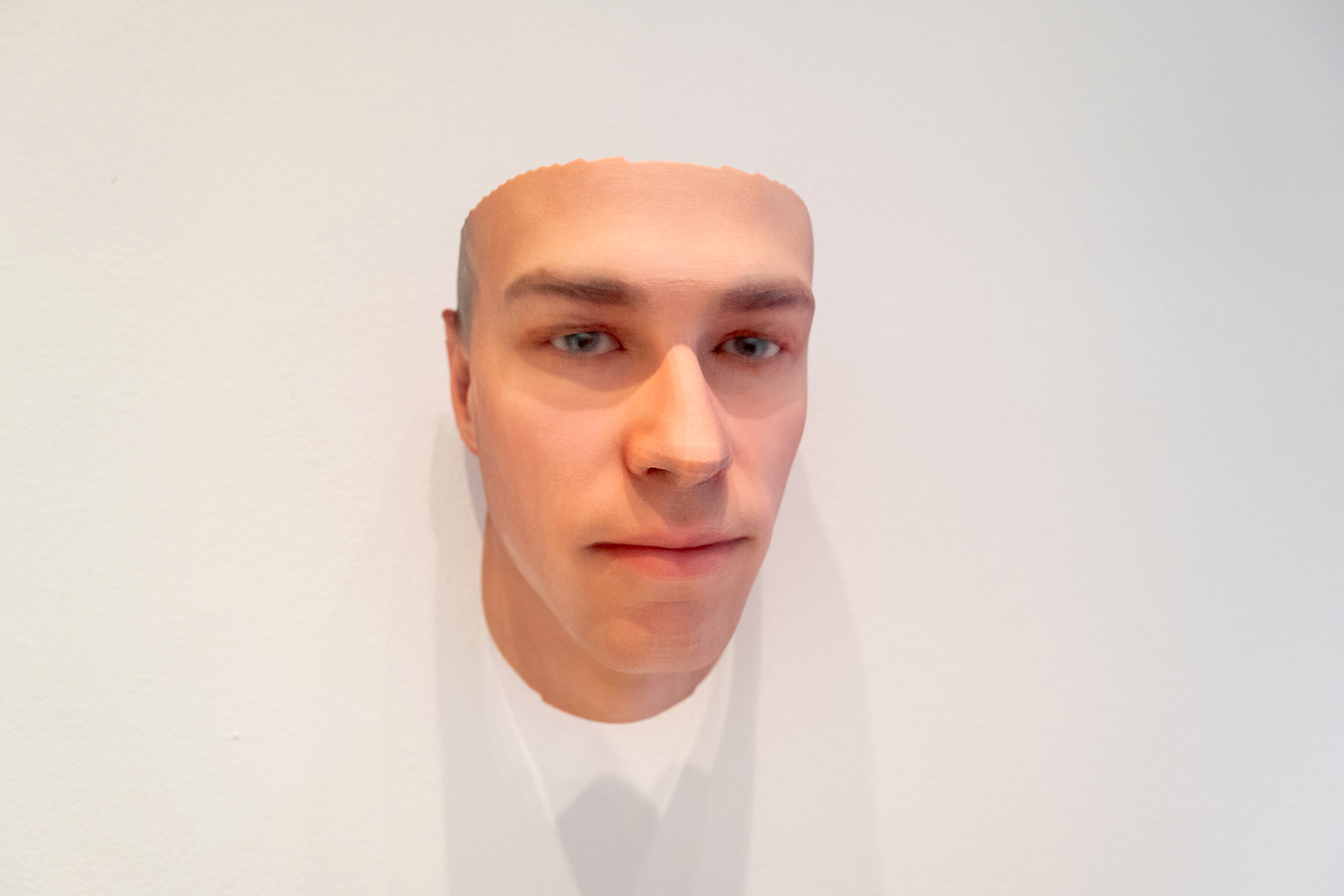
Heather Dewey-Hagborg’s “Stranger Visions” collects DNA from hair and cigarette butts left on street corners and reconstructs the face of the person who dropped them.
The work suggests that even personal information the person may not know about themselves can be extracted from the DNA they scatter around them without realizing it. It appears that this technology, with development support from the United States Department of Defense, has already been put to practical use.
A work that questions being controlled by the very technologies humanity has created.
Heather Dewey-Hagborg “Stranger Visions”
BCL
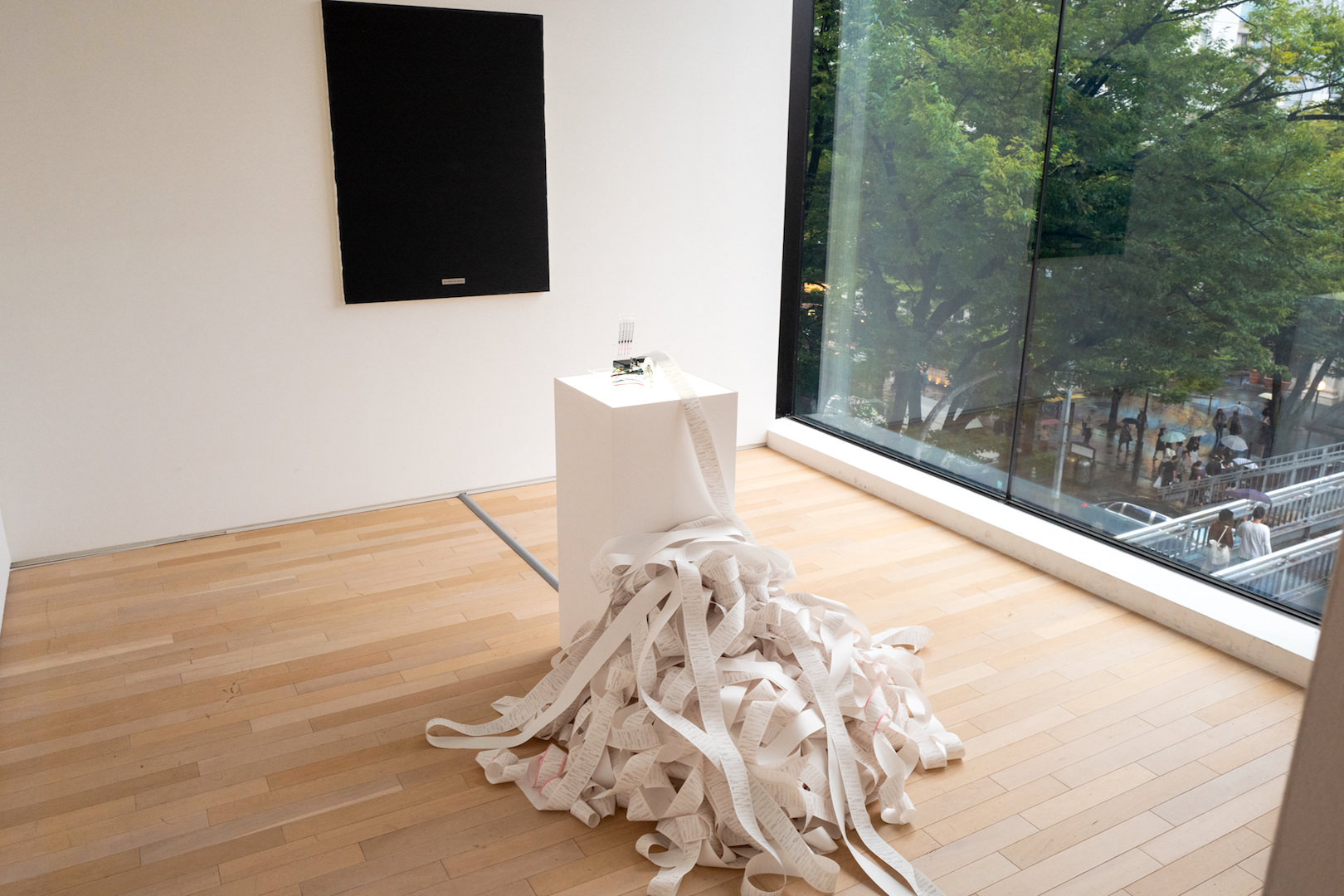
“BLP-2000B: DNA Blacklist Printer,” presented by BCL in 2018, is a work that raises the fundamental question of whether humanity can actually control science and technology.
The piece, which generates and prints only DNA sequences that biotech companies have banned from synthesis, presents the current reality in which life can be edited simply and cheaply, and prompts debate about which future we should choose.
BCL “BLP-2000B: DNA Blacklist Printer”
In closing
“Bio art” is a single label, but its interpretations and outputs are extraordinarily varied.
Seeing these works can make you flinch, or think deeply, or nod in agreement… this is not the kind of art you drop in to enjoy casually. The pieces feel like the fruit of long, hard thought on the part of each artist, and demand to be met with equally serious attention.
It felt like a textbook example of art connecting directly with society and doing real work.
Held in the heart of Omotesando, the show also drew many younger visitors — for that reason too, I found it a deeply meaningful exhibition.
Bio Art(生物艺术)
以生命为主题的艺术”Bio Art”,近来似乎正以年轻作家为中心受到关注。前不久的艺祭(@ Tokyo University of the Arts)上的展出作品中也能见到这一趋势。
以海水污染为主题的作品——2018艺祭”未来水族馆”。
本次介绍的”2018年的弗兰肯斯坦——从生物艺术看当下艺术、科学与社会”,是由Yosuke Takahashi(21st Century Museum of Contemporary Art, Kanazawa策展人)策划、由9位生物艺术作家参与的企划展。
将时尚界怪才亚历山大·麦昆的皮肤以干细胞技术再生,并作为”时尚素材”的项目《Pure Human》。这是由居住在伦敦的设计师Tina Gorjanc发表的作品。
仿佛真的人类皮肤般的皮夹克,是以猪皮精心再现了麦昆的体型、痣、雀斑乃至纹身的试作品。至于实际提取DNA、植入干细胞以培育皮肤这一计划,麦昆的《Jack the Ripper Stalks His Victims》(1992年/编入作家本人头发的连衣裙)的所有者已表示同意。
被戏称为”弗兰肯斯坦时尚”的本作品,追问以有别于遗物的方式”穿戴死者”的意义,同时预告了由生物技术催生的时尚新恋物癖时代的到来。
Diemut Strebe的作品《Sugababe》,把梵高割下的左耳以活体状态复原了出来。
这是一件”由蛋白质构成的雕刻”,具有一种当有人对它说话时便实时生成模仿神经脉冲声响的机制。2014年在德国ZKM展出时,语言学家诺姆·乔姆斯基对着这只耳朵发表演讲的表演由BBC、CNN等媒体报道,在世界范围内引起了话题。
这只梵高之耳,是将来自父系玄孙Lieuwe van Gogh提供的软骨细胞、导入从母系后代唾液中提取的线粒体DNA后制成的。它抛出了一个弗兰肯斯坦式的悖论——”由他人的碎片合成而来的身体,即使含有与死者相同DNA的细胞,是否仍能称之为本人的?”——并动摇了”死”作为不可逆之命运的观念。
Diemut Strebe《Sugababe》
AKI INOMATA
从福岛县相马市采集的蛤蜊贝壳的成长纹中解读3.11前后环境变化的《LINES — Listening to the Growth Lines of a Shell》,以及将以时尚品牌服装筑巢的蓑蛾作为作品的《girl, girl, girl,,,》——AKI INOMATA一直将生活在人工环境中的生物转化为映照人类本质的镜子。
在Art Fair Tokyo 2018的ASIAN ART AWARD上她也带来了精彩作品;本展中她的搭档——那只精力充沛的寄居蟹君也表现得十分出色。
AKI INOMATA《Why Not Hand Over a “Shelter” to Hermit Crabs?》AKI INOMATA《girl, girl, girl,,,》,右侧作品为蛤蜊贝壳的100倍剖面图。
Robert Smithson
Robert Smithson的《Glue Pour》是把橙色的工业用粘合剂倾泻于陡坡的作品,既是人造物对岩浆的拟态,也是对现代主义抽象绘画的戏谑。
同时,它捕捉了高毒性的人造物侵蚀自然、崇高的自然趋于凋零与不纯的过程,可被视为”人类世”黎明期的艺术。1969年作品。
Robert Smithson《Glue Pour》
Mark Dion
Mark Dion善于采用直白而具有冲击力的表现方式,例如浸泡在焦油中的鸟的雕刻,以及畸形化鸟类的照片。
其作品暗示:为增加社会财富而借由科学技术支配自然的行为,正是当今环境污染的诱因。
생명을 주제로 삼는 예술 “Bio Art”가 최근 젊은 작가들을 중심으로 주목받고 있는 듯합니다. 얼마 전 게이사이(@ Tokyo University of the Arts)의 전시 작품에서도 그러한 경향이 보였습니다.
해수 오염을 주제로 한 작품 — 2018 게이사이 “미래 수족관”에서.
이번에 소개할 “2018년의 프랑켄슈타인 — 바이오아트로 보는 오늘의 예술과 과학, 그리고 사회”는 Yosuke Takahashi(21st Century Museum of Contemporary Art, Kanazawa 큐레이터)의 큐레이션으로 개최된, 바이오아트 작가 9인의 기획전입니다.
영국 소설가 메리 셸리가 “프랑켄슈타인”을 발표한 지 2018년으로 200년이 된다. 생명의 수수께끼를 밝혀낸 과학자 빅터 프랑켄슈타인이 죽은 자의 조각들을 이어 붙여 만들어낸 괴물은, 이후 수백에 이르는 예술 작품의 주제가 되어 왔다. 그러나 이 소설이 제기한 “피조물의 창조주에 대한 반란”, “신을 대신해 생명을 창조하는 일의 대가”, “성과 생식의 분리”와 같은 문제들은, 인공지능과 줄기세포 등에 얽힌 기술이 비약적으로 발달하는 오늘날, 낡기는커녕 오히려 더욱더 동시대적인 것이 되고 있다.
따라서 본 전시에서는 “프랑켄슈타인”이 제기한 문제에 초점을 맞추어, 그중에서도 오늘의 예술과 통저하는 주제 — “부활”, “인류세”, “생명정치” — 를 바탕으로 9인 작가의 작품을 선정했다. 한 줌에 지나지 않는다 하나, 이 자리에서 소개되는 5개국 작가들의 작품 속에는 “저작물로서의 생물”, “단백질로 만든 조각”, “인류세 예술의 원점으로서의 대지예술”과 같이 예술의 표현 매체와 역사, 제도에 얽힌 새로운 문제군이 응축되어 있다.
본 전시는 근년, 세계적으로 융성을 시작한 예술의 새로운 조류 “Bio Art”의 최전선의 한 자락을 소개하는 것이지만, 바이오테크놀로지나 생명과 관계가 있으면 무엇이든 “Bio Art”라고 부르는 식의 형식적인 분류나 표면적인 이해에 편승하는 것은 아니다. 오히려 작가들이 선택한 각각의 표현 매체가 오늘의 역사와 사회의 맥락 속에서 어떤 의미를 낳고, 그 의미를 넘어서는 것을 어떻게 그 안에 품고 있는지를 오늘의 시각에서 되묻는 시도이기도 하다.
본 전시가 생명 창조의 우화가 현실이 되어 가고 있는 시대에 새로운 예술의 가치를 자리매김하기 위한 실마리가 되고, 그 미래를 조금이나마 느끼게 할 수 있다면 그보다 더한 기쁨은 없다.
Yosuke Takahashi 본 전시 기획 / 21st Century Museum of Contemporary Art, Kanazawa 큐레이터
※굵은 글씨는 본 기사 필자가 편집한 것.
전시장은 오모테산도의 “GYRE”.
2018년의 프랑켄슈타인
본 전시 “2018년의 프랑켄슈타인 — 바이오아트로 보는 오늘의 예술과 과학, 그리고 사회”는 아래 9인이 참여한 그룹 기획전입니다.
Tina Gorjanc
패션계의 귀재 알렉산더 맥퀸의 피부를 줄기세포 기술로 재생시켜 “패션의 소재”로 삼는 프로젝트 《Pure Human》. 런던을 거점으로 활동하는 디자이너 Tina Gorjanc가 발표한 작품입니다.
마치 인간의 피부 같은 가죽 재킷은 맥퀸의 체형과 점, 주근깨, 심지어 문신까지 돼지 가죽으로 정교하게 재현한 시작품이지만, 실제로 DNA를 채취해 줄기세포에 이식하여 피부를 만들어 내는 프로젝트에 대해서는 맥퀸의 《Jack the Ripper Stalks His Victims》(1992년 / 작가의 머리카락을 엮어 넣은 드레스)의 소유자가 동의한 상태입니다.
“프랑켄슈타인 패션”이라 야유받은 이 작품은, 유품과는 다른 형태로 “죽은 자를 몸에 두른다”는 일의 의미를 묻고, 바이오테크놀로지가 낳는 패션의 새로운 페티시즘의 도래를 예고합니다.
Tina Gorjanc 《Pure Human》
Mami Hirano
전시실 중앙에 누워 있는 빈사 상태의 유니콘은 본 전시의 최연소 작가 Mami Hirano가 2014년부터 이어 오고 있는 《Resurrecting Unicorn(되살아나는 유니콘)》입니다.
전시 풍경
신화상의 생물이어야 할 “유니콘”을, 그 골격과 장기, 혈관, 피부 등 다양한 부위로부터 제작해 마치 실재하는 것처럼 만들어 냈습니다.
진화론은 신이 인간을 만들었다는 종교적 서사를 무너뜨렸고, 용이나 요괴 같은 존재를 미신으로 바꾸었지만, Hirano는 도리어 그러한 상상 속의 존재를 회복하려 시도합니다. 빈사 상태로부터 되살아나려는 유니콘은, 지금 사라져 가는 전근대의 마술성이 합성생물학과 인공지능 등 과학기술이 고도로 복잡해지며 마치 마법처럼 되어감으로써 현대에 되살아나고 있음을 훌륭히 은유합니다.
Mami Hirano 《Resurrecting Unicorn》
Diemut Strebe
반 고흐가 잘라낸 왼쪽 귀를 살아 있는 상태로 복원한 Diemut Strebe의 작품 《Sugababe》.
“단백질로 만들어진 조각”이며, 말을 걸면 신경 임펄스를 모방한 소리가 실시간으로 생성되는 구조를 갖고 있습니다. 2014년 독일 ZKM에서의 전시에서는 언어학자 노엄 촘스키가 귀에 말을 거는 퍼포먼스를 진행했고, 그 영상은 BBC와 CNN 등에서 보도되며 세계적인 화제가 되었습니다.
부계의 5대손 Lieuwe van Gogh가 제공한 연골 세포에, 모계 후손의 타액에서 추출한 미토콘드리아 DNA를 도입해 만들어 낸 반 고흐의 귀는 “타자의 조각들로부터 합성된 신체는, 설령 죽은 자와 동일한 DNA를 지닌 세포라 할지라도 본인의 것이라 할 수 있는가”라는 프랑켄슈타인적 역설을 제시하며, 거스를 수 없는 운명으로서의 “죽음”이라는 관념을 흔들어 놓습니다.
Diemut Strebe 《Sugababe》
AKI INOMATA
후쿠시마현 소마시에서 채취한 바지락 조개 껍데기의 성장선을 통해 3.11 이전과 이후의 환경 변화를 읽어 내는 《LINES — Listening to the Growth Lines of a Shell》, 그리고 패션 브랜드의 의류로 집을 짓는 도롱이벌레를 작품화한 《girl, girl, girl,,,》 등, AKI INOMATA는 인공환경 속에서 살아가는 생물을 인간의 본질을 비추는 거울로 삼아 왔습니다.
Art Fair Tokyo 2018의 ASIAN ART AWARD에서도 훌륭한 작품을 선보였고, 본 전시에서도 파트너인 활기찬 소라게가 좋은 활약을 보여 주었습니다.
AKI INOMATA 《Why Not Hand Over a “Shelter” to Hermit Crabs?》AKI INOMATA 《girl, girl, girl,,,》. 오른쪽 작품은 바지락 조개껍데기의 100배 단면도.
Robert Smithson
Robert Smithson의 《Glue Pour》는 급경사에 오렌지색 공업용 접착제를 흘려보낸 작품으로, 인공물에 의한 마그마의 의태이자 모더니즘 추상회화의 희화이기도 합니다.
동시에, 독성이 높은 인공물이 자연을 잠식해 가는 이 작품은 숭고한 자연이 몰락하고 불순해져 가는 모습을 포착한 “인류세” 여명기의 예술로 자리매김할 수 있습니다. 1969년의 작품.
Robert Smithson 《Glue Pour》
Mark Dion
Mark Dion은 타르에 잠긴 새의 조각이나 기형화된 새의 사진 등, 알기 쉬운 임팩트를 지닌 표현 방식을 취하는 작가입니다.
사회의 부를 증대시키려 과학기술로 자연을 지배하는 일이 오늘의 환경오염을 유발하고 있음을 은연중에 시사합니다.
Mark Dion 《타르에 잠긴 새》
Sae Honda
Sae Honda는 하와이 해안에서 발견된 “플라스티글로머리트”(열로 녹은 플라스틱과 화산암, 해변의 모래, 조개껍데기 등이 뒤섞여 생긴 신종 광물)에서 착상을 얻어, 길가에서 주운 플라스틱을 녹이고 갈아 유일무이의 인공석으로 변모시킵니다.
Sae Honda 《Everybody needs a rock》
Heather Dewey-Hagborg
길모퉁이에 떨어진 머리카락이나 담배꽁초에서 DNA를 채취해, 떨어뜨린 본인의 얼굴을 복원하는 Heather Dewey-Hagborg 《Stranger Visions》.
자신도 모르는 사이에 주변에 흩뿌리고 있는 DNA로부터 때로 본인조차 모르는 개인정보를 이끌어 낼 수 있음을 시사한 작품입니다. 이 기술은 미국 국방부의 개발 지원 아래 이미 실용화된 것으로 보입니다.
스스로 만들어 낸 기술에 관리당하는 상황을 묻는 작품입니다.
Heather Dewey-Hagborg 《Stranger Visions》
BCL
2018년 BCL이 발표한 《BLP-2000B: DNA Blacklist Printer》는, 인간이 애초에 과학기술을 제어할 수 있는가라는 근본적인 물음을 던지는 작품입니다.
바이오 기업이 합성을 금지하고 있는 DNA 배열만을 생성하고 인쇄하는 이 작품은, 생명을 간이하고 저렴하게 편집할 수 있는 현 상황을 제시하며, 우리는 어떤 미래를 선택해야 하는가라는 논의를 촉구합니다.
BCL 《BLP-2000B: DNA Blacklist Printer》
정리
한 마디로 “Bio Art”라 해도, 그 해석과 표현 방식은 매우 다양합니다.
작품을 마주하면 흠칫하기도 하고, 깊이 생각하게 되기도 하고, 고개를 끄덕이게 되기도 합니다……. 훌쩍 들러 가볍게 즐기는 예술은 결코 아닙니다. 작가들이 깊이 사유해 만들어 낸 듯한 작품들이며, 마음을 다잡고 감상할 것을 요구받는 듯합니다.
예술이 직접적으로 사회와 연결되어 기능하고 있음이 눈에 보이는 전형적인 모델처럼 느껴졌습니다.
오모테산도 한복판에서 열리고 있는 만큼 젊은 관람객도 많이 찾아왔다는 점을 포함해, 매우 의미 있는 전시라고 느꼈습니다.