I visited Yoshitomo Nara’s solo exhibition “Yoshitomo Nara: The Beginning Place” at the Aomori Museum of Art.
As a solo exhibition in his hometown by Nara — a currently active Japanese contemporary artist celebrated worldwide — this was a show I had long wanted to see, and I finally managed to catch it on the very last day.
Because there is no touring version, this was a precious exhibition that could only be seen by traveling to Aomori. I’ve compiled the below as a photo report.
The exhibition was broadly divided into five sections.
1. Home
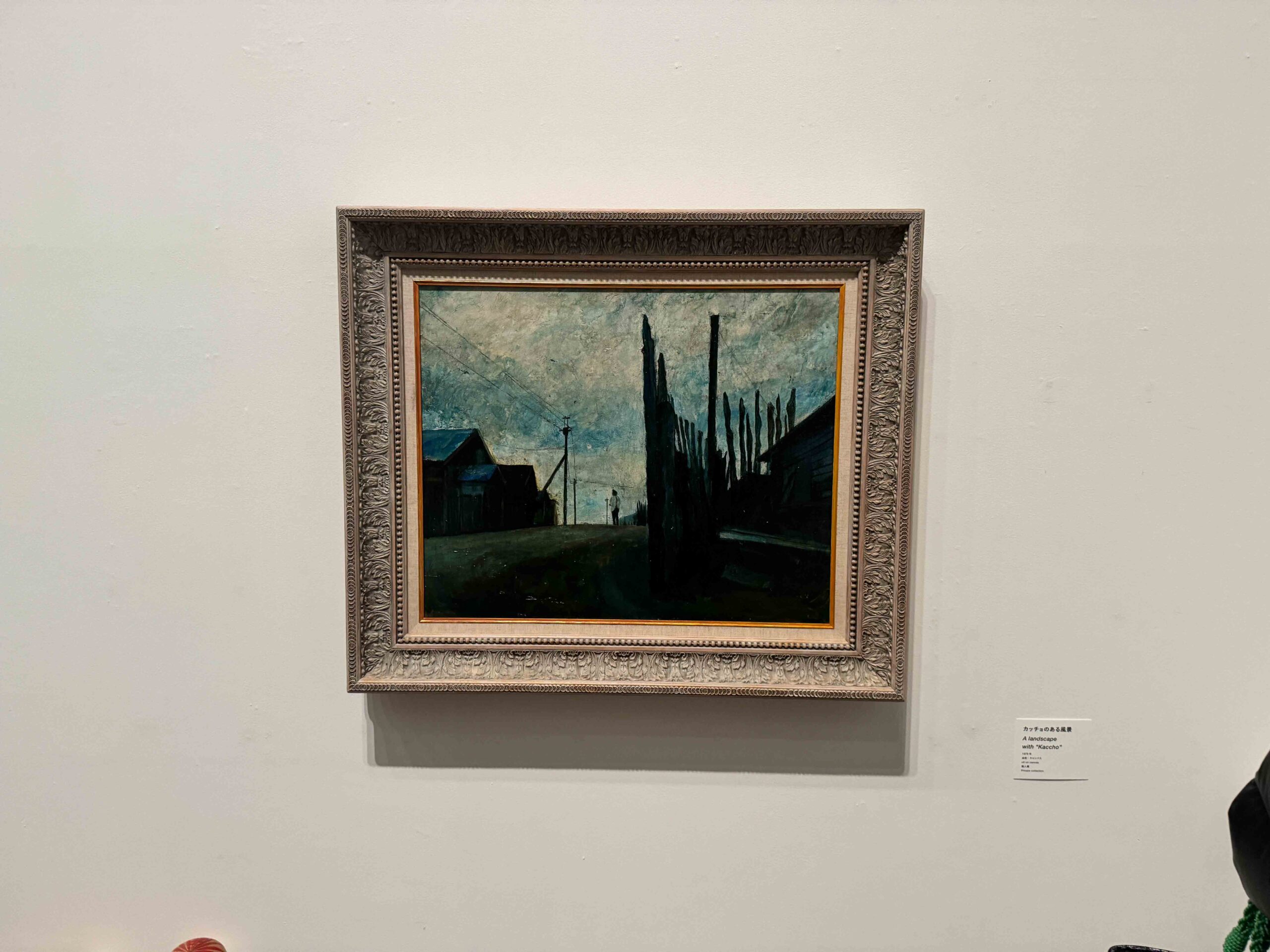
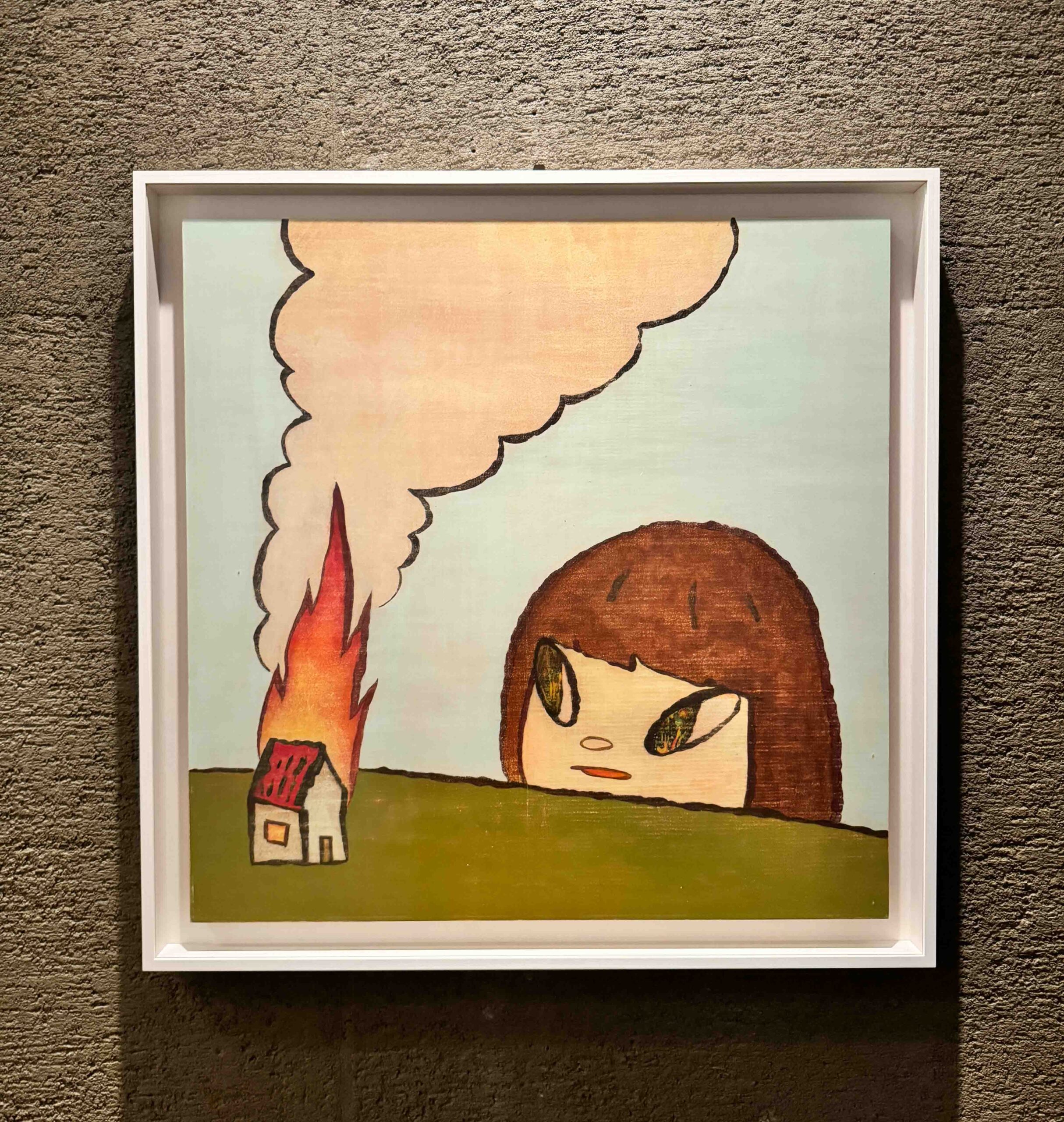
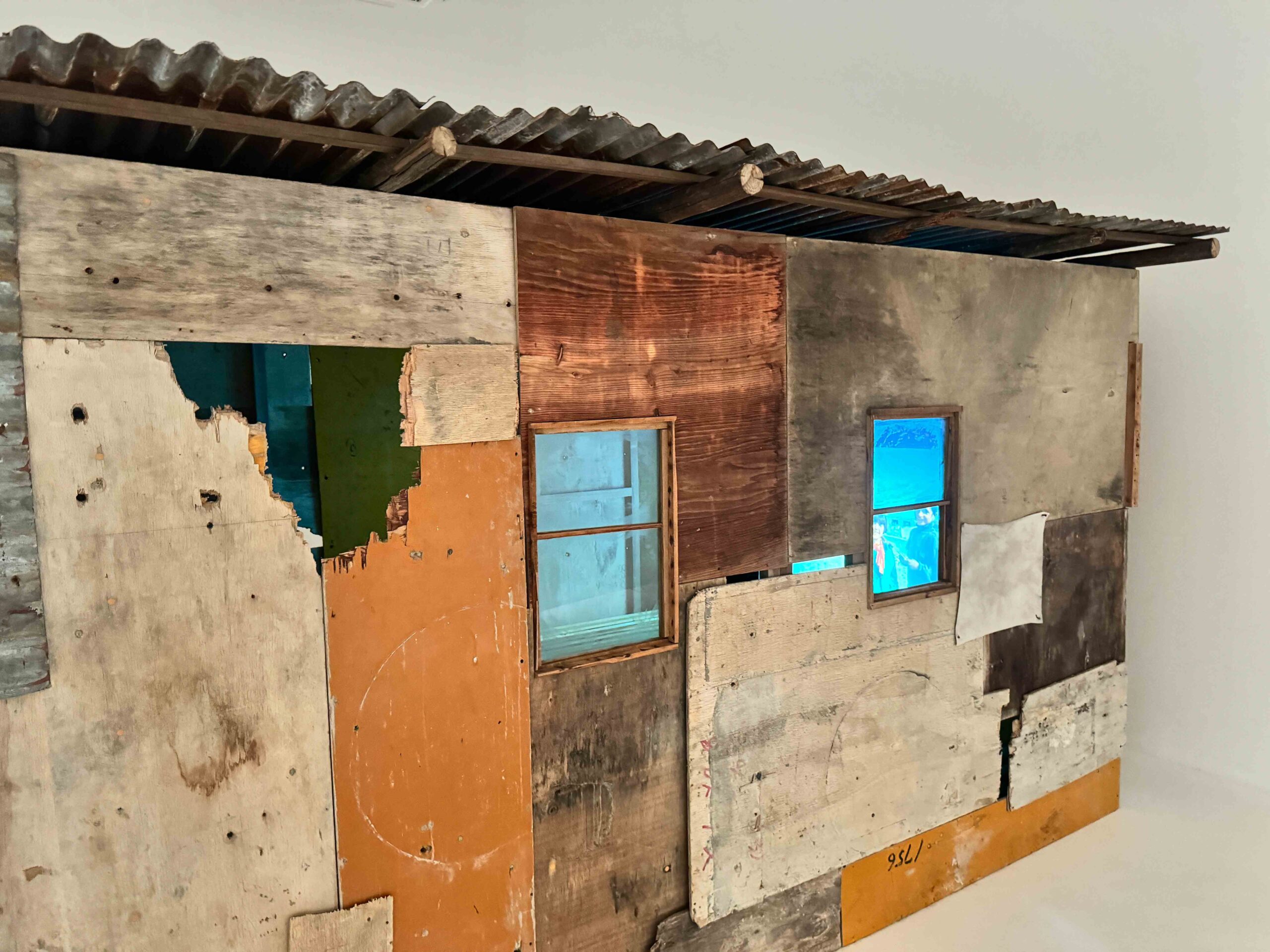
This is the first time that early works from the 1980s have been presented together. In Nara’s works prior to his move to Germany, “houses” frequently appeared as a motif. The very first work is “A landscape with ‘Kaccho'” (1979). “Kaccho” refers to the wooden windbreak fences erected in the Tsugaru region. “It’s an oil painting I would be too embarrassed to show if it were up to me. A friend went out of their way to pick it up after I had thrown it out.” (Nara)
This piece was one that Hiroshi Sugito — a former student when Nara was teaching at a prep school — had found and preserved after Nara had left it neglected. This exhibition marks its first public showing.
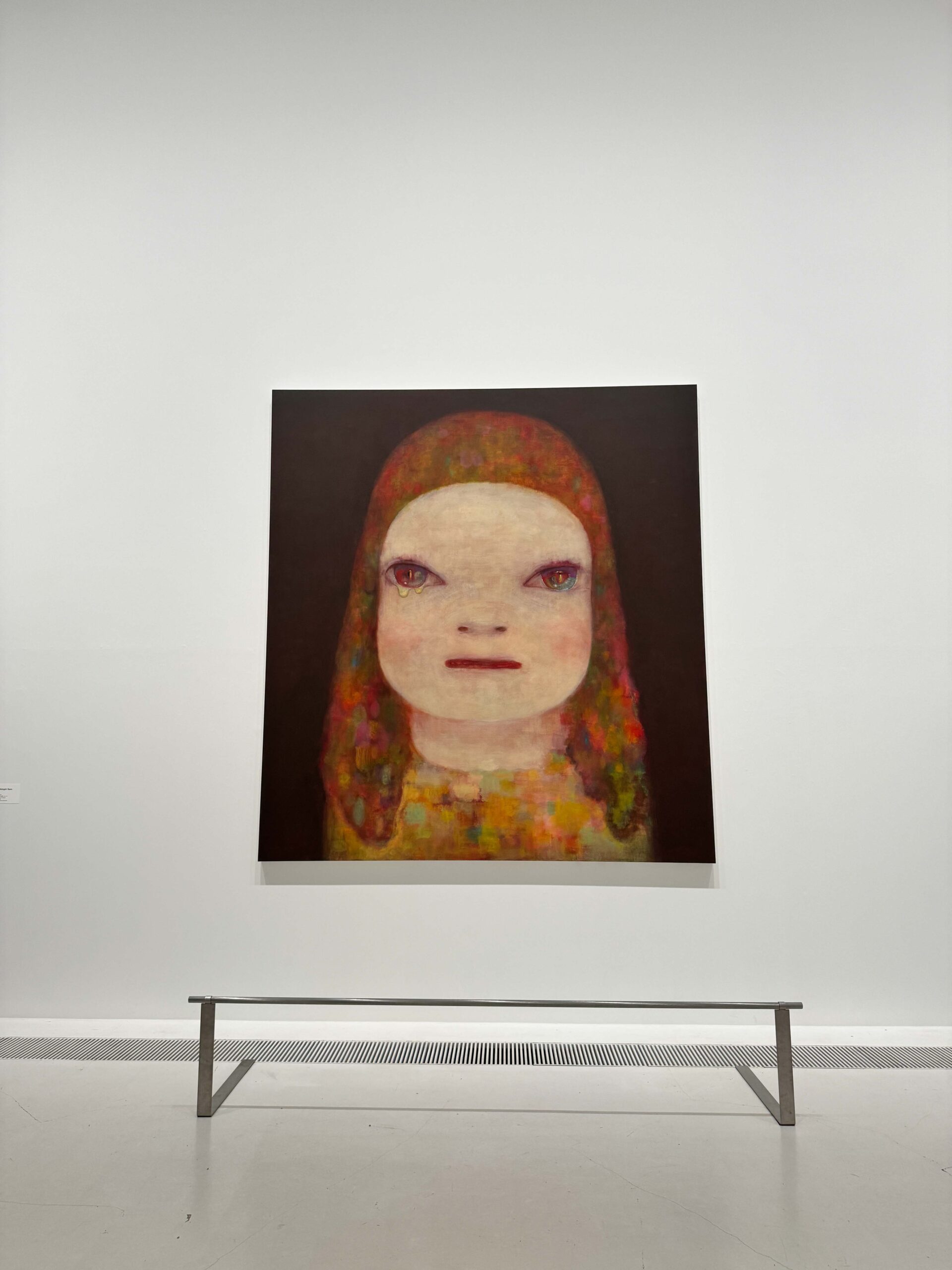
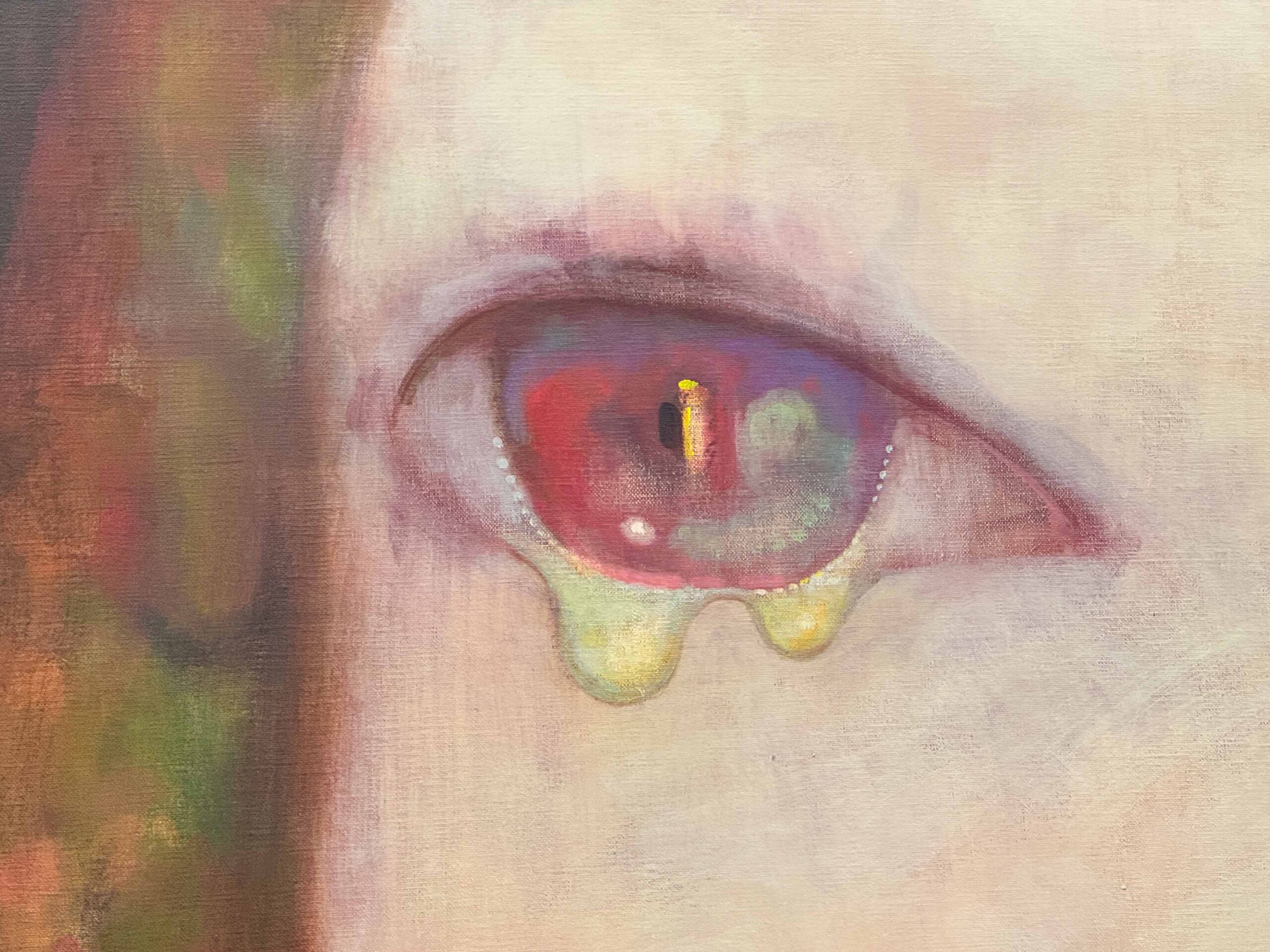
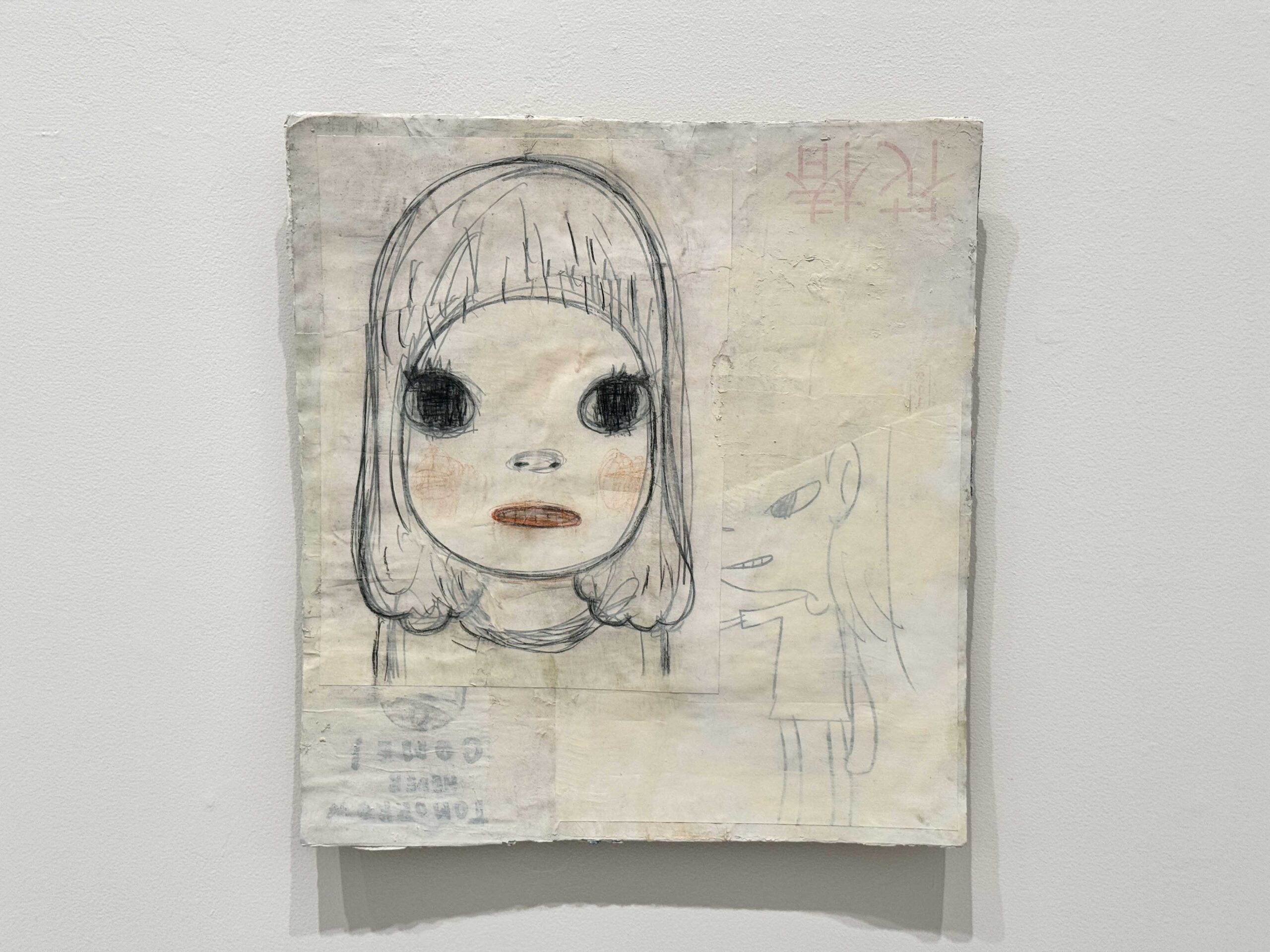
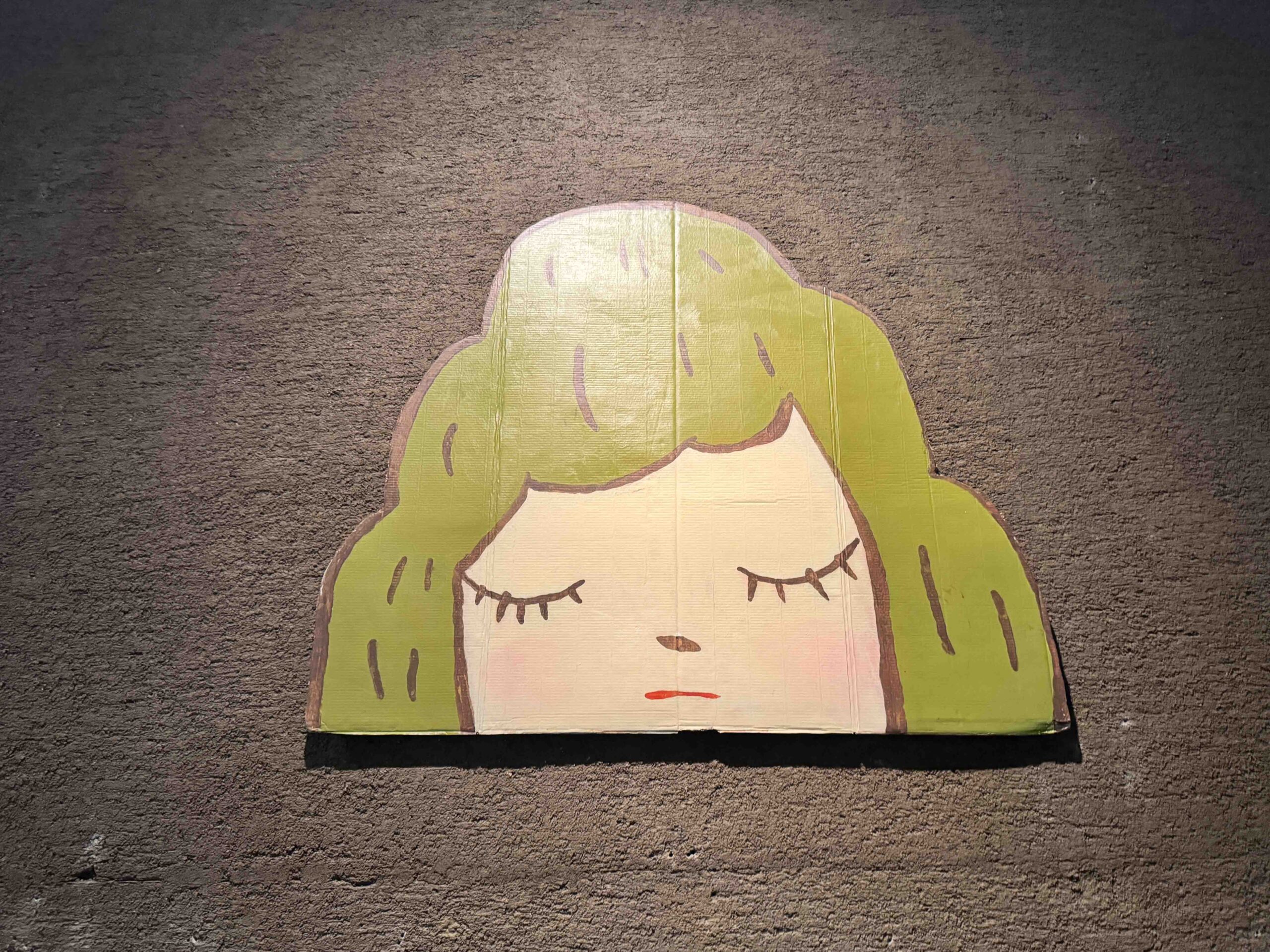
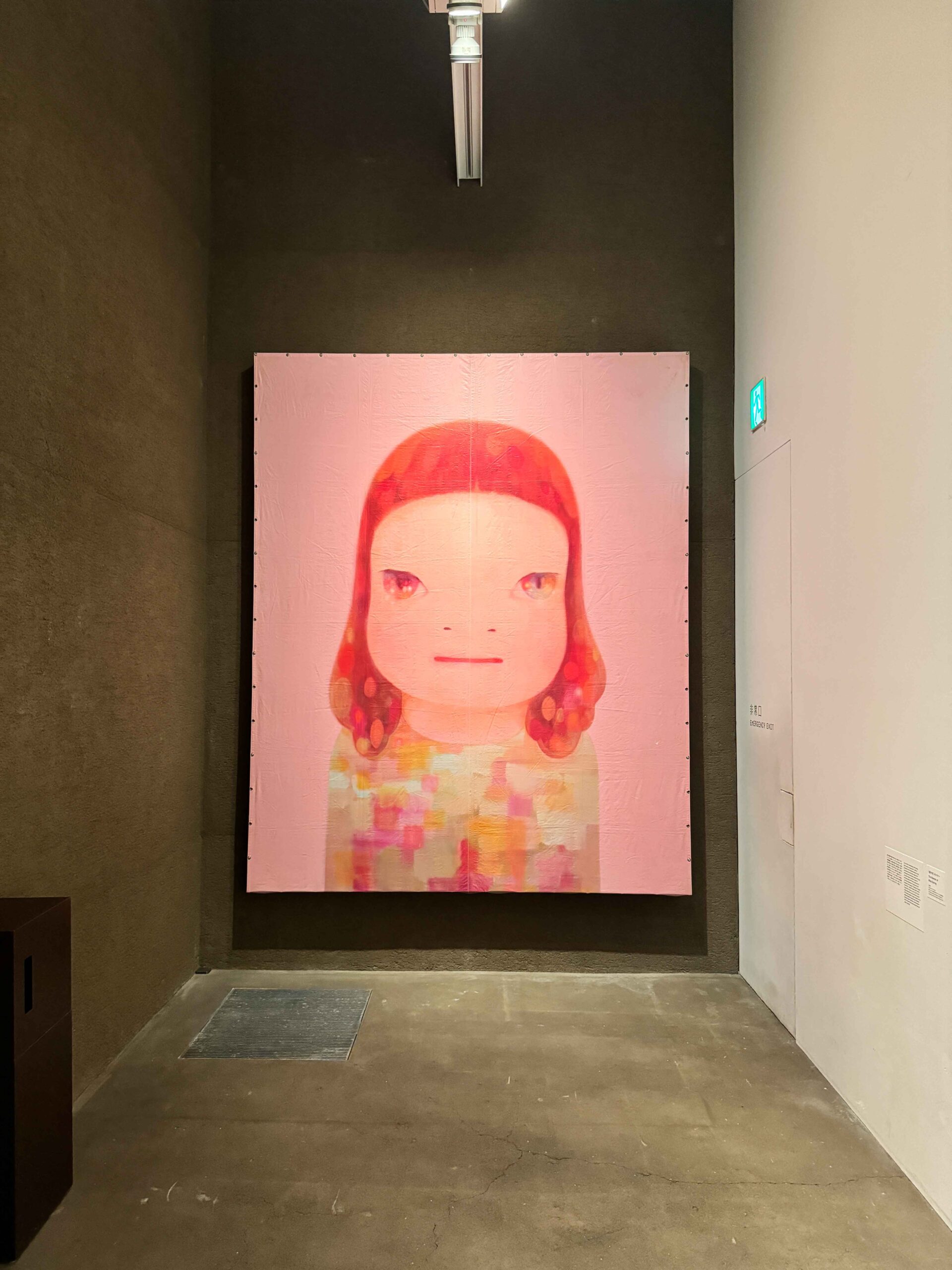
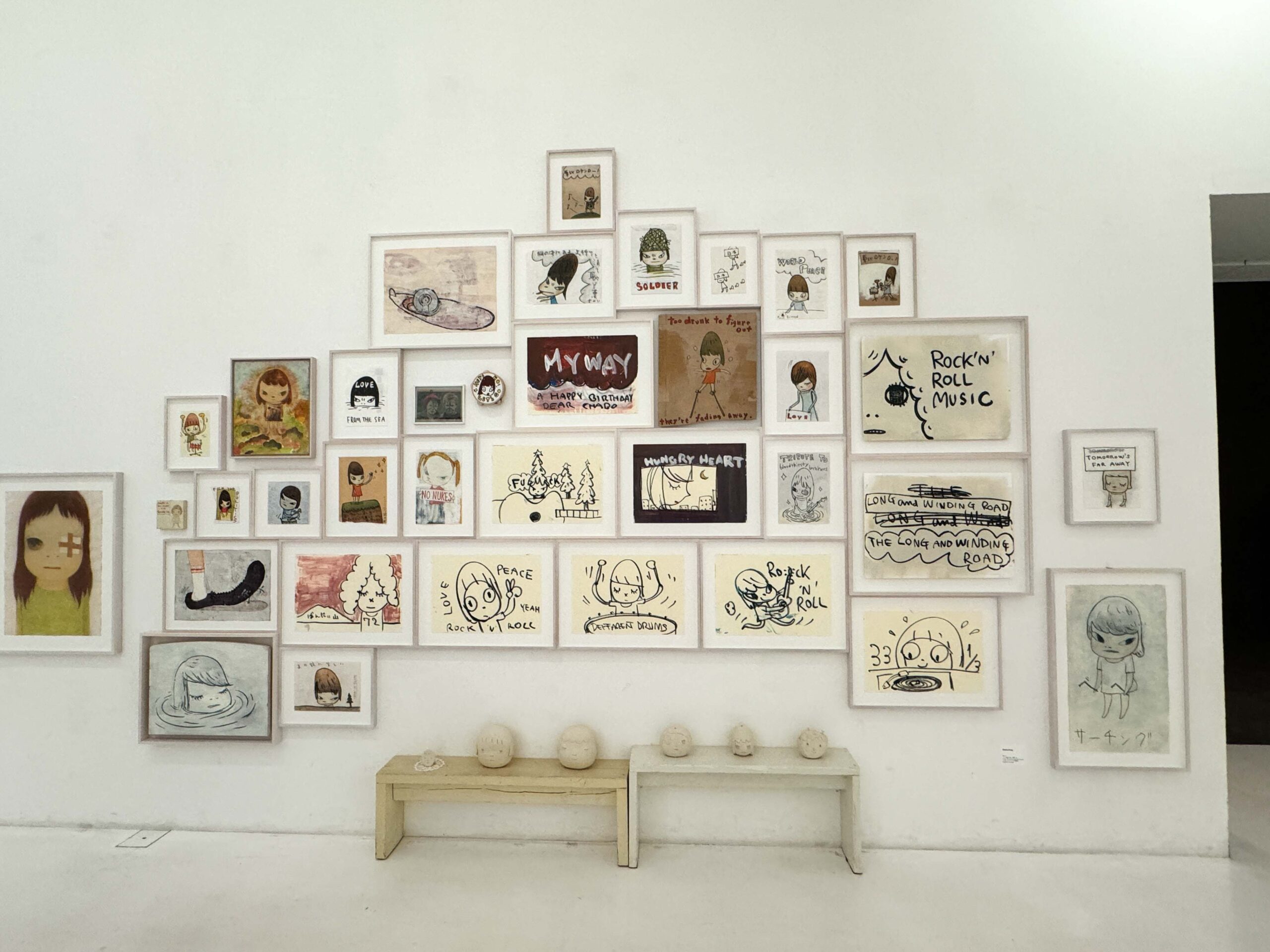
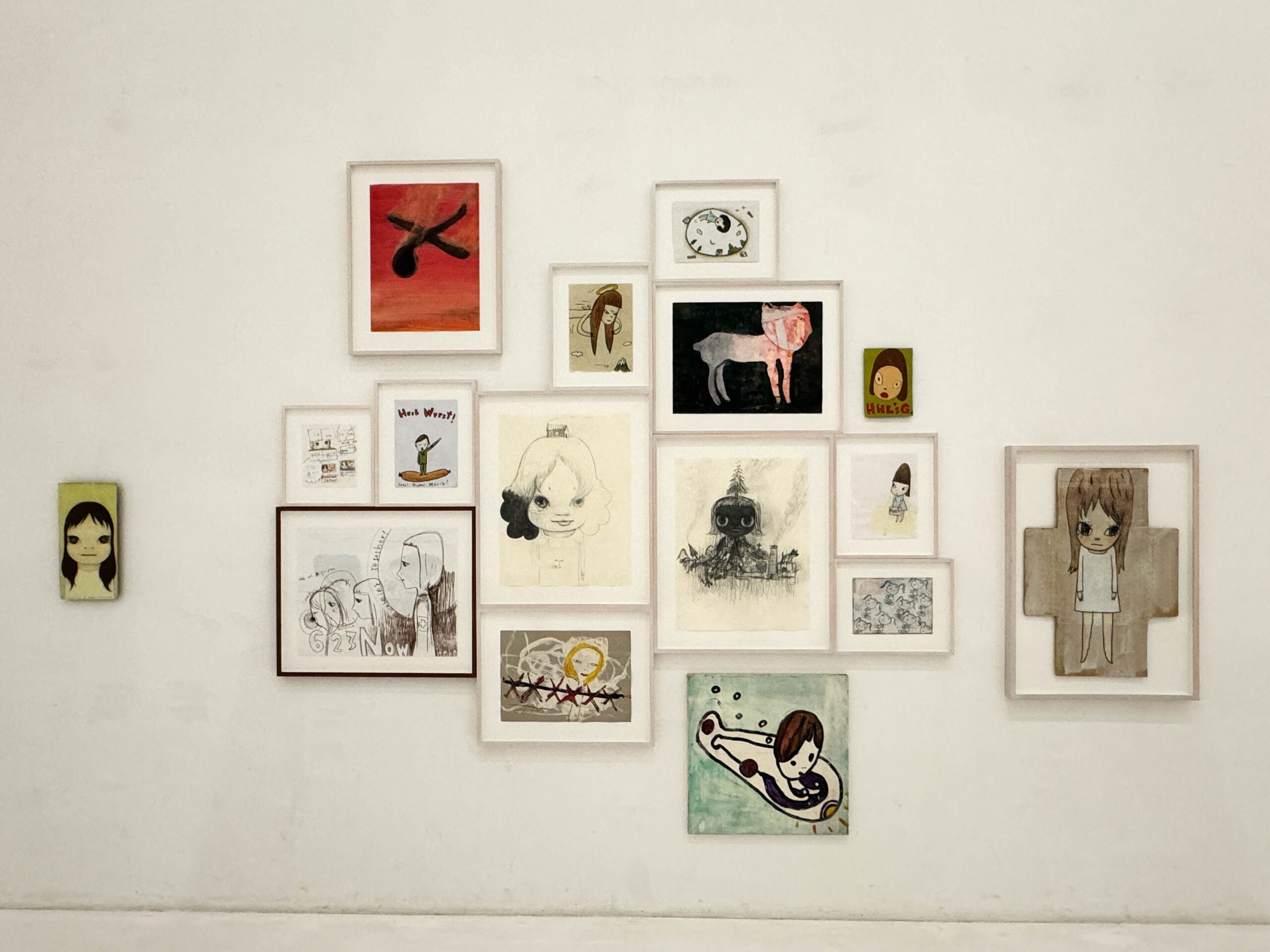
The images of girls that Nara has painted repeatedly throughout his career have evolved in recent years into works born from ambiguous outlines that emerge from a color expression based on complex layers of paint. The life breathed into these many stacked layers stirs the sensibilities of those who stand before them.
“I always paint in a way that accepts the accidental as the inevitable — if I can’t paint one eye well, I’ll stick a bandage on it, doing whatever comes to mind on the spot. …It’s a way of only noticing at the very end.” (Nara)
Nara has said that the method changes every time. The painting he wants to bring into being always lies deep in the wrinkles of his brain, and he arrives at the moment he finally “hits upon” it through countless cycles of thought.
The new work Midnight Tears gave me the sensation of being drawn in and swallowed.
Struck by the Great East Japan Earthquake in 2011, Nara himself underwent a complete change of direction. Unable to hold a brush or stretch a canvas, he began touching clay, searching for something. “From summer to winter, I wrestled with clay bare-handed as a form of rehabilitation. …When you dialogue with clay, you don’t have to think. In that process I began to consider — and research — my own roots and the Tohoku region.” (Nara)
4. No War
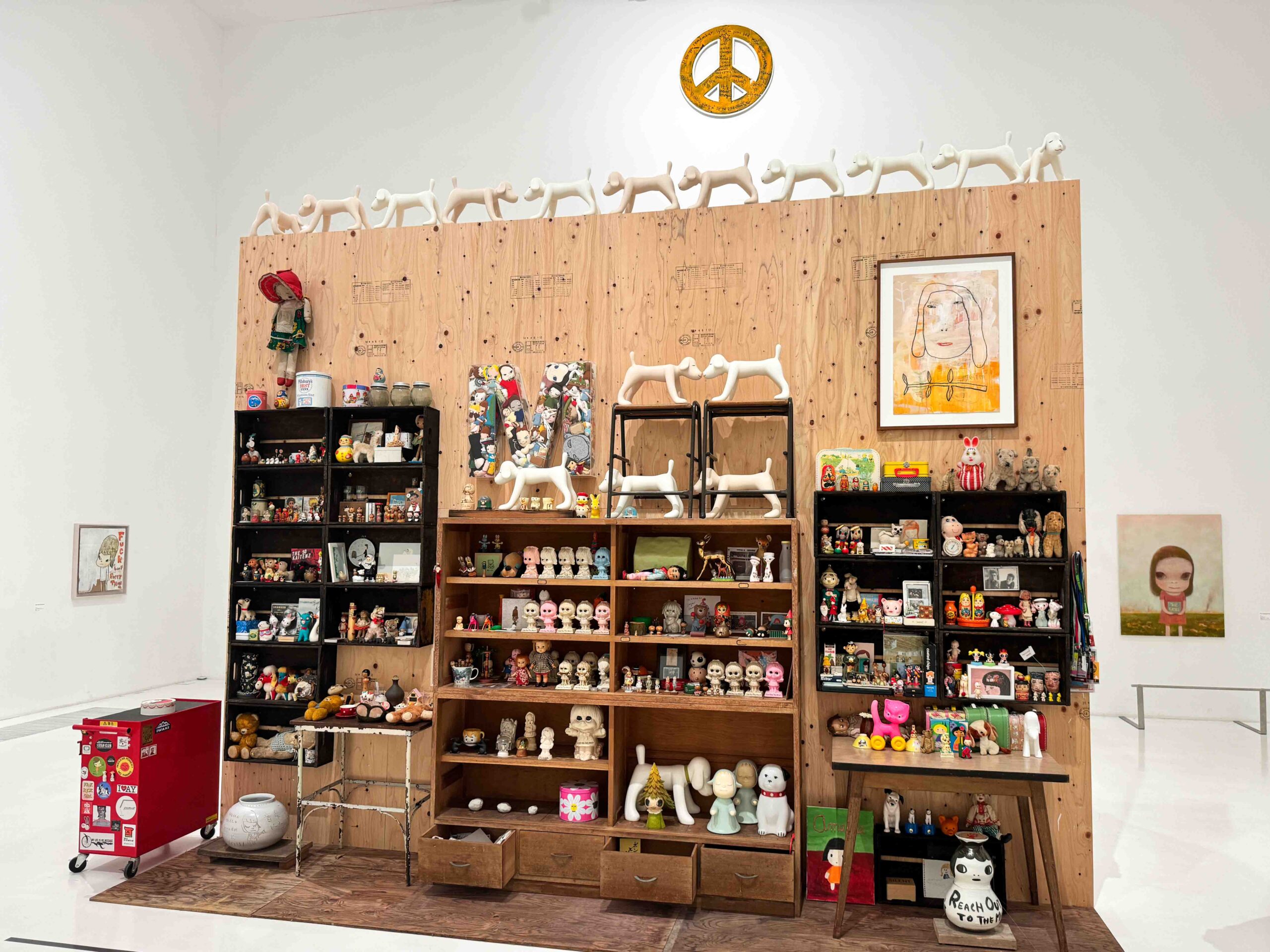
Anti-war messages and peace marks have been embedded in Nara’s works as a motif since his early period. This has become Nara’s own policy, shaped by the music of 1970s musicians who stood up against war and violence.
And after the earthquake, at demonstrations opposing the restart of nuclear power plants, his drawing “No Nukes” was reproduced with Nara’s authorization and held aloft as placards — one part of his ongoing work of embedding anti-nuclear messages in the public consciousness via subculture channels.
A white cube emerges as you walk down the corridor.
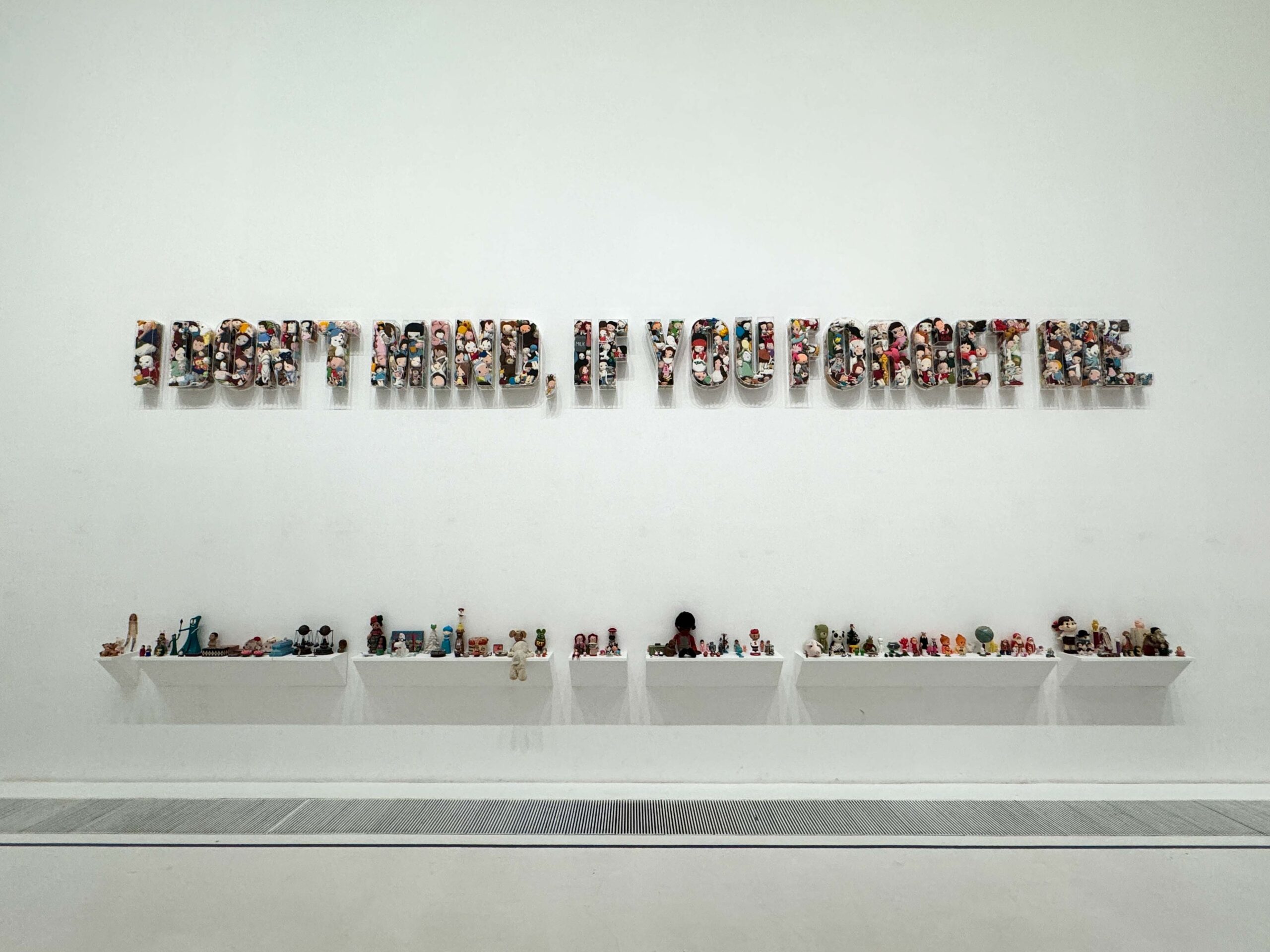
The message “I DON’T MIND, IF YOU FORGET ME.” is also the title of Nara’s 2001 solo exhibition at the Yokohama Museum of Art.
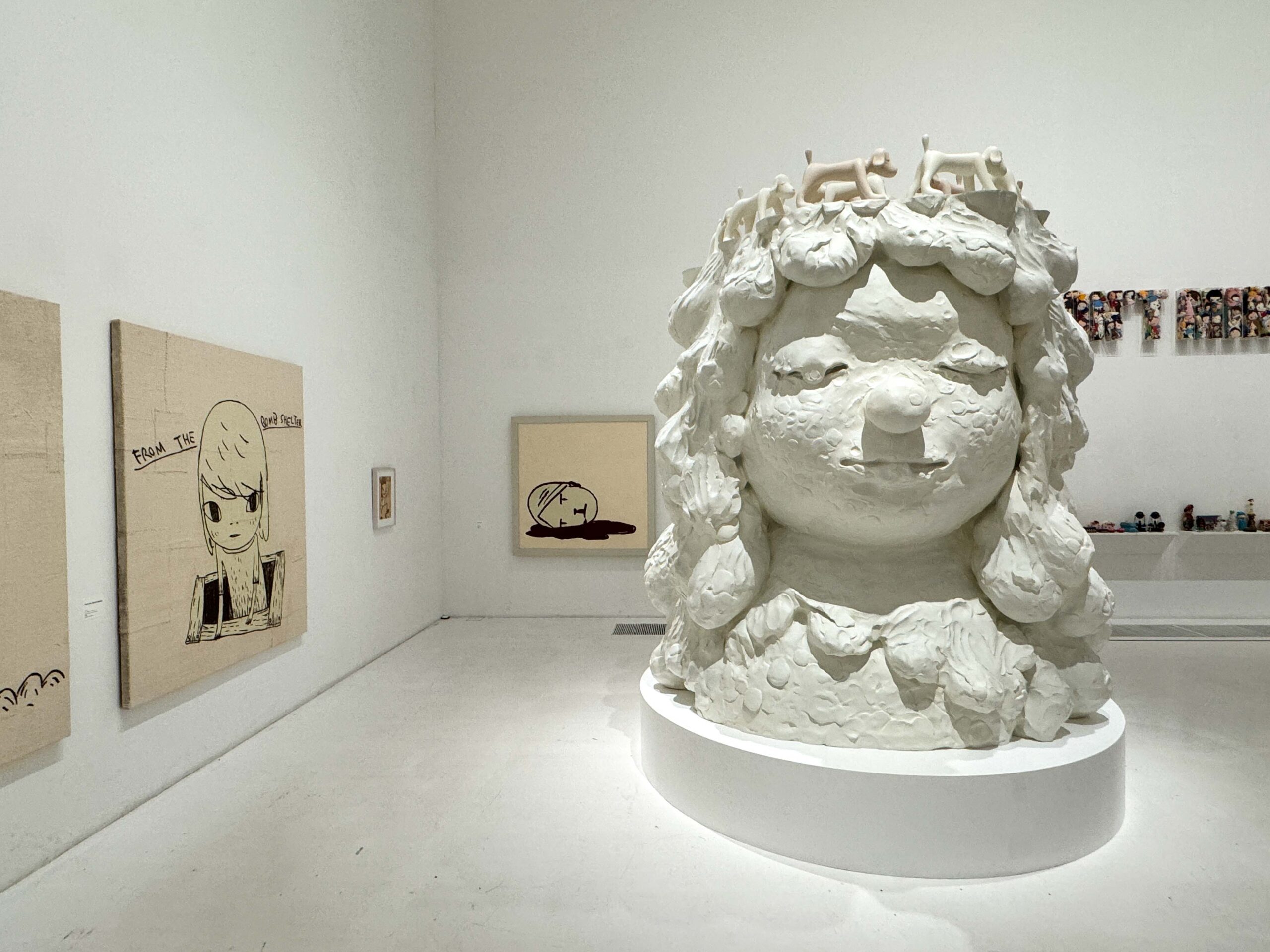
The installation “Altar of Peace,” set within the exhibition room, arranges toys Nara has personally collected in a distinctive configuration. Various toys also decorate the wall beside the altar, and Nara arranges all of these many items himself. In fact, Nara laid out the entire show himself — in only five days! “I’ve known this museum since it was being built; my body understands its structure and space. So installing the exhibition feels almost like redecorating my own room.” (Nara) In his talk show, Nara declared, “I’ve become convinced that I’m more talented at arranging things than at making them.” But during his student days he was known as “Nara Can” — Nara can do anything.
5. Rock café “33 1/3”
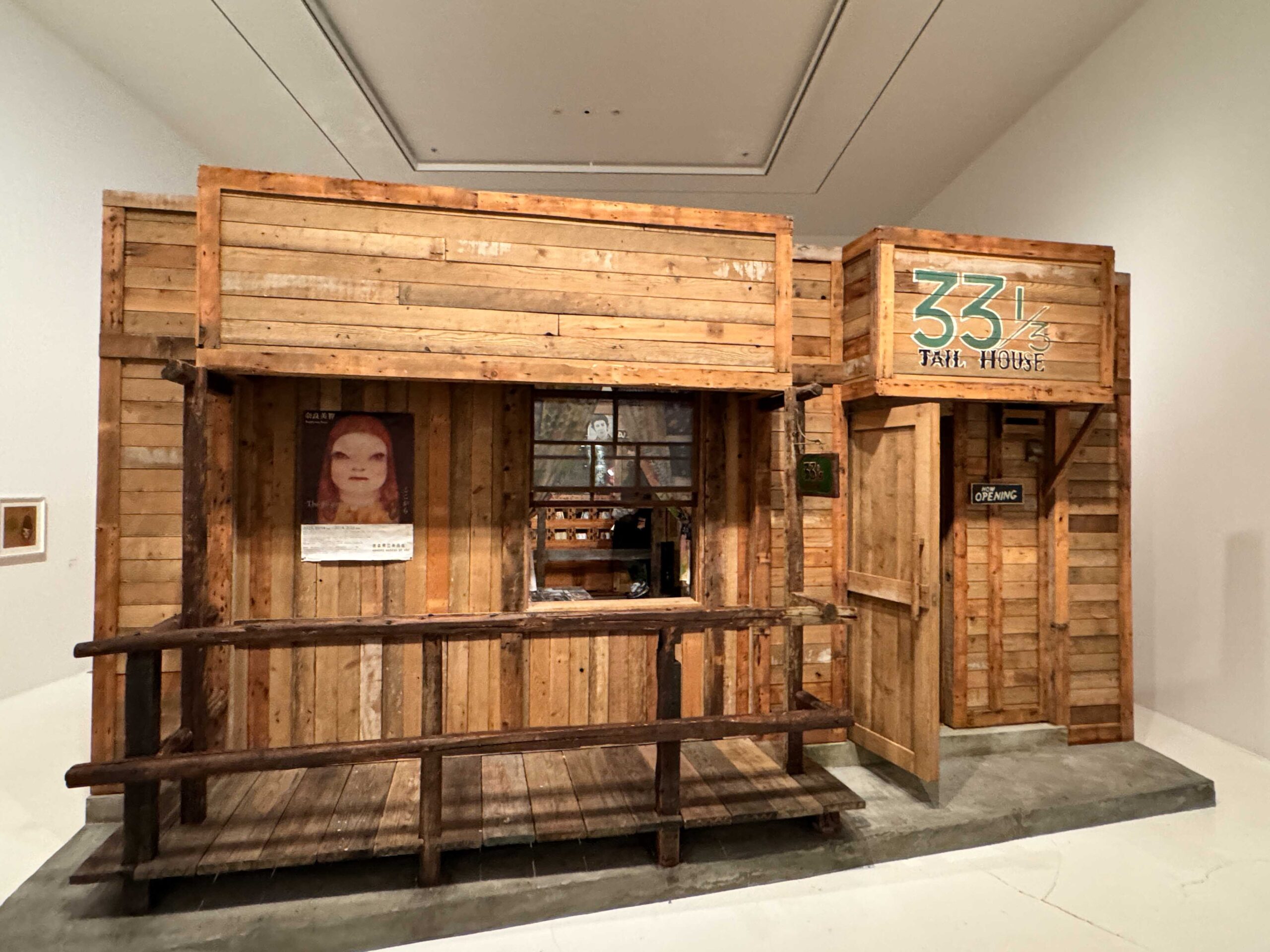
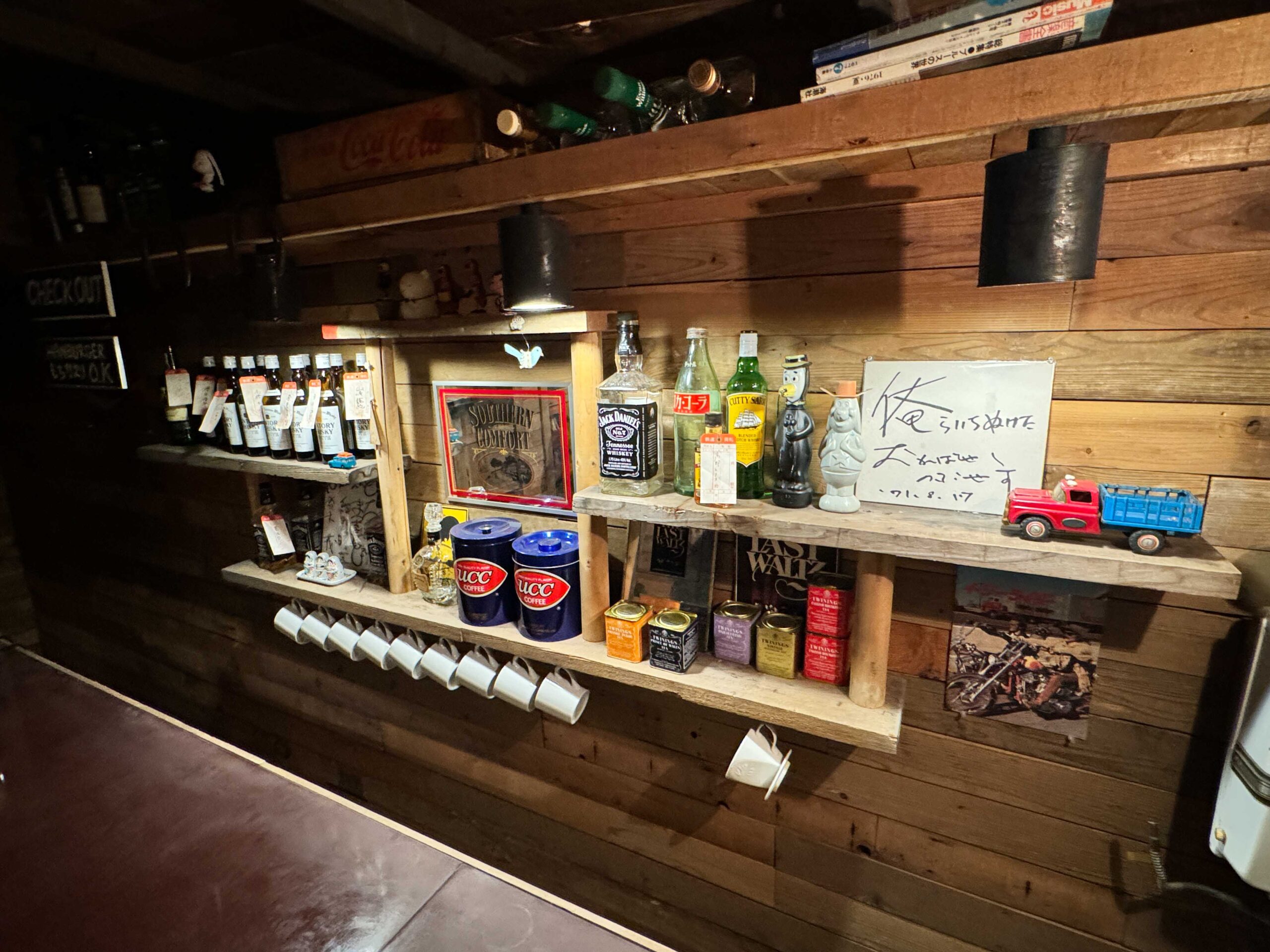
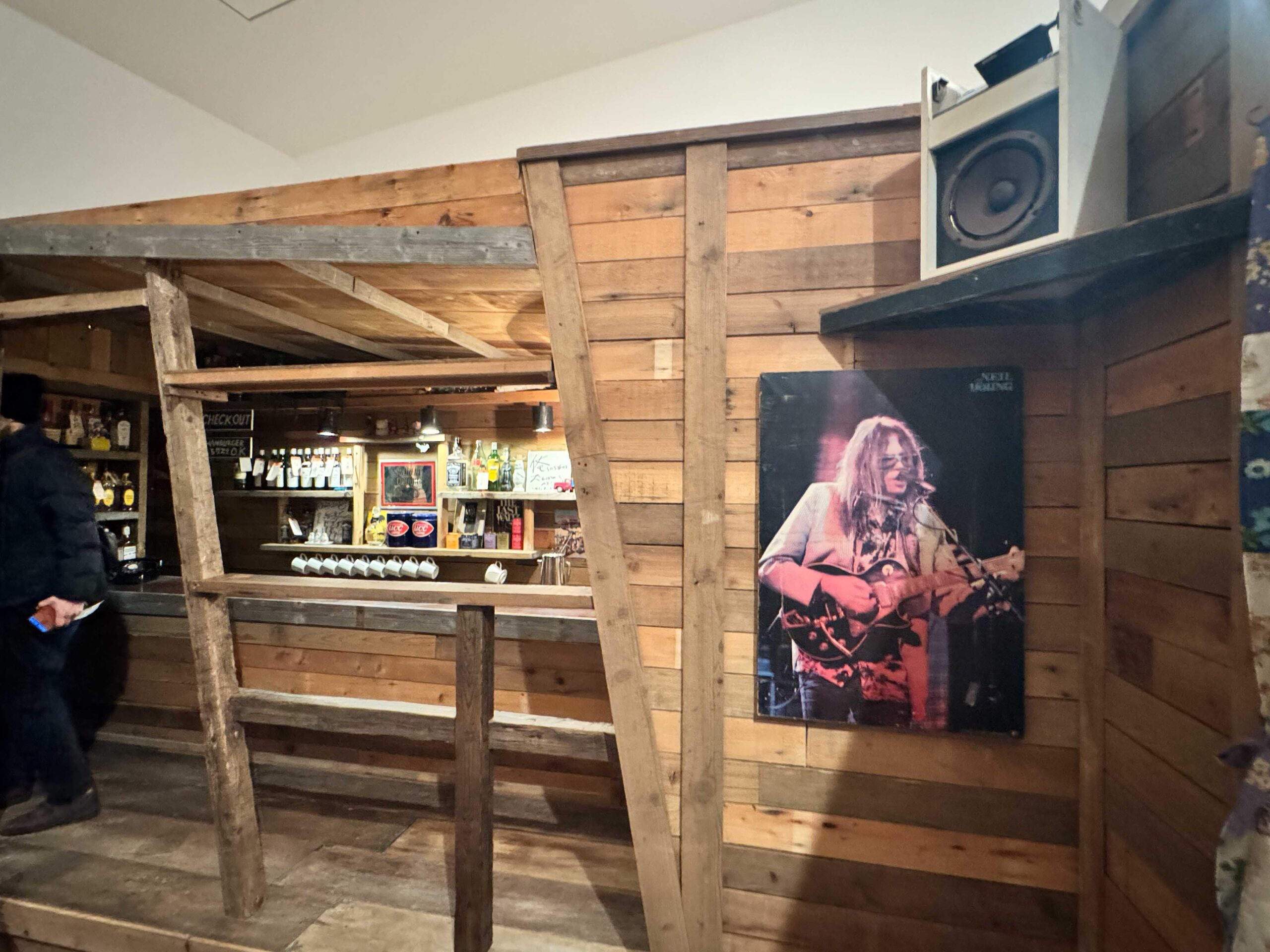
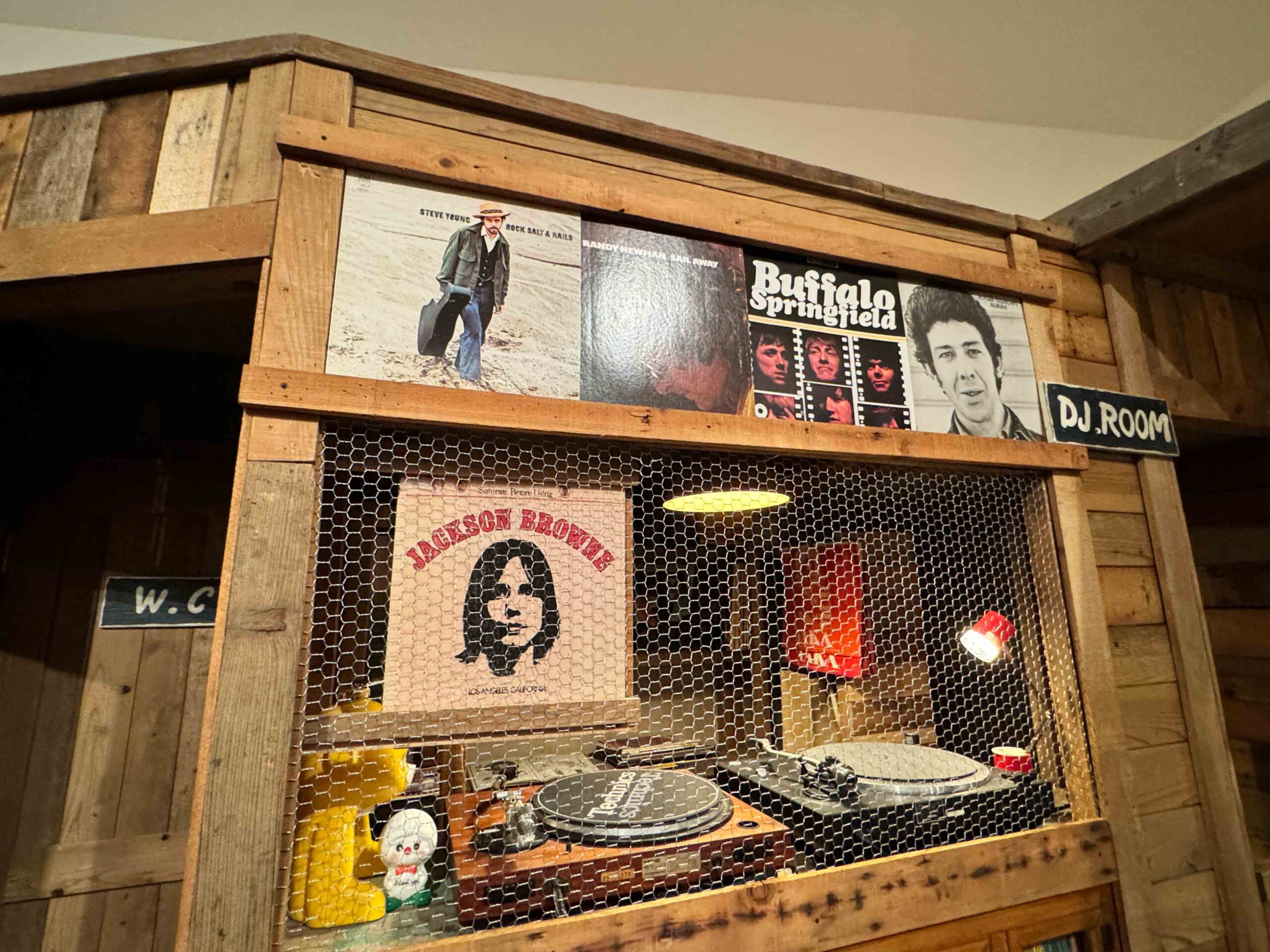
As a high school student in Hirosaki, Nara frequented local live music venues, and in his third year he was invited by an older friend to help build a rock café. They finished the exterior and interior of the building by hand, and Nara would step into the DJ booth to select and spin records. Interactions with the people who gathered there began, forming a small community. “That’s where I met, for the first time, friends I could do what I loved with. I realized that the rock café we made together was the starting point of my life.” (Nara) The rock café, which closed in 1980 and was demolished, has been faithfully reconstructed within the exhibition venue. It really does feel like slipping back in time — as if the young Nara and his friends were right there.
A section where you can experience Nara’s roots.
The café he actually ran has been reconstructed, offering a place where you can physically feel the musicality that resides in his works.
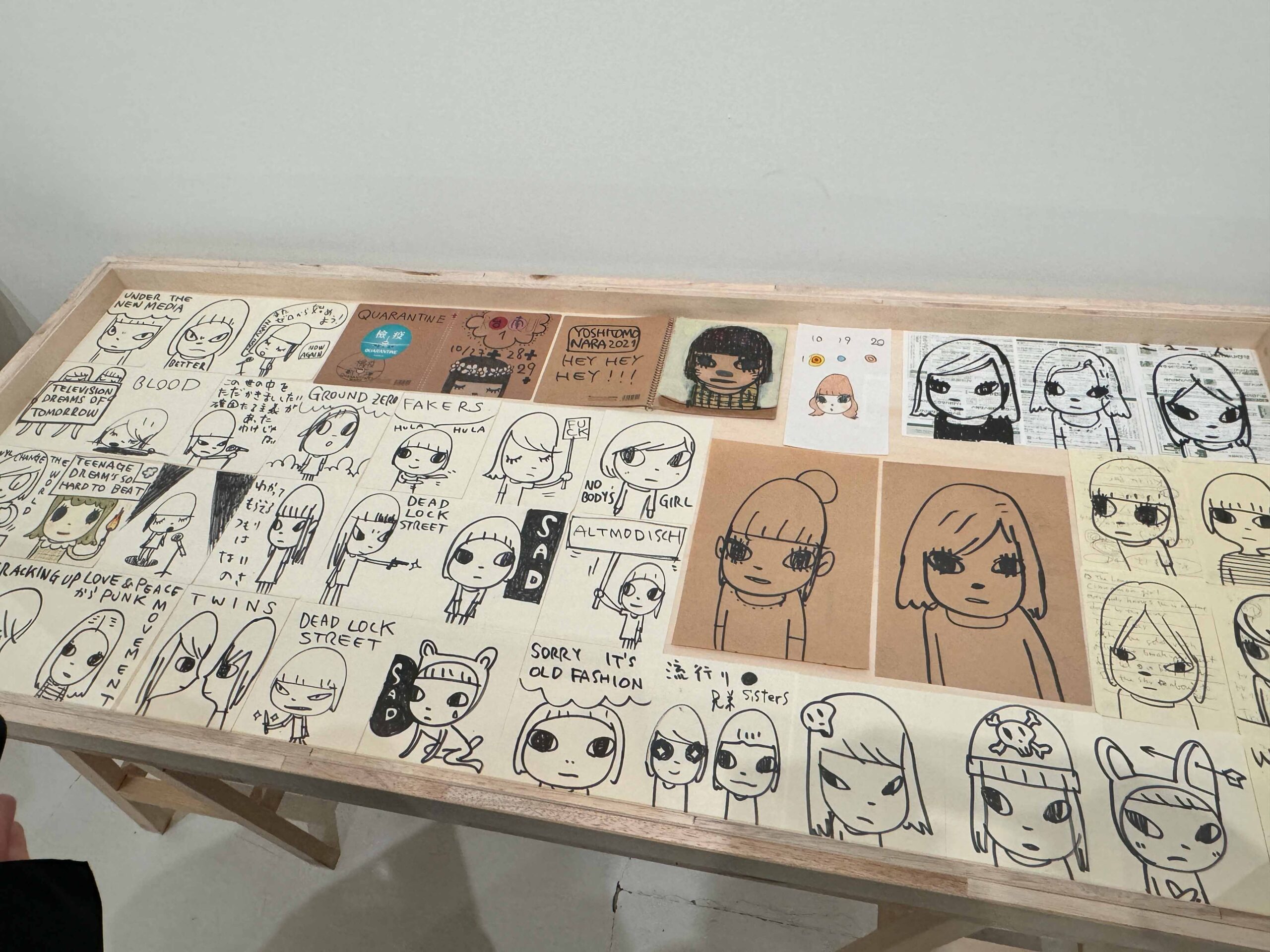
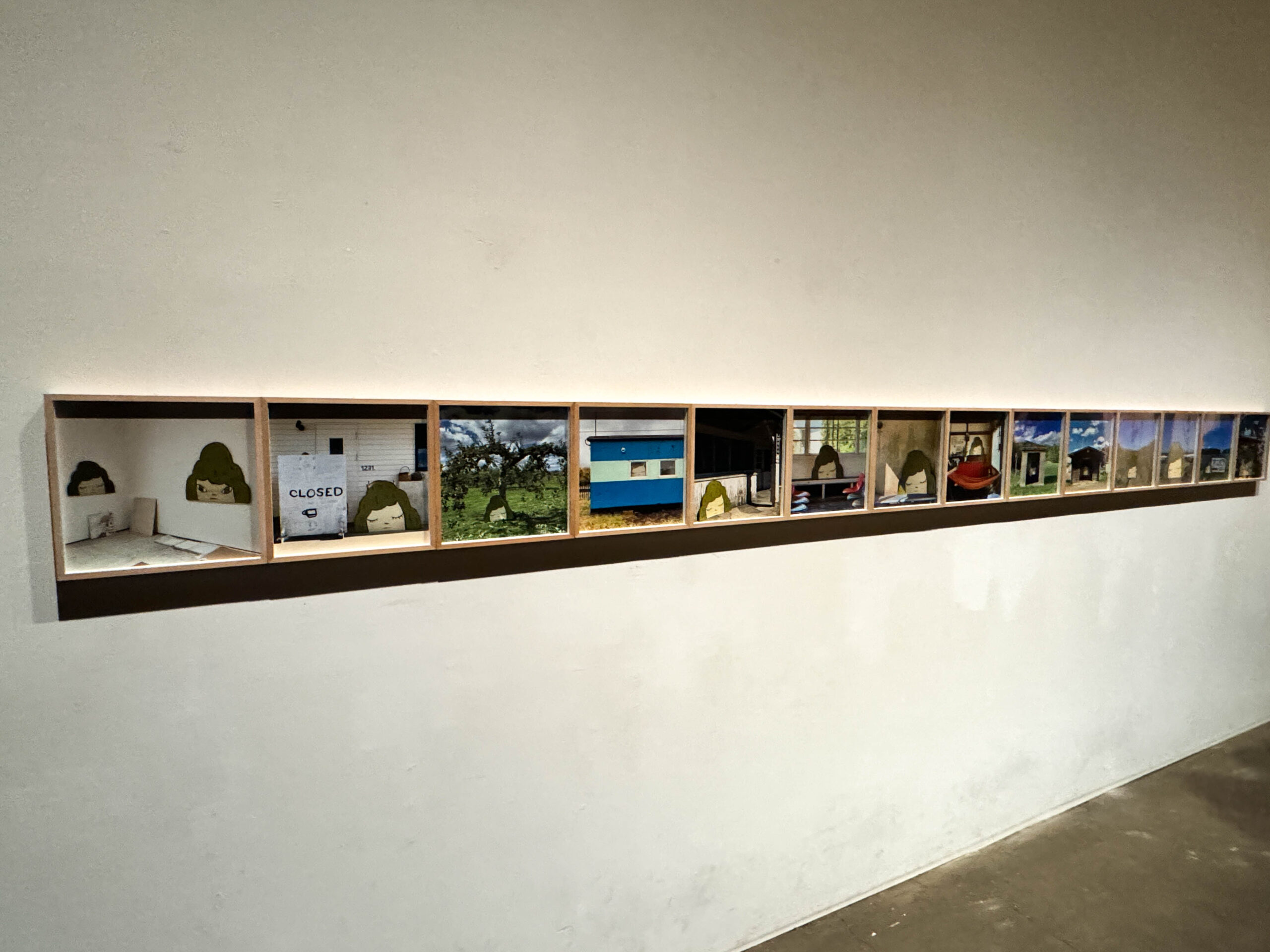
A magnificent solo exhibition that presented painting, drawing, sculpture, photography, installation, and other work styles all at once, from new pieces to older ones. Each of the many works Yoshitomo Nara creates overflows with originality and is rich in message, and there was a constant sensation of having our viewer’s hearts shaken.
It was a wonderful exhibition that made the meaning of its being held at this place, at this time, deeply felt.
Yoshitomo Nara: The Beginning Place
我在Aomori Museum of Art观看了Yoshitomo Nara的个展”Yoshitomo Nara: The Beginning Place”。
Yoshitomo Nara의 개인전 “Yoshitomo Nara: The Beginning Place”를 Aomori Museum of Art에서 보았습니다.
국내의 현역 현대미술 작가이자 세계적으로 활약하는 Yoshitomo Nara의 고향에서 열리는 개인전이라 계속 보러 가고 싶었으나, 마지막 날에 겨우 슬라이딩으로 관람할 수 있었습니다.
순회전도 없기 때문에, 아오모리까지 발걸음을 하지 않으면 볼 수 없는 귀중한 전시였습니다. 아래는 포토 리포트로 정리해 두었습니다.
전시 구성은 크게 다섯 부분으로 나뉘어 있었습니다.
1. 집
1980년대의 초기 작품이 한데 모아 소개되는 것은 본 전시가 처음입니다. Yoshitomo Nara가 독일로 가기 이전의 작품에서는 “집”이 빈번한 모티브로 등장했습니다. 가장 최초의 작품은 《A landscape with “Kaccho”》(1979)입니다. “Kaccho”란 츠가루 지방에서 바람을 막기 위해 세운 목책을 뜻합니다. “제가 봤을 때는 부끄러워서 도저히 못 내놓을 유화입니다. 친구가 제가 버린 것을 굳이 주워서 갖고 있었습니다.”(Nara)
이는 Yoshitomo Nara가 예비학교에서 강사로 있을 때 그의 학생이었던 Hiroshi Sugito가, Nara가 방치한 작품을 발견해 보관하고 있던 것으로, 본 전시가 첫 공개입니다.
지금까지의 화력 속에서 반복하여 그려져 온 소녀상은 근래 복잡한 물감 층에 기반한 색채 표현에 의해, 애매한 윤곽선의 깊이에서 태어난 작품으로 변천해 왔습니다. 여러 겹으로 쌓아 올린 레이어(적층)에 불어넣어진 생명이, 마주하는 이의 감성을 흔들어 놓습니다.
“우연을 필연으로 받아들이는 방식으로 항상 그리고 있어서, 한쪽 눈을 잘 못 그리면 반창고를 붙인다든가, 그 자리에서 떠오르는 것을 하고 있어요. ······끝까지 해서 겨우 알아차리는 방식.”(Nara)
매번 그리는 방법이 다르다고 Yoshitomo Nara는 말합니다. 만들고 싶은 그림은 항상 뇌 주름의 깊은 곳에 있고, 다양한 사고를 반복하며 최종적으로 “떠오르는” 순간에 도달한다고 합니다.
신작 《Midnight Tears》에서는 삼켜지는 듯한 감상 체험을 느꼈습니다.
Yoshitomo Nara 《Midnight Tears》2023 작가 소장《Midnight Tears》Details
3 여행
2011년 동일본대지진을 만나 Yoshitomo Nara 자신에게도 모든 방향 전환이 일어났습니다. 붓을 드는 것도 캔버스를 매는 것도 할 수 없어, 무언가를 찾아 헤매며 점토를 만지기 시작했습니다. “여름부터 겨울까지 맨손으로 점토와 격투하는 가운데 재활을 진행하고. ······점토와 대화하고 있으면 생각하지 않아도 됩니다. 그 속에서 자신의 뿌리와 도호쿠에 대해 생각하고, 조사하게 되었습니다.”(Nara)
4 No War
초기 작품부터의 모티브로서 반전 메시지와 피스 마크가 Yoshitomo Nara의 작품에 내포되어 왔습니다. 그것은 1970년대, 전쟁과 폭력에 대항한 뮤지션들의 음악에 영향을 받은 Nara의 폴리시가 되어 있습니다.
그리고 지진 이후 원전 재가동에 반대하는 시위에서, 드로잉 “No Nukes”가 Nara의 공인을 받아 복제되어 플래카드로 내걸리는 등, 서브컬처적인 방식으로 대중에게 반원전 메시지를 침투시키는 활동을 이어 왔습니다.
복도를 걸어가면 나타나는 화이트 큐브.
“I DON’T MIND, IF YOU FORGET ME.”라는 메시지는, 2001년에 개최된 Yokohama Museum of Art에서의 개인전 타이틀이기도 합니다.
전시실 안에 만들어진 인스톨레이션 “평화의 제단”은, Yoshitomo Nara가 개인적으로 모아 온 장난감이 독특한 배열로 늘어서 있습니다. 이 제단 옆 벽면에도 여러 장난감이 장식되어 있지만, 이 정도의 물량을 Nara는 스스로 배치하는 작업을 하고 있습니다. 애초에 회장 전시 전체를 Nara가 배치하고 있으며, 그것도 단 5일 만에! “여기 미술관, 지어질 때부터 알고 있어서 구조나 공간을 몸이 파악하고 있어요. 그래서 전시도 자기 방 인테리어를 바꾸는 정도의 감각으로.”(Nara) 토크쇼에서도 “나는 물건을 만드는 것보다, 물건을 배치하는 편에 재능이 있다고 확신했다”라고 말하는 Nara였지만, 학생 시절에는 무엇이든 할 수 있는 사람으로 “Nara Can”이라는 별명으로 불렸다고 합니다.
5 록카페 “33 1/3”
히로사키에서 고등학생 때 지역 라이브하우스에 출입하던 Yoshitomo Nara는, 고등학교 3학년 때 선배의 권유로 록카페 점포 만들기에 참여했습니다. 손수 건물 외장부터 내장까지 마무리하고, DJ 부스에 들어가 레코드를 골라 틀었습니다. 그곳에 모여드는 사람들과의 교류가 시작되어 작은 공동체가 되어 있었습니다. “거기서 저는 처음으로 좋아하는 일을 할 수 있는 동료들과 만났습니다. 다 함께 만든 록카페가 제 출발점이 되어 있구나 하고요.”(Nara) 1980년에 폐점되어 철거된 록카페가 전시 회장에 충실히 재현되어 있습니다. 그야말로 시간을 거슬러, 그곳에 당시의 Nara와 그의 친구들이 있는 듯한 감각에 잠길 수 있습니다.
Yoshitomo Nara의 뿌리를 체험할 수 있는 섹션입니다.
실제로 운영하던 카페가 재현되어 있으며, 작품에 깃든 음악성을 체감할 수 있는 장소입니다.
페인팅, 드로잉, 조각, 사진, 인스톨레이션 등 다양한 작품 스타일이, 신작에서 과거작까지 한 번에 전시된 훌륭한 개인전이었습니다. Yoshitomo Nara가 표현하는 다양한 작품에는 오리지널리티가 넘쳐 흐르고, 메시지가 풍부하여, 우리 관람자의 마음이 흔들리는 감각이 항상 있었습니다.