The art unit “exonemo,” made up of Kensuke Sembo and Yae Akaiwa.
Based in New York, they staged a rare Japan solo exhibition. The venue is WAITINGROOM gallery in Edogawabashi.
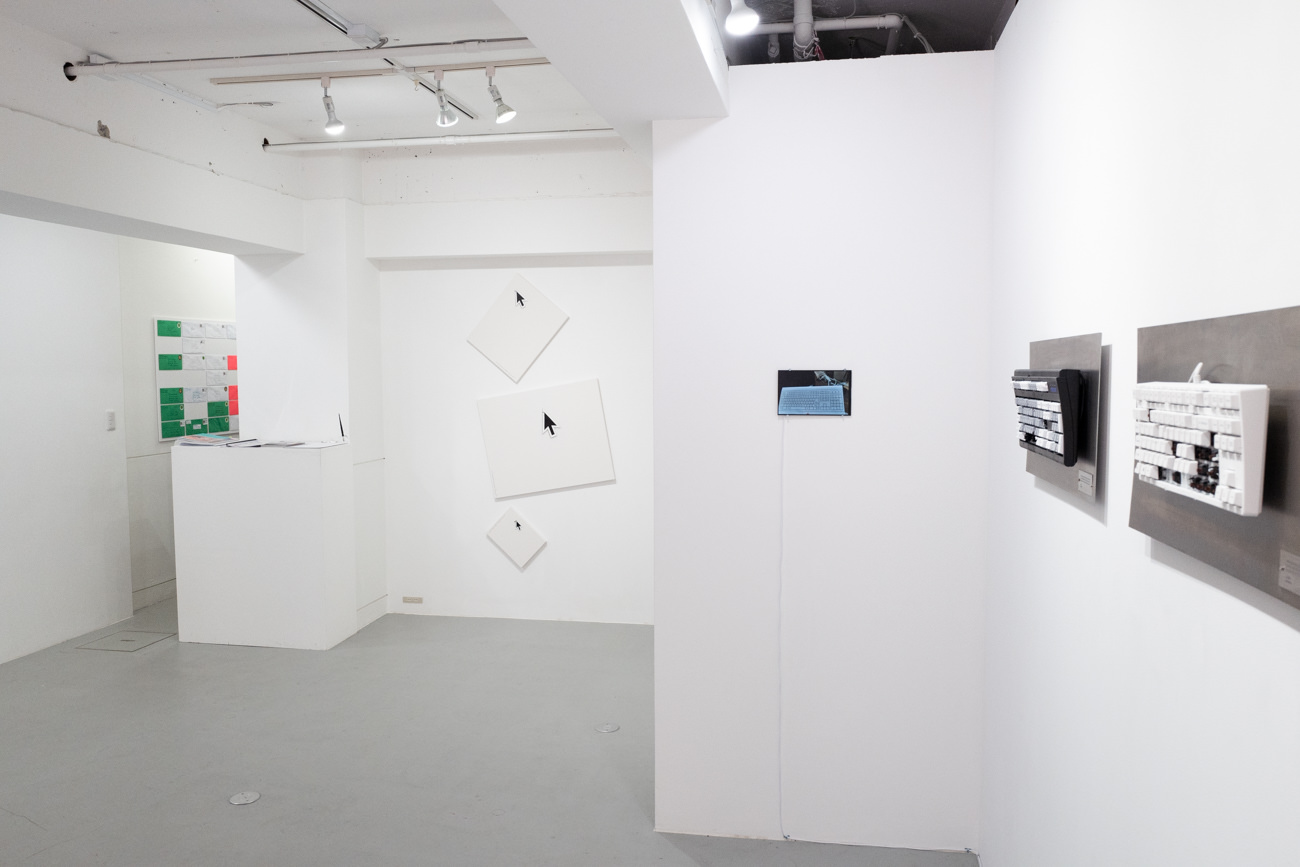
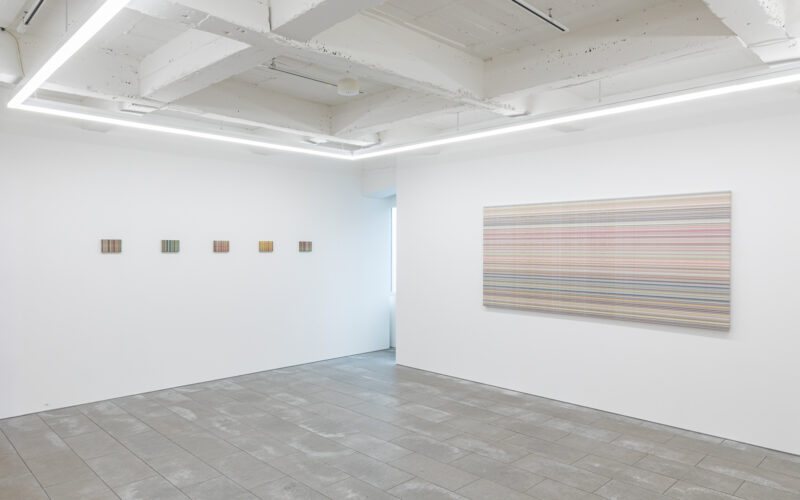
Installation view
The exhibition presented a number of works that connect digital society to physical reality, posing questions directly to the viewer.
Artist Statement
“The title of this exhibition, ‘LO,’ comes from the very first message transmitted in 1969 (50 years ago) on ARPANET, the prototype of the internet.
Someone tried to type ‘LOGIN,’ but after ‘LO’ was sent, the system crashed. The following ‘G’ was never transmitted, and those two letters became the opening words of the internet age.
exonemo let their imagination run: if the word that followed ‘LO’ at that world-branching moment had not been ‘G,’ perhaps it would have been ‘VE’ (LOVE), or perhaps ‘L’ (LOL).
The fact that an ‘incomplete message’ shaped the present as it now stands is, in a sense, telling. It’s precisely because a message is incomplete that something else can come through — and from there, something aberrant can be born.
This exhibition assembles exonemo’s new and older works (including remixes), summons up an incomplete message from them, and asks the viewer what should come next.” — exonemo
Shotgun text
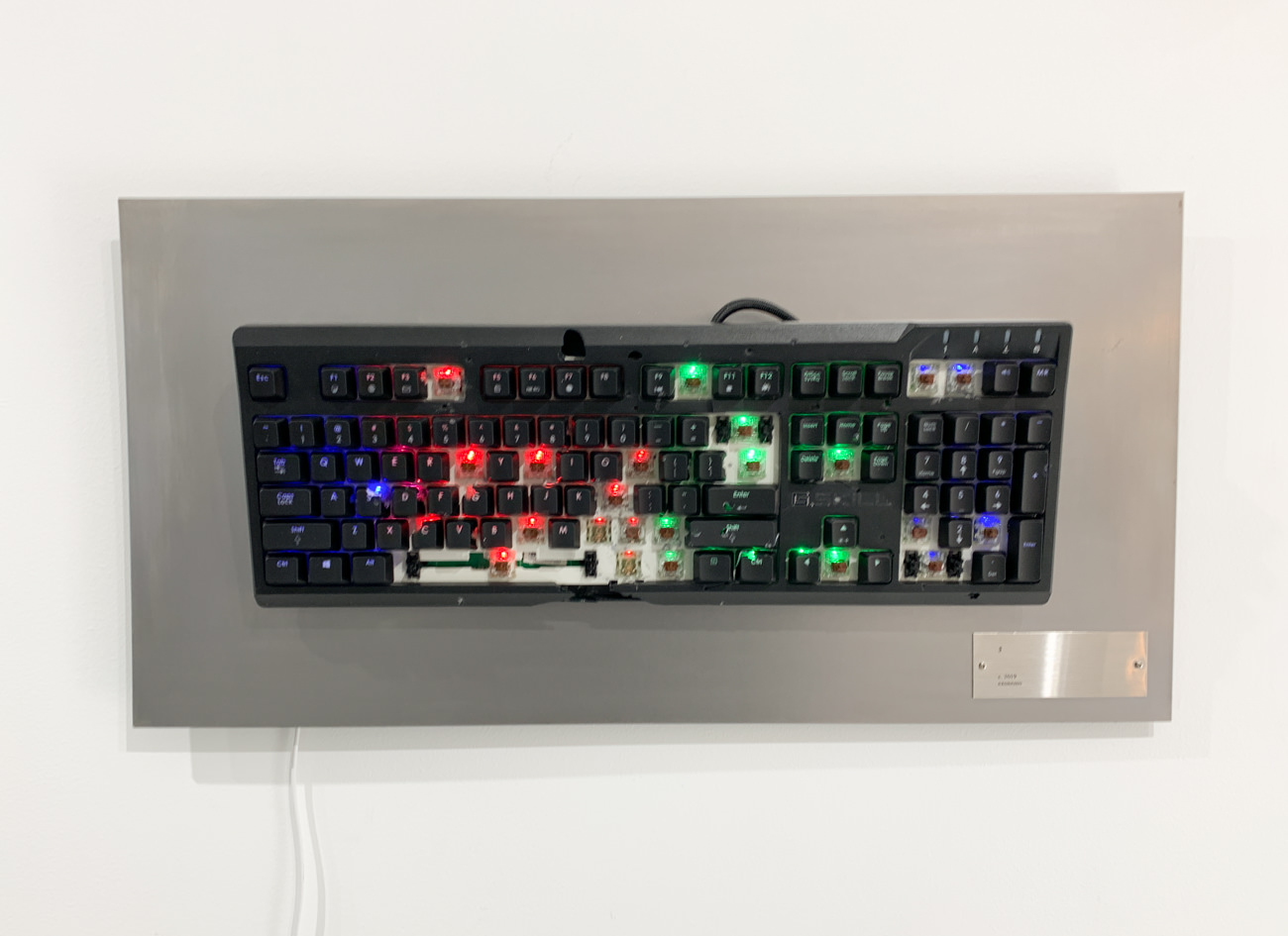
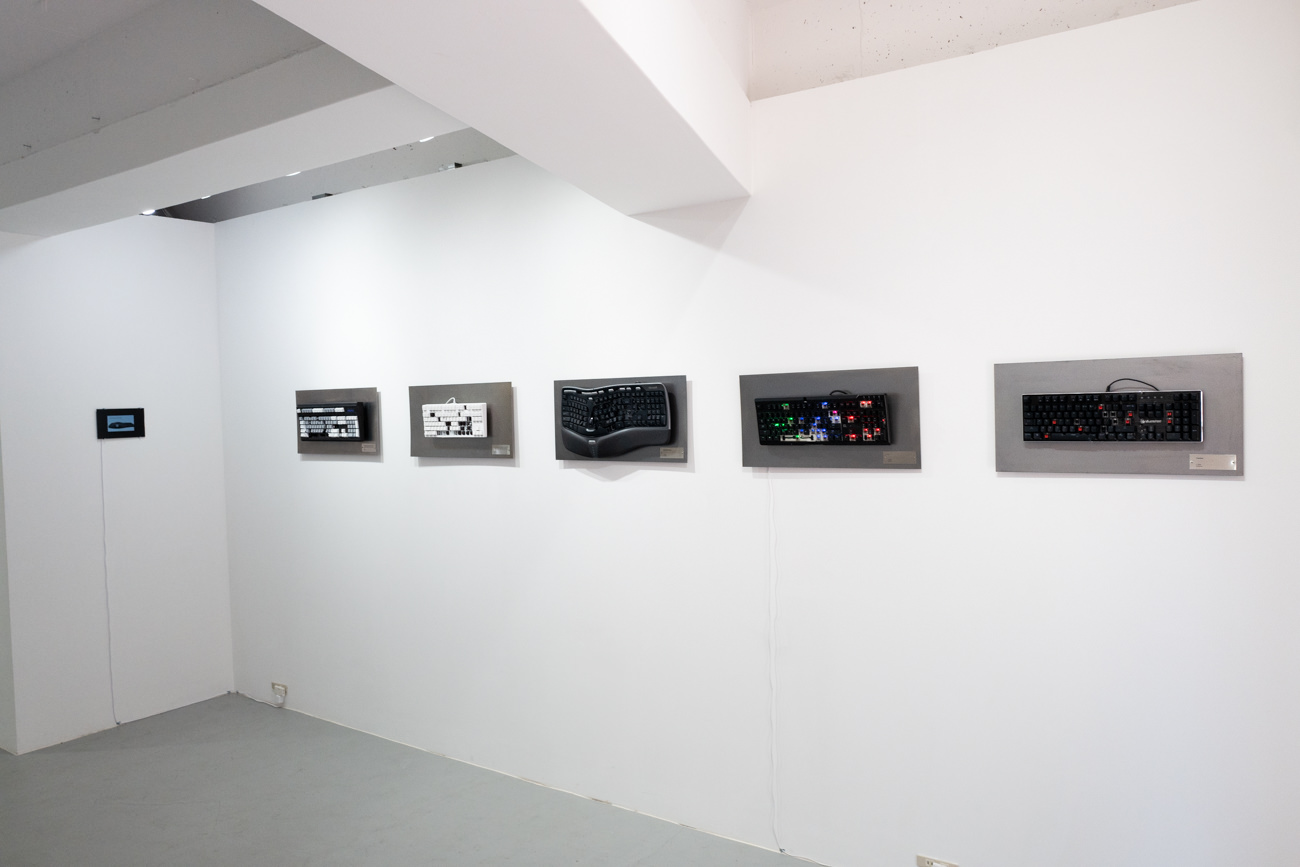
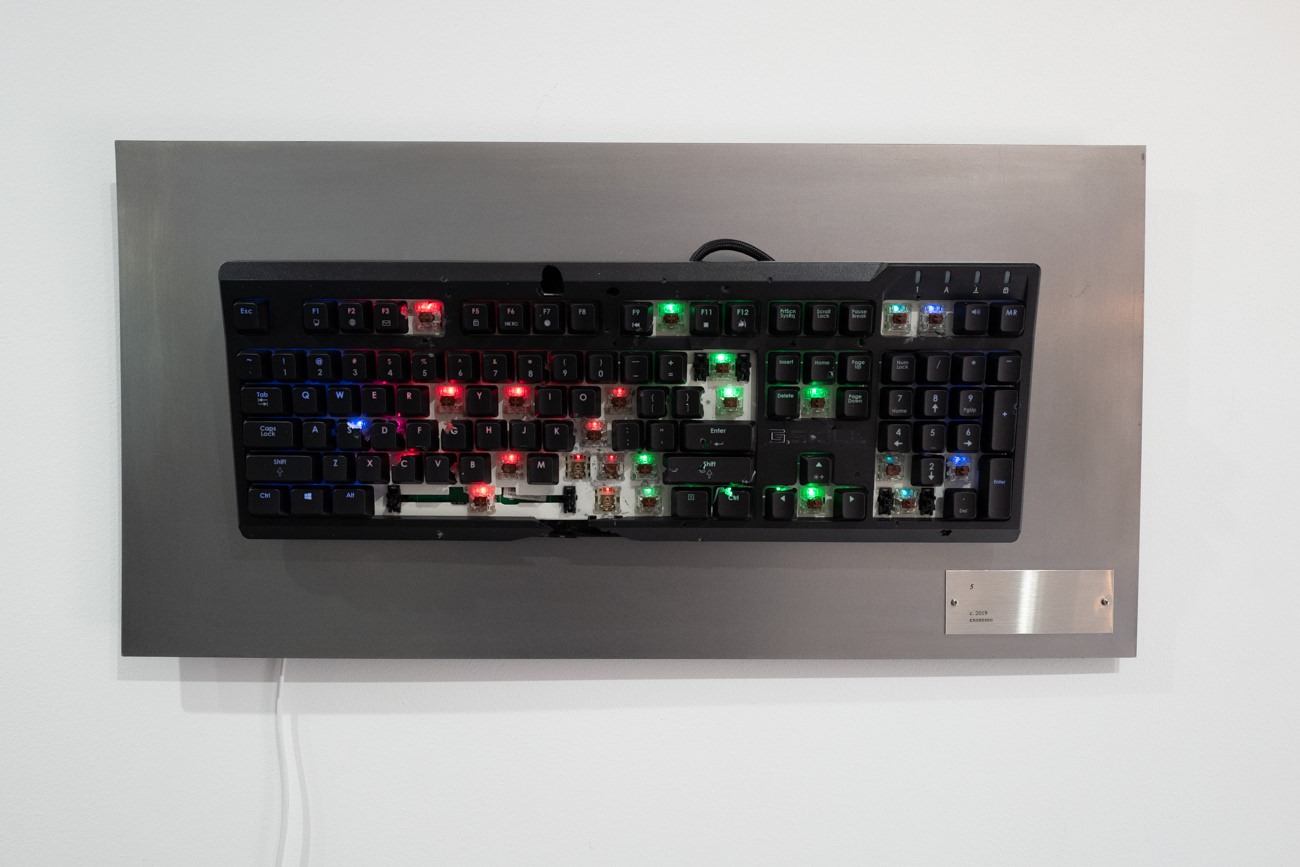
The first things to catch the eye upon entering the venue were PC keyboards. Each of them has keys missing and is broken.
This is the “Shotgun text” series.
“Shotgun text” series — installation view
The “Shotgun text” series consists of works in which an active keyboard is shot to pieces with a gun.
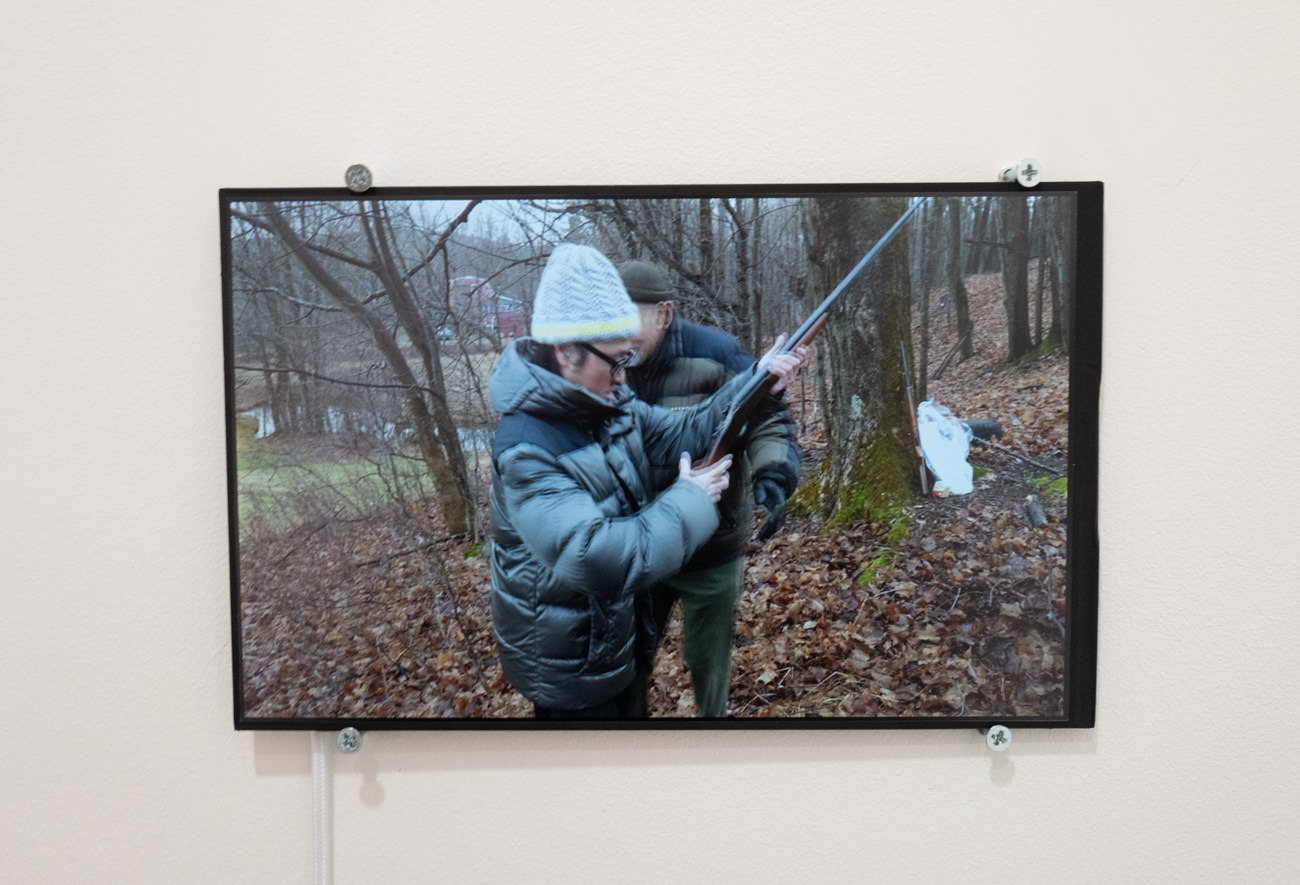
Training with a rifle-toting instructor — from the video
It’s a bit hard to describe, but it’s an act of destruction like the one in the video below.
The ‘input signal’ punched into the keyboard at the moment of a bullet’s impact becomes the title of the work as is.
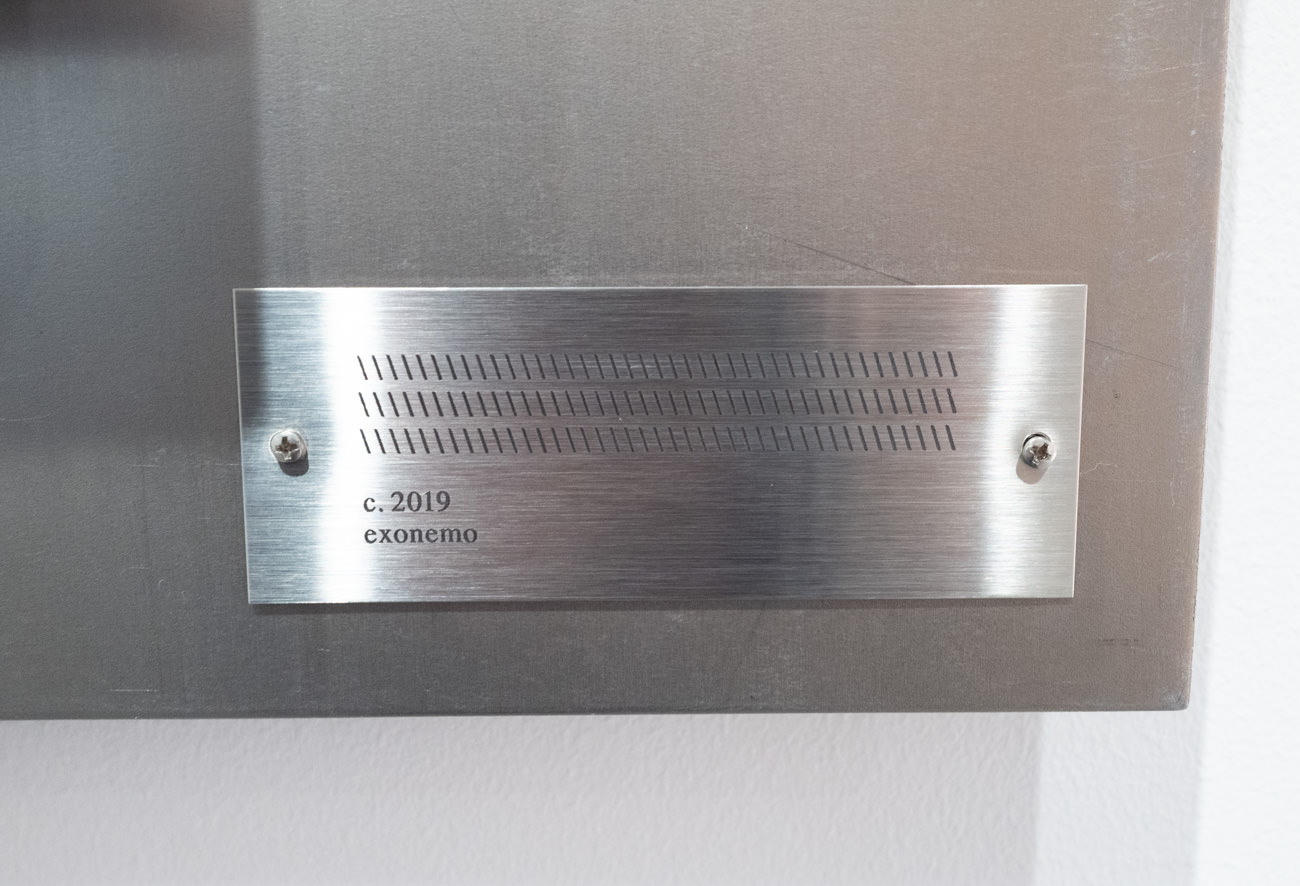
The work’s caption credits the machine-gun-fired “/////////////////////////”.A keyboard whose backlight was still alive even after being destroyed. It was left plugged in and displayed as-is
Click and Hold
The “Click and Hold” series is a fairly unique set of works.
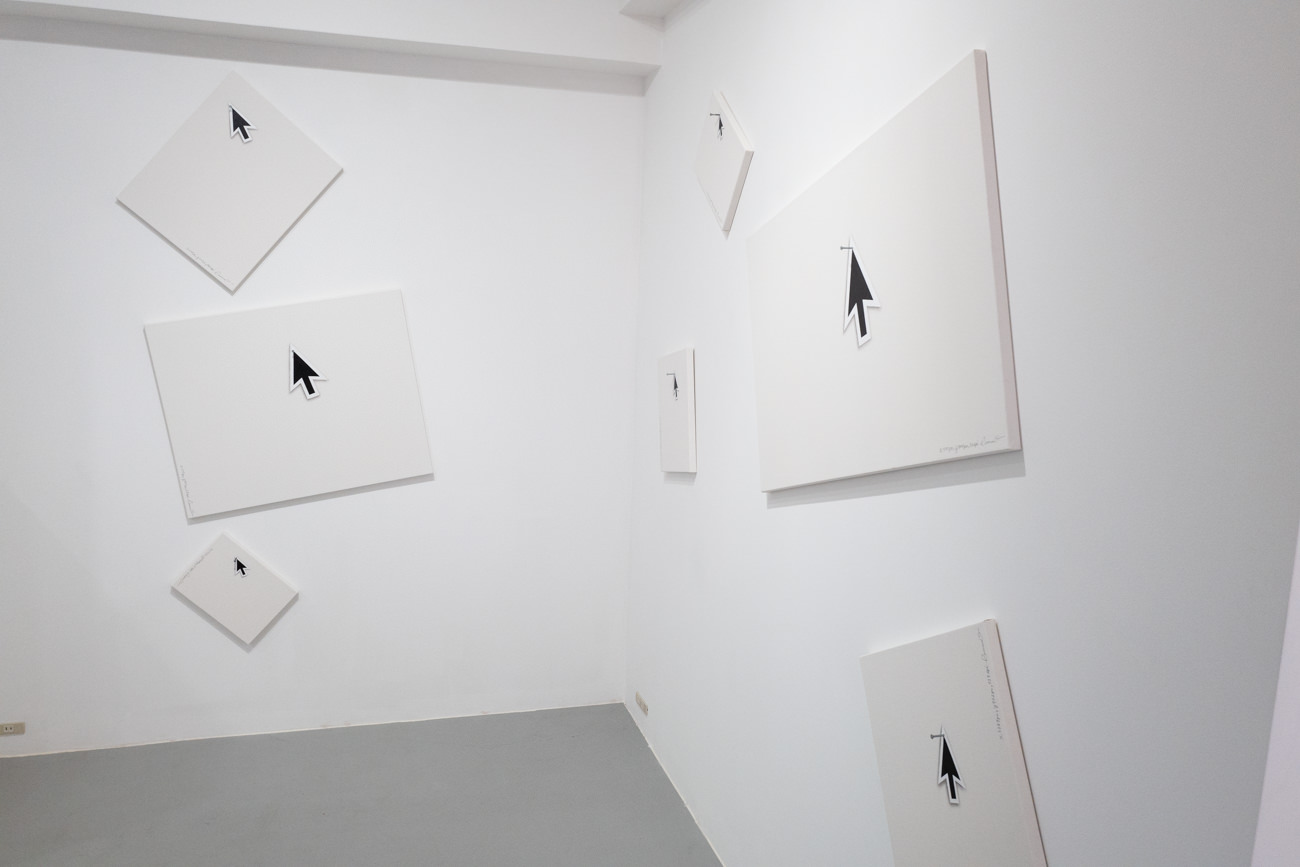
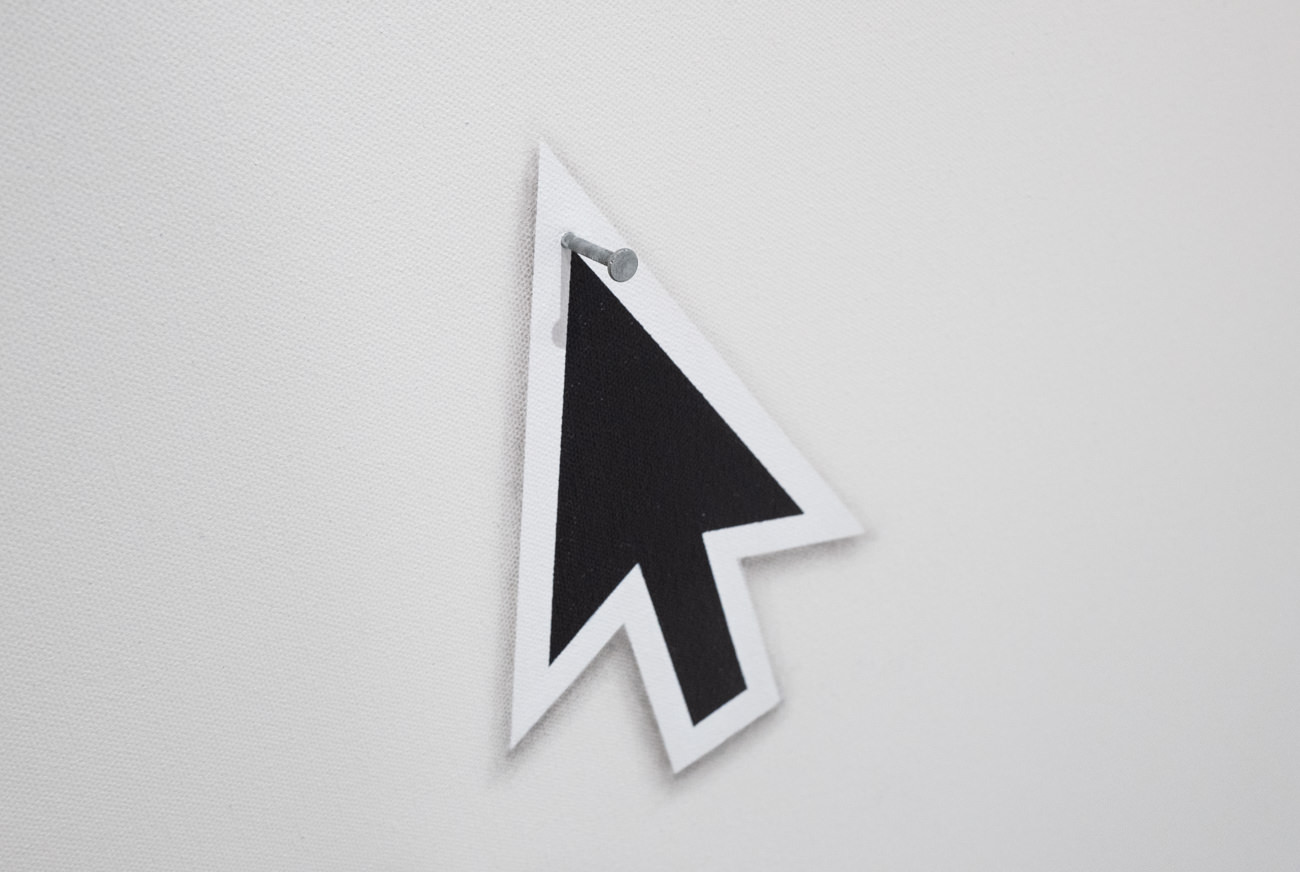
What is depicted on the white canvas is a mouse pointer (arrow).
You notice that the size of the arrow changes depending on the size of the canvas.
“Click and Hold” series — installation view
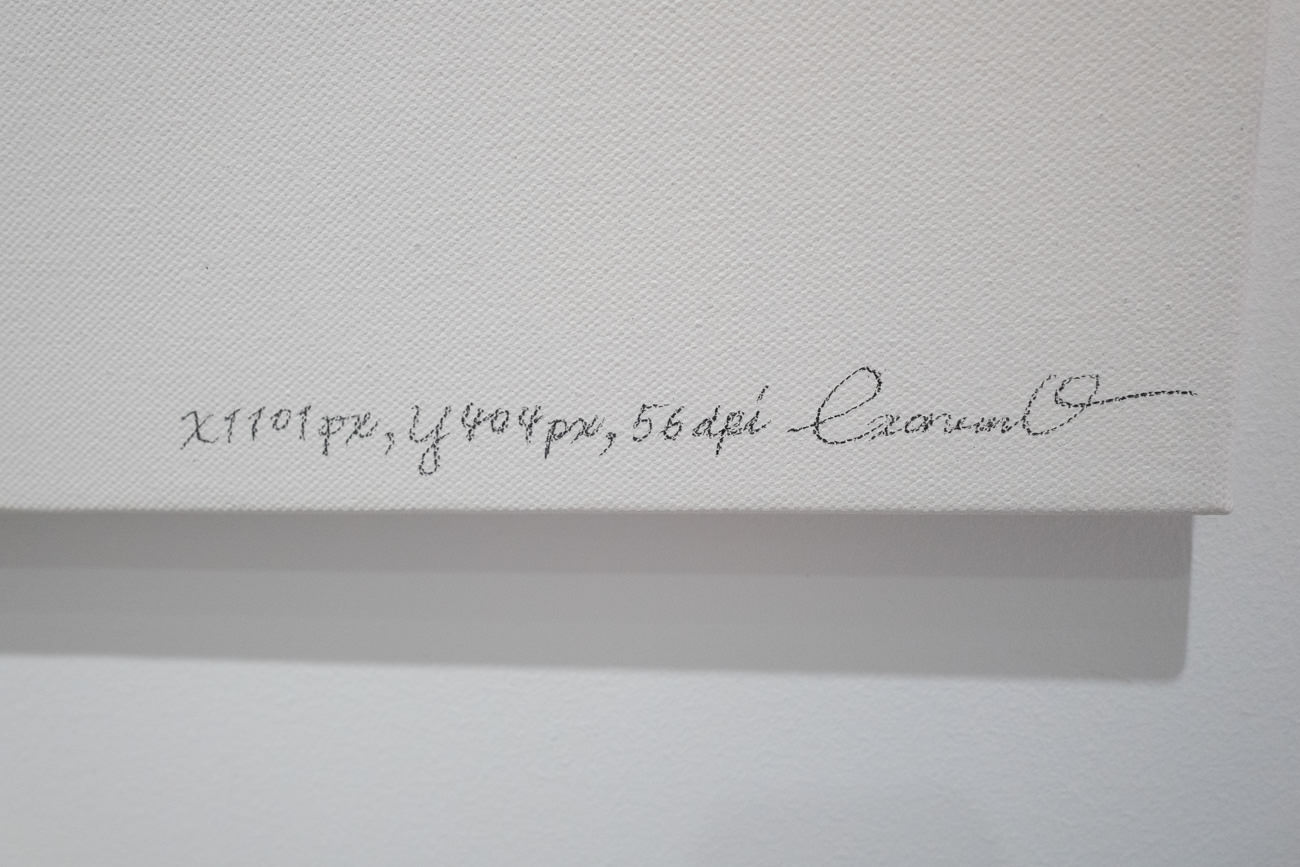
Looking closely, pixel and dpi notations have been left on the work.
These are works in which the corner of the canvas is taken as the origin of a coordinate system, the X and Y axes are traversed by the pixel value across the canvas, and the mouse pointer is nailed into place at that point.
Coordinates and resolution credited at the corner of the canvas, with a signature
The canvas came in three sizes — large, medium, and small — of the same work.
What was interesting was the price. Astonishingly, all works were a flat 200,000 yen (excluding tax).
Art works generally rise in price as the size grows, but because these convert digital data into artworks, they are priced on the premise that “the only difference is resolution — they are all the same digital work.”
A nailed-down arrow
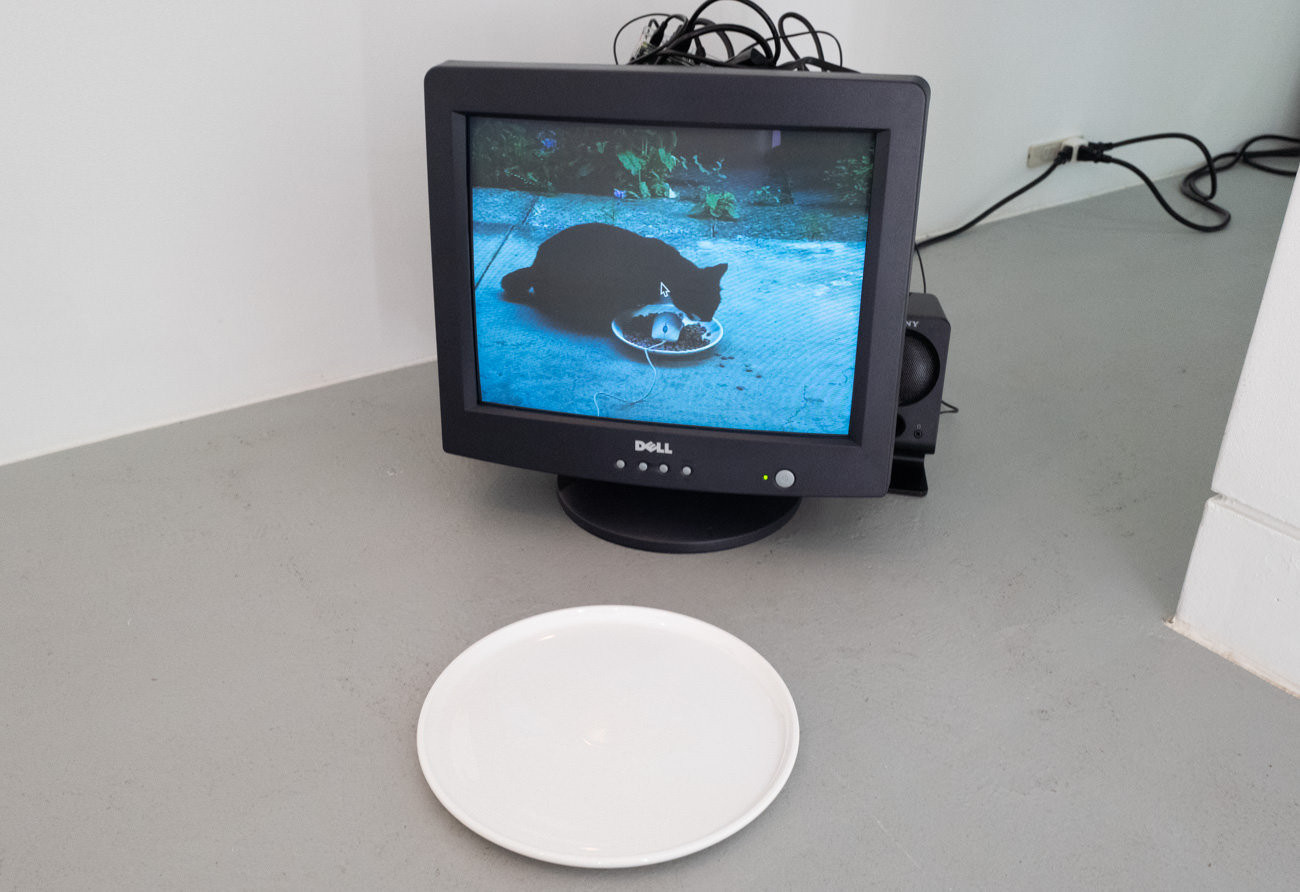
A cat eating nonstop inside a monitor. On top of that sits a powered-on mouse.
Look at the center of the monitor and you’ll see a mouse pointer, but the cat’s movements as it eats are cunning — it never touches the mouse inside its dish.
The immobile mouse pointer inside the monitor and the cat cheerfully munching away form an interesting contrast.
“Cat and Mouse (Excerpt from Danmatsuma)”
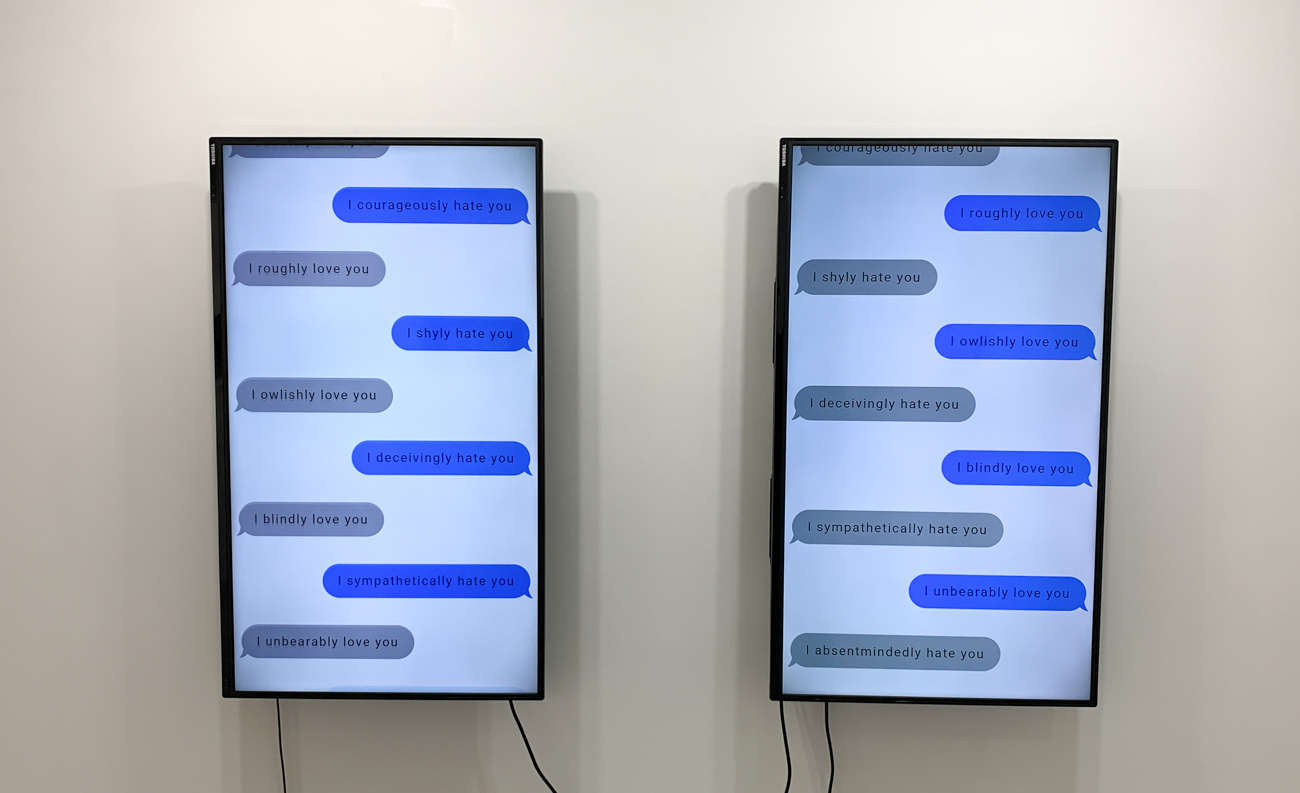
Displayed on two vertical monitors is the work “I randomly love you / hate you.”
Random words are inserted before “love you” and “hate you,” producing a stream of dialogue that never quite lines up.
“I randomly love you / hate you” 2018
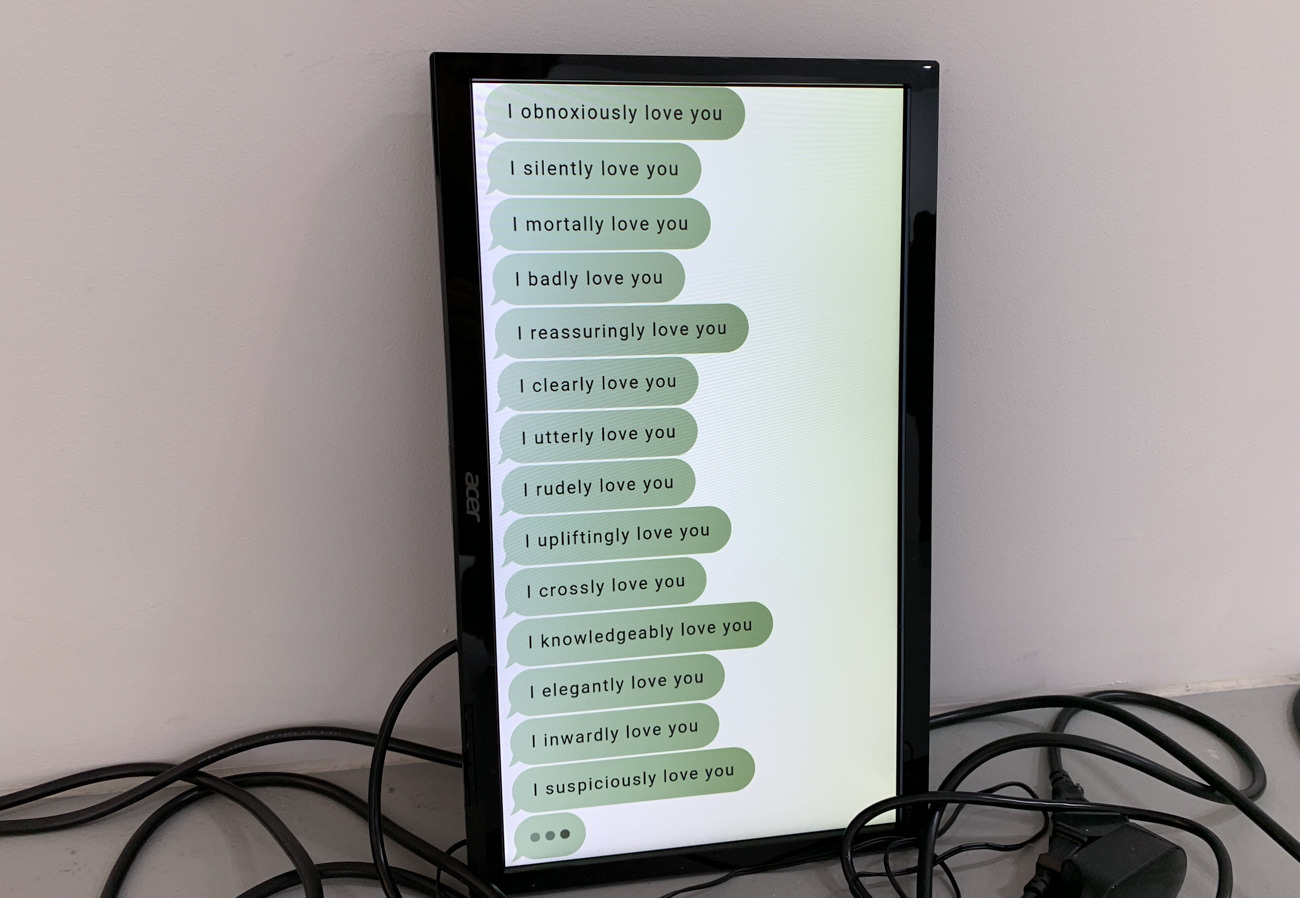
“I randomly love you,” made with a single monitor, is a work in which one person murmurs love endlessly.
It’s a world filled with every conceivable expression of love.
“I randomly love you” 2019
Though the works take digital as their keyword, the way they are presented is thoroughly physical and analog.
As digital is accepted by society at large and takes root, the exhibition offered a unique perspective on things we let pass unnoticed — and it made for a genuinely fascinating viewing experience.
Kensuke Sembo(센보 켄스케)와 Yae Akaiwa(아카이와 야에), 두 명으로 구성된 아트 유닛 “exonemo”.
뉴욕에 거주하는 이들의 개인전이 오랜만에 일본에서 개최되었습니다. 전시장은 에도가와바시의 WAITINGROOM 갤러리입니다.
전시 풍경
본 전시에는 디지털 사회와 현실 사회를 연결하는 작품 표현을 통해 관객에게 질문을 던지는 작품이 다수 전시되어 있었습니다.
아티스트 스테이트먼트
“본 전시의 타이틀 『LO』는 1969년(지금으로부터 50년 전) 인터넷의 원형이 된 ARPANET의 최초 통신 실험에서 전송된 메시지입니다.
‘LOGIN’이라고 입력하려던 순간, ‘LO’를 전송한 뒤 시스템이 크래시되었습니다. 뒤이은 ‘G’는 전송되지 못했고, 이 두 글자가 인터넷 세계를 연 말이 되었습니다.
exonemo는 세계가 분기했다고도 할 수 있는 이 순간, ‘LO’에 이어지는 말이 ‘G’가 아니었다면 어쩌면 ‘VE’였을지도(LOVE), ‘L’이었을지도(LOL) 모른다며 상상을 넓혔습니다.
‘불완전한 메시지’가 현재를 이런 식으로 형성했다는 것은 어떤 의미에서 시사적입니다. 메시지가 불완전하기에 오히려 전해지는 것이 있고, 그로부터 이형(異形)의 무언가가 태어나기도 합니다.
이 전시는 exonemo의 신작과 구작(리믹스 포함)으로 구성해, 그로부터 불완전한 메시지를 세우고 그 뒤에 이어질 것을 관객에게 묻는 자리가 될 것입니다.” — exonemo
Shotgun text
전시장에 들어서면 먼저 눈에 띄는 것이 PC 키보드입니다. 모두 키 부분이 결손되어 파손되어 있습니다.
《Shotgun text》 시리즈입니다.
Shotgun text 시리즈 전시 풍경
《Shotgun text》 시리즈는 활성 상태의 키보드를 총으로 쏘아 파괴하는 작품입니다.
라이플을 다루는 아저씨에게 배워 훈련하는 모습 — 영상에서
의미가 언뜻 잘 와닿지 않을 수 있지만, 아래 영상처럼 파괴하는 행위입니다.
탄이 키보드에 명중한 충격의 순간에 눌린 키보드의 ‘입력 신호’가 그대로 작품의 타이틀이 됩니다.
“/////////////////////////”이 연타되어 크레딧된 작품 캡션.파괴되어도 백라이트가 살아 있던 키보드. 그대로 전원에 연결된 채 전시되어 있었습니다
Click and Hold
《Click and Hold》 시리즈는 상당히 독특한 작품입니다.
하얀 캔버스에 표현되어 있는 것은 마우스 포인터(화살표).
캔버스의 크기에 따라 화살표의 크기가 달라지는 것을 알아차리게 됩니다.
《Click and Hold》 시리즈 전시 풍경
작품을 자세히 보면 pixel이나 dpi 표기가 남아 있습니다.
이 작품은 캔버스의 모서리를 좌표축의 기점으로 삼고, 거기서부터 X축과 Y축을 pixel 수치만큼 캔버스 안에서 이동시켜, 그 지점에 마우스 포인터를 못으로 박아 고정하는 작품입니다.
캔버스 모서리에 크레딧된 좌표와 해상도 표기. 사인 포함
캔버스의 크기는 동일 작품에서 대·중·소 3타입이 전시되어 있었습니다.
재미있는 것은 그 작품 가격. 놀랍게도 모든 작품이 200,000엔(세금 별도)이라는 균일 가격입니다.
일반적으로 미술 작품은 사이즈가 커질수록 가격이 오르지만, 디지털 데이터를 작품으로 전환한 것이기에 “해상도의 차이만 있을 뿐 모두 동일한 디지털 작품”이라는 관점으로 가격을 매기고 있다고 합니다.
못으로 박힌 화살표
모니터 안에서 끊임없이 먹이를 먹는 고양이. 그 위에는 전원이 켜진 마우스가 놓여 있습니다.
모니터 중앙을 보면 마우스 포인터가 표시되어 있지만, 먹이를 먹는 고양이의 움직임은 절묘해서 접시 안에 있는 마우스에 결코 닿지 않습니다.
모니터 속에서 움직이지 않는 마우스 포인터와 경쾌하게 먹이를 계속 먹는 고양이의 움직임이 대조적이어서 흥미로운 작품입니다.
《Cat and Mouse(단말마우스에서의 발췌)》
두 대의 세로형 모니터에 비춰지는 작품 《I randomly love you / hate you》.
love you와 hate you 앞에 랜덤한 단어가 들어가, 전혀 맞물리지 않는 대화가 계속되는 콘텐츠입니다.
《I randomly love you / hate you》 2018년
모니터 1대로 만들어진 작품 《I randomly love you》는, 한 사람이 오로지 사랑을 중얼거리는 작품.
온갖 love 표현으로 가득 찬 세계입니다.
《I randomly love you》 2019년
디지털을 키워드로 작품을 전시하고 있음에도 불구하고, 작품의 제시 방식은 지극히 물리적이며 아날로그적입니다.
디지털이 일반 사회에 받아들여지고 자리 잡아 가는 과정 속에서, 우리가 무의식적으로 지나치고 있는 지점을 짚어내는 독특한 시각이 있어, 흥미롭게 작품을 감상할 수 있었습니다.