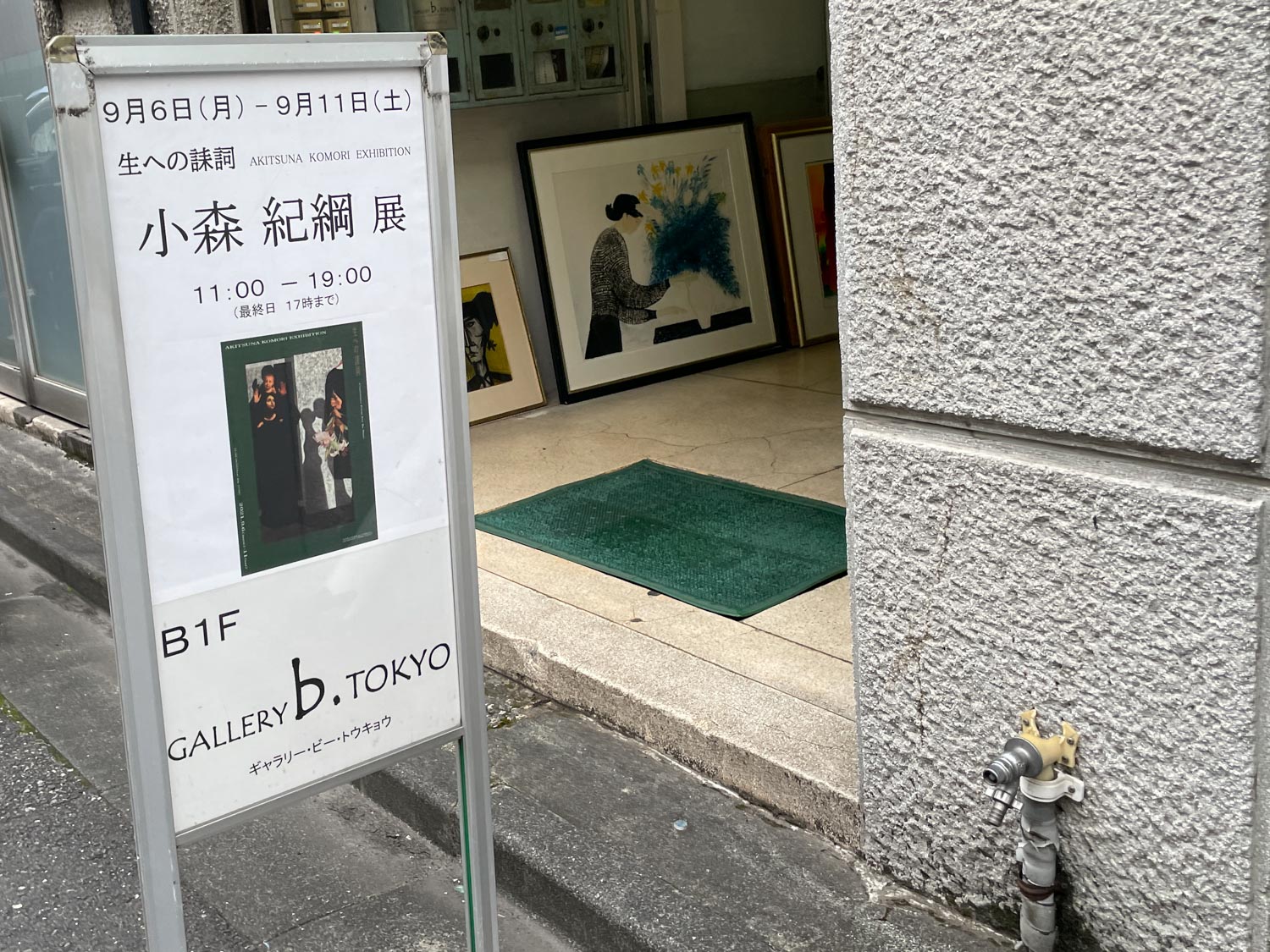
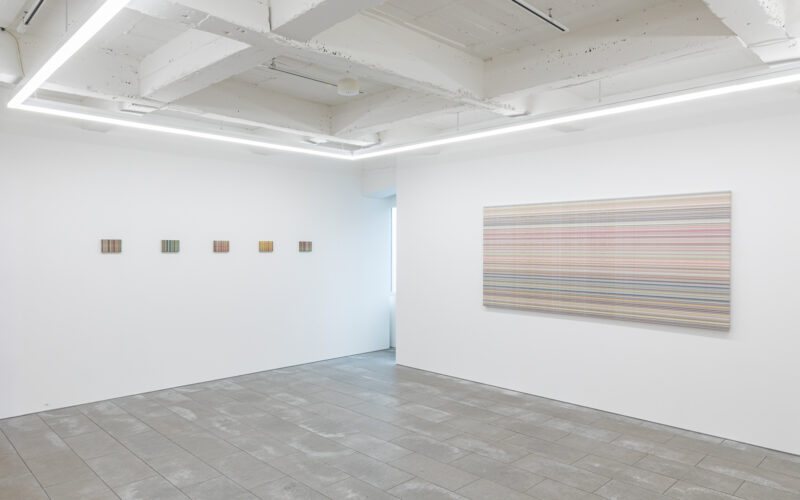
We visited Akitsuna Komori’s solo exhibition “Elegy for Life.” The venue is GALLERY b.TOKYO in Kyobashi.
GALLERY b.TOKYO
Statement
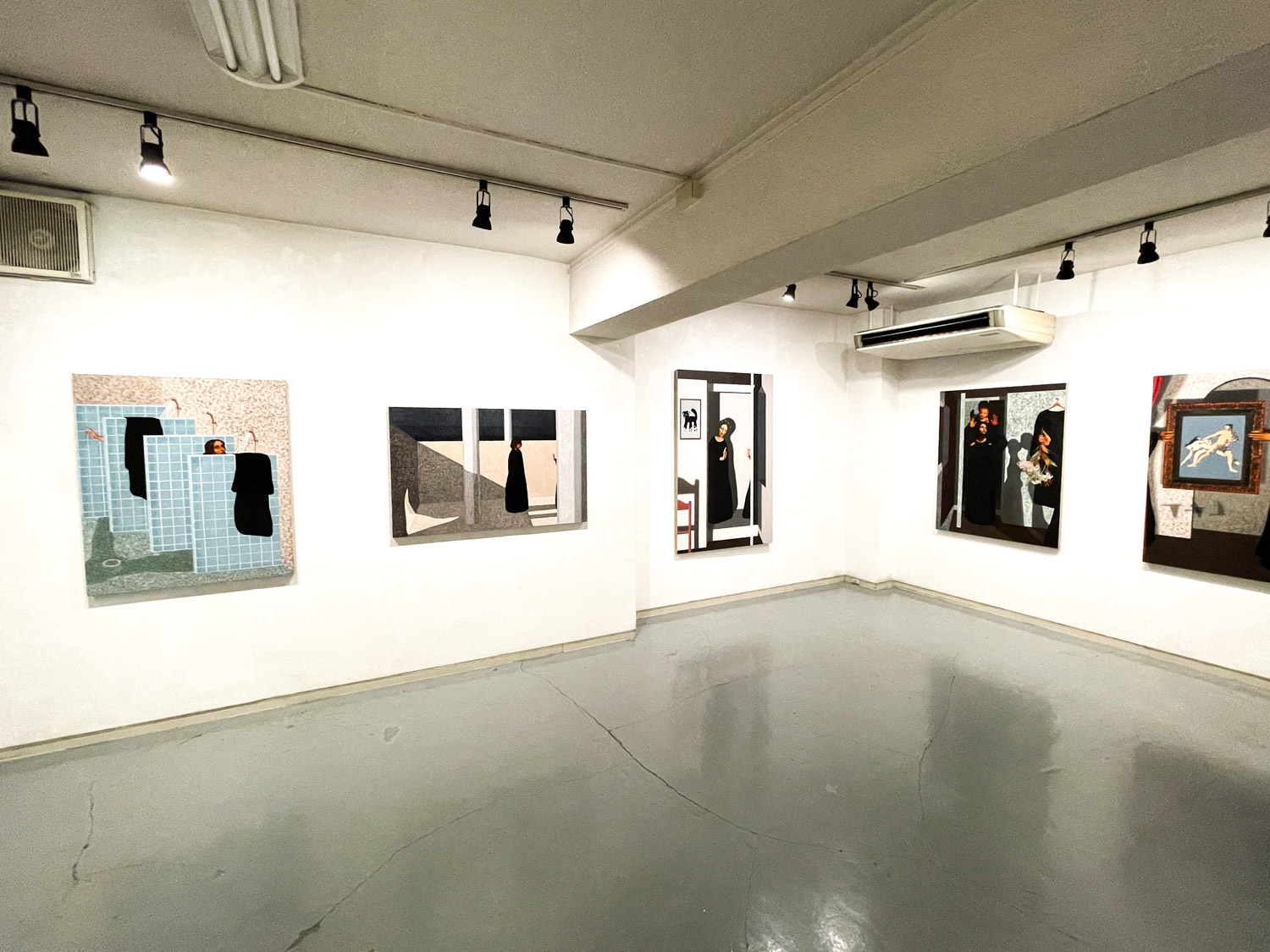
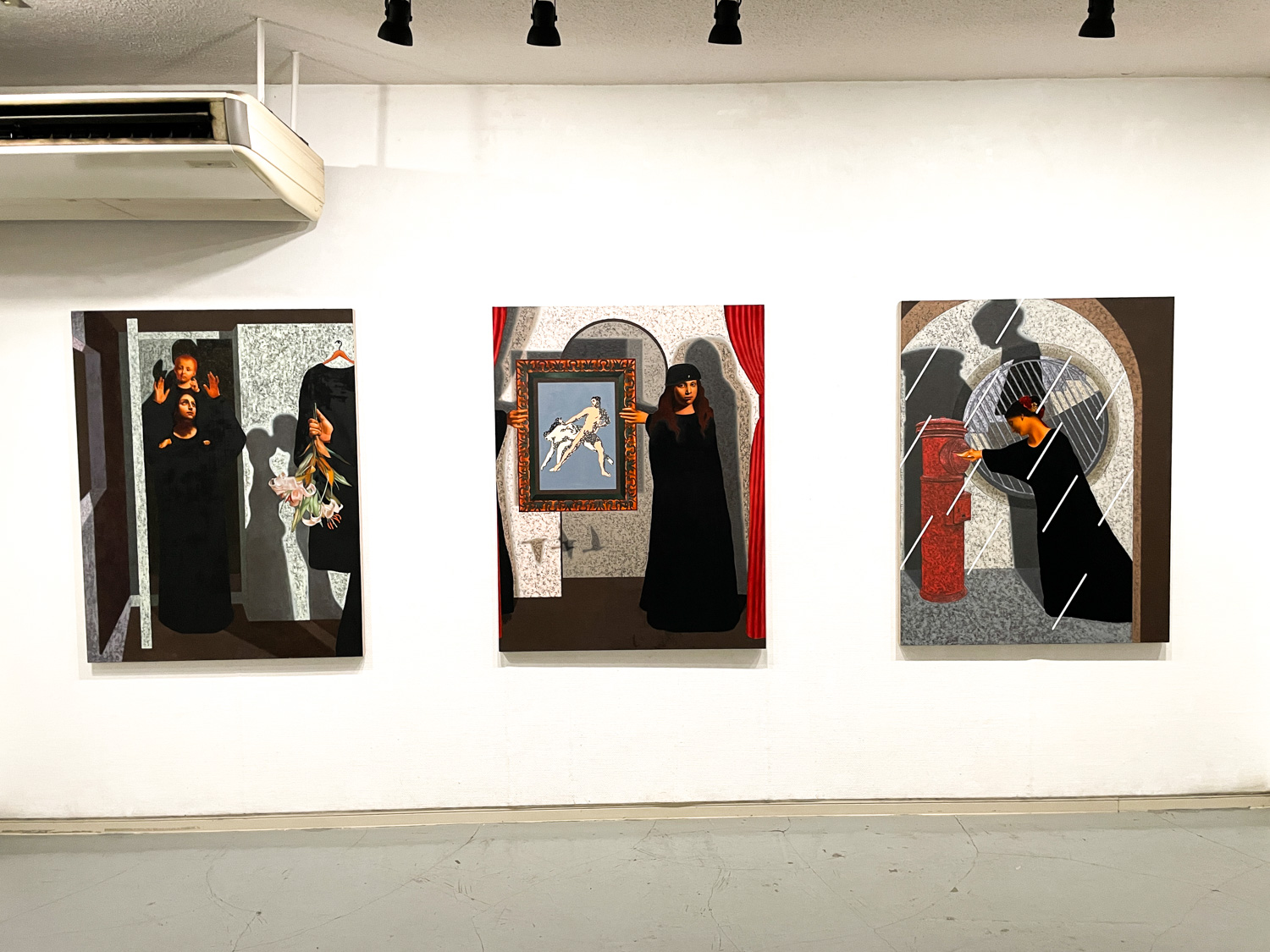
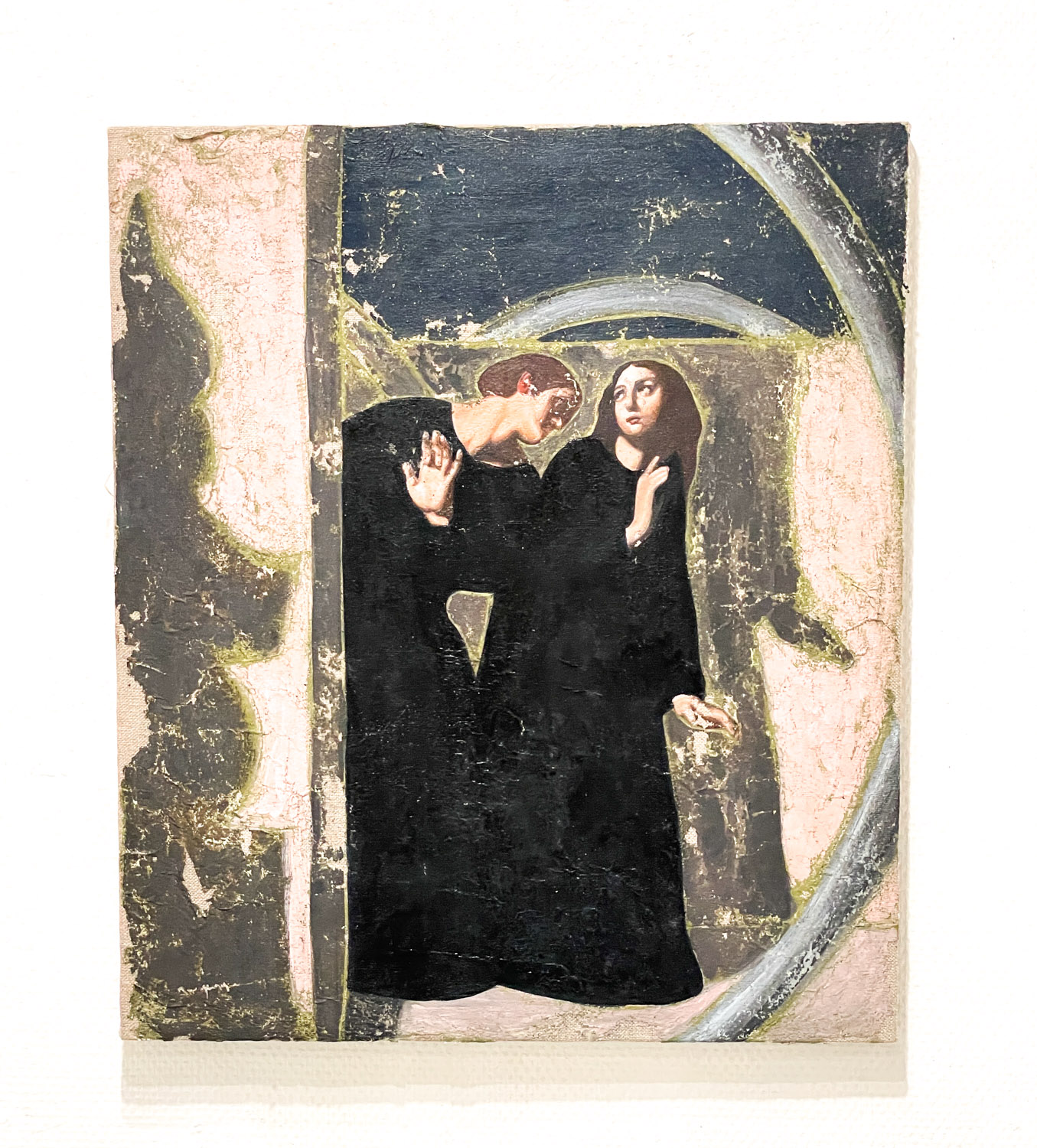
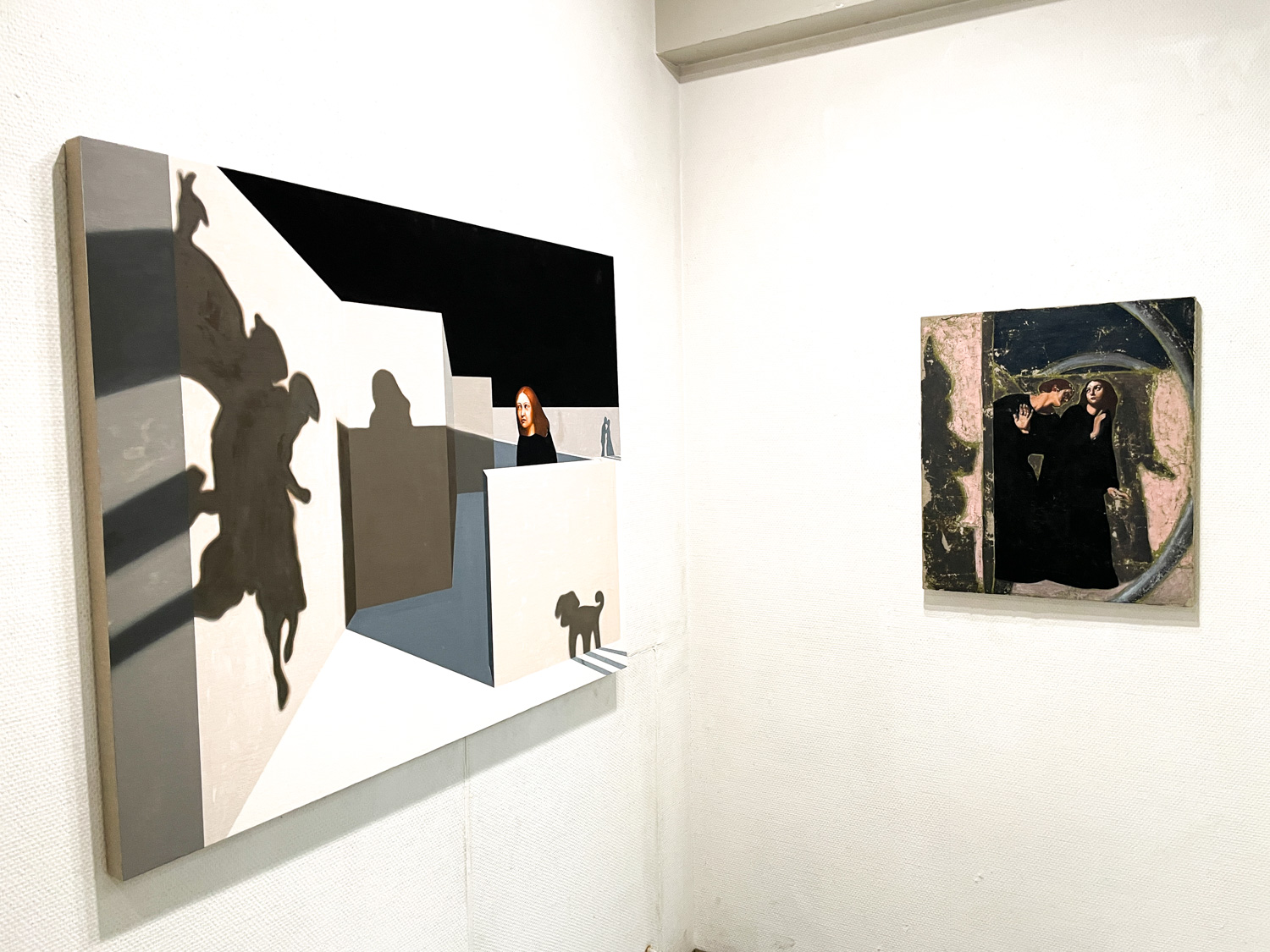
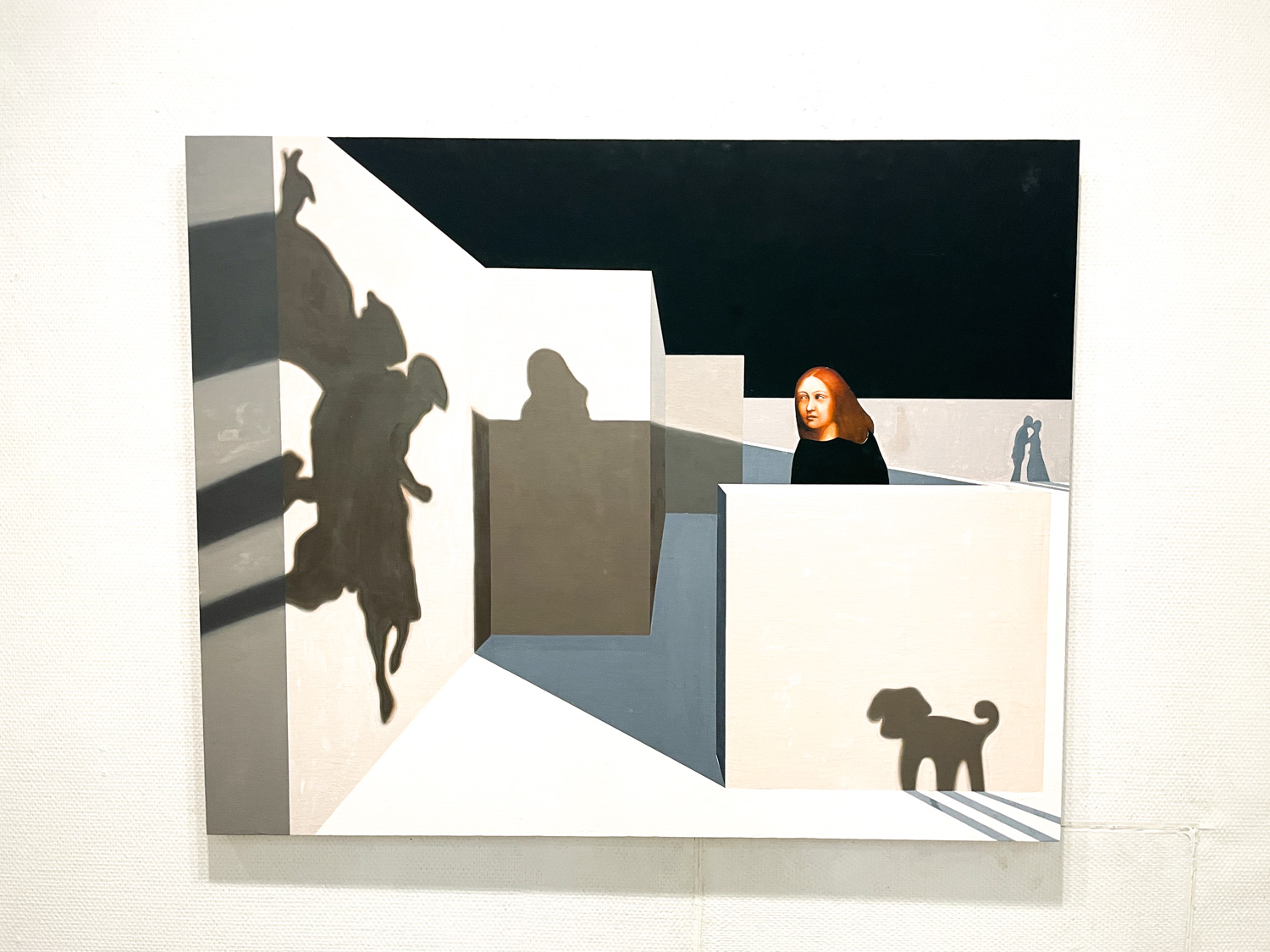
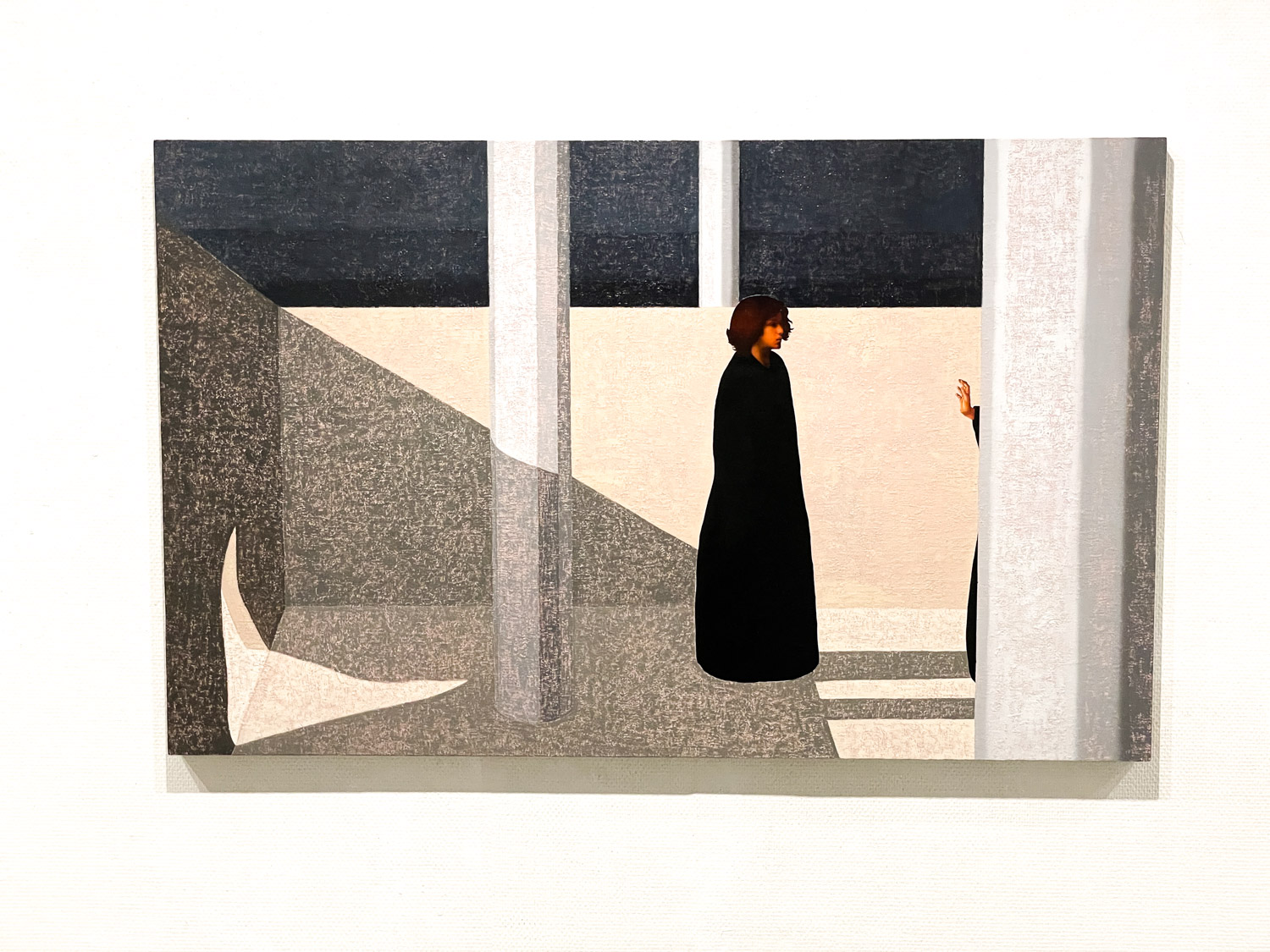
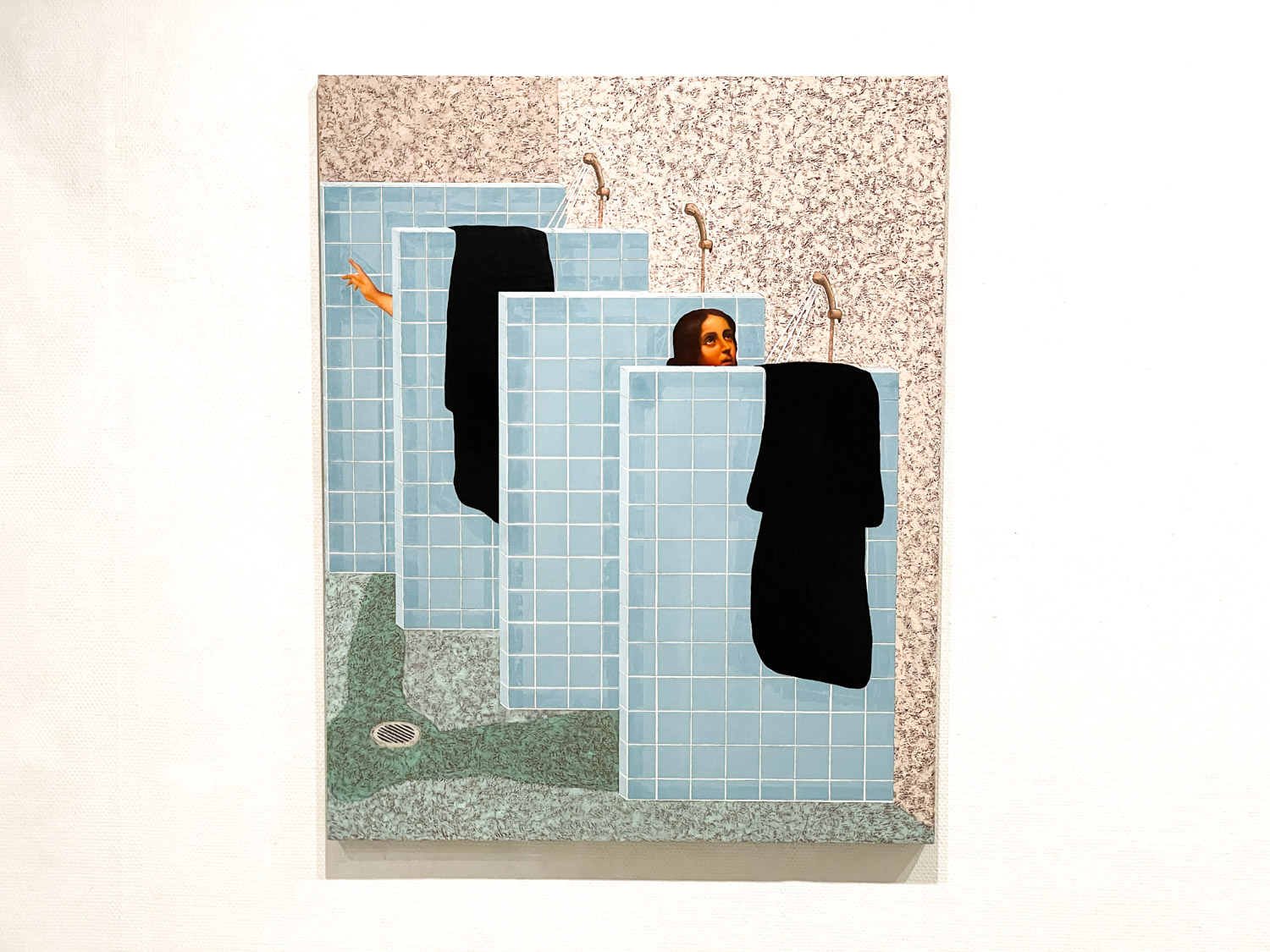
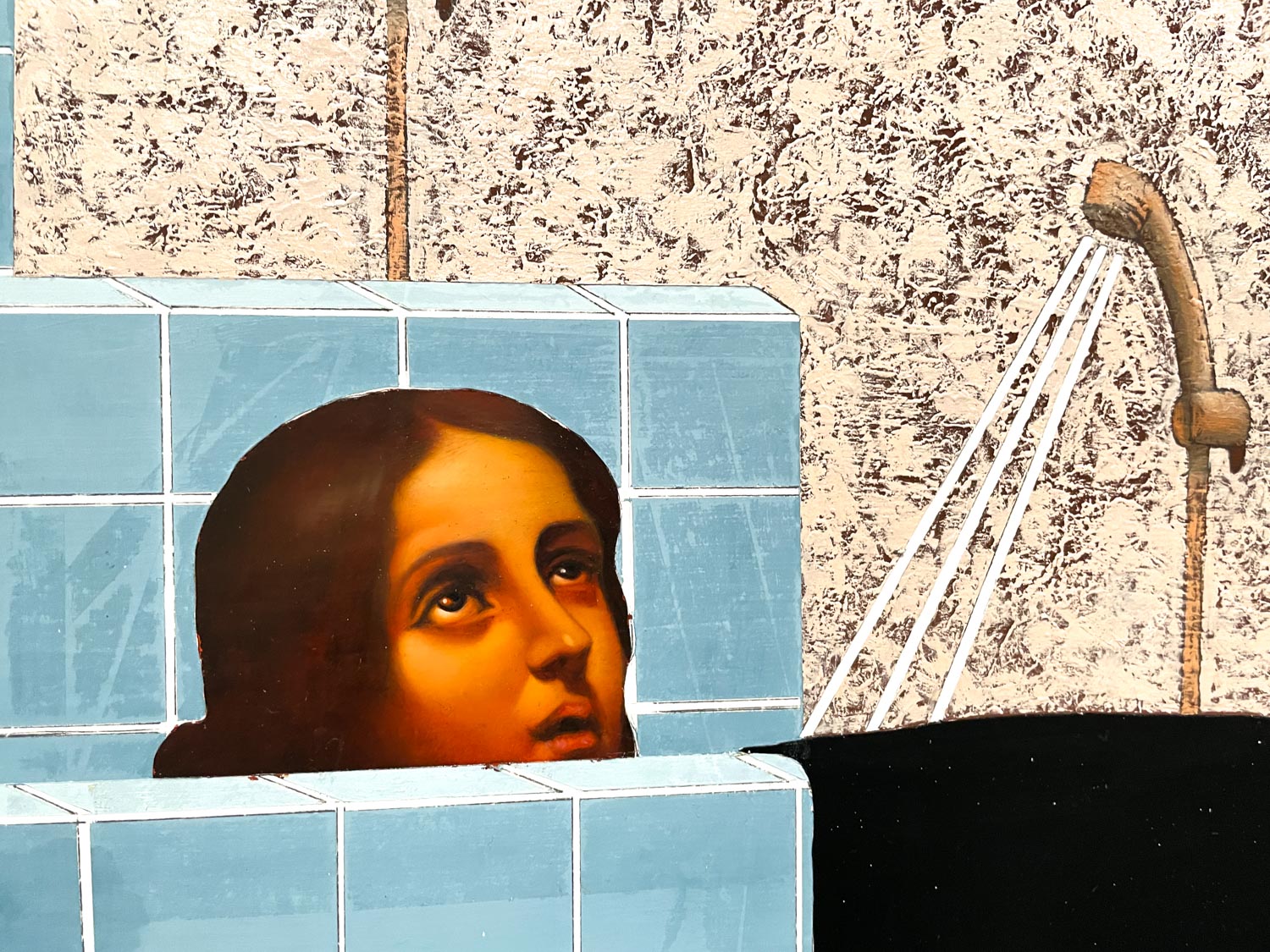
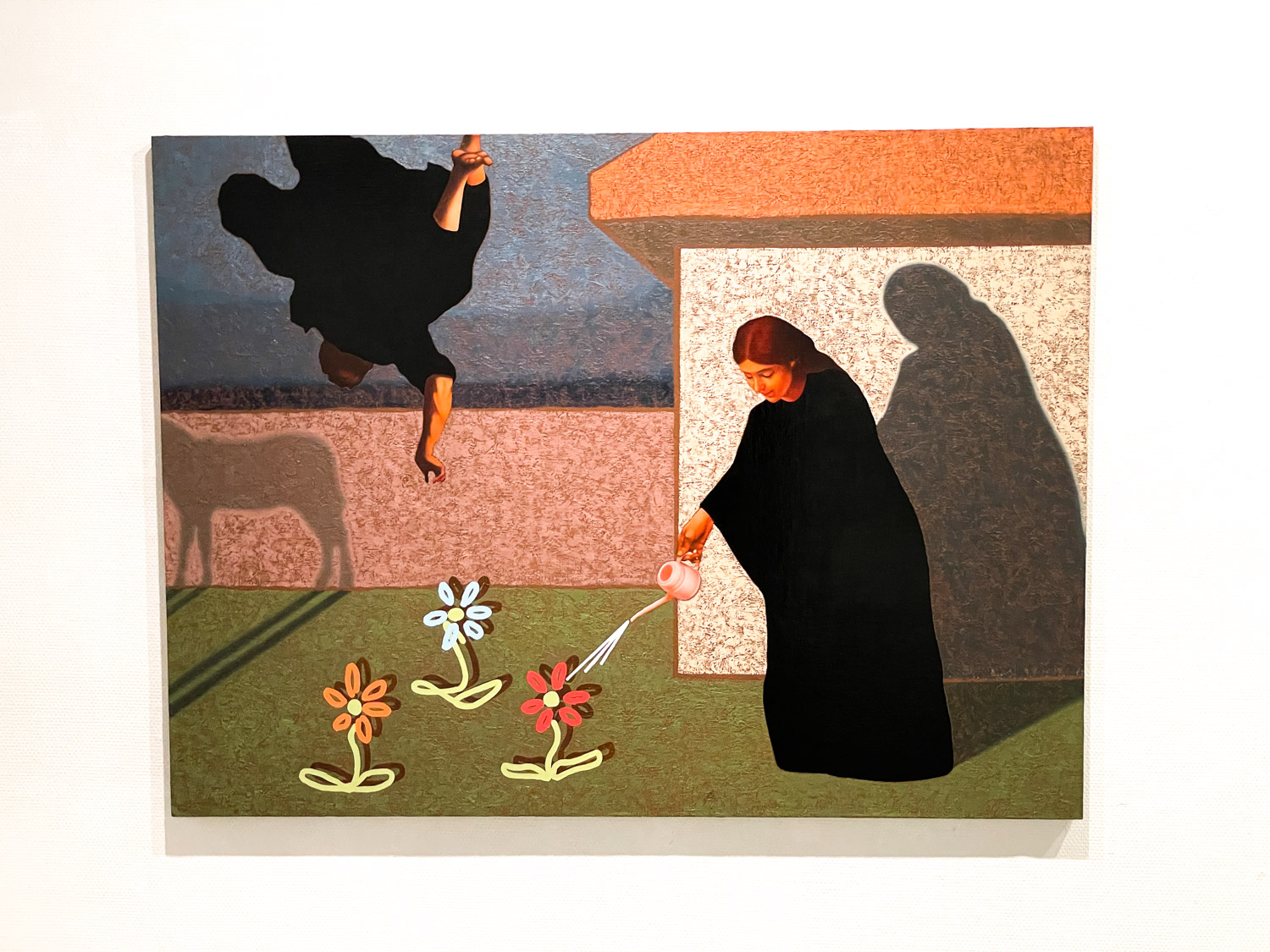
Akitsuna Komori produces metaphysical paintings by drawing on religious objects from various faiths and on the attributes of classical painting (the objects assigned to specific figures or deities). His painting practice starts from the episteme — iconographic interpretation, theoretical construction, religious ethics. He weaves together the basic elements that form a painting’s framework — composition, perspective, figures, attributes, color, light source — in intricate patterns, at times swapping them in mismatched combinations, so that codes accumulate to build a hyperreal painting. By collaging different religions and stylistic idioms together, the shared threads and divergences latent within things are drawn to the surface. The relations formed here are those that reel in phenomena standing in a topological relation to one another — brought about, one might say, by a gesture akin to topologically isomorphic diagramming.
The religious portraits are transformed as Komori’s own religious worldview and natural philosophy are joined to “images derived in common from the impressions people hold toward something.” This religious sensibility rooted in Komori is deeply tied to his upbringing. Born to a family of Koyasan Shingon Buddhist temple heritage, Komori has parents from different faith traditions — his father a Buddhist monk, his mother from a family of Catholic believers. Having deepened his understanding of many forms of belief from an early age while under the influence of Esoteric Buddhist teachings, Komori came to see art as the sole means to bind together divergent value systems and religious forms.
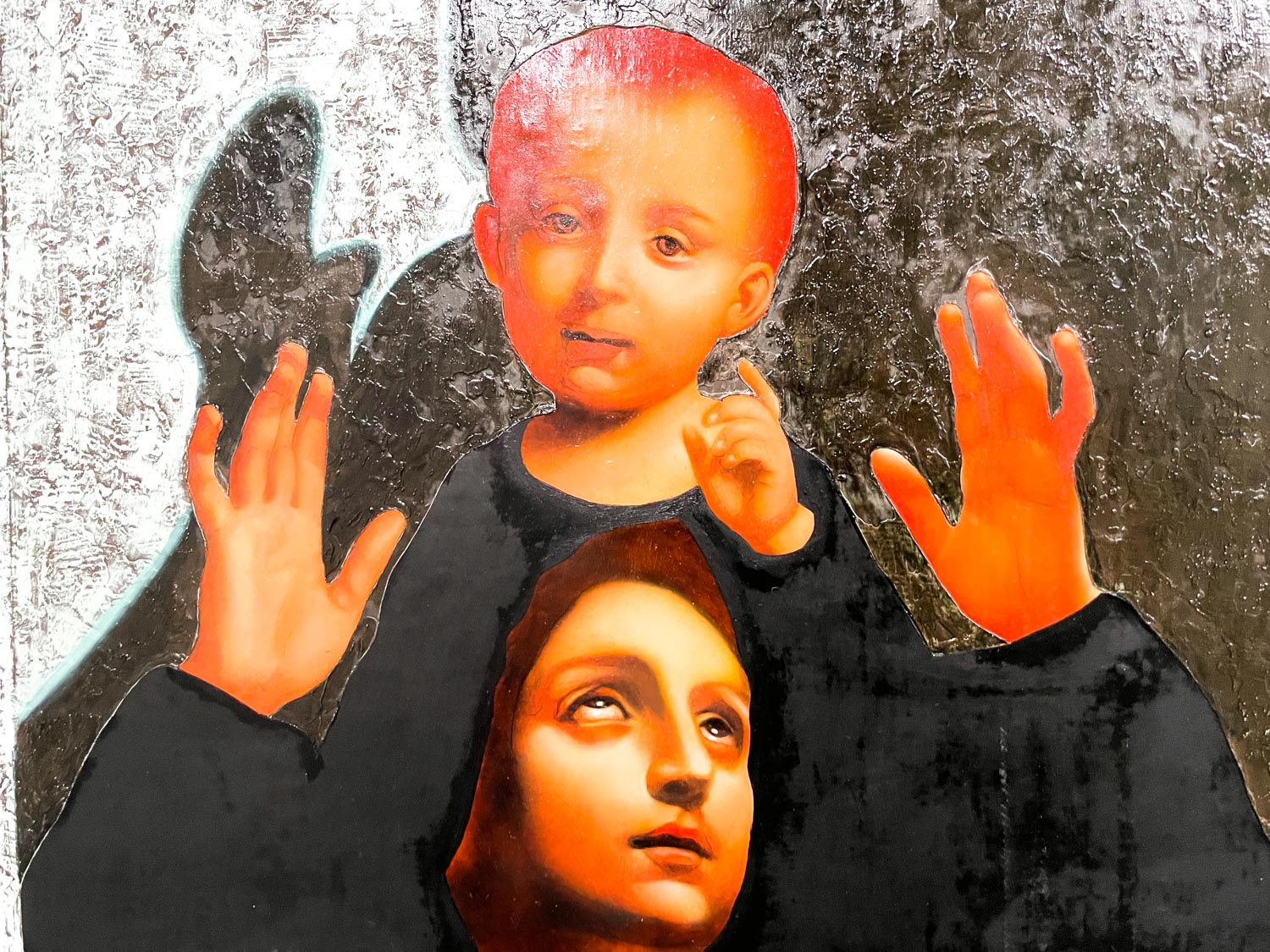
Sampling primarily from the Renaissance and Baroque periods — the hand gestures of the Annunciation, the dramatic chiaroscuro exemplified by Caravaggio, and so on — introduces a circulating logic into Komori’s reasoning through Western art history, and enables the paired rendering of the organic and inorganic. Turning one’s gaze beyond the frame of cognition creates a world stretching out on the far side of reality and stitches together the multiple paradigms of art history and religious history. In other words, the very posture presented in these paintings overlaps with Komori’s own faith.
Text: Tomochika Hara
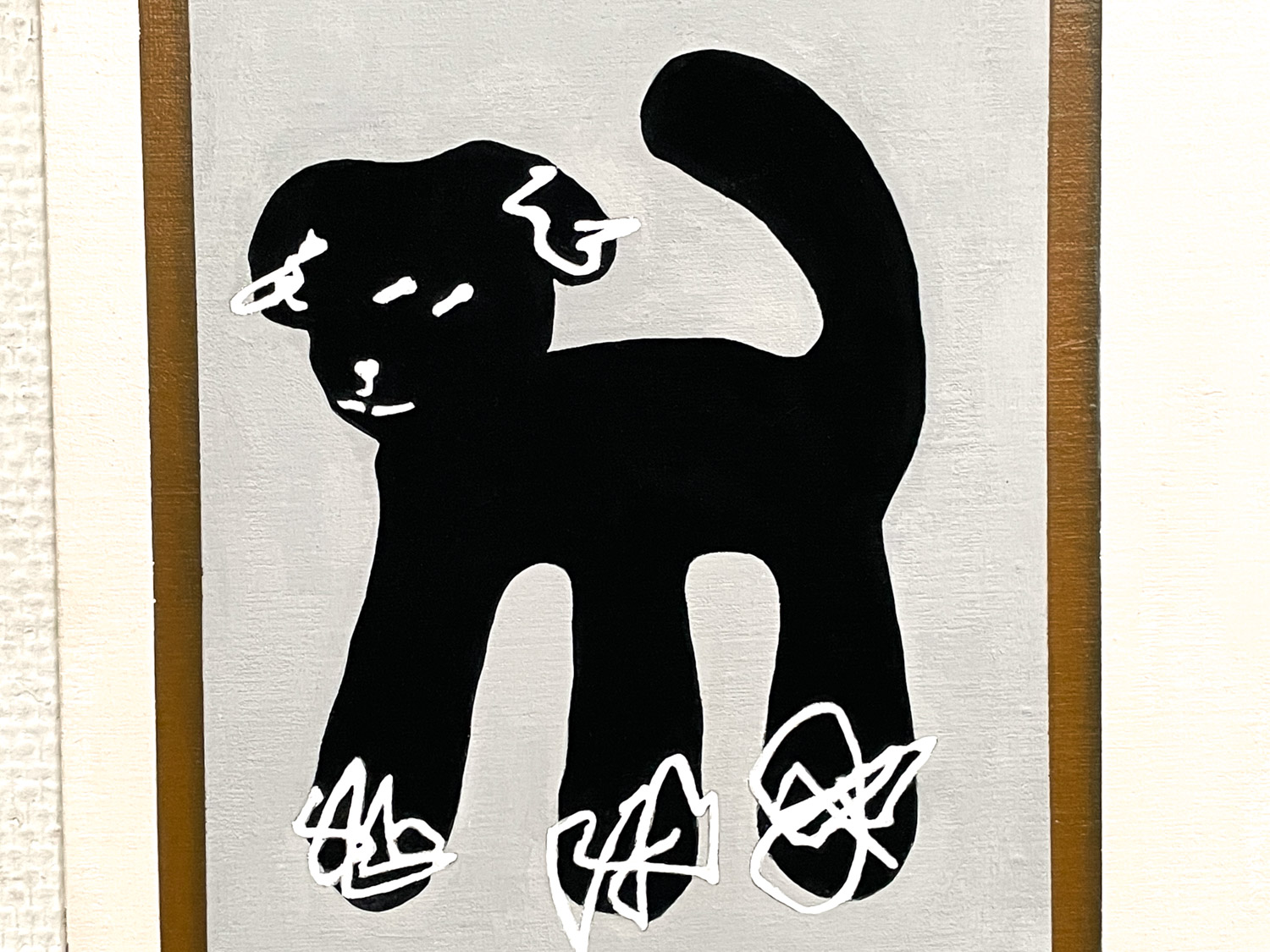
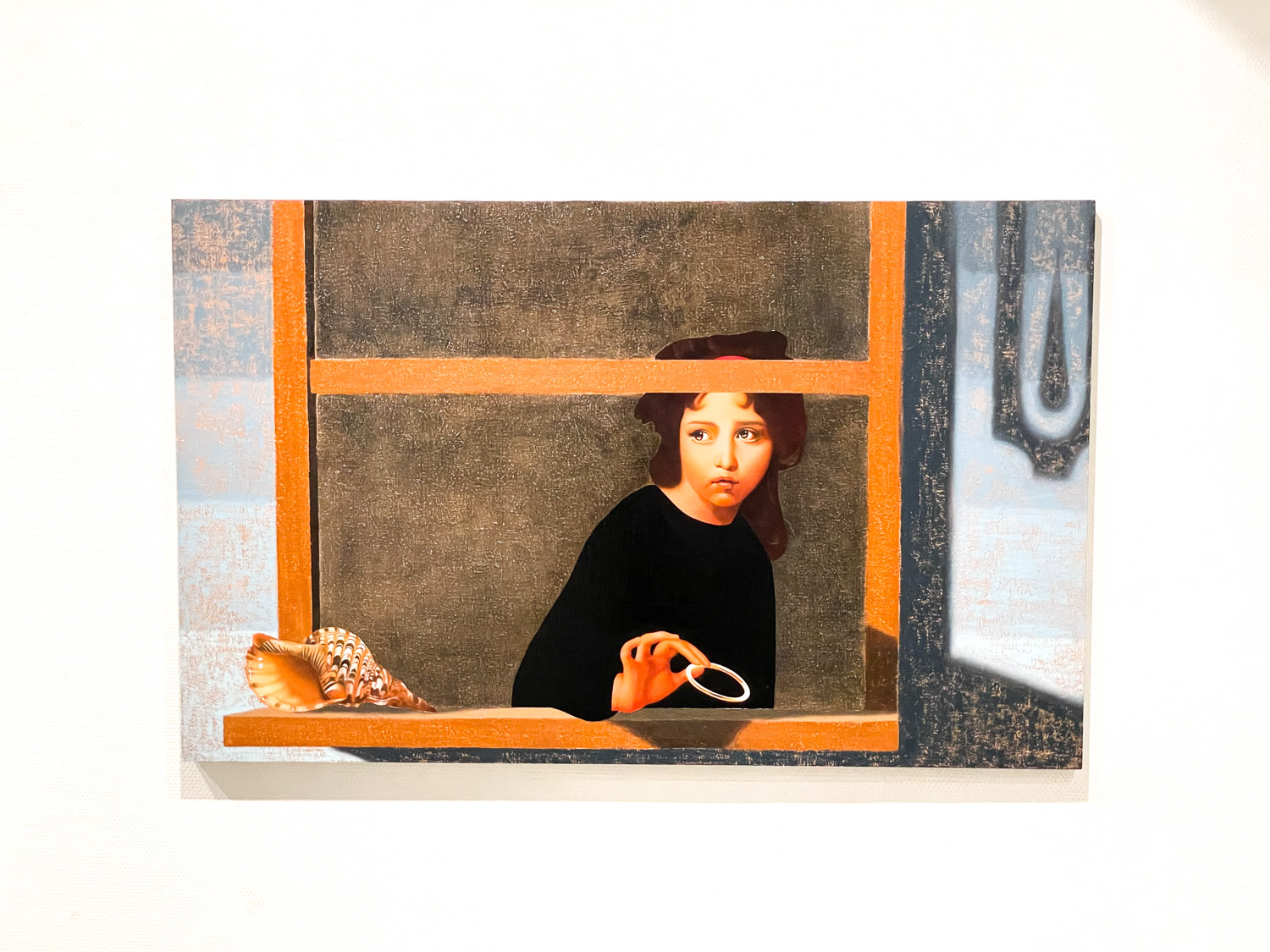
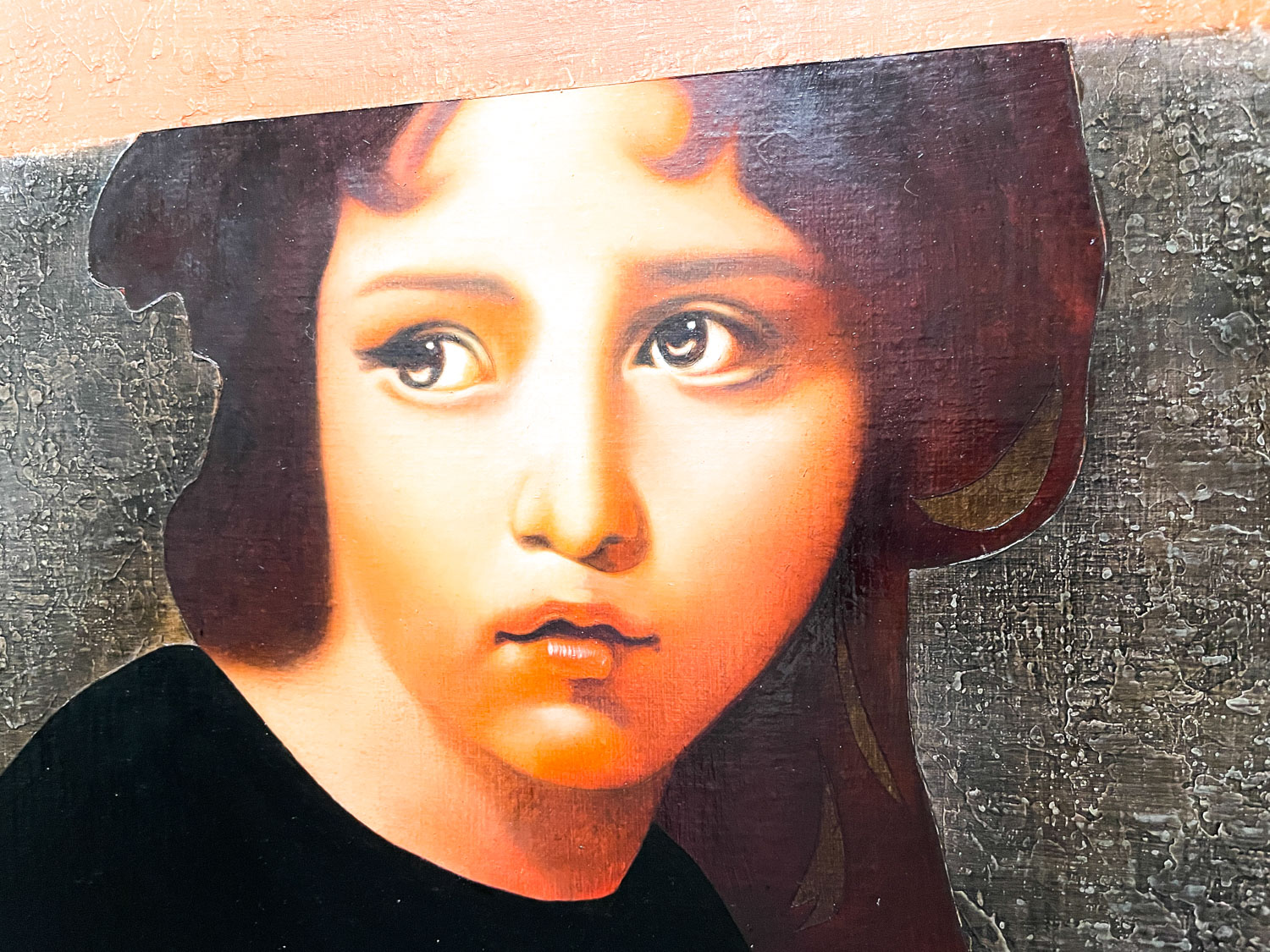
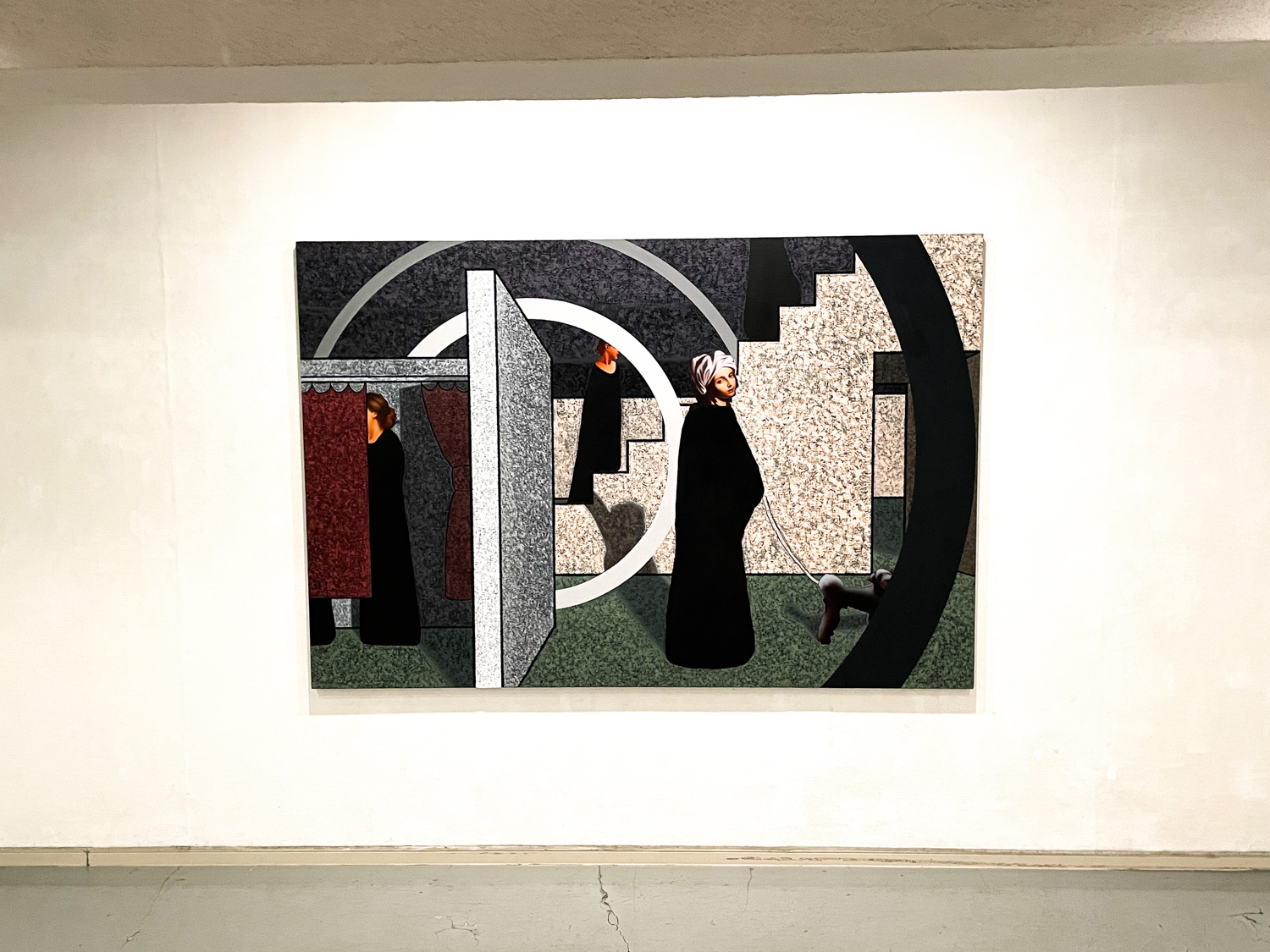
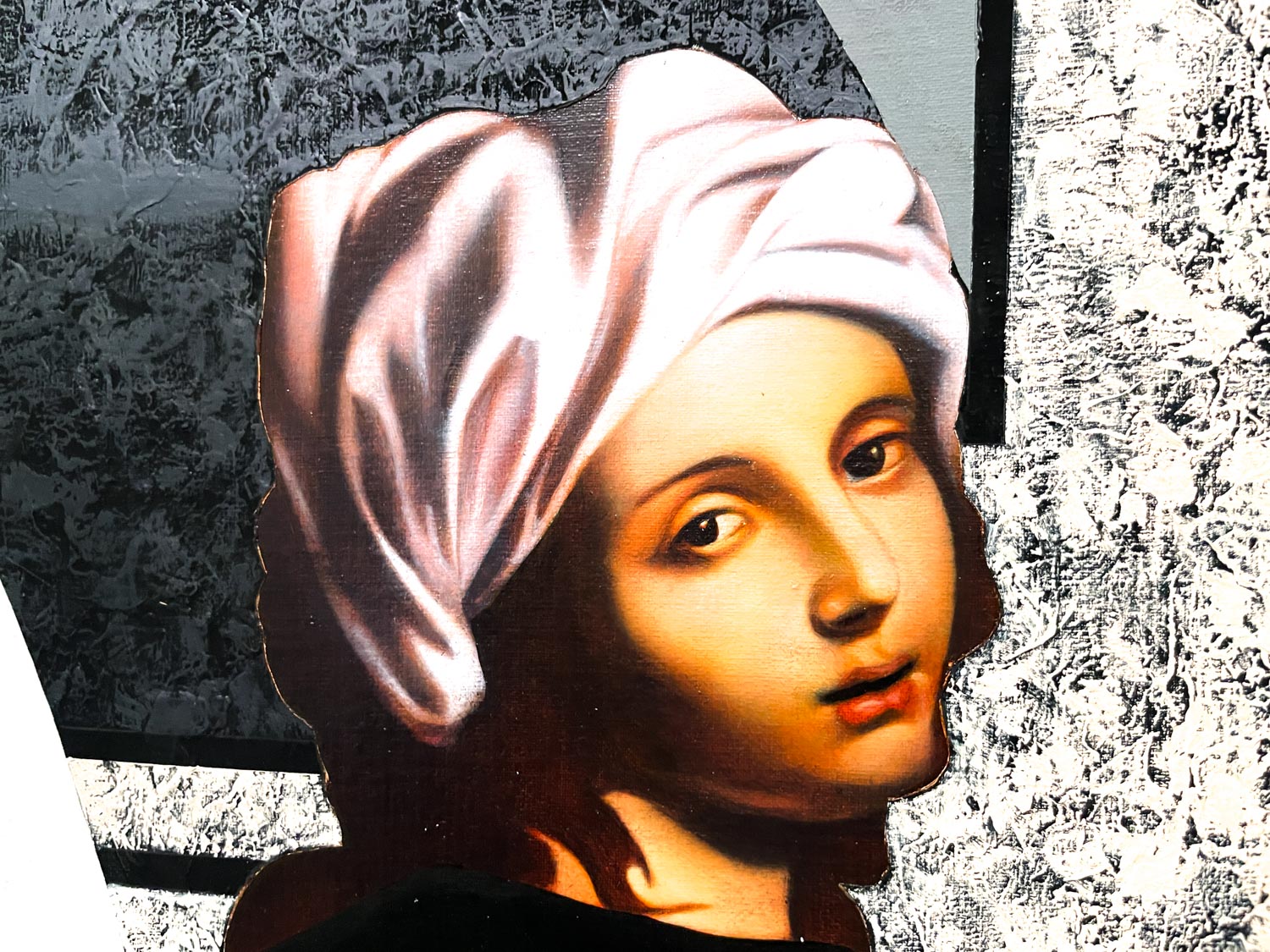
Installation viewAkitsuna Komori, “Elegy for Life,” 2021 (triptych)“Elegy for Life” (detail)Akitsuna Komori, “Expulsion from Paradise,” 2021Installation viewAkitsuna Komori, “IKEA-logical Annunciation,” 2021Akitsuna Komori, “Annunciation,” 2021Akitsuna Komori, “Bathroom,” 2021“Bathroom” (detail)“Annunciation” (detail)Akitsuna Komori, “One Day While I Was Watering the Flowers, a Slave Fell from the Sky,” 2021Akitsuna Komori, “Landscape with Conch Shell,” 2021“Landscape with Conch Shell” (detail)Akitsuna Komori, “Rupadhatu,” 2021“Rupadhatu” (detail)
Akitsuna Komori “Elegy for Life”
我们造访了 Akitsuna Komori 的个展”Elegy for Life”。展场位于京桥的画廊 GALLERY b.TOKYO。
展场一景Akitsuna Komori《Elegy for Life》2021 ※三联作《Elegy for Life》※detailAkitsuna Komori《Expulsion from Paradise》2021展场一景Akitsuna Komori《IKEA-logical Annunciation》2021Akitsuna Komori《Annunciation》2021Akitsuna Komori《Bathroom》2021《Bathroom》※detail《Annunciation》※detailAkitsuna Komori《One Day While I Was Watering the Flowers, a Slave Fell from the Sky》2021Akitsuna Komori《Landscape with Conch Shell》2021《Landscape with Conch Shell》※detailAkitsuna Komori《Rupadhatu》2021《Rupadhatu》※detail
Akitsuna Komori “Elegy for Life”
Akitsuna Komori 씨의 개인전 “Elegy for Life”를 방문했습니다. 전시장은 교바시의 갤러리 GALLERY b.TOKYO입니다.
GALLERY b.TOKYO
스테이트먼트 / statement
Akitsuna Komori는 여러 종교의 종교적 대상과 고전 회화의 attribute(특정 인물이나 신들에 귀속되는 대상물)를 인용함으로써 형이상학적 회화를 제작한다. Komori의 회화 제작은 도상 해석, 이론 구성, 종교 윤리 등 episteme에서 출발한다. 회화의 뼈대라 할 수 있는 기본 요소(구도, 원근법, 인물, attribute, 색채, 광원 등)를 복잡하게 얽어놓고, 때로는 어긋난 조합으로 뒤바꿔 코드를 집적시켜 초현실적인 회화를 구축한다. 서로 다른 종교와 양식을 콜라주하듯 엮어냄으로써 사물에 내재해 있던 공통항과 차이가 짜여 나온다. 여기에서 맺어지는 관계는 위상 관계에 있는 사물들을 끌어당기는 관계이며, 말하자면 위상동형도법과도 같은 손놀림에 의해 도출된다고 할 수 있다.
Komori 자신에게 뿌리내린 종교관과 자연철학이 “사람이 어떤 대상에 대해 품는 인상에서 공통적으로 도출된 이미지상”과 결합되면서 종교적 초상은 변질된다. Komori에게 뿌리내린 이러한 종교관은 그의 성장 배경과 깊이 관련되어 있다. 고야산 진언종 사찰 가문에서 태어난 Komori에게는 서로 다른 종교를 신봉해 온 부모(아버지는 불교 승려, 어머니는 가톨릭을 신봉하는 가문 출신)가 있다. 어린 시절부터 밀교의 가르침에 영향을 받으며 다종다양한 신앙 형태에 대한 견문을 넓히던 중, Komori는 서로 다른 가치관과 종교의 형상을 이어줄 수 있는 유일한 방법으로 예술을 발견하였다.
수태고지에서의 손짓이나 Caravaggio로 대표되는 극적인 명암 대비 표현 등, 르네상스와 바로크 시기를 주된 샘플링 원천으로 삼아 인용함으로써 서양 미술사를 통해 Komori의 사유에 순환 작용을 가져오고, 유기적/무기적 표현을 실현시키고 있다. 인지의 틀 바깥으로 눈을 돌리는 것은 현실의 저편에 펼쳐진 세계를 창조하며, 미술사와 종교사상 다원적인 역사의 paradigm을 이어 붙인다. 즉 이 회화 작품에서 제시되고 있는 자세 그 자체가 Komori 자신의 신앙과 겹쳐지고 있는 것이다.
텍스트: Tomochika Hara
전시 전경Akitsuna Komori 《Elegy for Life》 2021 ※3연작《Elegy for Life》 ※detailAkitsuna Komori 《Expulsion from Paradise》 2021전시 전경Akitsuna Komori 《IKEA-logical Annunciation》 2021Akitsuna Komori 《Annunciation》 2021Akitsuna Komori 《Bathroom》 2021《Bathroom》 ※detail《Annunciation》 ※detailAkitsuna Komori 《One Day While I Was Watering the Flowers, a Slave Fell from the Sky》 2021Akitsuna Komori 《Landscape with Conch Shell》 2021《Landscape with Conch Shell》 ※detailAkitsuna Komori 《Rupadhatu》 2021《Rupadhatu》 ※detail