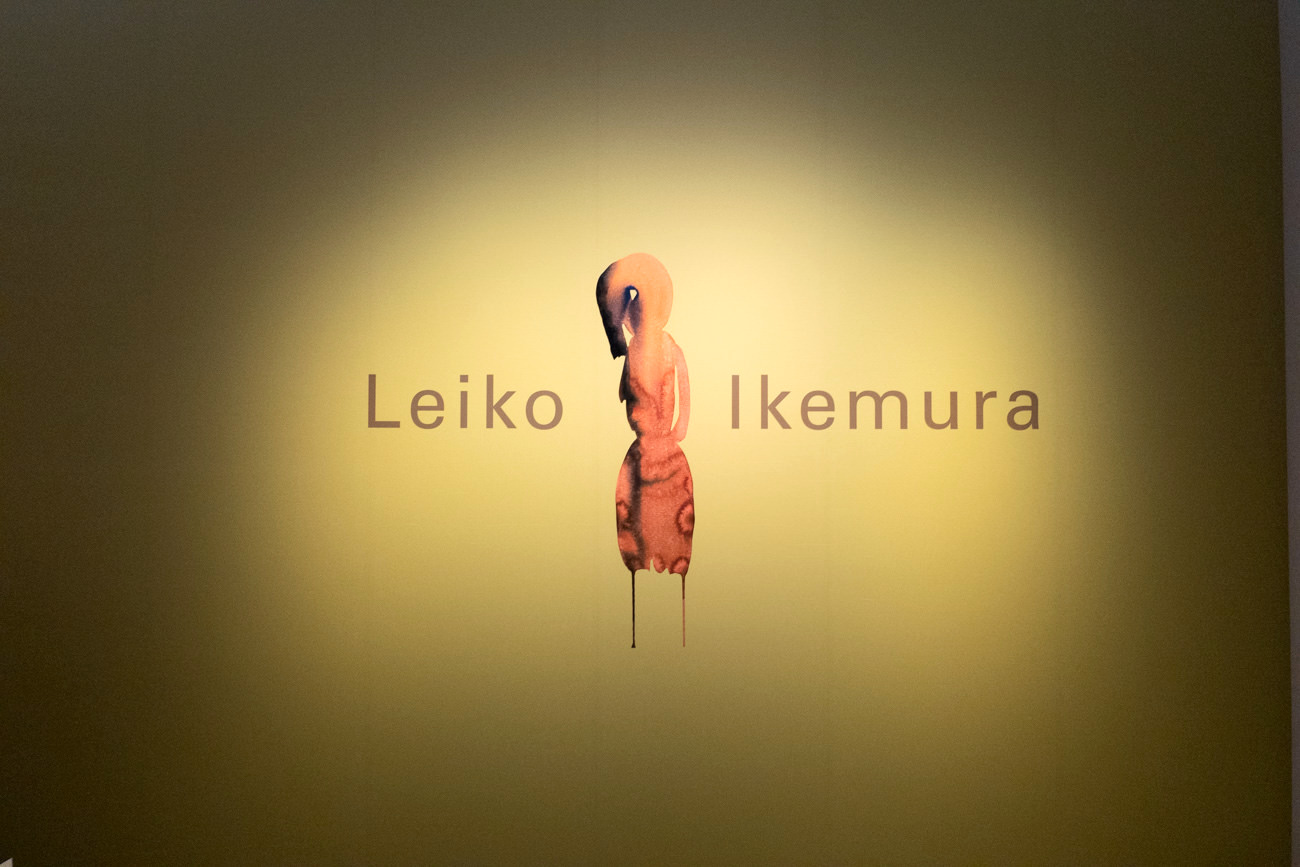
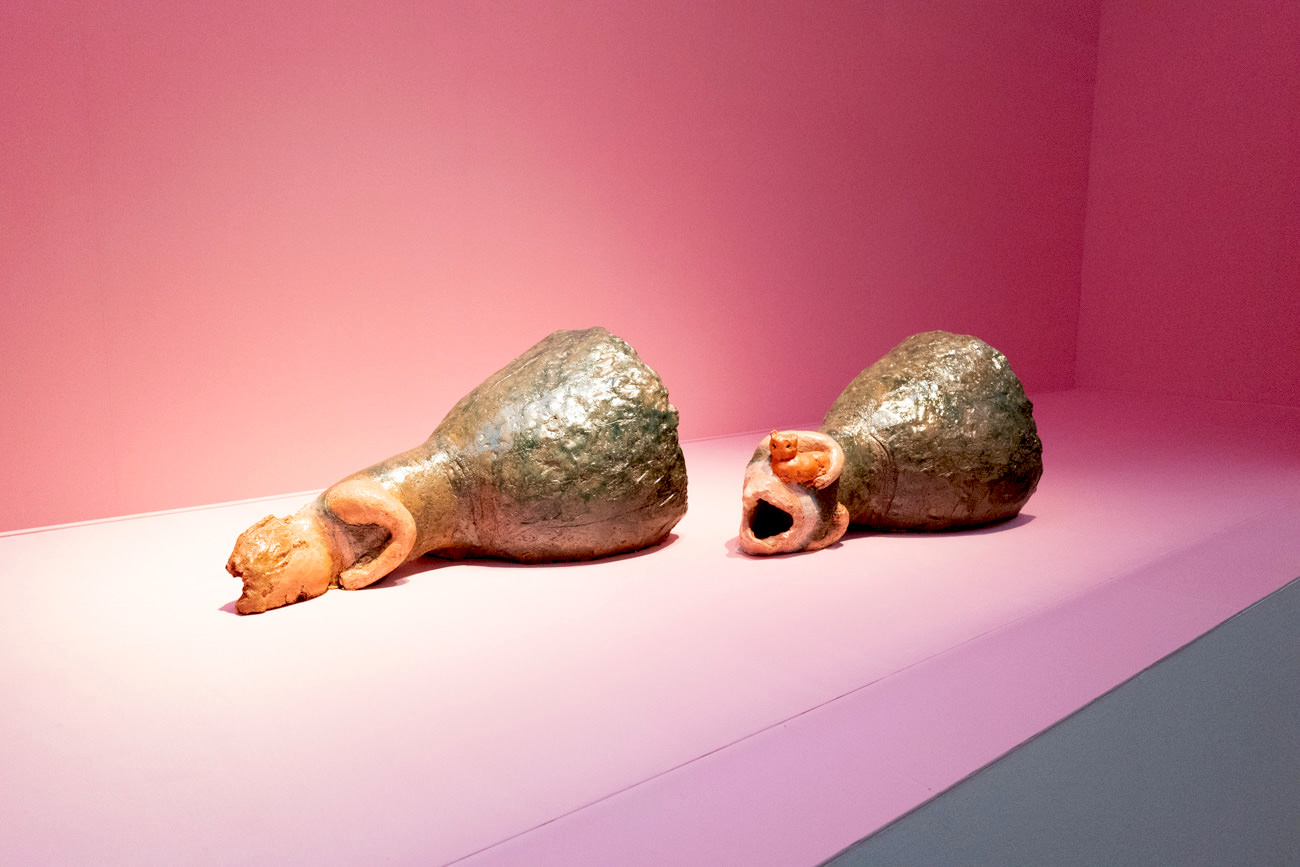
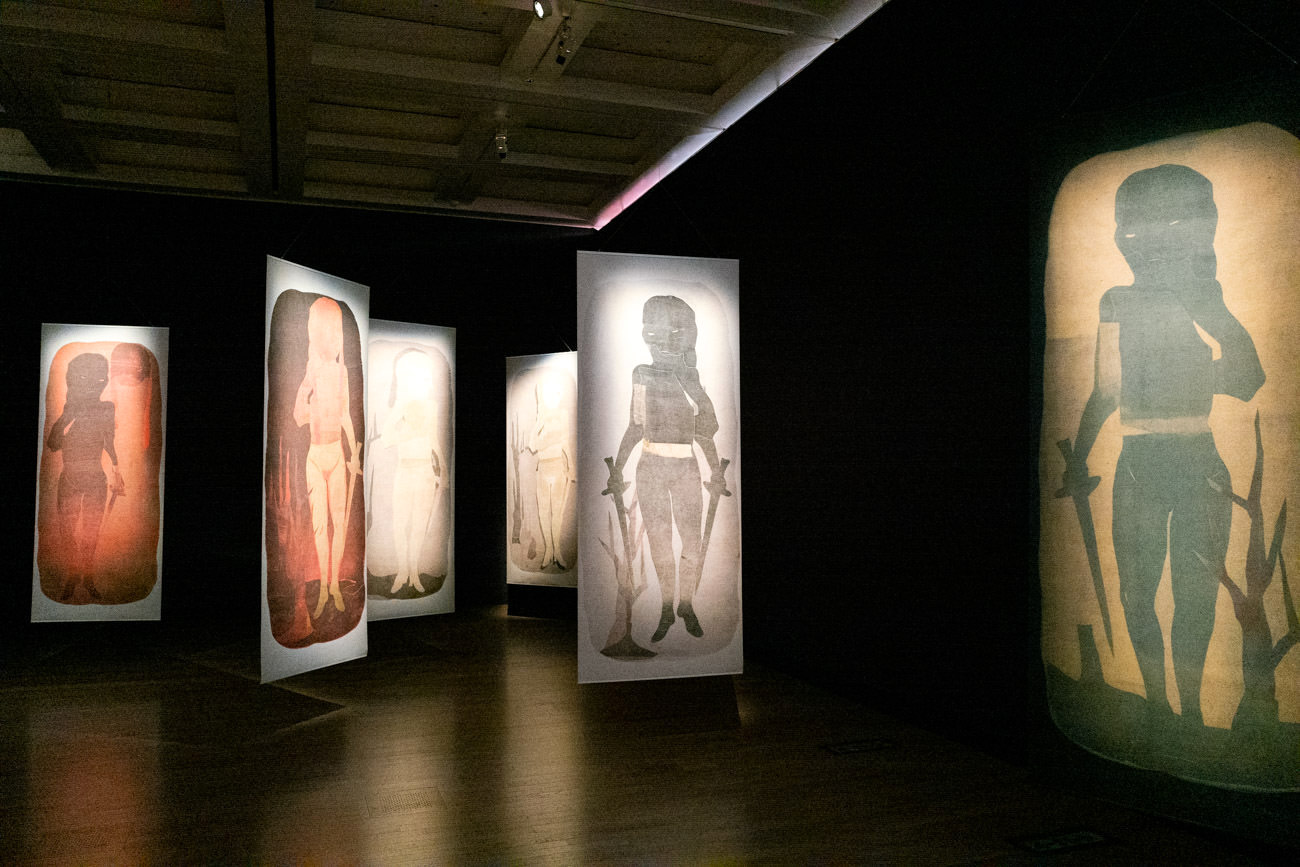
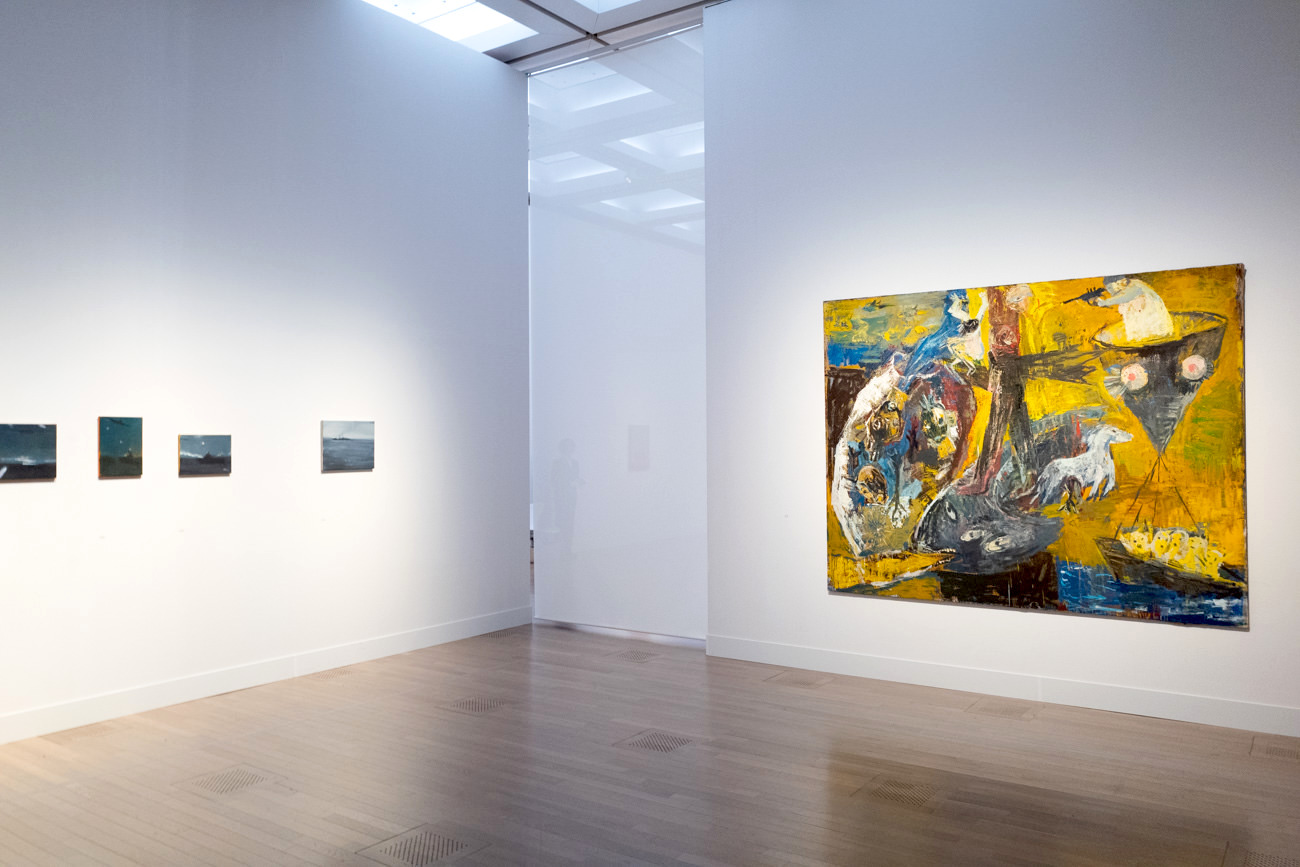
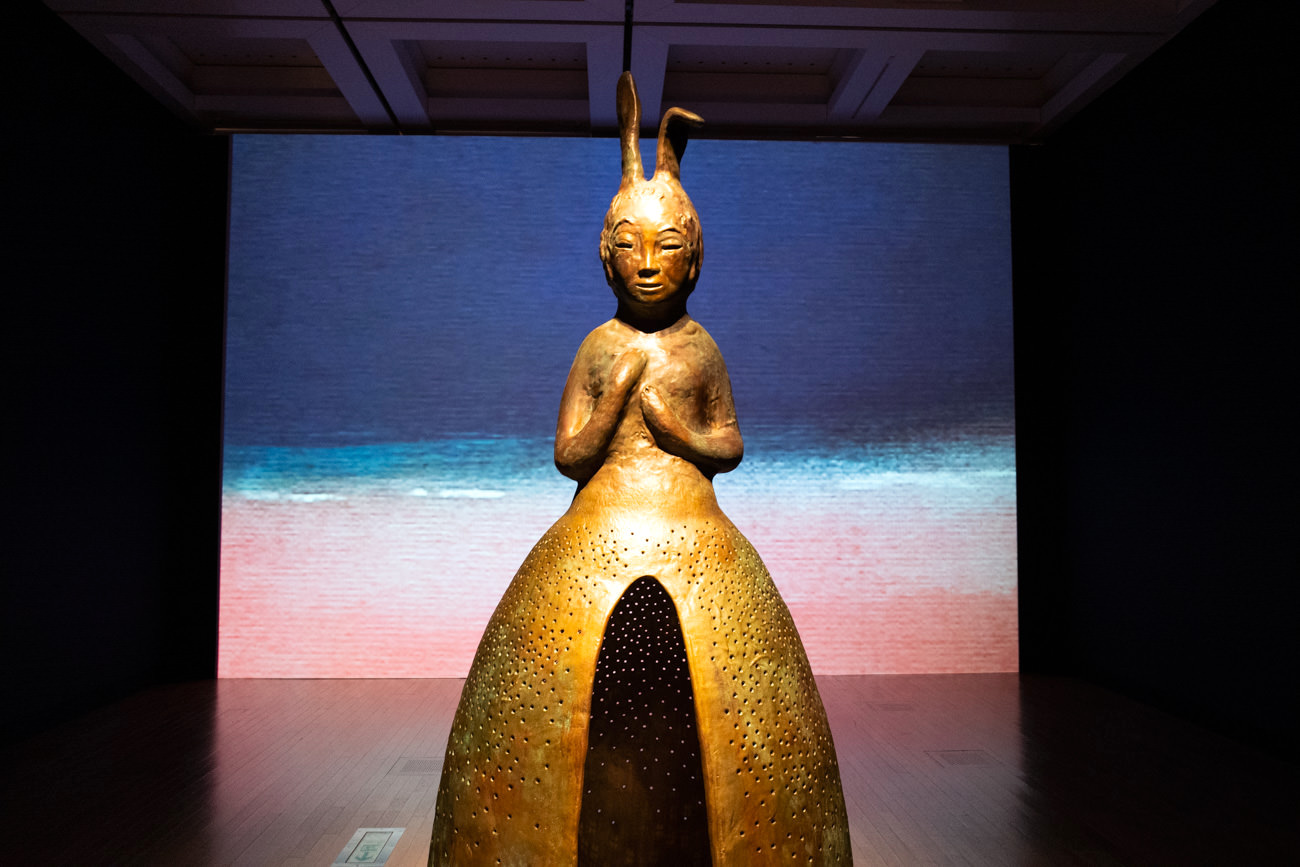
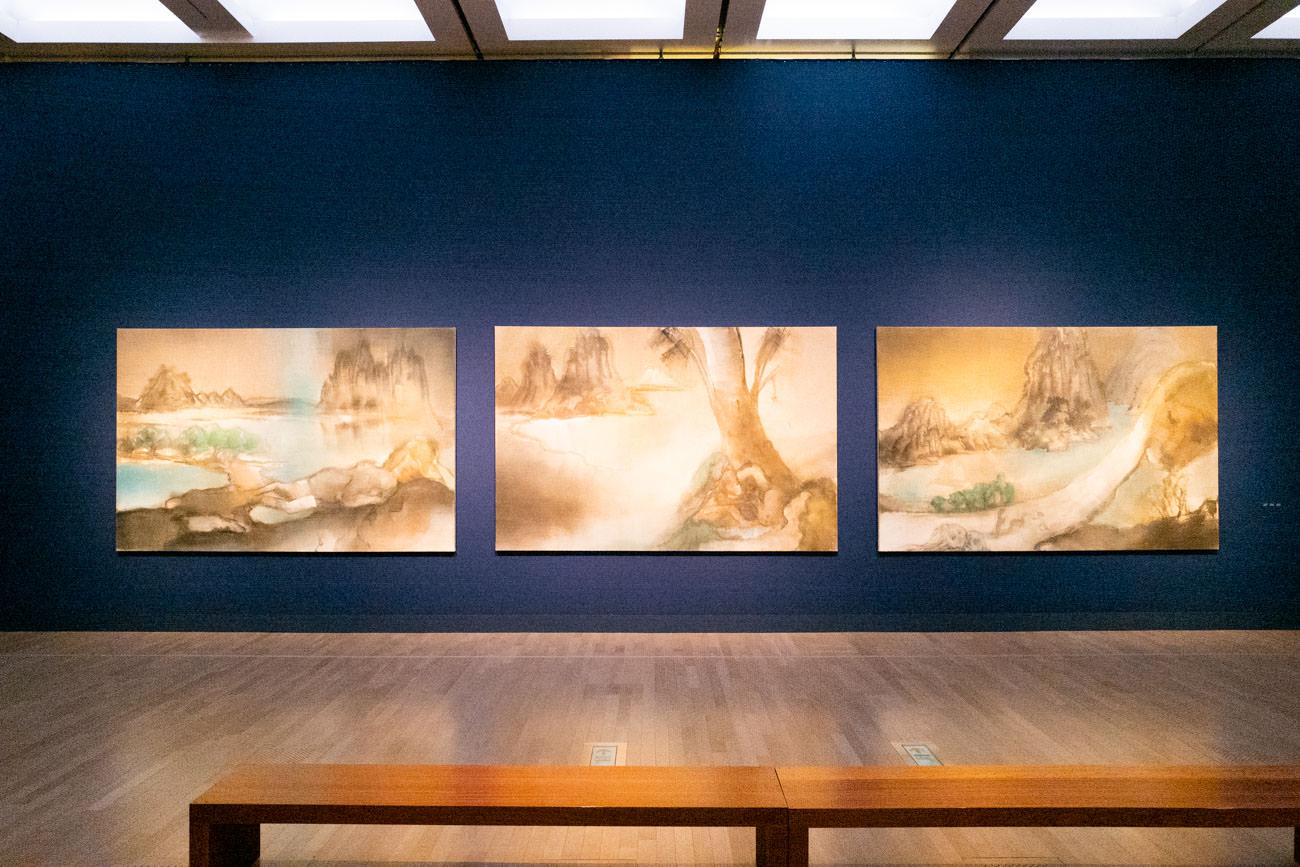
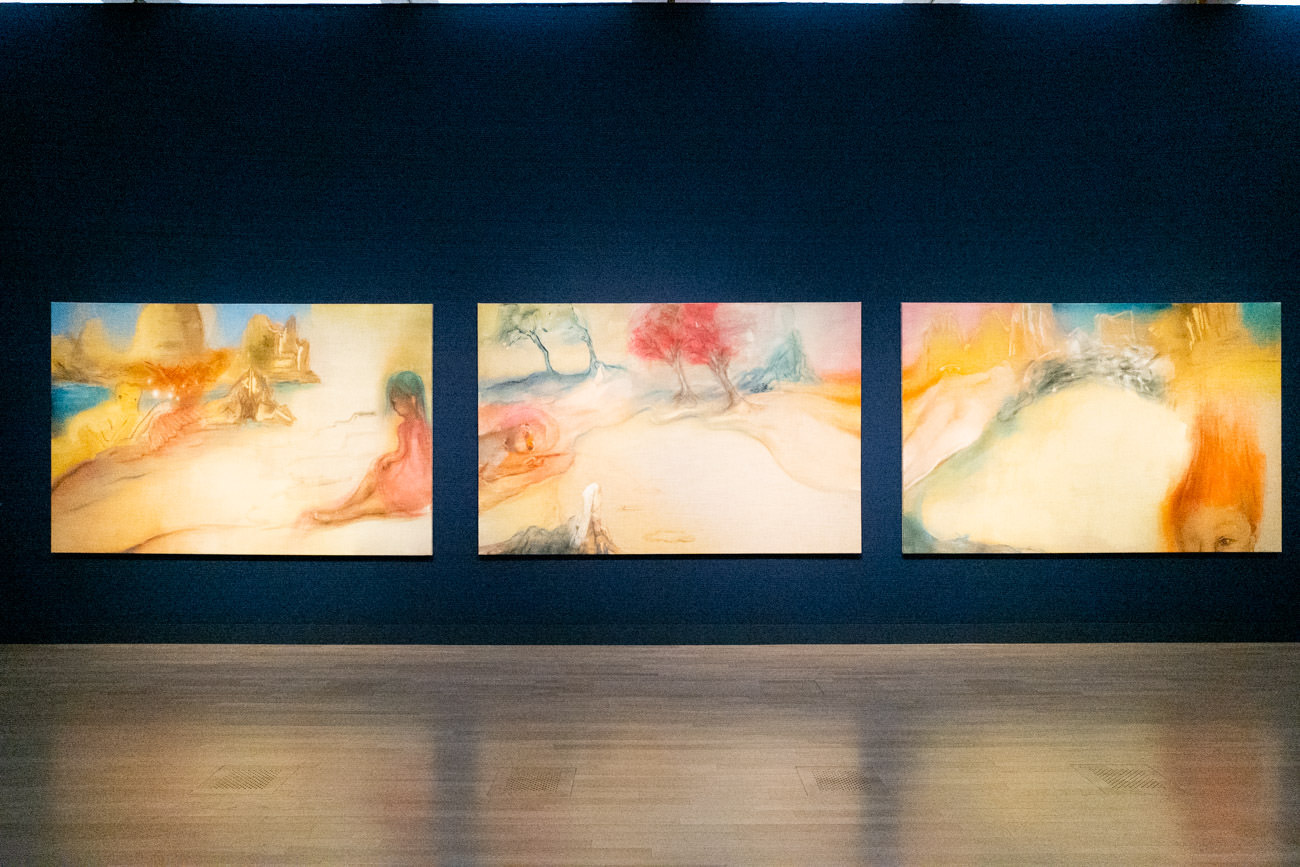
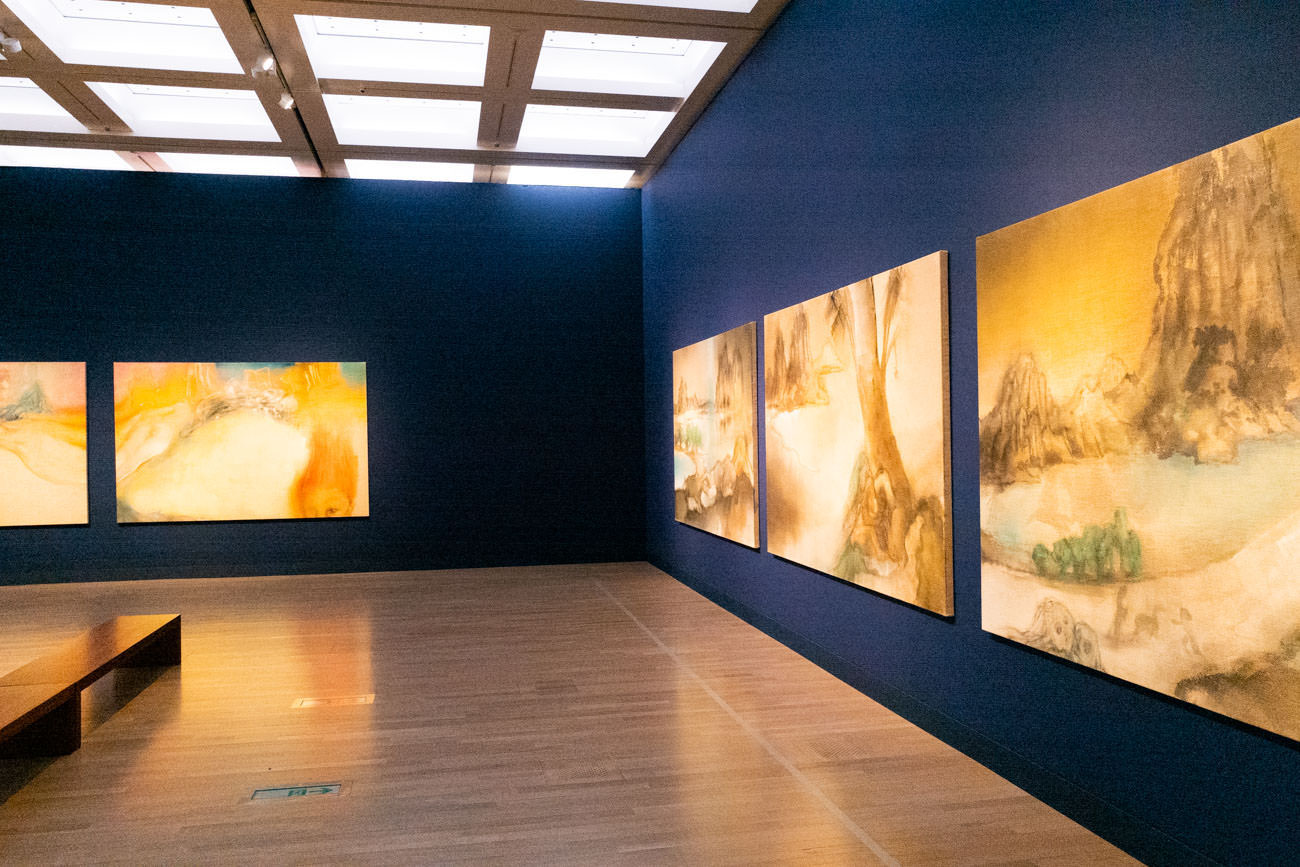
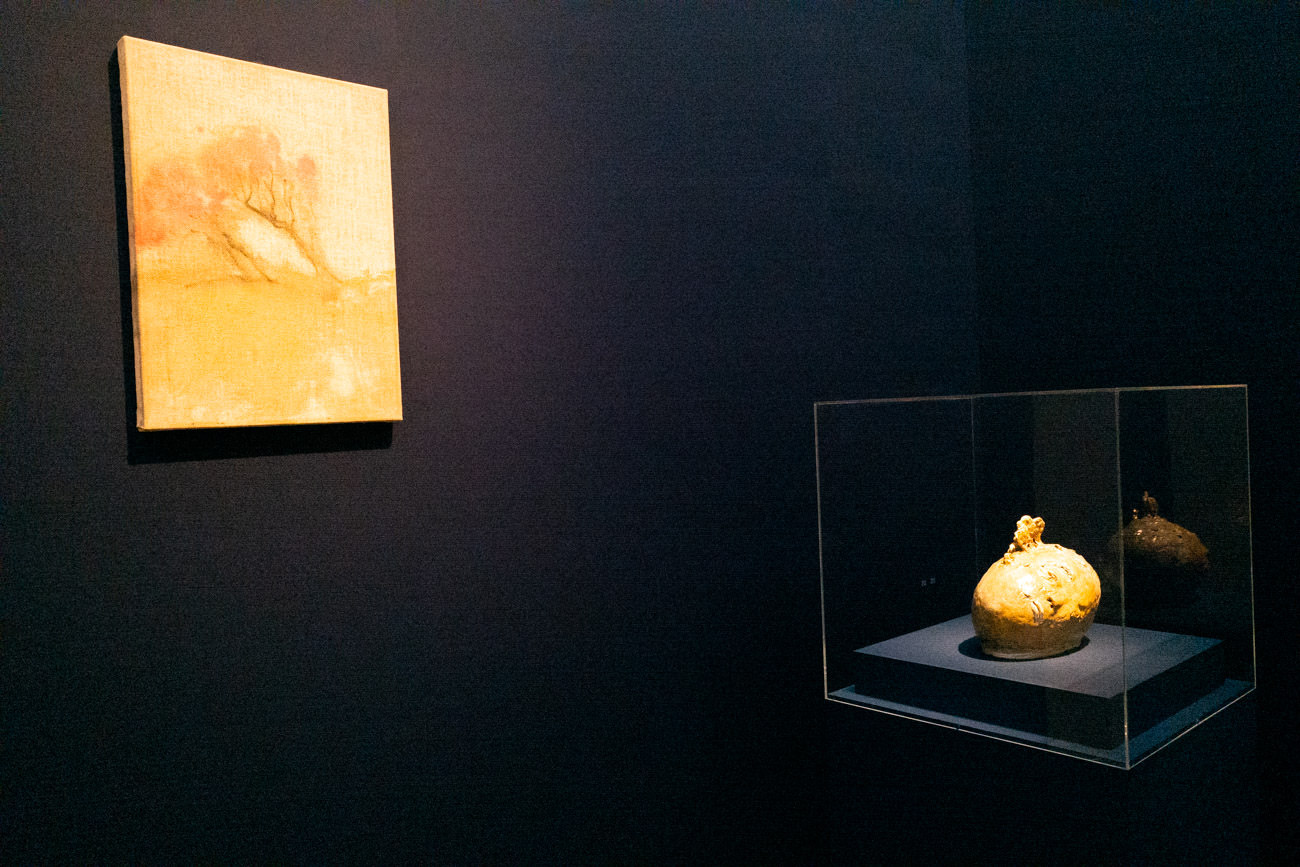
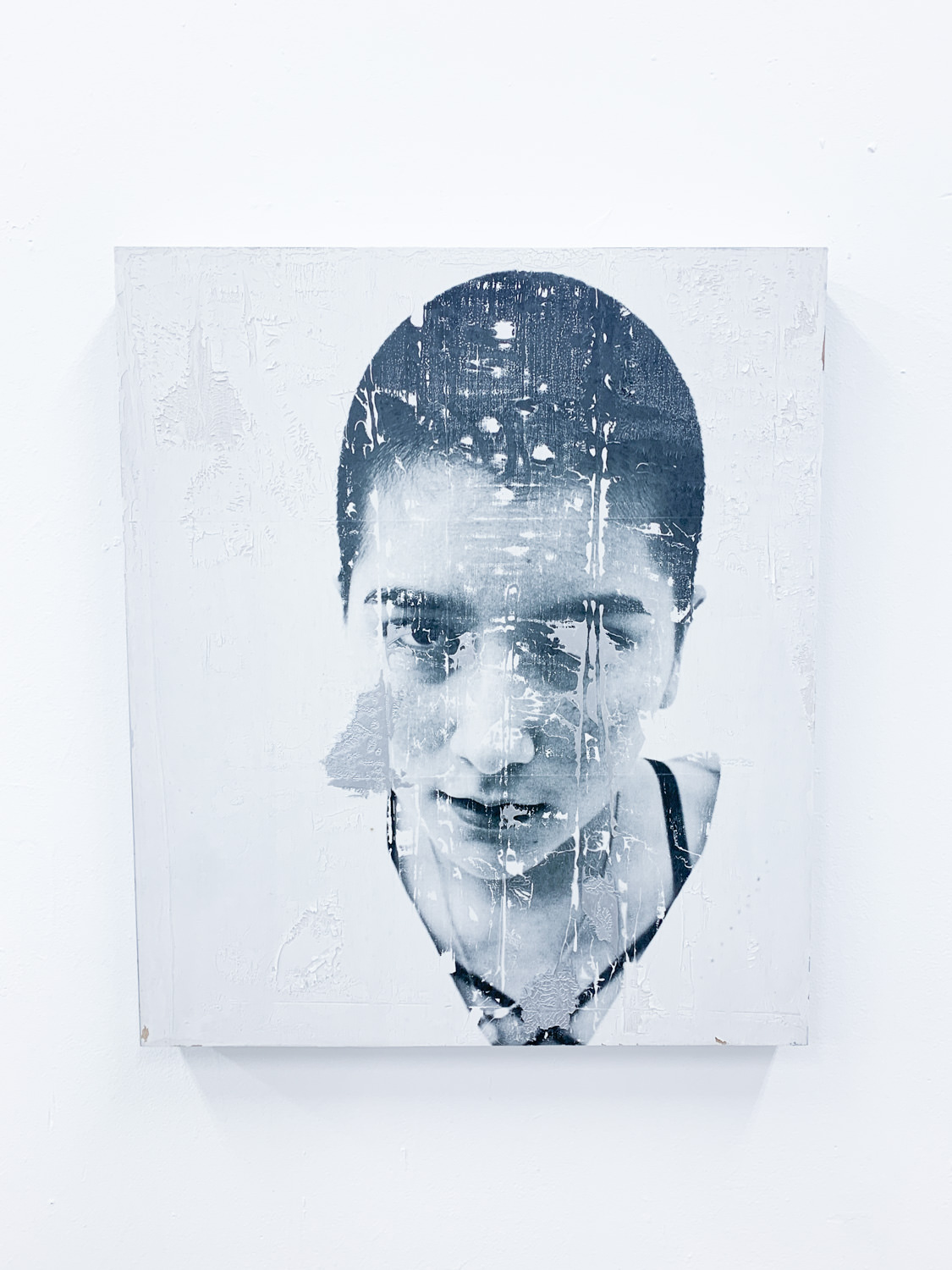
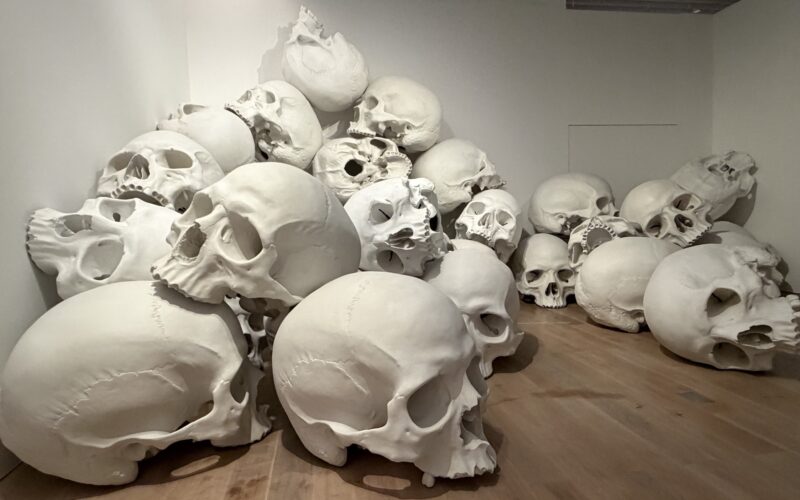
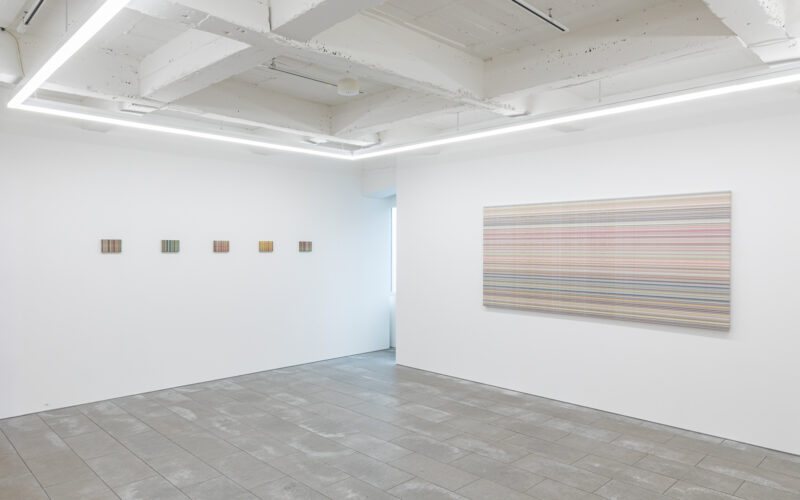
Leiko Ikemura’s solo exhibition “Leiko Ikemura: Our Planet — Earth & Stars” opened at The National Art Center, Tokyo.
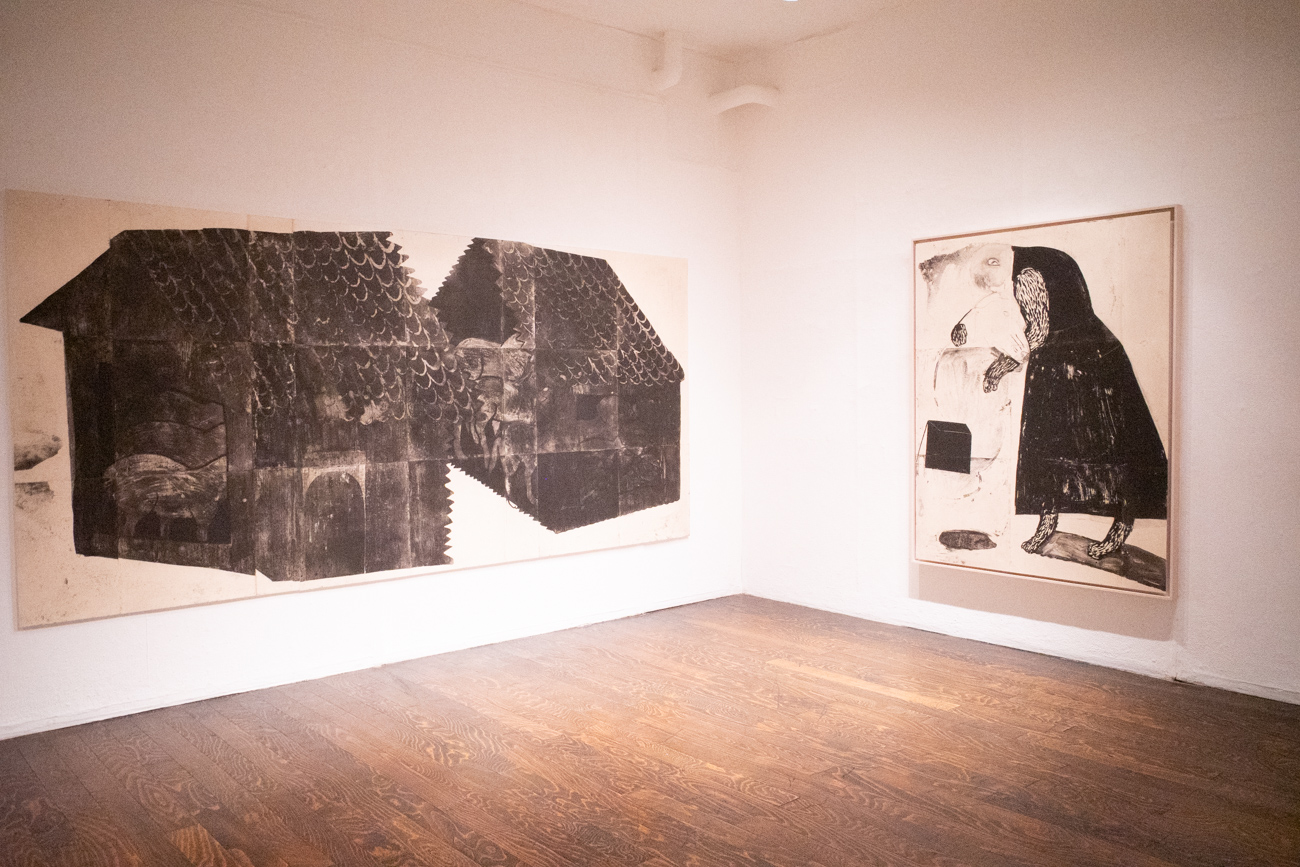
*All photographs below show installation views from “Leiko Ikemura: Our Planet — Earth & Stars,” 2019, The National Art Center, Tokyo.
Installation view from “Leiko Ikemura: Our Planet — Earth & Stars,” 2019, The National Art Center, Tokyo
Leiko Ikemura
Leiko Ikemura left Japan about 45 years ago and has lived abroad ever since — first in Spain, then Switzerland, and today based in Berlin, Germany. Long active in Europe, Ikemura has earned high international acclaim. This marks her first solo museum exhibition in Japan since the 2011 shows at The National Museum of Modern Art, Tokyo and Mie Prefectural Art Museum. Because works profoundly shaped by the Great East Japan Earthquake form the core of this show, presenting them in Japan carries deep personal meaning for the artist herself.
At the opening talk during her visit for the exhibition, she was memorably moved to the point of losing her words — “I don’t have the words…” It seems that being away from Japan has only intensified her feelings.
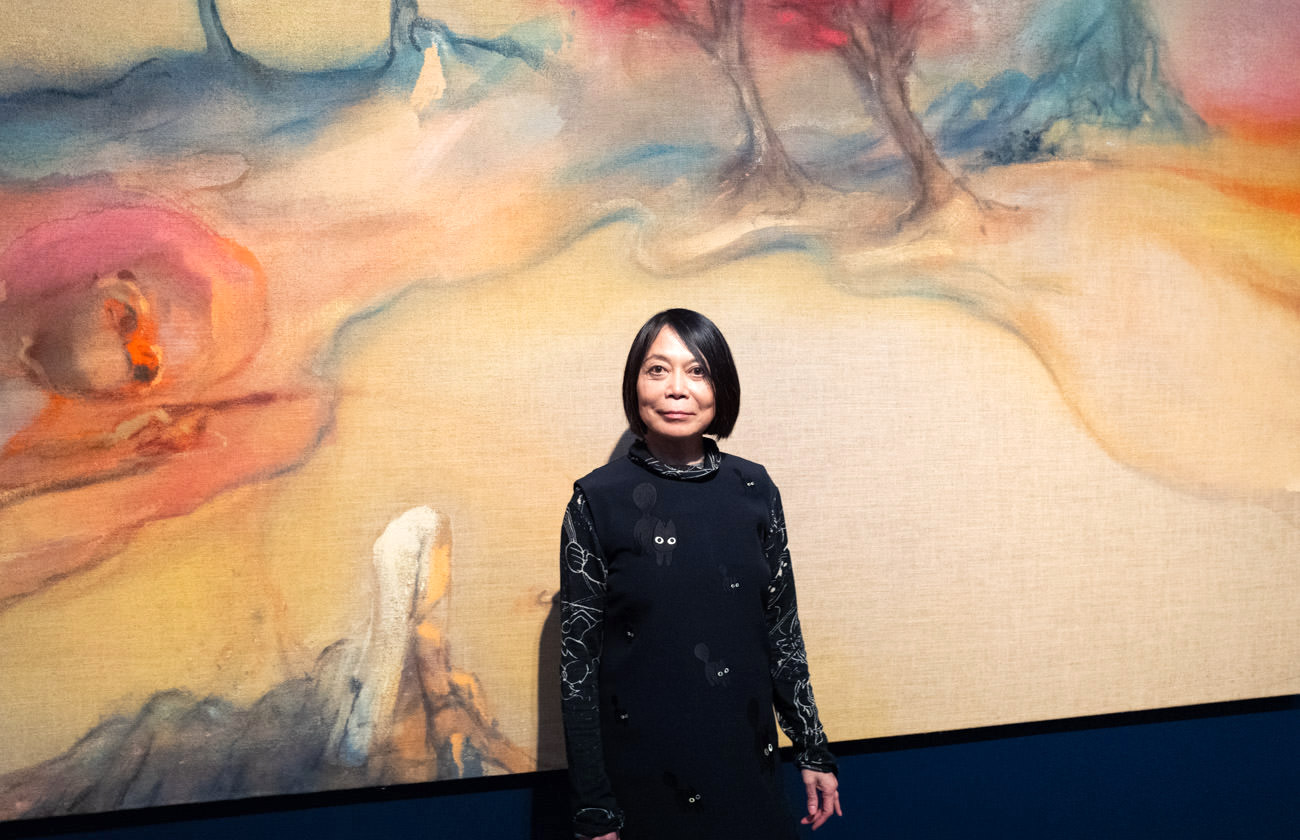
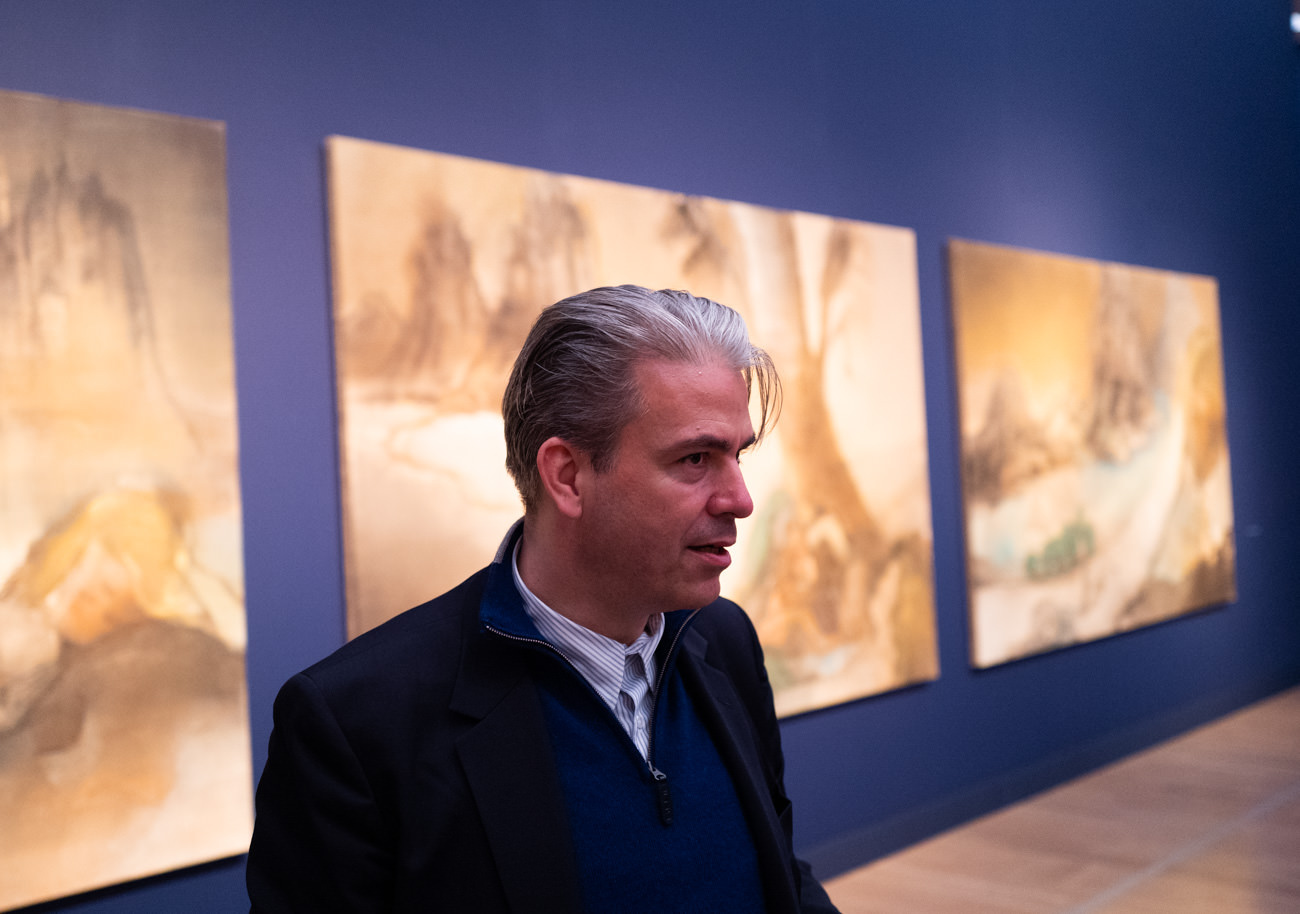
Leiko Ikemura at the press preview photo session
Leiko Ikemura’s practice is remarkably wide-ranging.
Drawings, watercolors, paintings, sculpture, prints, photographs, and video — plus poems inscribed on the gallery walls — reveal the depth of her talent.
Painters expanding into sculpture is not uncommon on today’s art scene, but it is notable that Ikemura has been working in that field since the 1980s. Around 210 works in this show — abundant proof of the multi-directional gifts she has exercised from early on — offer more than enough to take in.
The exhibition is divided into 16 sections.
Each section is complete in itself as an independent installation.
I’ll introduce them briefly below, but what I most want to convey is the “importance of viewing the works in space.”
The brilliance of the space cannot be communicated through flat images — please visit the museum in person to experience it.
1. Prologue
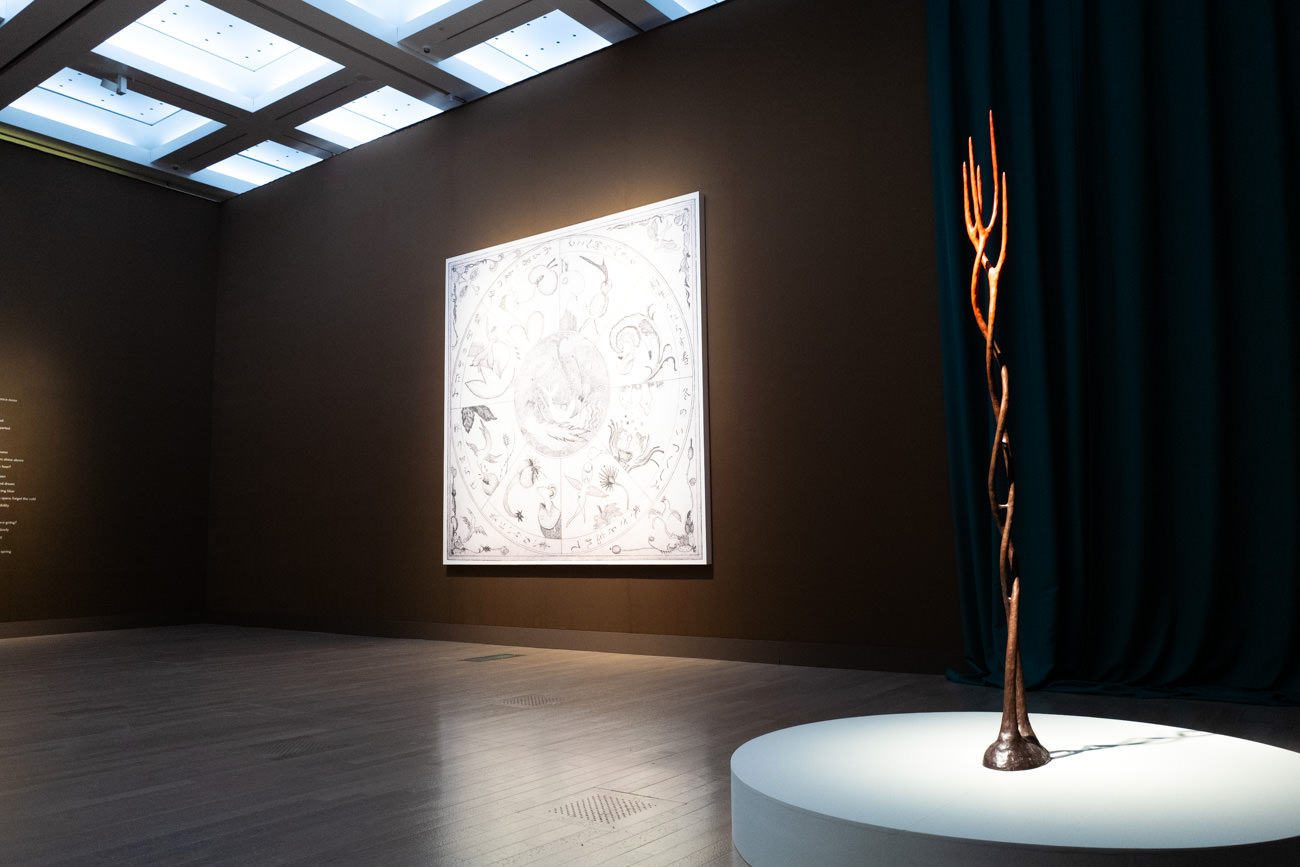
The moment you enter, a large illuminated panel is mounted beside a sculpture.
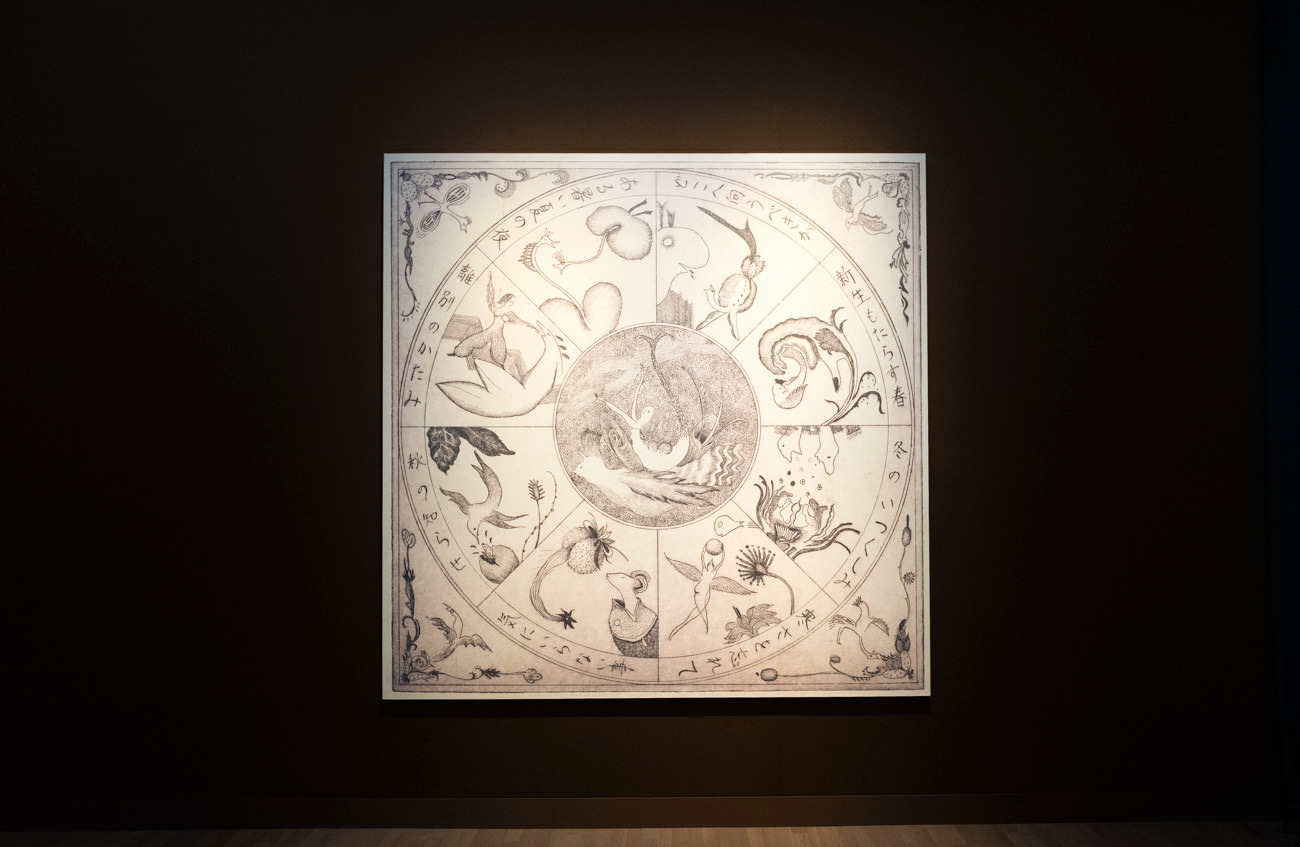
It is an enlargement of The Cycle of Life, a work tied to a major theme of the show.
Visitors move through each section holding the keyword “cycle,” as expressed by this work, in mind.
Section 1, installation view from “Leiko Ikemura: Our Planet — Earth & Stars,” 2019, The National Art Center, Tokyo
The Cycle of Life is linked to the overall concept of the exhibition; the 16 independent zones each hold their own as an installation, while a current flows through them as if each one were encroaching on its neighbor.
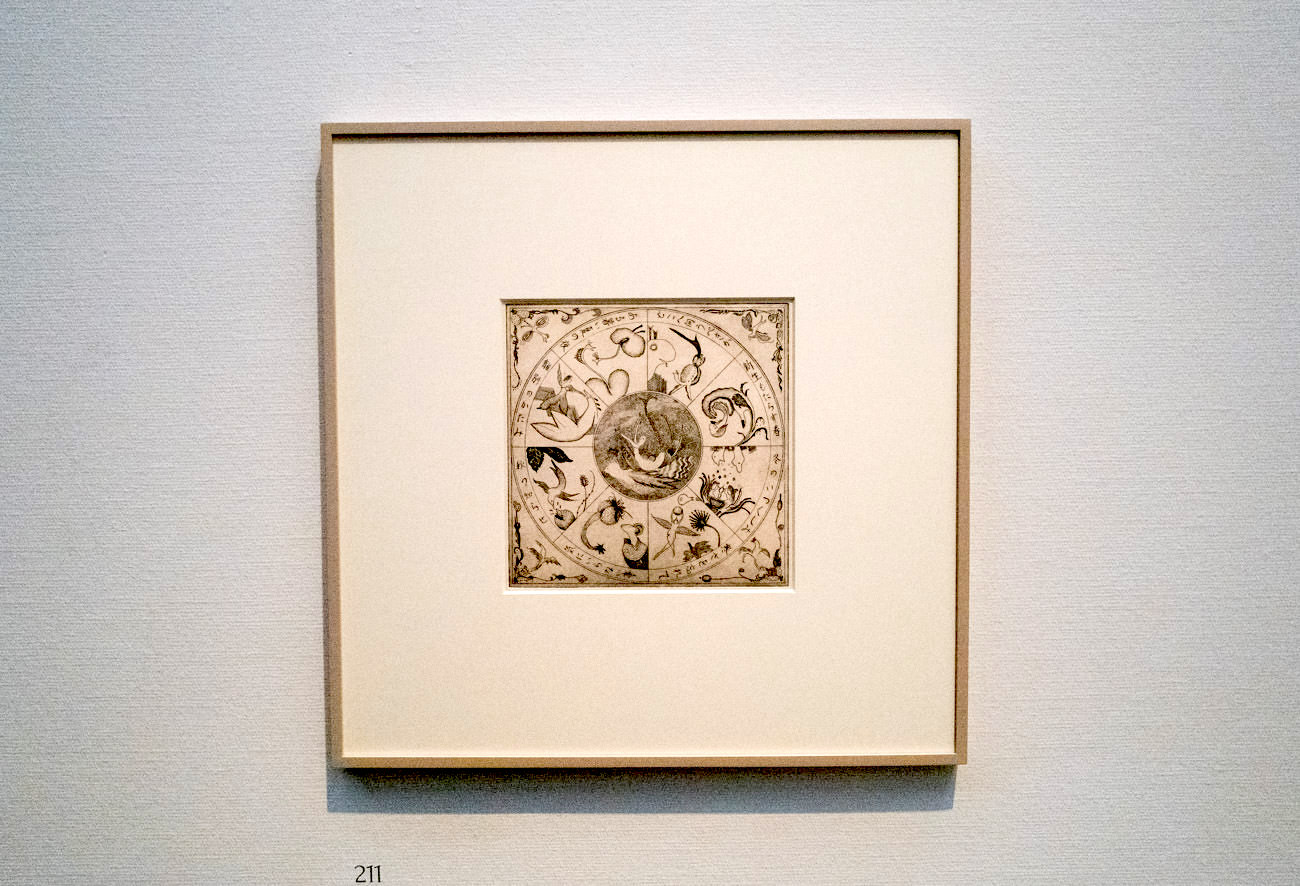
A panel enlargement of the original The Cycle of Life. The key work of the exhibition — it also connects to the final piece.
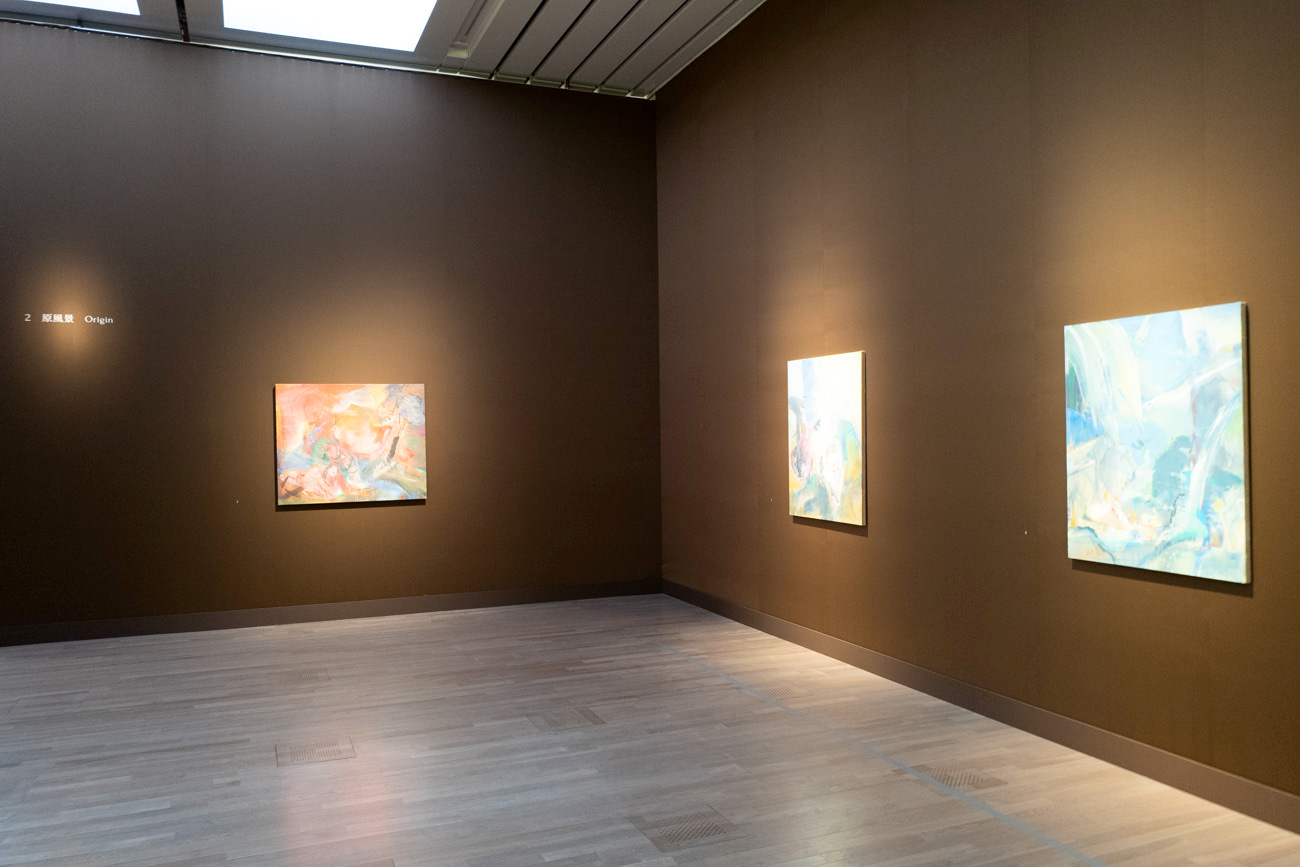
2. Origin
The opening section centers on paintings from 1989–1990.
Captions have been eliminated in this show, letting you take the works and the walls that compose the space into your whole body as you view them.
There is no audio guide either; a solemn atmosphere reigns over the space.
Section 2, installation view from “Leiko Ikemura: Our Planet — Earth & Stars,” 2019, The National Art Center, Tokyo
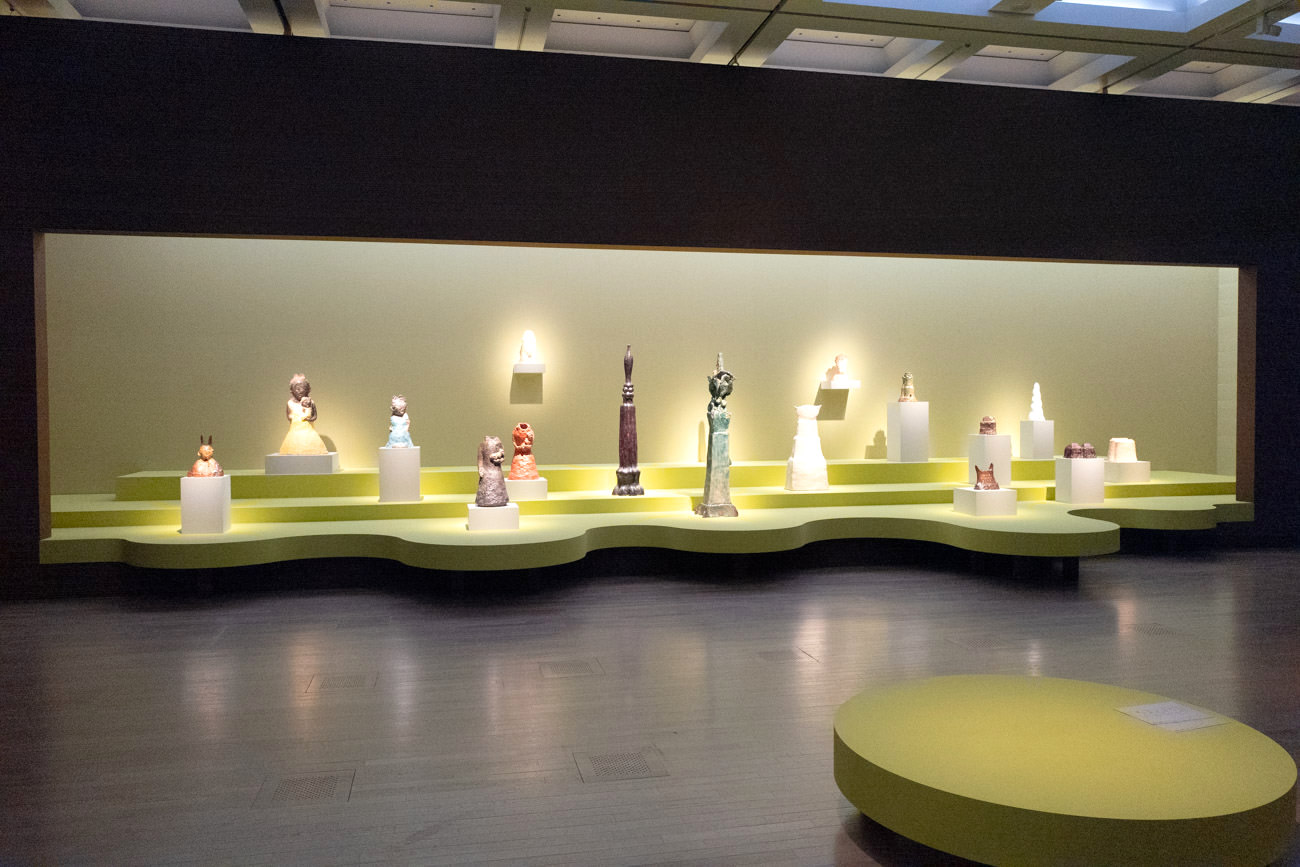
3. Organic and Inorganic
In the next section, sculptures lined the spacious hall.
Terracotta works from the early 1990s are the focus — pieces with a rustic, gentle palette that carry traces of hand-kneading.
Section 3, installation view from “Leiko Ikemura: Our Planet — Earth & Stars,” 2019, The National Art Center, Tokyo
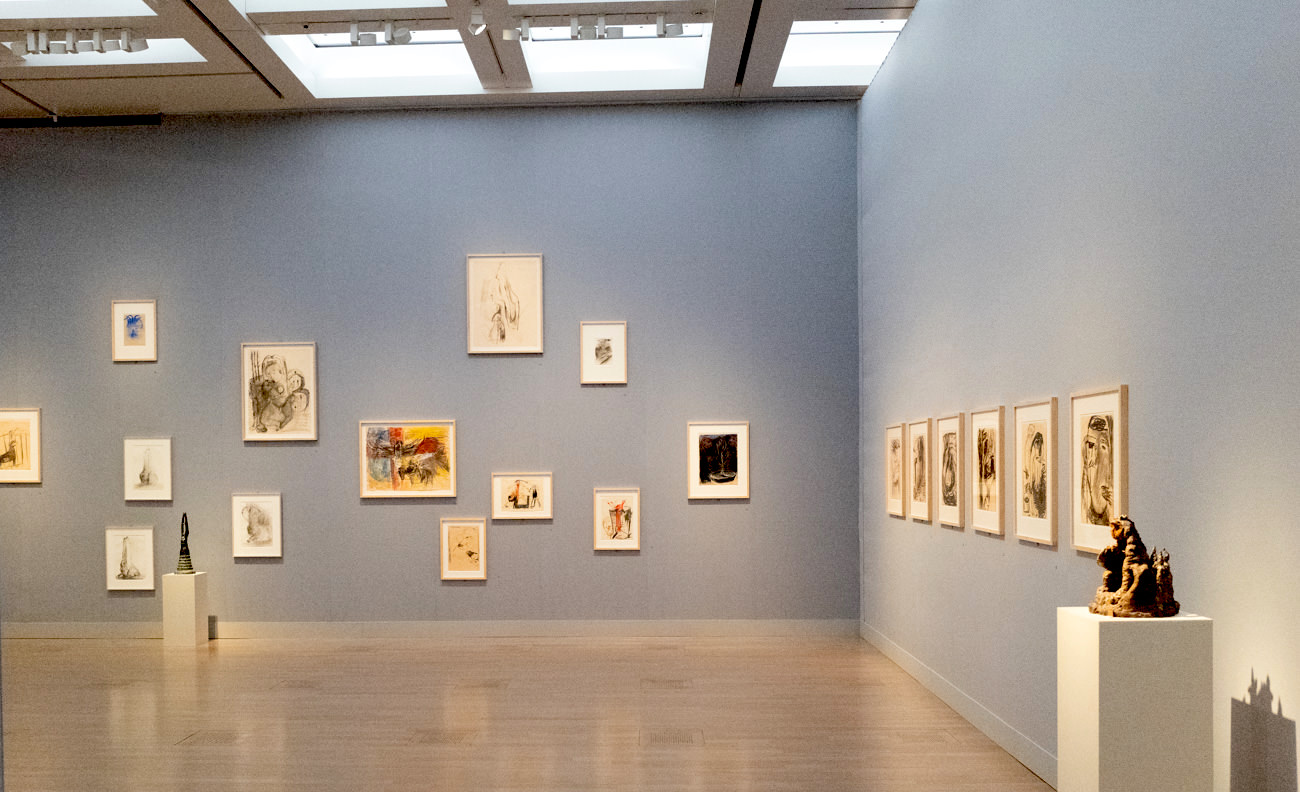
4. Realm of Drawings
Works from 1980 to 1987 are displayed chronologically.
Leiko Ikemura’s earliest recognition, I’m told, came for her drawings.
Section 4, installation view from “Leiko Ikemura: Our Planet — Earth & Stars,” 2019, The National Art Center, Tokyo
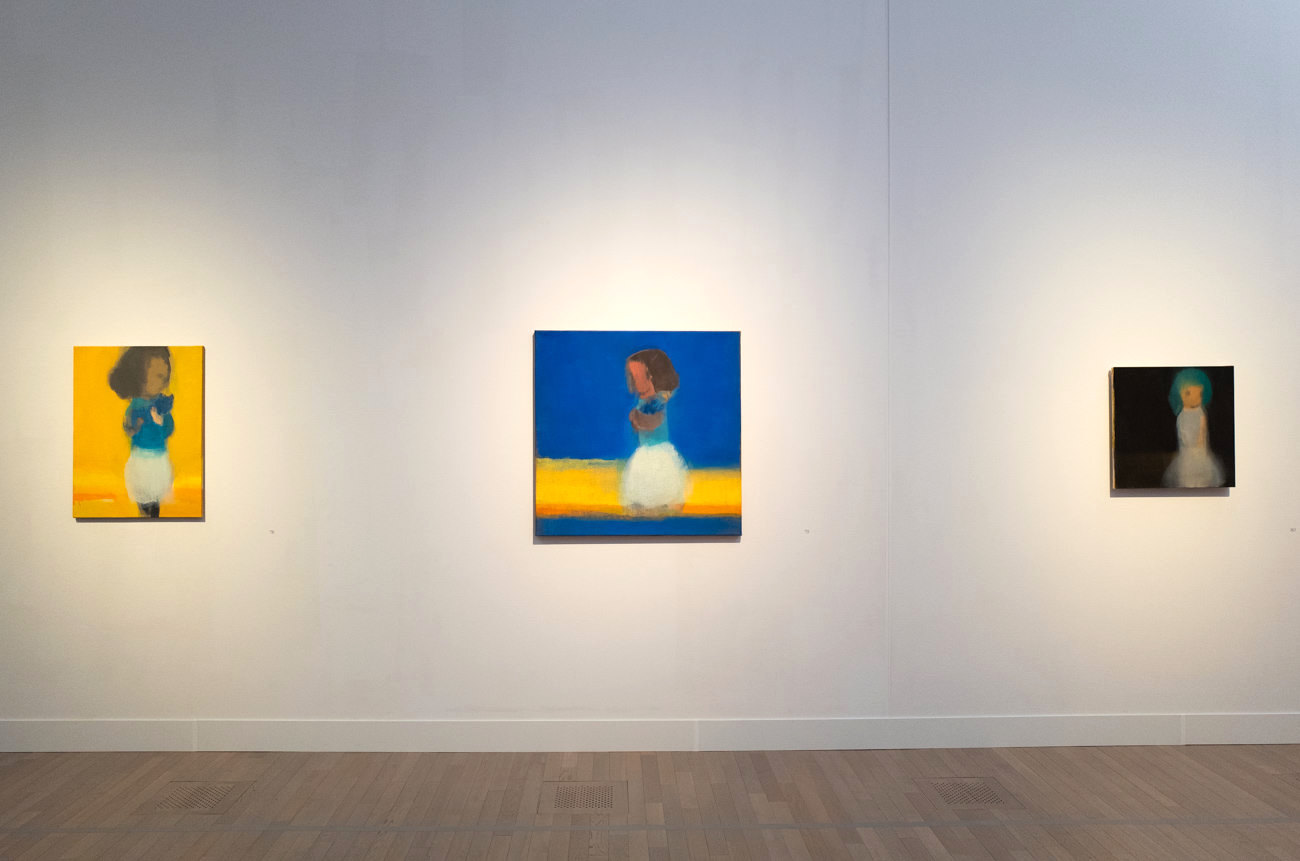
5. Girls
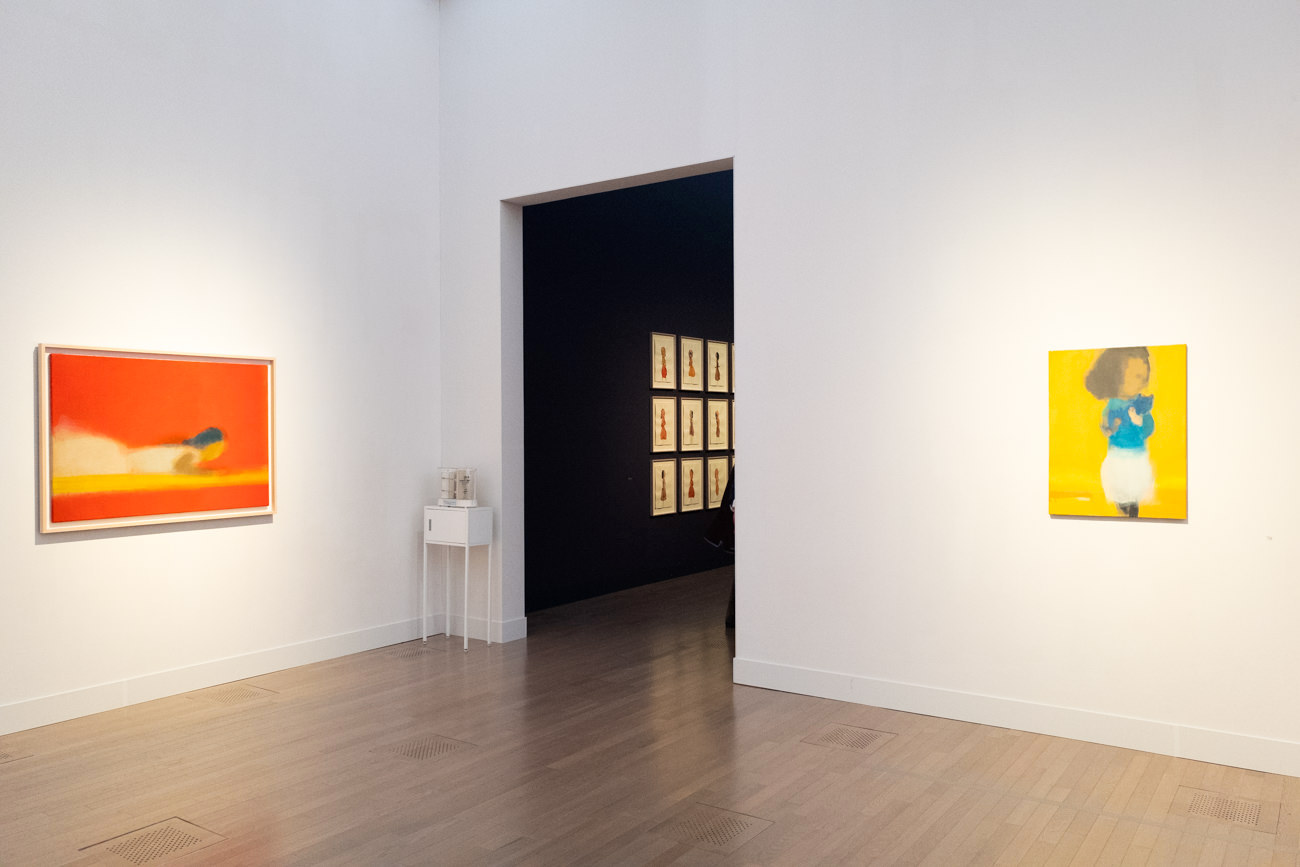
In the Girls section, the paintings in particular stood out.
Their ambiguous, fantastical depictions seem to stir the imagination.
Ambiguous, solitary, and somehow standing up to something — I found myself struck by the sense that they mirror the artist’s own way of life, spent for so many years in foreign lands.
Section 5, installation view from “Leiko Ikemura: Our Planet — Earth & Stars,” 2019, The National Art Center, Tokyo Left: Holding Miko in the Yellow, 1995/96, oil on canvas, 83.2×62.5 cm, artist’s collection Center: Yellow Path, 1996, oil on canvas, 100×100 cm, private collection Right: Standing in Black, 1997, oil on canvas, 60×60 cm, private collectionReclining Holding Miko, 1997, artist’s collection
Section 7, installation view from “Leiko Ikemura: Our Planet — Earth & Stars,” 2019, The National Art Center, Tokyo
8. Usagi Kannon
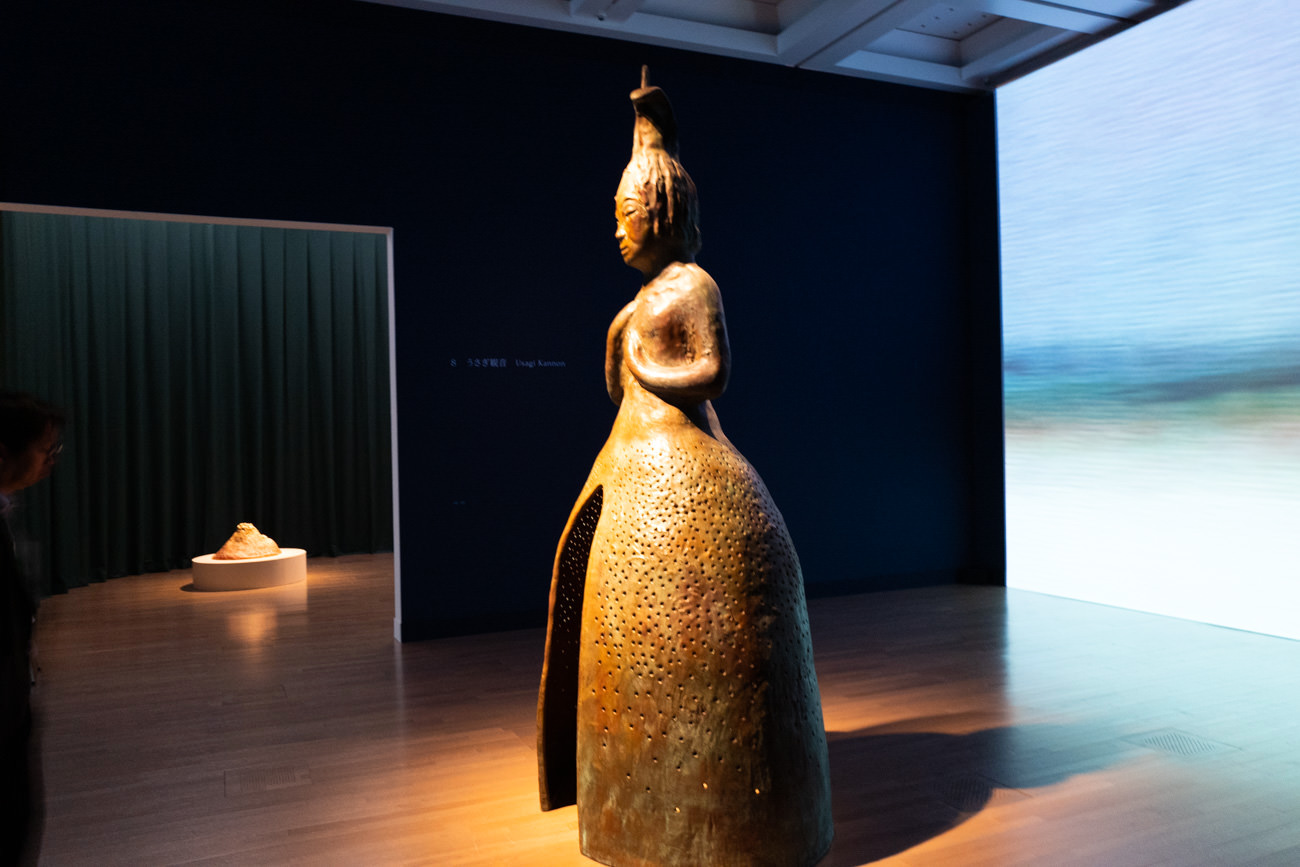
“Usagi Kannon,” in which a rabbit is fused with an Asian-style Kannon (Bodhisattva of Compassion), was made in the wake of the disaster.
Wearing a skirt and with a girlish expression that seems almost to smile, it stands with the air of embodying maternal love, and its gaze felt as though it overlapped with Ikemura’s own.
Section 8, installation view from “Leiko Ikemura: Our Planet — Earth & Stars,” 2019, The National Art Center, TokyoSection 8, installation view from “Leiko Ikemura: Our Planet — Earth & Stars,” 2019, The National Art Center, Tokyo
Usagi Kannon reappears in later sections; a total of two figures are on view.
9. Mountains
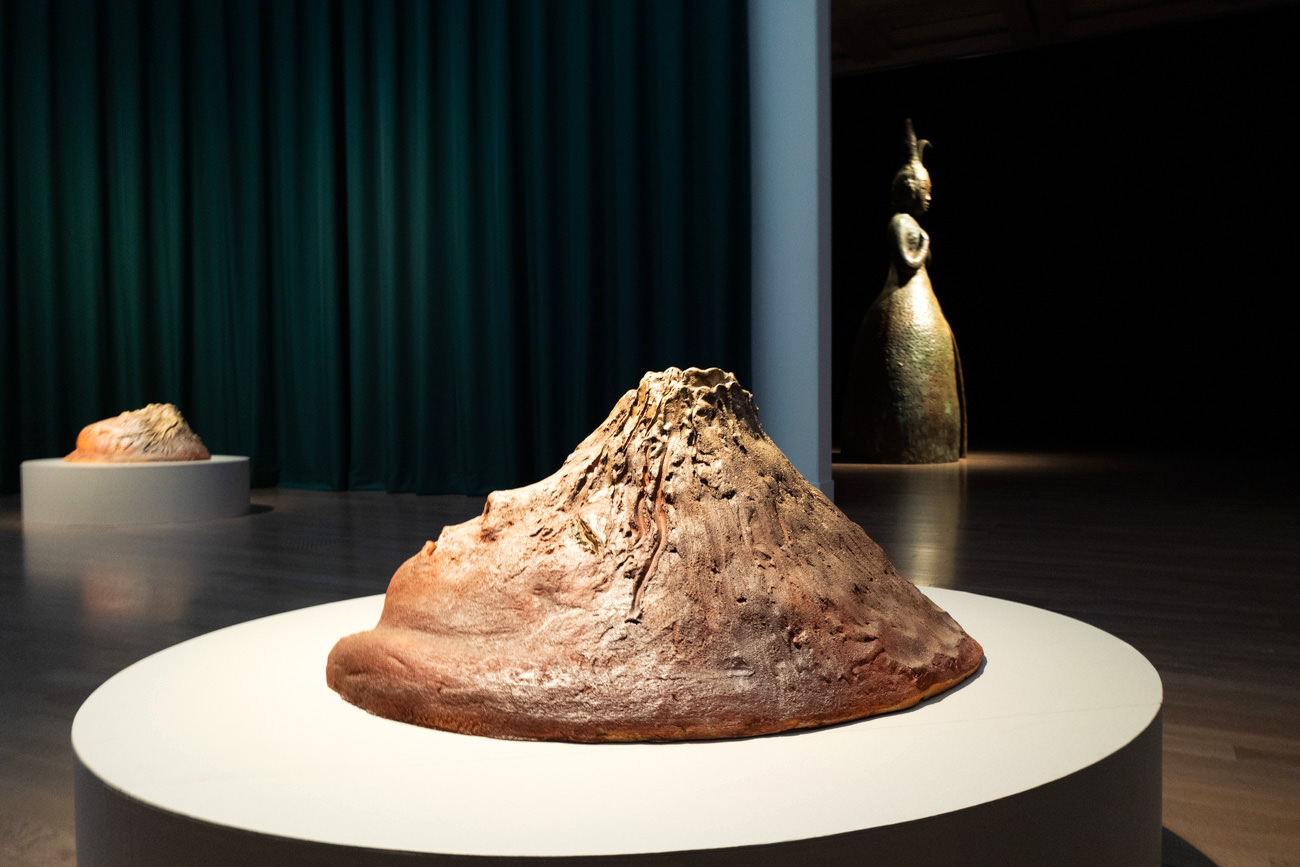
Section 9, installation view from “Leiko Ikemura: Our Planet — Earth & Stars,” 2019, The National Art Center, Tokyo Fuji Face, 2013, terracotta and glaze, 42×87×70 cm, artist’s collection
10. Garden
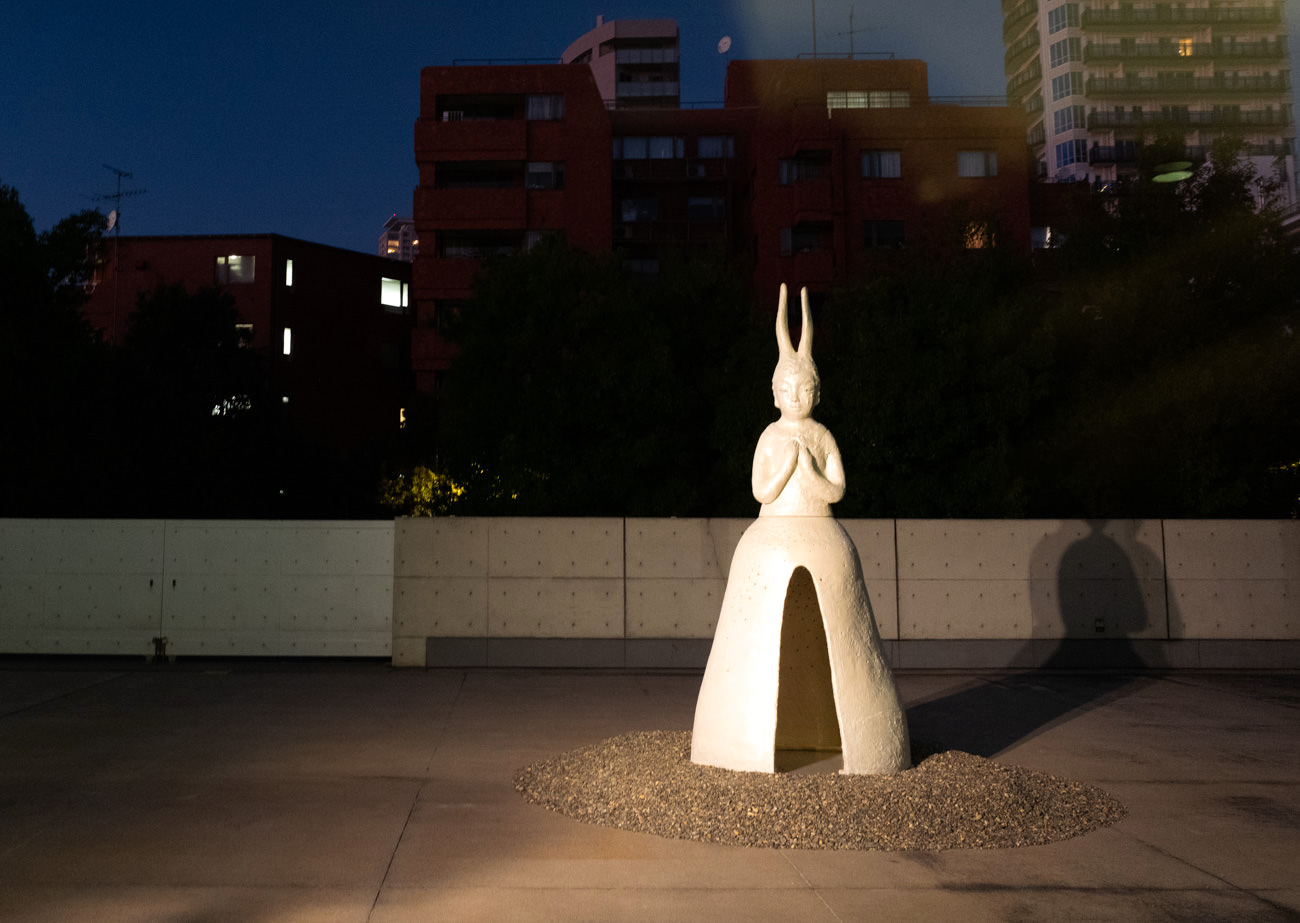
A work similar to the earlier Usagi Kannon — this time a Shigaraki-ware ceramic piece. Its height reaches about 3.4 m.
Looking closely, it appears to be shedding tears. The impression seems to shift depending on the time of day; illuminated at night, the piece takes on a dreamlike air.
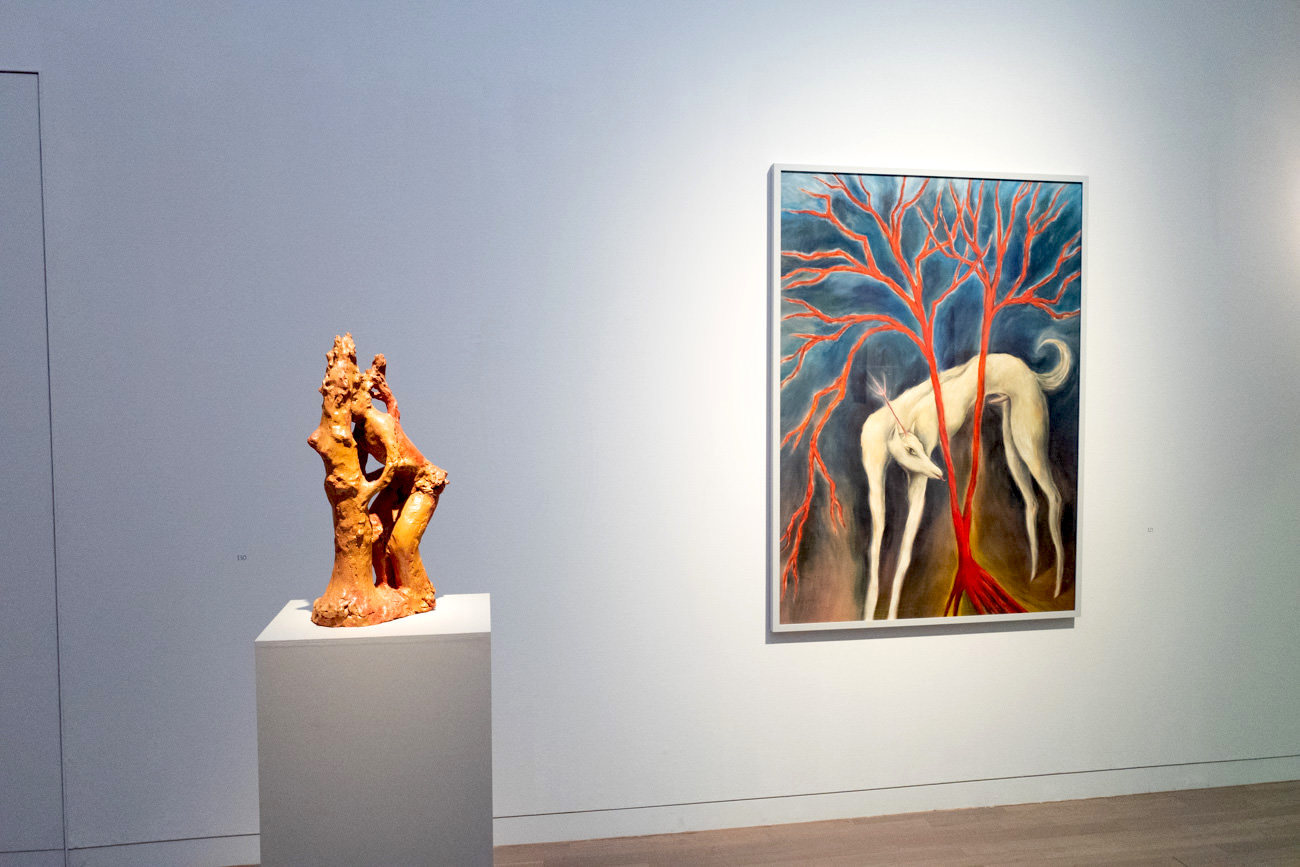
Section 11, installation view from “Leiko Ikemura: Our Planet — Earth & Stars,” 2019, The National Art Center, Tokyo Left: Presence of a Tree / Right: Stag
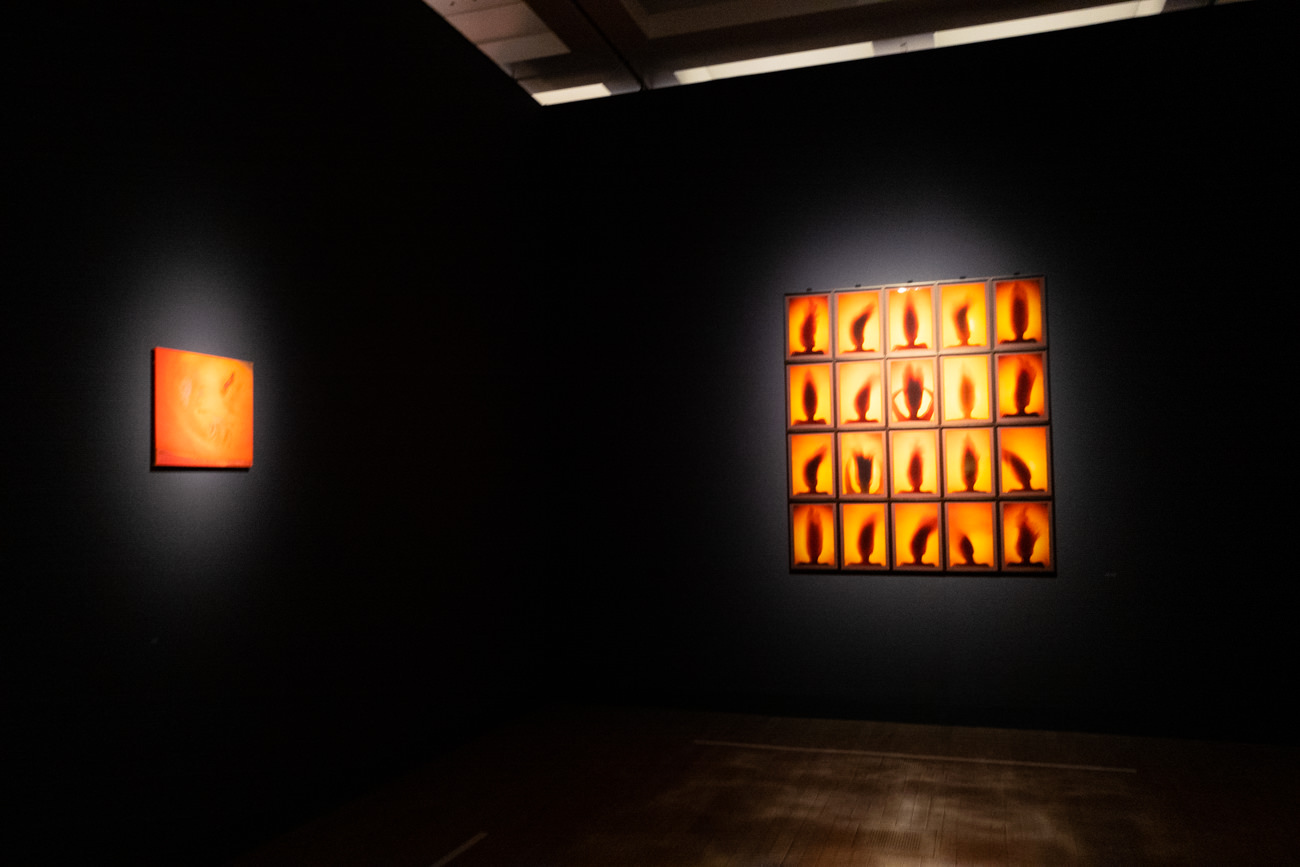
12. Flame
Section 12, installation view from “Leiko Ikemura: Our Planet — Earth & Stars,” 2019, The National Art Center, Tokyo
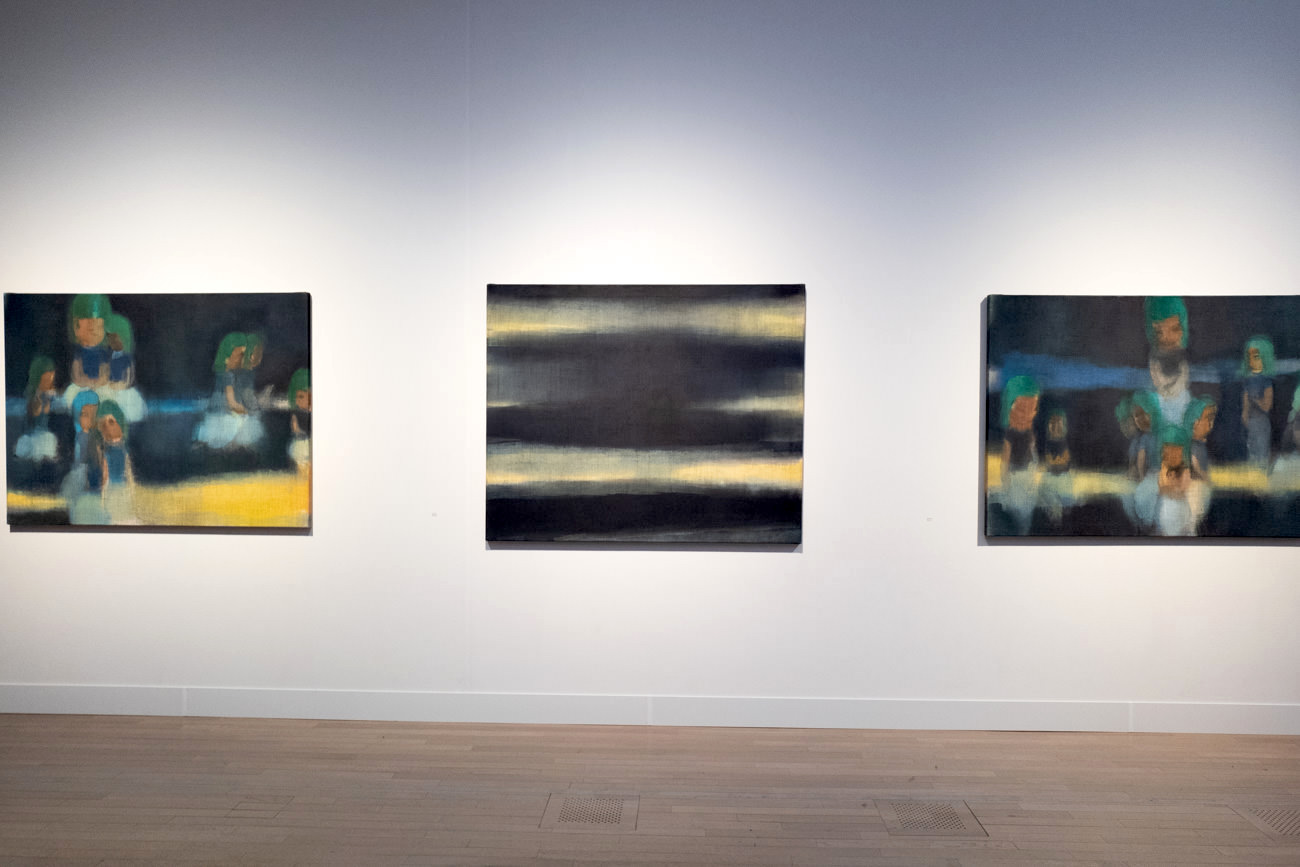
13. Horizon
The supports Ikemura chooses for her works are also distinctive. The matière of pieces on jute (hemp) has a wonderful character all its own.
Section 13, installation view from “Leiko Ikemura: Our Planet — Earth & Stars,” 2019, The National Art Center, Tokyo Left: Ocean I, 2000/01, oil on jute, 120×160 cm, Hilti Art Foundation Center: Ocean II, 2000/01, oil on jute, 130×160 cm, Hilti Art Foundation Right: Ocean III, 2000/01, oil on jute, 120×160 cm, Hilti Art Foundation
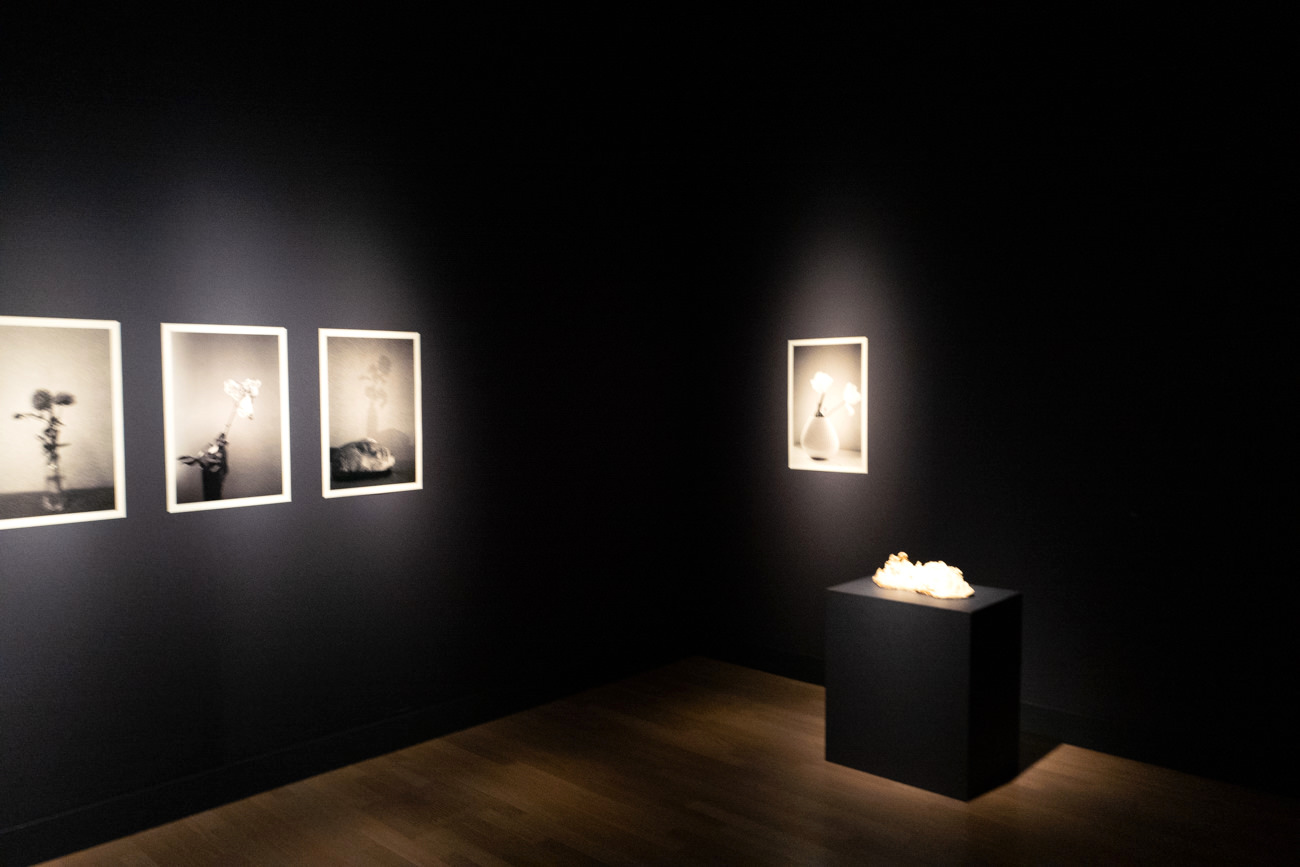
14. Memento Mori
A section giving form to “death,” which occupies a crucial place in the exhibition’s concept of “The Cycle of Life.”
Leiko Ikemura seems to interpret “death” as “a concept that connects to a beginning.”
Framed as “nothingness” in the exhibition catalogue, the Memento Mori series was made after the earthquake.
Section 14, installation view from “Leiko Ikemura: Our Planet — Earth & Stars,” 2019, The National Art Center, Tokyo
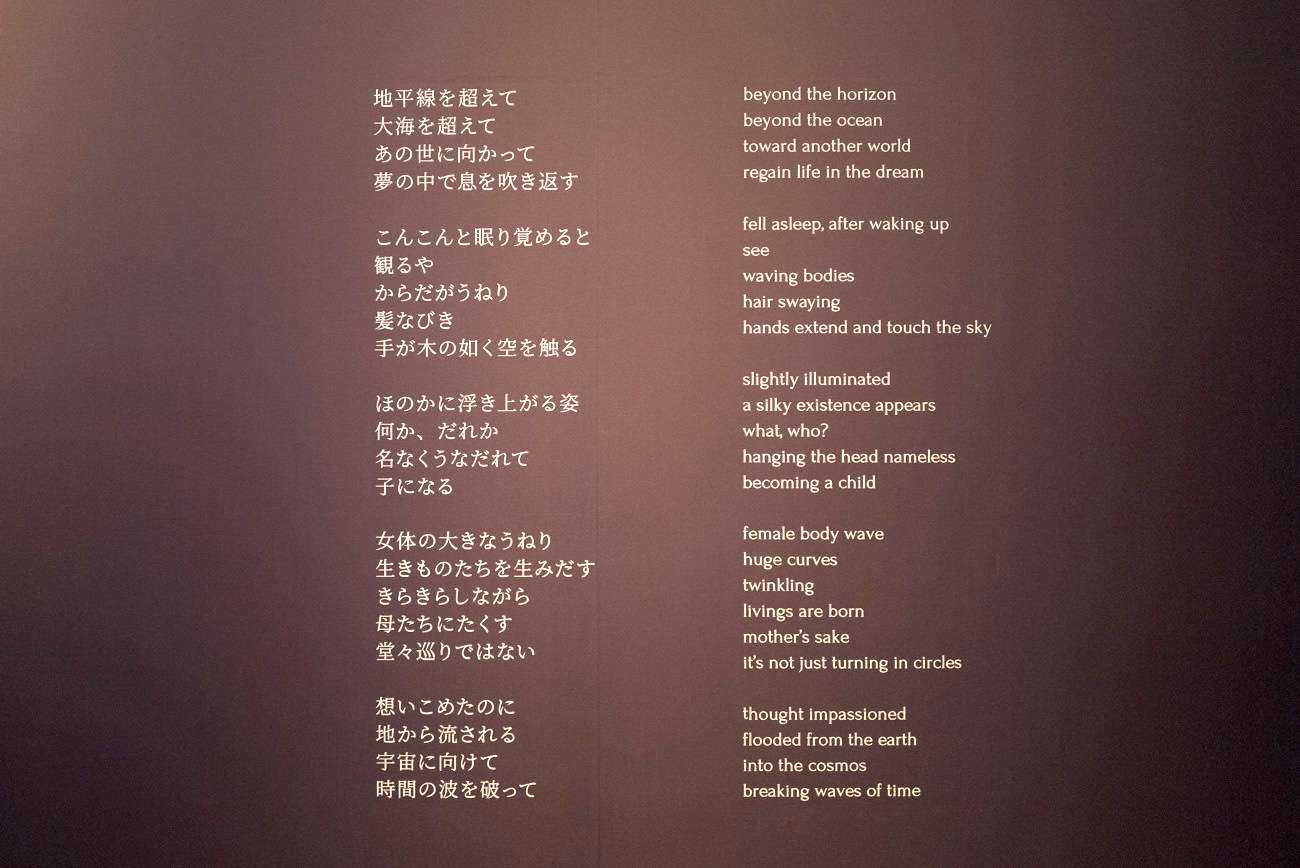
15. Cosmicscape
A section surrounded by the most recent works.
Effectively the climax of the exhibition, this is also its largest hall.
A poem worth reading in both Japanese and English.
Tempera works with an Eastern atmosphere.
Section 15, installation view from “Leiko Ikemura: Our Planet — Earth & Stars,” 2019, The National Art Center, Tokyo
The newest work, Undulating Spring, gives the impression that Ikemura is showing us a fresh side of herself.
There was a sense of space in which Ikemura herself cycles and discovers a new self.
Section 15, installation view from “Leiko Ikemura: Our Planet — Earth & Stars,” 2019, The National Art Center, TokyoSection 15, installation view from “Leiko Ikemura: Our Planet — Earth & Stars,” 2019, The National Art Center, Tokyo
16. Epilogue
The final section is titled “Epilogue,” yet the words “there is no beginning nor end” belong to Ikemura herself.
Section 16, installation view from “Leiko Ikemura: Our Planet — Earth & Stars,” 2019, The National Art Center, Tokyo
The last work you encounter is the original version of The Cycle of Life touched on at the beginning.
The Cycle of Life, 1977, etching on paper, 29×26.5 cm, artist’s collection
The opening work loops back to the closing work — a fitting close in which all the exhibited pieces feel as though they are cycling.
Exhibition Design
The exhibition design and installation composition are the work of Ikemura’s partner, Philipp von Matt.
Philipp von Matt, who kindly answered our interview
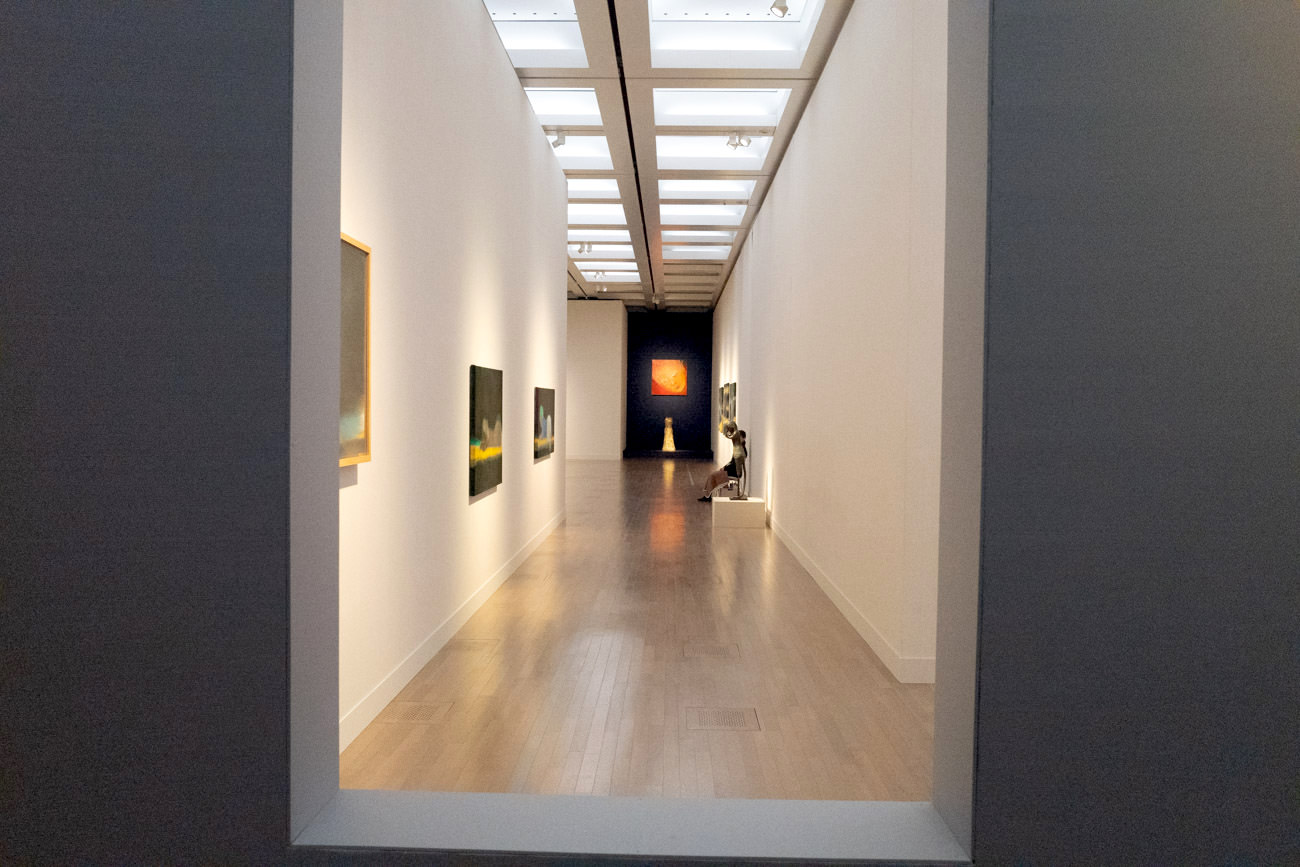
The many turns and open sight lines built into the hall reflect the connections and relationships between sections, designed so that the sense of time and thematic weight each work carries might cycle through the show.
A venue design that consciously threads flow from section to section — strikingly done.
He works primarily as an architect but has designed a great many art exhibitions, including several notable projects in Japan.
Architect’s sensibility at work — open, unimpeded sight lines
The way the design keeps in tone and manner with the works, holding back its own inflection, is superb.
Philipp’s contribution feels enormous, as an integral component of the installation itself.
Museum Shop
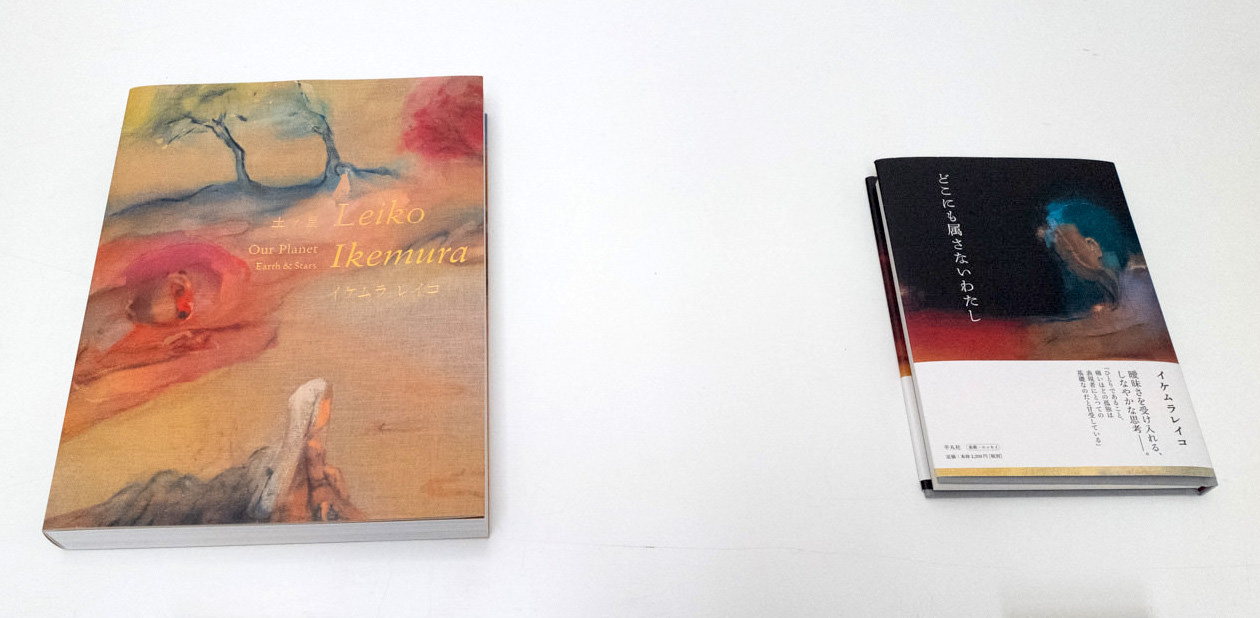
The shop inside the venue carries just two items: the exhibition catalogue and the book “Watashi, Doko ni mo Zoku sanai” (I Belong Nowhere).
The catalogue, of course, features photographs of the works, but it also gathers many contributions from those close to the project — a carefully compiled volume with real editorial and reference value. Its polish makes it a book worth owning.
A full 360-page hefty catalogue — highly recommended.
Summary
From prologue to epilogue, how you make your way through the 16 sections is up to you, but the space fully rewards you with quiet, strongly-willed works. Among the many pieces spread across the expansive hall, you can sense elements of both East and West mingling, mirroring the career Leiko Ikemura has forged. The way those mingling elements are magnificently fused reflects, in full, the career she has continued to build as an artist.
Below are the key points for viewing this exhibition.
This is a 2019 blockbuster we can enthusiastically recommend to everyone!
The largest solo show of her career to date, in terms of both space and volume (around 210 works)
Ikemura’s wide-ranging works span her earliest pieces through her most recent
Attention worth paying not only to individual works but also to the exhibition space composed as an installation
An opportunity to think deeply about the theme of “The Cycle of Life”
The venue’s composition and design are outstanding — a rare chance to experience art in the fullest sense
Leiko Ikemura: Our Planet — Earth & Stars
Leiko Ikemura的个展”Leiko Ikemura: Our Planet — Earth & Stars”开幕了。会场是The National Art Center, Tokyo。
※以下照片均为”Leiko Ikemura: Our Planet — Earth & Stars” 2019年 The National Art Center, Tokyo展览现场。
“Leiko Ikemura: Our Planet — Earth & Stars” 2019年 The National Art Center, Tokyo展览现场
Leiko Ikemura
Leiko Ikemura约45年前离开日本,赴海外生活。她从西班牙辗转至瑞士,如今以德国柏林为据点。长期在欧洲活动,Leiko Ikemura在国际上获得极高评价。这是她自2011年在The National Museum of Modern Art, Tokyo和Mie Prefectural Art Museum的个展以来,在日本美术馆举办的首次个展。深受东日本大震灾影响的作品构成了本展核心,这些作品能在日本展出,对艺术家本人而言想必也意义重大。
板块8 “Leiko Ikemura: Our Planet — Earth & Stars” 2019年 The National Art Center, Tokyo展览现场板块8 “Leiko Ikemura: Our Planet — Earth & Stars” 2019年 The National Art Center, Tokyo展览现场
兔观音也出现在之后的板块中,共展出2尊。
9. 山|Mountains
板块9 “Leiko Ikemura: Our Planet — Earth & Stars” 2019年 The National Art Center, Tokyo展览现场 《Fuji Face》 2013年 陶土、釉料 42×87×70cm 艺术家收藏
10. 庭|Garden
与先前的兔观音同类,此为信乐烧陶作品,高度约3.4米。
细看之下仿佛在流泪。观赏时段不同印象或许也会有变,夜晚灯光映照下的作品透着梦幻氛围。
《Usagi Kannon》2012/14年、陶 艺术家收藏
11. 树|Trees
板块11 “Leiko Ikemura: Our Planet — Earth & Stars” 2019年 The National Art Center, Tokyo展览现场 左:《Presence of a Tree》 右:《Stag》
12. 焰|Flame
板块12 “Leiko Ikemura: Our Planet — Earth & Stars” 2019年 The National Art Center, Tokyo展览现场
13. 地平线|Horizon
根据作品选用不同的支撑材料也是其特色。使用麻布(jute)的作品有着独特的肌理韵味。
板块13 “Leiko Ikemura: Our Planet — Earth & Stars” 2019年 The National Art Center, Tokyo展览现场 左:《Ocean I》 2000/01年 麻布油画 120×160cm Hilti Art Foundation 中:《Ocean II》 2000/01年 麻布油画 130×160cm Hilti Art Foundation 右:《Ocean III》 2000/01年 麻布油画 120×160cm Hilti Art Foundation
14. 追忆死亡|Memento Mori
本板块表现的是本展概念《The Cycle of Life》中占据重要位置的”死”。
Leiko Ikemura似乎将”死”解读为”通向开始的概念”。
在图录中被以”无”的形式呈现,作品《Memento Mori》系列是震灾之后所作。
板块14 “Leiko Ikemura: Our Planet — Earth & Stars” 2019年 The National Art Center, Tokyo展览现场
15. 宇宙景观|Cosmicscape
被最新作品环绕的板块。
实际上是展览最后的高潮所在,也是面积最大的展示空间。
值得一起品读日文与英文的诗歌。
具东方氛围的蛋彩画作品。
板块15 “Leiko Ikemura: Our Planet — Earth & Stars” 2019年 The National Art Center, Tokyo展览现场
板块15 “Leiko Ikemura: Our Planet — Earth & Stars” 2019年 The National Art Center, Tokyo展览现场板块15 “Leiko Ikemura: Our Planet — Earth & Stars” 2019年 The National Art Center, Tokyo展览现场
Leiko Ikemura의 개인전 “Leiko Ikemura: Our Planet — Earth & Stars”가 개막했습니다. 회장은 The National Art Center, Tokyo입니다.
※이하 사진은 모두 〈”Leiko Ikemura: Our Planet — Earth & Stars” 2019년 The National Art Center, Tokyo 전시 풍경〉입니다.
〈”Leiko Ikemura: Our Planet — Earth & Stars” 2019년 The National Art Center, Tokyo 전시 풍경〉
Leiko Ikemura
Leiko Ikemura는 약 45년 전 일본을 떠나 해외에서 활동해 왔으며, 스페인과 스위스를 거쳐 현재는 독일 베를린을 거점으로 삼고 있는 작가입니다. 오랫동안 유럽을 근거지로 활동하며 국제적으로도 높은 평가를 받아 온 Leiko Ikemura. 일본 미술관에서의 개인전은 The National Museum of Modern Art, Tokyo와 Mie Prefectural Art Museum에서 열린 2011년 이후 처음이지만, 동일본 대지진의 큰 영향을 받은 그의 작품은 본전의 핵심을 이루고 있으며, 이들 작품이 일본에서 공개된다는 것은 작가 본인에게도 큰 의미가 있는 일이라 짐작됩니다.
본전에 맞춰 일본을 찾은 작가는 개막 강연에서 “말이 되지 않는군요…”라며 감정이 북받쳐 말을 잇지 못하는 장면이 매우 인상적이었습니다. 일본을 떠나 있기에 더욱 깊이 느끼는 것이 있는 듯합니다.
Leiko Ikemura ~ 언론 내람회 포토세션에서
Leiko Ikemura의 작품 세계는 폭넓습니다.
드로잉, 수채, 페인팅, 조각, 판화, 사진, 영상 등의 표현 방식에 더해 전시장 벽면에 새겨진 시까지 포함해 다방면에 걸쳐 있어, 그 재능의 깊이를 접할 수 있습니다.
화가가 조각 영역으로 확장하는 것은 오늘날의 아트 신에서 흔히 볼 수 있는 일이지만, 1980년대라는 시점부터 Leiko Ikemura가 그 분야에 임해 왔다는 사실은 주목할 만합니다. 일찍부터 다방면에 재능을 발휘해 온 증거를 본전의 약 210점에 이르는 작품 속에서 마음껏 감상할 수 있습니다.
본 전시는 16개의 섹션으로 나뉘어 있습니다.
그리고 각 섹션이 독립된 하나의 인스톨레이션으로 완성되어 있습니다.
아래에서 조금씩 소개해 드리지만, 특히 전하고 싶은 것은 “공간에서 감상하는 것의 중요성”이라는 점입니다.
평면 이미지로는 전할 수 없는 공간의 훌륭함은 꼭 미술관을 직접 찾아 체험해 보시기를 권합니다.
1. 프롤로그|Prologue
입장하자마자 나타나는 방에는 조각 옆에 커다란 패널이 조명을 받고 있습니다.
본전의 큰 테마와도 이어지는 작품 《The Cycle of Life》을 확대한 것입니다.
관람자는 이 작품에서 표현된 “순환”이라는 키워드를 이미지화하며 각 섹션을 나아가게 됩니다.
섹션1 〈”Leiko Ikemura: Our Planet — Earth & Stars” 2019년 The National Art Center, Tokyo 전시 풍경〉
《The Cycle of Life》은 본전의 전체 콘셉트로 이어지며, 16개의 독립된 존은 그 자체로 하나의 인스톨레이션으로 성립하면서도 인접 섹션을 침식하는 듯한 흐름을 자아냅니다.
《The Cycle of Life》 원작을 확대한 패널. 본전의 열쇠가 되는 작품. 본전의 마지막 작품으로도 이어집니다.
2. 원풍경|Origin
서두의 작품은 1989년~1990년의 페인팅 작품이 중심입니다.
본전에서는 캡션이 배제되어 있어, 작품과 공간을 구성하는 벽면을 몸 전체로 삼키듯 감상할 수 있습니다.
음성 가이드 서비스도 없이, 엄숙한 공간이 지배하고 있습니다.
섹션2 〈”Leiko Ikemura: Our Planet — Earth & Stars” 2019년 The National Art Center, Tokyo 전시 풍경〉
3. 유기와 무기|Organic and Inorganic
이어지는 섹션에서는 넓은 회장에 조각 작품이 죽 늘어서 있었습니다.
1990년대 전반의 테라코타를 사용한 작품이 중심입니다. 손으로 빚은 흔적을 남긴 듯 소박하고 부드러운 색감의 작품입니다.
섹션3 〈”Leiko Ikemura: Our Planet — Earth & Stars” 2019년 The National Art Center, Tokyo 전시 풍경〉
4. 드로잉의 세계|Realm of Drawings
1980년~1987년까지의 작품이 연대순으로 전시되어 있습니다.
Leiko Ikemura가 처음 평가받은 것은 소묘 작품이었다고 합니다.
섹션4 〈”Leiko Ikemura: Our Planet — Earth & Stars” 2019년 The National Art Center, Tokyo 전시 풍경〉
5. 소녀|Girls
소녀 섹션, 특히 페인팅 작품의 훌륭함은 발군이었습니다.
모호하고 환상적인 묘사가 상상력을 자극합니다.
모호하고 고독하며 무언가에 맞서고 있는 듯한 그 모습은, 이국의 땅에 오래 머무른 작가 본인의 삶의 방식처럼 강하게 각인되었습니다.
섹션5 〈”Leiko Ikemura: Our Planet — Earth & Stars” 2019년 The National Art Center, Tokyo 전시 풍경〉 왼쪽: 《Holding Miko in the Yellow》 1995/96년 캔버스에 유채 83.2×62.5cm 작가 소장 가운데: 《Yellow Path》1996년 캔버스에 유채 100×100cm 개인 소장 오른쪽: 《Standing in Black》1997년 캔버스에 유채 60×60cm 개인 소장《Reclining Holding Miko》1997년 작가 소장
6. 아마존|Amazon
《Amazon》 2015/18년 잉크젯 프린트 작가 소장
7. 싸움|War
섹션7 〈”Leiko Ikemura: Our Planet — Earth & Stars” 2019년 The National Art Center, Tokyo 전시 풍경〉
8. 우사기 관음|Usagi Kannon
동양적인 관음보살에 토끼를 접목한 작품 “Usagi Kannon”은 지진 재해를 겪은 뒤 제작된 작품입니다.
치마를 두르고 소녀 같은 표정을 한 그 모습은 마치 미소 짓는 듯 보이기도 합니다.
모성을 상징하는 듯한 자태이며, 그 시선은 Leiko Ikemura 본인과 겹쳐 이미지되었습니다.
섹션8 〈”Leiko Ikemura: Our Planet — Earth & Stars” 2019년 The National Art Center, Tokyo 전시 풍경〉섹션8 〈”Leiko Ikemura: Our Planet — Earth & Stars” 2019년 The National Art Center, Tokyo 전시 풍경〉
우사기 관음은 이후 섹션에서도 전시되며, 총 2점이 출품되었습니다.
9. 산|Mountains
섹션9 〈”Leiko Ikemura: Our Planet — Earth & Stars” 2019년 The National Art Center, Tokyo 전시 풍경〉 《Fuji Face》 2013년 테라코타, 유약 42×87×70cm 작가 소장
10. 정원|Garden
앞서 나온 우사기 관음과 유사한 작품이며, 이것은 시가라키 도자기 작품입니다. 높이는 약 3.4m에 달합니다.
자세히 보면 눈물을 흘리는 것처럼 보입니다. 관람하는 시간대에 따라서도 인상이 달라질 것 같지만, 야간에 조명을 받는 작품에는 환상적인 분위기가 있었습니다.
《Usagi Kannon》2012/14년, 도자 작가 소장
11. 나무|Trees
섹션11 〈”Leiko Ikemura: Our Planet — Earth & Stars” 2019년 The National Art Center, Tokyo 전시 풍경〉 왼쪽: 《Presence of a Tree》 오른쪽: 《Stag》
12. 불꽃|Flame
섹션12 〈”Leiko Ikemura: Our Planet — Earth & Stars” 2019년 The National Art Center, Tokyo 전시 풍경〉
13. 지평선|Horizon
작품에 따라 선택하는 지지체도 특징적입니다. 주트(마)를 사용한 작품의 마티에르는 독특한 맛이 있어 매력적입니다.
섹션13 〈”Leiko Ikemura: Our Planet — Earth & Stars” 2019년 The National Art Center, Tokyo 전시 풍경〉 왼쪽: 《Ocean I》 2000/01년 주트에 유채 120×160cm Hilti Art Foundation 가운데: 《Ocean II》 2000/01년 주트에 유채 130×160cm Hilti Art Foundation 오른쪽: 《Ocean III》 2000/01년 주트에 유채 120×160cm Hilti Art Foundation
14. 메멘토 모리|Memento Mori
본전의 콘셉트이기도 한 《The Cycle of Life》에서 중요한 위치를 차지하는 “죽음”을 표현한 섹션.
Leiko Ikemura는 “죽음”에 대해 “시작으로 이어지는 개념”이라는 해석을 하고 있는 듯했습니다.
도록에서는 “무(無)”라는 형태로 표현되어 있지만, 작품 《Memento Mori》 시리즈는 지진 재해 이후에 만들어진 작품입니다.
섹션14 〈”Leiko Ikemura: Our Planet — Earth & Stars” 2019년 The National Art Center, Tokyo 전시 풍경〉
15. 코스믹스케이프|Cosmicscape
최신작 전시 작품에 둘러싸인 섹션.
사실상 마지막 클라이맥스를 장식하는 자리로, 가장 넓은 전시 공간입니다.
일본어와 영어를 함께 읽고 싶은 시입니다.
동양적인 분위기를 지닌 템페라 작품입니다.
섹션15 〈”Leiko Ikemura: Our Planet — Earth & Stars” 2019년 The National Art Center, Tokyo 전시 풍경〉
최신작 《Undulating Spring》은 Leiko Ikemura가 새롭게 선보이는 작품이라는 인상을 줍니다.
Leiko Ikemura 자신이 순환하며 새로운 자신을 발견하고 있는 듯한 공간이 있었습니다.
섹션15 〈”Leiko Ikemura: Our Planet — Earth & Stars” 2019년 The National Art Center, Tokyo 전시 풍경〉섹션15 〈”Leiko Ikemura: Our Planet — Earth & Stars” 2019년 The National Art Center, Tokyo 전시 풍경〉
16. 에필로그|Epilogue
마지막 섹션은 “에필로그”라 되어 있지만, “처음도 끝도 없다”고 말씀하시는 것은 Leiko Ikemura 자신의 말씀입니다.
섹션16 〈”Leiko Ikemura: Our Planet — Earth & Stars” 2019년 The National Art Center, Tokyo 전시 풍경〉
마지막에 마주하는 전시 작품은 서두에서 언급했던 《The Cycle of Life》의 오리지널 버전입니다.
《The Cycle of Life》 1977년 종이에 에칭 29×26.5cm 작가 소장
시작의 작품이 끝의 작품으로 이어지고, 모든 전시 작품이 순환하는 듯한 모습으로 마무리됩니다.
전시 디자인
전시 디자인 및 전시 구성은 Leiko Ikemura의 파트너인 Philipp von Matt의 작품입니다.
인터뷰에 응해 주신 Philipp von Matt
회장 내에 있는 여러 굽이길과 시선이 트이도록 만들어진 공간은, 섹션 간의 연결과 관계성을 의식한 것으로, 각 작품이 지닌 시간의 흐름과 주제성이 순환하도록 고안되어 있습니다.
섹션 간 흐름을 의식한 회장 디자인이 인상적이었습니다.
평소에는 건축가로 활동하고 있지만, 미술전 디자인 경험도 많으며 일본에서의 실적도 여러 건 있다고 합니다.
건축가다움이 느껴지는 설계 ~ 트인 시야
작품과의 톤&매너를 의식해 억양을 절제하는 디자인 역량은 훌륭했습니다.
Philipp의 기여도는 인스톨레이션 작품을 구성하는 요소로서 크게 이바지하고 있다고 느꼈습니다.
회장 내 판매
회장 내 숍에서는 본전의 도록과 서적 『どこにも属さないわたし』 2종만이 판매되고 있습니다.
본전 도록은 작품 사진은 물론이거니와 관계자의 기고가 다수 포함된 읽을거리로서의 가치와 자료적 의미까지 포함해 정성스럽게 정리된 것입니다. 꼭 소장해 두고 싶은 완성도를 자랑합니다.
전 360페이지의 대용량 도록은 상당히 추천합니다.
정리
프롤로그에서 에필로그까지, 16개 섹션을 어떻게 감상할지는 각자의 몫이지만, 조용하고 의지가 강한 작품을 마음껏 만끽할 수 있는 공간이었습니다. 넓은 공간에 전시된 수많은 작품에는 Leiko Ikemura가 걸어온 커리어를 비추듯 동양과 서양이 혼재하는 요소를 느낄 수 있습니다. 혼재하는 것이 훌륭하게 융합된 세계에는, Leiko Ikemura가 이어온 작가로서의 커리어가 마음껏 펼쳐져 있는 것이 아닐까 싶습니다.
본전의 감상 포인트를 아래에 정리해 보았습니다.
여러분께 대대적으로 추천할 수 있는, 2019년 최대의 주목 미술전입니다!