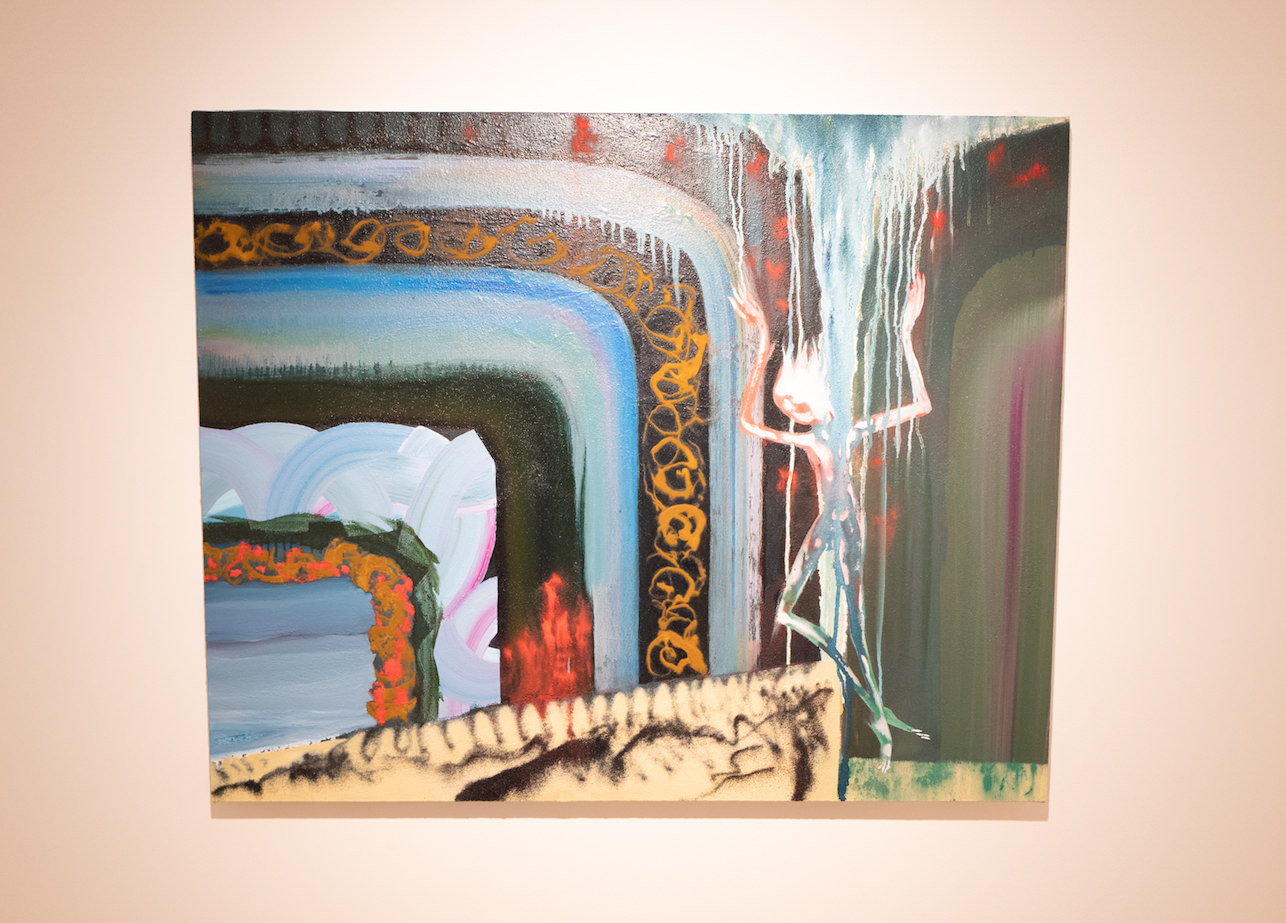
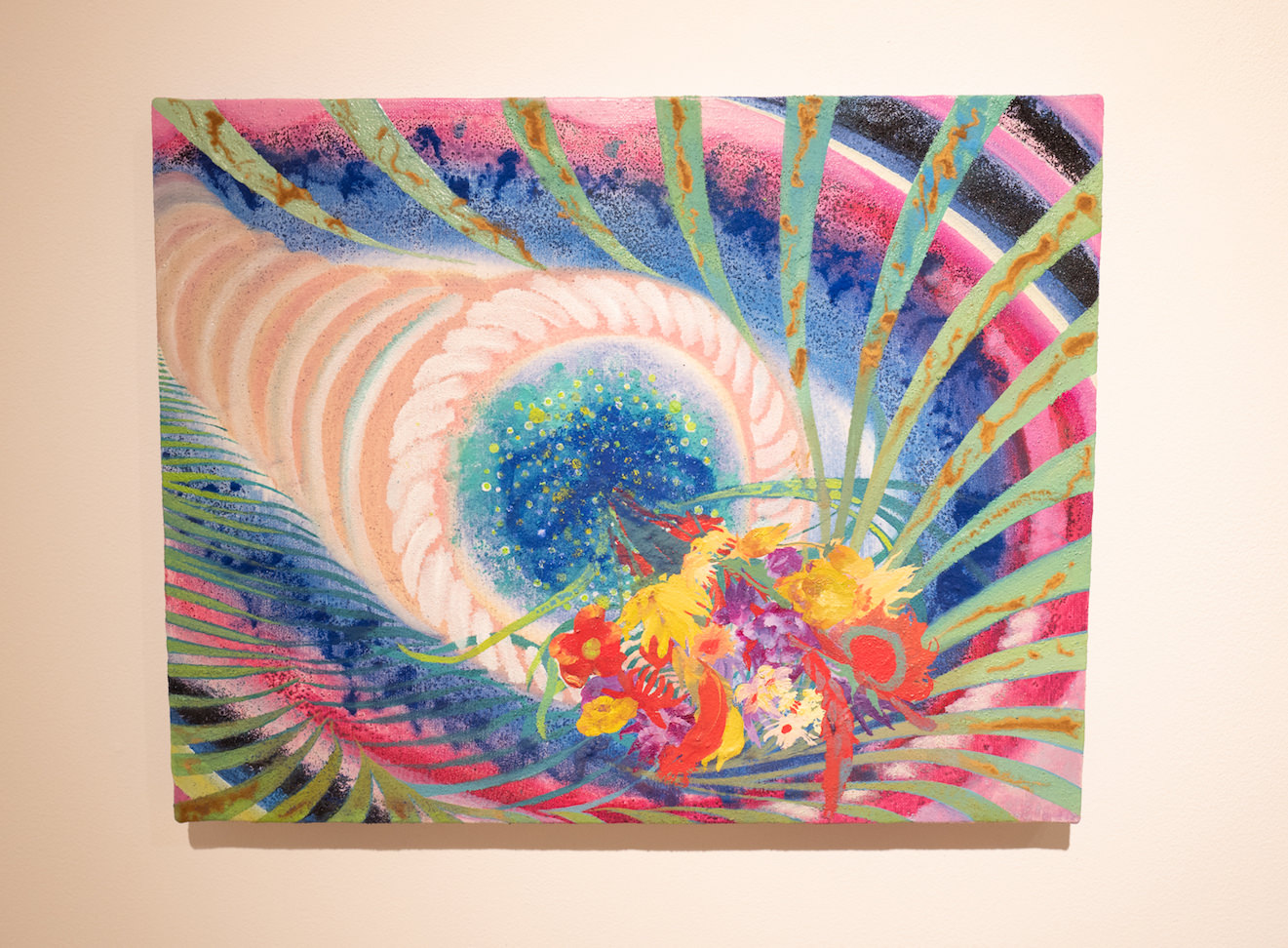
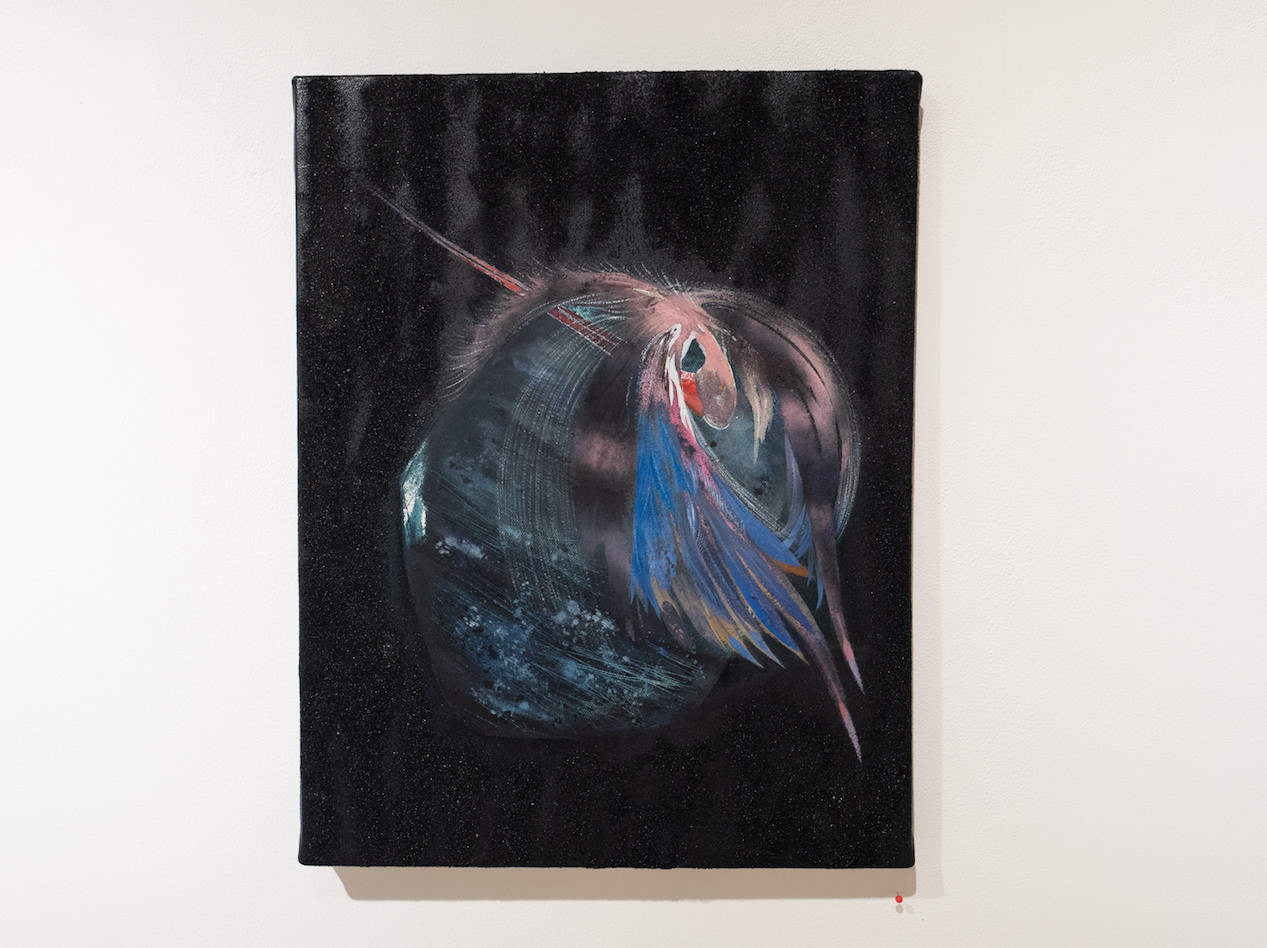
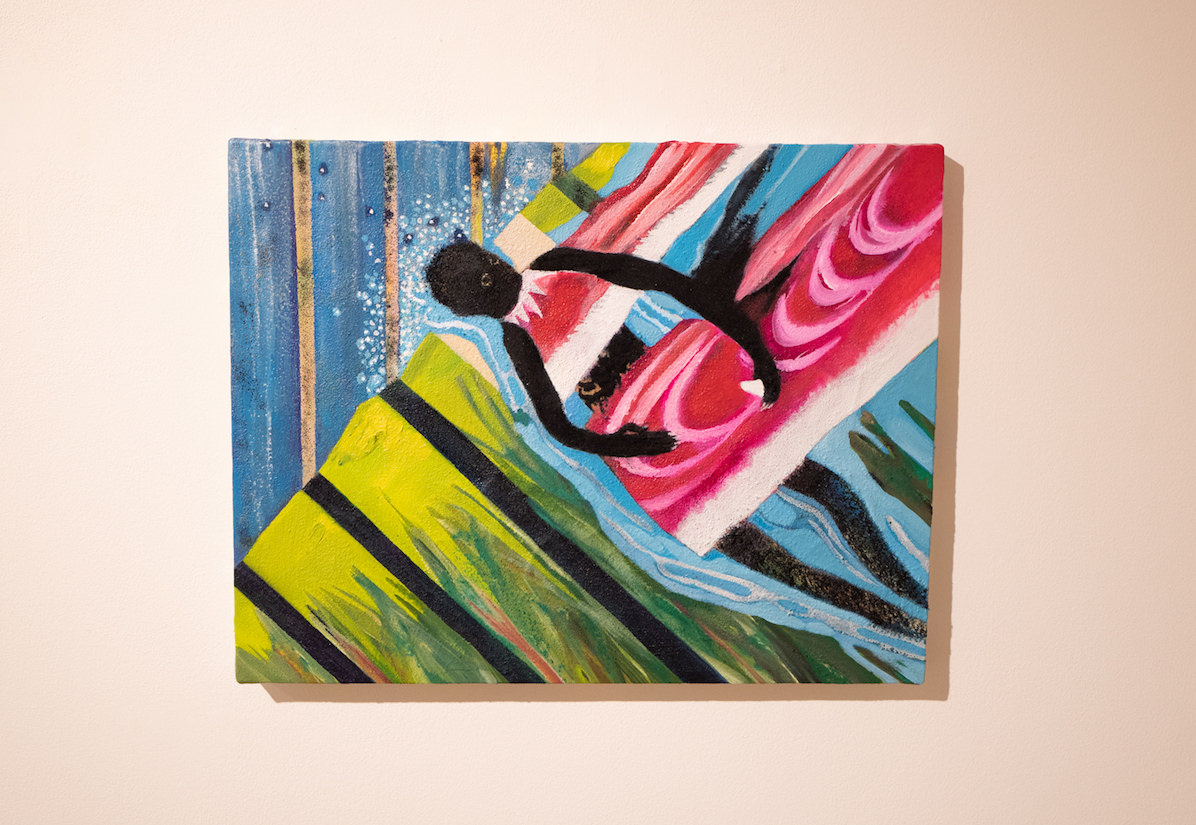
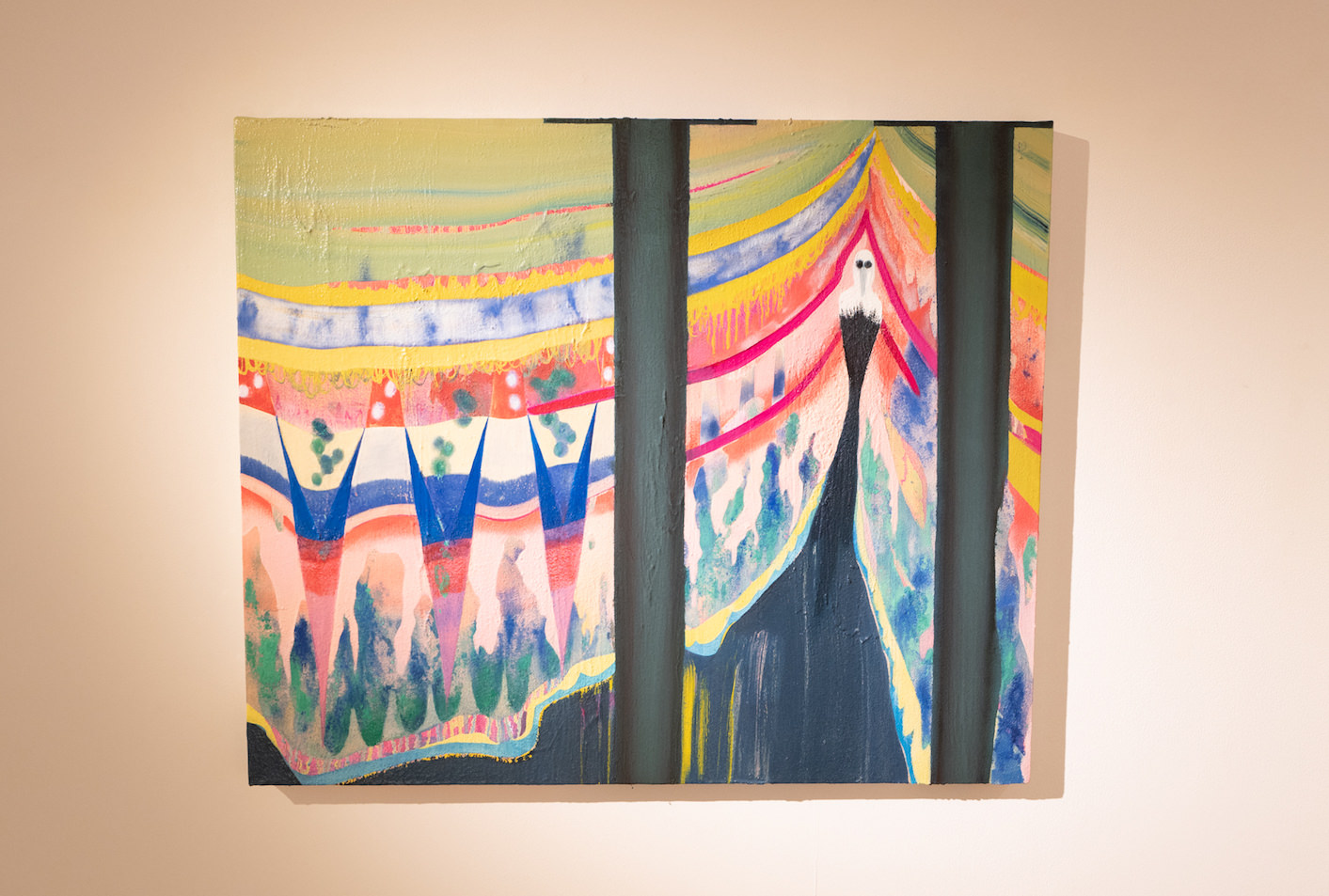
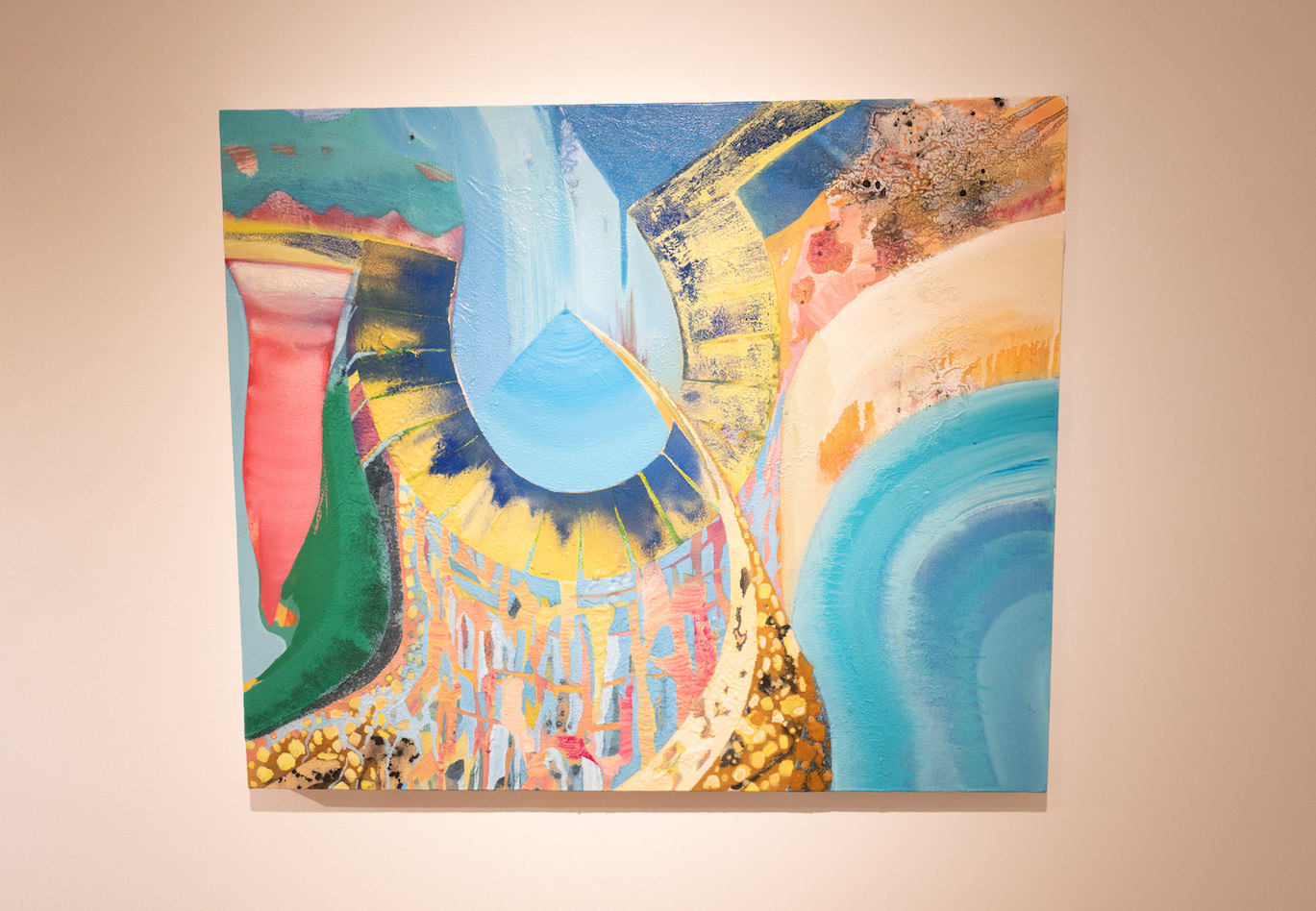
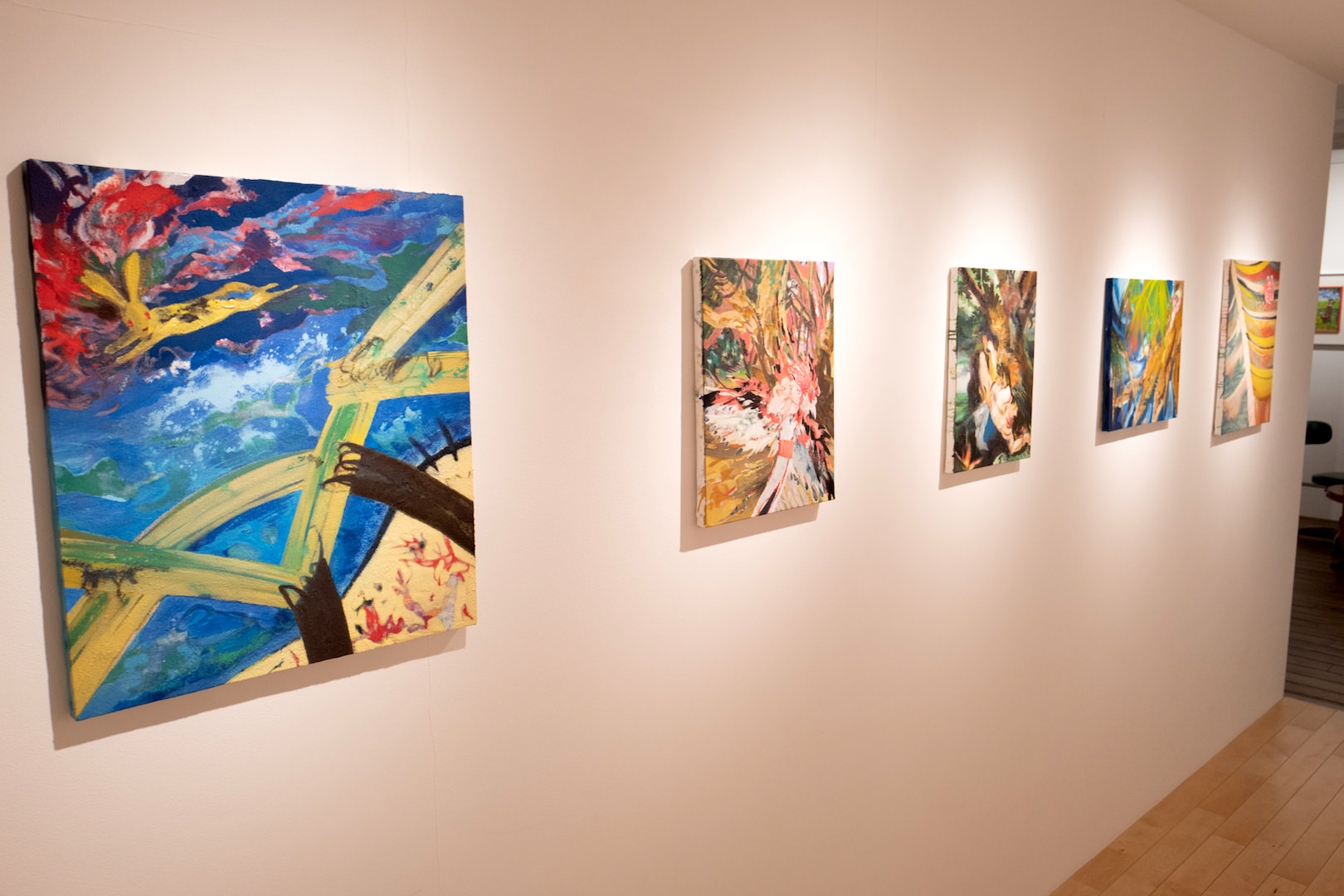
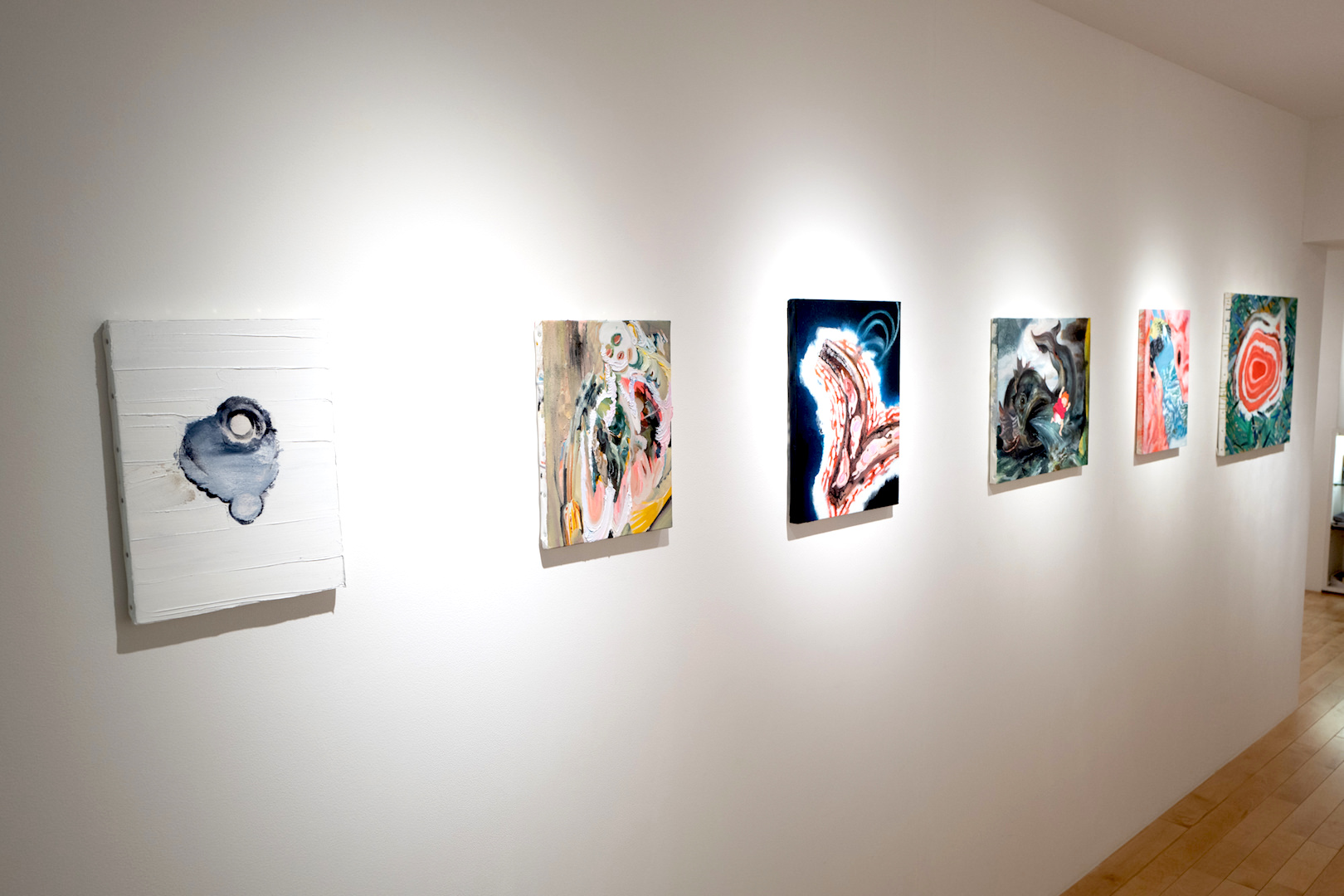
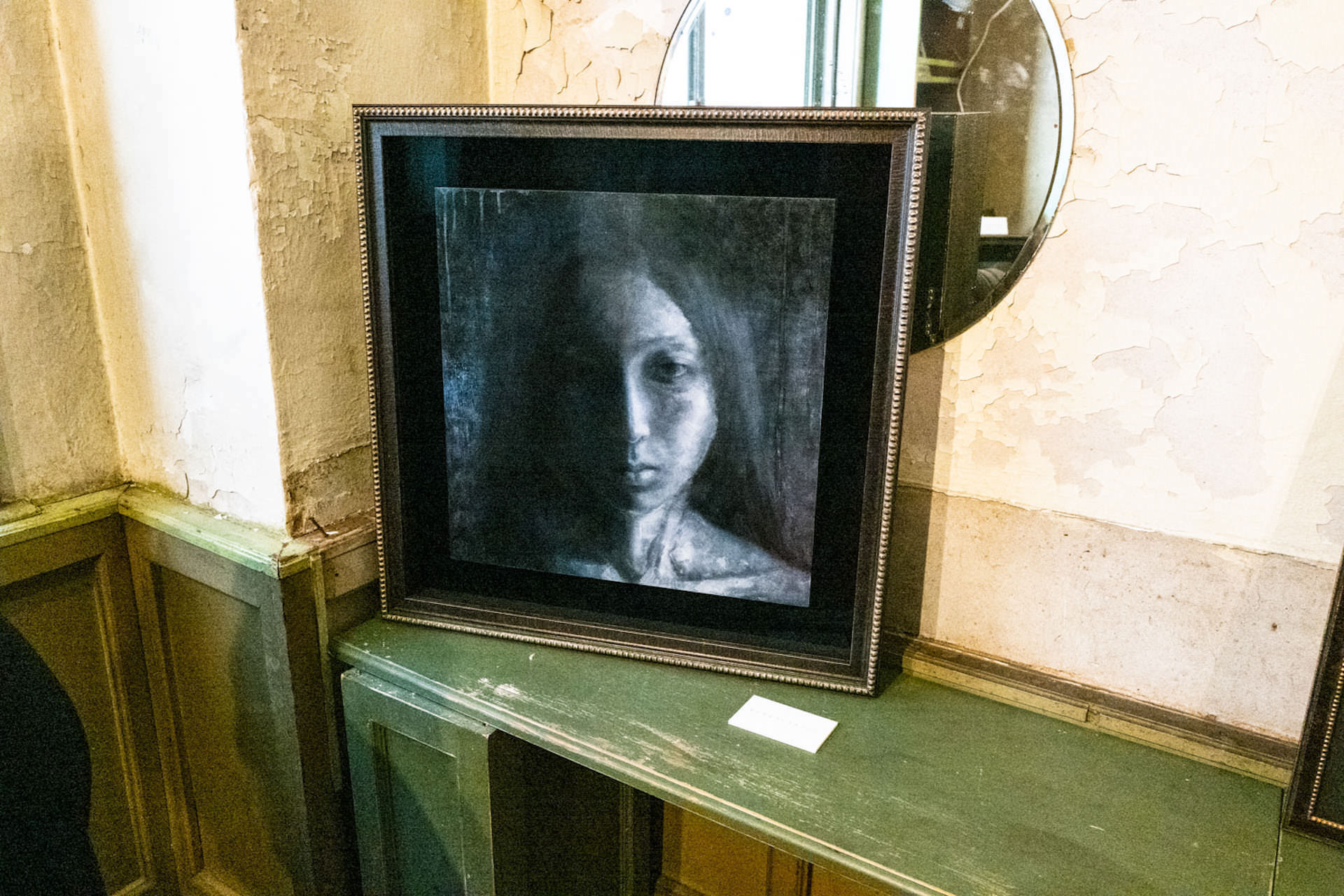
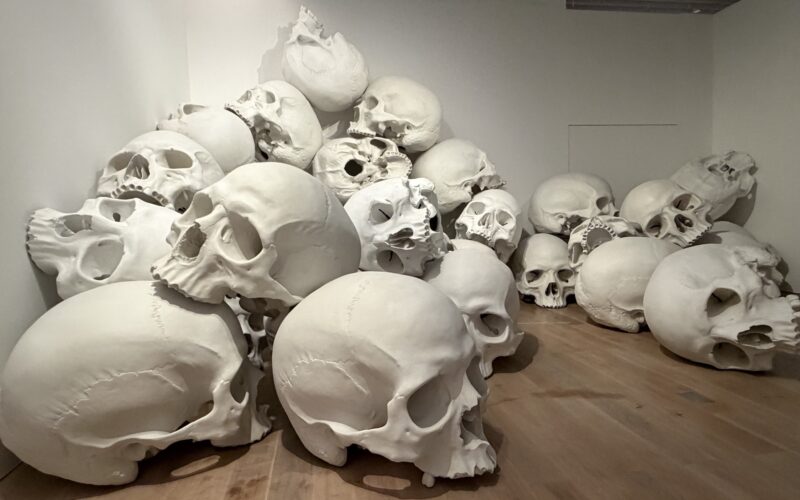
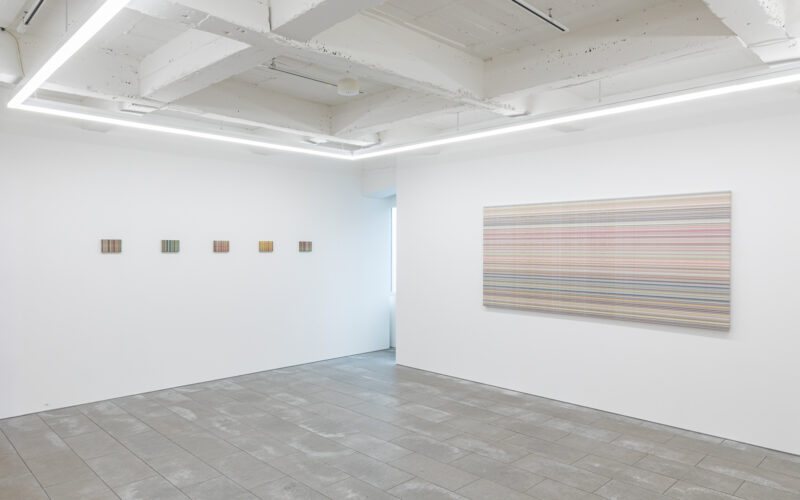
I visited Hina Maekawa’s solo exhibition “DOUBLE DWELLER.” The venue is “MASATAKA CONTEMPORARY” in Nihonbashi.
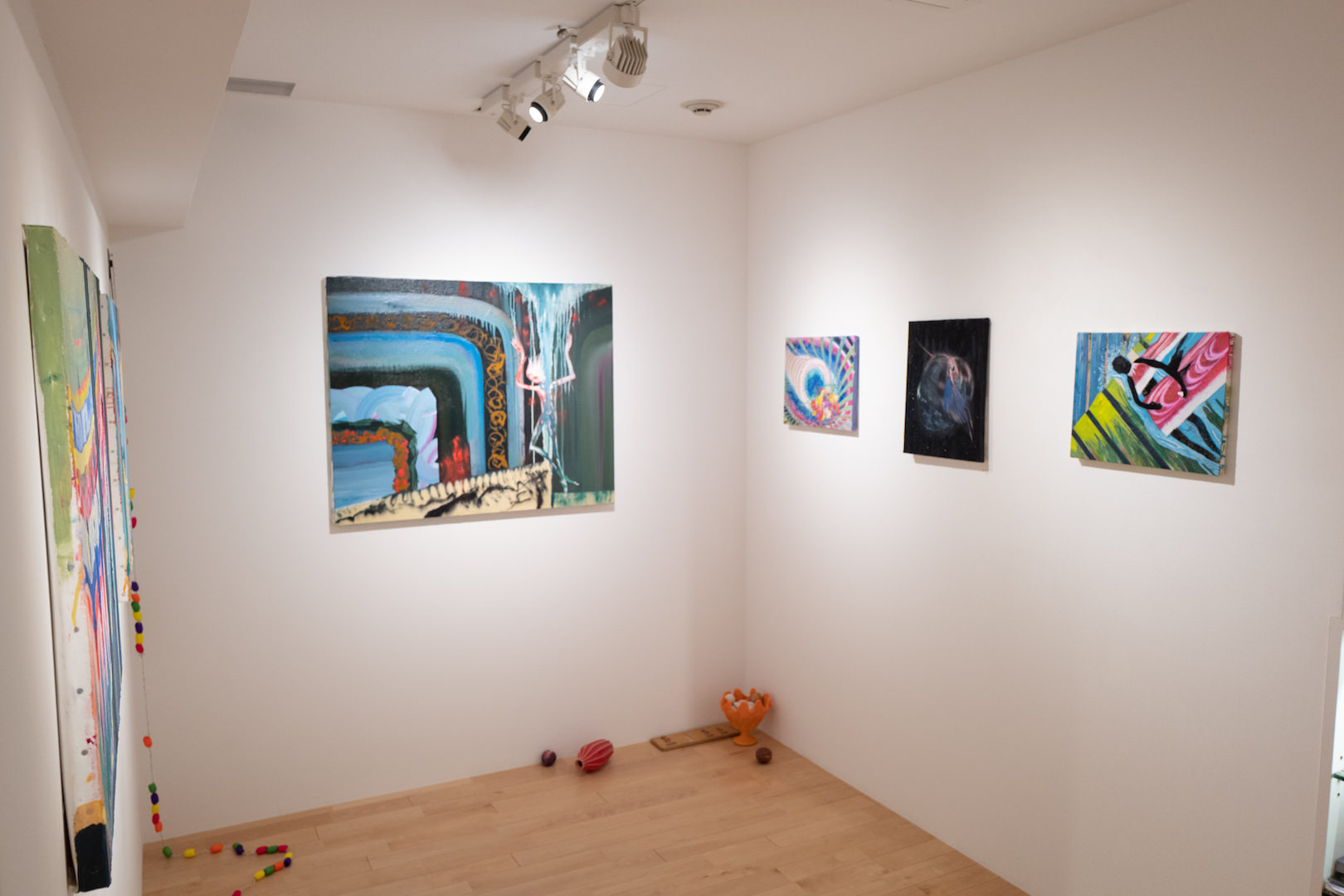
This exhibition lines up works of extremely dense content, and the themes, backgrounds, and motifs embedded in each are so dense that you can’t understand it all without properly engaging with the works.
I was able to hear from the gallery owner, and it seems information is embedded that you can’t grasp in full unless the artist herself explains it.
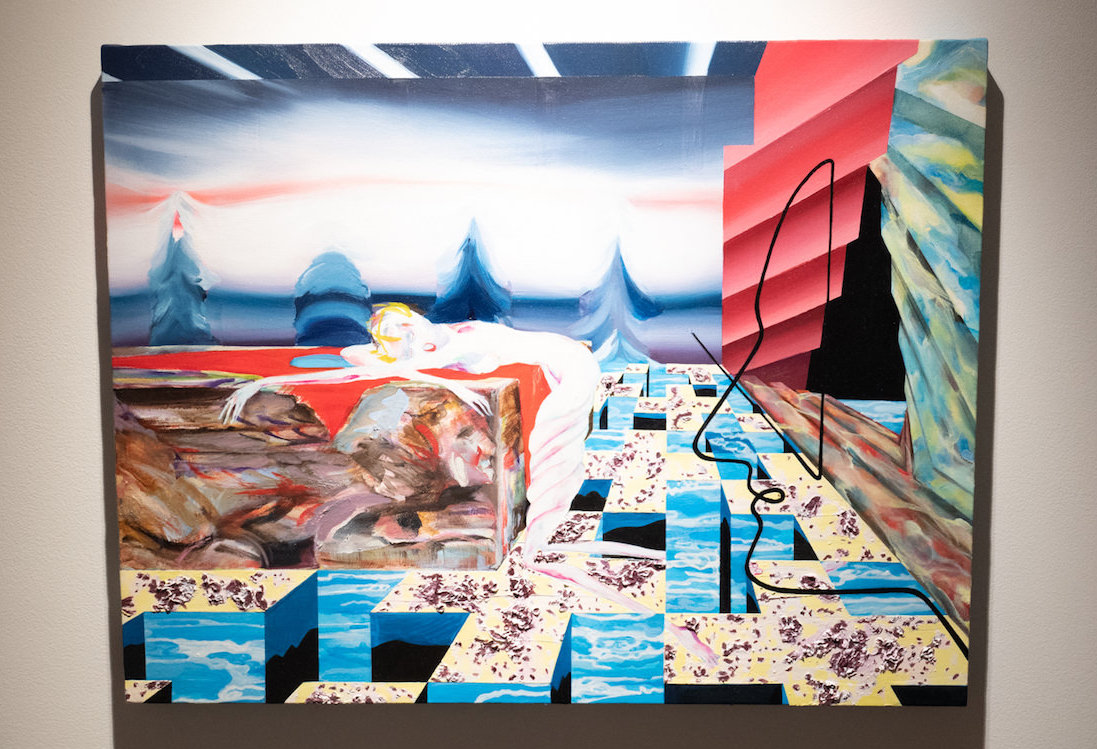
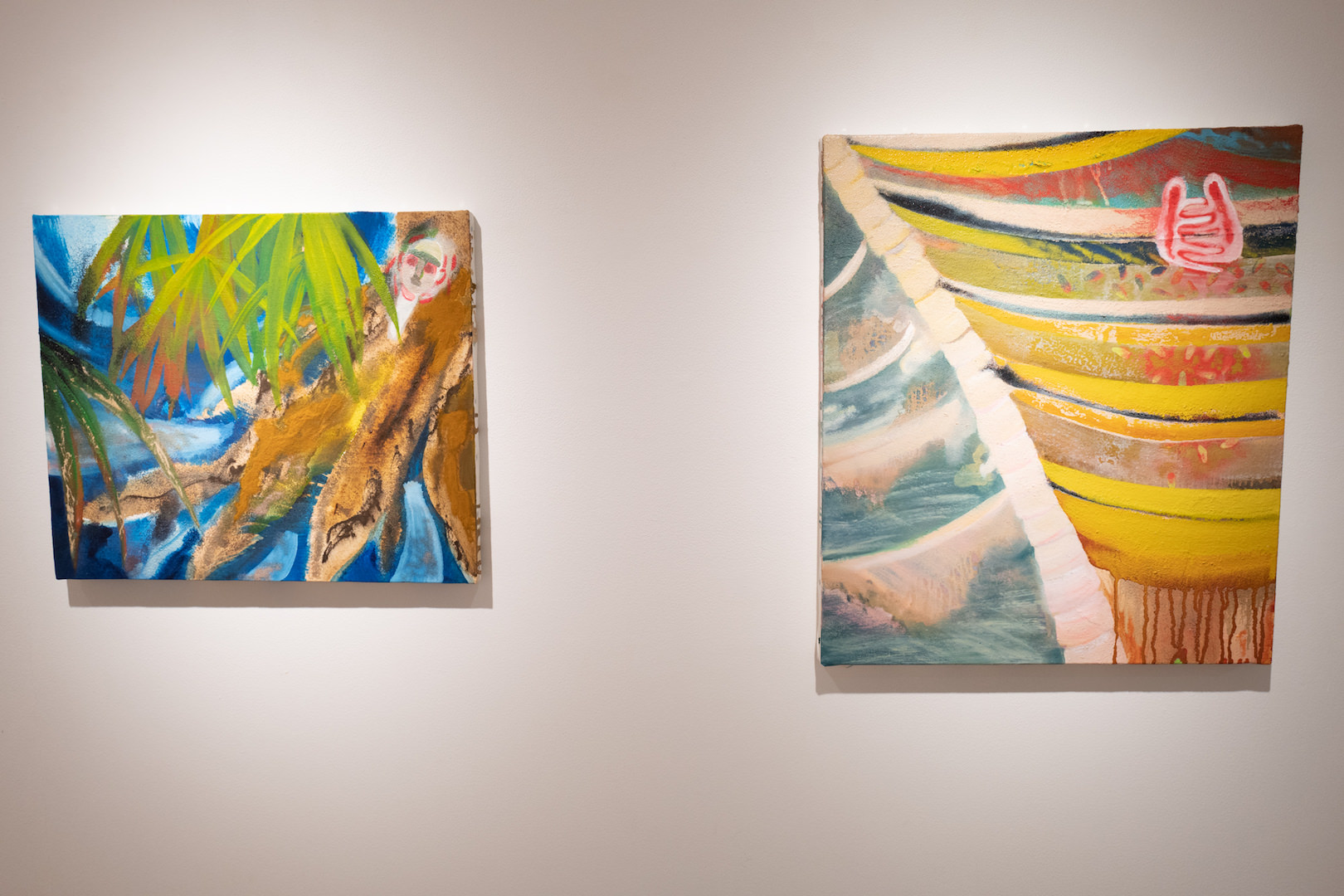
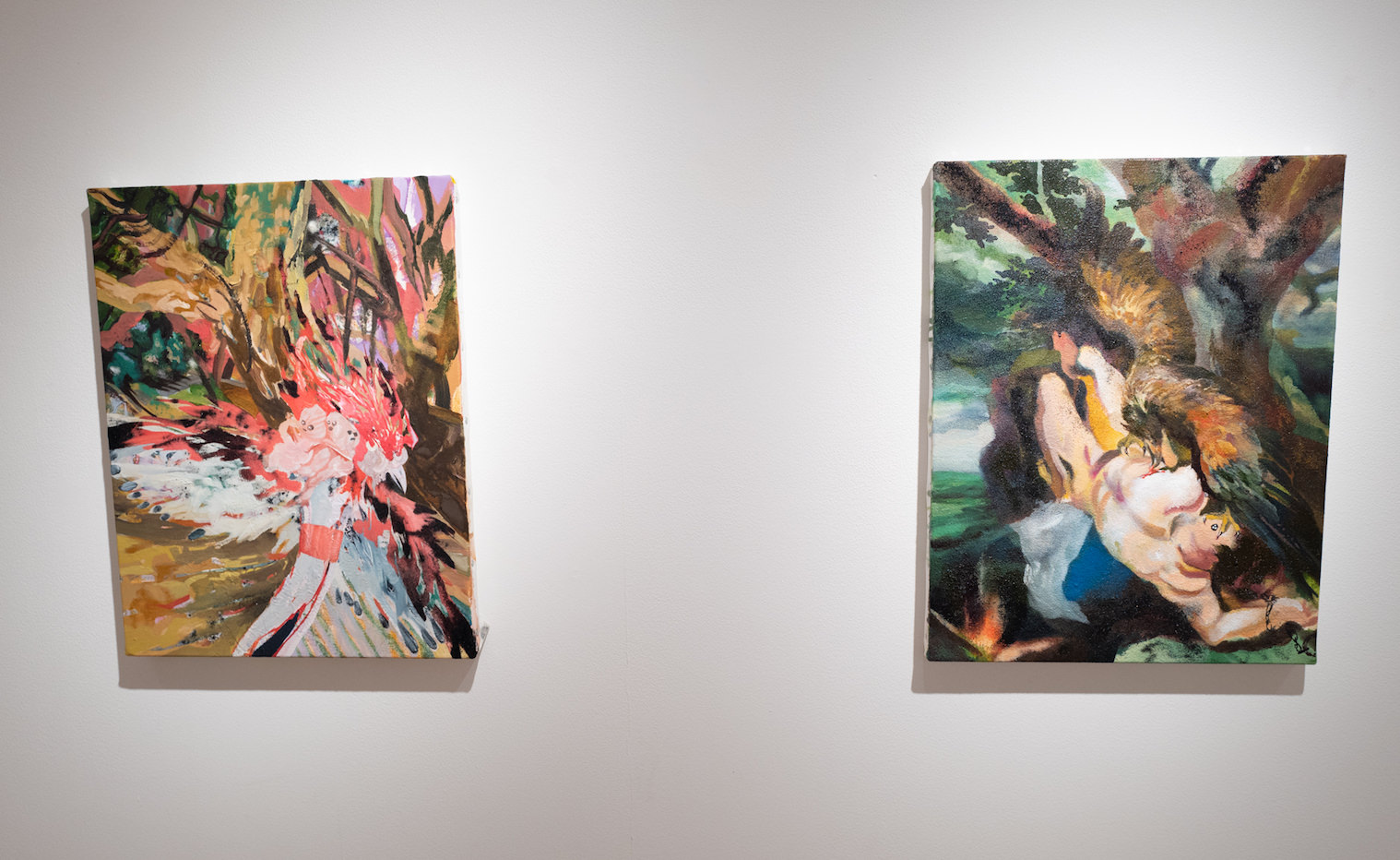
Maekawa has, until now, focused her practice on the art of magical societies, in which memory and information were transmitted through the body without relying on external devices. Her practice is grounded in the memory-arts research of Frances Yates and others, and in the structural analysis of comparative folklore and mythology—the study of oral tradition developed by Dundes, Campbell, and others. One popular mnemonic technique that developed in medieval Western Europe is the method of loci. This technique, today also called the “mind palace,” involved building a virtual palace, theater, or town in the mind, placing objects across more than 100 rooms and walls, and pasting the things one wanted to remember onto them. Memory-art manuals of the time often present icons from the Bible, Greek myth, Kabbalah, and so on as images (imagines) to be used in mnemonics, and these are archetypal elements in her work as well. Before learning mnemonics, Maekawa had from childhood memorized the contents of literature together with images of floor plans. That experience became the trigger for her interest in the relationship between ease of memory retention and space, and in the peculiarity of the flat, one-dimensional characters in myths/folktales who exist solely to tell the story. A memory art based on the idea of attaching marks and chains to memory, like affixing sticky notes to a book. In contrast, Maekawa states that in modern society only the marks of images float free, while the chains either disappear or are automatically generated. In this exhibition, she shows the “DOUBLE DWELLER” series, with the cosmology of memory arts and magical societies as its motif, and the “CAVERN” and “PROGENITOR” series, drawing on motif-elements from myths/folktales.
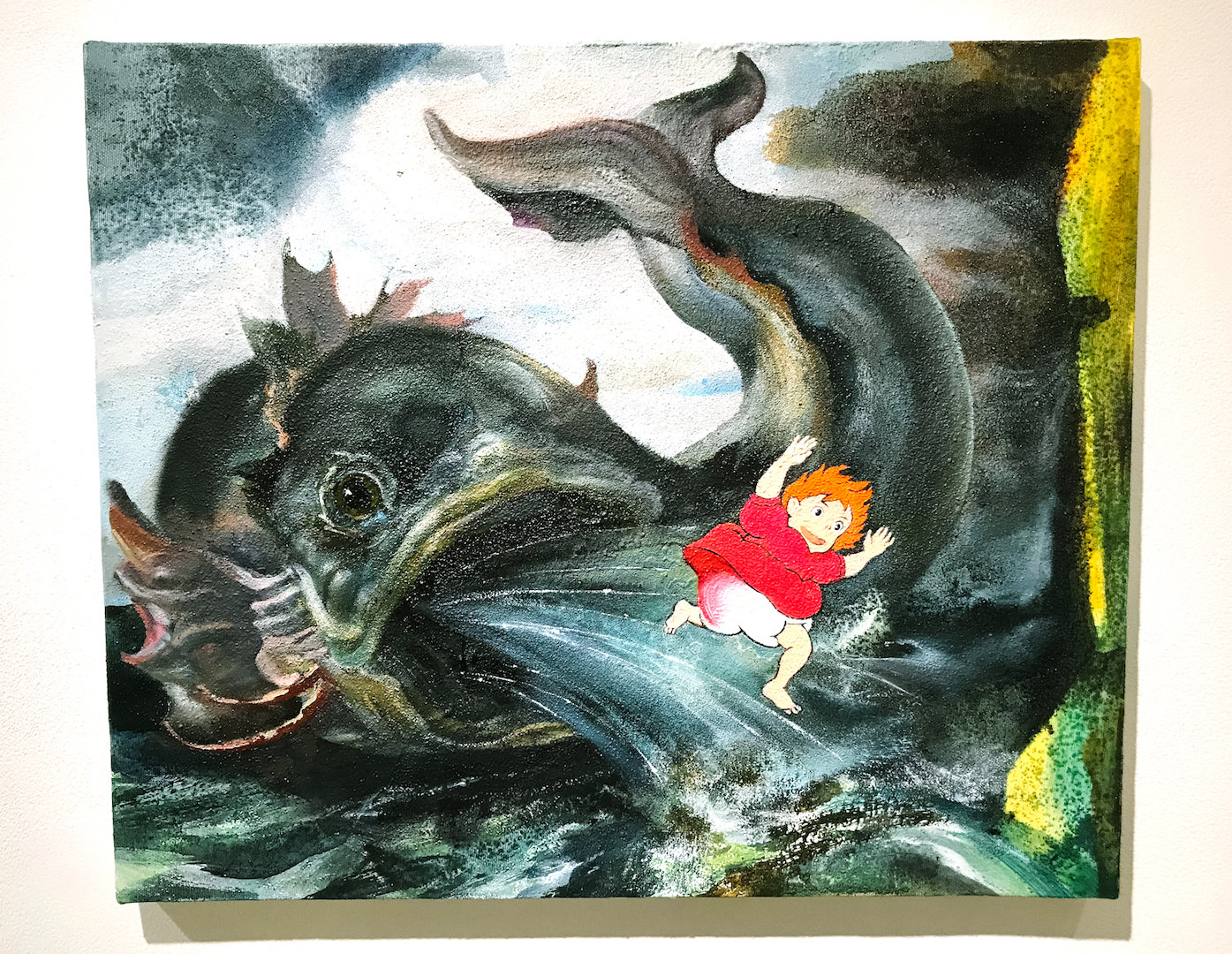
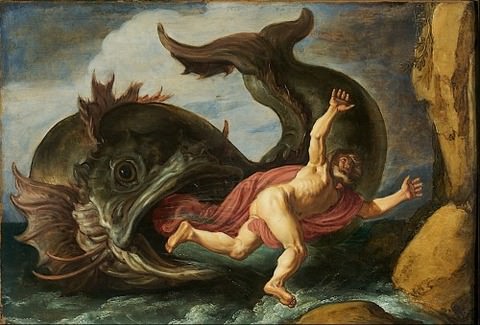
“It’s Ponyo!” I thought—but the motif seems to be quoted from the Old Testament “Book of Jonah.”
Pieter Lastman “Jonah and the Whale” 1621
Every work seems to gather the essence of skilled technique, and in the pleasant gallery I fully savored high-quality artworks.
An artist whose future activity I look forward to.
前川此前着眼于不依赖外部设备、通过身体传递记忆与信息的魔术性社会的艺术进行创作。其创作以弗朗西丝·耶茨等人的记忆术研究,以及邓迪斯、坎贝尔等人发展的口头传承研究——比较民俗学、神话学的结构分析为底本。中世纪西欧发展出的一种流行记忆术是场所法(method of loci)。这一如今也被称为「记忆宫殿(mind palace)」的技法,是在脑内建造虚拟的宫殿、剧场、街道,在超过100个房间与墙壁上配置对象,将想要记忆之事贴附其上。当时的记忆术指南中,常有来自圣经、希腊神话、卡巴拉等的图标作为记忆术应使用的图像(imagines)出现,这些在她的作品中也成为原型性的要素。前川在了解记忆术之前,自幼便以类似方法──伴随房型布局的意象记忆文学内容。这一经验成为她对记忆的易固着性与空间的关系,以及神话/民间故事登场人物中那种仅为讲述故事而存在的平面、一元化角色之特异性产生兴趣的契机。基于「如同在书上贴便签般,为记忆附上标记与锁链」构想的记忆术。与此相对,前川称在现代社会中,图像仅有标记漂浮,锁链则消失或被自动生成。本展将展出以记忆术与魔术性社会的宇宙观为母题的「DOUBLE DWELLER」系列,以及取自神话/民间故事母题要素的「CAVERN」「PROGENITOR」系列。
「是波妞!」我这样想,但母题似乎引自旧约圣经「约拿书」。
彼得·拉斯特曼(Pieter Lastman)「约拿与鲸鱼 Jonah and the Whale」1621年
每件作品都仿佛汇集了精湛技术的精华,在舒适的画廊中,我尽情享受了高品质的艺术作品。
是一位今后活跃令人期待的作家。
마에카와 히나 「DOUBLE DWELLER」
마에카와 히나의 개인전 「DOUBLE DWELLER」에 다녀왔습니다. 회장은 니혼바시의 「MASATAKA CONTEMPORARY」입니다.
이 전람회는 매우 밀도 높은 작품이 늘어서 있으며, 각각에 담긴 테마·배경·모티프 등이, 작품과 제대로 마주하지 않으면 전부를 이해할 수 없을 만큼 농밀합니다.
갤러리 오너에게 이야기를 들을 수 있었는데, 작가 본인이 설명하지 않으면 전모를 확인할 수 없을 만한 정보가 담겨 있는 듯합니다.
마에카와는 그동안 외부 디바이스에 의존하지 않고 신체를 통해 기억과 정보가 전달되던 마술적 사회의 아트에 착목하여 제작해 왔습니다. 그 제작은 프랜시스 예이츠 등의 기억술 연구와, 던디스·캠벨 등이 발전시킨 구전 연구인 비교민속학·신화학의 구조 분석을 바탕으로 합니다. 중세 서유럽에서 발전한 대중적 기억술의 하나로 장소법(method of loci)이 있습니다. 오늘날 마인드 팰리스라고도 불리는 이 기법은, 뇌 안에 가상의 궁전·극장·거리를 만들고, 100개가 넘는 방과 벽에 오브젝트를 배치하여 기억하고 싶은 사항을 거기에 붙여 가는 것이었습니다. 당시의 기억술 지침서에는 종종 성경, 그리스 신화, 카발라 등의 아이콘이 기억술에 사용해야 할 이미지(이마기네스)로 등장하는데, 그것들은 그녀의 작품에서도 원형적 요소가 되고 있습니다. 마에카와는 기억술을 알기 이전, 어린 시절부터 비슷한 방법──평면도의 이미지와 함께 문학의 내용을 기억했습니다. 그 경험이 기억의 정착 용이성과 공간의 관계, 신화/민화의 등장인물에서 이야기를 이야기하기 위해서만 존재하는 평면적이고 일원적인 캐릭터의 특이성에 흥미를 갖는 계기가 되었습니다. 책에 포스트잇을 붙이듯, 기억에 표식과 사슬을 다는 발상에 기반한 기억술. 그에 반해 현대 사회에서 이미지는 표식만이 부유하고, 사슬은 사라지거나 자동으로 생성된다고 마에카와는 말합니다. 본 전시에서는 기억술과 마술적 사회의 코스몰로지를 모티프로 한 「DOUBLE DWELLER」 시리즈, 신화/민화의 모티프 요소를 끌어온 「CAVERN」「PROGENITOR」 시리즈를 전시합니다.
「포뇨다!」 싶었지만, 모티프는 구약성경 「요나서」에서 인용된 듯하네요.
피터르 라스트만(Pieter Lastman) 「요나와 고래 Jonah and the Whale」 1621년
작품은 어느 것이나 뛰어난 기술의 정수를 모은 듯하여, 쾌적한 갤러리 안에서 수준 높은 예술 작품을 만끽했습니다.