Marking the opening of Bunkamura’s 30th anniversary, this exhibition presents 72 works from the rich collection of the State Tretyakov Gallery — the sanctuary of Russian art — by artists representing the tumultuous Russia of the late 19th to early 20th century, including Kramskoi, Shishkin, Levitan, and Repin, introducing them through the lens of the Russian romance dwelling within nature and human portraiture.
The Russian Art World Rising Up at the Time
Composers like Tchaikovsky and Mussorgsky and literary giants like Tolstoy and Dostoevsky, representative of Russian culture in this era, are well known in Japan; but the visual arts field, too, produced many outstanding talents.
In the late 19th century, the “Peredvizhniki” (The Wanderers) — a group organized by Kramskoi and other young painters — rebelled against the constraints of state academism and set out to face reality directly and paint it as it was.
The name “Peredvizhniki” derives from their traveling exhibitions across Russia, with an enlightening intent.
Meanwhile, at Mamontov’s estate in Abramtsevo on the outskirts of Moscow, painters such as Kuznetsov, Levitan, and Korovin gathered and produced many works overflowing with nostalgic romanticism. What they and the Peredvizhniki shared was a love of their homeland.
Highlights of the Exhibition
The exhibition’s highlights can be broadly grouped into six themes.
One of the backdrops to romantic Russia is its immense land.
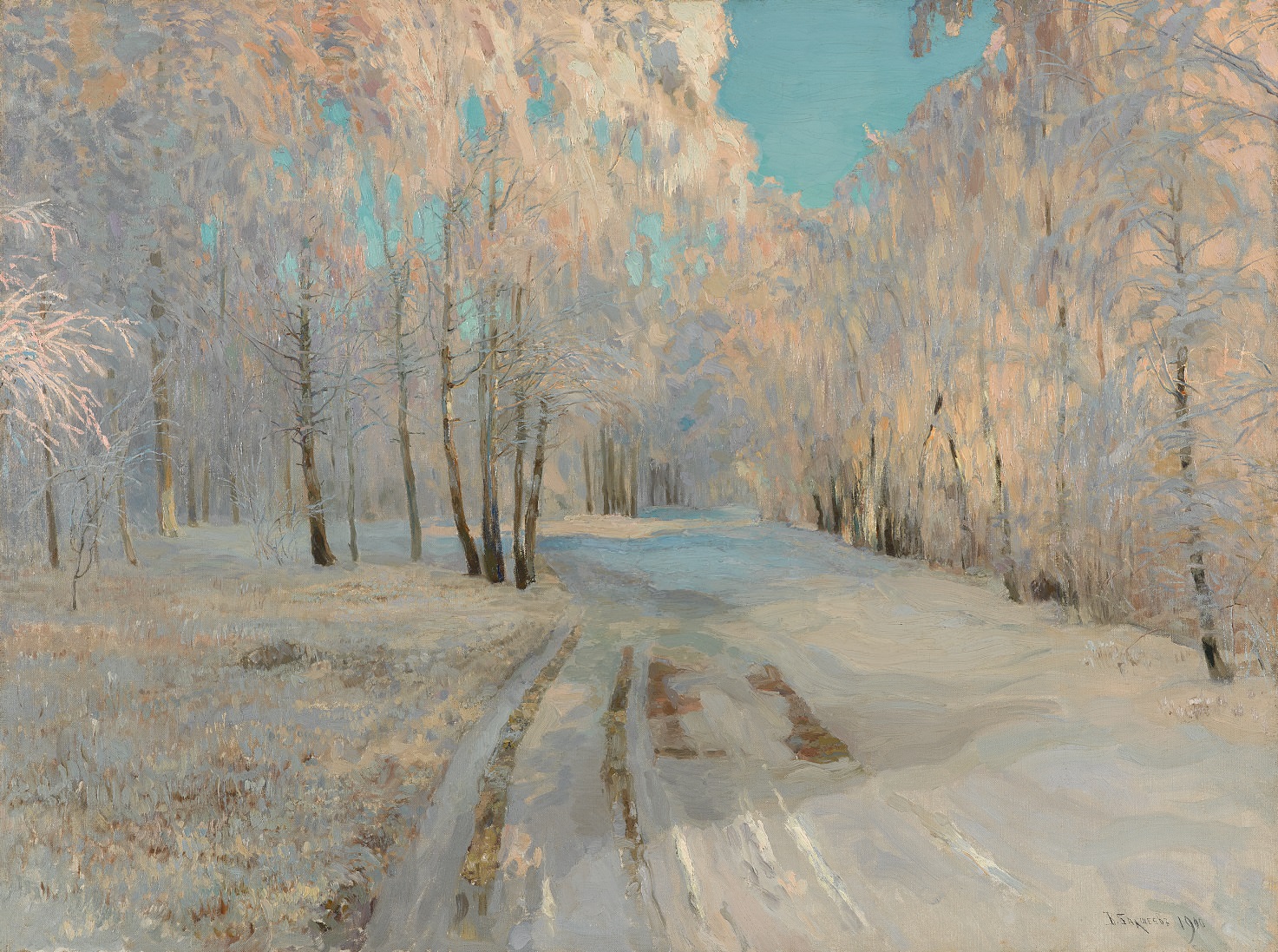
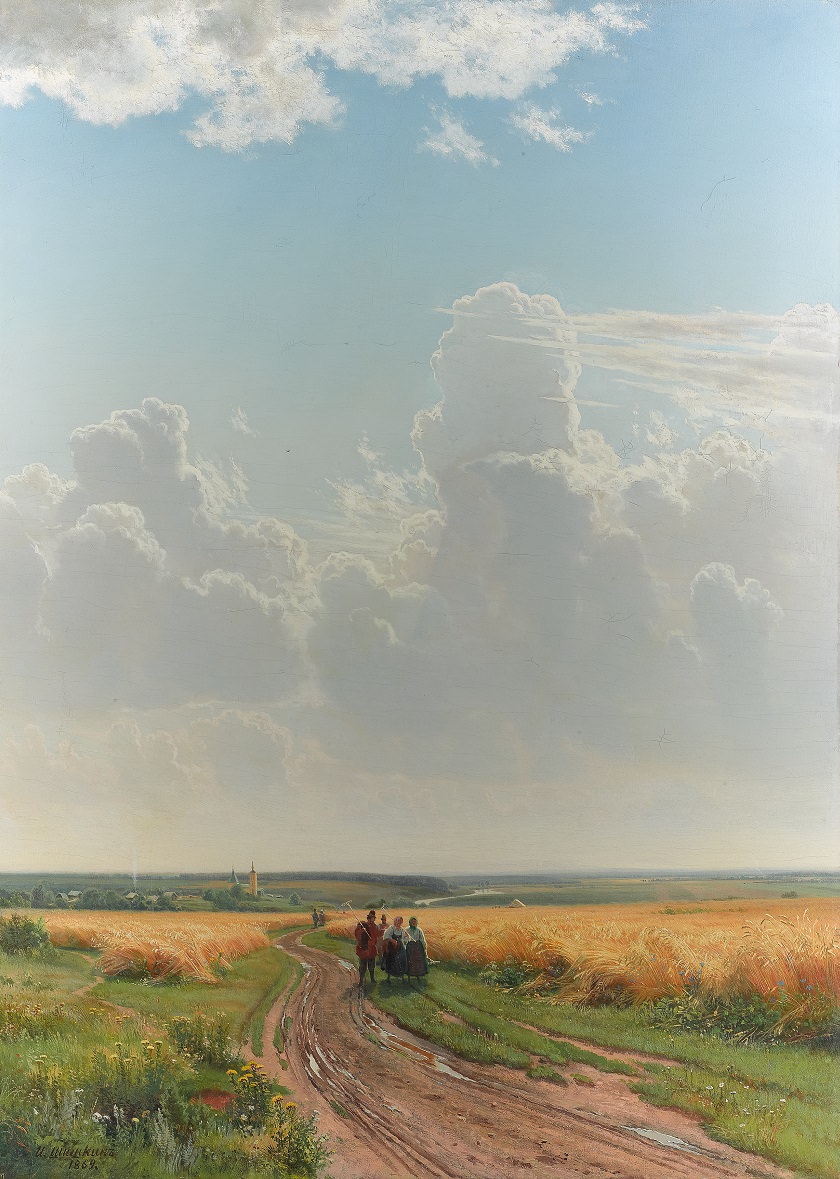
For inhabitants of a narrow island country like Japan, Russia’s overwhelming vastness is an unfamiliar world beyond ordinary experience. Shishkin’s “Noon, in the Vicinity of Moscow” — where a road stretches to the horizon — evokes a majestic Russian romance found nowhere else. Snowy landscapes, too, brim with the romance of the northern lands. Baksheev’s “Rime Frost” is a radiant work in which pure white rime glitters against a blue sky, conveying the sense of crystal-clear air. Seascapes by Aivazovsky and others similarly serve as accents in the exhibition, sharing that same feeling of grand, expansive space.
Forests broader than the whole of Japan and endlessly deep — this too is a captivating world unknown to us.
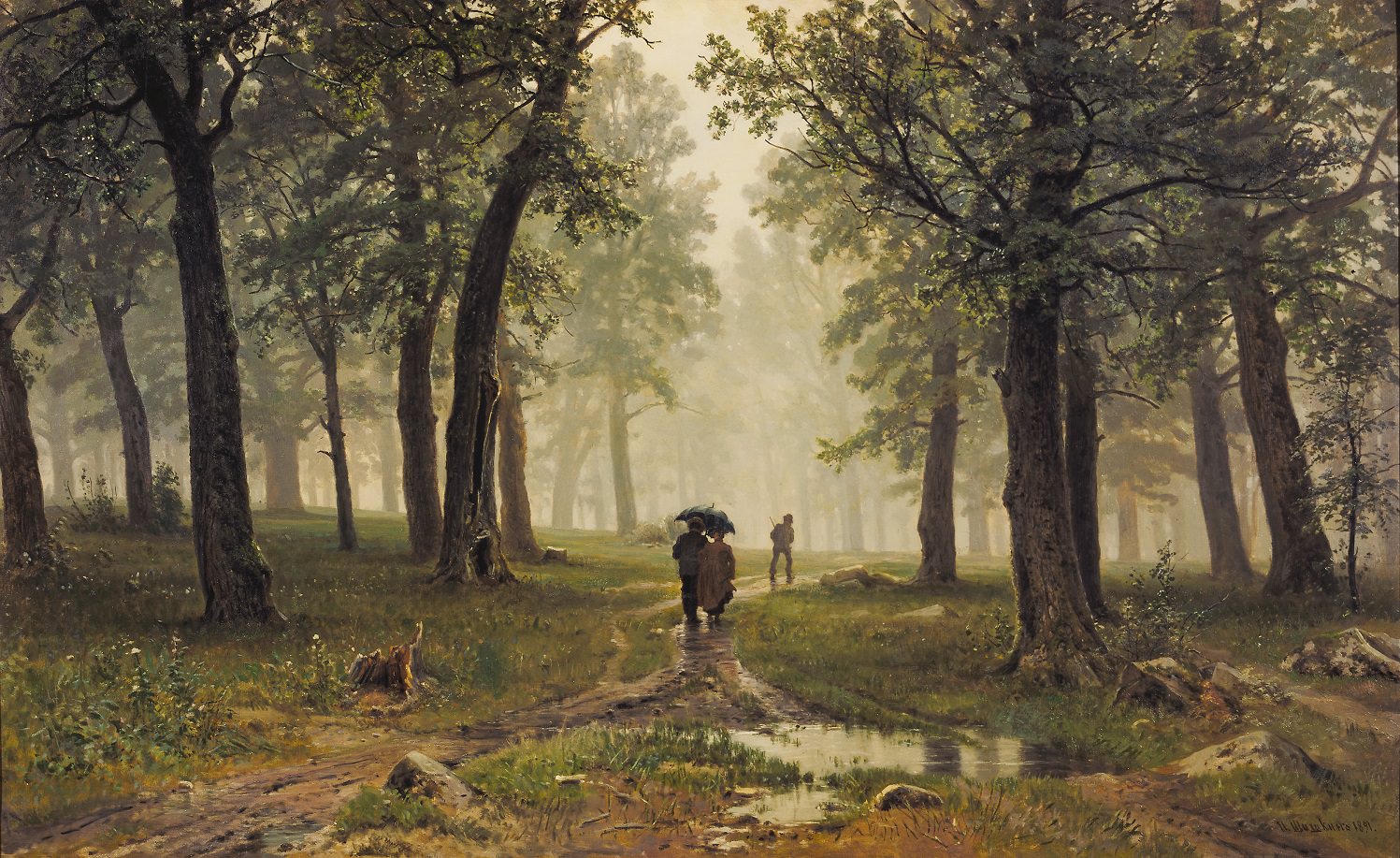
Shishkin’s masterpiece “Rain in an Oak Forest,” which depicts a couple walking through the woods under an umbrella, feels like a scene straight out of a film.
This painter also produced works depicting a single oak tree, each carrying a dignity worthy of a human portrait. The forest reveals many faces as the seasons change. Bears live there too, and this exhibition features an oil study for Shishkin’s major work “Morning in a Pine Forest,” which conveys the atmosphere of that scene.
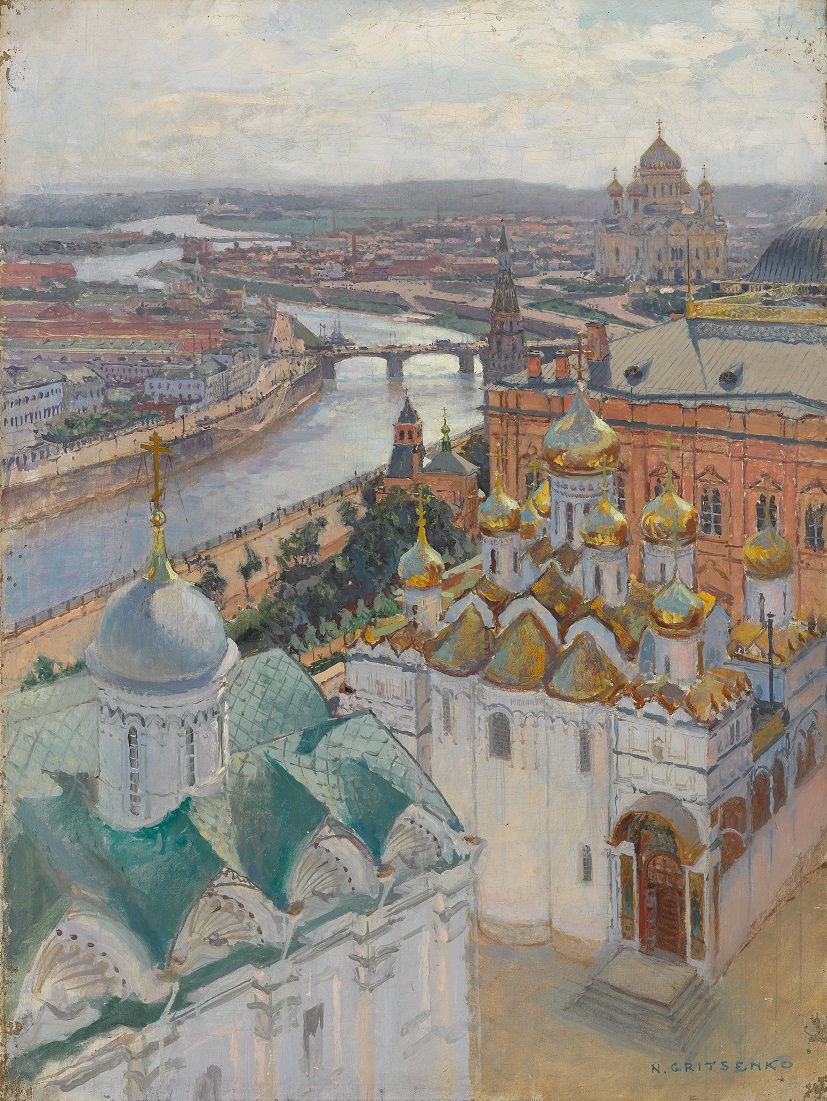
It’s not only nature — life in Russia’s cities also holds many stories. Korovin’s “In a Boat” shows a couple escaping the crowds to spend time together. What is happening — are they professing love, or on the verge of separation? — we can only imagine, yet the tense composition conveys that a drama is unfolding. And when we turn our eyes to the city itself as the stage of daily life, we find many urban scenes adorned by traditional architecture that, like Gritsenko’s “View of Moscow from the Bell Tower of Ivan the Great,” possess the allure of a distant, exotic world for the Japanese viewer.
Also on view is a portrait, painted by Repin, of Kramskoi, the author of the celebrated “Portrait of an Unknown Woman,” who was active in Moscow.
[4] The Romance of Suburban Living
Russia has a tradition of “dachas” — second houses with vegetable gardens. Located within about an hour of the city, they need not be luxurious mansions; many citizens use them on weekends and even as places to spend their retirement surrounded by nature. Life there is a moment of relaxation for Russians, their own romantic way of passing time — a happy interval to put down one’s burdens and quietly spend time with loved ones and family. This exhibition includes heartwarming works such as Makovsky’s “Making Jam.” Still lifes of flowers picked in those gardens and meadows are also included here.
[5] Female Figures That Captivate Men
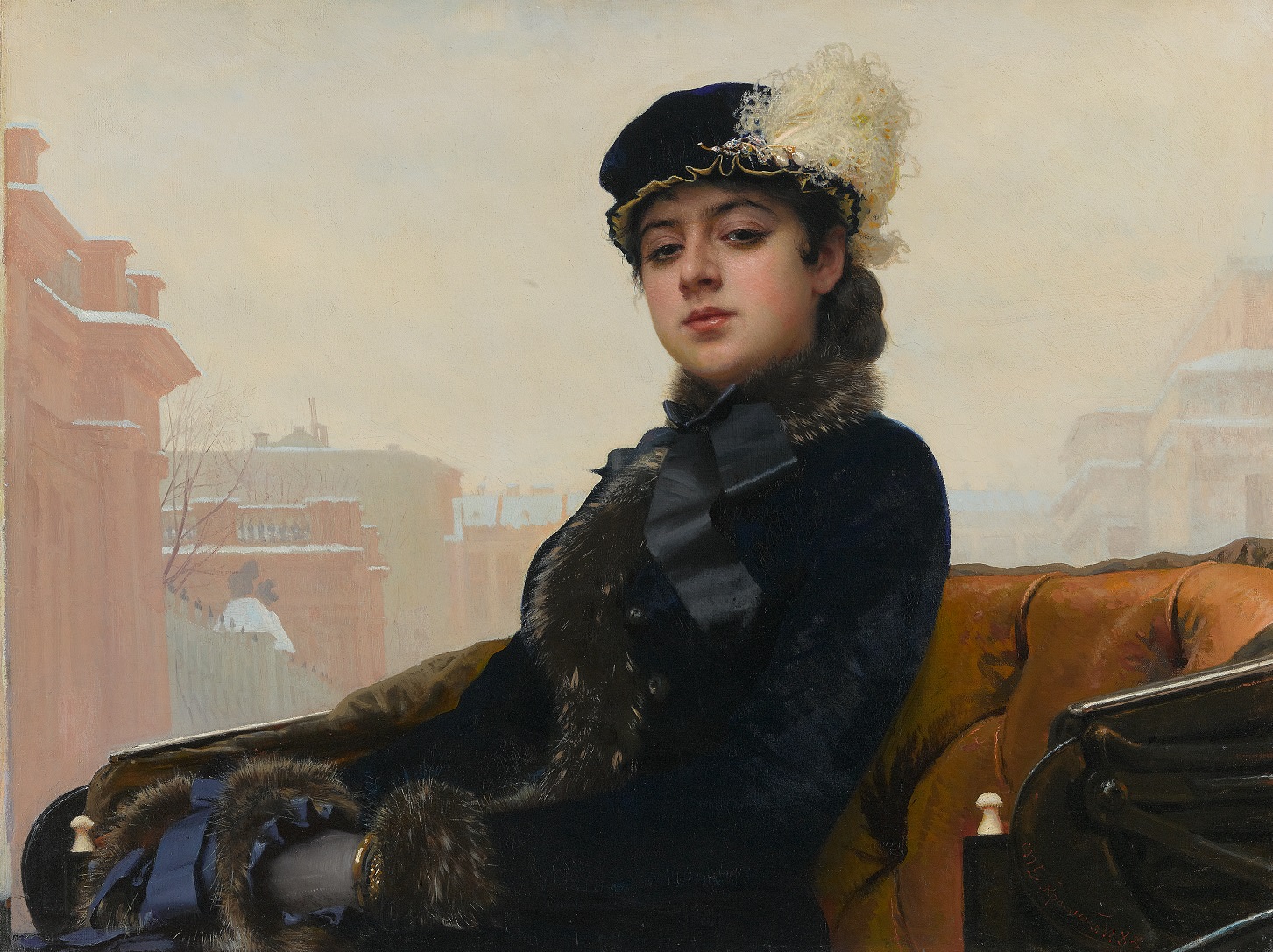
Aside from paintings of the Russian landscape, there are the female figures that draw us into a romantic world. Above all, Kramskoi’s masterpiece “Portrait of an Unknown Woman” — despite having come to Japan several times before — is the star of the show, keenly awaited each time. (The previous visit was about 10 years ago.)
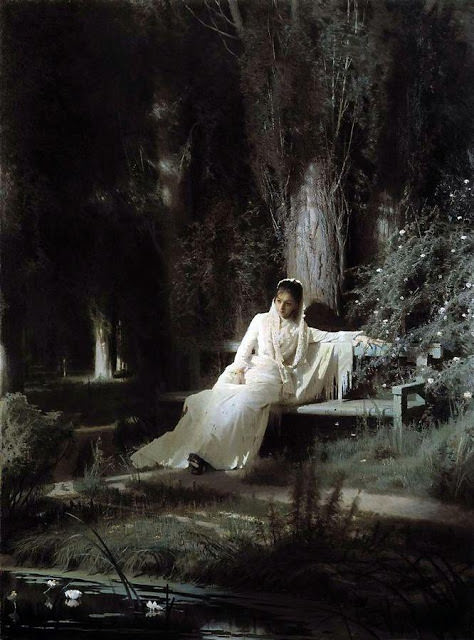
The model for this work — which condenses a world spun by literary giants into a single painting — is said to have been Anna Karenina from Tolstoy’s novel. It can be called a masterpiece in which the painter visually captured a literary romanticism transcending status and class. The same artist’s large-scale “Moonlit Night,” which lyrically depicts an elegant woman in a white dress lost in thought in an old garden at night, is a captivating work that lets one immerse still more deeply in his world.
[6] Children
Whether paintings of children fall into the “romantic” category is a matter of opinion, but many people find peace in the world of children and hold special feelings for them.
This exhibition features fine works that capture such children within the intimate setting of daily life. Among the endearing images, the young girl in Komarov’s “Portrait of Varya Khodasevich” attests that even the world of children holds profound inner depth.
Similarly, in Vinogradov’s work titled “At Home,” a girl stands alone in a spacious interior — a substantial piece that hints at the beginning of some story. Several other works depicting children at play are also on view, making it feel like a corner of children’s literature that draws the viewer back to a childlike heart.
Featured Work
“Moonlit Night,” by Kramskoi — the same artist who painted “Portrait of an Unknown Woman” — can be compared to a nocturne once performed outdoors from evening into night.
Like a nocturne, this painting elevates the viewer’s heart, revives memories, and invites reverie.
A solitary young woman in a white dress sits on a bench beside an aged tree in an old garden. Her figure harmonizes and merges with the poetic sentiment, silence, and mystery of the moonlit night.
Is she waiting for someone, or is she simply lost in thought or reminiscence?
She will never answer this question. For the painter who created this image, and for the viewer, she remains an embodiment of fantasy, dream, and poetry — the untold something that lives within the human heart and sometimes appears in the natural world.
When Kramskoi first painted this female figure, the initial model was Anna Popova, a young student at the Academy of Arts who later became the wife of the famed scientist Dmitri Mendeleev. However, as the painting neared completion, Sergei Tretyakov — the younger brother of the Tretyakov Gallery’s founder, who had decided to acquire the work — is said to have asked the artist to give the woman in the painting the features of his own wife.
Support Character
The support character for this exhibition is Russia’s national character “Cheburashka.”
During the run, the shop will sell original-design goods such as tote bags and iPhone cases, and the character will also appear at events.
It’s exciting to imagine what kinds of projects will be developed!
Overview
The State Tretyakov Gallery: Romantic Russia
Venue: Bunkamura The Museum
Dates: November 23 (Fri, holiday), 2018 – January 27 (Sun), 2019
*Closed only on 11/27 (Tue) 2018, 12/18 (Tue) 2018, and 1/1 (Tue, holiday) 2019
Opening hours: 10:00–18:00 (last admission 17:30)
Fridays and Saturdays until 21:00 (last admission 20:30)
Organized by: Bunkamura; Nikkei Inc.; Dentsu Inc.
The State Tretyakov Gallery: Romantic Russia
作为Bunkamura 30周年开幕的重头戏,本展从俄罗斯艺术殿堂——The State Tretyakov Gallery 丰富的馆藏中,精选出Kramskoi、Shishkin、Levitan、Repin等代表19世纪后期至20世纪初动荡俄罗斯的作家的作品72件,围绕栖于自然与人物之中的俄罗斯式浪漫加以介绍。
谈及浪漫俄罗斯时,其中一个背景便是辽阔的大地。
对于日本这样狭小岛国的居民而言,俄罗斯压倒性的辽阔是从未体验过的未知世界。例如Shishkin的《Noon, in the Vicinity of Moscow》中描绘的伸向地平线的道路,让人感受到唯有俄罗斯才有的雄浑浪漫。雪景中也同样洋溢着北国的浪漫。Baksheev的《Rime Frost》是一幅纯白的雾凇在青空下清冽夺目、令人感受到通透空气的华丽作品。此外,Aivazovsky等所描绘的海景画,同样以宏大空间的展开,为展览增添了亮点。
不仅是自然,俄罗斯的都市生活中也有着各式各样的故事。Korovin所绘的《In a Boat》描绘一对情侣避开人潮共度二人时光的场景,究竟发生了什么,是在诉说爱情还是即将分手,只能靠想象,但充满张力的画面已足以传达出戏剧感。而当我们把视线投向作为生活舞台的都市本身时,会发现被传统建筑装点的都市风景中,如Gritsenko的《View of Moscow from the Bell Tower of Ivan the Great》,充满了对日本人而言遥远的异国情调的魅力。
此外,本展还展出了名作《Portrait of an Unknown Woman》的作者、活跃于莫斯科的画家Kramskoi由Repin所绘的肖像。
描绘儿童的作品是否属于浪漫这一范畴,或许见仁见智,但许多人在孩子的世界中感到心灵的安宁,怀有特别的情感。
本展中充实展出了将这样的孩子们描绘于日常生活之中的佳作。在这些惹人怜爱的儿童画作中,如Komarov所绘的《Portrait of Varya Khodasevich》中登场的幼小女孩形象,证明了儿童世界中亦有深邃的内心世界。
The State Tretyakov Gallery: Romantic Russia
会场:Bunkamura The Museum
会期:2018年11月23日(周五・节日)〜2019年1月27日(周日)
※仅2018/11/27(周二)、12/18(周二)、2019/1/1(周二・节日)休馆
开馆时间:10:00-18:00(入馆至17:30止)
每周五・周六开放至21:00(入馆至20:30止)
主办:Bunkamura、日本经济新闻社、电通
The State Tretyakov Gallery: Romantic Russia
Bunkamura 30주년의 개막을 장식하는 본 전시는 러시아 미술의 전당 The State Tretyakov Gallery가 소장한 풍부한 컬렉션 중에서, 19세기 후반부터 20세기 초 격동의 러시아를 대표하는 작가 Kramskoi, Shishkin, Levitan, Repin 등의 작품 72점을 자연과 인물상에 깃든 러시아적 로망을 떠올리며 소개합니다.
일어서는 당시의 러시아 미술계
이 시대의 러시아 문화는 Tchaikovsky, Mussorgsky 등의 작곡가나 Tolstoy, Dostoevsky로 대표되는 문호가 일본에서 잘 알려져 있지만, 미술 분야에서도 많은 재능을 배출했습니다.
그 미술계에서는 19세기 후반, Kramskoi 등 젊은 화가들에 의해 조직된 “Peredvizhniki(이동파)” 그룹이 제약이 많은 관제 아카데미즘에 반기를 들고, 있는 그대로의 현실을 정면으로 응시하며 그리는 것을 지향했습니다.
Peredvizhniki라는 명칭은 계몽적 의도에서 미술전을 러시아 각지로 이동하며 순회 개최한 데서 유래합니다.
한편, 모스크바 근교 Abramtsevo에 있는 Mamontov 저택에 모인 Kuznetsov, Levitan, Korovin 등의 화가들은 회고적 낭만주의로 가득한 작품을 다수 남겼는데, 그들과 Peredvizhniki 사이에는 모국에 대한 사랑이라는 공통점을 발견할 수 있습니다.
낭만적인 러시아라 할 때 그 배경의 하나가 되는 것이 바로 광대한 대지입니다.
일본과 같은 좁은 섬나라의 주민에게 러시아의 압도적인 넓이는 경험한 적 없는 미지의 세계이기도 합니다. 예를 들어 Shishkin의 《Noon, in the Vicinity of Moscow》에 그려진 지평선까지 이어지는 길은, 러시아만이 가진 웅장한 로망을 느끼게 합니다. 설경 또한 북국의 로망으로 가득합니다. Baksheev의 《Rime Frost》는 새하얀 상고대가 푸른 하늘 아래 선명히 빛나며, 맑고 투명한 대기를 느끼게 하는 화려한 작품입니다. 또한 Aivazovsky 등이 그리는 해경화 역시, 그와 같은 광대한 공간의 확장으로서 전시에 악센트를 더합니다.
이 화가에게는 참나무를 단독으로 그린 작품도 있어, 마치 인물 초상화와도 같은 풍모를 지닙니다. 숲은 계절의 변천과 함께 다양한 모습을 보여줍니다. 그곳에는 곰들이 서식하는 장소도 있어, 본 전시에는 그를 그린 Shishkin의 대작 《Morning in a Pine Forest》의 유화 습작이 출품되어 정경의 분위기가 전해집니다.
자연뿐만 아니라 러시아의 도시 생활에도 다양한 이야기가 있습니다. Korovin이 그린 《In a Boat》에는 인파를 피해 둘만의 시간을 보내는 커플의 모습이 그려져 있는데, 무슨 일이 일어나고 있는지 — 즉 사랑을 나누는 것인지 이별의 순간인지는 상상에 맡길 수밖에 없지만, 긴장감 넘치는 화면에서 드라마가 전개되고 있음이 전해집니다. 그리고 삶의 무대가 되는 도시 자체로 눈을 돌리면, 전통 건축으로 채색된 도시 풍경 속에는, Gritsenko의 《View of Moscow from the Bell Tower of Ivan the Great》처럼 일본인에게는 먼 이국의 정경으로서의 매력이 가득한 작품들이 다수 있습니다.
또한 본 전시에는 명작 《Portrait of an Unknown Woman》의 작가로, 모스크바에서 활약한 화가 Kramskoi를 Repin이 그린 초상도 출품됩니다.
[4] 교외 생활이라는 로망
러시아에는 “다차”라 불리는 텃밭이 딸린 세컨드 하우스가 있습니다. 도시에서 1시간 정도면 갈 수 있는 곳에 있고, 반드시 호화 저택일 필요는 없으며, 많은 시민들이 주말에 이용하거나 노후를 자연 속에서 보내는 장소로도 사용합니다. 그곳에서의 생활은 러시아인에게는 편안한 한때이며, 그들 나름의 낭만적인 시간을 보내는 방식이자, 어깨의 짐을 내려놓고 사랑하는 이나 가족과 조용히 지낼 수 있는 행복한 순간입니다. 본 전시에는 Makovsky의 《Making Jam》과 같은 마음을 온화하게 하는 작품 등이 출품되고 있습니다. 그리고 그 정원이나 들에서 꺾인 듯한 꽃의 정물화도 여기에 포함됩니다.
[5] 남성들의 눈을 붙잡는 여성상
러시아의 풍경을 그린 작품과는 별개로, 우리를 낭만적 세계로 이끄는 여성상이 있습니다. 그중에서도 Kramskoi의 명작 《Portrait of an Unknown Woman》은 과거 여러 차례 일본에 온 바 있음에도 매번 대망감이 있는 스타 작품입니다(지난번은 약 10년 전).
문호가 엮어낸 세계를 한 장의 회화 속에 응축시킨 듯한 이 작품의 모델은 Tolstoy의 소설 《Anna Karenina》로도 알려져 있으며, 지위나 계급을 초월한 문학적 낭만주의를 화가가 시각적으로 포착한 걸작이라 할 수 있습니다. 또 같은 화가에 의한 대화면 작품 《Moonlit Night》은 밤의 옛 정원에서 상념에 잠긴 흰 드레스의 미인을 서정적으로 그린 것으로, 이 화가의 세계를 한층 더 깊이 만끽할 수 있는 매력 넘치는 작품입니다.
[6] 아이들
아이를 그린 작품이 낭만적이라는 카테고리에 들어가는지에 대해서는 의견이 갈릴지도 모르지만, 아이의 세계에서 마음의 평안을 느끼고 특별한 마음을 품는 사람도 많지 않을까요.
본 전시에는 그러한 아이들의 모습을 가까운 생활 속에서 그려낸 수작이 충실합니다. 사랑스러운 아이들의 그림 속에서, 예를 들어 Komarov가 그린 《Portrait of Varya Khodasevich》에 등장하는 어린 소녀의 모습은, 아이의 세계에도 깊은 내면성이 있음을 증명하고 있습니다.
마찬가지로 Vinogradov의 《At Home》이라는 제목의 작품에서는 소녀가 넓은 실내에서 홀로 서 있는 모습이 그려져, 어떤 이야기의 시작을 예감케 하는 중후한 작품이 되었습니다. 이 외에도 아이들이 노는 모습을 그린 작품이 몇 점 출품되어, 동심으로 돌아가는 아동문학 코너와도 같습니다.
주목 작품
《Portrait of an Unknown Woman》의 작가 Kramskoi의 작품 《Moonlit Night》은, 예로부터 저녁부터 밤에 걸쳐 야외에서 연주된 야상곡에 비유할 수 있습니다.
이 작품은 야상곡처럼 보는 이의 마음을 고양시키고, 추억을 되살리며, 몽상으로 이끕니다.
흰 드레스를 두른 고독한 젊은 여성이, 옛 정원의 노목 곁 벤치에 걸터앉아 있습니다. 그녀의 자태는 달밤의 시정, 그 고요와 신비와 조화하며 하나가 됩니다.
그녀는 누군가를 기다리는 것일까요, 아니면 그저 상념이나 회상에 잠겨 있는 것일까요 —.
그녀가 이 물음에 답하는 일은 영원히 없을 것입니다. 즉 이 작품의 이미지를 창조한 화가에게도, 그리고 감상자에게도 그녀는 인간의 마음속에 있으며 때로 자연계에도 나타나는 다 말해질 수 없는 것으로서, 공상과 꿈과 시의 화신으로 남기 때문입니다.
작가 Kramskoi가 본작의 여성상을 그릴 때, 처음 모델이 된 것은 훗날 저명한 과학자 Dmitri Mendeleev의 아내가 된 예술 아카데미의 젊은 학생 Anna Popova였습니다. 그러나 작품이 완성에 다가섰을 때, 이 그림을 사들이기로 결심한 The State Tretyakov Gallery 창설자의 동생 Sergei Tretyakov는 화가에게 그림 속 여성에게 자신의 아내의 모습을 부여해 달라고 부탁했다고 합니다.
응원 캐릭터
본 전시의 응원 캐릭터는 러시아의 국민적 캐릭터 “Cheburashka”입니다.
회기 중 숍에서는 토트백과 iPhone 케이스 등 오리지널 디자인 굿즈를 판매하며, 이벤트에도 등장할 예정입니다.
어떤 기획이 전개될지, 기대되는군요!
개요
The State Tretyakov Gallery: Romantic Russia
회장:Bunkamura The Museum
회기:2018년 11월 23일(금・공휴일)〜2019년 1월 27일(일)
※2018/11/27(화), 12/18(화), 2019/1/1(화・공휴일)만 휴관
개관시간:10:00-18:00(입관은 17:30까지)
매주 금・토요일은 21:00까지(입관은 20:30까지)
주최:Bunkamura, 니혼게이자이신문사, 덴쓰