In recent years, Hammershøi’s reputation has continued to rise worldwide.
Major museums in Europe and America have been adding his works to their collections one after another, and in Japan too the first exhibition, “Vilhelm Hammershøi: The Poetry of Silence (National Museum of Western Art),” was held in 2008; though he had been an almost unknown painter until then, it captivated many art fans.
This exhibition presents, in addition to about 40 works by Vilhelm Hammershøi—a painter representative of late-19th-century Denmark—a wealth of appealing Danish painting: from the simple, pure paintings of the “Golden Age of Danish Painting” that flourished in early-19th-century Copenhagen, to the Skagen school that incorporated Impressionist-style depictions of light, to the interior paintings by artists active in the fin-de-siècle capital. It is the first full-scale introduction of Danish painting in Japan.
Hammershøi and Danish Painting
Chapter 1: In Praise of the Everyday — The Golden Age of Danish Painting
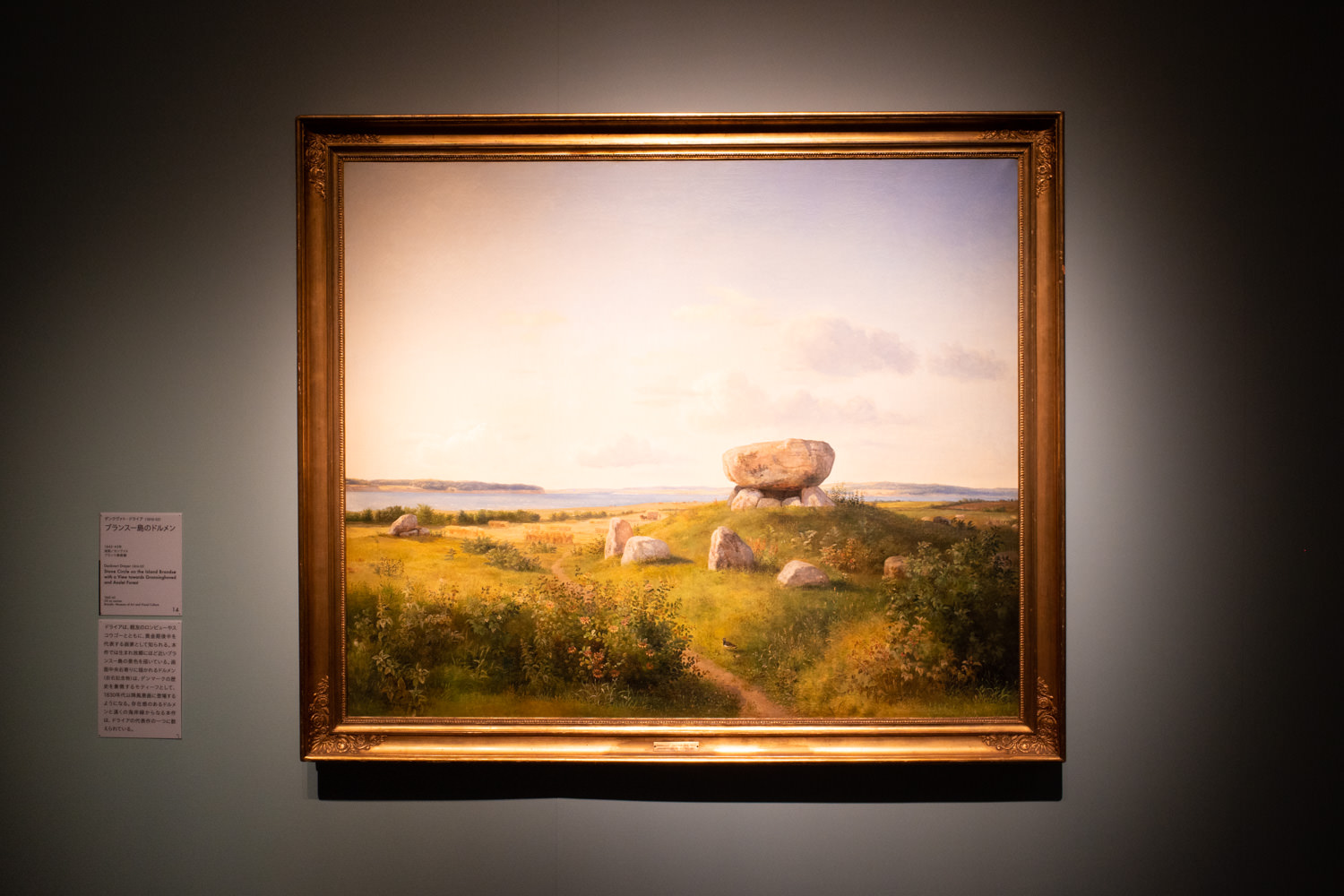
Early-19th-century Danish painting is called the “Golden Age,” when many artists emerged and developed diverse creative activity. In landscape painting, they found aesthetic value in familiar nature through direct observation—setting off on sketching trips to the outskirts of the capital, Copenhagen. In portraiture, meanwhile, they moved from formal expression symbolizing the sitter’s social status toward relaxed, unadorned, intimate depiction. In many cases the patrons were no longer royalty and aristocracy as before, but the bourgeois class that rose to prominence in this era.
Danish painters sought and found their own identity in the praise of modest daily life. The simple, tranquil “art of the citizen” and its values, developed in the Golden Age, became the foundation of modern Danish culture and were passed on to later generations of painters.
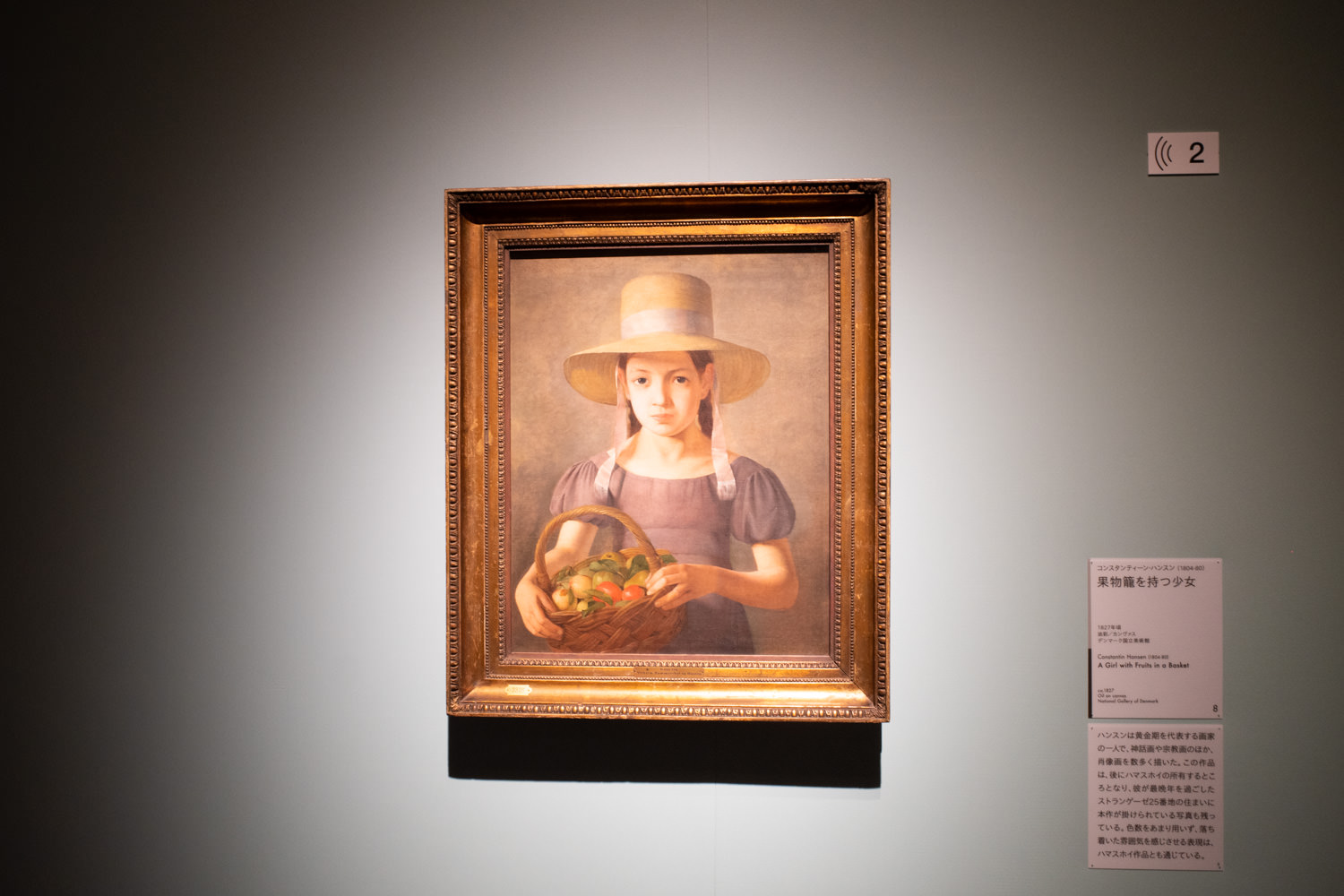
Dankvart Dreyer, Dolmen on the Island of Brandsø, 1842–43, Brandts collectionConstantin Hansen, Girl Holding a Basket of Fruit, c. 1827, National Gallery of Denmark
Chapter 2: The Skagen School and the Light of the North
In 1840s Denmark, nationalism was on the rise, and in art too—centered on the Royal Danish Academy of Fine Arts—depicting Denmark’s own landscapes and the lives of people preserving traditional customs was encouraged. Against this backdrop, from the 1840s onward painters began venturing to the “untamed land” of the Jutland peninsula, and in the early 1870s the fishing town of Skagen at the peninsula’s northern tip was “discovered.”
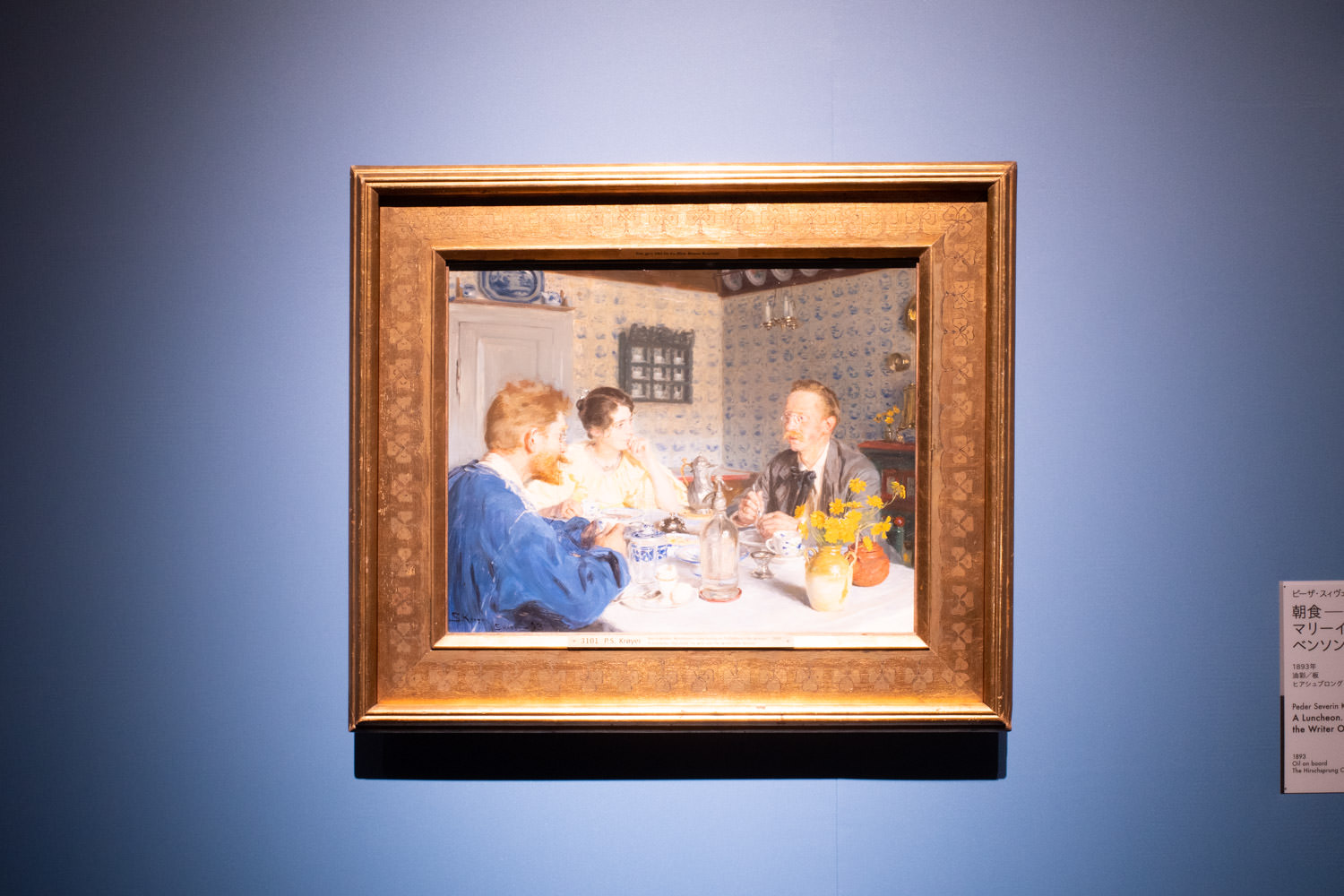
Through the distinctive harsh natural environment and the figures of the fishermen living there depicted by the painters who visited, Skagen’s reputation spread, and the artists who gathered across borders in this small fishing town came to be called the Skagen school. Incorporating influences such as French Impressionism, the beautiful paintings of the Skagen school have drawn the Danish people from the late 19th century to this day.
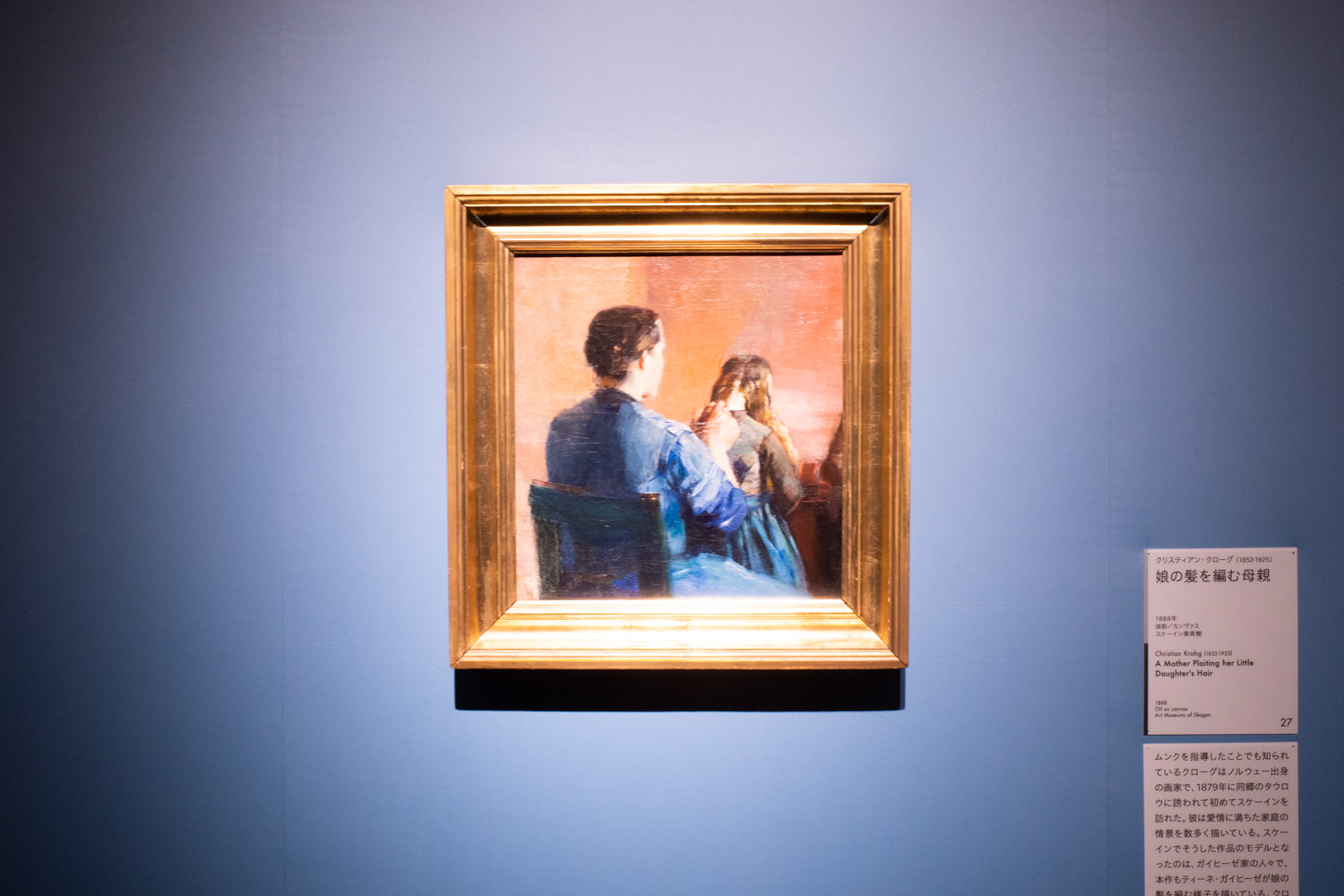
Christian Krohg, Mother Braiding Her Daughter’s Hair, 1888, Skagens MuseumPeder Severin Krøyer, Breakfast – The Painter, His Wife Marie, and the Writer Otto Benzon, 1893, The Hirschsprung Collection
Chapter 3: Late-19th-Century Danish Painting — Internationalization and the Rise of Interior Painting
The “Free Exhibition” (Den Frie Udstilling), established in 1891, invigorated the Danish art world by providing young painters a venue for free presentation of their work. In 1893 it exhibited works by Van Gogh and Gauguin, playing an important role in the internationalization of Danish art as a venue for introducing new foreign art.
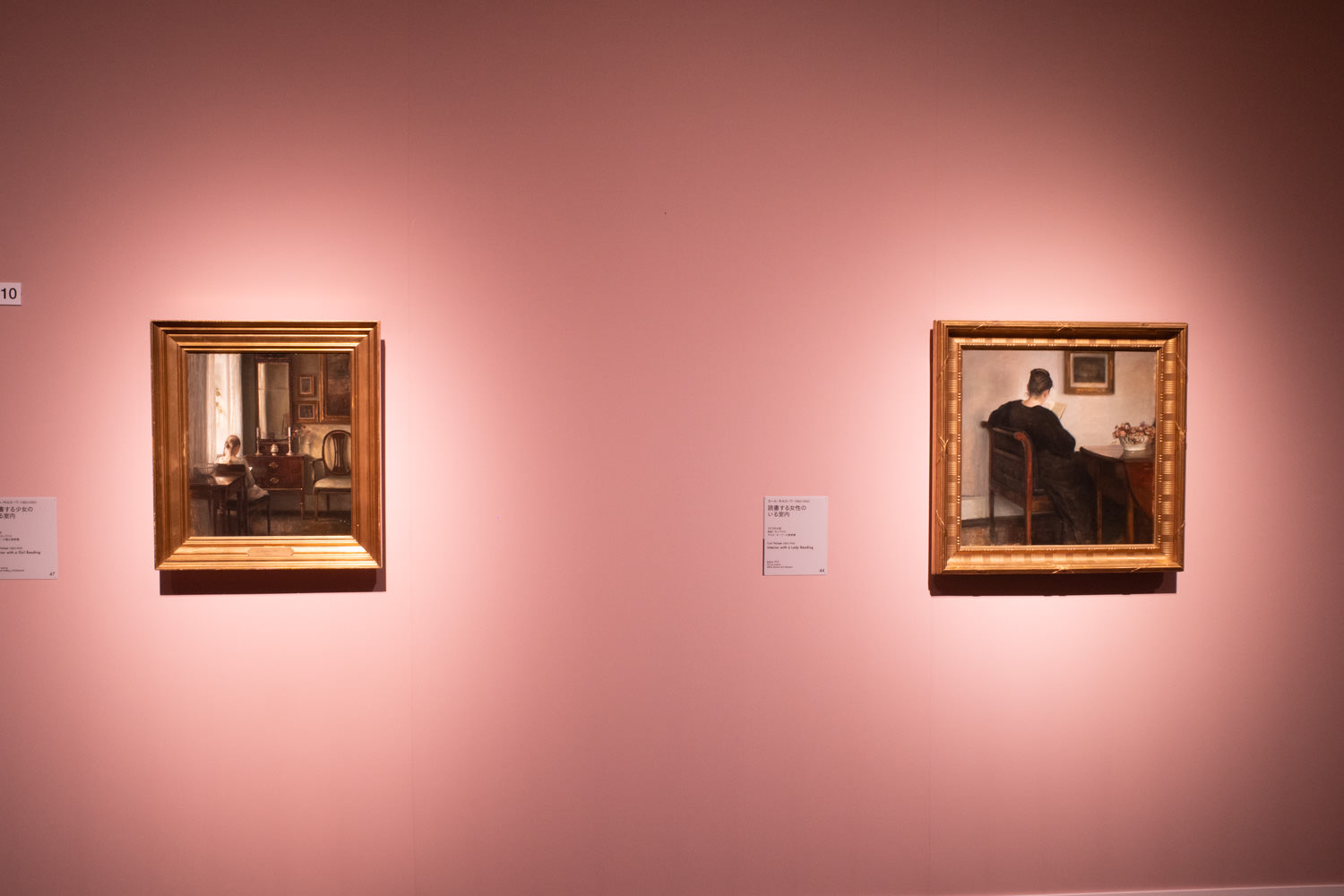
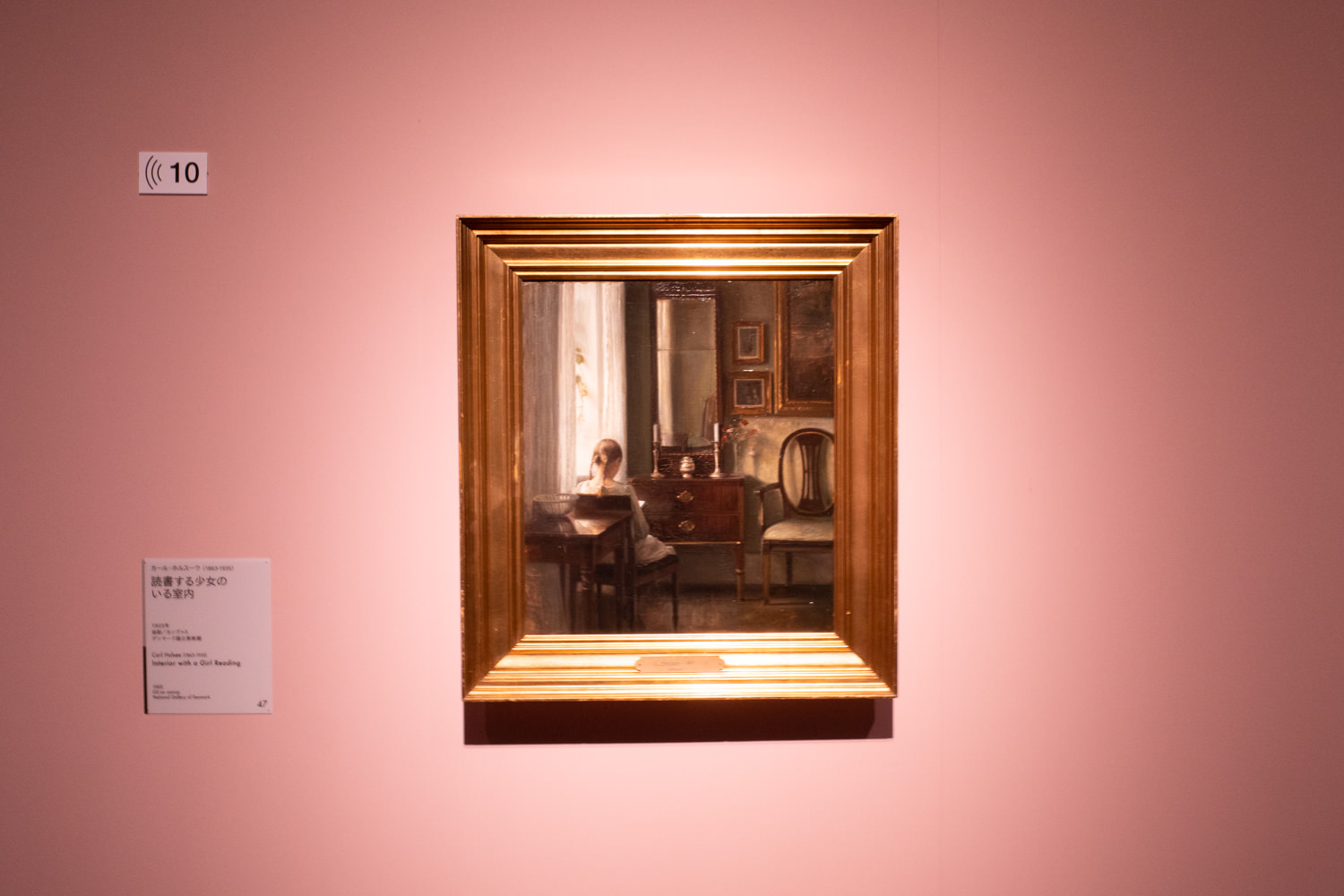
Also, in Copenhagen from the 1880s onward, paintings taking the interior of the painter’s own home as their subject gained popularity. Many warm, domestic scenes were painted, and through such images of “happy family life,” “intimacy” became one of the characteristics of Danish painting. On the other hand, around 1900, interior paintings with little narrative—symbolized by works depicting unpeopled interiors—became prominent. Painters regarded living rooms and bedrooms as aesthetic spaces and pursued a refined integration of pictorial elements.
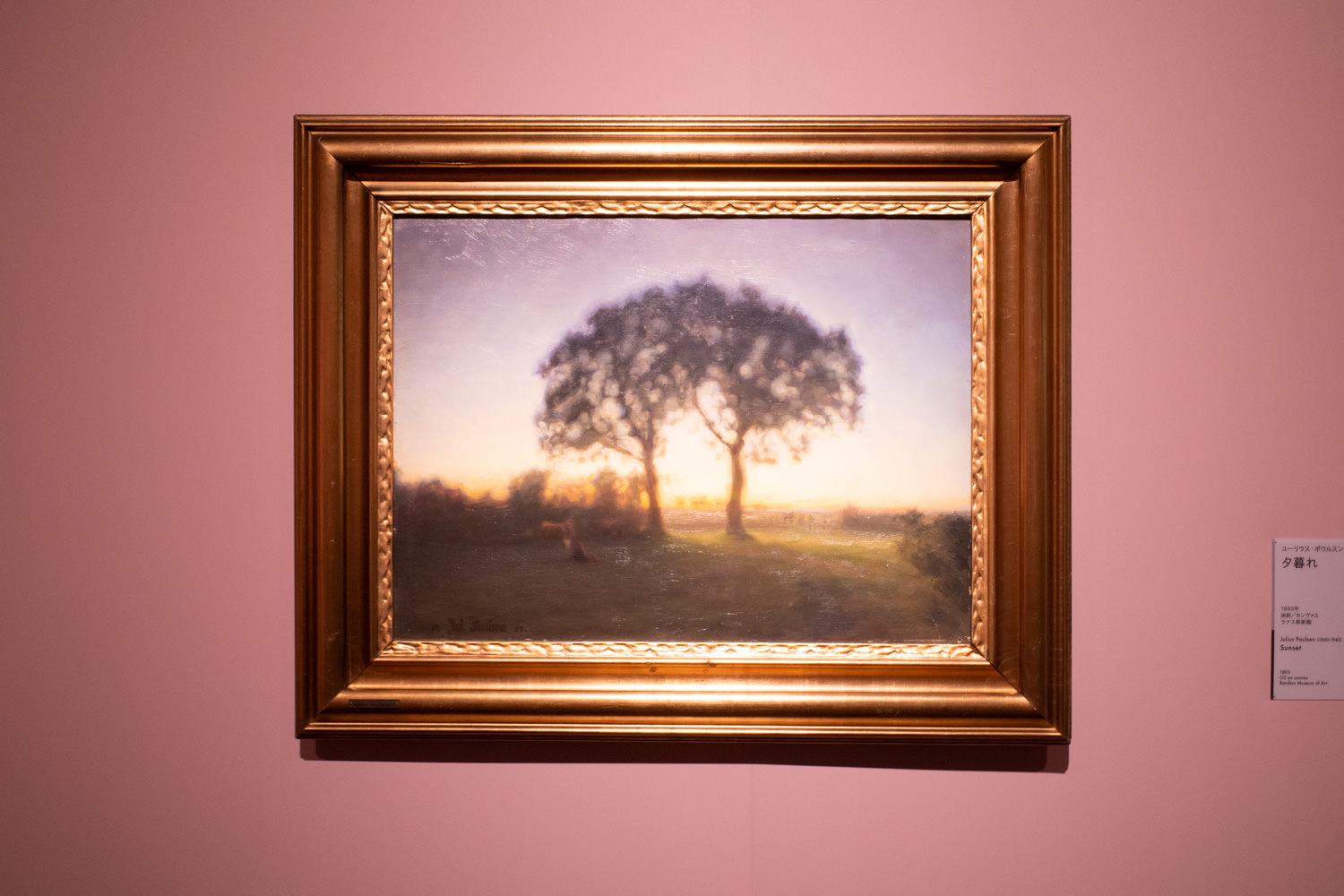
Julius Paulsen, Twilight, 1893, Randers KunstmuseumInstallation viewCarl Holsøe, Interior with a Reading Girl, 1903, National Gallery of Denmark
Chapter 4: Vilhelm Hammershøi — In the Silence of the Capital
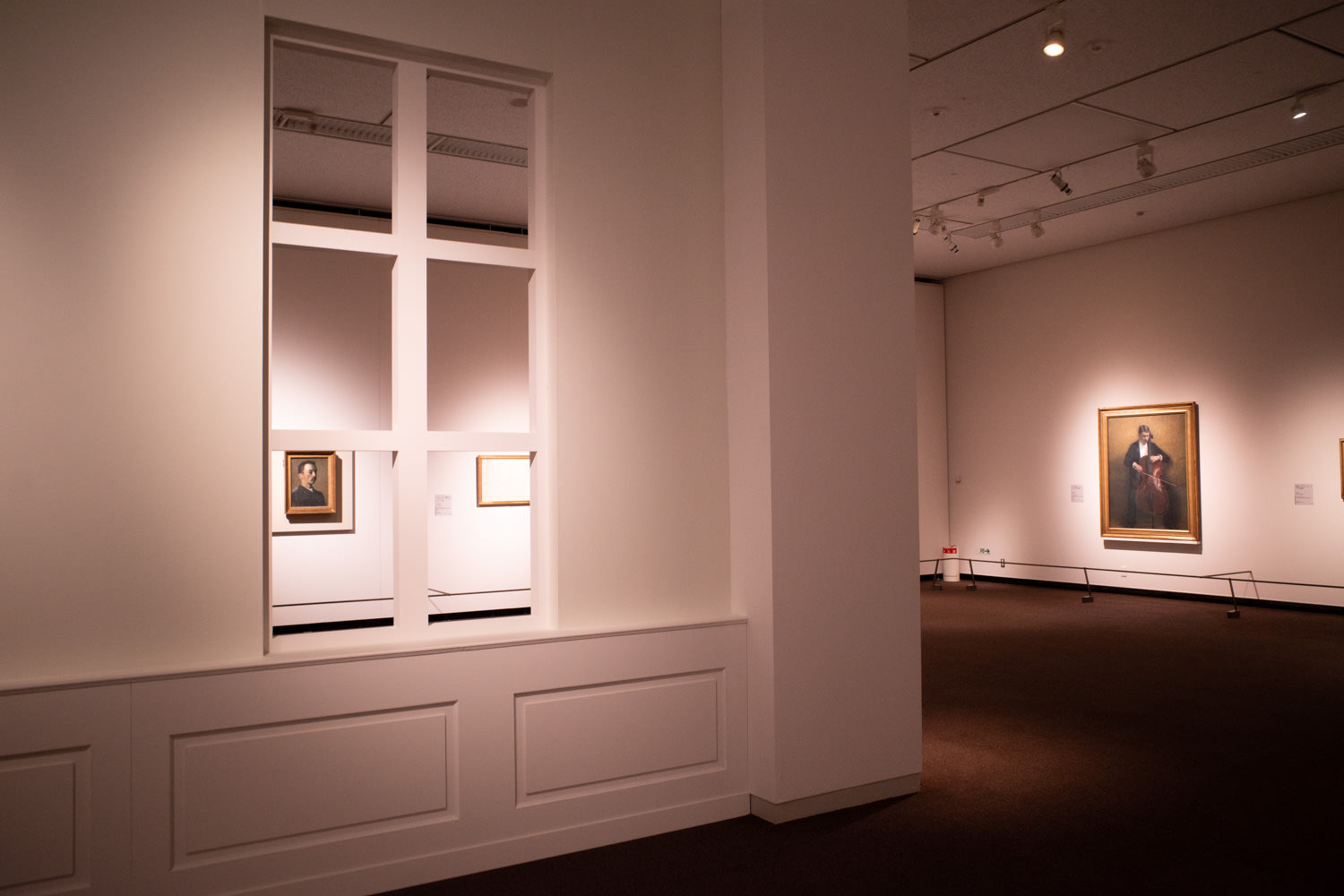
In the final chapter, Hammershøi’s works finally appear. Thirty-seven paintings are gathered.
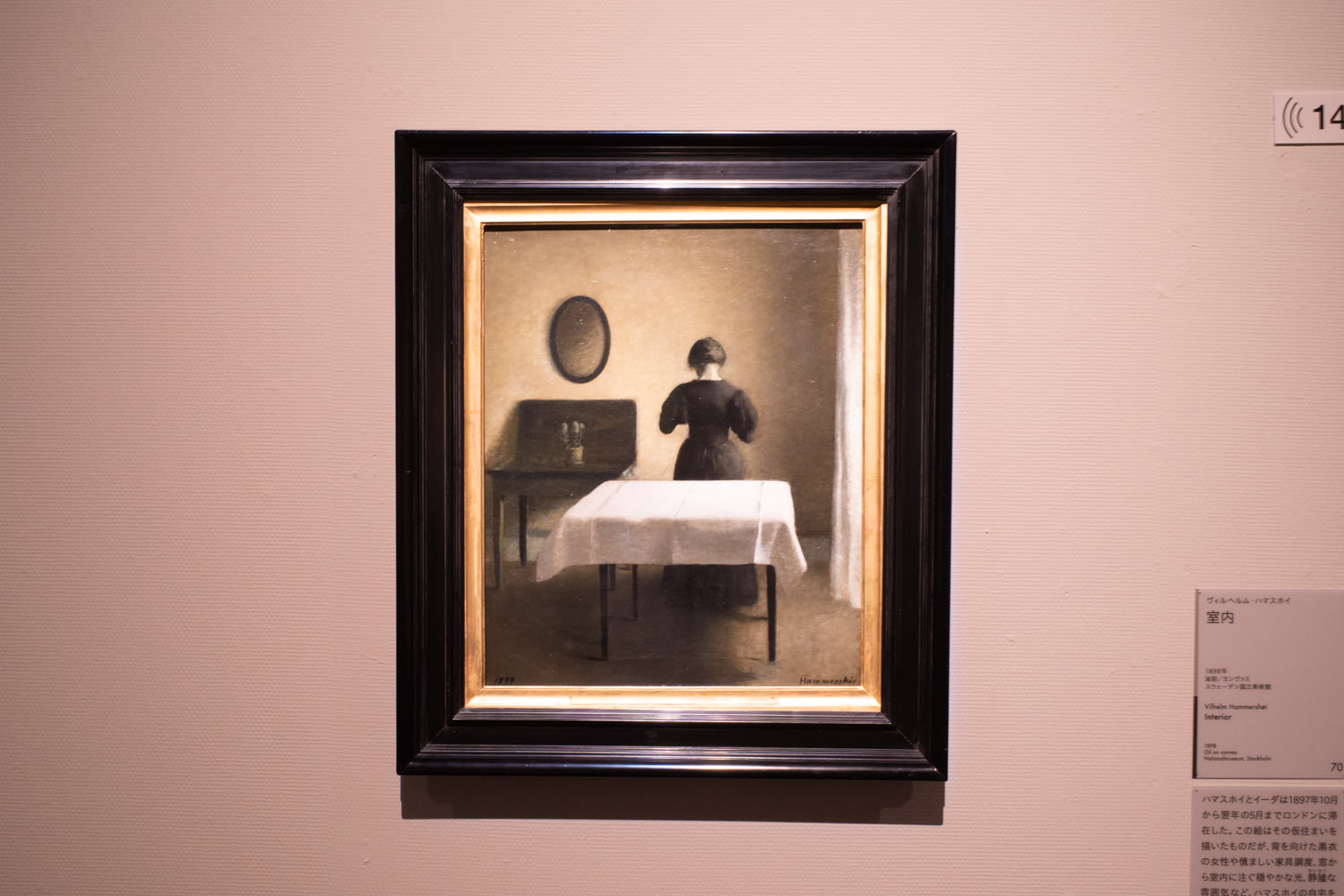
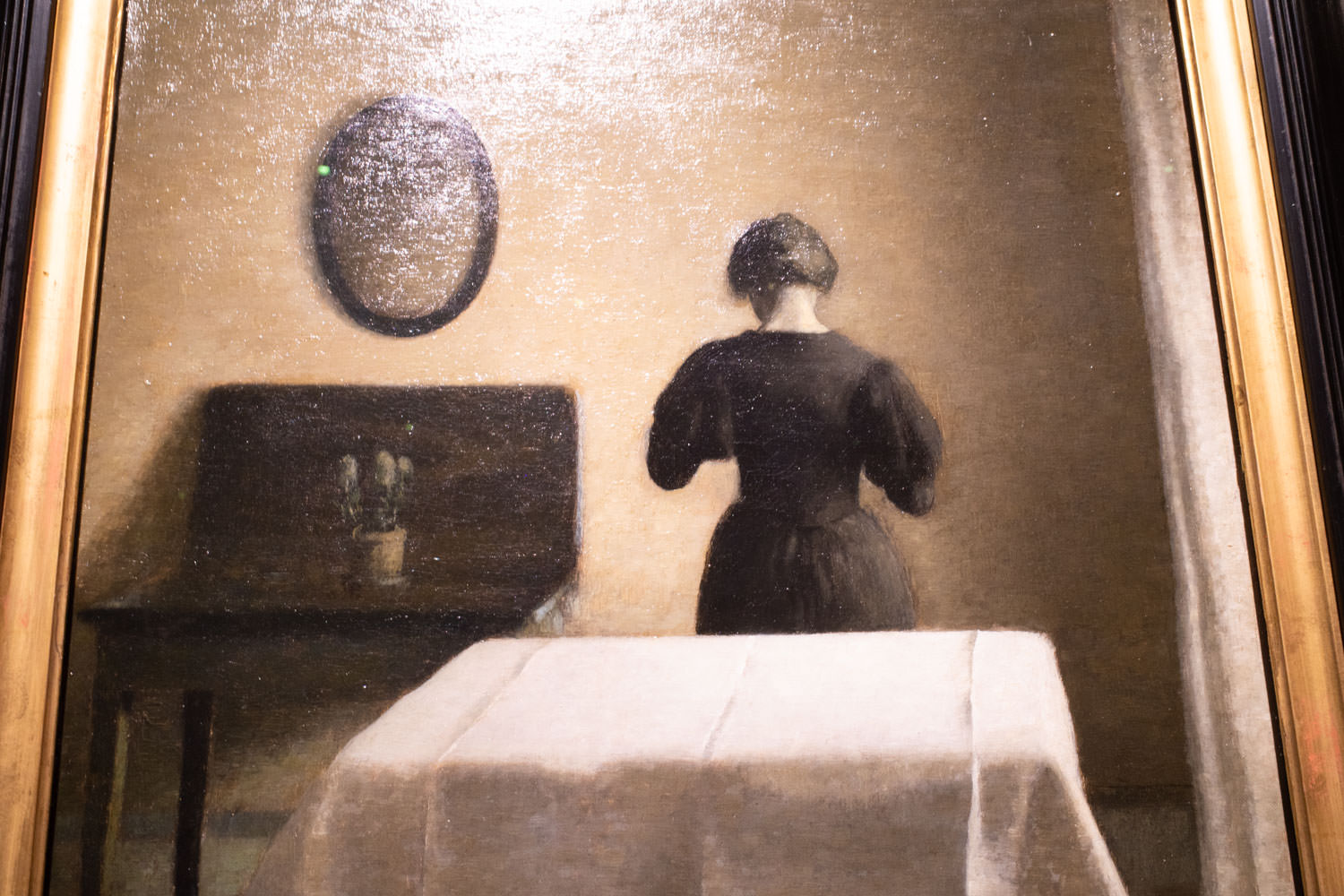
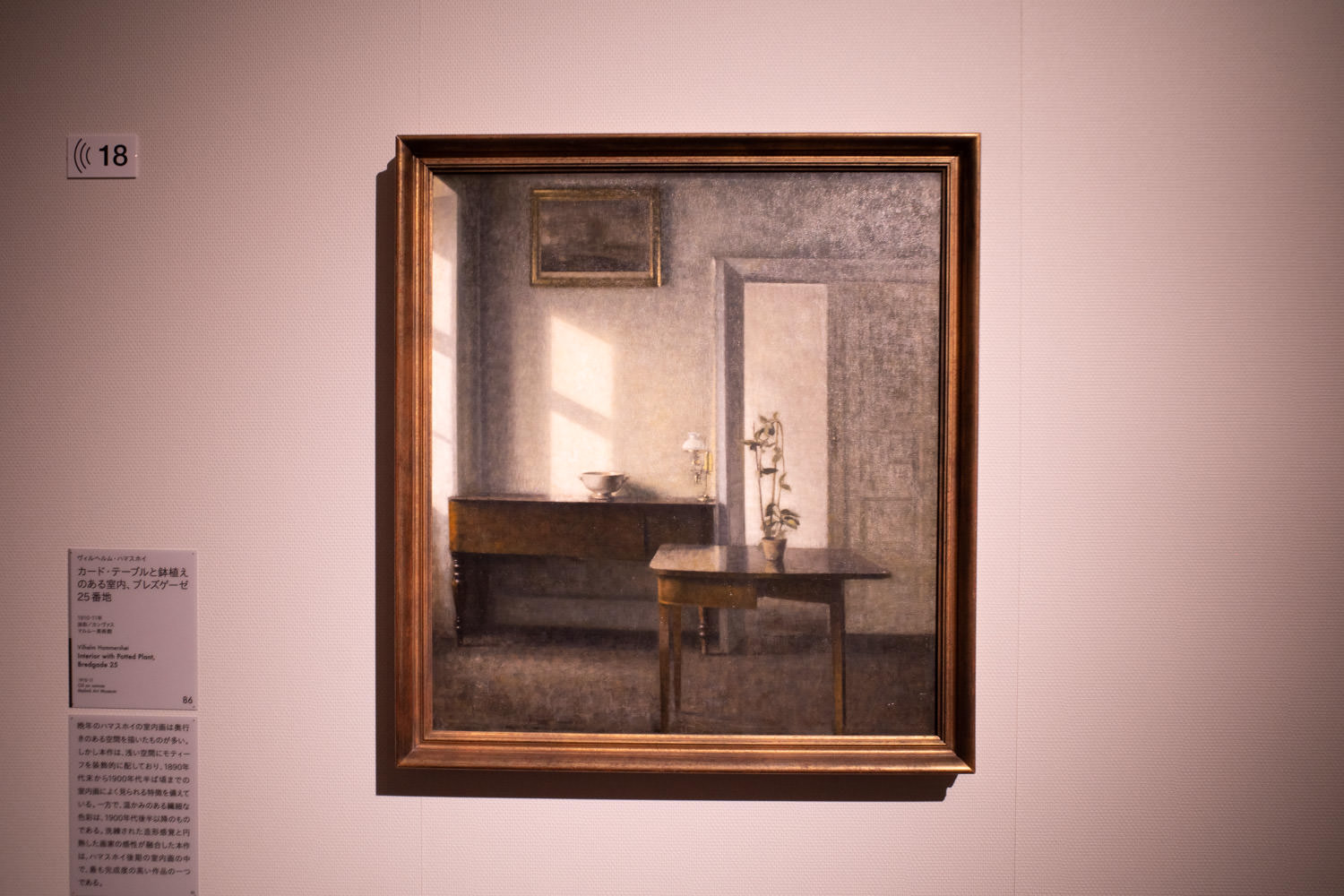
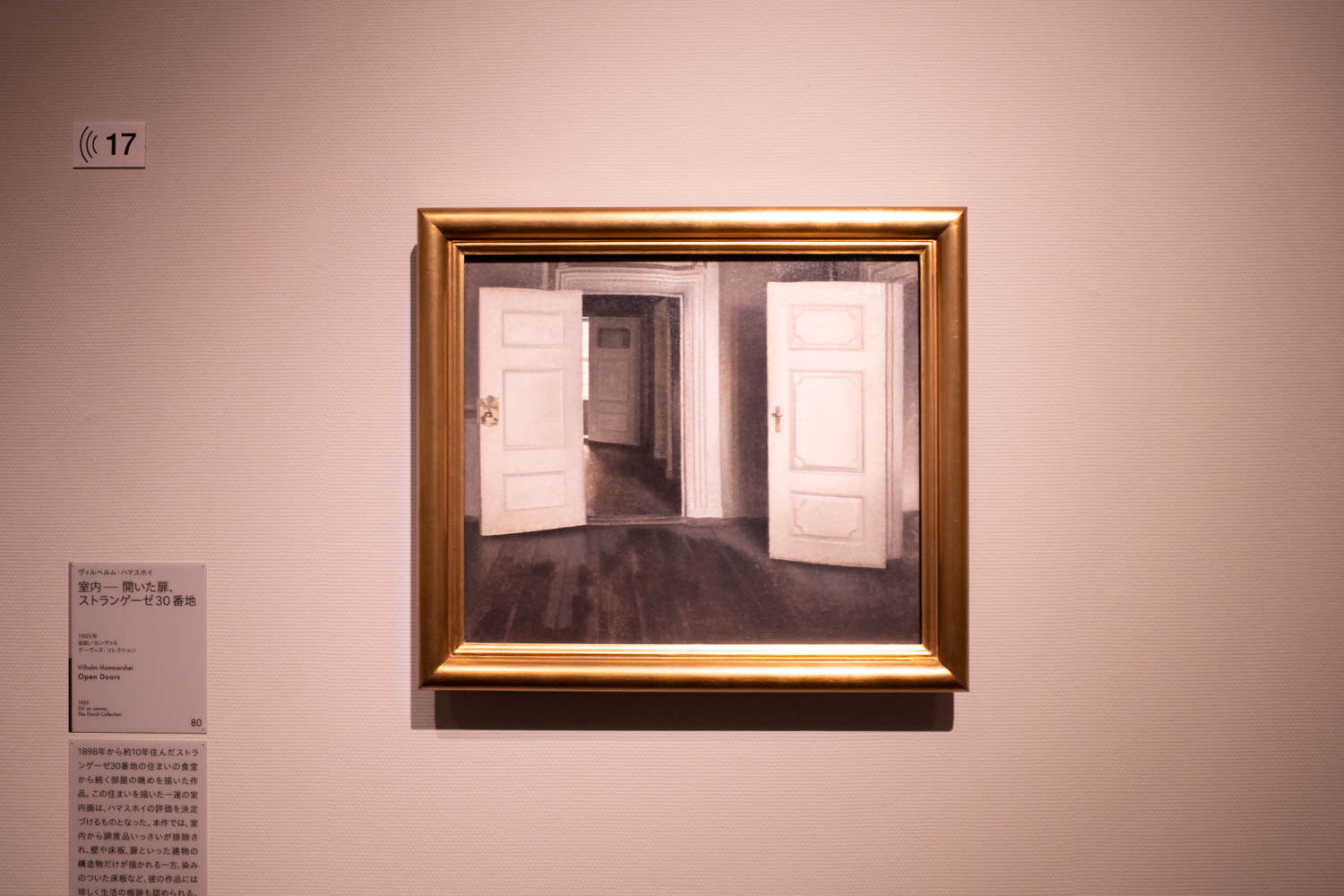
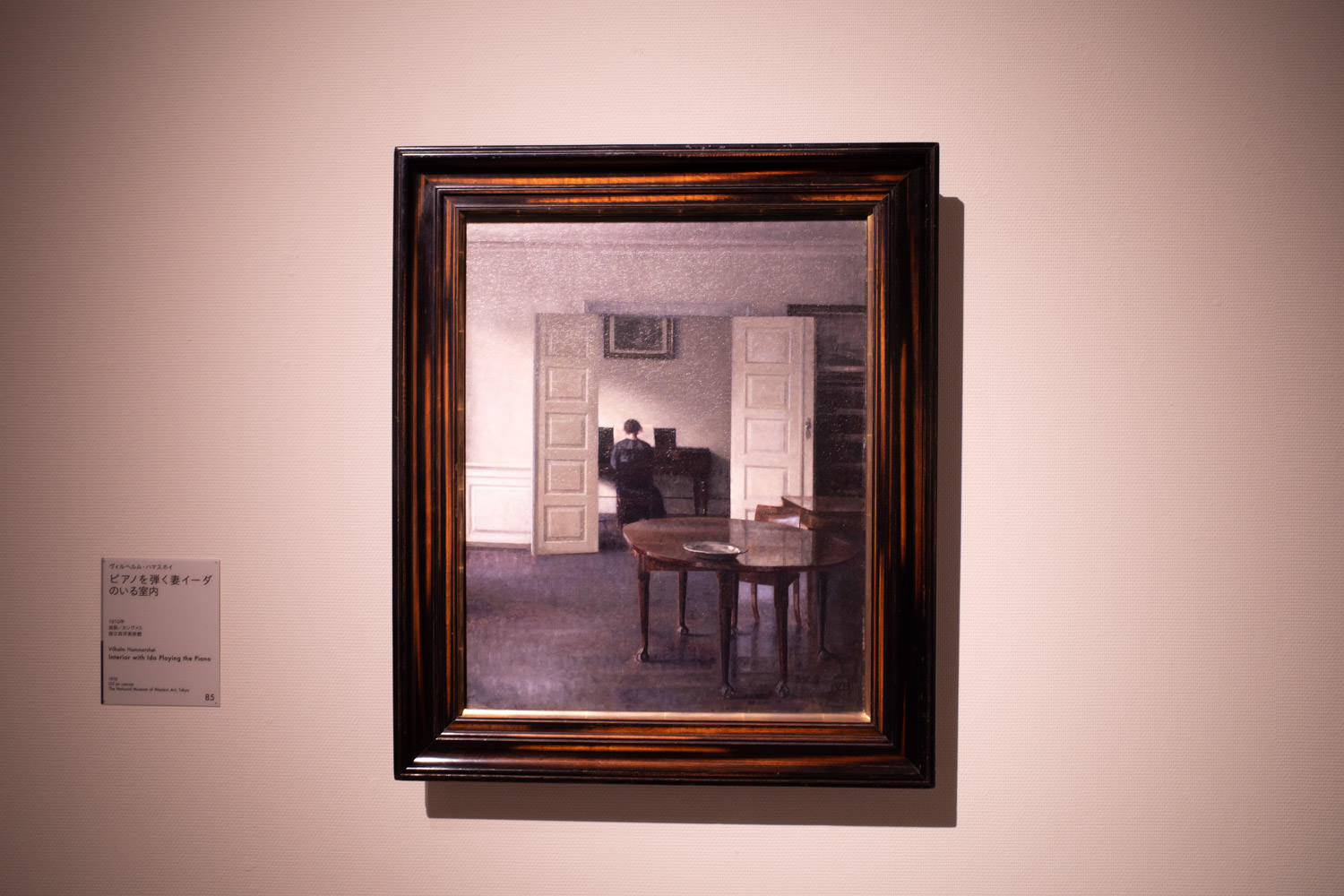
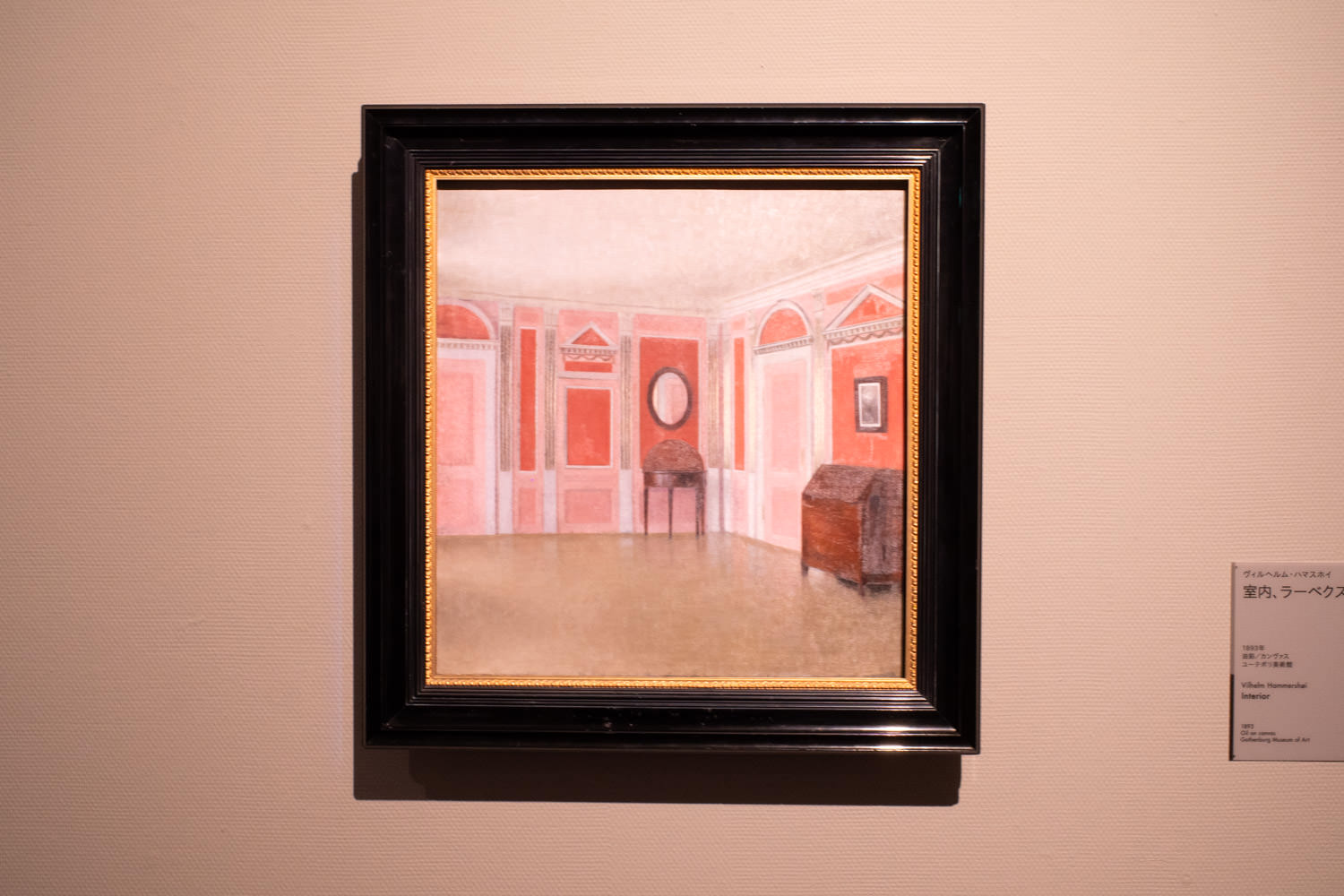
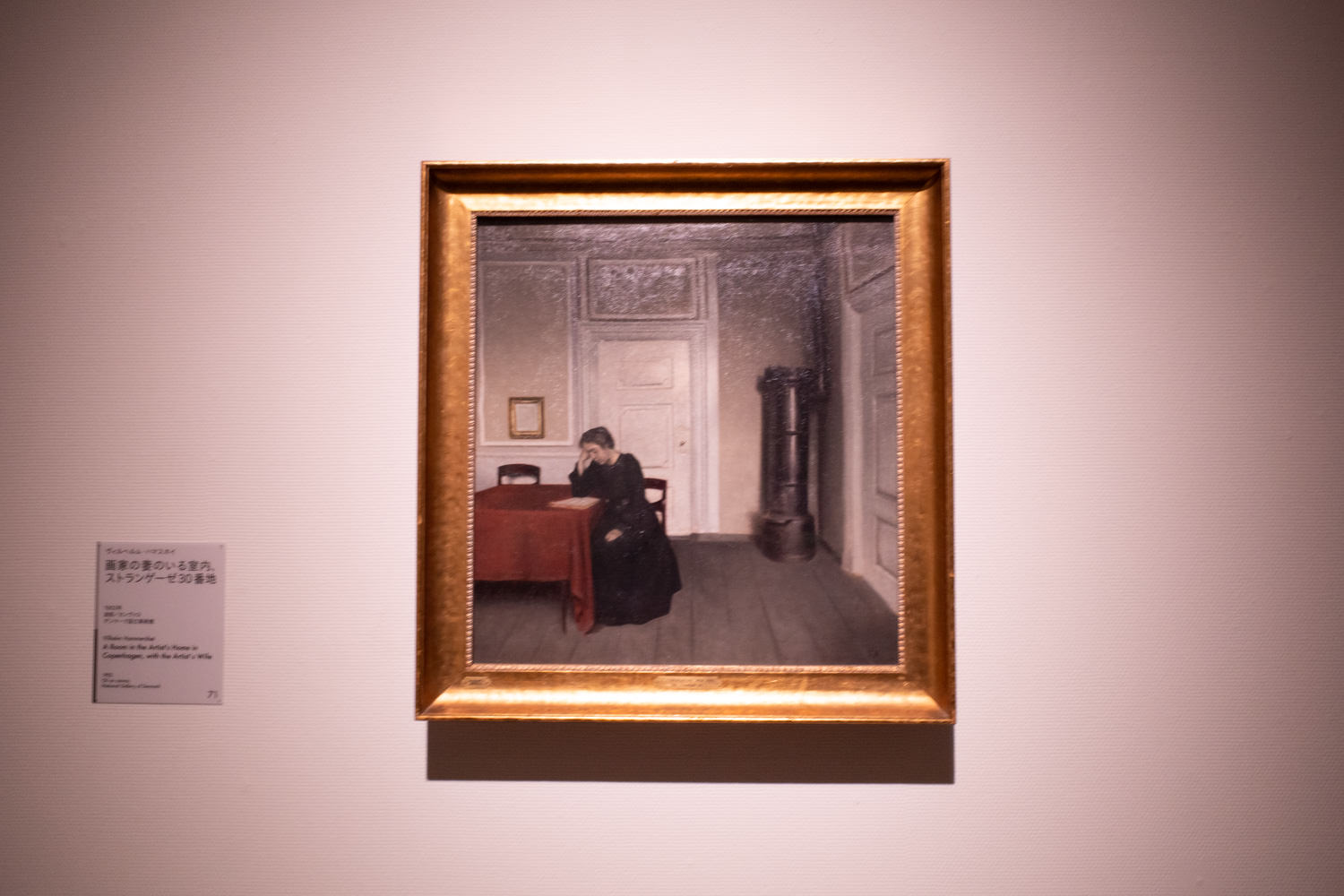
Installation viewVilhelm Hammershøi, Interior, 1898, Nationalmuseum, SwedenVilhelm Hammershøi, Interior (detail)Vilhelm Hammershøi, Interior with a Card Table and Potted Plant, Bredgade 25, 1910–11, Malmö Art MuseumVilhelm Hammershøi, Interior – Open Doors, Strandgade 30, 1905, The David CollectionVilhelm Hammershøi, Interior with the Artist’s Wife Ida Playing the Piano, 1910, National Museum of Western ArtVilhelm Hammershøi, Interior, Rahbeks Allé, 1893, Gothenburg Museum of ArtVilhelm Hammershøi, Interior with the Artist’s Wife, Strandgade 30, 1902, National Gallery of Denmark
Summary
The structure traced Chapters 1–3, which sum up 19th-century Danish painting, and then closed with the paintings of Vilhelm Hammershøi.
Hammershøi’s paintings feature motifs with little movement—empty interiors, women seen from behind. The paint used is centered on a very calm gray. Overall, they are composed paintings for which the word “tranquil” is fitting. At the same time, the impression received through viewing seems to contain the quiet breathing of humans present even within the silence, and the subtle movement of the air drifting through the rooms—a moving viewing experience.
Though Hammershøi is also called “the Vermeer of the North,” his work had a sure pictorial strength that set it clearly apart from Vermeer.
The venue’s museum shop sold a wide variety of items.
This, too, is worth checking out!
Incidentally, this exhibition was realized under the supervision of Kenji Yorozuya, curator at the Yamaguchi Prefectural Art Museum. The touring exhibition at the Yamaguchi Prefectural Art Museum is scheduled for April 7 – June 7, 2020.
구미의 주요 미술관이 잇달아 작품을 컬렉션에 추가하고 있으며, 일본에서도 2008년에 첫 전람회 「빌헬름 함메르스회이 고요한 시정(국립서양미술관)」이 개최되어, 그때까지 거의 무명 화가였음에도 많은 미술 팬을 매료했습니다.
본 전시는 19세기 말 덴마크를 대표하는 화가 빌헬름 함메르스회이의 작품 약 40점에 더해, 19세기 전반 코펜하겐에서 꽃핀 ‘덴마크 회화의 황금기’의 소박하고 순수한 회화부터, 인상파풍의 빛 묘사를 도입한 스카겐파, 세기말 수도에서 활약한 화가들의 실내화까지, 매력 넘치는 덴마크 회화를 일본에서 처음으로 본격적으로 소개하는 전람회입니다.
함메르스회이와 덴마크 회화
제1장 「일상 예찬 ― 덴마크 회화의 황금기」
19세기 전반의 덴마크 회화는 ‘황금기’라 불리며, 많은 예술가가 등장해 다채로운 창작 활동을 펼쳤습니다. 풍경화에서는 수도 코펜하겐 교외로 스케치 여행을 떠나는 등, 자연의 직접적 관찰을 통해 가까운 자연에서 미적 가치를 발견했습니다. 한편 초상화에서는 모델의 사회적 지위를 상징하는 격식 있는 표현에서, 허물없고 꾸밈없는 친밀한 묘사로 이행해 갑니다. 그 주문주는 많은 경우 이전처럼 왕후귀족이 아니라, 이 시대에 대두한 시민 계급이었습니다.
덴마크 화가들은 소소한 일상의 예찬 속에서 자신의 정체성을 찾아 발견했습니다. 황금기에 전개된 소박하고 온화한 ‘시민의 예술’과 그 가치관은 근대 덴마크 문화의 기층이 되어, 후대의 화가들에게 계승되었습니다.
당크바르트 드라이어 《브란쇠섬의 고인돌》 1842-43년 브란츠 미술관 소장콘스탄틴 한센 《과일 바구니를 든 소녀》 1827년경 덴마크 국립미술관 소장
제2장 스카겐파와 북유럽의 빛
1840년대 덴마크에서는 내셔널리즘이 고조되었고, 미술에서도 왕립미술아카데미를 중심으로 덴마크 고유의 풍경이나 전통 관습을 지키는 사람들의 삶을 그리는 것이 장려되었습니다. 그러한 시대 배경 속에서 1840년대 이후 ‘미개의 땅’ 윌란(유틀란트) 반도로 발을 뻗는 화가가 나타났고, 1870년대 초 반도 북단의 어촌 스카겐이 ‘발견’됩니다.
이 땅을 찾은 화가들이 그린 독특하고 혹독한 자연 환경과 그곳에 사는 어부들의 모습을 통해 스카겐의 평판이 퍼졌고, 국경을 넘어 이 작은 어촌에 모인 예술가들은 스카겐파라 불리게 되었습니다. 프랑스 인상파 등의 영향을 받아들인 스카겐파의 아름다운 회화는 19세기 말부터 오늘날까지 덴마크 사람들을 매료하고 있습니다.
크리스티안 크로그 《딸의 머리를 땋는 어머니》 1888년 스카겐 미술관 소장페더 세베린 크뢰이어 《아침 식사 – 화가와 그의 아내 마리, 작가 오토 벤손》 1893년 히르슈스프룽 컬렉션 소장
제3장 19세기 말의 덴마크 회화 ― 국제화와 실내화의 융성
1891년에 설립된 ‘독립전’은 젊은 화가들에게 자유로운 작품 발표의 장을 제공함으로써 덴마크 화단을 활황으로 이끌었습니다. 1893년에는 반 고흐와 고갱의 작품을 전시하는 등, 외국의 새로운 예술을 소개하는 장으로서 덴마크 미술의 국제화에 중요한 역할을 했습니다.
또한 1880년대 이후의 코펜하겐에서는 화가 자택의 실내를 주제로 한 회화가 인기를 끌었습니다. 따뜻한 가정적 장면이 다수 그려졌고, 그러한 ‘행복한 가정생활’의 이미지를 통해 ‘친밀함’이 덴마크 회화의 특징 중 하나가 되었습니다. 한편 1900년경에는 무인의 실내를 그린 작품으로 상징되는, 이야기성이 희박한 실내화가 두드러집니다. 화가들은 거실과 침실을 미적 공간으로 파악하고 회화적 요소의 세련된 통합을 추구해 갔습니다.
율리우스 파울센 《땅거미》 1893년 라네르스 미술관 소장전시 풍경카를 홀쇠 《책 읽는 소녀가 있는 실내》 1903년 덴마크 국립미술관 소장
제4장 빌헬름 함메르스회이 ― 수도의 정적 속에서
마지막 장에서 드디어 함메르스회이 작품이 등장합니다. 37점의 회화가 모였습니다.
전시 풍경빌헬름 함메르스회이 《실내》 1898년 스웨덴 국립미술관 소장빌헬름 함메르스회이 《실내》 ※부분빌헬름 함메르스회이 《카드 테이블과 화분이 있는 실내, 브레드가데 25번지》 1910-11년 말뫼 미술관 소장빌헬름 함메르스회이 《실내 ― 열린 문, 스트란가데 30번지》 1905년 데이비드 컬렉션 소장빌헬름 함메르스회이 《피아노를 치는 아내 이다가 있는 실내》 1910년 국립서양미술관 소장빌헬름 함메르스회이 《실내, 라베크스 알레》 1893년 예테보리 미술관 소장빌헬름 함메르스회이 《화가의 아내가 있는 실내, 스트란가데 30번지》 1902년 덴마크 국립미술관 소장
정리
19세기 덴마크 회화를 총괄하는 제1장~제3장을 따라가며, 빌헬름 함메르스회이의 회화로 마무리하는 구성이었습니다.
함메르스회이의 회화는 아무것도 없는 실내나 뒤돌아선 여성 등 움직임이 적은 모티프입니다. 또한 사용된 물감은 매우 차분한 그레이(회색)가 중심입니다. 전체적으로 ‘정밀(靜謐)’이라는 표현이 어울리는 차분한 회화입니다. 한편 감상을 통해 받는 인상은 정적 속에도 존재하는 인간의 조용한 숨결, 실내에 감도는 공기의 미묘한 움직임을 담고 있는 듯하여, 마음이 움직이는 감상 체험이 되었습니다.
‘북유럽의 페르메이르’라고도 불리는 함메르스회이이지만, 페르메이르와는 일선을 긋는 확고한 회화의 힘이 있었습니다.
전시장의 뮤지엄숍에서는 다채로운 아이템이 판매되고 있었습니다.
이것도 꼭 확인해 보세요!
덧붙여 본 전시는 야마구치현립미술관 큐레이터 요로즈야 겐지 씨의 감수로 실현되었습니다. 야마구치현립미술관에서의 순회전은 2020년 4월 7일〜6월 7일에 예정되어 있습니다.