* This article contains spoilers about the exhibition, viewing tips, and subjective commentary.
Kenjiro Okazaki: Retrospective / Strata
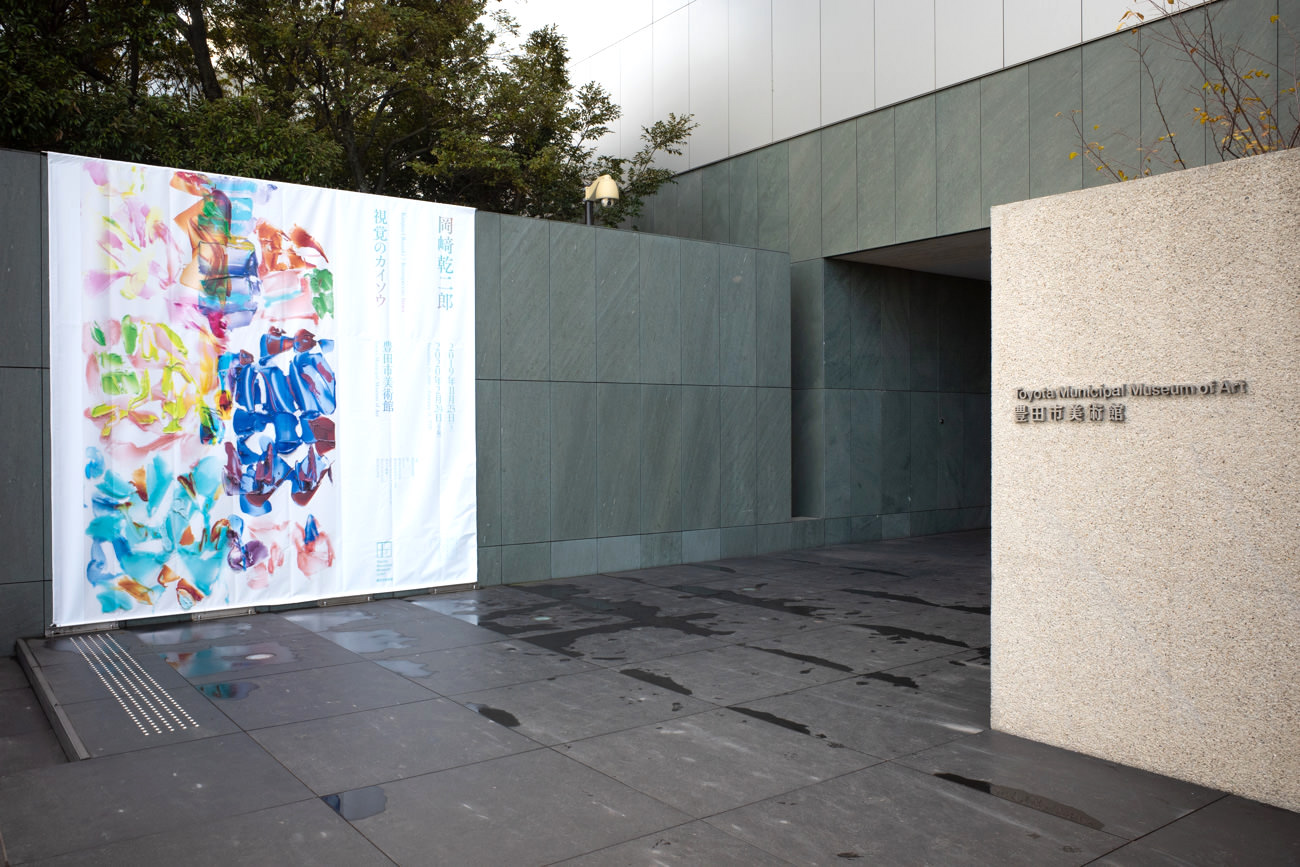
I visited Kenjiro Okazaki’s solo exhibition “Retrospective / Strata.” The venue is Toyota Municipal Museum of Art.
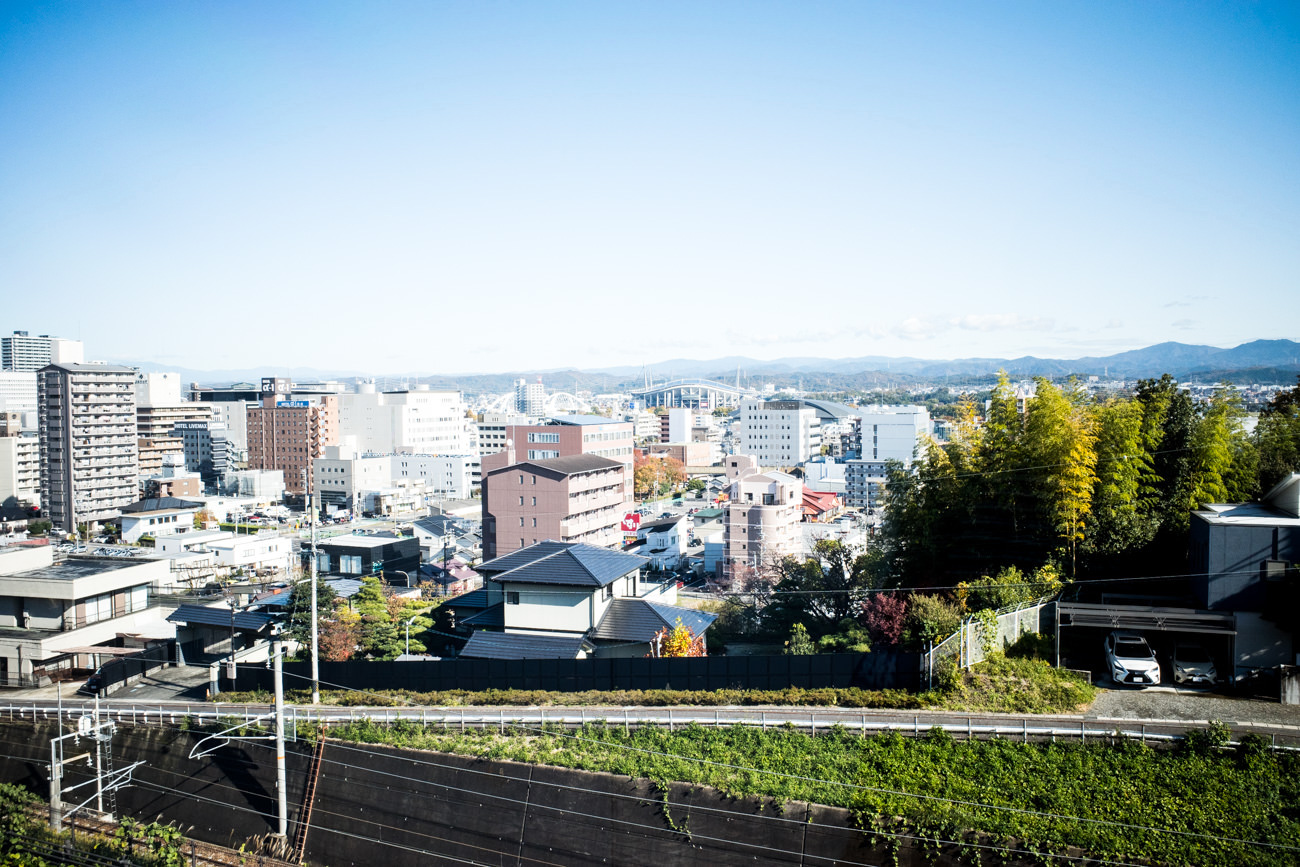
The surrounding scenery viewed from the museumEntrance of Toyota Municipal Museum of Art
The Japanese title of the show, “Shikaku no Kaisou,” is a triple pun. It is a retrospective presenting both new and old works by Kenjiro Okazaki; it is a set of strata in which the works form relationships with one another and reach the viewer through layered access; and it also refers to Okazaki’s own steady stride across many fields — criticism, architecture, and writing among them. In every sense, it is a major solo exhibition.
When we look at a work of art, we are often bound to the single fixed image the individual work seems to hold.
As the title “Retrospective / Strata” suggests, this exhibition is not only about the works on display; it also invites the viewer to reflect on the relationships and meanings between works, and to notice the exhibition space itself, which is structured like strata. Moving one’s viewpoint and thoughts three-dimensionally — reaching beyond the surface of a work into what lies outside and inside it — I enjoyed unearthing and decoding its riddles.
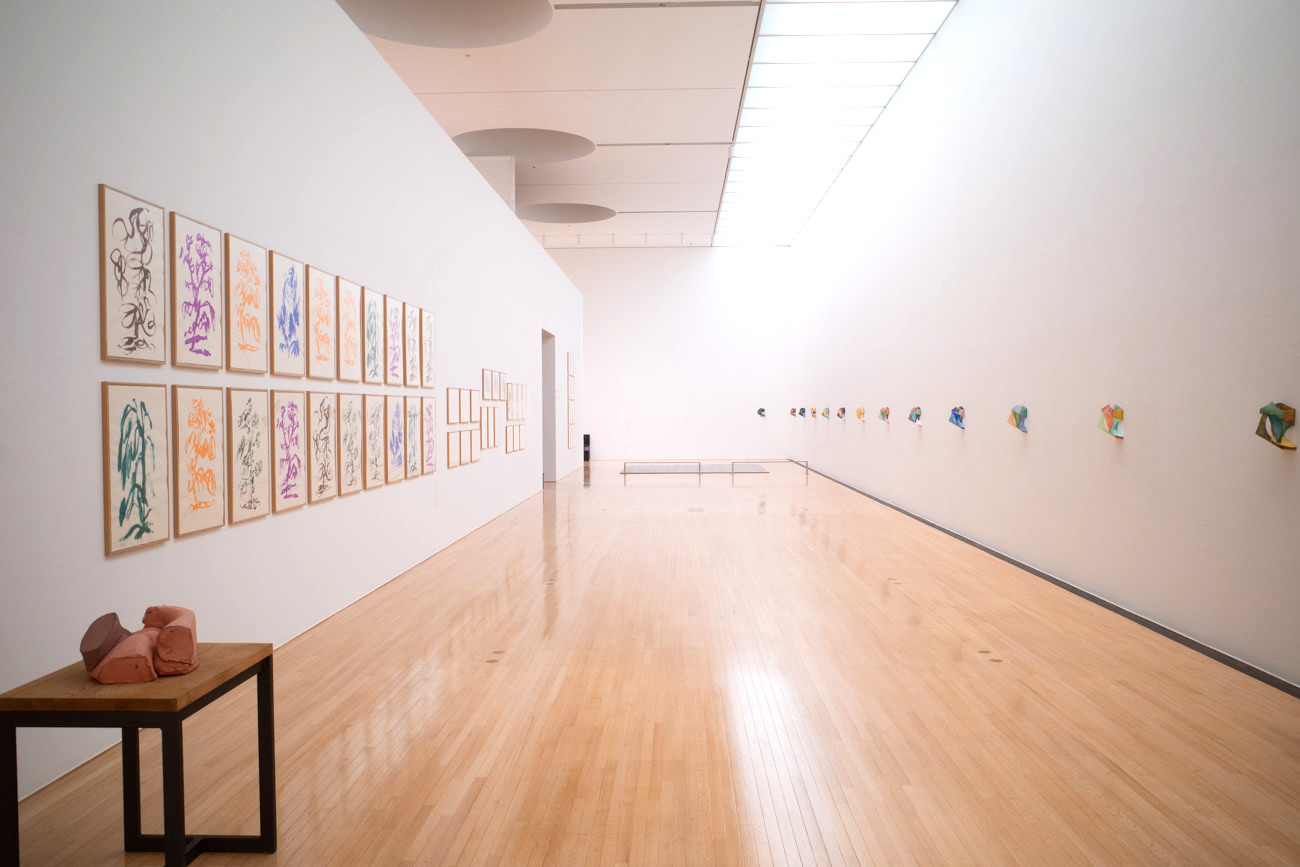
The exhibition space opening to the right from the entrance of “Gallery 8”
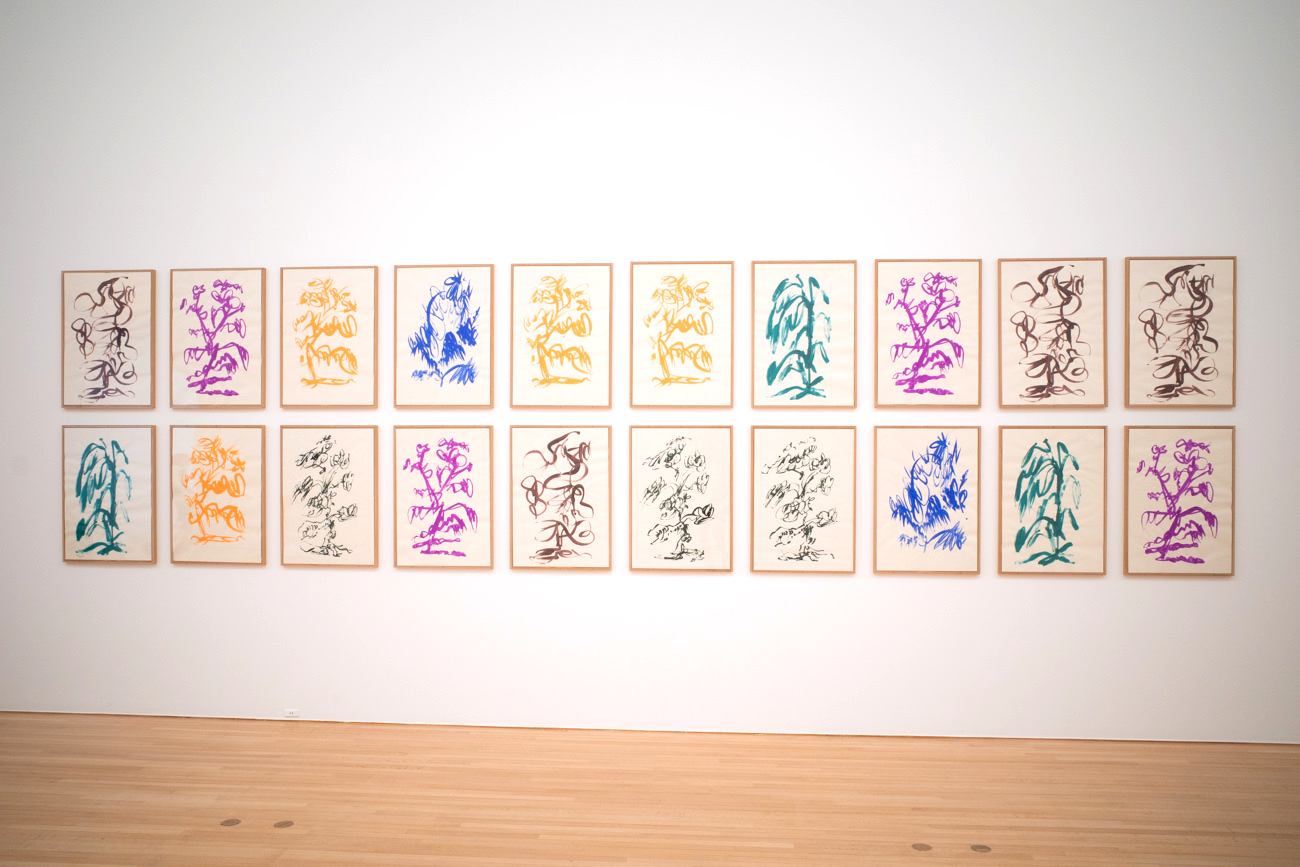
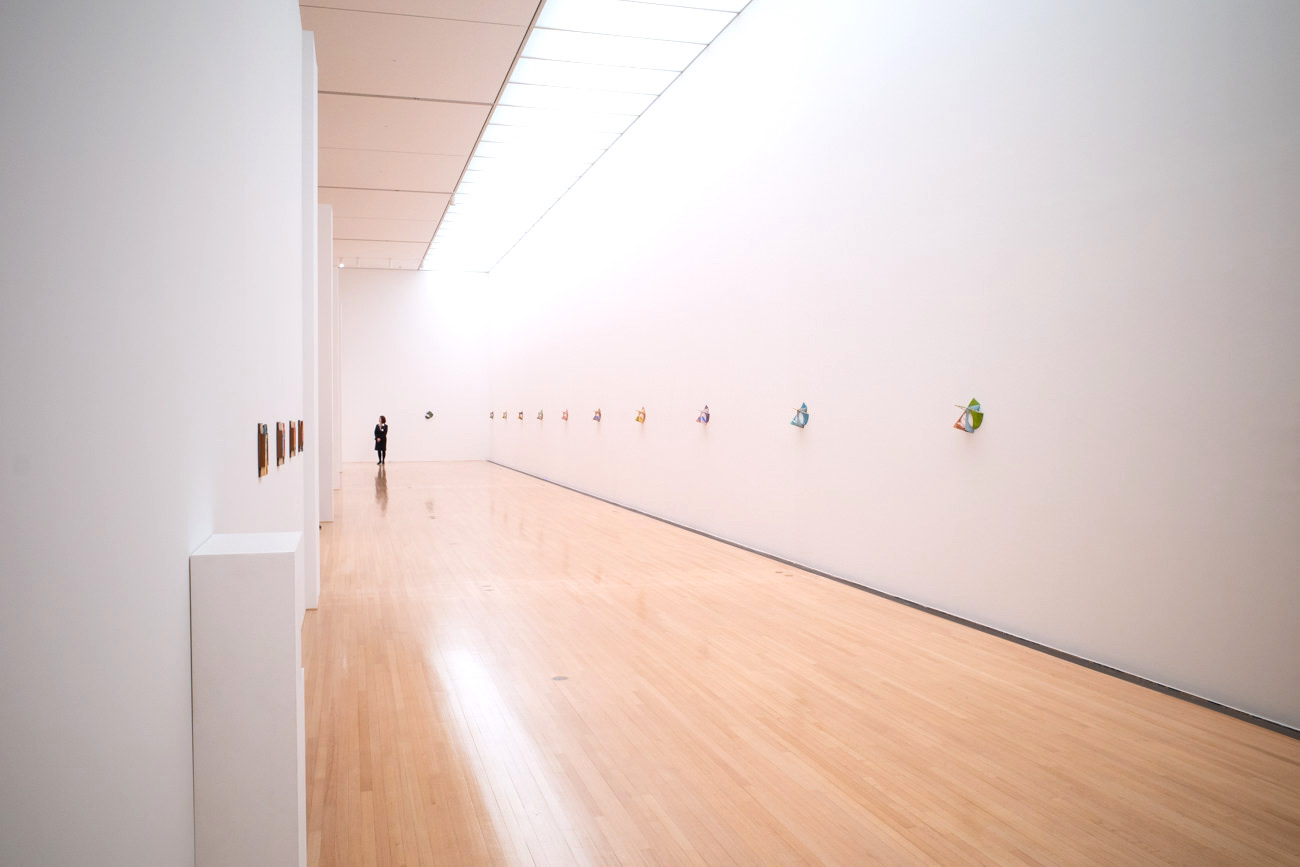
In the first exhibition room “8” past the reception, the show opens with 20 drawings.
As seen in the photo below, drawings in six colors are arranged in an orderly array. Similar motifs by color are rendered with the same touch, and they look almost like copies. In fact, all of these works are collaborations with a drawing robot.
Drawings made in collaboration with a drawing robot
These works were made by recording Okazaki’s own drawings into a computer, then programming the mechanism so that instead of the drawing agent moving, the support itself moves.
The point is not simply that a drawing robot draws, but that the movement is transferred to the movement of the support. It is a work completed by a collaboration between a robot re-performing the Okazaki of the past, and the Okazaki of the present.
This display feels like a device Okazaki has planted at the outset — asking how we might dig one step deeper into the momentary discomfort or subtle noticing we experience while viewing, and how to interpret them. Even if the answer remains unknown, this device may function as a trigger for reading the works that follow.
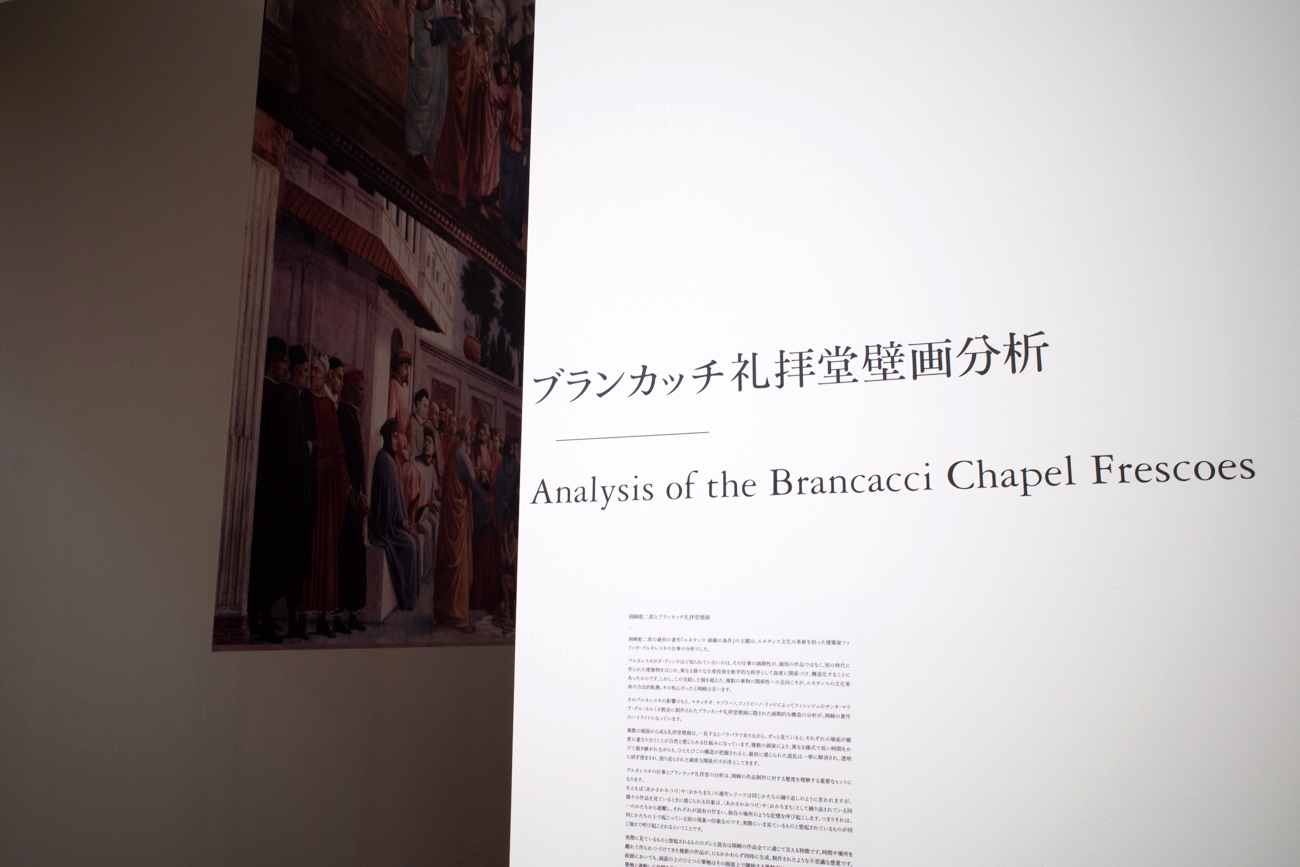
Past the drawing corner, to the left, is the “Brancacci Chapel Fresco Analysis” section.
It is a rare opportunity to visually experience the research Okazaki elucidated in his book “Renaissance: Conditions of Experience.”
Brancacci Chapel Fresco Analysis
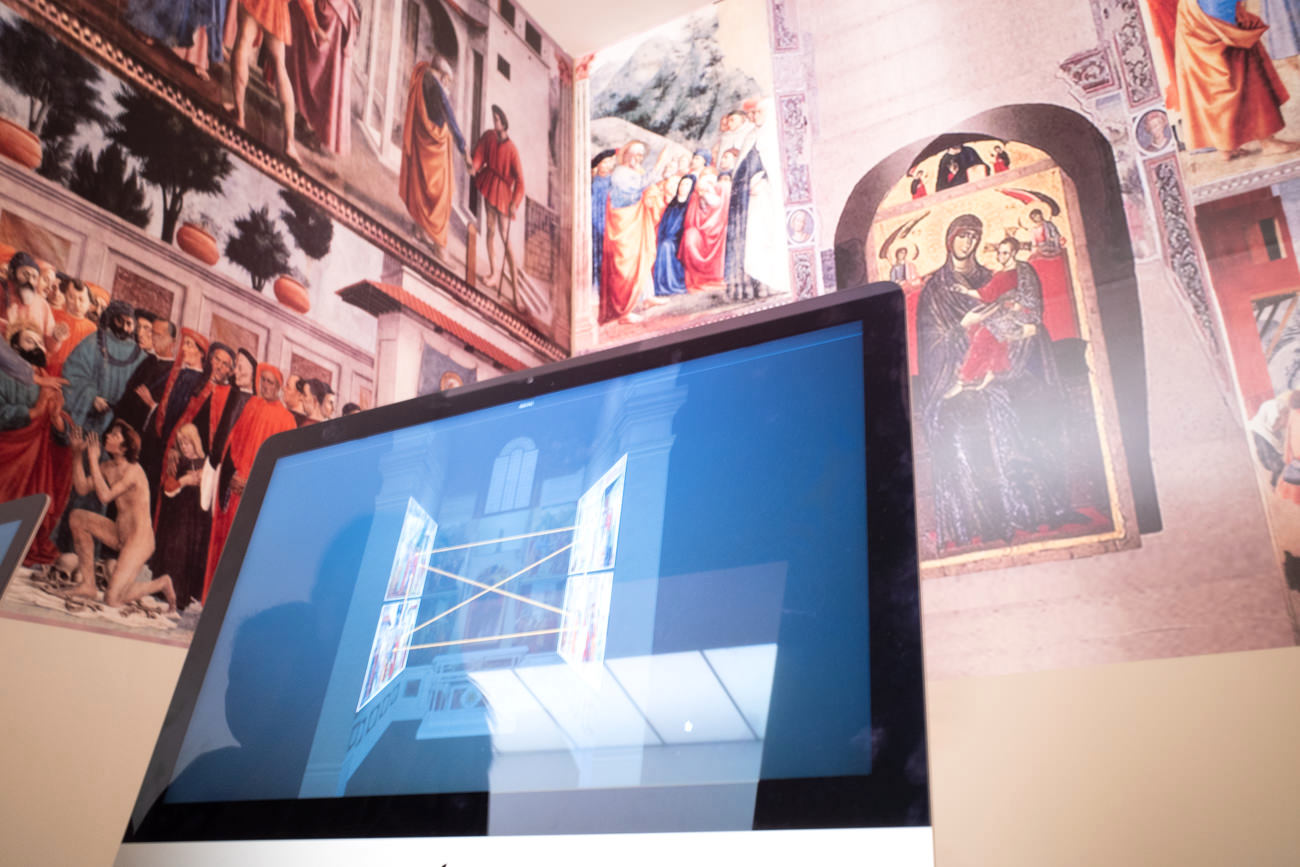
Here, through PC demonstrations and AR-driven experiences, the secrets hidden in the Brancacci Chapel frescoes are unlocked.
Explanations using CG and verification projects using AR technology
The riddle-solving process of the fresco analysis directly hints at how to read the works on display. It overlaps with a feature common to Okazaki’s works — the multi-layered interweaving of color, material, and form. Passing through this fresco-analysis room, one finally enters the full-scale Okazaki exhibition zone.
Installation view
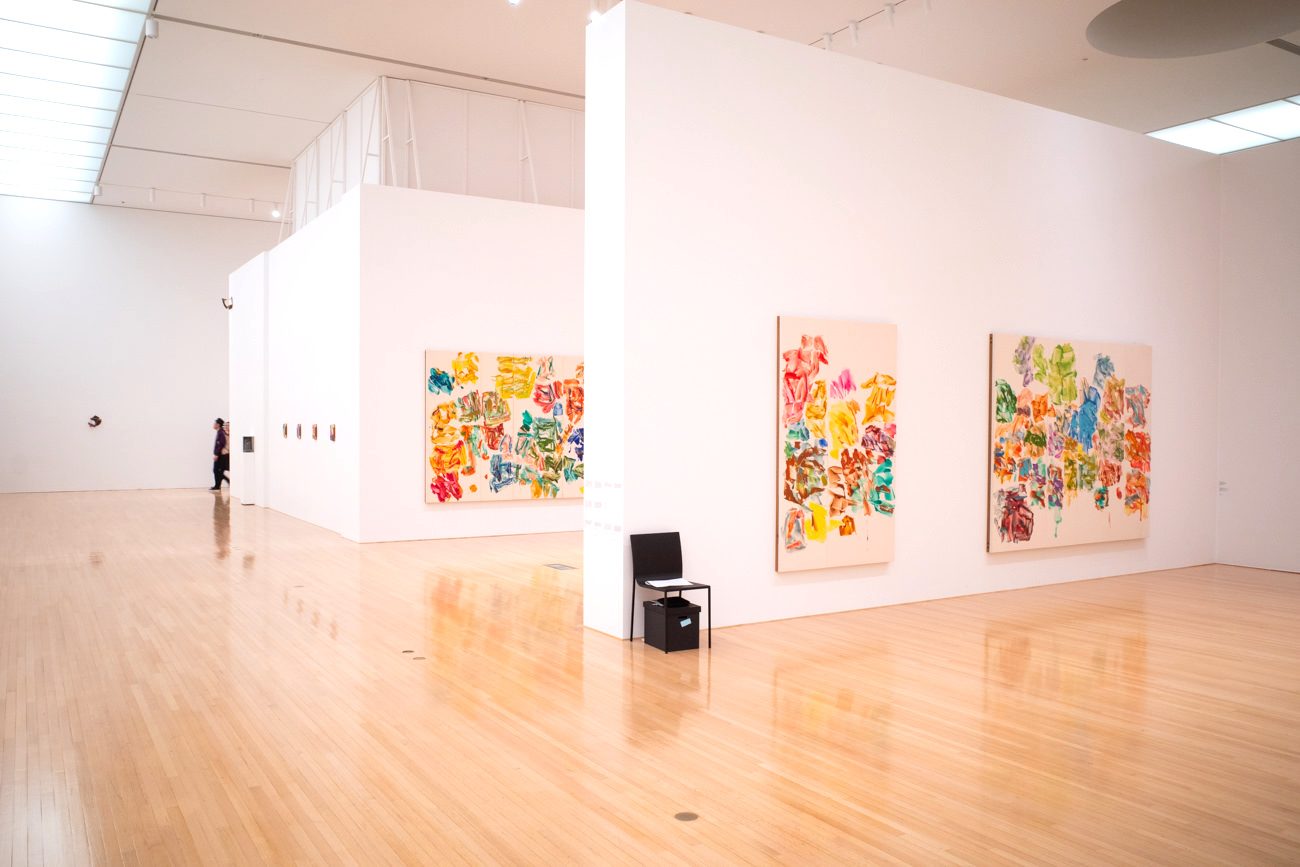
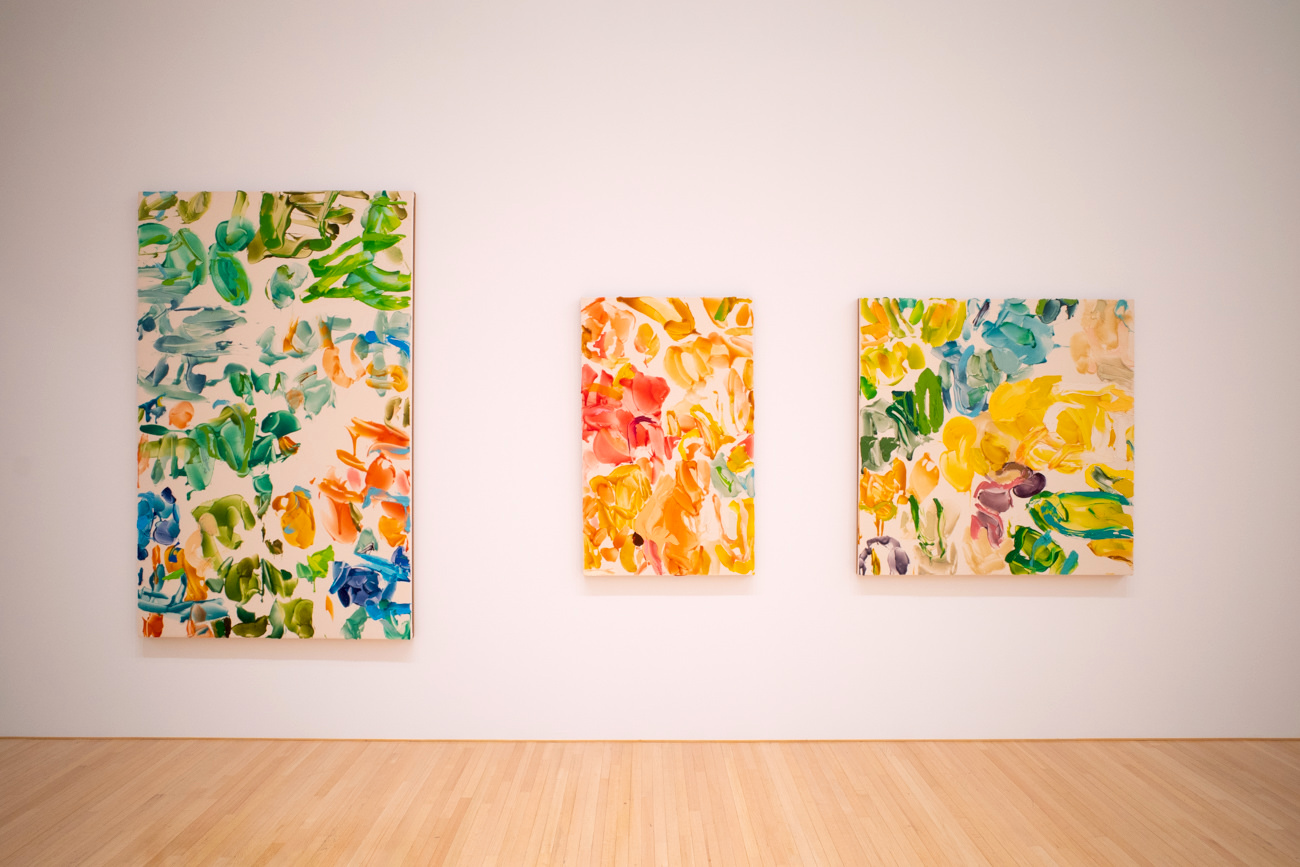
The first-floor galleries were organized around paintings and reliefs.
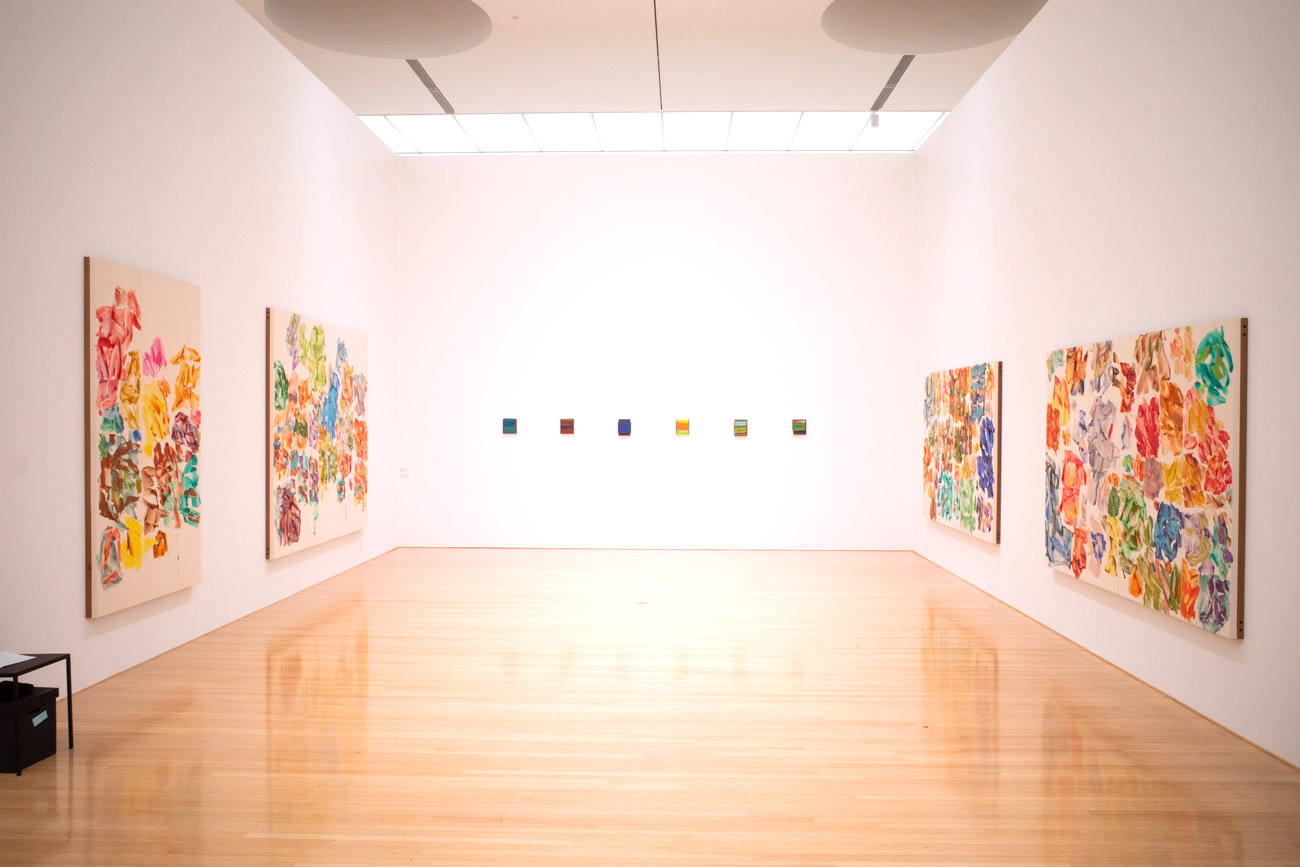
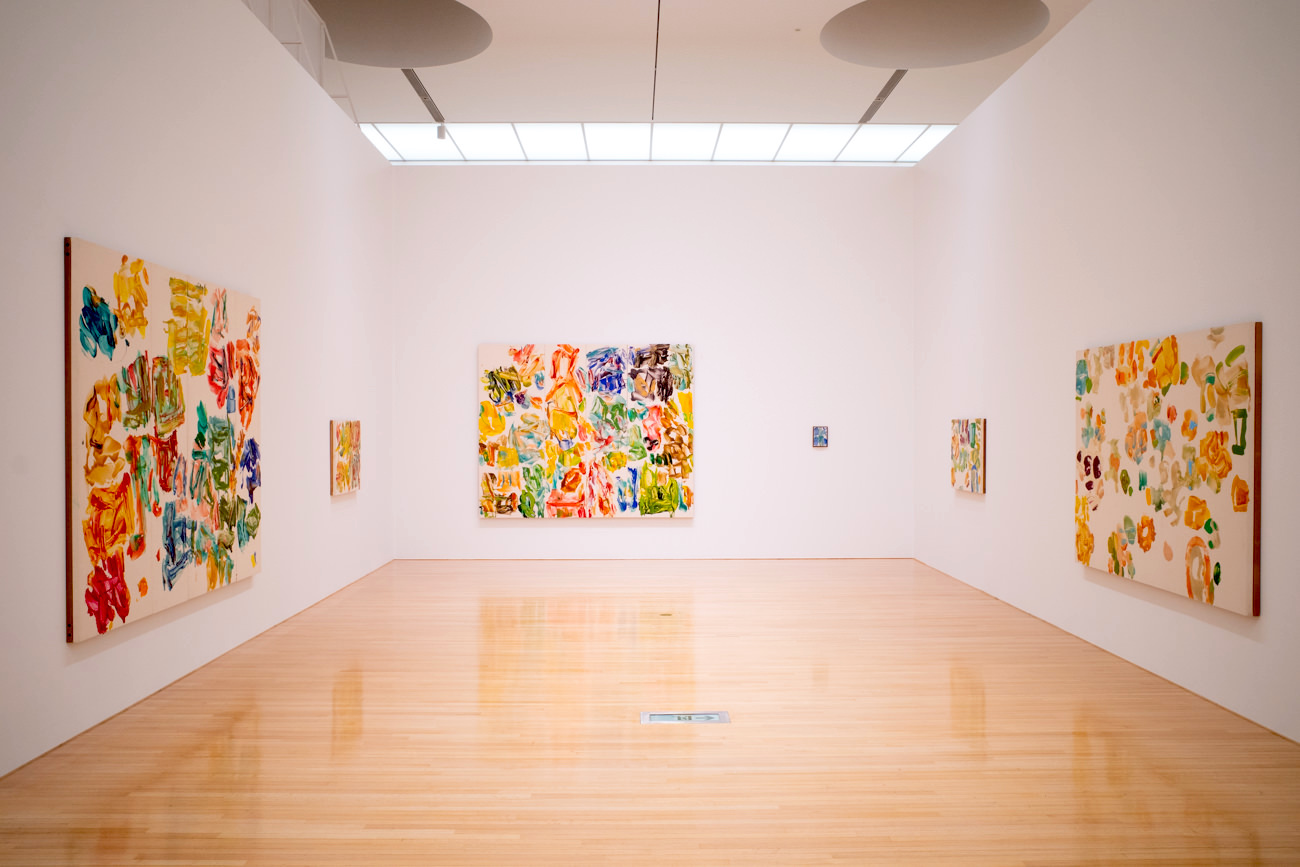
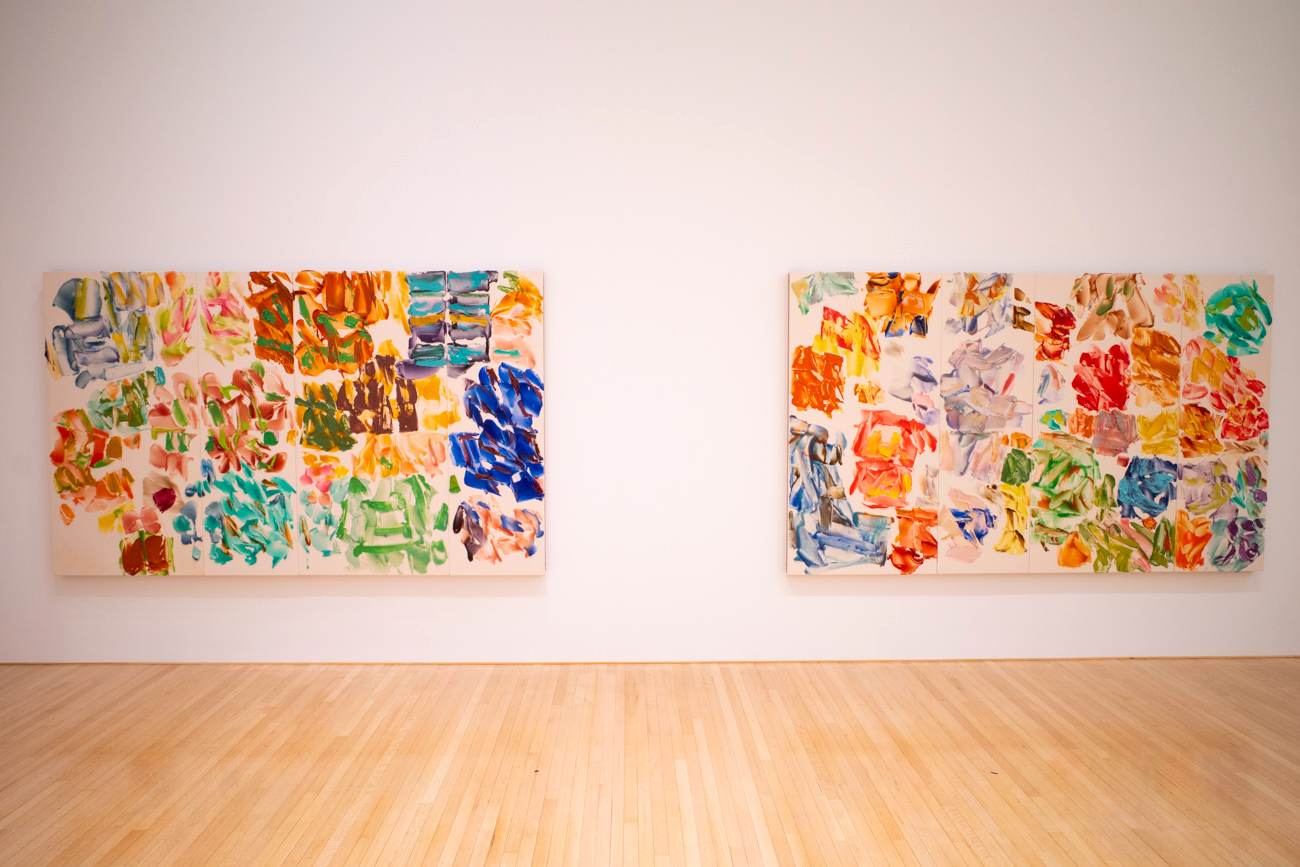
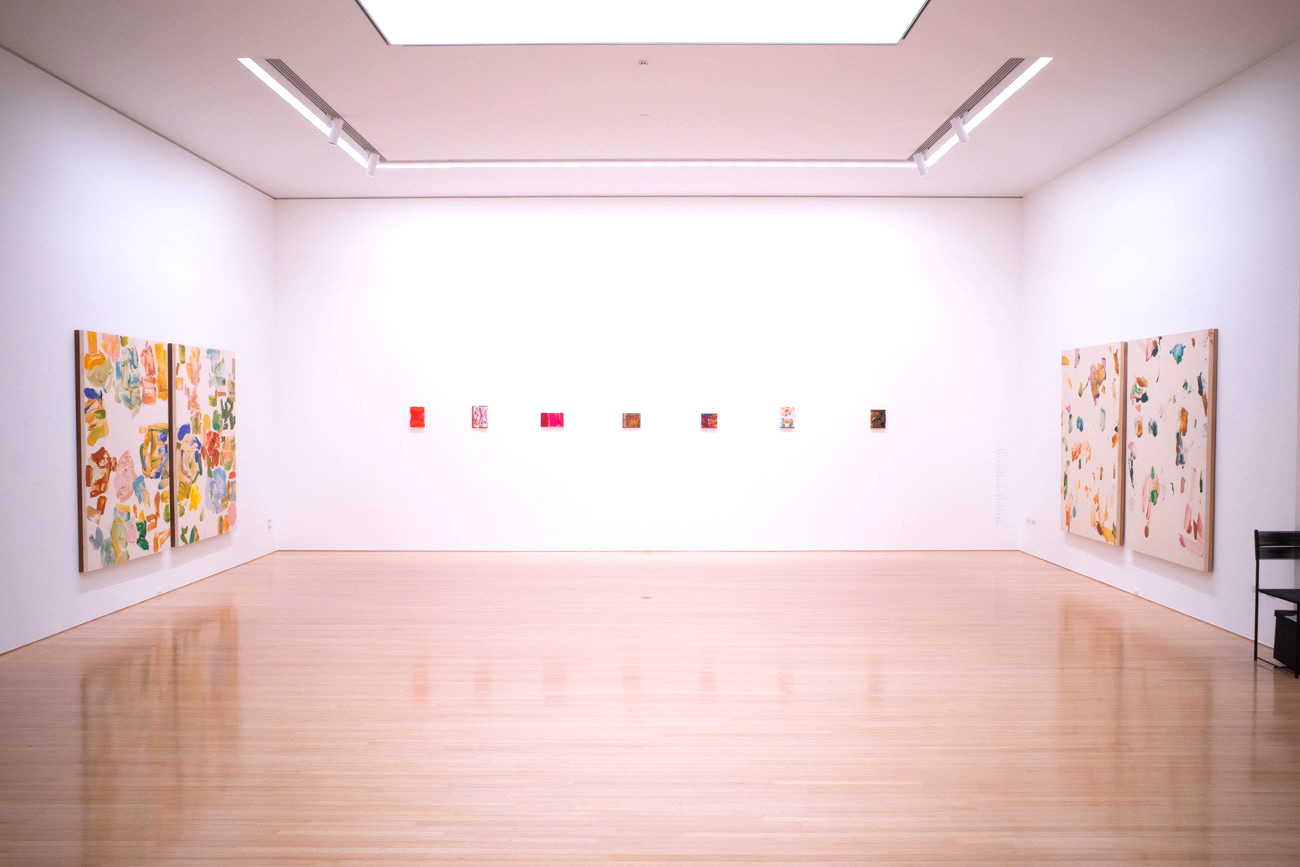
In the museum’s large exhibition rooms, works of various sizes were arranged with pleasing rhythm.
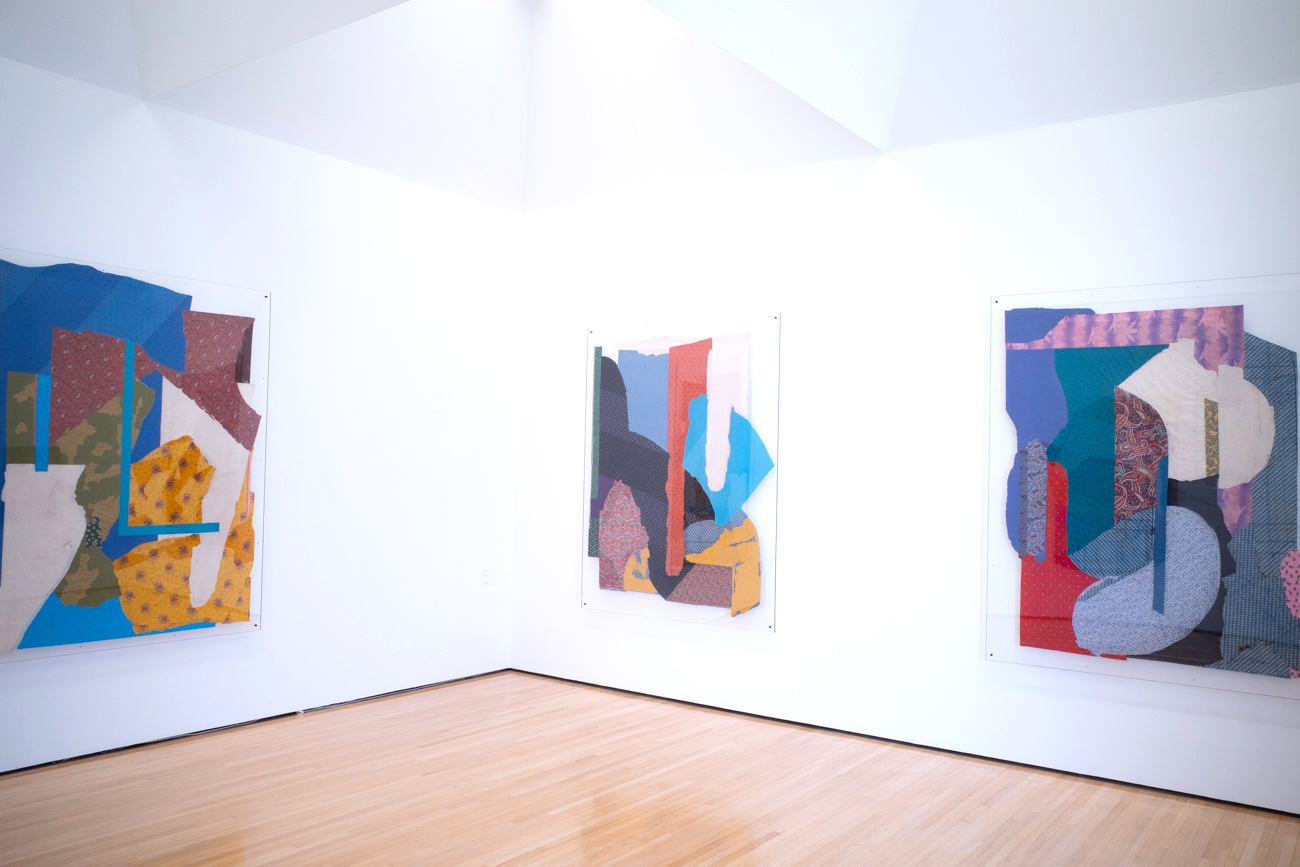
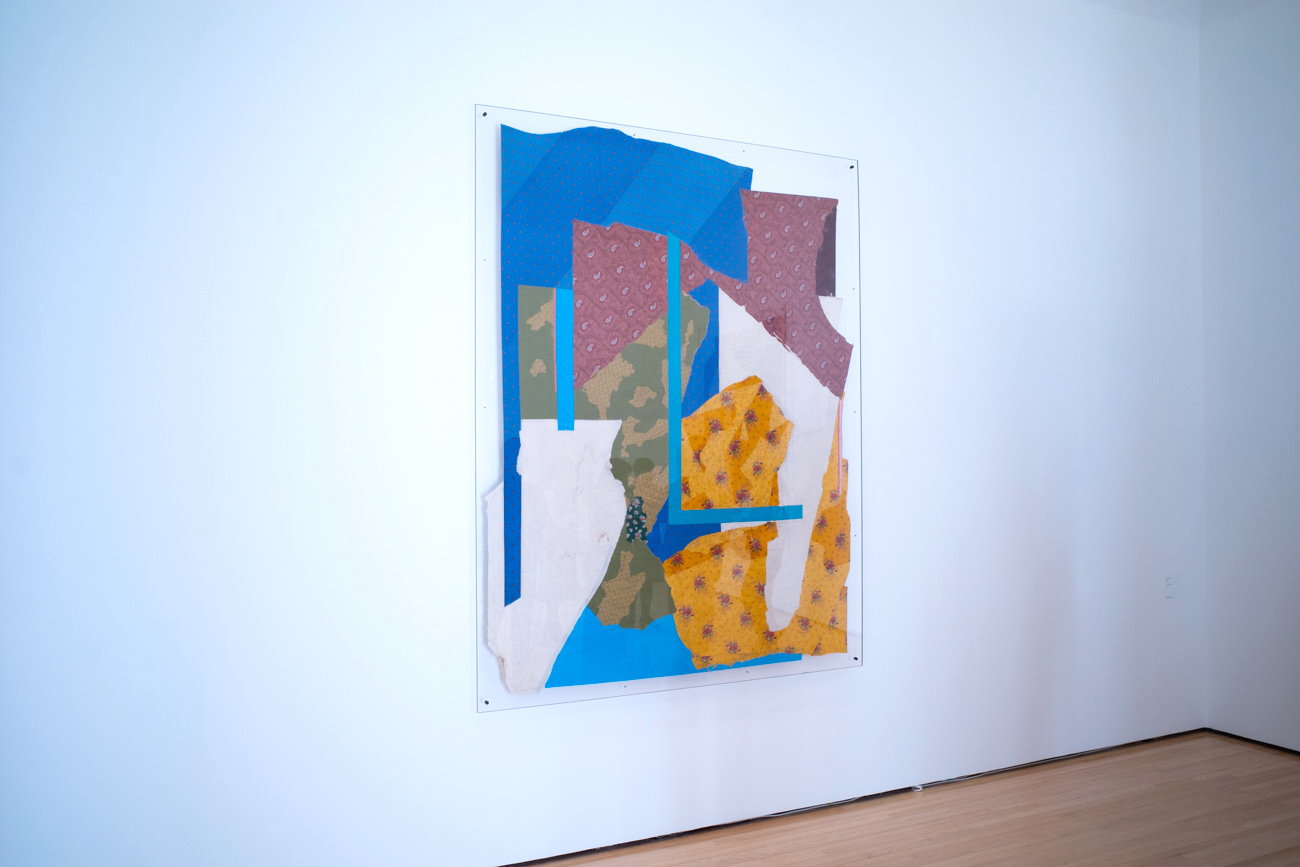
Installation viewLarge and small works were shown side by side.Left front: “You will dry up this water, or drink it down. But water shall never perish. Water has only changed its form and moved. Water does not dry up; water quenches thirst. In the same way, though I cut off one finger, or a hand or foot, I cannot cut off myself. What water is capable of is not its shape-shifting whim; nor is that my (red water, blood). Within the water, unrelated to the shape of the water, dwells the spirit of water (do not mistake it for waves the water throws off. Waves, like music, spread here and there and grow and diminish, but the spirit of water neither increases nor decreases nor is divided). I am in the water, swimming, dozing, and then awaking.” 2016 210×260×7cmThe country of the sky, too (like the earth), is full of trees and flowers, animals and birds (of course ducks and rabbits too), and everything is more beautiful than on earth! They surely exist! Look at the blueness of the sky. Anything far away looks blue.Installation viewLeft: “Can the dead surely arrive (is the light of heaven a signal marking the exit)? Even a soul that has no flesh and needs no wings cannot keep flying this high. Once, by a river, there stood a very, very tall tree (which we were to climb like monkeys and hop from branch to branch like birds), and we were taught we could go to the future homeland (a manual of study!). The tree rotted, and when I knelt in the tall grass — ‘this is a violet.’ I know its name.” 2008 Center: “For light, air is not transparent (an impediment to intrusion). Therefore stars in the heavens! That is, windows open, and in the evening a dazzling light (not words) reaches the ground.” 2008 Right: “The country of the sky, too (like the earth), is full of trees and flowers, animals and birds (of course ducks and rabbits too), and everything is more beautiful than on earth! They surely exist! Look at the blueness of the sky. Anything far away looks blue.” 2008
The work list handed out at the entrance divides the show into roughly 130 works, but because many are grouped works, the actual number of pieces feels closer to 300–400.
Being grouped, the works generate multiple relationships in the spaces between painting and painting, form and form — and that multiplicity opens up a richly varied viewing experience.
Right wall: works from the relief series “Okachimachi”
Reliefs
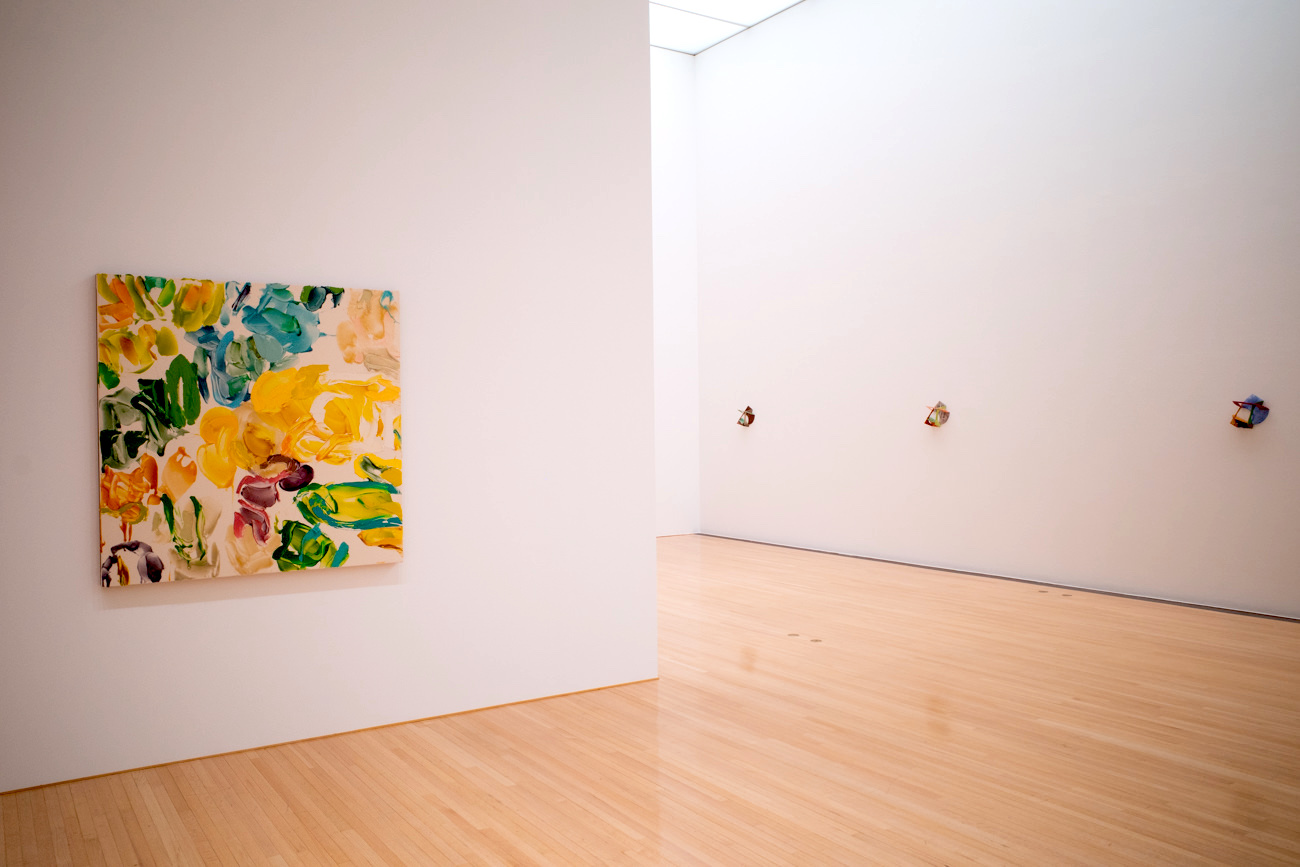
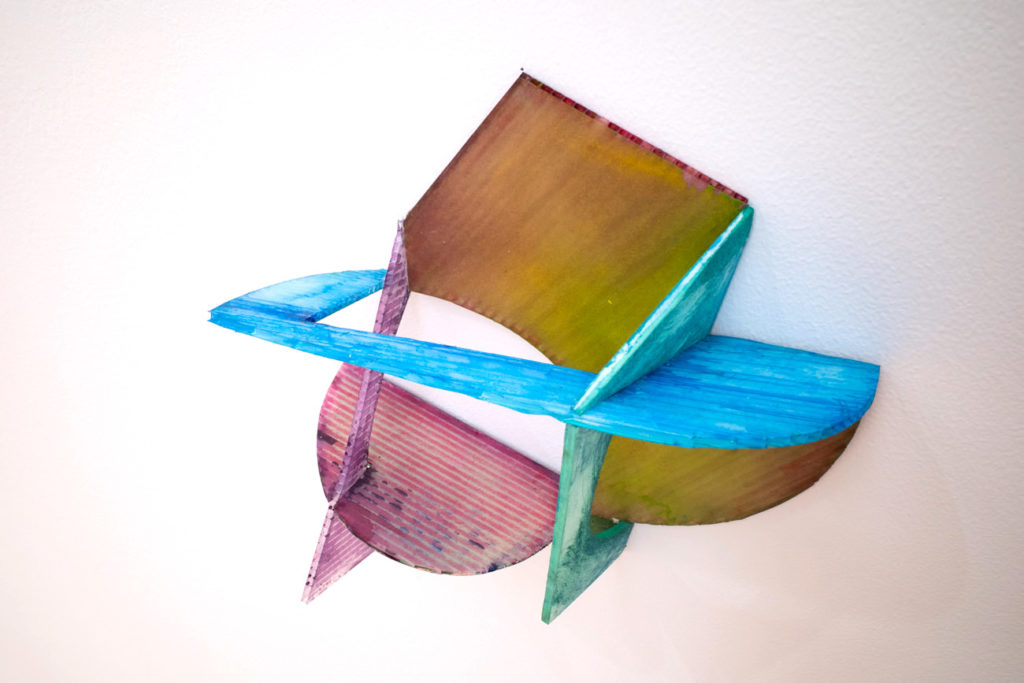
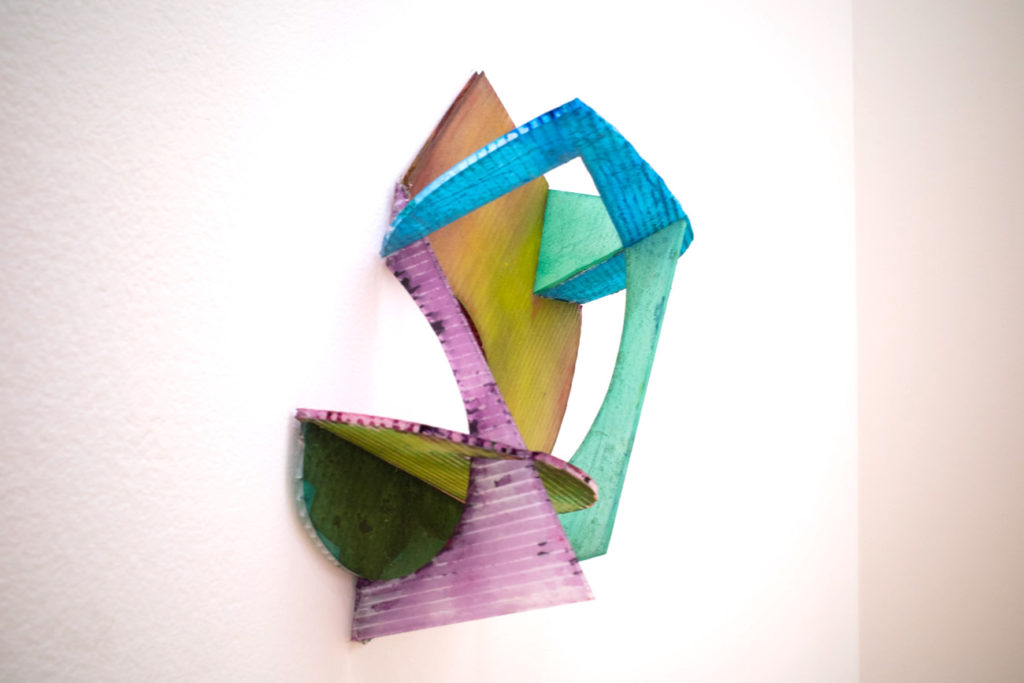
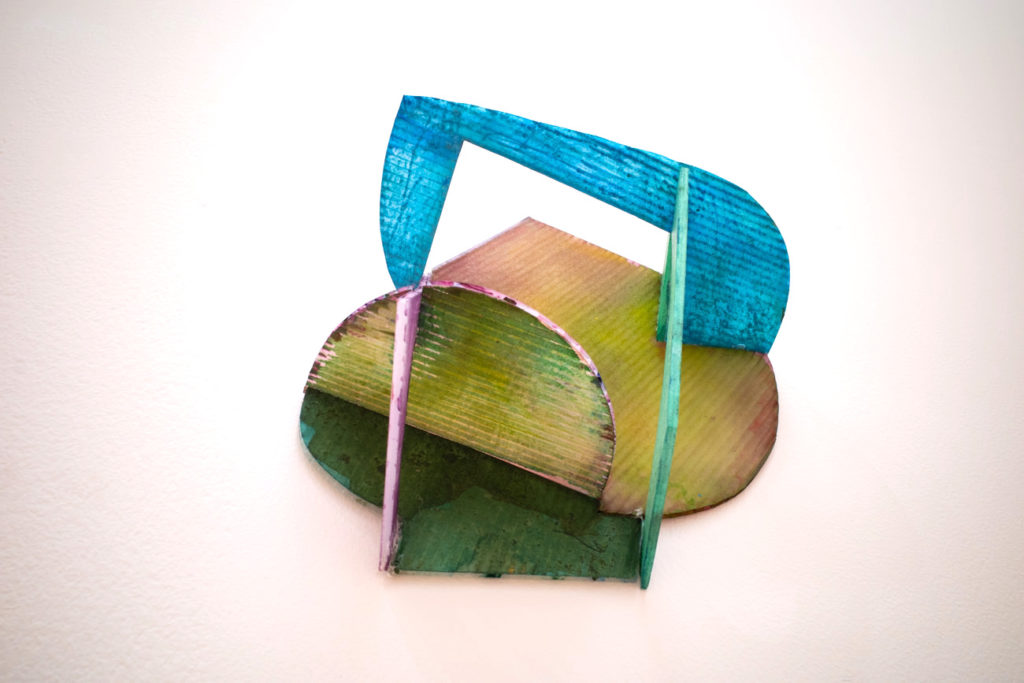
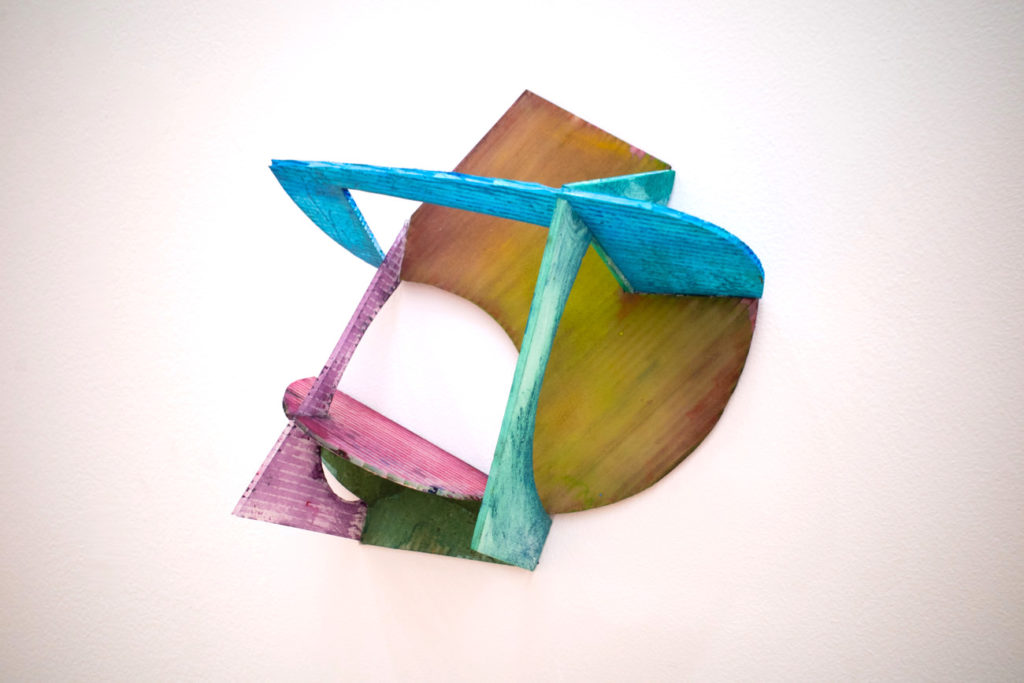
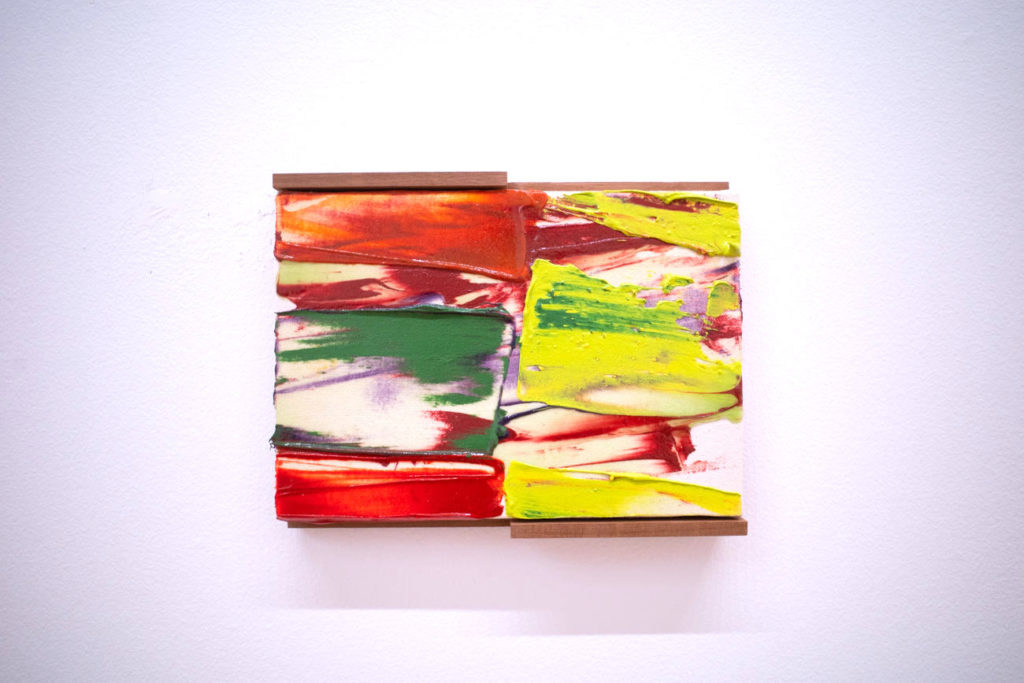
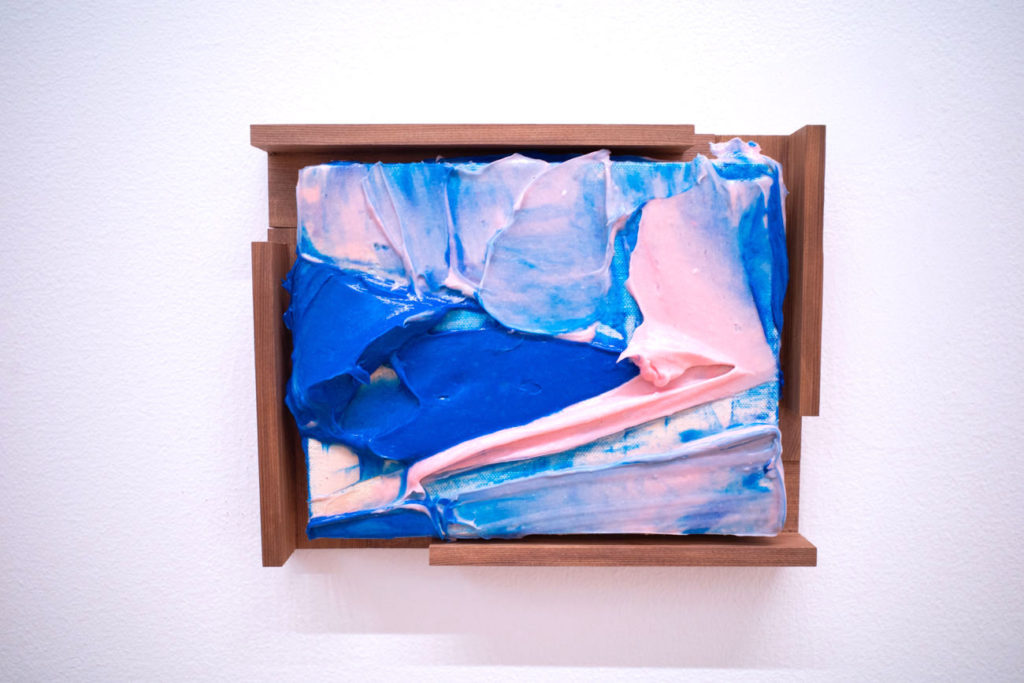
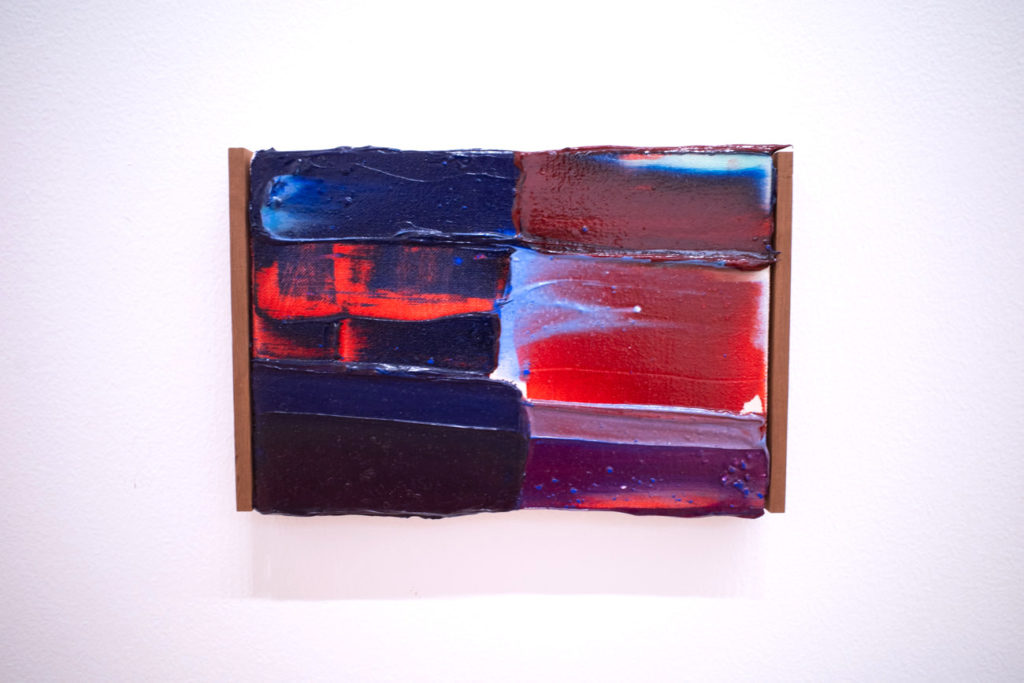
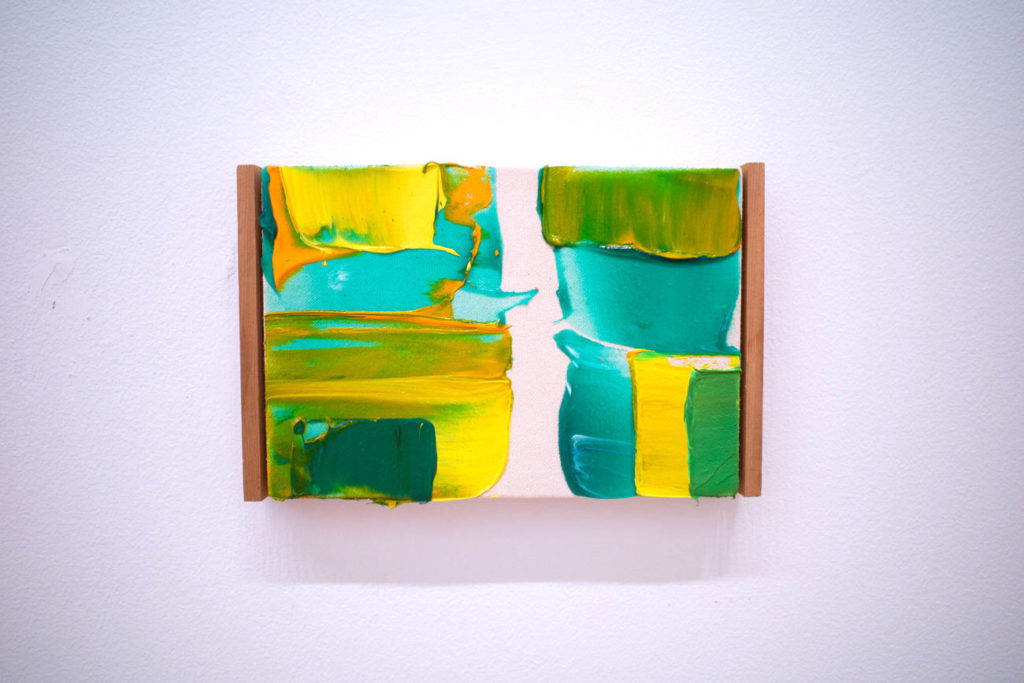
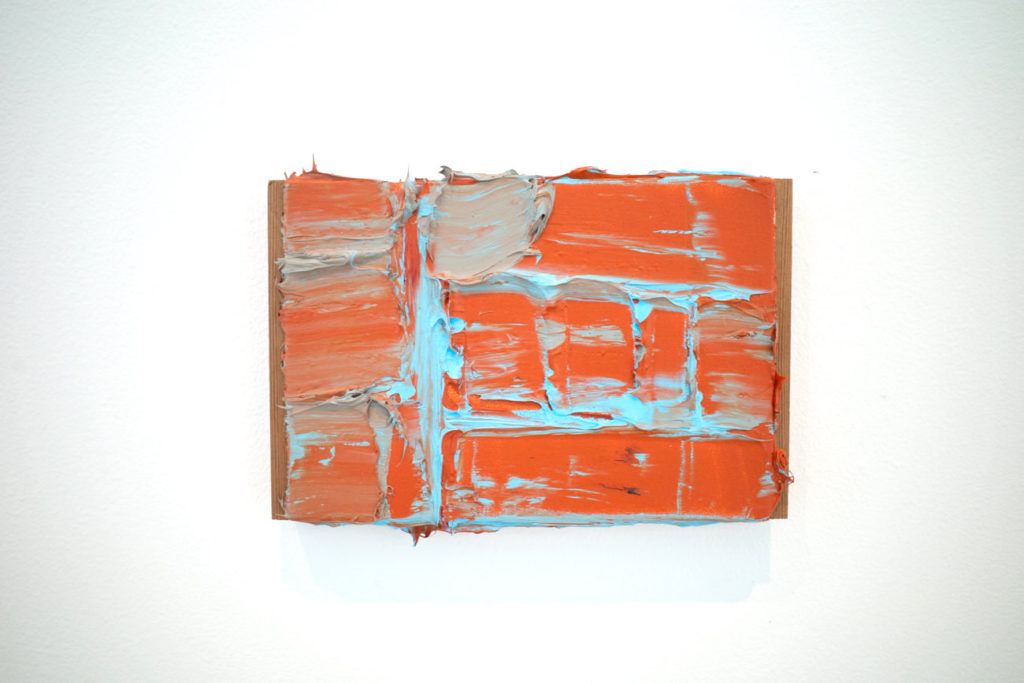
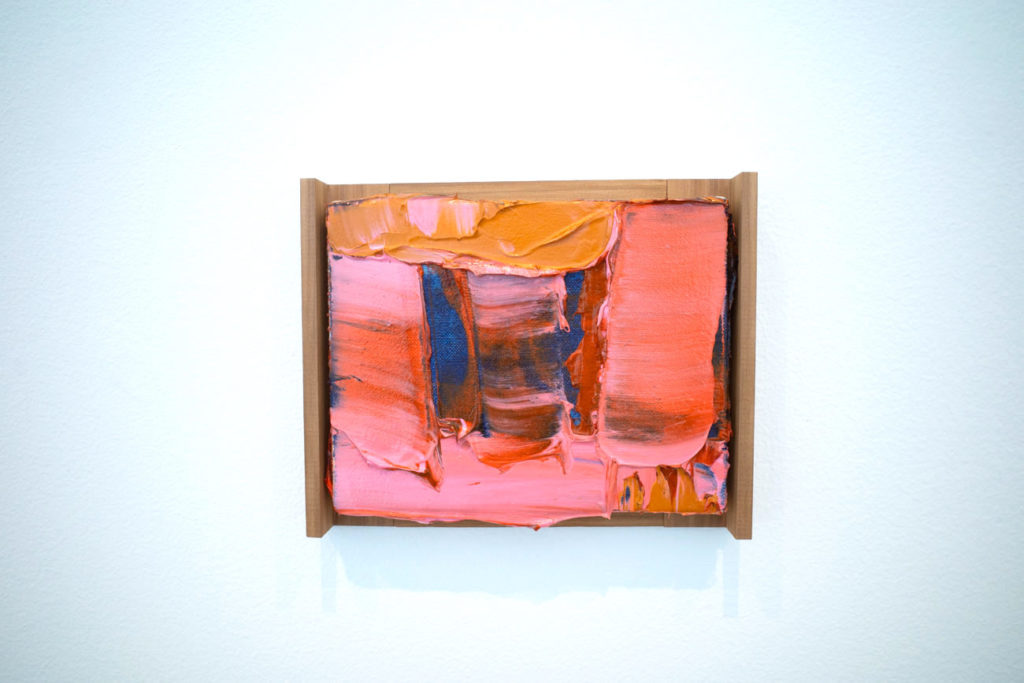
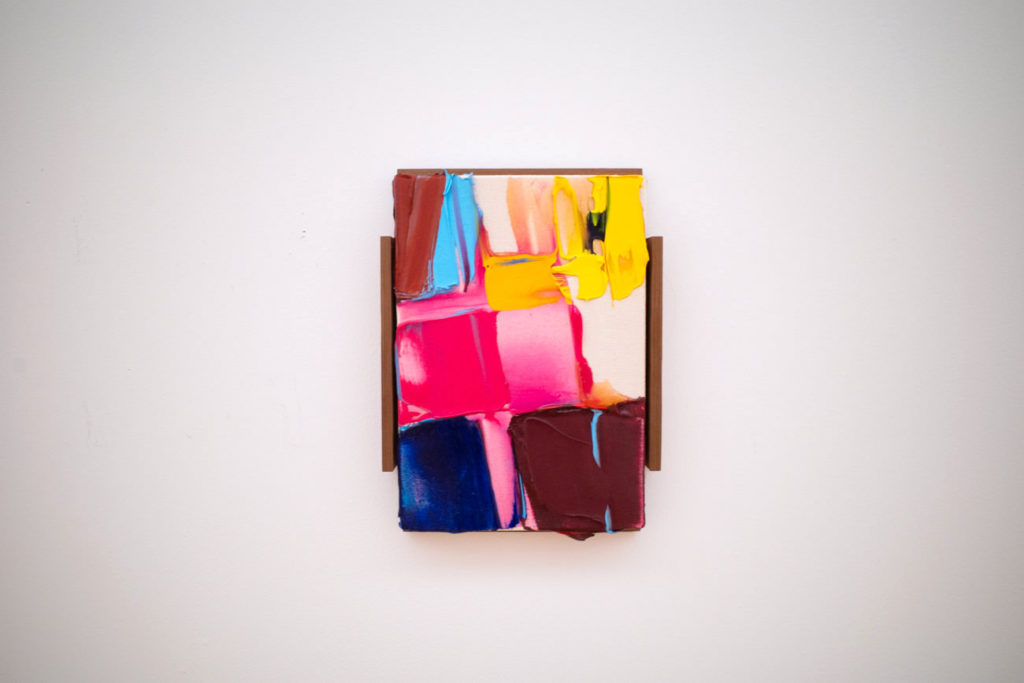
The relief works — the “Okachimachi” series shown in the photos below — are one of Kenjiro Okazaki’s signature series, and were also chosen for the flyer of the show.
As the photos below show, even the same work gives quite different impressions depending on the angle from which it is viewed.
Zero Thumbnail series
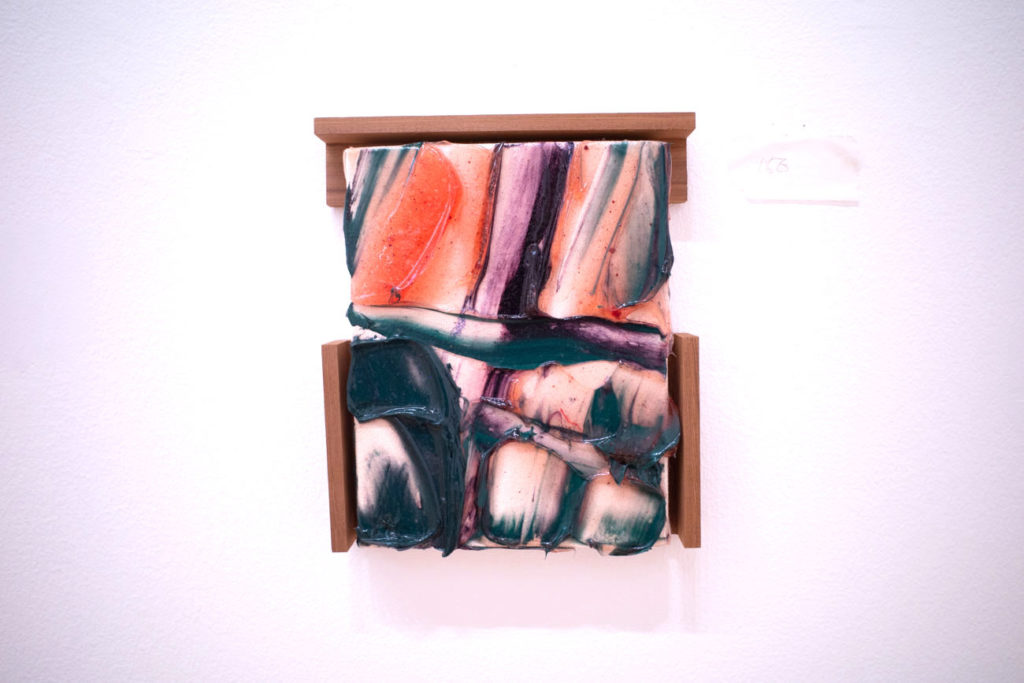
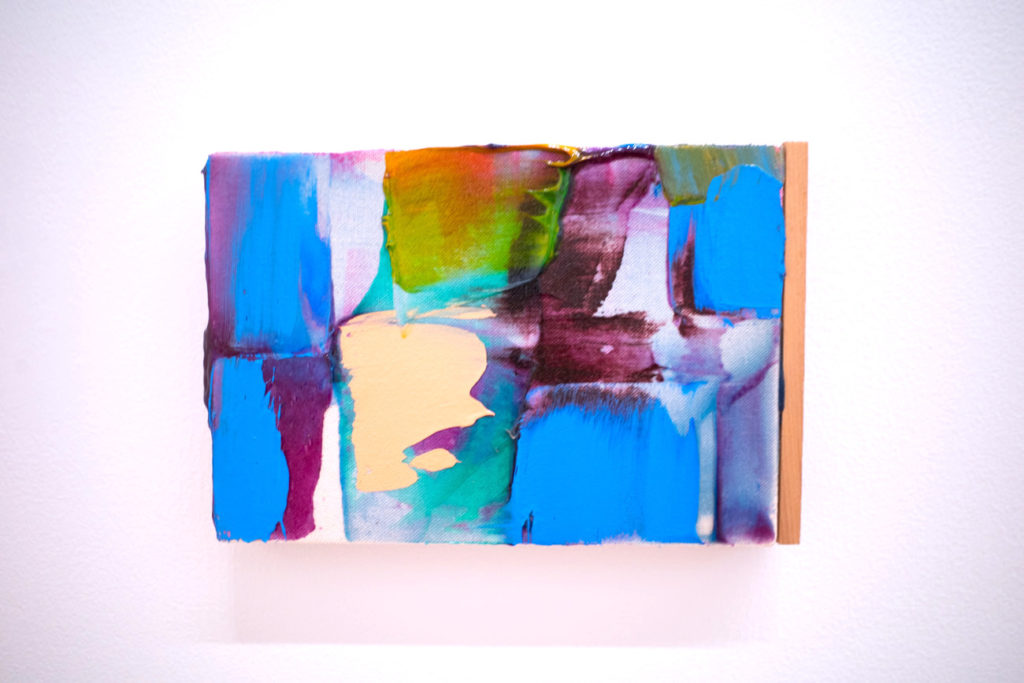
Another series, the Zero Thumbnail series, was also presented in large numbers.
Among Okazaki’s works, this is the series that fascinates me most. Many pieces from it were on view.
Installation view
For reference: his 2019 solo show at TAKURO SOMEYA CONTEMPORARY ART (Tennozu, Tokyo) was also built around the Zero Thumbnail series. https://burart.jp/2019/08/kenjiro-okazaki-tsca/
Sculpture
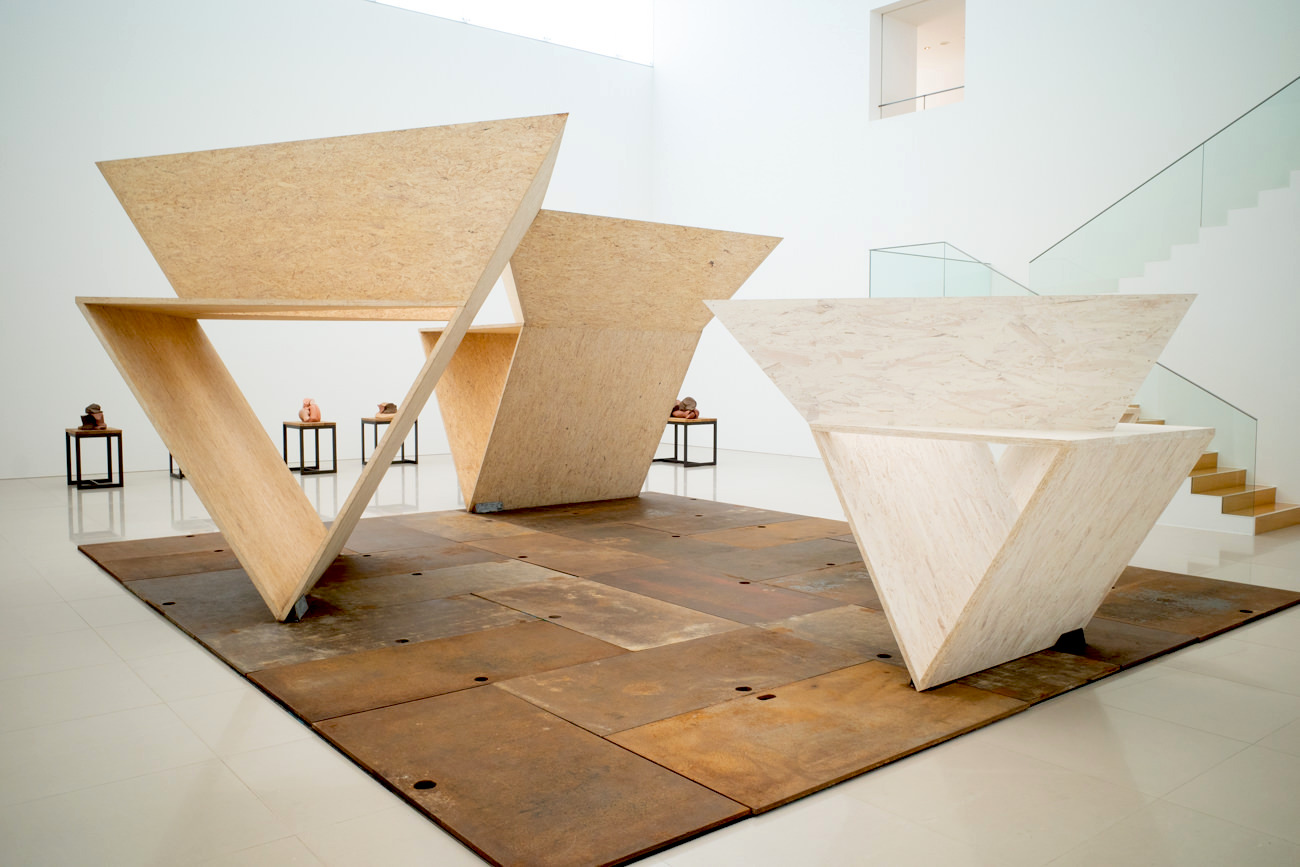
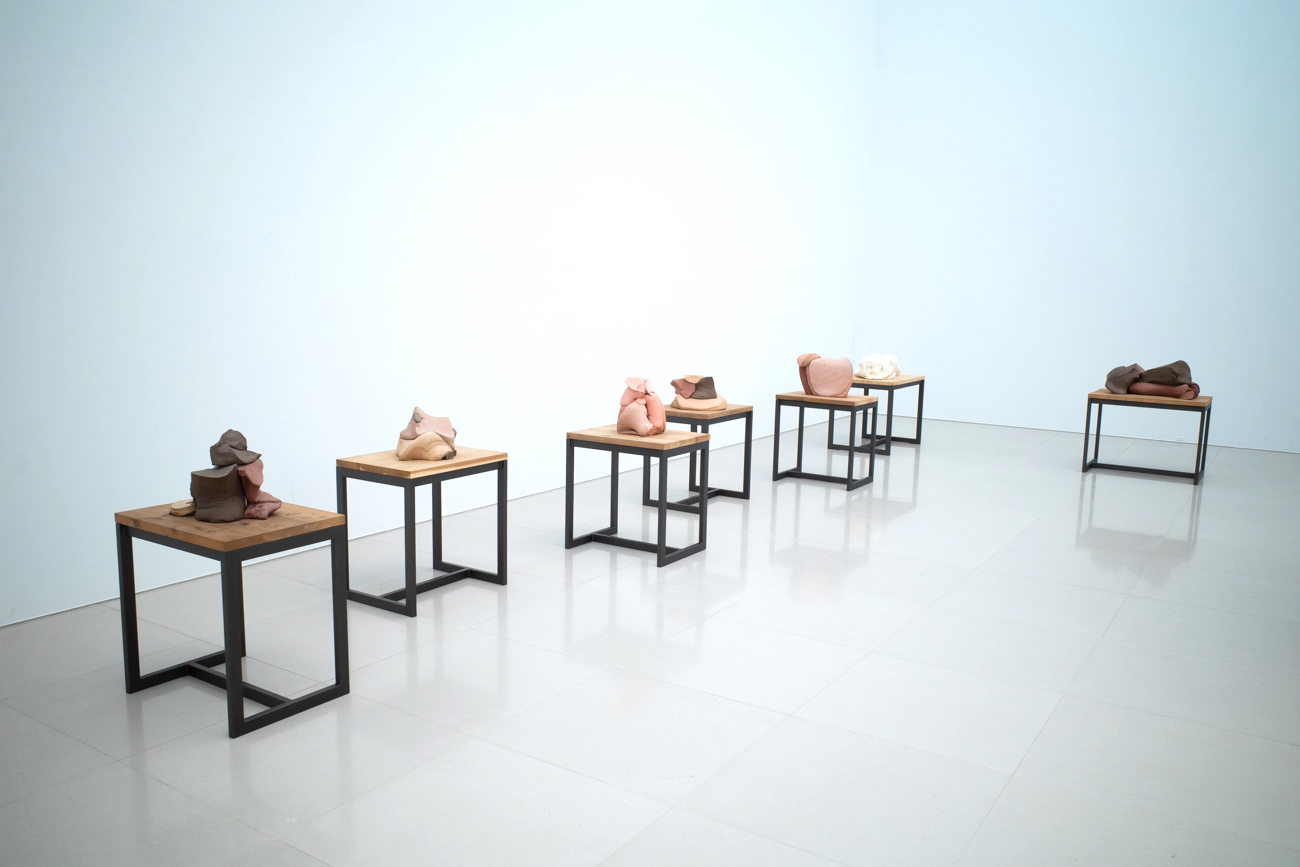
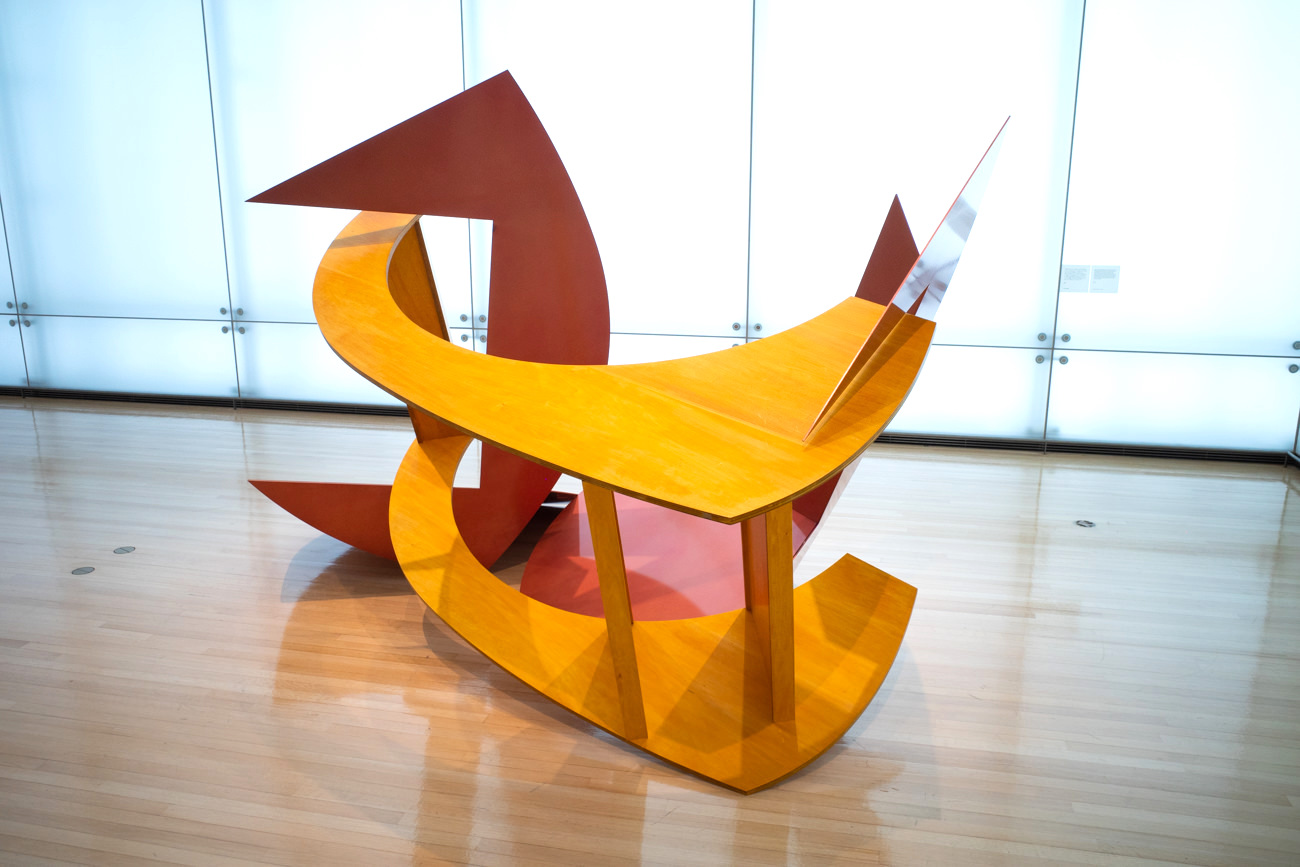
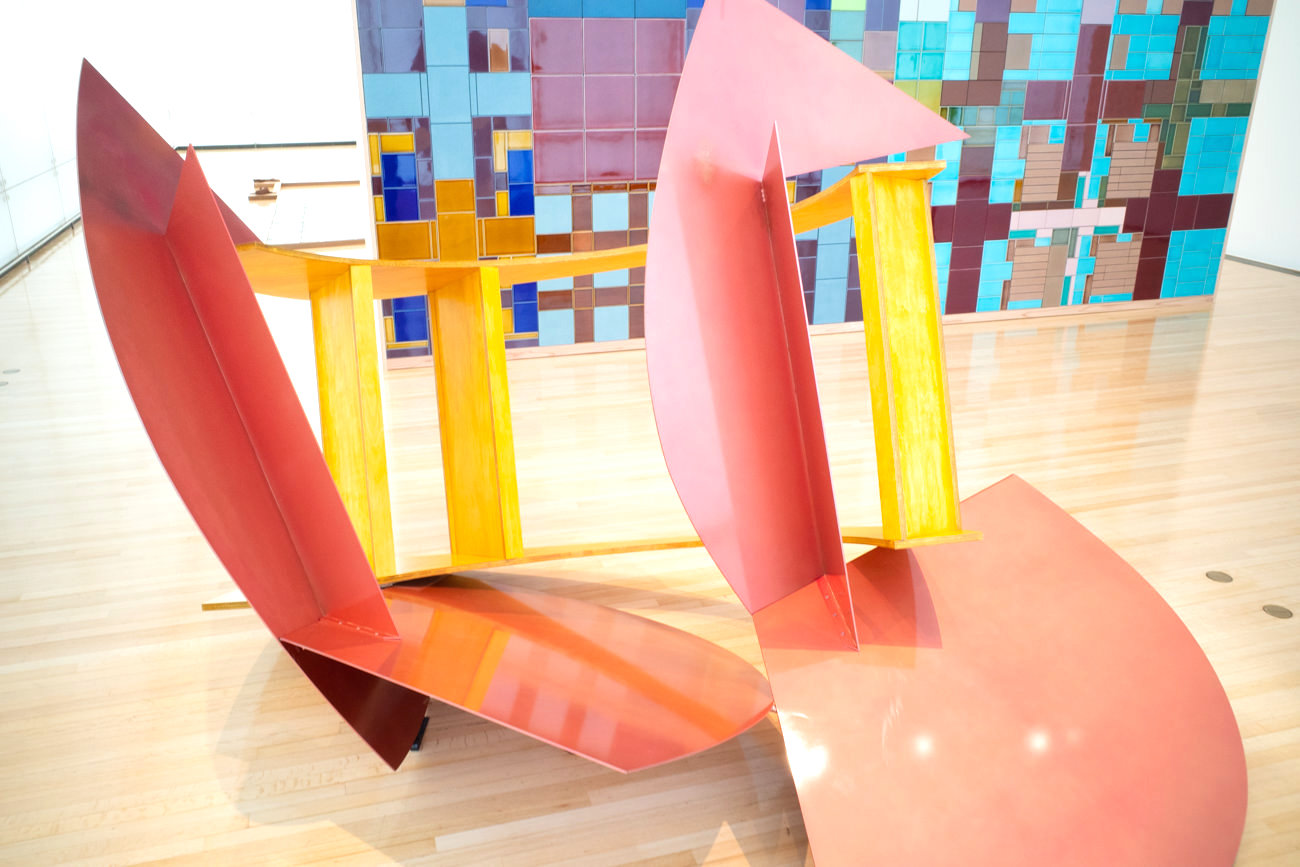
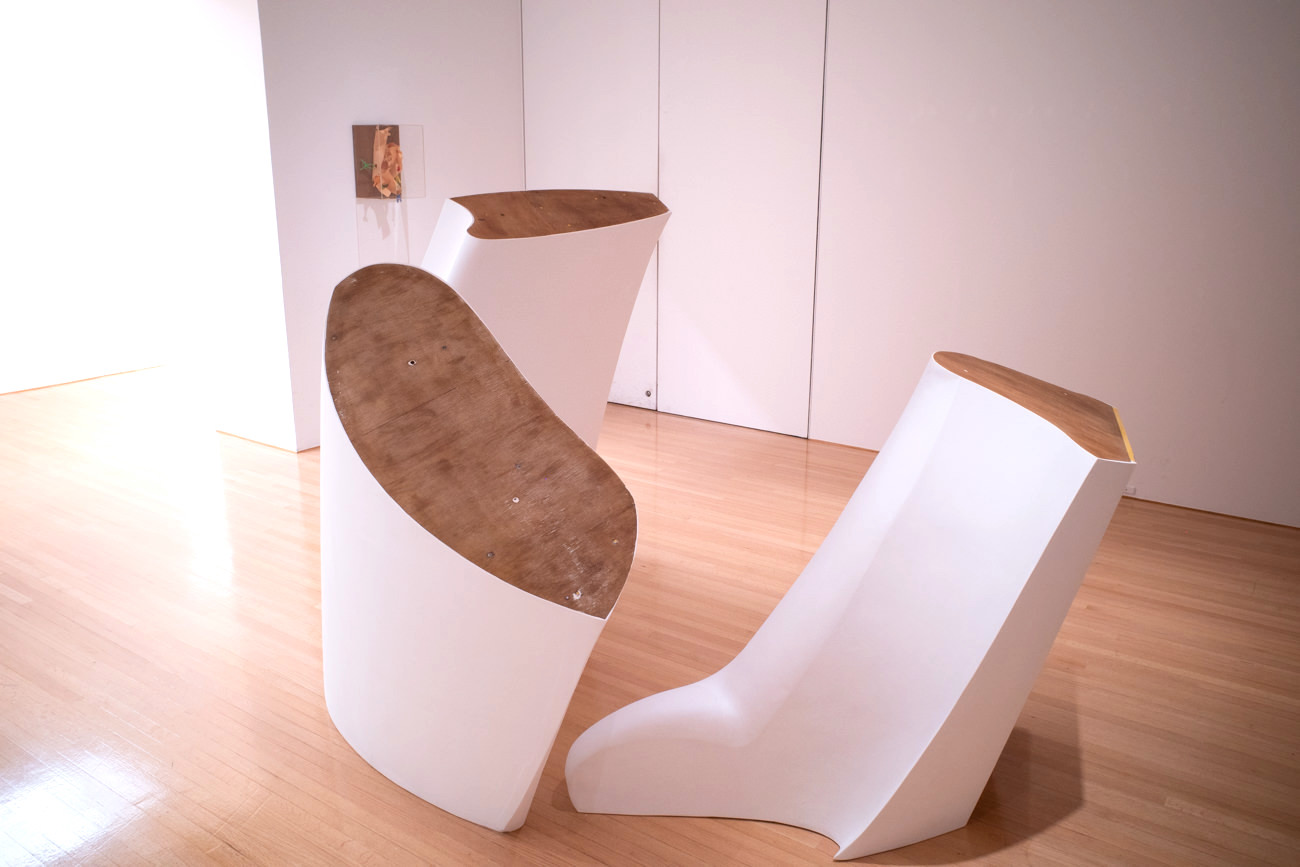
On the second floor, the sculpture shown at the 8th International Architecture Exhibition of the Venice Biennale in 2002 stood alongside new works.
Left: Kenjiro Okazaki, “1853” 2002 Right: Kenjiro Okazaki, “1853” 2019Installation view“‘Do not lay a hand on it. That is the only word we have.’ It came closer and closer. But it did not arrive. There was no sound, and it was still light. Do not call so many times. I am about to go on my own. Now I understand why he had said such a thing. And then, that afternoon, right beside the housing district where we live, it fell. Yes, I know only one person. The transfer of thermal energy. This alone we can only leave to nature’s course. No — that is not nature’s doing after all, it is the doing of a chemist. ‘Well-behaved, past all human intervention. So please do not put me in the shade.’ Now you see why he was saying such a thing?” 1990–1991│steel│190×180×320cm Nakanoshima Museum of Art, Osaka
Tile works
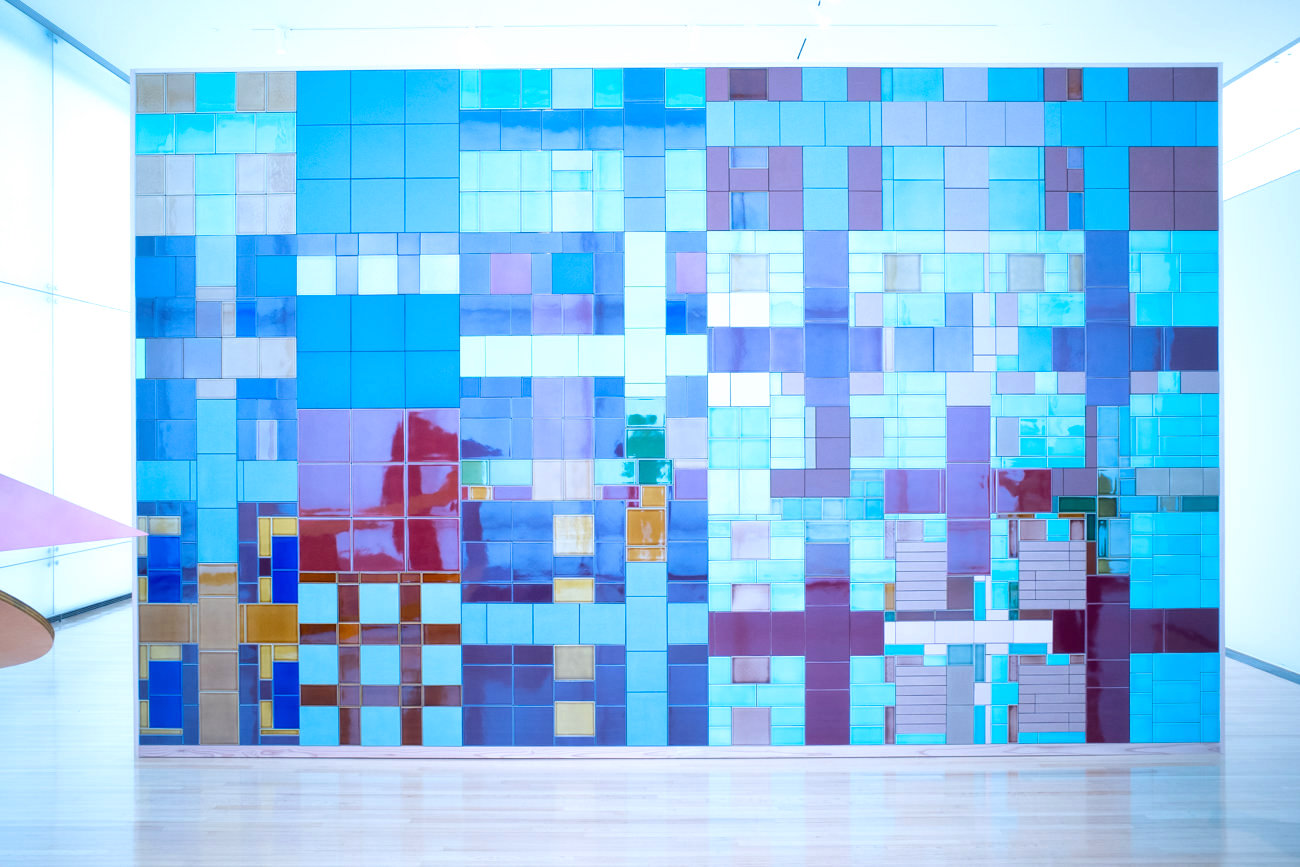
At “Hareza Ikebukuro,” the mixed-use complex set to grand-open in July 2020, murals using tiles and glass are being deployed; new tile works were shown in this exhibition as well.
Collage-like works made by cutting fabric with dressmaking patterns and sewing the pieces together.
These are older works, but they are still very much Okazaki — always incorporating varied materials into his practice.
Installation viewKenjiro Okazaki “Still Early But Becoming Late” 1986 224×176cm
The final room
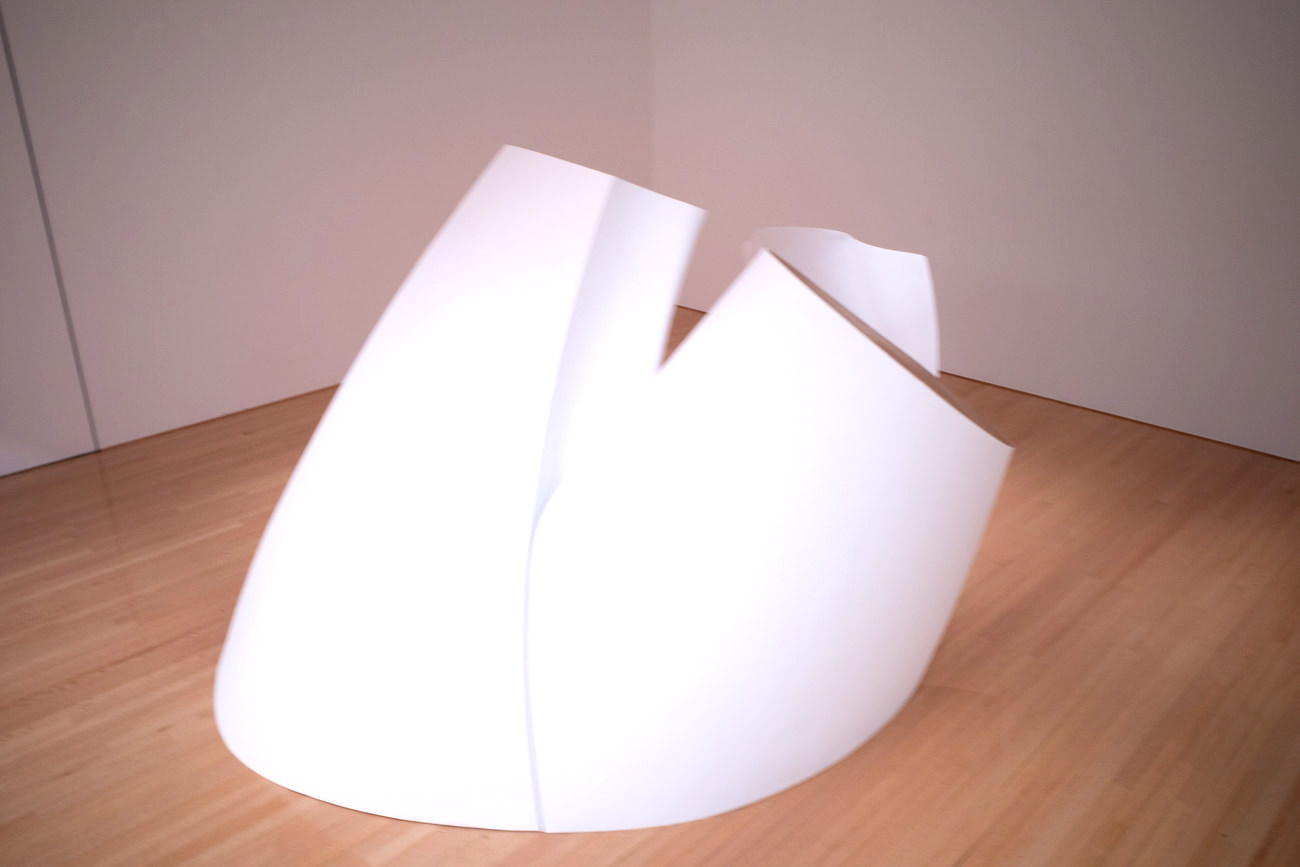
The sculpture placed alone in the final room on the third floor felt like a work that symbolically summed up the whole exhibition.
“Without a mistake, without groping, I stretch my hand straight out over the table. Then, without touching the wall again, I hop three times and find myself outside the room — but I had forgotten to close the door.” 1995 plaster│160×320×140cmA sculpture whose expression changes dramatically with the viewing angle
In closing
Seeing Kenjiro Okazaki’s many works in the large exhibition spaces of Toyota Municipal Museum of Art, I could view them while carrying my gaze across the relationships with adjacent works and spaces.
Setting aside — at least once — the habit of taking an artwork as a single fixed image, and instead approaching the artist’s message with a rotating mind: this way of viewing may be one of the joys granted to us as viewers. It was a precious viewing experience for savoring the greatness of art.
Passing through this layered, stratified way of engaging with a single work, I also became aware that we ourselves, each individual, influence and resonate with one another as layers within society.
Among the many exhibitions I saw in 2019, this stood out as one of the most satisfying.
※本文包含展览内容的剧透、观展方法及主观描述。
Kenjiro Okazaki — Retrospective / Strata
我前往观赏了 Kenjiro Okazaki(冈崎乾二郎)的个展”Retrospective / Strata”。展场为 Toyota Municipal Museum of Art(丰田市美术馆)。
Kenjiro Okazaki(오카자키 겐지로)의 개인전 “Retrospective / Strata”를 방문했습니다. 장소는 Toyota Municipal Museum of Art입니다.
미술관에서 바라본 주변 풍경Toyota Municipal Museum of Art 입구
일본어 원제 “視覚のカイソウ”는 삼중의 언어유희입니다. 이 전시는 Kenjiro Okazaki의 신구 작품을 아우르는 회상(retrospective) 전이자, 작품끼리 관계를 맺으며 관람자에게 다가가는 계층(strata)을 지닌 전시이며, 평론가·건축가·작가 등 폭넓은 분야에서 쾌주(快走)를 이어 온 Okazaki의 대형 개인전이기도 합니다.
우리는 미술 작품을 볼 때 일반적으로 그 작품이 지니는 단일한 이미지에 얽매이는 경우가 많습니다. “Retrospective / Strata”라는 제목처럼, 본 전시는 관람자가 개별 작품뿐만 아니라 작품 사이의 관계나 의미에도 생각을 뻗어가고, 지층처럼 관련지어진 전시 공간에 대한 인지를 담고 있습니다. 삼차원적으로 시점과 사고를 움직여 작품의 표면만이 아니라 바깥과 안쪽에도 사고를 미치고, 수수께끼를 파헤쳐 풀어가는 즐거움이 있었습니다.
“Gallery 8” 입구에서 오른쪽으로 펼쳐지는 전시 공간
접수처를 지나 첫 번째 전시실 “8”에서는, 초반에 20점의 드로잉 작품이 놓여 있습니다.
아래 사진처럼 6가지 색상의 드로잉이 랜덤한 듯 정연하게 늘어서 있습니다. 색상별로 유사한 모티프가 같은 필치로 그려져 있어, 마치 복사된 것처럼 보입니다. 실은 이 작품 모두가 드로잉 로봇과의 협업으로 이루어진 작품입니다.
드로잉 로봇과의 협업으로 완성된 드로잉
이 작품은 Okazaki가 그린 드로잉을 컴퓨터에 기록한 뒤, 그리는 주체가 아니라 지지체(캔버스)가 움직이도록 프로그래밍된 방식으로 제작되었습니다.
단순히 드로잉 로봇이 그린다는 것이 아니라, 그 움직임을 지지체의 움직임으로 옮겨 그린다는 점이 핵심입니다. 과거의 Okazaki를 재연하는 로봇과, 현재의 Okazaki가 함께 완성한 작품인 셈입니다.
이 전시는 관람 중에 순간적으로 받아들이는 위화감이나 미세한 알아차림에 대해, 한 걸음 더 파고들어 어떻게 해석해 나갈까 하는, Okazaki가 서두에 심어 둔 장치처럼 느껴집니다. 답을 알지 못한 채로도, 이 장치는 이후 이어지는 전시 작품을 읽어내는 실마리로 기능하는 존재일지도 모릅니다.
드로잉 코너를 지나 왼쪽 코너는 “Brancacci Chapel Fresco Analysis”입니다.
Okazaki의 저서 “Renaissance: Conditions of Experience”에서 밝혀진 연구를 시각적으로 체험할 수 있는 귀중한 기회입니다.
Brancacci Chapel Fresco Analysis
이곳에서는 PC 시연과 AR 기술을 활용한 체험을 통해, Brancacci Chapel 벽화에 감춰진 비밀을 풀어냅니다.
CG 설명과 AR 기술을 활용한 검증 기획
벽화 분석의 수수께끼 풀이 과정에서, 전시 작품을 읽어내는 직접적인 힌트가 제시됩니다. 색, 재료, 형태가 복층적으로 교차하는 Okazaki 작품의 공통된 특징과도 겹칩니다. 이 벽화 분석실을 지나 드디어 Okazaki의 본격적인 전시 존으로 들어섭니다.
전시 전경
1층 전시실은 회화와 부조 중심으로 구성되어 있었습니다.
큰 미술관 전시실에 크고 작은 작품이 편안한 리듬으로 나란히 놓여 있었습니다.
전시 전경크고 작은 작품이 뒤섞여 전시되어 있었습니다.정면 왼쪽: 《당신은 이 물을 말리거나, 마셔 없앨 것이다. 그러나 결코 물은 사라지지 않는다. 물은 형태를 바꾸어 이동했을 뿐이다. 물은 마르지 않고, 물이 갈증을 달래는 것이다. 마찬가지로, 내 손가락 하나 아니 손과 발을 잘라내려 해도, 나는 잘라낼 수 없다. 형태를 바꾸는 제멋대로가 물이 아니듯, 나(의 붉은 물, 피)도 아니다. 물속에는 물의 형상과 무관하게 무언가로서 물의 정령이 깃들어 있다(물이 튕겨내는 파도로 성급히 오해하지 말 것. 파도는 음악처럼 여기저기 퍼지고 늘고 줄지만, 물의 정령은 늘거나 줄지 않고 나뉘지도 않는다). 나는 물속에 있고, 헤엄치고, 졸고, 그리고 깨어난다.》 2016년 210×260×7cm하늘의 나라도(지상과 마찬가지로) 나무와 꽃들로 가득하고, 동물도 새도(물론 오리도 토끼도) 있으며, 모두가 지상보다 아름답다! 그것들은 확실히 존재한다! 하늘의 푸르름을 보라. 멀리 존재하는 것은 무엇이든 파랗게 보이므로.전시 전경왼쪽: 《죽은 자는 반드시 도착할 수 있을까(하늘의 빛은 출구의 신호)? 육체도 없고 날개도 필요 없는 영혼이라도, 이렇게 위까지 계속 날아오를 수는 없어. 옛날 강가에 아주 아주 높은 나무가 있었고(그것을 원숭이처럼 기어오르고, 새처럼 가지 사이를 옮겨 다녀), 미래의 고향으로 갈 수 있다고 배웠어(학문의 안내!). 나무는 썩었고, 무릎을 풀숲에 대자 “이건 제비꽃”. 나는 그 이름을 알고 있어.》 2008년 가운데: 《빛에게 공기는 투명하지 않다(침입을 방해한다). 그래서 하늘에는 별! 즉, 창이 열리고 저녁에는 눈부신 빛(말이 아니라)이 지상에 도달한다.》 2008년 오른쪽: 《하늘의 나라도(지상과 마찬가지로) 나무와 꽃들로 가득하고, 동물도 새도(물론 오리도 토끼도) 있으며, 모두가 지상보다 아름답다! 그것들은 확실히 존재한다! 하늘의 푸르름을 보라. 멀리 존재하는 것은 무엇이든 파랗게 보이므로.》 2008년
입장 시 배포되는 작품 목록에는 약 130점의 작품이 실려 있지만, 조(組)작품이 많이 포함되어 있어 실제 작품 수는 300~400점 정도로 느껴집니다.
조작품이라는 형식 덕분에 그림과 그림 사이, 형태와 형태 사이에 여러 관계가 생겨나며, 그로 인해 다양한 관람 체험으로 이어지는 재미가 있습니다.
오른쪽 벽: 부조 시리즈 “Okachimachi” 작품
부조
부조 작품은, 아래 사진에 있는 “Okachimachi 시리즈”처럼 전시 전단에도 채택된 Kenjiro Okazaki의 대표작 중 하나입니다.
아래 실린 사진처럼, 같은 작품이라도 보는 각도에 따라 전혀 다른 인상을 받습니다.
Zero Thumbnail 시리즈
또 하나의 시리즈, Zero Thumbnail 시리즈도 다수 출품되어 있었습니다.
Okazaki 작품 가운데 필자가 가장 매료된 시리즈입니다. 본 전시에는 많은 수량이 준비되어 있었습니다.
전시 전경
아래는 참고 기사입니다만, 2019년 TAKURO SOMEYA CONTEMPORARY ART(도쿄·덴노즈)에서 열린 개인전은 Zero Thumbnail 시리즈를 중심으로 구성되었습니다. https://burart.jp/2019/08/kenjiro-okazaki-tsca/
조각
2층 층에는 2002년 베네치아 비엔날레 제8회 국제 건축전에 출품되었던 조각 작품이 신작과 함께 놓여 있었습니다.
왼쪽: Kenjiro Okazaki 《1853》 2002년 오른쪽: Kenjiro Okazaki 《1853》 2019년전시 전경《”손대지 마라. 라는 것이야말로, 우리에게 있어 유일한 말이다.” 슬금슬금 가까이 다가왔어. 하지만 오지 않았어. 소리도 나지 않았고, 아직 밝았어. 그렇게나 많이 부르지 마. 지금 스스로 가려 하고 있으니. 어째서 그가 그런 말을 했는지 알겠어. 그런데 그날 오후가 되어, 우리가 사는 주택가 바로 근처에 그것이 떨어진 것이다. 응, 내가 아는 사람은 오직 한 명이야. 열에너지의 이동. 이것만은 자연의 흐름에 맡길 수밖에 없다. 아니, 역시 그것은 자연의 소행이 아니다, 화학자의 소행이다. “손댈 수 없을 만큼, 얌전하다. 그러니 부디 나를 그늘에 두지 마.” 그가 왜 그런 말을 했는지 알겠지?》 1990–1991년│강철│190×180×320cm Nakanoshima Museum of Art, Osaka
타일 작품
2020년 7월 그랜드 오픈하는 복합 상업 시설 “Hareza Ikebukuro”에는 타일과 유리를 사용한 벽화 작품이 전개되어 있는데, 본 전시에서도 타일 작품의 신작이 전시되어 있었습니다.
전시 전경Kenjiro Okazaki 《Martian canals/streets》 2019년
천 작품
양재 패턴으로 자른 천을 이어 붙인 콜라주적인 작품입니다.
오래된 작품이지만, 다양한 소재를 작품에 끌어들이는 Okazaki 다운 모습입니다.
전시 전경Kenjiro Okazaki 《Still Early But Becoming Late》 1986년 224×176cm
마지막 전시실
3층 전시실, 마지막 방에 덩그러니 놓인 조각 작품은 본 전시를 상징적으로 정리한 듯한 작품이었습니다.
《틀리지도 않고, 더듬거리지도 않고, 곧장 식탁 위로 손을 뻗는다. 그리고 다시 벽에 손을 대지 않고 세 번 뛰었더니 방 밖이었지만, 문 닫는 것을 잊고 있었다.》 1995년 석고│160×320×140cm보는 각도에 따라 표정이 크게 달라지는 조각 작품이었습니다
맺음말
Toyota Municipal Museum of Art의 큰 전시 공간에서 감상한 수많은 Kenjiro Okazaki 작품은, 이웃한 작품이나 공간과의 관계로 시선을 옮겨 가며 볼 수 있었습니다.
미술 작품을 단일한 이미지로 파악하기를 잠시 내려놓고, 사고를 회전시키며 전시 작가의 메시지에 다가가는 관람 방식은, 관람자인 우리에게 주어진 즐거움 중 하나일지도 모릅니다. 미술의 아름다움을 맛보는 데 있어 귀중한 관람 체험이었습니다.
하나의 작품이 계층처럼 전개되는 감상을 거치며, 우리 개인 하나하나도 사회 속에서 레이어처럼 서로 영향을 주고 공명하고 있음을 새삼 깨닫게 되기도 했습니다.