Ever since seeing his work at the Tokyo University of the Arts graduate school degree show, I have been captivated by Ryo Kawada’s still lifes, and he has been one of my favorite artists.
Convinced that he is one of the most talented young painters with genuine technical command, I was very much looking forward to seeing what kind of works he would show at the busy 3331 Art Fair.
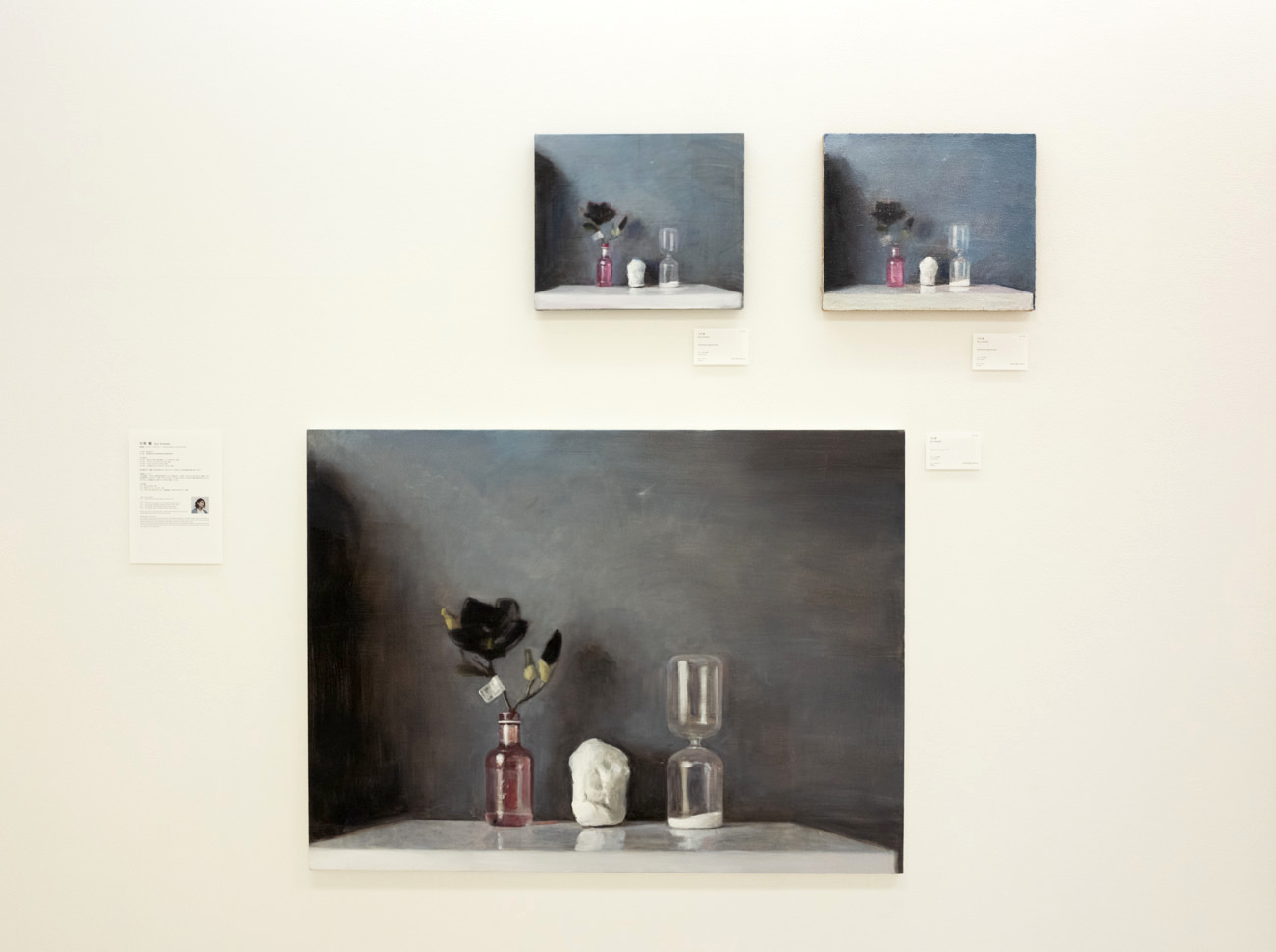
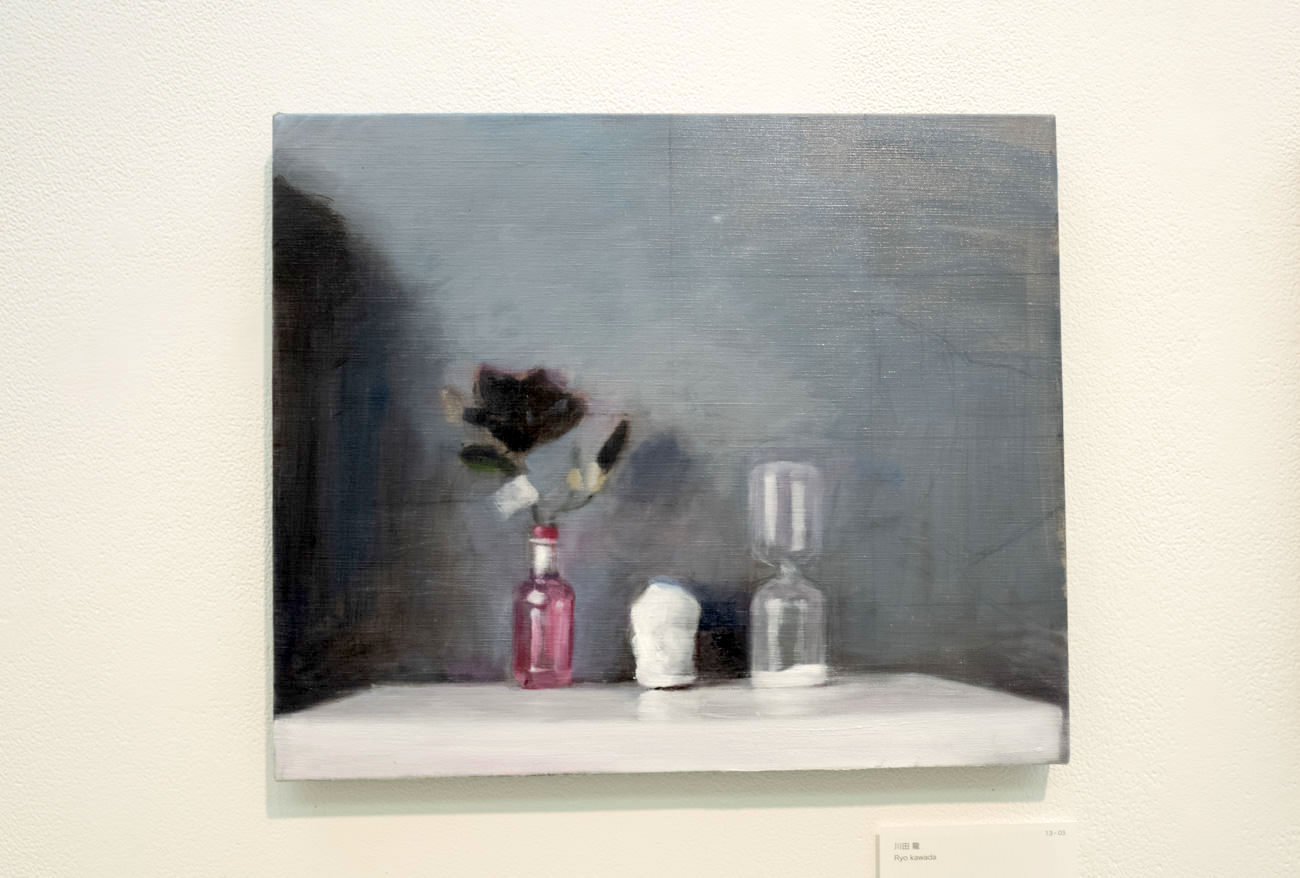
What defied my expectations — in the best sense — were three still lifes depicting the same motif: 《Vanitas (Magnoria)》, 《Vanitas (Magnoria2)》, and 《Vanitas (Magnoria3)》.
Top left: 《Vanitas (Magnoria3)》 Top right: 《Vanitas (Magnoria2)》 Bottom: 《Vanitas (Magnoria)》
Ryo Kawada also paints many portraits, but I have been particularly drawn to his still lifes.
So this three-work display had me utterly thrilled, and I spent a considerable amount of time simply looking at them.
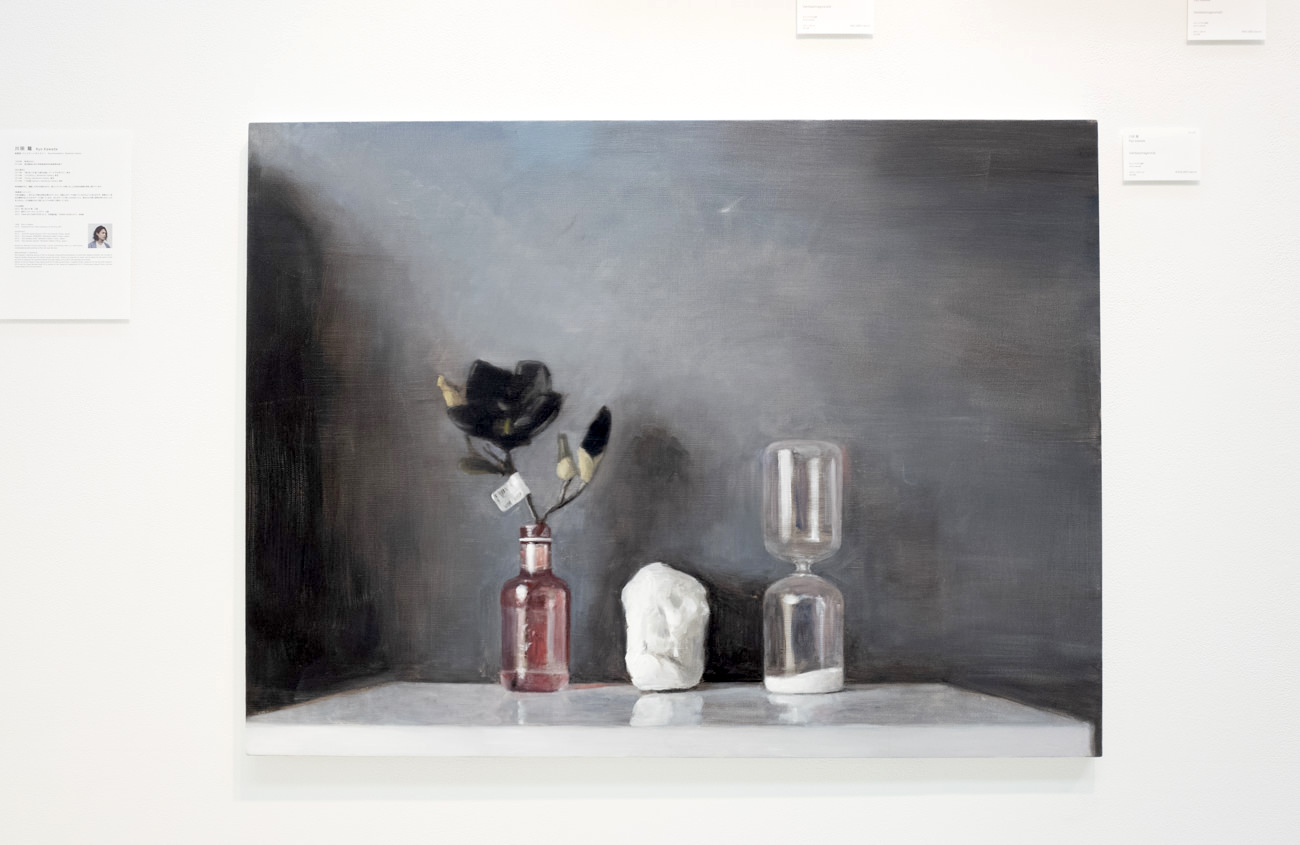
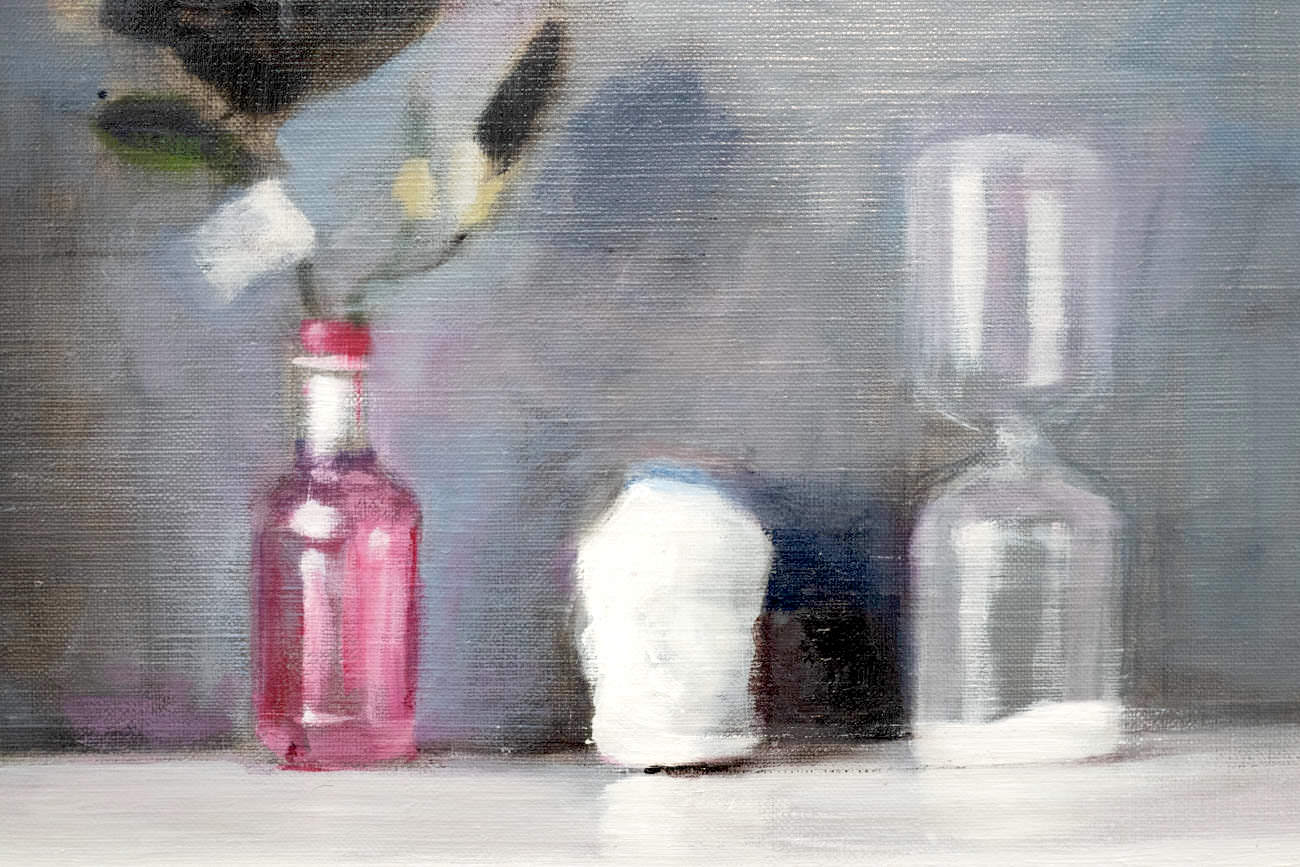
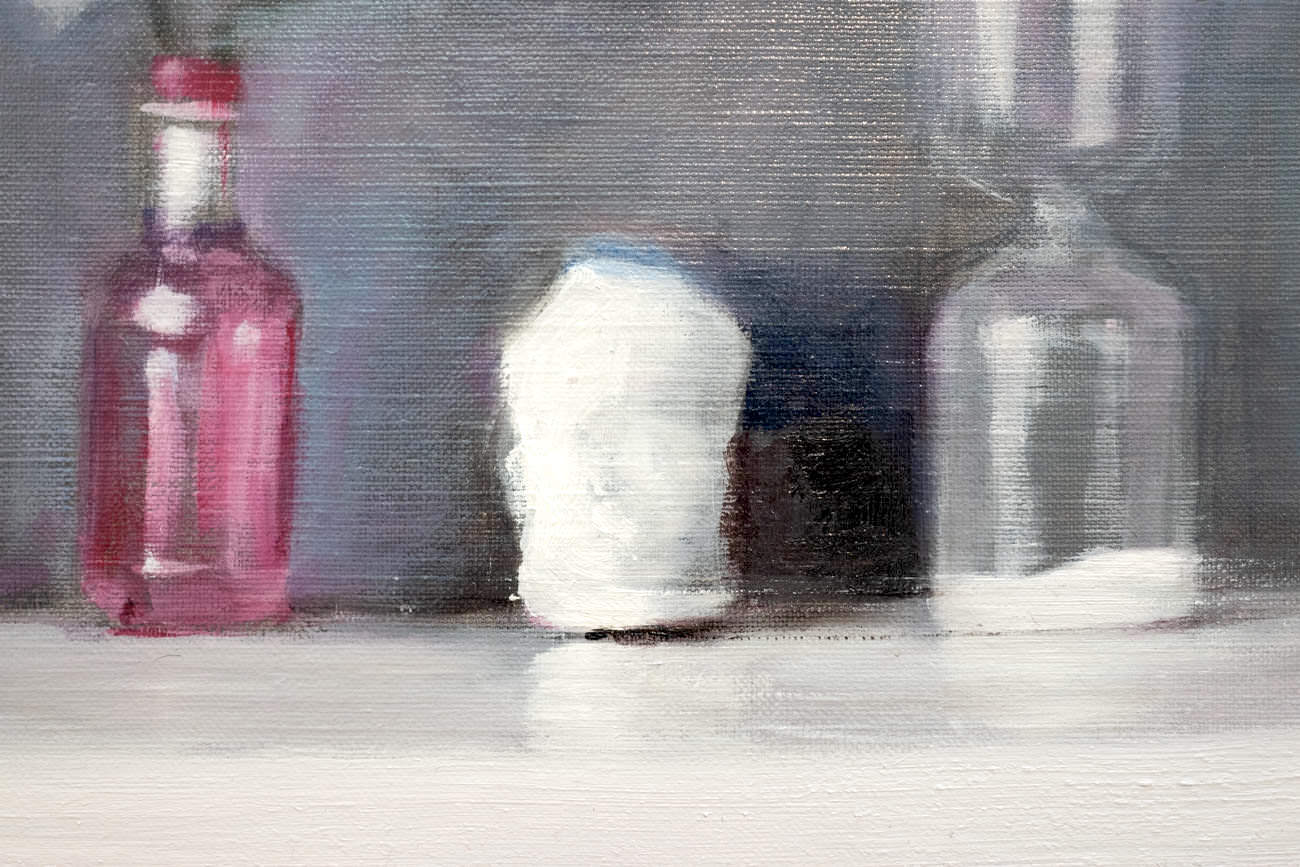
《Vanitas (Magnoria)》 97.0×130.3 cm, 2019《Vanitas (Magnoria)》 detail
You may not fully grasp this work without seeing it in person.
Each piece stands as its own distinct work.
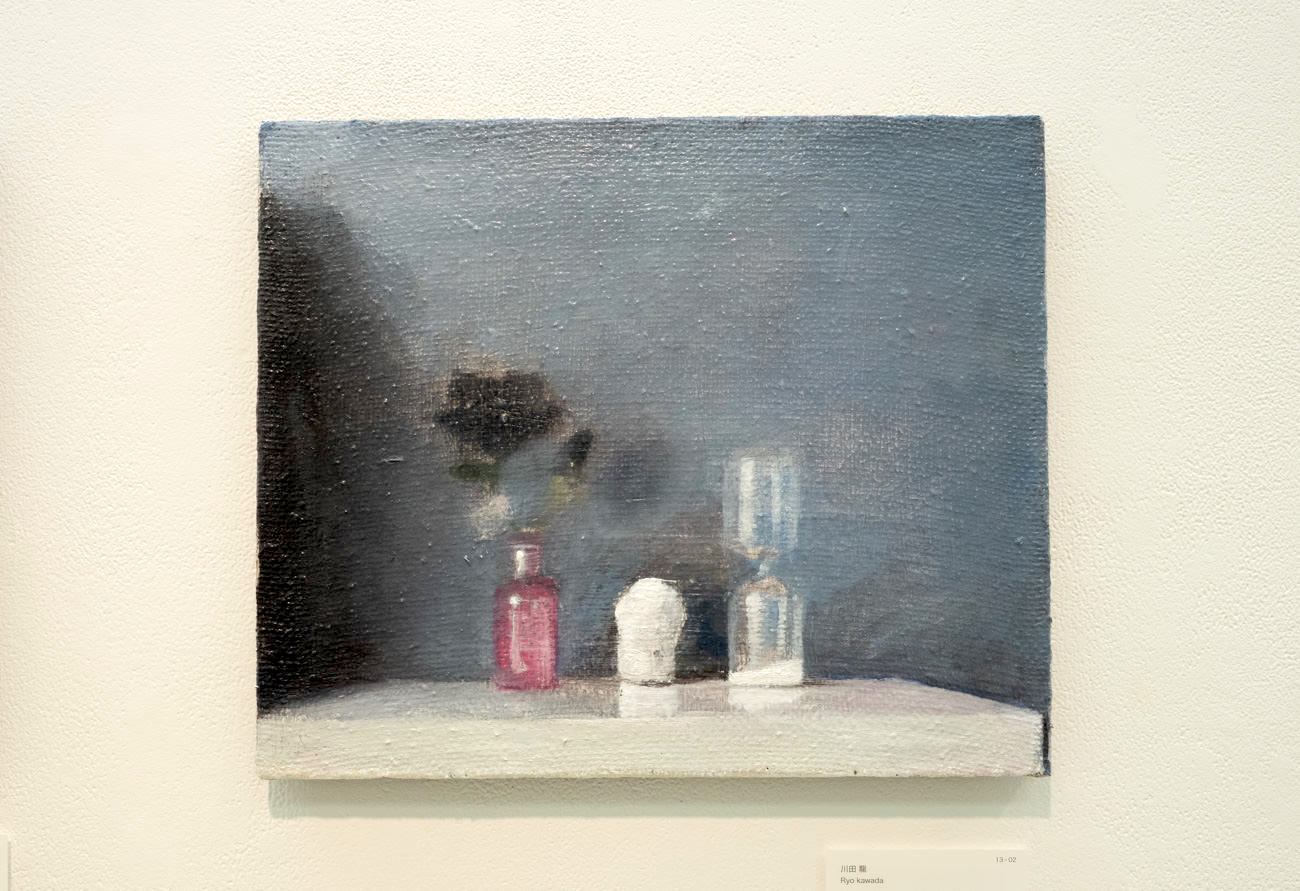
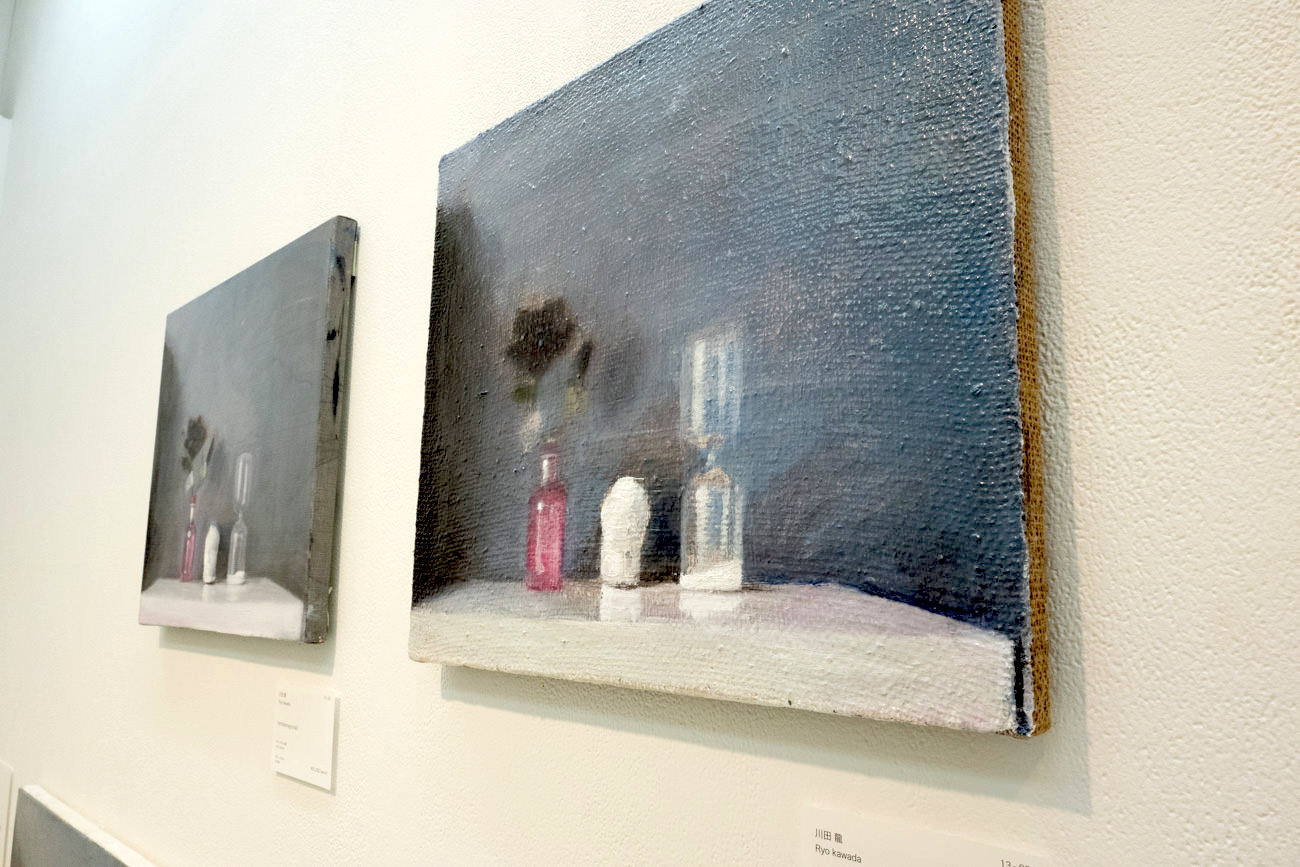
Even the supports themselves are made of different materials, giving each canvas a completely different surface.
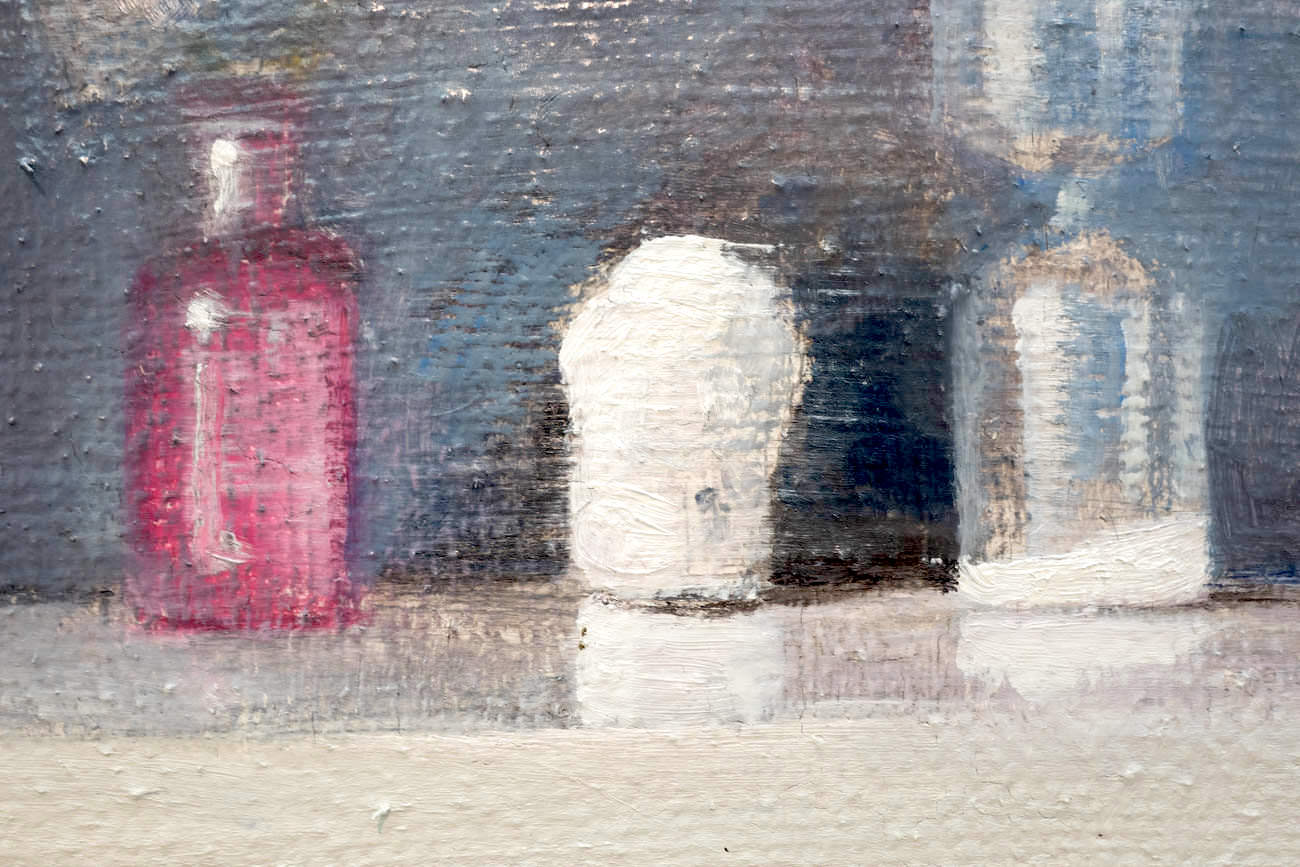
《Vanitas (Magnoria2)》 45.5×38 cm, 2019《Vanitas (Magnoria2)》 detail
What makes Ryo Kawada’s still lifes so compelling is, above all, their “sense of air.”
Not merely capturing a scene at rest, they let the viewer (myself) feel the tactile quality of the air softly stirring within the canvas. These are works that make you sense phenomena unfolding beyond the frame of the canvas itself.
《Vanitas (Magnoria3)》 45.5×38 cm, 2019《Vanitas (Magnoria3)》 detail
In that atmosphere — as if sensing the presence of something — a shivering, prickling sensation takes hold.
Here is truly “the painterly skill to depict even the wavering air itself.”
Viewed from the side, the different supports become apparent.
“Whose room is this, and who is in it?”
“Why paint three works of the same composition with the same motif?”
“By changing the size and support, what did he wish to express?”
“Why arrange the three works in exactly this positional relationship?”
… I wanted to put these questions and other curiosities about the works directly to Kawada himself, but sadly did not have the chance.
An artist of rich expressive power who captures not merely the interplay of light and shadow, but something else that lies within.
3331 ART FAIR 2019
自从在Tokyo University of the Arts研究生毕业展上初见其作,我便被Ryo Kawada的静物画深深吸引,他一直是我心目中喜爱的艺术家之一。
我一直确信他是拥有扎实功力的优秀青年画家之一,因此对于他会在观众云集的3331 Art Fair上带来怎样的作品,充满期待。
Tokyo University of the Arts 대학원 졸업 전시에서 처음 만난 뒤로 Ryo Kawada의 정물화에 매료되어, 그는 내가 좋아하는 작가 중 한 명이 되었다.
확실한 기량을 지닌 우수한 젊은 화가 중 한 사람이라 확신해 온 필자로서는, 관람객들로 붐비는 3331 Art Fair에서 그가 어떤 작품을 보여 줄지 무척 기대하고 있었다.
좋은 의미로 기대를 뒤집은 것이, 같은 모티프로 그려진 세 점의 정물화 《Vanitas (Magnoria)》, 《Vanitas (Magnoria2)》, 《Vanitas (Magnoria3)》이다.
상단 왼쪽 《Vanitas (Magnoria3)》 상단 오른쪽 《Vanitas (Magnoria2)》 하단 《Vanitas (Magnoria)》
Ryo Kawada는 인물화도 많이 그리는 작가이지만, 필자는 그의 정물화에 특히 매료되어 있었다.
그래서 이번에 전시된 세 점의 작품에는 흥분이 상당했고, 상당한 시간 동안 계속 바라보게 되었다.
《Vanitas (Magnoria)》 97.0×130.3cm 2019년《Vanitas (Magnoria)》 부분
이 작품은 실제로 육안으로 보지 않으면 잘 모를 수도 있다.
각각이 서로 다른 작품으로 성립한다.
지지체부터 서로 다른 재료가 쓰여, 화면의 살결이 완전히 다르다.
《Vanitas (Magnoria2)》 45.5×38cm 2019년《Vanitas (Magnoria2)》 부분
Ryo Kawada 정물화의 매력은 무엇보다 ‘공기감’이다.
정지된 풍경을 잘라내는 데 그치지 않고, 관람자(필자)는 캔버스 안에서 사르르 꿈틀거리는 공기의 촉감을 감지할 수 있다. 캔버스의 프레임 바깥에서 벌어지고 있는 사건까지 감지되는 듯한 작품이다.
《Vanitas (Magnoria3)》 45.5×38cm 2019년《Vanitas (Magnoria3)》 부분
무언가의 기척을 느끼는 듯한 그 공기감에, 오싹한 감각이 스며든다.
그렇다, “일렁이는 공기마저 그려 내는 화력(畵力)”이 여기에 있다.
옆에서 보면 지지체의 차이를 확인할 수 있다.
“이곳은 어느 방이며, 이 방에는 누가 있는가?”
“왜 같은 구도, 같은 모티프를 세 점이나 그리는가?”
“크기와 지지체를 달리해 무엇을 표현하고 싶었나?”
“세 작품의 배열은 왜 이러한 위치 관계여야 하는가?”
…이러한 작품에 관한 궁금증과 관심을 Kawada 작가에게 직접 여쭙고 싶었으나, 아쉽게도 그 기회는 오지 않았다.
빛과 그림자의 농담(濃淡)만이 아닌, 거기에 있는 무언가를 붙잡아 내는 풍부한 표현력을 가진 작가다.