I have a habit of returning to my parents’ home every New Year.
It’s a lively, boisterous family tradition of relatives, with New Year’s money, delicious food, and gifts flying around.
Amid all that, I came across a scene where an artwork in the living room — one I hadn’t paid much attention to as a child — suddenly grew radiant in presence. When I checked with my parent, its owner, I got a “you can take it home,” and, delighted, received it…
What I received was “a print by a certain master.” Made in 1974, it’s a work over 40 years old.
Apparently it was a piece the artist, short on money at the time, had sold by hand himself.
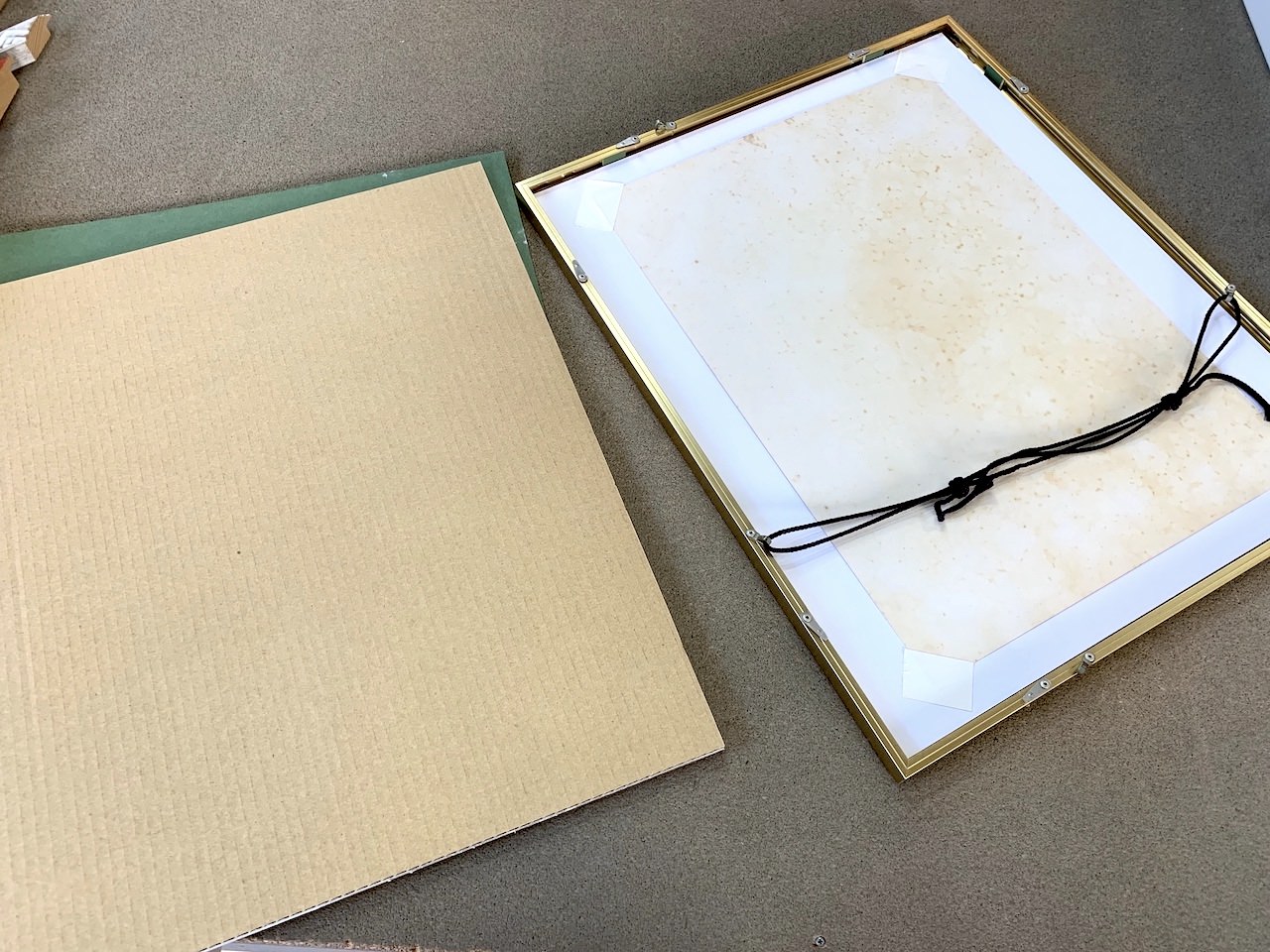
A while after receiving it, curious, I decided to open the back of the frame to look at the work, and opened the frame held shut with turn-buttons.
Wh-what is this…!?
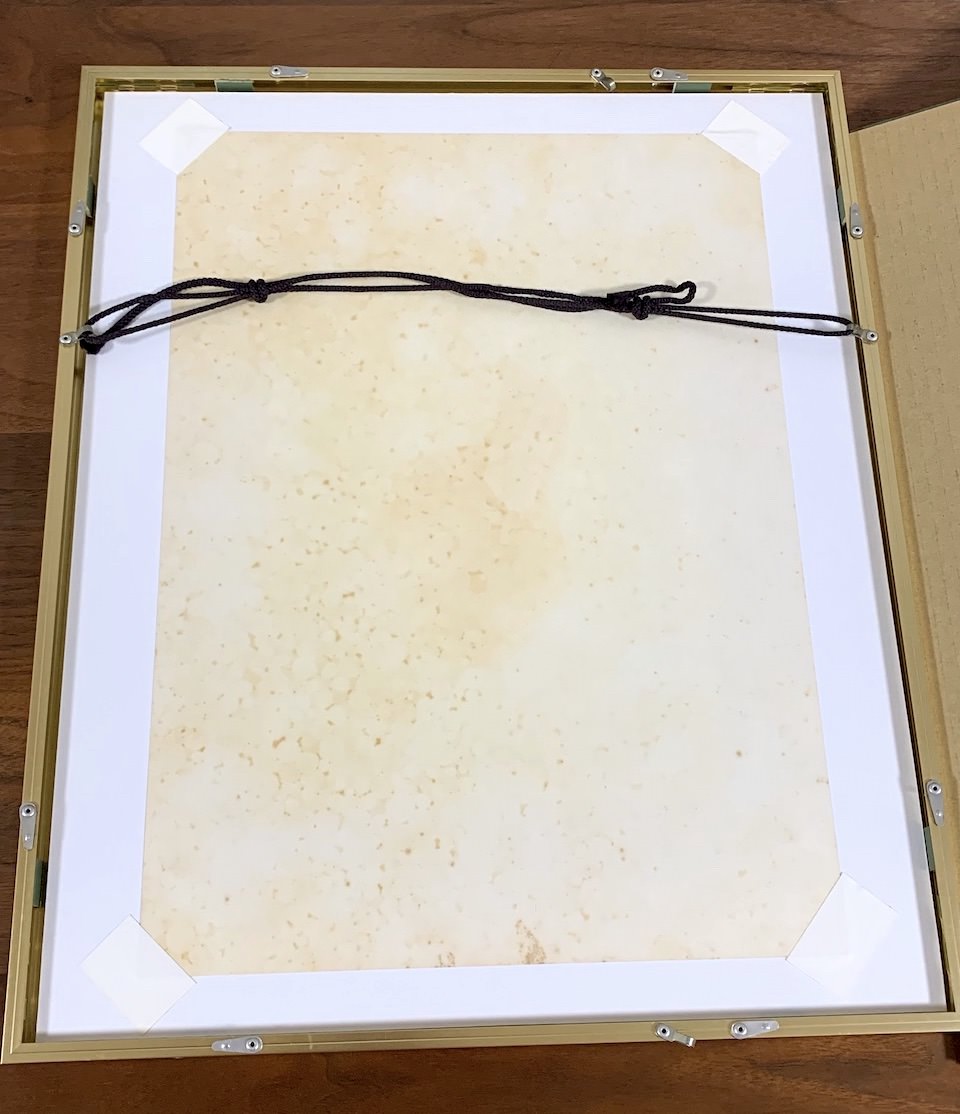
I’d heard the frame was changed a few years ago, yet look at this state…Brown “stains” spread all over — the kind that might get you scolded by Chiko-chan (a Japanese TV character) with “Don’t live your life half-asleep!”The whiteness of the mat is so vivid it makes me sad.Nothing showed on the front of the work at all, so I hadn’t noticed until I opened the frame.
Why Do Stains Form?
With the rainy season and typhoons, Japan is a country with a troubling climate, full of high-humidity periods.
In the case of the spotty brown stains I saw this time, in addition to the influence of components like resin and lignin from the frame’s backing wood, mold-like stains occurring through oxidation caused by humidity changes — that’s the likely mechanism.
The acrylic (glass) on the front mainly serves to counter ultraviolet (UV) rays, and I think you can address that to some degree by avoiding direct sunlight and choosing materials with UV-cutting properties.
On the other hand, the back of the frame uses wood, which has limits in coping with environmental changes. A frame closed tight with no gaps is one thing, but conditions inside a frame with even a slight gap can be considered harsh.The conditions inside a frame are influenced overwhelmingly more from the back than from the front — or so it’s said. Indeed, the “location of the stains” this time was on the back of the work.
Among artworks, those using paper have a support weak to environmental change, so the chance of degradation over long stretches of time is higher.
It’s not that “it’s protected because it’s in a frame”; you must stay cautious even when the work is inside a frame — that’s the point.There’s also a method to close the frame’s back snugly with no gaps. This framing method is relatively reassuring.
What the Framing Shop Did
What could I do to counter this situation…?
Leave it as is and it would only worsen — mightn’t the stains even spread to the work side, so far unaffected?
So I took the framed work in person and consulted a framing shop I know.
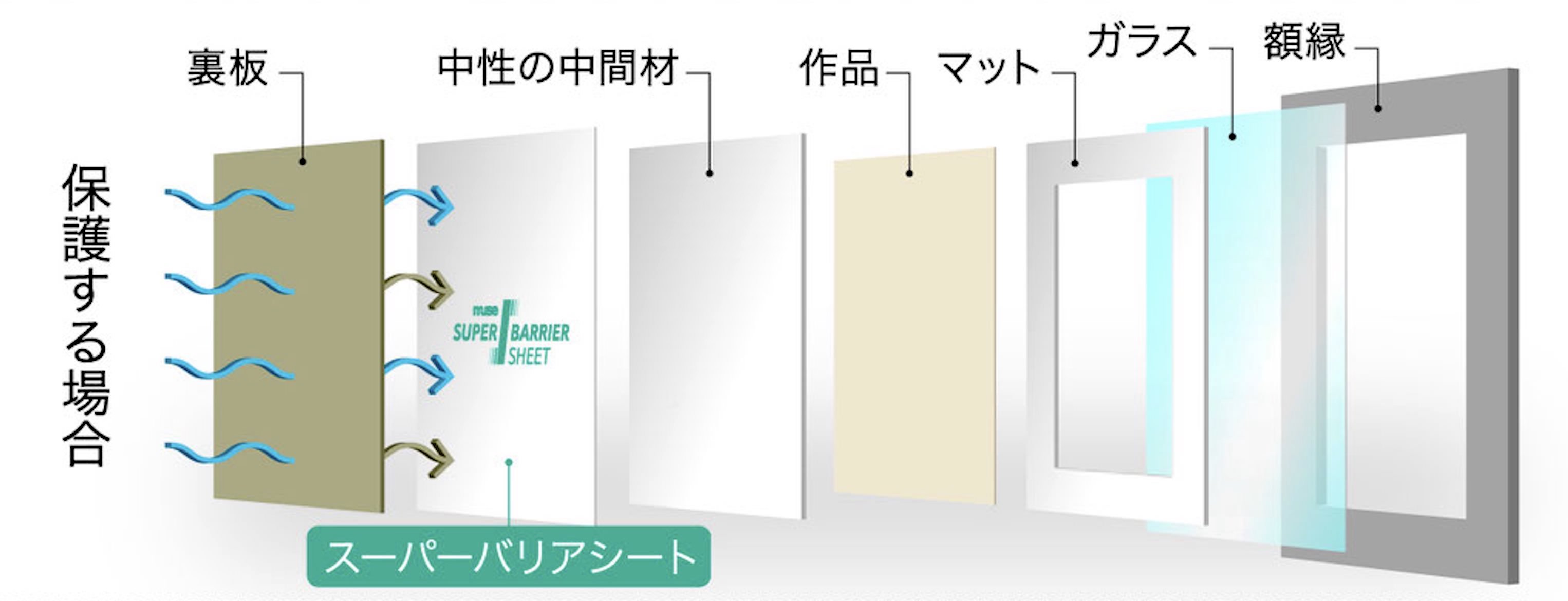
Please see the diagram below.
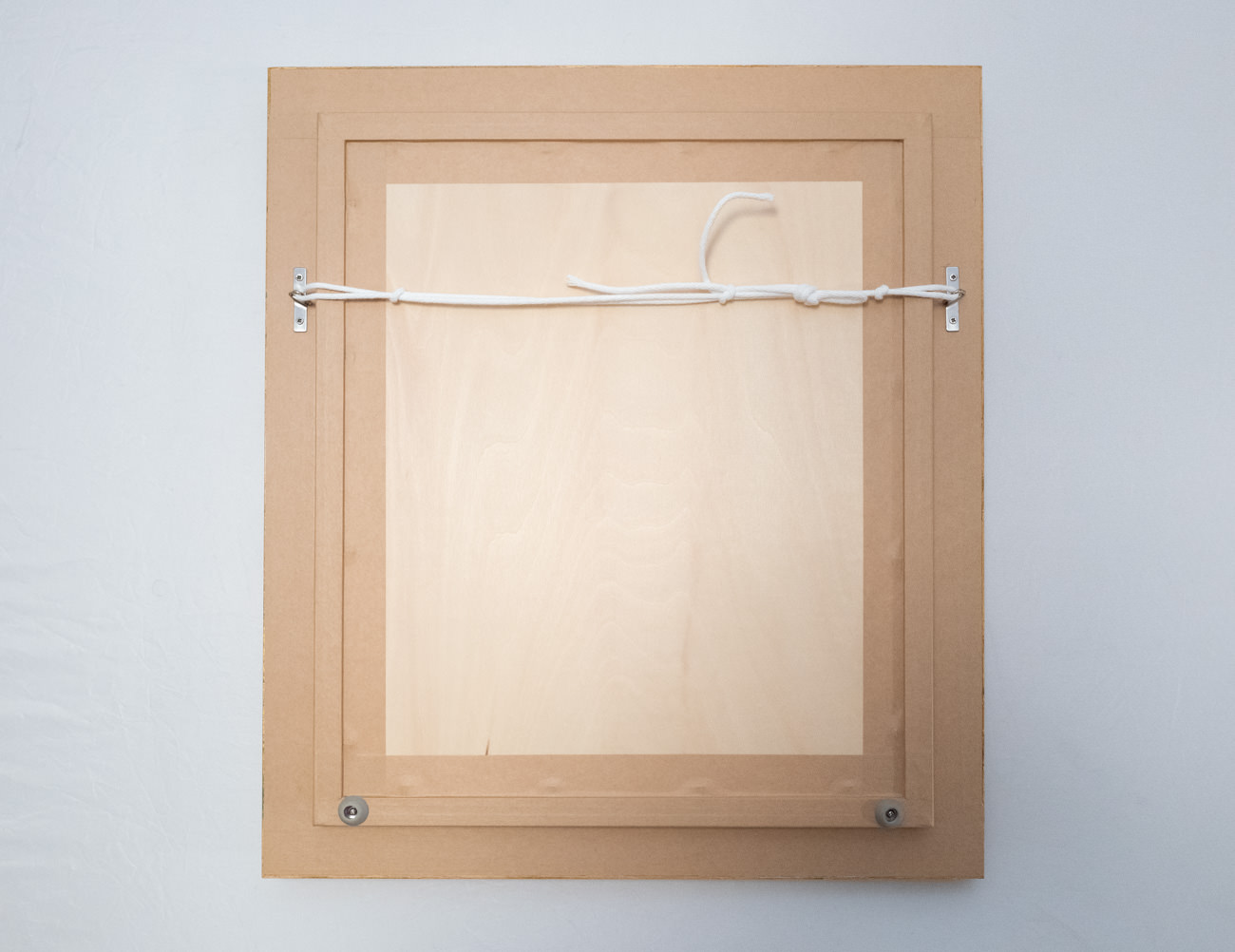
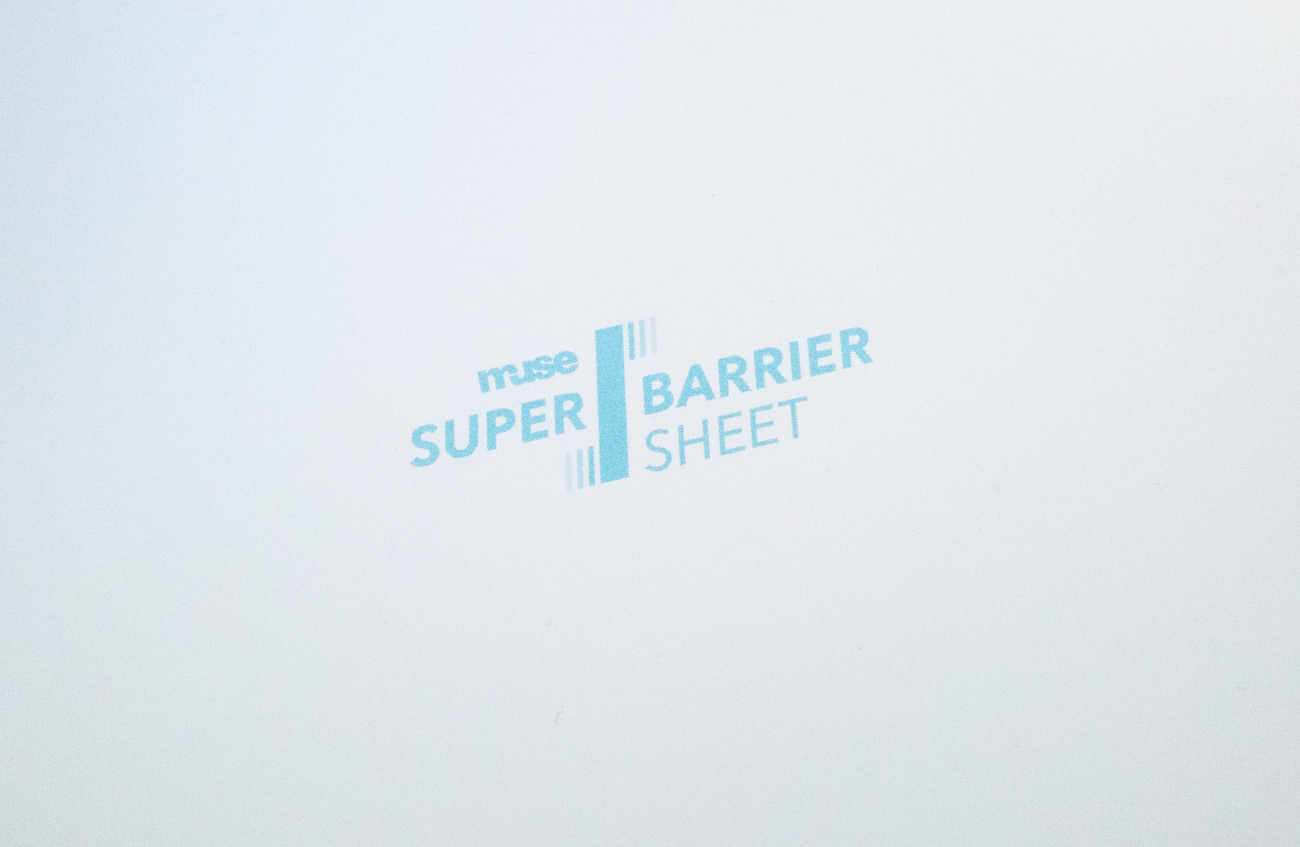
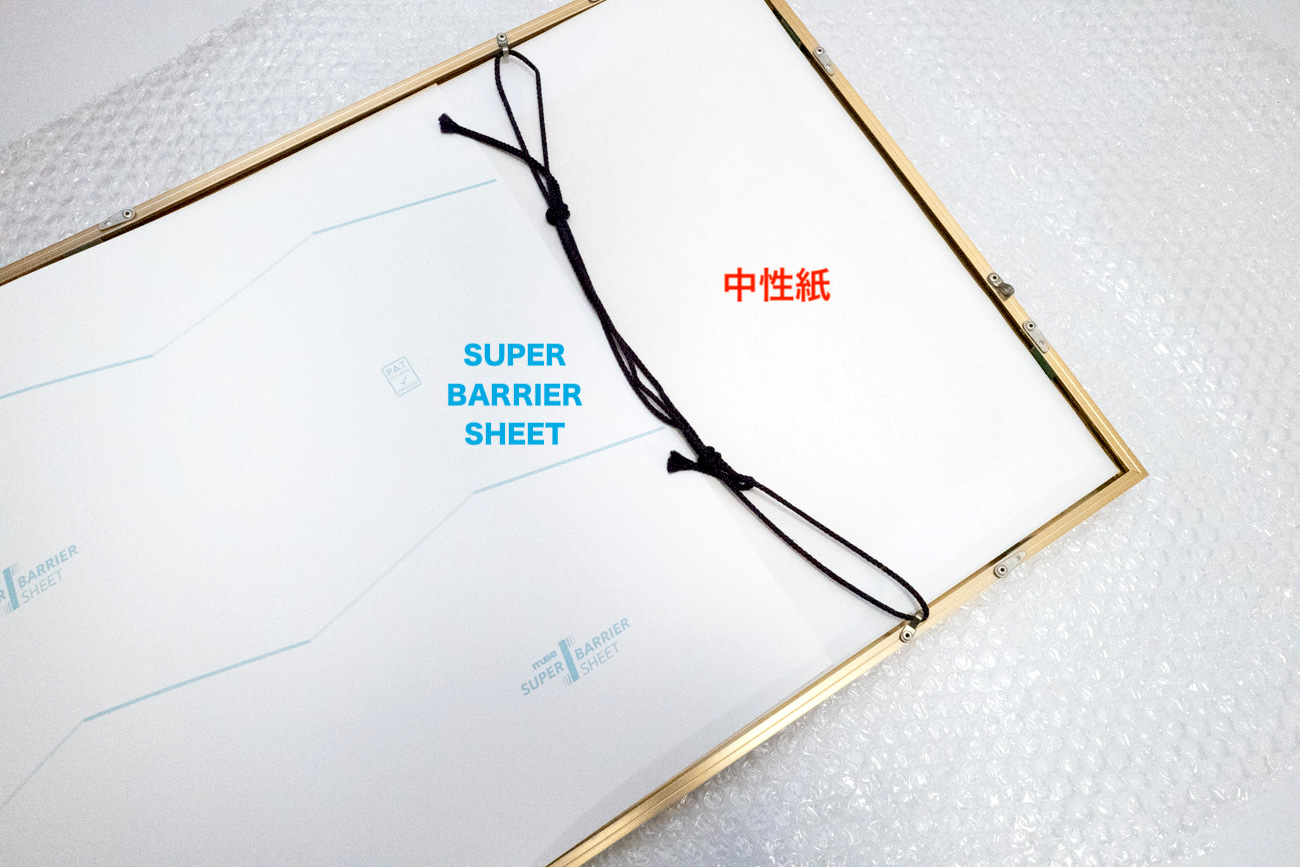
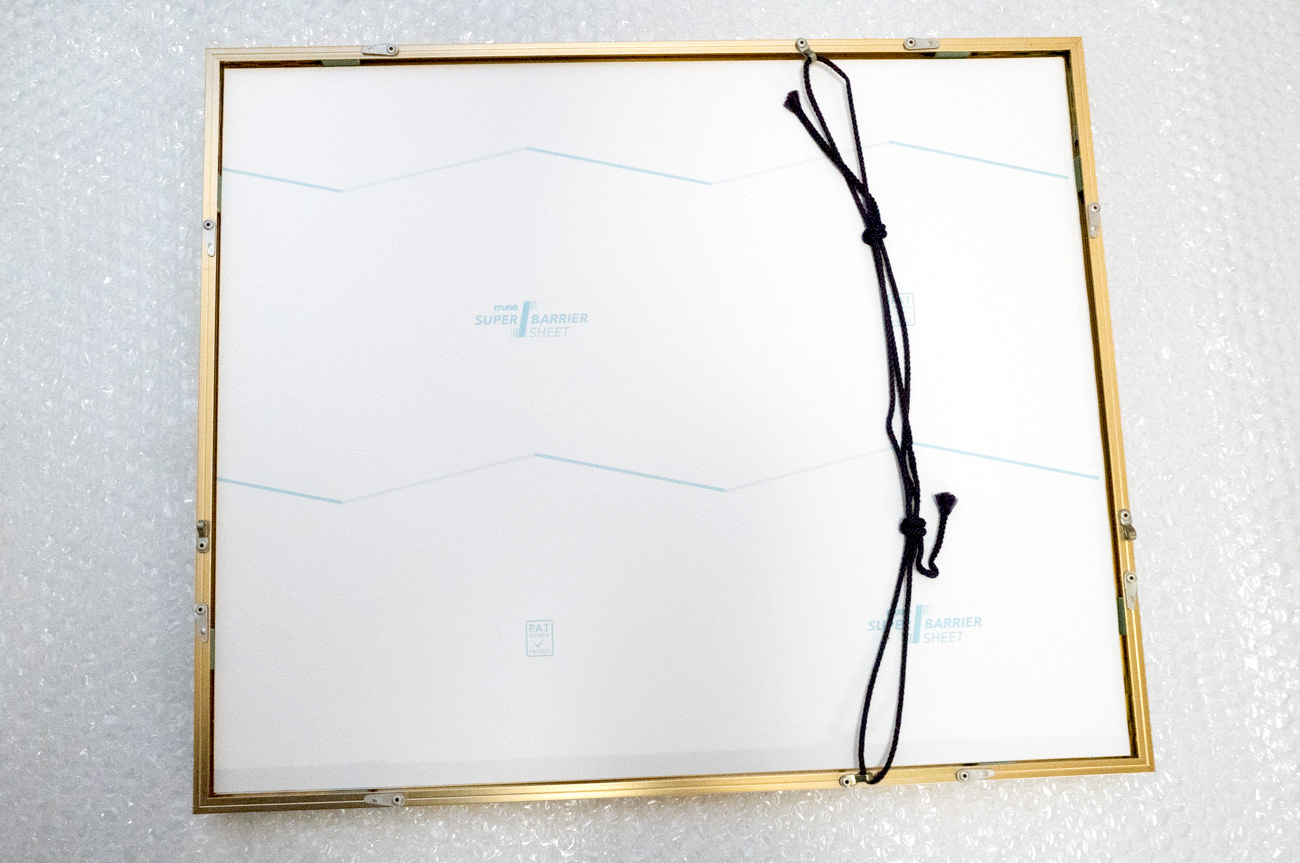
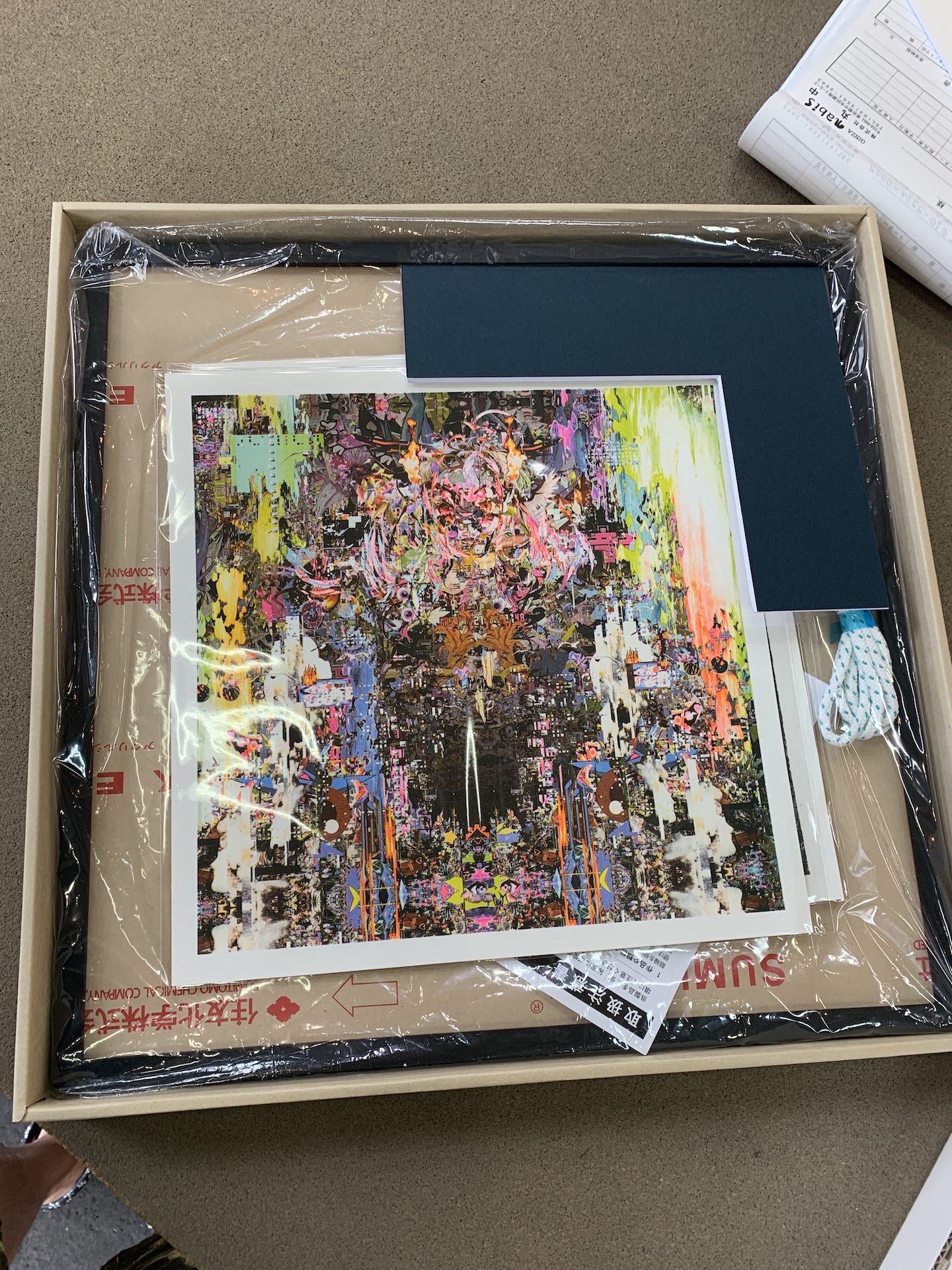
Proper framing is recommended to protect the work through a flow like this.You must cut off the intrusion route from the frame’s backing board — quoted from the muse official site.In the work I own, in the place where a “neutral intermediate material” should be inserted there was a single sheet of “cardboard,” and in the place for the “protective material” (the Super Barrier Sheet in the diagram below) meant to block influence from the backing board, nothing was inserted at all.muse’s “SUPER BARRIER SHEET”So I asked the framing shop and had them do a “neutral paper + Super Barrier Sheet” treatment (see the photo below).
This came to “about ¥800” (materials and prices likely vary by shop).Place “neutral paper” on the work side, add one “SUPER BARRIER SHEET,” and close the backing board.The SUPER BARRIER SHEET is from “muse,” a maker that also sells “FILMOPLAST,” which I introduced before. With a track record of selling various goods and items for artworks, it’s a trustworthy maker.
Both neutral paper and the Super Barrier Sheet are, in thickness, as thin as paper, so you can insert them without changing your current frame.In my case, I placed the cardboard that had originally been inserted, put the backing board over it, and framing was complete.This treatment was done to “prevent further progression.”
There are also restoration-oriented treatments, such as “removing the stains” or “bleaching the stains.” The framing shop I visited didn’t handle these. If I get the chance, I’d like to report on that separately.
In Summary
Framing doesn’t mean you’re all set — pay attention to the environment inside the frame.
Be especially careful with paper works like prints, drawings, and watercolors.
Guard against oxidation with “neutral paper + a barrier sheet” and mind environmental preservation.
Rather than framing that opens freely with turn-button backs, sealed (fixed) framing is recommended.
If you feel uneasy, go to a framing shop and consult them.
저는 매년 새해가 되면 본가에 가는 습관이 있습니다.
세뱃돈과 맛있는 요리, 선물 등이 오가는, 친척 가족의 왁자지껄 떠들썩한 연례행사입니다.
그러던 중, 어릴 때는 그다지 의식하지 않던 거실에 걸린 아트 작품이 갑자기 빛나는 존재로 존재감을 더하는 장면과 마주쳤습니다. 소유자인 부모님께 확인하니 「가져가도 괜찮다」는 약속을 받아, 기쁜 마음으로 물려받았습니다…
물려받은 것은 「어느 거장의 판화 작품」. 제작 연도가 1974년이니 40년 이상 지난 작품입니다.
듣기로는 당시 돈이 없던 작가가 직접 손수 팔던 작품이었다고 합니다.
물려받고 얼마 뒤, 문득 신경이 쓰여 액자 뒷면을 열어 작품을 보려고, 돔보(고정 핀)로 잠긴 액자를 열어 보았습니다.
이, 이게 뭐지…!?
몇 년 전에 액자를 바꿨다고 들었는데 이 모양…「멍하니 살지 마!」라고 (일본 방송 캐릭터) 치코짱에게 혼날 법한 갈색 「얼룩」이 온통 번져 있습니다.매트의 흰색이 너무 선명해 서글퍼집니다.작품 표면에는 전혀 드러나지 않아, 액자를 열기 전까지는 전혀 알아차리지 못했습니다.
얼룩이 생기는 이유는?
장마와 태풍 등, 일본은 습도가 높은 시기가 많은 골치 아픈 기후의 나라입니다.
이번에 필자가 본 반점 형태로 갈색화된 얼룩의 경우, 액자 뒷면의 목재에서 나오는 진(야니)이나 리그닌이라는 성분의 영향에 더해, 습도 변화로 산화되어 곰팡이 같은 얼룩이 발생한 것으로 여겨집니다.
표면 쪽 아크릴(유리)은 주로 자외선(UV) 대응에 역할이 집중되는데, 직사광선을 피하거나 UV 차단 소재가 포함된 재질을 고르면 어느 정도 대응할 수 있다고 봅니다.
한편 액자 뒷면에는 환경 변화 대응에 한계가 있는 목재가 사용되어, 빈틈없이 꼭 닫힌 액자라면 몰라도 미묘한 틈이 벌어진 액자 내부의 컨디션은 가혹하다고 여겨집니다.액자 내부의 컨디션은 표면 쪽보다 압도적으로 액자 뒷면의 영향에 크게 좌우된다고 합니다. 실제로 이번에 발생한 「얼룩의 위치」도 작품의 뒷면이었습니다.
아트 작품 중에서도 종이를 사용한 작품은 환경 변화에 약한 지지체이므로, 오랜 시간이 흐르는 가운데 변질될 가능성이 높아집니다.
「액자에 들어 있으니 보호된다」는 것이 아니라, 액자 안에 작품이 있어도 주의해야 한다는 것입니다.액자 뒷면을 빈틈없이 딱 맞게 닫는 방법도 있습니다. 이 액자 방식이라면 비교적 안심입니다.
액자 가게에서의 대응
이 상황에 대한 대책으로 무엇을 할 수 있을까…?
이대로 방치하면 상황이 점점 진행되어, 지금까지 영향이 없던 작품 쪽에도 얼룩이 옮아 가지 않을까?
그리하여 실제로 액자에 든 작품을 지참해 단골 액자 가게에 상담하기로 했습니다.
아래 그림을 봐 주세요.
본래의 액자 작업은 이러한 흐름으로 작품을 지켜 가는 것이 권장됩니다.액자 뒷판 쪽으로부터의 침입 경로를 끊어야 합니다 ~ muse 공식 사이트에서 인용.필자가 소유한 작품에는, 「중성 중간재」를 끼워야 할 자리에 「골판지」가 1장, 뒷판으로부터의 영향을 막기 위한 「보호재(아래 그림의 슈퍼 배리어 시트)」의 자리에는 아무것도 끼우지 않은 상태였습니다.muse社 「SUPER BARRIER SHEET」그리하여 액자 가게에 부탁해 「중성지+슈퍼 배리어 시트」라는 대응을 받았습니다(아래 사진 참조).
이 대응의 가격은 「약 800엔」이었습니다(액자 가게에 따라 사용 소재와 가격은 달라질 것입니다).작품 쪽에 「중성지」를 놓고, 다시 「SUPER BARRIER SHEET」를 1장 넣은 뒤 뒷판을 닫습니다.SUPER BARRIER SHEET는 이전에 소개한 「필름플라스트(FILMOPLAST)」도 판매하는 제조사 「muse」의 제품입니다. 아트 작품의 다양한 굿즈와 아이템 판매 실적이 있는 믿을 수 있는 제조사입니다.
중성지도 슈퍼 배리어 시트도 두께는 종이처럼 얇아서, 현재 사용 중인 액자를 바꾸지 않고 끼워 넣을 수 있습니다.필자의 경우, 원래 끼워져 있던 골판지를 올리고 뒷판을 덮어 액자 작업 완료입니다.이번 대응은 「더 이상의 진행을 막는」 목적으로 실시했습니다.
「얼룩을 빼는」 「얼룩을 표백하는」 등 복구를 지향하는 대응도 있다고 합니다. 이에 대해서는 제가 방문한 액자 가게에서는 대응하지 않았습니다. 기회가 되면 별도로 취재해 보고 싶습니다.