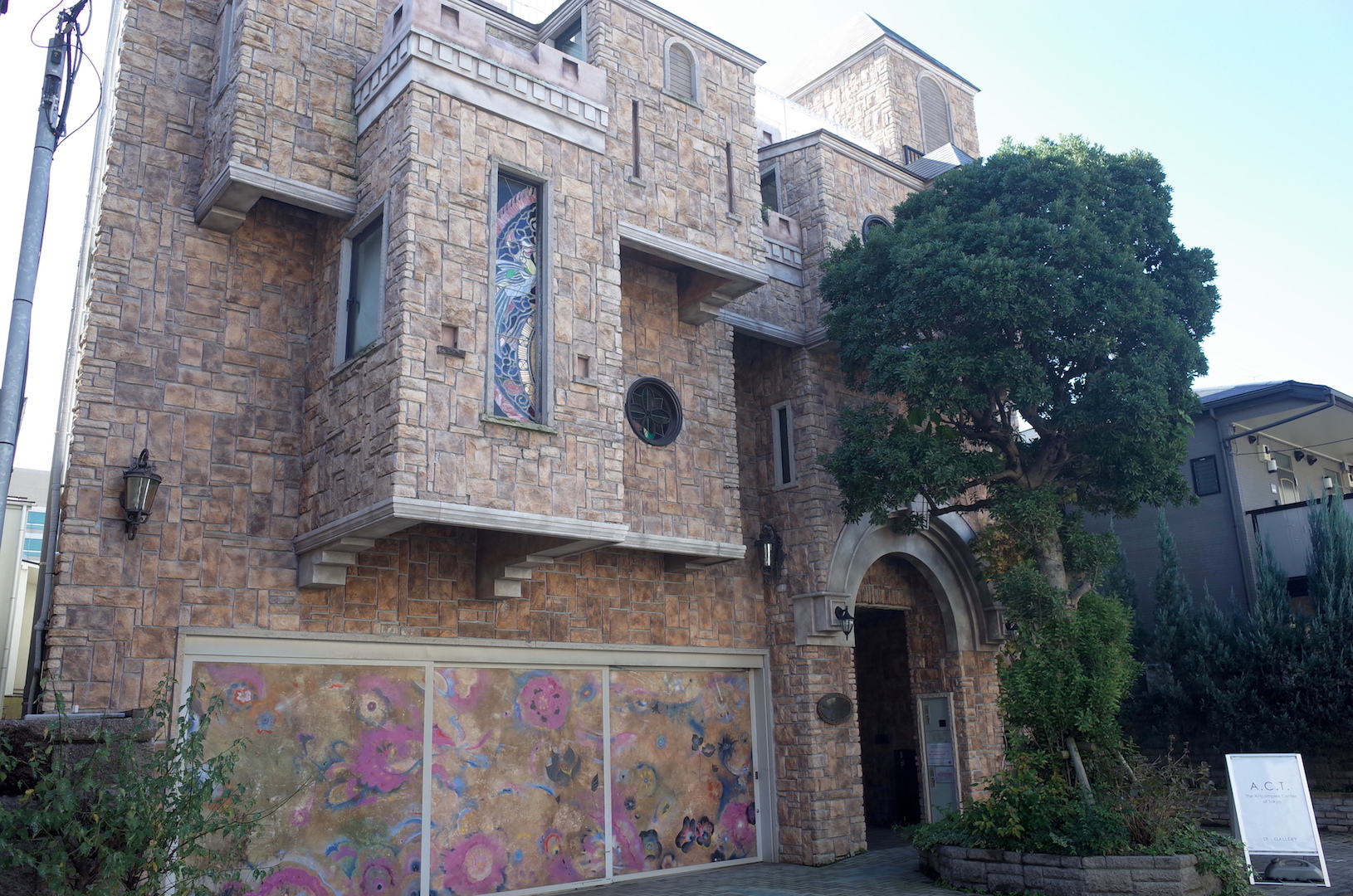
I visited the solo exhibition “Cross Section of Life / Fragments of Death” by Kana Ohtsuki, who works as an illustrator. The venue is Art Complex Center (near Shinanomachi Station).
Art Complex Center
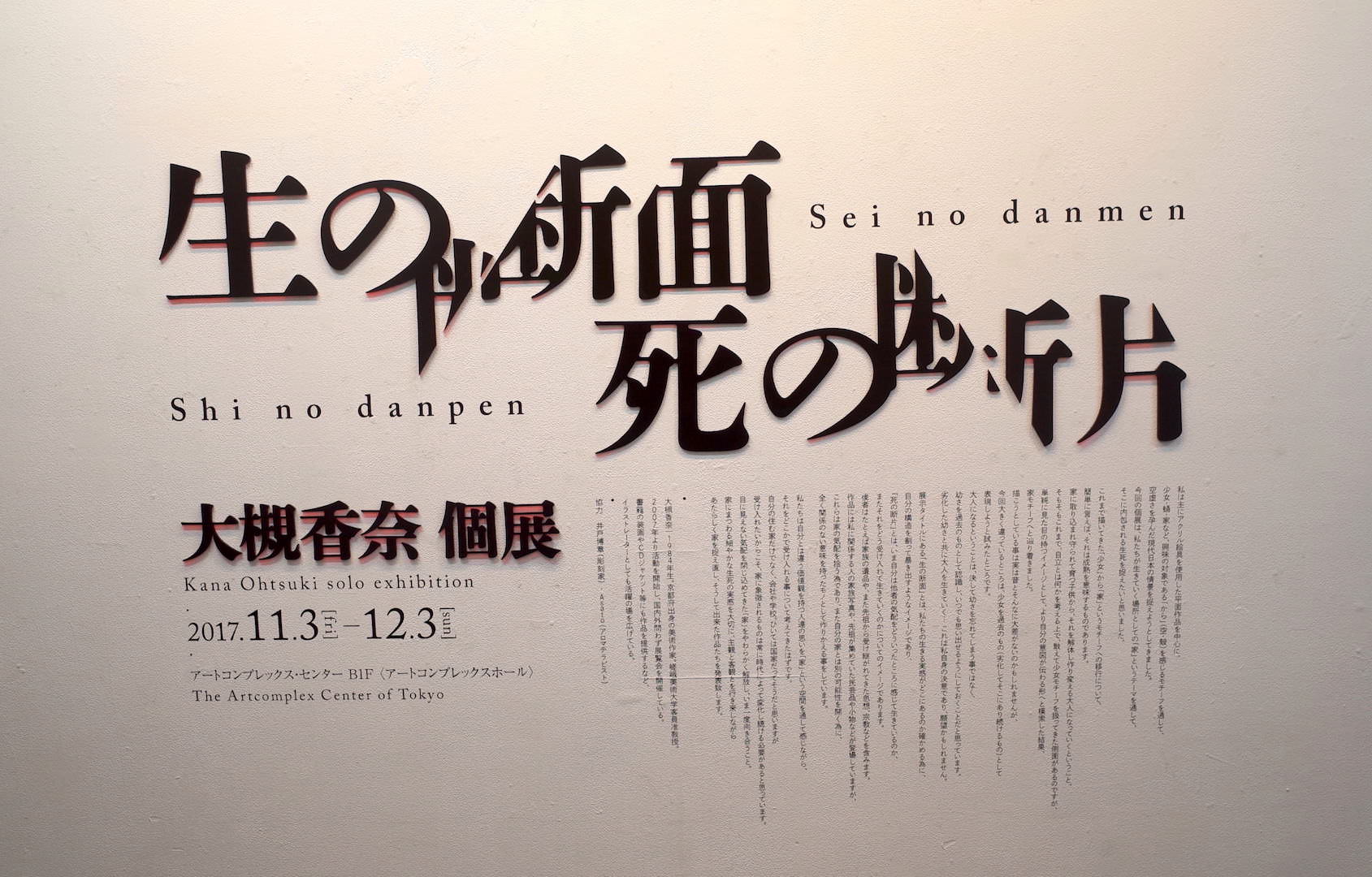
I was very interested, so I rushed there in the morning of the opening day. Fortunately, there were still few visitors at the gallery, so I was able to view the works leisurely. At the entrance, the title and explanation were displayed as shown in the photo below.
Kana Ohtsuki
Born in 1984. A fine artist from Kyoto Prefecture. She began her career in 2007 and has held exhibitions both domestically and internationally. Primarily focusing on flat works using acrylic paint, she seeks to capture the landscape of contemporary Japan filled with emptiness through motifs that evoke “emptiness” (sky and shell)—such as girls, pupae, and houses—which are subjects of her interest.
Cross Section of Life, Fragments of Death
While Kana Ohtsuki has created many works featuring girls as a theme, this exhibition featured many works centered on the theme of “houses.”
This solo exhibition, through the theme of “house” as a place where we live, explores and contemplates our sense of being alive and the acceptance of the views on life and death of our family members and those around us, thereby questioning through artworks the houses we live in and how houses should exist in the future.
I have primarily worked on flat works using acrylic paint, seeking to capture the landscape of contemporary Japan filled with emptiness through motifs such as girls, pupae, and houses—subjects of my interest that evoke “emptiness” (sky and shell). This solo exhibition, through the theme of “house” as a place where we live, explores and contemplates my sense of being alive and the acceptance of the views on life and death of my family members and those around me, thereby questioning through artworks the houses we live in and how houses should exist in the future.
“Cross Section of Life” represents an image of splitting open and exposing my own structure to confirm where our sense of living truly lies, while “Fragments of Death” represents an image of where I sense the presence of others different from myself and how I accept and live with it. The latter refers to things left behind by ancestors, such as family heirlooms or inherited ideologies. Through the space of a “house,” we have come to feel the thoughts of people with values different from our own and have contemplated how to accept them somewhere within ourselves. To liberate the “house” that has confined invisible presences and face it once more. Moving back and forth between subjective and objective perspectives on houses, I am creating and presenting works.
Reading the explanation, it seems the fundamental motif has not changed much.
Thank you! When I speak of life and death, I’m not expressing something directly and physical. Rather, the theme is the indirect “presence”—what I am kept alive by, and what I unconsciously receive from the deceased, such as my ancestors. #Cross Section of Life#Fragments of Deathhttps://t.co/lnfiDqxUML
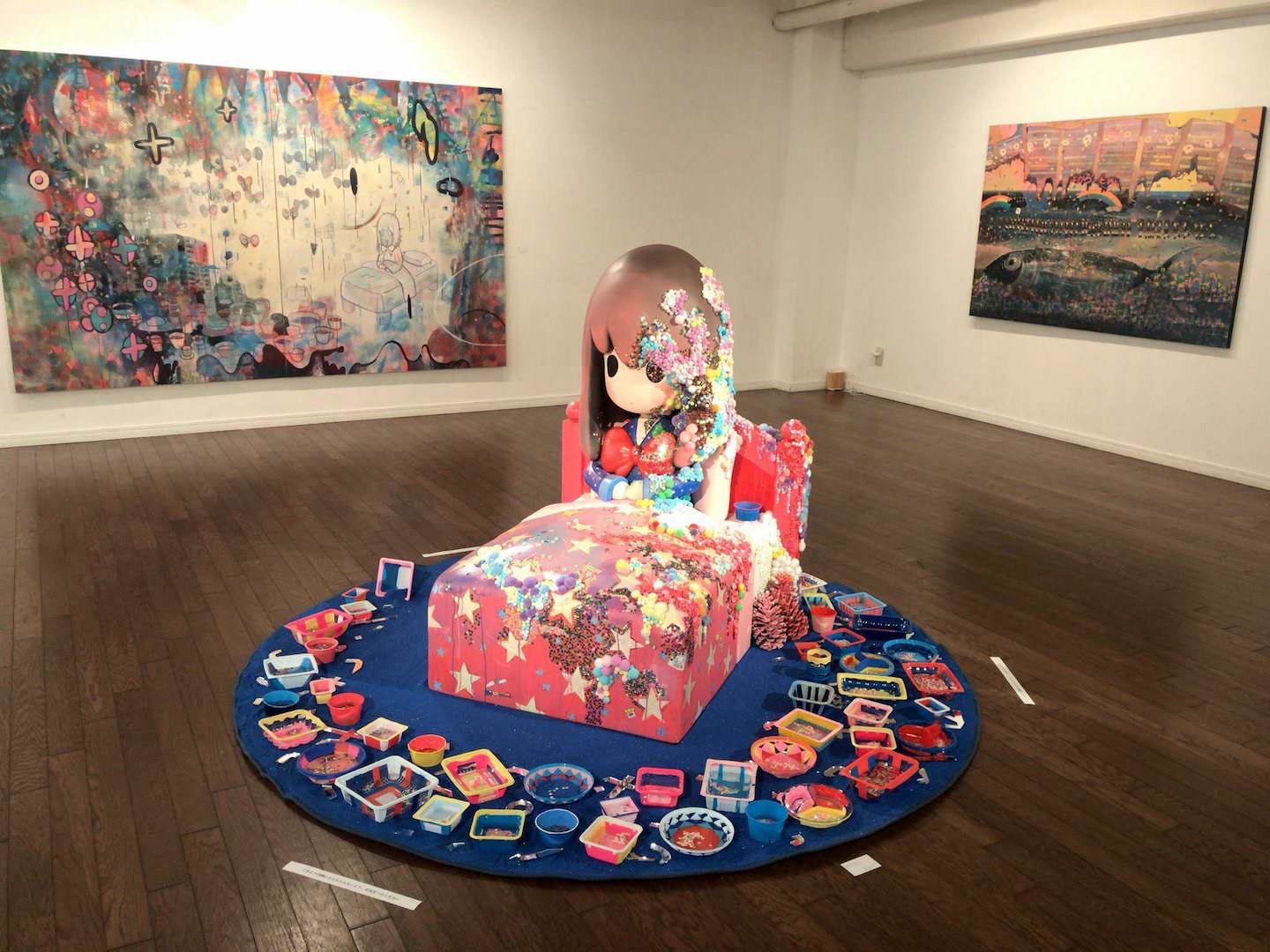
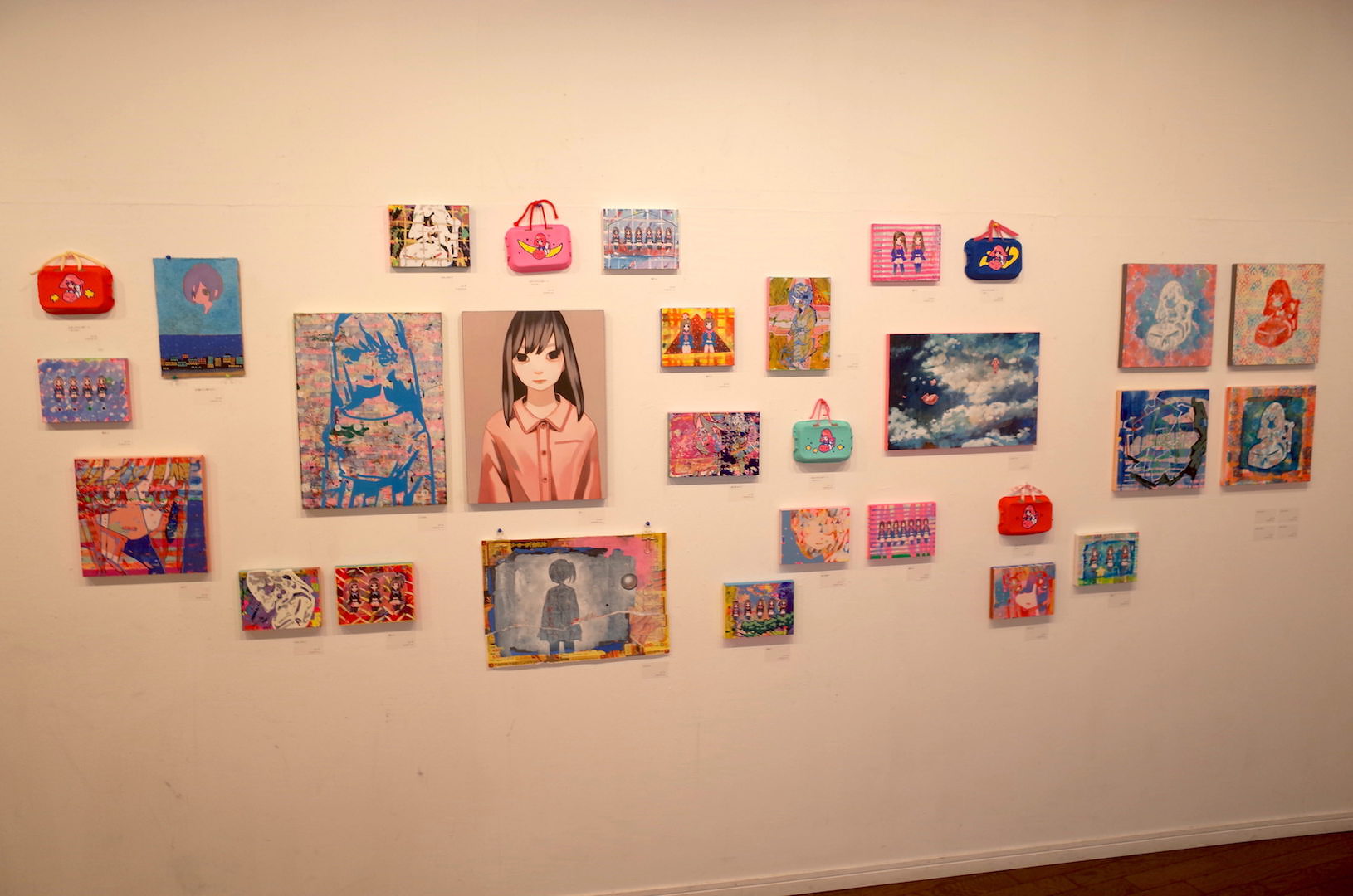
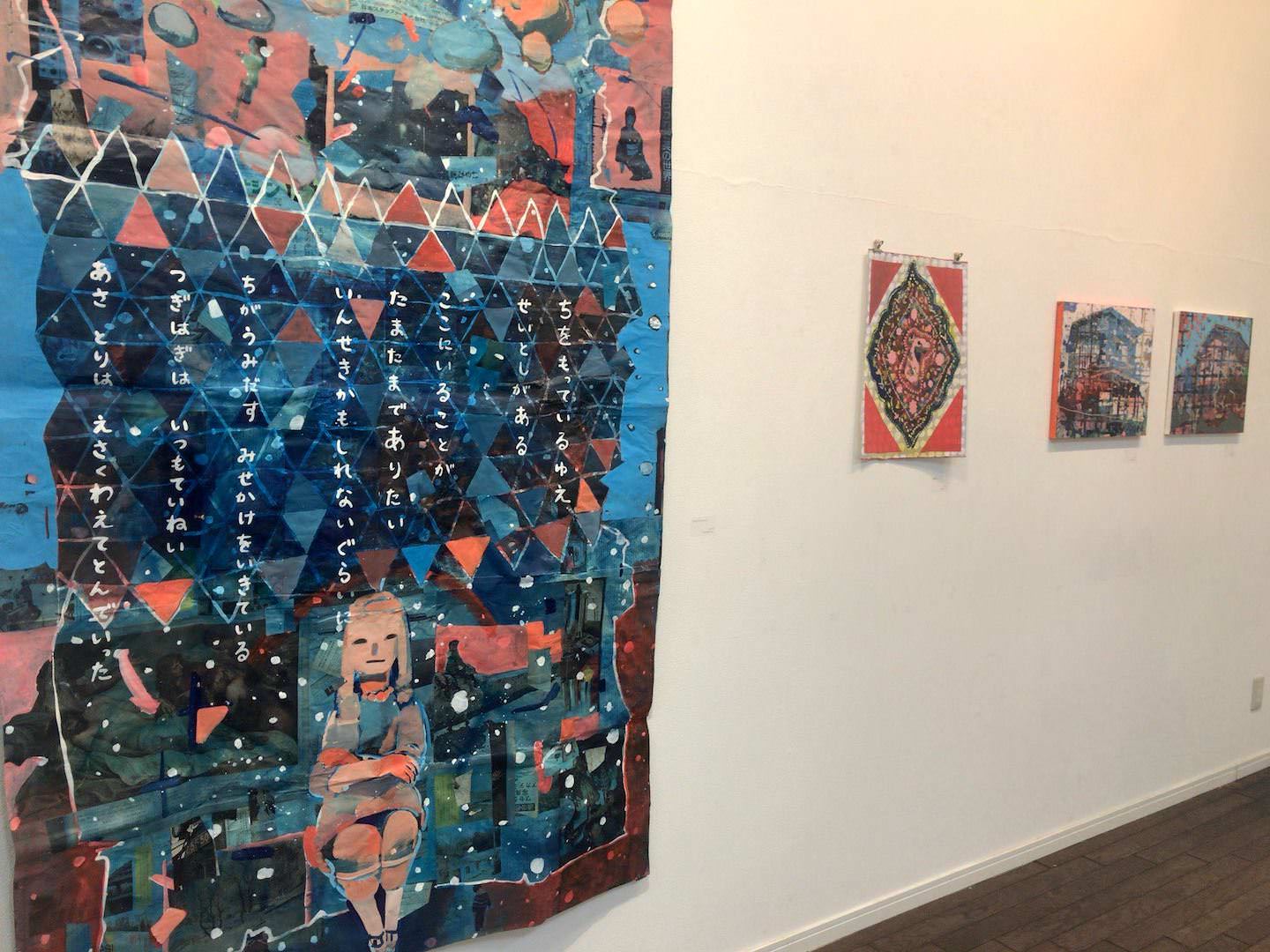
Passing through the entrance, a large “Yumeshika-chan” is prominently displayed in the center on the left side.
Yumeshika-chan kai―Small Bed―
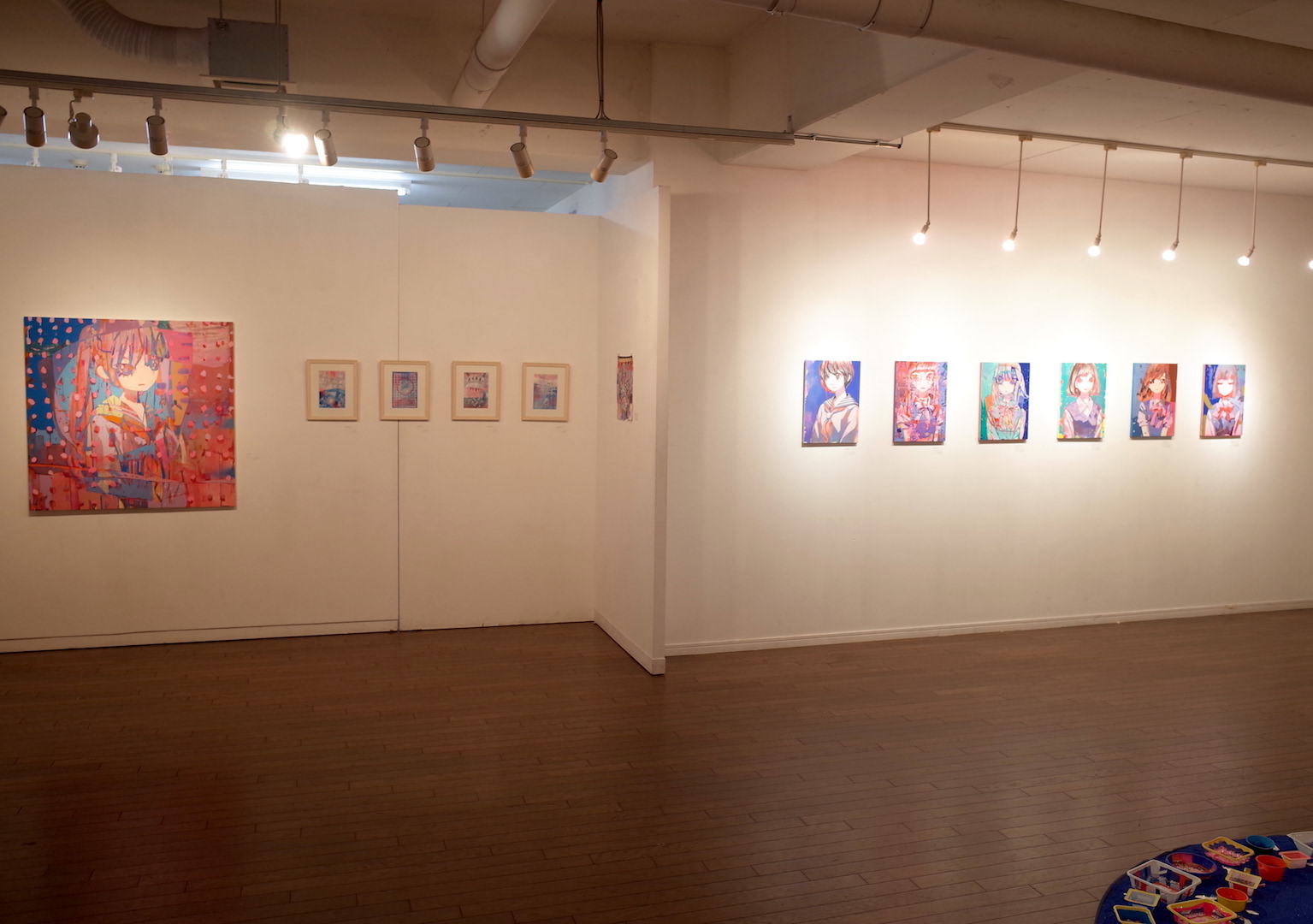
Around “Yumeshika-chan” are lined up many works depicting girls, including portraits.
The leftmost work is titled “Karakoiru”Prolific artist Kana Ohtsuki. Many small works were also lined up at affordable prices.
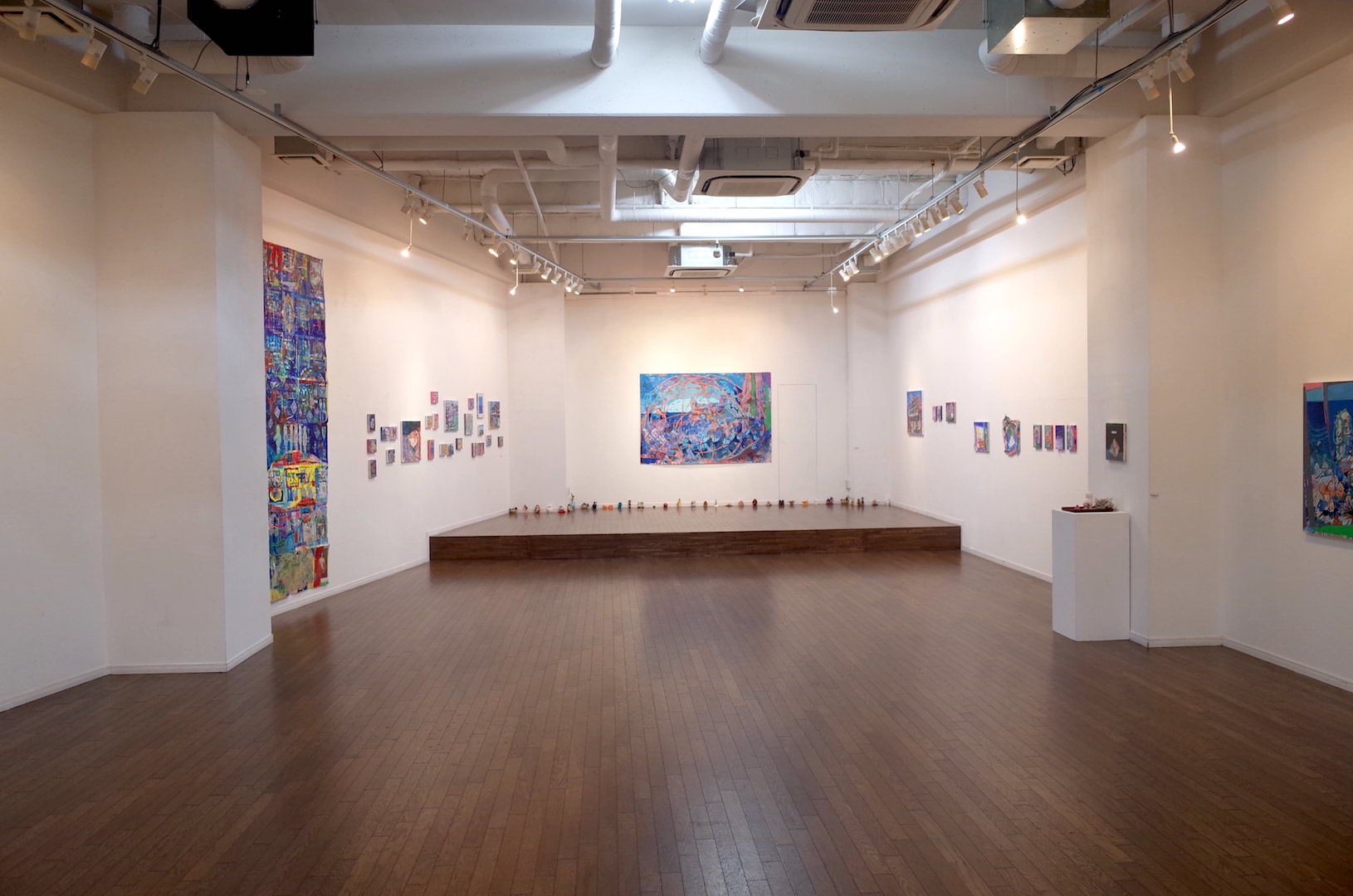
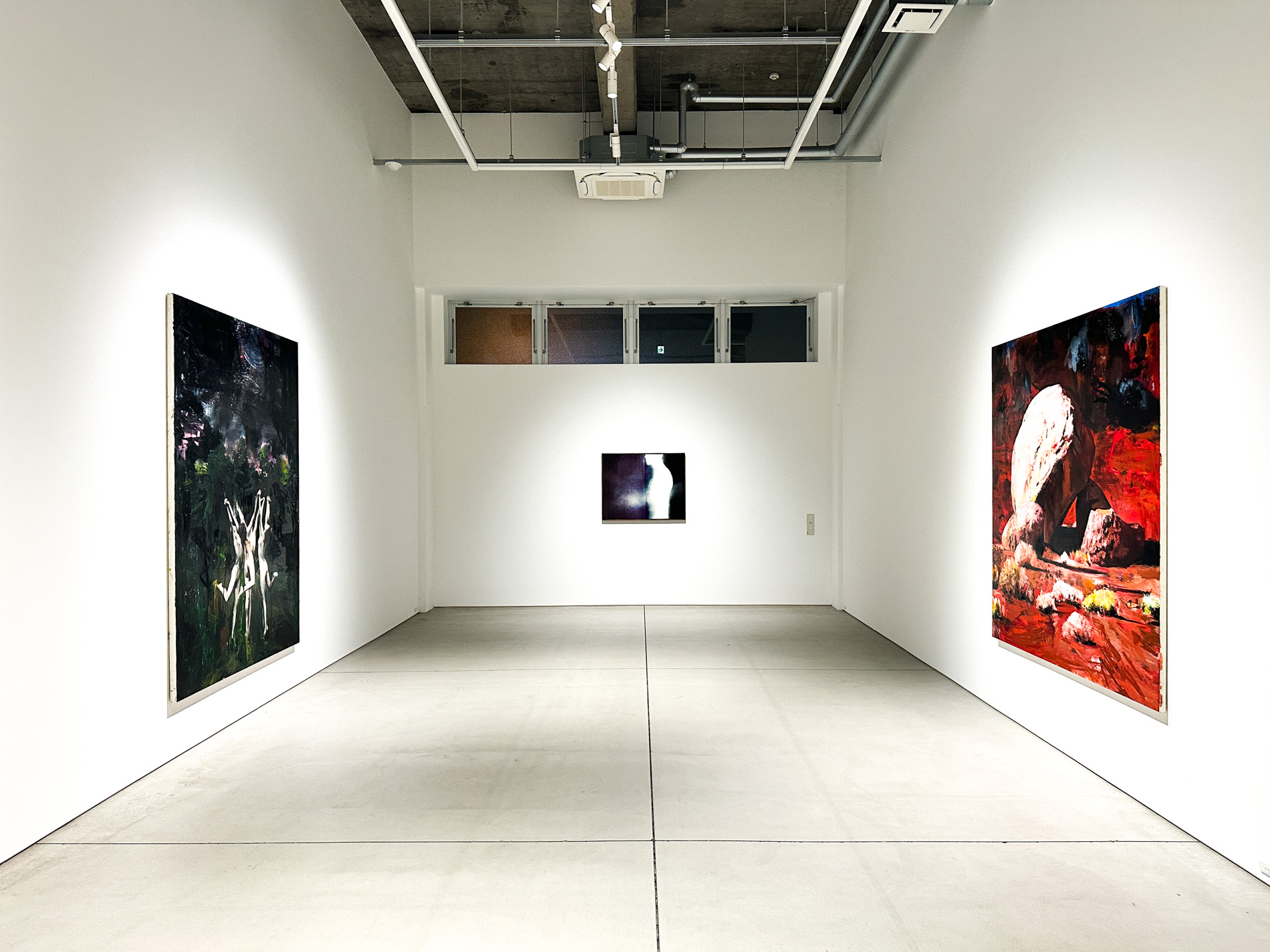
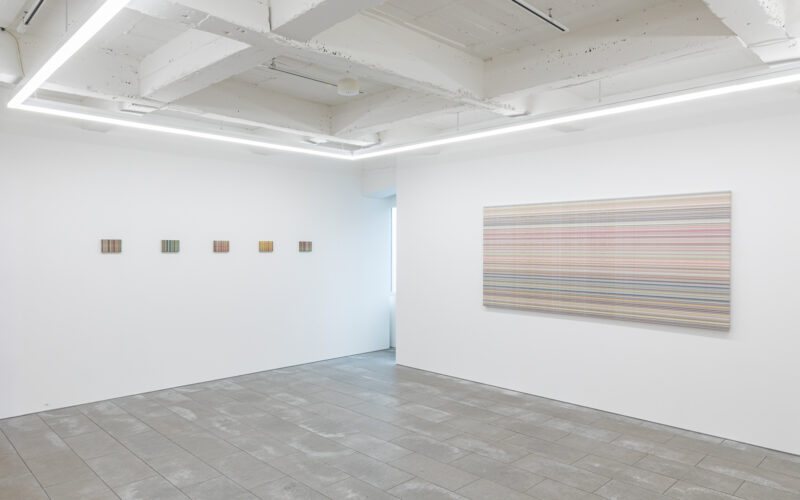
Looking to the right from the entrance, a large work is displayed at the back of the spacious gallery.
Gallery interior from the entrance side. The work at the far end is “Drawing Lines So They Won’t Disappear”
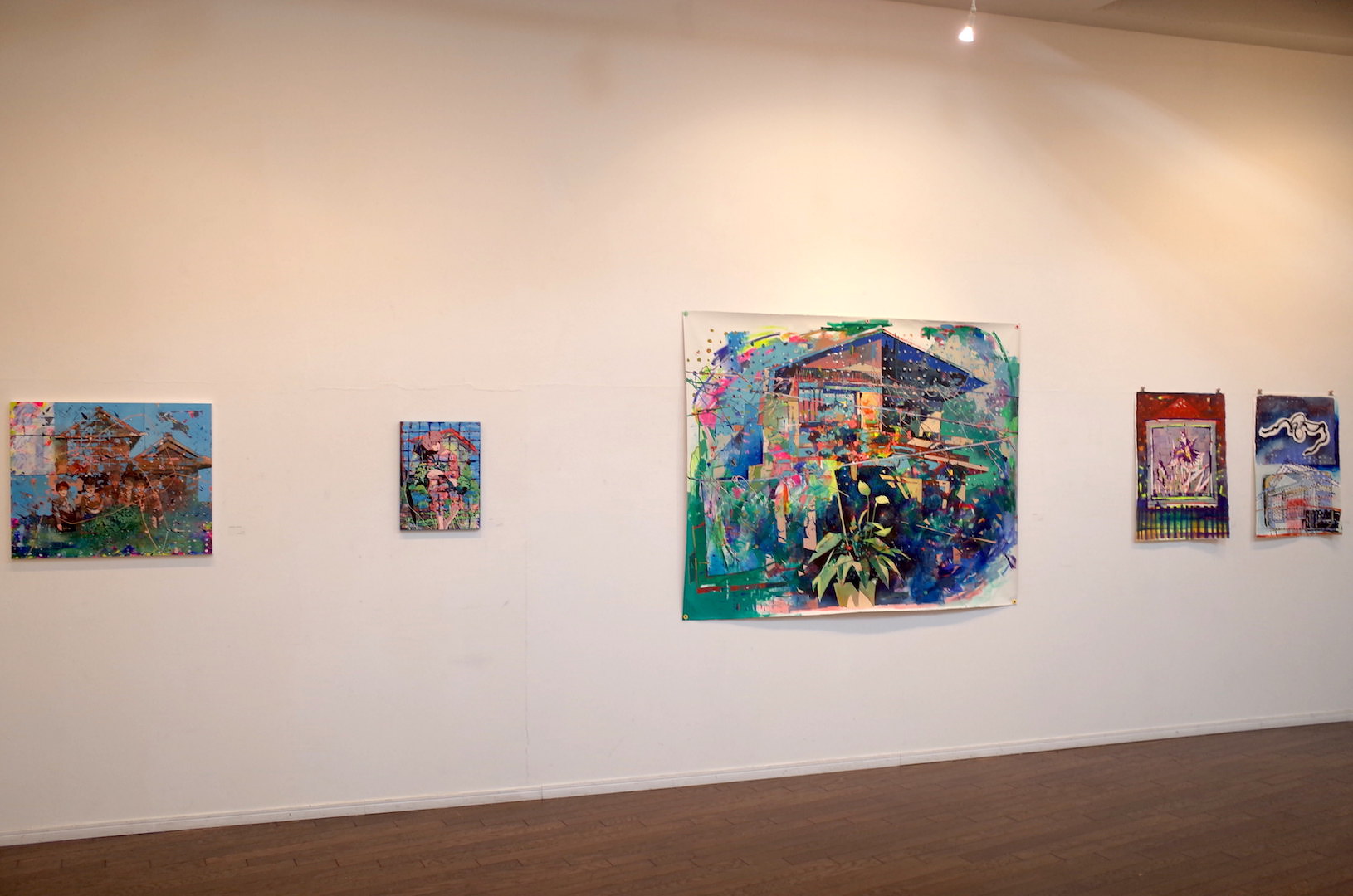
As you move forward from the front, works depicting houses, the theme of this exhibition, are arranged.
The work on the right is titled “Seeds’ Before and After”
The way Ohtsuki depicts houses brings joy, showing her distinctive style clearly.
Large-scale work “Tying Knots to Connect”. It was priced at 500,000 yen, so it was out of reach…
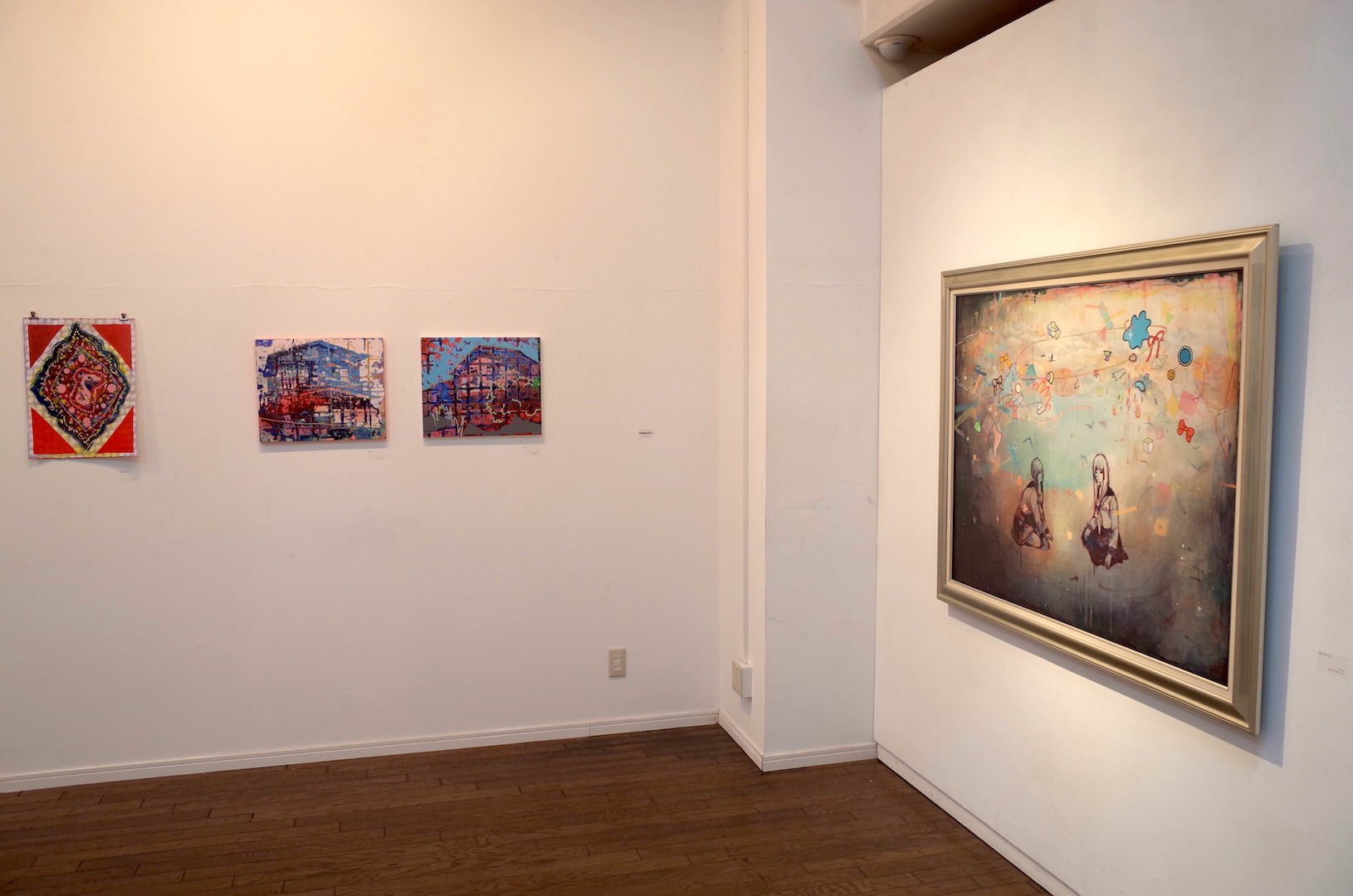
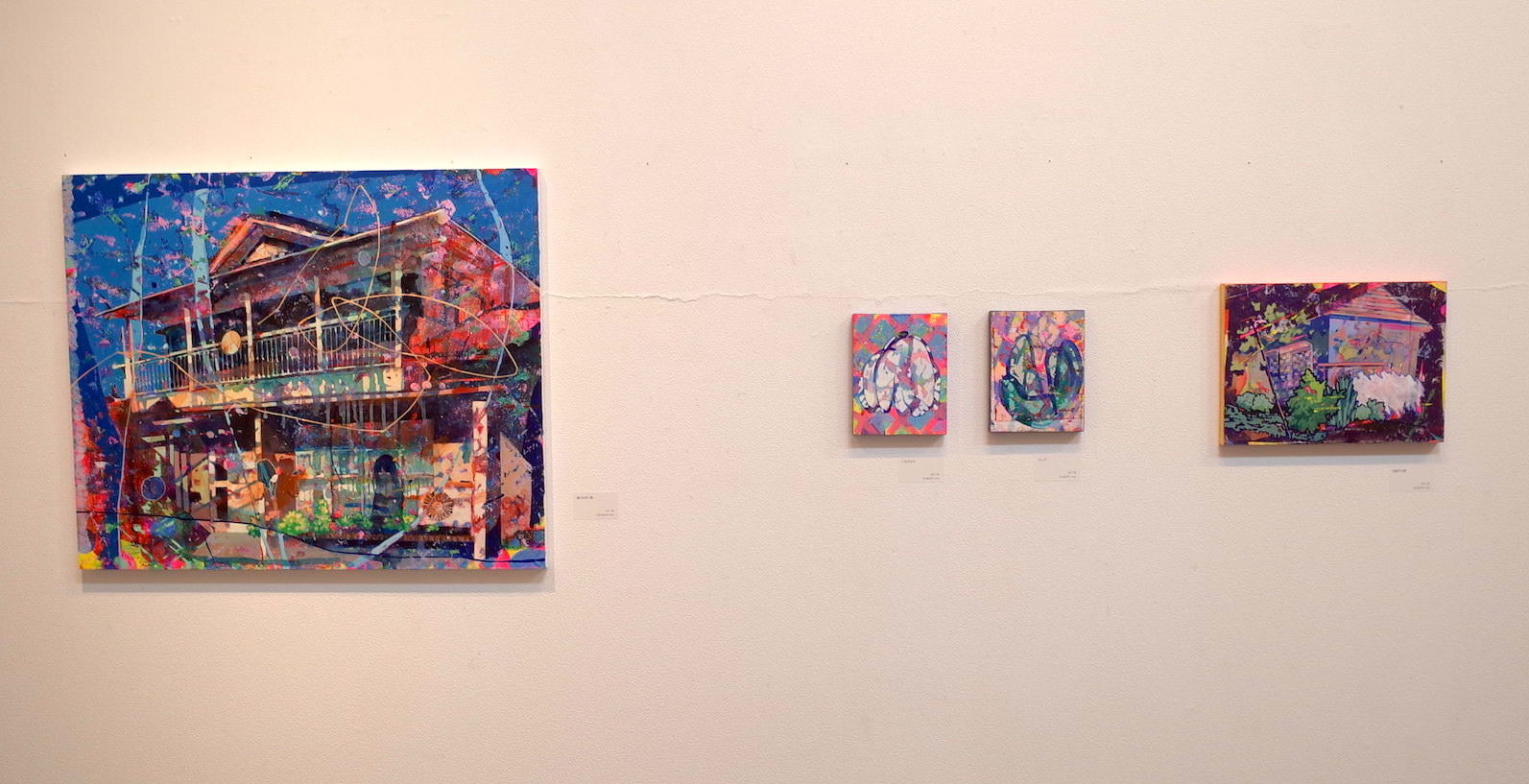
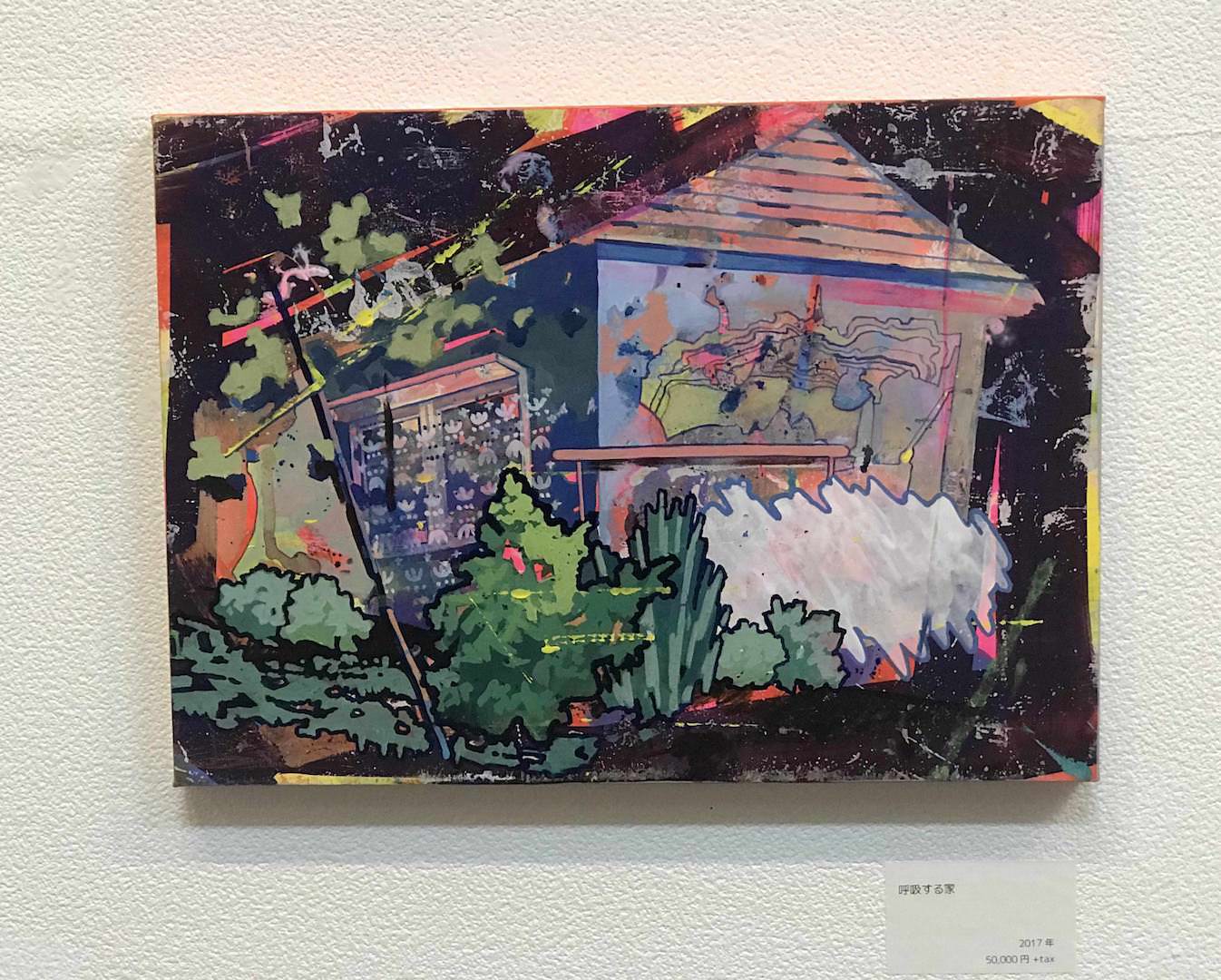
Left is “Vessel with Will”, right is “Breathing House”
The subtitle “Breathing House” is wonderful and marvelous!
Breathing House
Rather than creating paintings as a device for emotional investment, I take a stance more like landscape painting, with an objective viewpoint, so it might be more enjoyable if people talk about the painting and engage with each other rather than confronting their own emotions. Maybe being able to make associations or recall memories is closer to the essence #Cross Section of Life#Fragments of Death
Anyway, the spacious gallery is filled with many works that never grow tiresome. The file of previous drawing works near the reception is also an enjoyable project that feels like reviewing her history. By looking back at her previous works, you will surely sense that this has become “Kana Ohtsuki’s greatest exhibition ever.”
Compared to her previous focus on immature girls as a theme, this exhibition represents a changed stage and a bold new direction. Behind the approachable works, there is a solid theme, and as an artist she makes clear statements, while maintaining her pop color palette and distinctive descriptive power—I felt a very good balance in all this.
I sense further interesting possibilities if more violent, sharp edges and rough, noise-like qualities emerge, but what kind of works will she present going forward? The anticipation never ends.
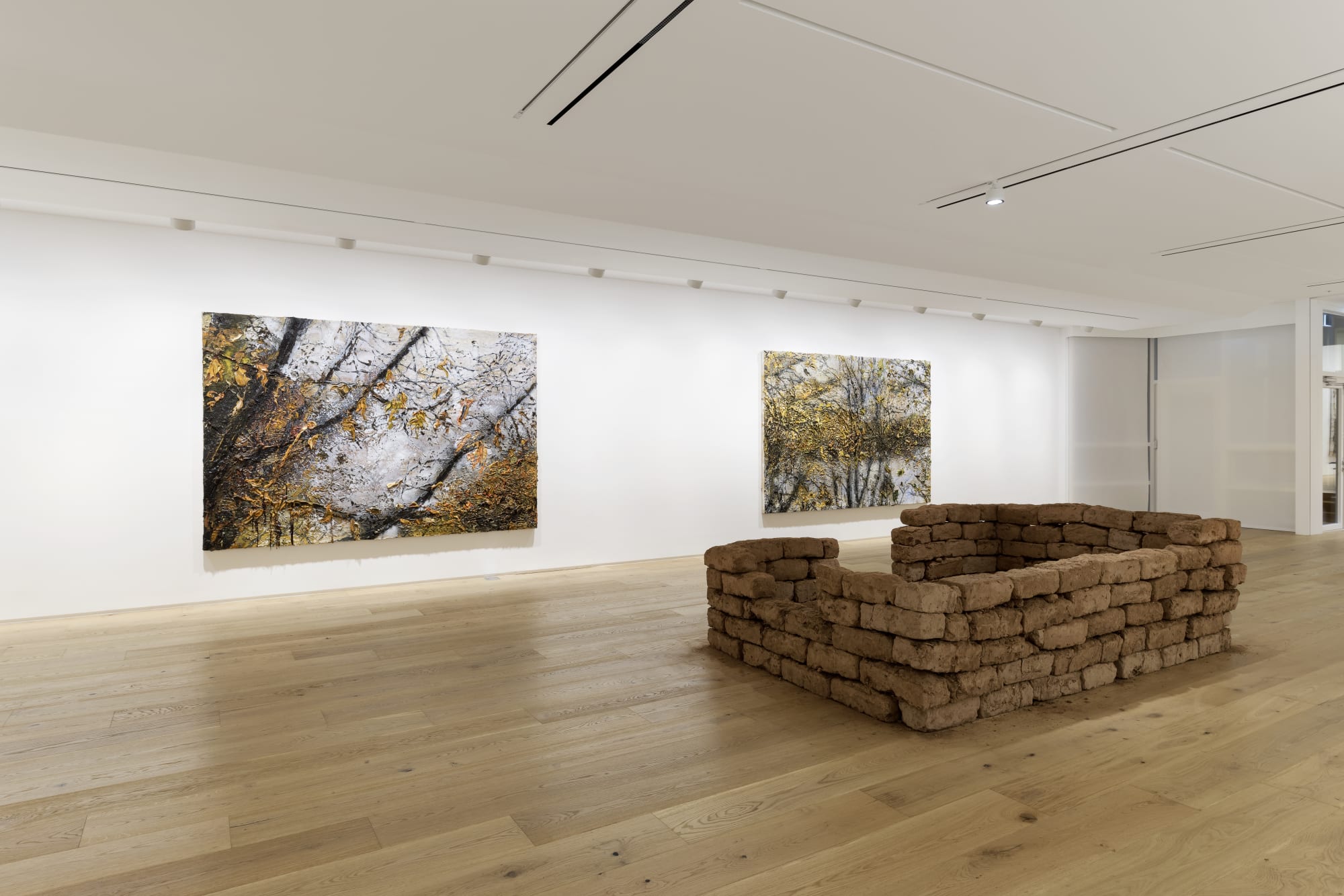
The foreground work is “Houses from Long Ago, Houses, Houses”.
일러스트레이터로 활동 중인 대츠키 카나 씨의 개인전 「생의 단면 / 죽음의 단편」을 방문했습니다. 장소는 아트 컴플렉스 센터(시나노초 역)입니다.
아트 컴플렉스 센터
매우 관심이 있어서 첫날 오전에 서둘러 방문했습니다. 다행히 갤러리에는 아직 방문객이 적어서 천천히 관람할 수 있었습니다. 입구에는 아래 사진과 같이 제목과 설명이 적혀있었습니다.
대츠키 카나
1984년생. 교토부 출신의 미술 작가. 2007년부터 활동을 시작하여 국내외를 불문하고 전시회를 개최하고 있습니다. 주로 아크릴 물감을 사용한 평면 작품을 중심으로, 소녀·번데기·집 등 자신의 관심의 대상인 「껍질」(공·껍질)을 느끼는 모티프를 통해 공허함을 담은 현대 일본의 정경을 포착하려고 합니다.
생의 단면, 죽음의 단편
소녀를 주제로 한 작품이 많은 대츠키 카나 씨이지만, 이번에는 「집」을 주제로 한 작품을 많이 준비했습니다.
이번 개인전은 우리가 살아가는 장소로서의 「집」이라는 주제를 통해 자신의 삶의 실감과 가족 및 주변의 타인의 생사관을 받아들이는 것에 대해 생각하고, 우리가 사는 집과 앞으로 있어야 할 집에 대해 작품을 통해 문제를 제기합니다.
저는 주로 아크릴 물감을 사용한 평면 작품을 중심으로 소녀·번데기·집 등 관심의 대상인 「껍질」(공·껍질)을 느끼는 모티프를 통해 공허함을 담은 현대 일본의 정경을 포착하려고 해왔습니다. 이번 개인전은 우리가 살아가는 장소로서의 「집」이라는 주제를 통해 자신의 삶의 실감과 가족 및 주변의 타인의 생사관을 받아들이는 것에 대해 생각하고, 우리가 사는 집과 앞으로 있어야 할 집에 대해 작품을 통해 문제를 제기합니다.
「생의 단면」이란 우리의 삶의 실감이 어디에 있는지 확인하기 위해 자신의 구조를 쪼개어 드러내는 듯한 이미지이며, 「죽음의 단편」이란 자신과는 다른 타인의 기척을 어디에서 느끼고 살아가는지, 또한 그것을 어떻게 받아들이고 살아갈 것인지에 대한 이미지입니다. 후자는 예를 들어 가족의 유품이나 또한 계승되어온 사상 등 선조가 남긴 어떤 것들을 말하고 있습니다. 우리는 자신과는 다른 가치관을 가진 사람들의 생각을 「집」이라는 공간을 통해 느끼면서 어딘가에서 그것을 받아들이는 것에 대해 생각해왔을 것입니다. 눈에 보이지 않는 기척을 닫아두었던 「집」을 해방하고, 다시 한 번 대면할 것. 집에 관한 주관과 객관을 오가며 작품화하여 발표합니다.
설명을 읽으면 근본에 있는 모티프는 크게 변하지 않은 것 같습니다.
감사합니다! 생사라고 해도 단순히 직접적인 육체적인 것을 표현하고 있는 것이 아니라요. 자신이 무엇으로 살아가고 있는지, 선조 등의 망자로부터 무의식 중에 자신이 무엇을 받았는지 하는 간접적인 「기척」이 주제입니다. #생의단면#죽음의단편https://t.co/lnfiDqxUML
맨 왼쪽은 「껍질이 있다」라는 제목의 작품다작가인 대츠키 카나 씨. 소품도 합리적인 가격으로 많은 라인업이 있었습니다.
그리고 입구에서 향해 오른쪽을 보면 넓은 갤러리 깊숙한 곳에 큰 작품이 전시되어 있습니다.
입구 쪽에서 본 갤러리 실내. 맨 안쪽 작품은 「사라지지 않도록 선을 긋다」
앞에서부터 보며 진행하면 이번 주제인 「집」을 그린 작품들이 나열되어 있습니다.
오른쪽 작품은 「씨앗의 앞뒤」
집의 묘사 방식도 대츠키 씨의 특징이 그대로 드러나 기분이 좋습니다.
대형 작품 「결어서 잇다」. 50만엔이라 손이 안 갔습니다···.
왼쪽은 「의지를 가진 그릇」, 오른쪽은 「숨 쉬는 집」
「숨 쉬는 집」이라는 제목의 절묘함. 정말 훌륭합니다!
숨 쉬는 집
그림을 감정이입의 장치로 만들려기보다는 풍경화 같은 객관적인 시선으로 뭔가 주워담을 수 없을까 하는 자세이기 때문에 자신의 감정과 대면하는 것이 아니라 그림을 보고 사람들이 이것저것 얘기했으면 좋겠어요. 뭔가를 연상하거나 생각나는 것이 있었을 때 그것이 본질에 가까울 것 같습니다 #생의단면#죽음의단편