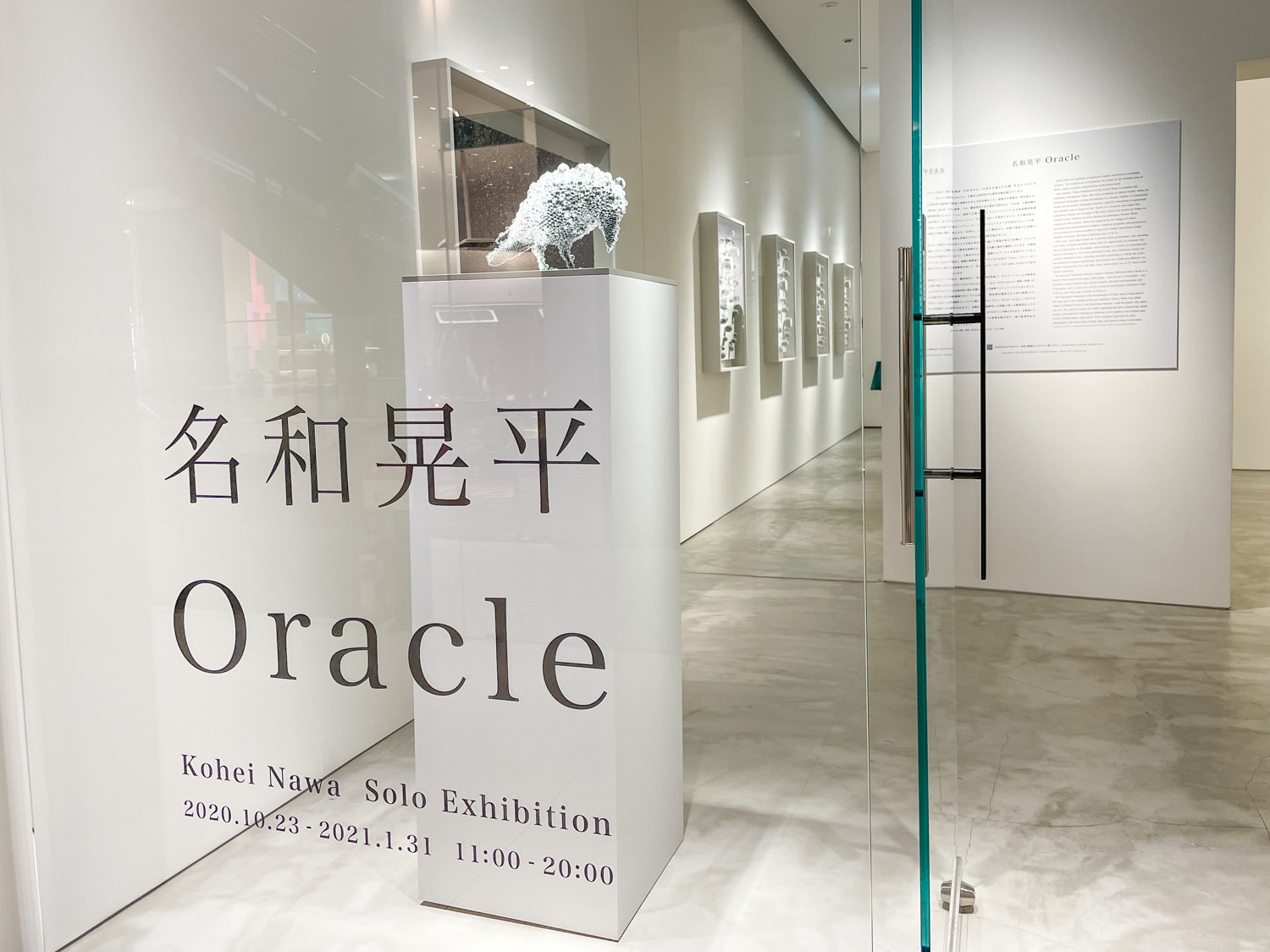
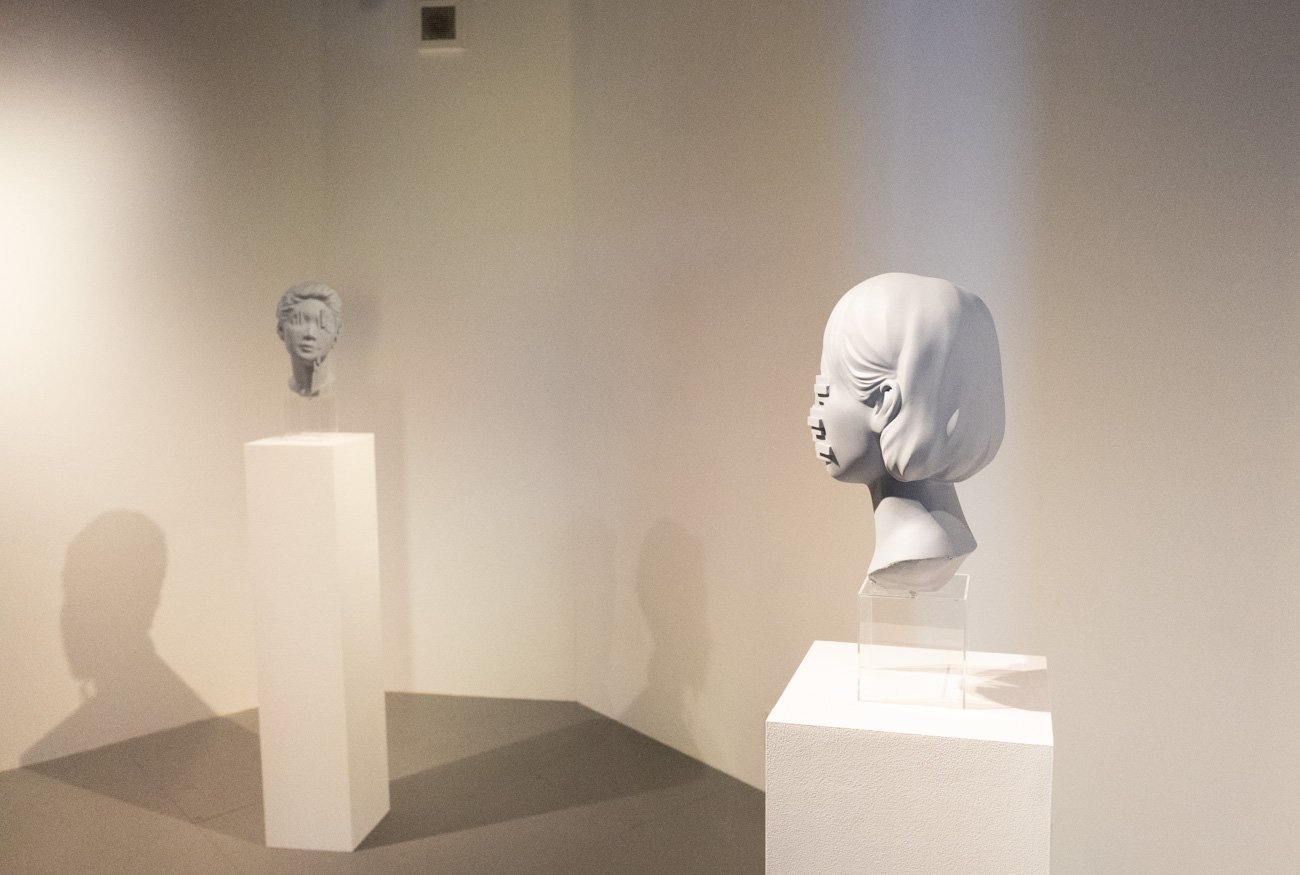
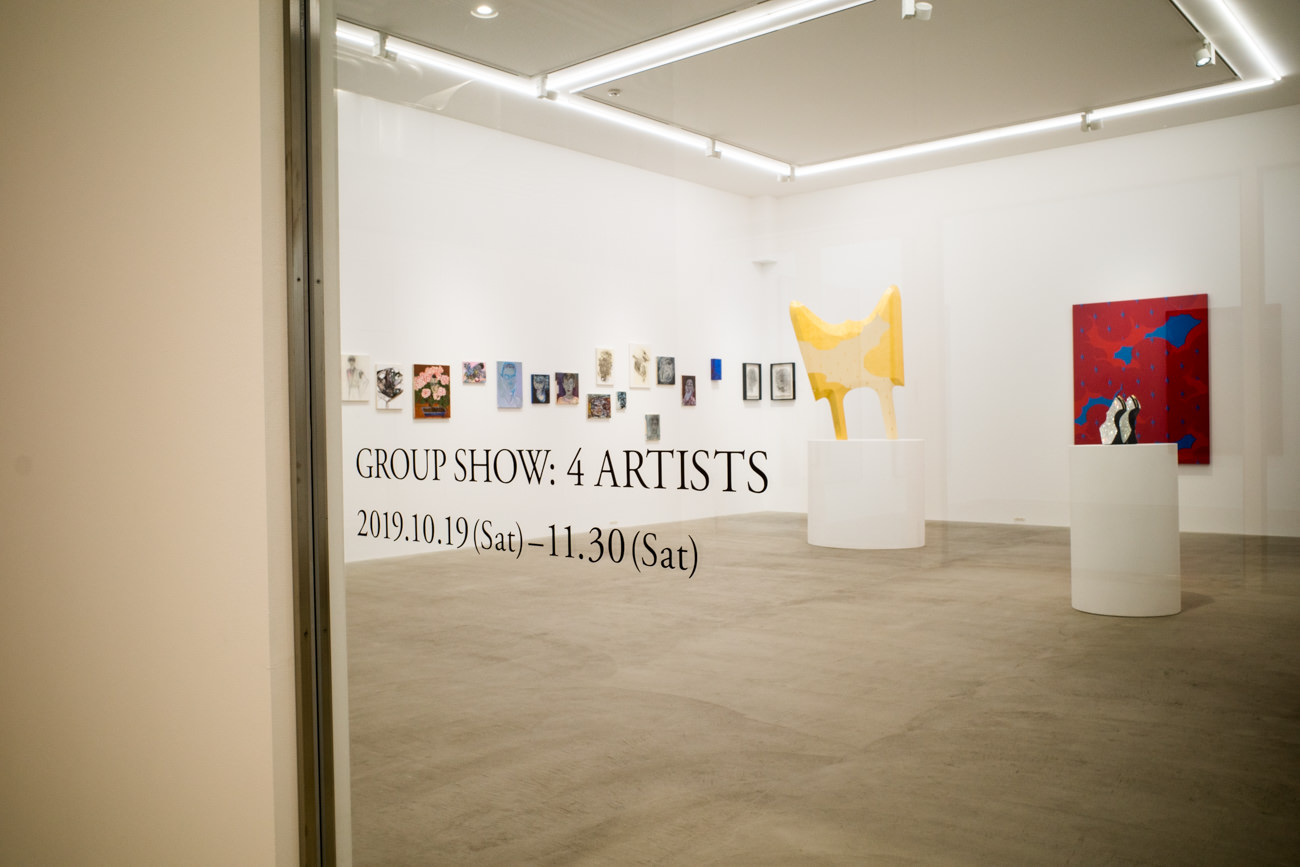
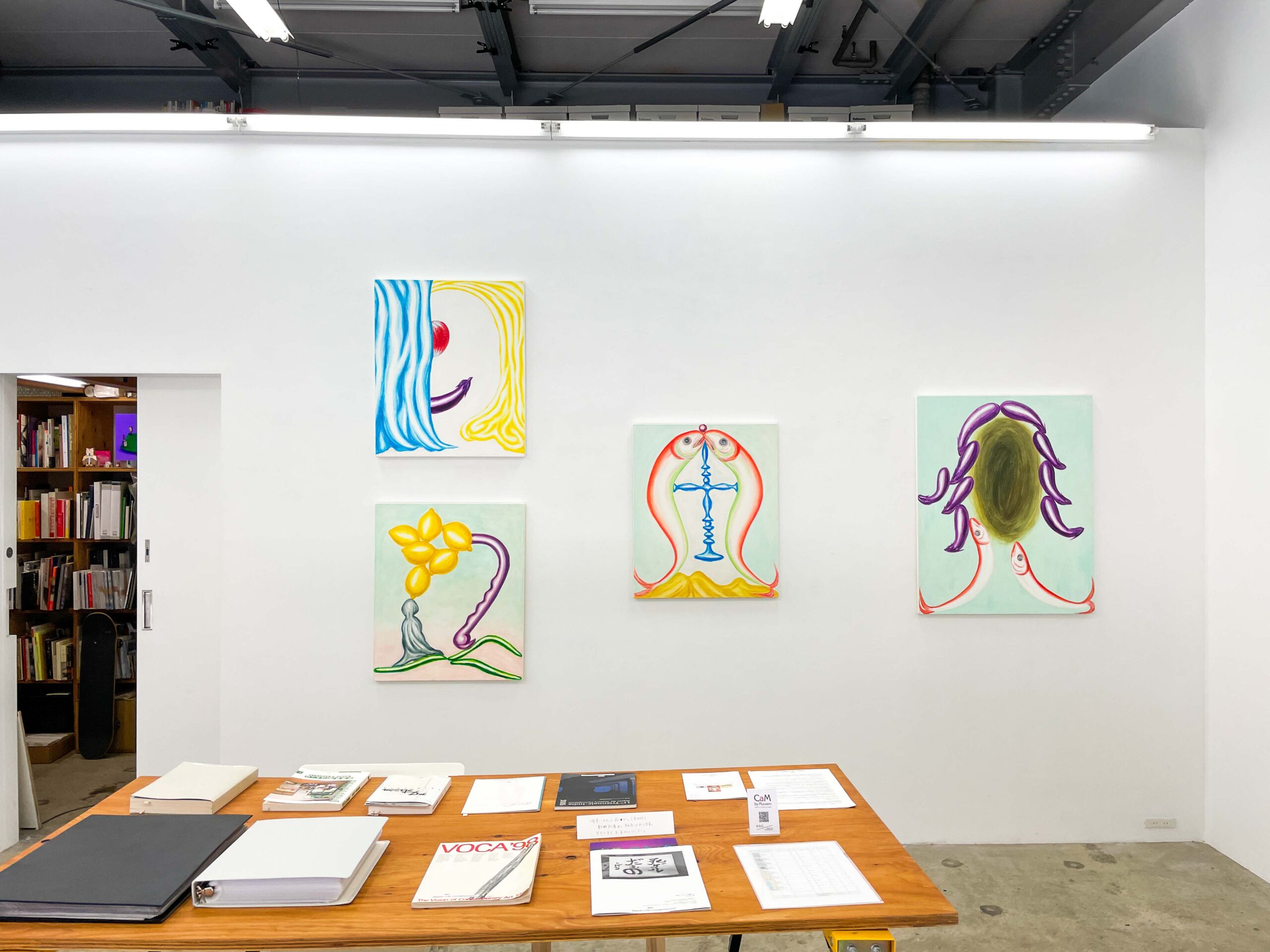
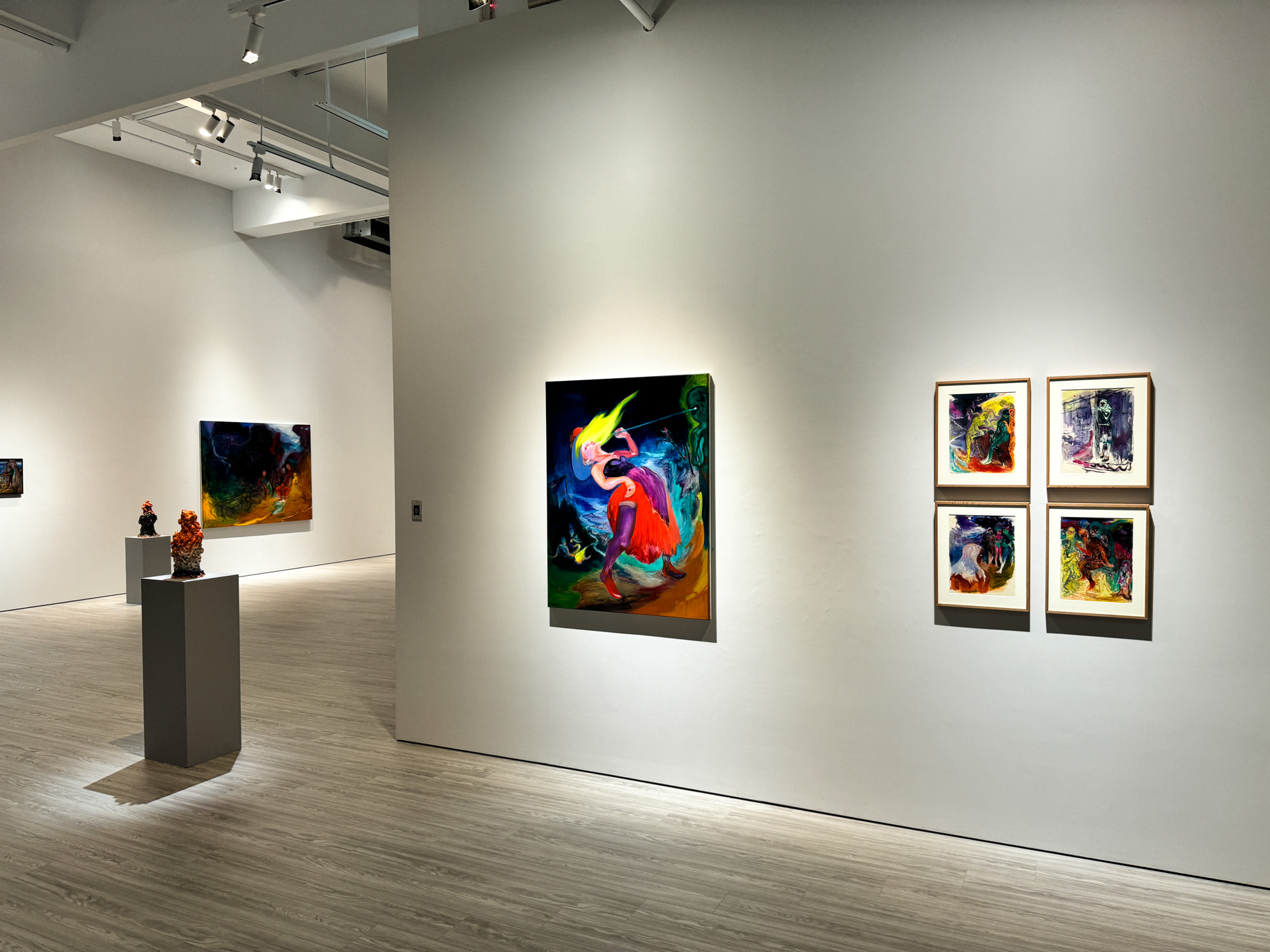
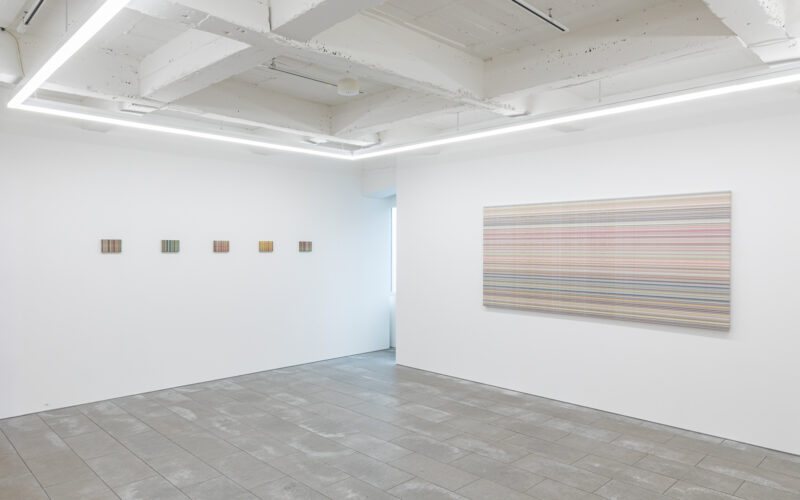
We visited Kohei Nawa’s solo exhibition “Oracle.” The venue is GYRE GALLERY on the third floor of the GYRE building in Omotesando.
Kohei Nawa “Oracle”
Exhibited Works
The exhibition centered on new works produced during the COVID-19 pandemic, featuring numerous series pieces.
PixCell
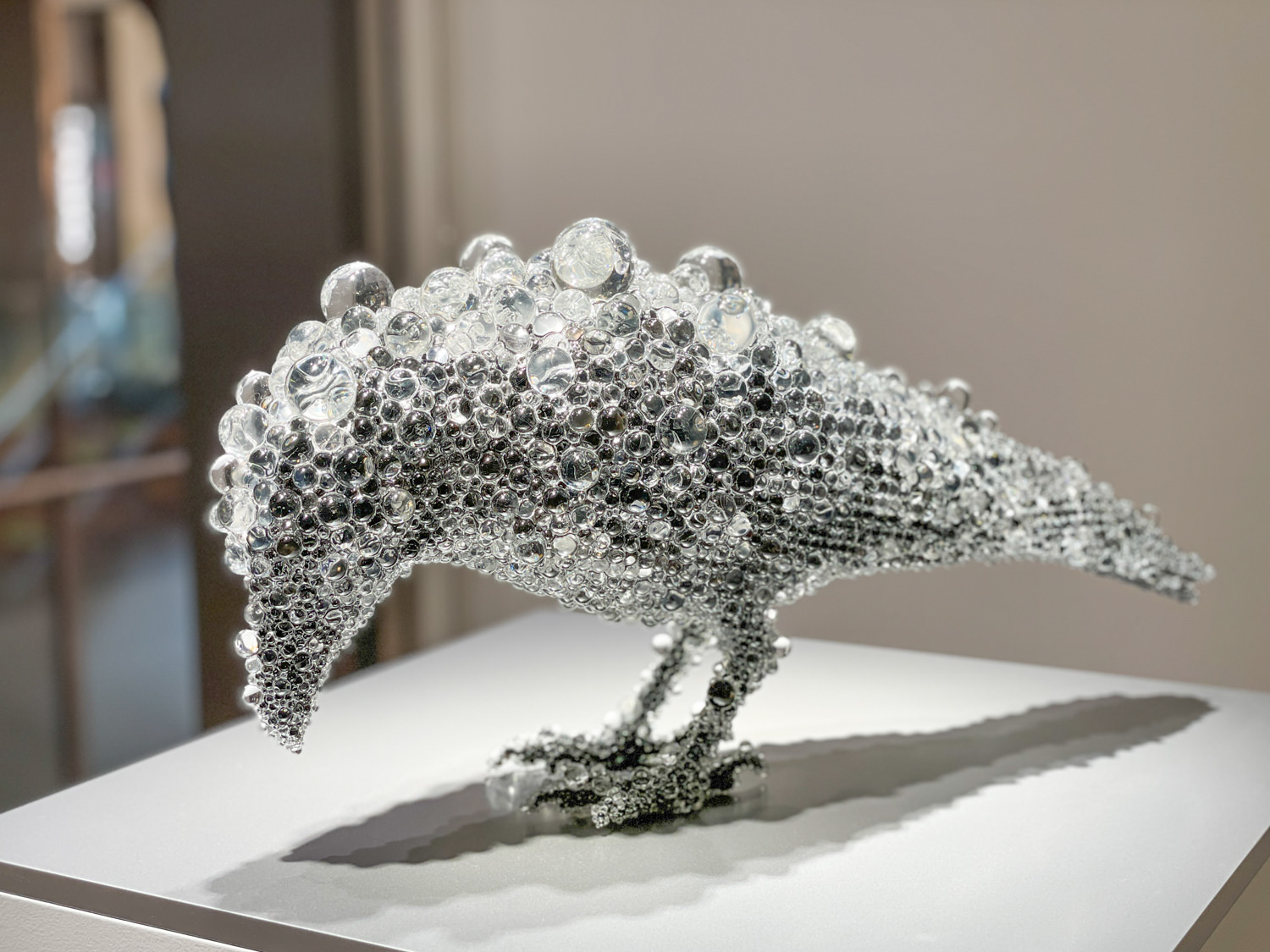
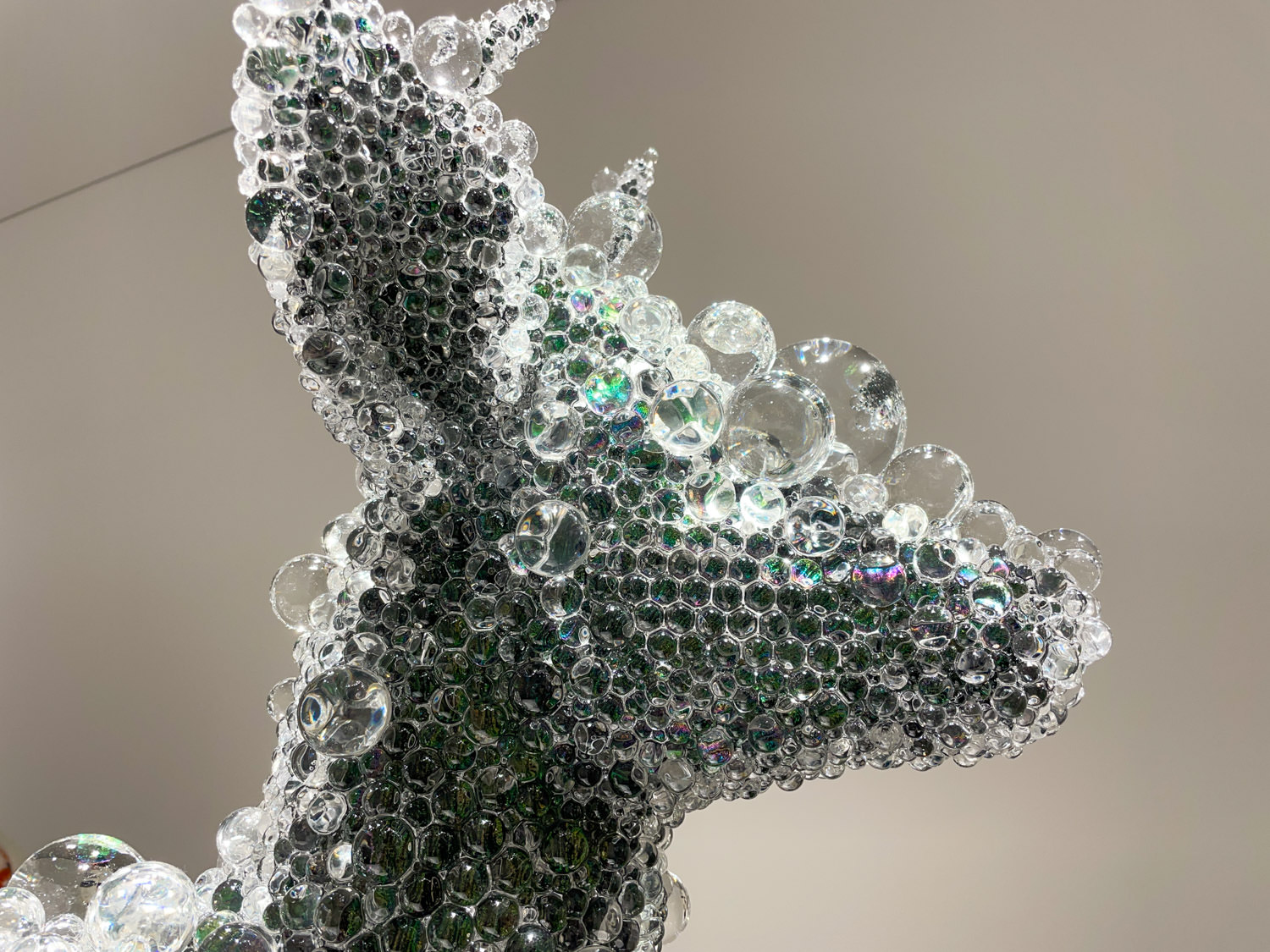
Kohei Nawa, PixCell-Crow#5, 2020
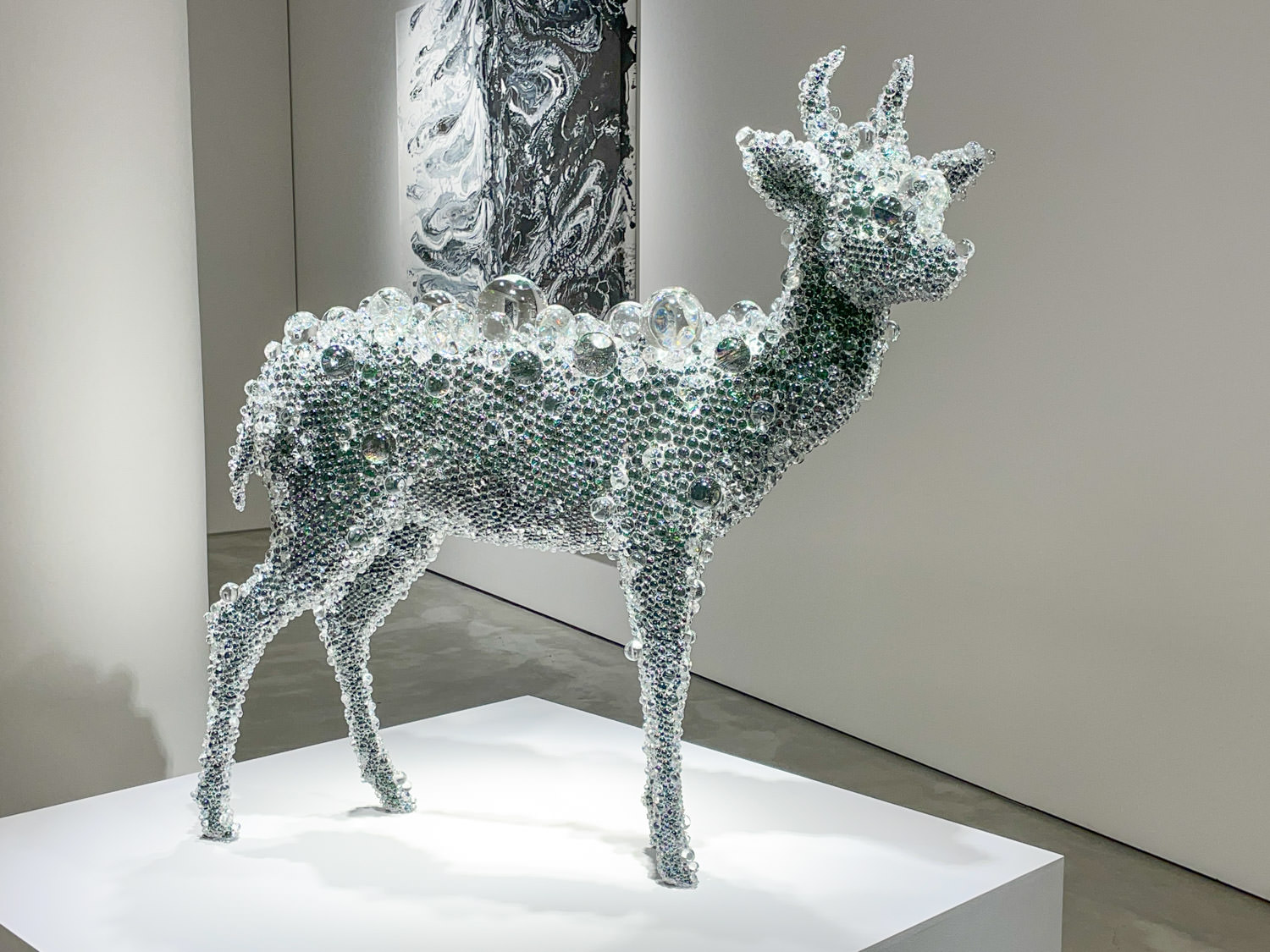
“PixCell” is a sculptural work that covers an object with transparent spheres, transforming its existence into “cells of image.” The object is collected via the internet and, like an image (an assembly of Pixels) appearing on a PC screen, is “sheathed” by countless Cells. Once the whole surface is covered by spheres of varying sizes, the outer skin is divided into individual cells (PixCells), and the object comes to be “observed” through magnifying and distorting lenses. Born amid the waves of globalism and advanced informatization, this series reflects the mutual relationship between the digital camera lens and the objects informatized through it, generating a visual-tactile experience that questions the reality of the surfaces of things.
*PixCell: a coined term combining Pixel and Cell.
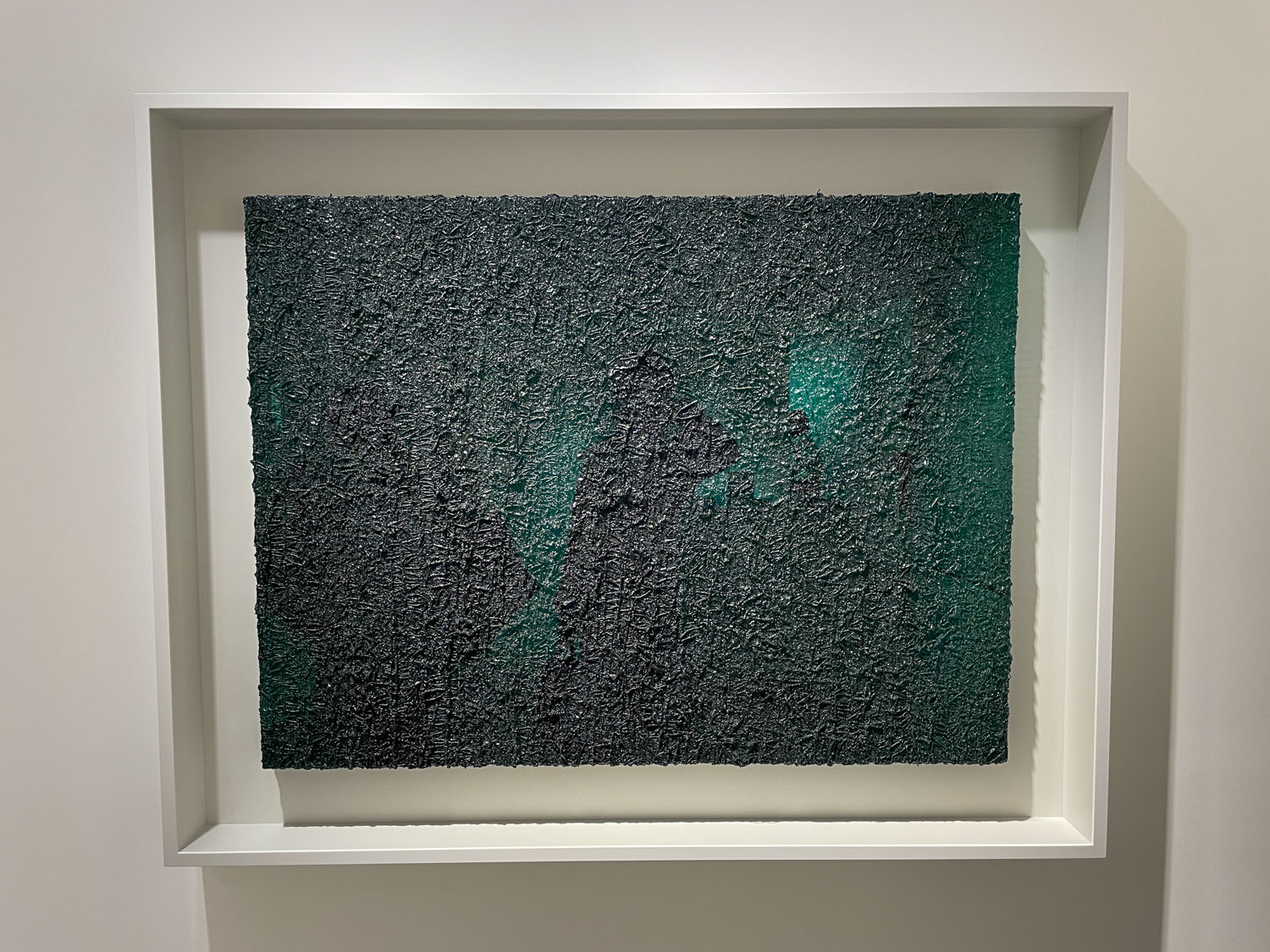
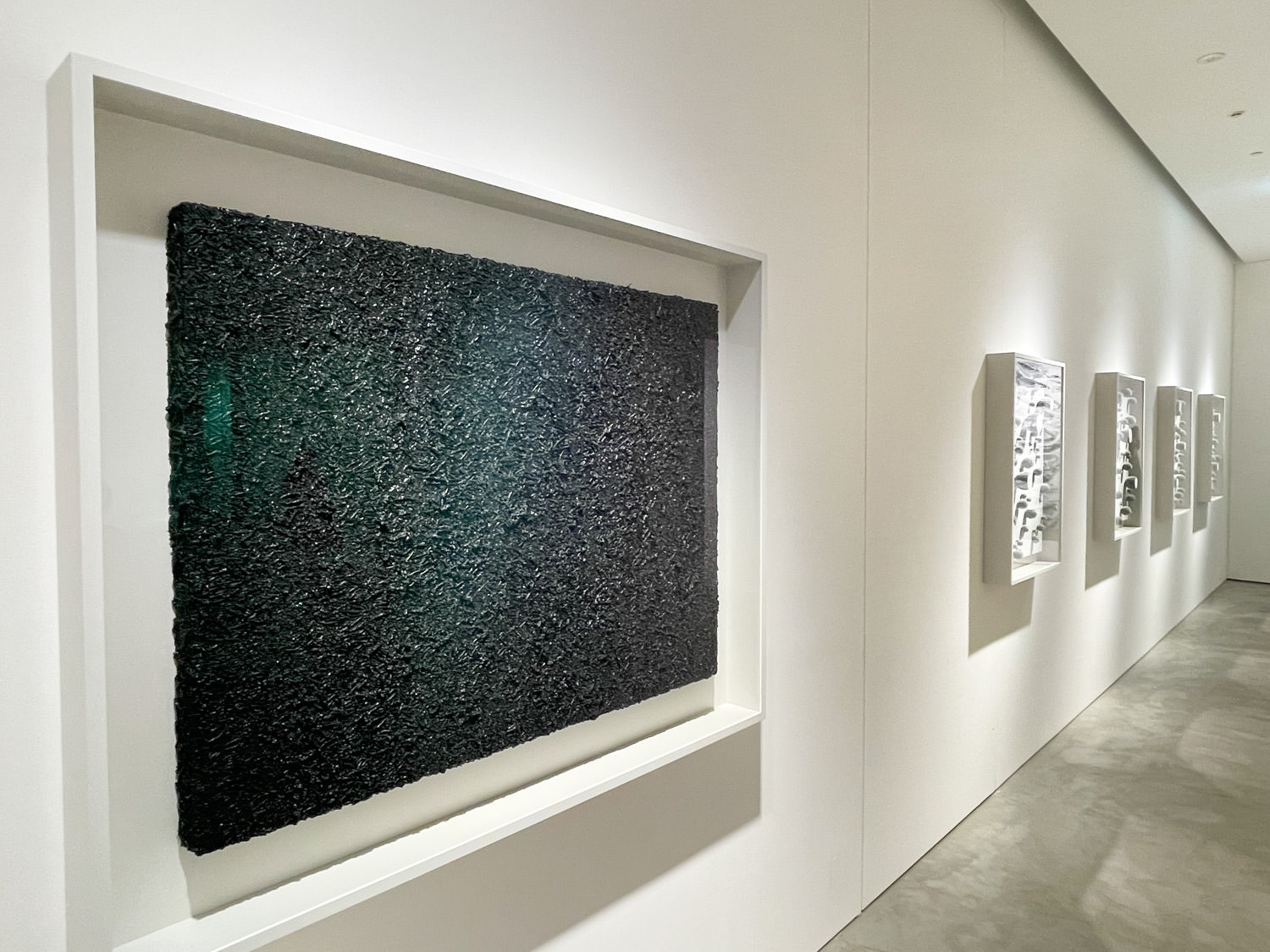
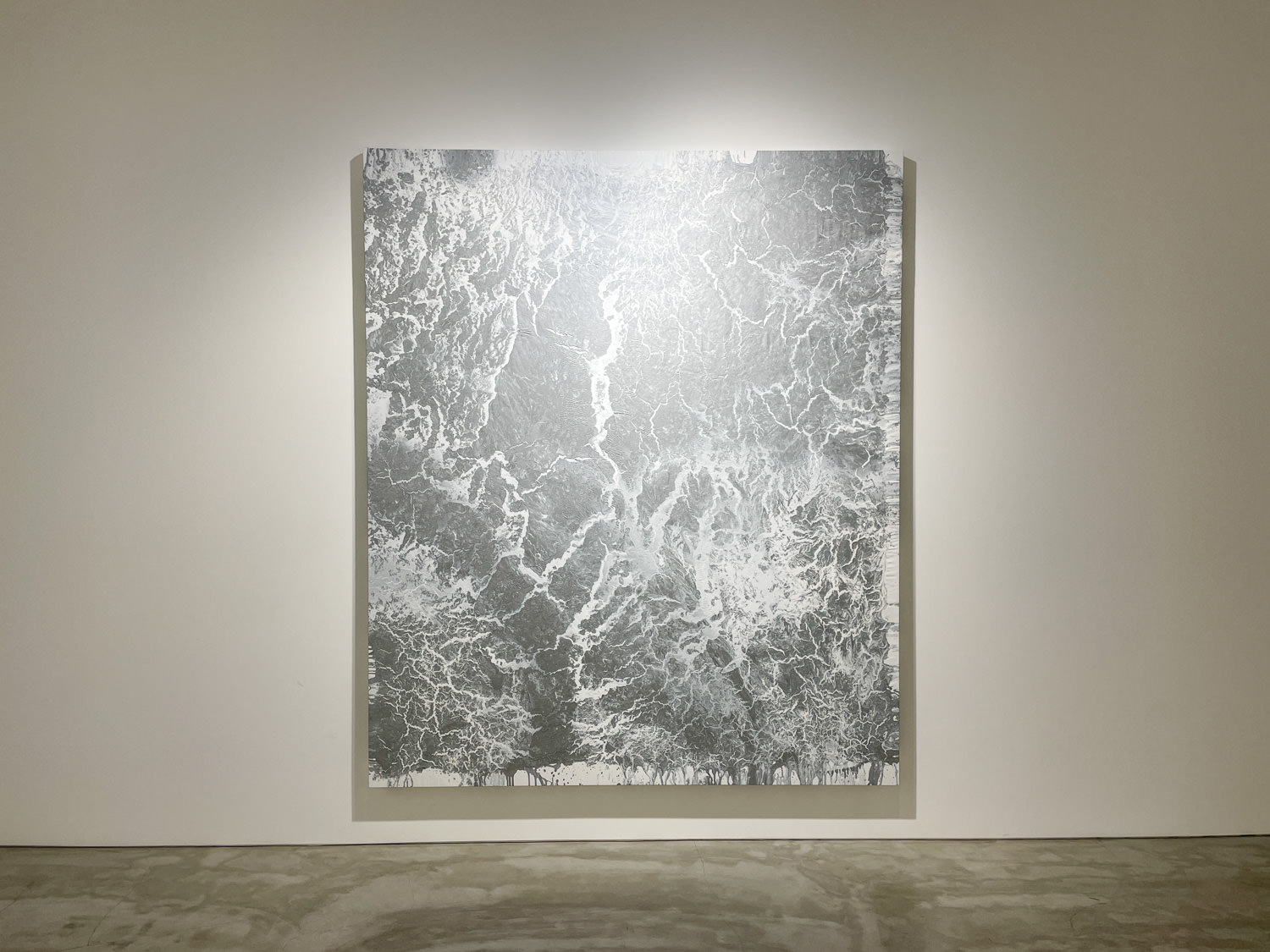
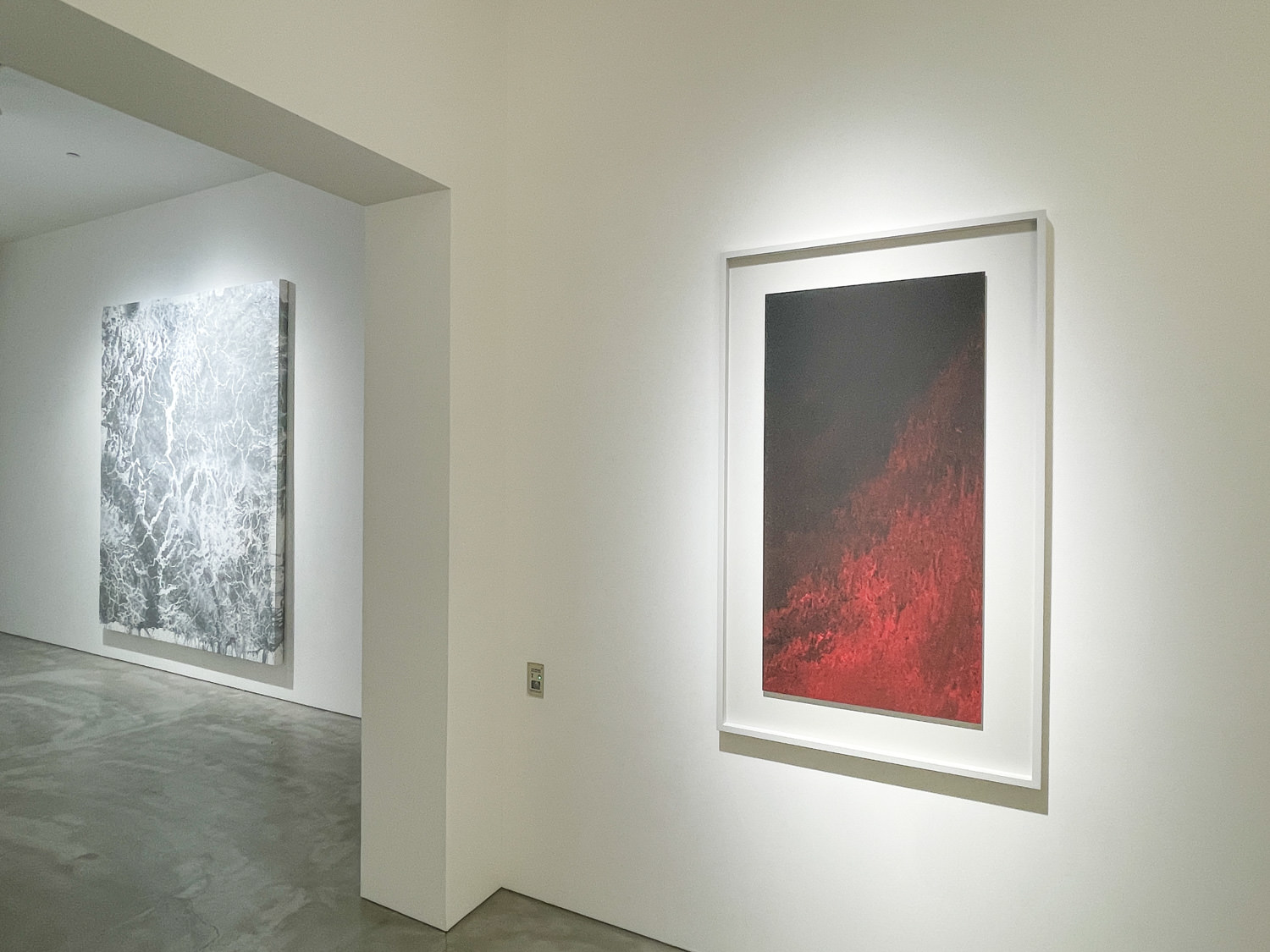
“Black Field” is a work whose subject is a “field” that continues to change state over several months due to the mixing properties of oil paint and oil.
The black oil paint layered on a board panel gradually oxidizes and hardens starting from the parts exposed to the air. Throughout the run of this solo exhibition, the surface will continue to inscribe textures of contraction and rupture across the entire picture plane.
In the early stages of production, even smooth areas develop wrinkles over two to three weeks, and parts unable to withstand the tension of the skin end up tearing. From the torn areas, liquid oil paint saturated with oil is exposed, and new reactions begin. The process by which the phenomenon shifts into representation resembles soil enduring repeated cycles of wind, rain, and sunlight; the “cracks” also evoke the “stomata” in the epidermis of plants that open and close through changes in cell turgor pressure.
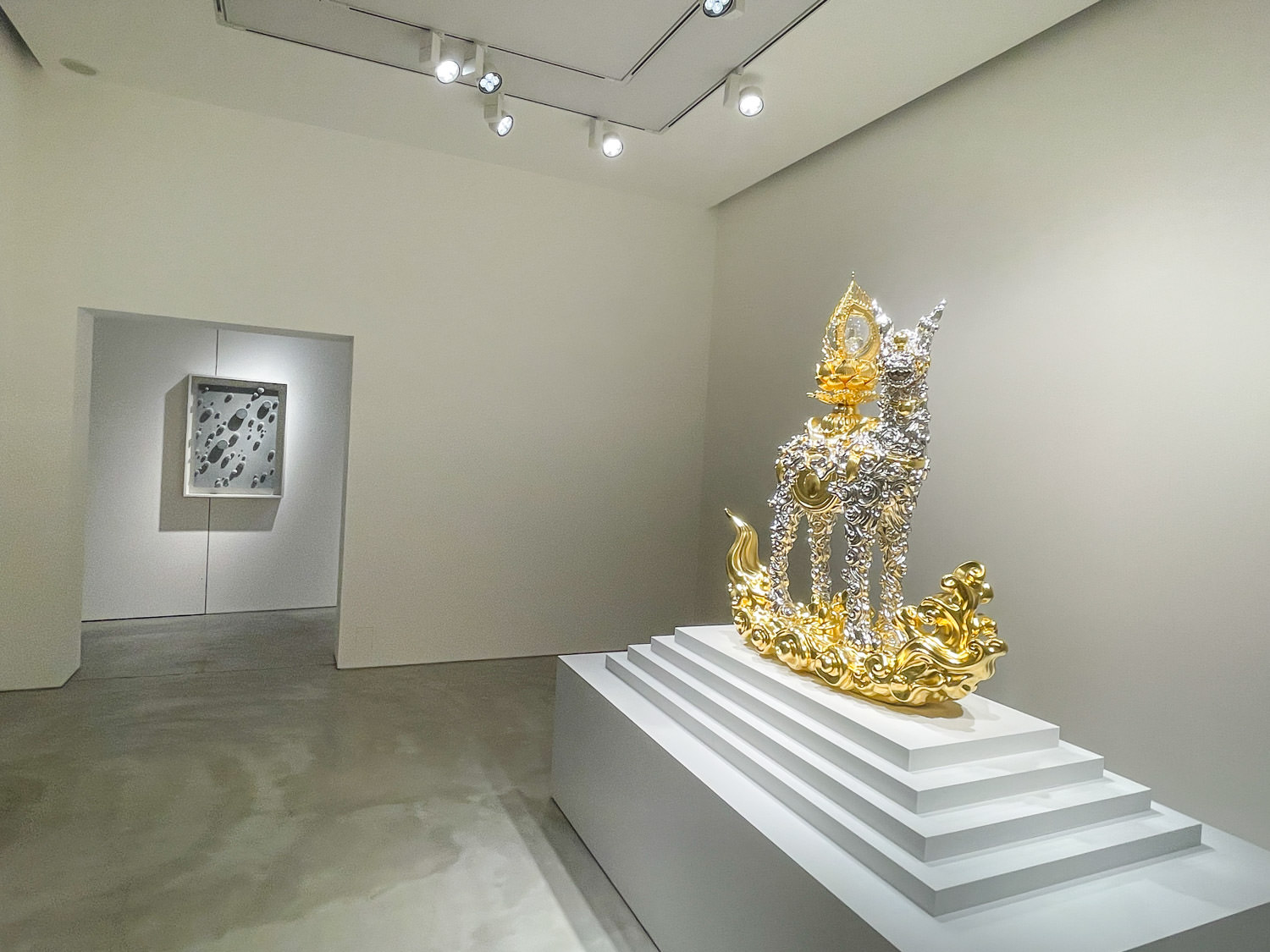
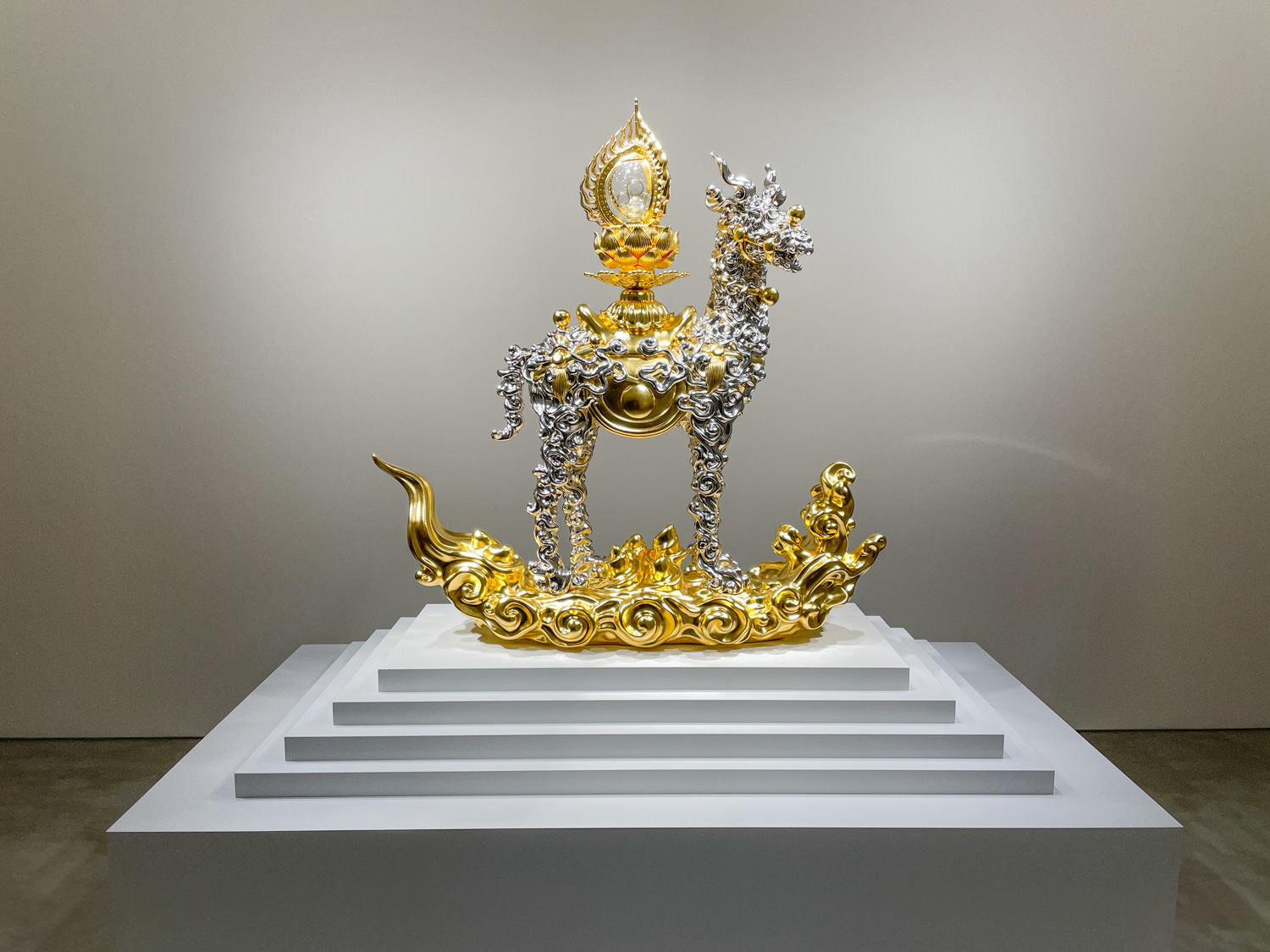
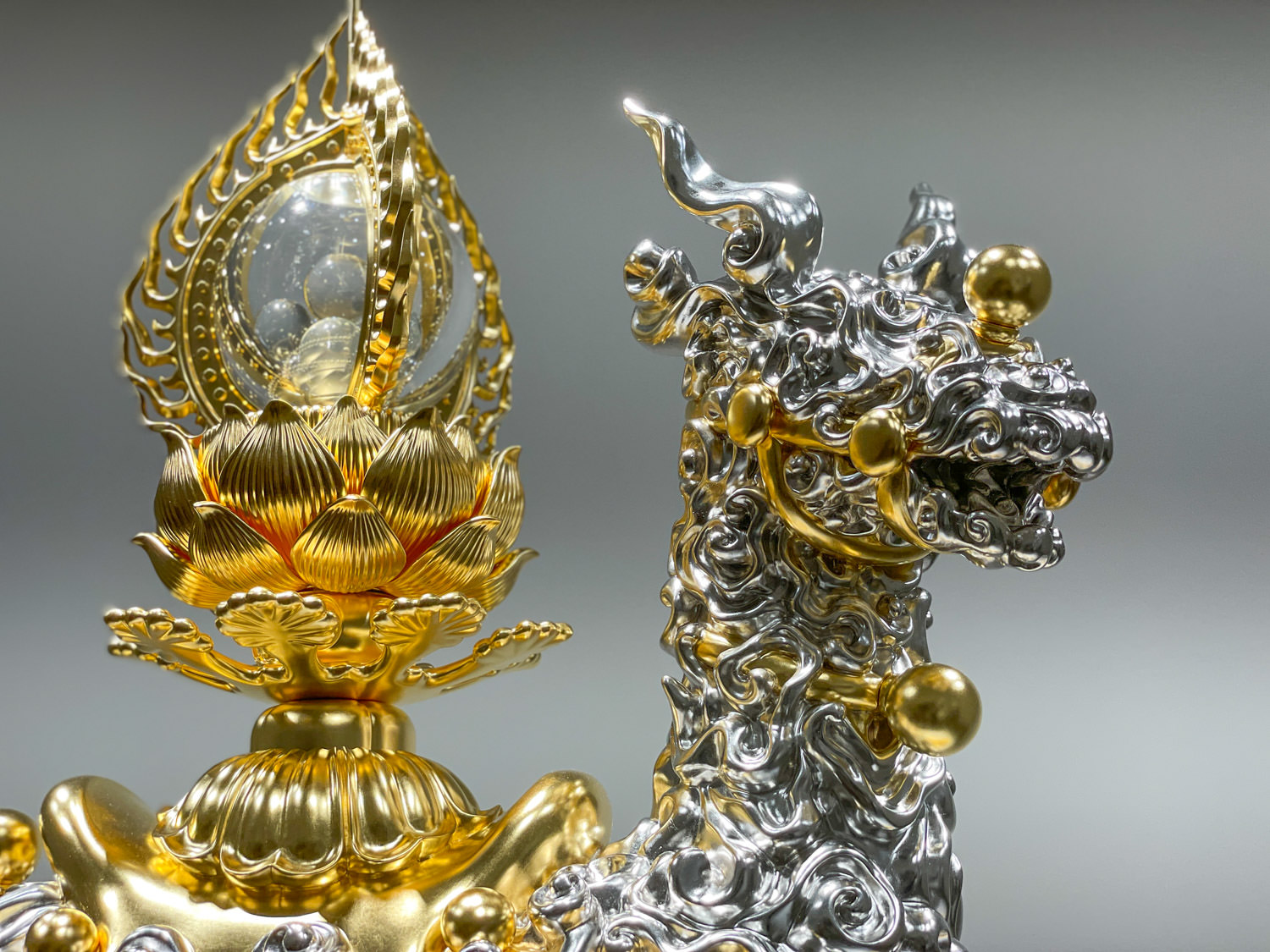
The form of a sacred deer flying to Kasuga on a cloud is emblematic within the art history of Nara, representing Takemikazuchi-no-Mikoto, the enshrined deity of the First Sanctuary of the Main Hall of Kasuga Taisha Shrine, descending from Kashima to Kasuga upon a deer.
Trans-Sacred Deer (g/p_cloud_agyo) takes as its motif the sacred deer of the “Kasuga Shinroku Shari Zushi (Reliquary of the Sacred Kasuga Deer),” said to have been created between the Kamakura and Nanboku-cho periods; data was produced on a 3D system, and the work was fabricated using traditional techniques such as wood carving, lacquering, and gold-leaf gilding.
The sacred deer itself takes on a cloud-like shape, and on the saddle upon its back is enshrined a flaming jewel resting on a lotus throne. As if summoning a divine messenger, it manifests in the present world after traversing eons of time.
Trans-Sacred Deer (g/p_cloud_agyo) *Detail
Dune
Kohei Nawa, Dune#11, 2020
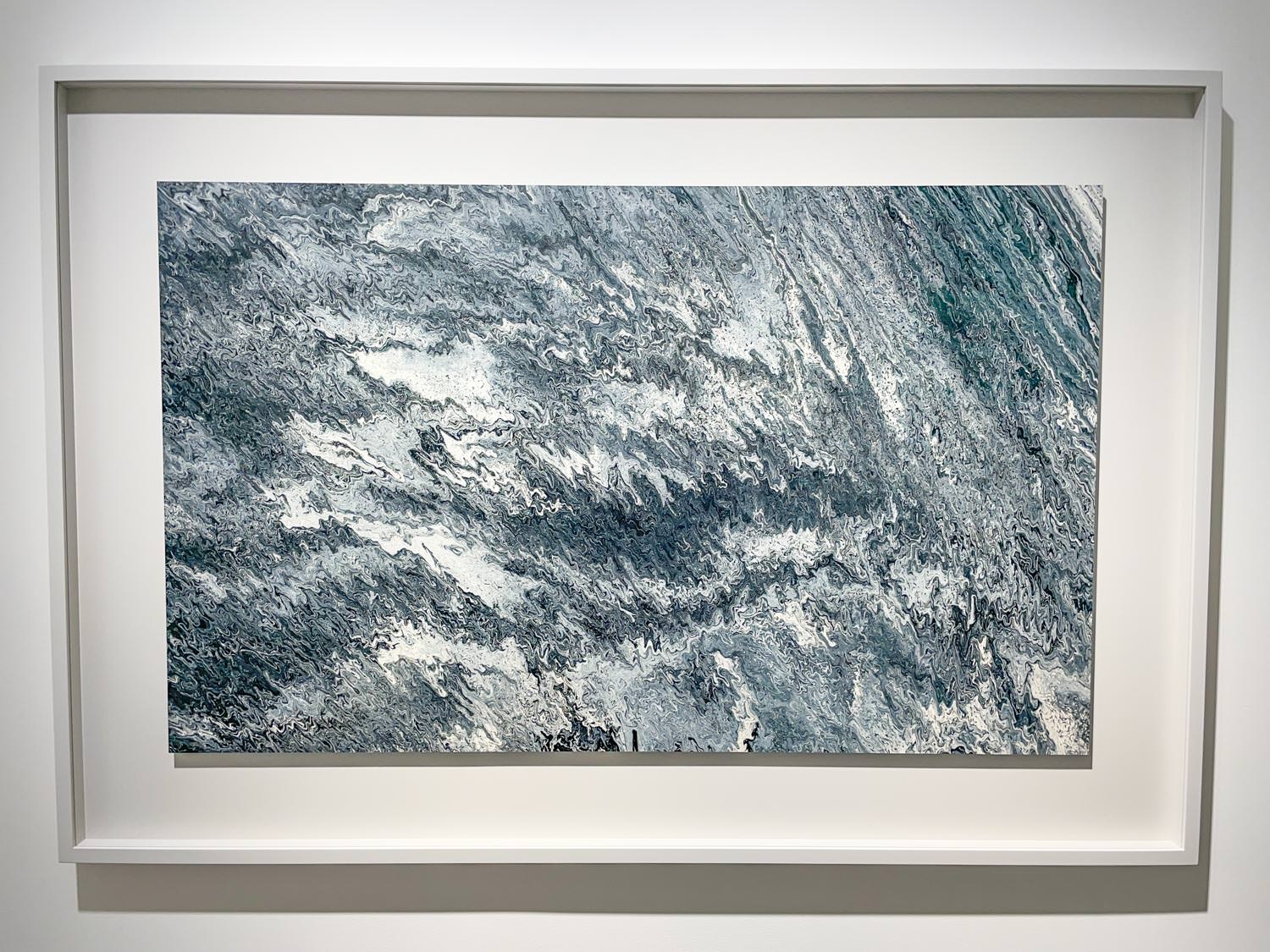
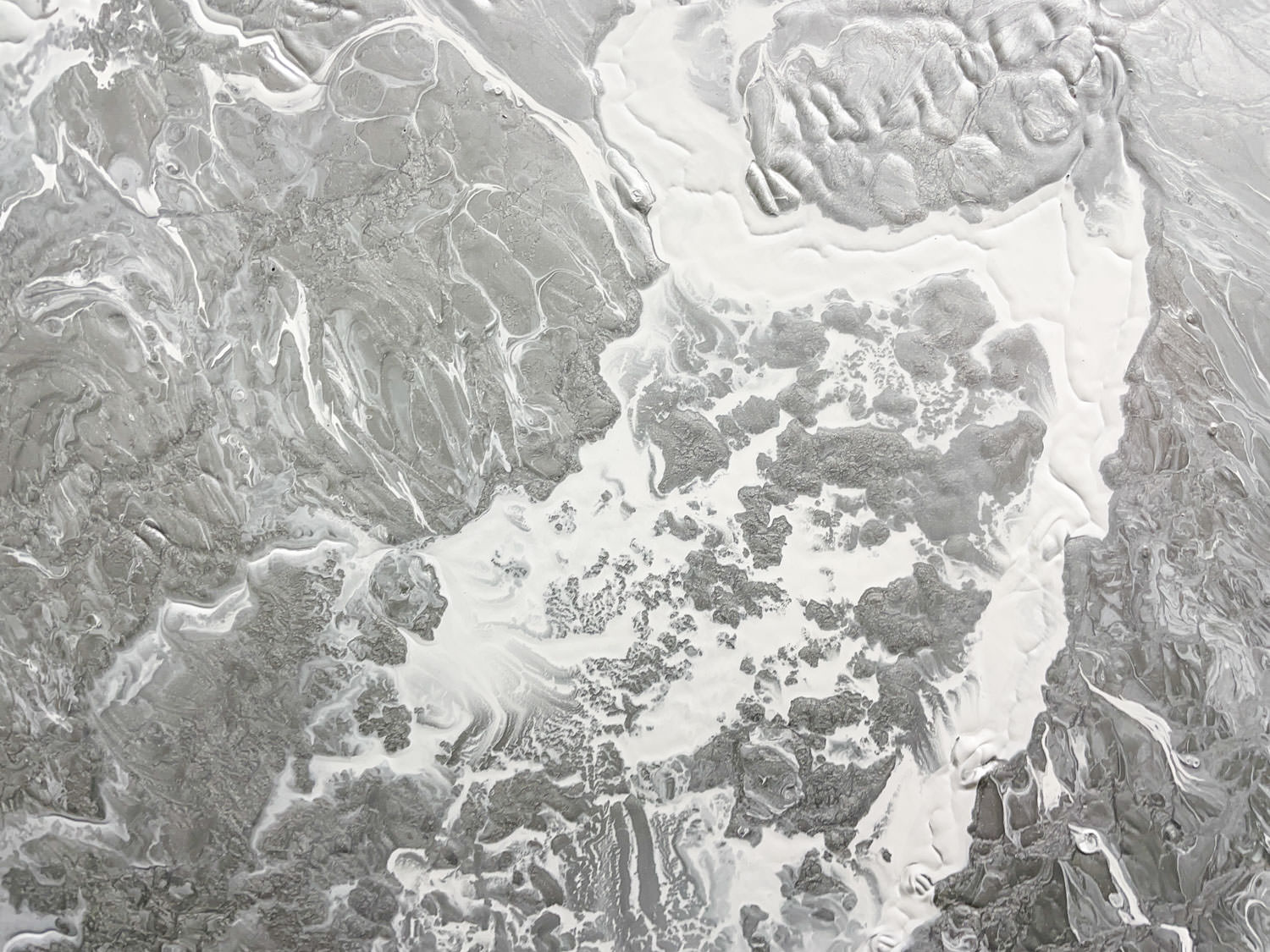
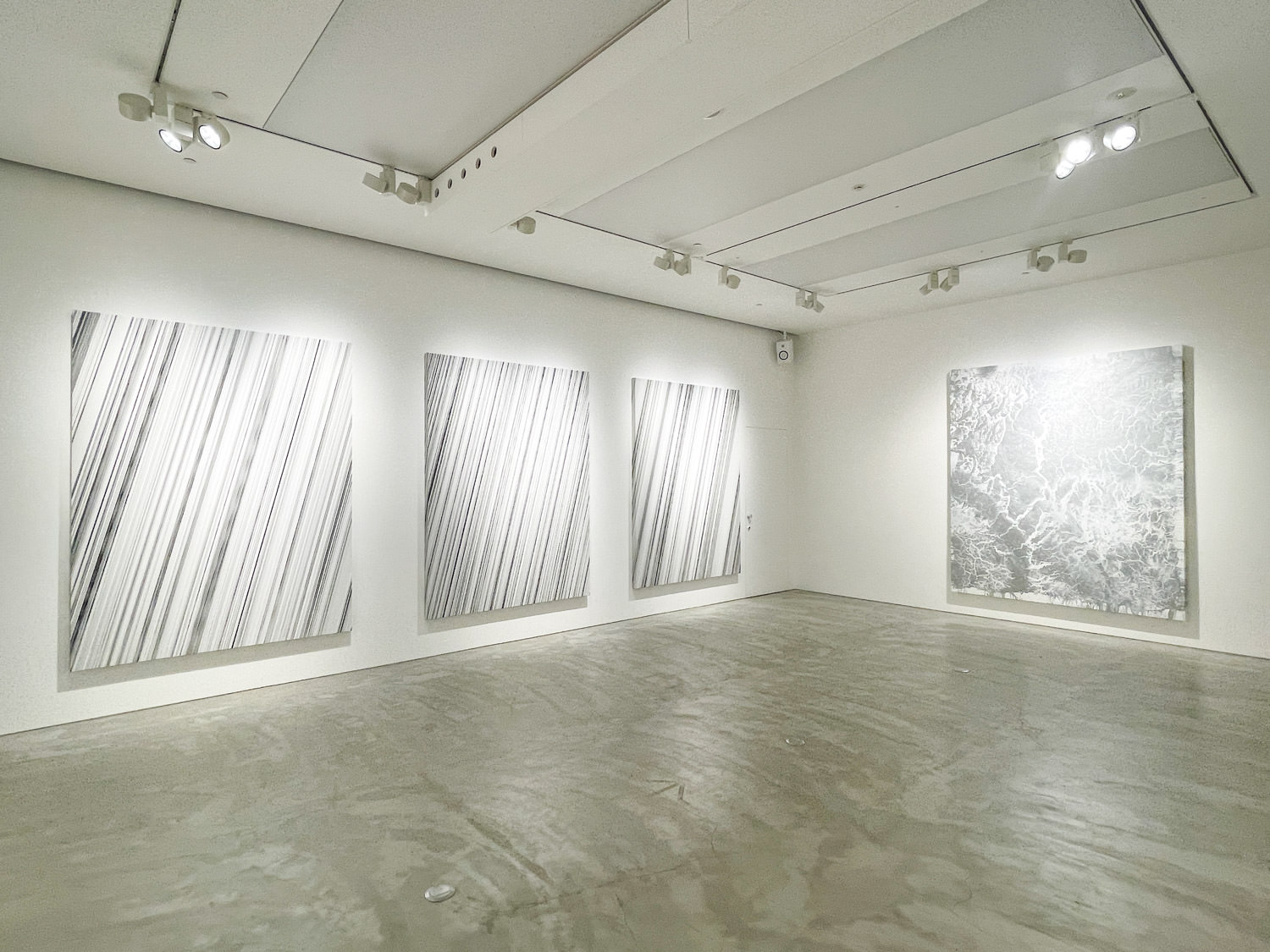
“Tornscape” (2019), which applied the formation theory of Martian sand dunes as a program and used physical simulation to depict the transformation of a landscape according to types of flowing sand and meteorological conditions, was a video installation themed on the impermanence of the “Hojoki,” generating natural disasters and epidemics like a picture scroll. The series “Dune” began from the trial-and-error question of whether such a transforming landscape could this time be expressed as drawing using actual paint, arising from the experience of collaborating with programmers on the computer.
“Dune” is a painting series in which multiple media, paints of varying granularity, water, and other materials are mixed together and spread across a support; a range of expressions arises from the relationship between the viscosity of the medium and the inclination of the support. It is a horizontal deployment made by collecting and recycling the paint — the so-called waste effluent — that had flowed vertically down the canvas by gravity in “Direction.” The complex expressions arising from differences in material properties evoke the sensation of gazing from above at the relationship between meteorological phenomena and landscape.
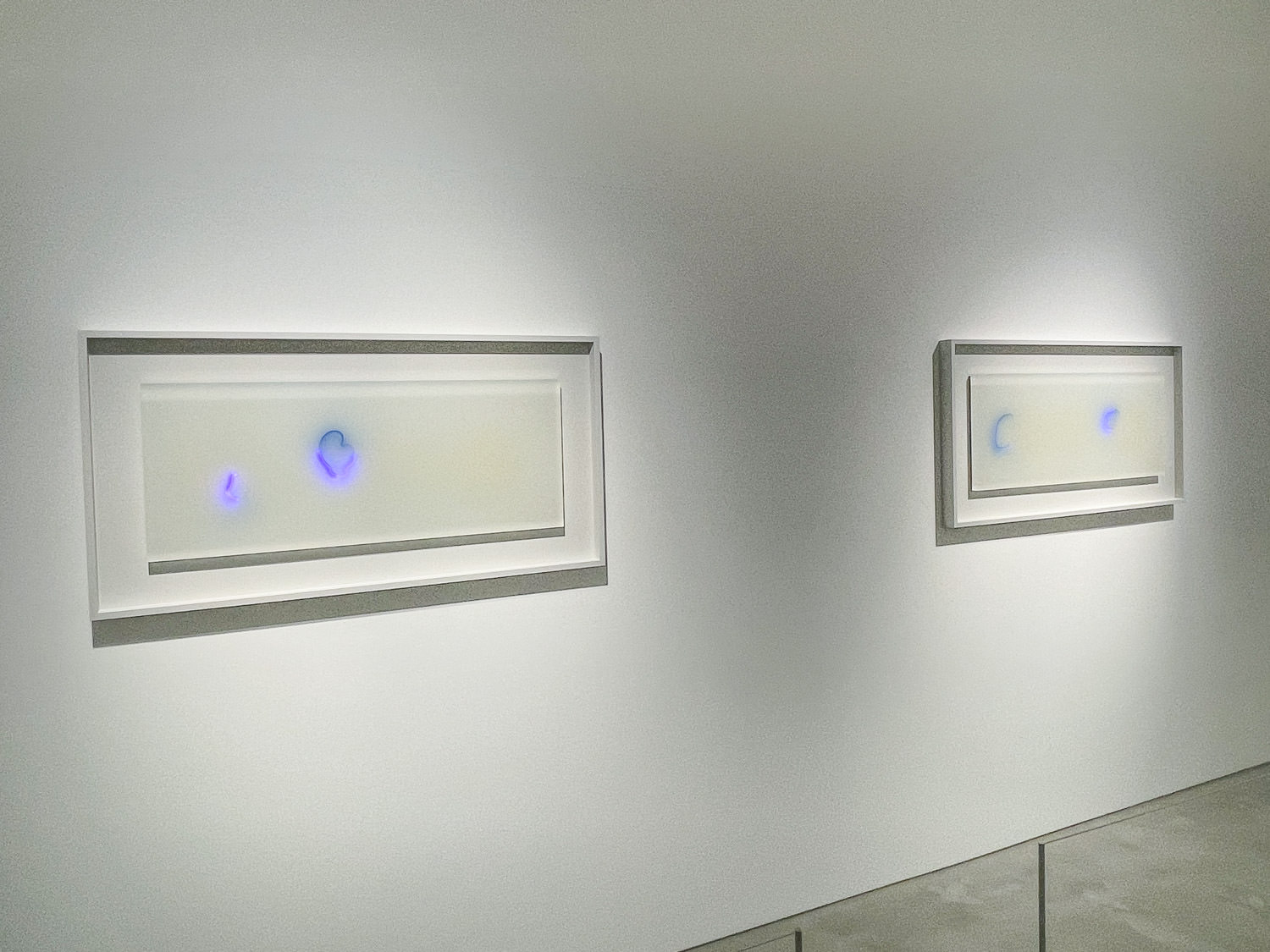
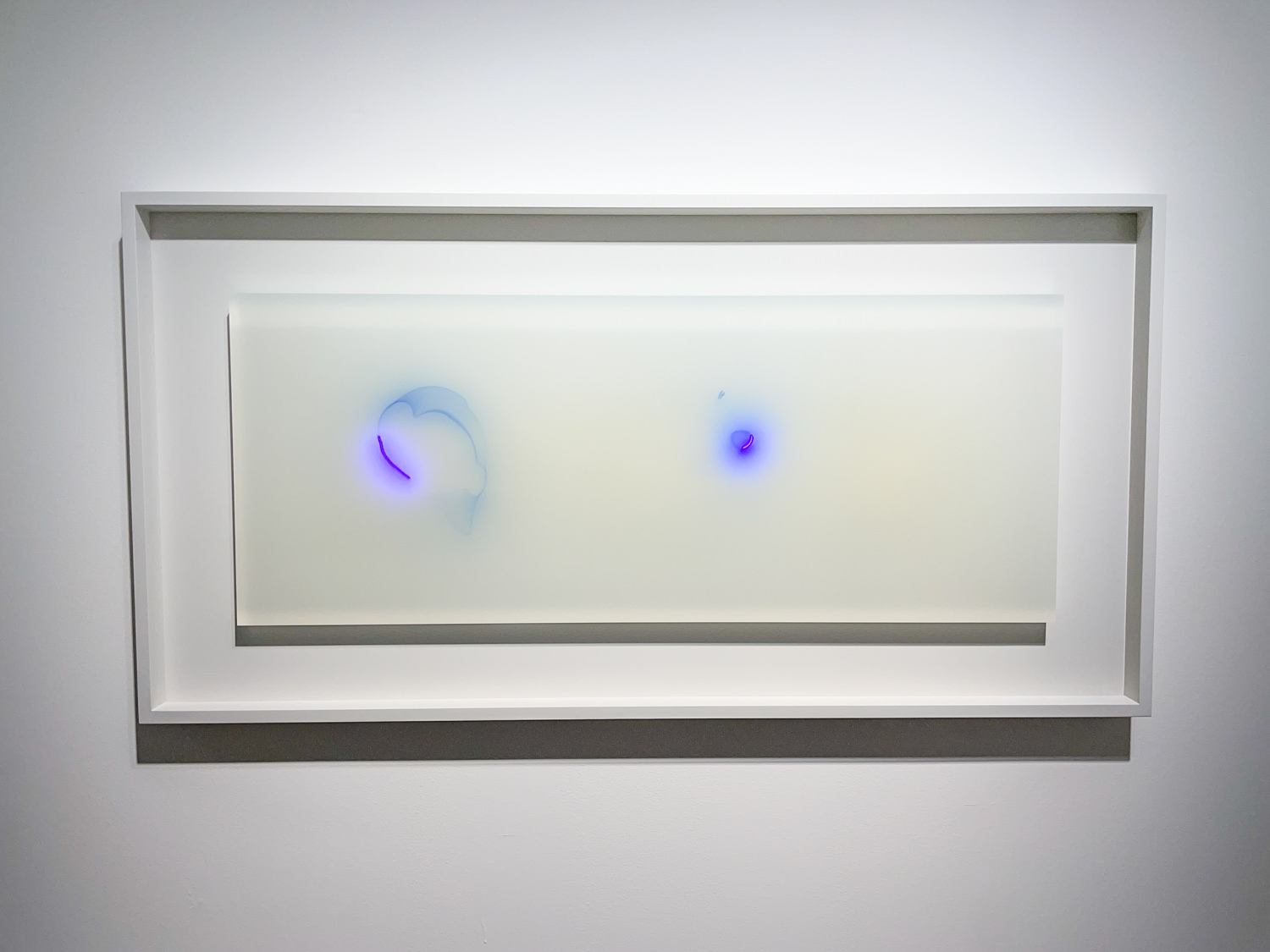
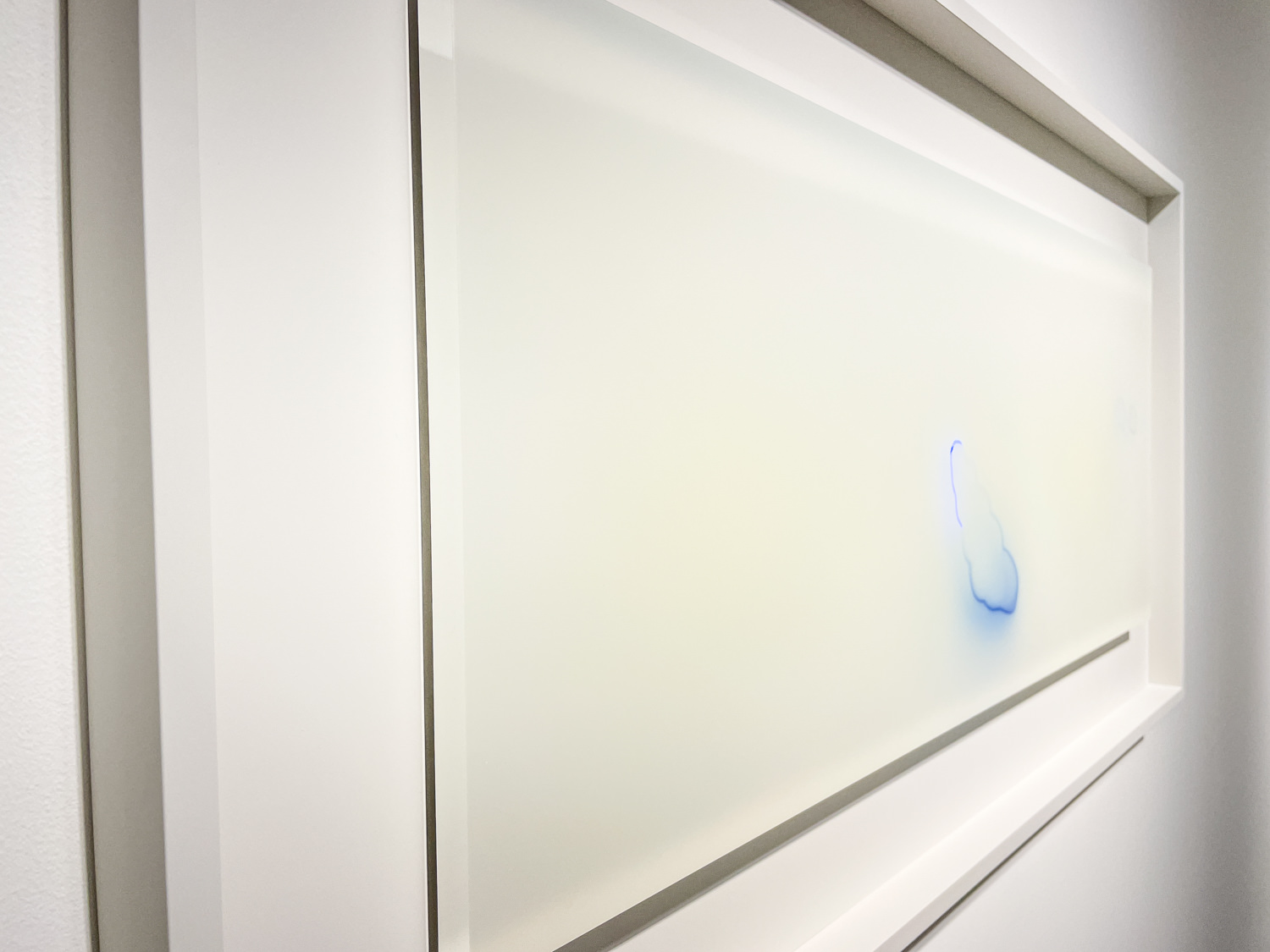
A UV laser is projected onto the surface of a semi-transparent panel coated with special pigment, drawing the cross-sectional silhouettes of 3D models themed on plant seeds and ovules. The line drawing, which temporarily discolors due to ultraviolet light and looks like ink that has soaked in blue, slowly disappears over the course of tens of seconds after it is generated. Scan lines appear one after another at a fine pitch, and their afterimages emerge as three-dimensional depictions of seeds and ovules.
Normally, the question in drawing is whether the image drawn by the creator becomes fixed on the support; in “Blue Seed,” however, the image does not become fixed on the support but is repeatedly generated by a computer program and disappears naturally. The images of seeds and ovules, which carry the potential for growth as individuals, indicate the birth of life, the transience of existence, and permanence as a system maintained even while flickering on and off.
A work drawn by projecting a UV laser onto special pigment coated on the front and back of a transparent acrylic panel
*Program: Ryo Shiraki / Soundscape: Marihiko Hara
Silhouette
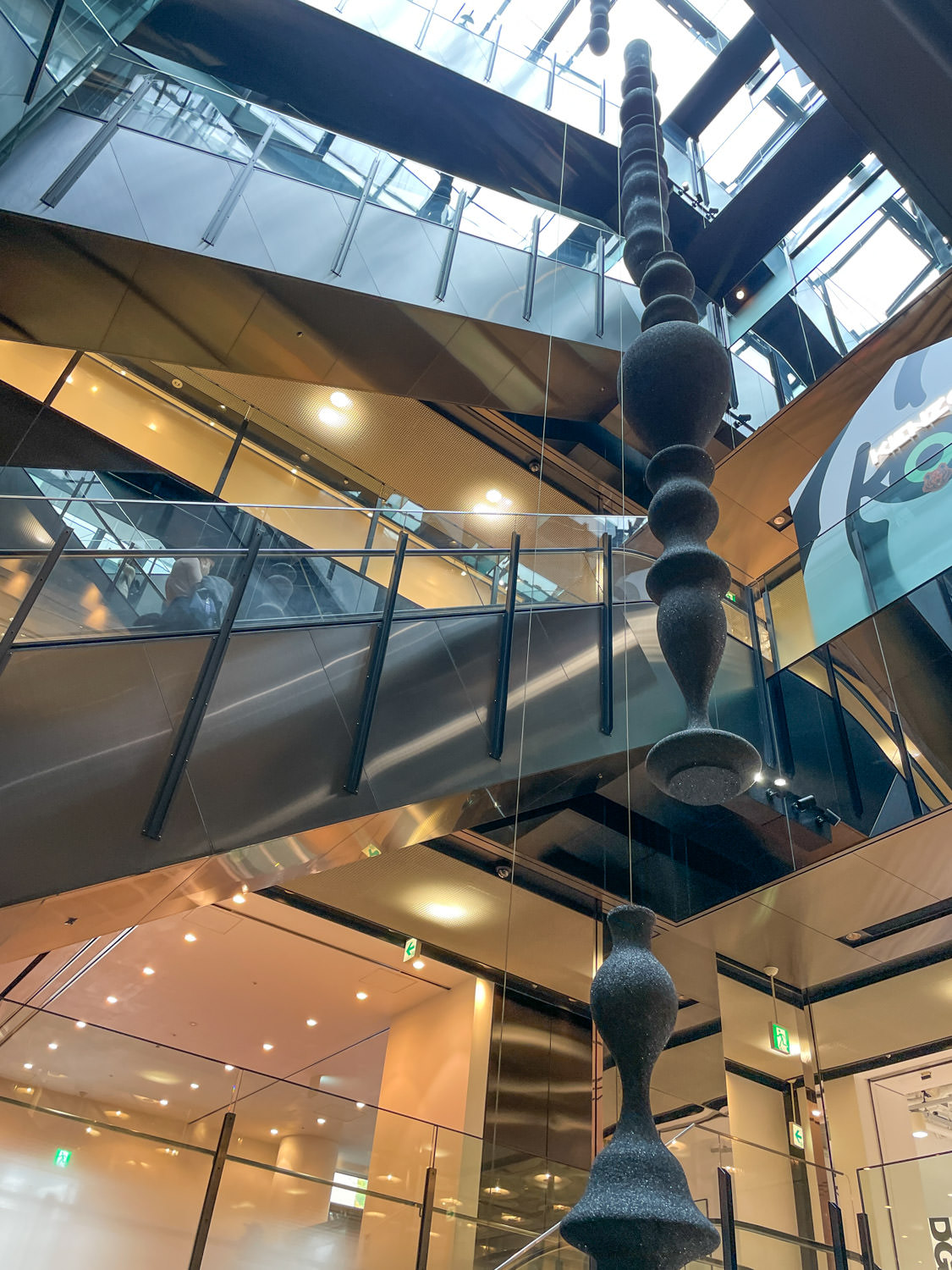
Ascending the building’s escalator, the “Silhouette” series was also on view in the atrium space of GYRE.
The “Silhouette” series
“Silhouette” is a sculptural work that first appeared as stage design at concerts by pianist Koki Nakano held at Spiral Hall in Tokyo and ROHM Theatre Kyoto in Kyoto in 2018.
Volumes are constructed from surfaces of revolution derived from curves extracted from the melody of the sound, and the outer skin is covered by grains of silicon carbide that sharply reflect light.
When illuminated in darkness, the monumental impression of “Silhouette” recedes, and the surface emerges as a field of optical phenomena.
Related to this work — treating the melody of sound as wave motion and translating it into sculpture — are the sculptural works “White Pulse” and “Ether.”
“White Pulse” (2012), commissioned as public art for Dover Street Market in Ginza, gives form to waves of energy passing through a tube and spreading outward.
In the courtyard garden of House F “Biota” (2013 / Setouchi Triennale) on Inujima, “Ether” — symbolically expressing the relationship between water, life, and gravity — is scattered throughout.
Both contain the dynamism of wave motion and energy within their quiet presence.
Catalyst
Kohei Nawa, Catalyst#21, 2020
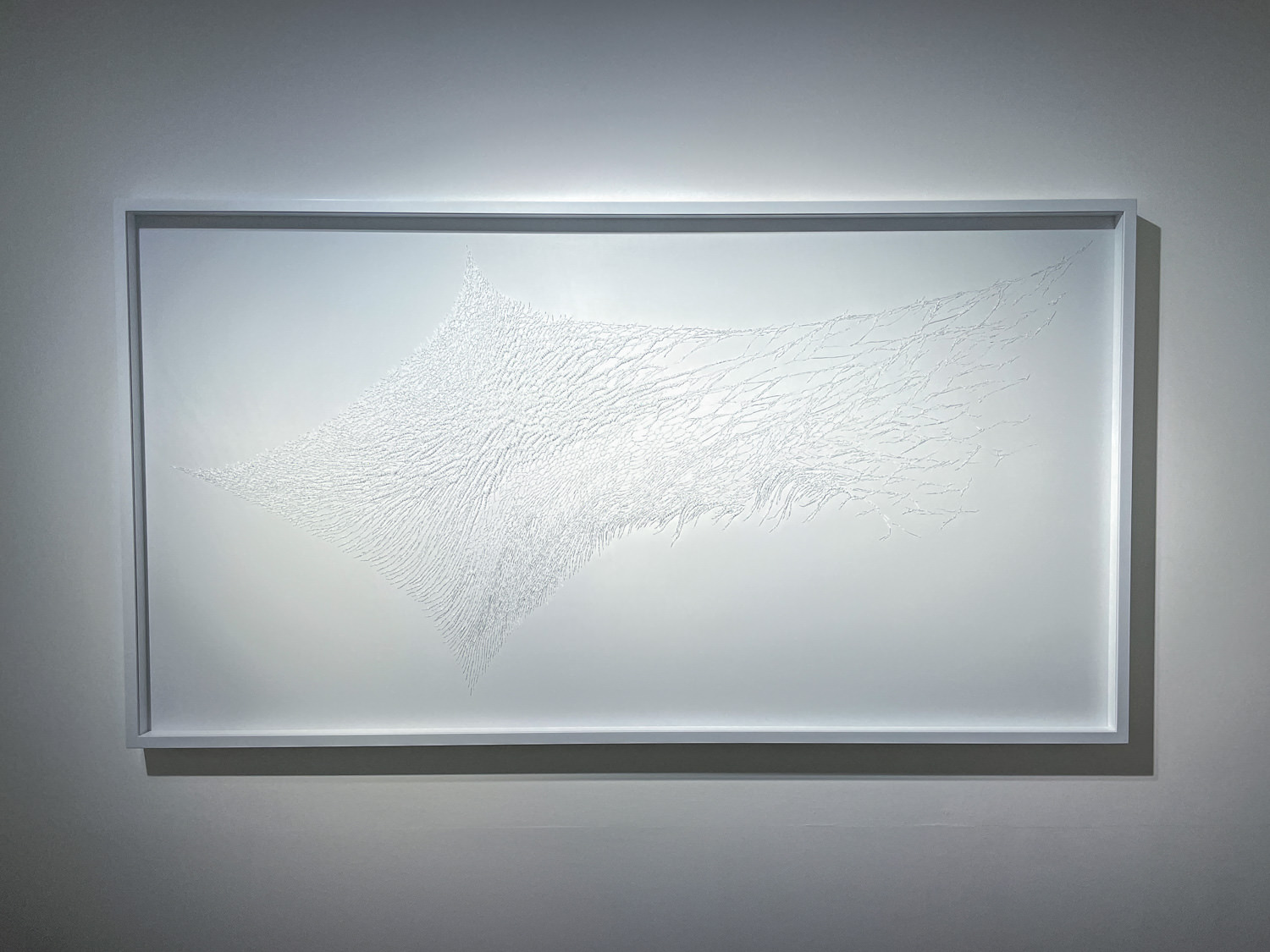
“Catalyst” is a form that begins from a point and continues to proliferate in a web as it crawls through space — an existence somewhere between sculpture and drawing.
Drawn directly onto walls, it can also become a site-specific installation.
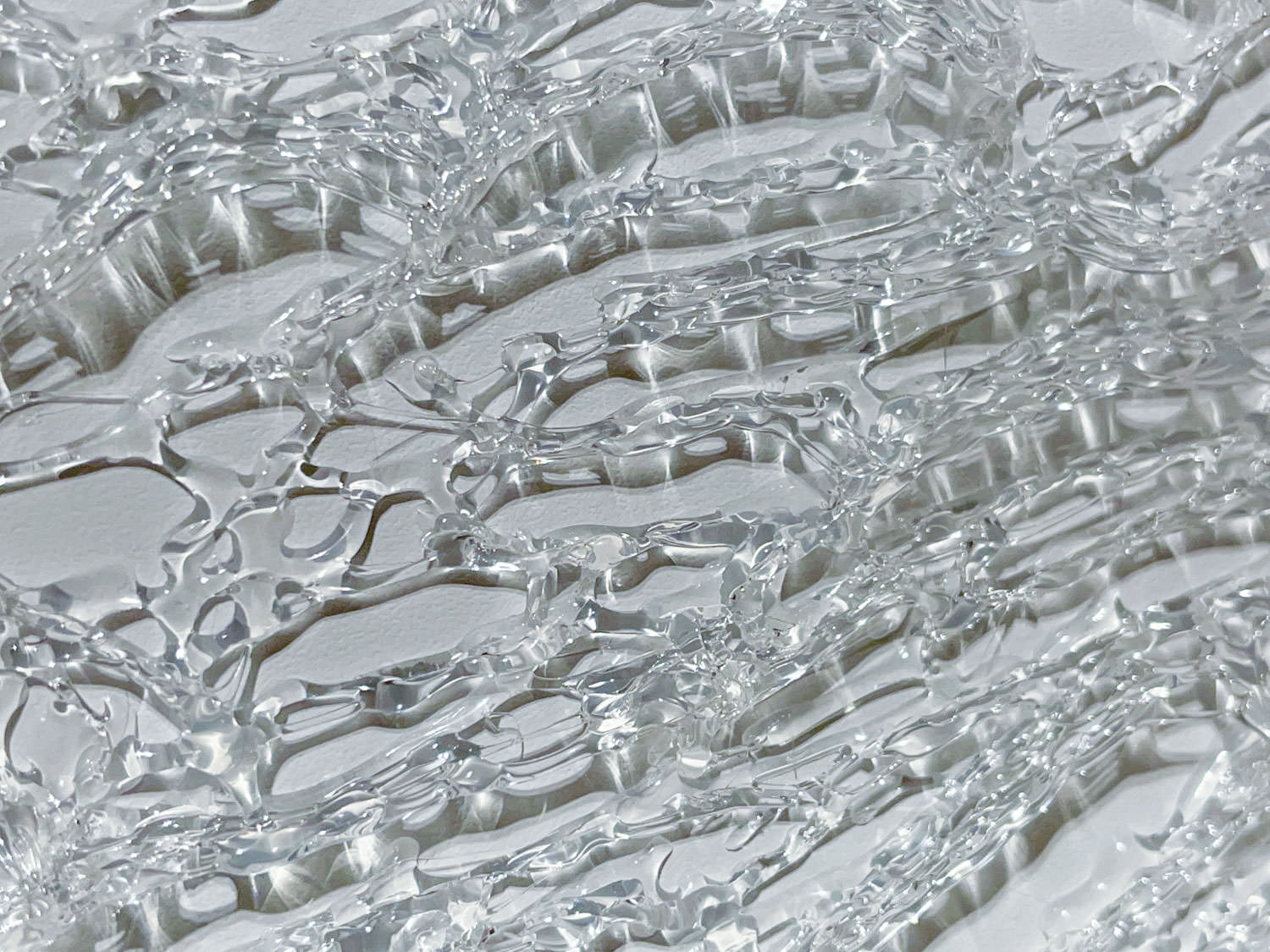
Thermoplastic glue, heated and liquefied in a glue gun, adheres to the support and then, once cooled, solidifies again and becomes fixed.
The accumulation of transparent glue lines develops into forms reminiscent of a growing neural network, or of the vines of plants and slime molds reaching for light. It appears as an impulse to defy the load of gravity by rising upward, as a horizontal spread like outstretched wings, and as forms like stems extending downward.
The interstices between the inorganic and the organic. It questions the desires and instincts programmed into cells and the very essence of life. His first work using glue, “blackyarn” (2000 / Gallery Sowaka), was created during his graduate school years as he moved back and forth between sculpture and drawing, confronting the proposition of when consciousness inhabits matter or objects.
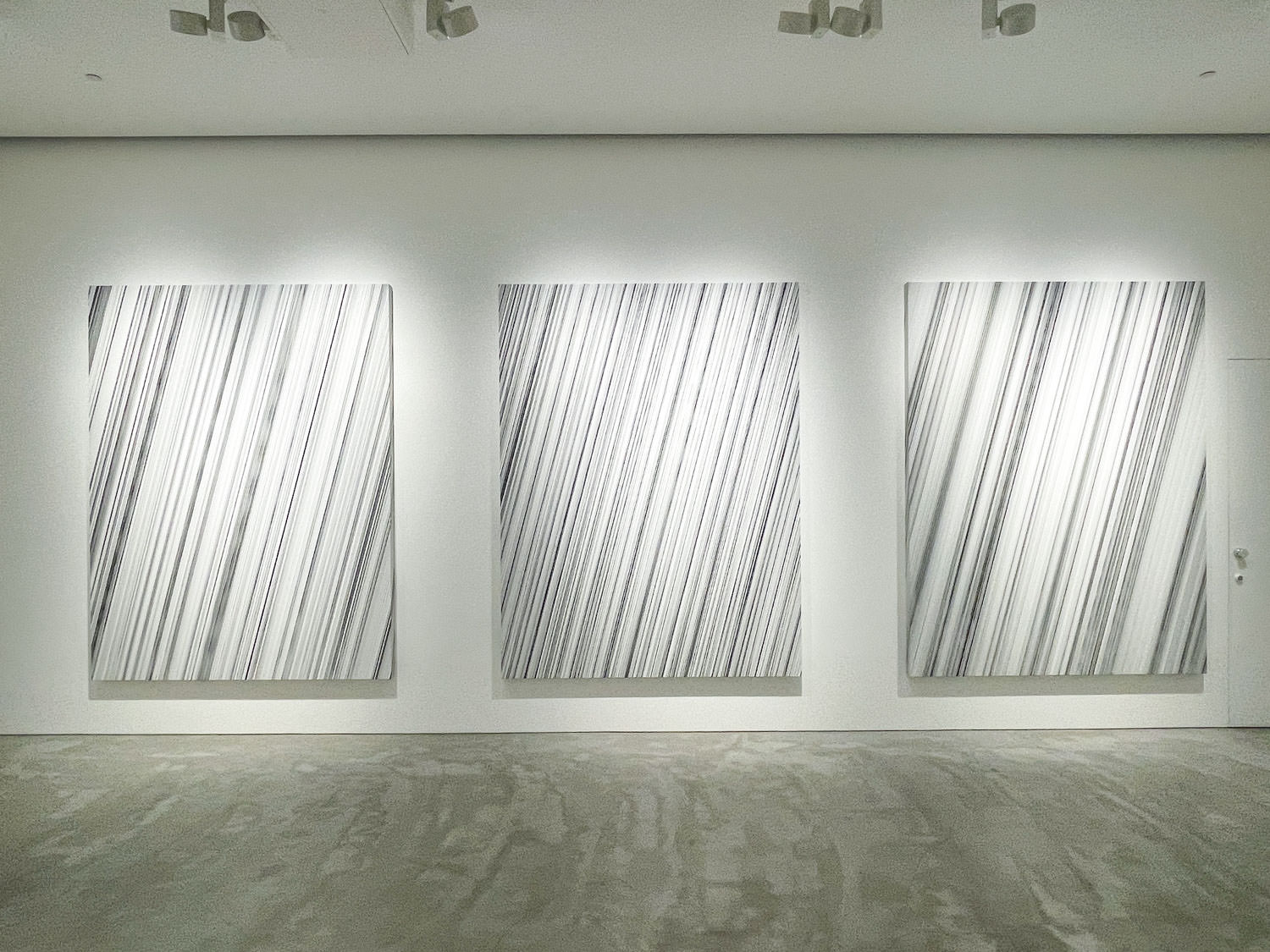
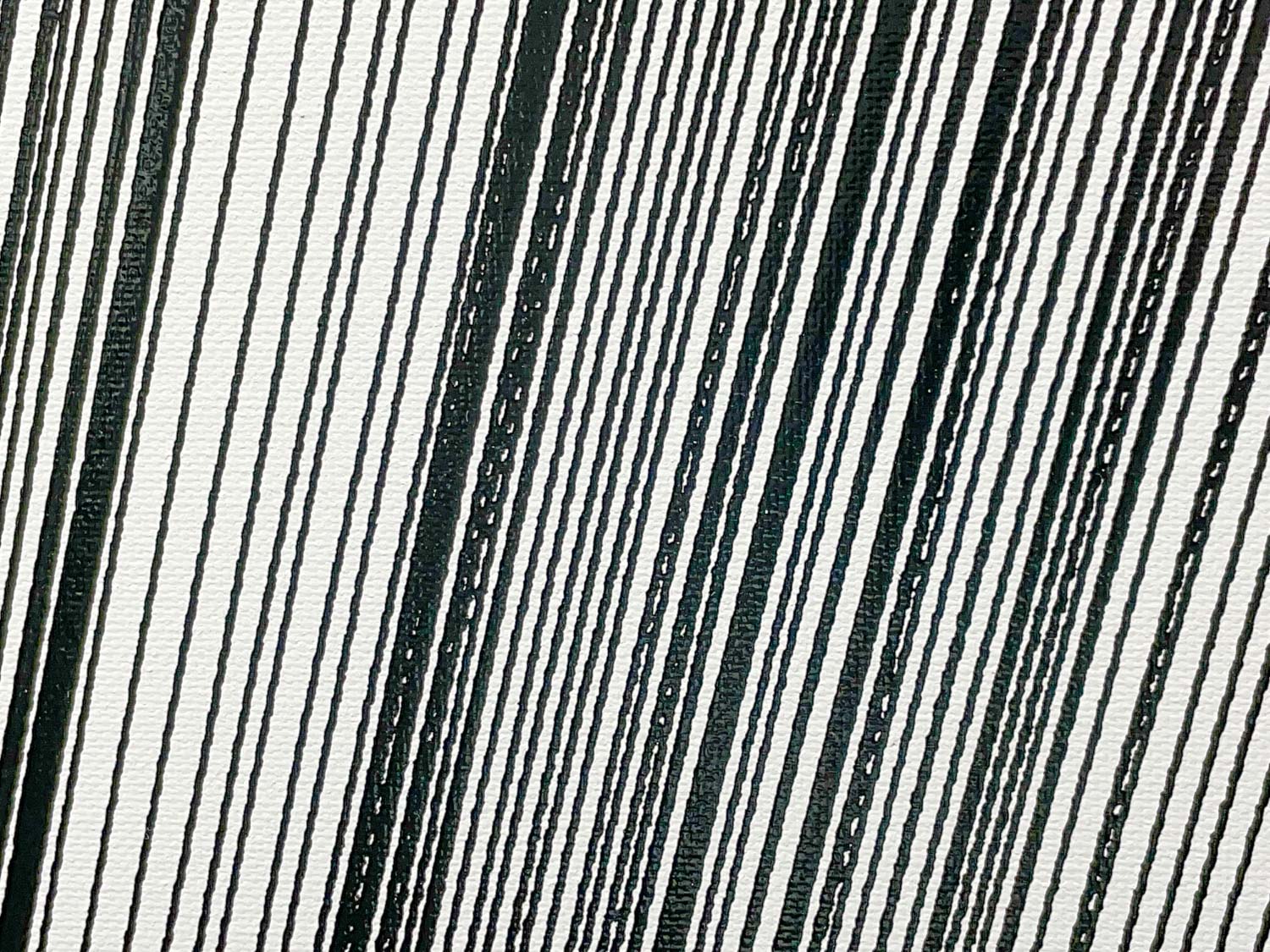
“Moment” is drawn by applying constant pressure to a tank filled with viscosity-adjusted paint, using paint that emerges from a nozzle.
Like the black silicone oil of “Force,” a single stream of paint flowing vertically downward under gravity gains horizontal force and begins to swing like a pendulum, tracing a variety of curves upon a horizontally placed support. In some cases, the tank is fixed in place and the support is moved instead. In the “Moment” for this solo exhibition, the latter method was used, and the works were drawn with the support repeatedly moving at high speed.
The trajectories of such relative motion inscribed as “Moment” connect bodily sensation with imagery of dynamics and eternal motion in cosmic space — centrifugal force, the Coriolis force arising from the tilt of Earth’s axis, orbital motion, and the like.
By slightly reducing the pressure inside the tank, the line occasionally breaks, inscribing a fine rhythm; by controlling the density and sparseness of the accumulated lines, temporal and spatial depth arises on the picture plane. To show the connection with the actual sensations that appear in “Force” and “Direction,” the works were drawn with the same color and line width as “Force,” and trimmed at the same 15-degree angle as “Direction.”
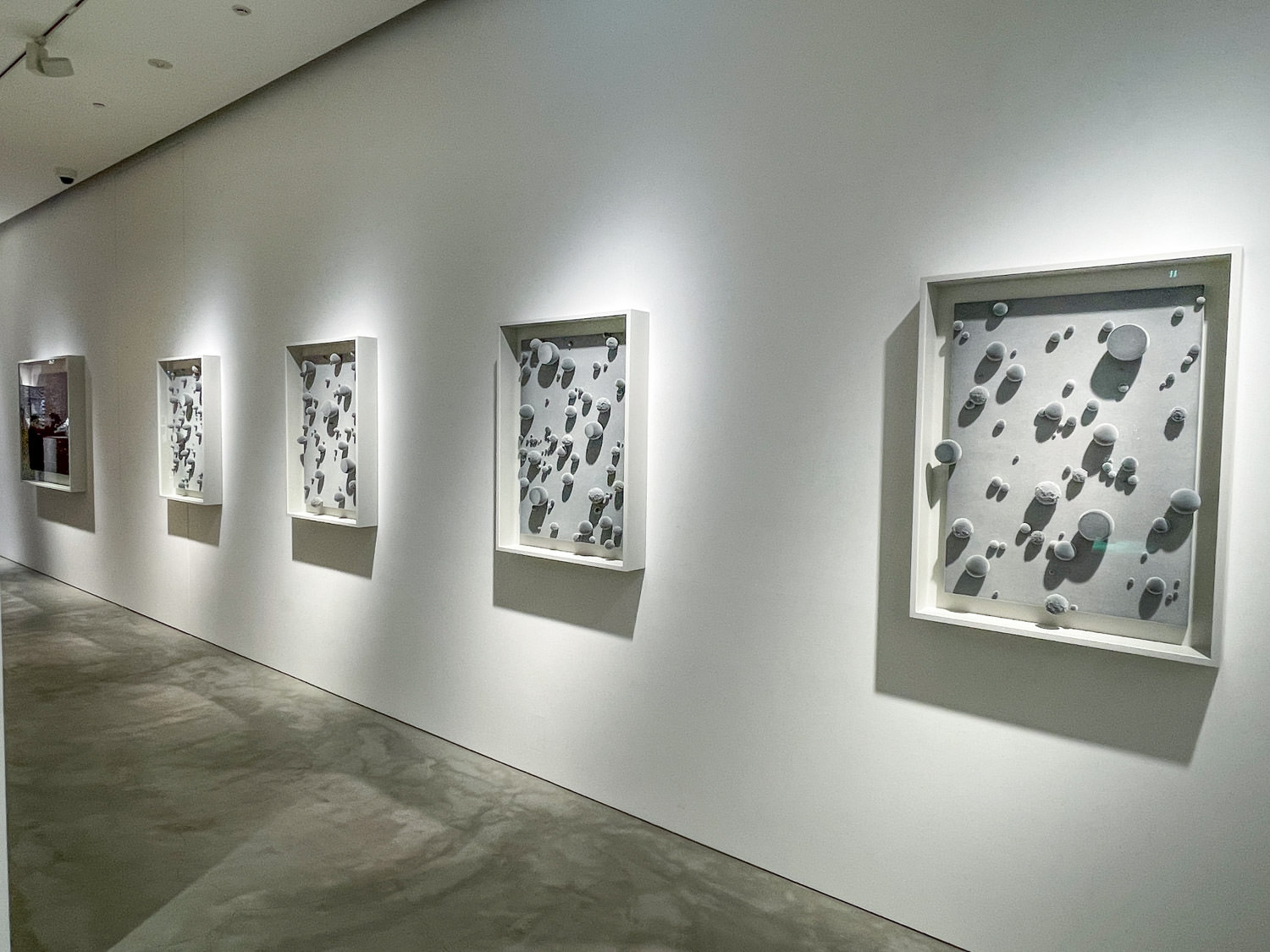
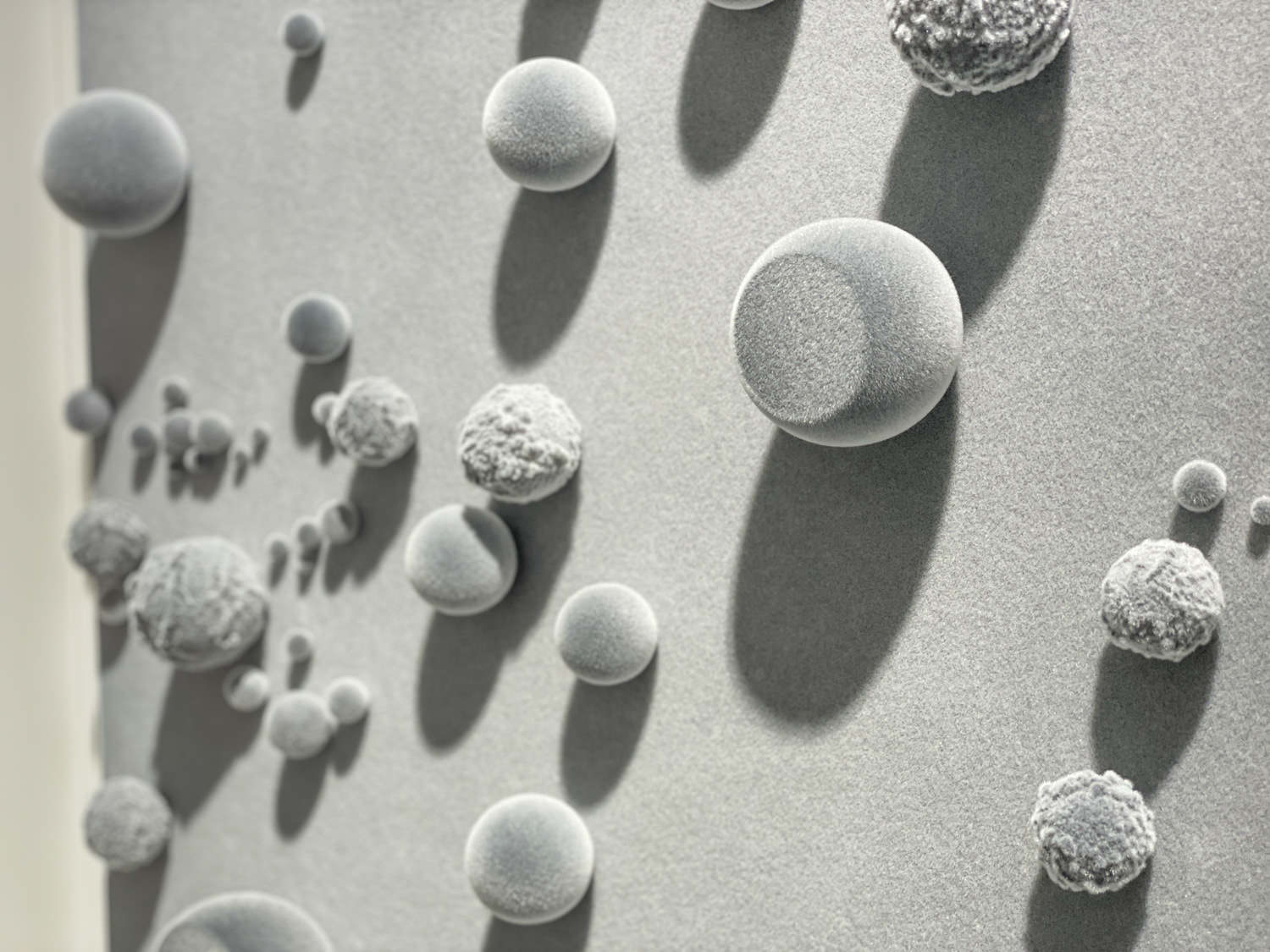
“Rhythm” brings rhythm into space through the combination of spheres (cells) of varying sizes and the arrangement and composition thereof.
In “PixCell,” for example, arranging crystal glass spheres of various sizes gives objects a distinctive depth on the surface along with a flow of the gaze around them, generating an amplifying effect on vision. The thick bands and thin bands born from this group of large and small spheres translated in parallel also connect to “Direction.” To simply demonstrate the sensation shared by other work series, light gray pile (short fibers) was flocked onto every surface of both the spheres and the support, finished as if in velvet and rendered uniform. The genesis of this work was placing several wooden spheres on a board panel in the drawing room “DR” at his Tokyo base in Daikanyama. There was only a rhythm of spheres of varying sizes there, nothing more. And yet, the strange sensation that such a neutral expression can also appear to be something else amid the COVID-19 pandemic is ironic but extremely interesting.
본 전시에서는 코로나 팬데믹 상황에서 제작된 신작을 중심으로 다수의 시리즈 작품이 전시되었습니다.
PixCell
Kohei Nawa 《PixCell-Crow#5》 2020년
“PixCell”은 오브젝트를 투명한 구체로 뒤덮어, 그 존재를 “영상의 세포”로 치환하는 조각 작품입니다. 오브젝트는 인터넷을 통해 수집되어, PC 화면에 나타나는 이미지(픽셀의 집합체)처럼 무수한 Cell로 “피막”됩니다. 전체가 크고 작은 구체로 덮이면, 그 표피는 개개의 세포(PixCell)로 분할되고, 확대되고 왜곡되는 렌즈를 통해 오브젝트가 “감상”되는 상태가 됩니다. 글로벌리즘과 고도 정보화의 물결 속에서 시작된 이 시리즈는, 디지털카메라의 렌즈와 그것을 통해 정보화된 오브젝트 사이의 상호관계를 반영하면서, 사물 표피의 리얼리티를 묻는 시촉각적 체험을 만들어냅니다.
※PixCell: Pixel(화소)과 Cell(세포)을 합쳐 만든 조어.
“Black Field”는 유화 물감과 기름이 지닌 혼합 특성에 의해 수개월에 걸쳐 상태 변화가 지속되는 “장(場)”을 주제로 한 작품입니다.
판 패널 위에 층층이 쌓인 검은 유화 물감은 공기에 닿은 부분부터 서서히 산화되며 경화가 진행됩니다. 본 개인전 회기 중에도 화면 전체에는 수축과 균열의 텍스처가 계속 새겨져 갈 것입니다.
제작 초기 단계에서는 매끈한 부분에도 2~3주에 걸쳐 주름이 생기고, 표피의 장력을 견디지 못하는 부분은 갈라져 버립니다. 갈라진 부분에서는 기름을 듬뿍 머금은 액상의 유화 물감이 노출되어 새로운 반응이 시작됩니다. 이렇게 현상이 표상으로 이행되는 과정은 비바람과 햇빛이 반복되는 토양과도 같으며, “균열”은 식물 표피에 있는, 세포의 팽압 변화로 열고 닫히는 “기공”을 연상시킵니다.
신록(神鹿)이 구름을 타고 카스가 땅으로 날아오는 형상은 나라 미술사에서도 상징적인데, 이는 Kasuga Taisha Shrine(카스가타이샤) 본전 제1전의 제신인 타케미카즈치노미코토(Takemikazuchi-no-Mikoto)가 사슴을 타고 카시마에서 카스가로 내림한 모습을 표현한 것입니다.
《Trans-Sacred Deer (g/p_cloud_agyo)》는 카마쿠라-남북조 시대에 제작된 것으로 전해지는 “카스가 신록 사리 즈시(春日神鹿舎利厨子)”의 신록을 모티프로 삼아 3D 시스템 상에서 데이터를 제작하고, 목조·칠·박(箔) 마감 등 전통 기법으로 만들어졌습니다.
신록 자체도 구름과 같은 형상이 되었고, 등의 안장 위에는 연화좌 위에 놓인 화염 보주가 봉안되어 있습니다. 마치 신사(神使)가 불려온 듯, 아득한 시간을 넘어 현세에 그 모습을 드러냅니다.
《Trans-Sacred Deer (g/p_cloud_agyo)》 ※Detail
Dune
Kohei Nawa 《Dune#11》 2020년
화성 사구의 형성 이론을 프로그램으로 응용하고, 유사(流砂)의 종류와 기상 상태에 따른 랜드스케이프의 변용을 물리 시뮬레이션으로 그린 “Tornscape”(2019년)는 《호죠키(方丈記)》의 무상관(無常観)을 테마로 한, 천재지변과 역병 등이 두루마리 그림처럼 생성되는 영상 인스톨레이션 작품이었습니다. 컴퓨터 상에서 프로그래머와 협업한 제작 경험에서 출발해, 이번에는 실제로 물감을 사용하여 변용하는 랜드스케이프를 드로잉으로 표현할 수 없을까 하는 시행착오에서 시작된 시리즈가 “Dune”입니다.
“Dune”은 복수의 미디엄과 입자 크기가 다른 물감, 물 등을 혼합하여 지지체 위에 흘려 펼치고, 미디엄의 점도와 지지체의 경사 사이의 관계로부터 다양한 표정이 나타나는 페인팅 시리즈입니다. “Direction”에서 중력에 따라 캔버스를 수직으로 흘러내린 뒤 이른바 폐액이 된 물감을 회수하여, 이를 재이용하는 방식으로 수평면에 전개한 것입니다. 물성 차이에 기인하는 복잡한 표정은 기상현상과 랜드스케이프의 관계를 위에서 조망하는 듯한 감각을 낳습니다.
Kohei Nawa 《Dune#16》 2020년《Dune#16》 ※Detail전시 풍경
Blue Seed
전시 풍경Kohei Nawa 《Blue Seed_A》 2020년
특수 안료가 도포된 반투과성 패널 표면에 UV 레이저가 조사되어, 식물의 종자와 배주(胚珠)를 주제로 한 3D 모델의 단면 실루엣이 그려집니다. 자외선에 의해 일시적으로 변색되어 파란 잉크가 스며든 것처럼 보이는 선묘는 생성된 지 수십 초에 걸쳐 서서히 사라집니다. 촘촘한 피치로 스캔 라인이 연이어 나타나고, 그 잔상이 종자와 배주의 입체적 도상으로 떠오릅니다.
통상적으로 드로잉에서는 제작자가 그리는 이미지가 지지체에 정착되는지 여부가 문제가 되지만, “Blue Seed”에서는 이미지가 지지체에 정착되지 않고, 컴퓨터 프로그램에 의해 반복해서 생성되었다가 자연스럽게 사라져 갑니다. 개체로서 성장할 가능성을 지닌 종자와 배주의 이미지에는, 생명의 탄생과 존재의 덧없음, 그리고 명멸하면서도 유지되는 시스템으로서의 영속성이 담겨 있습니다.
투명한 아크릴 패널의 앞과 뒤에 특수 안료가 칠해지고, UV 레이저를 투사함으로써 그려지는 작품
※프로그램: Ryo Shiraki / 사운드스케이프: Marihiko Hara
Silhouette
빌딩의 에스컬레이터를 오르는 도중, 아트리움 공간인 GYRE Atrium에도 작품 《Silhouette》 시리즈가 전시되어 있었습니다.
작품 《Silhouette》 시리즈
“Silhouette”는 2018년 도쿄의 Spiral Hall과 교토의 ROHM Theatre Kyoto에서 열린 피아니스트 Koki Nakano의 콘서트에 무대미술로 등장했던 조각 작품입니다.
소리의 선율에서 추출된 곡선에 의한 회전체가 볼륨을 구성하고, 그 표피를 빛을 예리하게 반사하는 탄화규소 입자가 뒤덮습니다.
어둠 속에서 빛이 비추면 “Silhouette”의 기념비적 인상은 뒤로 물러나고, 광학적 현상의 장(場)으로서의 표층이 떠오릅니다.
소리의 선율을 파동으로 파악하여 조각으로 치환하는, 이 작품과 관련된 조각 작품으로는 “White Pulse”와 “Ether”가 있습니다.
“White Pulse”(2012년)는 긴자의 Dover Street Market 퍼블릭 아트로서, 튜브 안을 지나가는 에너지 파동이 외부로 확산되는 모습을 조형화한 것입니다.
이누지마의 F저택 “Biota”(2013년 / Setouchi Triennale)의 안뜰에는 물·생명·중력의 관계를 상징적으로 표현하는 “Ether”가 곳곳에 놓여 있습니다.
어느 것이나 고요한 자태 속에 파동과 에너지의 역동성이 내포되어 있습니다.
Catalyst
Kohei Nawa 《Catalyst#21》 2020년
“Catalyst”는 점에서 시작하여 공간을 기어 다니면서 그물망 형태로 계속 증식해 가는 조형으로, 조각과 드로잉 사이의 존재와도 같습니다.
벽면에 직접 그림으로써 사이트 스페시픽한 인스톨레이션이 되기도 합니다.
글루건에 의해 가열되어 액상이 된 열가소성 접착제는 지지체에 부착된 뒤 냉각되면 다시 굳어져 고정됩니다.
투명한 접착제 선의 집적은 발달하는 뉴럴 네트워크나, 빛을 찾아 자라는 식물의 넝쿨과 점균을 연상시키는 형태로 발전해 갑니다. 그것은 중력의 부하에 저항하여 위로 향하는 충동으로, 마치 날개를 펼친 듯한 수평 방향의 확장으로, 그리고 아래로 뻗어 나가는 줄기와 같은 형태로 나타납니다.
무기체와 유기체의 경계. 세포에 프로그래밍된 욕망과 본능, 그리고 생명의 본질이란 무엇인가를 묻습니다. 접착제를 사용한 최초의 작품 《blackyarn》(2000년 / Gallery Sowaka)은, 의식이 물질이나 물체에 언제 깃드는가라는 명제를 마주하며 조각과 드로잉을 오가면서 사고를 거듭했던 대학원 시절에 태어났습니다.
“Moment”는 점도가 조정된 물감이 담긴 탱크에 일정한 압력을 가하고, 노즐에서 나오는 물감으로 그려집니다.
“Force”의 검은 실리콘 오일처럼 중력에 따라 연직 방향으로 흘러 나오는 한 줄기의 물감은 수평 방향의 힘을 얻어 진자처럼 움직이기 시작하고, 수평으로 배치된 지지체 위에 다양한 곡선을 그려냅니다. 또한 탱크를 고정하고 지지체를 이동시킴으로써 그리는 경우도 있습니다. 본 개인전의 “Moment”는 후자의 방법을 사용하여, 지지체가 고속으로 이동을 반복하며 그려졌습니다.
이처럼 상대적인 운동의 궤적이 새겨진 “Moment”는, 원심력이나 지축의 기울기에 의한 코리올리 힘, 공전 궤도 등 우주 공간에서의 역학과 항구적인 운동의 이미지를 신체성과 이어줍니다.
탱크 내의 압력을 미세하게 감압시킴으로써 이따금씩 선이 끊어지며 미세한 리듬이 새겨지고, 선의 집적의 소밀을 조절함으로써 화면에 시공간적 깊이가 생겨납니다. 이렇게 “Force”와 “Direction”에 나타나는 실제적 감각과의 연결을 보이기 위해, “Force”와 같은 색·선 폭으로 그리고, “Direction”과 같은 15도 각도로 트리밍했습니다.
크고 작은 구체(cell)를 조합하고, 그 배치와 구성에 의해 공간에 율동을 가져오는 “Rhythm”.
예를 들어 “PixCell”에서는 다양한 크기의 크리스털 유리 구체를 배치함으로써 오브젝트를 둘러싼 시선의 흐름과 표피에 독특한 깊이를 부여하면서 시각의 증폭 효과를 만들어냅니다. 또한 이 크고 작은 구체 군이 평행 이동함으로써 생기는 굵은 띠와 가는 띠는 “Direction”으로 이어집니다. 이처럼 다른 작품 시리즈에도 공통되는 감각을 단적으로 나타내기 위해, 구체와 지지체의 모든 표면에 라이트 그레이의 파일(단섬유)을 식모하여 벨벳 형태로 마감하고 균질화했습니다. 이 작품의 계기는 도쿄의 거점인 다이칸야마의 드로잉 룸 “DR”에서 판 패널에 목제 구체 몇 개를 놓아본 것이었습니다. 그곳에는 크고 작은 구체의 리듬이 있을 뿐, 그 이상은 아니었습니다. 하지만 그러한 뉴트럴한 표현이 코로나 팬데믹 상황에서는 다른 것으로도 보이게 된다는 묘한 감각은, 역설적이지만 매우 흥미롭습니다.