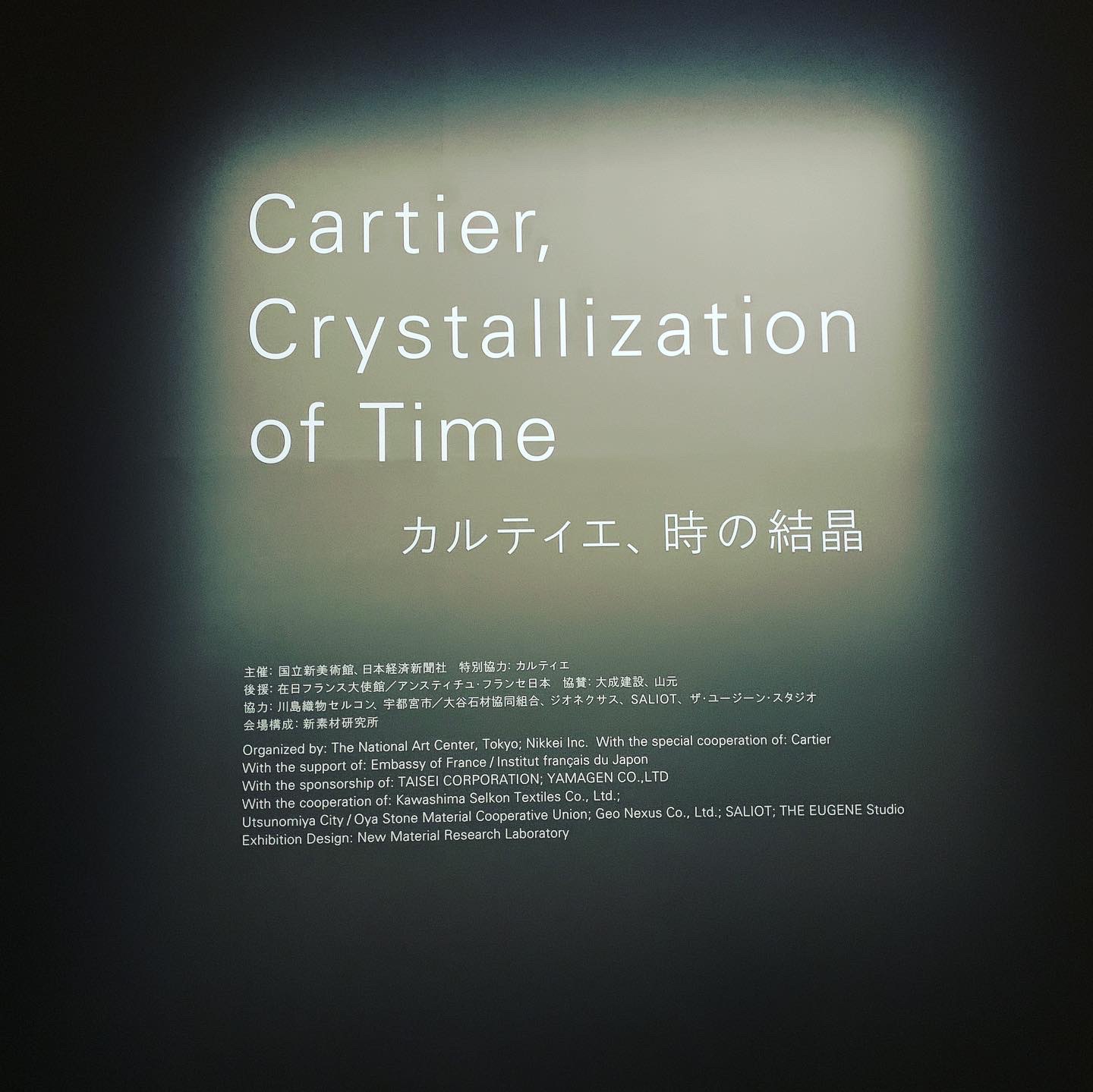
We visited “Cartier, Crystallization of Time,” currently on view at The National Art Center, Tokyo.
“Cartier, Crystallization of Time,” The National Art Center, Tokyo
Cartier exhibitions focusing on the historical works of the “Cartier Collection” have been held several times in the past — in 1995, 2004, and 2009 — but the present exhibition is the first in the world to focus on contemporary works produced from the 1970s onward.
It is also notable that, of a total of approximately 300 works, roughly half are “private collection” pieces on display.
This is a precious opportunity to see so many privately held collection works gathered in one place.
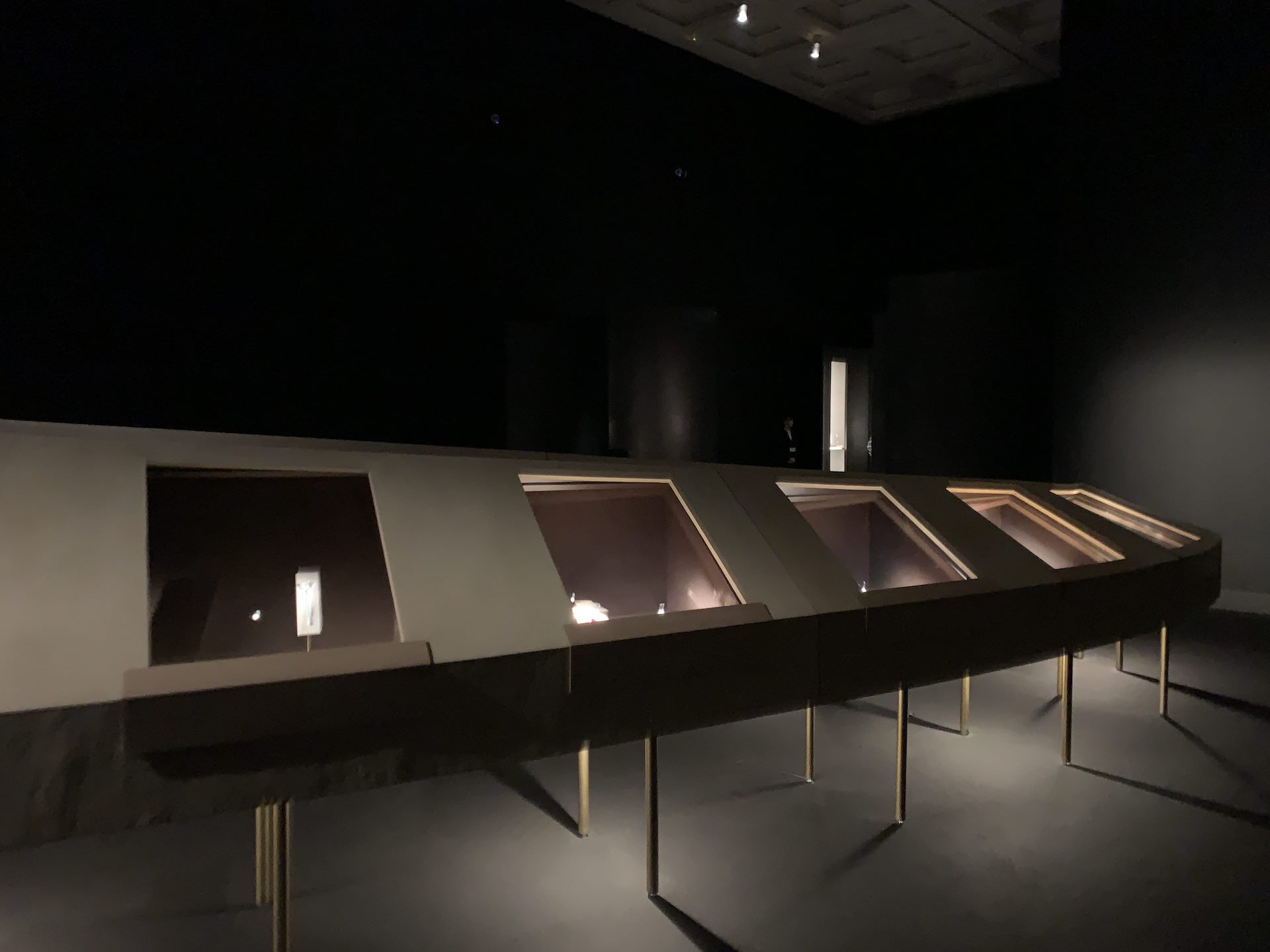
The exhibition design is by New Material Research Laboratory / Hiroshi Sugimoto + Tomoyuki Sakakida.
Between the natural materials such as wood and stone, and the minimal, refined lighting design, the sophisticated exhibition space made viewing the Cartier works an especially high-quality experience.
Prologue: “Chamber of Time”
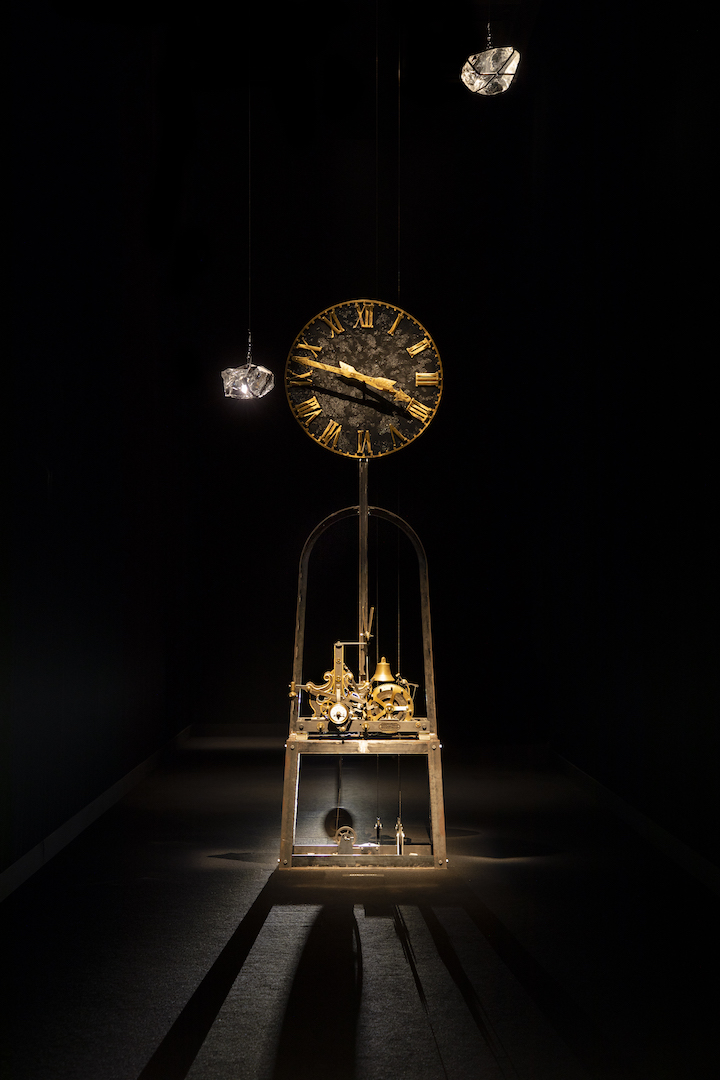
Passing through the entrance, Hiroshi Sugimoto’s “Reverse Clock” rises up before you.
It is a clock driven backwards by the weight of glass beads, and depending on the timing it also makes a sound.
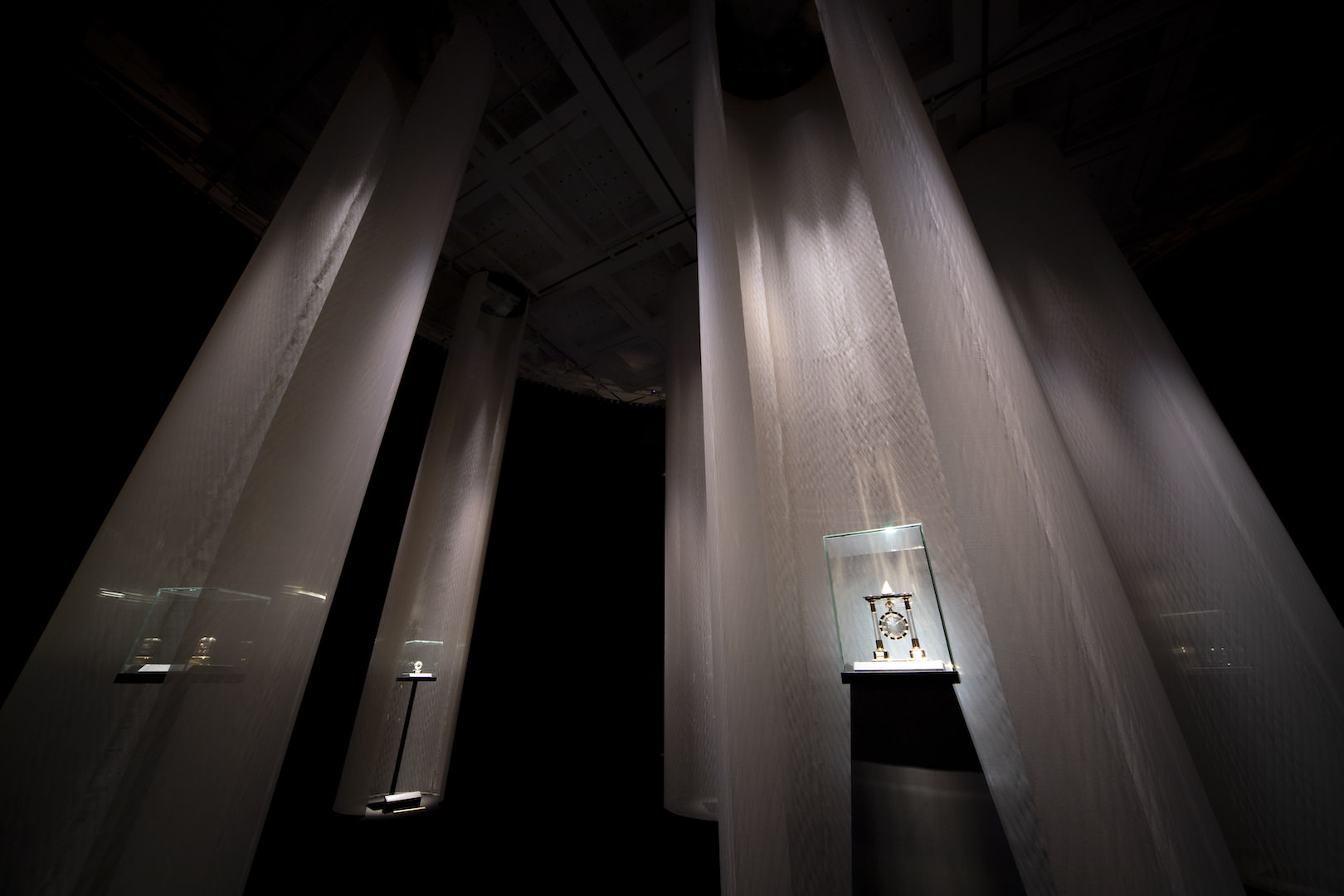
The “Chamber of Time” is where the Mystery Clocks and Prism Clocks — described as “miracles of clockmaking” — sit in state.
On the Mystery Clocks, the two clock hands appear to float in mid-air as if entirely unconnected to any mechanism. The movement is hidden within the pedestal and decorative sculpture. Even on careful inspection, the workmanship is so ingenious that we could not uncover the mechanism. Their production reportedly requires the collaboration of many specialists — watchmakers, gold- and silversmiths, enamelers, polishers, and others — with completion taking at least several months.
Chapter 1: “Transformations of Color and Material”
Beyond the “Chamber of Time,” we move on to Chapter 1, “Transformations of Color and Material.”
By viewing Cartier’s works — combinations of various materials and colors — from the perspectives of material and color, this section examines Cartier’s original vision and expressive methods.
Here again, the calming spatial design and the use of natural materials such as wood and stone to further enhance the beauty of the works filled us with delight.
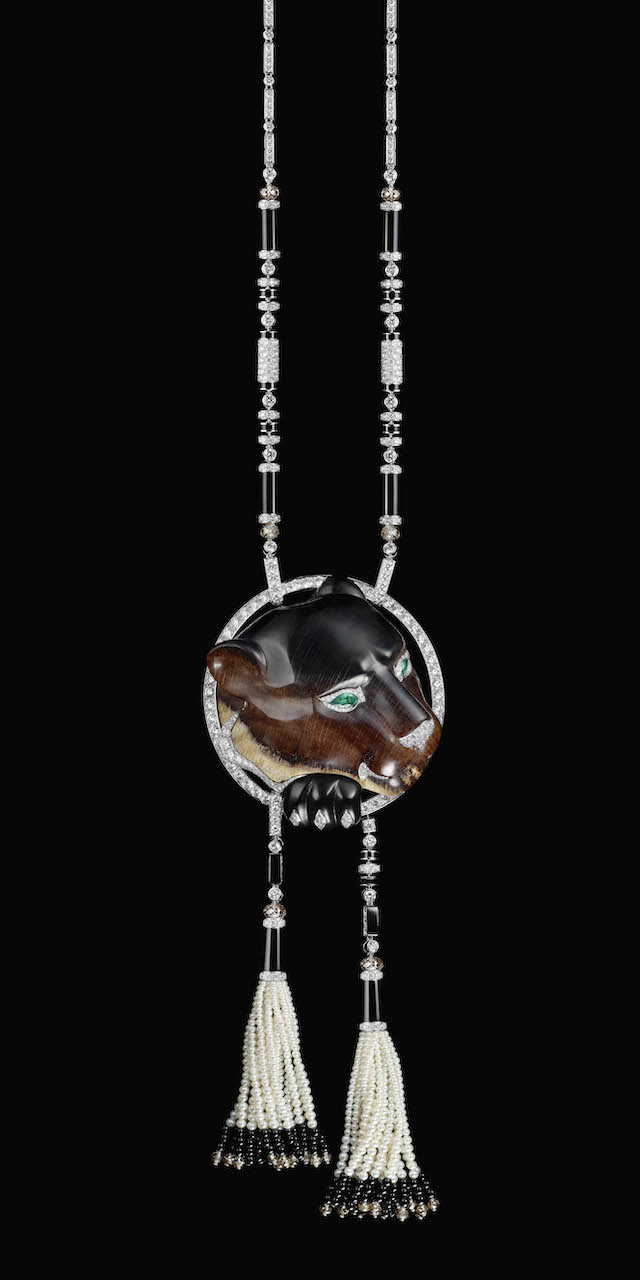
The “Necklace,” which uses petrified wood (fossilized wood buried in the earth), features a carved panther’s head. The fusion of an unusual material with fine jewelry was superb.
Chapter 2: “Form and Design”
The next section, Chapter 2, is organized around Cartier’s “Form and Design.”
By combining precious stones and applying various cuts, the design is constructed, rhythm is born, and the power residing in compositional abstraction is unleashed.
This chapter contains the largest number of works, with 122 pieces on display.
Piece after piece from the “Cartier Collection” leaps out at you, each radiating its own distinctive brilliance — an overwhelming exhibition space.
The final exhibition space was composed of works incorporating designs from countries around the world, including Japan.
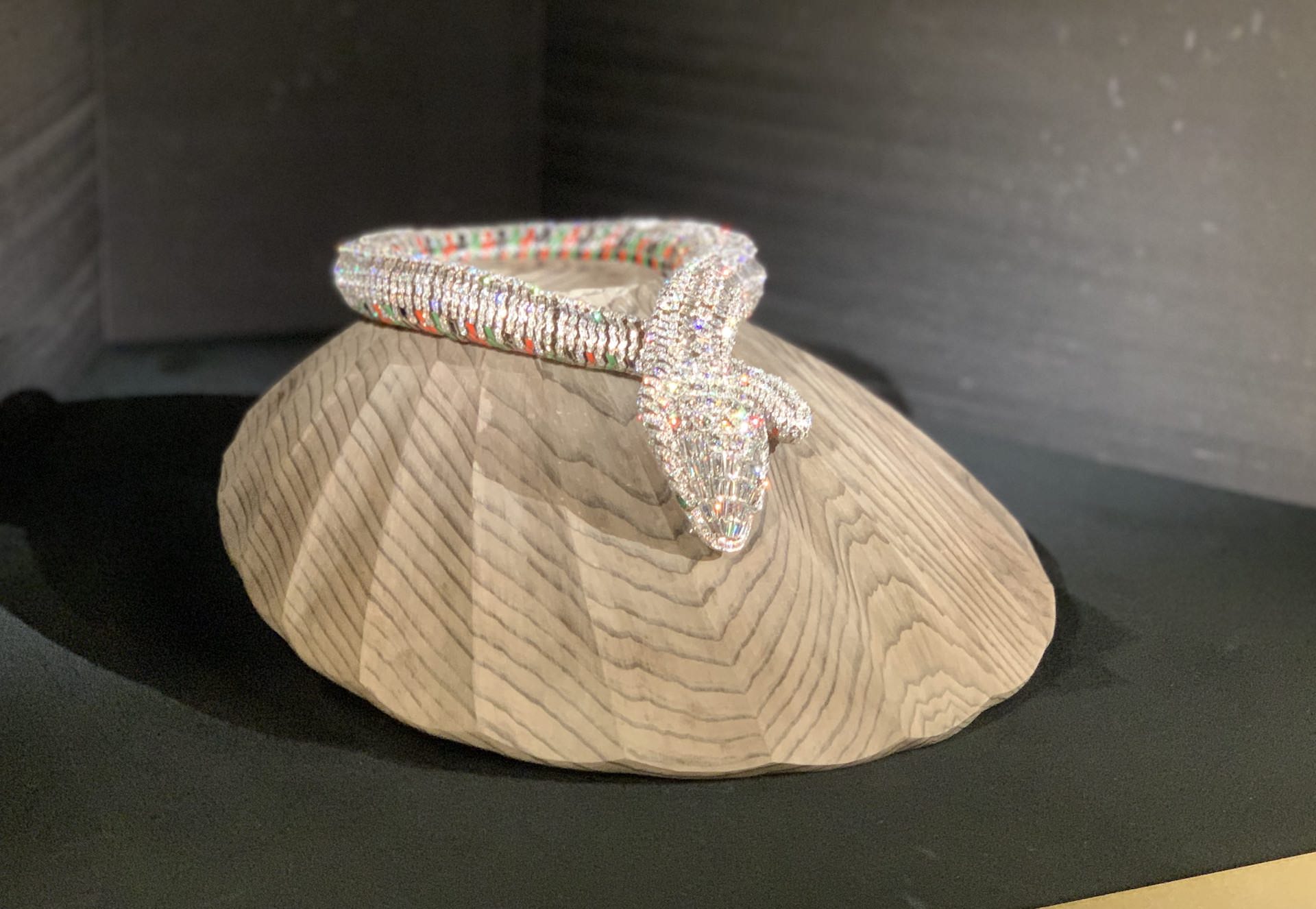
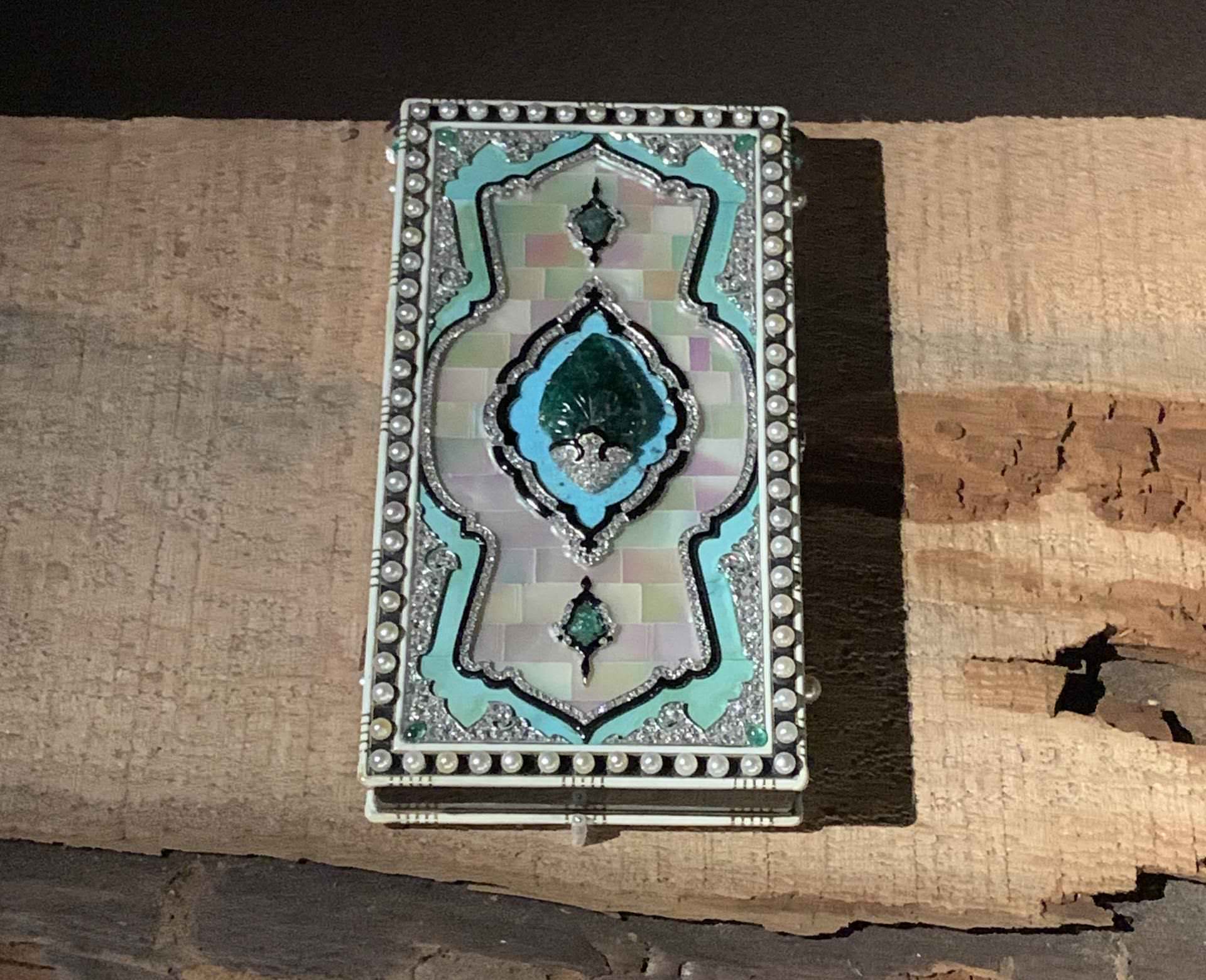
The exhibition design by the New Material Research Laboratory was wonderful“Snake Necklace,” Cartier Paris, special order, 1968 Platinum, white gold, yellow gold, diamonds, emeralds, green enamel, red enamel, black enamel“Vanity Case,” Cartier Paris, 1924; yellow gold, platinum, mother-of-pearl and turquoise inlay, one 8.82-carat leaf-shaped carved emerald, emeralds, pearls, black enamel, cream enamel, diamonds; Cartier Collection
The exhibition design by New Material Research Laboratory — Hiroshi Sugimoto + Tomoyuki Sakakida — was magnificent, seamlessly merging a space of refined dignity with the many works on view.
Calm lighting bathes each of the roughly 300 works, showcasing the gorgeous, glittering “Cartier Collection” and making for a thoroughly rewarding exhibition.
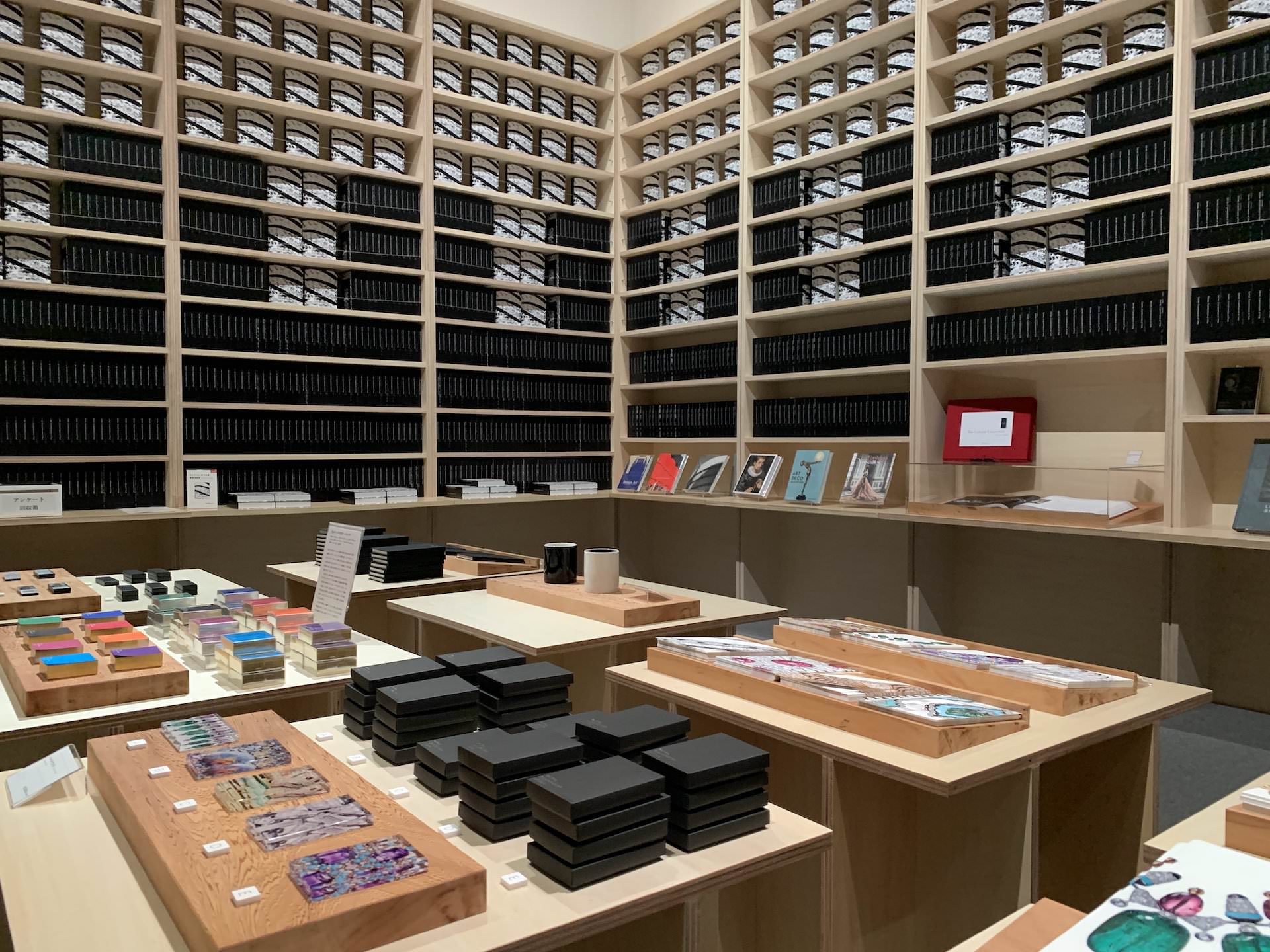
Museum Shop
The special museum shop, positioned just past the exit, also featured meticulously designed space.
New Material Research Laboratory的展示设计十分出色《Snake Necklace》Cartier Paris 特别订制 1968年 铂金、白金、黄金、钻石、祖母绿、绿珐琅、红珐琅、黑珐琅《Vanity Case》 Cartier Paris 1924年 黄金、铂金、珍珠母贝与绿松石镶嵌、8.82克拉叶形雕刻祖母绿1颗、祖母绿、珍珠、黑珐琅、奶油珐琅、钻石 Cartier Collection
由New Material Research Laboratory 〜 Hiroshi Sugimoto+Tomoyuki Sakakida打造的展示构成十分出色,气度不凡的空间与众多作品完美融合。
The National Art Center, Tokyo에서 개최 중인 “Cartier, Crystallization of Time”에 다녀왔습니다.
“Cartier, Crystallization of Time” The National Art Center, Tokyo
Cartier 전시회는 “Cartier Collection”의 역사적인 작품들을 대상으로 과거에도 1995년, 2004년, 2009년에 걸쳐 여러 차례 개최되어 왔지만, 본 전시회에서는 세계 최초의 시도로서 1970년대 이후의 현대 작품에 초점을 맞춘 전시 구성으로 이루어져 있습니다.
또한 총 약 300점에 달하는 작품 중 약 절반이 “개인 소장” 작품으로 전시된 점도 특징적이었습니다.
수많은 개인 컬렉션 작품이 한자리에 모이는 귀중한 기회입니다.
그리고 회장 구성을 담당하는 것은 New Material Research Laboratory / Hiroshi Sugimoto + Tomoyuki Sakakida.
목재, 석재 등 천연 소재, 미니멀하고 고급스러운 조명 디자인을 포함하여 세련된 전시 공간에서 Cartier 작품의 감상 경험도 한층 격조 높은 체험이 되었습니다.
서장 “시간의 방”
입구를 지나면 Hiroshi Sugimoto의 《Reverse Clock》이 눈앞에 우뚝 솟아 있듯이 전시되어 있었습니다.
유리구슬의 무게로 시계가 거꾸로 새겨지는 작품으로, 타이밍에 따라 소리도 나는 작품입니다.
“시간의 방”은 “시계 제조의 기적”이라 불리는 Mystery Clock과 Prism Clock이 진좌하는 전시입니다.
Mystery Clock은 2개의 시계 바늘이 마치 기계와는 전혀 연결되지 않은 것처럼 공중에 떠 있는 것처럼 보입니다. 무브먼트는 받침대와 장식 조각 속에 숨겨져 있는 것입니다. 아무리 주의 깊게 보아도 정교한 만듦새로, 그 장치의 비밀을 밝혀낼 수는 없었습니다. 제작에는 시계 제작자 외에 금은세공사, 에나멜 장인, 연마사 등 많은 전문가가 참여하며, 완성까지 최소 수개월이 걸린다고 합니다.
제1장 “색과 소재의 변용”
“시간의 방”을 지나면 제1장 “색과 소재의 변용”으로 이동합니다.
다양한 소재와 색이 조합된 Cartier의 작품을 소재 사용법이나 색채의 관점에서 봄으로써 독창적인 시점과 표현 수법을 검증합니다.
여기에서도 차분한 공간 디자인이나 목재, 석재 등 천연 소재를 사용한 전시 방법 등, 작품의 아름다움을 한층 돋보이게 하는 연출에 마음이 뛰었습니다.
마지막 전시 공간은 일본을 포함한 세계 각국의 디자인을 도입한 작품으로 구성되어 있었습니다.
New Material Research Laboratory의 전시 디자인이 멋졌습니다《Snake Necklace》 Cartier Paris 특주품 1968년 플래티넘, 화이트골드, 옐로우골드, 다이아몬드, 에메랄드, 그린 에나멜, 레드 에나멜, 블랙 에나멜《Vanity Case》 Cartier Paris 1924년 옐로우골드, 플래티넘, 자개와 터키석 상감, 8.82캐럿 잎 모양 조각을 새긴 에메랄드 1개, 에메랄드, 진주, 블랙 에나멜, 크림 에나멜, 다이아몬드 Cartier Collection
New Material Research Laboratory 〜 Hiroshi Sugimoto+Tomoyuki Sakakida에 의한 전시 구성이 훌륭하여, 기품 있는 공간과 수많은 작품들이 훌륭하게 융합되어 있었습니다.
차분한 라이팅이 약 300점의 작품 하나하나에 쏟아져 화려하고 눈부신 “Cartier Collection”을 연출하며, 볼거리 가득한 전시회가 되었습니다.