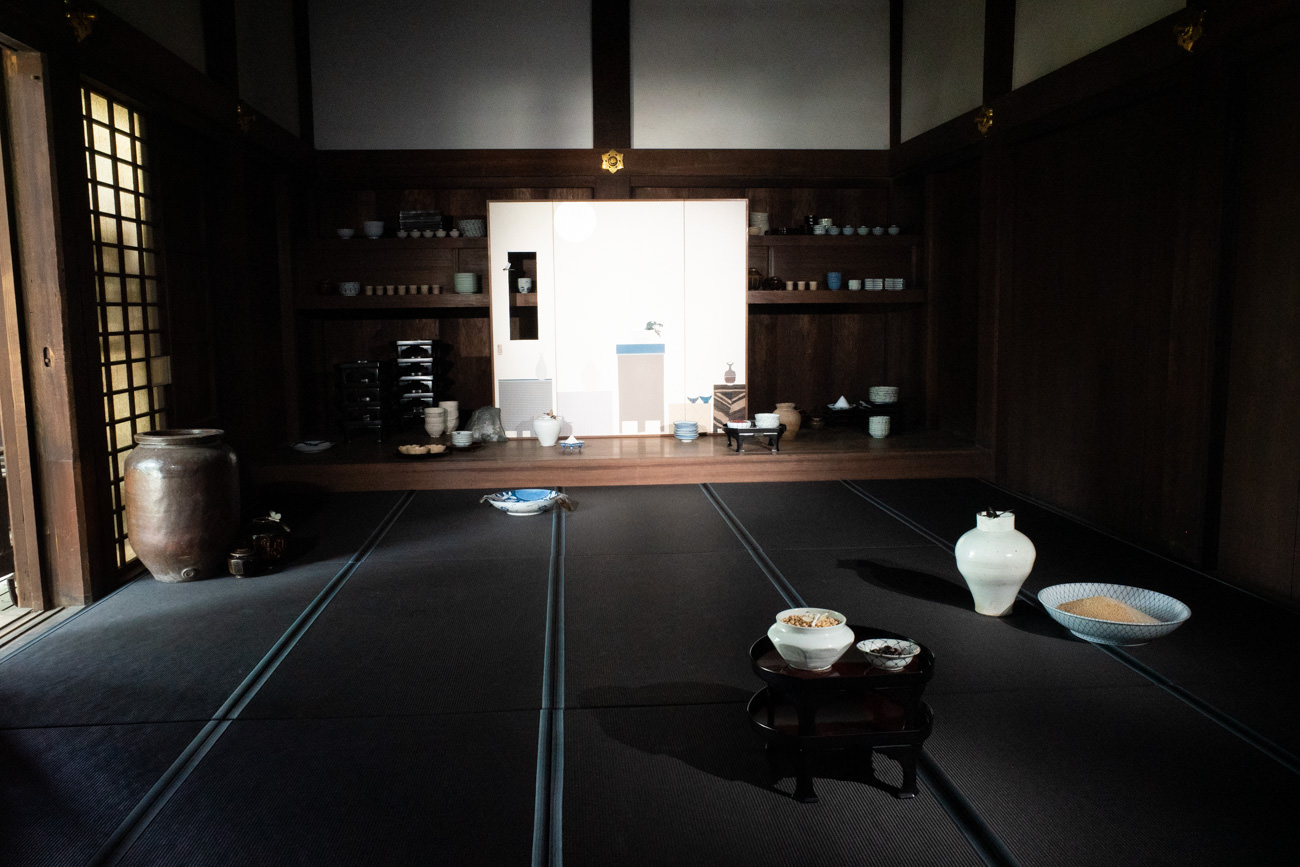
At the Ninomaru Palace Kitchen and Osuzusho (both Important Cultural Properties) of Nijo Castle in Kyoto—a UNESCO World Cultural Heritage site—the exhibition “Throughout Time: The Sense of Beauty,” advised by Fumio Nanjo, director of the Mori Art Museum, and Kohei Nawa, was held.
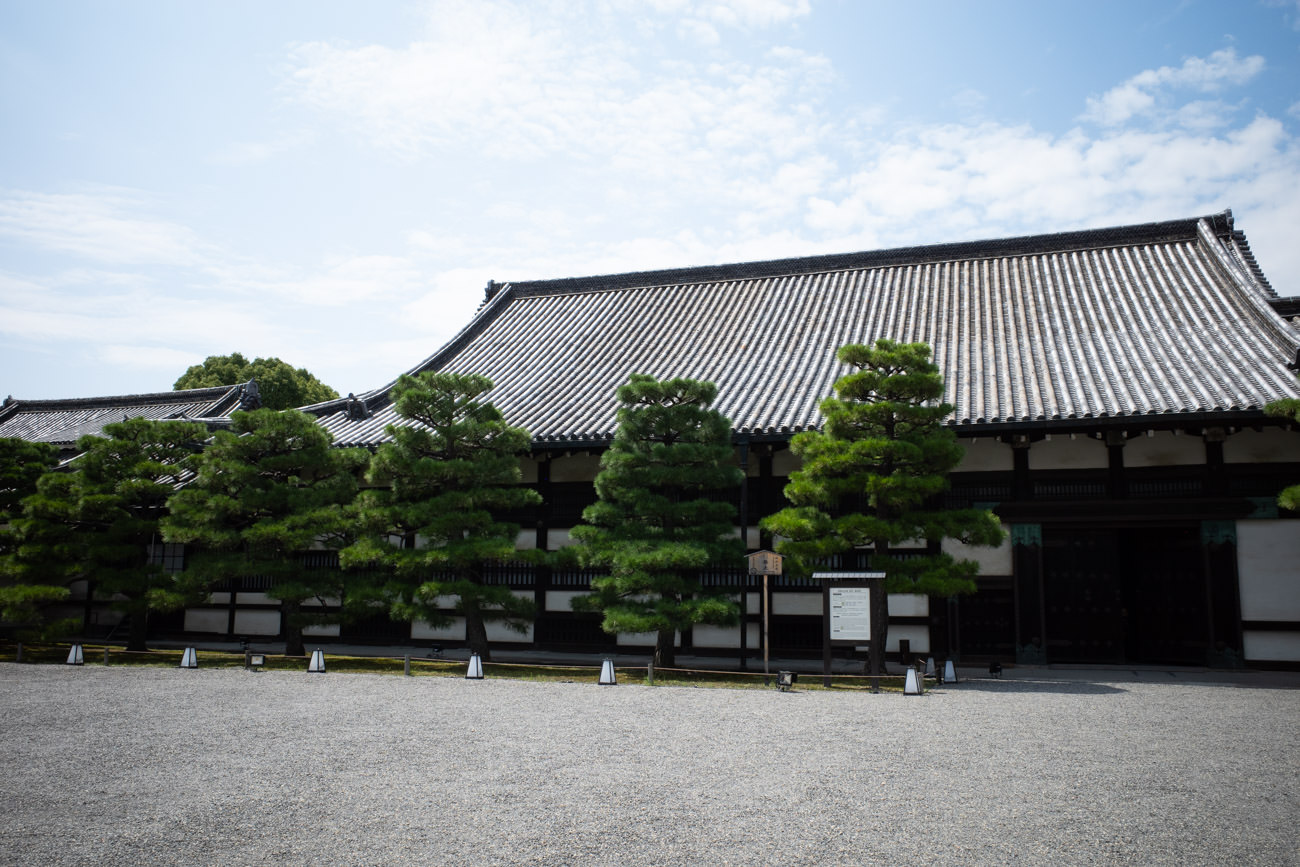
The Ninomaru Palace Kitchen at Nijo Castle
Bringing together Japan’s proud historical architecture and artists who lead the country’s contemporary art scene, this exhibition felt like a magnificent collaboration—an excellent project.
Kohei Nawa
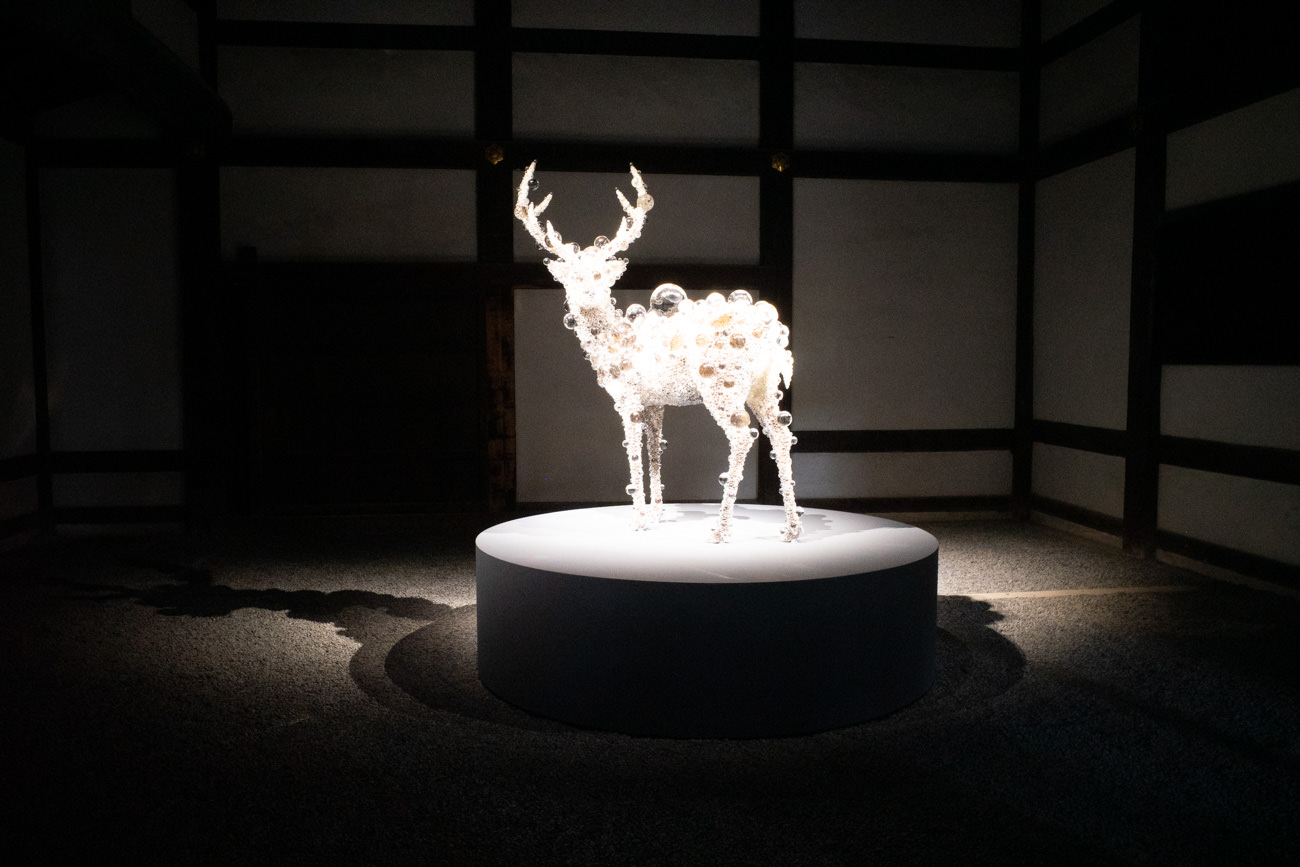
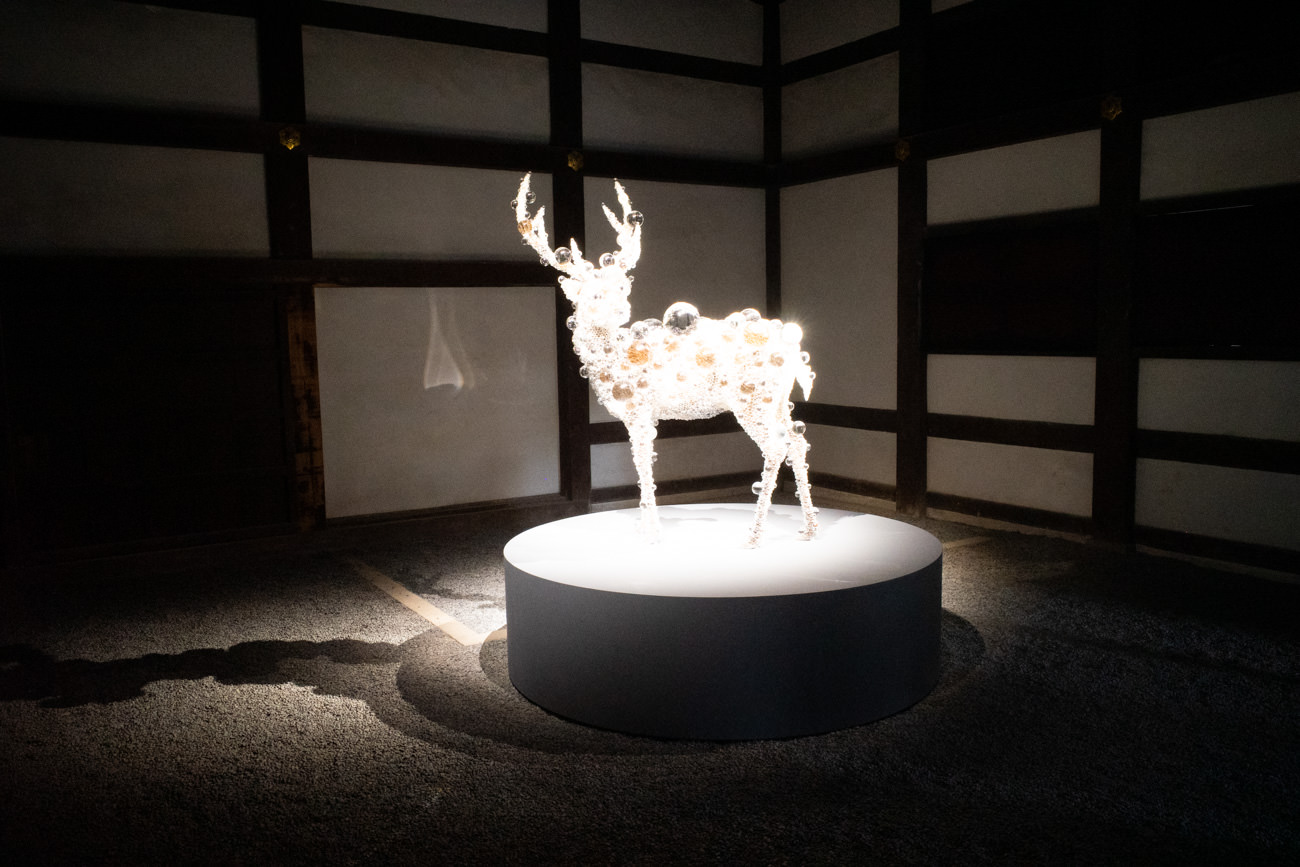
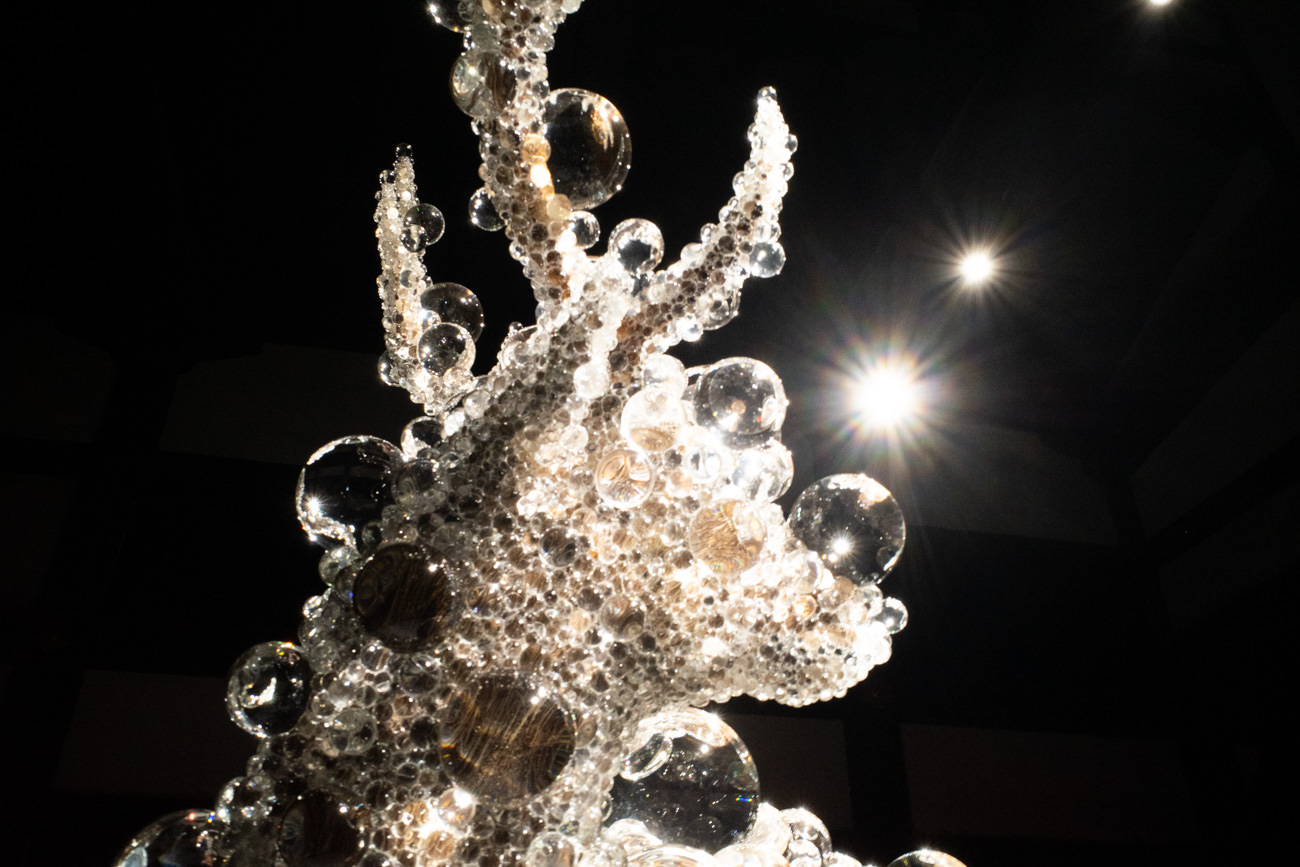
The PixCell-series deer, placed on the earthen entry floor of the Ninomaru Palace Kitchen, appeared under the darkened lighting like a guardian deity—majestic and solemn in presence.
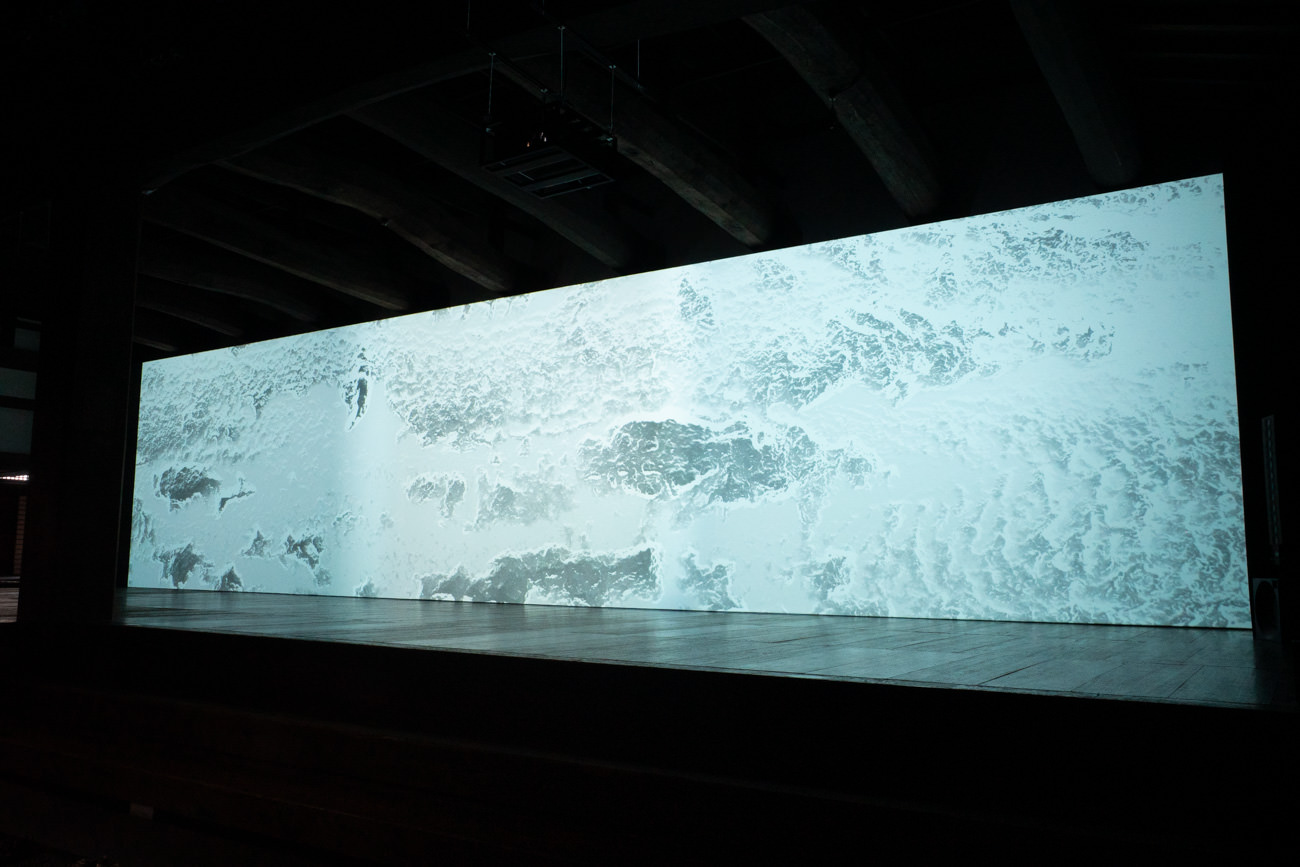
Removing our shoes and stepping up onto the wooden platform, we found a video piece projected on a massive screen.
Sitting on the wood floor, we became immersed in its world of images and sound. It was a soothing experience that made us forget the heat outside.
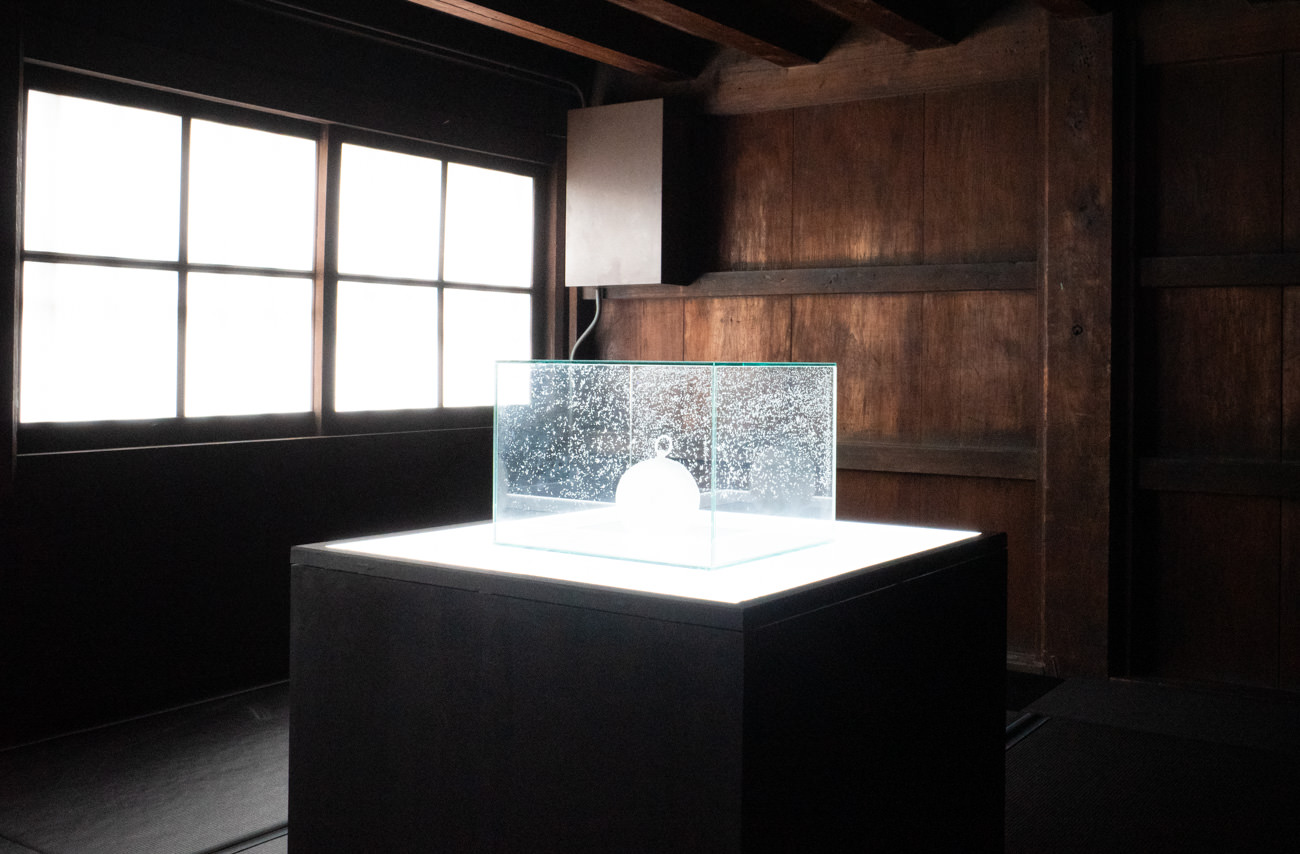
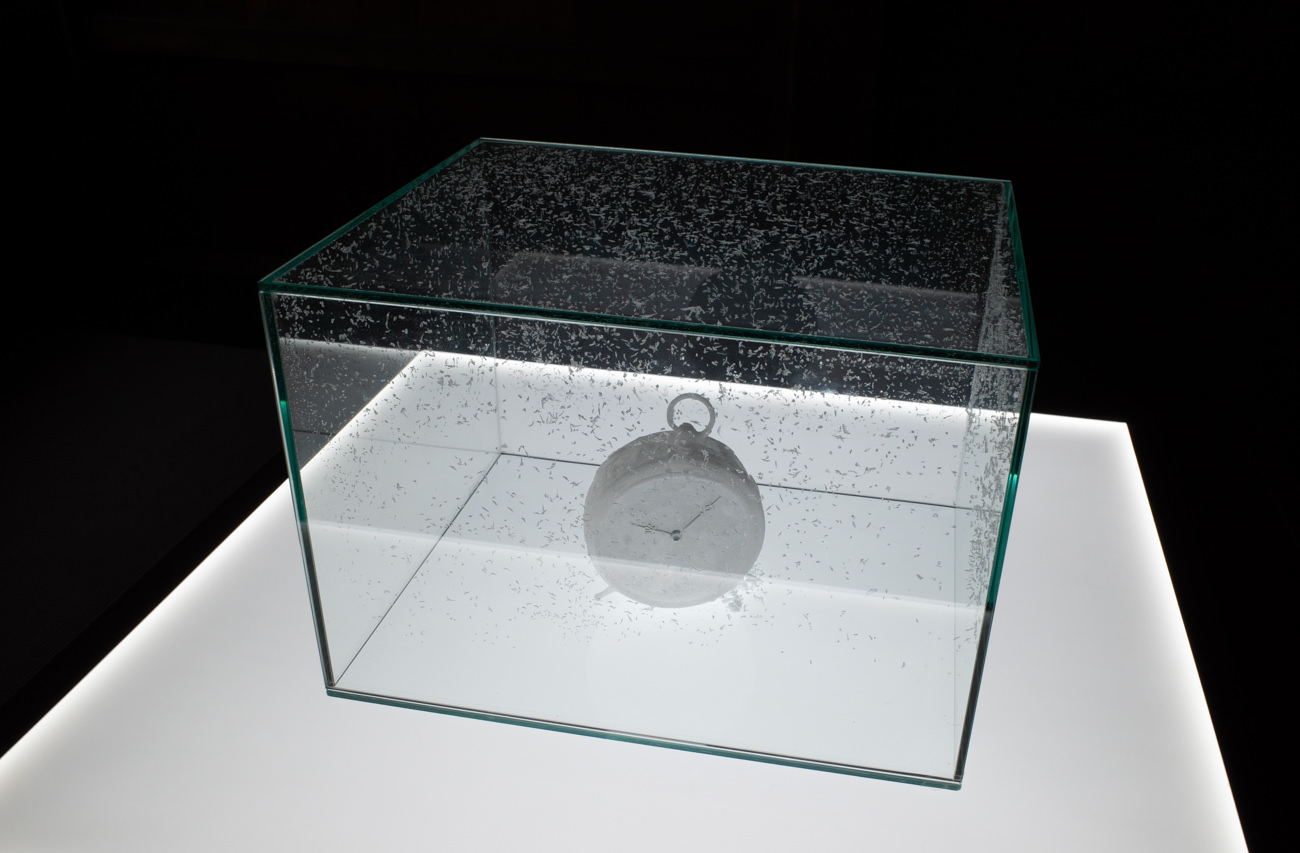
Aiko Miyanaga, known for her works using naphthalene, seemed to be posing questions about “history” through her clock-motif work.
Installation viewAiko Miyanaga, “Scenery Falling in the Night—Clock—,” 2018
Ito Jakuchu
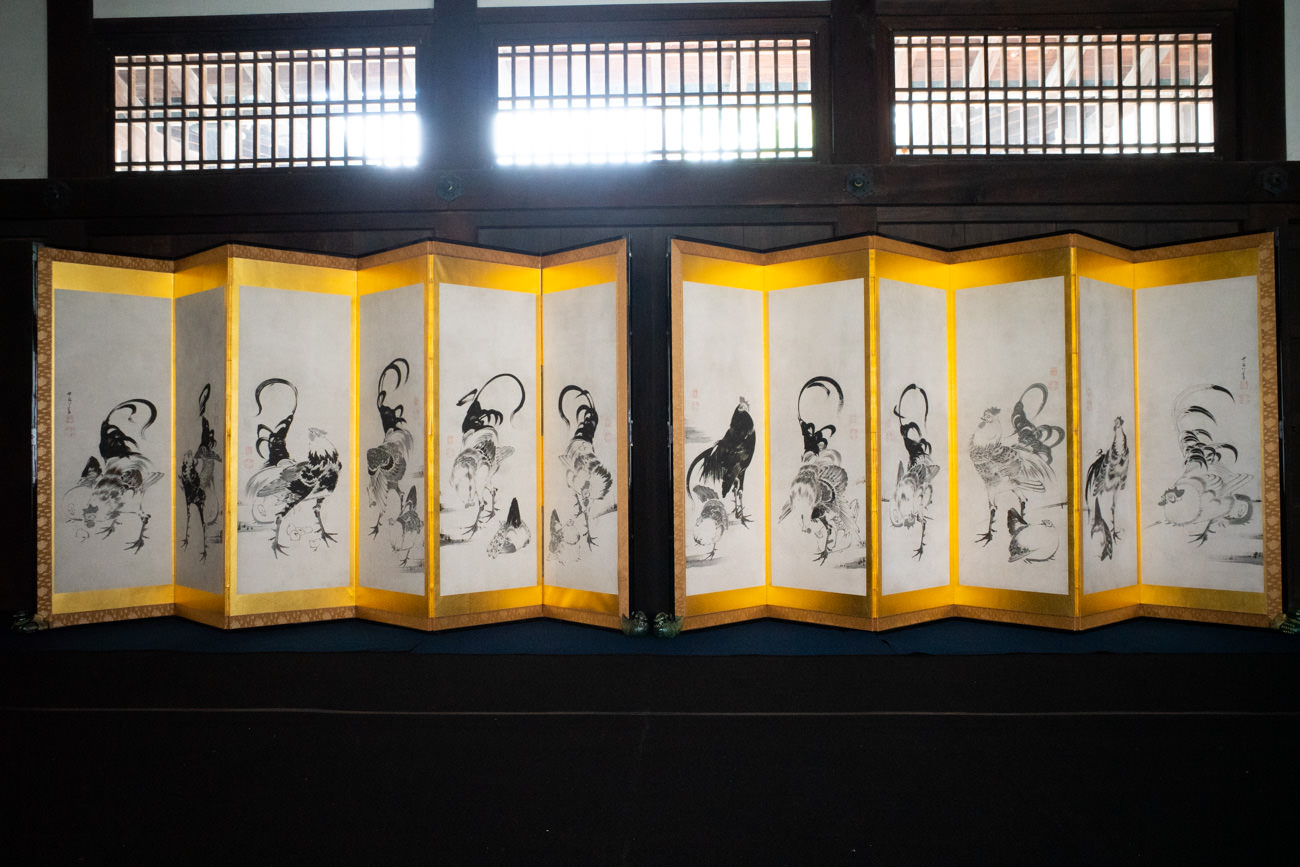
The work by Kyoto painter Ito Jakuchu was a replica produced by the Hosomi Museum in Kyoto.
Ito Jakuchu, “Roosters, Pasted Folding Screen” *Replica, 2013 (Original 1797)
RINne Associe
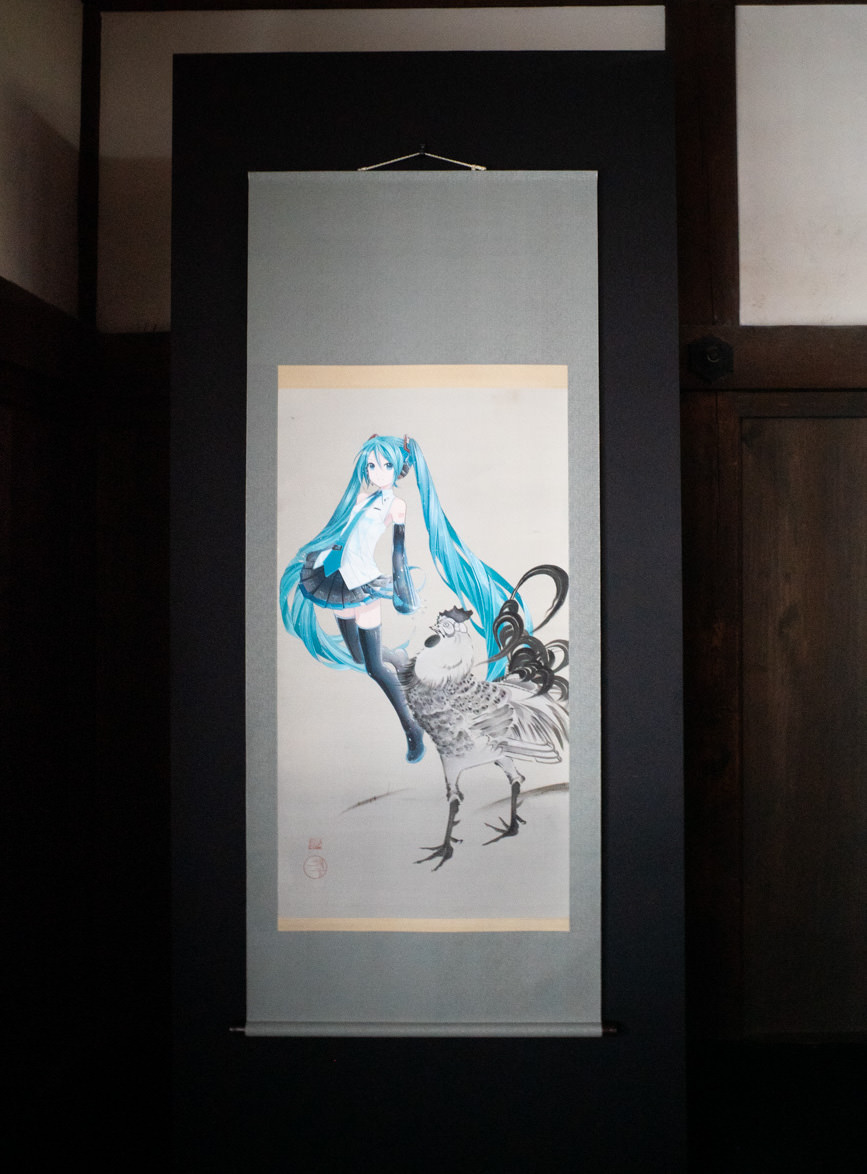
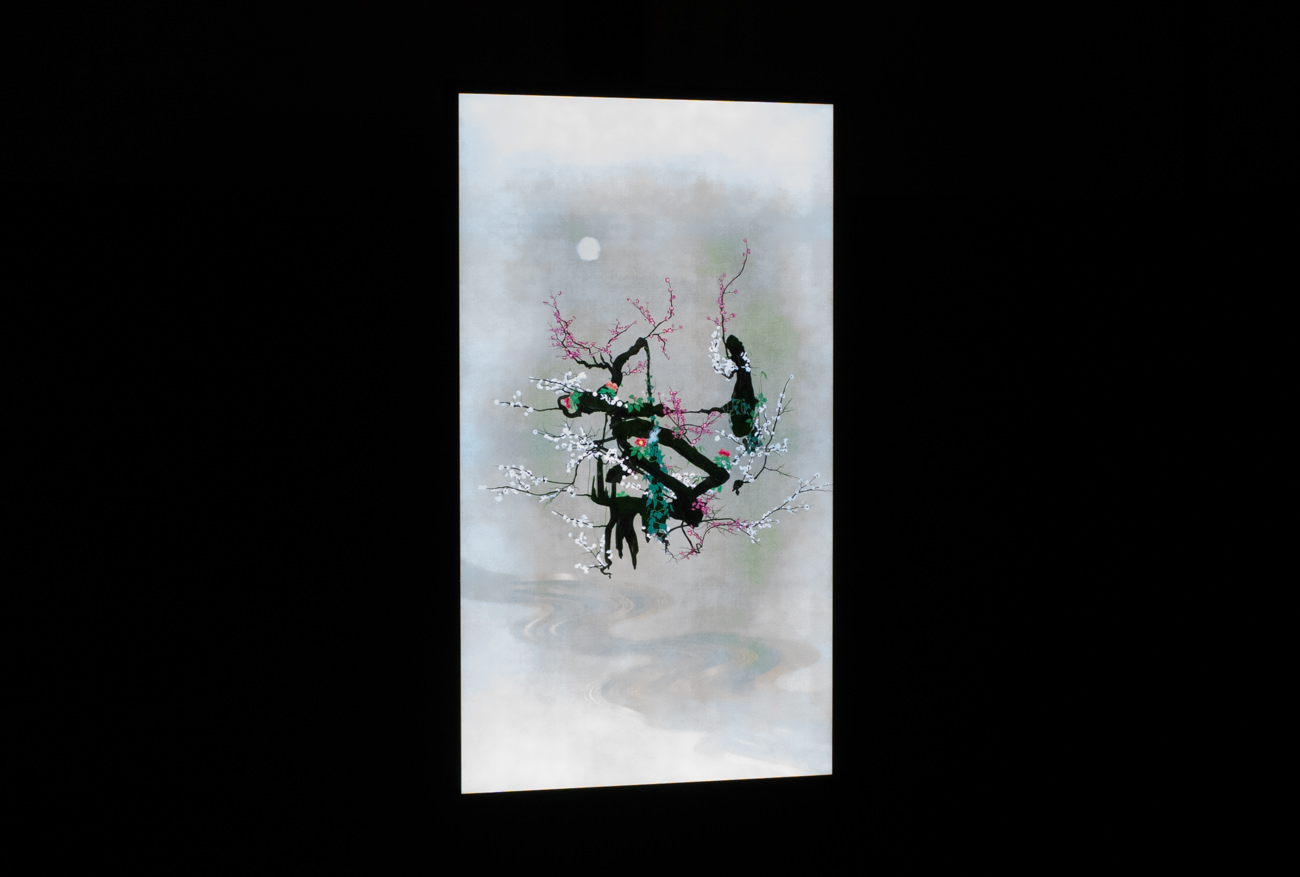
The collaboration work between Ito Jakuchu and Hatsune Miku was created by RINne Associe.
RINne Associe is a project team organized by the Hosomi Museum.
RINne Associe, “Hatsune Miku × Ito Jakuchu”
Mika Aoki
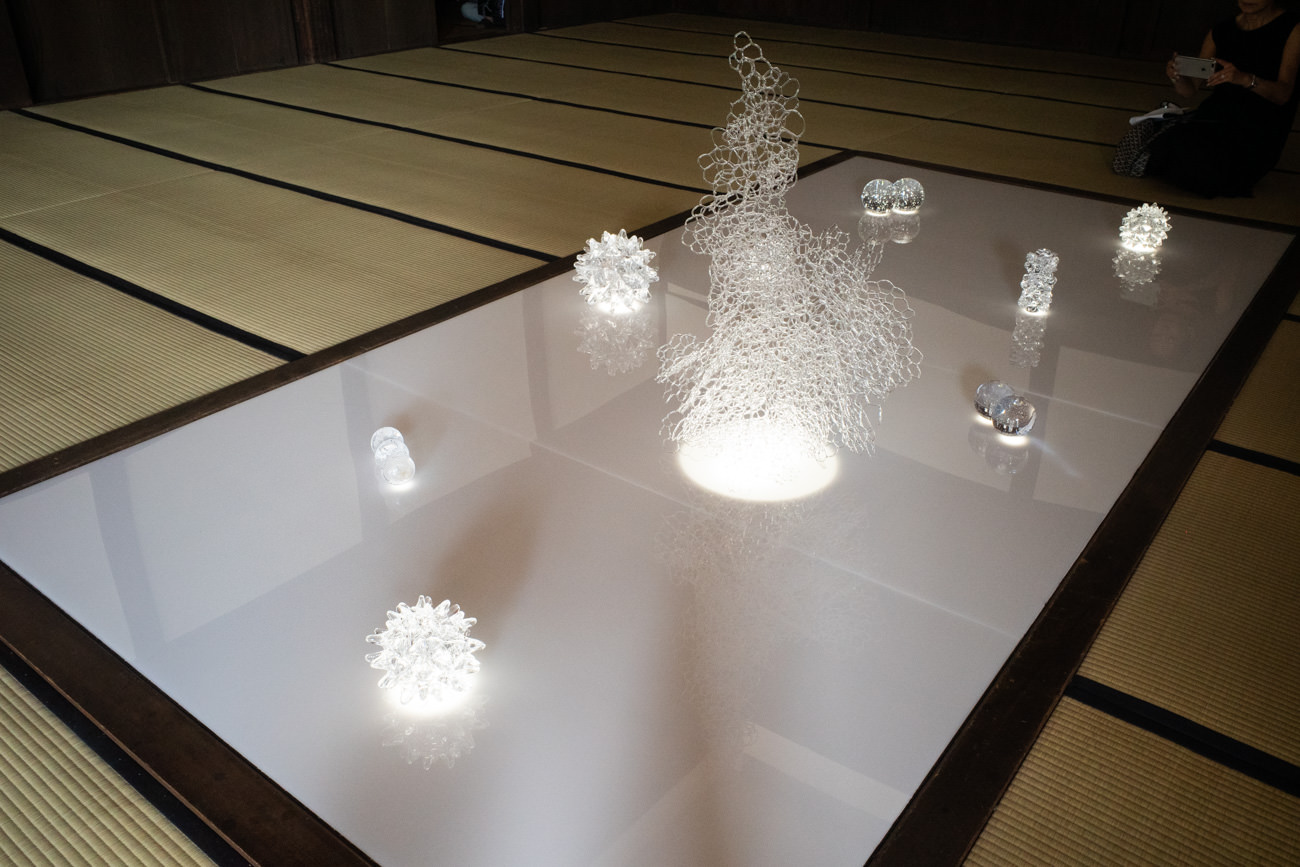
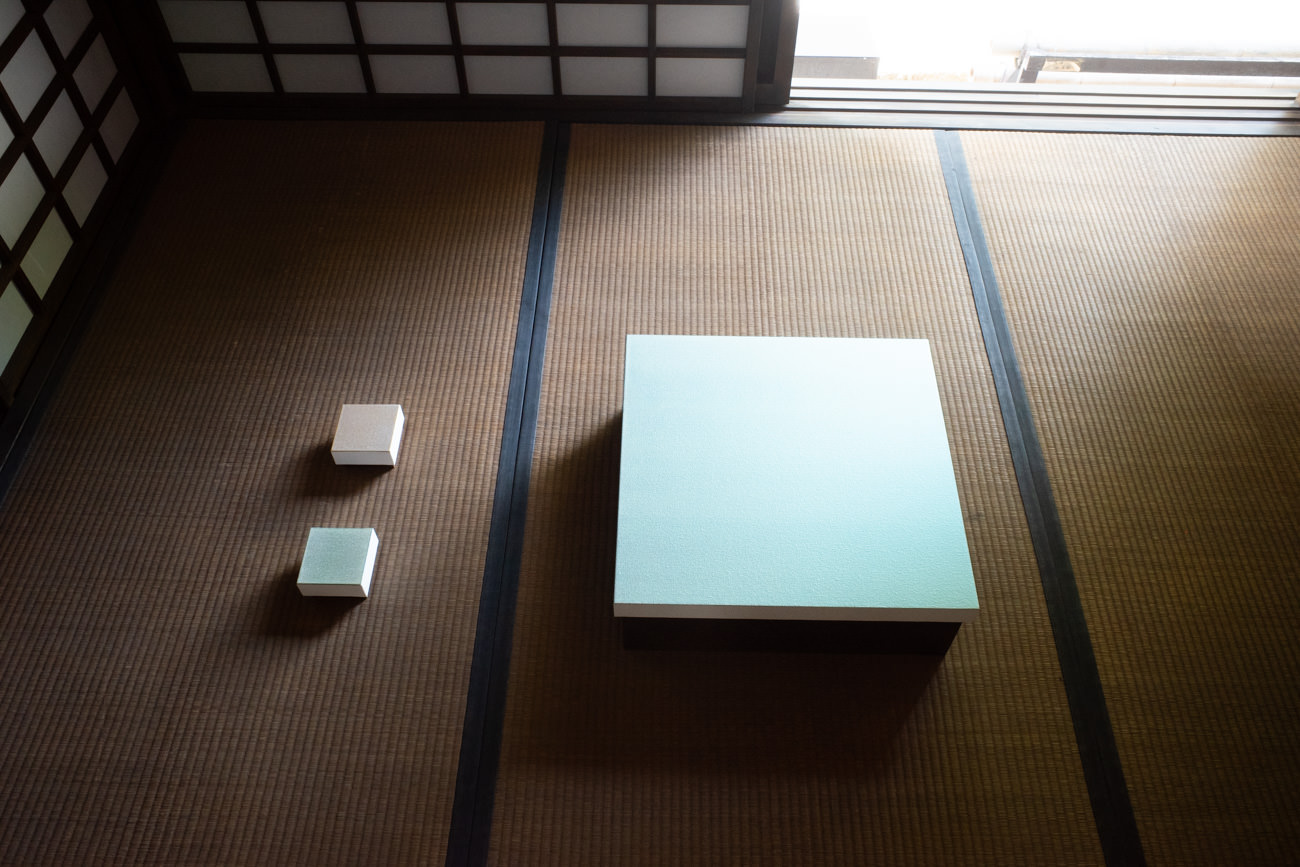
Mika Aoki’s glass works arrayed on the tatami mats had a serene presence and were truly wonderful.
Mika Aoki, “Smoke Garden,” 2019, glass
Katsunori Kobayashi
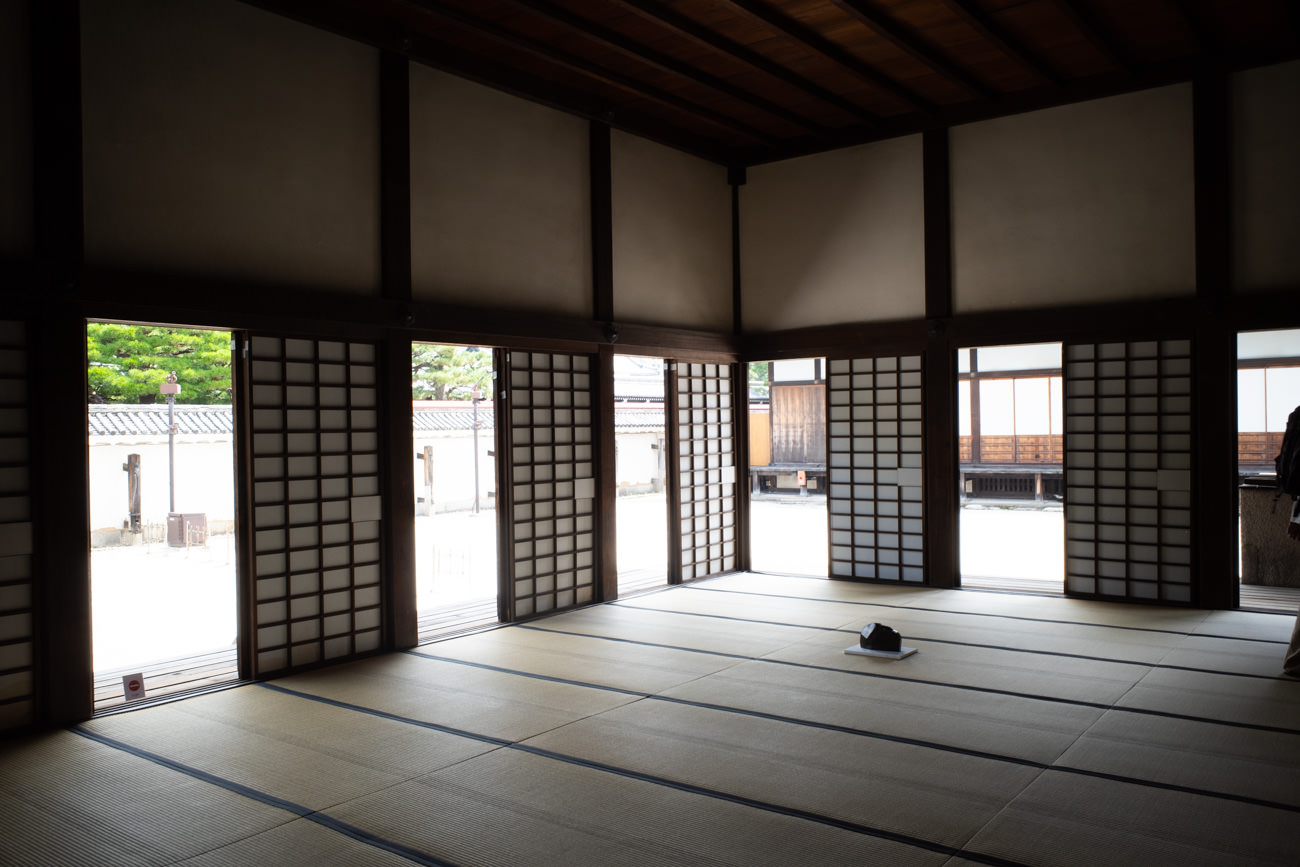
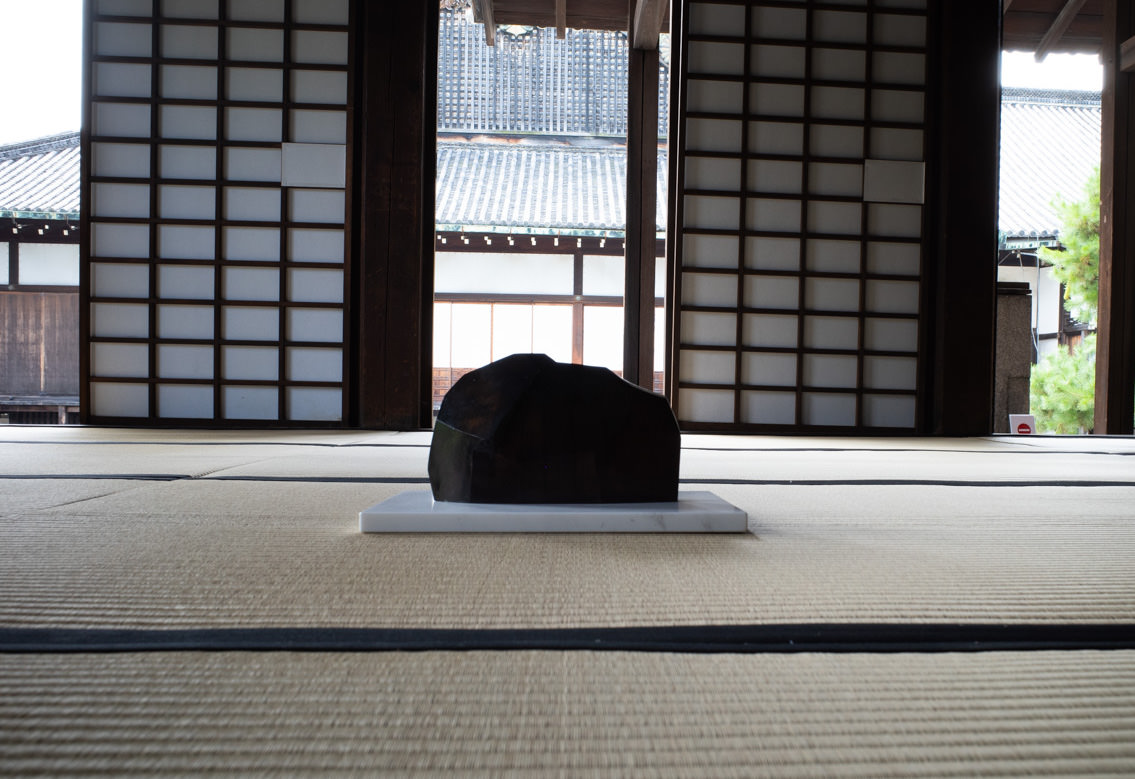
Katsunori Kobayashi’s bronze sculpture “Mountain Specimens” harmonized and fused with the scenery outside—it was deeply moving.
Yoshiaki Mukoyama’s work, blended with natural light, seemed to have color tones that subtly wavered. It appeared to respond not only to light but also to wind, time, and the vibrations of our footsteps—minimal, yet with an immense presence.
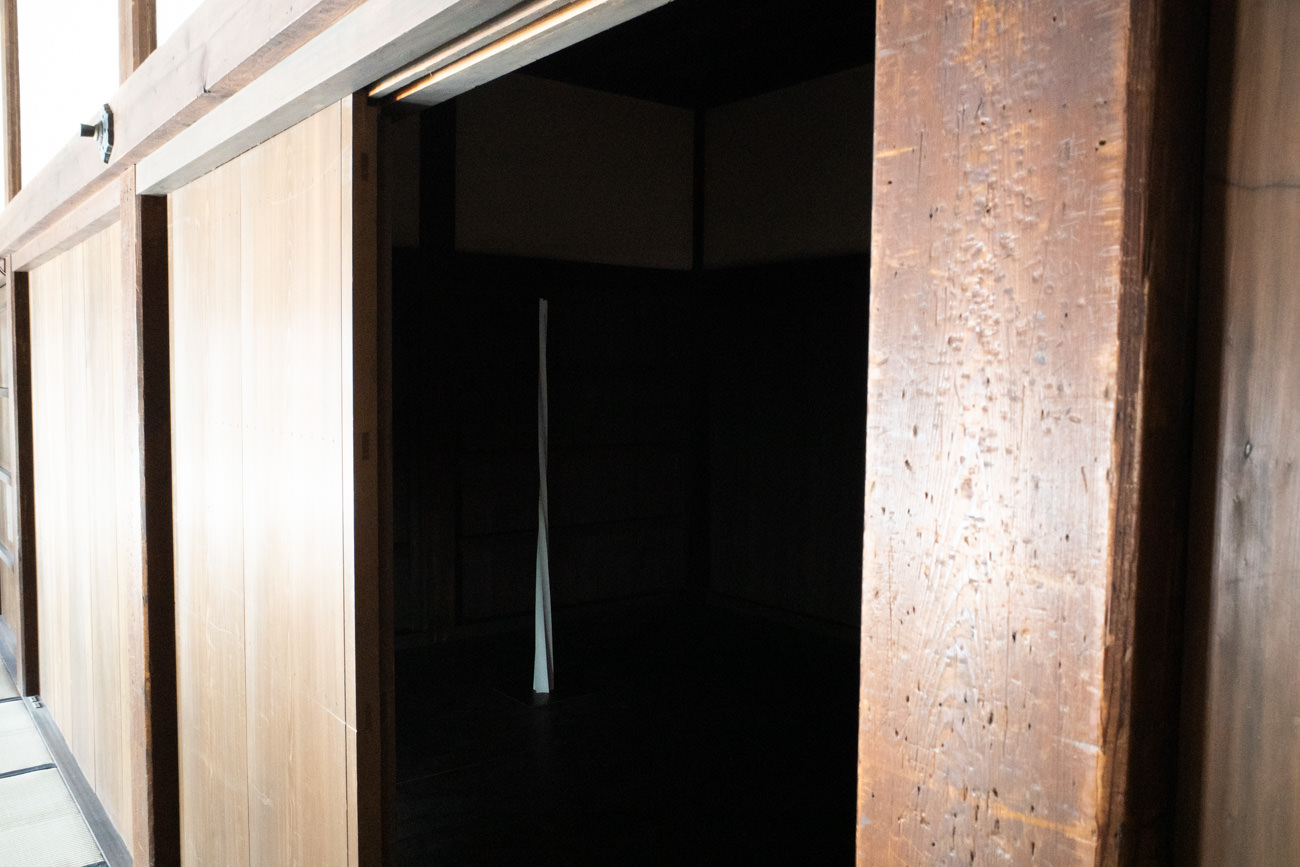
Attached to the main hall was a small room, dimly lit inside. Placed quietly within was Katsuhito Nishikawa’s sculpture “Courant ascendant I.” The title is French for “updraft.”
In contrast to the title, the space felt as though the air itself had stopped moving—as if solemn time was being carved out within.
Katsuhito Nishikawa, “Courant ascendant I,” 1995
teamLab
teamLab’s video work was also shown in a small room adjoining the main hall.
Many visitors sat on the tatami and viewed it at length. It was a wonderful video piece.
teamLab, “Life is Living by the Power of Life,” 2011, digital work, 6 min 23 sec
Yoshihiro Suda
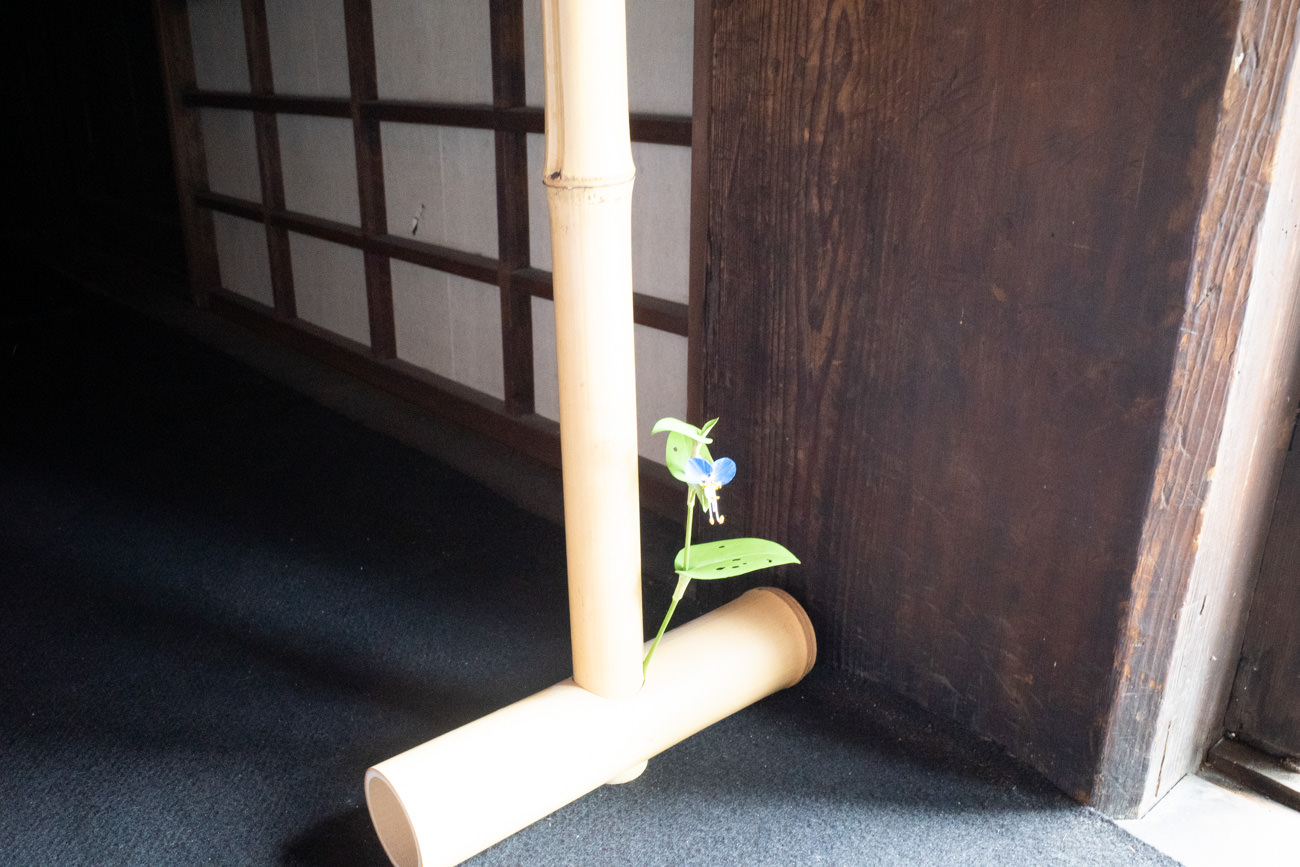
The exquisitely crafted “Baby’s Breath” is by Yoshihiro Suda. We loved the way it seemed to blend into its display setting.
Kei Miyama’s contribution was an installation composed of flat vessels painted on a folding screen and actual vessels that seemed to leap out from within it.
Kei Miyama, “Whose Sleeves,” 2017
Running only four days, this exhibition “Throughout Time: The Sense of Beauty” came to a close.
At Nijo Castle—a site with a powerful sense of place—we were able to feel “a dialogue with history.”
The two works by Kohei Nawa at the entrance seemed to set the tone for the entire show. They showed us the sheer power of a talented artist. The PixCell-series deer had, in our experience, the strongest presence we have ever seen from that series.
It was a truly outstanding project!
Throughout Time: The Sense of Beauty
在世界文化遗产京都·二条城的二之丸御殿台所与御清所(重要文化财产)内,举办了由Mori Art Museum馆长Fumio Nanjo与Kohei Nawa担任顾问的展览”Throughout Time: The Sense of Beauty”。
세계문화유산인 교토·니조성의 니노마루 어전 부엌과 오키요쇼(중요문화재)에서, Mori Art Museum 관장 Fumio Nanjo 씨와 Kohei Nawa 씨가 어드바이저를 맡은 전시 “Throughout Time: The Sense of Beauty”가 개최되었습니다.
니조성의 니노마루 어전 부엌
일본이 자랑하는 고건축과 일본 현대미술 신을 이끄는 미술가들이 함께 경연하듯 어우러진 본 전시는 매우 훌륭한 기획이었습니다.
Kohei Nawa
전시장인 니조성 니노마루 어전 부엌 입구의 도마(土間)에 놓인 PixCell 시리즈의 사슴 작품은, 어두운 공간에서의 라이팅으로 마치 수호신과 같은 존재로 비추어지며 장엄한 분위기를 자아냈습니다.
Kohei Nawa 《PixCell-Deer#60》 2019년Kohei Nawa 《PixCell-Deer#60》 부분
또한 신발을 벗고 판자 마루의 상단으로 올라가면, 거대한 스크린에 투사된 영상 작품이 상영되고 있었습니다.
판자 위에 앉아 마치 온몸에 뒤집어쓰듯 영상과 소리의 세계에 빠져들었습니다. 바깥의 더위를 잊을 만큼 쾌적한 경험이었습니다.
나프탈렌을 사용한 작품으로 주목받고 있는 Aiko Miyanaga 씨는, 시계를 모티프로 “역사”에 대해 묻는 듯한 메시지를 담고 있는 것처럼 느껴졌습니다.
전시 풍경Aiko Miyanaga 《밤에 내리는 풍경-시계-》 2018년
Ito Jakuchu
교토의 화가 Ito Jakuchu의 작품은 교토의 Hosomi Museum이 제작한 복제품이었습니다.
Ito Jakuchu 《닭 그림 오시에바리 병풍》 ※복제품 2013년(원작 1797년)
RINne Associe
Ito Jakuchu와 하츠네 미쿠의 콜라보레이션 작품은 RINne Associe에 의한 것입니다.
RINne Associe는 Hosomi Museum이 구성한 프로젝트 팀입니다.
RINne Associe 《하츠네 미쿠×Ito Jakuchu》
Mika Aoki
다다미 위에 늘어선 Mika Aoki 씨의 유리 작품은 정적인 자태로 매우 훌륭했습니다.
Mika Aoki 《연정(煙庭)》 2019년 유리
Katsunori Kobayashi
Katsunori Kobayashi 씨의 브론즈 조각 《산의 표본》은 바깥 풍경과 조화롭게 어우러져 가슴을 울리는 무언가가 있었습니다.
전시 풍경Katsunori Kobayashi 《산의 표본》 2019년
Yoshiaki Mukoyama
Yoshiaki Mukoyama 씨의 작품은 자연광과 어우러져 색조가 미묘하게 흔들리는 듯했습니다. 그 모습은 빛뿐 아니라 바람이나 시간, 우리의 발 밟는 진동에도 호응하는 듯, 미니멀하지만 매우 큰 존재감을 뿜어냈습니다.
Yoshiaki Mukoyama 《Ventata 53-훈풍/쿤푸》 2018년
Katsuhito Nishikawa
큰 홀에 딸린 작은 방은 어두컴컴한 실내였습니다. 그 안에 조용히 놓인 조각이 Katsuhito Nishikawa 씨의 《Courant ascendant Ⅰ》입니다. 프랑스어로 “상승기류”라는 뜻이라고 합니다.
상승기류라는 작품명과 대조적으로, 공기의 흐름이 멈춘 듯한 공간에서 엄숙한 시간이 새겨지고 있는 것처럼 느껴졌습니다.
Katsuhito Nishikawa 《Courant ascendant Ⅰ》 1995년
teamLab
teamLab의 영상 작품도 큰 홀에 딸린 작은 방이었습니다.
다다미에 앉아 찬찬히 감상하는 분들이 많았습니다. 멋진 영상 작품이었습니다.
teamLab 《생명은 생명의 힘으로 살아간다》 2011년 digital work 6min23sec
Yoshihiro Suda
정교하게 만들어진 《안개풀(카스미소우)》은 Yoshihiro Suda 씨의 작품입니다. 전시 장소에 녹아드는 느낌이 좋았습니다.
Yoshihiro Suda 《안개풀》 2019년 나무에 채색
Kei Miyama
Kei Miyama 씨의 출품작은 병풍에 그려진 평면의 기물과, 거기서 튀어나온 듯한 실물 기물로 구성된 인스털레이션이었습니다.
Kei Miyama 《누구의 소매(誰が袖)》 2017년
단 4일이라는 짧은 회기로 종료된 본 전시 “Throughout Time: The Sense of Beauty”.
니조성이라는, 장소의 힘이 매우 강한 곳에서 “역사와의 대화”를 느낄 수 있었습니다.
서두에 전시된 Kohei Nawa 씨의 두 작품으로 본 전시의 분위기가 만들어진 인상이었습니다. 재능 있는 작가의 힘을 눈앞에서 목격한 듯한 기분입니다. PixCell 시리즈의 사슴 작품은 지금까지 본 것 중에서도 가장 강한 힘이 깃든 자태였습니다.