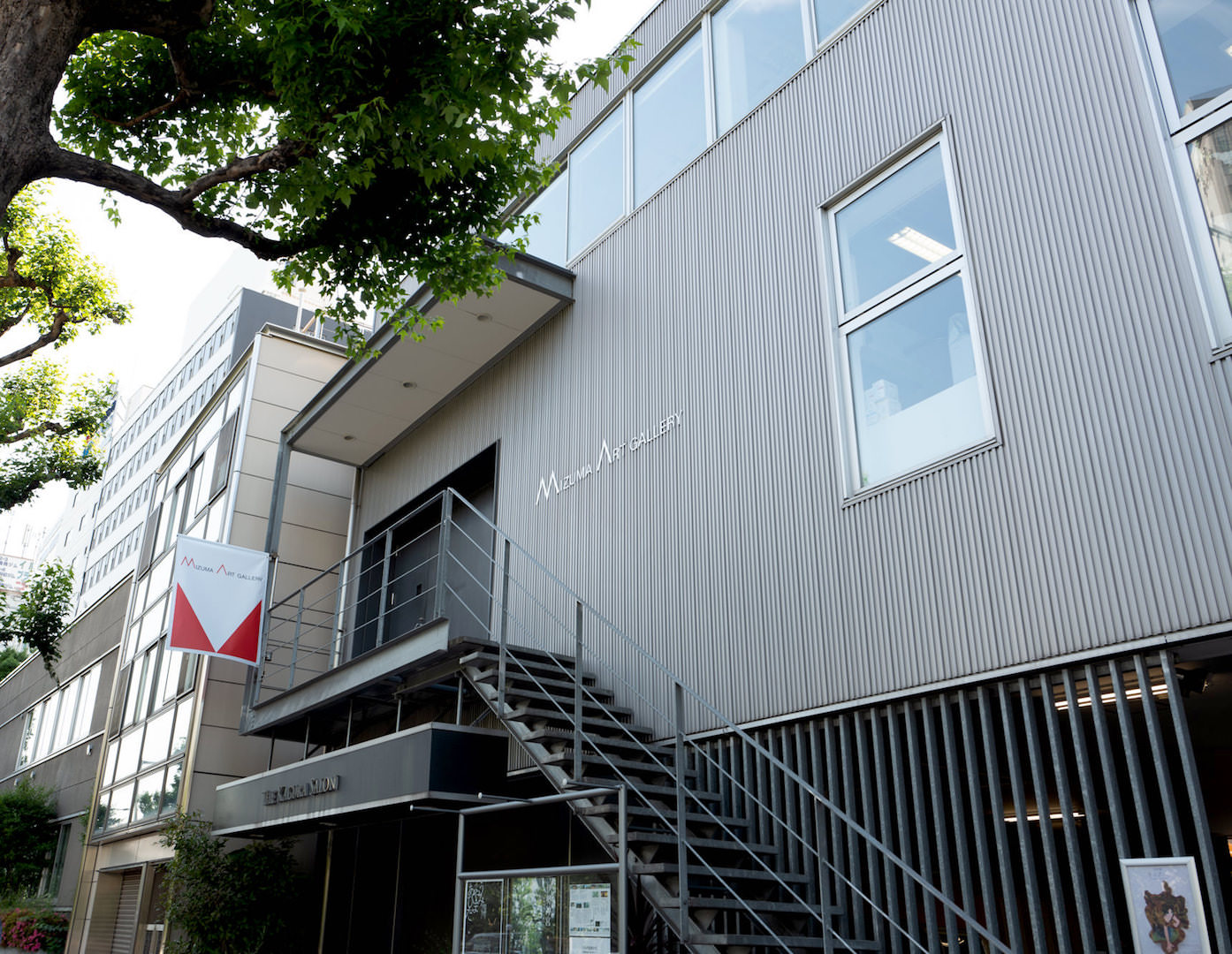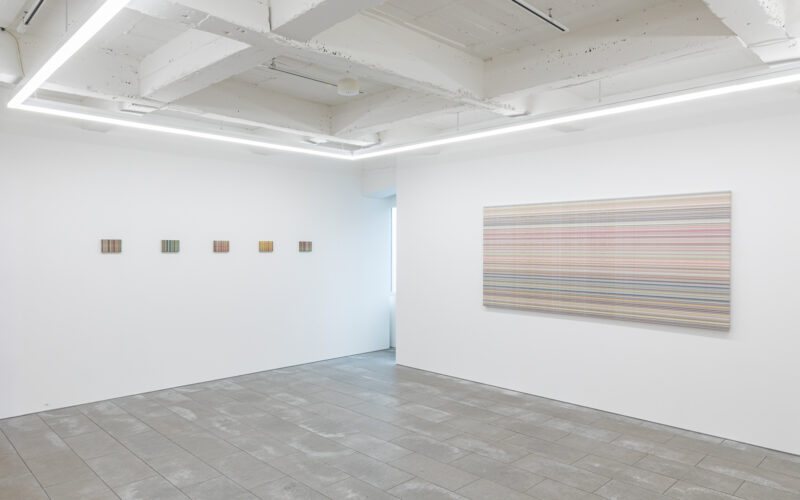
We visited Mizuma Art Gallery, located roughly midway between Ichigaya and Iidabashi.
With its high ceilings and calm surroundings, it is one of this writer’s favorite galleries.
Ai Yamaguchi “ima to koko ni”
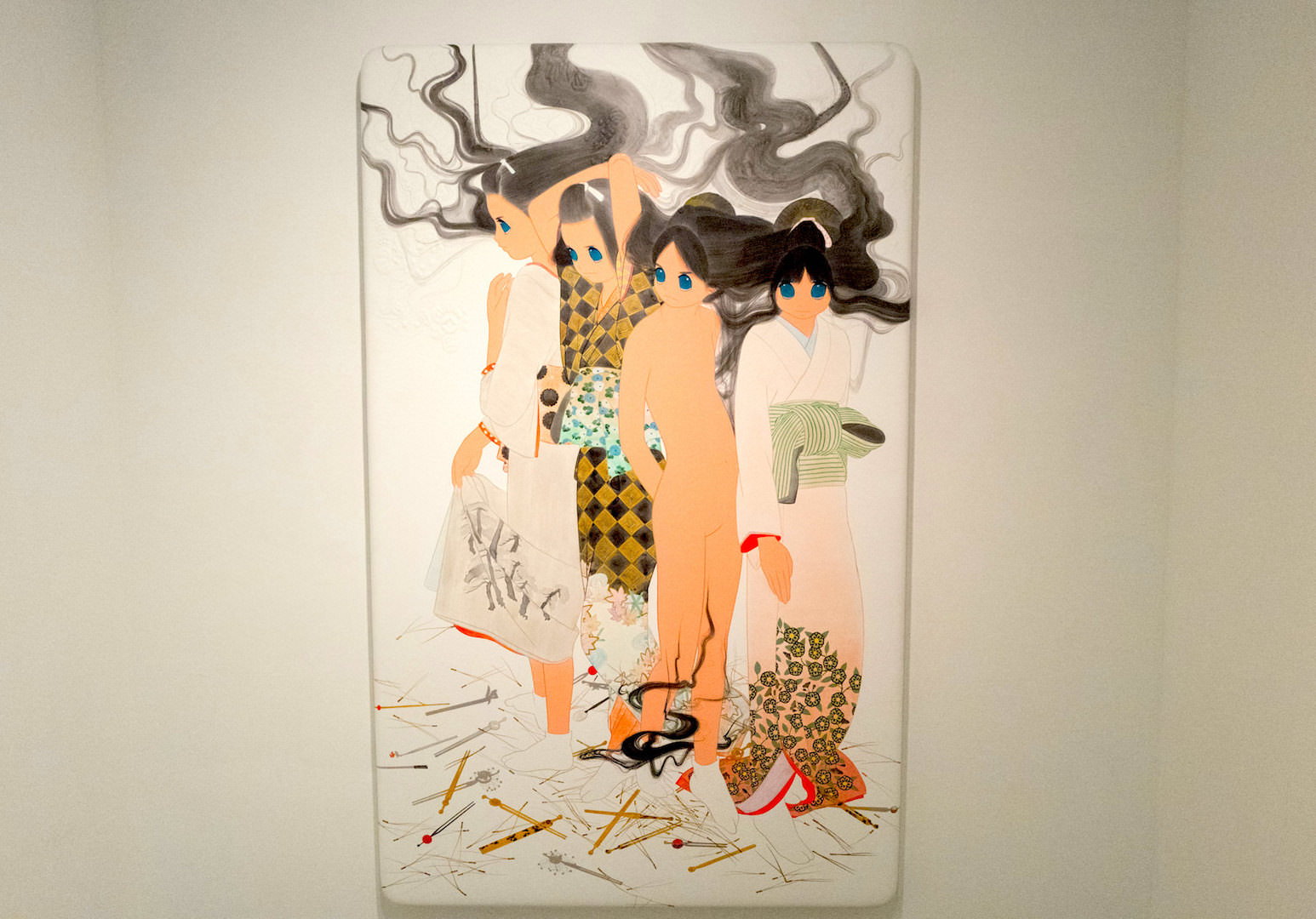
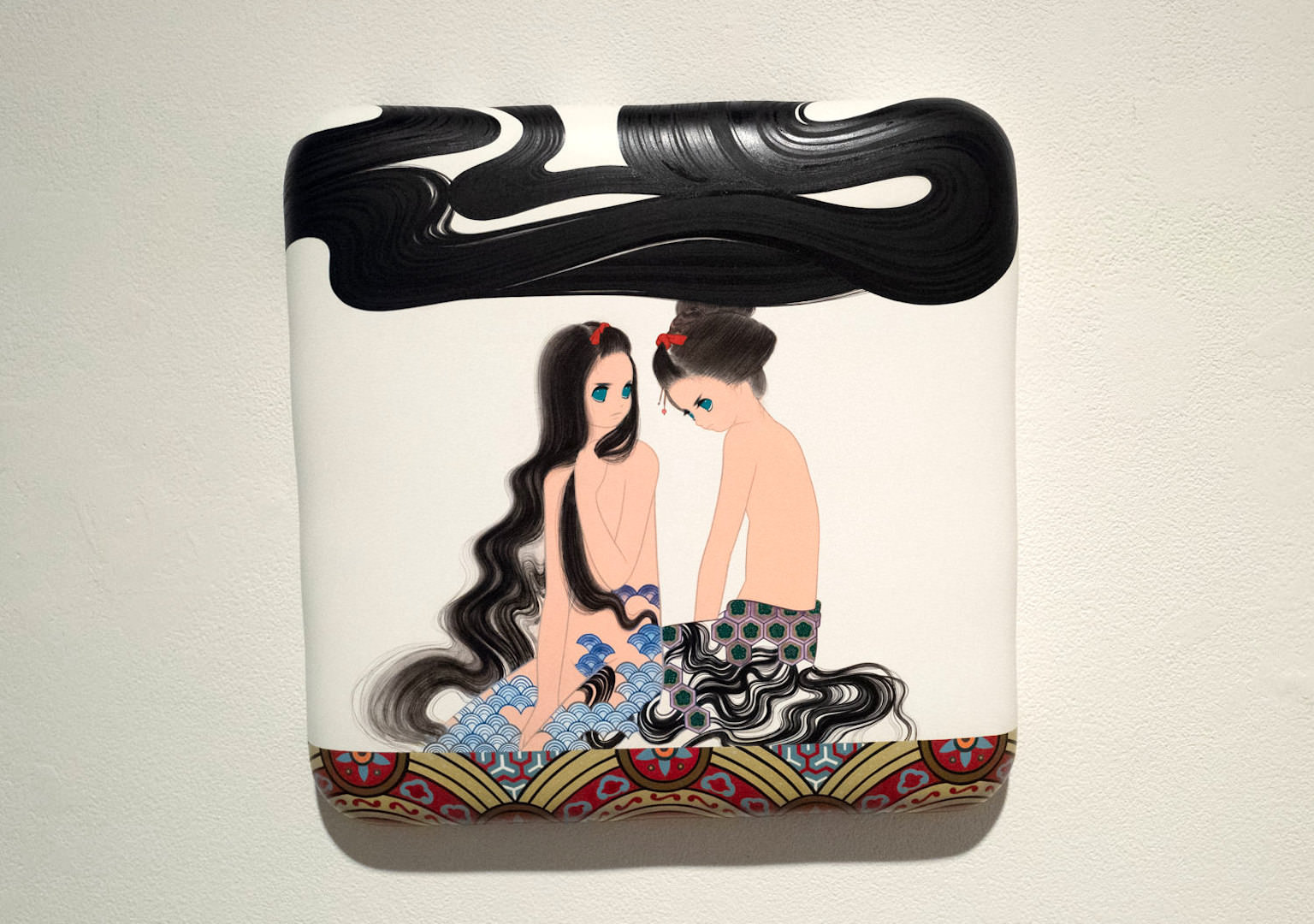
Ai Yamaguchi is an artist who inherits the beauty of old Japan while incorporating the culture and customs of the Edo period into her work. Painting bijin-ga (portraits of beautiful women) that read as both illustration and Nihonga, and using unusual supports such as futon canvas or wooden panels, she has built a wonderfully singular worldview. She is one of this writer’s favorite artists.
On the day of our visit, we were lucky enough to find her at the gallery in person and had the chance to speak with her.
— Mizuma Art Gallery (@MizumaGallery) May 10, 2018
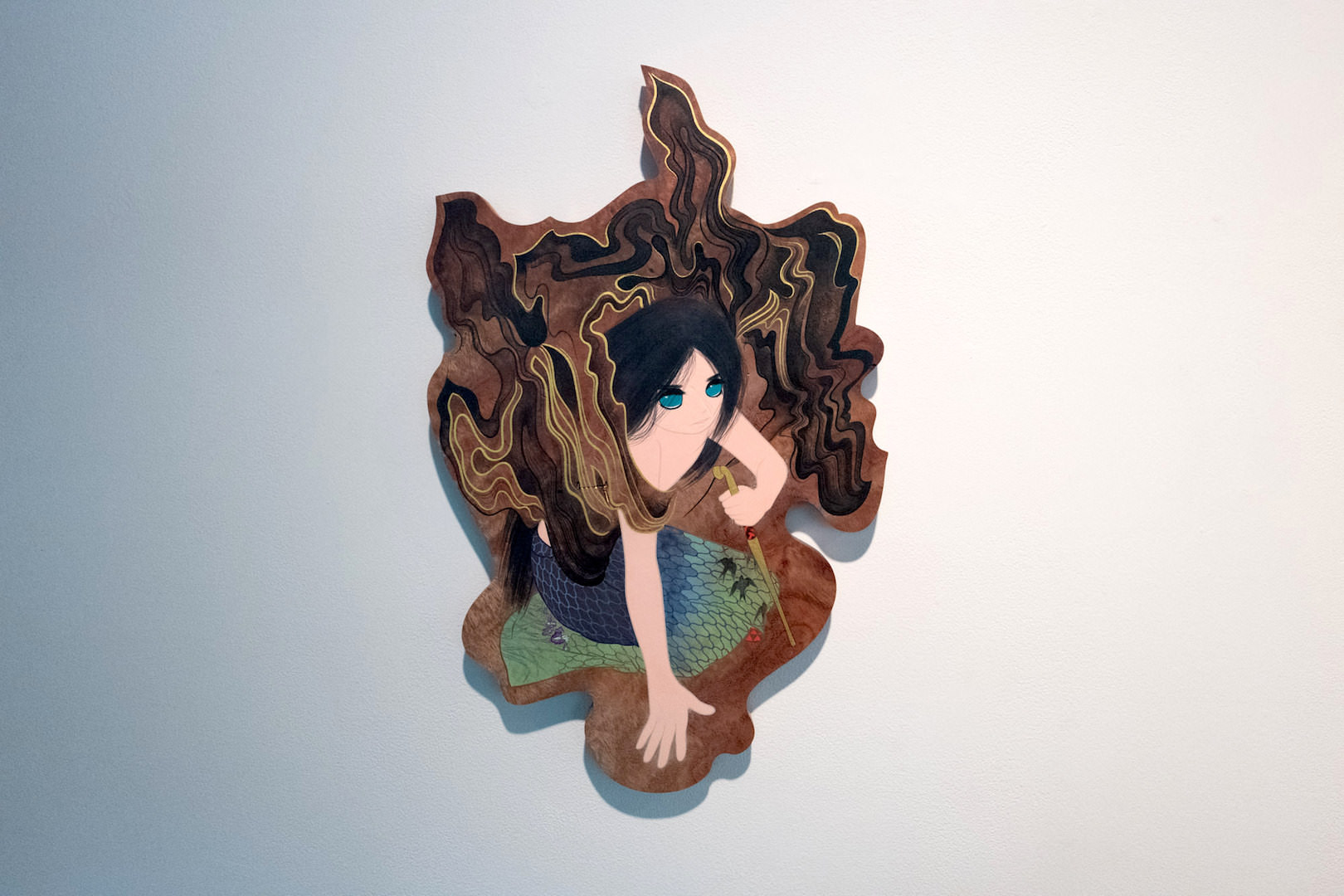
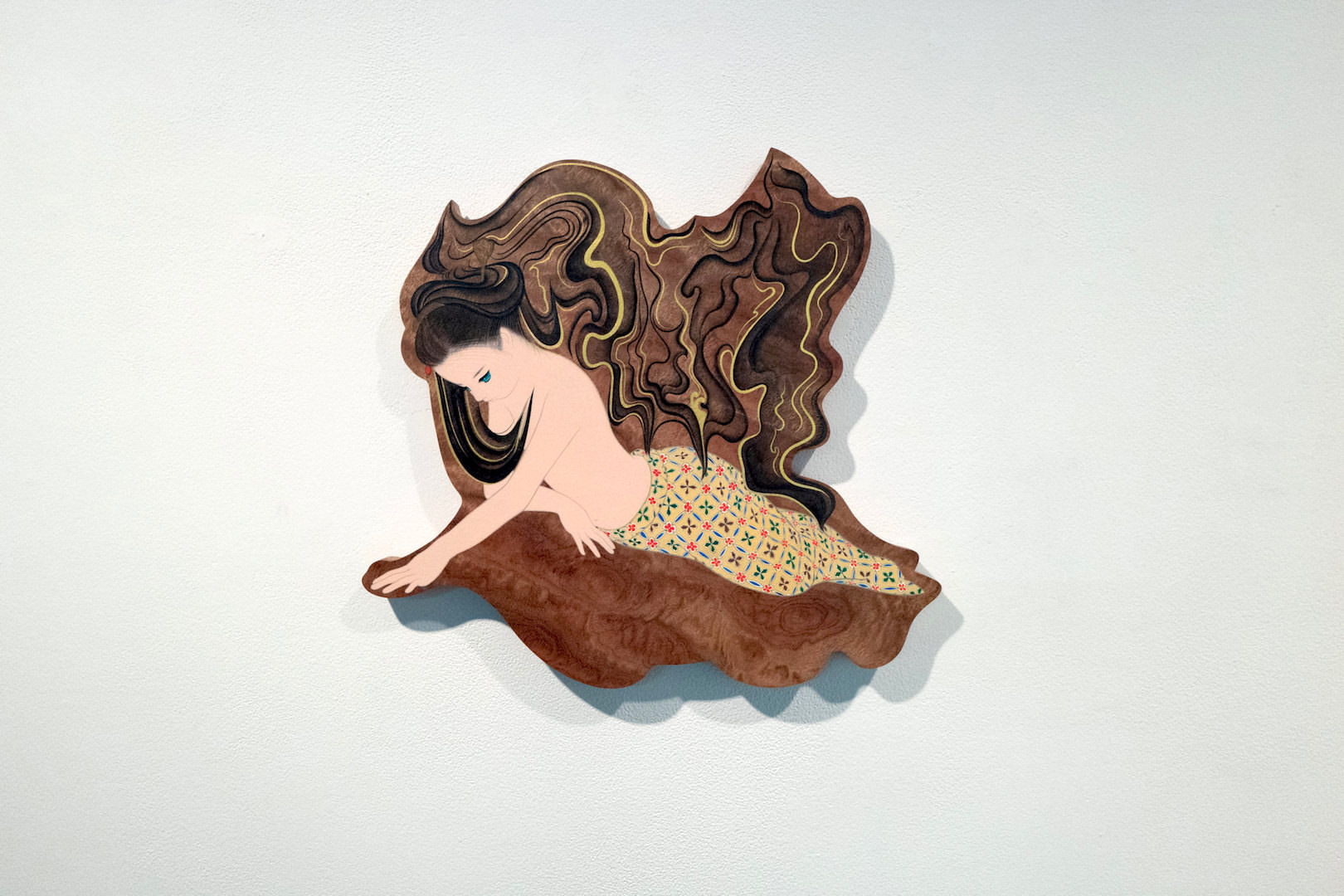
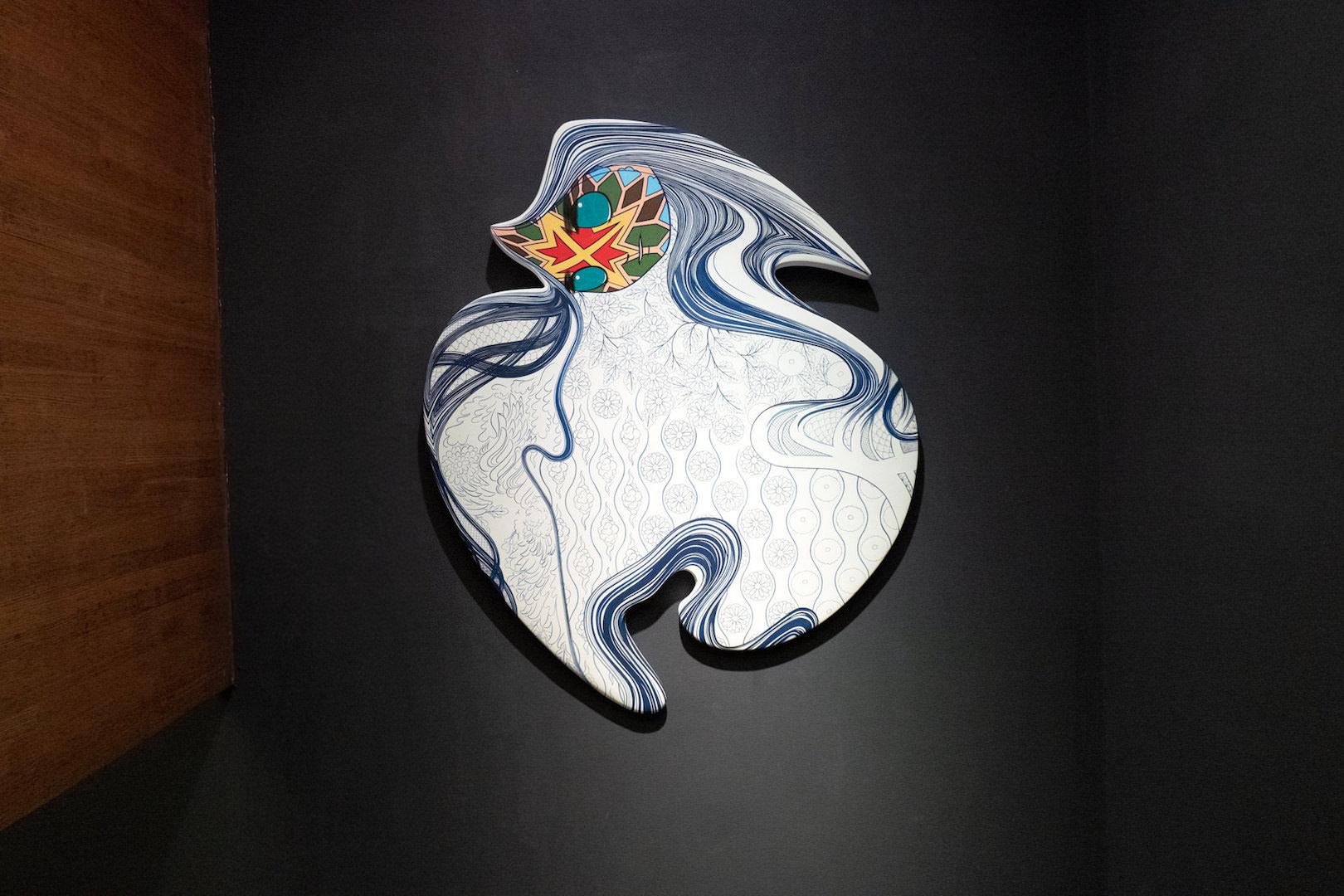
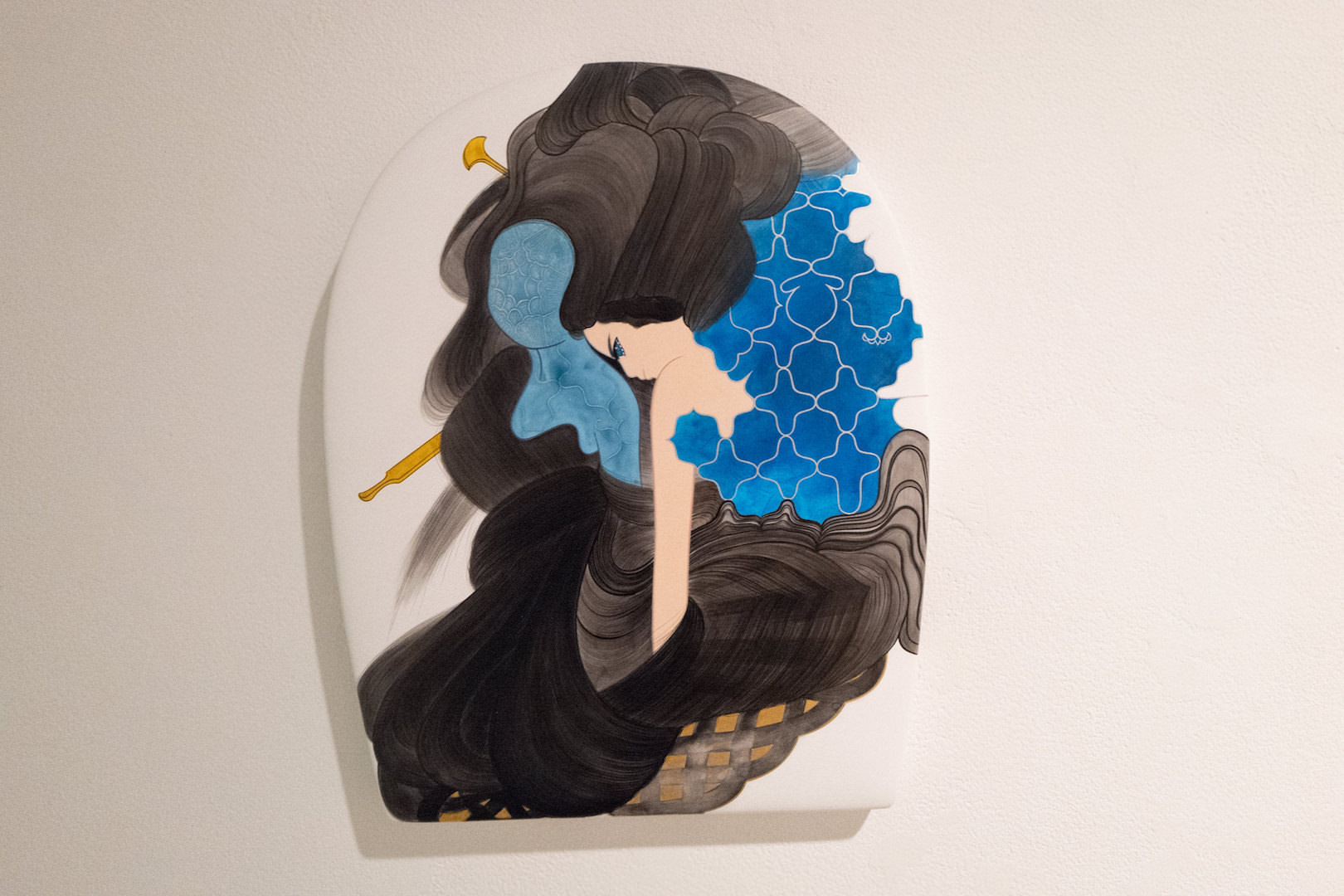
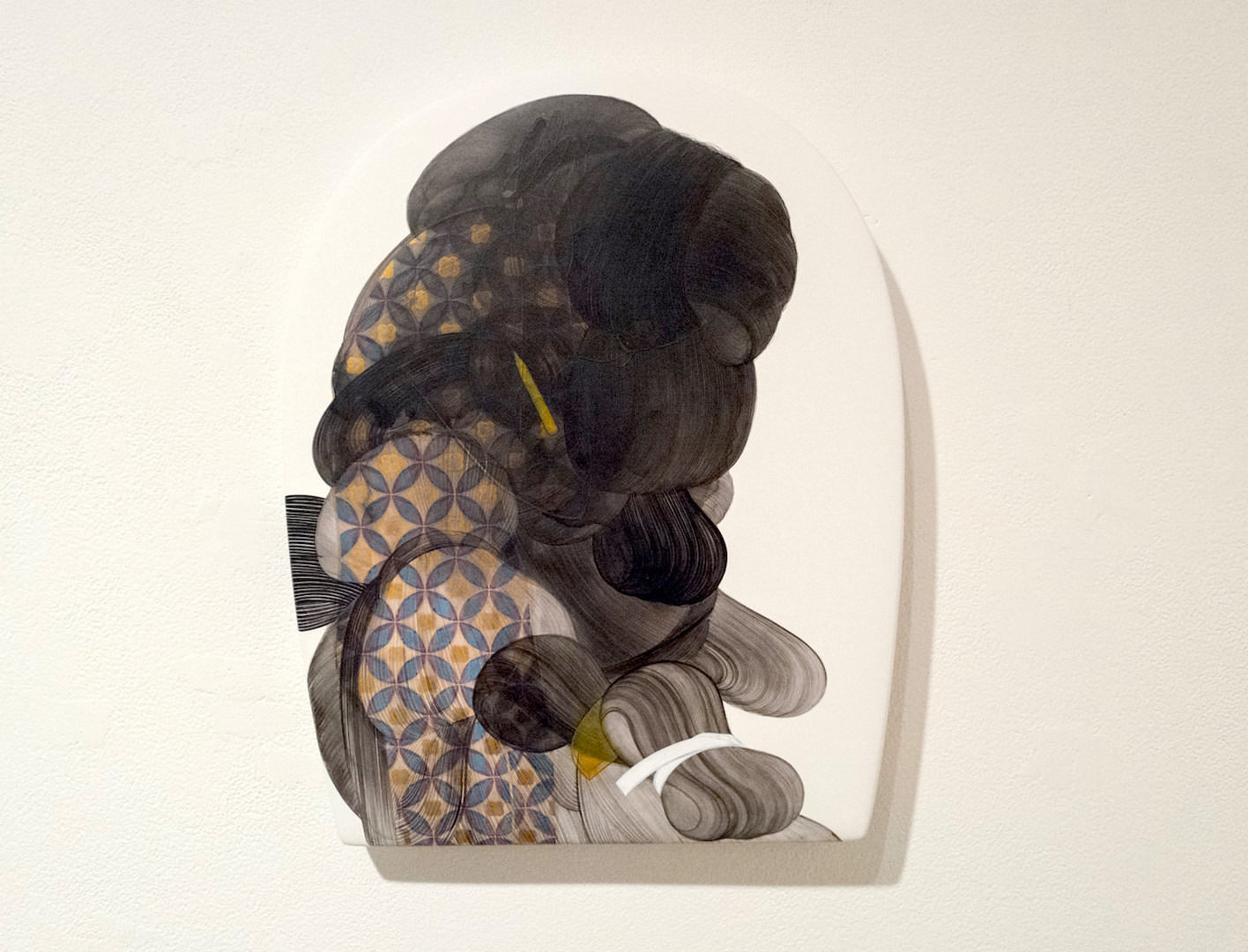
The first two works, just inside the entrance, are painted on wood — cleanly cut panels of bubinga.
anata no uta (2018), acrylic on wood (bubinga), 50×32×2.2cmanata no uta, wood (bubinga), acrylic, 38×39×2.2cm, 2018
As an aside, the English titles of Ai Yamaguchi’s works are rendered in romaji of the Japanese reading.
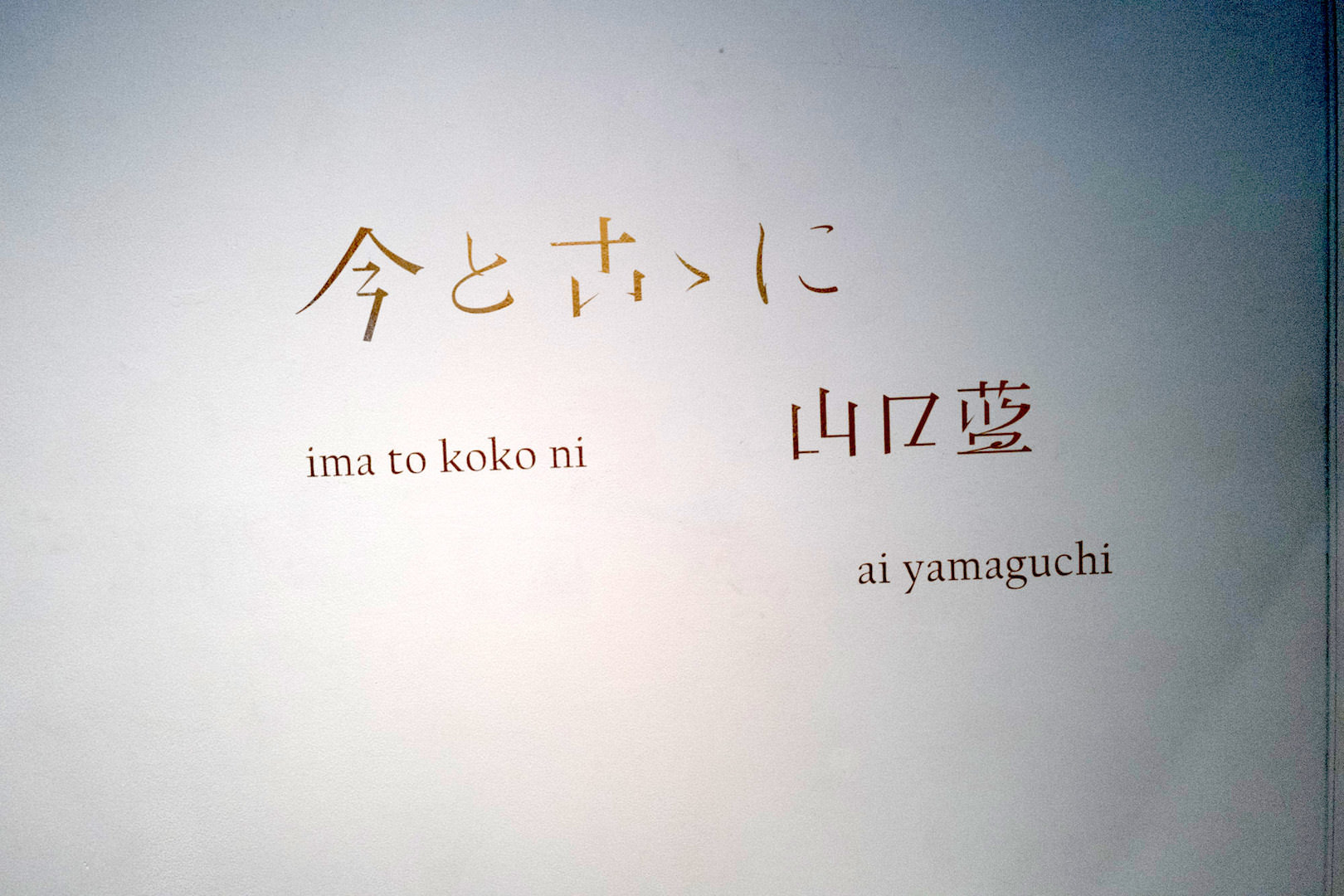
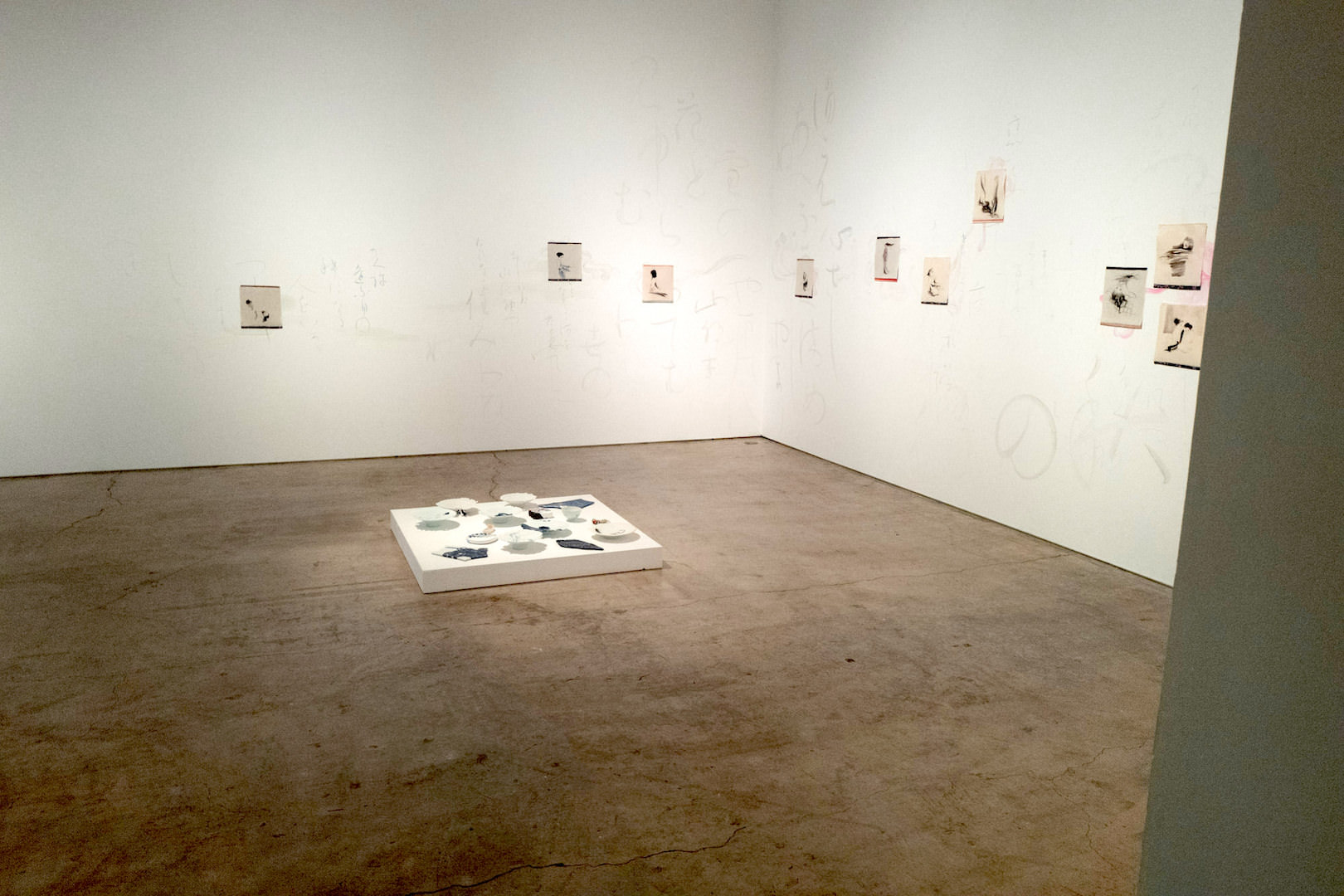
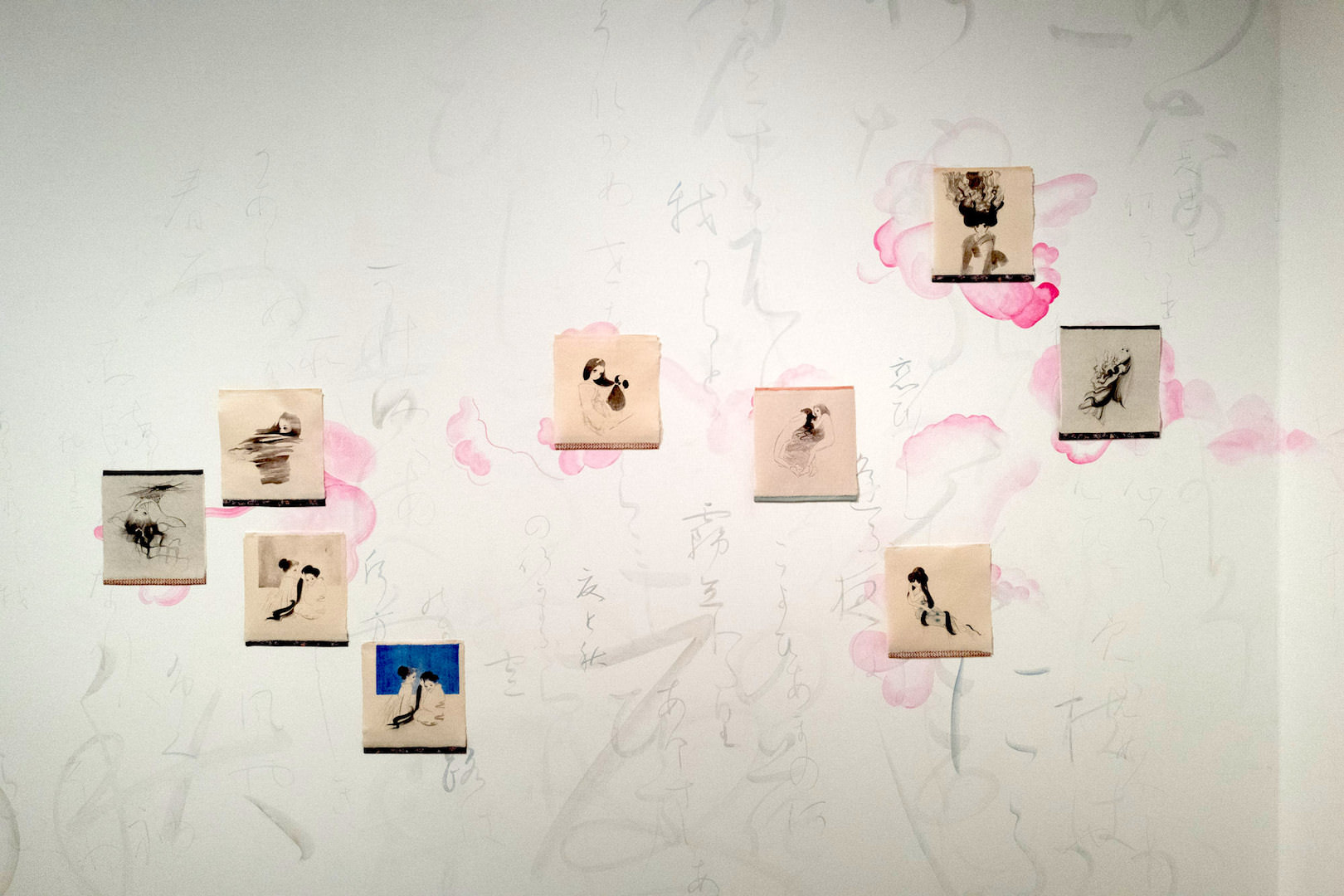
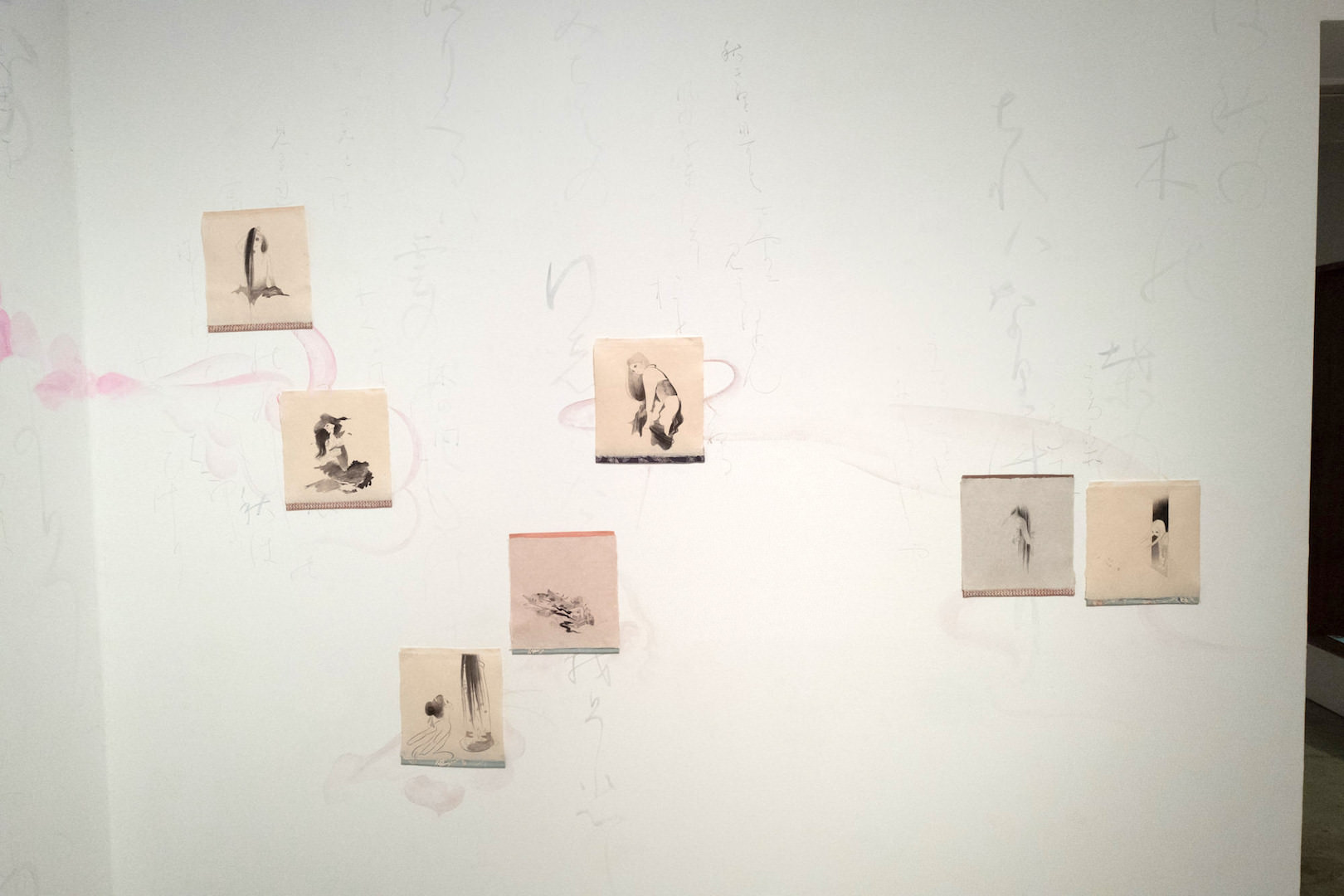
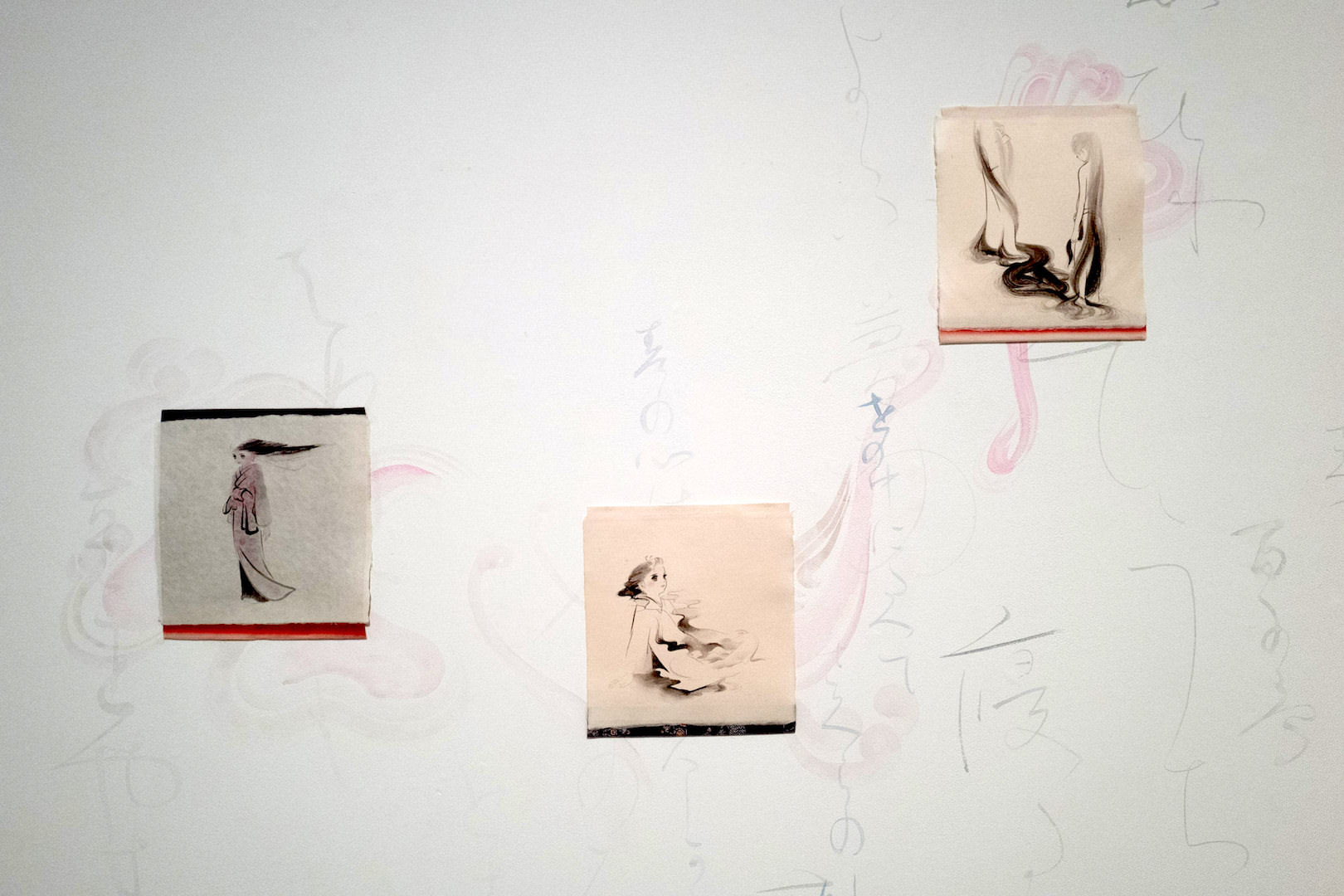
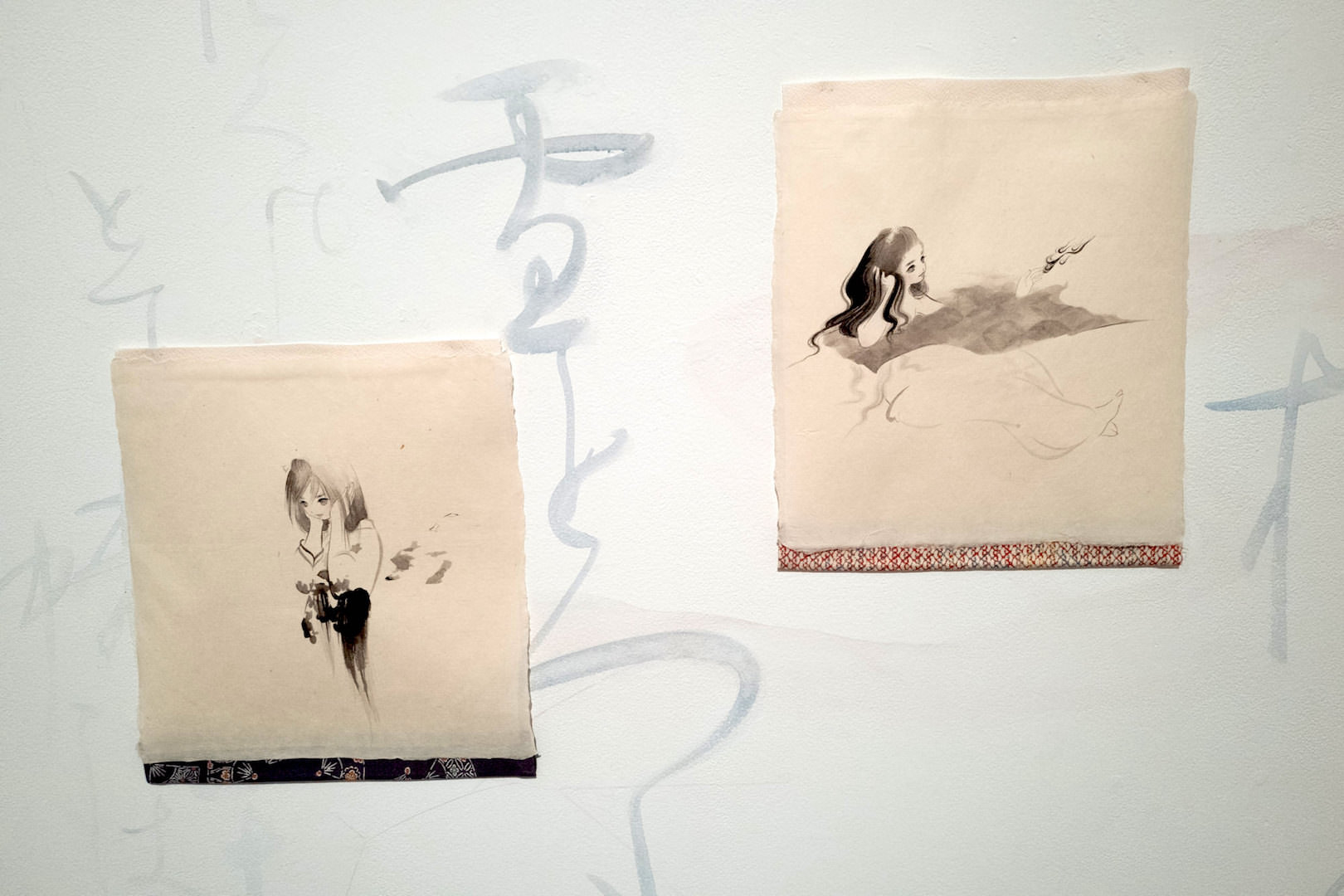
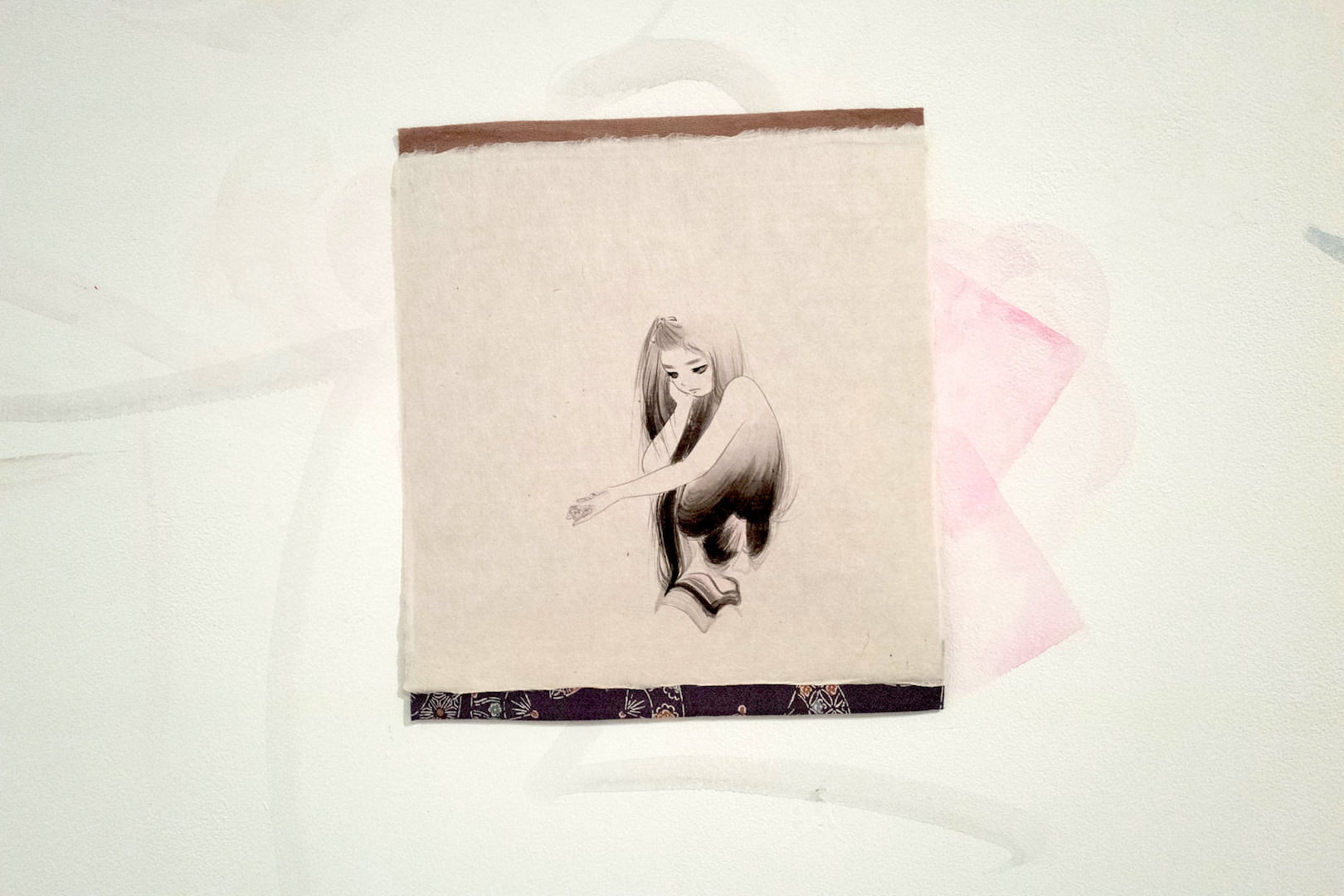
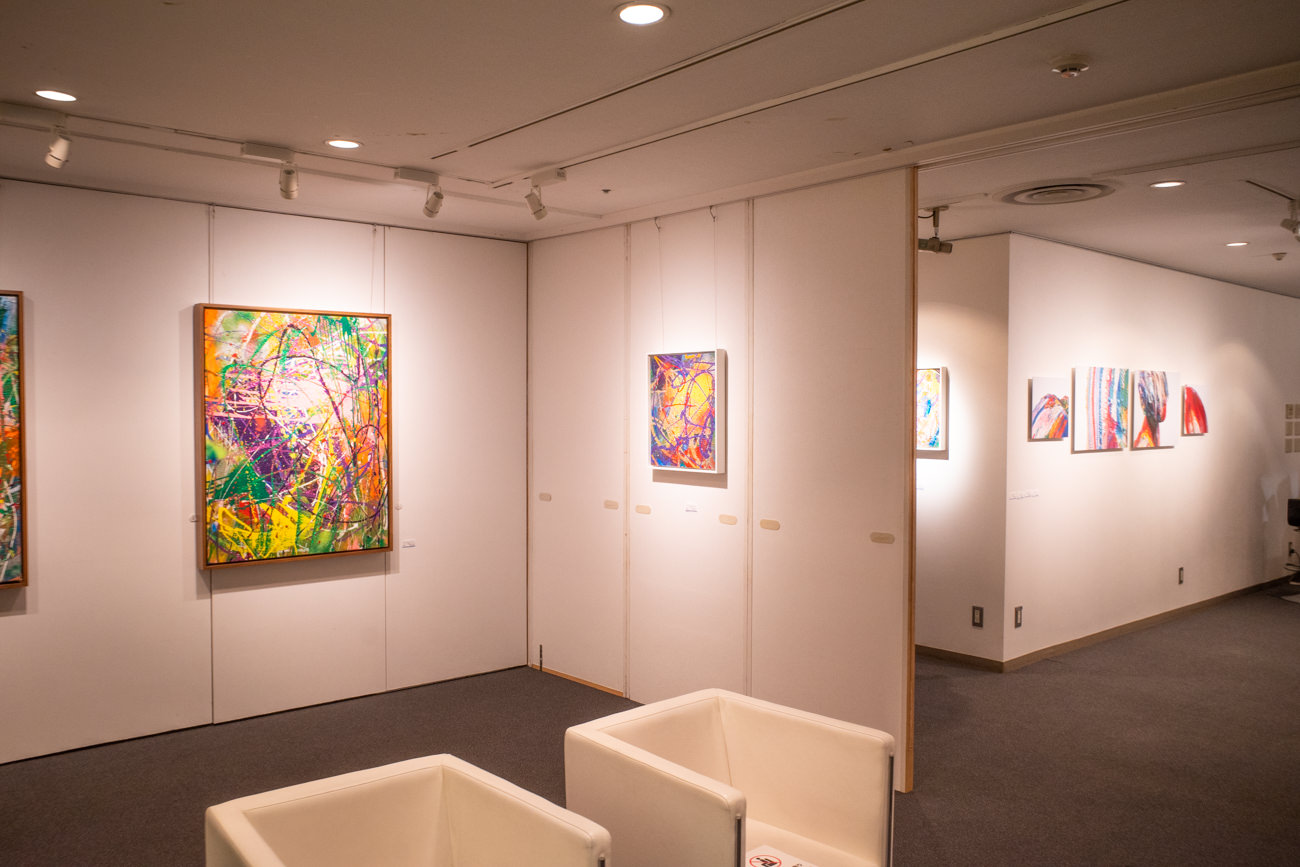
Moving further into the gallery, the works are displayed across a spacious room. Look closely, and you’ll notice something drawn on the white walls.
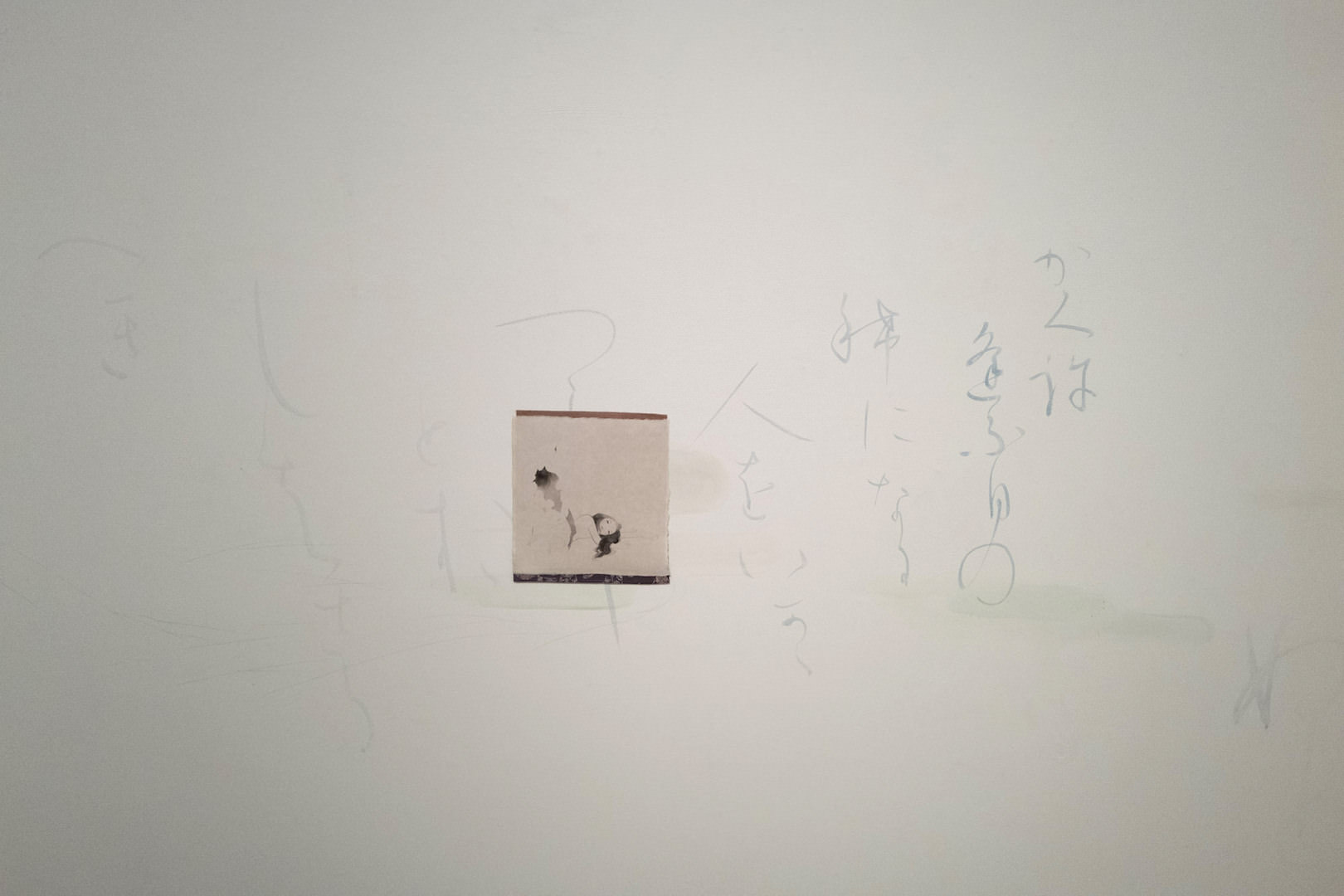
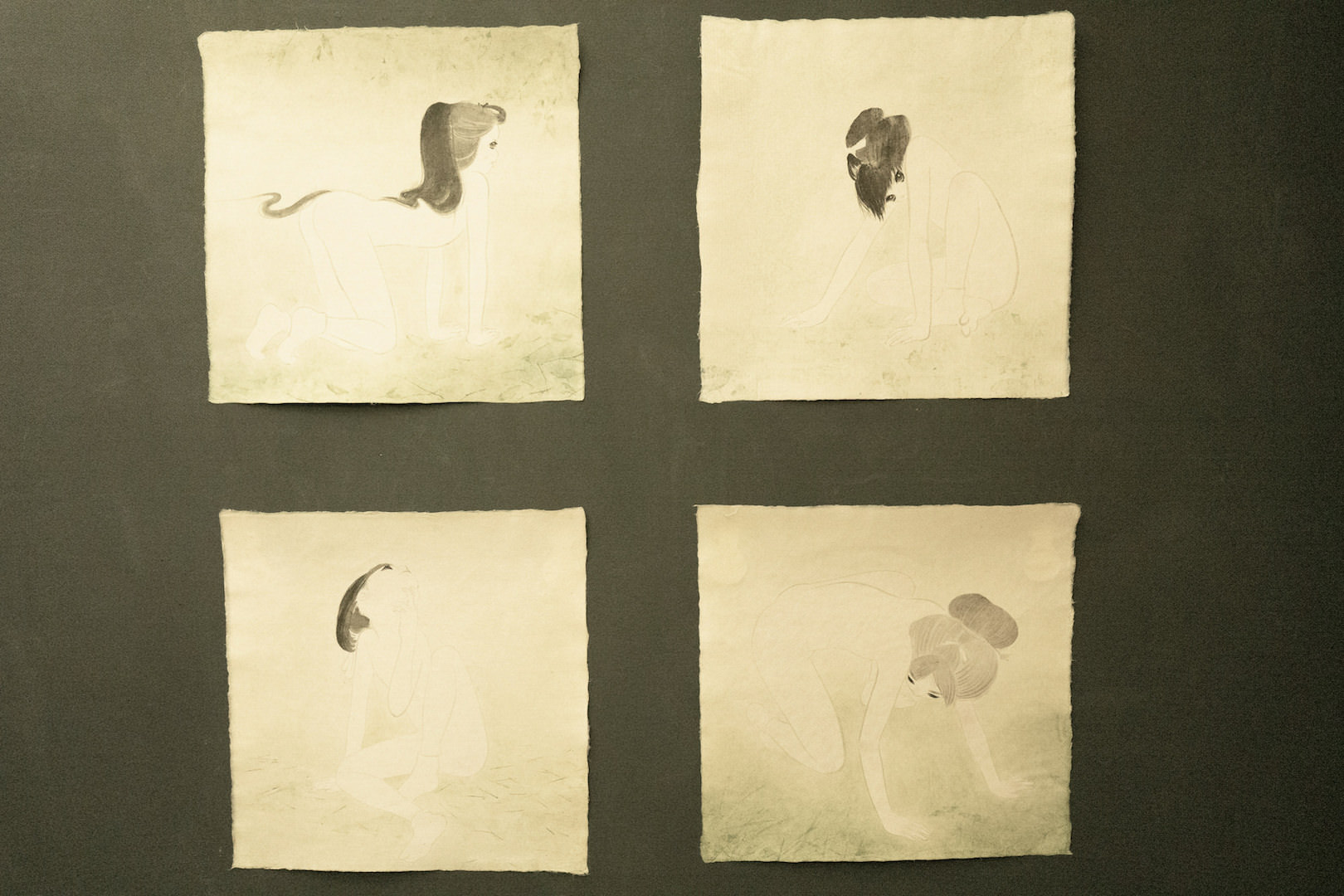
Look carefully — a poem is inscribed there. The exhibited works, all rendered in sumi ink and acrylic on washi paper, numbered twenty-six in total.
Allow us to quote the artist’s statement for this exhibition.
“ima to koko ni”
When I was thinking about what I was seeking, chasing, and trying to express, as if guided, I picked up “Introduction to Aesthetics” by Masakazu Nakai. As his words gave concrete resolution to my thoughts, I felt that through long years of painting — being carved and shaved away — a certain natural order had emerged and taken root within me.
The exhibition title is drawn from that same book (originally written “ima to koko ni”). Just as a boat glides smoothly forward in harmony with the current, and as the seasons pass without stopping while leaving a beautiful impression upon people’s hearts, I wanted to ride that order and lightly depict what I now think here — that is why I chose this title.
And if the works could translate the wordless emotions of viewers into gentle landscapes, that would be a joy.
Ai Yamaguchi
“kaku bakari” — how could I not think of you as cold, when the days I meet you have grown so rare?
For reference, each work was priced at 200,000 yen (before tax).
Tatami Room
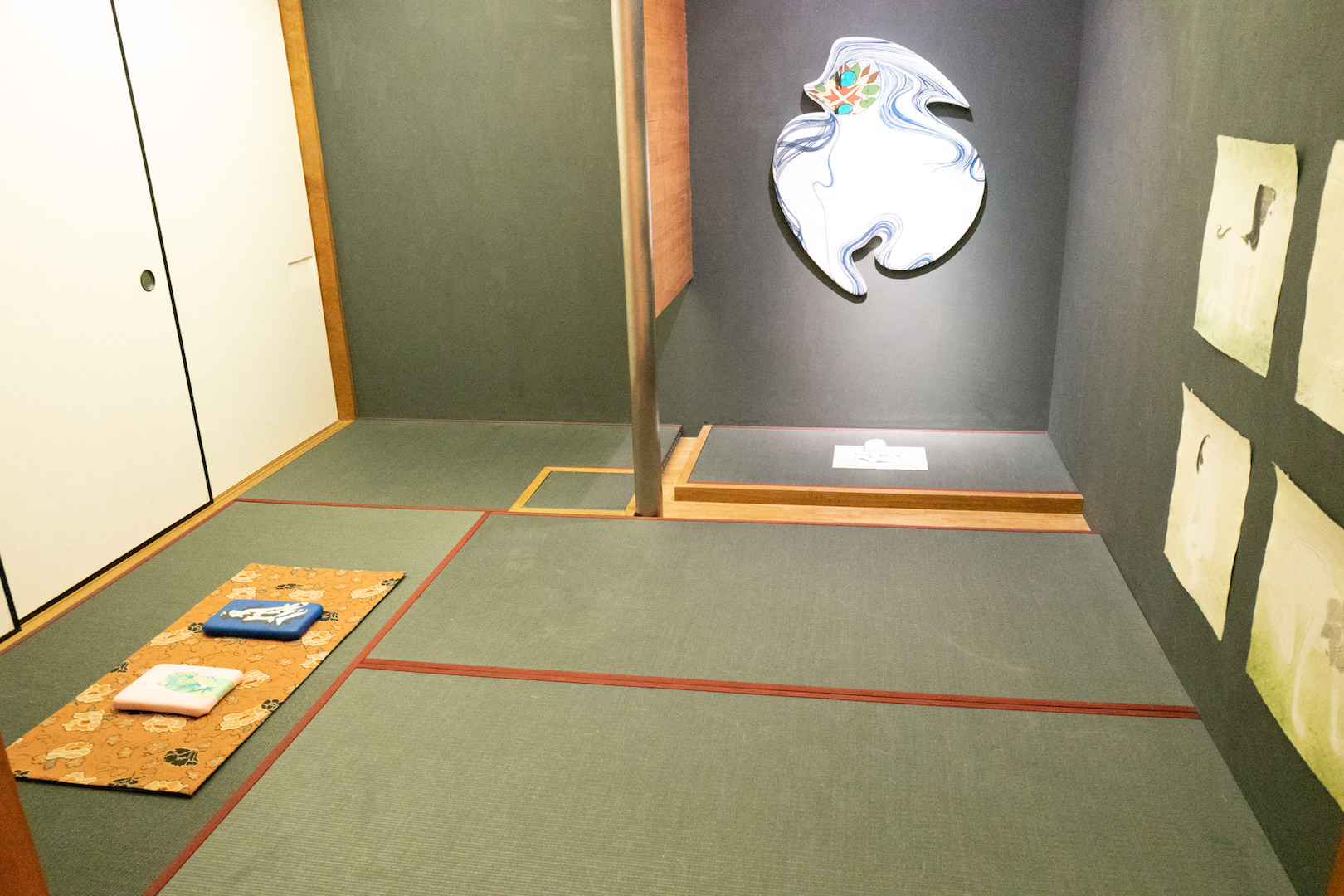
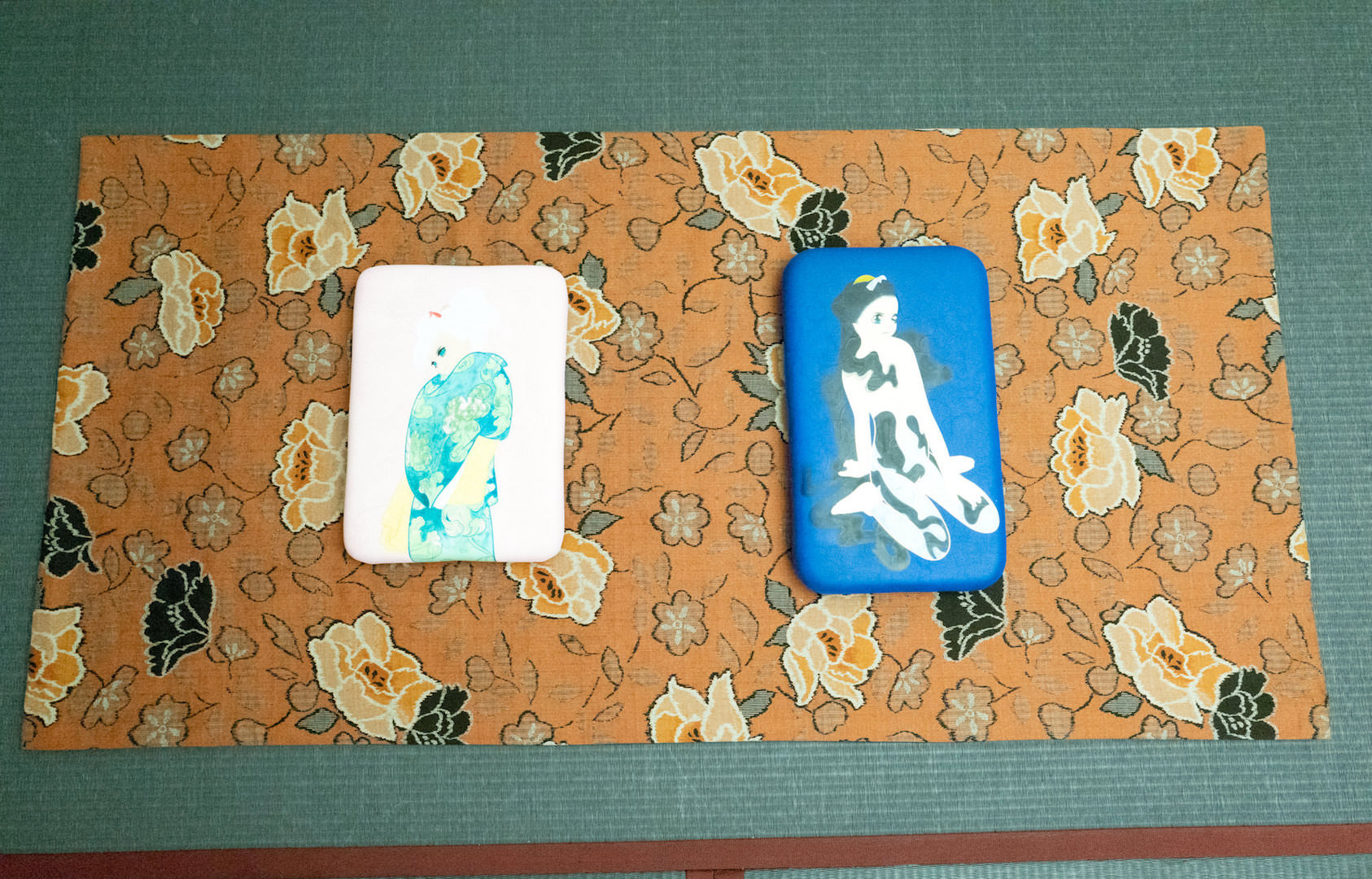
A traditional tatami room was also used as an exhibition space.
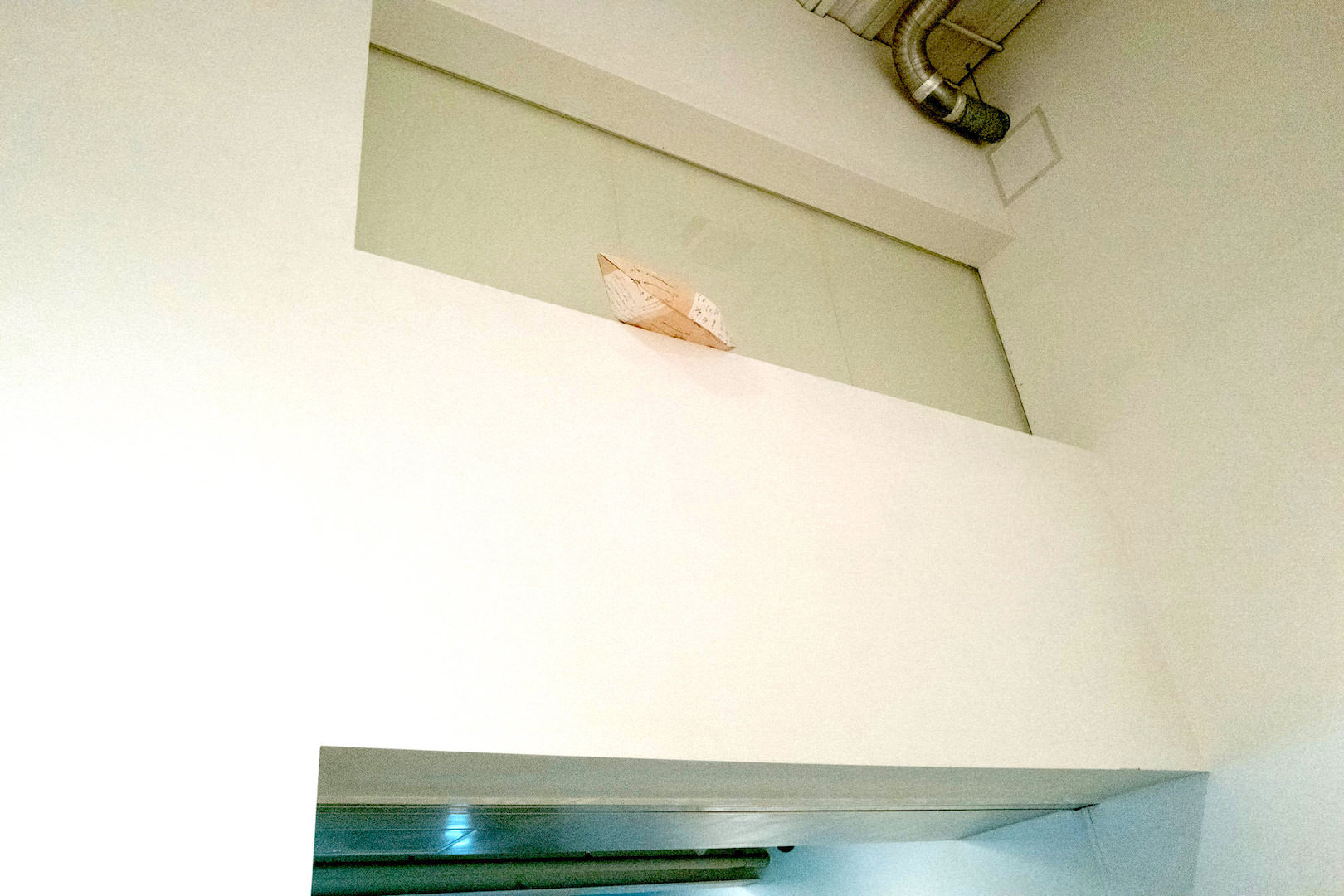
Look carefully, and you’ll see a boat made of washi paper displayed high near the ceiling.
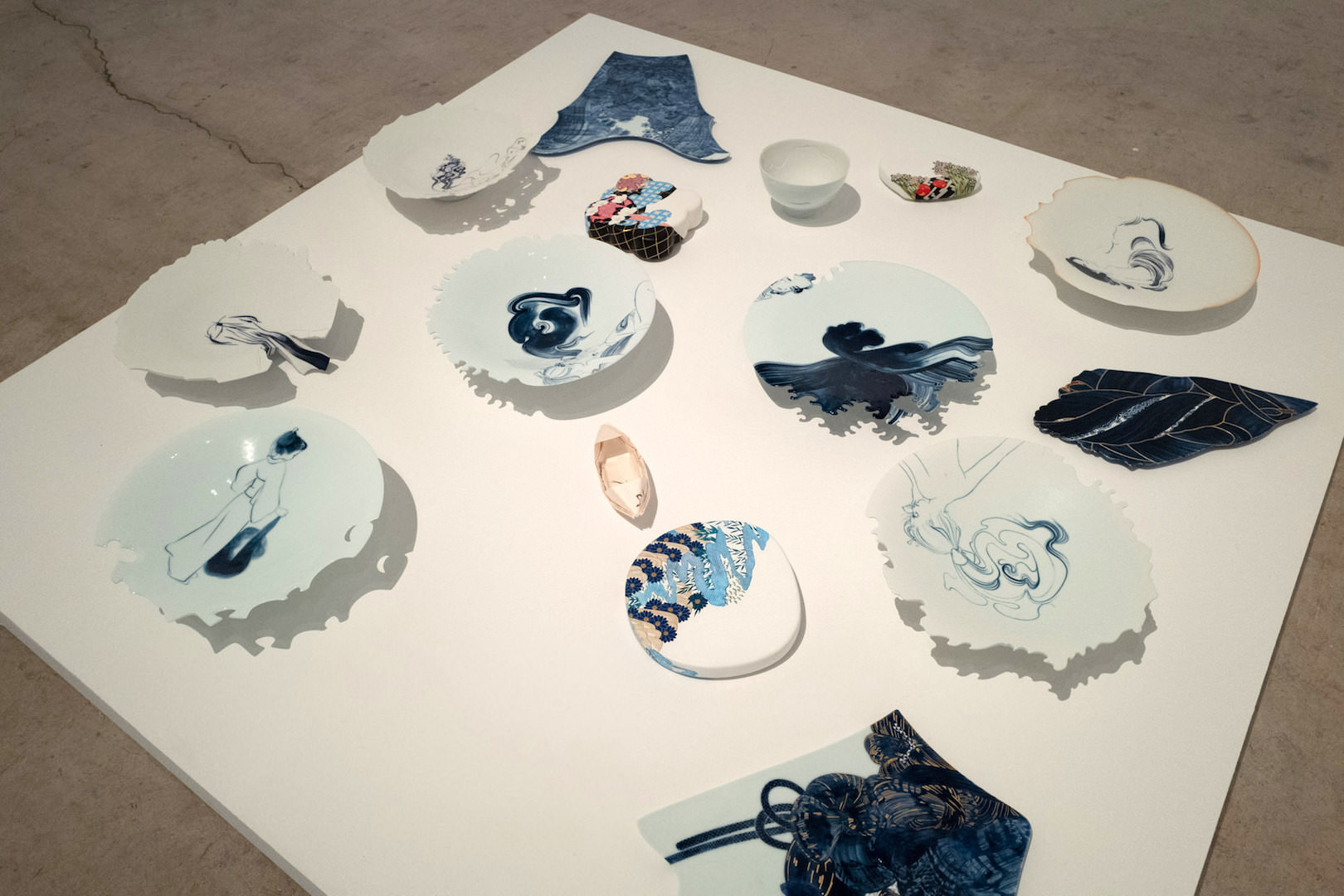
Few visitors seemed to notice this boat, but according to Ai Yamaguchi herself, it is linked to a “small boat” appearing within the group of works displayed at the center of the gallery.
Look closely — there is a little boat!
This exhibition centered on Japanese and finely wrought forms of expression — washi, wood, sumi ink. It seems Ai Yamaguchi’s intention was to bind the entire gallery into one: a lightly floating small paper boat placed at the center of the space, and a larger boat set high near the ceiling, echoing each other across the room.
Please also see the interview video.
Mizuma Art Gallery
我们造访了位于市谷与饭田桥中间的”Mizuma Art Gallery”。
这里挑高的空间加之周边宁静的环境,是笔者最爱的画廊之一。
Ai Yamaguchi《ima to koko ni》
Ai Yamaguchi 是一位继承古日本之美的同时,将江户时代文化与风俗融入作品中的作家。既似插画又似日本画的美人画,以棉被画布或木板等独特媒材呈现,构建了独树一帜的世界观,是一位极为出色的艺术家。她也是笔者非常喜爱的作家之一。
似乎鲜有来场者注意到这艘船,但据 Ai Yamaguchi 所言,它与陈列于画廊中央作品群中的”小船”相连。
仔细看,那里有一艘小舟呢!
本次展览以和纸、木、水墨为中心,展示了充满日式细腻表现手法的作品。会场中央那艘轻盈的小小纸舟,与高高天花板附近那艘大船相互呼应——恐怕这正是 Ai Yamaguchi 意在将整间画廊凝聚为一体的意图吧。
请一并欣赏访谈影片。
Mizuma Art Gallery
이치가야와 이다바시의 중간 지점에 자리한 “Mizuma Art Gallery”를 찾았습니다.
천장이 높은 공간에 주변 환경도 차분해, 필자가 가장 좋아하는 갤러리 중 하나입니다.
Ai Yamaguchi “ima to koko ni”
Ai Yamaguchi 씨는 에도 시대의 문화와 풍속을 도입해 옛 일본의 미를 계승하며 작품을 제작하는 작가입니다. 일러스트풍으로도 일본화로도 보이는 미인화를, 이불 캔버스나 목판 등 독특한 지지체를 사용해 표현하며, 독자적인 세계관을 지닌 훌륭한 아티스트입니다. 필자가 매우 좋아하는 작가입니다.
— Mizuma Art Gallery (@MizumaGallery) May 10, 2018
입구를 들어서자마자 마주하는 두 작품은 나무에 그린 작품입니다. 정교하게 재단된 bubinga라는 목재를 사용했습니다.
anata no uta (2018), 나무(bubinga)에 아크릴 물감, 50×32×2.2cmanata no uta, 나무(bubinga), 아크릴 물감, 38×39×2.2cm, 2018년
여담이지만, Ai Yamaguchi 씨 작품의 영어 제목은 “일본어 발음의 로마자 표기”입니다.
갤러리 입구 쪽으로 들어가면 넓은 공간에 작품들이 전시되어 있습니다. 자세히 보면 흰 벽에 뭔가 그려져 있습니다.
잘 보니 시가 적혀 있네요. 전시된 작품은 화지에 먹과 아크릴 물감으로 그린 작품이 총 26점 있었습니다.
이번 스테이트먼트를 인용합니다.
“ima to koko ni”
내가 무엇을 갈구하며 그것을 뒤쫓아 표현하려 하는지 생각하고 있을 때, 이끌리듯 Masakazu Nakai의 저서 “미학 입문”을 손에 들었습니다. 그 안에 담긴 말들에 의해 사고가 구체적으로 해소되어 가는 한편, 오랜 그림 그리기의 시간 속에서 깎이고 파여 자연히 표출된 하나의 질서와도 같은 것을 내 안에서 얻게 된 것이 아닐까 하고 느꼈습니다.
이번 전시명은 같은 책(원문 표기는 “ima to koko ni”) 안에서 끌어온 말입니다. 늘 흐름과 조화를 이루며 배가 스르르 앞으로 나아가듯이, 사람들의 마음에 아름다운 인상으로 남으면서도 멈추지 않고 나아가는 계절처럼, 지금의 나 자신이 그 질서에 올라타 이곳에서 생각하는 것을 가볍게 그려 보고자 이를 제목으로 삼았습니다.
또한, 작품이 사람들의 언어가 되지 않는 감정들을 잔잔한 풍경으로 치환할 수 있다면 행복한 일입니다.
Ai Yamaguchi
“kaku bakari” ~ 이렇게 만나는 날이 드물어지는 사람을 어찌 무정한 이라고 여기지 않을 수 있겠습니까
참고로 각 작품은 20만 엔(부가세 별도)이었습니다.
일본식 방(和室)
전시 공간으로 일본식 방을 채택하고 있었습니다.
shi shi, 화지, 먹, 아크릴 물감, 2018년
koko, 패널, 담요, 면포, 아크릴 물감, 90×75×6cm, 2018년
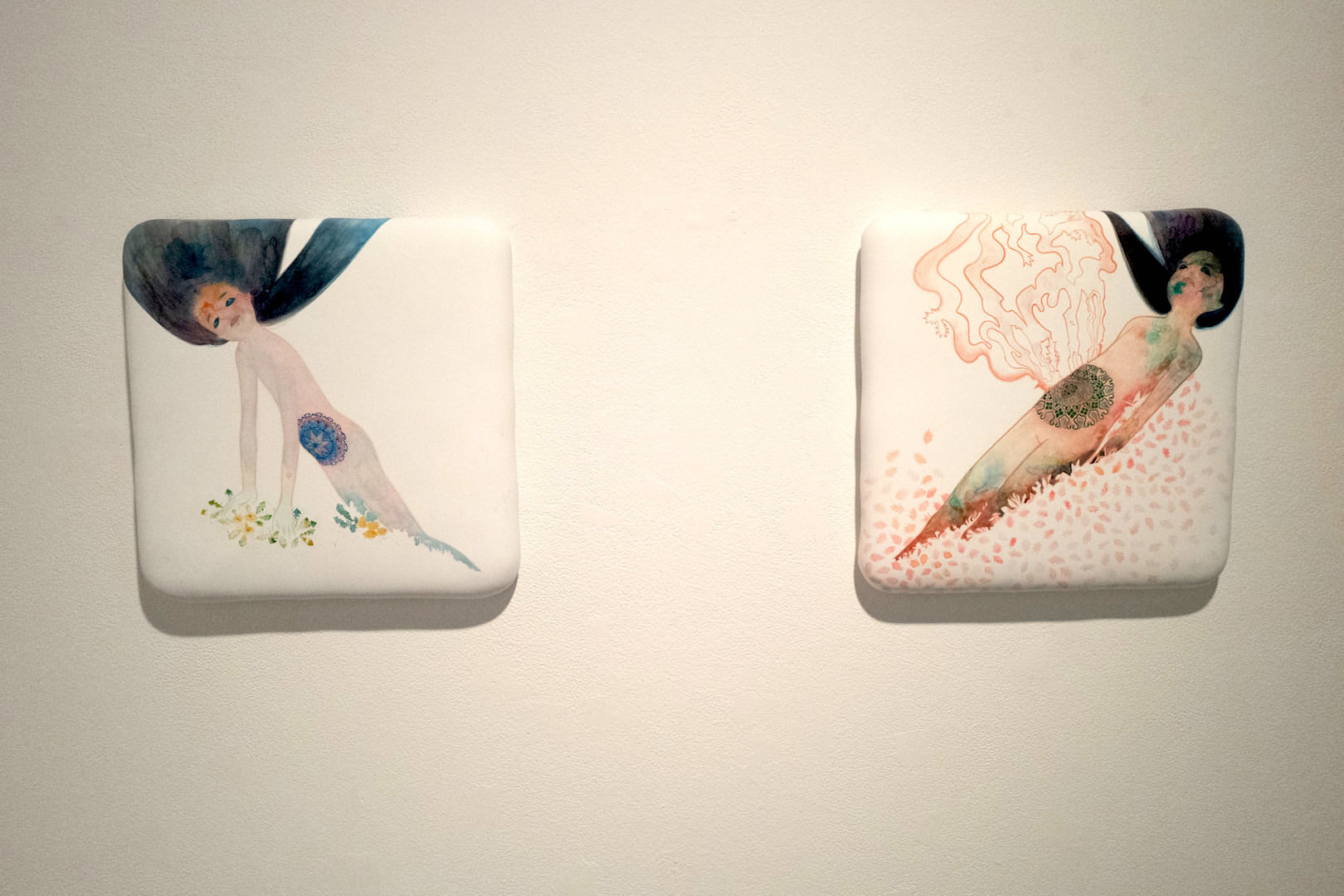
왼쪽) sato no kisetsu 2018년 오른쪽) hoshi ni sunawo 2015년 ※모두 패널, 담요, 면포, 아크릴 물감
안쪽 작은 방
tsukanoma no ito, 패널, 담요, 면포, 아크릴 물감, 35×28×2cm, 2016년
haru demo aki demo nai fuyu, 패널, 담요, 면포, 아크릴 물감, 185×114×6cm, 2014년
이 배를 알아채는 관람객은 좀처럼 없는 것 같았지만, Ai Yamaguchi 씨에게 들은 이야기에 따르면, 갤러리 중앙에 전시된 작품군 안에 있는 “작은 배”와 연결되어 있다고 합니다.
잘 보면 작은 배가 있네요!
이번 전시는 화지와 나무, 먹을 중심으로 한 일본적이고 섬세한 표현 방식의 작품들이 중심에 놓여 있었습니다. 회장 중앙에 놓인 부드럽게 떠 있는 작은 종이배와, 높은 천장 부근에 놓인 큰 배를 서로 연관 지어, 갤러리 전체를 하나로 엮어내려는 것이 Ai Yamaguchi 씨의 의도였겠지요.